 Ask ChatGPT


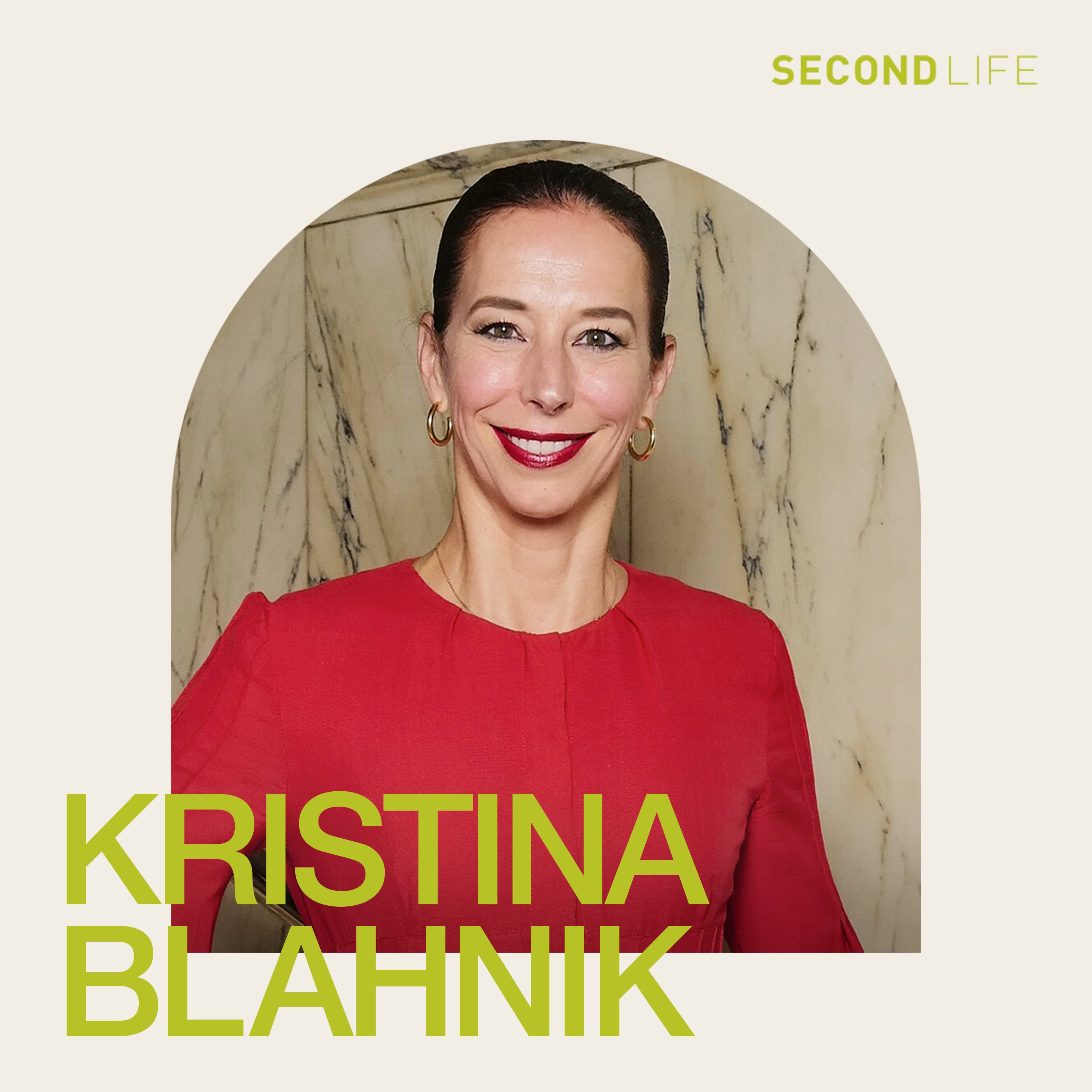
Christina Blahnik, CEO (and self-described creative strategist) of Manolo Blahnik, discusses her unconventional path from architecture to luxury footwear leadership, brand expansion, and building company culture through feedback, mental health, and animal welfare. She also ties her leadership philosophy to Manolo Blahnik’s heritage and ongoing collaborations.
Christina Blahnik grew up around the family shoe business in London after moving from Germany at age six. She studied architecture at Cambridge and earned a diploma at the Architectural Association in London, then ran an architecture practice for about a decade. In 2009 she joined Manolo Blahnik full-time when her uncle couldn’t travel to factories; she became CEO in 2013.
Stores should feel like “living rooms”; “CEO” is too corporate; culture and safety matter most; feedback and vulnerability drive improvement; commercial success is a byproduct of doing things responsibly.
Liberty print pop-up (2010); expansion from 2 boutiques to 20 stores and 300 points of sale; organizational review blueprint (2016); mental health support via website link to Mental Health Foundation (COVID) and a 2021–22 foundation donation; animal welfare “five freedoms” and using food-industry byproducts.
Written by AI. May contain mistakes.
Christina shares her unexpected journey from wanting to work in finance to becoming an architect.
“So we always like to start this podcast at the beginning.”
Explore Christina's childhood experiences and her family's impact on her career.
“And that's what I ended up applying for at Cambridge University.”
Discussing her educational journey and the independence she sought before joining the family business.
“So what was the plan when you were in university?”
Christina reflects on launching her architecture firm and the lessons learned.
“I suppose also when you're 20, you don't kind of imagine what does beyond your lifetime look like.”
An insightful discussion on the romanticism of architecture versus its practical challenges.
“And even though you can work in architecture practice, you really didn't at that point leave with practical skills.”
Exploring the blend of business management and creative strategy in Christina's career.
“How did you find running the business aspect of it?”
Learn about the different types of business structures and their implications.
“Yes, again, you have to search like what is sole trader versus partnership versus limited company, you have to learn all these operational, practical, regulatory elements.”
Explore the balance between creativity and organization in a leadership role.
“And I like also creatively being organized.”
Discuss the impact of architecture on children's development and well-being.
“has on psychology and development and growth.”
Discover the motivations and process behind Kristina's shift from architecture to fashion.
“And it was on a plane to Milan with this roll of drawings.”
Learn about the strategic collaborations and retail decisions that shaped the brand.
“But also, our company never really had titles until we grew to a point where it felt like people needed to understand where they fitted into the puzzle.”
Understand how Kristina sought to expand Manolo Blahnik's global presence.
“And I felt, okay, well, we have to learn what it means to be a retailer now in the 2000s.”
Discuss the importance of earning trust and building relationships in business leadership.
“You have to earn trust from the founders.”
Kristina discusses the importance of building relationships and organizational culture within Manolo Blahnik, detailing her experiences and the resulting changes.
“Building those relationships, slowly starting to make the footprint go from, you know, that 8, 9 % to 20 % to 30%.”
Kristina talks about the foundation's initiatives in mental health and support for young footwear designers, emphasizing the importance of accessibility and animal welfare.
“of growth it's like very entrepreneurial and startup even though you were a legacy company at that point in time so I mean it's really remarkable scary sure organizational reviews or feedback.”
She reflects on maintaining the brand's heritage while innovating and expanding into new markets through collaborations and creative strategies.
“And then there's the humanitarian wrapper around the foundation.”
Learn how tradition and innovation coexist in the Manolo Blahnik brand.
“For example, I love that you have done collaborations, as you have mentioned, with Birkenstock or the collection dedicated to Sex and the City, which was certainly in part a brand entry point for a lot of Americans.”
Discover upcoming collaborations and store openings for Manolo Blahnik.
“And that's why I would say we don't sit in the realm of fashion.”
Understand the importance of embracing uncertainty when making career pivots.
“But we've got quite a lot of things to say with other people.”
Learn why embracing vulnerability can enhance personal connections.
“The last question is my favorite, which is if you could go back in time and speak with your younger self and give your younger self some advice, what would you say?”

Get the gist, explore an idea or ask about something said.
 Claude
On Second Life, what are the key points of this episode?
Searching your listeningAutomatic transcript. May contain errors.
0:01Kristina Blahnik: This week's episode is sponsored by Manolo Blahnik. We're getting into holiday season, which means holiday season dressing. And in my opinion, the simplest way to make an outfit feel festive is to throw on the perfect pair of shoes. Inspired by a wide range of references, from 1960s fashion and architecture to the history and heritage of the Italian city of Torino, Manolo Blahnik's Autumn 2026 collection has a pair for every occasion. Expect timeless classics like black leather pumps and updates to the brand's signature Maysale style. But don't sleep on the more maximalist options like the Alcor heels with their sharp zigzag patterns in brightly colored Napa leather.
0:46Kristina Blahnik: Make sure to shop the Autumn 2026 edit in-store or online at manoloblahnik.com.
1:01Kristina Blahnik: Hi, everyone. I'm Hillary Kerr, the co-founder and chief content officer of Who, What, Where, and this is Second Life, a podcast spotlighting women who have truly inspiring careers. We're talking about their work journeys, what they've learned from the process of setting aside their doubts or fears, and what happens when they embark on their second life. Today on the show, I'm speaking with the CEO of Manolo Blahnik, Christina Blahnik. Christina grew up around the family shoe business, even helping out at the flagship store after school as a child. However, she never intended to work at Manolo Blahnik.
1:40Kristina Blahnik: Instead, Christina began her career as an architect. She studied architecture at Cambridge and had her own architecture practice where she worked for just about a decade. However, in 2009, when her uncle Manolo Blahnik couldn't travel to factories to develop their new collection, Christina stepped in and joined the family business full-time. In 2013, she assumed the role of CEO, a position that she maintains to this day, although she prefers the title of creative strategist. Since coming on board, she has helped expand the business from two boutiques to 20, grown the Manolo Blahnik team from 26 people to over 250, and spearheaded major collaborations with brands ranging from Birkenstock to Balenciaga.
2:29Kristina Blahnik: Christina is such a joy to speak with, and I cannot wait for you to hear our conversation. Now, on Second Life, it's Christina Blahnik. Are you ready? I'm ready. Okay, excellent. So we always like to start this podcast at the beginning. So what did you study in school? And much more importantly, what did you want to be when you grew up? I actually originally wanted to go into finance. What? I've done the 400 of these. I don't think I've ever had someone say finance. My father was actually in finance, but a really trailblazing, very responsible world of finance. I just thought that was a great world to be in.
3:09And so when I was looking at universities, I was going to study economics and business. and they had just built a theatre at my school and I had these wonderful illusions that I was going to be a fabulous actress but I was terrible. So I decided to go behind the stage and I took it upon myself to design the set that was then built. It was a rotating set, so everything rotated to going from the indoor living room to the outdoor garden. And I got very, very detailed about the construction of it. And another girl in my ear said, oh, I'm going to be an architect. And it was that moment of complete clarity.
3:44It was that split second. I went, that's what I want to do. I want to be an architect. So out flew finance. In came architecture. And that's what I ended up applying for at Cambridge University. And I studied architecture there for three years. And then I did my diploma at the Architectural Association in London.
4:01Kristina Blahnik: And then I became an architect. That's amazing. I love that. And also, it's interesting because there aren't that many people who sort of have that initial spark and then truly pursue it. So it's very cool that you had that North Star at that moment and that you actually saw it through. I want to go back to your childhood a little bit. So you moved from Germany to London when you were six so that your mother could help your uncle run his business. Talk to me a little bit about that move, about that business and your first exposure to it. So I'm born in Germany, half German, my father's German.
4:38When they separated my uncle, offered my mother the opportunity to come and help him in the business. And my uncle is very, very, very, very creative. And my mother very much has the very other end of skill sets, which is very, very organized. So the coming together of their two skill sets is actually why I'm able to be sitting here today. But we moved here, we drove over from Germany, I was in the backseat and the washing machine was on the front seat. we went round and round London because it was quite difficult to navigate you didn't have any GPS, it was all maps I saw all these signs that said T-O space L-E-T and I was like what is this why are there so many toilets in England and why have they lost their eyes and I didn't realise that to let is properties to rent so there you go, that is my very first memory of England and London that was my very first impression and then we moved in my uncle lived in this gorgeous house just south of the river in London in Mortlake and it was a really homely environment but then on weekdays I'd go to school and I'd get dropped off in the shop at 3 30 and I'd scuttle upstairs to the global head office that was five meters squared until 97 so 27 years head office was tiny.
6:02I'd go upstairs, the dog would be upstairs, I'd do my homework, there'd be a little tiny black and white TV, I'd watch Mighty Mouse and I'd poke my head around the corner of the staircase and watch my uncle and my mother selling shoes or meeting the press or, you know, watch my mother at the end of each day doing the sales ledger. It was our living room and I think that has very much stayed with me, which is why I want all our stores to feel like living rooms, that they feel homely they feel welcoming what I felt really has stuck with me is the work ethic that both of them have and continue to have that was to do everything you just roll your sleeves up and you do everything that's your if it's your business you're responsible for all of it it's in my DNA
6:43Kristina Blahnik: so despite growing up in the middle of the brand your mother and your uncle both encouraged you to pursue your own interests, as we know from what you ended up studying. So what was the plan when you were in university? What was that experience like? And how did you find it as a young person? There was no doubt in my mind that I was going to build buildings. You really didn't think you would come back into the brand at that point in time? No, no, no, absolutely not. I mean, this is their world. I suppose also when you're 20, you don't kind of imagine what does beyond your lifetime look like. So you just go on your journey.
7:20I'm really grateful to my mother in particular for really asserting herself and going, you need to go on your own journey. Because I think if you do come back into a family business and you have gone out and done your own journey and you do that as an adult choice. Yes. It's for the right reasons. Yes. equally I came at a point in my mid-30s where I felt I had made opinions of where I sat in the world and how the world was and how I wanted to be part of the journey of living and without the danger of indoctrination of this is how it should be done I came in with my own views having set up my own business run my own business as well with a formidable skill set by the time But it was a skill set that in a similar way to joining when I joined the family business and understanding what it means to run a business in architecture, you leave education.
8:17And even though you can work in architecture practice, you really didn't at that point leave with practical skills. You had the skill of designing and the confidence of how you wanted to create space, but you didn't really get a huge amount of support in how to get there. So building regulations, planning regulations, you do that more in your part three, which is the part three of the architecture curriculum. So when my partner and I set up the architecture practice, it was straight out of diploma college. But also we were 23. So why not? Yeah. Why not? You've got nothing that can possibly go wrong.
8:59Of course not. So why not go for it?
9:02Kristina Blahnik: So we set up. It's very bold, though. But maybe that's because I had, you know, the role models of my mother and my uncle, both who just went out and did it. And my uncle, in a different way, he just explored the world. And, you know, he put himself in so many amazing, you know, friendships and situations where opportunities opened for him. And my mother, in a different way, she dove in at the deep end running a business when she'd never done anything. But she went, you know what? It's common sense. If you use common sense and you lean into curiosity and everything that can open for you, you can do it.
9:41Kristina Blahnik: I love that. And I cannot tell you how much I agree with it. I think about this all the time. I was so intimidated in the early days of Who What Where because my business partner and I had not gone to business school. We did not have an advertising background. We felt like there was so much that we didn't know. But we really understood the mission of what we were making and the audience of what we were making. and it was interesting because as time went on, we had all of these, you know, like highly educated, influential investors and other people who would come in and make suggestions about what we should or shouldn't do.
10:13Kristina Blahnik: And we really realized that so much of it was the practical doing is the education and is so valuable and that so much of it is common sense and figuring it out. And I think it's a way of making people feel small or intimidated to think that they couldn't do something if they don't have the right degree or whatever. it is. And it's like, no, you can also just figure it out if you're that sort of entrepreneurial person. I agree. And also, I think the education system has evolved so much in the last 30 years. You can even now in the UK become a lawyer through an apprenticeship program. You don't have to go to university to do that.
10:49I hugely admire young people that want to go to work at 18 or 17 because they want to go out there and just do it, learn the world.
10:58Kristina Blahnik: So you finish all of your studies, you decide to open your own architecture firm. How did you find your first clients? And what sort of projects were you interested in taking on or looking for? I think the very first project we ever did was this tiny flat in Brixton. And they were a young couple, probably in their late 20s. And they wanted to reorganize their bathroom. So the first project was this tiny bathroom. but it was mostly interiors in the years that I was in the practice which was for 10 years and it was through friends of friends tiny tiny projects and just throwing yourself in at the deep end I think at one point I calculated the hours we were doing on certain projects and I think we were earning like 10 pence an hour when minimum wage was like 10 pounds an hour because we were so over committed yeah because also we didn't know right so we had to do it the hard way and put that much more energy to use these opportunities that you got to learn to be able to have more confidence in the next one so there is that journey whether it's from a young architect or going into a business and not having had the stamps of approval through an MBA or I didn't fully qualify as an architect till my early 30s because I just delayed it there was at that point didn't feel like we needed it but yes you want to over deliver and that insecure over achievement is very much part of the fuel that drives you.
12:29Kristina Blahnik: So I know I tend to romanticize architecture as a profession because it's the perfect blend from the outside of right and left brain, of having to understand the mechanics of things and the precision of measurement, and then also taste. And it just seems very, very romantic. What is it like when you're actually the inside. Does it feel romantic when you're doing it? Is my fantasy true? It's a beautiful profession. The reality of it is, is that the magic bookends a project. It's the magic of the meeting the client, the getting the job, the designing, and then the finished product. The energy and the high that you get from hoovering that floor and taking the photos, you know, and moving the furniture in and seeing the space, whatever that is, when it starts to get inhabited, it lasts for months and months and months.
13:27You're not doing it because it's a job. You're doing it because it's your life.
13:32Kristina Blahnik: And it's a calling. Yeah. Truly a vocation. It is. In the higher sense. I love that. How did you find running the business aspect of it? Because obviously you'd had exposure to what that meant, watching your mother as you were growing up in a position of power, running a business, the business part of it, did that come more easily or feel more natural? Or was that just as much of a learning curve as the rest of it? That was quite logical. You know, accounting, setting up businesses. Yes, again, you have to search like what is sole trader versus partnership versus limited company, you have to learn all these operational, practical, regulatory elements.
14:09I love that. I was him quite balanced left, right brain, so I can go from one to the other and I love organization and I love visually seeing what I'm meant to be doing or what we have done but then actually on the flip side of it I love just letting my brain go and see what comes out I often say I don't like the title CEO I find that a bit corporate and it's a bit soulless I actually prefer creative strategist because that I think blends those two things together the left, the right. And I like also creatively being organized.
14:44Kristina Blahnik: I love this. Okay, so when you look back at your architecture career, what are some of the greatest triumphs? What are the things that you look back on and that you feel so proud of? We did the house of the CEO of a development company. And the very first project we did for them is for their children's rooms. And they had twin boys who were living in one room and an older sister and we designed their rooms and we split the room that the twin boys were in into two and they all were part of the design process they chose their own colors and their own curtains and when they moved into their rooms they loved being in their rooms so much that their school grades went up that was when I realized the impact that space has on psychology and development and growth.
15:34And to this day, it's really important for me to be in space that nurtures growth and safety and wellness. I really struggle in disorganized spaces. It does make a big difference psychologically.
15:51Kristina Blahnik: So talk to me about your decision to make your big career pivot in 2009 and return home. Which was clearly not a primary goal. No, it took me by surprise. In all honesty, it really did. I think I had the practice for 10 years and I felt a fatigue and I couldn't put my finger on it. And there were multiple different things that were in flux at that point in my life on a personal front and on a professional front. in hindsight I had got my formula wrong of how to work because my formula the one that I had assumed was the right formula is that you need to control everything and you need to know every single detail of everything to ensure that you're getting it right so that you're not putting yourself at risk and I don't think that is necessarily a healthy way of existing in the workplace you need to take risks and allow other people to do things and it was a very small practice I felt I had burnt out actually more than anything I'd burnt myself out by this pursuit of perfection and avoiding risk and at that point in time my uncle couldn't go to the factories for the very first time ever and it was a spring summer 2010 collection and he'd done all the drawings and we were together and I said to him look if I can build a building and I have what you do in my DNA anyway not just by observation because I've just absorbed everything in that pervasive learning where you just are doing something else but it's all happening around you so you're just having your apprenticeship without even knowing you are I said look let me see if I can do this give me your drawings I can interpret drawings I can create three-dimensional out of drawings let's try this and he entrusted me with it and it was obviously a huge risk on his part because we'd never worked together before so I said I need some space from architecture just for a little bit so I took the drawings to the factories we set up you know computers and the internet and printers where he was and my very first day of fully being employed by the Manolo Blanick business even though I was always doing things was the 3rd of July 2009.
18:11And it was on a plane to Milan with this roll of drawings. And then that next day we were sitting on this enormous table in one of the factories that we've worked with for decades. And I'm looking up at the pattern cutters with this amazing gentleman who still helps the development of the collection. And I think I felt everyone was looking at me going, oh my goodness, how are we going to do this? She doesn't know anything about shoes. I'm looking at everyone going, oh my goodness, this is so frightening. But within a couple of hours of, okay, let's start with this shoe. Let's start with this drawing, that prototype.
18:48Has that interpreted that correctly? I know my uncle likes a certain throat line, a certain proportion, a certain weighting and construction. And we worked through it. It took three weeks. At the end of each day, we would send my uncle the photos that we'd taken. And at one point I was even building a shoe on my foot by sticking cello tape and masking tape and bits of fabric because I wanted to see ergonomically how does it work? How does it come together? Because you've got these tensions, you've got these forces. It needs to have all the right engineering behind it. And three weeks later, we left the factory.
19:25Normally my uncle does it in a week and a half, two weeks, and it took us three weeks. That was the very first time when I went, OK, I actually enjoy this. that's when I went okay I'd like to do this a little bit more I'd like to tell the story of this collection and that's when I got involved in the press side of it marketing side of it
19:45Kristina Blahnik: and I mean who better to tell a story than someone who was there through the whole process of having it made that feels like a very informed place to be to then speak to the press what was your role officially to start? I said I wanted to do a six-month sabbatical from the architecture side, although I was still going to go in once a week and do all of the administrative things so that the team could just get on with the actual design and build. But also, our company never really had titles until we grew to a point where it felt like people needed to understand where they fitted into the puzzle.
20:22But it was only six people, so you didn't really need titles at that point because everyone was doing a bit of everything. And so I predominantly started the storytelling part, helping in the press cupboard and let's change how we do our press days. I don't think we're getting the right people to come all the way to Chelsea. They're all in Soho. That's where the magazines are. Let's move it there. Little tweaks here and there, like just seeing where can we make improvements.
20:45Kristina Blahnik: Little creative strategy decisions, you might say. Yeah, tiny, but they were tiny at that point. So that was in July. And then in September 2009, it was London Fashion Week. and my uncle and I went to Claridge's for tea between the shows. And we bumped into a very good friend of Manolo's, Camilla Morton. And she was sitting with the then CEO of Liberty. Oh. And we had used Liberty prints for decades. Every time there was a collection development, Manolo would go to Liberty and pick some fabrics and they would make their way onto the shoes in just that beautiful, organic, unstructured way that you could in the 80s and 90s.
21:32Right. And I said, Minolo's used Liberty prints forever in his shoes. And then it was like, why doesn't Minolo do a print? I'm like, let's do it. I met with the chairman and the CEO for lunch and one print became three and the three prints became a total pop-up takeover for the store on the ground floor that is now actually, I think it's the stationery store, but it was a store that at that point had Hermes as a pop-up. I think it was Hermes and then Chanel and then Manolo Blanik. I can't remember what order it was, something like that. So I went, okay, yes. And my uncle had always said, I don't want another shop in England.
22:10I just want Old Church Street, which is down a tiny little, you know, one-way street in Chelsea where there is nothing else other than residential houses. A destination.
22:19Kristina Blahnik: A destination, exactly. and he said but the only place I'd ever want to be would be on Vigo Street in Mayfair. Liberty wasn't Vigo Street but I said to my uncle let's just try it let's just see what having another shop looks like. For context when I joined it was Old Church Street and about eight percent of our global sales were direct wholesale that we did everything else was franchised so it was tiny six people and nine percent the total global value of the business and I knew instinctively that that was not the right balance. And I felt, okay, well, we have to learn what it means to be a retailer now in the 2000s.
22:59And it was also the beginning of e-commerce and everyone having e-commerce. We took another almost eight years to venture into that, what was then quite a scary environment. And I said, well, let's try this. Let's try this Liberty pop-up. And we did the most incredible collaborations. It was coming back to the world of collaborations, Minoru started his career on a collaboration with Ozzy and Yoji Yamamoto. But it was bringing in, you know, Miller Harris did a candle. We did cushions. We did shoe horns, umbrellas, silk scarves. You know, it became a little bit of a world. And we did these beautiful shoes and the prints that Minoru designed and also just the Liberty Prince.
23:40And it was opened on Fashion's Night Out. Ah, gosh. On the 10th of September, 2010.
23:47Kristina Blahnik: What an era. And I made the mistake again. I thought, well, I'm too scared to ask anyone to help me. So I did the contracts. So I learned how to do a commercial contract, you know, with the IP and all of that. And then I think about a month before we opened, we'd been doing this for 10 months. I suddenly went, I think I just need a lawyer to look at this. And that's when I discovered lawyers. And that's the best discovery ever. Yes, you can't outsource certain things. I had never known that you could. I don't know why. You don't know what you don't know. But actually that's when I started appreciating delegation, I think, more internal and external.
24:26We opened the store and it was a great success. It was three months. And that's when we felt confident, okay, we can maybe start to explore what Manolo Blanick would look like, not just being the little shop where it all began in Old Church Street. the seed was planted of we need to own more of our global footprint and that took a long time this is where i've come back to my architecture skill sets i needed to write the specification of how we were going to get there you're not going to do it with six people so we had to slowly slowly build our expertise our knowledge the teams you know we increased our wholesale we widened our relationships we opened with harrods and selfridges you know incredible relationships were built over that time to be able to be at a scale with the right knowledge to then go into the direct consumer journey and that started in 2018 with the store opening in geneva then paris in 2019 and then bringing the america's business back in-house and that was the biggest single shape shift that we did.
25:35And that's been over a decade of work. Yeah. You have to earn trust from the founders. My uncle being the founder, my mother being everything that supported the founder vision. You have to earn the trust. And also the business was built organically and slowly. So I had the luxury of time to also learn myself. And I think not only the practical knowledge that you need, but also the soft skills and leading is all about soft skills. You know, the hard skills, the knowledge, the fact you need to have those, but you can't lead unless you have the soft skills and know how to deploy them.
26:16Kristina Blahnik: So you first joined the business in 2009 in a more official capacity. Obviously, your hiatus from architecture was prolonged and then permanent. Talk to me a little bit about the years between stepping in for a sabbatical to becoming CEO in 2013. What happened during that time that made you certain to, one, close the door on your first life, and two, really step into this role that would not only expand in scope, but also significantly change the business? and require a title? The title was a funny one. My mother was managing director. CEOs, that title wasn't really a thing in the 80s and 90s in the UK, at least to my knowledge.
27:09No one had that title. Everyone was a managing director or a director. So, you know, I was more focused on learning about the product and telling the story of the product and starting to see where there were opportunities in the territories that we had control over in many ways. So it was building relationships with people and some people you know many years later said yeah we weren't too sure about you because you had no background whatsoever to justify being in that role and I went I get it it took a decade to get a seat at the table as well in the industry because I think people did look at it and go oh you're just family that was easy I'd like to point out that like
27:50Kristina Blahnik: major European fashion labels have a history of family running them Gucci for example so there are lines of this like just because your family doesn't mean you're not qualified just because your family doesn't mean you're not working hard and clearly the industry caught up but I'm annoyed on your behalf I'm not it gave me more motivation to go do you know what I'm gonna prove to you I can do this there was a reality of like no I don't know your industry I didn't study business I didn't go to fashion school so let me learn teach me help me understand and I took a lot the time doing that and you know starting new relationships and I remember meeting Marigay McKee and she was at the time running everything in Harrods and she organized a tea and she said I've been wanting Manolo's in Harrods forever and she used to stand in line when I'm loaded PAs in America to then get to the front and go Manolo you need to be in Harrods but you know we met and I went okay well let me speak to my uncle and we did open in Harrods that's what I took my time Building those relationships.
28:56Building those relationships, slowly starting to make the footprint go from, you know, that 8, 9 % to 20 % to 30%. Because actually once you have more revenue coming in, more profit, more people, you get more confident that you have all the tools needed to be able to make more and more moves. So CEO is the title. And of course, that comes with a lot of insecurities because you're sitting there going, oh, my goodness, I've got this big title. What does it mean? And I would say that I wasn't ready to step into those boots until 2016. So I took three years assuming what a leader should do and not really doing a very good job and not bringing people with me.
29:46I just thought everyone understood. Inherently, there was some sort of osmosis of knowledge of what we were doing, where we were going. And I felt it. I'd never expressed it. and in 2016 we'd gone from being 28 to 56 in one year oh and we'd moved offices and I could feel that something wasn't connecting in that group of 56 people it's a lot of people and you know when you're six you're chatting about what did you just say you know how is so and so it feels like a family and I felt that we lost that family feeling it was recommended to me that we did an organizational review where they come in and they do all this quantitative qualitative questionnaires and interviews and everything and I was like okay fine we'll do that that sounds like a good idea we'll get some information out of it feedback and in came this document which was 68 pages and I didn't want to get out of bed for 48 hours because it was so depressing because you know when you read something the negative just comes out at you and you know people weren't happy they didn't understand what they were doing and it was really really really painful it really hurt because I felt all I was trying to do was the best I could and it was the first moment where I realized you know I have not got this right I have not listened I've listened to my uncle and what his wishes are I have not listened to the team and if you're a family you need to listen without judgment and you need to also be prepared to adjust.
31:20So in this world of deep discomfort that I had thrust myself into by doing this organizational review, I went, right, do you know what? This is going to be the best thing that ever happened to us. So I took all this data, quantitative and qualitative, and I started slicing and dicing it. I got a psychologist and I got an executive coach. I got a team of three other people in the business who happen to be women so four of us from different areas of the business quite senior and we broke this apart we took every single bit of information I started mapping people don't understand the mission this fits into people don't understand where we've come from this fits into people don't understand what our benefits are what's the giving back people don't understand our structure so I started to see the patterns in what wasn't right what wasn't working what was missing and I went now what am I going to do with this and we had a lot of workshops and we talked through you know and benchmarked against other businesses and tried to understand what's our culture who are we and trying to get from that prehistoric brain which was emotions of who we are and what we're doing to actually putting it on paper and giving it words which is a very very very difficult process and we did and it took three months and I built this presentation in September 2016.
32:42It was the blueprint of who we are today and what we're doing today. And it came from feedback from 56 people. It wasn't one person saying this is what we're going to do. And we wrote out all the values, all the expectations of, you know, skills and attributes that we have at different levels of seniority. You know, what is our benefit scheme? What are we giving that is above and beyond just the standards? How are we making you part of the value to the business? And how do you feel valued? And to this day, I will reference that back and still see. And it was these small projects. It was five pillars.
33:21It was people, the craft, creativity, artisanry, our legacy, the archives, the business, all these different pillars and what we're going to achieve under them. And that's where it began. That's where it was like Manolo Blanek needs to be ours. It can't be interpretations of it. The world has become one with technology. We need to be one. We need to be one message, one experience, one embrace to our community. And if I pull that out now, it's exactly who we are today. And it built the culture. And I'm very, very, very proud that the culture that we have is the culture that we have. And it's consistent.
33:58And it drives us to be a great place to work.
34:01Kristina Blahnik: I mean, that is incredible. I mean but really to like build that brand book and company ethos and way of working and all of that structure had a company that had already existed for so many years but was in a new era of growth it's like very entrepreneurial and startup even though you were a legacy company at that point in time so I mean it's really remarkable scary sure organizational reviews or feedback. Feedback is the most vulnerable you can make yourself. But actually that vulnerability made us a thousand times stronger. I also want to talk about some of the creative business strategy that you have implemented.
34:43Kristina Blahnik: In addition to opening new shops, you've also made an enormous impact since taking over the business. I want to get this right, so I'm going to read this. You've expanded retail from two boutiques to 20 stores and 300 points of sale across 40 countries, which is wild. The team has grown from six to over 250. That is phenomenal. When you look at what you have built, like what is it that you're most proud of? And can you speak a little bit to how you know when the time is right to make an additional change? Because you've talked about growing organically. And you've talked about changing the scale of distribution as something that we should own and sort of fundamentally knowing that some of those numbers were skewed in the beginning.
35:34Kristina Blahnik: But talk to me a little bit about this journey and what you're most proud of. The culture. One might have guessed from your previous answer. I mean, of course, there's so many things that we've done in Marie Antoinette exhibition, the Balenciaga collaboration, the Birkenstock collaboration, the Rihanna of Vetements, you know, all the shows that we've done, you know, all the stores that we've opened. These are all incredible things but actually what makes me smile every day is I'm coming into a workplace where I feel happy and I feel safe and I want that for everybody and we're gonna get it wrong for some individuals as well and it's about how do we correct that and to this day feedback is the most important thing that I think helps us evolve then of course the foundation and in 2019 we started our journey really supporting mental health that's very close to my heart I don't think there's anyone that hasn't struggled with their mental health or their mental well-being at some point in their lives and working through that and becoming self-aware has made me a better person and so mental health is something that we started to really support in 2019 and then of course COVID happened and that's when we were able to dial up that and you know we even changed our entire website the landing page was a link to the mental health foundation it wasn't product I said just forget product right now no one needs shoes everyone needs help and we used our platform to get people to find support in the mental health foundation's website which gave so much advice on how to help yourself and support yourself and my uncle for as long as I can remember has always said I want to be able to support one young student one young person and we got to a place in 2021-22 where we could set up a foundation with a significant donation by Manolo to it.
37:21Even if you can't afford it or you can't get to England, what we wanted to do is create something where you can. But also talking to young people that are 16, 17 when they are at those points where they're going, well, I can't afford to go to university. I can't afford to go to England to study footwear design. You know, it's just not even possible. I can't afford to live in London even. I mean, it's so expensive. and it wasn't when we created the foundation but in the last three years we've been working with the University of Arts London I went to them I said we need to talk to people that haven't already got a place at universities normally you go for scholarships once you've got your place and most scholarships are for postgraduate and I went no it needs to be the undergraduate it needs to be the young person that doesn't have any support because by the time you've got postgraduate you've worked out how the system can help you so we have this amazing program this will be our third student and we're just going to keep going.
38:13So that was the first one, then mental health. And the third one is animal welfare. And that's multifaceted. And Manolo has, we've all been around animals all our lives. His happy place is either the factory or with his, I think, 12 dogs that he has in the Canary Islands. But of course, you know, our product is made from animals. And that's something that is really important to me to ensure that everything that we are doing, we're doing to the best that we can for those animals. So we have an animal welfare policy where we talk about the five freedoms. We will only use co or byproducts of the food industry.
38:49We've removed a whole load of animals from our designs. It's not even a consideration. And, you know, it will take us a very long time to really get down to farm. But that is our commitment. We will get there and we will keep striving to be better and better for the animals. And then there's the humanitarian wrapper around the foundation. So I think culture, foundation and everything in between.
39:11Kristina Blahnik: I love it. I also love that the brand continues to be independently owned and self-funded, which is a rarity in this industry, in any industry. I can tell you there have only been, you know, a couple handful of people who I have interviewed over the years who can say that. I love that you are such a fierce protector of the brand and that you care about the heritage and the brand itself so deeply, the history, the craftsmanship, the culture, all of it. I read a quote recently that stuck out and you said that commercial success is a byproduct of everything that the brand does. Talk to me a little bit more about that.
39:57I genuinely believe that you can run a successful business without necessarily always being focused on numerical growth but you need to do it well you need to do it consistently and you need to do it quietly and you need to slowly build your community and never let your community down I think that takes decades you know I'm often asked what advice would you give to someone who's starting out as well say take your time and be patient because if you really really love what you do and believe in what you're doing it will take a lot of time, but just keep going. And we've never borrowed a penny or had a single penny of investment.
40:35And that's very much my mother's financial strategy. You know, I think there's only one place in the world of business that you can be sustainable. And that's financially because you either are or you are not. You know, sustainability, I find it a very difficult word. There is no spectrum of it. It is binary. But we use the word responsibility because that's a journey but you know you can be financially sustainable so if you're not making a profit and you don't have the liquidity to do something don't very straightforward it's really simple logic but equally also you know we made a very conscious decision a few years back to reduce our revenue because we knew that the strategy needed to be the closer we hold our babies to us the safer the essence of Manolo Blanick is.
41:25So we need to only really work with the business to business partners that really are on that journey with us. So we knew that we had to look at our network, that largely I'd also been responsible for growing and going, actually, you know, maybe our values are not aligning anymore. Maybe your journey is different to where we started our journey. And we made it a very tough call to reduce our revenue stream to be able to reinforce the platform for the future.
41:52Kristina Blahnik: I love that. Talk to me a little bit about how you strike the balance between the brand's legacy and modernity and branching out and expansion. For example, I love that you have done collaborations, as you have mentioned, with Birkenstock or the collection dedicated to Sex and the City, which was certainly in part a brand entry point for a lot of Americans. talk to me about the happy medium between tradition and exploration my uncle I mean his core creative manifesto was said to him by Lucchino Visconti but I won't say my Italian accent isn't fabulous it's without tradition we are nothing Visconti said it to him in 1971 he was sitting at a dinner that Anna Piaggi had hosted and I think that stuck with him but then you add that with fantasy we are free so the innovation part comes with fantasy so i think celebrating where we've come from and deeply learning and understanding where we've come from culturally historically through architecture art literature film in the creative realm that's where Manolo's deep curiosity is that should be credited for modernity you can't create out of a vacuum it needs to come from something and actually doing it from traditional elements and even colliding completely disparate influences that's where modernity comes from so aesthetically Manolo is always driven by something historic but it creates something new and I think because it's something historic it doesn't follow fashion it's not a moment it's just part of a story part of a narrative and part of an evolution.
43:39And that's why I would say we don't sit in the realm of fashion. We sit in the realm of timeless investment.
43:47Kristina Blahnik: So as we look ahead, what are you excited about in the future? Obviously, Marie Antoinette touring the world. She's in Japan at the moment. She's going to South Korea and then she's coming to America, which I'm really excited about. So that was an exhibition the most magnificent exhibition i have ever seen curated by the vna and it's touring you know we sponsored it in london manolo needed to be that close to marie antoinette it was the closest he was ever going to get to her our shoes are in it but we're not as directly involved as we were with the london vna one it's always lovely to see her being celebrated i think you know there are more collaborations in the pipeline can't quite say yet but they're coming and i think we're really celebrating collaboration more and more in very unexpected ways because we want to keep surprising ourselves and having fun because there's no point in doing collaboration for commercial gain they're done because we're going to learn something or we're just going to have fun doing it it doesn't need to succeed on a financial level it needs to succeed on a product and on a story on a joy level.
44:57And then we're just opening our new location in China in Plaza 66. We're reopening at Harrods. We had two years that we weren't there. So we're reopening there. But next year, we're going to be a little bit quieter on new stores. But we've got quite a lot of things to say with other people.
45:16Kristina Blahnik: Okay, I look forward to that. So we end the podcast with the same three questions for everyone. and the first one is about mistakes because everyone makes mistakes throughout the course of their career but we tend to not talk about them as much we tend to focus on the highlight reel of success but I think it's really important to talk about the mistakes especially as women because we need to hear stories of resiliency so I'm hoping that you can tell me about a mistake that you've made at any point in your career and what you've learned from it the biggest mistake I made was being too scared to ask, what are we doing wrong?
45:54And it was the greatest gift I was given. That was my biggest mistake.
45:59Kristina Blahnik: A lot of folks who listen to this podcast are in their first lives. They might love what they do, but they're feeling burnt out like you did. Or they might not love what they do and they want to try something new and pursue something else. They might want to stay in the same industry. They might want to change industries, whatever it may be, but they're scared as someone who has made a large pivot in her career what advice would you give someone who's thinking about making a move but just hasn't done it quite yet oh there's a lot there it is scary but don't stay somewhere though you are not happy seek out something that will give you joy that comes in so many different forms and there have been moments even at Manila's where I'm like am I doing the right thing here?
46:46And then going, do you know what? I'm going to take the reins of this like I did in 2016. I feel like this is slipped out of my control. Let me take those back and let me see how I fit into this world and how this world and I can kind of coexist in a happy way and find safety. It's not a straightforward answer. It's not go do it because Because there is so much uncertainty, but actually uncertainty and fear and leaning into that can create magic.
47:16Kristina Blahnik: And I also feel like we're never at a point where there's no fear, where there's no uncertainty. And being comfortable with uncertainty has been one of the most annoying lessons of my life, but one of the greatest as well. Yeah. The last question is my favorite, which is if you could go back in time and speak with your younger self and give your younger self some advice, what would you say? Wow. I wish I had appreciated the power of vulnerability earlier. so allow yourself to be vulnerable because it's amazing how people respond to that because all the armor comes off and you start to be two real people talking because there's no one that isn't vulnerable Brene Brown thank you for that well thank you for this I cannot tell you how much I have enjoyed sitting down with you I have been a big admirer of your work from afar for many many years.
48:14Kristina Blahnik: This was an absolute pleasure and an honor. Thank you for taking the time to do this. Thank you. I've loved this. And I've even told stories I haven't told anyone. So let's see what happens.
48:33Kristina Blahnik: That was the CEO of Manolo Blahnik, Christina Blahnik. For more inspiring interviews with women like Christina, head on over to secondlifepod.com where we have so many more for you to peruse. If you like today's show, please subscribe on Apple Podcasts or Spotify or wherever you get your podcasts. And don't forget to rate and review us. We love seeing you spread the word on social. And now you can tag us in your posts. We are at secondlifepod on Instagram, Twitter, and Facebook. We always want to know who you're interested in hearing from on the show. So send in your requests to hello at secondlifepod.com, or you can DM us on Instagram.
49:13Kristina Blahnik: I'm at Hillary Kerr. The show is at Second Life Pod. Our DMs are always open. I'm Hillary Kerr, and you've been listening to Second Life. This episode was produced by Hillary Kerr, Summer Hammeris, and Natalie Thurman. Our production assistant is Grace Ingram. Our audio engineers are at Treehouse Recording in Los Angeles, California, and our music is by Jonathan Leahy.
49:47Kristina Blahnik: Thank you again to Manolo Blahnik for sponsoring this episode. With wide-ranging inspiration from the swinging 60s to the Scottish lowlands, there is truly something for everyone in Manolo Blahnik's Autumn 2026 collection. The eclectic nature of the Autumn 26 collection is a true testament to the brand's timeless, yet versatile nature. In a world where the trend cycle moves faster every season, why not invest in items that never go out of style? Shop the Autumn 2026 collection to find your dream pair of Manolo's in-store or online at manoloblonick.com.
Kristina Blahnik is the CEO of Manolo Blahnik. As the niece of acclaimed designer Manolo Blahnik, she grew up in the family business but never intended to work in it. Instead, Kristina studied architecture at the University of Cambridge and eventually had a practice of her own, where she worked for just under 10 years. In 2009 when her uncle Manolo Blahnik couldn't travel to the factories to develop the brand's new collection, Kristina stepped in and joined the family business full time. In 2013, she assumed the role of CEO, a position that she maintains to this day—although she prefers the title of "creative strategist." Since coming on board, she has expanded the business from two boutiques to 20, grown the Manolo Blahnik team from 26 people to over 250, and spearheaded major collaborations with brands such as Birkenstock and Balenciaga.