
 Second Life
16 Nov 2026 · 48m

 Add vo to ChatGPT or Claude to ask about everything you hear
vo listened to this episode to put together the overview and transcript, so there may be the odd mistake.
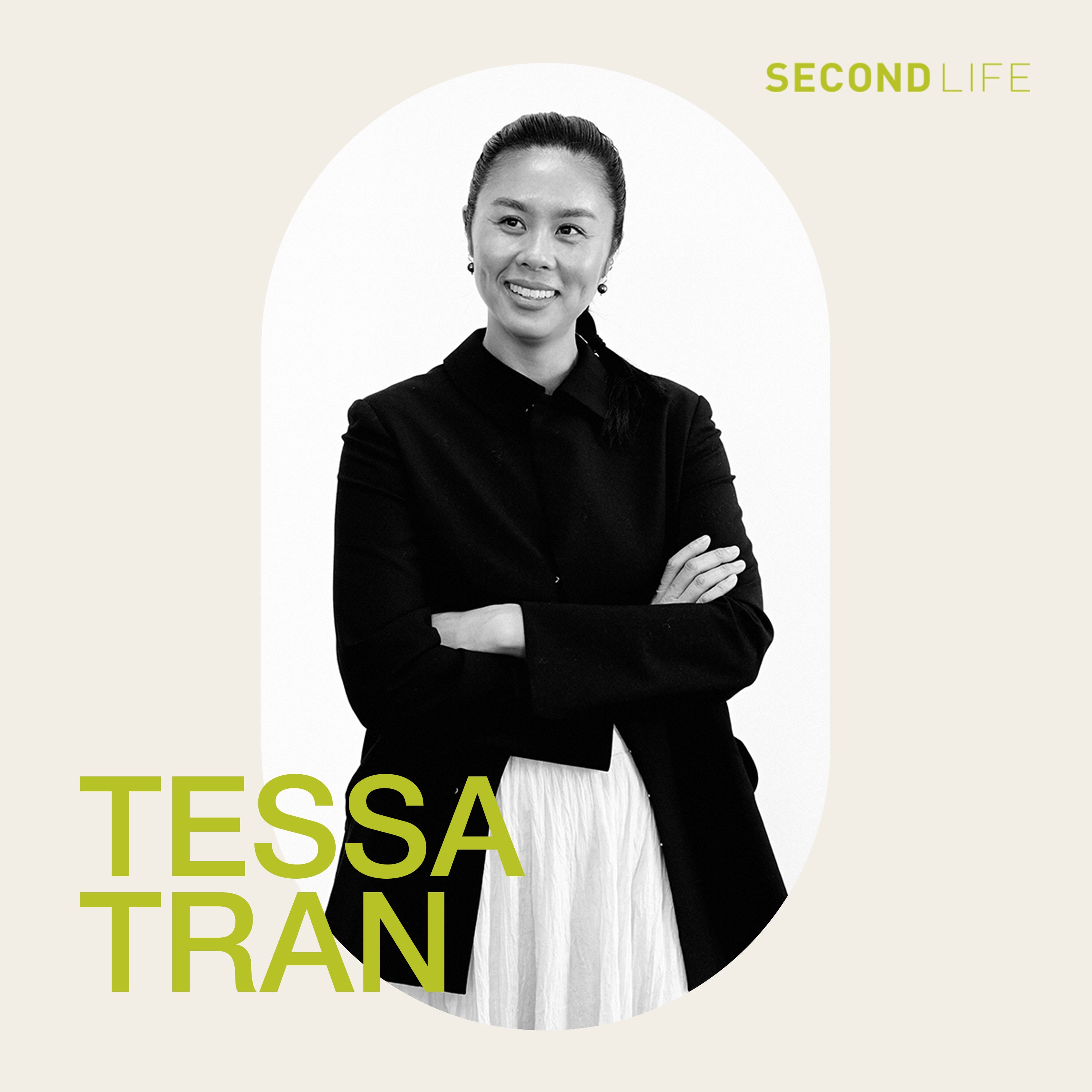
Tessa Chan Tran’s career journey from economics student to creative director and CEO of Chan Luu, plus how she rebuilt the brand after private equity—shifting distribution to direct-to-consumer, reintroducing ready-to-wear, and refocusing on fewer, better retail partners.
Tessa studied economics at UC San Diego (also a collegiate tennis player). After graduating in 2009, she completed an accelerated fashion design program at FITM while interning at Chan Luu. She started in quality control, then became a jewelry designer for five years, later creative director (appointed after her aunt sold the brand in 2014). In 2021 she became CEO in addition to creative director.
Quality control taught her to understand every business facet. Private equity growth goals conflicted with brand equity. As CEO, she could control brand storytelling via direct-to-consumer. She rejects “one-off” customization and seasonal reinvention.
QC work on wrap bracelets and Japan spec sheets; reintroducing ready-to-wear with one-size wrap skirts and the Chloe tunic; closing the LA showroom; buying Chan Luu back from private equity in 2023.
0:04Tessa Chan Tran: Hi, everyone. I'm Hilary Kerr, the co-founder and chief content officer of Who What Where, and this is Second Life, a podcast spotlighting women who have truly inspiring careers. We're talking about their work journeys, what they've learned from the process of setting aside their doubts or fears, and what happens when they embark on their second life. Today on the show, I'm speaking with the creative director and CEO of Chan Liu, Tessa Chan Tran. Before Tessa took over her aunt's beloved brand, she studied economics at UC San Diego. However, her heart was really in fashion. So after graduating, she took an accelerated fashion design program at FITM while interning at Chan Liu.
0:50Tessa Chan Tran: She started out in quality control, but later became a jewelry designer, a role she held for five years before becoming the brand's creative director in 2016. In 2021, she made a major pivot into the role of CEO in addition to her creative director duties. Today, Tessa continues to serve as both the creative director and CEO for the brand, overseeing their production of jewelry, ready-to-wear, and accessories. And in 2023, Tessa led the buyback of Chan Liu from private equity, returning the brand to its roots of being a family owned brand. Tessa was such a joy to speak with and I can't wait for you to hear from her.
1:33Tessa Chan Tran: Now on Second Life, it's Tessa Chan Tran. Tessa, you ready? Yeah, I'm ready. Okay, excellent. So we always like to start this podcast at the beginning. So what did you study in school? And much more importantly, what did you think you were going to be when you grew up? I studied economics in school. I went to UC San Diego. Amazing. La Jolla girl. And I also played tennis those four years too. So I was a collegiate athlete. I was a very competitive tennis player growing up. and I was lucky to be able to go to an amazing school and also play tennis all four years. As you were in school, what did you think you were going to do with that degree?
2:18So the first two years was general education and I was thinking a little bit about potentially grad school if I wanted to go to art school or business school post undergrad. And I just thought economics was sort of this safe general education that I can fall back on, you know, a little supply and demand, low hanging fruit. It was a great decision for me because I feel like I can apply a lot of those learnings to business today. But yeah, I guess in school, I didn't have a clear vision of exactly what I wanted to do. I was definitely interested in fashion. I was thinking about like when I was in middle school, I had this little belt business.
3:04Do you remember when those canvas belts were like so with a rhinestone buckle?
3:09Tessa Chan Tran: Yes. Yes. Maybe I was 11, 12 years old and my mom would take me to the bead source and I was rhinestoning these little belts and I started selling them to everyone at my school. So I was not doing my homework. I was rhinestoning these belts. You had a side hustle to do. I had a little side hustle and it was so fun. My best girlfriend at the time ended up transferring to Wynward. So I made her this beadboard and all of a sudden she was selling it to the girls at Wynward. I guess it started from a young age without even knowing like, I love fashion. I love business. The entrepreneurial seats were there.
3:47Tessa Chan Tran: The fashion seats were there. Yeah, exactly. Okay. So even though like you started out not having necessarily the clearest idea of like, this will be this next step. At what point did you decide on that next step after graduating? So after I graduated, my aunt was doing some very interesting things that really piqued my interest and also my mom. My mom left her daytime job of being a kitchen designer and became a hair accessories designer. So I had two very strong women in my life who were tackling fashion, running their own business, and I wanted to study fashion design. So there was a program at FITM.
4:30It was basically an accelerated fashion design program where I completed four years in two. Whoa. Yeah. So after I graduated in 2009, and then I went to FITM for those two years and graduated with a fashion design degree. And during that time, Chan's office was downtown. So I was interning for her and that's how it all started.
4:54Tessa Chan Tran: So what was that FIDM program like? Was it practical? Did you feel like you were learning useful skills or was it more theoretical? It was very project oriented and it was very different from UCSD. UCSD, I still have nightmares today. Sometimes I wake up in a sweat where I'm like, oh my God, my midterm and my final. So it's like your midterm is 40 % of your grade and then your final is 60. So that's two chances to pass the class. Whereas FITM was learning the basics, pattern design, so many things, but it was much more project oriented. Maybe like I could related to Project Runway, but at a much slower pace.
5:41Got it. Okay. That's cool.
5:42Tessa Chan Tran: So you're like really hands-on. And at the same time, were you interning for your aunt? Yes. Okay. So what were you doing with her? I was quality control. Talk to me about that. And also, can you walk us through what Chan Liu was at that moment in time? Yeah. So Chan, at that point in her career, The wrap bracelet was sort of on fire at that moment. It was a huge part of Who Won't Wear coverage. Yes, yes. It had a very long life. She had a store on Robertson. So there were just a lot of exciting things happening for Chan and she was growing. And I think having me on board was sort of this comfort because I worked really hard and I was very loyal.
6:28And if anyone knows Chan personally, she's very tough. And I think being related to her made her tougher on me. So it was very much of, you're coming into my business. I'm going to teach you everything A to Z. And I'm not going to bring you in where you're just going to point your finger and do this, do that.
6:49Tessa Chan Tran: Very much learning from the ground up. Exactly. So one of my first projects, do you remember the store Calypso? Of course. Yeah. So Calypso was a big account of hers and they had ordered like a thousand of these silk payette dresses. And I was cuising all of the payette dresses, making sure everything was sewn on correctly, specking all of those things. So why do you think you started in quality control? Why do you think that was a really great entry level place to be? I think that Chan wanted me to understand all facets of the business. Now it's like I can sit in a different seat, but still understand.
7:31And even the QC today, I still QC a lot of the merchandise that comes through the door, at least the tops, because I want to know, is our factory delivering? Is the sewing tight? All of those details. But yeah, knowing how to do everyone else's job, it's so important when you own the business and take on a different role. but I was doing shop channel spec sheets for years. And if you do business in Japan, they're very meticulous on their spec sheets. So those wrap bracelets, I had to weigh every single bead, list the bead, list the millimeter, multiply it by how many bead count was on that bracelet.
8:11Oh God. Each one took me like, oh my God, maybe at my fastest 30 minutes, but a lot of those spec sheets.
8:18Tessa Chan Tran: Okay. That's crazy. So walk me through the timeline of that internship and how long were you doing different things before you moved into a more elevated role? So I was interning those two years I was in school. I think I was going to school about three or four days a week. So after school, I would pop over to our office and work a half day, maybe from like two to five. And then when I graduated, it was this natural progression of, I was already sort of ingrained in learning about the business and she offered me a full-time job. So I said yes. And I started as an assistant designer, then a designer role.
9:02I was overseeing the jewelry category of Chan Liu.
9:07Tessa Chan Tran: And so what was the scope of your work in that role? And how much did you know about jewelry? I had no formal jewelry training and I studied fashion design, which was primarily ready to wear and garments. But I think my role was more of, even though it didn't have the creative director title, it was sort of overseeing the brand elements of the jewelry side and also ready to wear. We all kind of cross pollinated, but I think Chan really admired and respected my taste. Even at that time, I was so young and she felt like if she gave me a project that I could help execute it and she trusted my sense and ability.
9:54So that's how those roles sort of formed. And then also she brought me everywhere. So my title was jewelry designer, but I was traveling with her everywhere. I was going to India. I was going to Vietnam with her. I was on the design side, sourcing side, sales side. Remember trade show days? Yes. Going to so many trade shows, all of it. So I was very lucky to experience all of that at a very young age.
10:23Tessa Chan Tran: At this point in time, are you aware that this is the industry for you? Or are you still thinking like, who knows where this will go? I'm always interested in that moment when something clicks from like a job to a career? I always had the ambition of creating something of my own. And also it's like, sometimes you can get frustrated with leadership and, you know, the evolution of Chan Liu and her selling the company, leaving the company, working under new leadership was a huge learning experience. But I always felt like, okay, one day I might have my own line. I might do my own thing, or I might work for someone who I really admire and I'm drinking the Kool-Aid of that business and I want to be part of it.
11:10Got it.
11:11Tessa Chan Tran: Okay. So let's go back. Did you feel like in some of those early roles that you were prepared for them or how much of it was just like learning on the job, learning from Chan, figuring things out? Definitely learning on the job, but also a lot of problem solving. And I think it takes someone with initiative, not just to take direction, but think outside the box. Anticipate the next thing. Yes. Move quicker, move faster. And Chan was always moving at lightning speed. And that's something I so admire about her. Even today, she's pursuing fine arts. She's doing work on Kauai where she lives and farming and she has so many ideas and she just doesn't say it.
11:58She does it. And it's pretty incredible. You know, six months later, okay, boom. Now you have a permanent studio in India. You're doing your textile art. You're setting out to play a recital and she says it and she does it.
12:10Tessa Chan Tran: That's very cool. Okay. So go from intern to then jewelry designer. And then And at what point are you officially creative director? So I became creative director when Chan stepped out of the business. So when she sold the brand back in 2014, I think there was kind of like a year lull period. And then I was appointed creative director. So how was that a change for you? I think in that leadership role, there are people that had been at the company longer than me who maybe felt like they deserved it. It was sort of imposter syndrome of like, oh my God, can I lead? And at that point, the company was about maybe 30, 40 people and Chan was gone all of a sudden too.
13:00So there was this shift in like, okay, Tessa is moving into this role. Now we're underneath her creative direction. Let's see how that goes. How much management had you done at that point? It was mostly on the design side of things. We didn't have much visibility into the business, so it was more about managing the product, the merch plan, kind of filtering data and all of those things, and then leading the team to execute.
13:30Tessa Chan Tran: Was that a steep learning curve for you, or did you feel comfortable? Because management has been, I think, one of the harder things for me personally to learn along the way. Some people take to it more naturally. What was your experience with it like? It was definitely tough. And I feel like today I have a better grasp on it, owning the business, but being within an organization where I was moving into this role, managing a team of three or four, you know, at that point. And then it sort of expanded because all of a sudden now I'm really deep into production and other facets of the business. So working and managing people is 80 % of the job.
14:14Tessa Chan Tran: During this transitional time, as you're stepping into and embracing this role, one, there's just the skill set of learning, like, how do I work with all these people? And how do I make this work? And now with different ownership structure, how do you understand that piece of it? and then on top of it, start to apply your own creative vision? Because I'm wondering how far developed you were if like, I want to keep the brand the way it is. I wanted to apply some ideas that maybe were newer. How did that all sort of land? It was a little complicated because under new ownership and being private equity owned, the goal is growth.
14:56And it doesn't matter if it's at the expense of the brand itself. And that's where I was sort of kept in this creative director bubble where I felt like I was producing the coolest product possible. But at the end of the day, when we launch it online and it goes on sale two months later, you're losing all of that brand equity. Your customers are getting used to you being on sale. But from an outside perspective, it looks like we're doing great and the company is growing. Got it. So there was this mismatch of just two different goals. And because I wasn't intertwined on the business side and being in that creative director role, it was different.
15:40Tessa Chan Tran: And we're going to get into that. But first, from the creative side, how did you grow in those days? How did you expand that role or feel like you stepped into it in a bigger way? There were still a lot of limits, even being in that role, not being an owner. Being a creative director, sure, I was in charge of the shoots and the styling. If the collection didn't perform well, done. We're not giving that style another chance. It was sort of this like revolving circle, which is pretty exhausting and toxic. And it makes you feel like, okay, we need X amount of SKU count to hit X amount of dollars.
16:21And the company today is doing the best it's ever done since Chan left. And I don't even have a merch calendar. I put out in the line what I think is best and what fits, but I'm not following these certain guidelines that we were following before.
16:37Tessa Chan Tran: Interesting. I also want to talk about the fact that I read that you You maintained a lot of the relationships with the same factories that your aunt used. Is that correct? Yes. Yeah. So the factories that we work with, the one in Vietnam makes all of our production for jewelry solely for us. And Chan started that years ago when she started her business. So 30 plus years ago. And the owner of the factory is like a brother to Chan. And then our factory in India, Chan had been working with her sister. So their businesses grew at the same time. They were introduced and they love each other so much.
17:22And her daughter didn't take over her business. She started her own boutique design manufacturing company. and when I decided to reintroduce Ready to Wear to Chan Liu, I reached out to her. So we grew up together.
17:38Tessa Chan Tran: That's amazing to have, like these are second generation relationships now. We're complete family. When I go to India, it's not like I'm just in and out of the factory, like we hang out. I have a full other part of my life in India. I have friends and family there and I love it. So it's a different experience than the normal work trip. When you stepped into a leadership role and it's now like your desires, your design, your vision, did that change those relationships at all? You know, because I think that sometimes in my experience, when you have external partners that you work with, sometimes there can be resistance to change because everyone's in a groove and they know what they're doing and change can be complicated.
18:25Tessa Chan Tran: And some people love it and some people don't. What was your experience like? I agree a thousand percent. I think change is very uncomfortable for people in general. And when I took ownership of the company and started implementing things I wanted to see more short-term and long-term, you kind of see who can adapt to the change and where there's resistance. And you sort of need to win people over. And that comes with the leadership and the energy behind explaining why we need to move in this direction. It could be tough. It is tough. And it takes time and it can't happen overnight. But yes, there is definitely some resistance.
19:07Tessa Chan Tran: Which I get. It's like, this is easy. This is comfortable. We know what to do. There's no friction to repeating something. But that also doesn't necessarily evolve you forward or keep you competitive. Exactly. Okay, so talk to me about your relationship with your aunt as you've been going through all this. So the private equity sale, she's out doing her own thing. She's obviously family. Was it hard to maintain a relationship? Did she not want to know what was going on? Was that actually like a helpful clean break for you? If it's not too personal, I'm curious about like the relationship dynamics.
19:44When she sold the business, she sort of didn't want to be involved. She showed up to board meetings, but she was living her life. Clean break. Clean break. She said, you know, I'm selling the business. You need your time. You need to shine. It's not going to work if I come in here and say, you should do this. You should do that. You need to figure it out on your own. That is an unusual gift. Yes. She's a mentor if I come to her with an issue or need advice, but she's not that interested in being part of my day-to-day.
20:23Tessa Chan Tran: Okay, so walk me through how you ended up in the role of CEO in, if my research is correct, 2021. So we had two CEOs in between after Chan left. And then when the second CEO left, they offered me the position and they had talked about it internally for a while. Should we go out and look for a new CEO or should we give Tessa the chance? Did you know that was coming? Did you feel it? No. You were surprised. I was surprised. And a big part of it was Chan's old CFO, who really grew the company with Chan from when Chan brought him in, he kind of changed the skeleton of the business and allowed her to be able to do what she does best, which is create.
21:15And he was with her for 20 years. And he knew me since the days I was interning. And when it came up, I was scared. I was nervous. I wasn't sure if I could do it. And I had a really great talk with him. And he was like, you have the intellect to do it. You know the ins and out of the business. This will expose you to so much more of the business side. Do I think you can do it? You can do it. And I respect him. But yeah, it gave me the confidence to feel like I could do it. But that year he also retired. It was like a full new stage.
21:51Tessa Chan Tran: So what was your process like of deciding whether or not to take the job? Did you have to weigh certain things? Did you have any asks? What did you have to sort of settle in your mind before you said yes? No, because at that point there was no one on top of me other than the ownership group. And they were based in Japan and they had their goals of growth, but they weren't telling me what to make and what to do. So your remit was grow. We don't care how, just grow. Correct. Which is kind of amazing, right? They were very supportive in what I wanted to do. So when I took that CEO role, There were things that I wanted to change distribution-wise, product-wise.
22:37Like what? The company grew to such a large scale that you have overhead. And when you have overhead, you have responsibility. And if you have a season that doesn't perform, it can be scary. And operating sort of on that level where maybe there's not a lot of cash in the bank and you can't have a bad season is pretty scary. So during that time, I also went through a very tough restructure. And that was like my first experience of a restructure.
23:10Tessa Chan Tran: And that was your plan? No, that was with my experience with the other two CEOs. Got it. And then the pandemic happened. So all of those things coupled together. And then post-pandemic, that's when I took on that CEO leadership role. But it sort of prepared me, the company being the slimmest it could be. And being able to rebound from retail and that experience of the pandemic and also pre-pandemic, the company was 80 % wholesale, 20 % direct. And then post-pandemic, now it's the opposite. Okay. So that's a massive fundamental structural shift that happened as you were stepping into the role. Yeah.
23:55Tessa Chan Tran: And did you want to own that direct-to-consumer business and grow that? Was that part of your personal remit as you stepped into the CEO role? It was perfect timing because being direct allowed me to control the brand. Yeah. It wasn't up to my retailers of how I want the brand to present. It's like I could control the packaging. I could control the experience. I can control the branding. So it was this blessing in disguise. We're like, oh my God, we're losing so many accounts. We're losing so many sales. now direct to starting to grow, but then we were focusing more on what we were doing as a brand rather than relying on our retailers.
24:40Tessa Chan Tran: To do that storytelling. So for our audience who might not have as much visibility into all of this, can you speak to a little bit about how wholesale works? Are you having to design specifically for all of these different retailers, which then is diluting the brand to some extent, right? So for the wholesale side, for the listeners who don't know, the wholesale retail side of the business is traditionally before the whole e-commerce business side of things, you would go to a trade show six months, eight months before it actually launched to market. You would show your collection to buyers. Buyers would place their order.
25:20And everyone would buy differently. Everyone would buy differently and you would ship the order come spring. So springtime, you know, selling season, we were showing in September and then the product was shipping in February.
25:35Tessa Chan Tran: But with that, did you have to make specialty things for different retailers or was it just that the wholesale was the wholesale? So at that point in the business, we had to say yes a lot, even when I was like, no. So like a retailer would say, can you make this in red? And even though you didn't want to make it in red, you would make it in red? It's almost like you couldn't say no to the order, again, because of the overhead. So it was sort of this like taking the company, shrinking it to a manageable size, and then kind of resetting. And also, you know, last year I decided to close my LA showroom.
26:14I decided to no longer do trade shows. And that was cutting off a faucet of all of these like little orders that I was like, oh my God, how am I going to be able to replace that? And that's scary too. So it's sort of doing it naturally and step-by-step and not overnight. But my learnings from that is, you know, when you're too accessible and you're letting everyone write the line, like we had accounts coming in, they would write maybe every other season, but pick up five necklaces and two bracelets, three dresses. More work than it's worth. To me, it was like, what are those five necklaces going to do in your store?
26:56Our best partners are people who really believe in the brand and will take a wreck. Because they get it. Because they understand and they have a direction. And they have clients that we know like it. Exactly. So it's partnering with those boutiques and those retailers that understand what we're doing and not afraid to jump in instead of showing everywhere, taking every little order and shipping a million different accounts. And ultimately, I want a smaller account list. Fewer, better, bigger. Fewer, better, bigger. Exactly.
27:31Tessa Chan Tran: Got it. Okay. So then I also read that one of your first major moves that you made as CEO was bringing ready to wear back into the brand, which has been a very successful decision. Talk to me about how you came up with that idea and saw it through. So ready to wear really spurred as a passion project. I dream about having that brand that's all encompassing of like you're stepping into the world of Chanlu. And that could be home. That could be lifestyle. That's how we live. Because also it's like what I produce on a day-to-day that needs to carry throughout my own lifestyle. So taking bits and pieces of all of that, it's like ready to wear was sort of this itching I had.
28:19And also to bring wholesale back in. So we were working with a lot of accessory buyers. And if the product is free size, one size, it counts as an accessory. And I was like, can I get into this retailer if it's a free size? But also I was thinking about the brand and Chan Lu and we're an accessories brand, right? So people come to us for accessories and jewelry. So the idea started as, can I create a ready to wear line that's one size and treat it like an accessory where you layer on. It's like these pieces that are layerable and resize. So we have sizes now. It definitely expanded, but that was the initial concept.
29:04Tessa Chan Tran: So how do you go from concept to actually having product in stores when it comes to ready to wear? So, I mean, we launched it on the wholesale side. I think people were excited to see that part of the business again. Do you remember what that launch assortment was? It was all one size. Wrap skirts, chiffon dresses, the Chloe tunic, the sequin Chloe tunic. A lot of those styles launched the first season. So we still have a lot of free size in the line, but it started slowly. There were multiple times where there was feedback from our own team internally, ready to where it's not profitable. We think you should probably cut it.
29:47You should cut these styles. And that's where it comes in with the persistence and being the owner of the company where I said, no, I love this product. Time will come. We're not going to shut it off and I'm not going to create something 25 % different and call it new and start again. So yeah, we kept at it. And even if you look at the line today, there are so many styles that were in the first collection, but it's sort of reintroducing these core pieces that you can wear season after season. I think designers have it really hard because we're expected to reinvent ourselves five times a year.
30:27Tessa Chan Tran: But like, that's the problem too. I know that there are brands that I love, but it felt like every season it swung to being a different customer. And I'm like, you need a reason to buy something new in theory. I get that. But sometimes brands swing so much. You're like, I don't even know who your customer is anymore. The gulf is too big. And I understand the desire to attract new customers or newness, but sometimes people over-index on that side. Exactly. There has to be a through line. It has to go back to the Chan-lu-iverse, if you will. It has to have a thread that connects it. But that comes with knowing your line and what you want to do.
31:06I think also under different leadership, it was like going back to the merch plan. We need to do this. We need to make candles. It's like, why does Chan-lu need to make candles? We're a jewelry brand. but developing what you're good at and why your brand is special and having a genuine life to the product season after season will create less work for you in the long run. I'm not looking for a new inspiration every season. Even when we do our presentations, I want to be a little bit more experimental. I get asked, so is your goal to do runway? and no, that's not my goal. I want to try something else.
31:49I want to be more experimental in showing the collection and that doesn't mean the traditional sense of runway.
31:55Tessa Chan Tran: Okay. So I want to talk about all of that, but first, can we discuss a little bit about the other transition for the company, which is that your aunt had sold a majority of her stake to those private investors back in 2014, but you bought it back in 2023. Talk to me about that. Yeah. So the ownership group owned Chanlu for about eight years. And at that point, they were looking to sell the company. So they hired some investment bankers and they were shopping around. And at that point I was clued in and it was scary because I didn't know what the future was for my job, for everyone else at the company.
32:41It was definitely scary. I had a lunch with a dear friend and mentor, Jerry Cole, and he advised, you should buy the company back. And it didn't even register with me because it was sort of like, okay, I went through this lifespan with Chan, with different leadership. Am I going to go off and do my own thing? And he sort of presented that idea to me. And I was like, whoa, wait, should I? and make it a family brand again. And also I was sort of at this point where I'm like, do I want to close this door and start something new? And ultimately I was going to be in a similar job scope or in fashion and the structure already existed.
33:27My husband was like, you're going to go off, do your own thing, start it from scratch. And this already exists and it's already a beautiful thing. And you have these relationships and you should definitely try. So I warmed up to the idea and that's how it happened. So I presented it to the owners and Chan and they were all very supportive.
33:49Tessa Chan Tran: That's amazing. How long did that process take and what was the most complicated piece of it? It took about a year. And I guess the most complicated piece was figuring out how to buy the company and also wrapping my head around the responsibility. It's very scary. And I really care about the company. I care about the people. A lot of the employees and designers, you know, have been at Chan Liu for 10 plus years, a long time. Chan's very first employee, Dung, who's one of our jewelry designers, has been with Chan for 30 years. He does all of our metal smith work in-house. Having the support from my aunt and also my brother to buy back the company was very encouraging.
34:41My brother has worked for the company for several years and is an amazing sounding board for me. He helps me run the day-to-day operations and just to have both of their support was very important.
34:54Tessa Chan Tran: So talk to me a little bit about that because you've said, and I quote, now that it's my baby and it's a family brand again, I'm very particular with how I want to see things. What does that mean exactly? One that's coming to mind because we're talking about wholesale is distribution. I think for so long we're in this cycle of trying to create product for everyone. And I think it's differentiating yourself and your products. I mean, it's been two years so far of ownership. Everyone is seeing the progression with the brand. Yes. They're finding discovery with Chan Liu, and we're designing so far ahead in advance that it's like just coming to light now.
35:41Tessa Chan Tran: But I think there's something really beautiful about what you said. The brand does not need to be everything for everyone. Right. And there's a freedom that comes with that. And it makes the brand more powerful because there's a clarity to it. Exactly. I don't want to be everywhere where you're saying yes to every special request, every collaboration. I guess what I've learned is when you're sort of one foot in, one foot out, the project is just never a success. You need to be all in or nothing. If it doesn't excite you a thousand percent and you don't want to jump in full body, the product at the end doesn't land.
36:23And I've definitely learned that throughout the years.
36:26Tessa Chan Tran: Let's go back to what you were saying about the ready-to-wear and the feeling of like, oh, this might not be fully landing yet, but obviously it has. How did you figure out with ready-to-wear what that assortment should be? No line plan, just gut. But talk to me about that because you said earlier, you're like, I don't design to like a calendar. You just design to what you want to design to. I mean, how cool would it be not to have a calendar anymore? It's just like I launch when I launch. But no, I don't have a March plan anymore. We used to follow those March plans. And I last two years threw that out the window and really just created what I wanted to create and what excited me.
37:07I mean, yeah, sure. we still look at data from our sales, but it doesn't lead the design anymore. And we're not just creating product to create product to throw it down.
37:20Tessa Chan Tran: Like this pant needs a shirt. So we need to make a shirt. Go buy that amazing t-shirt from, you know, whoever. And even like I have customers saying, oh, you need to make this basic. And I'm like, but why? I can list 10 other t-shirt brands that do it so great. I don't need to make a t-shirt. Pair the pant with your favorite top. I feel like that's one of the things that you do well. It's like, this might be a staple, as in something that you wear often, but it's not a basic. Exactly. Yeah. And those two things are quite different. Yes. So I also read something that I love, which is that you said that we're not looking to create anything that you wear for just one season.
37:59Tessa Chan Tran: Talk to me a little bit more about this ethos and why that's important for your brand. It goes back to the sentiment of the fashion cycle of recreating every season. And there are a lot of reviews and there are a lot of expectations. And the cycle seems to move so fast. It's high-waisted, it's low-waisted, it's big legs, it's skinny legs. It's like, what? And that's one year. That's one year. It's scary how fast it moves, but the mood is very similar season after season. So I like for our customers to be delighted and excited and surprised by details and elements of the collection. But I think the reason why the collection is doing so well is because it's also very wearable.
38:49The fabrics hang beautifully, their structure, there's like so many elements that I love about the collection that feel very unique. And part of that is being able to go to the source and design and have the access to the atelier in LA, in India and Vietnam. When I am looking for sequins, for example, I'm not choosing it out of a swatch book where I'm like pointing my finger. I'm like, let's do this and then have AI like put this into a spec and a mock. It's like, I'm going to the sequin shop. That part is very exciting to me. It's the process, bringing those things back and then having these ideas.
39:34And I enjoy that type of work instead of sitting at a computer and designing with a mouse.
39:41Tessa Chan Tran: Fair. I feel like over the last few years, you've had a couple of like really viral hits as well. Like the taffeta pant has just turned into such a monster of a business. How do you feel about when pieces like that break confinement and just go become huge, huge conversation pieces? It's very exciting. I'm doing this thing where I'm trying to live more in the moment instead of worrying about the future. No, but I mean, there's no greater feeling than seeing something from the brand out in the world and being worn by so many different types of women and men. It's an awesome feeling. Like to see anything in the wild that you made, it's the best feeling in the world.
40:29Tessa Chan Tran: How do you balance sort of like a particular piece taking off in popularity with the rest of the line? Because you don't want everything to depend on a single piece. Sure. There are a lot of other brands that are doing taffeta now and you have to keep going. All my eggs aren't in the taffeta pant. And for me, it's like, I always say, if you have a good thing, people are going to hop on the train. And for me, it's like, you need to evolve. You need to see past that and you need to continue. So it's like, I just came back designing fall, winter of next year. And I'm so excited by that work and evolving, the pants and evolving the trench and all of those things that are happening instead of feeling almost scared, like when is the bubble going to burst?
41:19Tessa Chan Tran: Well, that's the thing about having ideas versus copying, if you will. The people who have ideas will always have new ideas. Exactly. It's the same thing about ideas in media. You'll start something and then all of a sudden you see like four of your competitors doing the same thing that you're doing, but that never has fazed me because, I mean, it's annoying at times, but I also do not stress about it because I'm the one who came up with the idea in the first place, and I am confident that I will come up with the next idea, and they can just keep copying. If you stress about it, you start looking around, you start looking around, you get confused, and it's just do your thing.
41:56Tessa Chan Tran: Eyes on your own paper. Yeah, do your own thing. Talk to me a little bit about the future because now at this point in time, You've been in this seat for a moment. I do think it takes a couple of years to like really acclimate to a new role. You're enjoying a lot of success right now. As you think ahead for you and the brand, what are you looking forward to? I am looking forward to spending more of my time in the creative space. I'm very much like attached to the office. it's building a stronger foundation that's going to keep up with how fast I want to run. And I think when I'm able to unlock that part of it, it's like sky's the limit.
42:44But I am enjoying the hardships on a day-to-day. It really is fun. And it's like real life business school of every single day dealing with, it could be a production thing. It could be a distribution thing. There's things that happen every day, but I'm enjoying it and I'm having fun. So that's the main thing.
43:06Tessa Chan Tran: So one of the things that we like to talk about on this podcast is mistakes because we all make them over the course of our career, but we don't always talk about them. And I think it's important for women to hear stories of other women making mistakes and getting through it because that's about resiliency at the end of the day. So I'm hoping that you can tell me about a mistake that you've made at any point in your career and what you've learned from it? I think being a people pleaser, saying yes a lot, but that comes with growing up and creating boundaries for yourself and like knowing who you are.
43:44Obviously, like I want to be liked and, you know, I want to do this and I want to do this for everyone, but it could be very harmful to the business. It can be very energy sucking. I can give an example, please. You know, we used to take on specials like, oh, if this necklace is gold, could you do silver? Yes. This pendant is labradorite. Could you do onyx? Yes. But we were pleasing our customer and I wanted to please them and I wanted to say yes. But then all of a sudden we were looking at our production report and we had a thousand SKUs that were one-offs that needed special attention. And that's just a small example of how one thing that I don't think looked like a mistake, you know, at the time became a mistake.
44:31It adds up. So again, it comes back to focus and focus on what you want to do. If I put this colorway out in the line as a short, it's not going to be a pant and it's not going to be a skirt. It's going to be a short and sort of sticking to the focus.
44:48Tessa Chan Tran: I love it. Okay, so a lot of the folks who listen to this podcast are in their first lives and maybe they want to switch industries altogether or maybe they want to stay in the same industry or even the same company and do something different. As someone who has evolved her career, what advice would you give someone who's thinking about stepping into a different aspect of their career or a different role, but just hasn't done it quite yet? I think embrace change. Change is fun. It gets you outside the box. It gets the wheels turning. You know, people can get very, you know, stuck in the rabbit hole of the day-to-day.
45:27But if something excites you or you want to try something else within the company and you express it and you can do it well, embrace the change. Don't be scared of it.
45:38Tessa Chan Tran: I love that. Okay, and my last question is my favorite question. which is if you could go back in time and speak with your younger self, give your younger self some advice, some career advice or life advice, what would you say? I would say set the tempo. Oh. You know that saying that's like fake it till you make it? If you're genuine and you're putting something out in the world that is uniquely you and you believe in it and you put out that energy and passion behind something, not because of the dollar sign, but because you actually believe in it, you have this passion and fire underneath you and people are attracted to that.
46:21They see that energy instead of just like, I'm going to half ass put it out there. But I think if you set the tempo, people around you start hopping on the train and they're like, I want to run faster. I want to do better. I'm going to think outside of the box, but it stems from you, no matter what position you're in. You set the tempo and people want to be like that. I love it.
46:43Tessa Chan Tran: Well, Tessa, this has been such a pleasure. I feel like the who, what, where world and the Chan Lu universe, I feel like have so much overlap. It delights me to no end. Thank you so much for taking the time to sit down and talk to me. Thank you, Hillary.
47:08Tessa Chan Tran: That was the creative director and CEO of Chan Liu, Tessa Chan Tran. For more inspiring interviews with women like Tessa, head on over to secondlifepod.com, where we have so many more for you to peruse. If you like today's show, please subscribe on Apple Podcasts or Spotify or wherever you get your podcasts. And don't forget to rate and review us. We love seeing you spread the word on social. And now you can tag us in your posts. We are at Second Life Pod on Instagram, Twitter, and Facebook. We always want to know who you're interested in hearing from on the show. So send in your requests to hello at secondlifepod.com, or you can DM us on Instagram.
47:49Tessa Chan Tran: I'm at Hilary Kerr. The show is at Second Life Pod. Our DMs are always open. I'm Hilary Kerr, and you've been listening to Second Life. This episode was produced by Hilary Kerr, Summer Hamaris, and Natalie Thurman. Our production assistant is Grace Ingram. Our audio engineers are at Treehouse Recording in Los Angeles, California. And our music is by Jonathan Leahy.
Tessa Chan Tran is the CEO and creative director of Chan Luu. Before she took over her aunt's beloved brand, she studied economics at UC San Diego, and after graduating, she completed an accelerated fashion-design program at FIDM while interning at Chan Luu. She started out in quality control and later became a jewelry designer—a role she held for five years before becoming creative director in 2016. In 2021, she took on the role of CEO in addition to her creative-director duties. Today, Chan Tran continues to serve as both creative director and CEO for the brand, overseeing its production of jewelry, ready-to-wear, and accessories. In 2023, she led the buyback of Chan Luu from private equity, returning the brand to its roots as a family-owned brand.
Learn more about your ad choices. Visit megaphone.fm/adchoices
Scan the code with your iPhone camera
Listen in the app.