Ask ChatGPT

 Second Life
9 Nov 2026 · 50m · 21 chapters
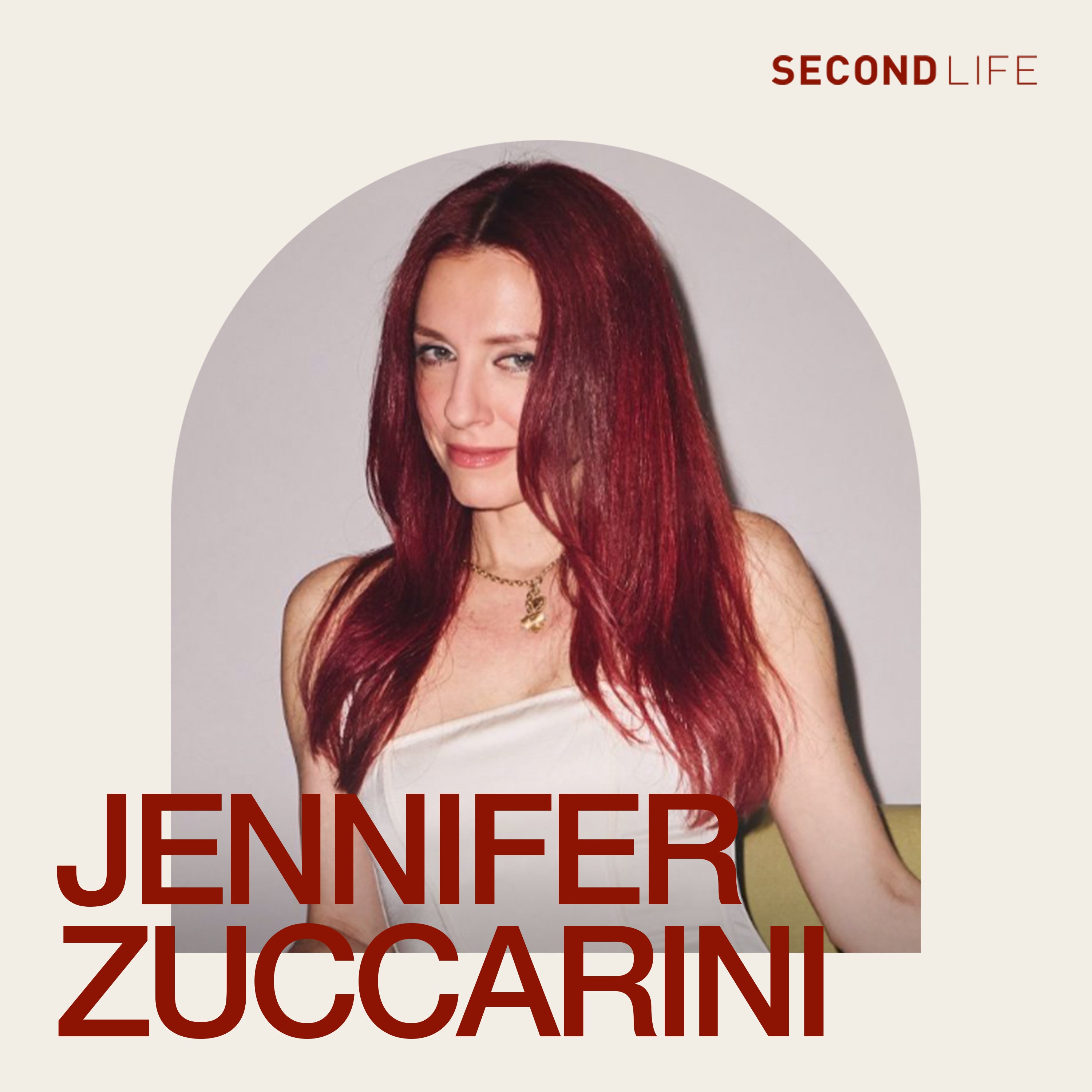
Jennifer Zuccarini’s career pivots in fashion and lingerie—how she moved from FIT-trained designer to co-founding Kiki de Montparnasse, then joining Victoria’s Secret as design director of Intimates, and finally launching Fleur du Mal (2012). She discusses building “luxury to legitimize intimacy,” learning lingerie production at scale, and creating a fashion-forward DTC brand while expanding into retail.
Canadian from Toronto; studied art history and BFA in Montreal; attended FIT in early 2000s. Worked as assistant designer at Nanette Lepore (Garment District). Did freelance trend forecasting after visa sponsorship challenges. Co-founded Kiki de Montparnasse (2005) as creative director. Worked at Victoria’s Secret for ~3.5 years as design director of Intimates. Founder/creative director/CEO of Fleur du Mal.
Take meetings even if you think it’s “not your path”; learn every business function early; corporate constraints can improve output; celebrity wear creates “halo effect” but sales depend on approachability and photography.
Kiki’s New York retail concept (selling lingerie, sex toys, videos, art); Fleur’s launch during Hurricane Sandy; Sienna Miller’s platinum silk bias slip dress paparazzi photo; Charlie XCX wearing Fleur; early retail/press momentum via Barney’s and Net-A-Porter.
Written by AI. May contain mistakes.
Exploring Jennifer's early life, education at FIT, and her initial career steps.
“Then in 2005, she co-founded her first intimate apparel brand, Kiki de Montparnasse, and served as their creative director for three years.”
Jennifer shares her experiences working at various fashion brands and the challenges she faced.
“Okay, so we like to start this podcast at the beginning.”
Discussion on transitioning to freelance trend forecasting after her assistant role.
“And so going to FIT was like a intro as to what my life was going to be like in New York, where I was at school from 9am till two in the morning often, and just completely working all the time.”
Jennifer recounts the founding of her first brand and the unique market proposition.
“You're not going to get paid anything there and they're not going to sponsor your visa.”
Insights into designing and producing lingerie, including the technical aspects.
“You were so young and it's such an iconic brand.”
Learn about the challenges and financial strategies involved in launching Kiki.
“You need people that that's all they do is sew and make bras.”
Discover the valuable lessons learned during the entrepreneurial process at Kiki.
“And we were hosting things all the time, sometimes three times a week.”
Explore Jennifer's decision to join Victoria's Secret and the experiences she had.
“Once you actually like came down from Paris and cloud nine of that type of experience.”
Understand the vision and concept behind Fleur du Mal and its unique market approach.
“I wasn't going to break Victoria's Secret.”
Learn about the complex identity behind Fleur du Mal and its design philosophy.
“And they kind of had to be the way we were making them.”
Hear about the challenges faced during the launch of Fleur du Mal, including Hurricane Sandy.
“And learnings can be both positive and negative.”
Discover the early reception to Fleur du Mal and the core products offered at launch.
“So our launch was basically happening during hurricane Sandy.”
Understand the complexities involved in creating both lingerie and ready-to-wear clothing.
“So I was just trying to cover these different things that I think are important for your lingerie wardrobe.”
Learn about significant milestones that helped establish Fleur du Mal in the fashion industry.
“Like, oh my God, you guys launched Ready to Wear.”
Explore Fleur du Mal's strategy for physical store openings and market selection.
“So talk to me a little bit about brick and mortar because you have a few locations.”
Delve into the impact of celebrity endorsements and relationships on Fleur du Mal's brand.
“having the physical experience of the brand and being able to see everything we do, trying things on.”
Discover Fleur du Mal's approach to diversifying into sports and bridal lines.
“But you also have a sport line and you also have a bridal line.”
Discover Jennifer's vision for Fleur du Mal and upcoming collaborations.
“There are pieces that you can work out and it's not athleisure.”
Jennifer shares insights on mistakes made and the importance of self-care.
“So we like to close out this podcast by asking our guests the same three questions.”
Jennifer offers practical advice for making career changes.
“So a lot of the folks who listen to this podcast are in their first lives and they know that they want to make some sort of change.”
Discussion on the significance of self-care and managing anxiety in life.
“Okay, and then my last question is also my favorite question, which is if you could get into a time machine and go back in time and speak with your younger self and give your younger self some advice, what would you say?”

Get the gist, explore an idea or ask about something said.
 Claude
On Second Life, what are the key points of this episode?
Searching your listeningAutomatic transcript. May contain errors.
0:04Hi, everyone. I'm Hilary Kerr, the co-founder and chief content officer of Who, What, Where, and this is Second Life, a podcast spotlighting women who have truly inspiring careers. We're talking about their work journeys, what they've learned from the process of setting aside their doubts or fears, and what happens when they embark on their second life. Today on the show, I'm speaking with the founder, creative director, and CEO of Fleur du Malle, Jennifer Zuccherini. Before she founded her iconic brand, Jennifer studied at FIT in the early 2000s. After she graduated, she was working with New York-based designers in the garment district before briefly working in freelance trend forecasting.
0:49Then in 2005, she co-founded her first intimate apparel brand, Kiki de Montparnasse, and served as their creative director for three years. She then transitioned to working for Victoria's Secret as their design director of Intimates, where she worked for four years, learning all about Intimates production on a massive scale. In 2012, she returned to entrepreneurship and co-founded her second company, Fleur du Mal, a brand with a fashion-driven approach to luxury lingerie and ready to wear. Today, she continues to serve as creative director and CEO of Fleur Dumont. Jennifer was such a joy to speak with, and I can't wait for you to hear our conversation.
1:34Now, on Second Life, it's Jennifer Zuccarini. All right, Jennifer, are you ready? I'm ready. Okay, so we like to start this podcast at the beginning. So what did you study in school? And much more importantly, what did you want to be when you grew up? Well, I'll start with what I wanted to be. So I did know from the age of around eight that I wanted to be in fashion. Before that, I wanted to be a belly dancer, which is so random. I love that. And it's so funny because the story came up recently, and I think in some way, probably actually influenced my work a little bit. But my best friend when I was little, like five, six, seven years old.
2:15Her parents were Lebanese and they had a restaurant in Toronto called Cleopatra. And I used to go there sometimes after school and see the women rehearsing. Oh, very glamorous. And so as a child, people will be like, what do you want to do when you grow up? And I was like, I want to be a belly dancer. And people will be like, a ballet dancer? And I was like, no, a belly dancer. So that was the original thing I wanted to do. But from pretty young, I knew I wanted to be in fashion. About eight years old, I took sewing lessons. I was sketching. I was somehow really excited just to be in fashion from a young age.
2:51And then in school, I studied art history first. I moved to Montreal and I did a BFA there. But I knew I wanted to be in fashion, but I just took a little detour for a while. Well, they're related, fashion and art. Very related. And actually, it was really useful to study fine arts. And I was also doing studio art. So I was drawing and sketching and I loved it. I dropped out of high school. I did not even graduate high school and I was not into school at that time. But when I went to college and studied something I really loved, it changed everything. I did that, but then I realized that I wanted to get back to fashion.
3:27That was my love. I had been working in fashion before that as a teenager. So I applied to FIT in New York and got in and then I moved here and the rest is history. Talk to me about FIT. Talk to me about moving to New York. What was that experience like for you? Because it feels very dreamy from the outside, but what was the reality of it? You know, I'm Canadian. I'm from Toronto. That's where I grew up. So I think moving to New York from anywhere is a challenge, but I think moving from another country, you know, you have to sort out getting a visa, getting into school. So for me, getting accepted into FIT was the happiest day of my life because I felt like I was on my path and I was able to pursue my dreams, but it was challenging, I would say, but it all fell into place.
4:16I love that. So talk to me about what the post-FIT job hunt was like. I mean, I feel like New York is never a straightforward job hunt in general, but I'm curious about what that experience was like for you. Going back to FIT, which was, I think I did a very intensive design program there. So it was condensing and it was like double the amount of classes and half the amount of time. Casual. Yes. And so going to FIT was like a intro as to what my life was going to be like in New York, where I was at school from 9am till two in the morning often, and just completely working all the time. And when I graduated at that time, you would get a one-year work visa.
5:00So I was able to get a job. I was working from a really young age. I had a job when I was 15. I worked even before that in my family's business. So I was somebody who's always had a job and I felt like it was easy for me to get a job. Like I would just turn up somewhere and back then with a resume in my hand in person and get a job. And I did the same when I graduated FIT. I got dressed up. I went around the Garmin Center. It was easy to look up where designers were. I had my resume and I showed up and I was like, I'm looking for a job. That's how I got my job. That's amazing. I got a job at Nanette Lepore, which is a New York designer.
5:35Do you know Nanette? Not personally, but like she was everything. I mean, like that was such an important brand. It was such a fun brand. I had gone to a sample sale and bought a bunch of runway things from one of their shows. And I turned up in this crazy outfit and I was like, hi, I'm here looking for a job. And the woman at the front desk was like, well, let me get someone for you who was a designer there. And then she was kind of looking me up and down, like, we can't just like walk in here. You know, I feel like her and I kind of connected and she's like, all right, I'm going to get an net for you.
6:08That's amazing. And then they hired me as an assistant designer. And my first job was hustling and running around the Garmin Center every day. All day long, I did that to be like, draw this embroidery and now take it to this factory and then go pick up this from this other factory and be in a fitting. And my first week, I worked every day, nine to nine. I worked Saturday and I worked Sunday because we were getting ready for a show. And it was like no questions asked. It was just like you just said yes. There was no work-life balance. There was no boundaries. Zero. I worked in New York in the early 2000s as well.
6:42And it was just what you did. That's what you did. That's what was expected. And it really taught me a lot. And everyone had to be there together and, you know, had to make this happen. And everything was on a tight deadline. So I learned so much from that experience, from navigating the garment center and how to make things in New York, working with factories to just the pace of what it means to run your own brand in New York. Crazy. Okay. So from there, how did you end up pivoting into freelance trend forecasting? So I didn't do that for very long. But what happened was after my one year visa ran out, one of the biggest challenges I had is you need someone to sponsor you.
7:24Right. And that's expensive and a process and all of that. Yes. And if you're just starting out in your career and you're basically like an assistant designer, it's such a competitive industry. Like so many people want to do what you're doing. I remember going to see a headhunter and I was like, I want to work for Marc Jacobs. And she was like, honey, people come and work there for free. You're not going to get paid anything there and they're not going to sponsor your visa. Wow. So that was the first time in my life that it was a challenge for me to get a job. And I was really like pounding the pavement.
7:54So while I was doing that, I was doing a little trend forecasting freelance because I had done something similar in Montreal. I had a random job in Montreal. And this is like late nineties where I was going around and photographing cool boutiques and things happening in Montreal all and just like posting them on the internet and writing a description, like just doing the whole thing with really no background in that at all. But I've always loved trends and I feel very connected to the cycle of trends. And there's almost like an intuitive part of me that loves all of that. So someone I know gave me a job doing trend forecasting for a denim company.
8:29I love that part of it. It's actually a big part of what I really enjoy doing to this day. So talk to me about how you figured out what your next steps would be. So what I realized was don't go into the interview telling people you need to be sponsored for a visa. Right. Tell them that after they fall in love with you and they want to hire you, which, you know, is a bit annoying for the people too. But I decided I needed to change my approach. And I finally was hired by a denim brand that was representing an Italian denim brand called Rifle Jeans and designing them in New York. So I interviewed for that job.
9:05They were like, do you know how to do tech packs on Illustrator? And I was like, yes. Did you? No. I never used Illustrator. For our audience who might not know what a tech pack is, can you explain that? Yes. So basically it's like a document that shows all the technical specs of a garment from, you know, every pocket, the button, the space between the stitches, like every component, every measurement. it's a very detailed drawing and I knew how to use Photoshop and I knew how to use InDesign, but I just hadn't used Illustrator. But I taught myself on the job. I told them kind of last minute I needed to be sponsored.
9:40At that point, they were really set on hiring me. And so they did it very reluctantly. And that made all the difference because I needed that to stay working in fashion in New York. And I did that for a little while. And then, you know, I knew I always wanted to start my own brand. That's all I ever wanted to do from back when I was eight years old. I was like, I want to have a fashion brand. I want to do all those things. And I wanted to get some experience, but I really pretty quickly wanted to start something. And I ended up co-founding Kiki de Montparnasse in 2005. That's so wild. Why do you say that?
10:14You were so young and it's such an iconic brand. And because you were still in the very beginning of your career. Yes. I wasn't that young. I was like in my late twenties at that point. I know, but I felt old, you know, like now you look back on it and you're like, Oh my God, that's so young. I see people that are 30 in my office and they look like babies. Yeah. But at that time I felt like I was so old. I knew people that were famous at 25, you know? So I was like, yeah, I am behind. I need to catch up. And that was part of my drive and reason to really say yes to things and just put myself out there.
10:51Cause I I felt the need to make something happen as quickly as I possibly could. And I think that naivete is helpful. If you knew everything that it took, you might be like, hell no, I'm not doing that. It would be daunting, to put it mildly. Okay, so you co-found this brand. Talk to me about the brand proposition. Why that brand at that moment in time? The brand proposition was to basically use luxury to legitimize intimacy and to help people feel more comfortable with buying things to enhance their intimate life, to make that experience as close to a luxury experience. Yeah. It didn't really exist.
11:30There wasn't really a space like that. There was not another retail store I could tell you in the U.S. that had that. No. And it was really a first and it was exciting and fun. And we didn't know how Kiki was going to be perceived in the world. It was really about the retail store in New York. You know, we were selling like sex toys and videos and like art and clothing and lingerie. And the proposition was like, create a world and it's everything to enhance your intimate life. How were you designing, creating, buying, figuring out the assortment of the products? that you sold? Because that's really technical, right?
12:09And like its own specialty. It's like the difference between being a pediatrician and being a heart surgeon. They're both doctors. Like it's all part of the same world, but they are very different specialties. Very different. And I didn't study that in school. It was an option at FIT to study intimate apparel. I had no interest in doing that, but I personally loved lingerie. I was one of those people that just would get so excited and wanted to buy these beautiful, expensive lingerie pieces from a young age that I couldn't afford. But I wanted to do something that was a true fashion brand and collection because I wanted to really be taken seriously as a designer.
12:47And I felt like the lingerie part wasn't going to be that. So I had never designed lingerie and I just took out every book I could, studied, found people to help me. And, you know, I had no idea how that was going to go. And I was so lucky that I was able to have that chance because I don't think a lot of people would say now you have no experience designing a lingerie brand, but here design a lingerie brand. I mean, I guess it happens with celebrities and they have that support, but different, but I figured it out. I was working nonstop. At least that was standard for you. Yes. But building a brand, you know, we were working seven days a week and I cared so much about everything and trying to get it right.
13:29We were making everything in New York, which was very challenging to make bras in New York City. Because for the most part, most bras are made, I want to say like in Indonesia, right? Like very, very little is made here because there are certain parts of the world where there are almost like centers of excellence where everything is made. Yes. The reality is there are no more factories left in New York anyway that actually produce lingerie, like underwire bras. There are some swim factories still. You know, there were some factories like that back in the day in New York, but that kind of went away.
14:03You need the right machinery. You need the right hands. You need people that that's all they do is sew and make bras. Again, very technical. Very technical. I mean, you're dealing with sometimes 26 components in one bra and very small measurements make a big difference. An eighth of an inch makes a difference when you're fitting a bra. So you need someone that really understands how to sew and assemble Intimate Apparel. But we were, you know, wanted to make everything in New York. So had to figure that out. And everything about it was like so challenging, but a great learning experience, right?
14:34Because we had to really start from scratch. I remember when you guys launched, the brand really felt very developed and that it had a very clear point of view, which I thought was so amazing. How did you figure out the financial piece of all of this? Like, how did you fund all of this? Were you still working freelance? Like, what was going on? We did have some money. So very different from my current company where I'm the sole founder and I had to raise all the money and do all that. At Kiki, I was a co-founder and I was the creative director. One of our other partners brought in all the money, his own money.
15:07Plus, we had 10 investors or so. It wasn't a ton of money, but it was enough to build out this beautiful retail concept. And that was so important for the brand. I mean, it was really all about that. And, you know, it was a different era. I think, you know, we had a whole building on Green Street. It's wild. And where Loewe is now was our store. And then upstairs we had this gorgeous showroom and then we had our offices. It was much more affordable to do that in Soho. Or in New York in general. Yes, definitely. Okay. So you get Kiki up and running. It felt like it was an overnight sensation. What are some of the biggest lessons that you feel like you learned during your time?
15:45So many. I think, you know, that was the first time I had really started a brand from nothing. I really connected with that experience. I love building things. I love creating just like the emotional connection that people have with the brand. I love when someone's like, I love Fleur. I love Kiki. Like they want to be a part of it. And so I think I learned a lot about building a collection from scratch, creating a retail experience, merchandising. I did everything there. Like on the creative side, I bought for the store. I merchandised the store. I did the windows. I did the e-com. I did those shoots.
16:19I wrote all the copy. I did all the packaging. I had so many roles there. And I think that gave me a chance to learn about many aspects of running my own business and really understanding developing a community around a brand. We did a really great job. We had so many events. This was like 2006, 2007. Brands weren't doing that as much. And we were hosting things all the time, sometimes three times a week. People wanted to like do stuff in our space. We almost became an event space. It was a little bit out of control actually, but it was also a great experience. I learned a lot. That's one of the great things about entrepreneurship is like, especially in those early days, you're doing everything.
17:00And so you become a really excellent generalist. And it also makes it very clear what things you don't want to do when you move up a little bit. I always joke, I was our IT guy in the office because we didn't have anyone. Like I was taking out the trash. I was setting up computers and making sure the printer works and then also writing every single story and uploading it to the newsletter and fixing the code. You have to do all of the things. And I think it's important also to really have that understanding of all aspects of the business and you carry that forward. Absolutely. And at some point I have done pretty much every function in the business, especially at Fleur.
17:40I think it's really valuable for people that want to start their own company to try to have that experience and understand every function. And it doesn't mean you want to do all of that as you grow, but there's no part of it that I don't understand or can't relate to. I get it. Okay. So let's talk about your next pivot. So three years after co-founding Kiki, you pivoted to working for Victoria's Secret and you were the design director of Intimates. Talk to me about this decision. I am fascinated. And I also think it's so cool to be invited into this gigantic brand that had to be such a wild experience.
18:22Oh, it was crazy. So I was at Kiki and was thinking about starting another brand, But I felt like I needed a little space before I started something else. And it was a real crossroads in my life and career where I was deciding between either going to work for a pretty big New York designer who approached me or this role at Victoria's Secret. So my friend, Kim Schraub, was basically like running pink. And she said to me, you know, Victoria's Secret really wants to meet with you. And I was like, well, I'll meet. But no, that's definitely not going to be for me. I'm curious about it, but that's not going to be my path.
18:57I can't relate to that. I don't know that customer. I like luxury. Like I had all these reasons why it was a no. That's how I felt. I was like, I need to go back to fashion now. But I took the meeting and I think that's always important to take the meeting because you only know what you know. So they met with me and they're really pitching me on creating this like luxury part of Victoria's Secret. And none of this really actually happened in the end, but I probably met with Victoria's Secret 10 times and learning more and understanding more about the role. I was like, you know what? I have never had an experience like this.
19:30I never been anywhere corporate. I could learn so much from this. And if I decide to stay in this path more in the lingerie space, which I loved, why not go work for the biggest lingerie brand in the whole world and take all that knowledge with me to start my next brand. So that was my thinking, but it took me a long time to get there. And it actually took me putting my ego aside a little bit. No, I love it. It's like in the best possible way. It's like espionage, like go and figure out how the giant makes things. And then that's like grad school. And then you can take that knowledge and apply it or not apply it, but at least, you know, and knowledge is power.
20:10I think it's so clever. I love it. It was great. And I had my number and I was like, this is it. And I hadn't made any money. Kiki looked really glamorous, but I was making no money. My account was always at zero all the time. And I was very used to living. And I think as an entrepreneur, you kind of can get very used to living on the edge like that with finances. And Victoria's Secret also gave me an opportunity to actually save money for the first time in my life. And to breathe financially. To breathe financially and to put money away to start my company. I don't know how I would have done it if I didn't have that opportunity to actually even save for my future to be able to launch my own brand.
20:49And it was a great experience. My first day at Victoria's Secret was getting on a private plane because they had private planes then. and flying to Paris with the executive team and then drivers pick you up and then checking into the Bristol and then having some champagne and then shopping for three days, you know, with drivers and someone carrying your bags for you and everything planned out. And I was like, wow. Glad I said yes. That's quite a sea change. I mean, what an experience. What a way to drop in. Once you actually like came down from Paris and cloud nine of that type of experience. What was the day-to-day like?
21:28Did you feel like you knew what you needed to know to be in that role? Were you learning on the job? I'm so curious about how it was different from working on your own or working independently. I think it took a minute for me to get acclimatized to the corporate structure and even what people were talking about. There was so much lingo there, but I caught on pretty quickly. And you know what? It was so refreshing for me in a weird way because being an entrepreneur, as you know, your schedule is so important and you're always wrestling with like what you should be doing next. I go to Victoria Secret, my whole schedule is planned by a team that just does that.
22:04There's just like an ops team and I knew it every day was going to look like for a year out. And there was some relief in that for me. I was almost a bit relaxed for the first time. I was like, oh my God, I'm like, where do I have to be? Okay. There's no decision paralysis. It's almost like being caught in a current, then there's something really lovely about such clear expectations and such clear deliverables and having all of the infrastructure to make certain things happen. You're not having to create the infrastructure. Exactly. The infrastructure was there. I had a big team. I was not used to that.
22:38Which is a skill to learn how to work with. Yes. And I hadn't managed a big team. Not that I had a massive team, but I had a big enough team that it was a change from where I had been. I had a team that just did color and people that just did print. You know, at corporate, the bigger that you are, the more people are doing the little parts of everything. And part of that was also hard for me because I like controlling every aspect of it so much that I'd be like, well, but I don't want to use that print. You know, you have a team that just does that and they're like here and you're like, well, wait a minute.
23:07No, let's go back and do that together. So it was, I think, learning how to work within this much bigger team where they want to give you like, here's your merchandising plan. Here's the color story. Here are the silhouettes that we need to get behind. There's a lot of information fed to you. That you might not agree with. You might not agree with it, but you also have to take it and put your spin on it, your point of view to make it feel, you know, fresh and exciting. It's almost like Project Runway where it's like, here's the challenge. And now what can you do with 10 ,000 coffee filters? You're like, ah.
23:43I also think there's an interesting like beauty and freedom in having those constraints. sometimes because you're like, I don't like any of these things, but I still have to make this work. Yes. And also the demand of the number of styles that we and my team were responsible for, we were doing around 80 styles a month or something like that. Good God. And so you were cranking things out. And that was something I had to learn as well, because I love to rework things. I fit things many times. I care about these little details. And you can't do that there. You have to let things go. And you have to say, I did my best.
24:20It's not perfect, but it's got to go. And that was a discipline I learned there. I still don't do that 100 % with what I do now because it's a little bit different. But I think it was good to push myself to work at a totally different pace, a totally different price point. Totally different team. Totally different team. I think coming from a startup and being an entrepreneur and feeling the weight of the world on my shoulders all the time, I went there and I didn't feel that at all. I felt supported. I felt that people were excited about what I was doing. I felt like I wasn't going to break Victoria's Secret.
24:52There's nothing that I could do that was going to break it. I can only make it better. Yeah, I love that. So how long were you in that role before you started thinking about trying something of your own again? From day one, I was thinking about starting something else. It was always in my plan. Originally, I thought, let me do this job for two years and then I'll start something. I ended up staying there for almost four years, like three and a half years ish. I was happy I stayed longer, but in my mind, there was a ticking clock reminding me, don't get too comfortable. That's what I was worried about at one point that I was getting too comfortable.
25:27And I had to think too, like, is this the path you want? I could have had a very lucrative, successful path staying at Victoria's Secret. I was on track to continue growing and excelling there. And I would have made probably a lot of money if that continued. And I had to like say, I'm ready to walk away from all of that and start my own brand. So the last year I was there, I was feeling restless. I knew it was time for me to leave. And I also felt a little stagnant. You kind of do the same things over and over again. Like you know what your schedule is going to be like. It's very insular. Like you're meeting with the same people all the time.
26:01You're not out in the world as much. So I felt a little like, I don't know, everything was closing in on me. I needed to get out. And so I started working on a business plan and I hired someone freelance to help me work out the financial model and just talk through how I was going to do this. I was like nights and weekends, just chipping away at this thing until I got it to a place where I was able to talk to a few people about it. I spoke to a good friend of mine. I wasn't pitching him to invest, but I was just telling him what I was doing. And he said, well, if you do this, I'll invest. And I was like, oh, that's a good sign.
26:37Yeah. I was like, okay. And as soon as I had a couple of people say they would invest, I felt confident enough to resign and focus full-time on launching Fleur du Mall. So talk to me a little bit about the concept and how it was different from what you had worked on in the past. So it was definitely influenced from what I'd done in the past because what I'd done in the past was me, but I wanted to do something that was a little more affordable, a little more tied to fashion, but still surrounding desire and intimacy. And I don't know, there's something about tapping into desire and that feeling that lingerie and also the clothing that we do gives you that I think is so intoxicating and amazing.
27:19And I want to infuse that in everything that we do. This idea of beauty, intimacy, how people are connecting. I just love that world. I wanted to create something where I could build that out across many categories. At that time, I was like, I want to just really focus on direct to consumer. I want to focus on e-com. I was going back and forth on opening a flagship store. And then I said, no, I just know that if I do that, it's going to become such a big distraction. Let me just focus on getting the e-commerce part of the business strong, and then I'll open retail after that. So it was a little more affordable.
27:52It was more fashion, more fun, a little more playful. And I like having younger customers as well that can participate in the brand. And, you know, at Kiki, our bras were like$300. Yep. And they kind of had to be the way we were making them. So I like having sort of different price points. And I can still do, especially now that we are opening stores, I'm able to infuse these higher price point things in. And we're going to be doing more of that because it's easier to do in a physical space a little bit than online. Flirtamal is really an expression of all of that. And I loved the duality of the name.
28:24It really spoke to me as something that's beautiful, but has an unknown, mysterious and elusive side that I think is how people are, right? You're more complex. And especially as a woman, there's a lot going on. And finally, I'll say, too, it's like being able to embrace your sexuality as a woman, as a powerful woman, and that those things don't have to be exclusive to each other. Correct. So as you said, you were designing like 80 pieces a month in your time at Victoria's Secret, where it was just volume and velocity were the most important pieces of that work. How were you thinking about the scope for Fleur and like what felt right to you?
29:06I'm curious about what parts you brought over or learnings that you brought over. And learnings can be both positive and negative. Like I learned this and I'm never doing that over here or vice versa. I'm curious about how your design process and assortment had changed from Kiki to Vicky to Flutter. I think what started at Kiki was very niche and special and limited small types of collections. And then going to the polar opposite at Victoria's Secret. And, you know, Victoria's Secret is number one, it's a bra business. So a lot of the attention is around bra launches. and I loved learning about that.
29:45I've taken some of that to Fleur. I definitely could be doing more, but you know, our number one business is also bras. And I love the idea of really getting behind an exciting new bra. And I think Victoria's Secret pioneered that. You know, we work on a fashion calendar. So we show when everyone else shows our collection. So we're not on a lingerie calendar, which is actually earlier. We stay on this fashion calendar because the fashion part of our brand, the clothing part has become a really big part of who we are. I love that. Okay. So talk to me about launch. So New York 2012, it's launch day.
30:22What was your strategy? What was the initial reception like? Walk me through those very early days. So our launch was basically happening during hurricane Sandy. Oh my gosh. I remember. Oh no. For some reason for me, because I think there was so much going on. That part almost escapes my memory or maybe I like blacked it out. We were getting ready to launch and everything had to be put on pause. That's crazy. Instead of doing one big opening party, this was something that I think was probably not a good idea, but still I wanted to do it. I wanted to do five days of events. And my PR company was like, do you think that's the right idea?
31:03I mean, maybe just do like one big event. And I was like, no, I want to do it this way. I want to have a pop-up, one night's a dinner, the next night's a band. That was like the worst idea. My God. And my PR was like, I think we should change the date because of Sandy. And I was like, no, no, let's keep it. It's going to be all right. And then you're just like, we're going. Yeah, we're going. I'm like, it's happening. Oh my God. So one of my investors let me use her beautiful loft downtown in Tribeca. And we almost had a fire the first night. Great. There was like an electrical spark that the whole place smelled like burned hair right before people were about to arrive.
31:41There were so many things happening. It was crazy. That's wild. It was comical almost. So the launch happened and, you know, there was just a lot of positive momentum. People were excited about it. I got into Barney's pretty early and I was so happy about that. The dream. The dream. And I had some pretty good press to launch. And, you know, back then it was really about like press. People writing about your opening. Not influencer at all because Instagram had just started, although we were posting on Instagram right away. So it was very grassroots in that way of just like getting out there. Luckily, I had a lot of celebrities and people kind of gravitate to the brand early and wear it.
32:23And it was just kind of growing, you know, but it wasn't like an overnight thing. It was like a constant just working away at this thing, building, building, building. What was the product assortment like at launch? You know, there's still some things in the collection now that have been there since day one because to me they're just core who we are as a brand like the bras that charlie xcx has been wearing lately the satin topstitch bra that was in the collection from the very beginning it's just like classic fleur the collection had lingerie and ready to wear from day one so we had body suits we had slip dresses we had leather pants like it was a tight collection but we covered a few different categories i wanted a beautiful lace collection so we had like our french levers lace group.
33:07I wanted a silk collection. I wanted something in sheer tool. So I was just trying to cover these different things that I think are important for your lingerie wardrobe. We didn't have, you know, molded bras or like we were too small to do that type of production where you do like those big t-shirt bra kind of things that most women wear most days. We didn't have that kind of thing. What I wanted to create were beautiful things that I felt women could wear every day. So they're beautiful, but they're also comfortable enough and not something that you just wear for a special occasion. So that was fit, the fabrics, all of that to this day, obviously, are so important to me.
33:43I love it. I'm just like putting on my logistics hat for a second, as I'm thinking through the complexity of both like technical bras, and then also all of the technical of clothing. It feels like you really made it complicated. I made it so complicated. I don't know if I'd call it a mistake, but like I did not make it easy. It was super challenging But that's part of what makes it special too. It's ambitious Yes, and many people said to me don't do that just start with the lingerie But I said well if I just start with the lingerie people are never going to take it seriously for the fashion I have to have it from the beginning So it's part of the dna but it wasn't necessarily true because Even though i've had like clothing ready to wear since day one people still today 13 14 years later are like Like, oh my God, you guys launched Ready to Wear.
34:33I'm like, we've always had it. I don't think it was a make or break moment to have to have it from day one. But yes, I did not choose the more lucrative, easy path that I could have done. No, I mean, that's one of the things I love about it. Again, it's the ambition of it and the world building that goes along with that. I just think it's special. Talk to me about some of the big defining brand moments that have happened since your launch. What are some of the big things that like have really moved the needle for you and for the business. Those early years, I think about those moments of bigger retailers also taking us on and having that exposure.
35:08It's a stamp of approval. It was a stamp of approval. And then being on Net-A-Porter, like also a stamp of approval, like being in the best stores, I think having certain celebrity moments those early years, it just legitimizes things for people. Because if you're a brand that people don't know, people can't really even remember the name of your brand. But if they see that like Beyonce is wearing it, then they're like going to take a little more notice and maybe remember that image. So there were some key moments like that. One that kind of stuck out to me because it was very early on was Sienna Miller wore one of our slip dresses, this platinum silk bias slip dress.
35:43There was this paparazzi photo of her that just looked incredible. You know, you can have someone amazing wear something, but if you don't get that shot of it, it kind of doesn't do the same thing. This photo just went everywhere and people were obsessed with it. And it helped at that time. So early on, put us on the map a little bit. Yeah, it's a billboard. It's a billboard. And, you know, I look back on all the things I was doing in 2013 and 2014. I was like everywhere. I was traveling everywhere. You know, I was doing trunk shows, showing up in London. I was just doing everything I possibly could to get exposure from the brand.
36:18And there wasn't one thing that was the defining moment. It was more just like constant momentum and excitement and things happening that propelled me forward. I love it. It's so cool. Okay. So talk to me a little bit about brick and mortar because you have a few locations. You have some more opportunities and some more launches coming in 2027. Talk to me about how you know where to go and when and what's the right timing. Yes. So we opened our New York store, I think in 2017, our Nolita store around then. And that kind of started as a pop-up and then we turned it into a full-time space. We've been on that block, you know, for nine years probably, but now we just took this beautiful corner space.
37:03So we've expanded our original flagship, which is so beautiful at Broom & Mott. And then we opened Los Angeles. We signed a lease January 2020, which is the worst time. Just what you want. So we opened West Hollywood. And, you know, I think because we're an e-commerce company first, we have that data. We're able to understand where our customers are. And also from me being out there and traveling, and I'm always looking at retail opportunities. We were kind of waiting for the right thing to come up for us. So we found a great location in West Hollywood. Then we opened in Williamsburg, because again, we have a lot of customers in Brooklyn.
37:39And that just happened very quickly. We were literally one day just looked and found a space and we're like, let's open here. And that was an easy one. Whereas Madison, we opened on Madison Avenue earlier this year. that took years to find the right space because Madison is so expensive, so competitive. Spaces move very quickly there. So that was a much more thoughtful process. And we're so happy there. So we opened at Madison in 72nd. We're opening in Dallas. That feels smart. Yeah, it's a big market. And I think women there love dressing up and doing their hair. And I think it's going to be good.
38:14And we're looking to open probably four more stores in 2027. That's so cool. Yeah, I'm excited. I love it actually, because I feel like there's something so nice about people coming in and having the physical experience of the brand and being able to see everything we do, trying things on. I'm feeling really good about it. But I think what takes time is finding the right location. Right. So we'll look in multiple areas at the same time and whatever comes up first that feels right will be our next venture. I love it. I want to talk about the celebrity piece of it as well, because you mentioned Charlie XCX.
38:47She's obviously a big fan of the brand, but there are so many. Lily Reinhart and Dua Lipa and you name it. I feel like everyone loves you guys. Did you have a specific plan around building a celebrity strategy or is it just sort of a happy coincidence? And also, does that impact the brand? Because there are some folks who are like, one person wears it and it changes the fortune. And other times they're like, yeah, we've been on the biggest people in the world. And that's not the thing that really has moved the needle necessarily. early. I'll say that even from Kiki, I worked with a lot of stylists.
39:21I think the nature of what we do appeals to celebrities and performers because that's a lot of what people want to wear going out, going on stage. So I think I've developed a lot of great relationships with stylists and people that know that they can come to us for things. Right. My team, we try to accommodate a lot of that. It's hard though. It's like very, you know, last minute. And it's also technical, like having interviewed so many stylists over the years. So like something that's going to be on stage, it's like it's performance. It is a different beast than someone who's like sitting in their boardroom.
39:51Yeah. Very different. And people come to us with like crazy mood boards and they want this corseted, beaded, feathered something in three days. And, you know, sometimes we try to do it and they'll be like, we don't have any budget. I'm like, you don't have any budget? Crazy. It's crazy. But, you know, if it's somebody we love, we often do it. So I think that people know they can come to us and that we understand fit and that we can create these things. It's kind of like a fun part of what we do, but it takes my team out of what they're supposed to be doing. If we get certain requests for certain celebrities, I'm like, we have to do it.
40:27We have to stop everything. We have to like make this thing. And it doesn't always translate to sales at all, but I think it adds this halo effect. But it's your part of the culture. Part of the culture. It's fun. We do a lot of things and we don't see anything from it. Or maybe we see it six months later, we don't even have that style anymore. That happens a lot. And that's annoying. It'll be like Taylor Swift, wear this dress, but we don't have it anymore. But there are certain celebrities that do move the needle. But again, it's like how they're being photographed. Is it something that is approachable?
40:56If you're seeing someone on stage wearing something really over the top, most people aren't going to buy that, even if you were selling it. Right. But it is an important part of what we do. And it's been in my DNA for a long time. But I do say no to things more now than I used to. Got to weigh it out. That makes sense. Obviously, there's like the ready-to-wear piece of it, which has been around since the beginning. But you also have a sport line and you also have a bridal line. How do you think about categories and how do you think about rollout? Sport was a big one that we'd been talking about for a long time.
41:28I had been mulling it over for years. And five years ago, if someone asked me if we were going to do it, I would have said no. The world has changed. The world has changed. And I felt actually like we could offer something that I wasn't exactly seeing on the market. And I think it's quite related to what we do. And I really care about fabric. So we just started going down that path and it all made sense. And we launched more of a capsule. We're rolling out more, but that was a little bit of a test for us. And I'm excited because I feel like it really does have a unique point of view, but it is technical.
42:02There are pieces that you can work out and it's not athleisure. I mean, we will have some pieces like that for fun, but I really didn't want the basis of it to be athleisure. I wanted it to be actual things that you're working out in because I work out a lot. I love that you just make it so hard for yourself. Like it is a totally different beast, right? You know, there are similarities. I mean, maybe they're cousins, but like they are still very different. They are different, but I guess I like a challenge. Clearly, but it's the vision. And I love that. I mean, you've done it repeatedly throughout your career.
42:37I mean, like you're crazy, but it's cool. I find it so admirable because you're very clearly doing this from a point of view, which is brand focused and brand centered and not just what's the easy thing to do or what's the obvious thing to do or what's the, you know, like money grab thing to do. You're so thoughtful about the way that you really do everything, Fleur. So it's so lovely to see from the outside. Oh, thank you. I care so deeply about the brand. That's clear. So can you tell me about any fun moments that you're looking forward to for the brand as we approach the next year? Obviously, we have more stores coming out.
43:21Are there any specific pieces or launches that you could tell me about? I understand you probably can't, but I still have to ask. I know. We have a fun collaboration coming out, but I'm under embargo. Is that the right word? Whenever I say that, it sounds so like serious. Well, it is. It's a really fun, unexpected brand collaboration. And I think it turned out so cute. I love all the pieces. My team's really excited. So that's going to be coming out first week of December. That's like our big holiday collaboration. And then we have something else coming out that's kind of fun that we haven't announced yet.
43:55And that's going to be with a person and coming out in January. So we have a big six months ahead. That's amazing. I mean, for us, holiday going into Valentine's Day is like our Super Bowl. It's a busy time for us. But there's more active coming. There's more stores. There's some collaborations. There's events. I mean, it's fun. I love it. I love it. Okay. So we like to close out this podcast by asking our guests the same three questions. And the first one is about mistakes because I think we as society tend to give the highlight reel and talk about all of the amazing highlights that happen over the course of our career.
44:36But that is only part of the story. And I think it's really important for women to hear other women talk about mistakes because it demonstrates resiliency and it reminds people that you can have an absolute horror show happened and come back from it. So with that in mind, I'm hoping that you can tell me about a mistake that you've made at any point in your career and what you've learned from it. I mean, I've made many mistakes. I will say early days of starting Florida Mullen for many years, I was really not taking care of myself. I wasn't paying myself, barely anything. I really put my needs last.
45:13And I regret doing that a little bit. I don't think it was the best move. It just was where I was at that time. I felt like I needed to prioritize everything else I was doing, my team. And it's not like I don't value myself or my needs. It was just more that I'll do that later. And you can never get that back. Like I can't go back and pay myself for the years I didn't pay myself. I mean, you can. Well, you can hopefully, yes. But there's something about that time period that was difficult. I could have made it a little bit easier on myself. I probably could have asked for a little more help. I'm really not great at asking for help.
45:47I do need help, but I feel that I need to do everything on my own. And so I think those were some mistakes I made. I wasn't taking care of myself. I wasn't getting the right support that I needed when things were really tough. Sounds like entrepreneur life. Okay. So a lot of the folks who listen to this podcast are in their first lives and they know that they want to make some sort of change. Maybe they want to change industries or maybe they want to stay in the same industry and just do something different. As someone who has made some pivots in her career, what advice would you give someone who's standing there thinking about making that big jump but just hasn't done it quite yet?
46:26A big jump sounds daunting. I think you need to break it into smaller steps and smaller wins and just start moving towards that goal. And if you start to feel that there's positive momentum and things are opening up for you in that pursuit of whatever you wanna do next, I feel like that is a good indicator that you should probably go that way. But start with things that are manageable, whether it's starting to work on your business plan or making a list of the 10 people that you should be meeting with to pursue this next thing. I just think you don't have to do everything in one day. You don't have to leave your job and not have a foundation.
47:01I think you need to start building that and then you can always change your mind. By the way, you can always probably get a job again and go back to whatever you were doing before. I think that's really important for people to hear because I think folks sometimes feel like, well, if I leave, I can never go back, but that's not the case. That is not the case. Doors remain open. Maybe they're different doors, but there's always a path. Absolutely. Okay, and then my last question is also my favorite question, which is if you could get into a time machine and go back in time and speak with your younger self and give your younger self some advice, what would you say?
47:34I struggled a lot with anxiety from a young age and I wish I dealt with that earlier. I think I accepted that I was going to always have this anxiety. I've learned the tools to manage it. And I think that I didn't have those tools. I didn't even think about trying to manage it. It was just something I was living with. And I think I would go back to my younger self and try to like ease that in some way and say, you're going to be okay. You don't need to like go into these things feeling like I can't breathe. And And I think I wasn't. So I don't know if that makes sense, but I'd go back and try to help myself figure that out.
48:13Yeah. You know, I think the moral of the story is self-care is really important, whether that's therapy or financial or whatever it may be. But you got to take care of yourself. And I know that it's hard to sometimes prioritize that, especially as an entrepreneur, especially as a woman. We're always in service of something else, but you got to put your own oxygen mask on first, right? Exactly. Well, Jennifer, thank you so much. This has been such a pleasure. I know our audience is going to love your story as much as I did. And I just thank you so much for taking the time. This was just a delight.
48:49Thank you, Hilary. It was so nice. And I hope I can see you in person sometime. I would love that.
49:02That was co-founder, CEO, and creative director of Fleur Dumas. Jennifer Zuccherini. For more inspiring interviews with women like Jennifer, head on over to secondlifepod.com where we have so many more for you to peruse. If you like today's show, please subscribe on Apple Podcasts or Spotify or wherever you get your podcasts. And don't forget to rate and review us. We love seeing you spread the word on social. And now you can tag us in your posts. We are at secondlifepod on Instagram, Twitter, and Facebook. We always want to know who you're interested in hearing from on the show. So send in your requests to hello at secondlifepod.com, or you can DM us on Instagram.
49:43I'm at Hilary Kerr. The show is at Second Life Pod. Our DMs are always open. I'm Hilary Kerr, and you've been listening to Second Life. This episode was produced by Hilary Kerr, Summer Hammeris and Natalie Thurman. Our production assistant is Grace Ingram. Our audio engineers are at Treehouse Recording in Los Angeles, California. And our music is by Jonathan Leahy.
Jennifer Zuccarini is the founder, creative director, and CEO of Fleur du Mal. Before launching her lingerie brand, Zuccarini studied at the Fashion Institute of Technology in the early 2000s. After she graduated, she worked with New York–based designers in the Garment District before briefly working in freelance trend forecasting. Then, in 2005, she cofounded her first intimate-apparel brand, Kiki de Montparnasse, and served as its creative director for three years. She then transitioned to working for Victoria’s Secret as its design director of intimates, where she worked for four years. In 2012, she returned to entrepreneurship and cofounded her second company, Fleur du Mal, a brand with a fashion-driven approach to luxury lingerie and ready to wear. Today, she serves as creative director and CEO of Fleur du Mal as it continues to grow, launching a fifth brick-and-mortar store in 2027 and maintaining a roster of dedicated celebrity fans such as Charli XCX and Dua Lipa.