Ask ChatGPT
 Sentimental Garbage
5 Nov 2026 · 58m · 28 chapters
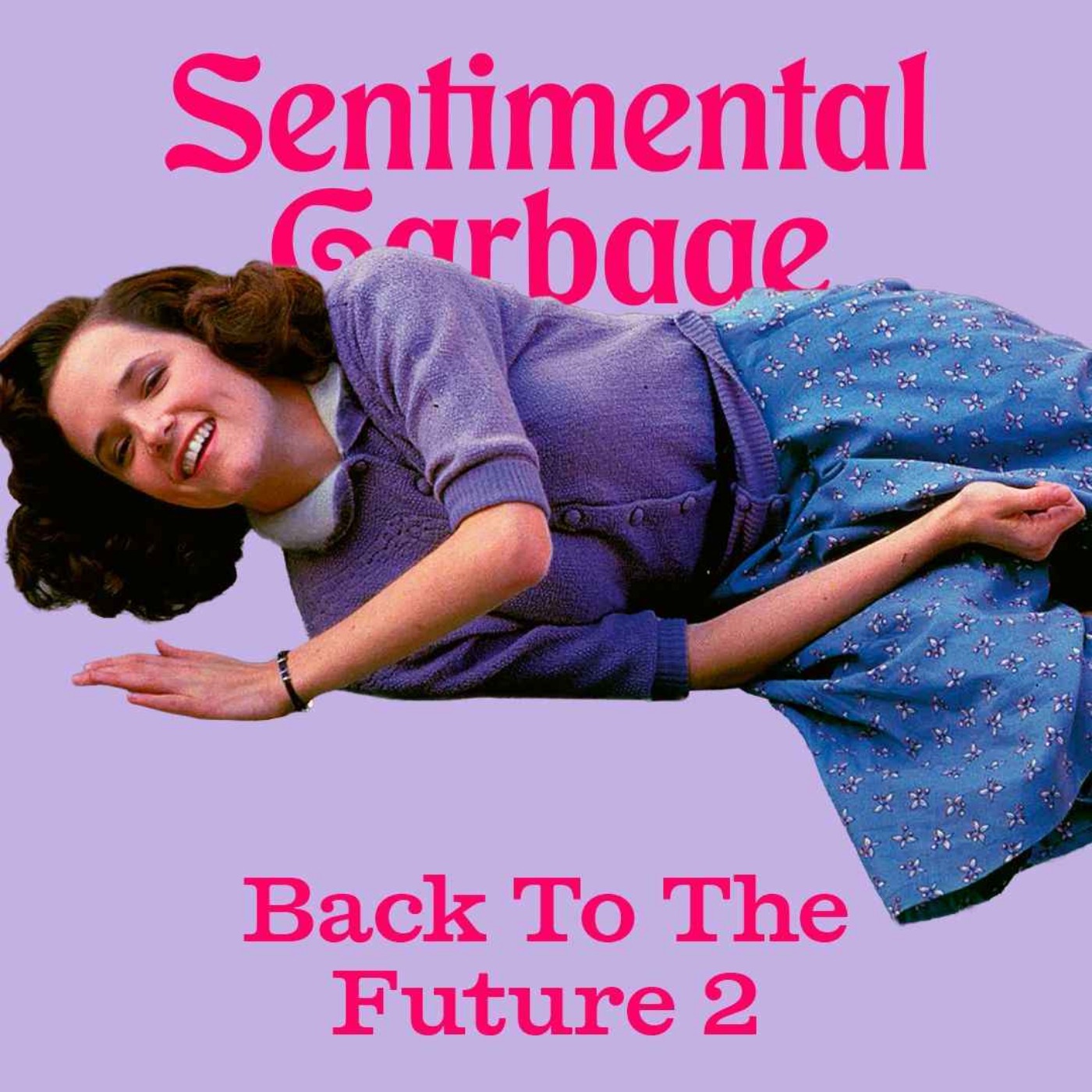
A “Send 2 Mental Garbage” sequel episode analyzing Back to the Future Part II—its 2015 future predictions, recasting history, gender/female-character sidelining, and the moral logic of time travel (especially the sports almanac as a “Garden of Eden/apple” temptation).
Jensen McRae, a comedian/performer and “thinly veiled parody” of a casino mogul persona. Host Carolyn O’Donoghue (character recast and left in a dumpster) leads the discussion.
Written by AI. May contain mistakes.
The hosts introduce guest Jensen McRae and discuss her excitement for the episode.
“And joining me is casino mogul and thinly veiled parody, it's Jensen McRae.”
Jensen discusses her childhood memories and feelings about Back to the Future II.
“Well, my parents certainly showed me Back to the Future when I was a child.”
The hosts reflect on the unsettling aspects of the film's portrayal of the future.
“But I certainly find the second one disconcerting.”
Discussion about the odd character designs and performances in the film.
“They just seem like a cyberpunk weird mafia and they're kind of screaming all the time.”
Exploring how Back to the Future fits into the podcast's broader themes.
“when they found out that it was Michael J.”
Analyzing the differences in nostalgia between genders with references to the film.
“Like it thrives in its own space, you know?”
Discussing Michael J. Fox's portrayal and his character's role in the film's narrative.
“I think nostalgia is kind of for girls, even though boys are definitely hung up on being the quarterback of their high school football team.”
Jensen seeks context about the sitcom Family Ties and its relevance.
“plays a Republican because I was like, he's so cute.”
Discussion on the casting changes in the Back to the Future franchise, focusing on Michael J. Fox and Crispin Glover.
“And they have other kids, too, that I don't really remember anything about.”
The hosts discuss the circumstances of Crispin Glover's replacement in the sequel.
“So obviously their first replacement is Marty McFly himself with Michael J.”
Exploring the concept of character transformation and depth in film portrayals.
“that you actually do believe rises to glory and actually maybe he is kind of handsome and cool and maybe he does that in them.”
Explore the charm of character actors and their transformation in roles.
“Okay, yeah, he couldn't get girls when he was a teenager.”
Discuss the implications of recasting actors in iconic roles.
“And maybe Christian Slater's another example.”
Learn about the creative journey of Zemeckis and Gale in making the film.
“which I also don't remember if I clocked the first time I watched it.”
Examine the challenges of making sequels and the desire for creative expression.
“And obviously they do what any sort of protective creators would do, which is like, well, we got to do it then.”
Discuss how nostalgia is leveraged in sequels to reward loyal audiences.
“Like, obviously, the dream is as a creative to be in a position where there are people waiting for your work.”
Delve into Marty McFly's experiences and challenges in the future world.
“And also, like, the early CGI of, like, the picture with the pictures of the kids fading and, like, his hand disappearing while he's playing the guitar.”
Explore the characteristics and dynamics of the McFly family in the sequel.
“Like you just put it on and it molds to your size.”
Discusses Marty McFly's character flaws and growth throughout the film.
“marty is the one although is marty also kind of a loser until he goes back in time like i don't really remember much about his characterization before the original time travel.”
Explores the film's portrayal of female characters and the narrative focus on male friendship.
“It's funny that you say that because, um...”
Explores the film's portrayal of female characters and the narrative focus on male friendship.
“My argument is that I don't think that every director needs to know a ton about the opposite sex.”
Analyzes how past predictions of technology relate to current media consumption habits.
“But then let someone else also make stuff.”
Examines moral narratives in Back to the Future and its comparison to other time travel stories.
“You have to own it or you can't participate in society.”
Discussion of Freudian elements and character dynamics in the film.
“There's a scene where it's like Marty McFly and his mom are in a romantic setting.”
Analysis of female character roles and their portrayals in the movie.
“Like I, it's kind of crazy that they linger on all that.”
Discussion on the themes of control and the repercussions of time travel.
“finds it hard to believe that it will ever be good and that it will ever be enjoyed by anyone that like, actually Robert Zemeckis didn't even want to make Back to the Future 2 and it's people's favourite one.”
Exploration of the relationship between the artist's intent and audience interpretation.
“And the other thing that I mean that I thought about when you were talking was this idea of like the death of the author.”
Jensen McRae discusses his artistic evolution and the impact of personal songwriting.
“I think that that means the art is even more powerful than I ever knew.”

Get the gist, explore an idea or ask about something said.
 Claude
On Sentimental Garbage, what are the key points of this episode?
Searching your listeningAutomatic transcript. May contain errors.
0:00I'm Jake Stouck, co-founder and CEO of Serval. Your IT team is full of builders who understand how your company works, but too much of their day goes to password resets, app access, and repetitive tickets. We built Serval to give them that time back. It's the AI-native enterprise service management platform that automates the work legacy tools only track. Tell Serval what you want automated in plain English, and its AI agent builds it. No drag-and-drop workflow builders, consultants, or lengthy implementations. Then, our help desk agent resolves employee requests using the tools IT has approved.
0:33Your team stays in control, and your builders get to build. Companies including Fox, Live Nation, Notion, Ramp, and Lucid Motors run on Serval. Whether you have 200 employees or 20 ,000, your team should be building what's next. Start a free pilot, and we guarantee you can automate 50 % of your IT tickets during it. Go to serval.com slash automate. That's S-E-R-V-A-L dot com slash automate. Serval.com slash automate
1:06Hello and welcome to Send 2 Mental Garbage, a series of sequels, comebacks and second chances. My name is Carolyn O'Donoghue and my character was recast for this film and then left lying in a dumpster. And joining me is casino mogul and thinly veiled parody, it's Jensen McRae. Hello, hello, hello. So good to see you again, Jensen. Thank you for coming back. I'm so excited to be here. When you said you were doing a sequels installment, I was like, I know exactly what I want to talk about. You were just like Back to the Future 2 instantly. I don't know what time it was in LA, but you knew. Tell me why this sequel of all sequels.
1:43Well, my parents certainly showed me Back to the Future when I was a child. I don't remember how old, maybe 10. And I really liked the first movie. Of course, it's the one that sets up the whole enterprise. But then the second one, I guess when I saw it, it was before 2015 happened. So I was like excited about their portrayal of the future because it seemed plausible. And then as I got older and kept rewatching, especially post 2015, I find myself very charmed by what the past thinks the future is going to be. and also the second one I found it kind of scary when I watched it the first time but in a way that still felt like accessible like I'm kind of a fraidy cat and when I was a child I couldn't watch horror movies but this was like as close to a if anyone who's seen Back to Future 2 knows how ridiculous this is but it was as close to like a scary movie that I wanted to get.
2:29No I relate to that I was surprised by how disconcerting it is I didn't see the Back to Future franchise for some reason it wasn't really a thing in my house until I was in my early 20s And so it doesn't have that deep thing. But I certainly find the second one disconcerting. And I think it's because of the behavioral tics that everybody in the supposed 2015 of the film has is quite unnerving because you have these kind of like lovely wide open spaces in cool fashion. But everybody who populates that universe is just a little odd. Like the bullies, like Griff, who's Biff's grandson or whatever, is just like his whole gang is like one of the wheelers from Return to Oz.
3:11They just seem like a cyberpunk weird mafia and they're kind of screaming all the time. And like they seem kind of weirdly coked up. and then the McFly's who Marty McFly's sister is played by Michael J. Fox, Marty McFly's son or grandson, I can't remember. He has his kids, yeah. They're both played by him. They're both played by him but like he's played Marty McFly Jr. is sort of played with a very strange quality, very uncanny valley to me. Yeah and I guess that is maybe a natural byproduct of the fact that they were like, you're going to play your own kids and so make them be like clearly related to you but like just make it a little different.
3:49So Marty McFly Jr.'s voice is just like very, he sounds like he's always gasping for breath. Yes. Well, what I find so interesting about him playing his own daughter is apparently a lot of straight men watch that movie and go, oh, who's she? Who's playing? That girl playing the daughter. She's really something. And got worried for a rude awakening when they found out that it was Michael J. Fox in drag. It's so funny. It's so obviously Michael J. Fox in drag. I'll say this. When I first watched the movie, again, when I was a child, I didn't know that. But when I rewatched it, when I was like probably 16 or 18 or whatever, I was like, oh yeah, that makes sense.
4:20Like I did not clock it as a little kid, but I do think if you're an adult and you can't spot that, you start to understand how Superman got away with it. Do you know what I mean? Well, not 100%. It's like you slap on some glasses and they're like, who's that? Yeah, you see what you wish to see. So like what's interesting about Back to the Future in the realm of like sentimental garbage is that like it's one of the few movies that we cover for this podcast that really feels like, you know, so much of this podcast, we focus on like the feminized gaze on films. and the female gaze in films and women's ways of enjoying things.
4:52And Back to the Future is something I associate so deeply with neck-beardy boys who want to lecture you about why the time doesn't add up. And the dog gets more respect than the female characters in this film. And it's interesting to go in as sentimental garbage into this movie and see it through that lens. But I also don't want to poo-poo it either. Like it thrives in its own space, you know? Well, it's so interesting that you say that because Back to the Future has always been, it's in my letterbox top four. It's serious for me. And I understand what you're saying. Like it makes sense that that would be your association.
5:30And maybe I'm the only woman who's done this, but I kind of, it feels like a thing that was made for boys that girls picked up. Yes. It was clearly just had to be like fun for the whole family. It was clearly one of those movies that they made back when they, I was just talking about this yesterday, actually. Like they used to make movies that the whole family would want to go see in theaters. That was like a phenomenon. And they don't really do that. I was saying that to my boyfriend that it's either everything's either Cocomelon or pornography. Like we don't have anything in the middle anymore.
5:55Oh, God. And like Back to the Future was representative of a time when it was like, oh, it was like in the canon of like Groundhog Day or even like later movies like She's the Man. It was like maybe parents and kids of all ages would all go to this movie and be slightly risque for the younger kids and a little bit childish for the older kids. but everyone would go in and have a good time. But it was clearly even to those designed for like a family to watch, it was also kind of like, well, this is kind of a boy movie because it's like action-y and it's like the main character is a boy and his mentor is a boy and it's boy, boy, boy.
6:22I don't know what it is that makes it to me feel like it's kind of for girls and maybe it's just like this idea of nostalgia. Maybe it's the nostalgia. I think nostalgia is kind of for girls, even though boys are definitely hung up on being the quarterback of their high school football team. and it's like there's a boy-coded version of nostalgia. There's something about just wanting another chance to redo things and get them right that to me feels like girl stuff. Yeah, you've taken the words right out of my mouth. There's something about Marnie McFly. I mean, Michael J. Fox in that era in particular, because he's so slight and little and kind of elven in his way that there's something that feels almost a little non-gendered about him.
7:04Like I know he has his girlfriend he likes to mack on, but I don't truly believe they have sex. But like there's something kind of Peter Pan-y about the way he is in films. And also everything about his mission, particularly across the first movie, he's just like fretting about his family and like it's kind of the fantasy of what it would be like to be able to fix your family in a way, which feels so eldest daughter for some reason. Well, because he has, I guess, is he the youngest? Is that what we determined? he has his yeah he has his older siblings and it seems like his older sister and his older brother they're kind of checked out of the mission of the family and maybe that's just because they weren't the ones that got to go back in time but because he's the one that goes back in time he ends up becoming the functional eldest daughter of like I have to keep this family together even though he's the youngest boy which is normally not the youngest boy's job and the other thing that I must have to cop to is that of course I had a crush on Michael J Fox also of course my and that after I saw Back to the Future, I watched however many seasons of Family Ties where he plays a Republican because I was like, he's so cute.
8:09It's OK. OK, so here is your secondary function on this podcast today is that, as you might be aware, here in Europe, we understand what sitcoms are through context clues and documentaries about movie stars that we like. And so in the research for this podcast over the last few days, reading everything I I came across Family Ties so often, but I also need the context of what Family Ties was from you. Okay, so it's been so long since I've watched any of the show. If I can remember correctly, I think what it is, I think it's set in, it must be the 80s, because that was Michael J. Fox's, like, prime.
8:49I think it was that he had these parents who were, like, hippie-dippie parents. Like, they would have been, like, cool in the 60s. But they were super left-wing or, like, boomer hippies. and then they have this son who's like a straight-laced Reagan Republican. And so it's like, ooh, generational differences. They're like, I guess they're like elder baby boomers and he's like older Gen X, I think. And the whole thing is that he is, he's like, I guess I don't know that much about Gen X, but it seems to me there's like the disaffected slackers and then there's like the Reaganites. It seems like Michael J.
9:25Fox. I think, yeah, I think the parents were supposed to be kind of liberal and then he was supposed to be like their conservative son. And they have other kids, too, that I don't really remember anything about. But I think that was the point. And he was like the breakout star. And like, yes, he did Teen Wolf as well. And then from what I read, this to get, I know we're going to get into the sequel mostly, but like to give some background on this franchise, they're like, what seems to have happened is they wanted him. He was all tied up with family ties. They decided to cast another actor who I believe was Eric Stoltz.
9:54Is that right? That sounds right. They did like quite a bit of filming with all the, you know, Christopher Lloyd and everybody. And then they just kind of, I mean, the way that Robert Zemeckis, the director of this movie, talks about it now, he's like very tactful. He's like, you know, it was a very hard choice, but he wasn't our vision of the movie. And the further we got into it, the more we realized it wasn't working. And so we fired him. It's one of those rabbit holes where you're just like, oh, there's more to it than that, though. There simply has to be. Well, there's a couple of rabbit holes about this film that I want to discuss.
10:24To discuss that one, there's one way to look at that, which is that, oh, this guy, Eric Stoltz, was robbed of the opportunity to be part of this massive franchise that became like a tentpole in American movie history. And then there's the argument that like if he had in fact been in it, it wouldn't have worked. And it would have been one of those forgotten 80s movies. Everyone's like, remember how that weird movie about time travel from the 80s that didn't resonate with anyone? So I do think that, like, probably, like, whenever people talk about, like, oh, this person almost was in this or this person filled in this and then they got fired or replaced, it probably wouldn't have been the same.
10:55Like, I think Michael J. Fox was the secret sauce. And, like, the script of these movies is ludicrous, ludicrously bad. And they're still my favorite movies because I think Michael J. Fox and Christopher Lloyd are so evidently watchable. and then the other thing that I want to talk about which I guess you sort of alluded to in the introduction was the Crispin Glover of it all Yes, yes, so Crispin Glover so two people were recast what's really satisfying at Back to the Back to the Future franchise is that there's so much recasting and swapping around that it itself creates its own alternative timelines, right?
11:28So obviously their first replacement is Marty McFly himself with Michael J. Fox and they redo all the shoot, it cost them millions of dollars but it was obviously the right choice. And the second is that Crispin Glover, who plays George McFly in the first movie, is replaced in the second movie because, as we've learned in the years since, he's completely insane. He's an insane man who, you know, I think he wanted pay parity with some of the bigger actors. I think he wanted to pay parity with Michael J. Fox, which would kind of be insane. But that he also had disputes about the script itself and he wanted approval on the script which is like a crazy thing for any actor to want even if they have top billing never mind fifth billing yes unless you are like like I think right now they're saying like the most bankable star in Hollywood is Tom Holland and even he I don't think is allowed to go I'm gonna rewrite this script oh certainly he's too polite yeah too polite polite British is never gonna happen it's never gonna happen yeah i was so i also did because the thing i think i was listening to this on another podcast um when they were talking about the replacement of chrispin glover and the thing that they did was like yeah because he like he refused to be a part of it he like refused to license his image and so what they did was they cast someone else have him hanging upside down for his entire appearance in the second film and they did a little bit of makeup on him and put i think prosthetics on this actor to make him look at least upside down like chrispin glover and he did make an impression of Crispin Glover's voice.
12:57And they don't talk about it. It's not acknowledged. So a lot of people don't know. Like casual viewers of the movie don't know that Crispin Glover was recast. Yes, right. And the seeing him upside down thing. Because I had completely forgotten of this one when I really enjoyed Crispin Glover's performance in the first one. I mean, crazy guy or not, or deluded or not, he acts everybody off the screen when he's being, you know, George McFly. He just is such a believable nerd that you actually do believe rises to glory and actually maybe he is kind of handsome and cool and maybe he does that in them.
13:29And it's like, yeah, is that the hardest role in the world to play? Like, you're not inside of a bear in The Revenant, but it's still like an impressive turn. I'm obsessed with this genre of character in movies, which is the person who has to be both believably socially outcast and then also when they have the inevitable transformation or the acknowledgement of their looks, you're like, oh, yeah. Because most of the time what they do is they take Chris Evans and they give him glasses. and you're like well no like I I knew it the whole time that that was Chris Evans Matthew Gray Gugler is one of my biggest celebrity crushes he was I think underutilized in his youth but he is to me a key on on Criminal Minds which is a show I'm currently re-watching to speak of comebacks he plays his character as he's supposed to be a nerd I do think they don't do enough to convincingly hide his beauty but I think he could be someone who you could like because he's so wiry, especially when he was super young.
14:21You're like, okay, yeah, he was a dork. Okay, yeah, he couldn't get girls when he was a teenager. And I think there's a handful of maybe Killian Murphy's and maybe he's too beautiful. But I feel like he also could be someone who you're like, oh, yeah, like with a weird haircut. Like, yeah, he's kind of dorky. And then his is hot. And I think that is one of my favorite types of actors. And maybe Christian Slater's another example. Like people who it's like, he looks weird when he needs to look weird. And then it's so hot when he needs to be hot. Oh, are you talking about Christian Slater in Pump Up the Volume?
14:49I haven't seen that. I'm just saying general Christian Slater. General Christian Slater of that era, you're so right. He goes from strange little misfit with glasses on to the hottest man you've ever seen. And I think what's so fascinating about that, you're right, it is such a fascinating sub-genre of character actor because it's not even completely their looks that sells it. I saw Glenn Powell in that movie Hitman. And that's like, he's not my personal taste, but he's obviously just like a classically attractive American man. Like if you're ordering from a catalogue, like classically attractive American man.
15:20Yeah, he looks like a Ken doll. He looks like a Ken doll, exactly. And in Hitman, he sort of plays this kind of techie nerd who somehow has to do whatever mishap. But he fucking sells it. He just has enough confidence to be able to dim it somehow. I just found it very weirdly arresting. And I do think Crispin Glover, he manages to pull it off. and he starts at zero in terms of sex appeal. And he manages to, by the end of the movie, when he lands that punch, you're like, oh, okay. Excuse me. This is kind of a tangent to the whole recasting conversation. So we've got Crispin Glover, who sues the production for abusing his likeness as far as he's concerned.
16:00And then you've also got the actress who replaces Jennifer. Oh yeah, they had two Jennifers. I completely forgot about that. Elizabeth Shue replaces the first Jennifer. which I also don't remember if I clocked the first time I watched it. Again, when you're making a movie targeted to kids, you can get away with so much. None of this I noticed when I first watched it. It was only as an adult. I was like, those are different guys. They keep putting different guys in. As I said, this was not a movie I grew up with and I really enjoyed watching it the other night and I watched both of them on a run and was having just a great night.
16:33But the thing that's got me in as a person who makes stuff is this specific thing. Robert Zemeckis, who's the director, and Bob Gale, who's the writer, they were working as a team. They were kind of college friends who wanted to make movies together. They had made two movies that had kind of flopped and Back to the Future was their kind of baby they had for a long time in development and got produced by Steven Spielberg and they were like, this is our shot at the big time or whatever. They make this movie. It's obviously difficult and the recasting and the whatever. There's the hiccups along the way, but it gets made and they end the movie with the now extraordinarily famous and iconic Doc Brown.
17:10Marty goes back to his home he's managed to fix everything his family are happy his family are rich he's got a great car his girlfriend loves them they're going to the lake this weekend and then Doc Brown he's like barely taking a fucking breath and Doc Brown turns up again and he's like Marty, Marty, it's your children oh we have to go to the future and Marty goes we don't have enough road to get up to 88 and then Doc says roads where we're going we don't need and he puts on the sunglasses roads and the reason I know that line is one because it's so iconic but also once I was in Edinburgh with my dad it was during the fringe and we were walking around all the food trucks and there was a pizza truck that says if you can tell us the movie that this quote is from then you can get a discount on your pizza and that was the quote.
17:53Nice. Then they end the movie and they fly off and hooray and as far as Zemeckis and Gail were concerned that's just a fun way to end a movie like me watching it now it's like oh that's the clearly we're setting up sequels from the jump surely but however you know the the movie goes absolutely gangbusters the studio are like we gotta make another one at this point robert zemeckis has moved on to who framed roger rabbit which is this completely like technologically redefining movie that like it's a huge obviously a huge classic for its own reasons and they're like oh no we're moving on to other stuff and the studio is like well we're gonna make it whether you fucking want to or not so you either make it with you or we either make it without you.
18:36And obviously they do what any sort of protective creators would do, which is like, well, we got to do it then. And then they came into this problem, which is that they had painted themselves into a corner with A of all going into the future and B of all having Jennifer riding shotgun. And neither of them were particularly interested in either Jennifer or the future. What they were interested in as men of a certain generation was making a western and they wanted to go back in time to make a western bob gale produces a 180 page script that involves them going back into the old west they realize oh no we're not going to have time to make that and they're like okay what if our way of getting out of making this movie that we don't want to make is to make two movies period and it's that thing of like your your solution to making a movie you don't want to make is to make more movie so you can eventually get to the one you do want to make i mean it's the only way to do it if you want to make a western with those characters you first must do the thing that you set up in the movie that you did before and to be fair even though they obviously weren't thinking about sequels i can't envision a sequel setup at the end of that first movie that gets them to the old west they would have had to have no setup and then just be like marty we're going to the old west there was no version of that like of that ending of that movie where they can get back into there because everything's resolved everything's taken care of like doc has to present an insane problem and what does marty care about the old west well yeah and the way that you even have like marty in the in the 80s diner like on the um on the arcade game playing a kind of a cowboy game we're like yeah yeah you know that old west that old west we're all such fans of that is a good Easter egg.
20:25But I, okay, so this is where it hit me where I lived, because I am writing a sequel right now. And I am also trying to make my Who Framed Roger Rabbit at the same time. And there's something that just my heart simply attached to this, these creators and this movie and this project in a way that it hadn't before being like, Oh, I so get it. You just want to make something with your friend that you liked making, but you also sometimes want to want to do this completely ambitious other thing that's gonna like meld animation and and live action and history in the future and whatever. And like, it's the kind of the thing of being pulled in two directions by what you have to do and what you want to do that I find incredibly endearing.
21:13Yeah, it's hard. Like, obviously, the dream is as a creative to be in a position where there are people waiting for your work. There are people there. Not only are you getting paid to do what you're doing, but there's a bunch of people who are waiting for you to do the next thing. And it's they have an expectation of what the next thing is going to be. That's the best case scenario. Like you're making a living and you have an audience like that's so hard. That's the hard part. And then there's also the the tax that you pay when you do that is you have a lot less wiggle room. Like when you're creative and no one knows who you are, you could technically make whatever you want.
21:40Now you're not making any money doing it and no one's guaranteed to pay attention to it. But you have license to make literally anything like this is something that we talk about in music school all the time, which is that you have your whole life to make your first album and then two years to make your second one. And obviously I'm in that position. I'm making my third album. And to be fair, like no one really cares what I'm up to. Like I have a lot of wiggle room. I care deeply what you're up to. I do have to turn something in. Like I don't feel the pressure that like someone like Charlie XCX was feeling after Brat where it was like, oh, what is she going to do next?
22:08Like she had this culture defining album. And now like the next thing is going to define culture. I'm like, mom didn't define culture. I kind of thank God because now I still have a little bit of that exciting kinetic freedom that you have when no one cares, but I have a little bit more I have an audience that will at least listen to it when it comes out, but I can only imagine that the price that you pay when you're beholden to a large institution a large corporation like they were it's like you do have to kind of, you have to play ball because it's like, hey, this movie made a bunch of money, which is good for you, it was good for us what are you going to do, walk away from that?
22:38I don't think so Right, to make your weird cartoon movie? it's right it's like a fascinating thing and i'm part of the reason why so much of this season is is focused on doing things for a second time and the strange pitfalls and prisons that is but also the kind of how how beautiful and lovely it is to sort of revisit to really get to know characters that you've loved all along and go deeper into something that could have remained just surface And arguably few movies do that as effectively as Back to the Future 2, because not only are you getting back to know, like you're getting to know the characters that you love even more, but you get to go back into the literal scenes of the first film and see them from different vantage points, which I cannot imagine how exciting that was.
23:28That looked so fun. Right? But even just sitting in the movie theater, Back to the Future comes out in 1985. This comes out four years later. And that movie takes over the culture. Everyone's referencing it. Everyone's wearing their little orange jackets or whatever. And like, oh, God, we get to see those scenes from a different angle? Like, that's kind of crazy. Like, nothing does that. Yeah, that is, it's like a fun, it's like the reward you get for loyalty to a franchise is that it's almost like a behind the scenes. Like, it's not a behind the scenes because the director's not explaining what's going on, but it's like, oh, we're seeing what was going on in the scene with Biff in the car.
24:06Like, all these things that you only got one version of, you're now getting rewarded for your loyalty to the franchise with another version. And also, like, the early CGI of, like, the picture with the pictures of the kids fading and, like, his hand disappearing while he's playing the guitar. Like, oh, just love. Love old crappy CGI. It's so unbelievably charming. I feel like we've like almost rushed past so much of this movie to get to the end. Do you want us to start us from the like, Marty and Doc are now, you know, he's been scooped up from his driveway and we're in 2015. What is the predicament?
24:44The reason that Doc has brought Marty into the future is because his son gets involved. He is tangled up with the wrong people, namely Biff's grandson, Griff. and Griff and his band of unsettling bully friends are going to do there's some is it a is it a bank robbery that they're doing like a bank heist yeah it's unclear but yeah they're doing some kind of nefarious bully activity they're doing some kind of crime and they enlist Marty Jr. to be a part of it and he ends up going to I think taking the fall for it and going to jail and so Doc has said like because Marty Jr. and Marty Sr. are played by the same person it's like Doc is like this is your son, the resemblance is uncanny.
25:21So if you go into this diner where he's going to be waiting to meet Griff and you play him and you basically tell Griff to buzz off and then we prevent this great calamity from happening in the future. So Doc, very francis. So while Marty has just arrived in 2015, he's looking around, he's taking in the unbelievable sights, one of which is that the Cubs have just won the World Series, which is interesting because they were only off by one year in their prediction. Rogue, fascinating thing that happened. Okay, here's another pause where you have to explain family ties to me. What's the deal with the Cubs?
25:51So the Chicago Cubs are a baseball team, and they had a 100-year championship drought. So I guess in 1916, they won the World Series, and then they won the World Series again in 2016, which was very weird. It was very, very exciting for Chicago and kind of for the whole country because they were like, wow, this team that always loses finally won. And then a month later, all of that excitement was deflated by Donald Trump winning the presidential elections. It was this very weird time in American pop culture. And what's interesting about that is that because Back to the Future goes forward to 2015, there are whole things that, like, they have, the Cubs have recently won the World Series in this alternate universe.
26:27And Marty McFly's like, the Cubs on the World Series, like, that's never going to happen. Like, he's like, that's crazy that that happened. And it's like, well, interestingly, it was one of their predictions that was very close. Very close. That's so cool. So, yeah, so that's one of the, so Marty McFly's taking in the fact that the Cubs have just won the World Series. He's taking the fact that obviously he arrived here in a flying car, which again, I guess now we have flying cars. I guess Tesla just invented a flying car. But yeah, so he's taking in all of this stuff and he goes into this 50s nostalgia.
26:52Or is it an 80s nostalgia? 80s nostalgia, yeah. But yeah, so Marty puts on the like strange 2015 clothes, which are like shoes and jackets that like in real time molds. Like you just put it on and it molds to your size. But then the fashion of the time is to wear a jacket that's like oversized. Like you could push the button and make it fit you, but it's cooler to have it like hanging off. He's supposed to wear his clothes wrong because that's what the kids do. And if he's trying to go undetected, that's what he's got to do. So he goes and sits in the diner and Griff comes in and Marty gets into a large confrontation with him.
27:21But then his actual son shows up and his son sucks. His son sucks. His son is really lame, which it's like, again, it's fascinating. It's like, it seems like it's in his genes to kind of suck. Like his dad was like a real beta back in the 50s until Marty intervenes and like makes him punch Biff and then he gets confidence. and then his son again without intervention is just a beta yeah that is kind of fascinating that there is like a like a paper thin sort of membrane separating the mcflies from certain doom and complete negligible loserdom they meant to suck and it's like they're not like evil but it's just like they're just they're very weak-willed and they're they're so passive i don't know why marty is the one although is marty also kind of a loser until he goes back in time like i don't really remember much about his characterization before the original time travel.
28:10What we know about him is that he's got a hot girlfriend and that he's scared of playing the guitar in public. Right. Okay, so he is weak. He is kind of weak. He is kind of, I think he's charming, but with flaws around courage, I think is supposed to be the characterization, but we don't see a ton of it. But I think that's, yeah, all of the McCly's suffer from a shortage of courage, and yet, Marty, his number one thing that you can't do to him is call him chicken. Yes, and that is kind of interesting and actually resembles how real families do work. It's this kind of 90-10 theory where it's like, if the thing that you've grown up with is 90 % of this all of the time, then you will spend 90 % of your time being the 10 % that your family weren't, if you know what I mean.
28:52So if you grew up religious and hated it, then you will be equally as fervent about your atheism. In Marty McFly's case, it's like he it's a lack of self-awareness because it's like he is a chicken. Like if he's afraid to he's afraid to audition to be the band at the school dance or whatever. And like it takes a life altering event, which to be fair, that is probably most people's situations. Like you have this major character flaw, you experience a life altering event. You no longer have that character flaw because you were forced to rise to the occasion in order to like save your life or save your family or whatever.
29:23So that is that's plausible. But yeah, yeah. So that's that's been the point of this excursion. But yeah, his son shows up and I think it's like they have to knock his son out. People are getting knocked out in this movie left, right and center. Because they knock out Jennifer when they first arrive in the future because they don't want her to see what's going on because she can't handle it. We're already messing with the timeline too much. Yes, totally. And there's something about the Jennifer of it all that I know as a feminist I should be offended, but I do find it so funny. that they're just like, they're just like, no, what this movie is about is about a boy's friendship with an old man.
29:58And we just don't need chicks muddying the water on this. We don't need them arguing about whatever or her having an adventure of her own. It's just like, no, let's leave her by the dumpster and or by the bench. Well, that's what's so fun. That's an interesting idea. Like a 2026 version of Back to the Future would involve an insane B-plot where Jennifer is getting into some stuff. Yeah, yeah, yeah, yeah. Like that's feminist if she has a B-plot where she's getting into some stuff. Yeah. It's funny that you say that because, um...
30:51workflow builders, consultants, or lengthy implementations. Then, our helpdesk agent resolves employee requests using the tools IT has approved. Your team stays in control, and your builders get to build. Companies including Fox, Live Nation, Notion, Ramp, and Lucid Motors run on Serval. Whether you have 200 employees or 20 ,000, your team should be building what's next. Start a free pilot, and we guarantee you can automate 50 % of your IT tickets during it. Go to serval.com slash automate. That's S-E-R-V-A-L dot com slash automate. Serval dot com slash automate. There are two types of business owners.
31:28Those who are busy and those who want to be busy. Toast is designed for both with tools to keep you humming and help turn grind into growth. That's how you turn busy into business. Toast built for busy. You know, whenever people in contemporary culture sort of like light on, for example, Christopher Nolan, who is a director who's not particularly known for like versimilitude or realism when it comes to his female characters. My argument is that I don't think that every director needs to know a ton about the opposite sex. And it's actually kind of cool to put your hands up and be like, that's not my interest group.
32:10I think the problem occurs when only directors who only have one interest, which is basically the problems of their own gender, are at the top of their art form with no room for anyone else. But I actually don't think it's Christopher Nolan's individual problem that he's not interested in women, nor do I think it's Back to the Future's problem that it's not interested in women. I 100 % agree, and I think about this all the time in literature. Like, people, and all art forms for that matter, people get really mad about a lack of representation, and I'm like, the solution is not to make white people, straight people, cisgender people, shoehorn characters of color, queer characters.
32:47Don't put that in your work when you don't know anything about it. Keep making your stuff that's about straight white people. Awesome. But then let someone else also make stuff. Like, let us just have a smorgasbord of art to choose from. I don't need every single movie I watch to represent me, but I just need to have the option of if I want to see a movie that has a black woman in it, I can find that. As opposed to like, well, there's just only movies about white guys. It's like, you don't need to make the white guys make movies about them. I actually don't want to see Christopher Nolan's idea of my interiority.
33:13That's totally fine. I just want you to let Issa Rae make more movies. Do you know what I mean? Like that's, that to me is the, like, and back to this, I like watching movies about white guys sometimes. I just also like watching movies about other people. This is like, I like to see it all. While we're talking about like the function of media and culture in society, I was very interested in like how the 2015 version of Back to the Future, how our behavior is vis-a-vis technology, right? So we kind of have things that we sort of recognize and they might have gotten right, like having this kind of Oculus Rift wearable glasses sort of thing, you know, kids at a dinner table watching whatever on their headsets and kind of being disengaged with one another.
33:57We have Marty McFly in his old age makeup going to his like den that has like 900 TVs in it or whatever. I feel like I've seen that version of like this is what the past thought the future would be and we're living in the future now I've always find it interesting that so many people seem to have cottoned on to the idea that our obsession with media and our addiction to media would somehow erode our sensibilities and our humanity and that's certainly what feels what like 2050 and Back to the Future 2 feels like and what I'm so interested that they never got right was that like oh it's not that we would watch 20 screens at once, it's that we'd be watching everything for 20 seconds, you know?
34:42And that to me is fascinating that we never guessed that. Yeah, I think what they latch on to is this idea of like quantity over quality. In the 80s and in the 90s, whenever there was new technology, you got a new device. There was always a new thing. And so you would accumulate by the time, like in my childhood, I feel like I was at peak device. It was like you had a phone, you had a camera, you had a DVD player, you had an iPod. You had so many. So if you wanted to go somewhere, you were laden down with a big bag of like metal and plastic boxes that contained all of the activities that you might want to do.
35:18And like the DVDs, you had so many DVDs to go into your DVD player. And like admittedly, the iPod was a streamlined version of things. But like before that, the Discman or the Walkman or whatever, like you would have all of your CDs and all your tapes. and I feel like future future tripping was always involved like accumulating a bunch more stuff and I feel like even like the invention of like the metaglasses it's like our obsession with like less what humans actually want and more creating a thing that the future always said we were going to have like past our past cells always like everyone said we're gonna have flying cars and we were gonna have virtual reality goggles so we made that even though there was not really a demand for it in culture every single generation has been worried about how technology makes us less engaged with each other and less present with each other.
36:02And that's always going to be the worry that animates anything about the future is like, how can we make people more disengaged than they are now? But yeah, no one ever predicts the idea of the smartphone, which is like, what if every single thing that could possibly distract you was contained in one brick and you have to have it with you 100 % of the time? Not like, oh, like, here's all this stuff that you could pick up if you wanted. And it's so seductive because it's so cool looking. It's like, no, there's one item. You have to own it or you can't participate in society. And in addition to all of your work and contacting all your loved ones, it also has every single human distraction.
36:35Crazy that we've come up with this. Yes. No one saw it coming. No one saw it coming. Not the greatest minds in science fiction saw it coming. If Zemeckis couldn't predict it, frankly, it's mad that it even exists. And Zemeckis predicted death becomes her. So, you know, he predicted the substance.
36:56And it does make you a little bit sad, I guess, because as much as I'm not interested in Elon Musk's flying car, I am interested in the concept of a hoverboard. And like these kind of very, like you often see this when you're on sort of Twitter or Tumblr or whatever, people saying like, oh, I miss when tech used to look like this. And it'll be like super colorful or transparent, kind of clunky, slightly futuristic looking technology. and there's been kind of a lack of imagination in that space for so long that seeing a kind of a world where, oh, at the cinema, like there's going to be an ad for Jaws 19 that will like devour you in hologram.
37:32And I go, oh no, actually the future is that we can't get anyone in the cinema. Yeah, I think it's so like, I think the past idea of the future, not to use this word again, but there was this idea of like seduction, of like, come with us to a new era. Like all technology, I feel like in the 90s and 2000s, It was like, look how futuristic this looks. We're using these colors and these textures to signify the future. And I feel like now everything that we build is supposed to just like kind of look like something else or like kind of look like something you already have and just like seamlessly slot into your life so that it feels like you never existed without it.
38:07Like it's not supposed to be intrusive and it's not supposed to be obvious. Like the iPhone is so small. Everything's always designed in neutrals. Everything's always as flat and small as possible and as beige as possible because they don't want you to notice it because they need it to be something that you can trick yourself into thinking you've always had and therefore always needed. Because that's how they can. If it seems like something that's too new, I think that's the problem with these meta glasses or the AR glasses. It's like they look insane. And so you're like, well, I don't have that, so I don't need it.
38:35But if it's something that like kind of just neatly goes into your home and doesn't disrupt the flow of your space or the flow of your person, you're like, well, and that's, I guess with the meta glasses, those are designed to kind of look like normal Ray-Bans. But I don't think that's going to catch on. Okay, so we've been through the sort of the 2015 version of it. So the most remarkable thing that happens in the 2015 storyline, because actually the stuff with the kids is kind of a MacGuffin, really. The actual point is that Marty visits a vintage store, he sees a sports almanac that has every sports results from sort of 1955 to 2000.
39:101950 to 2000, buys it because he wants to become wealthy. The time travel storyline was, you know, obviously been in sci-fi for a long time, but was first sort of mainstream in, well, arguably in Dickens, right? A Christmas Carol is a time travel story of seeing these alternative universes and going back and seeing your childhood and all this kind of stuff. And similarly, It's a Wonderful Life is, you know, you can't affect time because you're a mere observer. But it is this thing of seeing different versions of worlds with you and worlds without you. And I think what I find really interesting about our two most famous mainstream examples of time travel stories being Christmas stories is that they're intensely moralistic.
39:51In the case of Ebenezer Scrooge, it's like, if you keep being a terrible person, you may not see the repercussions in your own personal bubble, but there are repercussions and they will haunt you. And then with It's a Wonderful Life, it's the inverse, which is you may be a good person who is always getting shit on, but we promise you there are beautiful ramifications and wonderful ramifications to the things you do and the person that you are. So it's the same story, but just told from different moral lenses. And that's very like Christian in a way of like the idea of there always being this great reward or this great punishment somewhere beyond that you can't see.
40:30what's interesting about Back to the Future is that it does steal some of those tropes like the whole thing with like Marty seeing his father's grave and all of that and like the sports almanac is very much this moralistic moment of like oh you you abuse time travel for greed and now we're gonna punish you by um getting your mom breast implants well it's so interesting you talk about the Christianity of it all because I'm now really realizing that the sports almanac is kind of the apple. Yes, it is. Like in the Garden of Eden. For sure it is. What I come to realize in watching a lot of American media is that it's all either Christian propaganda or military propaganda, if you peel back like two layers of it.
41:07Yeah, it's so fascinating that like the, there has to be some kind of punishment for suffering, which in this case, obviously the suffering in Marty's case is like, well, you don't know the sports outcome, so you couldn't get rich quick. And Biff, who is the character who is constantly trying to take shortcuts, who is constantly trying to abuse and belittle, it's like he always gets, he always literally gets shit on, Like literally they dump manure on him in every movie. Yes, always. That's always his fate. So it's like this movie is very obsessed. I think it makes sense because, again, it's a movie designed for like a family.
41:35It's a family movie. It's not supposed to be like super complicated morally, but it's like the bad guys are so bad and they always get their punishment. And the good guys who are like they're getting bullied or they're in precarious situations or in life or death situations, the more you suffer, the greater your reward. Yeah, it's totally. It's so interesting. I wonder if there's like a time travel story that doesn't have that sort of like right wrong fuck your mom don't fuck your mom sort of like moment. Well yeah that's the thing like such a Freudian movie. Yeah. There's a scene where it's like Marty McFly and his mom are in a romantic setting.
42:11She wants him bad. And it's like why did that need to be in the movie? even in the second movie when to i guess to jump ahead to the kind of the consequences like obviously marty doesn't know that biff has stolen the almanac he just knows that it's gone missing he's bummed out he goes back he also doesn't know obviously that biff has taken the time machine and returned it i guess oh yeah that that's yeah it's it's not super clear what how biff is operating the time machine or what he does with it but like yeah for sure they don't want to get too into the weeds on the science no and you never should i mean there's a big bang theory episode all about this and yes I did watch it yes I gotta say I don't hate the big bang theory I know I'm supposed to but I don't do you know what I watched I'm like this is good writing I loved it as a child I did tap out after a few seasons but when I was a kid I was a big fan of the big bang theory um but yeah so they yeah he gives the he gives the almanac to his past self he comes back he replaces the time machine Marty known the wiser he goes back to his version 1985 and immediately it feels like something is wrong because you see the entrance to his neighborhood is like kind of decaying.
43:14It's like doesn't look the same as it did at the beginning of the movie, but he doesn't really seem to clock that. And he climbs in through his window to get into his bed, which is something that he always did. And he ends up in the house of a black family who tries to beat his ass because of what are you doing in my daughter's bedroom? He wakes up in the bed of a black teenage girl and her father, of course, comes in with a baseball bat to kill him. And it's like this moment that's like played for laughs. It's kind of a weird vibe, but that's no worries. But he, the police pick him up and bring him home.
43:42Yes, the extremely hot female police. The gorgeous female police officers bring him home to Trump Tower. Sorry, Biff Tower. Yes, correct, correct. And we haven't even really talked about the Biff of it all yet, but it feels like that's just so obvious and on the nose that it's like, it's almost graceless to talk about it. But, you know. Well, in the first movie, he's just Biff. Right. In the first movie, he's just like a school bully who then becomes like an old man who's a bully. Like, he's not really anything in the first movie other than just, like, he's the antagonist. And then in the second movie, for some reason, they're like, what if he was Donald Trump?
44:13And he made, who's that actress? The mouth wants to say Lea Michele, but it is in fact Lea Thompson. It's in fact Lea Thompson, mother of Zoe Deutsch. Yeah, they're like, what if Lea Thompson got an insane, hard-looking boob job? Because that is what evil Biff would want. It is like a breastplate that wouldn't even clear the runway on RuPaul's Drag Race, that thing. But again, it's like every movie has its beats and there has to be the Freudian moment where Marty wakes up confused about where he is. And in this case, like in the first movie, he wakes up in his teenage mother's bed and he's like, I had a horrible dream that I was time traveling.
44:46And she says, don't worry, you're back in good old 1955. And he jolts upright, he goes, 1955. And then in the second movie, he says he has a terrible nightmare. And she goes, don't worry, you're back on the good old 37th floor. And he goes, 37th floor? And then he wakes up and he looks at his mom and he's like distracted by her enormous boobs, which like, I guess, sure, Like your mom heading a boo job is crazy, but it's like, again, they linger. They linger. I mean, basically, Leah Thompson's job in both those movies is evading assault and abuse at every turn. They're all, and the camera is like on these scenes of like near trauma.
45:16I guess death is also a trauma, but for some reason, near death experiences in a movie, like a guy about to be getting hit by a train to me feels like less scary to show than like a woman who's being pinned down by a large man. Like I, it's kind of crazy that they linger on all that. But I think it's also to talk about women in the movie a little bit more. where it's like Leah Thompson's character is always like either almost victim of assault or nurse. Those are the only job or hot, hot girl. Jensen, you're forgetting drunk. I'm forgetting drunk. That's right. A woman can also be a drunk. A woman can also be a drunk.
45:45And then Elizabeth Shue slash whoever was playing Jennifer in the first movie, her job is fainting and hot. And then of course, yeah, there's the hot female police officers. And I think that about does it. Oh, obviously, Marty's sister, she is shrill. That's her job is shrill. But yeah, Leah Thompson does her nursemaid thing in Biff Towers. And then Marty obviously is trying to escape because unsurprisingly, when Biff is his mother's new husband in this movie, he's super abusive and is beating on Marty and presumably also on Mrs. McFly. And then he gets ahold of Doc again. I don't remember how he gets ahold of Doc Brown again.
46:20Nor I. Those two wake up again and he sees obviously his dad's grave. And they realize that the solution is that he needs to go back to 1955, steal the sports almanac, and make sure that everyone does what they need to do according to the events of the first movie, which is where we get the gorgeous, terrible CGI of Marty's hands disappearing while he's playing the guitar. But I remember that very importantly, he has a photo of him and his siblings that each, like, his older brother disappears, and then his older sister disappears, and then he starts disappearing, and his hand starts disappearing while he's playing the guitar on stage.
46:49Because his mom and his dad are slow dancing, and he's like, I did it. But then his hand is still disappearing because they need to kiss. Oh, yes, because the redhead tries to pull her away. Yes. Yes. And so then eventually, so George McFly punches that guy out as well. And then they kiss and now everything's back to normal. It's fine. Last week we did the Addams Family Values, which is also a Christopher Lloyd sort of moment. Christopher Lloyd joint? Yes. It's so Christopher Lloyd joint. It's like Uncle Fester is Christopher Lloyd. And it's like, or Christopher Lloyd is Uncle Fester, I guess.
47:24And so it's strange to be doing on this very girly podcast to be the Christopher Lloyd Appreciation Hour. But I'm just not sure if we've appreciated him enough in this yet. It's a singular performance. As far as I know, not a problematic individual. No, a lovely man, I think, by all counts. Okay, good. Yeah, because I think Doc Brown is such a charming character. Obviously, it's such a trope of the mad scientist dropping all his papers with the crazy hair. But it's like, we need that guy. And like he the other thing that's like, again, with the third movie, he becomes even more embodied, like to talk more about like how sequels and reunions give us the opportunity to dive deeper into characters, you know, interiority like he gets a love story.
48:08Oh, yeah. And that's like really sweet. And like his love story is incredibly. Well, it's funny because his love story obviously ends up being the engine for the second movie or the third movie, like having all of its conflict is that like he falls in love with a woman who was supposed to die. Mary Steenburgen is supposed to be, she's on a carriage that's supposed to lose control and go into a ravine, and he saves her. And so, which is the Old West movie, yes. These other events start to kind of fall apart, and obviously it threatens hundreds of years of McFly family history, and they've got to do whatever they've got to do.
48:38I don't remember how they fix it. I remember being charmed by it, but I think what I find fascinating about it more than anything is, again, what we said earlier on about it being, the two being the solution that made them get to do what they really wanted to do, which is three, which as far, when I talk to any fans of this franchise, everyone's like, yeah, and the third one is whatever. I just find it, there's something very soothing to me as somebody who's like really struggling on a project right now and like, you know, finds it hard to believe that it will ever be good and that it will ever be enjoyed by anyone that like, actually Robert Zemeckis didn't even want to make Back to the Future 2 and it's people's favourite one.
49:17Well, it's my favourite one. I don't know if that is the universal truth. It's certainly beloved. Okay, good. And it's certainly more beloved than the third one, which I think is a great testament to how artists are often such poor judges of their own best work. Like, almost always, if you ask an author, a songwriter, a screenwriter, like, what's your favorite of all of the ones you've done? I feel like it's so rare that it overlaps with the one that is the one that everyone likes. Like, my most popular song is Massachusetts by, like, a very wide margin. I don't understand why that song is popular and I didn't want to put it out.
49:48I'm, like, completely baffled by it. I'm like, to take it or leave it, totally. like completely indifferent to it as a song. What's your favourite song that you've put out? Well, to be fair, one of my favourites is Savannah, which is pretty well liked. Jensen, that's such a beautiful song. Oh, thank you. Your voice on that song. I love, I love that album so much. I really need you to know how much I spent of last year listening to the album. I saw you at the Bowery in New York and you were just sensational. But Savannah, I remember it was three days after Savannah even came out as a single and there were people in the line outside singing it.
50:22It is just... Sometimes I forget that, like, you're also a person I talk to on a podcast sometimes because I have to separate. I have a... I mean, I'm... Listen, I was literally... I was explaining to someone the other day that I was going on to this podcast and I was like, you have to understand that, like, because I'm a musician, sometimes I get to talk to, like, the authors that I love and I get way more starstruck doing that than by doing anything else because books, to me, like, they feel very elusive. Like, I'm currently trying to get a novel published. God help me. And like, I feel like any author who not only has written a book in Continent Publish, which is achieving itself, but written an excellent book, like you have written, like, like the Rachel incident is like truly like one of my favorite discoveries.
51:01Oh, this is nice. And like, it's the, like the fact that like my, obviously I'm excited that my music enables me to work with other musicians. Like that's very cool. I will not diminish the importance of that. But the fact that I get to talk to writers that I love, like John Green sent me an early copy of Hollywood ending. Oh, how is it? It's amazing. Love. But I was like, I could not believe, when he followed me on Instagram, I was like, my job's on the floor. Like Carmen Maria Machado followed me on Instagram. Ocean Vuong. I'm like, this is the stuff that I like can't, I'm in disbelief. I did a Gertrude Stein over there.
51:28You got a real salon going. I mean, my dream is to hang, I could get all of you guys at one place. Oh yeah, I'm there. I'm in. It's so interesting that you say that, that original point of just like, you know the artist has power over what goes in the work what has no power in what the work will mean to other people or how it's metabolized by the culture I was thinking so much today about like how something that slightly turned me off in re-approaching these movies as I said at the top of the podcast was the way that like there's a certain kind of male movie nerd that I find very difficult to get along with that is just it's it's very much about memorizing the facts and the behind the scenes trivia and I enjoy that stuff as much as anyone else I mean we've talked about Crispin Glover is sort of recasting enough but you know what I mean they're they're like you know they're really over invested of the genius of individuals being like you know those those YouTube channels that are like and in this this scene you know you can see Christopher Lloyd's eyeline matches it in this scene which is obviously a reference to that I'm like I don't know man it feels like you're just kind of it's like it's like it's not a piece of art it's like a model train set for you to look at and it's and that's fine for you but it's just not how I enjoy things and I think actually what I find more interesting is the like how something is metabolized by the audience because that is many people having a similar response to something singular and like it's the it's the life of something in the audience that is almost more interesting because how can someone who made one thing that is so specific to them ignite something else in the souls of millions across time there's something at the heart of the back to the future franchise that's like it is about sort of fretting and about making things right and about this fantasy of like what if you could make your family perfect and good that actually around all the kind of the fun and the mayhem and the and the color and the songs and the great performances there's something in that I think does resonate with people on a soul level, which makes it even more enduring.
53:35Yeah. And I think like the one of the other big takeaways from Back to the Future is that like, we all want ultimate control. And the more power that you have, the more can go wrong. Like, as soon as you have the power of the time machine, it's like, well, if you fix this, then that never really sets this other chain of events in motion. And then you have to go deal with that. And then once you've dealt with that, that's set another chain of events in motion. that's like, maybe it's better to in fact not have control and just kind of let the chips fall where they may and let the universe sort of proceed as it's supposed to.
54:03I guess maybe that's not the takeaway of the movie because in the end of the first movie when Marty has intervened immensely in the life of his parents, like his life does end up getting better because his parents are happier. But fundamentally, what he has to do, even though the end result of his life is slightly different in the future, he has to get things back to how they were. Like when he first ends up back in time, his presence there derails the meaning of his parents, which obviously then derails his own birth. And obviously, again, when Marty goes to the future and he tries to, like, he's like, oh, I can make my life better in the past while getting this almanac.
54:34It ends up in the wrong hands and then, again, threatens the conditions of his birth. And so it is very tempting to go back and fix things and to change things to make you better, to make your life better, whatever better means. But there's some old quote that's like, if you went back and changed and fixed every mistake you'd ever made, like, you wouldn't be you. And maybe for some people that's a tempting alternative. But like it ultimately serenity and nirvana and enlightenment is acknowledging like I have to just actually let things happen however they're going to happen. And I'll figure it out when I get there.
55:03And I can't retcon a perfect life by having complete control over every single outcome. And the other thing that I mean that I thought about when you were talking was this idea of like the death of the author. I wrote an essay about that on my sub stack a little bit like how like as a writer like you have your idea of what something is about. but it's actually not, it's nowhere near as important as to what a collective audience's experience of that art is. And maybe you've had this experience with your writing of like a reader comes to you and it's like, oh, like I thought that this meant this, or I thought that this character was like this.
55:32And in your mind, you're like, that's not what I meant. But it's like, but that's an interesting interpretation of this thing that I made. And that I'm like, I'm happy to see that interpretation exists in the world. Like I have had people come to me and say like, oh, this song is about my relationship with my dad. And I wrote about a breakup. And I'm like, oh, I guess men being terrible transcends all the different kinds of relationships. I think it's really powerful for art to surrender as an author once your art enters into the world and be like, even if this reaches people I didn't think it was going to reach, even if people find symbolism in it that I didn't put there on purpose, I think that that means the art is even more powerful than I ever knew.
56:08Jensen, I've loved this conversation. This feels like the place to wrap it up when we're getting to the lessons part of the proceedings. but tell me what are you working on right now you should really get a book published you're wonderful on substank and you just released an extended version of your second album yes the deluxe version my second album called i don't know how but they found me again and it has a lot of new music it's basically a double album it has a lot of new songs on it a couple of features i have a song with brandy carlisle i have a song with britney spencer and then one of the songs in the original version we did a rewrite with Maisie Peters love Maisie also a podcast alum an absolute gem I reached out to her and I was like would you want to sing my song novelty with me because it's so British and she was like I love that song but mother wound is my favorite and I was like girl do whatever you want on that and she wrote rewrote the second verse and said it's me and I was like this is perfect so I'm very excited about that and yeah I'm on sub stack I'm very active on sub stack probably more active on there than I am on any other social media because it's the one that feels the most rewarding.
57:07I am interestingly, so I'm publishing a novel one chapter at a time on Substack right now for my paid subscribers, which is different than the novel I'm trying to get traditionally published. Those are two separate projects. But yeah, I'm doing that and also just writing essays about whatever is whatever I feel like. I have one last question for you, which is given that this is a season about the second time round of doing things, I'm really interested if you have anything that you learned about your artistry on your second album that you've just sort of finished the cycle on that you didn't know on your first?
57:40Well, I think on like a technical level, I just thought so much more about like live performance, like having been touring a little bit more, I was thinking so much about how can I make music that feels really good to play live? How can I make music that feels good to play with the band? And the biggest thing that I'm wrestling with with my art generally now is just the idea that the things that I write have consequences. Like I'm wrestling with the idea that as a person who writes about my own life, I'm doing that in my fiction. I'm doing that in my songwriting. Like I'm borrowing from my, even if I'm not writing autobiography strictly, like I'm borrowing from my life in order to tell stories.
58:14And that has consequences. Like I'm writing about, like sometimes it's the people I'm writing about. Sometimes it's not necessarily people I'm writing about, but people that are close to me who are impacted by hearing my thoughts about, you know, my life in a way that I maybe wouldn't talk about as directly as I do in everyday speech. I don't want to change that. Like, I don't think that the solution to writing personal albums and having that have consequences is to write less personal albums. I think it's just me thinking critically about how personal I want to get, thinking critically about like who I'm hurting and who I'm helping and being okay with the fact that sometimes what I write is going to make people uncomfortable.
58:48And I'm just, I'm learning that I have more of an impact on other people than I ever realized and being okay with that because I'm not, it's every artist I think wants to be beloved all the time and have no criticism ever. And then also it's not even that like, oh, I made something that wasn't good. It's like maybe you made something good, but it still made someone uncomfortable. Maybe it still made someone feel overexposed. Maybe it's someone feel vulnerable. Maybe it triggered a feeling in them that they didn't want to feel and being just being like, yeah, that is a that's a tax that I have to pay for people that I care about.
59:17I can be there for them and I can talk through those feelings with them. And for people that I don't know, I can be like, well, that's sometimes art makes you uncomfortable. That's how it works. God, I wasn't expecting that answer, but I really love it. Like the kind of having to acknowledge your own power in your sophomore effort is like really interesting. I could ask a million follow ups, but I won't because we both I have to have my evening and you have to have your day. But thank you again, Jensen. This has been amazing. Thank you so much.
59:57I'm Jake Stouck, co-founder and CEO of Serval. Your IT team is full of builders who understand how your company works, but too much of their day goes to password resets, app access, and repetitive tickets. We built Serval to give them that time back. It's the AI-native enterprise service management platform that automates the work legacy tools only track. Tell Serval what you want automated in plain English, and its AI agent builds it. No drag-and-drop workflow builders, consultants, or lengthy implementations. Then, our helpdesk agent resolves employee requests using the tools IT has approved.
1:00:30Your team stays in control, and your builders get to build. Companies including Fox, Live Nation, Notion, Ramp, and Lucid Motors run on Serval. Whether you have 200 employees or 20 ,000, your team should be building what's next. Start a free pilot and we guarantee you can automate 50 % of your IT tickets during it. Go to serval.com slash automate. That's S-E-R-V-A-L dot com slash automate. Serval.com slash automate.
Hosted on Acast. See acast.com/privacy for more information.