 Ask ChatGPT

How to “vibe” and build strong connections—by creating vibes through interaction, clarifying whether you want allies, pals, or companions, and repairing relationships after conflict. It also covers social “atrophy” from modern life, how to connect digitally, and how to handle family politics during holidays.
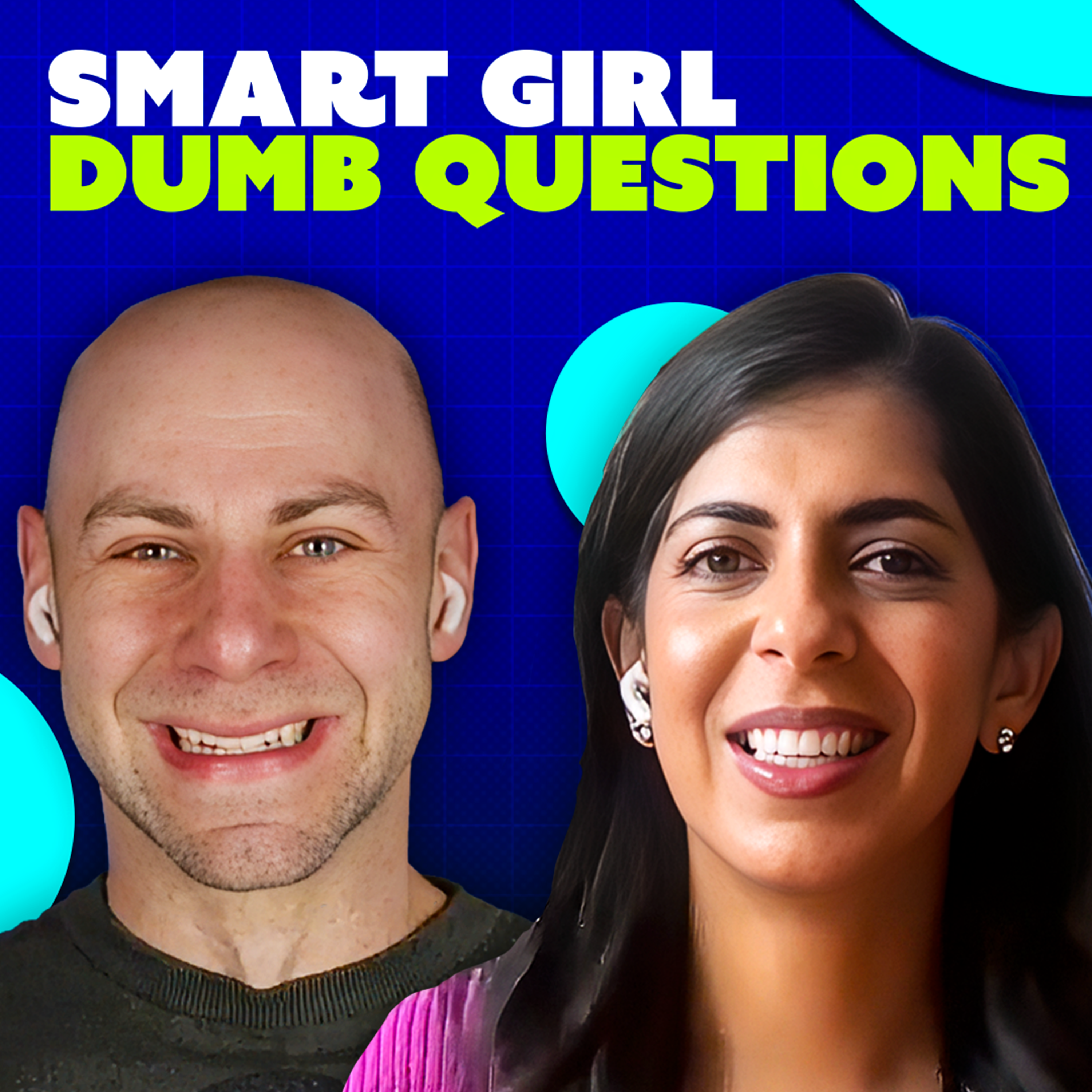
Adam Grant is an organizational psychologist and professor at Wharton; he wrote the book Vibe (described as “secrets of strong connections in a lonely world”).
Vibes aren’t passive chemistry; they’re created in interactions and can synchronize bodies/brains. People often misclassify relationships (e.g., thinking someone is a companion when they’re an ally). Modern “hub-and-spoke” networks reduce resilience and community. One person can initiate repair, but the other must be receptive. Scripts (dating prompts/AI memorization) can replace skill-building.
Adam and Brené Brown’s public feud (2016) later repaired via aligned teamwork work with the U.S. Women’s National Soccer Team (2020). “Hot dog vs sandwich” as a practice prompt for easy disagreement. Holiday advice: choose shared fun activities (e.g., trivia/pickleball) instead of debating politics.
Written by AI. May contain mistakes.
Discussion on the concept of vibes and how they are created in interactions.
“You have taken a four-letter word that we all think we get, not that four-letter word, vibe, and you have written 300-plus pages about it.”
Exploration of different types of connections: allies, pals, companions.
“And people end up failing to vibe when they think they're one and the other person is expecting something different.”
Announcement of a live conversation event in New York City.
“We'll take a quick break and be right back.”
Discussion on the dynamics of relationships, including temporary and long-term connections.
“You know my motto, Work hard and never have fun.”
Insights on repairing relationships and the importance of context and understanding.
“And they had a famous story that's now become a Stanford Business School case about how their friendship really deteriorated in the process of that.”
Exploration of strategies for resolving conflicts and building understanding.
“that if we interacted in a different context where our goals were aligned, what had been a clash could become a clique.”
Explore how misunderstandings affect relationships and the importance of clear communication.
“But people need to feel understood before they want to understand.”
Discuss the impact of societal expectations and dating trends on human connections.
“I think what I would advise founders not to do is I wouldn't try to script anything.”
Learn how to navigate and adjust social interactions in both digital and real-life settings.
“So wait, Adam and my conversation didn't end there.”
Discover the concept of 'pebbling' and its role in fostering relationships.
“So there's a new study this year looking at first dates online versus in person.”
Analyze the complexities of friendships in light of public controversies and personal values.
“Yeah, we have a common enemy and also a common source of entertainment.”
Discussion on the complexities of friendships in challenging situations.
“So if an ally of yours or a pal of yours does something on a public stage that is so negative, what should…”
Advice on handling family interactions during holiday gatherings.
“We live in a society where, like, we, a lot of people are estranged from their families, or they're not as connected to their families.”
Exploration of how common values can bridge divides in conversations.
“Though that might actually cause a fight too, but that is actually fine.”
Discussion on how minor disagreements can escalate among similar groups.
“they find these little disagreements and they just blow them up.”
Strategies for improving family interactions through shared activities.
“of, you know, wanting to avoid disgust, for example.”
A light-hearted discussion on curious questions and learning.
“That is the good advice from Adam Grant.”

Get the gist, explore an idea or ask about something said.
 Claude
On Smart Girl Dumb Questions, what are the key points of this episode?
Searching your listeningAutomatic transcript. May contain errors.
0:00As wish lists grow, you know where to go. Head to Ulta Beauty. We have gifts they'll love from brands like Tato One and Rare Beauty by Selena Gomez. Shop beauty faves to give or keep from Shark Beauty, Sol de Janeiro, and more. Not sure what they want? You can't go wrong with Balmain, Clinique, or Redken. And don't forget to put yourself on the list. Book a salon moment or add a little more sparkle to your season. Shop holiday in-store or at Ulta.com. Ulta Beauty. Streaming on B-Cup. Another beautiful day in Greece. You know my motto. Work hard and never have fun. From the creator of The Good Place and co-creator of Parks and Recreation.
0:37We might be looking at an eight-foot-tall, fully intact statue. We don't know what. Starring Amy Poehler. I've been wanting to take over this dig for a very long time. And Hugh Laurie. This is less than ideal. Are you in? We're all in this together, like the three musketeers. Plus another one. Dig, streaming November 23rd, only on Peacock. See you out there. Is a hot dog a sandwich? It's totally a sandwich. No, it's not a sandwich. I learned recently it's a soft taco. This is offensive now, Adam. Smart Girl. Dumb Questions. Who do you vibe with and why? Welcome back to Smart Girl Dumb Questions.
1:15I'm your host, Nani Maraza, and today I'm talking to Adam Grant. He is an amazing professor, organizational psychologist at Wharton. I sat down with him at the Masters of Scale Summit in San Francisco where we talked about human connection and good vibes and how to have them. Enjoy the episode. Adam. Naima. Congrats on the new book. Thank you. You have taken a four-letter word that we all think we get, not that four-letter word, vibe, and you have written 300-plus pages about it. My 15-year-old is not happy about it. She says, stop saying vibe, Dad. Yes. So what do we get so wrong about it that you had to correct it?
1:50I think one of the mistakes we make is we attribute vibes to people and places. We say, I love her vibe, or that atmosphere, where the place has a great vibe. A vibe is not just sitting there. It's something we create in our interactions. And neuroscientists have studied this. When you feel like you're vibing with somebody else, your heartbeat and also your brain waves start to synchronize. And so it's more than just a feeling. It's actually happening in your body. So I think there's like this sense out there, perhaps a myth, that like vibes are like their chemistry. They just happen. There's aura, there's pheromones, lighting, et cetera.
2:23But you're saying, no, it needs to be created. and how do you create it? Can you vibe code a vibe? I hope not. But there are conditions you can put in place that increase the probability of a vibe. For example? So it depends on what kind of connection you're trying to build. So I've found there are three meaningful kinds of connections we have in our lives. Allies, pals, and companions. So basically, allies are people you pursue goals with. You want to start a project with them or maybe found a company with them. Pals are people you have fun with. You love to hang out, play pickleball, karaoke.
2:52Companions are people you confide in. You might seek emotional support from them. You might call them if you had a medical emergency. And if you're trying to connect with somebody, you have to be clear on what are we trying to do? Do we want to be allies, pals, or companions? And people end up failing to vibe when they think they're one and the other person is expecting something different. Yeah, I love, there's some research that you talk about in the book where you say that it's almost like 50%, if I recall correctly, of people will overestimate their friendships with other people. Like they'll think they're pals or companions where it's like, you're just allies.
3:23Yeah, it turns out that if you list your friends, and then we survey them about who their friends are, only about half of your friends see you as a friend. Just take a moment to think about who those people are for you. Wait, wait, but hold on. We actually underestimate how much other people like us. This is not just asymmetric relationships. Because you're saying for everyone, we also have some lists where someone is calling us their BFF, and we just think they're an acquaintance or an associate. You call them an associate. Yeah. So, okay, so should we be DTRing, like defining the relationship with friends?
4:00Like, listen, I just really want an allyship with you. I'm not looking for anything more. I don't know that the actual conversation is for everyone, but I've seen my students start to do the woo-woo, what's up with us? Oh, really? Yeah, and I think... Wait, they say woo-woo? Sometimes, yeah. Do your kids let you say that? No. Okay, good. No, I've already exceeded my quota of zero. Okay, go ahead. But what I think is so helpful about it is these are really different expectations for what kind of relationship we're going to have. And we don't always realize that we're like ships passing in the night.
4:33So I remember a few years ago, we had a difficult medical situation in my family. I'm sorry to hear that. Thank you. It's fine now, thankfully. But I mentioned it to somebody I thought was a good friend. And he said, I'm sorry, that sucks. And then he never said anything about it again. And what we're all told to do right now when that happens is immediately unfriend, unfollow. It's a toxic relationship. You should ghost him. Go no contact. And I realize now with this framework that he wasn't a bad friend. He was just a bad companion for me. Not great at compassion, but you know what? He's an amazing pal.
5:06We've had fun playing tennis together. He's a great ally. We've hosted events together. I didn't need to write him off. I just need to be clear about what role he plays in my life. It's funny. I do think we're so into our boundary culture right now, like self-care, self-this. So people will cancel and be like, I just need a little self-care time. And I'm like, but we had a plan. And one of the reasons when I was reading this book is you have this picture in there of what relationships used to look like. And they looked a little bit like mesh or a web. And now they look like hub and spokes. And that makes it easier also, right, to snip them.
5:36What's the effect of that on our ability to vibe and our ability to be resilient in our vibrations with others? I think it's one of the reasons why so many people feel isolated. It turns out you can have lots of good friendships, but still feel like your life is empty because you're missing community. And the hub and spoke model is a big part of that. Our friends used to all know each other. And that meant if something hard happened in your life or you ran into an obstacle professionally, one person found out and then everybody else would know and be able to look up for you. And now one person knows and no one else discovers it.
6:07And so I think one of the things we need to do is we need to be introducing our friends to each other. Yeah, like a melting pot. throw people in together. We'll take a quick break and be right back. And by the way, if you're in New York City on November 30th, come to the Comedy Cellar because we're doing one of these live conversations with Esther Perel. She's going to be amazing. It's gonna be a very fun conversation. We're going to vibe it out. You can get tickets in the show notes. There's a link. As wish lists grow, you know where to go. Head to Ulta Beauty. We have gifts they'll love from brands like Tato One and Rare Beauty by Selena Gomez.
6:41Shop beauty faves to give or keep from Shark Beauty, Sol de Janeiro, and more. Not sure what they want? You can't go wrong with Balmonde, Clinique, or Redken. And don't forget to put yourself on the list. Book a salon moment or add a little more sparkle to your season. Shop holiday in-store or at Ulta.com. Ulta Beauty, the main thing. Streaming on B-Cup. Not a beautiful day in Greece. You know my motto, Work hard and never have fun. From the creator of The Good Place and co-creator of Parks and Recreation. We might be looking at an eight-foot-tall, fully intact statue. We don't know what. Starring Amy Poehler.
7:15I've been wanting to take over this dig for a very long time. And Hugh Laurie. This is less than ideal. Are you in? We're all in this together, like the three musketeers. Oh, fuck! Plus another one. Dig, streaming November 23rd, only on Peacock. See you out there. In your layers of defining the relationship, allies, pals, companions, you have associates, which are what we term as acquaintances. You talk about frenemies and the ambivalence of them. You also have two more categories I really liked, which is from Bob Sutton's work, which was assholes. There's some that are bad vibes all the time and some that are bad vibes sometimes.
7:53What's the classification? Yeah, Bob distinguishes between temporary and certified assholes. Okay. Who here knows a temporary asshole? Raise your hands. Who here has been a temporary asshole? Raise your hands. Most of us. Exactly. What is the right layer for founders or co-founders? I think I watch a lot of co-founders screw this up. I think people assume that the closer we get, the better we'll work together. And so it's not enough to just be associates or allies. We need to be pals and companions too. And I think that's a mistake. because often what happens is you become pals with your co-founder and you're having a lot of fun together.
8:34And then you become afraid to have hard conversations. And so you tiptoe around conflict and then the business tanks and the friendship falls apart with it. I think the most important conversation for co-founders to have is to say we are first and foremost allies. That means we're aligned on a mission. We also agree on core values and what behaviors exemplify those and what behaviors are going to violate those. And that comes first. Because if we don't align on all that, then we're not going to get the results we want, and that's going to damage the relationship. And then if we want to add a little bit of pal or companion interaction, that's fine.
9:09But it's not the purpose of founding a company together. 10 % companionship, 15 % pal. I would love to be able to... Majority, 65%. Yeah, let's quantify it. I don't have the data to do that, sadly. But there's so many stories about that. I was just doing something with Andy Dunn, who co-founded Bonobos. And they had a famous story that's now become a Stanford Business School case about how their friendship really deteriorated in the process of that. So it's a very common story. So you also talk about repairing that. And now one of your collaborators, I don't know if you'd call her an ally or companion or pal, is Brene Brown, who for a moment you thought each other were, if not at least temporary assholes.
9:47Is that fair? Worse. Worse? It was more than a moment. We had an accidental public feud. Yes. An accidental public fear. I quoted her in the New York Times, and I thought it was a shout-out. I took her work out of context, and she read it as an attack and hit back. And I swore I would never speak to her again. And this was in 2016, so 10 years ago. 2016, and we went four years without interacting. Had you interacted prior to that? We had met once in a green room before an event. Okay, and you had what you thought were good vibes. Mm, no. Okay, so not that accurate. No, it was fine, but we interacted for five minutes.
10:28So I just had no perception of, did we have a relationship? What did she think of me? And after that fight, I said, look, you are dead to me. And she was thinking the same thing. So how do you fix the vibe? How did you two fix the vibe? Well, it started when I asked her for help. In 2020, I got a call from the U.S. Women's National Soccer Team, and they wanted to work on their vibe. They were having challenges with teamwork and culture. and it was COVID, it was the middle of COVID and I didn't have nearly as much on-site time with him as I wanted. And so I said, let's do a speaker series over Zoom where I'll bring in different experts and they can help land some of the key points that I think would help you.
11:06And I pulled the whole team on who they wanted and the number one request was Brene Brown, which I find deeply irritating. Do you think they were doing it like to get you, they knew about the public? They didn't know. They had no idea. They had no idea. But what could I do? I reached out for Renee and I said, look, you know, I'm all in for Team USA. Would you be willing to help? It's like a rallying around the flag effect. Okay. Completely. And I saw a completely different side of her. She showed up with tremendous generosity. She went above and beyond to try to help both them and me. And I realized I had seen a very narrow slice of her in one context.
11:42And I had completely misjudged who she was. So do you think you can unilaterally fix the vibe? because I think sometimes you screw up in a friendship or a relationship and you're trying. You need both parties to come together. Yeah, I think, obviously, one person can initiate it, but if the other person's not receptive, it's not going to change. But it was a great lesson for me that if we interacted in a different context where our goals were aligned, what had been a clash could become a clique. So are you now allies? We are definitely allies now. She thinks we're pals, I'm not sure. Because, okay, so here's the issue.
12:15Okay. Renee Brown, cover your ears. No, we talked about this. We have an ongoing, friendly argument about it. Okay. She thinks we're pals because we have fun sharing ideas together. Yeah. And I think we're not pals because we've never hung out just to hang out. There's always a project or a goal or an audience. Mm. Okay. And I wrote the book. Like, I get to decide. You did, Adam. You did. One person's pal is another's ally. What can you do? You have been on this book tour. I'm sure that you've had moments on stage. I have had this where you like sit down with someone and you're five minutes in the room and you feel a little bit of like an off vibe.
12:54And then I'm not going to ask you to disclose who that happens with, but let's role play. How might you might, are we vibing by the way? Are we good? Are we vibing? I mean, we have to ask the audience. What do you guys think? Are we vibing? Okay, good. It's mixed. It's a mixed review. It'd be very awkward if they didn't agree. They're like, ooh. Okay, so how would we, if we weren't vibing, how would you repair the vibe? What's the olive branch you would give me? In real time? Yeah, just role play. All right, so how did we fail to vibe? I said, you know, that's really rude, Adam, what you said to Brene.
13:25Like, I don't understand why you would say that to your colleague. I think she is your pal. Oh, that's so interesting that you think that, Naeem. Let's tell me more. Let's just tell me more. That's the Esther Peral trick, the tell me more. And that does help. I feel hurt. I went through conflict mediation training 25 years ago. In the hopes that if I can learn to help people mediate their conflicts, I would be less conflict-averse myself. Yes. And the single most valuable thing that I learned was if you want to repair a relationship with someone, you need to show them that you're willing to hear them.
13:58And most of the time when we try to repair conflict, we're trying to defend our motives and clarify our intentions and make sure we're not misunderstood. But people need to feel understood before they want to understand. I feel like everyone feels misunderstood. And that is the urgency of trying to clarify, over-explain. You're writing the email. You're adding the paragraph. Okay, I don't need to write that. You're constantly negotiating with yourself on how to be understood. But do we just have to accept that we're going to be a little misunderstood? Yeah, I don't think you can have real relationships with people where you're always on the same page all the time.
14:31I think, though, that oftentimes what happens is people are misperceiving or overreacting to not the message, but the motives that you're conveying. And very often what we forget to do is, if we're going to have a difficult conversation or if I'm going to confront you about something that we left hanging, then I need to explain to you why I'm having that conversation. And what I should do is say, Naima, the people who have helped me the most in my life are the people who have given me tough love. And I'm trying to pay that forward now. Or, you know, I would really want to hear this if I were in your shoes.
15:03And so I feel a responsibility to share it with you. Or, I really care about our relationship. and if I don't say this, I'm worried that our relationship is going to suffer. And that completely changes the meaning of what happens next. Yeah, it does. I have a left-field question and then I want to double-click on that. My left-field question is, do hot people have better vibes? Like, there are some people who just, by benefit of how they look or enter a room, they get better vibes, they give better vibes out. Yeah, there's actually, there's a whole body of research on this by Stefan Tao and his colleagues.
15:33And what they show is, if you are conventionally physically attractive, not only do other people react more positively to you, you actually end up on average having higher social skills because people elicit a better version of you over and over and over again. And so you get better at interacting with other people because you're used to other people. Because you're positively reinforced. Yeah, exactly. Okay, interesting. I gotta get hotter. Okay, you talk a lot in the book about why we suck at this now, the kind of social atrophy that we've experienced. You should read this. I think it's very kind of compelling because it does something that I think is actually remarkable.
16:09It doesn't just like blame everything on screens and technology. You talk about social atrophy and the pandemic. You talk about the web and hub and spokes and the context by which we have come to suck at vibing and wanting to vibe so quickly, hook ourselves on it. But I do also worry, Adam, like we live in a world where I think our latest stage of capitalism is like, let me give you all this advice on how to be a human. Like, let's date on dating apps where I give you prompts and here's the way you can hook someone in five seconds on your reel. There's so much advice around how humans can be humans.
16:44And I wonder if you worry about that in our world, like we're over-engineering our sense of humanity. A little bit. Yeah, I worry. Like, when the Mandy Lange-Katron article went viral in the New York Times a decade ago on how to fall in love with anyone. Oh, the 36 questions. 36 questions, okay. Then people, like, they have this script and they're like, tell me about your relationship with your mother. What's your biggest regret? What would you take out of the Bernie? Honestly, I have done that. I have never fallen in love. I feel like by question eight, I'm so bored. So I'm... I mean, I've fallen in love, but not through the questions, yeah.
17:14So to answer your question, I am worried. I'm worried about you. But we should know. We have actually been allies because Adam has been on a mission to help set me up for a while. Turns out, not needed. Not needed. Now I'm seeing someone. But you did set me up with a number of people. Including my best friend's then boyfriend, who's now her husband. That was a bit awkward, but... We'll leave that one in the past. But look, I don't think we want to become scripted, right? I worry that... I think this is one of the huge problems with chatbots right now, is if you look at how people are using generative AI, they're not using it to figure out, how do I learn how to have a better conversation in a first date or a job interview?
17:52They're literally memorizing scripts. And as a result, they're not actually building the skill. What I prefer, though, is to say there's nothing wrong with a good prompt to get a conversation going. Some of us were having fun with this last night. I love to just give people a prompt like, is a hot dog a sandwich? It's totally a sandwich. No, it's not a sandwich. I learned recently it's a soft taco. It's not a soft taco. That person is unhinged. A taco? Soft taco. A soft taco. It's connected just like a taco shop. It is. It is softer, Brad. The point is, you go back and forth for two minutes on that.
18:29It's hard not to be pals. Yeah. And also, it's great practice for having big fights. We are so conflict-averse that we often don't practice on the easy stuff. And then we expect to have the skills when we have to work out some really hard disagreements. No, we should be debating whether a hot dog is a sandwich and then carrying over the joy of that argument to the ones that really matter. I love that. As you were writing this book, which could become an over-engineering book, you do call it, the vibe, the secrets of strong connections in a lonely world, but they're not secrets really, right? Are they secrets?
19:04I don't know. I have to give that more thought. Yeah. I felt like I'd used all the other words in my other subtitles before. You've written too many books. It was just variety at this point. But how did you avoid over-engineering? And like, what would you tell people who are building companies, trying to help people connect socially, et cetera? What would you advise these founders not to do? I think what I would advise founders not to do is I wouldn't try to script anything. What I would do is I would say, okay, pay attention to the times when you've really had a great brainstorming session or when you felt like people just immediately were able to add value in a team when they joined.
19:44What happened in those moments? What was the starting point? What was the ignition? And instead of trying to repeat exactly what happened, try to figure out, okay, what's another version of that that I could do? So let's take the hot dog sandwich question. What's fun about that? More soft taco, but yes. Yeah. People have really strong opinions about it, but it's completely trivial. And so you can then say, all right, next question, is cereal soup? Let's try that one tomorrow. This is offensive now, Adam. Okay, keep going. Yes. I actually don't think we're going to be pals after all. What do you, is yogurt?
20:15Is yogurt soup? No. Gross. How is cereal? Okay. Whatever. Yes, okay. But the point is not to repeat the same behavior, right? It's to figure out what are the patterns underlying the behavior. Yes. And then how can we make that new over and over again? You know, I think a lot of it is, it's skipping small talk and it's going to what psychologists call deep talk. Okay. And sometimes that's, I want to be companions with you. I'm going to be a little bit vulnerable and I'm going to tell you an embarrassing story and see if you can handle it. I think if I want to be pals, I might skip, what do you do?
20:47And ask you, what do you love to do? Yeah. Or I might ask about your favorite movie or your favorite book. If I want to be allies, I would ask you, what's your biggest challenge right now? or what's a goal you're trying to achieve? And then I would try to help you. And I think those are great conversation starters. And what follows is very distinctive and idiosyncratic to the person and to your connection with them. I think that's great advice for where we are here because the Masters of Skill is a bit of a laboratory for your ideas, for your vibes. And there's 800 lab rats or attendees, as we call them, where you can really exploit.
21:17And one of the things that's fascinating is I always see memes where it's like, oh, you need 50 hours to become a friend or 150 hours to become a friend or become friends. But you talk about ways that you can do this through those techniques that you just outlined in fewer than 10 minutes, right? Yeah, it turns out that in nine minutes, people can actually form a deep connection just by going to real talk. Yeah. And one of the easiest ways to do that is just to ask somebody about their favorite memories from their childhood. Oh, I love that. You get to see a really human version of them. They share something that they're not talking about every day and you start comparing notes and you realize, wow, there is much more to this person than meets the eye.
21:55I love that. Well, one of mine involves cereal, which I'll tell you about, which is a soup. Actually, I learned something in this conversation. Adam, I don't personally think that cereal is a soup, but some of the most important relationships in my life have been around disagreement and tough love. So thank you for sharing that with me. Thank you. Thank you, everyone. The book is called Vibe. Give it up for Adam Grant. Thank you so much for having me. So wait, Adam and my conversation didn't end there. We actually kept vibing first off stage, and then a couple weeks later on Zoom because I had two pressing questions, both related to timely matters that begin with the letter H versus holidays.
22:29Like how do we vibe with people who are in our family that we didn't choose, but we are going to spend time with and we love very much. The second H is about Jensen Huang, the OUSA CEO of NVIDIA and what happens to all his pals and allies and companions now. Stay tuned for all that conversation after the break. All right, Adam, thank you so much for being here. We are not on a stage at Masters of Scale. We are now digital instead of in real life. How do you vibe differently digitally versus IRL? I think the main thing to know is that it's shorter, typically digitally. So there's a new study this year looking at first dates online versus in person.
23:09And the online first dates are about half as long. Okay. Because they're as successful in half the time or because they are less successful? Well, actually, here's what's interesting. if you control for how long they are, they're just as successful. People are just as likely to be attracted to the other person. They're just as likely to want another date with the other person. And I think that's because our expectations are low. We think this is never going to work online. And then it's not the worst thing ever. And we think, okay, that was actually pretty good. But I think the danger of long virtual conversations is the opposite of burnout.
23:42It's called bore out. Bore out. Yeah, or in French, it's le bore out. But instead of being overstimulated, which is normally what causes burnout, we're understimulated and we just start to feel like the conversation drags. I feel like it sounds better in French. The bourreau. I have the bourreau. The ennui. It's like an ennui. I would have thought it's like a slower burn digitally, but I guess you kind of feel the spark right away if you are able to assess a date in half the time. You could, or at least you could be intrigued. And, you know, one thing I've learned, and this is probably true both online and in person, Conversations are more energizing when turn lengths are shorter.
24:17So instead of a nine-minute monologue, if we can go back and forth more quickly, it's more likely to be bursty. I love that term, turn lengths. I imagine being in conversation with someone and being like, can you make your turn lengths just a little trimmer, please? A little trim down the turn lengths. I need a meme of you saying that. I'm just going to play it with some of my guests. You can do it. You can pebble it to your guests. Explain what pebbling is. Oh, I like that. Okay, so a lot of people think that when you send somebody an article or a meme or a link or a reel, that that's a trivial act, and it's not.
24:49It actually builds connection, and it can help also reconnect with other people we've lost touch with. And the name comes from a courting ritual among penguins where they collect and present these little pebbles, and they're basically signaling, you know, I think we could be partners. And I think the human equivalent of pebbling is like, hey, I saw this, Naima, it reminded me of you, and I think you'll love it too. I love it. See, like penguins could not pebble on Zoom. That would be impossible. So penguins have to date IRL. This is one of the reasons they were worse off than human beings, I think.
25:22But we love them. I've never had that thought before. And now you will keep it with you always. So right now, all of this pebbling that we're doing, largely about Jensen Huang and the effects of the leather jacket on the global economy, they are connecting us. Like he is overall net positive for vibes? I guess so. Yeah, we have a common enemy and also a common source of entertainment. Did you see the one with Jensen as Nathan Fielder? No. And the Chinese spy as Elizabeth Holmes? Somebody used AI using NVIDIA's chips to put them in that exact scene from the trailer. So maybe this is going to be a net positive long-term in the stock market because we're all just using the AI to make the new memes.
26:02I would not go that far. Do you believe in dead internet theory? What is that? You don't know what dead internet theory is? No, I've never heard that before. It's this idea that like their internet is not real in some way, that there's so much fake activity and bots and others on the internet that what we think is real is not real. Well, I haven't heard that term for it, but the phenomenon I think is real. It's not just bots, right? It's also trolls. There's a loud minority that really skews our view of reality and actually makes us think we're more polarized than we really are. Okay. Yeah, I think that, except that in moments like Nathan Fielder and Elizabeth Homestock and Jensen Huang and the alleged espionage mistress, that these are bonding.
26:48I think in a world in which we're so divided, we're looking for moments like that to connect. I also think it relates to your book, by the way, because how do spies manage to vibe with everyone? Like, how do you honeypot anyone, you know? I can't say I've studied that, but, you know, look, I think there's a particular, there's an archetype that's vulnerable, right? It's people who are now rich and famous and successful, but they were nerds growing up and they never quite felt wanted or liked or included. That's, it's, yeah, it's hard for me to absorb that when a lot of times they have like partners and, but I get it.
27:26I get it. I understand that. Anyways, enough about Jensen. And I do want to talk about the idea of like us being divided right now because it is, or actually, let me ask you one more thing about him. There is this, I'm obsessed with this story. I can't get away from it because I have been thinking a lot about kind of cancel culture, which I know is a dated term. But the idea that we kind of collectively decide that someone is persona non grata or someone has done something really bad. You and I talked on stage about what you characterize as the three different types of what we term friends, the unbundling of that term into…
27:58Allies, pals, and companions. Exactly. Allies, pals, and companions. So if an ally of yours or a pal of yours does something on a public stage that is so negative, what should… Do you think there's a huge fall-off of all of a sudden people you thought were your pals become not even your allies, but like acquaintances, that category, the sub-friend that you qualify in the book? what happens? And are those really testing grounds for your friendships? Yeah, I wouldn't choose to test a friendship that way. You do get feedback pretty quickly. And I think there are probably two kinds of people who stick by a Jensen in this situation.
28:33One are the people who are using him, who still think that his fortune or his expertise or his network can benefit them. And the other are people who actually care about him and believe that human beings ought to be seen in 3D, not 2D, and say, look, he made some bad, bad decisions, and maybe even some corrupt decisions. But that doesn't mean he's evil, and that doesn't mean that everyone should drop him from their life. So now I want to talk about this idea of, like, drawing boundaries. We live in a society where, like, we, a lot of people are estranged from their families, or they're not as connected to their families.
29:06And then we enter holiday season, and they have to, they're foisted upon, you know, their uncle, who's completely politically opposite to them. And they're going to be sitting, you know, in just days after hearing this episode, maybe at Thanksgiving or weeks after this episode, maybe at Christmas or New Year's or some other family occasion that someone around the world celebrates. What is your advice? What is your best advice for getting along with family that you would not choose to have during the holidays? Well, I think what most people do is they either go right for the jugular and they have the debate, which is exhausting and sometimes, you know, just depressing, agitating, outraging, and that goes poorly.
29:50Or they say, we're just going to, we're going to steer clear of it all together. And we're going to have small talk. And they have these really boring conversations about the weather and about traffic. And then they run out of material. I think there's a middle ground. My favorite starting point is to ask if you could run anybody for president, who's not in politics, who would you pick? Somebody who's not politically active, who you don't even know what party they belong to, who would you like? Oh, I like that. Or even who would you pick at the dinner table? Though that might actually cause a fight too, but that is actually fine.
30:24Present company excluded. Yes. I mean, I would pick you, but yes, I understand. I'm not qualified, but I appreciate the vote of confidence. I think what I love about this question is it forces us to discover that we actually have some common role models. And common role models reveal common values. And they remind us that, yeah, there are many things that divide us, but there are also some underlying principles that could unite us. I love that. What do you think about this overall feeling, though, that we seem to have in our current culture, which is that people should agree with us. They should agree with us on not just core values, but even, I mean, even that might be a bridge far if you're just an ally to someone, you know, like you might not need to agree on every value that they have, but particularly their politics.
31:09Like we now increasingly people filter that out on dating apps. People are very quick to talk about that. I mean, you tell a story in your book about astronauts who like literally come from different countries, go out to outer space, like manage to sustain relations and become friendly despite their countries being at war because they are on this joint mission. So how should we think about that as we approach family? I don't know I think this is hard I think I'm well I'm torn between two things on this okay I think there's a part of me that says like we're really exaggerating and amplifying our differences and Freud actually wrote about this I think it was the only insightful thing he ever wrote in my judgment okay got it I mean Freud had this great insight he called it the narcissism of small differences.
31:58And he said, people who share so many things in common, they find these little disagreements and they just blow them up. And you see this, there's actually research on this that shows that if you are a vegan, you tend to dislike vegetarians even more than meat eaters. Because at least the meat eaters, they're principled, they're consistent. What are vegetarians? And I think we do this. They're like, well, how dare you eat cheese and eggs? I guess that's the difference, right? Between a vegan and a vegetarian. Yeah, they kick it over. Yeah, and it's just like, I thought you were one of us, but you're not.
32:33And there's a paper that came out actually just in the last couple months showing that if you are an extreme, well, basically, if you're on one end of the ideological spectrum, you're either far left or far right, you actually see moderates who are part of your own group as outgroup members because you're not really one of us. You don't really get it. And I think that's a mistake, right? I think if you're somebody who generally likes liberal policies, you should see affinity with other people who support liberal policies. And same if you're oriented toward being conservative. But they don't live up to your righteousness level of the spectrum.
33:11So you'd rather take someone who's quote-unquote authentic on the other side because we have such a primacy for authenticity in our current culture, I guess. Apparently. I saw a great comment about this on threads. somebody said that the right has loyalty tests and the left has purity tests. Didn't Jonathan Haidt write about that in The Righteous Mind? He definitely, I don't know if he used that exact language, but he definitely spoke to it. Yeah, I feel like that was a kind of core thesis I took from that book. I guess it tracks with his moral foundations research where, yeah, the right does seem to care about loyalty more as a moral principle.
33:47But in his work, purity was more on the right also. of, you know, wanting to avoid disgust, for example. And the left was more about fairness and compassion. And I, look, I actually think that loyalty is a value we should all subscribe to. I just think we should define it differently, right? It's not about fidelity to people. It's about fidelity to principles. So this is where I kind of want to end the conversation, which is, how do we think for people who are sitting there thinking about end of the year, they're getting together with family. You talk in the book about how, when you're with family or your partner, you're actually having a less good time than friends.
34:22You might want to explain that when you answer this question at the end. But because that was a shocking early kind of data point that you give in the book. But how would you tell them to approach a New Year's resolution as it relates to vibing or family differently in 2027, particularly given the kind of political turmoil and divides that we've seen as a country and as a world? Yeah, I think you anticipated exactly where I'm going to go with this, which is, I was surprised, sounds like you were too, to find that people are actually, they feel more joy when they're spending time with friends than family.
34:57And at first I thought it was because we choose our friends and we're often stuck with our family by blood or by marriage. But what the research shows is it's different. What really explains this is we do different kinds of activities with family and friends. With family, we are spending a lot of time disciplining our kids. We're coordinating chores with our partners. We're fighting with our aunts and uncles and our cousins. When we get together with our friends, we do pal activities. We pick fun things to do together that we all enjoy. And I think that is the New Year's resolution to start with, right?
35:32Is to find a common activity. It could be trivia night. It might be singing in a chorus. It could be playing pickleball. Pick something that you all think is fun. Do it together. You might hate each other a little bit less. And even if you don't, at least you got to do something fun. I love it. So do different things together so you can like your family as much as you like your friends. That is the good advice from Adam Grant. Adam, I end every episode by doing the same thing with my guests, not a different thing, which is I ask them a dumb question they have that they don't know the answer to or that they've recently asked their phone and would be embarrassed or were embarrassed to ask out loud.
36:07I mean, you and I debated whether a taco was a sandwich, so you've already used that one. Do you have any other dumb questions that you'd like to ask? I do. I was just actually debating with a friend yesterday. Where does sand dunes come from? Is it like the buildup over time of sand because of the wind? Is that where it comes from? Maybe, but we were talking about the sand dunes in northern Michigan. And they go way above the lake. And we don't know how they, I don't know how they got there. And I need to look it up. We have such different, my reference point was sand dunes and Sex and the City, the horrible movie.
36:43that is not anywhere as good as the Nathan Fielder movie. Actually, just discuss the Nathan Fielder movie with your family all through the holidays. You'll be fine. Done. Nailed it. All right. Thank you so much, Adam, for being here. The podcast is called Rethinking. The book is called Vibe. It's a great holiday book for anybody that you're getting a gift for. It's not quite a stocking stuffer because it's larger than that, but people should check it out. Thank you so much, Adam, for vibing with me digitally. And hopefully we kept it short and our turn length shorter. Done. Thank you, Naima.
37:14Okay, I need to know, who would you nominate to be president in 2028? Ideally, someone outside of politics. And we don't need a Thanksgiving table to do this exercise. You can actually comment or leave us a review with your answer below. I want to hear it. I personally am tempted to go for Jon Stewart. I mean, he's so funny. He's built an enterprise. He's actually brought up so many people. Look at all the alumni of The Daily Show and what they've gone on to do. Imagine we have someone that magnumonious and that funny in office. I personally would like that. We could also send Jensen Huang because he has a great relationship with Beijing and could really help us out there, I think.
37:46Seriously though, one tip that I'm definitely taking home for the holidays and into 2027 is actually not from Adam Grant, but from his frenemy, Sigmund Freud. I need to know their beef, by the way. But that idea of the narcissism of small differences, how we let little things get in the way of the bigger picture. I feel like that's so damning for our current political realities and for some of our relationships, actually. By the way, if you like the live portion of this conversation, come to the Comedy Cellar on November 30th. There are tickets for our conversation with Esther Perel. They are available in the link in show notes or in our bio everywhere on social at smart girl dumb questions.
38:22If you can't make it and you're not in New York, don't worry. You will hear that conversation in December. But that's it for today's vibes. Don't forget to like, follow, share, subscribe, vibe to this episode with someone else. This was taped live at Masters of Scale. Thank you so much to Jeff, Berman, Jodine, Jay, Carly, and the whole team at Masters of Scale for hosting me and Adam Grant there. This episode was produced with Jacob Watson and Dana Balut. It was edited by Jacob Watson. I'm your host, Nane Maraza, and I will see you next week for an all-new Smart Girl Dumb Questions, Less Little Differences.
38:52Are you taking some time off? What's that? You don't mean that. You don't mean that. You know how to take a vacation. I mean, a vacation is different than time off, isn't it? Thank you.
40:02We'll see you next time.
40:33ULTA Beauty. on Peacock. See you out there. The secret society of semi-homemade. Listen up. Sam's Club has pre-made dishes for a Thanksgiving feast that's ready in two hours. All while tasting suspiciously homemade. Come join us. Sam's Club. Individual oven times may vary.
We live in a time where apps are teaching us how to be human … but can you really vibe-code a vibe? Nayeema asks Adam Grant, organizational psychologist, Wharton professor, and author of several books including his latest, Vibe: The Secrets of Strong Connection in a Lonely World.
On the agenda: three tiers of friendship, how to build a relationship in just NINE MINUTES, what Jensen Huang can teach us (or not) about relationships, and why frenemies are worse for your health and relationships than a**holes are.
Send us your “dumb questions” on IG/TikTok @smartgirldumbquestions or by calling 1-855-MyDumbQ.
Make sure you’re following Nayeema and the show on YouTube, Instagram and TikTok.
And obvi: SHARE THE SHOW WITH YOUR FRIENDS, YOUR GROUP CHAT, YOUR MOM and YOUR FRIEND WITH THE BEST VIBES
Learn more about your ad choices. Visit megaphone.fm/adchoices