Ask ChatGPT
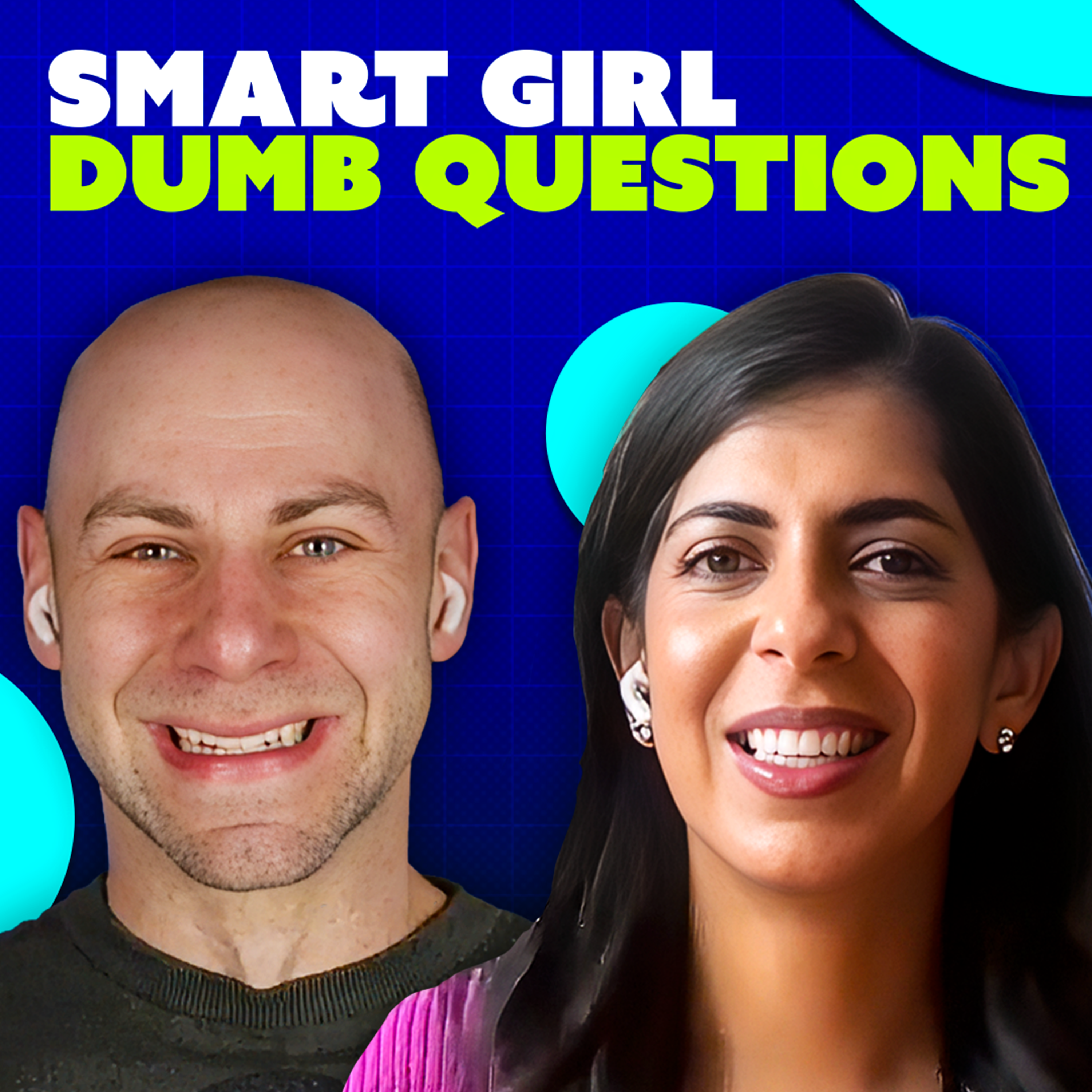
 Smart Girl Dumb Questions
3 Nov 2026 · 45m · 27 chapters
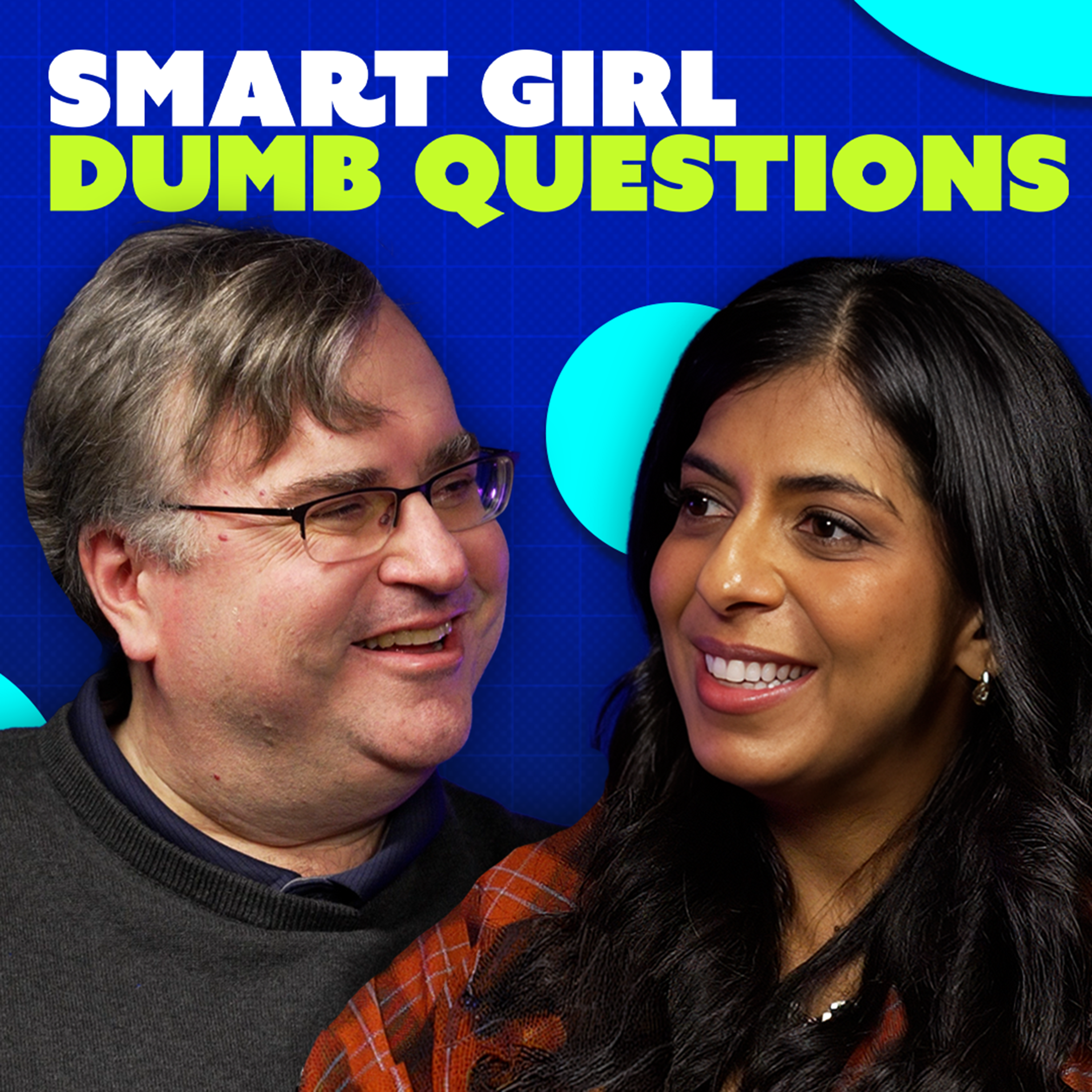
Career advice for different generations in the AI transition; how to stay optimistic (“bloomer” mindset) while acknowledging job disruption; and a policy/healthcare vision for AI access.
Reid Hoffman is LinkedIn co-founder, Greylock partner, and associated with the “PayPal mafia.” He’s an investor focused on frontier technologies, writes on AI (including “AI for all Americans”), and co-founded Manas AI (with Ujwal Singh and Sajjata Mukherjee) aiming to “solve cancer.”
AI will “bleed jobs,” but entry-level hiring slows due to uncertainty; people should become “AI native” by doubling down on strengths and learning AI tools. He frames attitudes as Doomer/Gloomer/Bloomer/Zoomer and argues the future can be shaped. He expects AI medicines to grow exponentially in trials.
customer-service turnaround at PayPal via Sarah Mbok’s Omaha center; “weaver vs power loom” analogy for mathematicians; rocket math becoming broadly available; government “three free agents” idea (medical concierge, legal assistant, educational tutor).
Written by AI. May contain mistakes.
Discussion about the dynamics of the PayPal mafia and Reid's work relationships.
“depending on how you rate current political circumstances.”
Reid shares insights on AI's potential and societal implications.
“But that's why I want to learn why you think it is.”
Reid explains different attitudes towards AI: bloomers, gloomers, and doomers.
“So I wrote a book, as you know, two years ago, Super Agency, and I put the four categories out.”
Discussion on notable figures representing doomer and zoomer mindsets.
“Well, because I asked him about Gen Z tuning out from AI and what he thought about the recent surveys that show 30 % of Gen Z are just completely afraid, don't want to deal with.”
Reid discusses the evolving job landscape influenced by AI technologies.
“And impartially, most of the directed AI people are more in the bloomer category.”
Reid provides tailored career advice for Gen Z and millennials amidst AI changes.
“Yeah, it's, look, well, no, all of those things are true.”
Learn how to adapt to AI advancements in your career.
“So, what do you do for the mathematician?”
Understand the nuances of using coding tools effectively.
“they don't know when it's being good or not.”
Explore the evolving collaboration between humans and AI.
“I do think also when you participate in it, you're kind of training it.”
Discuss the implications of AI on future job roles and productivity.
“And in any work thing, us working with AI is a little bit like when we're working with a five-year-old to fix the car.”
Recommendations for Gen Alpha on using technology for learning.
“These are, you know, people who are, I think they're like 15 max right now.”
Discuss how different generations adapt to AI changes in their fields.
“Like, I just, without looking, I know what it is.”
Examine the reality of work-life balance for startup founders.
“And post-AI, I do an entirely different way.”
Understand the shift from individual contributors to managers in a tech-driven world.
“I don't have a favorite almost anything.”
Explore how AI changes the perception of age and capability in the workplace.
“like of this kind of creative pattern association when we're sleeping.”
Discuss the potential for technology to capture ideas from our dreams.
“Do you think that we're going to have like extractive, like Neuralink type extraction while we're dreaming?”
Delve into how AI may influence retirement and personal legacy.
“Back to AI advice, we'll move out of the romance world and get to retirement.”
Discussing the implications of creating AI and its legacy for future generations.
“But another one is, by the way, so like, for example, as you know, I've created Read AI.”
Reid shares advice for enterprises on effectively integrating AI to enhance productivity.
“It's so interesting because I lost my father a few years ago, and my mother's getting older, and I do think about that.”
Discussing how the government can partner with tech labs to provide AI tools for all citizens.
“The primary one is the following, which is the most natural thing in all the dialogue is how do you bring costs down?”
Exploring the potential of AI to provide free medical, legal, and educational services.
“What were you smoking when you wrote the plan?”
Reid discusses the future of AI in medicine and the potential for curing diseases.
“But then the provision of those services.”
Delving into healthcare issues and the potential for AI to address these challenges.
“You'll see them beginning to get into trials.”
Discussing the nature of conflict and how to foster civil conversations.
“And every episode of Smart Girl Dumb Questions, asking my guests who are so smart, a question that they're dumb about.”
Exploration of human conflict and system design insights from Toyin Ajayi.
“Because it's the nature of human beings to be in conflict.”
Discussion on actionable career advice, AI's role in learning, and essential human skills.
“And I do think LinkedIn is a dating app.”
Anticipation of future episodes covering Silicon Valley, healthcare, and technology's impact.
“Anyways, I'm going to have to have him back another time because I really wanted to go deeper on Silicon Valley and the real work lives of Silicon Valley and the polarization that we live in now.”

Get the gist, explore an idea or ask about something said.
 Claude
On Smart Girl Dumb Questions, what are the key points of this episode?
Searching your listeningAutomatic transcript. May contain errors.
0:00Everything I'm wearing today is Amazon. Is Amazon? Is Amazon. Oh my God, Reid. Money is wasted on all the wrong people. Smart Girl. Dumb Questions. What does my future look like? And how should I prepare for it? This is Smart Girl Dumb Questions. I'm Naye Maraza. And today my guest is Reid Hoffman, LinkedIn co-founder, Greylock partner, and a member of the so-called PayPal mafia, alongside others like Elon Musk, Peter Thiel, Max Levchin. Was it more like a mafia or more like the real workwives of Silicon Valley? At the time, it was more like the real workwives of Silicon Valley. And maybe it's grown into being more of the PayPal mafia, depending on how you rate current political circumstances.
0:48Did you have a favorite workwife? Interesting. And you mean from back in those days? Back in the days, yeah. Yeah, like a person that you really liked sparring with or collaborating with. Oh, look, everyone was super talented. So I really wouldn't want to throw anyone... No, but a work wife is a different thing. You know what a work wife is. Well, the person who I kind of... I had amazing work with a number of folks, Max Lovchen, awesome, super smart. Sarah Mbok, who built our customer service center, is frequently under... We were in a place where we were going in the hole, 30 ,000 customer service emails per day.
1:26And we had to dig out of it because we had two customer service people. And she built our Omaha. At all PayPal? Yes. And she built our Omaha customer service center. And it was one of the reasons why people stopped hating us. Oh, wow. Yes. Do you call a lot of call centers? Do you ever have to call customer service? Do you have people that call customer service for you? Well, very soon that will be agents. Yes. So yes, but I have people who do that versus me doing it. When I have, you know, please call Comcast. I'm like, oh, and then I have to call someone and apologize that their job is just a little bit hellish because they have to call Comcast.
1:56Okay, I want to talk to you about so much. I've been reading, you have written like a really interesting, like quite patriotic sub stack recently about AI for all Americans. Yes. Which I feel like sounded beautiful and maybe unrealistic. So I want to talk about that. I want to talk about. Although I do think it's realistic. So I'm glad to go into depth. Yes, I know you do. But that's why I want to learn why you think it is. And I think, like, you know, I don't know if it's the mafia or the work wives, but I feel like you're a member of the tech Illuminati. A lot of us out here, we're just taking what happens from this new center of the earth called Silicon Valley.
2:32You are someone who sees frontier technologies as an investor. You're writing these upstacks. You have these philosophies. You're studying ancient philosophy and learning about modern leaders. You are back in founder mode at the ripe age of? Oh, 59. 59. Yes. And you are abandoning, I don't know, abandoning. You were leaving a cushy board seat at Microsoft... Yes, yes. ...to go be a founder or co-founder. Although we don't think of ourselves as cushy. We try to do real work. Does Satya give you uncomfortable seats at the Microsoft? No, no. The seats are office chairs. Office chairs, okay. So you could say it's middle.
3:03It's not the comfy chair, and it's not the uncomfortable chair. But you're at a point in your life where a lot of people are like, oh, I want to get to a certain point, and I'll be on a bunch of boards, and I'll be like, I'll be done with that. And you are going to go co-found this company. Yes, I have co-founded this company. And I'm re-intensifying, yes. Yes, Monas AI. Yes, yes. Curing cancer. Curing cancer. Small thing. Yes. Okay, and we're going to talk about the timeline for all that. But most people, I think, right now are like a little bit paralyzed by this conversation around artificial intelligence, in part because we keep being told we're going to die, 10 % chance, whatever.
3:33There's also like the day-to-day of we need to work and we need to get work done. And I've been doing this What Even Is Work series, and a conversation piece that keeps coming up is like the role of AI in changing how people can even imagine their futures. and how paralyzing that is to make individual, let alone collective or company decisions in this world. So that's what I really want to talk to you. You are not a doomer or a zoomer. Nope. You call yourself a bloomer. Yes. First of all, explain all three of those categories and also the fourth one, gloomer. Bloomer, yes. So I wrote a book, as you know, two years ago, Super Agency, and I put the four categories out.
4:07And part of what I want in the categories is to have people understand that there are smart people in each of these categories. The category is not an IQ distinction between them. There's probably also dumb people in each of the categories. Oh, yeah. Yeah, yeah. There's a whole spectrum. There's a full human spectrum in each of them. Although with an affinity of Boomer category, I tend to think that, you know, maybe we have a higher propensity. But that's probably delusion. And so let's go from negative to positive. Or kind of most negative to most accelerationist. So Doomer, AI is going to make things really bad.
4:43Mm-hmm. Most of the most pronounced doomers are human existential risk, but it could also be, you know, kind of like refactoring society. We'll have one big AI megacorp, you know, blah, blah, blah, blah. Yeah. It's like a Dave Eggers novel. Yeah, exactly. Yeah, everything company. But even probably more. More dystopian. Yes. Okay, got it. Okay, those are the doomers. Yes. And then gloomers are, it's going to be bad, but there's nothing you can really do about it, and it'll be all right. I mean, it's just kind of like, it's like, it's like, you know, gonna, now there's gonna be more preservatives and chemicals on all the food and there's nothing you can really do about it.
5:20And we're like, okay, we'll get through it. Are you saying RFK Jr. is a gloomer? I'm kidding. Yeah, maybe. You know, maybe tech can solve the worm in the brain. I mean, who knows? Yeah, we'll see, yeah. And so, and then bloomers, where I'm at, is, hey, the future can be great. There's a lot of ways that it can be. It needs to be shaped and steered some, right? you know, pacing, steering, et cetera. But default, the energy is in that direction. It just doesn't happen accidentally. You have to work at it, but it can be great. Zoomers are, it's just going to be great. Just hit the accelerator, let's go.
5:56Everything that technology can build, like stop with all this negative talk, you know, like full acceleration, man. Okay, so give us some people. As people listening or watching this are thinking about where they are in this category of Zoomer to Zoomer, You are, obviously, our chief bloomer, Reid Hoffman. Give us a famous doomer. Well, there's a number. We've had Jeffrey Hinton on the podcast a number of times. Would you call him a doomer? Yes, he's definitely a doomer. Oh, wow, okay. I would say he's more of a kind of like some doomer with some bloomer energy. A cusp. I'm glad to hear that. Maybe he's been...
6:32Well, because I asked him about Gen Z tuning out from AI and what he thought about the recent surveys that show 30 % of Gen Z are just completely afraid, don't want to deal with. And he's like, well, that's great. They can be Luddites. And they'll have no future, basically, is what he was saying. So I think he is not quite in the Doomer train. Yeah. There's... Bernie is probably a bigger Doomer. Well, Bernie is definitely on the negative side, and it's probably Doomer. But it's basically anyone who says that AI should be stopped, and just stopped, is essentially a Doomer. Which is like Bernie's right now, like a temporary pause.
7:08Yes, pause is not necessarily Doomer. Okay. Okay, pause is not. Stop completely. There's this kind of funny phrase amongst this group called P-Doom, which is probability of Doom. Yeah, yeah. I literally will meet people who go, I'm P-Doom 50. And you're like, you know, I think what you're telling me is that you're actually, in fact, not thinking about this the right way. Right. Now, I understand that there's some very smart people who are doing it. Now, part of it is, I think, that they have such a mistrust of of the number of things we can do as human beings between here and, you know, the Terminator scenario that we can adjust and modify.
7:47And, you know, part of it is like, for example, if someone said, oh, by the way, we're gonna hook up modern AI to the nuclear weapons system so they can make a decision, all a Terminator, my P-Doom would go up. That would be an extremely stupid thing to do. I do not want to live in Dr. Strangelove. Okay. Give me a famous Zoomer. Oh, Zoomer. Is Altman a Zoomer? No, Altman's probably more of a bloomer. And impartially, most of the directed AI people are more in the bloomer category. So what would you call Dario? Well, Dario is a bloomer. Look, he's building AI because he thinks it's a massive benefit for humanity.
8:29And like, for example, like one of the things that I've encouraged Dario to kind of talk about more is like, Like, look, I think Dario thinks that we build AI, we have a much greater chance that the humanity lives for thousands and maybe tens of thousands of years and so forth. Because when people talk about this existential risk, part of the thing is like, well, the only thing that could possibly end humanity is robots. And you're like, no, there's, you know, diseases, asteroids, ourselves, et cetera. And so, actually, part of the reason why I'm a bloomer and optimistic is I actually think I agree with that view that we create AI the right way.
9:03and it massively increases the longevity of the human race. And that's good. I feel like we need another range for the range between bloomers, because that's where our media conversation is, between Dario Amadei, the Anthropic CEO, to Sam Altman, OpenAI CEO. Demis is somewhere in between there. You guys are all kind of in this Goldilocks bubble. Yes. That's how you think of yourselves, right? As Goldilocks, Reid? Oh, yeah, Goldilocks. This one's too doomy, this one's too zoomy. Yes. The just right. The just right, exactly. I think those are bowls of oatmeal, if I remember. Oh, yeah, exactly. And beds and couches.
9:34This one's too hard and all the things. You have said that this transition is going to be painful. Even though you are a bloomer, you have a knowledge of this transition is going to be painful. You have previously said that AI will bleed jobs. Yes. You have also said in June, I think, that the entry-level slump is AI washing. Yes. Which is true. Yeah, it's, look, well, no, all of those things are true. So, look, the slump in jobs, which, of course, heart goes out to. And we are, I think, beginning to see some kind of maybe AI productivity layoffs and so forth. But like, for example, take the entry-level jobs.
10:06Yeah. The entry-level jobs are businesses stop hiring when they get an uncertainty. AI is one factor of uncertainty. So is wars, you know, Iran, et cetera. So is tariff, trade wars. So there's a whole set where businesses are like, ah, we're trying to figure this out. And they need predictability to plan to hire entry-level employees. And AI is a growing factor there. So it's not like AI will never be a factor, but it's a factor there. Part of the thing for entry-level folks, you know, and basically everyone, but intensely for new players on the job scene, is say, look, it's turbulent. Try to figure out how to play to your strengths in time.
10:46My very first book was called A Startup of You, which is be the entrepreneur of your own life. You don't have to start a company. You can if you like. You have to approach your work through kind of an entrepreneurial mindset. That's what's intensely needed. Because if I were, say, a 22-year-old, as opposed to a 59-year-old coming in now, I'd say, how can I use my knowledge of AI, which I will have much better at than a 30-year-old or a 40-year-old? Here's what I could bring to this job, to this work. And this is why, for your AI transformation, you want to go, oh, you're the right kind of energy, the right kind of mindset.
11:21Yeah, I feel like that's like millennials. I feel like when we came up, we were like the first internet generation. Like, we're so tech-native. And I remember my dad would pay me like$30 an hour to like double-spaced pages for him. Or like, yeah. And it was crazy. Like, I felt like, oh, I could monetize my knowledge of technology. Exactly. And culture. Which is still true. Very much. For this generation. They just need to understand that's the play. But it's also hard. I mean, I just had Kyla Scanlon on on the last episode of this, like, What Even Is Work series brought to you by Zoom. And she was talking about the challenge when she goes out and speaks to these, you know, college graduates.
11:51They'll ask her things like, is finance a stable job? But here's the short answer to this. It's like, look, all jobs are less stable. Yes. But we're in transformation. And you need to, as opposed to bemoan it, you need to think, okay, what's my strategy during less stable times? That's part of the reason why be the entrepreneur of your own life. I wanted to do a lightning round segment with you where it's just like a billionaire career advice for every generation. I felt like you were well-placed together because you founded LinkedIn. Mm-hmm. Yes. So you were the work guy in some ways. Yes, yes.
12:21Okay, so Gen Z, you've just said, use your AI knowledge as a competitive advantage. Yes. Do things faster. Okay, what about millennials? Like, selfishly, I need this advice. People who have been in the workforce for 10 to 20-odd years. What should we be thinking about? So, look, AI is going to be across it because AI is a transformation of every job that involves language, information, decisioning, which is a lot of jobs. And every industry. Because even if you say, whoa, we manufacture steel. It's like, well, you still have meetings. meetings, you still have finance planning, you still have supply chain, you still have marketing plans.
12:54Right. All of those things involve language, information, et cetera. So you still have a, even then, if it doesn't change your steel manufacturing, sourcing or manufacturing process at all, which it probably will at some point, but even if it doesn't, you still have the impact. So now when you get to millennials, what you say is, okay, what you have to do is factor what are the things that you've worked very hard to accomplish? Yeah. which of those things are strong in becoming AI native and double down on those, and which of those things were good things then. Let me give a modern, you know, kind of example that's been playing out in the news.
13:29Mathematicians. We have created the, you know, cognitive superpowers in Rocket. And it can do a lot of things that previously very few human beings were good at and now is provisioned across humanity. So, you say, well, my unique thing was being really good at this particular form of math, and now AI can do all that math. So, this is a, I was a weaver, and we have a power loom. It's a difficult transition, it's an emotional moment, but as part of how we make progress in society, more mathematics is very good. So, what do you do for the mathematician? You say, well, go learn AI and learn how your particular special talents get amplified by use of AI.
14:13Yeah. Right? And it means change. It goes, well, but like, it means like a bunch of stuff I spent doing in the last 10 years is no longer relevant. Yes, that's true. But what matters is the next 10 years, not the last 10 years. So your advice is like get over it, get over it fast, and start using it to get better at what you can do. That's differentiated from the weaving machine. And the difference between millennial and Gen Z is I have some things that put me at, I'll give you a coding example. Junior coders, the problem is when they use Cloud Code or Codex or Copile or anything else, they don't know when it's being good or not.
14:45They just go, oh, look, it produces a whole lot of code. I did the prompting, it produces a whole lot of code. Yeah, yeah. Part of what a millennial understands is, no, no, actually, by having struggled with this, I understand which is good code or not. So when I'm using, you know, codex, cloud code, copile, et cetera, in order to do stuff. I can differentiate good. I have taste. I have taste. That's the usual word for this. Yeah. So part of what happens when you're, yes, taste, judgment, metacognition, context awareness, there's a set of things which are overlapping terms that you bring all those.
15:13So what are the things from your work and experience that you bring that to AI? Yeah, but here's if, okay, so as a millennial who's starting to feel old because of all these gengies crawling around me like sharks, I do think like if I use all my... I'm not sure they think of themselves as sharks, but that's okay. It's okay. They're actually opting out. So I actually feel very safe. I do think also when you participate in it, you're kind of training it. Like I just interviewed the Suno founder on stage and it's like, well, first they train on a bunch of unlicensed music that they're in the courts about right now to see if it's fair use or not.
15:41Then they trained on people using it and making their dog food better and better and better. And you're welcome, and we don't get paid for that, but it was nice to write all the songs for my mom. And, you know, um... So, over time, isn't the metacognition also going to go to AI? Like, isn't AI gonna learn from, you know, chat daddy asking me, did you like this answer better or this answer better? And what do you think? It always, like, wants to know what I think. It's so sycophantic, it wants to know what I think. And I'm like, yeah, you want my job, baby. Like, I'm not worried about the Gen Z, I'm worried about the robot.
16:11Should I not be? No, the robot will get better. Look, if you think about it, these AIs are non-human intelligences that are trained to be human intelligences. But that means they think in different ways. So, look, it would be most logical if the universe worked out in a way that these intelligences and our intelligence are actually more strongly collaborative together. Mm-hmm. In which ways will they be more strongly collaborative together is a journey that we're in the process of exploring. Now, some people kind of go, this goes to more of the doomer gloomer category, go, no, they'll just be better at everything.
16:45And in any work thing, us working with AI is a little bit like when we're working with a five-year-old to fix the car. No, no, that's not helping us make the car better. We're just engaging the five-year-old. I actually think that's just structurally unlikely. I'm not optimistic. It's kind of like I'm training my, it's like an all about, like I'm training my replacement to get better than me. like a kind of like all the Uber drivers in the world are just training the next Waymo or whatever it is. Or the next autonomous vehicle brought to you by the R. I think part of that, because we have machine learning, is it is learning and learning to get better.
17:15Yeah. But then what I, look, I guess as a humanist, I have confidence that we can also learn different things. Like that's part of the reason why now you go, well, should, like, and use, you know, back in the Industrial Revolution, use the weaver thing. It's like, okay, should we be producing things through hand weaving? Yeah. No. We should be using the tools we have because all of society, including us, benefit from it. It's part of the reason I wrote super agency in order to do this. There's also a meta question where people are like, do we even need clothes or is this just capitalism? I do feel like there's a culture in our conversation about like, do we need to make the thing?
17:50Like we're all chasing productivity, but to what end? I think we want meaningful contribution to society that shows our sense of place within our community. I agree with that. Very lightning. Advice for Gen Alpha. These are, you know, people who are, I think they're like 15 max right now. Do you have advice for these? 15 max? Yeah. Like the 2 to 15-year-old generation. I had a couple of them on my podcast. It was amazing. So I think the primary thing is we've created the best learning technology in human history. It's better than books, although it takes books to get there. It takes the internet to get there.
18:27Better than books makes me sad to keep going. Proactive, engage. Like, become a very active learner, very active curiosity. And it's one of the things that I actually recommend across all people. When I'm giving talks on AI, it's like, go get, you know, Sol or Fable to construct a custom course for you on something you want to learn. Yeah. Like, everyone should do that this year. Everybody. It's like, look, and by the way, that's part of how we learn and part of how we get better on things. I think for that generation to be like, this is water. Yes. This is just what they do. Water and air. I'm texting.
19:00Like, I just, without looking, I know what it is. Okay, Gen X boomers. I think as we get older, it gets harder. Yeah. Because we have a deeper stack of the things that we spent decades, you know, really working on, differentiating on. And the fact that those get completely transformed with the new tool becomes much harder. It's a similar to millennials, though, which is they say, okay, which of the things that are the things you've learned from that are good in this AI journey age? double down on those, and then kind of give up. And here's one of the, you know, like, say, it's just like the younger generation.
19:38Younger folks coming up being the next generation of entrepreneurs, the next generation of investors, the next generation of writers. I don't begrudge them doing amazing things. As I get older, I will do some of those things less well. You pass the torch on them, and internally, personally, you pass the torch on your skills, right? So there are things that, you know, I would say that pre-AI, I would do one way. And post-AI, I do an entirely different way. You are literally at 59, co-founding this company. You have previously said, like, work-life balance is a bit of a sham. Founders who talk about balance aren't committed to winning.
20:10Yes. Do you hold that true at 59? Are you having dinner with your family every night, or are you grinding? I'm grinding. Really? Yes. What? Yes. If you're founding a company, that's what you're doing. You're grinding. Yes. You don't believe in this work-life balance thing. I don't believe it when you're doing startups. And by the way, or frankly, intense projects, like academics sometimes. Creative projects, that's true as well. Like when you're in an intense project, you're doing an intense project. That doesn't mean you abandon your family, but it does mean that sometimes you're like, oh, what am I doing today on Saturday?
20:40I'm working. Yeah. Do you, how do you keep yourself, I have so many thoughts about this. Like one is like, you've said this, that individual contributor is no longer a job. Like everyone's going to basically be a manager of agents. Yes, exactly. Exactly, yes. And becoming a manager is all of a sudden very important, even if you hate to manage people. Yeah. Well, managing agents is somewhat different than managing people. Some people really love it because the way they want to manage is they want to tell people what to do, and then they do it. And that's what they think of management is. And so for them, agents is really, really great and different.
21:09Are you in that category? No, I'm more in the, I like to work with people who bring, like, kind of their own ideas to it. Yeah. And that we're combining the ideas and getting that outcome. You don't want to be a sycophantic AI who's, like, licking you up and down while you're talking to them. No, I'm the kind of person who puts in the meta prompts, challenge me in what I'm doing. Yes, I love that. You have Read AI at Masters of Scale, where we're sitting here today. You've got a Read AI installation. You made us Suno albums with a picture of me as a rock star on a cover, which looks shockingly like my cousin Shezza.
21:39Was it easy for you to get on the AI program because you're in this world where you were eating the dog food? How did you do it? How many agents do you have? Do you have a favorite? I don't have a favorite. I don't have a favorite almost anything. Look, I think I would be tech adoptive even if I wasn't in the industry. Because it's kind of like, how do we become better as human beings? It's through technology. That's one of the major. It's not the only. But self-reflection, meditation, those are also good. But technology gives us superpowers. That's precisely the thing. So adopting superpowers, I would do it even if I was a philosophy professor.
22:14Do you think AI somehow has rendered age a little obsolete in a weird way? Hmm. Say more. I'm just thinking, like, it's an inversion of a lot of things. I was talking to my friend Davida. She was talking about how her parents have never felt less informed or more confused as voters as it relates to AI in some way. And then I think about the fact that you can be 60 and start a company, and instead of having to hire all these people and go into the office, you could do it from your home, or you could do it. Like, I don't know, I just think all of a sudden life stage, like physical realities, they seem to matter less.
22:50You can replicate yourself, make yourself work all night while you're sleeping. You know, there's just... I think one of the things that will become a more and more common pattern is thinking about like, okay, what projects do I set the agents to doing while I go to sleep? Yeah. I think there's gonna be essentially, call it, you know, like work-sleep. It's like, here's how I'm getting work done while I'm sleeping. You know, classically, we all do some thinking like of this kind of creative pattern association when we're sleeping. But literally, I think she thinks it's like, it'll become a more and more regular thing where you think of something like, oh, this would be a long project.
23:21What I will do is I will set up the agents to do it while I'm sleeping, and then I'll get up and I'll check on it in the morning. Do you think that we're going to have like extractive, like Neuralink type extraction while we're dreaming? A little cliffhanger. We'll be right back. What takes more time? your actual job, or playing catch up with it. And this is a sponsored dumb question brought to you by Zoom. I recently read that the average woman takes like 22.5 minutes to get ready. I always knew I was above average, but I started thinking about how much time other things take, like how much of your morning is actually you working versus how much is just piecing stuff together.
23:57Your meeting notes are in one app, the decision is in your text messages, the doc is in your drive, like 14 comments deep, and the action items are in an email or chat or in your head. It is wild that we have all of this information at our fingertips, but it's siloed across tools that just don't talk to each other. Zoom has built a whole way to change that. MyNotes is at the center of this. It creates a searchable record designed to help teams review what was discussed, what was decided, and what needs to happen next. Because the best use of AI is not replacing your judgment. It's handling the routine stuff so that you can actually catch up and get ahead.
24:31Have it automate the recap, surface the next steps, connect the dots. So you and I don't need to dig through docks like an archeologist, and instead we can spend even more minutes getting ready. Zoom gets it done. Learn more at zoom.com slash mynotes. And if you don't make the tech decisions where you work, forward this to whoever does.
24:50Do you think that we're going to have like extractive, like Neuralink type extraction while we're dreaming? There are so many gems in my dreams. Like I swear to God, I'm a genius. I'm a mad genius, Reed. I mean, I do okay in real life, but in my dreams, you should see the ideas I have. Is there going to be a world where instead of like waking up and having to furiously journal them at, you know, 3 a.m., they're going to just go into the cloud? That is definitely some kind of technological possibility. Would you invest in that? Not soon. I don't think it's a soon thing. Okay. I think if it were to happen, it would most likely happen through ultrasound versus the, like, drilling through your skull.
25:25That sounds much nicer. Yes. I like petroleum jelly on my head during the night. Do you think we'll ever have, like, a LinkedIn for agents? Oh, that's an interesting question. I think, yes, there will be different kinds of versions of it. Now, the most maximally science fiction version is, do we have agents that have personhood autonomy, et cetera? Yeah. Complicated and thorny topic. Yes, very complicated and thorny topic. And I don't know the answer to that question. I think it's a little bit of what is the world we shape and how do we think of it as a good pro-human world. All of them are going to have like open-to-work badges for sure.
26:02Yes, exactly. But will there be places where agents, in a sense, like, you know, kind of skills marketplaces? Yeah, marketplaces. Like, where it's like, I need you to do X, I need you to do... And almost for sure. For sure. And then who will profit off of that? Depends on what the shape of it is. Did you know when you were, like, making LinkedIn that it would become a dating app? It's not primarily a dating app. You know that, like, this new survey, which it's only 1 ,000 people, so I don't know if it's real, but, like, in September they had a survey where one out of five have slid into someone's DMs looking for a date on LinkedIn, one out of five vet romantic partners on LinkedIn, one out of eight have found some kind of romance on LinkedIn.
26:39Well, it certainly was never purpose for design. Wasn't your first company that you ever founded? Called SocialNet, and it involved a dating service most primarily, yes. Was LinkedIn just like a Trojan horse for your dating? No, absolutely not. Look, I think LinkedIn is meant for professional connections, but people can meet people they want to go on dates with in professional. They have to abide by the rules of civility. So, for example, if you meet somebody, like say, for example, you're at a business meeting and you meet somebody and you go, can we go out on a date? It's like, hey, you got to be careful about how you cross those boundaries.
27:15Yes, totally. Right? And in particular, you also have to, you know, it's always good to be really checking is the interest joint and not putting someone else in an awkward circumstance and all that. But if you're doing all that, It's just like any other professional circumstance. Okay, I like it. Back to AI advice, we'll move out of the romance world and get to retirement. Will AI make me retire early, or will it make it so I never retire? Probably the answer to that is both. And on the earlier is, well, this transition, in terms of how I'm doing, I'm perfectly happy where I am. I say I got to 50X, whatever that is, you know, and go, eh, you know, I'm good, right?
27:58So I think there will be a set of those hooks. It's a perfectly reasonable choice. But another one is, by the way, so like, for example, as you know, I've created Read AI. Yes. Well, what happens if I go, well, I'm going to go work on that philosophy book that I've always wanted to work on, but Read AI, because I've created it, keeps going. Yeah. You're multiplying. Yeah, exactly. Do you want that? Do you want your kids to have like a Read AI forever? I would say I'm not doing anything for that purpose. If, and I have a number of godchildren. if my godchildren said, we really want this, I'd be perfectly happy for them to use the way out.
28:32Yes. So, but it's not a me want, it's a they want question. Yeah. It's so interesting because I lost my father a few years ago, and my mother's getting older, and I do think about that. There's so many technologies now that get served constantly for these ads that are like, how to memorialize your loved one through... And I'm like, would I want a Boo AI with my dad? I think, no, but I don't know. It's a weird... It's the next generation question. It's a next-generation question. There have also been, like, a lot of companies who I think have, like, tried and failed on AI, like, where they're like, oh, Klarna is going to fire a bunch of people there to learn.
29:03Uber, like, what advice do you have for enterprises as they think about integrating artificial intelligence into their businesses? The primary one is the following, which is the most natural thing in all the dialogue is how do you bring costs down? And so bringing costs down is automating jobs, you know, using, you know, kind of AI tokens to replace human tokens, et cetera, et cetera. And by the way, of course, part of what makes business effective and efficient is cost rationalization. Like when you're doing something that's really ineffective in cost, you stop doing it as a business, it's part of how we get all the productivity from business.
29:37So it's not don't do that, but put at least as much energy into opportunity increasing. So like part of the thing is say, well, how can we be as a business and with our employees in our business creating new magical things. It's like, for example, which of our employees go, yes, I'll embrace being an AI Native organization with you. And then you go, great, you know our organization, you know our culture, help us do this. It's so funny because I read your sub-stack where you talk about, and this is now moving away from what individuals or companies would do, this is now what governments could do.
30:11You had this AI for all Americans vision. And this is a quote from it. You say, the government should strike a bargain with the frontier labs in favor of its constituents. approval for the infrastructure needed to build advanced AI in exchange for concrete benefits for Americans. And then you say, imagine three agents available free to every American. Do you want to say what the three would be? Medical, so like a concierge doctor in terms of, you know, conversation, camera, et cetera, available to everybody for free. Legal, imagine a lawyer, a legal assistant, available to everyone for free. Most people can't afford lawyers, and it's a massive hit to their well-being to pay for lawyers.
30:48And then an educational tutor. And so the same thing that wealthy people only used to be able to afford, a personalized tutor for everyone. And then you say, yes, so these three things. Governments can work hand-in-hand with labs to ensure these tools are built safely and equitably. Reid, I love your plan. I like your plan. What were you smoking when you wrote the plan? Nothing. I don't smoke anything. I know. Me neither. So who pays for this? Because, like, I think about, like, even— No, but, okay, let's go into depth on what. Who pays for it? The only thing that the government has to do is to give a safe harbor for the ability to market it and operationalize it.
31:25So, for example, medical. You can actually get medical advice from ChachiBT or Claude or Gemini today. You've actually gotten some hot water. We're saying if you don't get a second opinion, it's basically malpractice. Yeah, I haven't gotten a hot water, but I have said that. Yes. Or some doctors have, like, pushed back, but you don't. Yeah, whatever. They're wrong. Tepid water, sure. Yes. Well, them saying you're wrong, and I'm like, no, you're wrong. I don't understand the technology. I mean, it's like, I like to tell my doctor, like, I asked AI and answered my questions. I think it's better to be upfront about what the conversation is.
31:55A thousand percent. Part of that future is, you've been talking to your AI about medical stuff, and then you say, oh, you know, Sarah is my doctor. Please present a synopsis of all the things that we've been saying to Sarah and I. Yeah, and give me a stack rank if she only has three minutes, like what are the three questions she can answer. But I do want to get to this question. So, by the way, they said, hey, here is the parameters. The parameters are you have to say, do you have a doctor or not? And kind of wrap back into the medical system as much as you have access. Two, you have to be free.
32:24Three, you have to be protective of data. Yeah. You know, the kind of HIPAA compliance. And then if so, and you have to meet certain quality standards, you have all that. Then you are free from medical tort, right? Yeah. Yeah, it's amazing because no provider seems to have figured out how to do all of these things at a hospital level. But if you do that, you're free for medical tort. Multiple companies would jump at that. It costs the government zero. But then the provision of those services. Yes, but... The provision of, I'm sure that it would be driven down by not having to have medical liability insurance.
33:00But let's take this specific example, because who pays is important. I think about the COVID vaccine, for example. Okay, there's a COVID vaccine that was developed in large part by taxpayer money through the government. And then it's now like that, you know, my mom's taking that vaccine every six months, whatever. Now, if people are getting the COVID vaccine, insurers are paying for it, which means actually premium payers are paying for it. And it always seems to come back to us rather than... Look, the system has to be paid for. Yes. But like, for example, part of the thing that I just sketched is all of the providers of frontier models.
33:30Yeah. whether it's OpenAI, Anthropic, Microsoft, Google, et cetera. They all go, oh, this is just a cost of us providing a frontier model because we would like to have this kind of positive relationship. We would like to be learning from this. And it would be paid for in the suite of the other products. Interesting. And you think they would go for it? Guarantee it. You know all these boys. I know all these people. I guarantee it. I want to get creative Eddie right now to talk about your experience and Brunello Cuccinelli. Okay. So, Reid was telling me a story while we were walking in here. Because Reid might be making a music album.
34:04He already made me a Suno album and all the speakers at Master of the Scale. And I said that I think Reid needs a bit of a glow up before you become a rock star. Yes, he did. Not an insult. Yeah, not an insult. I accepted. I was delighted to have this very generous offer. Okay, because you're quite clean cut. But then you told me that you were friends with Brunello Cuccinelli. So, Brunello is awesome, right? Brinello actually brings a certain kind of humanism and philosophy. And so what happened is, his people reached out to me and said, we're doing this symposium on kind of the human soul and economics, and we want to do it with a bunch of technologists, and there's a whole bunch of your friends who are showing up to this.
34:47And so, will you come? And I was like, well, who's coming? And I was like, well, it'll be Jeff Bezos and Mark Benioff and Dick Costolo and Drew Houston and a whole stack of people. I was like, okay, I know a bunch of these people. I'd be delighted to show up. So I showed up. Like GQ's most eligible tech guys or something. And I basically, like if you told me, what does Brunello Cuccinelli do? I was like, well, he's like a high-end clothing guy, you know, kind of like. A weaver. Yeah, like, yes, you know, he makes stuff, you know, and it's really high-quality stuff. I hear from people who really love this kind of stuff.
35:20You know, it's like, you know, and it's awesome that he's into this, you know, Stoicism and Marcus Aurelius and all the rest. And I'm curious about that. And so I went out. And what I realized was, yes, everyone was interested in Stoicism and philosophy. But they were also all there because they were Brunello Cuccinelli fanboys. That was all fanboys in this case. There were some fangirls there, too, but it was intensely a tech fanboy kind of thing. I was like sitting there and I had a funny moment with Jeff Bezos, who I very highly regard on a number of levels. And I walked up to him and I said, you know, I do find it puzzling that there's only one person at this event who's dressed entirely in what they bought on Amazon, and it's not you.
36:08And true to form. And he was head-to-toe Brunello. I don't know if he was head-to-toe. He was definitely wearing... Like, there was a set of Brunello clothing he was wearing. And you were head-to-toe Amazon Prime. Yes. And today you are? Head-to-toe Amazon Prime. Who's a model. You just said you regard Jeff Bezos very well on a number of levels. Like, there is a lot of friction. You are a Democratic megadonor. You've been influential in Democratic politics over... By the way, I think of myself as an American megadonor. Like, I just want a good society. Yeah. Right? So, Democrat, Republican, but it's really like, how do we have a healthy, good society together?
36:43But yes. And it ends up being a lot of Democratic donations. The majority of your donations have... In your efforts to find a good society, you have found common cause with many Democratic candidates. Is it hard for you to sustain these professional relationships, given the political divide of the Valley right now, and especially, like, in the Trump era, where a lot of these guys are showing up and, like, you know, sitting in his lap or in the inauguration tent, as it were? So, sometimes challenging. Probably Elon is the most challenging. You know, I find, you know, everything from rampant disinformation on, you know, Twitter X to things like the USAID and not acknowledging that, you know, there were hundreds of thousands of children who died because of it.
37:30And so that makes it very difficult. So there are some folks, you know, look, Jeff is creating great things in the world and that's what his primary focus is. And, you know, I would like to be more rocket companies. And I would like there to be, you know, physical AI. As the world is, like, more and more critical of them, do you find they're digging their heels in more? Or do they find that they're open to the feedback loop? Like, you were so open to my fashion feedback. Yes. I'm always cautious on the they. Yeah, because it's not a monolith. But, like, give me a propensity. Well, but again, look, some, no, and some, yes.
38:08Right? So it just depends on specific people. How do you look at it? I want to get to Monasei, this thing that you've co-founded, your new baby that you're going to grind for. And I want to talk about that because healthcare in America, that's one of these places where we've really seen this political divide. What did you learn from seeing what happened in Luigi Mangione's case with the killing of Brian Thompson and then the outpour of hatred around insurers? Like, what did you learn in that moment in healthcare? And has it been at all influential in your decision to kind of focus on that in your next founder mode?
38:41Well, I co-founded Manas AI with Ujwal Singh and Sajjata Mukherjee before the Mangione killing and murder. Yeah, murder. I'd say my reaction was a couple things. Or the alleged murder. He's awaiting sentencing. Yes. Retrial and sentencing, but yes. There is a judicial process. Yes. Although I think... He's pled guilty to stalking. Yes. Yes, the federal charges. And so, but like one is, obviously, there's a lot of pain and suffering when it comes to how our medical system works. And we should be working to improve it. Everyone should care about that. And that's among the reasons why I decided on a company to co-found.
39:18It was like, solve cancer. Two is, people saying that murder is okay, whoever they might be, is outrageous. Yeah. Right? It's like, no, no, there's violence that is necessary in self-defense, you know, this kind of stuff. Stalking someone and the jury will decide killing them, murdering them. Like, that is just bad. Like, that is an act of evil in doing it. So you should, like, no one should be saying, oh, that's okay. Yeah. Right? You say, well, but the company had really bad practices and so on. And it's like, a company having bad practices is not right. There's lots of ways that you can get a company.
40:01You can do shareholder actions. You can do protests. You can do sit-ins. You can do media. You can do all these kinds of things. Those are the appropriate things within a democratic society. But the cultural vilification of, like, the cost culturally that people have endured when it relates to particularly health care and the vilification of the powerful in that world has been something that's, like, very broken. And so I'm interested, like, does it make you more, like, intent on solving this health care issue? And do you think with AI it can actually be solved? Because we hear all of these promises, like, it's going to cure Alzheimer's.
40:31It's going to cure, you know, cancer. When? When? When is not a large number of years. I think we're already beginning to see AI medicines within Citro and Moderna beginning to get into trials. You'll see them beginning to get into trials. There'll still be FDA trials and everything else. But, you know, my guess is a small in number of years we'll see a lot of AI medicines in trials. And is there something you've learned about which cancers can be more quickly cured? Actually, here, let me ask you a better question. Is it going to be sudden, or is it going to be exponential? Like one day there's a switch, like we saw in the last two years with GPT.
41:03I think it'll be exponential, but it'll be a growing number. So first there'll be few, then there'll be a number more, then there'll be a number more. That's the path. Okay, and Monaseye, it's going to be startups, not like big companies that are figuring this stuff out. More likely startups. You think? AI native. You would say that? Yes, but AI native. AI native. Okay, I'm very curious what you'll do with Monaseye. I'm going to be watching you and your two co-founders and your founder mode so well. I really enjoyed this conversation, Reid. And every episode of Smart Girl Dumb Questions, asking my guests who are so smart, a question that they're dumb about.
41:31We talked a little bit about fashion. I'm not saying you're dumb about it. Oh, I'm definitely dumb about it. What is a dumb question you've had that you've recently asked one of your agents, or you've asked out loud, or you have been afraid to ask at all? Oh, asking dumb questions. Yeah. Mark, you've been talking about, like, why do people chew with their mouth open? Neil deGrasse Tyson was like, how do they get cranes up there? Like, it doesn't actually make physics sense. Or Kevin Roos said he asked a bunch of firefighters like if it's possible to have fire underwater. Okay. Why can't we all be more civil together?
42:00What a dumb question, Reid. More civil together? Yes. Why do you think? Because it's the nature of human beings to be in conflict. Yeah. It's always the nature. I really like what Toyin Ajayi said on the stage yesterday, CityBlock founder, and she said, instead of looking for someone to blame, look at what the system is designed to produce and how you might change it. Amen. I thought that was good. Thank you, Reid. I'll see you for the glow up. Okay. Thank you. I'm envisioning orange and blues. Oh, okay. You don't see it? Well, I think at that point, you will have to ask my better half. Okay, okay, I will do that.
42:33We'll get a veto right.
42:38Makeover aside, I really appreciated Reid's actionable career and dating advice. And I do think LinkedIn is a dating app. But when it comes to career, it feels like we're just at a different time zone. Like I've heard Reid say that we should now think about a career at six-month intervals instead of five-year plans, which sounds more realistic and less Chinese Communist Party, I would say. But this idea that you should go out and build a custom course on Claude Fable, that is something that has occurred to me. I've never done it, and now I do feel an urge that I should go do something like that.
43:06And one of the things I like about AI is that you can ask it to teach you how to use it. I do also worry that sometimes I'm asking it questions, and I'm training it on how to replace me, which obviously I do not want. But I'm getting over that because I don't like the idea of being a Luddite who's left behind. I do want to make a plug for all of the skills that you can learn offline as well. Things like asking questions, doing better prompts, forging connections, and really just being human are things that you cannot learn through technology and things that will make you, I think, even more, as Reid was saying, this lifeline curiosity, this voracious appetite for learning.
43:41Those are things that make you human and distinguish you and make you the principal instead of the agent or the tool. Anyways, I'm going to have to have him back another time because I really wanted to go deeper on Silicon Valley and the real work lives of Silicon Valley and the polarization that we live in now. And I really wanted to talk more about healthcare and when all of these promising technologies and artificial intelligence and quantum-enabled learning or whatever is going to translate into new therapeutics and medicines and vaccines and all of that stuff. So more to learn on future episodes of Smart Girl Jam Questions, but that's it for this one.
44:14This episode was produced with Shina Ozaki and Santana Nigam. It was edited by Devi Chin. Special thanks to Desto Wondrad at Wonder Studios where I'm filming this outro. And to Aaron, Eve, and Masha at Wait What. This episode is part of the What Even Is work series brought to you by Zoom. I'm your host, Neymar Raza, and I'll see you next time for an all-new Smart Girl, Dumb Questions, more Brunello Cuccinelli. We hope.
Reid Hoffman is a Silicon Valley billionaire who co-founded LinkedIn, wrote the book on “Superagency” and was part of the original PayPal Mafia (alongside Musk & Thiel, though he donates on the opposite side of the political aisle). Today Reid offers Nayeema perspective on the future, and what the age of robots means for YOUR career or enterprise.
Nayeema asks him: will AI make us ageless? Help us retire early or make us work forever? And what advice would he give the varying generations, from Gen Alpha to Boomers, to stay relevant and irreplaceable in a post-AI world? Also on the agenda: what’s your AI archetype: doomer, gloomer, bloomer, or zoomer? And what would it take to give every American access to a doctor, lawyer, and personal tutor?
This is Episode 4 of the SGDQ What Even is Work? series brought to you by Zoom. Learn more about Zoom’s tools to help you get ahead at zoom.com
📕 Get Reid’s book SUPERAGENCY where he buys his clothes: https://a.co/d/04M1hsGW
Send us your “dumb questions” on IG/TikTok @smartgirldumbquestions or by calling 1-855-MyDumbQ.
Make sure you’re following Nayeema and the show on YouTube, Instagram and TikTok.
And obvi: SHARE THE SHOW WITH YOUR FRIENDS, YOUR GROUP CHAT, YOUR MOM and YOUR FRIEND WHO WANTS TO DO LESS ADMIN.
Learn more about your ad choices. Visit megaphone.fm/adchoices