Ask ChatGPT

 Solo Founders
14 Oct 2026 · 58m · 22 chapters
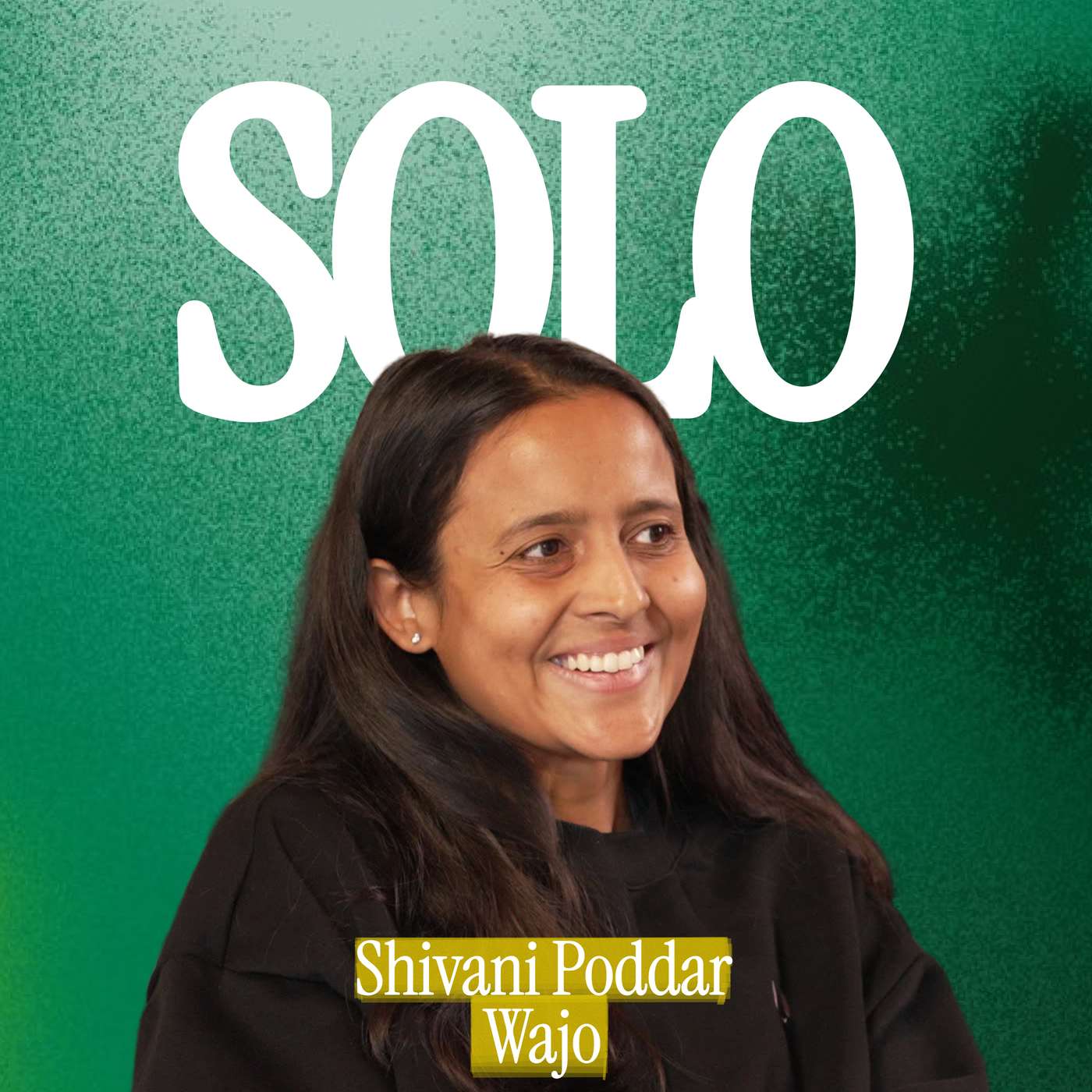
Shivani Poddar (Wajo/Foe) discusses building “personal agents” that can call and transact on a user’s behalf, why full autonomy is risky, and how solo founders can execute despite constant stress.
Poddar built early assistant systems at major AI/tech orgs (DeepMind, Google Labs, Google) and shipped the first Facebook assistant (2018) for Facebook Portal; she also built an Alexa-deployed social chatbot (2016). She later founded Wajo, focused on agentic phone calls, collaboration, and privacy/security.
Agents need help (human-in-the-loop) for hard “last-mile” tasks; “full autonomy” is less reliable than AI + collaboration. Phone-based agents improved hang-up rates from ~80% to 20–30% by designing incentives, disclosure/recording, natural turn-taking, and anti–bad-actor safeguards. Trust will hinge on both successful outcomes and privacy/non-embarrassing behavior.
AI shopping insurance for a large Australian insurer; a makeup artist finding clients via “full listing” discovery; healthcare scheduling and Medicaid application help; job-application drafting via group chats; “subtask delegation” to humans.
Written by AI. May contain mistakes.
Discussion on the challenges and unique stresses of being a solo founder.
“What do you think it was about the announcement video that caused people to really light up?”
Exploration of the evolution and perceptions of AI personal agents.
“And I think that's really what clicked to people because all of us have had this experience where we're using our favorite personal agent.”
Shivani shares her motivations and experiences in building her company.
“And then can you understand where you'll get this help from?”
Discussion on the challenges and successes of AI making phone calls.
“And without further ado, let's get back into the Solo Founders podcast.”
Reflections on the evolving relationship between users and AI as technology advances.
“It's an sort of unfamiliar thing to get a phone call and say, hey, it's an AI and it's recording and all that.”
Explore how businesses are leveraging AI for enhanced customer interactions.
“In fact, it's funny because once a business has had business with REI calling them, they will always pick up and want to engage.”
Understand different motivations and timing for launching a business.
“at what point will people's foe be able to like answer the call for them and your business has answered the call for them, you know?”
Discuss the real-world applications of AI and its value to the average person.
“Like, I actually think it's, it's, it's a cruelty, um, that's that, you know, businesses, um, you know, put on, on folks.”
Learn how user testing and feedback shaped the development of AI products.
“I think like there's a couple of ways to think about this.”
Discover the development process and launch complexities of the Foe AI.
“But at the same time, the amount of sort of work that you could have an agent do for you, talking to your bank or talking to, you know, you know, doctor's offices or something like that feels feels like it's much better.”
Learn about the importance of a strong team and product design for solo founders.
“Because ultimately, before you actually launched publicly, there was a lot that you did.”
Understand the unique hiring strategies and considerations for solo founders.
“And maybe you can share a little bit more about how you thought about early team because, you know, solo founders, you know, they essentially, because they don't have co-founders, they usually hire earlier.”
Explore how to find the right talent from bigger companies for startups.
“I think there's a question about that when it comes to founders who are coming from those places, but I think it also applies to early team.”
Discuss the balance between AI and human involvement in product services.
“I was always in the zero to one products.”
Examine the implications of trust and privacy issues in AI technology.
“And it turned out to really not be an issue at all.”
Explore the multifaceted nature of trust in technology and its implications.
“And if you live up to the promise, then you increase the trust in the product or the service.”
Learn about the dynamics of being a solo founder and effective team building strategies.
“I'm really curious, you know, as we sort of head into the tail end here of our conversation, It's been awesome.”
Discover how to hire effectively for long-term success as a solo founder.
“I think there are these very specific types of things that, you know, speaking to your strengths and also deficits because everybody has them.”
Understand the unique challenges and stresses faced by solo founders.
“It creates what looks and it feels like one of the best in class sort of experiences that could really help people save time on things that really matter, so they can spend time on things that really matter.”
Explore the benefits and motivations for choosing to be a solo founder.
Discover how AI tools can enhance the journey of solo founders.
Learn about initiatives to support solo entrepreneurs and the program offerings.
“Thank you so much for doing this and being on this.”

Get the gist, explore an idea or ask about something said.
 Claude
On Solo Founders, what are the key points of this episode?
Searching your listeningAutomatic transcript. May contain errors.
0:00Wajo: I've been building personal agents before they were called personal agents for quite some time. I built the first Facebook assistant, which was back in 2018. The reason I left to start the company was because I wanted to take a few risky bets. I wanted to give the agent a phone. When we started, our phone call hang-up rate was like 80%. Now the hang-up rate is between 20 to 30%.
0:21Shivani Poddar: What's the bear case for solo founding?
0:24Wajo: The founding journey never really gets easier. You definitely, as a solo founder, have unique stresses that you have to carry alone.
0:31Shivani Poddar: What would the case for being solo be?
0:34Wajo: What the AI tools of the last few months even have afforded us is genuinely an opportunity that has not existed. I'd never be against having a co-founder, but I'd never rush into it just because I wouldn't want to do it solo.
0:49Shivani Poddar: What do you think it was about the announcement video that caused people to really light up? Because it could have just been something where everybody said, oh, it's just another one. But that didn't happen. And what do you think it was about what you did that caused people to actually have that reaction?
1:06Wajo: Yeah. First off, I'm so excited to get to know you and the show. And solo founders, being a solo founder, I hadn't discovered this community soon enough. I think when I think about what sort of clicked for us is there is almost this contrarian view, which is funny, now emerging, where on the one hand, we say AI is everything. AI will take our jobs and, you know, autonomous AI is here to rule. And on the other hand, at Bajo and in Building 4, we've taken this approach of AI may not be just, AI may not be the only thing. AI might also need help and collaboration to truly bring magic to people. And I think that's really what clicked to people because all of us have had this experience where we're using our favorite personal agent.
2:02Wajo: you have whatever and then suddenly the agent gets stuck and the work falls on you whether it's you know solving a captcha and i joke i'm like if i wanted to be a captcha monkey would i get an agent or it's like um you know pick up a phone or negotiate with somebody or actually be you know have some have really good taste in something that i don't have good taste it the the possibilities are endless and i could almost sense that people had that fatigue of going to these agents with this dream of just giving it things to do and not finding that it goes all the way so i think that's probably my hypothesis on what clicked that and then i'll maybe say something else which was uh people saw themselves in just me and my team um i think it's funny because do you remember this tweet was trending somebody was like oh people keep building me the silicon valley husband where i want the silicon valley wife i think there was sonia who posted that yeah that was like such a good representation because like when i'm building these things i'm just coming at it from such a different point of view because just to your point like just the life experiences have been so different.
3:18Shivani Poddar: I think that it's very interesting when oftentimes in tech, we have this dream of what the future can look like, you know, in terms of what technology can enable. And then oftentimes, sort of the V1 kind of falls short of it. And I think that what you're describing is sort of this disenchantment with, you know, the allure of the idea, getting nerd sniped by it. I think that this is often the case with things like OpenClaw, for instance, where people really love the idea. And then some people, some subset of those people, really enjoyed going in and sort of trying to tinker with it. And I think that it's amazing for tinkerers.
3:56Shivani Poddar: But I think that a lot of people don't actually want to be tinkerers. They want to use tools that are reliable and that work well. And I think that in a lot of ways, a lot of the current tools fall short. Also, what you described is this idea of, I'd love you to expand that a little bit, this idea of kind of you hand some task off to something and then you expect the next ping to be being done. But instead, the next ping is that it didn't actually do what you wanted or it fell short. And now you have to kind of remediate. In a lot of ways, doing that remediation work is just as tiring or even maybe more so than just having done it yourself in the first place.
4:34Shivani Poddar: Can you share a little bit more about kind of how you thought about this as you were sort of scoping out maybe building a company? Was that sort of what happened as you were actually going out to try and build a company? Or did you kind of start from the premise of, I want to try and work on a company right now, and then ultimately, this is kind of where you ended up honing in?
4:56Wajo: You know, this has been my, I think this has been a product in the making for the last 10 years, I almost want to say. So I actually wouldn't have started a company if this wasn't the conviction that I had so back in and and the conviction actually started bubbling in even before OpenClaw came out OpenClaw was actually such a good wave to know that you know people want this and yet it's going to be so hard for anybody outside of you know our Silicon Valley community to have this so it's a very good validation mechanism but I've been building personal agents before they were called personal agents for quite some time.
5:37Wajo: I built the first ever social chit chat bot that was deployed in Alexa back in 2016. And then I built the first Facebook assistant, which was back in 2018, which was a device called Facebook portal. And I remember actually handwriting the smart calling logic, which let the assistant call your loved ones from the device with just speech to text um and so it's been something i've been at it for a while and uh i mean the reason i left to start the company was because i wanted to take a few risky bets i wanted to give the agent a phone you know if you're failing just call somebody about 40 percent of the world is not digitized yet believe it or not it does take us to pick up a phone to make that thing that and then uh it's funny because like when the agent does pick up the phone there might be a human on the other side who does not want to talk to an agent and so I just I just had this dream of if I if I thought about the most competent person in my life and captured them into technology like what would that be just the trust that not only will they share my private information without asking me but trust that if I get give them something to do they'll just get it done um and so that's sort of the thesis that i've had from the get-go and so we built the technology you have to otherwise it's really hard to retroactively adapt these things in a way where they can collaborate we've had to teach models to collaborate and they're not trained to collaborate because they're trained on dreaded data which is like co-pilot um and so we've had to teach the models that they're failing because when you know that you're failing introspectionally, then you know that you need help.
7:24Wajo: And then can you understand where you'll get this help from? And over time, you know, build this almost like a team-like dynamic with your AI human team. So yeah, it was very much from the get-go.
7:51Shivani Poddar: podcast with friends. It's what causes this show to grow and help more people. If you are already building a startup or considering building a startup solo, you should apply for the Solo Founders program. We bring Solo Founders to San Francisco to build Solo together for three months. We work closely with each company and we invest$100 ,000 as well. You can learn more at solofounders.com slash program. And without further ado, let's get back into the Solo Founders podcast. I'm really curious to hear as you think about sort of the evolution, because I feel like there are very few people who've gone on this path starting, I think you said almost 10 years ago, you were working with, you know, with agentic sort of, or at least like the precursor to agentic software.
8:39Shivani Poddar: You've covered the bases with Alexa, with Facebook, now Meta. I'm curious what you've seen in terms of the capabilities and what caused you to realize we were at this tipping point. I know you mentioned OpenClaw, but what were some other things that made you feel like now was the right time to be starting a company beyond OpenClaw?
8:59Wajo: Well, I was actually at Google before I left. I was at DeepMind first, and then I was at Google Labs. And actually what we were building at Google Labs was this, which was actually at the time, maybe the first one, uh jewels the autonomous code agent which was living in a cloud came with its own computer and i kept thinking about the fact that this agent could dream this agent could be learning about your code base while you're asleep and when you wake up and this now feels like oh yeah duh but at the time the industry was at ide's we were at co-pilots and so i think that was the tipping point when we were building jewels i realized that um the the journey between autonomy proactivity and deep context is the ability to design cross organizationally cross um cross channel almost to make this possible like it was no longer um it was no longer only a model capability issue that needed to be solved.
10:04Shivani Poddar: Do you think about, I'm curious what your philosophy around the phone, because I think that you're right, that in a lot of ways, the default is the agent says, would you like me to email? You know, would you like me to try and find an email account? And oftentimes there might be an email, but that's usually the worst way to get an answer to anything. You should just call. Yeah. In fact, I think this is probably true in a lot of cases, even when you're just trying to talk to people who aren't small businesses. If you can get somebody on the phone, you can usually get there much faster. Any interesting learnings about phone calls and things like that, that dynamic?
10:38Wajo: Oh, my God. Initially, when we started, our phone call hang-up rate where people would listen to us and hang up was like 80%. Super high, yeah. It was super high. Now, we're at the hang-up rate. It's between 20 % to 30%, which is insane. because if you think about phone calls, it's very interesting. It took me a second to realize when you're calling somebody and there's an AI on the other side, you have an incentive to stay on the line because you have a mission to accomplish. Now, when you're getting a call and you have no idea why you'd be on a call with this thing, you have no incentive to stay on the line.
11:21Wajo: And so for us, we had to almost design, well, that's one. And then the second thing is you do have regulatory postures You have to disclose it's an AI. You have to disclose it's a recorded line, which is scary for the person on the other side to listen to. And so we had to think about three things really well. One is just designing this experience in a way that the agent doesn't get hung up on. Two is the stake for our agents to sound natural, to have turn taking, which just feels flowing, to use the right kind of data, not like give away data, is insanely high, much higher than a customer support agent.
12:02Wajo: So we had to think about the technology much more deeply than just plugging in the next voice model that we got. It took us a very long time to build that. And third, actually, you'd be surprised when an AI calls somebody who can be on an edge of a bad actor, they can try to trick the AI in giving up information about the user. And so we had to think very deeply about agent disclosure, about personal data sharing, and a bunch of these considerations, which we now see can be very off-putting for a lot of people. So yeah, those were the three things we really had to think about when doing the voice agent.
12:49Shivani Poddar: At what point? I mean, it seems like it's already happening. A large amount of this seems like, you know, putting aside the bad actors, of course, there are bad actors everywhere you go, but they are minority. You know, at some point it feels like there is some aspect of sort of it's foreign. It's an sort of unfamiliar thing to get a phone call and say, hey, it's an AI and it's recording and all that. It puts some pressure there. It feels like a lot of it's just like that weirdness. So once the weirdness goes away, it becomes natural. And then also the belief from the recipient of the phone call that this is actually legitimate and that they aren't going to have to deal with the really annoying thing that you're used to, which isn't AI, but it's that sort of you call a customer support line and you say something and it just sort of loops back and it's just terrible experience.
13:41Shivani Poddar: So I wonder how much of that is exposure, familiarity, and realizing that this isn't sort of the old way of doing things that was painful and nobody likes. Maybe there's just some threshold to get through. It sounds like we're already starting to see that happen.
13:59Wajo: A lot. In fact, it's funny because once a business has had business with REI calling them, they will always pick up and want to engage. it's funny um uh an insurance company from australia found me on linkedin and wrote to me and this insurance company is you know five billion arr big so not small by any means um and he was like the reason i found you is because your ai just shopped insurance on my business and i realized that your ai is way better than anything we had and so i had to play with the product and um i'd love for the like you guys to make sure that your ai keeps finding us because this was the most seamless you know interaction on both sides that we've ever had and so that's the power in that uh companies that are leaning in businesses that are leaning into this new way of commerce and transactions are actually finding that they're getting discovered way more and so this is like a big business i also had a makeup artist who found us and reached out to us and she told us that she used to be she was like where is this full listing how like so in her mind
15:21Shivani Poddar: she was like oh there's probably a new google somewhere and so she lives like i like she had
15:26Wajo: listed her business on google and so she was like this fourth thing keeps finding me and it gets me the best clients like she was behind the scenes on a big ai summit uh just because of this then she actually did make up for um some really you know well-to-do person in the valley for their wedding or something like that and so she was like how do i like go and add more details to my faux profile and so her thing was that she um actually anytime faux would email her or call her she would be on top of it she would make sure she gives all the information and so actually she started beating a bunch of her contemporaries who only did as ceo whatever on google and so i think there's like a wave emerging where people who are leaning in actually have for the first time maybe in many years to just be more relevant than all the incumbents in their respective industry.
16:22Shivani Poddar: At what point, you know, maybe this is foreshadowing, at what point will people's foe be able to like answer the call for them and your business has answered the call for them, you know?
16:32Wajo: Some people are doing this already. Small number, but a lot of times people, that's the beauty. I think you mentioned when I walked in, you were like, hey, I see this for personnel agents, but you know, certainly for solopreneurs or small medium businesses that don't have as much means to be on the phone the whole time or a back office um this is useful and i think to some extent like there's many companies that are out there doing it so some people will use those a lot of people just useful um to deploy you know a back office um small medium businesses again this is something we've not had um enough bandwidth to even focus on but there's so much appetite so let's take us
17:15Shivani Poddar: back to sort of the very beginning of you starting this company. You know, I think that everybody has different motivations for starting a company, different sort of timing scenarios. Some people are really just keen to start a great business. Some people are keen to start a specific business at a specific time. You know, surprisingly, I kind of would have assumed that people who are starting a specific business at a specific time would be more likely to be successful. But I've seen enough cases of people who just said, I want to go and start a great business and I'm not going to stop until I succeed.
17:45Shivani Poddar: Do well with that. It sounds like much more on your side that you had a very particular view. You felt the timing was right. You saw this moment sort of emerge where people liked the promise, but they were let down by the execution of the other alternatives out there. Can you share a little bit more about kind of what that sort of moment looked like where you said, okay, it's time. I'm leaving. I'm starting a company. What did you do next?
18:09Wajo: Yeah. This is such a good question because it's taking me back um i i mean i think like um for me it's less about like building the specific product it was more about uh a mission i am obsessed with uh making sure i do more with my time um and so it's funny um this is recording but i will never share it anywhere else i have like um an actual hardcover journal which is like a time productivity how do you manage your time well how do you optimize the parts of your life in a interesting way which is like on amazon somewhere from years ago um and so i've always had this mission of um having more time on your own terms gives you more access to opportunity and by more time I actually don't mean um the simple productivity scenarios I actually think that that that sort of like is already things that you know we were able to do with a lot of these tools but I actually mean like sitting on customer care calls to you know get that airline thing fixed for two hours or um I used to see my dad try to get my mom's health insurance sorted for her medication, which would take him like hours and time away that he could be spending with her.
19:32Wajo: So I really mean like the gnarly things outside of like the usuals that it's great to have like a daily summary of like what your day looks like and whatnot. And so the mission always was that how do you make life more meaningful for anybody out there in the world, not just for the billionaires of the world? And so I think for me, it was the, I saw a few different ways in which this mission can be realized with the technology that we have, which sort of led me to go out in the world and do it. And then I think I had to just have conviction that I can actually execute as a solo founder. but also I think like it took me years of working at all the big companies to realize that actually have built the muscle that it takes to go execute so yeah that's that's sort of the thing that brought me to do it.
20:31Shivani Poddar: We'll talk more about the solo founder thing in a moment here but I'm really curious to hear your perspective on you know when you when you look at people talk about examples of technology especially with agents or personal ai um it's often this sort of way that i don't think the general public actually would use ai um and the way you described it there i think is uh is is much is much closer to what i imagine people would actually want which is hey do you really want to wait on you like it's it's actually cruel that we make uh we make people wait for two hours on a phone call on hold, or especially when it comes to healthcare and health insurance and all of that.
21:14Shivani Poddar: Like, I actually think it's, it's, it's a cruelty, um, that's that, you know, businesses, um, you know, put on, on folks. Um, and you know, I think that that's, that's the sort of thing. It's like being an advocate for, you know, for the average person to be able to actually do this. And that, that's even more valuable for people whose time is valuable from a monetary perspective if they're currently working or they run a business, but it's just as valuable for somebody who's retired. Does somebody who's retired really want to spend their retirement on hold with insurance companies? It's crazy, right?
21:49Shivani Poddar: So I'm curious, why do you think it is that so many other folks, when they talk about uses of AI, they always seem to be something that's like booking a restaurant or something versus something that's so valuable around the doldrums and sort of the pain associated with like life?
22:08Wajo: I think like there's a couple of ways to think about this. And I'm curious your take, because I'm sure you've played around with these agents as well, as much as I have. For me, I think the reason, I wanted to build a company because I had this thesis that this can help the average Joe out there. And it's actually what I did before we actually did our public launch. instead of giving early access to just people in the valley, because, you know, we all will use as many tools you give us. Try it all. Yeah, where we have no loyalties to any tool. I actually decided that I was going to find a way to see these in the suburbs or in contractors in Ohio or somebody in India and just see how do they actually use it and figure out then where are the gaps of what they want to do and what they're actually able to do with that.
23:05And I think that was a very big eye-opening experience
23:09Wajo: because none of these people want to book a restaurant with it. A lot of the people who are even transacting or trying to plan a holiday or have kids and are trying to do a lot of wrangling, restaurant is the simplest thing that they might even do with your existing tools. And so I realized that while it's the easiest way to explain this technology, because it's single hop, it's simple to say you can book a restaurant. Everybody understands it. It's much harder to explain the tougher use cases where coordination needs to be had, where it's multi-day, where it's multi-party coordination. and so i realized that one the normal people actually don't use it to book restaurants i mean even if they do that's not the one that they're coming back that's not the use case they come back for or that's not the use case why they feel excited to be using just this product and at the same time sometimes some of these use cases are the ways in which people understand
24:16Shivani Poddar: the technology the easiest maybe you know it's funny because um i think that the other the other thing is like the the amount of benefit you can give someone to not have them sit on a two-hour hold yeah is so much higher than yeah and the amount of time to phone if you actually are calling a restaurant to make a reservation the amount of time that actually takes a person to do is relatively low uh so having an agent do it for you is is nice but you're also probably having to communicate to the agent what you want. And obviously, the agent might be able to infer. But at the same time, the amount of sort of work that you could have an agent do for you, talking to your bank or talking to, you know, you know, doctor's offices or something like that feels feels like it's much better.
25:01Shivani Poddar: I'm curious, what are some things that you've seen that have surprised you about, you know, what folks are using Foe for now?
25:08Wajo: I've been surprised, honestly, by everything I see. And so I'm going to try to pick out some of these scenarios. But even for me as a user, what I use it for was just the iceberg of what people have started putting this on. And so I think some of the big ones, people love having phobia the social agent in their group chats. And I think that there's a reason for why they do that is because there's almost a sense of safety that it's not gonna, you know, come share any of my secrets from my personal chat in this chat. And then these are typically the younger audiences. They will send four to apply for jobs for them.
25:55Wajo: And job websites are very interesting because applying for job could be over LinkedIn or over email or over websites. You don't have to call for jobs, but, you know, outside of that. And so we see a lot of these scenarios where it's relatively hard to put together an interesting job application. So sometimes when our humans in the loop come in, they actually teach the agent how to put a better profile together for people. That's been one. Healthcare has been a big one. We're, by the way, already pursuing SOC2. Our stack is compliant. Our stack is HIPAA compliant. but I do want to get those certifications because I think that healthcare is game changing for people, whether it's calling 10 doctor's offices to schedule an emergency colonoscopy, which somebody's done, or a man in Florida actually use food to actually fill out his Medicaid application, which typically takes weeks and a social worker.
26:55Wajo: And in this case, you know, we actually took the strain off of the social system by just for having do it um and then i think it's also some of the fun ones i think because uh foe's been built by somebody who is a woman who's a founder i think i've like really thought about things like foe's great at shopping in that i if i send a photo of your outfit to any other agent in the market guess who's gonna nail it including finding discounts okay and so there's there's obviously commerce use cases which people use us a lot for and i do think that another interesting thing that i've realized is not just commerce here but also international commerce is something people really trust us for uh could be because we own our own payment rails so we're not restricted to just us only shopping but people like to shop internationally with us a lot.
27:54Shivani Poddar: So I'd love to just talk about kind of where you were in sort of the beginning and understand a little bit more about kind of what this V1 actually looked like. Because ultimately, before you actually launched publicly, there was a lot that you did. This was one of the most sophisticated product launches. The reason that people were so over the moon about it was because of just how complex the product was in terms of not not in terms of the complexity of using it but the complexity of what what it was capable of um you know it's we're in a different era where it's hard to imagine um you know in a different era that you could have built something in a year or under a year and get to the point that you have with foe but what did the very first version look like that you shared with somebody who wasn't you know a teammate or you know a very close friend that is
28:43Wajo: such a good question um i mean first off i think uh even as a solo founder one thing that i think is incredibly important um outside of having the best ai tools is having a very strong team and so the first thing that i knew i needed to do was actually twofold one obviously start prototyping what this product was going to look like and it started uh with a very interesting mindset and I was telling you about this before but the idea was that this is going to be the product that helps me build my company as a solo founder I'm almost like this prosumer who can use it from both sides and if the product fails me then the company doesn't have a right to be successful for this product to be used by anybody else and as a solo founder my biggest use case at the time was scheduling and so the v0 absolute first thing that i built um and it was very interesting because i when i remember that stack it was not built for scale at all it was built uh it was built on very interesting first principles which we still have which we still hold which was it was going to be remote so it wasn't going to take my local data and open it up to the world So not the open claw architecture.
30:04Wajo: And the second thing was it was going to be empathetic. It was going to really understand what the user needed. And third, it was going to be reliable. So for even things like scheduling, it was going to be reliable. So that was the V0. I built that and I actually used that to do all of my recruiting, all of my investor meetings, just to make sure that if this fails, And it had a bunch of hiccups. And I learned those. And I knew that those mistakes weren't fatal because, you know, we kept going. It was, if it failed, it wasn't going to make it. And so that was the first thesis is taking something which was very repeatable, very high value, but also very high risk because you put your product almost out there.
30:54Wajo: and using that to make sure that you build a very, very high functioning team, I think was my first way of being the solo founder in this journey.
31:04Shivani Poddar: That's really cool. And maybe you can share a little bit more about how you thought about early team because, you know, solo founders, you know, they essentially, because they don't have co-founders, they usually hire earlier. Yeah. And they also think about founding team differently. Yeah. So I'm curious, what has your philosophy been about, you know, building out this incredible founding team and what what how did you think about the first hires
31:27Wajo: like what were the first hires that you had join your team yeah um i mean first off even at company fundamentals level um i made sure i have a really big employee equity pool because if the company goes up my first team should feel like we're all going to the moon together that's been a core principle and so even for other solo founders as they set up their team as they set up just the structure of their company that was incredibly important and so that was like the first sort of foundation and then the second thing I wanted to do is I did not want to cold hire I only wanted to hire the best people and the people I either knew directly of or I knew off of and so the first few people I hired um amazing like incredibly instrumental to our success um I was actually at Jewels and I hired a few people from this startup which was Aqua hired at the time and I knew that those people were really smart and I knew that they had other people from that company that were really smart that may not love working in a big company but would love working in a startup so when I left I was like okay I know this general uh set of people who like really really smart and can do really good work and I've worked on autonomous code agents and so I went out and I found all the insane people that I wanted to hire at Google but I couldn't because they didn't want to work for a big company and I was like guys we're building a rocket ship and it's funny because if you ever see my messages to people that I send to hire them one it's all handwritten I never have four send the first message four takes on afterwards but it's legit it's three words want to join a rocket ship with a rocket emoji that's it we're gonna have phone write that if that's all it's just i don't know it's maybe just uh i don't know maybe it's just a you know it's just a touch thing like if i've made that effort like i usually care about you coming on
33:32Shivani Poddar: board yeah the uh i think that's something that'd be very interesting a lot of folks who listen to this podcast they work at big tech and they're considering you know leaving um and starting a company. And I think that, you know, lots of people can leave these bigger organizations and start amazing companies. But I think that one thing that they're always curious about, and I think we've heard a lot of perspectives so far, I'd love to hear yours, is how to think about
33:57Wajo: when you're having conversations with people, to understand whether or not they will make the jump
34:03Shivani Poddar: from, you know, being an incredible contributor at a larger company to being sort of an early, a successful early teammate at a startup. I think there's a question about that when it comes to founders who are coming from those places, but I think it also applies to early team. And how do you think about that? What kind of questions do you ask people to understand if this is sort of the right sort of stage and the right type of company for them?
34:30Wajo: Yeah, this is such a good question. And honestly, because there's incredible talent at all of these places, which anyone would be lucky to have. At the same time, to your point, like a lot of the talent might actually be the worst person that a solo founder could hire. I think for me personally, when I started my company, I had almost internalized that maybe the first two or three people should be people who've actually been founding engineers before. Just so they know how the journey is insane. um it's almost like don't do it unless you're ready for insanity and so the first few people were a rocket ship like who has done founding engineering before and like has been really good at it um and right after that when i started hiring from all of the become we have incredible people who've come from gemini cli and a bunch of these other places it was about who is a tinkerer who has either been attracted to zero to one products in big tech sometimes and frustrated by it but like keep kept going at it um or who just has side projects that they can't stop doing because they just love ideas curiosity and building um building you know almost tangibly building.
35:57Wajo: And so I think those were my singular two most important things to think about. And probably also things that now when I think back about my journey were true for me. I was always in the zero to one products. I always had new ideas. And I was always building something on the side, even if I couldn't do it as my day job.
36:18Shivani Poddar: No, it's really, that's really interesting. The, I'd be really curious to hear, we talked, we touched on a little bit earlier, but this, perspective of human in the loop, having humans do calls and do work with the AI. Obviously, this is more cost intensive than AI. But at the same time, this is the thing that actually causes AI to not fall back and sort of not live up to its promise or not even AI, to a service. Because if you think of what FOA is, sure, there's like a large AI component, but what it really is at the end of the day is the service. And maybe it's 80%, 90%, 95 % AI. But the thing that gets it over the last mile on maybe some of the hardest tasks or tasks where maybe the people who are getting phone calls from AI don't want to talk to AI, the thing that gets it that last mile, at least right now, is humans.
37:12Shivani Poddar: And that also makes the AI better over time. So I'm curious, sort of when did you when do you sort of come to that conclusion how do you actually do that do you consider yourself to be somewhat of a market like a managed marketplace
37:26Wajo: how does that all work this this took a lot of thought and a lot of effort because we were we wanted to make two things right as we were designing the system one we didn't want it to feel like a throw over the fence kind of a relationship between the ai and the human and by that what I mean is that it's a gig economy that anybody on Craigslist can sign up and see somebody's data and do that so we wanted to really feel like this human in the loop was actually insanely high quality was a domain expert maybe a tastemaker maybe somebody like a CEO would hire so that even over time as the AI learned from it the AI actually got that much better and the human got to up level as well and so it was insanely important for us not to have like a gig economy set up so we actually ended up interviewing a lot of these people before we hired them contracted them to basically work with us with the ai as well as building the tools that actually enable the agent to then delegate to the human and back and forth in a very secure private way so that the human only gets to see what they need to see in order to do that task so that was the first really hard setup to build end-to-end and then the second thing which i don't know if people even realize is the the agent foe it's created to be very intelligent in that it won't just say hey now you do the whole task it does what we call subtask delegation where it's if it's failing say at a capture of a website it'll just escalate that and then take on the rest and the humans actually as a result of that are insanely efficient because now they don't have to take this whole mountain of a task they just have to take something that they're really good at and the agent does not and either decide to then train the agent for it or decide that actually this is a tastemaking element that hey agent you're probably going to learn but not just by a couple of interactions.
39:32Wajo: So that was the whole design.
39:34Shivani Poddar: There's some aspect here of, you know, trust that I think is really interesting in the world of AI, personal AI agents. You know, I think that people always said, well, trust is going to become a really big issue with social media. And it turned out to really not be an issue at all. Most people were totally fine giving their data, giving lots of personal information. You know, there's some people who blur photos of their children when they post them on the internet but even that I think is still the mind the vast minority so I'm really curious you know if trust will actually become a much bigger issue now yeah and my suspicion is it will be because you have agents who make really embarrassing errors and once that happens the privacy and things like that become much more of a concern because they're less amorphous.
40:26Shivani Poddar: Like the fears are less amorphous. You actually have some agent do something that makes you look like a fool and then you really, really don't like it. So I'm curious how you think about privacy and trust. It seems like personal AI has a high degree of variability around this in sort of all the people who are building. Some people thought that maybe their entire, where everything that they said to some of these, I won't say the name of the personal AI, might be owned by the AI company. I'm curious to the extent what you think about this and kind of where you think things will let out. I know that you really focus on privacy, security.
41:09Shivani Poddar: What do you think is sort of the big opportunity here?
41:13Wajo: Yeah, I mean, I think it's very interesting and I'll answer this in two ways. I think trust is actually multifaceted. One is it is trust that, hey, my AI won't give my information to somebody that it's just calling on my behalf and actually doesn't need to. I read that example that somebody's address was leaked on Marketplace to someone they didn't want it to be leaked at.
41:39Shivani Poddar: They just showed up. They just showed up.
41:40Wajo: And so that's one aspect of trust, which I think is going to become incredibly important to people. And it takes just one experience of having that happen to you to just like get off that agent this wasn't true in the social media age because there wasn't to your point any actual ramification of that happening to the you know bulk of the audience like it was all theoretical but in this case it's experientially you'll lose trust with the society with yourself and so there's a lot of uh ramifications there the other interesting part of trust is trust that this will actually get done and so i think that that so i don't think people choose any agent for this first one i think people come to you for the second one and man it makes it so much nicer when the first one is insured yeah and so i do think that people choose us because they realize that um you know it meets me where i am it i could call it it can call it but it really truly gets things done and isn't it nice that it won't give away my personal information to someone that i didn't want it to and so i think that's how i think about trust at least for now but this is gonna we were i'm very excited to see where it evolves another way to
42:59Shivani Poddar: describe it might be that um trust is a promise and uh and a product or service is a promise as well. And if you live up to the promise, then you increase the trust in the product or the service. If you don't live up to the promise, either by sort of falling short of actually delivering the outcome, or you do something far worse, which is you send some stranger the person's personal residential address, then that really, really tanks trust. So there are those two aspects of trust that I think that really come into play here. And the first one is, like, does it do what it says? It will. And the second is, you know, does it also not only do that, but also not sort of violate, you know, my privacy and sort of, or make me feel like, you know, an idiot by doing something that makes me look bad.
44:00Shivani Poddar: That's really cool. I'm really curious, you know, as we sort of head into the tail end here of our conversation, It's been awesome. I'd love to hear a little bit more about kind of how you've thought about the dynamic of being a solo founder. You have an incredible team that's growing. I think you're hiring right now. So in fact, I know that BrowserBase, somebody watching the podcast with BrowserBase discovered BrowserBase ended up becoming one of the first hires on a certain certain section of their team there. Maybe somebody will be discovering Foe through this if they haven't seen the ultra viral launch, and maybe they'll be excited to join.
44:44Shivani Poddar: What are some things you've learned about being a solo founder and building the team that we haven't covered yet that would be useful for folks both on the side who are starting companies, but also the folks who are looking at potentially evaluating joining them?
44:57Wajo: yeah i think as a solo founder one of the things that's incredibly important is finding your almost advisory bench or or sometimes i say the the text the people you text when you need help um i think one of the things i realized it's funny because when i was initially setting up my company you know all of us have to go through oh who who do i uh who do how do i incorporate or how do I do yada yada and I remember pinging somebody who actually wasn't a solo founder and they were like oh actually like this is something you know my co-founder would handle and that's when it dawned on me that just the sheer number of concurrent threads that solo founders have to carry is unprecedented and so I ended up really I mean by virtue of some very good introductions from people I ended up finding almost this set of speed decks like speed dials is how i associate that with who i'd like what do you think who should i get or like what was your experience with somebody so i think solo founders have to augment themselves a lot um and i think that can be either with people who've invested in you that can be by communities um that can be just by finding founder friends that you've just come across and ended up building a good relationship with um i have one who uh she and i haven't ever really met but we like keep texting about our experience and it's been the most helpful relationship through building this company because she's done it as a solo founder too and so i think um that is the singular most important advice is thinking about how do you augment the things that you're not and i think that also then sort of translates to hiring in that I, one of the things I've realized is every solo founder has like a strength and maybe it's technical, maybe it's marketing, whatever that is.
46:56Wajo: It's incredibly important to figure out who that yin to your yang is and then find the best ever person who can carry some of those things. And this won't be one person, by the way, because otherwise you'd have a co-founder. But this would be a team of those people who can then complement you in the right way.
47:13Shivani Poddar: How did you think about that on your end? So when you're building sort of the first five, when you're hiring sort of the first five roles onto your team, were you thinking more opportunistically about these are the people that I would want to have on my team in any capacity? Was it more like, I think there are these very specific types of things that, you know, speaking to your strengths and also deficits because everybody has them. What were the things from a practical standpoint if people were, you know, listening to this they wanted sort of a case study. In your case, what was that? And how did you think about those roles?
47:45Wajo: I mean, I knew that I was building something that was going to be the biggest technological challenge that existed. And I was actually starting from a great place because I've built technologies before. At the same time, I knew that I am not the one who's going to be building this insanity by myself. And so for me, it was definitely starting with where the core of the business was going to be which was technology and so hiring the best people who could do parts of that stack really well um and then obviously i think uh when i think about hiring and at some point i will share more but it's about i think about what do we need that's going to make us insanely successful not just in the next three months but which is going to be our unfair advantage in the next one year and how can I work backwards and hire those people for that unfair advantage that we're going to create in a year from now so I think about hiring a lot from not just the now but the future and again a lot of these bets in that way pay off so projecting out your product your business your company ahead in the future and then hiring now for that future sometimes is also a very interesting way to hire which which can feel very counterintuitive because as a solo founder, you feel like the ship is burning and I need to put out the fire all the time.
49:07Wajo: But sometimes it's just so that you can think about what's the next shore that I need to build for.
49:12Shivani Poddar: And I love that you talk about having a larger equity pool for early employees because it's so important to do, especially when you consider the fact that when you don't have co-founders, there's a lot more responsibility to spread out across a wider group of people. I'm really curious, you know, if you were to sort of evaluate kind of how you spend your time as a solo founder, kind of on a percentage basis or something like that. How has that changed from kind of early days to kind of where you are today?
49:41Wajo: Yeah, I mean, that's such a I've been thinking about this a lot because I think about spending time and focus a lot. and maybe this answer is sort of what's expected is the early days are just about hunkering down building the product bringing this technology into the world I actually remember the first time that our agent actually made a call to order something from a restaurant it blew our minds away and I remember all of us were giddy together and we were actually like on a live call and we could not believe ourselves and the fact that sushi showed up and so obviously the first few months is just everybody sort of breathing the same vision and product and focus and now over time as the product has taken on a life of its own it's um for us it's uh for me it's about how do i bring that product to the world i spend a lot more time on those parts of the mission how do I now hire more good people I spend uh almost as a way of headcount I have to spend way more time hiring way more people and I think um spending time to up level uh my team in a way where we all are sort of you know doing more than we were in a way um so yeah that's that's kind of
51:02Shivani Poddar: how the journey has evolved well this has been awesome uh I cannot wait for more people to be using what you're building. It's truly remarkable to see sort of the confluence of all of your past experiences, you know, the new technology and what it unlocks, and then also this idea of bringing in humans to both have the AI complement them and for them to complement the AI. It creates what looks and it feels like one of the best in class sort of experiences that could really help people save time on things that really matter, so they can spend time on things that really matter. We close with two customary questions.
51:45Shivani Poddar: The first question is around sort of the case against solo founding, the bear case for solo founding. I'll pause and let you share sort of the bear case for it. We'll talk a little bit about that, and then prepare you. After that, we'll give the case for solo founding. oh wow this is a hard one so what's the reason uh maybe somebody should be hesitant about being
52:09Wajo: a solo founder uh this moment in time i mean i think it's just founding is hard there's troughs and valleys and um even if it's funny because you know when when our product hadn't launched yet we were like oh my god we wish the launch goes well oh my god we wish we have like hundreds of thousands of users like that's all you can think about and that's like the hard part is like building up to it and then it's funny you launch and it goes really well and then you're like oh my god there's so many users we need to get more compute we need to like scale more and so it never really gets easier the founding journey never really gets easier and so I think it can get you definitely as a solo founder have unique stresses that you have to carry alone in a way and so I think the bare case of a solo founder is definitely the ability to sort of be an island that can self regulate and self anticipate the future and all of that comes with it.
53:14Shivani Poddar: Do you feel like that's something you have developed over the months or learned about or do you think that that's something that is kind of sort of stylistically who you are and and you sort of default to that like do you feel like you were self-regulating when you were at these larger companies? I'm curious because I know there are some things, for instance, if you say that gaining access to resources is something that founders need to be really good at, accessing capital, accessing getting in front of customers, recruiting people to join your team. Some founders can be excellent at all three on day one some of them you know are much better much spikier on certain ones that really matter but need to you know need to hone in and get better on others potentially so I'm curious about that about that aspect for you was that something that you've learned is there anything that you've you know you could maybe impart to folks about that uh and what you've experienced with it so
54:13Wajo: far I mean I've had to learn on all accounts because it's funny I used to joke I was for example I used to joke that I can hire anybody in the world and I think that's that's largely true but not true when you're actually hiring for a no-name startup especially when you're in stealth like nobody knows what you're doing nobody has like quite the idea and so I realized that I had to really work hard to transfer those skills to the startup world from the big tech world and so there was definitely lots of learning I do think that there's still a lot of learning I do think that I've had to build these muscles and I've also had to lean on support systems around me if my partner was up here he would be like hell yeah what do you mean and so I do think that you know our loved ones who see us go through these journeys like carry on a lot for us a little bit and then the rest of it like we learn and we evolve and that's partly fun of the journey is you start somewhere and then when you're on the other side you're like oh my god like look how far we
55:23Shivani Poddar: came that's amazing okay i guess i guess like the last thing to take us home is the case for solo founding if you if you were sort of talking to a solo founder or prospective solo founder uh right now somebody who's thinking about doing it um you know they have the right motivations but what would the case for being solo be?
55:43Wajo: Yeah, I mean, I think I had to do a lot of this thinking. I have come to realize, and I've actually spoken to a lot when I was actually going through this, I spoke to a lot of people who actually didn't start solo, but ended up having a really bad co-founder breakup and ended up being solo. And what that journey told me is I'd never be against having a co-founder but I'd never rush into it just because I wouldn't want to do it solo and so I think the cost of actually not making that dream or that idea come true is way higher than the cost of learning how to self-regulate or building these other muscles especially now because I do think that what the AI tools of the last few months even have afforded us is genuinely an opportunity that has not existed ever before and i know solo founders who were very technical but now can build the best presentations for their pitch decks or founders who were actually not technical at all but are able to build prototypes to attract the best engineers and so the the very very bulkish for solo founders is just go do it and i think if if any of us are good solo founders will figure out how to find AI to like do the rest with us.
57:06Shivani Poddar: What a great way to end it. Don't defer your dreams. Thank you so much for doing this and being on this.
57:12Wajo: Thank you for having me. This is such a good conversation.
57:14Shivani Poddar: If you enjoyed this conversation, we would love it if you could share solo founders with everyone you know, particularly people who are considering starting companies solo or who are already doing it. You know, the entire goal of what we do is to normalized solo founding, encourage more people to solo found instead of end up with co-founders of convenience. If you'd like, and we'd really appreciate it, you can go leave a review on Apple, you can go give us a thumbs up, you can subscribe on the YouTube channel, anything helps. And of course, if you are starting a company or considering starting a company, you should go look at the solo founders program.
57:45Shivani Poddar: We work together with you in San Francisco alongside of a bunch of other solo founders. The idea is it's much better to be solo together than to be solo alone. I'll spend a lot of time helping you. And we also invest$100 ,000 in your company. So if you're excited to learn more about that, go check out solofounders.com slash program.
Shivani Poddar led engineering on Google DeepMind's autonomous coding agent. Then she went solo to build Fo — the personal agent whose viral launch admitted what no AI lab will: AI often can't finish the job alone, so her agent hires vetted humans and picks up the phone itself. A decade of building assistants at Alexa, Meta, and DeepMind, distilled into the sharpest product thesis of the agent era — plus her playbook for building a founding team without a co-founder.
Topics covered:
- Why every AI agent demo falls apart at the last mile ("the captcha monkey problem")
- Giving an agent a phone: designing calls people don't hang up on
- Seeding the product with contractors in Ohio instead of Valley insiders
- Humans in the loop without a gig economy
- Building the founding team: no cold hires, and a three-word recruiting message
- The speed-dial bench: how solo founders augment what they're not
- The bear and bull case for solo founding
Guest: Shivani Poddar — solo founder of Wajo AI (maker of Fo); ex-Google DeepMind, Meta, and Alexa; backed by Vinod Khosla, Jeff Dean, and Gokul Rajaram.