In short
The making and release history of A-ha’s “Take On Me,” including early versions, failed UK releases, studio choices (Fairlight, Lin drum), and how the final 1984/1985 version became a US #1 hit.
Guests/Backgrounds
Paul Wachter-Savoy (A-ha guitarist; wrote original song “bones” as a teenager in Norway). Bandmates mentioned: Magne Furholman (keyboards) and Morten Harket (lead vocals). Paul and Magne played together since age ~12; they formed the earlier high-school band Bridges and later pursued a record deal in England.
Key claims
The song’s chorus and arrangement evolved through multiple “Lesson One”/demo iterations; producers and technology (Fairlight sampler, Lin drum programming) reshaped the track; early UK singles flopped twice; perseverance plus a US push via a new music video helped it finally break through.
Notable examples
recording in a forest cabin on a four-track; studio time at Rendezvous Studios; producer Tony Mansfield; producer Alan Tarney; music video directed by Steve Barron for Jeff Ayeroff’s concept “Commuter.”
Written by AI. May contain mistakes. Listen to the episode to check what was said.
Chapters
Tap a time to open that second in VOThe Origin of 'Take On Me'
1:27 to 2:25
Explore the journey of 'Take On Me' from its inception to becoming a hit.
“Looking at it now, it's like, of course that was your favorite song.”
Founding A-ha and Early Struggles
2:27 to 4:23
Hear about A-ha's formation and their challenges in the early days.
“And he told me how he and his bandmates, Magna Furholman and Morten Harkett, pushed and pushed and persevered.”
Musical Development and Collaborations
4:25 to 7:01
Learn about the musical evolution of A-ha and their collaboration process.
“The verse came to me on acoustic guitar as I always wrote on.”
Recording in England and Industry Challenges
7:03 to 10:10
Discover A-ha's move to England and the challenges they faced in the music industry.
“Funny, first time I heard him, when we sort of auditioned him, And he was playing in a blues band and he just had a show the day before.”
Creating 'Take On Me' and Its Unique Style
10:11 to 14:02
Uncover how A-ha crafted 'Take On Me' and the decisions behind its sound.
“And then it was like, okay, what do we do now?”
Song Title and Meaning
14:02 to 15:35
Explore the significance and origin of the song title 'Take On Me'.
“My conversation with Paul Walker Savoy of AHA continues after this.”
Song Title and Meaning
15:46 to 16:48
Explore the significance and origin of the song title 'Take On Me'.
“There's been a lot of research recently about exposure to chemicals and how it impacts your health.”
Song Title and Meaning
17:39 to 17:50
Explore the significance and origin of the song title 'Take On Me'.
Finding a Producer
17:50 to 22:30
Hear about the challenges of finding a producer for 'Take On Me'.
“In the end, they managed to get Tony Mansfield.”
The Recording Journey
22:30 to 25:01
Listen to the process and struggles faced during the recording of the song.
“Because, you know, they've spent this much money on the half-finished album.”
Show all 16 chapters
Final Mix and Release
25:01 to 28:01
Understand the feelings surrounding the final mix and release of 'Take On Me'.
“it's no better to be safe than sorry say after me it's no better to be safe than sorry Already then, it was sort of like it's such a good vibe in the track.”
The Journey to Success of 'Take On Me'
28:01 to 30:58
Learn about the struggles and eventual success of A-ha's iconic song.
“How much time passed between you finishing the song and then it finally coming out again?”
Listening to 'Take On Me'
30:58 to 31:35
Enjoy a full listening experience of the song 'Take On Me' by A-ha.
“And now here's Take On Me by AHA in its entirety.”
Exploring the Legacy of 'Take On Me'
31:35 to 34:48
Discover insights about the song's lyrics and its lasting impact.
Exploring the Legacy of 'Take On Me'
34:52 to 35:57
Discover insights about the song's lyrics and its lasting impact.
“where they were working out the lyrics to the song as it evolved.”
Exploring the Legacy of 'Take On Me'
36:04 to 36:32
Discover insights about the song's lyrics and its lasting impact.
“so my wife and i can take a weekend trip to go see them and look even though ohai is not a huge place.”
Transcript
Automatic transcript. May contain errors.0:00You're listening to Song Exploder, where musicians take apart their songs and piece by piece tell the story of how they were made. I'm Rishikesh Hirway. This episode is sponsored by the new video game Mixtape. It's sort of like if the movie Dazed and Confused were a video game. It's about high school and adventure and nostalgia. And if you're the kind of person who cares about the power of an amazing mixtape, then this game is probably for you. The soundtrack features Smashing Pumpkins, Iggy Pop, Suzy and the Banshees, Joy Division, The Cure, and a lot more. Mixtape comes out May 7th on console and PC.
0:39Check it out at mixtape.game. Song Exploder is brought to you by Progressive Insurance. You're listening to this podcast, so I know you've got a curious mind. Here's a helpful fact that you might not know yet. Drivers who switch and save with Progressive save over$900 on average. Pop over to Progressive.com, answer some questions, and you'll get a quick quote with discounts that are easy to come by. In fact, 99 % of their auto customers earn at least one discount. Visit Progressive.com and see if you can enjoy a little cash back. Progressive Casualty Insurance Company and Affiliates. National average 12-month savings of$946 by new customers surveyed who saved with Progressive between June 2024 and May 2025.
1:23Potential savings will vary. When I was a kid, the first song where I ever thought, this is my favorite song, was Take On Me by AHA. Looking at it now, it's like, of course that was your favorite song. It is an undeniable, iconic hit of the 1980s. It came out in October 1985 with an equally iconic music video that helped define the age of MTV. It hit number one in the US and in countries all over the world, and it's still massively popular today. It currently has over two and a half billion streams on Spotify. So with all of that, it's easy to imagine that this was all inevitable. But actually, the song took so many steps and missteps before it became the hit that everybody knows.
2:07I talked to Paul Wachter-Savoy from AHA, who wrote the original bones of the song back when he was a teenager in Norway, years before it came out. The song actually came out and flopped twice in the UK, before it found a foothold in the US. So for this episode, Paul took me through the whole history of the song and all the different versions that existed. And he told me how he and his bandmates, Magna Furholman and Morten Harkett, pushed and pushed and persevered. Take On Me was their first single as a band, and it made them the most successful Norwegian pop group of all time. Take on me Take on me Take me
3:04I am Paul Wachtesavoy, which is a mouthful. AHA has three members, Magne Furholman, who plays keyboards, Morten Harted on lead voice, and myself, Paul Wachter-Savoy on guitar. You and Magnus started playing music together years before AHA actually began. Is that right? Yeah, he lived down the street from me when we were like 12 or something. So we've been in the band for a long time. We had made a pact at 15 or 14 that we were going to go to England and try to get a record deal. I mean, Norway back then was really... I think they played one hour of pop music a week on the radio. It was very limited exposure to anything.
3:49So we just knew that if we were going to try to get a career out of this, we had to leave Norway, even though no one had done that before. And it was sort of like a laughable thing to say. But we, you know, at the same time, we thought that would be an amazing adventure. And the two of you were in a band together in high school called Bridges? Yeah, we did two albums with Bridges. But Bridges was sort of very introverted. lots of songs that everybody said well I have to hear it 20 times before I get it and Bridges sort of disintegrated which was me and Magnet left but I think as we got closer to going to England we started to get the urge like well we gotta have some songs that really sort of you can get with the first couple of listens so we were definitely feeling that we had to sort of make it a little bit easier on people, on the poor listening
4:48We had a rehearsal space in a kindergarten up the road and it was done on a four track. The verse came to me on acoustic guitar as I always wrote on. And then taking that to Magna and we sort of played it around just the two of us. He came up with a keyboard riff.
5:36I play guitar, Magna play keyboards, I play bass, and there's Magna's neighbor there singing loud backing vocals and the Bridges drummer. And I had this sort of a throwaway chorus. I almost hated it. It sort of went around itself in a four-bar loop and you couldn't get out of it. And it's just sort of like annoying.
6:20That song was called Miss Eerie, is that right? Yeah. Where did that name come from? That was, I mean, it's embarrassing, but I probably were inspired by like Aladdin Sane by Bowie, which is Aladdin Sane. So I wanted to do my misery Miss Eerie. It's like one of those teenage overreach. And so how did Morten end up joining the band? Well, Morten first heard us when we played a show in his school. And he was a fan, one of my, maybe the only fan we had. So he was always interested in doing something with us. He just thought we needed a better vocalist, so not me. In other words, you know, Morten had an amazing voice.
7:03Funny, first time I heard him, when we sort of auditioned him, And he was playing in a blues band and he just had a show the day before. So his voice was like so raspy, like a Joe Cocker type of thing. He was like completely busted. So I thought like, well, that's cool. Let's go for this guy. The next time I heard him, I sang like an angel. But he could do so much with his voice. And that really changed my writing because before that, I would be writing to my own voice. So I had to be sort of limiting the octaves. But with Morton, it's like writing for a totally different instrument. So it was very inspiring.
7:45And just from the get-go, he was such a fan of that song, especially the riff. He was just like, that was it. And then my parents had a little cabin outside of Oslo in the forest. So we borrowed that four-track recorder and tried to come up with a demo tape that we can present when we go to England. Besides Morton joining the band, were there other ways that you were changing things up? Instead of guitars, we replaced it with the synth, because that was really what was happening, and we wanted to be part of the new sort of sound. So the first version we did with A-Ha with Morton, that was called Lesson One.
8:42It was a totally new lyric and new approach.
9:00You can still sort of hear the DNA of the original chorus that you said you didn't like in this chorus. Did you still also not like this one? It was like a sugar rush. It was too kind of bubbly and it didn't really give you goosebumps. It was catchy, but it didn't really grab you in the way that I like a song to do. It has to have a more like a, you got to feel that sort of spine tingling. So this is October, November 1982? Yeah, I think so, yeah. What happened next after you finished recording in the cabin? Then we decided, okay, that's it. Now we have eight songs. We got a cassette. So now we can go to England and we can start doing the rounds.
9:46record companies and stuff like that. It's one thing to say, we're going to move to England and start a music career there. But I'm just curious, how do you actually figure out how to move to England and even get started? We thought it would be a lot easier than it turned out to be, let's put it that way. We booked this sort of package tour, is that what you do? We didn't do the return flight, we just went to England because that was the cheapest we could get. And then it was like, okay, what do we do now? So we knew nothing. We knew no one. We bought like a Melody Maker or Music Express. These are music magazines.
10:22Yeah, back in the day. They're probably gone now. But, you know, there'll be some ads there and stuff like that. But it was very hard to actually figure out how do we do this? How do we get through the reception at any record company? You know, you just can't, you know. It was very inspiring, too. Coming to England, you could, for the first time in our life, suddenly you have pop music coming out of every shop, every cab, you know, it was just everywhere. Going to places like Cannon Palace, which was like a really cool club. So you did sort of want to compete at that level. And it took us about two weeks to realize that demo sounded pretty thin and not really hip enough.
11:03So after about a few months, we did the last money we have and booked two or three days in this studio. I think we recorded like four songs, not Take On Me, but four other songs. And as luck, the owner of that studio loved the demo, John Ratcliffe. And he was signed to EMI and his A &R guy, Terry Slater, had quit EMI and he looked for a band to manage. So they became our managers. How did that change things for you guys? You know, for the next couple of years, we were able to use the downtime of that studio from 4 in the morning till the new session came in at 10 next day. So we'd be sitting around there like tired and ready to keel over waiting for that band to get finished and then hop in and use those hours to do a new song.
11:58they had a drum machine and I'm terrible with every machine and every sort of software ever made but the Lin drum I just took to it so we would just sort of lay down the drums first imagining what the rest of the track would be
12:26Is this something that you made in John's studio then? Yeah, this is Rendezvous Studios, an 8-track.
12:35And Magne had a, you know, I hear that...
12:42From there on in that became really part of the groove. But you can see we're trying to figure out what the bass is doing. And my bass drum pattern is sort of trying to find the right thing.
13:07the song is pretty much sketched out at that point but the chorus was not happening and then terry said he had worked a lot with queen and all these different artists and he would say like well Whatever you got at falsetto, you had a hit. Falsetto, you had a hit. That was one of his sayings. I thought, well, hell, we got the best freaking falsetto singer right here. He can sing super low, he can sing super high. And where most people have a sort of whispery, sort of weakish falsetto, he can't really do that. The way he does falsetto is like full on. It's like a trumpet. But I don't really love when that sort of money note coming straight, here comes the chorus and everybody goes up and you know so i never really liked that kind of songwriting so i thought you know morton has a really nice registers i thought like okay maybe we should start it with the lowest notes and then bring it up to the falsetto where you can guarantee to get a hit and take on me of course that's the we're norwegian and like people tell me you can't say take on me that's not real english you can't but it just felt like that song couldn't be called anything else it just had to be you know take me on no i don't like that in a way we were trying to take on the world and we were just saying like well take on us for you know to get a lot of this so this is the first time where you have a new chorus Take on me, take me out, I'll be gone, literal too.
15:00My conversation with Paul Walker Savoy of AHA continues after this.
15:33We'll see you next time. For 10 % off your first year's membership, go to distrokid.com slash VIP slash Song Exploder. Song Exploder is sponsored by Function. There's been a lot of research recently about exposure to chemicals and how it impacts your health. Things like BPA, which can be found in plastic water bottles and receipts, or PFAS, which is in water-resistant fabrics and food packaging. They both show up in our everyday lives, whether we know about them or not. And the good news is that exposure is measurable. And once you see it, you can do something about it. There are two markers that give you a clear starting point, what your lead level is and what your mercury level is.
16:14I just read an article about how much lead there is in basically every single kind of protein powder. That's why I use Function. They let you know what's really happening inside your body, including testing for heavy metals like lead and mercury. So check your health the way that I do. Function provides over 160 lab tests for a dollar a day and member pricing on advanced imaging. Join at functionhealth.com slash songexploder and use the code songexploder25 for a$25 credit. I've been a Wayfair customer for a very long time, and this episode is brought to you by Wayfair. At my house, we're all set up for outdoor dining this summer with a great outdoor rug that we got on Wayfair.
16:58I just had lunch out there before coming in to record this. And being able to sit outside for meals, listening to the birds, getting a little sun, it's so nice. And the rug really ties the patio together. And Wayfair has everything. If you're also in the market for outdoor stuff, they have outdoor tables, chairs, storage, grills, lighting, and tons more. And the prices are really reasonable. Also, if you don't want to assemble the pieces yourself, Wayfair can handle not just the delivery, but also the assembly and installation for you. So if you're ready to upgrade your home for way less, head to wayfair.com right now to shop all things home and get your space ready for less.
17:41That's W-A-Y-F-A-I-R dot com.
17:50Okay, so you had written the song. You had recorded this eight-track demo. what was your next step next for the song was to try to find a producer we were signed to warner in the u.s andrew wickham was our a and our guy and it was really his job to find suitable producers and the producers was very very hard to find this was the 80s where the producers was like gods but we didn't know one from the next really. In the end, they managed to get Tony Mansfield. It was exciting, but it was also a little bit tricky because we were used to working very fast. But he had gotten a Fairlight, which he loved, and everything had to go through the Fairlight.
18:37Could you explain what a Fairlight is and why, when you work with it, everything had to take longer? It's really a sampler mixed with an 8-track recorder. and he would take the parts that we sort of insisted on taking, but he would love to also kind of make his own parts. That's when we actually found the bass line for the verse.
19:04That was his thing. And then the replies on the chorus. That was Dorian Man's full side down.
19:18Take me on, I'll be gone, bring to your tears.
19:34But on this middle eight, on this version, you would have all these kind of orchestra and bangs. I feel like the first time people got samples, that's what they did.
19:49And it ate up a lot of time.
19:55Five guys staring at a computer screen. I mean, everything takes a long time. We would never use a computer before. So when we had seven songs instead of ten, the money was spent. For the whole album. Yeah. And we were there on a tourist visa. So there was a lot of pressure on the whole thing, you know, recording the album and stuff like that. You felt like you were on this borrowed time and the budget was spent. It was a very tense time. We tried to get it going before they really threw us out. When we signed the deal with Warner Brothers, we ended up signing with the Warner in America. But Warner in England, they were also interested.
20:37And I think they were always a little bit pissed off with that, that we didn't go with the English company. so for years we were sort of struggling with little bits of them not feeling like they needed to do so much for us since we didn't sign with them so when that first single came out they threw out a few of the ugliest posters you've ever seen just around where we lived and that was it there was nothing and the english charge back then maybe it is still like that but it was like You had one or two weeks to get it onto the charts. You needed to have something, a TV show, something. And we didn't have any of that.
21:17So you couldn't expect it to just take off like that. So that is the first version that came out and bombed. Okay, so you have spent the whole budget and then this version of the song comes out in 1984 and it flops. how were you able to convince anybody to give you another chance or maybe even more so i'm curious for your own sake how were you able to feel like that wasn't the end of the road for the song like it had its chance it didn't happen and that was that yeah that's a good thing about being young you don't feel you know you just sort of brush it off your shoulders you know we were 100 % confident.
21:59We were like, there's not a doubt in our minds. So it must have been the A &R guy, Andrew Wickham. He must have felt the same thing. And the producer, Alan Tarnio, actually did the final version. He was almost saying yes before we went for Tony Mansfield. And I think Andy Wickham got back to him and say, this is what they ended up with, but I know it could be better. So he finally agreed to have another go. Alan Tarney. So this is how you end up with him as the producer. Yes. But it took some time, you know, it was a very touching goal. Because, you know, they've spent this much money on the half-finished album.
22:37Are they going to pour more money into it and risk losing more money from Norway? No one comes from Norway and makes it. So it was a risk for people. But Alan Tarney had a little spot in between making this other album. so we could do five days. I remember the first day, he had some sort of meeting or a doctor's appointment. So Magnin and I just put down a couple of parts just to sketch out the song.
23:11And already then, it just sounded like, wow, this is so much cooler.
23:19So then it was my time to do the drum programming. At first, we just had a basic pattern, just like a straight pattern. He had a lindrum, but what he did have is that he didn't have a clap sound on that thing. He had two snares. So we ended up doing a halftime feel on the second snare. So you would have a...
23:50For me, it gave the whole song what I've been missing. That's a little bit of a different swagger.
Read the full transcript
23:59Morton has all these little moves that he does in his vocals that are so awesome. One of my favorites is this little ramp-up that he does going into the chorus.
24:17This is just him just in the groove and he's just sort of egging yourself on, you know? Yeah.
24:27It did feel like it was a good song to start with because we did feel everything was very unsettled around us. Are we gonna be sent back to Norway? Are we gonna lose this deal because we didn't finish the album? I met my later wife she was American I don't have a penny how am I going to keep her without any everything was up for grabs and you just sort of yeah you're just sort of dreaming and big and hope that it will come through and that was what informed the lyrics to this song? yeah it's sort of like it's no better to be safe than sorry say after me it's no better to be safe than sorry Already then, it was sort of like it's such a good vibe in the track.
25:17There must have been a song that I'd heard which used a PPG wave, which is that synthesizer. So I asked if we could possibly rent that in for the day. So that was a very cool scent, you know. It didn't make them too well, so they always break down, but back then it was brand new and the newest thing. one thing I didn't know was in the song until I got these stems is the acoustic guitar yeah
25:49when we signed the deal we wanted it took me to a guitar shop just to pick out a guitar you know being Norwegian was there pick the cheapest one there you know it's like a no bottom in it you know I read later that the guy from Smith's he just got him to buy like the most awesome vintage I should have gone that route. But yeah, I ended up with this kind of horrible thing. But, you know, there's a reason for everything. It had a very sort of high treble-y sound. So whenever you kind of mix that in with all the drum fills, it became this sort of exciting thing. So it worked out pretty well.
26:41so tawny morton and myself sort of three-part harmony wow so the producer is also singing yeah so it'll be all three of you singing on one mic oh yeah one mic
27:08I love particularly the last chorus because the two first choruses he goes to the falsetto at a sort of a later stage but on the last one he does the chest voice and that's always like the big payoff for me
27:35after you finished recording this version did the three of you feel differently than you had up until this point yeah this time when we mixed it with the um house engineer there jerry kitchingham I just remember walking around there while he was mixing, hearing it through like a half open door or down the hall or whatever. And I just feel like, God, if this isn't a hit, I don't know what is. It was like, no matter in what sort of terrible situation you were in, it still sounded great. How much time passed between you finishing the song and then it finally coming out again? Well, that was the thing.
28:13I mean, we finished it very quickly in five days. and then the English WEA which is sort of Warner in England released it very quickly again and did the same kind of job as last time there's no plan, there's no promotional thing so it did the same business as the first time it just didn't do anything and that's really when the people who signed us sort of stepped in and said okay, don't do anything more with this band we want to launch it so they kind of put the foot down and said, like, you don't do anything more on a harp. The American counterparts. And there was a new guy on the company, Jeff Aeroff.
28:53He fell in love with the album and the song, and he had been keeping this one particular idea sort of in the back of his head. There was this art film called Commuter with animation. So he was the one who put together that with Steve Barron, who is the director. And made the music video. Yeah. Do you remember the day it became clear to you that this version of the song released in America had become a hit? It was very strange because he climbed so slow. It was like they started at the bottom. But of course, nobody's heard about the two first attempts. Right, because that was only in the UK? Yeah.
29:33But, you know, as we get closer to the top, we would get our hopes up. And when he went into top 100, we were ecstatic. When he went into the top 40, we couldn't believe it. in the top 20, I was like, this is just amazing. I mean, we were on a high, you know. But of course, you didn't really expect it to go to number one, but then suddenly we got the call. I think we celebrated with a hamburger.
30:00You know, this song for me has been an enormous hit my entire life. But to know that it had all these different iterations, I don't know how much that exists anymore, of giving something that much of a chance. Yeah, I mean, if you have something that you think is uniquely itself, you never lose faith in it that it could be something. So you chase it up and you give it its best shot. But of course, when it comes to hits, you have to be a little bit lucky. If you're in the right time, in the right spot, there's so many things against you and it's very difficult. but it does help to be a little bit stubborn.
30:58And now here's Take On Me by AHA in its entirety.
31:35I'm talking away I don't know what I'm about to say, I'll say it anyway Today is another day to find you shying away I'll be coming for your love, okay Take on me Take me Take me Take me Take me I'll be gone In a day of time
32:15So needless to say I'm all descended But I'll be the stone well in a way Starely learning that life is okay Say after me It's pathetic to be safe In a day Take on me Take me on I'll be gone In a day of tears
33:05Thank you.
33:34All the things that you say Isn't life old Display my worries away You're all the things I've got to remember Shying away I'll be coming for you anyway Take on me Take on me Take me Take on me I'll be gone Take on me Take on me Take on me I'll be gone Take on me Take on me Take on me
34:36Take on me
34:42Take on me
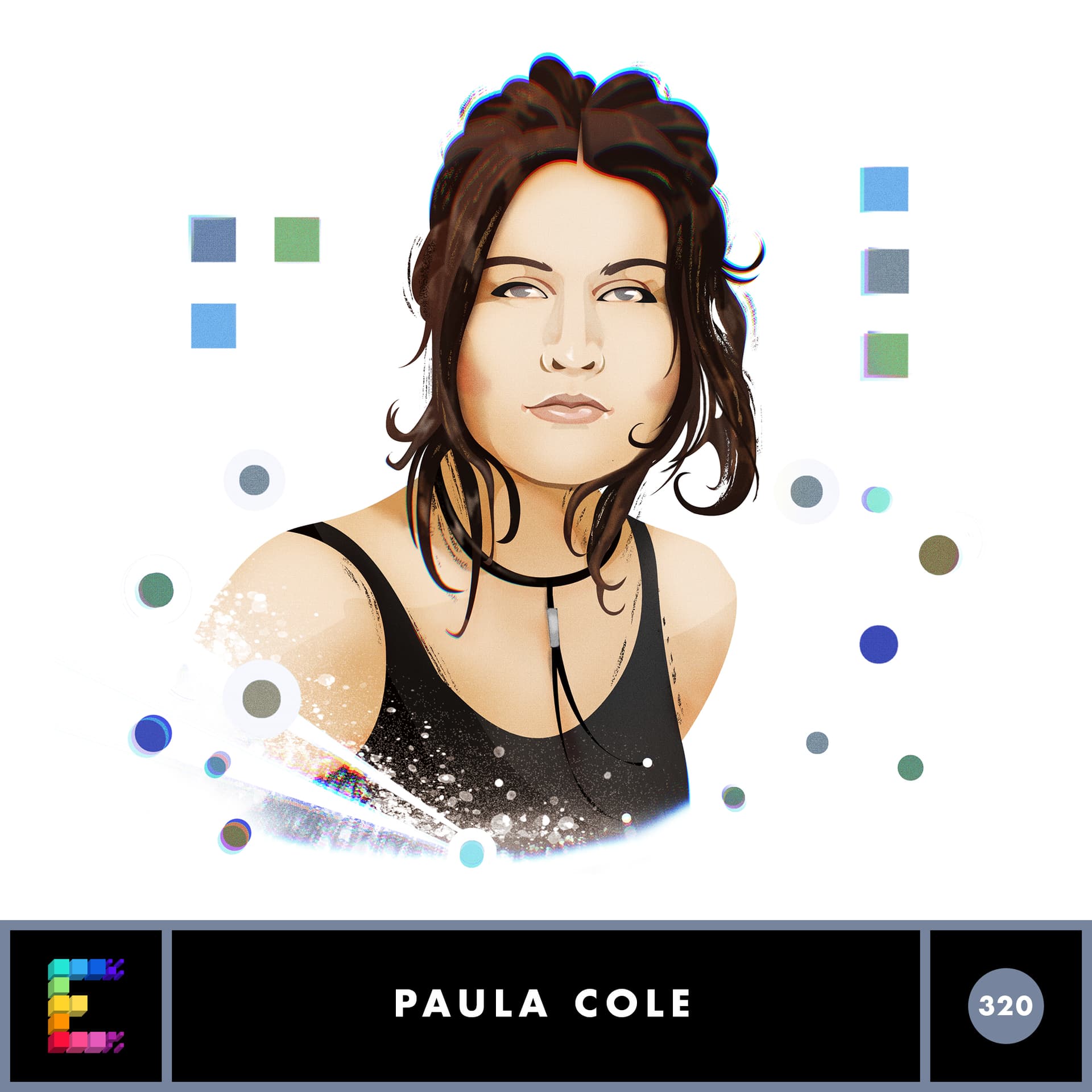
34:49Visit songexploder.net to learn more. You can see some of the original pages from Paul's notebook in 1981 where they were working out the lyrics to the song as it evolved. You'll also find links to buy or stream Take On Me, and you can watch that iconic music video. This episode was produced by me, Craig Ely, Mary Dolan, and Kathleen Smith, with production assistance from Tiger Biscop. The episode artwork is by Carlos Lerma, and I made the show's theme music and logo. Song Exploder is a proud member of Radiotopia from PRX, a network of independent, listener-supported, artist-owned podcasts. You can learn more about our shows at radiotopia.fm.
35:28If you'd like to hear more from me about what I'm watching and listening to and thinking about, you can subscribe to my newsletter, which you can find on the Song Exploder website. You can also get a Song Exploder shirt at songexploder.net slash shirt. I'm Rishikesh Hirway. Thanks for listening.
35:57song exploder is brought to you by booking.com i've got some friends who moved from la up to ohai and i've been itching to visit them so i'm going to look for a hotel on booking.com so my wife and i can take a weekend trip to go see them and look even though ohai is not a huge place. On the site, there are so many options to pick from. So many great hotels with really high ratings. Once somewhere gets into your head, booking.com is a super easy way to get there. So go on, book that trip. It's easy. Booking.com. Booking.ya. The Kitchen Sisters, another show on Radiotopia that I love, have a new series rolling out over the next year called Quilts as Monuments.
36:39Their first story chronicles So Their Names, an unlikely collaboration between an African-American preacher, a white federal court judge, and a group of rural Alabama quilters. Recently, hundreds of long-forgotten pre-Civil War names of enslaved and segregated Black members of churches across Alabama were uncovered in the Baptist Archive. And the Sew Their Names project is bringing people together across the state to embroider, memorialize, and bring these names alive on quilts. The Kitchen Sisters present Sew Their Names, Quilts as Monuments, wherever you get your podcasts.
From the publisher
"Take On Me" by A-ha is an iconic hit of the 1980s. It came out in October 1985 with an equally iconic music video that helped define the age of MTV. It hit #1 in the US and in countries all over the world. And it's still massively popular today. It currently has over two and a half billion streams on Spotify. So, with all of that, it's easy to imagine that this was all inevitable. But actually, the song took so many steps and missteps before it became the hit that everybody knows. I talked to Paul Waaktaar-Savoy from A-ha, who wrote the original bones of the song back when he was a teenager in Norway, years before it came out. The song actually came out and flopped TWICE in the UK, before it found a foothold in the US. So for this episode, Paul took me through the whole history of the song, and all the different versions that existed. And he told me how he and his bandmates, Magne Furuholmen and Morten Harket, pushed and pushed and persevered. "Take On Me" was their first single as a band, and it made them the most successful Norwegian pop group of all time.
For more info, visit songexploder.net/a-ha.