 Ask ChatGPT
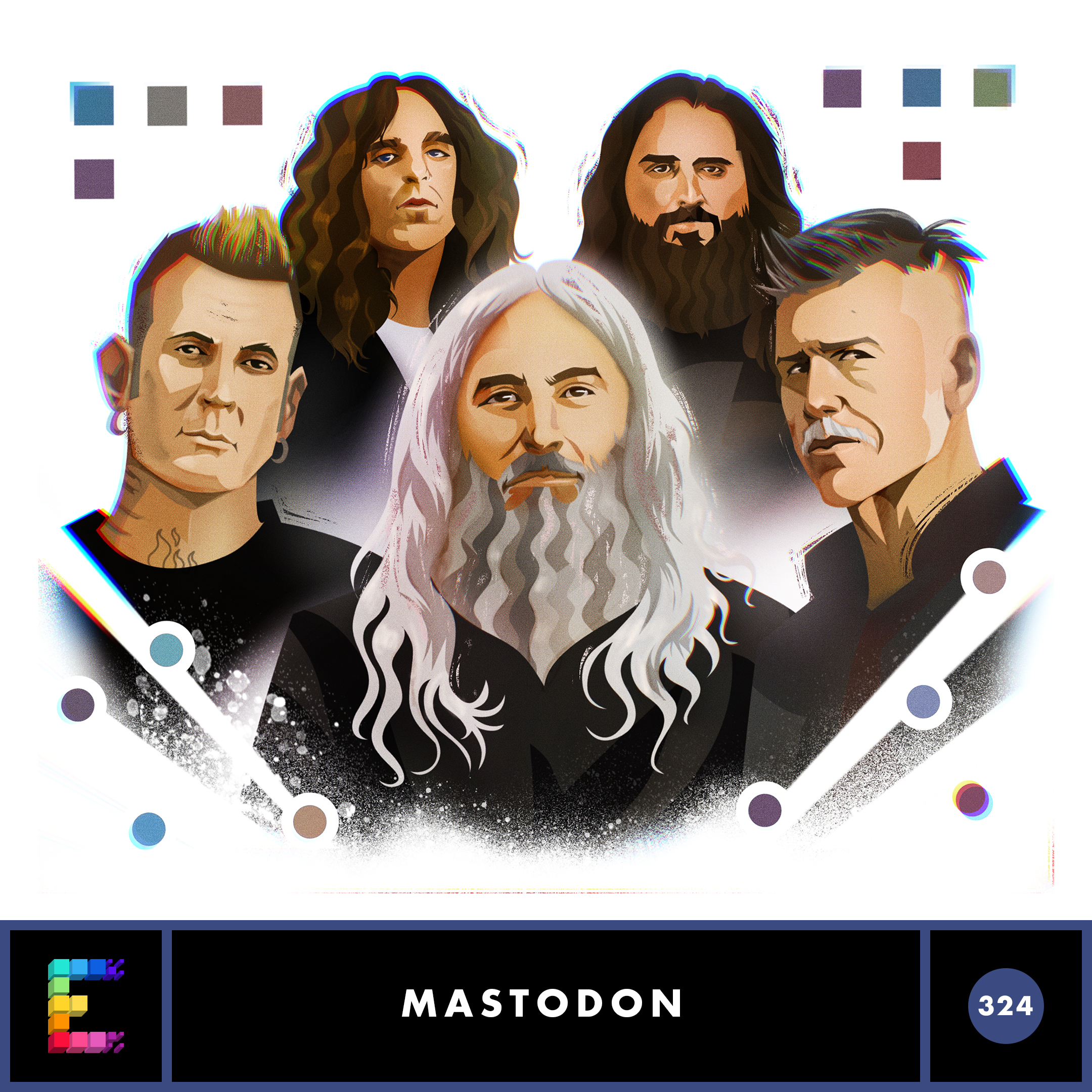

Song Exploder episode about Anohni’s “4 Degrees” (from 2016 album Hopelessness), a climate-change track framed as an urgent, anthem-like “bugle cry.” The episode covers how the song’s electronic, orchestral-feeling production was built and how Anohni shaped lyrics around the idea that “four degrees” warming is described in science as an apocalyptic shift, with “six degrees” often called a point of no return.
Anohni sings from a self-complicit “villain” voice, linking personal carbon footprint (e.g., flying) to broader denial and harm; she argues art may have power to move/affirm, but not to directly cause social change.
Ross Hudson Mohawk’s “ballistic” drum approach (doubling drum tracks), the “fanfare” horn-like synth sound (Sinplant), and Anohni’s line delivery/vibrato on “boil.”
Anohni (England-born singer-songwriter; Mercury Prize winner; six albums; Brit and Oscar nominations) and Ross Burchard (Hudson Mohawk; electronic producer; connected via an afterparty in Glasgow; contributed instrumental/demos).
Written by AI. May contain mistakes.
Get to know Anohni and the context of her song 'Four Degrees'.
“I have this Quince cashmere sweater that's become my go-to in the fall.”
Get to know Anohni and the context of her song 'Four Degrees'.
“Anoni is a singer and songwriter originally from England who started putting out music in 2000.”
Hear how Anohni and Ross Hudson Mohawk first connected musically.
“But it's only for the breeze My name is Anoni.”
Explore the instrumental creation process and Anohni's vision for the song.
“To make the drums so hard-hitting, and the reason things felt so ballistic is because in the way that people used to double vocal tracks, he would double drum tracks.”
Understand the apocalyptic themes and personal reflections in Anohni's lyrics.
“It's only four degrees, it's only four degrees It's only four degrees, it's only four degrees Could you just explain the premise of four degrees and where that phrase came from?”
Learn about the personal reflection on being complicit in climate change through art.
“But I never thought about the idea that you could be the villain, that this isn't a character that you're making up, but you're singing about your own complicit part in all of this.”
Hear about the collaborative process between Anoni and her producers, enhancing creativity.
“What was your reaction to what Anoni did with the instrumental you sent her?”
Anoni discusses her views on art's power to enact social change and the feeling of hopelessness.
“It had this sort of gravitas to it and during the making of it, I was unsure if that was going to translate.”
Enjoy the full rendition of Anoni's powerful song 'Four Degrees' and its themes.
“It's only four degrees, it's only four degrees.”
Listen to the emotional lyrics that convey a sense of urgency and desire.
The host closes the episode by pointing listeners to a bonus episode and crediting the production team, then signs off.
“You'll also find a link to listen to the episode that One O Tricks Point never did back in 2016.”

Get the gist, explore an idea or ask about something said.
 Claude
On Song Exploder, what are the key points of this episode?
Searching your listeningAutomatic transcript. May contain errors.
0:00You're listening to Song Exploder, where musicians take apart their songs and piece by piece tell the story of how they were made. I'm Rishikesh Hirway.
0:11I'm going to be on tour playing some shows this fall. I'm going to be in London on Wednesday, November 18th. I'm going to be performing solo at Rough Trade Records on Denmark Street. And I'm going to be in conversation about my music, moderated by one of my favorite actors and writers, Matthew Bainton. And a ticket to the show also gets you a copy of my album on vinyl or CD. And in December, I'm going to be on tour supporting S. Carey. We're going to be playing a bunch of shows in the Northeast U.S. So I hope to see you in one of those places. You can find all the details and get links to tickets at songexploder.net slash live.
0:47That's songexploder.net slash live.
0:54Thanks to Quince for sponsoring Song Exploder. I have this Quince cashmere sweater that's become my go-to in the fall. And it's one of those pieces where, as soon as I started wearing it, I couldn't really remember what I used to wear before I had it. It's the Mongolian cashmere quarter-button sweater in black. And those kinds of staples are what Quince is known for. Jeans, t-shirts, jackets, sweaters, and actually a lot more too. and everything at Quince is priced 50 to 80 % less than similar brands. They work directly with ethical factories and cut out the middlemen. So you're paying for quality, not brand markup.
1:30Their 100 % Mongolian cashmere sweaters start at just$60. Find your next fall favorites at Quince. Download the Quince app for app-exclusive offers or go to quince.com. Get free shipping on your order and 365-day returns. It's now available in Canada and the UK. too. And when Quince asks you where you heard about them, let them know that it was Song Exploder. You'll be supporting the show. This episode is sponsored by LinkedIn. Anyone who's ever had to spend money on marketing knows how tricky it can be to feel like you've spent that money wisely. Well, with LinkedIn ads, you can be sure that you'll get a great return on your investment.
2:09You can target your campaigns by company, industry, job title, and more. Spend $250 on your first campaign on LinkedIn ads and get a$250 credit for the next one. Just go to linkedin.com slash song exploder. That's linkedin.com slash song exploder. Terms and conditions apply.
2:35Anoni is a singer and songwriter originally from England who started putting out music in 2000. She's released six albums and won the Mercury Prize. She's also been nominated for two Brit awards and an Oscar. For this episode, I talked to her about the song Four Degrees from her 2016 album, Hopelessness. It might be strange to describe a song about climate change as an anthem, but that's what I think it is, and it feels more urgent with every passing year. It's also one of my most listened to songs. It was produced by two of my favorite electronic musicians, Daniel O. Patton, aka One O Tricks Point Never, and Ross Burchard, aka Hudson Mohawk.
3:12I got to speak to Ross about how he started the track on his own before it became a collaboration between the three of them. This is an episode I've been trying to make happen since 2016. Here it is.
3:43But it's only for the breeze
3:52My name is Anoni. I had started working on an album with Dan Lopatin on demos, electronic demos, for a whole array of songs. The record I'd been making with Dan was going to be this kind of spectral electro record. But things weren't quite coming into focus. Hi, I am Ross Hudson Mohawk How did you first hear Anoni's music and get connected with her? It goes back to an after party that I was at in Glasgow Just around the time I had started releasing music So this would be mid-2000s Someone played me this song called Hope There's Someone Hope there's someone who'll take care of me
4:43You know, it was after a night of partying and I was like, oh my God.
4:56Floods of tears. And I was like, what on earth is that voice? What is this? I'm always doing these notebooks full of like dream collabs. So it'd been something that I had been thinking about for years. And I actually wrote him an email. Ross found the original email where you said, would you like to ever collaborate? And he wrote back and said, I'm actually finishing up a record and you are somebody I would love to collaborate with. But I never reached out because I just figured it would never happen. Which is so weird considering he was doing records with like Kanye West at the time, but okay.
5:38But I remember that whole interaction. He is very humble, but he immediately asked me to sing on a song with him for his record and we did it. It was a song that we called Indian Steps. And then I said, you know, do you have anything else? And he said, oh, actually a lot of this stuff is just like rejects. Like a lot of the bigwigs have all like made their way through this old soup and they didn't take it. I said, well, I'll take the leftovers. is in my head they were like rap instrumentals because that was a lot of what i was doing at that point but they were very melodic and one of the first instrumentals became four degrees
6:22i actually made it in hawaii and it was during sessions for kanye stuff we had this little funny studio that's over there that it's in sort of a strip mall but when you enter the actual studio it's like oh you're looking out onto the ocean and you know it's like volcanoes around and this kind of thing and so I had a tendency to lean into these sort of like anthemic chord progressions do you remember what the first sound was that he created for it I think it was the drums
7:03I wanted something that is almost orchestral, but it has the punch of an electronic thing. Almost like it's a timpani. Yeah. To make the drums so hard-hitting, and the reason things felt so ballistic is because in the way that people used to double vocal tracks, he would double drum tracks.
7:28and I was also really obsessed with the horn section in general
7:41the important thing for me was it had to almost have like a fanfare quality to it
7:59And so I was like programming these chord progressions where some of the notes are so close together that the way they interact with each other brings another layer of emotion into it. Sometimes people program synth versions of orchestral instruments as like a placeholder. Was that what you felt like you were doing? or do you specifically prefer the sound of these horns over something actually orchestral? I was kind of obsessed at that point with making things that were programmed, but that you couldn't always tell where. I liked that uncanny valley. Is there like 10 guys banging on drums there?
8:46A hundred people playing here and this is some huge thing. I like that confusion I mean, what's this sound? Yeah, that's a great, great little synth called Sinplant It interfaces a combination of a plant and a bunch of DNA strands And basically, like, you can grow a sound out of one seed that you plant. It's not that impressive to look at, but I always wanted to use synths and sounds that I knew I wasn't hearing in dance music. That feels unfamiliar to me in a good way. What did you think of Ross's instrumental when you first heard it? I was very, very into it. very, very compelled by it. And it was the kind of music I was listening to.
9:46The music I was doing, working with all these other orchestral arrangers, I was doing symphonic shows. I did the symphony show at Radio City, Teatro Royal in Madrid, at the Royal Opera House in London. I mean, the shows were really elevated and they were beautiful. But within two or three years, I felt like I'd sort of done it. So it was so refreshing to get into electronic beats in a way that I hadn't for a long time. Everything came into focus for the album and the project when I heard Ross's demos, and they were so ballistic and so seductive. It took me out of the role of primary songwriter and put me more into the one who devised the message that would be embedded in the song.
10:33And everything that I've been thinking about for the last several years just crawled out of the crevices of my mind. It was like my whole last six years plus of obsession with what was going on in the national and global scale just like erupted into lyric. It's only four degrees, it's only four degrees It's only four degrees, it's only four degrees Could you just explain the premise of four degrees and where that phrase came from? So about 14 years ago, in the science journals and in consumer-ready science unpackings of global warming, they were delivering us these charts that would say, what will one degree of warming look like?
11:27What will two degrees, three degrees, four degrees, and six degrees? And they always say six degrees warming was the point of no return. and the world would become uninhabitable. Four Degrees, at the time I wrote the song, which was actually 2012, was being described in science journals as an apocalyptic shift in the environment, in the biosphere, in the stratosphere, and in the ways that it would affect us and our civilizations. Well, even Two Degrees promises the end of the coral systems and increasingly forest systems. By the time you get to Four Degrees, you've pretty much wrapped up all of the gentle systems that have taken millions of years to emerge.
12:10You know, the gentle systems of balance, the very beautiful choreography of interdependence that pours forth when nature is in balance. So Four Degrees was kind of a battle cry, a bugle cry of an apocalyptic future. And the idea with the song was to shock people into realizing how perverse it was that we were invoking a level of suffering that we weren't prepared for the end of life on earth. But I was suggesting by saying, let's go, it's only four degrees. I was trying to embody the voice of people that will drive us to extinction in the alcoholic style of denial. And the harm that they particularly will have facilitated will reverberate.
13:04So in many ways, I think that was part of the seduction of Four Degrees for me to take the position of someone that was delighting in this collapse.
13:19But at the same time, it's not entirely sarcastic because it's also like a more honest reckoning with the reality of my carbon footprint. I want to hear the dogs crying for water. I want to see the fish go belly up in the sea. Yeah, if I want to see the dogs crying for water, I want to see the fish go belly up in the sea. Because every time I take a plane to do a concert, that's effectively what I'm inviting. So there is a voice in me that feels this way, or at least should be feeling this way. If it's not naming it, it's because it's in a state of denial. But because of the firewalls of capitalism, I've been shielded from the impacts of my daily footprint in every seamless meal that I eat, in every distance that I travel.
14:11That's so interesting, because I've always heard the first version of what you were talking about, singing from the point of view of like a heartless villain who doesn't care about the effects of climate change or even kind of delights in them. But I never thought about the idea that you could be the villain, that this isn't a character that you're making up, but you're singing about your own complicit part in all of this. it's the most excruciating part because i can't point a finger at donald trump and not see a part of myself in him as a passive beneficiary of his brutal policy just as any white person in america is a beneficiary of all the racist and monstrous policies of imperialism that led to this goldilocks zone of our petrochemical comforts because it's not just the voice of the other it is my voice You know, it is my intention.
15:02And I think that that's something that I've tried quite brazenly to embody this idea that this illness that our society suffers from was also within me. My conversation with Anoni and Hudson Mohawk continues after this. Song Exploder is sponsored by DistroKid. If you're an independent artist, DistroKid is now offering a new way to start selling merch without dealing with inventory or running an online store. DistroKid Direct automatically turns your existing album artwork into merch products like shirts and hoodies, posters, totes, all kinds of things. And you choose what to sell, you set your prices, you connect PayPal, and DistroKid handles the printing, the shipping, and the customer support.
15:48They don't take a commission, so you keep 100 % of your merch sales. It's a simple way to add another revenue stream to your music career without adding more work to your plate. Artists can learn more and launch a merch store at distrokid.com slash direct. This episode is sponsored by Tidal. If you're an artist or if you know somebody making music, you should know about Tidal Upload. It's a way to share and sell music without the usual barriers. You can upload your music directly to Tidal at no cost. You decide how you want to release it. You can share it publicly with Tidal listeners, or you can keep it private until you're ready, or you can sell your music directly through Tidal Upload.
16:31Your music will also be considered by Tidal's editorial team for their playlists. And if your track is selected for their Spotlight program, you'll get a$1 ,000 bonus and you'll be on one of their marquee playlists. And now Tidal has dropped its platform fee to 0%, which means you keep more of your earnings there than on any other platform. Visit Tidal.com slash SongExploder to create an account and start uploading your music for free. That's Tidal.com slash SongExploder for zero platform fees on every sale. Your music, your earnings. Sometimes I remember how easy it is to upgrade your life just by getting the perfect little thing that'll make your home a little more dialed in.
17:15Thanks to Wayfair, I can find those things really easily. I've gotten big stuff like rugs and even a dishwasher from their site. But most recently, I got a ceramic spoon rest because I've spent so much time cooking trying to balance a spatula on the edge of a pot so that I don't splatter stuff on the counter. Well, I found a beautiful one from Le Creuset that matches a pot from Le Creuset that I also got on Wayfair. You can shop for thousands of products across every style and budget, whether it's furniture or an appliance or just the perfect little accessory. Find pieces made for real life and get even more value with Wayfair Rewards.
17:53Join Wayfair Rewards today and get 5 % back on every purchase. Head to Wayfair.com to shop all things home. That's W-A-Y-F-A-I-R.com. Wayfair. Every style, every home.
18:10What was your reaction to what Anoni did with the instrumental you sent her? I remember she sending this song back to me with some kind of rough vocals that actually are about real issues. and I was like God these are so like heartfelt and beautiful and delicate and there's so much feeling and emotion in just the recordings of them Is there something that she does vocally in particular that you really love? It's at the end of one of the verses where the line is I want to see them boil I want to see this world I want to see it boil I want to see this world I wanna see it boil The kind of vibrato on that boil.
18:59It's so kind of haunting, but it's so beautiful at the same time. And it's not only the voice, but the delivery. Did the instrumental change at all? Did you change it after getting sort of like the first draft or first round of vocals? Yeah, the arrangement changed and we did all of Dan's synth parts. Oh, right. the death siren.
19:30Yeah, this is Daniel. Dan brought this to bring about this emotional response. He's a master of that. Dan is such a sensitive composer. Dan's themes are not something I could ever conceive of. He has a very fluid, idiosyncratic grasp of melody and counter melodies that I could never put my finger on.
20:24What was it like for you to collaborate in this way with, you know, not just one, but two different producers, both of whom have their own very distinct and specific aesthetics. What was it like for you to work with both of them together? They were amazing together. Hudson actually helped facilitate a more productive relationship between me and Dan. because it sort of loosened up my grips about what the creative process should entail. And Ross was also like a master of the emotional rush. So between the two of them, they really were quite amazing. This was really the first album I ever wrote so collaboratively with other people.
21:04I was so proud of the work that they did and I felt so supported by them. And I think that they caught the fever of the record in a way because there wasn't really anything else saying these things at that time. I wanna burn the sky, I wanna burn the breeze I wanna see the animals die in the trees Let's go, let's go, it's only four degrees Let's go, let's go, it's only four degrees Let's go, let's go, it's only four degrees Let's go, let's go, it's only four degrees
21:54It's actually one of the most personal records to me that I've done. It had this sort of gravitas to it and during the making of it, I was unsure if that was going to translate. But it really, really worked and it really was like an eye-opener for me. I didn't quite realize the gravity or the magnitude of it at the time of making it. Otherwise, I probably would have freaked out and never finished it. But the way I only interpreted the instrumentals and delivered the vocals and the way Daniel brought his elements, it was like, oh, these loops that have been sat on my hard drive, they're like alive now, you know?
22:39Do you believe now, in 2025, that art has the power to affect social change? I've never believed it actually had the power to affect social change. Really? I don't think it does. Personally, I don't. But I do think there's power in art. I do think there's power in music especially. It's like the bugle for an army. My job was to sing the song of my people, people that are on the front lines of dreaming the most productively about social transformation. I went into this project maybe with the delusion that I was going to be confronting power but I think in the end the people that this music most served were people that felt exactly the same way I do I think it was this album that really made me realize that people don't listen to music that they don't agree with people listen to music that affirms them well the album was called hopelessness.
23:37And I was wondering if that's what you still feel now. Yeah. I mean, it's a feeling. I think the word there is feel. Yeah. Like hopelessness is a feeling. That's all it is. It's not an indication of what's happening or what's going to happen. It's just another feeling. But the feeling isn't that relevant, except in how it motivates you from day to day. So if hopelessness as a feeling is disempowering you in your activism or in your engagement, then I would say, don't entertain it. For me, I need to like honor all my feelings. You know, maybe don't drown in it, but I needed to say it. Hope is irrelevant.
24:16It doesn't pardon you from the table of the conversation. It doesn't pardon you from the anxiety of what's really happening. This is happening and it's continuing to happen. And there is no exit strategy for this conversation. So, yes, I feel extremely hopeless. And does that matter? No.
24:43And now, here's Four Degrees by Anoni in its entirety. It's only four degrees, it's only four degrees. It's only four degrees It's only four degrees It's only four degrees It's only four degrees
25:09It's only four degrees
25:25I wanna see this world, I wanna see it boil I wanna see this world, I wanna see it boil It's only four degrees, it's only four degrees It's only four degrees, it's only four degrees
26:12I want to hear the dogs crying for water I want to see the fish grow barely up in the sea And all those lemurs and all those tiny creatures I want to see them burn in so many for debris
26:48And all those rhinos and all those big mammals I want to see them lying, crying in the field I want to see them burn it's only 4 degrees I want to see them burn it's only 4 degrees I want to see them burn it's only 4 degrees I want to burn them I want to burn them I wanna burn them, I wanna burn them I wanna burn the sky, I wanna burn the breeze I wanna see the animals die in the trees Let's go, let's go, it's only four degrees Let's go, let's go, it's only for the bees Let's go, let's go, it's only for the bees Let's go, let's go, it's only for the breeze I wanna burn them, I wanna burn them I wanna burn them
28:39Visit songexploder.net slash Anoni to learn more. You'll find links to buy or stream 4 Degrees. You'll also find a link to listen to the episode that One O Tricks Point never did back in 2016. This episode was produced by me, Mary Dolan, Craig Ely, and Kathleen Smith with production assistance from Tiger Biscuit. The episode artwork is by Carlos Lerma, and I made the show's theme music and logo. Song Exploder is a proud member of Radiotopia from PRX, a network of independent, listener-supported, artist-owned podcasts. You can learn more about our shows at radiotopia.fm. And if you'd like to hear more from me, you can sign up for my newsletter, which you can find on the Song Exploder website.
29:22And if you want to support the show in another way, you can get a Song Exploder t-shirt at songexploder.net slash shirt. I'm Rishi K. Sherway. Thanks for listening.
29:46There's a great show here on Radiotopia called Only If You Get Caught. It's a podcast that's dedicated to taking a closer look at cheating scandals. This season, they're covering stories like the rise and fall of FTX and Sam Bankman-Fried. Plus, they investigate why people keep cheating at marathons despite getting nothing out of it. What can cheating scandals teach us about the world? Listen and find out. Only If You Get Caught, hosted by Patrick Redford and produced by Alex Sujong-Loughlin from Defector Media and Radiotopia. They're releasing episodes all fall, wherever you get your podcasts, including on YouTube.
Anohni is a singer and songwriter originally from England, who started putting out music in 2000. She’s released 6 albums, and won the Mercury Prize. She’s also been nominated for two Brit Awards, and an Oscar. For this episode, I talked to her about the song "4 Degrees," from her 2016 album Hopelessness. It might be strange to describe a song about climate change as an anthem, but that’s what I think it is, and it feels more urgent with every passing year. It’s also one of my most listened-to songs. It was produced by two of my favorite electronic musicians: Daniel Lopatin, aka Oneohtrix Point Never, and Ross Birchard, aka Hudson Mohawke. I got to speak to Ross about how he started the track on his own, before it became a collaboration between the three of them. This is an episode that I’ve been trying to make happen since 2016. Here it is.
For more info, visit songexploder.net/anohni.
Thanks to Sonos for their support of the podcast. Check out sonos.com.