
In short
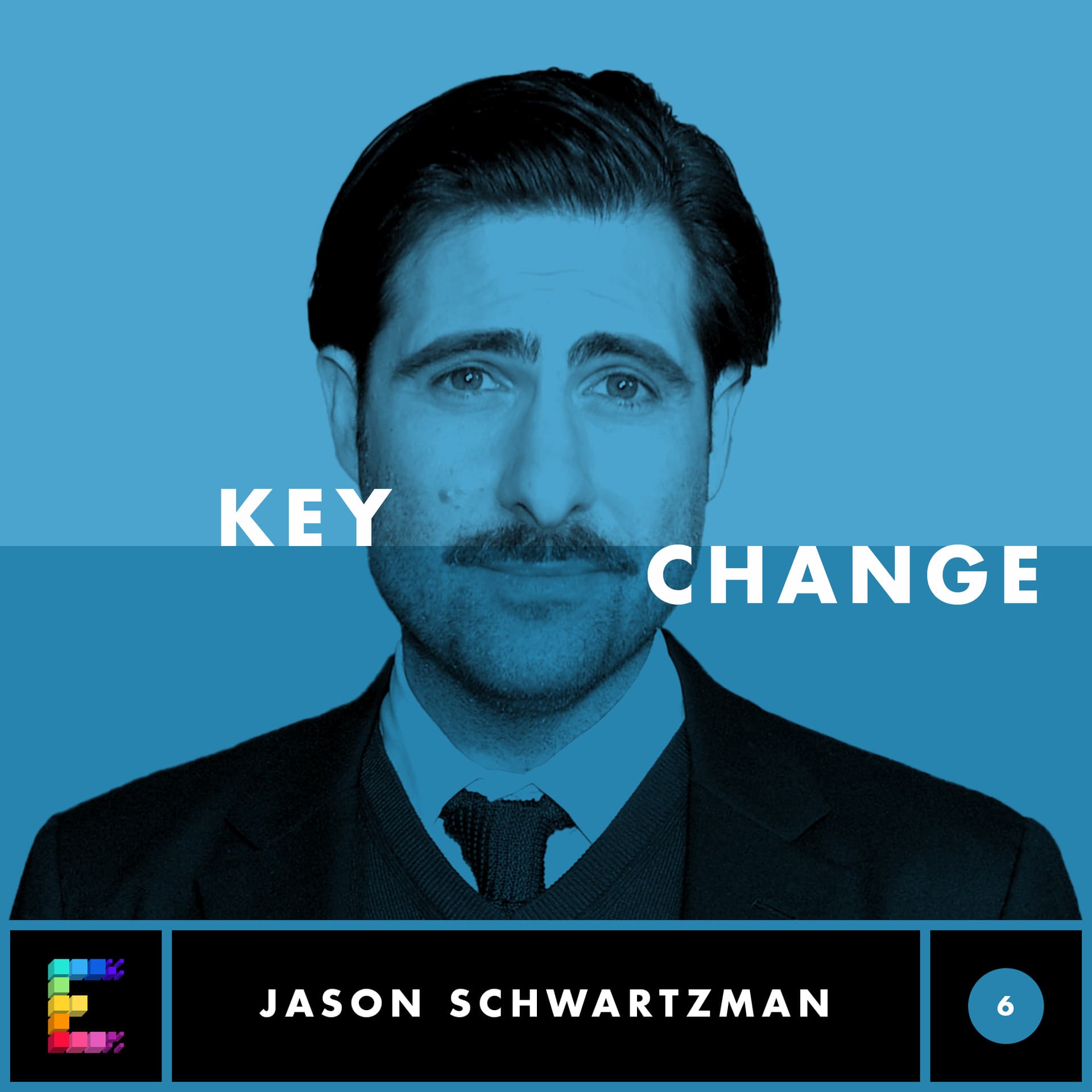
Jason Schwartzman recounts how Wes Anderson used the Rushmore soundtrack to cast and direct him as Max Fisher, and how music continues to shape Schwartzman’s acting process and playlists.
Guest backgrounds
Jason Schwartzman is an actor/writer/musician; he performs as Coconut Records and was drummer for Phantom Planet. He’s worked with Wes Anderson on Rushmore and later The Darjeeling Limited, and has appeared in Scott Pilgrim vs. the World, Across the Spider-Verse, and Mountainhead.
Key claims
Schwartzman says music felt more personal than movies at home and became his through-line. He describes meeting casting agent Davia Nelson via Sophia Coppola, reading the Rushmore script, and bonding with Anderson over Pinkerton. Anderson played a TDK mixtape of Rushmore songs in a car and narrated scenes to him; on set, Anderson blasted tracks through speakers to time performances. Schwartzman says he “gets into character” by making playlists and asks directors what “kind of song” a scene is.
Notable examples
“A Quick One While He’s Away” (The Who) made him feel “wild” and pumped up; Anderson played songs during hallways and even while filming a window-climb scene with Miss Cross.
Written by AI. May contain mistakes. Listen to the episode to check what was said.
Chapters
Tap a time to open that second in VOEarly Influences and Acting Career
2:56 to 4:23
Jason discusses his early interest in music and acting.
“I feel like I'm just listening to your, to the show.”
The Coppola Creativity Camp Experience
4:23 to 5:51
Jason shares his experience at a family creativity camp.
“But I will say that I loved plays and seeing plays and I liked writing.”
Casting for Rushmore
5:51 to 8:19
How Jason was cast for his role in Rushmore.
“So how it happened was my grandfather was a composer He was no longer living at this time, which would have been 1997.”
Preparing for Rushmore
8:19 to 13:04
Jason recounts his preparation and experience on set for Rushmore.
“I called the number on the thing and I said, my name is Jason Schwartzman.”
Preparing for Rushmore
13:09 to 14:02
Jason recounts his preparation and experience on set for Rushmore.
“You can help protect your family by getting fast and easy life insurance coverage through Ethos, 100 % online.”
Preparing for Rushmore
14:38 to 15:25
Jason recounts his preparation and experience on set for Rushmore.
“merch without dealing with inventory or running an online store.”
Jason's Musical Journey with Rushmore
15:25 to 21:40
Jason Schwartzman shares his transformative experience with the Rushmore soundtrack.
“You know, Wes was also like an older brother is that feeling of, dang, how does he know about these?”
Music's Role in Acting
21:40 to 23:42
Jason discusses how music influences his acting process and character development.
“phone, which was that you will ask a director what kind of song a scene is.”
Reflecting on Rushmore's Impact
23:42 to 25:06
Jason reflects on how the Rushmore experience shaped his life and career.
“Rushmore and those songs, did that come back around to influence your own music?”
Transcript
Automatic transcript. May contain errors.0:00You're listening to Song Exploder, where musicians take apart their songs and piece by piece tell the story of how they were made. I'm Rishikesh Hirway. Song Exploder is brought to you by Progressive Insurance. You're listening to this podcast, so I know you've got a curious mind. Here's a helpful fact that you might not know yet. Drivers who switch and save with Progressive save over$900 on average. Pop over to Progressive.com, answer some questions, and you'll get a quick quote with discounts that are easy to come by. In fact, 99 % of their auto customers earn at least one discount. Visit Progressive.com and see if you can enjoy a little cash back.
0:39Progressive Casualty Insurance Company and Affiliates. National average 12-month savings of$946 by new customers surveyed who saved with Progressive between June 2024 and May 2025. Potential savings will vary. Song Exploder is sponsored by Quince, which is a great place to find clothes for the fall. Let me tell you about my new favorite thing from Quince. It's called the Organic Comfort Stretch Chore Jacket. And for me, it's the perfect thing to layer over a t-shirt as the evenings start to cool off. I usually just wear black, but I got this in a sort of ochre color that they call tobacco. And I think it's really nice.
1:16The organic cotton is soft and it's easy to pack when I want to travel with it. And that's just one of the many, many things they have on their site. They have all kinds of wardrobe staples, the kind of things that you're going to reach for over and over again. So find your next fall favorites at Quince. Download the Quince app for app-exclusive offers or go to quince.com slash songexploder. Get free shipping on your order and 365 day returns. It's now available in Canada and the UK too. That's q-u-i-n-c-e dot com slash song exploder. This episode contains explicit language. I think the people you love are the people that you want to show things to.
2:02That's kind of what it comes down to at the end of the day. It's like you can't wait to see their face when they experience something. That's to me what I think love is. This is Key Change, where I talk to fascinating people about the music that changed their lives. And I'm very excited to be joined today by Jason Schwartzman, who's been in so many incredible films and shows, including Scott Pilgrim vs. the World, The Darjeeling Limited, Across the Spider Verse, the new movie Mountainhead, and so much more. In addition to being an actor, he's also a writer and musician. He makes music under the moniker Coconut Records, and he was also the drummer in the band Phantom Planet.
2:40I was first introduced to Jason's work in one of my all-time favorite films, Rushmore, which came out in 1998 and began his long history of working with director Wes Anderson. And we're going to talk about some of the music from that time in his life. Jason, thanks so much for being here. Amazing. I feel like I'm just listening to your, to the show. So forgive me. I was, I forgot that I was talking. I was listening to it. Well, thank you for having me in honor. Definitely my favorite show. That's so nice. Thank you so much. Well, I want to start by asking you, when you started your acting career, first of all, how old were you?
3:20And had you been thinking about acting for a while? Was it something you'd wanted to do? No, not at all. So I was 17. This was 1997. I grew up going to the movies on the weekends and loved all kinds of films. but I never once thought that it was something that I would do or could do. But when I heard music, it did have a different effect on me. Maybe it's because you could listen to it at home. It was just a much more personal experience. And from a young age, I just sort of was like, I want to be in a band, and I want to make music, and I want to make albums. I really was just interested in that.
4:01So that was my focus. When we started Phantom Planet, which would have been the summer before ninth grade. Wow. Yeah. That was really, I mean, that was the super focus. You know, I didn't really partake in much other extracurricular activity outside of school. It was just like school and trying to make music with our band. Yeah. So no, to answer your question, no. But I will say that I loved plays and seeing plays and I liked writing. Just to go back a little bit. the summer before that, I had written a play and directed a play. Where did that production take place? So there was a camp that my uncle Francis had called Coppola Creativity Camp.
4:42He basically had this idea, it was like, everyone should be getting together and our family and kids and make something and present it to each other. It's going to be 10 days of just making things and sharing things. So I went up there and I had this play that I wanted to write. and basically he was like, you could put on a play right in this room. I'm going to do a play. You can do a play here. And it was really wild. And so I also, my cousin Sophia Coppola, she also directed a play called Bernice Bob's Her Hair. And she asked me if I'd be in that play. So I guess that was kind of my first experience with acting.
5:19And I was also, I'll say it, had a huge crush on a woman who took care of my brother and I when we were teenagers. she was just like, I was pretty head over heels. Going into my senior year of high school, just so you can edit all that out and we can just keep to answer your question, I did not want to be an actor and I was going into my senior year of high school and we had made our record, Phantom Planet is Missing, and it hadn't come out yet. And that's right when I found out about Rushmore. And how did you find out about it? So how it happened was my grandfather was a composer He was no longer living at this time, which would have been 1997.
6:01But there was an event in Northern California to celebrate his music. And it was a sort of a family event. And my mom asked me if I would go. We live in Los Angeles. And I didn't want to go, to be honest with you. I wanted to do band practice and stay with my band. But she said, you know, you got to go. It's my father's music. So I rented a tuxedo with tails and I flew up to San Francisco with my mom. And anyway, I was at this party, I guess, or the celebration of my grandfather's music. And there was a woman there named Davia Nelson. Do you know Davia? Of course you do. Of course I do. So Davia, of course you do.
6:44Right. Davia Nelson of The Kitchen Sisters, another Radiotopia show. Besides being this public radio icon, also has been a casting agent for a lot of Francis Ford Coppola films. Of course, yeah. So here's what happened. We're at this party, and Sophia says, Jason, come over here. And I walk over, and she says, Jason, this is Davia Nelson. And Davia said, yes, I'm casting a film for a director named Wes Anderson. And they were looking for someone to portray this character. named Max Fisher in Wes's film. And the backstory of it, or what I hear later, was that Sophia said, what's it about? She said, it's about this eccentric 15-year-old who writes plays and is in love with an older woman.
7:29She goes, this is like my cousin Jason. She said, where is he? He said, right over there. So I remember actually my reaction was, well, I'm a drummer in a band, and I don't think that I could do that, to be honest. But there are two people in my band who could be really good at what you're describing. And she said, no, no, no, you, I think you should do it. You could try to audition. I said, no, believe me. And I, you know, I just was very uncomfortable. And she said, look, just here's the phone number. Give me your address. And I wrote it down. I went back to Los Angeles. And, you know, a few days later, a package arrived in a manila envelope.
8:06It said Rushmore. And I read it. It was the first script for a movie I'd ever read in my life. I remember reading it and just thinking, whoever gets to play this part, is so lucky. I called the number on the thing and I said, my name is Jason Schwartzman. I met someone named Davia Nelson. And they said, yes, we heard that she met you and we would like you to come in this Friday at 1230. Does that work for you? And I was like, absolutely. I said, what do I wear? And she said, whatever makes you feel comfortable, you know, but nothing was going to make me really feel comfortable. I don't know what that means.
8:44So I figured, well, what I'll do is I'm not going to do well with the acting part of this, I don't think, but I will be remembered. So that was my whole thing was I'm going to dress up like this character is described in the script, like try to deck myself out so that they would say, remember that kid who at least looked like, anyway, that was my whole thing. And then I walked into this audition and there were two other kids dressed exactly like me. And I was like, son of a bitch. I was like, fuck. I was like, well, there goes that. That sucks. And then they said it was my turn. And I remember so distinctly walking down this hallway and I could see like Wes's foot over his knee kind of going like bobbing like his foot.
9:30And he had, I believe they were Converse sandals, which I've never seen since. and he was young. He was 27. It was not what I was expecting. I was expecting like some fancy, intimidating adult. And he just seemed like cool. And he said, hi. And I said, hi. And then I was wearing these New Balance at the time that had these like pink reflector ends on them. And he's like, oh, I like your shoes. And I was like, yeah, these are extra large girl shoes. Cause I can't, they don't make them. And, you know, we start talking and I'm feeling much better. Like we're good. We're not talking about auditioning.
10:09This is fun. And then we started to talk about music. How did you get started on that? Maybe I said I was a drummer. It's not hard to get me to start talking about music. And he loves music. And we started talking about Weezer, Pinkerton, and going in depth about, I was going in depth about like, oh, this part. Now we're talking about something that means a lot to me, and I'm comfortable talking about this. And we had the greatest conversation about the first two we saw albums. And once he knew Pinkerton, I honestly, it was like a code word or something. I think that it was like we shared something.
10:50I don't know, it just immediately felt like a super connection. And then he said, okay, well now let's, should we read it? Should we do it? And I thought, no, we should stop here. This is a great conversation. We could be friends. But anyway, he said, no, let's do it. And we started to read the scene. And instantly, it just felt like I was just like with my friend. I don't know what happened. But I mean, I had no business being in the room. And it was just like this life-defining moment where he actually listened to me. he's one of the first probably the first adults like not in my family who asked me a question and cared what i had to say about it i was kind of surprised anyway after we read the scene a few times he said what are you doing the rest of the day i said nothing i skipped school to be here he's like well hang out i got to read some other people and then maybe you can come back and we can do some more so i ended up staying there for like four hours and then i went home and then by the I didn't get the part immediately.
11:56I had to go back and audition two more times. But then I finally got it. But then I only had like three weeks before we started to go shoot it or a month or something. And Wes had a car, this old Mercedes station wagon. And we were sitting in it at the studio. In Los Angeles. In Los Angeles here at the Sony lot. And he gave me like a TDK mixtape. He's like, here's the soundtrack. And it was the soundtrack to Rushmore. It was all of the songs that he wanted to have in the movie. And he said, this is it. So you can listen to this and just know these songs. So we sat in the car and he played this soundtrack and he talked over this music saying, now this is what's happening.
12:41Now you're doing this. Now we're doing this. Now the elevator opens. Now you're walking out here. Like the whole thing. He described it to me. Like in real time over the soundtrack. And it was the perfect way to communicate too with me because that's exactly what I needed. My conversation with Jason Schwartzman continues after this.
13:04This episode is sponsored by Ethos, who make getting life insurance easy. When my wife and I first got married, we were trying to figure out how to plan for the future, especially financially. We were starting from scratch. But we got the very wise advice that the most important thing we could do was get life insurance because it would be a safety net that provided more protection than any kind of savings we'd be able to accumulate in the short term. You can help protect your family by getting fast and easy life insurance coverage through Ethos, 100 % online. On their website, you can get a quote in seconds, apply in minutes, and get same-day coverage.
13:38There's no medical exam. All you have to do is answer a few simple health questions, and you can get up to$3 million in coverage with some policies as low as$30 a month. Take 10 minutes and get covered today with life insurance through Ethos. Get your free quote at ethos.com slash song exploder. That's E-T-H-O-S dot com slash song exploder. Application times may vary and rates may vary. This show is supported by Odoo. When you buy business software from lots of vendors, the costs add up and it gets complicated and confusing. Odoo solves this. It's a single company that sells a suite of enterprise apps that handles everything from accounting to inventory to sales.
14:22Odoo is all connected on a single platform in a simple and affordable way. You can save money without missing out on the features you need. Check out Odoo at odoo.com. That's odoo.com. Song Exploder is sponsored by DistroKid. If you're an independent artist, DistroKid is now offering a new way to start selling merch without dealing with inventory or running an online store. DistroKid Direct automatically turns your existing album artwork into merch products like shirts and hoodies, posters, totes, all kinds of things. And you choose what to sell, you set your prices, you connect PayPal, and DistroKid handles the printing, the shipping, and the customer support.
15:04They don't take a commission, so you keep 100 % of your merch sales. It's a simple way to add another revenue stream to your music career without adding more work to your plate. Artists can learn more and launch a merch store at distrokid.com slash direct.
15:24When Wes Anderson was playing you the soundtrack in his car, did you already know any of those songs? No, I didn't know any of those songs. You know, Wes was also like an older brother is that feeling of, dang, how does he know about these? What are these? Like, you know, and I knew the artists on it, but I was like, what is this song? Oh my God. I knew the kinks, but didn't know the kinks. You know what I mean? It was like a real, it was basically just like a series of doors that someone just says, here, you could go through any of these. And what was the feeling you got when you heard those songs?
16:00Well, I think that, for instance, when I heard the Who song, A Quick One While He's Away, it had a rebelliousness and a kind of attitude about it. You know, Wes also had short hair and glasses and very nice. But when you hear that song, it's got a hidden wildness that was kind of exciting to me. And I remember thinking, okay, what is going on under this guy's hood? But I guess what I'm saying is it made me feel wild, like the character, in a way that I probably wouldn't have felt normally. Especially the Who song. Yeah. That one felt like insane. And I think it made me feel crazy and it pumped me up.
16:41That was a really big thing, yeah. And certain kinds of songs, you know, they fit in that world. And there was a kind of somberness, too, to those songs, which also was interesting. I mean, now that I look back on it, he picks songs that I think have a kind of cloudy day feeling about him. You know, Baroque, T, Darkwood Lane in England. I don't know. I don't know what it is. I'm just like, it was different for me. It was a different thing. And I liked it because I had spent so much time focused on other parts of music. Yeah. And then when we made the movie, he had the soundtrack on the set and we were playing it live through speakers.
17:22And did that change the experience? How did that feel? Awesome. Because then it's like, you know, I've never been in a movie. Like, you know how this interview started? I was like, I can't believe I'm in your speakers. It was like that for movies. It was like, I was like, so I'm going to be, let me get this straight. He's playing the creation song. Oh, we're doing all the clubs. Yeah, the montage of all the clubs that Max is in. Yep. And he was blasting it from the speaker. and it was like you were in the movie, but in real life. You know what I mean? Like, it was like, this is the movie. It was a perfect way to do it.
17:58Because like, we could time it all out. You could do it to the songs. You could do it to the drums. It was like my favorite kind of thing. It was like somewhere between acting and being in a band at one moment. You know what I mean? It was really cool. I've never done anything like that before. Directors don't typically play music on set, really. Yeah. And in the high school, I remember, like, blasting these songs in these hallways. He'd blast them in the hallways that had the speakers, sometimes on the camera dolly. It was like they went hand in hand. Even in the scene, like, when my character climbs in through a window and he is talking to Miss Cross, who's a woman that he has strong feelings for, there's a song that's playing.
18:44Even that was playing in the room. very powerful ways of kind of easing you into it. Yeah. And it made you feel like you were in the movie. I can't describe it, but like, if the songs weren't playing, I definitely wouldn't have done the same thing, if that makes any sense. Like, I think I was performing to the songs. Yeah. Just because I loved music, so it was just like hard not to start like doing it to the songs. Do you get the sense that Wes Anderson would have done that anyway? Or do you think he was doing that at all for your benefit because he knew how much you connected with music. I really don't know.
19:18But it's continued to be a big part of our... We did this movie, The Darjeeling Limited, and we were playing this... We were listening to music to and from... It was just like it becomes a part of the rhythm. And that excitement about music still sustains... I mean, it's such a big part of Wes and I's friendship, even to this day. It's like, I think the people you love are the people that you want to show things to. That's kind of what it comes down to at the end of the day. It's like, you can't wait to see their face when they experience something. That's to me what I think love is. It sounds like this experience being both your first time on a set and also just the age you were, it was kind of like school for you.
20:07Yeah. And I'm wondering if it was so formative that you then tried to take that experience or a version of that experience and try and recreate it for yourself in subsequent projects. Yes. I mean, so I did this movie, The Hunger Games, for that movie, for The Hunger Games, for instance, like, I was like, what could my characters, like, what's his song? Like, what's his? and I wanted it to be Putting on the Ritz by Taco because that's really like it's like this weird futuristic but past and so like that's the song or when I look at like I have playlists on my phone of all the different things I've done and it's like I see all that stuff I was listening to that and that and that and that I'm sure a lot of actors will say that music is a big part of their process well first of all I don't really have a process because I wasn't trained so I'm sort of scrambling, you know, but the one through line has been music.
21:06And so any, um, excuse to make a playlist, I'm going to do it. And, uh, I'm going to call it acting. I'm going to call it quote unquote, this is getting into the character. Really. I mean, everyone else is learning their lines and I'm like, they're making a playlist. I mean, that's what I will do because really was I just want to listen to music and I just want to discover music and I just want to discover more music. And so it's just an excuse really to keep learning. There was one thing you told me on the phone, which was that you will ask a director what kind of song a scene is. Yeah. So a director, they are the conductor of the piece and they have the whole thing in perspective because some songs on an album, for instance, are like, that's the hit.
21:59And then some songs are, this is like the album closer and it doesn't have a chorus. And then this song is the 6-8 song. Just whatever the contours are of that shape, that's the experience that they want to make. I'm asking the director, like, where are we in the set? That's how I think of things. Do you usually get helpful responses back when you ask that? Yes. I mean, sometimes, sometimes I do. I mean, now I kind of tailor my questions more to the person because I also don't want, like, I love music, so it's not really fair for me to be like, what track number would you say this scene is? Like, and they're like, what are you talking, like, it's like, oh, you don't know what track it is?
22:41Like, that's just how I think. I forget that I'm a bit of an indoor kid in that respect. So I like metaphors and I do well when they typically are related to music. Yeah, sometimes they get good answers. Sometimes they get, people don't know. So that's what's fun about this shit. Pardon my French. And that just sounds so stupid. If I saw that in writing, I'd be like, he says that's what's fun about this shit. That's a question you basically didn't have to ask on Rushmore because before you even ask it, Wes Anderson is playing the song. Yeah. And so you're getting a cue from the feeling of that song of how you might approach the scene.
23:21Absolutely. It's hard to say what, if I hadn't worked with Wes, because I don't think I maybe would, would I be doing this? I don't know. So all the ways that your love of music and sort of your natural fluency and way of thinking about music played into this experience with Rushmore and then like continues to be a part of your acting. I was wondering if that experience with Rushmore and those songs, did that come back around to influence your own music? uh certainly not immediately like i think right after i finished rushmore for instance i went back and finished my album and you know the irony is that the movie came out before the album did yeah and then when the album came out they said oh an actor with a band and i was like but i've been doing this forever or you know pretty much forever i'm 17 but i've been doing this every night trying to get this band going.
24:17So I think when Rushmore was finished, I really didn't think I was going to act again. I was back into band mode. So I don't think I absorbed a lot of the textures and those things from that movie in a way that I could initially have sprinkled them into my music anywhere. I wish it had. Did you ever tell Wes Anderson after the fact how significant that conversation before your audition was for you? I never told him like, hey, but he definitely is aware that it was a big day for me. And yeah, I remember everything about it. You know, sometimes I'll just be in a store and like one of these songs will come on and I'm back there instantly.
25:03You know what I mean? I'm just back and it's cloudy and I'm in Houston and I'm 17 and I don't know what I'm going to do with my life. And I met this person who is going to change my life, who I love. And I'm excited. And it all comes back. Thank you so much. Yeah, thank you. Is that all right? It was beautiful. If you haven't seen Rushmore yet, go watch it right now. And then go listen to the Rushmore soundtrack, which I feel was as formative for me as it was for Jason. And all I did was see the movie. Then watch all of Jason's other work and listen to his own music, which he makes under the name Coconut Records.
25:43Visit songexploder.net slash keychange for more Key Change episodes and for a playlist with all the songs that have been discussed on the series. I'll be back with a new Song Exploder episode next time, but stay tuned for more Key Change episodes in the future. This episode was produced by me and Mary Dolan with production assistance from Tiger Biscop. Song Exploder is a proud member of Radiotopia from PRX, a network of independent, listener-supported, artists-owned podcasts. You can learn more about our shows at radiotopia.fm. If you'd like to hear more from me about what I'm watching and listening to and thinking about, you can subscribe to my newsletter, which you can find on the Song Exploder website.
26:22You can also get a Song Exploder t-shirt at songexploder.net slash shirt. I'm Rishi K. Sherway. Thanks for listening.
26:36Radiotopia. From PRX.
Read the full transcript
26:42Back in the day, one of the first podcasts that I ever fell in love with, one of the shows that inspired me to want to make a podcast myself, was The Memory Palace. It's also a show here on the Radiotopia Podcast Network, and it is beautiful. In every episode, the host, Nate DeMeo, tells stories about the past. The episodes are short. They're only about 15 or 20 minutes long, but each one finds beauty and meaning in the dustier corners of history. It's really one of my favorite podcasts of all time. The show's been a finalist for a Peabody Award. Nate's been the artist in residence at the Metropolitan Museum of Art, and he's released a book based on the podcast.
27:21If you've never listened before, I hope you check it out, and I hope you'll love it as much as I do. Find The Memory Palace at radiotopia.fm or wherever you get your podcasts.
From the publisher
Jason Schwartzman, actor, songwriter, and musician, talks about how the soundtrack to 'Rushmore'—his first film—changed his life. I met Jason briefly in 2017, as he was leaving the room where I was supposed to interview the band Phoenix. I was shocked when he stopped on his way out to tell me he loved Song Exploder. Eight years later, I reached out to him to see if he’d want to be a guest on Key Change, and we ended up talking for almost two hours, just on the phone. By the time he came over to record, I felt like I’d met a kindred spirit who’d also been cataloguing his whole life through the songs he’d encountered along the way. The fact that we got to talk about one of my favorite movies, 'Rushmore,' made the experience even more meaningful and thrilling for me.
For more, visit songexploder.net/jason-schwartzman.