
In short
Key Change episode where Gia Tolentino discusses how Donna Lewis’s 1996 hit “I Love You Always Forever” shaped her understanding of pop music—especially its ability to deliver immediate, bodily ecstasy and sincere “open-ended” love.
Guest backgrounds
Gia Tolentino is an author (Trick Mirror), National Magazine Award winner, and staff writer at The New Yorker since 2016; her work spans politics, internet culture, pop culture, and music.
Key claims
As a 7-year-old in Houston (backseat of a minivan), the song felt “platonically perfect” and like an “on-ramp” to adult love. She argues “good” pop is pure, legible dopamine built on sincerity, not artificial product-like sweetness (“stevia” vs sugar). She prefers female vocal subjectivity for this feeling.
Notable examples
Mariah Carey, Whitney Houston, Jewel, Spice Girls, “Rainbow Road”/Mario Kart imagery; her daughter (age five) responds to “cotton candy” songs like “Teenage Dream,” and she notes “I Love You Always Forever” was liked by her child.
Written by AI. May contain mistakes. Listen to the episode to check what was said.
Chapters
Tap a time to open that second in VOIntroduction of Gia Tolentino
2:02 to 2:52
Host introduces guest Jia Tolentino and her background.
“It's now available in Canada and the UK too.”
First Encounter with 'I Love You Always Forever'
2:52 to 4:48
Gia shares her first memories of the song and its impact.
“Do you remember the first time you ever heard I Love You Always Forever?”
Emotional Connection to Music
4:48 to 7:20
Discussion on how music evokes deep emotional experiences.
“When you were a kid, was the radio basically how you found new music?”
Understanding Pop Music
7:20 to 9:14
Gia discusses her perception of what pop music should convey.
“I mean, the lyrics are totally abstract.”
Seeking Music That Transports
9:14 to 11:36
Gia reflects on her search for music that creates a transcendent feeling.
“And so then did you specifically try and seek out other music that would give you that feeling?”
Seeking Music That Transports
12:20 to 12:39
Gia reflects on her search for music that creates a transcendent feeling.
“One more time, that's ASPCAPetinsurance.com slash songexploder.”
Influence of Childhood on Music Writing
12:39 to 14:01
Gia discusses her early relationship with music and writing about it.
“The ASPCA is not an insurer and is not engaged in the business of insurance.”
The Impact of Childhood Experiences on Music
14:01 to 18:10
Explore how early musical experiences shape adult perceptions of pop music.
“like we would write about music almost every day.”
Parenting and Musical Influence
18:11 to 20:24
Discuss the influence of parental musical choices on children's tastes.
“Like, have you played her I Love You Always Forever?”
Transcript
Automatic transcript. May contain errors.0:00You're listening to Song Exploder, where musicians take apart their songs and piece by piece tell the story of how they were made. I'm Rishikesh Hirway. Song Exploder is sponsored by TaskRabbit. For the last few months, I've been meaning to put up this framed Richard Misrak photo that I love, but I wanted to hang it above my bed, which meant it really needed to be done right, because I don't want it to fall off and land on me while I'm sleeping. So I've been putting it off. But then instead, I found a tasker on TaskRabbit who specializes in hanging artwork and TVs in homes. And he came over the next day with a laser level and he hung the picture with precision and care.
0:40And then I felt so much better than if I tried to do it myself. And really, who knows when I would have done it myself. When life happens, your to-do list grows. So get ahead of it now and get$15 off your first task at TaskRabbit.com or on the TaskRabbit app using promo code SONGEXPLODER. Taskers book up fast, especially for same-day tasks. So book Trusted Home Help today. That's$15 off your first task using promo code SONGEXPLODER with the TaskRabbit app or at taskrabbit.com. Thanks to Quince for their support of Song Exploder. It's August and it is hot here in LA. And in my attempt to not look like melted cheese in the heat, I've turned to Quince for their beautiful linen clothes and I got their 100 % European linen utility shirt, which is a button-down that's lightweight and breathable and looks very classy.
1:34It kind of has an old world style to it, which I love because my people, Indian people, we know about beating the heat. We also know about savings and everything at Quince is priced 50 to 80 % less than similar brands. That's because they work directly with ethical factories. So you're paying for high quality, not brand markup. Upgrade your every day. Download the Quince app for app-exclusive offers or go to quince.com slash songexploder. Get free shipping on your order and 365-day returns. It's now available in Canada and the UK too. That's quince.com slash songexploder. This is Key Change, where I talk to fascinating people about the music that changed their lives.
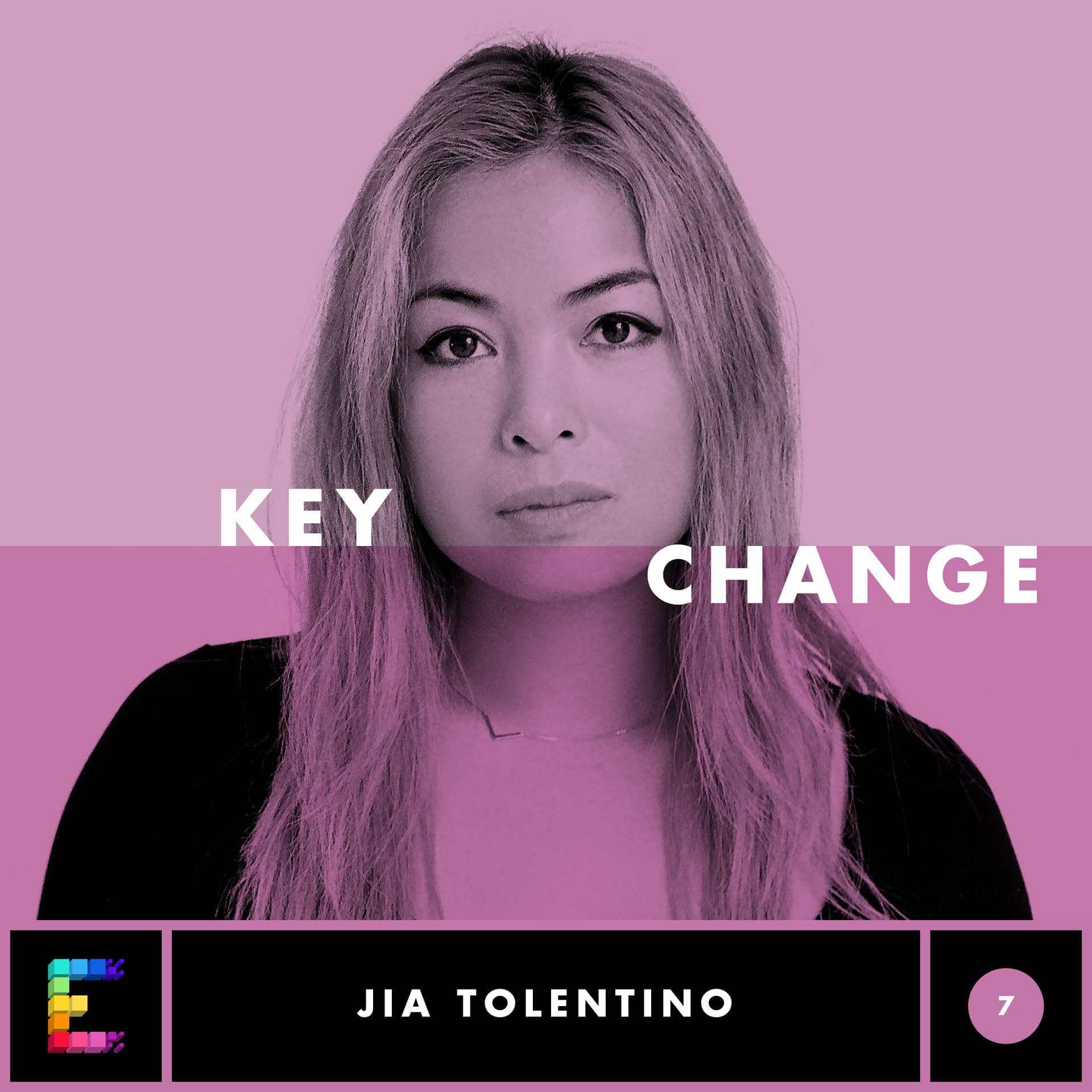
2:20My guest today is Gia Tolentino. Gia is the author of the essay collection Trick Mirror, which was named one of the best books of 2019 by the New York Times Book Review, NPR, The Paris Review, and more. She won a National Magazine Award for her work at The New Yorker, where she's been a staff writer since 2016. Her writing covers so many different topics, from Roe v. Wade to the internet to pop culture and music. And today we're going to talk about the 1996 pop hit I Love You Always Forever by Donna Lewis. Gia, thanks so much for being here. Hello. Do you remember the first time you ever heard I Love You Always Forever?
2:57Jia Tolentino:Yeah, I heard it, I think I was in the third row of a minivan. I was seven years old and I grew up in Houston and there was a lot of just driving, a lot of just being put in the back of the car. And I remember it was totally dark and I think I was being ferried with cousins or like the family friends that are called cousins. And I remember I heard the song. And you know, like that thing where you hear a song that is like enormous and it's the first time you've heard it and you have no context, but you get that feeling. I think that was the first time I had ever had it. And I love that feeling when you're just like, who is this?
3:37Jia Tolentino:What is this? What is this thing? You know? Yeah. And just to me, like the song sounded so platonically perfect in every way. And it gripped me so hard. I love you. Always forever near and far. We'll sit together everywhere. I will be... Oh, it's so good. And I was just like, wow. Like, it felt like the curtains were parting into an entire world of adult music. And this was like my on-ramp to it. Yeah. I think it was the first song that wasn't vaguely child-coded. You know, even though like to some extent, like all music that sounds like this is, like I realize this now that I have a five-year-old and I'm like, oh, okay.
4:20Jia Tolentino:so much girly pop is really for children in a great way, you know? She loves Addison Rae, whatever, and so do I. But yeah, I just remember being like, this is perfect. This is like the heavenly spheres, some sort of like sacred geometry is just unfolding in front of me. And I remember just like listening in the backseat of the car being like, wow, this is what it's going to be like to be an adult and be in love and, you know, something like that. It was a really profound experience. When you were a kid, was the radio basically how you found new music? You know, it's funny that like a lot of my early experiences of like independent music discovery was like one of my parents needing to buy something at like Best Buy.
5:06Jia Tolentino:And I guess seven is around the time that I would have been allowed to leave their side and go to the CD rack and do the thing, you know, where it was like the big console where you could listen to like one minute previews of songs. I started getting into like Jewel and Mariah Carey and Spice Girls, I think, was around then also. And so much of it came from being sort of benignly neglected at big box stores and like listening to CD samplers. I feel like that's young. Seven years old is young to be even thinking to find music on your own? I was in third grade, so I was like a little older coded.
5:50Jia Tolentino:And I really liked being on my own. And I did do everything on my own as soon as I possibly could. I was a girly girl and music hit me really hard as a child, the same way that it hits me really hard right now. And I wanted it to myself and to be able to decide and to have like an independent solo experience of it. What do you think it was about the song that you were connecting to? I had this moment. I was watching the Cuaron Little Princess movie with my older daughter a month ago, maybe. And she had her first grown-up cry. There's this climactic scene at the end. And I was crying. And my five-year-old was crying.
6:35Jia Tolentino:And she was shocked by the nature of this cry. She was like, but I feel happy. And she was giggling. She was also really crying. And she was experiencing what it was like to have an overpowering emotional experience that had nothing to do with something in her own life, kind of. I think this song was kind of like that. Like, it was roughly equivalent to that. It was different in that, like, music that I would have been into up till that point would have had, like, a really specific narrative and characters. You know, I loved, like, the song from Pocahontas, but that's because I loved the story and what it looked like.
7:10Jia Tolentino:But this was an abstraction. It was this pure shot of like joy and ecstatic adoration. I mean, the lyrics are totally abstract. The nature of the song itself, it's really like stripped down to this extremely clean structure. And so I think, yeah, like it was the first time that maybe I had been moved so strongly by something that was as simple and the good kind of formulaic where it's just a pure scaffolding for you to hang all of your shit on the way that pop music is. Like this song was, it was so purely that. When we were emailing, you said that I Love You Always Forever helped you understand what pop music is and what pop music should be.
7:55And I'm curious about that. What do you think pop music should be?
8:00Jia Tolentino:So there's like a kind of song that sounds like this, like Mario Kart, Rainbow Road, pure dopamine, like, you know, angels opening their pink wings, sunlight, like all of the chemicals in your body just coursing and late afternoon and like a car driving as fast as it can, like pure sugar, cotton candy. I love you. You love me. We're going to be in love forever. Like it's this perpetually suspended present of pink, fluffy ecstasy. I mean, pop music contains so much more than that. But this kind, this lane of it, where it was like, the song is going to summon this feeling of the purest expansiveness from an extremely simple pattern.
8:49Jia Tolentino:That's so legible that a child can understand that it's about the happiest you've ever been or could be somehow. And it has something to do with loving somebody. There's maybe something about this kind of music and the just like direct to your body that just overrides all of the parts of me that are normally thinking. And yeah, it's like that specific lineage that I think this song was my first experience of. And so then did you specifically try and seek out other music that would give you that feeling? Well, I think what I realized that I could seek out in music and what I still seek out in music is that sense of like, I can't think about anything else, but the song and this like instant, all encompassing transportation and like miniature surrender to a three minute thing.
9:45Jia Tolentino:There were Mariah songs that would do it for me and like Whitney songs. And yeah, I think I realized like music could do this. Music could make me feel like this. I can summon this feeling on demand or I can be surprised by this feeling. And so chasing that feeling is certainly like a tendency within me that has driven a lot of my life. I was a festival rat for a decade plus, you know, I was like in starting as like a teenager, I was just always like pressed up against the front of the speakers, actively losing my hearing, like wanting to leave the venue totally emptied out with my ears ringing.
10:20Jia Tolentino:I wanted that override. Like, yeah, almost like a shortcut to this thing that I feel like I chase in a lot of ways. But this was the quickest and, like, in a way, the most transcendent way of getting it. These have, in many ways, been the purest moments of my entire life, really. And I can't remember one of them before this. My conversation with Gia Tolentino continues after this. Thanks so much to Wayfair for supporting Song Exploder. Wayfair has everything you need for your house or your apartment or wherever you live. I've been a Wayfair customer for a really long time because they have such a wide variety of things that you can get from there.
11:00And sometimes I find myself looking for something very, very specific for my house. Most recently, I was looking for pretty bookends that I could use on the shelves where I keep my vinyl records because they're always kind of leaning to one side and I always want them to look more orderly. So I went on Wayfair and I found these really pretty and minimalist marble bookends that were perfect. My friend came over yesterday and without me mentioning any of that, he pointed them out and said how much he liked them. So join Wayfair Rewards today and get 5 % back on every purchase and start saving on your next home upgrade.
11:36Head to Wayfair.com to shop all things home. That's W-A-Y-F-A-I-R dot com. Wayfair. Every style, every home. This episode is sponsored by the ASPCA Pet Health Insurance Program. I have two dogs, which means that I have twice as much chance to run into some kind of unexpected pet health emergency. Those unexpected moments are exactly why ASPCA Pet Health Insurance exists. Because, let's be honest, vet bills can add up fast. ASPCA Pet Health Insurance has been around for almost 30 years and has covered over a million pets. To explore coverage, visit ASPCAPetinsurance.com slash songexploder. That's ASPCAPetinsurance.com slash songexploder.
12:24One more time, that's ASPCAPetinsurance.com slash songexploder. This is a paid advertisement. Insurance is underwritten by either Independence American Insurance Company or United States Fire Insurance Company and produced by PTZ Insurance Agency Limited. The ASPCA is not an insurer and is not engaged in the business of insurance.
12:47Do you remember the first time that you wanted to write about music?
12:51Jia Tolentino:I guess this wasn't really writing about music, but it is nice how kind of explicit the childhood of the sort of 90s and teenagerhood of the 2000s made your relationship with music. and I was on LiveJournal as a teen and like there was like I think a slot to put whatever music you were listening to and then there was MySpace and you know like so much of it was like really you were waving this song like a flag and that was the currency and the language and then I think for like a full year when I was in grad school in Michigan in 2012 which is when I started like writing on the internet in general like I was blogging for the hairpin for no money and so like my friends were music blogging and because I was writing and could write quickly and easily, they would have me write for these music blogs.
13:41Jia Tolentino:Yeah. And then when I got hired at the Hairpin by my now best friend, Emma Carmichael, it was just like the two of us running this website and we had to just like fill space. I think it was like nine posts a day, just between the two of us. And both of us love music. And so we would just kind of just to keep putting stuff on the website, like we would write about music almost every day. And it seemed kind of like a natural extension of anything that I'd been thinking or writing before, even as a kid. Like, I think I was always trying to sort of like have and share transcendent experiences with music.
14:16Nowadays, when you write about pop music, how much is your perspective still informed by the experience you had, you know, in that minivan and the feelings you had when you were seven years old? Like, is there a standard that other music is being held to that was established by that experience?
14:37Jia Tolentino:This is interesting. I've never thought about this before, but maybe it's why bad pop music is, you know, it's offensive in a way that other music that I don't like is not. Because it's like a perversion of this thing. It's stevia and I want sugar, you know. And I find things like stevia like quite offensive to my physical form. Not to offend anyone that might need to eat stevia for dietary purposes or whatever, but I find it unbelievably offensive when it's the worst part of pop music without the thing that animates and makes transcendent the good stuff, you know, which is like a kind of utter sincerity.
15:16Jia Tolentino:and commitment and like real sweetness and real open-ended ecstasy. And when something is borrowing all of that for more likely product placement in an old Navy commercial or whatever, it like, it hurts. Like it hurts me. Like the artificiality of pop when it's magnificent and when it is soul crushing, I find that very interesting and like so much of that is just how it hits you in your body. So you've name-checked Donna Lewis, obviously, but Whitney Houston, Mariah Carey. So many of the paradigms of like the perfect pop song that you've mentioned, they're all sung by women. And I was wondering if you think that that's part of what's necessary in order to achieve the feeling that you had, or if it just happens to have worked out that way.
16:08Jia Tolentino:No, this is a me thing, you know? It's like women are angels, you know what I mean? Like, I prefer a female subjectivity, you know? I just do. There's something about the female subject position that is negotiating around so much more to begin with. You know, disempowerment, submission, receptivity, that them singing pure sweetness hits harder for me and means more to me. And, you know, it's also like the baptism into pink fluffy clouds, angel wings parting, rainbows and cotton candy, it's obviously not purely coded for girls, but it basically is. Like there's a reason that like gay men who also court this feeling and like also prefer the female subject position in, you know, in music and art in a lot of ways, right?
17:01Jia Tolentino:Like maybe there are exceptions, like Justin Bieber and Sorry, right? But this is the girl zone. It belongs to girls. It always will belong to girls and men can listen to it. They can ghostwrite the songs. they can produce the songs. Max Martin did Teenage Dream, right? But they can't do it. It's four girls and it's bi girls. And there's like a fourth grade part of me that loves that. What I think I like about this kind of music is it's kind of prelapsarian. It is the Garden of Eden. And it's a sort of willful summoning of a type of feeling when anything is possible and nothing will ever go wrong.
17:39Jia Tolentino:And like as a kid, you don't have any thoughts about that other than the feeling itself. Like you're just like, wow, what an incredible feeling that this song can summon. And that like, I feel on my own anyway, probably, you know, about just being alive. And I guess slowly in time, as one comes to realize in a personal and then structural sense that the world is not like that, these songs still pretend that it is kind of. The last thing I wanted to ask you about was your daughter, who you said she's five. I was wondering how much do you feel like you can play a hand in shaping her musical taste or how much is she like you when you were younger and fiercely independently wants to make her own choices about music discovery?
18:26Like, have you played her I Love You Always Forever?
18:29Jia Tolentino:Yes, I did, actually. And I was like, did you like it? And she was like, yeah, I liked it. And then she was like, can you put on Pink Pony Club or whatever? You know, it's so funny. when she was like an infant. I don't know whether this was projection, but it did seem to me that I could soothe her by putting on cotton candy songs. Like I did play Teenage Dream for her a lot and they would soothe her. But maybe it was just because I got happier when I listened to them and, you know, and I was holding her and then she would get soothed. Like, I don't know. But it seemed for a while that she would really respond to them.
19:00Jia Tolentino:I do remember Teenage Dream made her stop crying once. And now in the last year, it's like, yeah, you know, like, I don't know how many four-year-olds you have in your life right now, but it's like they love Chapel Rhone. Like they're obsessed with Chapel Rhone. So she does like this kind of music already. She likes some Taylor Swift. She likes the Taylor Swift songs that are made for children, like Shake It Off. And I can see her and she's a mini me in every way. Yeah. And she loves music. You know, like she's locked in. She's really tapped into all this stuff. She asks to, if she's in a bad mood, I can like turn on a disco light and play run away with me, you know?
19:40Jia Tolentino:And in a way I'm like, oh, wow, you're just like me on someone's rooftop in Williamsburg, like, you know, in 2015 when the song came out, you know? It's funny to see it come together because I still like this music too. Like I went to an Olivia Rodrigo show at MSG, like when Paloma was like three. And I was looking at all of the little preteen girls that were in their like first little halter tops and like first makeup and, you know, really trying to pretend they were teenagers. and I was like, wow, like, I'm pretty close to doing that with her, you know? Yeah. Yeah, I'll be kind of sad when our tastes diverge.
20:14Jia Tolentino:But I kind of suspect we'll have a lot of, like, maybe she'll be like me and she'll still, she will want the sugary stuff forever. Thank you so much. Thank you for having me. Gia Tolentino's bestselling book, Trick Mirror, is available everywhere. And you can find her writing at The New Yorker. Her website is gia.blog. Visit songexploder.net slash keychange for more Key Change episodes and for a playlist with all the songs that have been discussed. This episode was produced by me and Mary Dolan with production assistance from Tiger Biscuit. Song Exploder is a proud member of Radiotopia from PRX, a network of independent, listener-supported, artist-owned podcasts.
20:58You can learn more about our shows at radiotopia.fm. If you'd like to hear more from me about what I'm watching and listening to and thinking about, you can subscribe to my newsletter on Substack. You can find a link to it on the Song Exploder website. You can also get a Song Exploder t-shirt at songexploder.net slash shirt. I'm Rishikesh, your way. Thanks for listening.
21:22Radiotopia. From PRX.
21:30I want to tell you about another Radiotopia show called Hyperfixed. It's hosted by Alex Goldman, who you might know from Reply All, or if you're old school like me, his podcast before Reply All, TLDR. On Hyperfixed, listeners write in with questions, all kinds of bizarre questions, no matter how niche. And Alex investigates and answers the questions. If you did listen to Reply All back in the day and you remember the segment they used to do called Super Tech Support, then you're going to love Hyperfixed. And Hyperfixed is currently gearing up for its first live show in September in Brooklyn. You can get tickets at tickets.hyperfixedpod.com.
22:05Look for Hyperfixed wherever you listen to podcasts or at radiotopia.fm.
From the publisher
My guest today is Jia Tolentino. Jia is the author of the essay collection Trick Mirror, which was named one of the best books of 2019 by The New York Times Book Review, NPR, The Paris Review, and more. She won a National Magazine Award for her work at the New Yorker, where she’s been a staff writer since 2016. Her writing covers so many different topics, from Roe V. Wade to the internet to pop culture and music. And today, we’re going to talk about the 1996 pop hit “I Love You Always Forever” by Donna Lewis.
For more, visit songexploder.net/jia-tolentino.