
In short
Paula Cole explains how she wrote and produced “I Don’t Want to Wait,” and why she later re-recorded it to reclaim ownership and sound like the original. She also discusses the song’s breakthrough via Dawson’s Creek and her current archival release plans.
Guest backgrounds
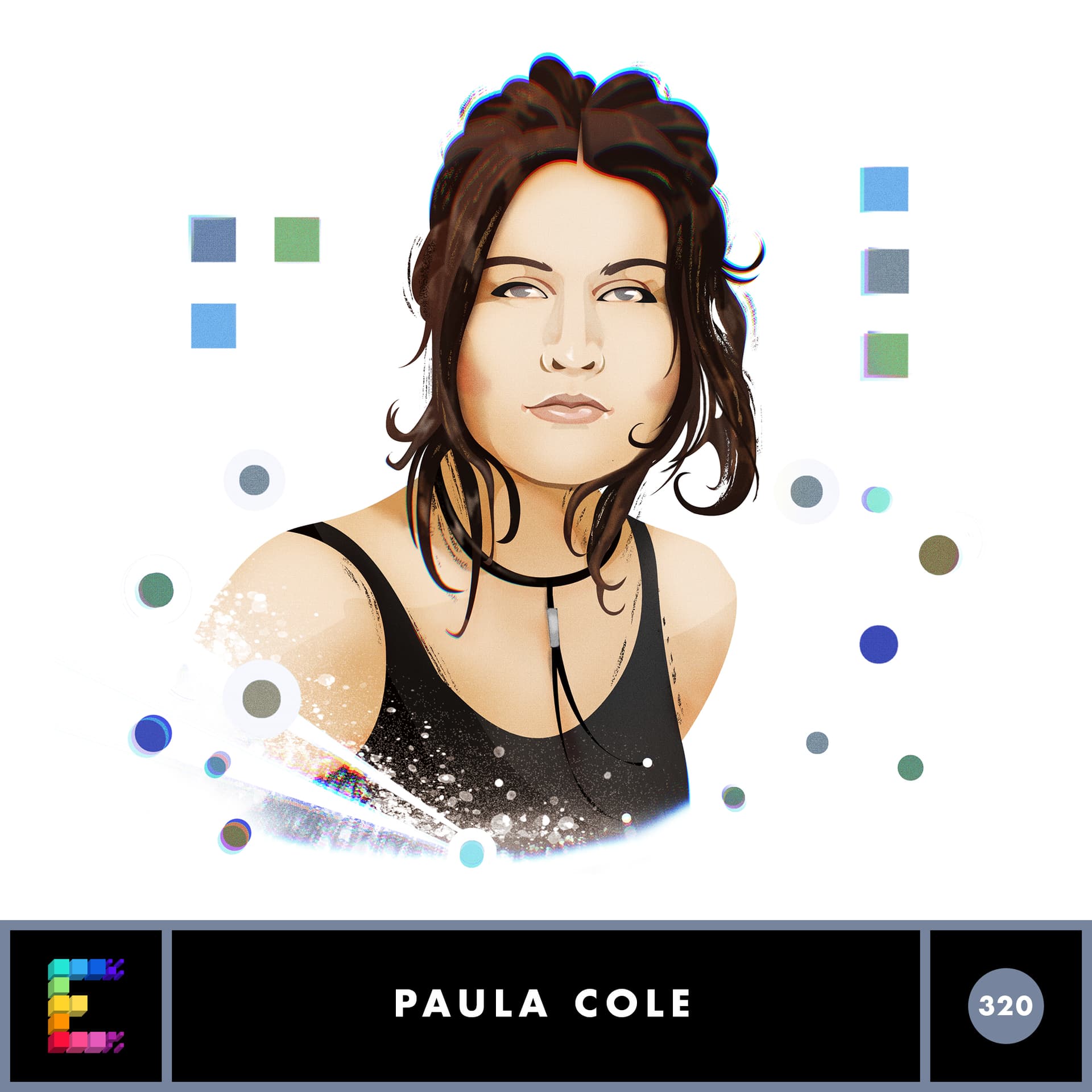
Paula Cole is a Massachusetts singer-songwriter/producer. Her solo debut Harbinger (1994) was followed by This Fire (1996), which earned seven Grammy nominations and a win for Best New Artist. She was the first woman nominated for Producer of the Year without a male collaborator.
Key claims
The song was shaped by her grandfather’s impending death and stories of WWII trauma and generational abuse cycles. She self-produced the album version after a “false start” with producer Kevin Killen, recording rawer, live piano/drums at Magic Shop with engineer Roger Moutenow. She re-recorded for master ownership after signing a “terrible contract.”
Notable examples
She references anthemic bass-line writing (James Taylor’s “Fire and Rain”), hook instincts (Tina Turner’s “What’s Love Got to Do With It”), and uses her grandfather’s verse imagery (Battle of Okinawa, shrapnel, granddaughters). The Dawson’s Creek theme use came after Kevin Williamson personally requested the song.
Written by AI. May contain mistakes. Listen to the episode to check what was said.
Chapters
Tap a time to open that second in VOThe Inspiration Behind 'I Don't Want to Wait'
1:16 to 2:10
Paula reflects on her life experiences that inspired the song.
“I've been to Yosemite and Joshua Tree here in California.”
The Inspiration Behind 'I Don't Want to Wait'
3:21 to 6:15
Paula reflects on her life experiences that inspired the song.
“It includes the original demo of I Don't Wanna Wait, which you'll also hear in this episode, as Paula tells the story of how she wrote and produced the song.”
Creating the Song: Recording Process
6:15 to 11:56
Paula describes the process of writing and recording 'I Don't Want to Wait'.
“grandfather was going to die, which he did soon after the writing of the song.”
Creating the Song: Recording Process
12:04 to 12:15
Paula describes the process of writing and recording 'I Don't Want to Wait'.
Creating the Song: Recording Process
13:21 to 14:03
Paula describes the process of writing and recording 'I Don't Want to Wait'.
“I just had an extremely stressful week last week dealing with my dog's health issues.”
Recording the Album Version of 'I Don't Want to Wait'
15:15 to 18:28
Paula Cole discusses her transition to self-production and the challenges faced.
“So after you made the demo, how did you begin the process for recording the album version of the song?”
Exploring Themes of Generational Trauma
18:28 to 22:21
Cole shares the personal stories and themes behind her lyrics and their emotional weight.
“And then finally, Roger Moutonow comes, and he hears my words.”
The Making of 'I Don't Want to Wait'
22:21 to 24:14
Discussion on the re-recording process of the song and its emotional significance.
“You have more compassion for people, a little more space.”
The Impact of 'Dawson's Creek' on Cole's Career
24:14 to 28:00
Cole reflects on the unexpected fame from the show and her feelings about it.
“And I was wondering, why did you end up re-recording the song?”
Reflections on Life and Music
28:00 to 28:36
Paula Cole shares her deep emotional connection to her music and its significance in her life.
“And this is a fantastic way to deliver our music meaningfully through television.”
Show all 12 chapters
I Don't Want to Wait - Song Playback
28:37 to 29:13
The full playback of Paula Cole's song 'I Don't Want to Wait'.
Lyrics and Themes of 'I Don't Want to Wait'
29:14 to 33:35
An exploration of the lyrics and themes presented in the song, reflecting on relationships and existential questions.
“She had two babies One was six, one was three In the war were 44 Every telephone ring Every heartbeat stinging When she thought it was God calling her Or would her son grow to know his father?”
Transcript
Automatic transcript. May contain errors.0:00You're listening to Song Exploder, where musicians take apart their songs and piece by piece tell the story of how they were made. I'm Rishikesh Hirway. Song Exploder is sponsored by Gusto. Here at Song Exploder, we're a small team. And now it's become part of my job to handle the tasks that an HR department would normally do. Payroll, benefits, onboarding, all that stuff. And figuring out that admin can take up a ton of the time that I wish I were actually spending just making the show. That's why Gusto is so helpful. Gusto is online payroll and benefits software built for small businesses. It's all-in-one, remote-friendly, and incredibly easy to use.
0:40So you can pay, hire, onboard, and support your team from anywhere. Making the switch is quick and easy. You just transfer over your existing data and you can get up and running fast. Plus, you won't pay anything until you run your first payroll. So try Gusto today at gusto.com slash songexploder and get three months free when you run your first payroll. That's three months of free payroll at gusto.com slash songexploder. Again, it's gusto.com slash songexploder. This episode is brought to you by booking.com. I've been to a few national parks over the years, and it's always been a pretty magical experience.
1:19I've been to Yosemite and Joshua Tree here in California. Those are some of the closest ones to me. But I've been wondering about taking a trip to one that's maybe not so close. And last year, I started looking at some lists ranking some of the most beautiful national parks. And one that's come up on a few of the lists is Glacier National Park in Montana. Okay, that's the first part of the daydream sorted. The next is, where am I gonna stay? So I went on booking.com to look at some options. And they have all kinds of different places to stay. I found a little cottage that looks incredible. It has a mountain view.
1:53It has a balcony. It has air conditioning. It has great reviews. I'm very excited about that idea. Or if I decide I want to bring my dogs with me, I can use the pet-friendly filter. And it turns out there are some really nice pet-friendly hotels on the site too. So go on, book that trip. It's easy. Booking.com. Booking.ya. This episode contains explicit language. Paula Cole is a singer, songwriter, and producer from Massachusetts. She put out her first solo album, Harbinger, in 1994. Her second album, This Fire, came out in 1996 and was a real breakthrough. She was nominated for seven Grammys, and she won the Grammy for Best New Artist.
2:39In fact, that year, she was the first woman in Grammy history to be nominated for Producer of the Year without a male collaborator. For this episode, Paula told me about how she made one of the big hits from that album, I Don't Want to Wait. It spent 56 weeks on the Billboard charts. And then it was heard by millions more when it was used as the theme song for the hit TV show Dawson's Creek. These days, Paula has been reclaiming her old music in various ways. A couple of years ago, she re-recorded some of her songs, including I Don't Want to Wait. And that's the version of the song that you'll hear throughout this episode and at the end in its entirety.
3:15And on September 10th, 2026, Paula is putting out an archival collection of her demos. It's called Sonic Memoir, demos 1989 to 1998. It includes the original demo of I Don't Wanna Wait, which you'll also hear in this episode, as Paula tells the story of how she wrote and produced the song.
3:45Sorry
3:51My name is Paula Cole. So it was 1996. I had released my first album, Harbinger, which was well-received critically, and it was important that I follow up with something. My life is changing. I'm touring. I'm singing in coffeehouses for 50 people with my own material, but that's growing. I had like a string of failed relationships. I was 28. So I was just in the throes of being in one's 20s in the 90s in New York City. So that's a shit storm. And I mean, I've lived in the self-help book section. So that's the climate in which I wrote that song. Do you remember what you were specifically thinking about when you started?
4:42I was in a meditative mood, and I was in tune with the feeling that my grandfather was going to pass. I grew up in Rockport, Massachusetts for most of my childhood with grandma and grandpa down the street. And that was incredible. You learn so much about yourself through learning about your family, your history. and my formative years with my grandparents were just those kind of loving times with grandparents. But you notice things, you know, the caution not to ever surprise grandpa and so forth. There were just these stories that slipped out. My grandpa came home from World War II and came home with PTSD changed, but there was no vocabulary there was no real understanding about what he went through or how to deal with it so all of that PTSD just gets buried in a relationship in a marriage and it comes out sideways and it comes out as abuse and it comes in as this cyclical force that then touches generations it touched my father who lived with abuse and then us we lived with abuse and I'm thinking about how I don't want to repeat that.
6:04I don't, with all my heart and soul, I want to try to be conscious and look at my life. And all of that kind of coalesced in this song, precipitated by the feeling that my grandfather was going to die, which he did soon after the writing of the song.
6:24I lived on 15th Street in Chelsea of New York City. It was a townhouse apartment. I had a piano, I had a spinet piano. It's the smallest of the pianos, so it has kind of the smallest sound. But when I moved to New York from San Francisco, I was only playing digital pianos, and I missed an acoustic piano so badly, and I bought this Whirlitzer spinet. That's the only one that would fit up the stairwell, basically. And we had it hoisted up the townhouse stairs to the second floor where my apartment was. And so many songs were born out of that acoustic piano.
7:04Tom Waits says, like, our fingers are like old dogs. They go to the same places. And I try really hard to move my fingers to new places. But I have to say, I love the Black Keys.
7:18So probably my fingers were wandering around that space. And I remember thinking about James Taylor's Fire and Rain and how the bass line is that gorgeous descending major scale, essentially. I've seen fire and I've seen rain I've seen sunny days that I thought would never end And I noticed that in a couple other songs and just how anthemic it makes a chorus when you have that gorgeous descending major scale in the bass line. And I was thinking about the top of a chorus, melodically. How do I want the top of a chorus to just kill, you know? I remember thinking, like, Tina Turner's What's Love Got to Do With It.
8:10That hook of, oh, what's love got to do? You know, the, oh, it's so hooky. And I can be as arty as the next person. and I'm proud of my eccentricities, but I also really love like economical pop writing that just goes for the jugular and hooks you in. And that song is just killer and where her vocal lands. So that's like my more analytical brain kind of entering the flow space of writing. So it's all those things like my hands gravitating towards the black keys, the anthemic bass line, trying to find a killer melodic opening for a chorus and thinking about my grandfather. You know, I Don't Want to Wait was this interesting mixture of all these vectors.
9:05I don't want to wait for our lives to be over I want to know right now what will it be I don't want to wait for our lives to be over
9:31So the initial seeds were laid on my spinet piano. And then I asked Jay Bellerose to come on over, because he's such a beautiful heart, soul, and drummer. Like, oh my gosh. I started playing with Jay when I was 19, and we met at Berklee College of Music. he's one of my primary influences I love him so dearly and he's like my right arm musically and musical soulmate so I'd ask him like can you come on over just want to record some demos get the ideas down I had learned enough to just kind of do some basic mic setup around his drums it was always really important to capture the air around the drums and that's the way Jay plays is like you need to hear the room
10:22We probably like rehearsed it once or twice and then we hit record
10:34It's pretty loose and it's just me and Jay in the apartment living room
10:43We're just finding the song and there's beauty in that freedom of the search.
11:11This being the 90s, and the record companies being what they were, they wanted to hear the songs in demo form before they would pick up their option for album number two and give you the budget to go into a proper studio, right, with a producer and spend all that money. So you had to make demos. And that was the hugest pain in the ass. but now I'm really, really, really grateful for it because I learned how to self-produce and I learned about the process and kind of exercised my musicianship in a more deep way. It made me think about music more creatively, more expansively. It also was amazing because now I own all the masters of those demos and I'm releasing them and they're my masters, which is awesome.
12:03the making of I Don't Want to Wait, coming up after the break.
12:16Song Exploder is sponsored by Built. I know this is nerdy, but I love trying to figure out how to maximize earning points on my credit card. So I was very excited to learn that you can also earn points by paying your rent or your mortgage. Did you know you could do that? If the answer was no, you need to check out Built. Becoming a Built member means earning points on every housing payment, no matter where you live. To set it up, first download the Built app. Then link any credit or debit card to the app so your purchases start earning rewards. The app also includes the Built Neighborhood Concierge, which you can also ask to do things like make dinner reservations for you.
12:53And Built points can be used towards all kinds of things like hotels and lift rides, or my personal favorite, flights. Download the Built app and join the membership for where you live at joinbuilt.com slash songexploder. That's J-O-I-N-B-I-L-T dot com slash songexploder. And use the song exploder link so they know I sent you. Today's episode is sponsored by the ASPCA Pet Health Insurance Program. I just had an extremely stressful week last week dealing with my dog's health issues. The poor guy had to have a battery of tests to try and figure out what's going on with him. And let's be honest, vet bills can add up fast.
13:33ASPCA Pet Health Insurance has been around for almost 30 years and has covered over 1 million pets. To explore coverage, visit ASPCAPetInsurance.com slash SongExploder. That's ASPCAPetInsurance.com slash SongExploder. Again, That's ASPCAPetinsurance.com slash Song Exploder. This is a paid advertisement. Insurance is underwritten by either Independence American Insurance Company or United States Fire Insurance Company and produced by PTZ Insurance Agency Limited. The ASPCA is not an insurer and is not engaged in the business of insurance. Thanks so much to Wayfair for being a sponsor. Wayfair came up big for me the other day because one of my long-term dreams has been to replace all of the old school light switches in my house with smart switches.
14:25It's one of those upgrades that I thought, okay, someday I'm going to tackle this. Well, I've gotten rugs and home decor accessories from Wayfair, but actually they have a huge variety of products. And one day I was browsing on the site and I remembered this idea. So I searched for smart light switches and they had exactly what I needed. And then they were delivered really quickly. And now I'm that much closer to making my house my dream home. So transform your space with pieces that hold up to real life. Join Wayfair Rewards today and get 5 % back on every purchase. Just head to wayfair.com or shop the Wayfair app for all things home.
15:03That's W-A-Y-F-A-I-R.com. Wayfair, Every style, every home.
15:15So after you made the demo, how did you begin the process for recording the album version of the song? Well, I had a false start in the earlier part of 1996, and I recorded a version of this fire with Kevin Killen and Jerry Leonard. Kevin Killen is a brilliant engineer, producer, And I first heard of Kevin Killen through Peter Gabriel's So album. I asked Kevin to produce my very first album. And Kevin Killen brought Paul Bushnell on bass, and he brought Jerry Leonard on guitar. And Jerry and I began dating, and he moved from Ireland to New York City. And so Kevin was the producer on Harbinger, and it's a very different album.
16:02It's probably the most pristine out of all the recordings I've made. And he's very meticulous in the studio. And so the idea was that Kevin Killen would produce your second album as well? Yes. And we started an incarnation, like the first incarnation of this fire, my second album. But it wasn't feeling right. I didn't feel like it was coming out the way I wanted it to. And don't get me wrong, Kevin Killen, I've learned so much from him and he's so brilliant. I just wanted to make a different kind of record that was sloppier and was more raw. So I had to go to the record company and say, I want to re-record it.
16:43Will you support me if I produce myself? And they did let me, but I had to record the whole album on half a budget. And so that meant my finding tape at cost, everyone getting kind of paid lower salaries probably than they deserved. I was recording in the wee hours of the studio time, you know, after hours. Was that painful? I mean, having had this relationship with the producer on, you know, an album that had gotten you this far to say, no, no, I don't want to work with you. Oh, it's brutal. It's so brutal. I lost my boyfriend and my producer in that decision because they were best mates and both from Ireland.
17:26It's painful to talk about it. But I just, you have to trust your gut. It allowed me the freedom of self-production, the learning, and did it myself.
17:45It was fast. Jay and I, we recorded nine tracks back to front with Roger Moutnow this time. We recorded at the Magic Shop in New York City. Roger Moutnow was like the perfect engineer who got it because he was doing kind of more lo-fi projects like Yola Tango, and he just was coming from the right headspace because I wanted to produce it myself. And all the men that I was interviewing to, like, engineer the album, they would automatically assume that they were taking the producer role because that was the climate at the time. Like, okay, little young girl, I'll pat you on the head. Yes, I'll take the reins now, and I'll be the producer now.
18:25And it was so shocking to me. Like, you're not listening to my words. Like, I've asked you to come to this interview as an engineer. And then finally, Roger Moutonow comes, and he hears my words. And I'm still working with him to this day, because he supports a woman's voice, because he's actually listening. So we went in the studio and just played piano and drums live. Greg Lees flew in from L.A. He recorded all of his guitars in three days. and Tony Levin on bass.
18:59The story of my grandmother is in verse 1. She had two babies. One was six months, one was three. In the war of 44. She had two babies. One was six months, one was three. So that's my father, six months, and one was three. My aunt, in the war of 44. That's setting the stage of my grandfather being in World War II and fighting in the Battle of Okinawa and so forth. And then, oh, would her son grow to know his father? And that was based on a conversation I had with my grandmother. I had been carrying that around for a long time. Oh, would her son grow to know his father? And then moving on to verse 2.
19:45He showed up all wet on the rainy front step wearing shrapnel in his skin. That's the story my grandma told me. Grandpa came home on a rainy day and he showed up at the front door, probably after being in hospitals and he had shrapnel all in his legs. And the war he saw lives inside him still. It's so hard to be gentle and warm. The years passed by and now he has granddaughters. And now he has granddaughters. So that's me. So all of these feelings, like looking at my grandfather in a historical way, a storytelling way, how it affected me, how generational trauma just moves silently through generations subconsciously, I was realizing that I'm having a string of failed relationships.
20:45I want to look at that. I want to learn. I want a meaningful, long-lived relationship. I want a life partner. So I don't want to keep repeating these mistakes, these unexamined cycles of misery. No. I don't want to wait for our lives to be over. I want to know right now what will it be? I don't want to wait for our lives to be over Will it be, yes, so will it be And then the bridge Oh, so breathe a little more deeply, my love All we have is this very moment And I don't want to do what his father and his father and his father did. I want to be here now.
21:49Yeah, his father and his father and his father. That lays out just how generational it is. So it's like the jaws of anger, the jaws of the past, the jaws of our shitty shit in the subconscious that rule us like ghosts. the only way is to kind of be willing to open up that Pandora's box, look at yourself compassionately, do the work, and you start to free up. And you get a little better at your parenting, a little better in your relationship. You have more compassion for people, a little more space. And that's in the intro and the outro. So open up your morning light And say a little prayer for us You know that if we are to stay alive And see the love in every eye If humanity is going to make it, then we must find our empathy for each other, and we must look each other in the eye and see the goodness in each other, see the peace in each other, see the love in every eye.
22:52So that's what I mean by that.
22:57I added a couple overdubs while we were mixing. We were mixing at Looking Glass, which I think was Philip Glass' studio. Roger Moutnow was mixing the track, and I added this little ostinato guitar part, electric guitar part, and I'm not a guitar player really, but I just added that in. It just felt like it needed a little frosting. I said, wait a minute, we need to throw up a vocal microphone in the booth, and I added the do-do-do vocals.
23:38It's a small vocal arrangement.
23:50It gives it like something ethereal and pretty and something that people can sing along to.
Read the full transcript
24:07And so just to be clear, the stems that we're listening to right now, these are from a re-recording that you did. Yeah. And I was wondering, why did you end up re-recording the song? I suppose it was just a reclamation of my work. And I'll be honest, it was financial. I signed such a terrible contract, and I hate to talk about it in such, ugh, like economic terms, but it is a business, and it preys upon young artists like I was. And, you know, I'd heard about Aerosmith re-recording one of their big hits so that they owned the master, and I thought that was pretty damn smart. So I did it to start reclaiming my life, and it's really like an empowerment move.
24:54So this is the re-record. And when we re-recorded I Don't Want to Wait, what you're listening to now, we are doing like a forensic re-record so that it sounds like the original. My same drummer is Jay Bellerose. Kevin Berry is on the guitars here. And I've been playing with him since I was a teenager. as well. Like, we all met when we were students. That's our original band, Jay, Kevin, and me.
25:39I actually played I Don't Want to Wait for My Father first, to kind of warn him, because I had already been through some experiences with my family. When a writer writes about you, you want to give them fair warning. It can really be hard on the people you love. So I played that song for him, and it really moved him, and it incentivized me to add it to this fire. Did you always know that it was going to be a single? We weren't planning on releasing it, but Where Have All the Cowboys Gone, that was the first single. and that was like rocket fuel and what do we follow it up with? Well, we put out Ottawa and Wade and it didn't chart as high, but it did really well on the adult alternative charts.
26:28It was number one there and it just stayed number one for a really long time. And then it was picked up by Kevin Williamson and then it became the theme song for Dawson's Creek. And were you surprised by that? The thing is, a lot of my songs were being requested for pilots, and the pilots would come, and then they'd die, and it just wasn't a big deal. The only big deal was that Kevin Williamson wanted to call me and talk to me personally about using I Don't Want to Wait for his series, and he loved the song, and he was a fan, and he was asking me personally. So I could tell he had a lot of reverence and intention, and I really respected that.
27:10So I said yes, and then I went about my life, and I had my daughter, and I took a break from the road. And meanwhile, Dawson's Creek, this little show that I said yes to a pilot, then became a smash. And it became such a smash that people started forgetting who the singer was or who the artist was. They just know the song, and then they start associating it with the television show. And so that really bothered me for actually many years. It really bothered me and it depressed me. You can get forgotten. And meanwhile, the song just lives on and on and on. So there was this strong association, which I kind of resented.
27:52But then, like after a while, I let go of that curmudgeonly part of myself that resented it. And meanwhile, it's like artists are getting reamed in the music business. We need to stay alive. And this is a fantastic way to deliver our music meaningfully through television. So there's no more judgment about it. And now it's brilliant. Now I'm so lucky. I'm grateful. I can't even believe it. And it just continues to go on and on in a way that is so mysterious and beautiful and profound. I'm very humbled by it. It's like the song of my life. I say that over and over. It really is the song of my life.
28:37And now, here's I Don't Want to Wait by Paula Cole in its entirety.
29:14She had two babies One was six, one was three In the war were 44 Every telephone ring Every heartbeat stinging When she thought it was God calling her Or would her son grow to know his father?
29:44I don't want to wait for our lives to be over I want to know right now, what will it be? I don't want to wait for our lives to be over So will it be, so will it be, sorry
30:16He showed up all wet, on the rainy front step Wearing shrapnel in his skin And the war he saw lives inside him still It's so hard to be gentle and warm The years pass by and now he has granddaughters
30:46I don't want to wait forever to be over I want to know right now, what will it be? I don't want to wait for our lives to be over Will it be, yes, or will it be? So you look at me from across the room You're wearing your anguish again Believe me, I know the feeling It sucks you into the jaws of anger
31:30Oh, so breathe a little more deeply, my love All we have is this very moment And I don't want to do what his father and his father and his father did I wanna be here now
31:51So open up your morning light And say a little prayer for a ride You know that if we are to stay alive And see the peace in every eye I don't wanna wait For our lives to be over We want to know right now What will it be? I don't want to wait for our lives to be over Will it be, yes or will it be? I don't want to wait for our lives to be over I want to know right now, will it be? I don't want to wait for our lives to be over Will it be, yes, or will it be, sorry?
33:07So open up your morning light And say a little prayer for us You know that if we are to stay alive Then see the love in every eye
33:35To learn more, visit songexploder.net You'll find links to buy or stream I Don't Wanna Wait and you can watch the music video. You'll also find links to Sonic Memoir, demos 1989 to 1998. This episode was produced by me, Craig Ely, Mary Dolan, Kathleen Smith, and Tiger Biscop. The episode artwork is by Carlos Lerma, and I made the show's theme music and logo. Song Exploder is a proud member of Radiotopia from PRX, a network of independent, listener-supported, artist-owned podcasts. You can learn more about our shows at radiotopia.fm. If you'd like to hear more from me, you can subscribe to my newsletter, which you can find on the Song Exploder website.
34:19You can also get a Song Exploder shirt at songexploder.net slash shirt. I'm Rishi K. Sherway. Thanks for listening.
34:31Radiotopia. From PRX.
34:39There's a very cool podcast from Radiotopia called The Selects. It's sort of a curated collection of incredible audio stories that have been unearthed from web archives and radio streams and early podcasts. The host of the show is Mitra Koboli, one of my favorite people in podcasts. And in every episode, she brings you a hidden gem of an audio work that she's found. These include award-winning documentaries, oral histories, and works of sound. It's like a little cabinet of wonders in audio form. Check out The Selects at radiotopia.fm or wherever you get your podcasts.
From the publisher
Paula Cole is a singer, songwriter and producer from Massachusetts. She put out her first solo album, Harbinger, in 1994. Her second album, This Fire, came out in 1996 and was a real breakthrough; she was nominated for seven Grammys, and she won the Grammy for Best New Artist. In fact, that year she was the first woman in Grammy history to be nominated for Producer of the Year without a male collaborator. For this episode, Paula told me about how she made one of the big hits from that album: “I Don’t Want to Wait.” It spent 56 weeks on the Billboard charts. And then, it was heard by millions more, when it was used as the theme song for the hit TV show Dawson’s Creek.
These days, Paula has been reclaiming her old music in various ways. A couple of years ago, she re-recorded some of her songs, including “I Don’t Want to Wait.” And that's the version of the song that you’ll hear throughout this episode, and at the end, in its entirety. And on September 10, 2026, Paula is putting out an archival collection of her demos. It’s called Sonic Memoir: Demos 1989-1998. It includes the original demo of “I Don’t Want to Wait,” which you’ll also hear in the episode, as Paula tells the story of how she wrote and produced the song.
For more info, visit songexploder.net/paula-cole.


