
In short
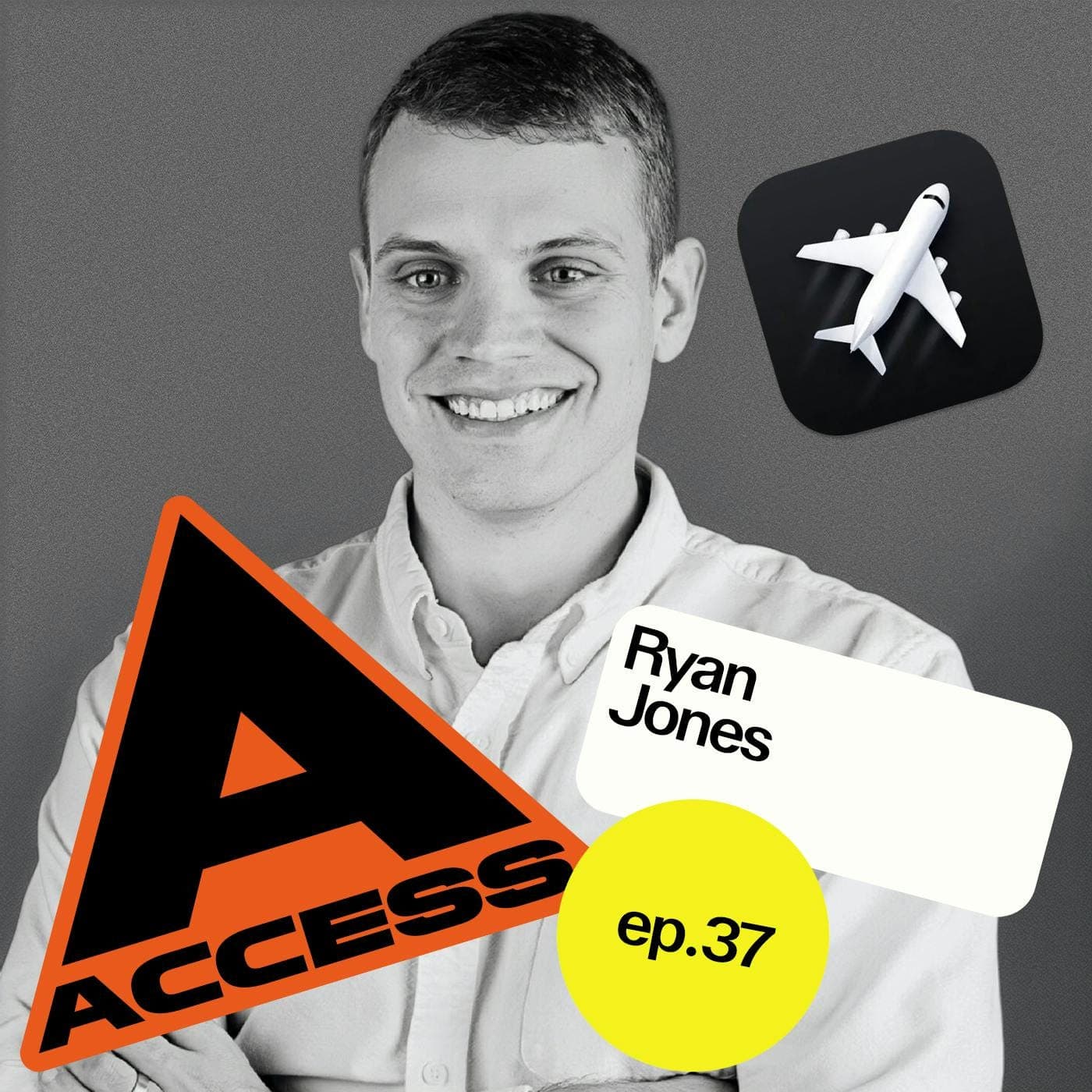
Ryan Jones, a long-time App Store indie developer, reacts to Apple’s WWDC updates—especially the new Siri—plus what it means for iOS design (Liquid Glass), on-device indexing/search, and “vibe coding”/AI-driven app building. He also discusses Flighty’s competitive edge (data accuracy), airline data sourcing challenges, and a new AI feature for airport connection guidance.
Guest backgrounds
Ryan Jones has been a top indie App Store developer for 13+ years, won Apple Design Awards, and built/ran apps under Apple’s App Store rules (including the 30% cut). He’s the founder of Flighty (flight tracking) and previously built Weatherline. Hosts: Ellis Hamburger (Meaning storytelling studio) and Alex Heath (Sources.News, AI race scoops).
Key claims
Apple’s Siri strategy is cohesive but limited by “entity” requirements (e.g., Flight entity missing), making developer opt-in harder than MCP/LLM approaches. Apple’s local/private indexing may take days and may not beat cloud assistants for speed. Liquid Glass rules are being “cleaned up,” with more flexible glass layering and tighter macOS corner radii.
Notable examples
Siri can index context from iMessages/photos and appears on any screen, but developers must donate content via defined entities (Ryan wants “flight” entities). Flighty’s advantage is accurate, airline-agnostic data; he cites United missing terminal info until Flighty had it. Flighty’s upcoming AI feature will generate step-by-step connection instructions (security/passport/e-gates) using terminal/gate, nationality, and seat-based timing.
Written by AI. May contain mistakes. Listen to the episode to check what was said.
Chapters
Tap a time to open that second in VORyan Jones on Indie App Development
0:34 to 1:00
Ryan shares his journey and experiences in indie app development.
“It can help you with practically anything on the web, like restoring a vintage motorcycle from a 50-page restoration block, or finally break down that long article you've had open for weeks.”
Ryan Jones on Indie App Development
2:15 to 3:16
Ryan shares his journey and experiences in indie app development.
“Been a whirlwind the last couple of days between meeting Apple people, Flighty fans, trying to figure out what all this means for Flighty and me as a user and the world at large with the AI wars, everything.”
Discussion on iOS Design Aesthetics
3:16 to 5:00
Delve into the current state of iOS design with Ryan's expert perspective.
“way that you've leveraged all the new iOS stuff over the years and won the Apple Design Award, what do you make of the current state of iOS design and the new liquid glass updates?”
Apple's Keynote Insights
5:00 to 6:15
Ryan discusses the key takeaways and themes from the latest Apple keynote.
“Yeah, but you're exactly right that we wanted to have a design aesthetic that is our own, but feels at home on iOS.”
Siri's New Developments
6:15 to 7:42
Explore the changes and new capabilities of Siri discussed by Ryan and Alex.
“And it was nice to see it on liquid glass.”
AI Strategy and App Monetization
7:42 to 9:07
Discuss the implications of Apple's AI strategy and monetization for developers.
“He was at the media reception the night before.”
Siri's Indexing and Developer Concerns
9:07 to 14:00
Understand the new entity model for Siri and its impact on developers.
“And I, I'm starting to think, tell me what you think of this, that their real key that they have that other people don't have is iMessages and photos.”
Exploring AI and Content Indexing
14:00 to 15:10
Learn how AI can improve content indexing beyond Apple's current methods.
“Because this whole concept of tell me exactly what you have and I'll then index it is not what these models don't need that.”
Apple's Search Challenges and Indexing Issues
15:10 to 17:08
Understand the historical challenges Apple faces in search functionality and indexing.
“So we've filed our necessary complaints and raised our hand and said, we would love people to be able to ask flight questions and fingers crossed for next year, I guess.”
Privacy vs. Performance in AI
17:08 to 19:40
Discuss the trade-offs between user privacy and the performance of AI applications.
“I mean, I get it from Apple's POV because they're the on-device privacy company.”
Show all 31 chapters
Flighty: An App That Transforms Travel
19:40 to 24:16
Discover how the Flighty app enhances travel experiences with superior data accuracy.
“And the two companies are kind of side by side going after the world instead of kind of head to head.”
The Airline Industry and Data Sharing
24:16 to 28:05
Examine the complexities of data sharing in the airline industry and its impact on apps.
“I will say I'm Was Delta the only good one?”
Navigating Flight Information Challenges
28:05 to 29:01
Learn about the complexities of obtaining accurate flight data from different sources.
“And it's very hard to know which one of those multiple inputs is the correct one.”
Navigating Flight Information Challenges
29:35 to 30:03
Learn about the complexities of obtaining accurate flight data from different sources.
“It can help you with practically anything on the web, like restoring a vintage motorcycle from a 50-page restoration block, or finally break down that long article you've had open for weeks.”
Expectations for iOS Features
30:03 to 31:05
Discussing new iOS features and their limitations for developers.
“I don't know if it's going to make it any easier to grab people's flights from the actual local mail app.”
App Store Innovations and AI Integration
31:05 to 33:16
Examining how the App Store is adapting to AI and user retention strategies.
“Well, there is one thing that I was looking through in the notes that I thought you might be able to use if you had any interest in it.”
Future of App Development and AI
33:16 to 35:53
Exploring the evolving relationship between app development and AI technologies.
“I think, in the Apple world about now, what do we do to re-embrace this kind of second technological wave that the apps can take advantage of?”
User Privacy and AI Memory Concerns
35:53 to 37:54
Investigating potential privacy issues with AI's ability to access personal data.
“So it is a very, I don't know where we're going.”
AI in Travel: Enhancing the Passenger Experience
37:54 to 42:00
Understanding how AI can simplify travel processes for users.
“And this is a theory I have too, because a big thing about the new Siri that people probably won't realize until they tried is it doesn't have memory.”
Airport Navigation App Features
42:00 to 44:34
Explore how an app simplifies airport navigation and reduces travel stress.
“And it tells you the exact steps of those kind of, what do I have to do in this connection world?”
Insights on the Future of App Development
44:34 to 47:55
Discuss the future of app development, emphasizing craft over mass production.
“So for 2026, I've got 39 flights, 40 ,000 miles, 14 airports, which means I'm...”
Advice for Aspiring App Developers
47:55 to 53:12
Learn about opportunities in app development and the importance of hands-on experience.
“I have a hard time believing that normal people are going to interact with AI through text.”
Reflections on the Interview
53:12 to 53:57
Reflect on the insights shared by Ryan and the potential of AI in app development.
“true fans apps from people who are only able to make something beautiful that they're passionate about for the first time.”
Reflections on the Interview
54:31 to 55:00
Reflect on the insights shared by Ryan and the potential of AI in app development.
“It can help you with practically anything on the web, like restoring a vintage motorcycle from a 50-page restoration block, or finally break down that long article you've had open for weeks.”
Post-Interview Discussion
55:00 to 56:00
Join a conversation reflecting on Ryan's contributions and the future of Flighty.
“As always, I consider him one of the forebearers of iOS design developer culture.”
Using AI in Flighty
56:00 to 56:36
Discussing how AI can enhance the Flighty app by handling large data efficiently.
“And that also are like really holding that idea that design is how it works so close to their mind.”
Addressable Market and Pain Points
56:36 to 57:22
Examining the target audience and pain points for the Flighty app in travel.
“But there's some good tagline opportunity, I think, for Flighty.”
Apple's Slow Approach to AI
57:22 to 58:02
Reflecting on Apple's cautious strategy regarding AI advancements.
“It's one of those rare but incredibly high stress, high leverage moments where if you have an amazing product that can solve it, it's worth a lot, even though those things don't happen that often for people.”
Marketing Strategies for Apple's AI
58:02 to 59:24
Speculating on potential marketing campaigns and storytelling for Apple's new AI features.
“Siegler does, about Apple waiting for the right time and then swooping in with the well-designed solution that is palatable to billions of people.”
The Need for Easier Automations
59:24 to 1:01:52
Discussing the importance of automations and shortcuts in Apple's ecosystem.
“where acknowledging that the product wasn't great actually is a huge step forward to rebuild that trust.”
Personal Use of AI Tools
1:01:52 to 1:04:14
Sharing personal experiences with AI tools and their impact on productivity.
“I mean, I'm not having the most success these days setting up MCP automations that are rock solid.”
Transcript
Automatic transcript. May contain errors.0:00Ellis:This episode is brought to you by Accenture. When your advertising operations fall out of sync, everything else follows. Spotify and Accenture are working together to reinvent the rhythm of ad sales, using automation, analytics, and smarter workflows to simplify campaign delivery and access better data across the business. The result? Less time spent on operations, more time connecting brands with the moments and fandoms that matter most. Learn more at Accenture.com slash Spotify. This episode is brought to you by Google Chrome. You think you know a browser, but Gemini and Chrome, that's new. It can help you with practically anything on the web, like restoring a vintage motorcycle from a 50-page restoration block, or finally break down that long article you've had open for weeks.
0:45Gemini and Chrome is here for it. Ready to make anything online make sense? There's no place like Chrome. Check responses set up required, compatibility and availability varies 18+.
0:59you've heard tim cook say it a million times they're not first they're best in this case they're two or three years behind they wish they were one year behind and that's historically where they are they're pitching this local and private thing i don't know if anyone would care or if it would change adoption versus chadgpt or claude or gemini if it was like we sent it to the cloud and you just have to trust apple like no one cares ryan jones has been one of the top indie
1:24Ellis:app developers in the App Store for more than 13 years. He's watched new design aesthetics come and go. I don't like it. I'm going to say it right now. I don't like it. Played by Apple's ever-changing rules. You expect for Cook, his App Store in particular, and that 30 % cut it can take. Sold beloved businesses and even won Apple Design Awards. Now he's building Flighty, one of Alex and my favorite apps for flight tracking. So who better to discuss Apple's latest updates from WWDC, the new Siri, and where vibe coding is actually headed.
1:55Alex Heath:Oh, is this a scoop for the show? This is a scoop.
1:57Ellis:All right. Access, right? God bless. I'm Ellis Hamburger, founder of Meaning, a storytelling studio for tech companies.
2:04Alex Heath:And I'm Alex Heath, founder of Sources.News, your home for scoops about the AI race.
2:09Ellis:Welcome to Access.
2:14Ellis:Ryan Jones, welcome to the show. How's it going? It's good. Been a whirlwind the last couple of days between meeting Apple people, Flighty fans, trying to figure out what all this means for Flighty and me as a user and the world at large with the AI wars, everything. Lots of thoughts.
2:33Alex Heath:It was good to see you, Ryan, at your dinner you do after WWDC every year. I feel like that's become the quiet power center of indie app development. It's always fun to pop into there. We're not supposed to talk about that, so you're banned right now. Okay. Okay. It's fine. It's fine. It's fine.
2:49Ellis:You've been blacklisted. I mean, I'm sure the guest list is pretty popping though, because you've been doing this for longer than pretty much anyone, I feel like at this point. That is weird. I was thinking walking around Dub Dub on Monday that I wouldn't say we're the old guard, but it is weird because I still feel like we're brand new, but this is year seven of flighty and I had weatherline for four years before that. So I guess I kind of am. It's crazy. So going back to your design aesthetic and the way that you've leveraged all the new iOS stuff over the years and won the Apple Design Award, what do you make of the current state of iOS design and the new liquid glass updates?
3:30Ellis:I mean, I assume you're one of those people who's like, we want to have our own point of view with the design of this product. Do we really want sliders letting people adjust everything? I feel like some designers in the space are probably saying, oh, that's like admitting that liquid glass actually isn't a correct idea. What do you make of all that and the new changes?
3:47Alex Heath:Yeah. iOS 27 just got it this week. Yeah. I think you nailed it, Ellis. This is a classic. Users ask for a slider. Users say, I want to figure out how much transparency you want, and you should not give it to them. They're not asking for what they want. They want you to make it better because they're not going to know which is the right choice to make. And you just introduce all kinds of complexities when you put in a slider like that. This is it's a it's a it's a whole design theory thing that would take a while to get into, but more or less the designers who are the experts who know how this decision of more transparent or less transparent plays out across all the different depths of the UI and the interfaces, how that actually matters.
4:31and when you give people a slider like that you're kind of in a way in a very short phrase you're showing that you didn't think it through entirely a year or two ago and figure out exactly how it all played out and you kind of got yourself in situations where you can't just pick one because it doesn't work across all the different depths of it so you have to let people pick and then they're going to run into scenarios where it's not great when you get into whatever or two forms deep with a close button on top of another close button that's also glass. Those kinds of things. Hardcore. Yeah, but you're exactly right that we wanted to have a design aesthetic that is our own, but feels at home on iOS.
5:16And we appreciate some of the refinements that they did. To start with the keynote a little bit, the first segment was 15 minutes of more or less, like, hey, we need to clean up some of this liquid glass stuff. I actually thought the whole keynote, to give like an overview point of view, when you think about it, kind of the whole thing was, we might have made some mistakes. Let's do a little bit of cleanup. Like on the liquid glass stuff, we need to clean the UI a little bit. We maybe went a little fast. So we have some bugs. So we need to do some bug cleanup. Maybe parental controls wasn't working super well.
5:55So let's do a little cleanup there. Uh, maybe Siri has whatever it is now, 12 years of broken promises. We need to totally revamp that. So I thought it was a pretty, I think humble was the word Gruber used last night on his show. And it's a spot on, like the whole thing was a pretty humble, Hey, we're going to do some cleanup across the board. And it was nice to see it on liquid glass. Cause we've been running into problems kind of introducing it. They had this rule last year to give an example of you weren't allowed to do glass on glass. so for example the tabs on the bottom of an app if you're going to make those in glass then in flighty you have a sheet or a card behind it with all the flight content and that they were like no that can't be glass you can't have glass on glass and this year they're like whatever just make it look good um so they've kind of loosened the reins on that and then they've done a lot of cleanup on mac os and then across kind of the edges of liquid glass where stuff gets blurred and you We can't even really tell which layer the button is on versus the content behind it.
6:56So there's been a lot of great cleanup in that area.
6:58Ellis:Literally the edges and corners they made an announcement of, which was pretty funny. And then some, of course, were saying that the corners actually weren't properly rounded. And every window on macOS now has the same tighter corner radius, ensuring greater consistency across all of your apps, even if they haven't been updated.
7:17Alex Heath:Ryan, we were both at Apple Park in Cupertino for the keynote. And I was noticing before you posted what you were going to look for. And you said a cohesive and thoughtful AI strategy where Apple will get its 30 % in the new Siri. How they're going to let apps monetize. How good is the LLM? And then any turnist impact. Did you feel the turn or not yet? Turn was a zero. It was zero. I mean, he was very much there. He was like taking photos. He was at the media reception the night before. but it was a it was the final cook show which you know i guess is uh to be expected but makes sense yeah what surprised you um you know relative to what you're expecting going in and yeah what did you make of the this overall story yeah this is kind of my uh channeling my alex reporter angle here like what am i looking for going into it it's helpful to kind of remind yourself because when you come out of it you just think about what was done and you don't really think about like wait a minute they didn't say anything about vibe coded apps that kind of stuff i was surprised by that i wasn't as much i think that's a thing that's so new that they don't really have their hands around it yet you know they they think slow they take six to 12 months to kind of think these things through and it's such a titanic of a ship if you put out a rule about any of that stuff you can't just later a year like you can fix liquid glass you can fix bugs you can't really change App Store rules six months later.
8:43That's just not being a good platform. Anyway, not to go into that too far, but I did think they had a good, cohesive AI strategy that plays to their advantages. You know, they're not a frontier model. They're not playing in the agentic world. And that's kind of what I would hope, kind of what I hoped to see from them. I want them to recognize the advantage we have is one button allows siri to index all the stuff on my phone instead of open chat and authenticate with gmail authenticate with g calendar authentic or those
9:24Ellis:are the same one but you know what i mean almost makes me want to go back to using normie apps like i did last year because siri will have access to all of it the thing that yeah this is kind of jumping into Alex's kind of world, but I've been thinking about how this is kind of where's the end state of this. And I, I'm starting to think, tell me what you think of this, that their real key that they have that other people don't have is iMessages and photos. That's the thing that they can index that nobody else can index. At least in the States. Yes, that's true. But same theory applies like if you just put put in whatsapp for the example um those so you're gonna have i message in photos if you use siri ai but these big companies like google facebook i know it's the same company but whatsapp instagram x those guys aren't gonna donate their content to siri ai to be indexed you think in a way you're gonna i was wondering about this
10:26Alex Heath:Because in my Siri briefing the other day, they were explaining how it works and it's opt-in to the index, right? And what we're describing for those who haven't seen it is the new Siri can appear on any screen and know the context of the screen. And it can do it in any app at a very basic level. It can understand text, just like raw text and images. It doesn't understand UI or interactive elements. The developer needs to offer that up to Siri to ingest. Apple told me, unless you know something different, that this index is private, personalized, on device, never goes up to Apple for training or any kind of like data mining.
11:04Alex Heath:And if that's the case, I actually think developers might, even the big ones, they may opt into this unless they really just want to strategically stick it to Apple. You don't think so, though? I mean, it's really hard for me to imagine Gmail saying, yeah, you can ask Siri to find your email. They want you to open Gemini or open Gmail and press Gemini inside of Gmail. Yeah, because they're charging the subscription. They'll eventually have ads in there. And it ties into everything for them.
11:35Ellis:It also just might be a big rebuild of how they even store data, right? I mean, I use Poke all the time to add things to my Notion pages. And I'm not sure how those are stored. But I doubt it's as straightforward as Apple's local notes database. on your phone or something like that yeah that is so one of the kind of um super nerd dialogues that's going on or after dub dub is they announced this intense and entity model so at a very simplistic level notion would donate is actually what the word they donate to siri say here's the text no way that's the word that's the word and it's actually makes sense because it's not a two-way connection really.
12:21And Apple doesn't really have to use it. So you're there because if you get like some spammy gross app that donating stuff, Apple's going to kind of ignore it. So it's kind of like here, use this if you want. It's interesting. They're always super careful about the words they use with that stuff.
12:36Alex Heath:What is the vibe with developers about this? I mean, do you think people will take a wait and see approach? Would you, are you going to let flighty, you know, hook into the index? I would love to. There is no flight entity. Oh, because they have this entity construct that Siri has to work with, that a developer has to offer up. They were using that word and I'm like, what the hell is an entity? Yeah, so imagine there's a horizontal layer at the bottom of all the apps. And then the next layer above that is Siri figuring out, here's everything I know about you. And it's going to tap into the apps below.
13:13and the way apple does it because it's extreme control and all those things is they defined let's say a hundred entities like okay if you have text tell us what text you have and we'll index it if you have photos tell us what photos you have and we'll have another agent index that if you have voice tell us what that is and we'll have someone index that they don't have a flights one so we can't say here's alex's flights so then when you go up a level above that to siri ai If Alex says, what flights do I have coming up? It knows about the ones in Apple first party stuff, but no developers have been able to donate up into the context about you, your flights.
13:51And the kind of the, you asked about the developer thoughts. I think this is an example where Siri AI in a way is like GPT-3, GPT-3.5. Because this whole concept of tell me exactly what you have and I'll then index it is not what these models don't need that. Just connect it. They figure all that stuff out.
14:14Alex Heath:Yeah. So they're in a kind of it's kind of a couple years old of you have to tell me what all the content is and then we'll index it versus all developers are like. Yeah, you could do a flighty MCP node and I could use Claude to control everything already. I mean, I don't think you do that currently. Right. But you could. and it would be way more useful to the end user than what Apple's done. Yeah, and an example for the audience, like APIs are very deterministic. You say, here's a flight number, or I'm going to give you a flight number, here's the flight number. MCP is not like that. It's like, here's a bunch of content, you figure out what it is.
14:48And the beauty there is the app that's donating it, to use Alice's new favorite word, can change the content over time and the other person that's reading it doesn't have to say, oh my God, we didn't expect a flight because this AI is so good, it just recognizes it. So it's way more fluid and faster evolving, but that's just not the way Siri is. It has these deterministic 100 things and flights aren't one of them. So we've filed our necessary complaints and raised our hand and said, we would love people to be able to ask flight questions and fingers crossed for next year, I guess.
15:21Ellis:Can you also help me understand, like, is this actually the holy grail for search? So I think, you know, a company like Apple, in my view, has always been historically awful at search, whether it's with mail, it's with messages, notes especially. That's the reason I don't use the notes app anymore. It's because I can't get through anything in search. And, you know, AI isn't very good at that historically. Like they use the Retrieve Logmented, what is it, Alex? The RAG? The Retrieve Logmented Generation. I mean, is this actually like a new way to make your entire phone searchable in a better way?
16:01Ellis:Like, is that new here? Or is it just kind of the same as we've had, just giving it more and more stuff? I am with you 100%. And then now Alex read my tweet of stuff I'm watching for. For the last 10 years, I've written on there search that actually freaking works and cellular fallback that actually works. And then the one year I didn't write it because I've given up. They, in theory, did both. You're totally right. I have no idea if they've actually executed it. It was in the section of the keynote that was like, Hey, stuff, here's all the stuff that never worked, that we're going to make it work.
16:38And search was one of them. And they kept hammering it in a way you could tell in their tone that it was like, we actually make it work. We promise. And I think I've downloaded iOS 27. Probably you guys have too. And it's doing this indexing thing. And I'm on day three of indexing and it is still indexing.
16:55Alex Heath:So I haven't done it yet. You're still indexing. My impression is that they're like, we're going to build a huge local index. Yeah, here's mine still going. A huge local index and actually make this stuff good. I just don't get this approach. I mean, I get it from Apple's POV because they're the on-device privacy company. And they clearly think that this is going to be a strategic differentiation for them with where AI is going. but it's just, it's very cumbersome. I mean, the fact that it's taking days to index your phone when I'm doing a currently right now, hour plus long over 70 step multi-turn prompts with using five MCPs and Chrome use on Fable, like that's where the world is right now.
17:41Alex Heath:And Apple's taking three days to privately index your phone. I just, it feels like there's a big disconnect, you know? Yeah, that's where the nerd world is right now. I mean, I'm with you. But you've heard Tim Cook say it a million times. They're not first, they're best. They're never, they're always, in this case, they're two or three years behind. They wish they were one year behind and that's historically where they are. There's a lot of interesting strategy angles we could take here. One is I totally agree with you that they're pitching this local and private thing. I don't know if anyone would care or if it would change adoption versus ChatGPT or Claude or Gemini, if it was like we sent it to the cloud and you just have to trust Apple.
18:26Like no one cares.
18:27Alex Heath:I don't think anyone cares. And I brought this up to Apple execs I met with Monday. And I think it's a hunch they have that people will care, that there will be a Cambridge Analytica moment for AI. That could be. I mean, you're seeing some of the lawsuits about ChatGPT already, and I think they don't like that. there was a lot of subtle shade, I think, at ChatGPT. And that partnership has clearly gone south for them. And Ellis and I were texting about how it really reminds us of the Facebook versus Apple narrative around ATT, the ad tracking stuff. And if you think way back, for the real nerds out there who remember, Apple did a deep product partnership with Facebook and integration in the early days.
19:07Alex Heath:Mark Zuckerberg used to say that Steve Jobs was a mentor. and it was when social was early and it was before ads took off and all this stuff. And then we saw how that panned out, right? And now, you know, around 2019, Apple and Facebook became like the mortal enemies of big tech and Apple tried to really leverage its privacy stance to kneecap Facebook. And I feel like that's happening with OpenAI right now, the exact same arc. I think it's an underlying reason, like subconscious reason and a conscious reason of why they're doing so much partnerships with Google. They've just always done that. And the two companies are kind of side by side going after the world instead of kind of head to head.
19:47And they just complement each other well. Is that exact reason?
19:51Alex Heath:Flighty is an incredible app. I just want to say up top, I don't want to glaze you, but it is probably top three apps for me in terms of value in my life. I fly way too much. And for those who don't know Flighty, go download it and play with it as we're talking. Because man. Yeah.
Read the full transcript
20:08Ellis:Is that something your wife says, Alex? Alex, I think you've been a bit too flighty lately. This is the third time up to San Francisco. Ellis is the naming guy. I was worried about that, man. My initial spreadsheet of all the names, flighty was like, that's a great name, but is it going to get attached too much to the other word? Oh, no, it's great. Flighty's perfect. I mean, that's kind of the ideal in my mind, especially if you're in a category that isn't mega crowded. You have a bit more room to experiment. Even with headlines that I write every day, so often trying to take a familiar phrase and twist it a little bit or a familiar word and twist it.
20:47Ellis:And what that does is it borrows the memories and feelings that people already have. The name already sounds familiar, but a little bit different versus something that they have to hear completely brand new and build new associations with. So yeah, I think Flighty is great. I mean, And the bigger question with names like that, do you have any clones that are flightier or flights that are accidentally beating you in SEO? We had the first flightier and he literally just stuck an R at the end of flighty. It was just T-Y-R, which is like the easiest trademark claim of all time. So he got disappeared pretty quick.
21:25Alex Heath:No one's tried to Vibeco to flighty competitor yet? They're trying. Yeah, it started. I mean, as a product founder, it's so depressing because I really try to contribute something new. Whenever we work on a certain feature, we look at what's out there and then bring our own thoughts to it and try to contribute something new. And it stinks to see people just straight rip it off and not add anything or try to bring something new to it. So I've kind of distanced myself from it. We got a good IP lawyer and I told him, don't go after people that are just having fun. But if someone's getting serious and they're copying us, just make it go away and don't even show me because it's depressing.
22:05Ellis:I think it's nice. You have a user base of people who deeply care about quality and accuracy, who cannot miss their business flight to an elite dinner, which, as we've discussed, is Alex twice a week. So, yeah, there's that as well.
22:20Alex Heath:Well, and correct me if I'm wrong, but I mean, the flighty UI is obviously, you know, great. You're an Apple Design Award winner. But the real edge you have is the data. Is that fair to say? I think so. I think it is designed too, though. It's the first thing people say. I guess that's credit to the data being great. If the data wasn't great, that would be the first thing they would say. They would say it's pretty, but it's wrong. When we were talking about initially starting the company, I was pleasantly surprised at how many people said, there's a couple apps out there that do this, but they're just so hard to use.
22:53Because I knew that we could bring a fresh perspective to that and like put in the work to make it really user friendly. And I didn't know if that was the thing people just said or would actually respect and understand when they used it. But I think so many people have experience with airline apps and that's what they kind of benchmark it against. That when they use it and, you know, you don't have to hunt around and guess where features are, that it's kind of a breath of fresh air. But that along with the data has to be great. And yeah, that's the core kind of harder part to copy, which, you know, I guess someone could do it over time, but it's going to take them a few years.
23:33And we're starting to build real expertise and advantage in that a lot with the AI stuff we can do these days. And that's the key thing that we see with vibe-coded apps that pop up. People will say, Vladdy's so expensive, someone's going to vibe-code this. And then it pops up and it's just so inaccurate. just bad. And we see people constantly be like, we'll see a little app pop up. Someone they'll tweet about how they're going to take on flighty. Then a week or two later, the person's like, wow, I had no idea. I am out.
24:07Ellis:And you're like, yeah, this is this happens every six months for the last six years. It does. You're right.
24:15Alex Heath:I mean, airline apps generally do suck. I will say I'm Was Delta the only good one? No. Oh, Ellis. You're two years behind, man. Yeah. Oh, shit. We're past Delta, man. Delta is very mid-2010s now. Okay, don't mind me. United has really upped its game with its app. I'm a United loyalist. I do the Burbank SFO flight weekly. And I will say I'm impressed with what they've done. It's the most full-featured airline app. but you know last night was a great example i was coming home late from sf back to la and it still didn't have like the terminal that i'm supposed to go at you know at sfo it's a little confusing i mean you can get between them you can walk between them but if you have the uber drop drop off it's much easier to just go directly to the right terminal and i'm looking in the app everywhere on the boarding pass everything and it has the the gate hadn't been assigned yet and it didn't have the terminal and i was it was like an hour maybe a little bit above an hour before the flight.
25:13Alex Heath:And I was just like, man, why am I even looking at this? I got to go to Flighty. Of course, Flighty had it. So you still have an edge, even on United. Good to hear. Yeah. I never would have thought I would have lost a lot of money if you told me seven or eight years ago that our biggest competition would be United. I would have. That'd be like, absolutely not. They've got the live widgets. They've got activity stuff. I mean, they're really embracing all the iOS stuff in a way that's surprising. Yeah, a little business insight. Scott Kirby said, he's the United CEO, he said on Stratechery that they spent around, this is just rough, like$100 million a year for the last five or six years to get their stack right in order to make the app great.
25:53So that's kind of an insight into.
25:56Alex Heath:They could just buy you for$100 million? We talked to them. They're smart. He made comments about buying us publicly. Oh, he did? Yeah. He said it on Stratech. He said, we should just buy Flighty and just set those guys up in an office and just have them tell us what to do. Let them keep running Flighty and just tell us what to do. But the magic of Flighty is that you're airline agnostic, right? So that would break that. You'd be going in-house. It's like OpenAI buying TBPN. Shout out to John and Jordy. I like this guy. I was just talking about yesterday. Good job on the podcast. But you know the analogy.
26:32Yes, I do. And people, that's the first thought that they have with Flighty. They're like, if the airlines try to buy you and if you think about it for a little bit it doesn't make any sense um it's not the right fit um yeah it's it's a good person to work with maybe to partner with um the good news is everybody in this kind of flight tracking game is starting to get their data in better order and understand that it's not that great to just silo like let's just start sharing data and see if we can get this stuff to be more accurate so from a partnership it makes a lot more sense for airlines.
27:03Ellis:I guess that's part of it. A lot of them who haven't traditionally revealed their data, even to like Google flights, they're just trying to retain any semblance of differentiation they can, right? And I guess you've seen firsthand kind of like who is and who isn't sharing their data over time. The best way I describe it is it's a spider web. People think you just subscribe to API that's like, let's get all the flight information. And that is not how it works there's multiple intermediaries some of them have this some of them have that nobody has this four people have that and the thing that it causes at a very high level is there's holes where nobody has but then it's kind of almost a harder technical problem when multiple people have one thing like let's take alex's flight yesterday someone was probably showing us one terminal another data source was showing us another terminal one was showing no gate and one was showing another gate.
27:56And he knows the answer because he's in the airport. He can go walk and find the answer. But as a server or as a cloud service, we have to figure out which one is the truth. And it's very hard to know which one of those multiple inputs is the correct one.
28:10Ellis:So this is why your balance sheet has that strange 5 ,000 interns line item on it that are on the tarmac at every terminal around the world. I mean, it is silly when you're at the airport and you could see the data in front of you, but not on your phone. Some of these old wires just don't seem to be fully connected yet. Yeah. And the weird thing that you're doing in your brain and you don't even notice it, or you don't even really know is people will go look on Google flights and then they'll go look in the United app and then they'll go look in flighty and then they'll ask chat GPT or whatever people do.
28:43And then you find out, you find the one that's accurate. And then you think like, oh, why don't the others have this? It's like, well, that's the problem I just described. We don't know that's the one that's accurate. Everyone's telling us different things and figuring out which one's the one that's actually accurate is the hard part.
29:01Ellis:This episode is brought to you by Accenture. When your advertising operations fall out of sync, everything else follows. Spotify and Accenture are working together to reinvent the rhythm of ad sales, using automation, analytics, and smarter workflows to simplify campaign delivery and access better data across the business. The result? Less time spent on operations, more time connecting brands with the moments and fandoms that matter most. Learn more at Accenture.com slash Spotify. This episode is brought to you by Google Chrome. You think you know a browser, but Gemini and Chrome? That's new. It can help you with practically anything on the web, like restoring a vintage motorcycle from a 50-page restoration block, or finally break down that long article you've had open for weeks.
29:46Gemini and Chrome is here for it. Ready to make anything online make sense? There's no place like Chrome. Check responses set up required. Compatibility and availability varies 18+.
30:02Ellis:Well, so is there anything in particular you're looking forward to using from the new iOS? I don't know if it's going to make it any easier to grab people's flights from the actual local mail app. I feel like you do that through Gmail right now, which is one of my favorite features. Anything else you're excited to use? To be honest, because that flight entity thing is missing, it's extremely limited. It's really tough.
30:28Alex Heath:That is wild to me that you have to petition.
30:30Ellis:All right, change.org. All our listeners add the flight entity to the iOS 27.
30:36Alex Heath:The fact that Ryan has to do this, that he has to petition Apple to create a flight, quote unquote, entity to let Siri look at it when like MCP exists is just so wild to me. It's a little old school. I would not, Matt. I would not be surprised at all if I was 28 is we don't have to do that anymore. It's so easy. You just donate the contents of X, Y and Z. A developer marks what's private and what can be donated. And you don't have to do the entity thing. We just read it and we made Apple Intelligence so smart and now it knows what a flight number is. It's coming.
31:12Ellis:We have reinvented folders. Pardon? 11. Well, there is one thing that I was looking through in the notes that I thought you might be able to use if you had any interest in it. Not that I'm recommending it at all. But I saw that developers have a new way to reduce subscription cancellations through retention messaging. Did you catch this? I wonder what that actually looks like. I did. And we use it already. We were one of the chosen few who got to use it over the last year. It was kind of introduced last year and as like a opt-in beta thing. And we've had it running for about a month now. I can't say that I've seen any meaningful impact or change.
31:55But what Ellis is talking about for everyone is when you press, everyone knows where the manage subscription screen is now in your app store. And when you press that button, developers now have, there's pretty limited as usual for the Apple. Like you can have, I think it's 500 characters and one image. And you can say, are you sure you want to cancel this? You're not going to get delay notifications from Flighty anymore. And calendar sync is no longer going to work. And then you can offer like, no, I don't want to cancel anymore. Or you should try the monthly planned because it's lower priced, that kind of stuff.
32:33Yeah, what I guess the larger thing here that has been a kind of an undercurrent that may be interesting for you guys is there's, it seems like there's excitement and re-energizing at the app store level of what can we do to kind of embrace the fact that AI is happening a lot on the phone and is happening a lot in apps. Like two years ago, I had this worry and all the app developers were like, uh-oh, we're now the old thing. Everything's going to be in the cloud and AI and it may pan out that way still. But I don't think it was a foregone conclusion that all this innovation would be vibe-coded apps, vibe-coded apps.
33:10And what can we do in apps now? Now apps can build faster. So they're energized, I think, in the Apple world about now, what do we do to re-embrace this kind of second technological wave that the apps can take advantage of?
33:24Alex Heath:You think they will embrace that? I feel like I haven't gotten a good read of how they actually feel about all this. I think they will. I think it'll be in an Apple way. It'll be with safety first. It'll be a year or two behind. Two years from now, they'll have some sort of agent construct. Maybe the app store gets a little more modern. You know, it's a little stale in terms of nobody really goes there to look for new apps anymore. It's not a place of discovery. But if there's so many back in 10 years ago, there were so many apps and you were like, oh, my God, look at this ability that I didn't even know I could have light flight status in my pocket.
34:03And so people would kind of go surf the app store. And it's borderline similar to that now where there's just stuff you didn't even know was possible. You know, we have TikTok and we have Instagram and there's a lot of discovery that happens off of the app store. But I think it's I think it's not crazy to imagine people surfing the app store again.
34:21Ellis:I think it's also a question of, do we need apps for a lot of these things that people are vibe coding anyway? Yeah, what do you guys think? It's a very interesting question. I don't know. Well, I think the alternative is not no app, but it's just a workflow or an automation that you set up through something like Poke or Claude or even Apple's redesigned shortcuts product. And I think, you know, when I worked with Wabi, one of the reasons I really enjoyed working with Eugenia, she really took this high level view that like, these aren't the same as the apps that we'd be using in the app store in the past.
34:57Ellis:These are almost like containers for prompts that all share a design system. So you don't have to care about that. And they just work and help you. I'm kind of expecting that that workflow contract pans out a little bit like the API and MCP stuff we were talking about. Right now, I feel like apps and the vibe coding tools, you have to be a certain technical proficiency to go build this workflow. Or you have to have the intent beforehand is maybe a better way to say it to like, oh, hey, shortcuts, build me this thing that whatever makes a reminder and sends me directions whenever I want to go to the grocery store, whatever it is.
35:35I think that stuff's going to get, in theory, five years from now when we're sitting here, it's so smart that it knows Ellis's partner just mentioned go buy milk. He doesn't have to have a little thing he opens on his app that says go buy milk, do the reminder, whatever. It just does it. So it is a very, I don't know where we're going. How'd you know my favorite use case? I don't know where we're going and I don't know if people will accept it in terms of privacy because things are starting to get weird. I don't know if anybody knows where it's headed.
36:10Ellis:Here's a good thing with the entity approach, if any, is that it at least helps users understand what things they can even touch or point to. And all those entities, I think, directly appear in the shortcuts app now, right? And so it's clear the things you could do and the things you can't do, which I do think is a legitimate problem for everyday people trying to create these workflows. A lot of times the AIs will say that they can do it. Um, with that said, we got to get flights in there, obviously. To go back to what Alex said a minute ago, like Alex said a few minutes ago that there might be a Cambridge Analytica moment.
36:45Um, Joanna Stern was talking about, I guess she got off the wait list and is able to use it. And she was talking about how she, before the talk show last night, she said, Hey, I have 30 minutes in San Jose. What should I do? What's interesting in that it's around here. and it found in her voicemails from a couple days ago her uncle said something about hey call me back for xyz and the siri i said you could you know go walk around this part because you'd like to take a walk and you could call your uncle back because you haven't called him back yet and i think that was kind of like whoa how did it know that and then it's got a little bread Chrome so you can figure out where it knows that.
37:29But I think we're going to have a moment of, oh my gosh, like it knows everything. And there's a lot of messages and photos are as private, I think, as it gets. Voicemails maybe even more so. I didn't even think about that. I think there's going to be a lot of stuff that you don't even really think or realize is on your phone that now this AI has access to.
37:54Alex Heath:And this is a theory I have too, because a big thing about the new Siri that people probably won't realize until they tried is it doesn't have memory. So there's no constantly updating memory file of you. Each chat is like starting over, which to me feels archaic. Like it's a non-starter for me. Like I just won't use it because Claude and chat knows so much about me. But I guess to people who maybe haven't tried these assistants, it's fine. But the The vibe I got at Apple and talking to folks was that they're very worried about creating a memory file of people.
38:28Ellis:A screenshottable memory file.
38:30Alex Heath:Well, I mean, you would think they'd be in a position to do it right, right? They've even got the secure enclave. They do everything on device. They're taking days to index your phone already. Why not have a ultra private secure enclave stored memory file of you? And it could be the most valuable memory file because it sees everything on your phone. But yeah, I think they're very tiptoeing into all this. And I don't know if they'll ever do it. I mean, they don't really say much when you ask about the future in these briefings, but they wouldn't commit to anything. From a zoomed out point of view, it's what you would expect from Apple.
39:05It's just really hard to know if three, four years from now, they're going to add it and we're all going to be saying, why didn't they add that three years ago? This is crazy. See, everything's just moving so fast that I think from a big corporate point of view, it does make sense to go slow. I would say the world has kind of proven that we need memory. Like that's what, two, three years old now at this point? It's kind of table stakes.
39:27Ellis:Is there any particular way that your team has codified or thinks about using AI in the right way? So we've done three or four things behind the scenes now that use it. and we have our first kind of user-facing feature coming out at the end of the month that's largely or fully AI built, or sorry, AI feature. You know, we're super product focused, super user focused. We don't necessarily, sometimes you hear people saying, take the, don't worry about what the technology can do, just build features and then add the technology into it. I think that's a little - Solve problems first. It's a little bit naive.
40:07Like you kind of have to understand you have this new tool set. Like I used to have a hammer and now I have a jackhammer. Like I can do different things with that now. And so you kind of got to have it in the back of your head. So we've built that kind of skill set over the last two years. And it is a completely different kind of way of thinking. So I'll give the feature that's coming in a month as an example, just to kind of land it for people. Oh, is this a scoop for the show? This is a scoop. All right. Yeah.
40:37Alex Heath:We'll take it. Access, right? Yeah. God bless. So when you land, let's say you're making an international connection. And sometimes you're like, I don't know, am I getting my bag beforehand? Am I going through security? Am I doing passport control? Am I doing it at the final destination? Did I do it beforehand? All of those steps. Am I riding a train? Can I do security here? All of those steps during a connection, which is a very high stress point for a lot of travelers. previously if we wanted to make a feature that would help users get through those steps it would be i mean i don't even know how you do it you'd make a huge matrix of every single terminal at every single airport for every single nationality for every single final destination because those are the things that go into like ellis is a u.s citizen so he does different steps when he comes into the u.s but he does different steps if he goes to china as a u.s citizen so there's infinity variance to these things.
41:34And it would have never been, we would have never even approached the problem of let's try to tackle a connection guide when someone lands like that. But this is right up the alley of what AI can do. So we've kind of built the harness that goes on a model of what terminal and gate are you coming into? What terminal and gate are you going out of then what is your passport nationalities and you can input multiple if you want and then what's your final destination because that determines what kind of security you have to go through and then when people land in an airport we give them it's not we don't think people want turn by turn directions and you know you don't want to like turn by turn map you just want the big landmark stuff you've got to do so it'll say for example walk five minutes to the tram take it going south two stops, go through security, then go through passport, don't do the bag recheck, and then go back to terminal three.
42:33And it tells you the exact steps of those kind of, what do I have to do in this connection world? And then gives you the typical time that it's going to take a user to go through those steps.
42:42Ellis:Alex is under your spell right now. I can see
42:44Alex Heath:his face. Ryan, you are going to make this grease trip I have in July. Is this launching by mid July? For you, sure. Okay. Please, because I am terrified of what looks to be travel airport nightmare in Greece right now. The EU has instituted a new kind of passport control system. Yeah, yeah, yeah. They have to do a biometric capture phase, and then you have to go back into the lines. I mean, you look on TikTok, it's like hours and hours of lines. I'm borderline considering just paying for one of these VIP services to have someone escort us through all this. Uh, so I may end up doing that, but this sounds awesome and is going to help me not feel stressed about my Greece trip.
43:25Alex Heath:Uh, so thank you. Yes. Yeah. It's got some cool, you know, it knows, um, again, in the nationality context in the, in the, uh, in Europe, they have these e-gates, which is a faster way to process and only certain nationalities can do the e-gates. So it knows that, um, what other cool stuff does it do? If you put in your seat number, we try to, we have the model We'll figure out how long it's going to take you to get off the plane. So Alex obviously will be in 1A, and it'll take him a second to get off. Of course. Me and Ellis will be in 32. Especially on United.
43:53Ellis:Yeah. Yeah, I'm down in steerage. It's going to be another 11, 12 minutes for sure. Yeah. Alex is already sipping his latte. And I have a child that is like a monkey on each of my feet. So that also adds a 21.6 % increase in transit time. Yeah, we'll have to teach the model about your children. That's actually funny. You could ask that in onboarding. Yeah. This will make our predictions a lot more accurate. Just add 10 minutes to everything.
44:25Alex Heath:That's very cool. This has made me realize that I want to know what our flighty passports are like for the year. Ryan, how much have you been flying this year? I want to know if I have you beat. Oh, you do. I know I have LSB. I'll check mine as well. So for 2026, I've got 39 flights, 40 ,000 miles, 14 airports, which means I'm... Dude, I'm already about to surpass all 2026. You just go to the same airport. It's my word. I only have 15 ,000 miles at 12 airports. You're just going back and forth between SF and... I do a lot of SF, but I've had a couple long hauls, and I'm going to have two long hauls in the next month.
45:04This is the story of a founder. all my passport is screwed up because a user will send in a like oh this is not working correctly with this flight and i add it and i look at it and i want to look at it myself so my passport and my flighty is just an absolute wreck the friend view you have now because i used to add
45:22Alex Heath:my friends once to track them or like my wife if she was traveling without me and the friend view now is is amazing because you can see people's flights without adding it um but yeah i mean i I was also thinking, is that an opportunity for you to create more of a social experience around travel? Because you have this... Flighty for moms.
45:40Ellis:You have... They pay$1 ,000 a month for this to know when their kid's flight is arriving. Yeah. There's... This social aspect is a thing that we have internal debates about on the team. It's kind of, I guess, it's kind of like our... We'd be very... we're very careful about it kind of like apple is with safety and trust stuff i'm kind of the one making us go a little slower the other two guys are like let's do more let's do more um so we try to find a balance between let's not do a leaderboard of like who can fly around the world the fastest the most versus it is interesting to know kind of what your friends are up to so i think you'll see us go a little further in that direction but we don't want to go the full like you're ranked number 12 in the world kind of thing.
46:30It's just not, I don't think it's super long-term interesting.
46:34Alex Heath:Maybe we could land it here. Land. I didn't even plan that. Not funny. Okay. Thanks, Ellis. Ryan, you, to me, exemplify this era of indie app development that felt like the golden era where you had Weatherline before this, sold it. You've had Flighty for seven plus years, you've got a team. It seems like the business is going well. You really think about the craft and the design and you focus on a platform, right? And we were talking earlier about the other developers we all know in this community that have made great careers on this. And I've been thinking about the future of development and app development with VIDE coding, what we've been talking about with stuff like what Wabi represents, but also just lovable, all these tools, Cloud Code.
47:20Alex Heath:And the idea that, as Patrick Coulson, I think said, like software is going to become like pizza, right? Like, like made on demand and infinitely personal personalized. Um, so if you buy that vision, which I don't know if I do fully, I think craft will always matter and always differentiate, but there will be this explosion, this Cambrian explosion of people creating their own software. How are you thinking about this kind of amazing career you've had in the next 10 years? And if you had, you know, someone you were mentoring, who was just coming up and trying to figure out, can they be the next flighty?
47:50Alex Heath:Can they be the next weatherline what advice would you give them when you look out at what's happening with with vibe coding oh man there's a lot there those are good those are good questions that keep me awake at night um i'm not totally bought into that and i try to be really careful that i'm not like just speaking my own book or whatever the correct analogy is for like in my own oh apps are the most important thing in the world i'm not totally sold on this ui is going to be created on the fly thing I think if anything, this is tapping into Ellis's world, if anything, it'll just get completely skipped over and everything will become voice or audio.
48:30I have a hard time believing that normal people are going to interact with AI through text. I think nerds like us are good with typing a lot and reading a lot. But if you just look at the numbers of TikTok and YouTube, versus Twitter, people aren't text first, their voice, video. It's the native things that you can see and hear. So if anything, I could see a world where we kind of skip over this. But I guess that also plays into the you could generate UI on the fly thing. People instead of one of the problems I had yesterday with the keynote was, or two days ago, there was a lot of just text and text and text.
49:22These answers that Siri AI was giving were just mountains of text. There was no images. They weren't even doing bulleted lists. They weren't even doing tables. It was just paragraphs after paragraph. And I don't think that's what a normal person wants to interact with. um so back to the theory here i think there's a chance that there's a little bit of that generate generative ui that happens but my guess is that's probably a stepping stone to whatever the next paradigm is um and in terms of the next generation of apps like i said a minute ago i kind of thought two years ago oh my gosh we're all this ai is going to happen in the cloud because you need everything to be processing on servers.
50:07You need the servers to be crunching the information. So we need Flighty to be this MCP callable thing that's in the cloud so that someone's Gemini can tap into it and talk to it constantly. And at the moment, it's not really going that direction. Apps are kind of hotter than they've ever been. So I don't know if I have a... I guess I'm wise enough now to not make a prediction that is ill-informed. I don't know if anybody knows where this stuff goes. I think, Alex, I've heard you talk about that. We just don't know. In hindsight, we'll look back and we'll say, oh my gosh, how did we not figure this out?
50:46But nobody really knows. But in terms of new people coming up, I think we're in a fortunate position that at the DubDub stuff, people will see my flighty shirt and younger developers will come up and say, oh my gosh. take selfies and stuff like that. And it's just super surreal, first of all, and flattering. And then they'll ask me similar type questions. And I think the advantage, the thing that I would tell them is nobody knows, but this is 100 % a real wave and a real platform shift. It's not the crypto thing that was kind of a head fake. It's not whatever was before that, that I can't remember that all the VCs told us was going to take over the world.
51:30like this is a real one get on the cutting edge understand what's going on play with tools don't just sit there and read about it go do stuff you have to be creating in order to understand how this stuff actually impacts and there's not that many people that are willing to put in that work and do it there's a lot of people willing to sit on the couch and watch tiktoks about it and and get informed on it and kind of think about it there's not that many people that are willing to get nerdy about it and get their hands dirty and try to kind of push us forward. And, you know, not everybody, we don't all have to be whatever Boris, we don't all have to be like the smartest PhDs in the world at Anthropic and Claude, like there's plenty of, or Anthropic and OpenAI, there's plenty of niche, small applications.
52:19And I do think that that is a thing that, I don't know long term what the format of it is, but I do think craft niche subscriptions, there's never going to be a scenario where these big models can do as much as flighty can do with flights. And there's always going to be a world where there's people that care a lot about flights. So if you understand what these tools can do and you understand the tool set, and then you find your niche or your people that care more deeply about it than everyone else, you can put those two things together. No matter if the format is apps or MCP or voice, audio, whatever that is, that's where I'm at with it.
53:05Ellis:That's almost what I'm more excited about is not necessarily 1 billion vibe-coded apps that are all kind of messy, but a million, a thousand true fans apps from people who are only able to make something beautiful that they're passionate about for the first time. You know what I'm saying? And I mean, it's not like you need to generate AI for every single use case on earth when there really aren't that many use cases, you know, in an average person's life.
53:35Alex Heath:Ryan, we really appreciate your time. Great to recap DubDub and hear about where Flighty's headed. And thanks for coming on the show. It's great.
53:43Ellis:Yeah. Thanks, Ryan. Good to see you guys. Thank you for having me. And that's it for this week's interview. Stay tuned after the break for Alex and my reactions.
53:57Ellis:This episode is brought to you by Accenture. When your advertising operations fall out of sync, everything else follows. Spotify and Accenture are working together to reinvent the rhythm of ad sales, using automation, analytics, and smarter workflows to simplify campaign delivery and access better data across the business. The result? Less time spent on operations, more time connecting brands with the moments and fandoms that matter most. Learn more at Accenture.com slash Spotify. This episode is brought to you by Google Chrome. You think you know a browser, but Gemini and Chrome? That's new. It can help you with practically anything on the web, like restoring a vintage motorcycle from a 50-page restoration block, or finally break down that long article you've had open for weeks.
54:42Gemini and Chrome is here for it. Ready to make anything online make sense? There's no place like Chrome. Check responses set up required. Compatibility and availability varies 18+.
54:57Alex Heath:All right, Ellis. Good to chat with Ryan about all things Apple. As always, I consider him one of the forebearers of iOS design developer culture. And yeah, I felt really great to have him this week of all weeks with WWDC.
55:16Ellis:Yeah, I mean, even going back to when I was a reporter, I mean, seeing him on Twitter in those early days, but we never really made the connection. But he always seemed like one of those guys who was just very smart and savvy and cared about the right things. And yeah, we didn't really, you didn't get to ask your favorite question on the show, I guess, because it hasn't happened yet. But I will be working with Ryan and his team on some story stuff over the coming months. And I'm just really looking forward to it even more now. I mean, he really is a mensch and seems to be thinking about things in all the right ways.
55:48Ellis:And, you know, I mean, there just aren't that many like business operators I feel like you run into in the startup world that don't need to make a billion dollars to seem like they're impacting the world in a good way. And that also are like really holding that idea that design is how it works so close to their mind. So yeah, nice to see how he's thinking about using AI, not just to add a chat bot to Flighty, but to actually make sense of a billion lines of information and make some connections. And as he said, it's right up AI's alley. And I think that's really what needs to happen next for AI to appropriately come to consumers in a good way.
56:29Alex Heath:And I think we landed on that you should not change the name. The name is good. We'll stick with Flighty.
56:34Ellis:Yeah, great name. Great name.
56:36Alex Heath:But there's some good tagline opportunity, I think, for Flighty.
56:40Ellis:Well, it's interesting, too. I mean, it all depends what the tagline needs to do. I think he has the luxury of having, I would assume, a somewhat wealthy, somewhat savvy travel pro audience like yourself that really cares about efficiency, the value of service, when it's good, when it's bad. And I wonder how much he's trying to grow his addressable market and to whom. Because I do think the pain points he brought up, especially around international transfers, are just about as painful of a consumer pain point as you could ever find that's solvable by the world of software.
57:22Alex Heath:Yeah. It's one of those rare but incredibly high stress, high leverage moments where if you have an amazing product that can solve it, it's worth a lot, even though those things don't happen that often for people. And it's cool that he's thinking more about that. What did you think about the Apple stuff this week? We haven't actually really gotten to catch up on it. I mean, I was there. Ryan and I were talking about being there. But I mean, I agree with him. Like, you can kind of see how Apple's taking it slow on AI. They are fixing things. Seems very much like a snow leopard year for people who remember that.
57:59Alex Heath:But yeah, I don't know. What do you make of it?
58:01Ellis:So I think my instinct is very much in line with what he said and what our old friend M.G. Siegler wrote about, as M.G. Siegler does, about Apple waiting for the right time and then swooping in with the well-designed solution that is palatable to billions of people. I would usually be of that school's school of thought, and I think it might actually play out. However, when Apple introduced the iPhone, there weren't a billion people already using pocket PCs and palm trios, right? It was still such a nascent category. So even if the business and tech people were like Apple's late, for most people, they were still early.
58:39Ellis:Meanwhile, today, ChatGPT has a billion weekly active users, and they're building a whole lot of association and muscle memory in people's mind that that is where you go to for answers. Meanwhile, Siri has never been the place for answers for 15 years because no one can find a way to really make it work reliably or get the answers that they want. And so, you know, coming back to the storytelling angle, I would imagine that there is going to be a massive marketing campaign around this. And I wonder if they will be willing to be a bit tongue in cheek about it, about how it hasn't been perfect thus far.
59:19Ellis:Because I do think there are a lot of examples throughout history. Domino's Pizza is a big one where acknowledging that the product wasn't great actually is a huge step forward to rebuild that trust. But yeah, it'll be interesting to see how they roll it out because to some sense, what they announced this week is what they advertised two weeks or two years ago with Bella Ramsey that they got sued over. So yeah, it's, it's some extent they already made the ads,
59:46Alex Heath:but yeah, you could look at it one way, like, Oh, they're finally shipping stuff that works, even though it's not, you know, anywhere near what Claude can do or chat can do, or the other way as well, they're finally shipping what they said they were going to do two years ago. And that in two years would think about what's happened with the rest of the AI industry. you have people like Boris, the head of Cloud Code, which Ryan referenced, talking about how, you know, not only does he not, you know, really write code anymore, he's not even really prompting anymore. He's writing loops, these recursive loops that prompt Cloud to code for him.
1:00:20Alex Heath:So that's on one extreme of what's happening. And then Apple's like, yeah, we have like better models than Xcode. We don't really have a POV on Vibe coding. And, you know, Siri can work a little bit like chat GPT, but it has no memory. And we have this weird thing called intense or whatever, where Ryan can't even ingest, he can't even send flight info to us, which just feels like antiquated.
1:00:47Ellis:But here's what they need to do. Mark my words, setting aside AI and the existing expectations of AI around question and answer and writing help that the world is deeply familiar with. What the world is not yet deeply familiar with, but Apple has the capability to nail here, is easy automations. And they showed off some of those during the keynote, like every time I leave work, text my partner, my ETA, that leverages a handful of on-device sensors and data in order to do that. What they should do is they should have a campaign called There's a Shortcut for that. And not like you could write in your notes app with AI, which is probably the same or even worse than what someone is already doing by pasting their emails into chat GPT or cloud, but showing off all these kind of ingenious little shortcuts that really aren't deserving of being entire apps, but can really simplify your life or at the very least catch your attention.
1:01:47Ellis:I think that's something that they need to do. Because they do seem really well positioned to actually execute on that. I mean, I'm not having the most success these days setting up MCP automations that are rock solid. I don't know if you are. But even with Poke, it's like they go in and out all the time.
1:02:06Alex Heath:Yeah. The Mercury one I use a lot in Claude and it has like an off problem where it'll need to be re-offed every now and then. But it works. What are you doing with that? I mean, I use it to help analyze all my -
1:02:21Ellis:You say, show me the money.
1:02:22Alex Heath:Show me the money, literally.
1:02:24Ellis:It tells you how much money you made.
1:02:25Alex Heath:Literally, I mean, it's built growth projections for me. It's super helpful. And I just got access to the Substack MCP that is not public yet. They're doing it in private beta. And while we had this convo with Ryan going -
1:02:38Ellis:Early Christmas for Alex, wow.
1:02:40Alex Heath:Oh my God, dude. I've had Fable, the new Anthropic model, which was a source of scoop that that was coming this week. running an hour-long 70-turn, 3-MCP connector at least, plus web search, plus computer use prompt to create me a massive sources growth report strategy document using my Substack data and Mercury data and all of the above and competitor data. And can't wait to dig into that after we get off here. Well, that all sounds cool,
1:03:12Ellis:but did you look at any of the insights so far?
1:03:15Alex Heath:Well, no, we've been in the podcast. I'll look at it after. You've been doing it in the background? I started it right before we started the podcast and it just finished.
1:03:24Ellis:Oh, wow. I guess I'll let you go then, Alex.
1:03:30Alex Heath:Yeah, no, I'm excited. Anything else going on in your world? Everything good?
1:03:35Ellis:Yeah, what's going on? I'm playing a fun new game in my free time called Mina the Hollower. Nice to get into a very cozy, handcrafted little Switch game. I'm trying to, I mean, it's an interesting thing with AI these days. There's, I don't know if you ever feel this, just kind of the decision or even the opportunity paralysis of like, I can do anything now, you know, and you could theoretically spend all your time working on your business. I have a sense, I mean, obviously you don't have kids yet, but I have a sense that you spend a lot more of your free time on the biz than me, whereas I'm just trying to find like a few minutes to relax.
1:04:14Ellis:And it really does feel good to just kind of hone in on something that isn't procedurally generated or user generated that took someone years to make and just kind of enjoy having that in your hands, you know? Yeah. Everything in moderation.
1:04:28Alex Heath:Did you see Ocarina of Times being remastered for the Switch? I did.
1:04:33Ellis:I did. Very polarizing trailer. I feel like a lot of people are saying that it just looks kind of AI in the way that they rolled it out. Don't AI, Zelda. That's the new kind of derogatory term, I guess.
1:04:52Alex Heath:That's it for this week's show. Thanks to Ryan for coming on. If you like this show, don't forget to like and subscribe everywhere you get podcasts. We are access.showonline. and you can find us in lovely high definition video at access pod on YouTube. And if you really like this episode, we'd love a five-star review or even better share it with a friend, preferably a human. And you can find my newsletter at sources.news. You can find Ellis at hamburger on Twitter and at meaning.company for your storytelling needs and access as part of the Vox Media Podcast network. The show is produced by hook creators.
1:05:31Alex Heath:See you next week. Bye.
1:05:38Alex Heath:Booking.com is the easiest way from a day surrounded by noise
1:05:50to a state surrounded by nature. that's nice go on book it it's easy booking.com booking.yeah
1:06:09saying how you feel out loud is terrifying but that's what hinge's new free audiobook no ordinary love is all about it's a collection of real love stories about five couples that met
1:06:22Ellis:on Hinge. The stories are written and read by Tembi Denton Hurst, Nicola Dinan, Curtis Garner, Raven Smith, and Rufy Thorpe. I, Hunter Harris, wrote and read the foreword. The audiobook's out now. Give it a listen.
From the publisher
Alex and Ellis sit down with Ryan Jones, founder of Flighty and 13-year top indie developer, to talk about what it actually takes to build a beloved app in the age of AI. They talk about Apple's big WWDC announcements, the new Siri, and why every vibe coder who tries to clone Flighty eventually gives up. They also break a scoop about Flighty's upcoming AI launch, get into whether craft and design still matter when anyone can build an app, and discuss whether Apple is falling dangerously behind on AI or not.
Follow ACCESS on Instagram:
https://www.instagram.com/accesspodcast/
Follow Alex:
https://sources.news/
https://x.com/alexeheath/
Follow Ellis:
https://meaning.company/
https://x.com/hamburger
ACCESS is produced in partnership with the Vox Media Podcast Network.
Learn more about your ad choices. Visit podcastchoices.com/adchoices