
In short
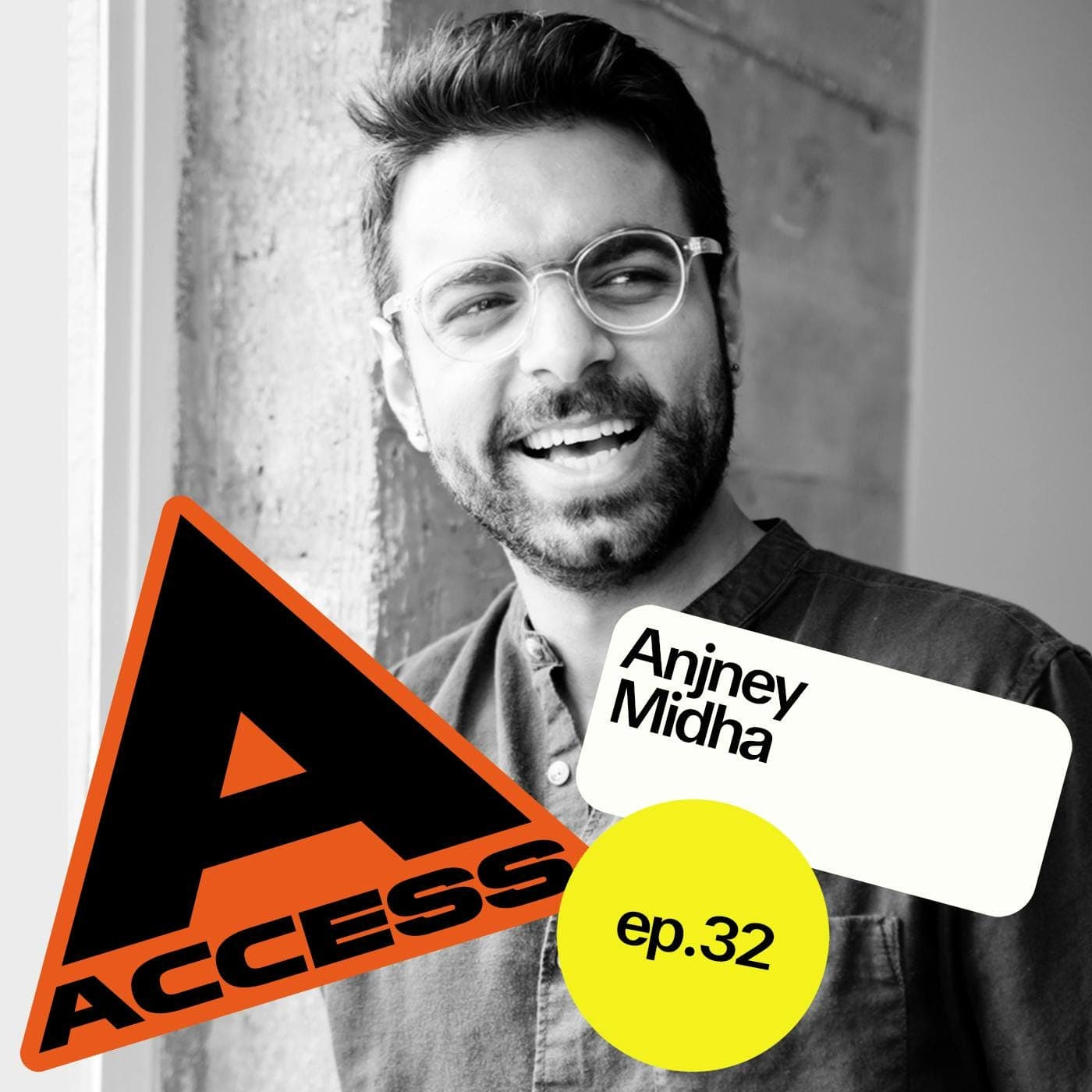
Anjaneh Mida, a Stanford lecturer and investor, discusses “AI Coachella” and argues for responsible frontier-AI scaling through cooperation, more compute, and less zero-sum competition—while addressing backlash to new data centers in local communities.
Guest backgrounds
Anjaneh Mida is an investor and founder, and a “viral” Stanford lecturer. He’s taught Stanford CS153 (including AI scaling laws) and has worked across venture and frontier-AI efforts; he also mentions incubation work at Periodic Labs (room-temperature superconductors).
Key claims
- Frontier AI progress is bottlenecked by compute infrastructure and energy, requiring alignment with public and policymakers.
- The AI industry is too zero-sum; labs should cooperate (e.g., potentially co-training models).
- Data-center projects must be “empathetic” to neighbors; if communities say no, infrastructure may need to move.
- In startups, hold the mission constant but pivot everything else as capabilities change.
Notable examples
- Stanford CS153 “One Person Frontier Lab” project (students build with compute/token credits).
- Hypothetical: OpenAI and Anthropic co-training a coding model together.
- AMP (his compute startup) framed as an “independent system operator of the grid” for GPUs; he cites “hundreds of megawatts” coming online and “thousands of chips” already training models.
Written by AI. May contain mistakes. Listen to the episode to check what was said.
Chapters
Tap a time to open that second in VOThe Data Center Backlash
0:34 to 1:48
Discussion about local backlash against data centers due to noise and disruption.
“It can help you with practically anything on the web, like restoring a vintage motorcycle from a 50-page restoration block, or finally break down that long article you've had open for weeks.”
Scaling AI Responsibly
1:48 to 2:26
Exploring responsible scaling of AI and the need for cooperation in the industry.
“I'm Alex Heath, here with my co-host, Ellis Hamburger.”
Reflections on Y Combinator
2:41 to 4:08
Anjaneh discusses his experiences and the impact of Y Combinator on Silicon Valley.
“As a sophomore, I had the, I was lucky enough to take Peter Thiel's first sort of zero to one class.”
The Evolution of Startup Ecosystems
4:08 to 5:08
Insights into how startup ecosystems and funding have changed over time.
“I was going to give Tom a quick call and say, hey, man, you made somebody, you know, somebody's life happen.”
AI Coachella and Student Experience
5:08 to 7:36
Anjaneh shares his experience with 'AI Coachella' and the importance of fun in education.
“And, uh, my wife and I started our startups at the same time I was in 2017.”
AI and Team Dynamics
7:36 to 9:55
Discussion on how AI is changing the dynamics of teamwork and company building.
“And so once those come in, I'm going to read and see what the students say.”
Collaboration vs Competition in Silicon Valley
9:55 to 14:01
Exploring the historical context of collaboration and competition in Silicon Valley's growth.
“then non-girlfriend vivian because it was the it was a co-ed fraternity um yeah so it was uh pct which was incredible as well yeah and which campus were you on uh university of michigan central campus.”
The Spirit of Cooperation in Silicon Valley
14:01 to 26:00
Explore the cooperative spirit of Silicon Valley and its impact on innovation.
“And that used to be the spirit of Silicon Valley more generally, right?”
The Spirit of Cooperation in Silicon Valley
26:34 to 27:01
Explore the cooperative spirit of Silicon Valley and its impact on innovation.
“It can help you with practically anything on the web, like restoring a vintage motorcycle from a 50-page restoration block, or finally break down that long article you've had open for weeks.”
Engaging with Leaders and Student Dynamics
27:01 to 28:00
Delve into the interactions between students and guest leaders in the class.
“So you've had some – the big ones, the biggest one.”
Show all 26 chapters
The Importance of First Principles Thinking in Education
28:00 to 29:16
Learn about the value of first principles thinking in educational settings and its impact on leadership.
“Like I, we'd like, it's a systems class.”
Navigating the Startup Landscape and the Role of Pivoting
29:16 to 31:03
Explore how startups navigate change and the significance of pivoting in response to evolving circumstances.
“transparency that is rare in today's environment of comms training and media training and being canceled and so on.”
Maintaining Mission Flexibility in Startups
31:03 to 32:53
Discover the importance of keeping the mission constant while allowing flexibility in other startup elements.
“my team that I had to hold constant and consistent artificially.”
Leadership Lessons from Startup Journeys
32:53 to 34:09
Gain insights into effective startup leadership and the importance of building a strong team culture.
“You know, I, when I was a founder, I used to do these weekly all hands.”
The Road Trip Metaphor for Startups
34:09 to 37:42
Understand the analogy of startups as road trips, highlighting the journey, team dynamics, and destination.
“And so we would get into the, we would go on these road trips and I'd start blasting Lincoln Park.”
Introduction to AMP: A New Compute Startup
37:42 to 42:00
Learn about AMP, a public benefit corporation focused on providing compute resources for frontier research.
“You broke the seal on the first VC on the pod.”
Understanding Data Centers and AI
42:00 to 44:32
Learn how data centers function like independent system operators and their role in AI.
“thousands of chips that are running in production.”
Community Perspectives on AI Data Centers
44:32 to 47:36
Explore how community perceptions impact the acceptance of data centers based on their applications.
“That is the level at which communities will want clarity before they provide strong enough, vocal enough support for data centers.”
The Future of Compute and AI Infrastructure
47:36 to 49:09
Discuss the challenges of current compute infrastructure and its impact on innovation.
“And so we do need to get to a world to maximize the smartest minds working on frontier capabilities and not compute.”
The Future of Compute and AI Infrastructure
50:01 to 50:28
Discuss the challenges of current compute infrastructure and its impact on innovation.
“It can help you with practically anything on the web, like restoring a vintage motorcycle from a 50-page restoration block, or finally break down that long article you've had open for weeks.”
Reflections on the AI Landscape
50:28 to 56:00
Reflect on the evolution of AI, startup challenges, and the need for adaptability.
“Well, I think Ange is the modern definition of a Renaissance man.”
Data Interoperability and Startup Challenges
56:00 to 56:40
Discussing how new data interoperability impacts startups and venture capital.
“Especially when the new expectation, as we've talked about, is that these services are going to work with each other.”
The Role of Transparency in Data Centers
56:40 to 57:59
Exploring the importance of transparency in data centers, akin to a nutrition label.
“Well, Anja's definitely doing a lot with startups, and I'm glad we got him to talk about AMP.”
Cultural Shifts in Tech Reporting
57:59 to 59:18
Shifting focus from technical details to the cultural and personal dynamics in tech.
“I mean, just about like the stuff that tech used to be about versus today.”
Upcoming Events and Networking in Tech
59:18 to 1:01:04
Anticipating upcoming tech events and the value of networking within the industry.
“And that's the kind of reporting and fly-on-the-wall stuff that I think will become increasingly more valuable with AI doing a lot of content generation.”
Show Recap and Feedback Requests
1:01:04 to 1:02:08
Wrapping up the show with thanks to guests and a call for listener engagement.
“You've talked to Chris a few times in the past.”
Transcript
Automatic transcript. May contain errors.0:00Ellis:This episode is brought to you by Accenture. When your advertising operations fall out of sync, everything else follows. Spotify and Accenture are working together to reinvent the rhythm of ad sales, using automation, analytics, and smarter workflows to simplify campaign delivery and access better data across the business. The result? Less time spent on operations, more time connecting brands with the moments and fandoms that matter most. Learn more at Accenture.com slash Spotify.
0:31Alex Heath:This episode is brought to you by Google Chrome. You think you know a browser, but Gemini and Chrome, that's new. It can help you with practically anything on the web, like restoring a vintage motorcycle from a 50-page restoration block, or finally break down that long article you've had open for weeks. Gemini and Chrome is here for it. Ready to make anything online make sense? There's no place like Chrome. Check responses set up required, compatibility and availability varies 18+.
1:00So if you're like Elon and you've got 500 ,000 GB300s in Memphis, and you've got diesel generators that are really loud and annoying to the locals, and they're saying like, hey, we get it. You wrote us a check, but that's not enough. Like, I'm starting to get a headache.
1:12Ellis:Pay attention. Humans are raging against the machine. In this case, data centers cropping up in their backyards. Listen, these are human beings. They will fuck shit up for you if you do not come across as an empathetic human being and listen to them. How should we scale AI responsibly?
1:26Alex Heath:And what should it even be used for? Today's guest, Anjaneh Mida, has some ideas. He's an investor, founder, and viral Stanford lecturer. He's also one of the loudest voices arguing that the AI industry needs more cooperation, more compute, and a lot less zero-sum thinking. To each their own, guys, but Ellis, I think you may want to hold back your Bay Area critique a little bit more. I think he got you there, Ellis. Fair enough, fair enough. I'm Alex Heath, here with my co-host, Ellis Hamburger. Welcome to Access.
2:01Alex Heath:Anj, welcome. We've gotten through our technical difficulties. That's good to see you. You are fresh off of your class today, are you not? Yeah, it was good. It was Gary, Tan, and Diana, who from Y Combinator, and they are amazing. But the kids were aggressive. These Stanford kids are really aggressive these days. What do you mean? I'm still processing, so don't quote me on this. But generally, I feel like, you know, they don't really understand what an institution Y Combinator is in Silicon Valley, like how much YC has done for Silicon Valley, for the institution of venture capital for founders.
2:40Like culturally, you know, when I grew up, I introduced Gary and Diana today in the context of when I was an undergrad, you know, 12, 13 years ago. As a sophomore, I had the, I was lucky enough to take Peter Thiel's first sort of zero to one class. It was called CS183B, How to Start a Startup. And that, you know, one of the students was Blake Masters in the class. And Blake turned it and, you know, wrote up the notes with Mike Solana's help. And they turned into that book, Zero to One. And then the next year, Sam was still a partner at YC at the time, and he taught CS183B how to start a startup sponsored by YC.
3:16And I took that one too. And for me growing up in Silicon Valley, it was so obvious that when YC open source, they're safe. They're like simple agreement for future equity. Or rather in hindsight now, it's so obvious to me that it was extraordinary for founders because it standardized the concept of seed raises. And it just made things so much more efficient. And the amount of time it gave back to founders was extraordinary. Years later, when I was helping the Anthropic guys put together the seed round for that company as an angel, we decided to use a safe. And Tom Brown, who was one of the co-founders of Anthropic, he was a co-lead author on GPT-3, and we were friends for a long time.
4:01He was a YC alum. He had done this group chat, group dating app called Grouper. Does that name ring a bell at all?
4:08Alex Heath:Ellis met his wife on Grouper. Ellis did? Oh, great. Okay. So Ellis, you owe that? No, I'm kidding. I'm kidding. No? Oh, no. I was going to start. I was going to give Tom a quick call and say, hey, man, you made somebody, you know, somebody's
4:21Ellis:life happen. That's one of the core features of this show is Alex and I making up stories about each other. Okay. I don't know you well enough to participate in that, but like at some point, I'm sure we'll be. You'll get it. I'll be the inside club. I kind of talked about YC as the, have you guys watched Dune? Oh yeah. Of course. Yeah, yeah. So I told the kids like to think about YC as the Bene Gesserit, where like they plan in decades, you know, not in particular quarters. Sometimes as a student, you're just like in the quarterly mindset because you've got spring, falls, you know, and so on. But YC plan is an ecosystem steward, right?
4:57Like when PG and Jessica started, it, they almost created an alternative universe where sure the business model might be a venture capital firm, but from a experience perspective, it's more like a university, right? And, uh, my wife and I started our startups at the same time I was in 2017. I think I was, I forget how old I was, but we, we were, we were in our early mid mid twenties and she did YC and I didn't. And I sold my last company to discord as we've talked about Alex. And, um, hers was an education company and she grew up to millions of dollars of revenue. It was much more successful as a business than mine.
5:32And I always regretted not doing YC. And so having Gary and Diana back today in the class to speak to the students gave me a chance to sort of context set for the students who feel like, oh, YC's, you know, I think some student was like, some of my friends don't want to do YC anymore because they think blah, blah, blah, like it's too big or whatever. I forget what the critique was. But it was a bit of a surprise for me to realize they don't know the extent to which Y Combinator as an institution is still sort of a first call for many of the entrepreneurs, certainly in my generation who are leading extraordinary new projects and companies and alums from YC who have gone on to start OpenAI and Anthropic.
6:14If measured by the value created by YC alumni in the world. I don't think there's another institution like that. And so I'm still digesting. I know Diana, and after the main lecture, Gary Diana did a sort of smaller office hour session with some of the students. I could see that there are some big misconceptions about YC that need to be corrected.
6:36Alex Heath:Like what? What are we, I mean, I think YC is still considered prestigious, but you've got all these new accelerators. I mean, Ellis has done work with Speedrun, your former employer, Andreessen, got their thing. I just saw YC had like a$5 billion stake in OpenAI. I think that just came out in the Elon Musk trial that that equity from helping incubate OpenAI is now worth$5 billion, which I think is YC's largest position. And so I think YC is unequivocally goaded in terms of all the things you said. But what is it about the new generation? They just don't get it?
7:13Ellis:Do they think it's outdated? I mean, so much about company formation and the advice that's valuable, even just in how the advice has shifted from maybe PMF world to distribution world. I wonder how YC and the other accelerators have kept up or not in their mind as the youngest innovators we have now. You know, we do, for every speaker, we do feedback forms. And so once those come in, I'm going to read and see what the students say. But I don't want to start conjecturing just quite yet. Fair.
7:46Alex Heath:Well, how does it feel to be running AI Coachella? I saw that you were going to print t-shirts out after that went viral. Have you done that? We did. Rosie, do we have one we can show on the? Yeah. Okay, we do. It has CS153 on the pocket, but on the back it says, I took AI Coachella. No, I took CS153 and all I got was AI Coachella. And so we have 500 of those t-shirts we're handing out this quarter. And it's just a fun way to remind the kids that they should take life seriously. Of course, they're taking computer science at Stanford in the middle of the AI revolution, but they shouldn't take it so seriously that they forget how to have fun.
8:27You know, I think back to my spring quarter as a senior, and the one thing I didn't do enough of was, I had already started working at Kleiner Perkins at the time. I was working nights and weekends there, and I had the chance to essentially be bag boy for John Doerr. My first board observer seat was on a board of a company that was based in Stockholm, and they made me the board observer. John led the investment. We co-led it with Sequoia. I was trying so hard to like grow up that I forgot, you know, how to have fun for a little bit. And looking back, that's my biggest regret. I don't know if you guys feel the same way, but I feel like sometimes when you're in college, you're trying your damnedest to like get into the real world and you get to the real world and you're like, wait, this is it?
9:07Alex Heath:I don't know. I had a lot of fun in college. I don't know about Ellis, but I don't know. I don't think I worked hard enough in college. Might just be me though.
9:17Ellis:I was the only English major in the business fraternity. So I was attempting to be entrepreneurial and be interested in finance and investing. But yeah, I guess I've found the perfect place for those skills at this point, helping write manifestos and missions with founders that doesn't destroy their whole product strategy. So maybe I did learn something in college. When you say business fraternity, Ellis, which one was that? Phi Chi Theta. oh you were in five right there okay i was an ak psi oh yes the nemesis the nemesis oh shit was it the nemesis okay i didn't know okay i i rushed it because i was trying to flirt with my now wife then non-girlfriend vivian because it was the it was a co-ed fraternity um yeah so it was uh pct which was incredible as well yeah and which campus were you on uh university of michigan central campus.
10:14Oh, cool. Okay. Awesome. Nuclear Central. There's a country's best nuclear engineering program. Is that so? Michigan? Oh, yeah. Top three for sure.
10:25Ellis:Is that something that stumbles across your desk usually, Alex?
10:28Alex Heath:Not mine. No, I can't say it does. That's an interesting factoid. Yeah, no, I was completely left out of all fraternity business. So all these words you guys are saying means nothing to me, but it sounds interesting. You didn't miss out on much. At least not from, from the thing about these and in lecture one of the class, which is now up officially on Stanford's YouTube channel, if you want to go check it out, it's CS 153. Lecture one, I kind of talk about AI scaling laws and I'd give them life scaling laws. And I talk about how you might, they might think that the most important speakers in the class, people in the class of the speakers.
11:09You know, we have such a Sam Jensen and so on, but really it's the people in the seats next to them, right? It's when they look to the left and right, it's the, it's the students, like it's, it's each other that they're going to build things together. They're going to be the next generation of leaders. And, um, you took advantage of your time as a student to have fun with the people who matter to you. Uh, and so I was trying to remind them of that.
11:29Ellis:Well, it's interesting though, isn't it? I feel like so much of traditional higher education or even previously is kind of about teamwork. And you read headlines today about the first solo billionaires and how little help you might need if you're adept at AI. Do you feel like that's changing how the students are thinking about the companies that they're starting? Or is it still the classic product founder and engineering founder? So, you know, big picture, I think about But 80 % of the challenge of building a company is the same. And the 20 % that's changed is still not legible to most people.
12:09It's got new words and so on. Like, you know, if you look at the class, we've got speakers, right, who cover content like theory. And then we have a project, a final project called the One Person Frontier Lab, where we basically say, hey, today with the right tools, you know, one person can accomplish what previously took many, many groups of people. So as part of the final project, we've given them compute, token credits, and they can just, they're welcome to see what they build as a single person team, one person lab, and scale themselves. But we had Andre Karpathy last week, and he said, so I asked him, you know, Andre, if If you were the head TA for all these students, right?
12:52And their final projects, and they were asking you for what to build, what would you build? And he said, yeah, you know, actually some of the most interesting problems to solve an industry right now, especially in frontier AI, are ones where you have coordination between multiple teams. Where at the moment, most labs are not cooperating, right? They're kind of playing the solo game. So if you think about a student in the class as kind of a microcosm of the entire industry, we have not gotten yet productively to the stage where multiple labs are competing to, or sorry, cooperating to try and move the capabilities frontier forward.
13:27But could you imagine, like for a second, just think, I know it's hard to imagine, but just for a second, if OpenAI and Anthropic decided they were going to train a model together, the world's best coding model together, can you imagine what the capabilities might produce are?
13:45Alex Heath:They originally said they would do something like that. I'm old enough to remember when these companies were talking about cooperation, you know, around AGI and laying down arms and helping the other. It used to be the spirit of that, didn't it? Yeah. And that used to be the spirit of Silicon Valley more generally, right? Like, competition has been the reason why Silicon Valley has flourished. Like, I grew up in the tradition of venture capital where I started at Kleiner when I was 20, as we discussed. and then I spent four and a half years as an investor. And then I started my own AI company and I got to raise from Benchmark and Index.
14:19And I had them on my board. So Kleiner and First Round were part of my seed round. Index led my Series A, Benchmark led my Series B. And I sold the company to Discord. And then when I got to Andreessen Horowitz, I led the Series A into Mistral and co-founded Black Forest Labs and had the chance to get Ella Marina get going. And I'm on seven different boards. And I just sort of fundamental part of this my psychology is you cooperate with people who the world nominally thinks you compete with, but that's not true, right? Here I'm sitting at Periodic Labs' office. This is my current incubation. I spend three days a week here, Tuesday, Wednesday, Thursday.
14:59We're discovering new room temperature superconductors. The co-CEOs are Liam Fettis, who co-created ChatGPT, and Doge Chubuk, who led the quantum materials team at DeepMind. And sure, I led the seed round when I was at Andreessen Horowitz, but we also had Lightspeed and we had, I think we had like Felicis in there for a little bit of money and we had a bunch of other firms, right? And that's how we, like venture capital has had this cooperative spirit because when you're in an era of abundance and these companies succeed, there's more than enough for everybody to go around. Also, they just need different kinds of help.
15:35And so it's not zero sum. And I think we're in a stage of the industry in frontier AI where zero sum thinking is unfortunately quite dominant. And we need to get to a place where positive sum cooperation is, and positive sum research is the status quo, is the consensus, not contrarianism. If we get that, oh my God, like the capabilities jumps we could add for humanity to the frontier of science, engineering, biology, healthcare. We could genuinely be solving cancer already if we were consulting, like if we were pooling compute, labs were like co-training models and commercializing together the way the biotech industry has tried to do in the past.
16:17You know, you could give the biotech industry a mixed scorecard. I think we should take some of the best learnings from biotech and bring it to Frontier AI. But if that was happening, I think we would have flying cars by now. We've got self-driving. We're close. But it's so slow, man. It's taken us... Like, you know, Waymo was getting started when I was in college and it's been 11 years. You know, like, I don't think we have time to wait 11 years again for go from self-driving to flying cars.
16:43Alex Heath:Well, can we just skip ahead to the good parts? Well, so help me square what you're saying, which I agree with broadly. I don't think it's possible, but I agree that would be nice if that happened with your class project, which I understand is the one person frontier AI lab. That's what you're pushing students to do is build a lab, a solo lab. Is the idea that they all then work together and cooperate or like, are they all doing it on their own and competing with each other? We did ask for, so it's not necessarily, it's not one person frontier AI lab, it's frontier lab. There's different kinds of labs.
17:12I think frontier technology lab, because you can apply AI to a different domain, right? I think a frontier AI lab sort of sometimes means, oh, you are putting out, like what you do is you train machine learning models as like you're training AI capabilities as a service. I'm saying you can be a frontier technology lab that uses other people's capabilities. Like if you're using Claude and you're pushing the frontier, the state of the art frontier basically means state of the art in my view and you could be pushing the state of the art in cancer therapeutics you could be pushing the state of the art in material science and you could be pushing the state of the art in in creativity these are all different frontiers that are that can be pioneered that can be bootstrapped by the acceleration of capabilities in software engineering right like for from claude for example and so what i'm we're trying to do to encourage what we're trying to encourage the students to do in the class is find the mission they really care about?
18:02Like what's the mission in life that you're most passionate about? And then align yourself on that frontier and then use all the tools available to you today to move the state of the art in that domain. Does that make sense?
18:14Ellis:Are you finding a lot of diversity for what missions they want to achieve? Because I write missions almost every day. And when the founders are all from a similar upbringing, similar culture, similar place, similar society, you often hear a lot of the same sets of things. And I think what I hear more than anything is founders, you know, wanting to empower people to focus on what matters, which to me is just kind of a non-answer. You know, it's just like, well, that's the go-to of the modern age in the same way that people say frontier instead of state of the art now. Do you feel like you hear a diversity of ideas?
18:51Not enough. We need more. We need less group think for sure. We need less status-seeking. What I find is humans are status-seeking monkeys.
19:03Ellis:Especially in San Francisco. That's the rainforest for the status-seeking monkeys, I think. Well, I don't know. Where are you based?
19:11Alex Heath:Yeah, I don't think we have a lot of ground to stand on being in LA. Are you kidding? LA is way worse. Oh my God, LA? No, no, no. At least in the Bay Area, the status that comes from the pursuit of difficult engineering problems and ideas and so on, right? Everyone's trying to outdo each other in terms of what are the hardest problems you can tackle. And so Elon's trying to outdo Demis and Demis is trying to outdo Sam. And they're like, well, who can produce the best capabilities for humanity? Again, we're generalizing, but in LA, like what status, where does status come from? I don't even know at this point.
Read the full transcript
19:42Alex Heath:Status is how long you wait for the matcha community goods when it's raining. Look, to each their own guys. But Ellis, I think you may want to hold back your Bay Area critique a little bit more. I think he got you there. Fair enough. Anj, I was reading this Atlantic story. I don't know if you got to see it about Stanford. I think it's based on a book excerpt. And there were a couple good lines. I didn't agree with a lot of it, but there were a couple good lines. One was Stanford is an incubator with dorms. And then And another thing about pre-idea funding, the first one, incubator with dorms, maybe your class is an example of this.
20:20Alex Heath:Like you're encouraging people to make companies in the class and you're bringing all these entrepreneurs in. Do you feel like higher ed, but Stanford in particular, has become overly commercial? It's not actually about the academics. It's not actually about what it used to be. Or do you think this is more nuanced? Well, I think America is an incubator with dorms, right? Like if you just look at, I mean, literally, broadly speaking, if you just look at the history of technology, whether it's Bell Labs or Alphabet Holdings Now or MIT or like DARPA, DOD, I mean, this is where some of the most foundational technologies in humanity were created.
20:57but like from a, like if you just zoom out, like you just had a building where you had scientists and engineers doing research and then you had a building where they used to live. And the closer you put those things, the more and more they look like, you know, an incubator with dorms. So I don't think that's a very novel critique. I also don't think this is this commercial proximity that Stanford has to Silicon Valley is new at all. In fact, my whole class, the whole spiel I gave you guys at the beginning about how this is just a long lineage in like Peter Thiel's class and Sam Altman's class.
21:26and there were a bunch of others, and now you've got my class. This has been the case for a long, long, long time. And I think it's the magic engine that keeps the dynamism of Silicon Valley going. What is different now, I think, is that there's the scale of capital required to continue deploying capabilities or making meaningful progress at the frontier. And the fact that a lot of the scaling requires the marshalling of physical resources like compute infrastructure, and that we're hitting bottlenecks of that in America where there just isn't enough energy to produce all the compute we want requires a level of alignment with global capital allocators that is quite new for a lot of Silicon Valley folks.
22:07And I think whether it's the Middle East or it's India or, I was on a call this morning with the ministry of IT of a well-known country, like a country in the Middle East that has extraordinary amounts of energy. And they're all, you know, it's what's fascinating is the leaders running, like coming into, who are starting to get like the senior most positions in governments around the world actually have grown up with technology and disruption theory as very much part of their psyche. Many of them actually came to America as college students or postgrads, like many of them came here for business school and then went back to their countries and have become sort of policymakers and so on.
22:52And so there's a level of understanding of Silicon Valley culture that's quite native, right? And like the gentleman who runs the ministry I was on the call with this morning actually used to work at a technology company in San Jose. And then when he went back to his country, he was the country GM for that company and then was tapped by the government to come in and lead the Ministry of Information Technology. and when I chat with him, you know, I was on TVPN yesterday. I was chatting about the GameStop eBay acquisition with the TVPN guys and he sends it, that tweet went viral and I woke up this morning and he had found the tweet and put it in our group, like our WhatsApp.
23:38And so the fact that you've got this, essentially the CTO of a country halfway across the world is watching me comment on Silicon Valley, sort of technology acquisitions, and is sending it back to our group chat within 12 hours. That's new.
23:53Alex Heath:I want to make sure I'm understanding the geopolitical implications of GameStop buying eBay. Of GameStop buying eBay for the reasons I outlined, which is that agentic commerce needs physical verification. And so what they were trying to understand is, okay, if they want to enable agents to do physical commerce in their countries, Does that mean they also need to have integration between a physical verification layer where somebody can go into a store and say, like a physical location that says this pen is real, it's been verified, and now it's going online for sales? Right, think about that. The single biggest problem, we talked about this three, four years ago, Alex, when you and I did the hungout for Discord's demo day.
24:39That's right. That's right. Right. We were, we had just come off of, I was still, you know, I was the head of platform at the time and we had come off a 24 month run at Discord where it had become this, uh, like this incredible petri dish for e-commerce where people who are passionate about some, something, you know, Discord was a, a chat app for gamers that became a community, uh, chat app, right. There were all sorts of communities who were like into keyboards and sneakers and so on, hanging out on Discord during COVID. And we started observing that many of these communities started adding a particular kind of channel called BTS.
25:20Does that mean anything to you guys? BTS? Behind the scenes?
25:24Alex Heath:Is that a band in Korea or something? It is, but it's also by trade sell. What are the names of these group chats and what apps are we talking? Are we Signal? Are we WhatsApp? Give us the tea here, Ange. Come on. You're with the masters of the universe in disappearing group chats. They've got to have a good name at the very least.
25:43Ellis:Illuminati with a bunch of different emoji stars. No, I can't give you the names. I'm sorry. You can't divulge the names. I've already said too much. You know, the rule number one of Fight Club is you don't talk about Fight Club.
25:53Alex Heath:Yeah, yeah, yeah, yeah, yeah.
26:00Ellis:This episode is brought to you by Accenture. When your advertising operations fall out of sync, everything else follows. Spotify and Accenture are working together to reinvent the rhythm of ad sales, using automation, analytics, and smarter workflows to simplify campaign delivery and access better data across the business. The result? Less time spent on operations, more time connecting brands with the moments and fandoms that matter most. Learn more at Accenture.com slash Spotify.
26:30Alex Heath:This episode is brought to you by Google Chrome. You think you know a browser, but Gemini and Chrome? That's new. It can help you with practically anything on the web, like restoring a vintage motorcycle from a 50-page restoration block, or finally break down that long article you've had open for weeks. Gemini and Chrome is here for it. Ready to make anything online make sense? There's no place like Chrome. Check responses set up required. Compatibility and availability varies 18+.
27:00Alex Heath:Before we move on from Stanford and all of this, you've had a lot of impressive leaders come into the class already and you've got more booked. Jensen's already come in, right? So you've had some – the big ones, the biggest one. Any standout moments so far that – people can go watch everything on YouTube. It's hours and hours of content, but maybe not everything. There's maybe moments that aren't on YouTube. But, yeah, has there been a standout moment besides, like, students not caring about YC? no no okay i want to be clear do not put words in my mouth i did not say okay okay you you did not say that the kids were ecstatic about yc by the way i mean it was non-stop questions there were kids from like who are not in the class who are dying to get in we had to turn away we had like bouncers at the doors so just to be clear very popular lecture you always have a few kids in the class who who have who do like um they like read twitter and then they like they're very combative in their questions.
27:58And I think that's not a healthy posture. Like I, we'd like, it's a systems class. And so I encourage first, first principles thinking, which is like, analyze the system that you're trying to ask a question about, and then ask that question. Don't say, oh, I read on Twitter that like, blah, blah, blah, did blah. What do you think about that? It's like, well, that's not an interesting question, right? Anyway, to answer your question, what were the best moments, notable moments in the class? You know, We promised the speakers that their teams will review all the lectures before they're published online, but they all will be published online.
28:29So I'm going to hold off on this one just because I don't know what will make it through that. I see. Okay. The ringer. Okay.
28:35Alex Heath:Yeah. But there are some moments that I think will go down in history because it's a very honest exchange, right, between students and leaders. Like what self-selects people who come back or come to campus? is this is the fourth year we're teaching the class. And what I've noticed is when we invite folks, it selects for a type of leader who feels responsible for the future because they don't, they have so much other stuff going on. They don't need to invest the time to come back and speak to these students. They can get on your podcast and scale their message. They have full comms teams. But when they come back and they sit in the class and they stare at these students in the face and they're looking at like the, you know, literally the future, right?
29:13Like these are kids who are going to grow up and run the world, there's a level of humility and honesty and transparency that is rare in today's environment of comms training and media training and being canceled and so on. It's a very powerful setting, I find. It's very raw, it's honest. And I hope the powers that be both at Stanford and the comms teams who will review all the lectures will will let some of that vulnerability shine through.
29:43Ellis:We can make up a moment, they say. Back in my day, we used to only get access to new primitives with the new iOS update every fall. Because that was startups forever, right? It's like every year Apple would release a new SDK of some kind for a new sensor on the phone or a new API, and then 100 startups would spin up around it. And yeah, I mean, I'm curious, like, how do you advise these students or your guests advise these students to navigate that? I like the mission approach, but it's like tactically, I mean, I feel like half the startups I work with are pivoting during our conversations in some way, just because the foundation is changing so quickly.
30:27So I think pivoting is a feature, not a bug. You know, typically what I've learned is whether it's anthropic from the early days or periodic, like depending on what you mean by pivoting, and there's no canonical definition of pivoting, like if you're not iterating with massive updates based on new information coming in and sort of hill climbing, so to speak, you know, towards your mission, you're just not making progress. And so my biggest regret, of course, in life as a founder, when I started Ubiquity 6, which was the last company I failed at it miserably, was I wasn't updating fast enough because I felt like I'd committed something to my investors and my team that I had to hold constant and consistent artificially.
31:08And now in hindsight, I'm like, that was so stupid. Like I wasted so much of my life trying to hold constraints that were not really there. um and so i i think the thing you should hold pretty constant was your mission right and i if you if you're if you say we're starting a superconductor discovery lab to move the frontier of superconductors okay then let's do that and then hold everything else flexible right um i'm not of the school of thought like famously mark you know andreessen who i've learned a lot from because i was a partner it was a gp on the infrastructure fund and i went there primarily to learn from mark and ben you know i think i have read that quote mark has right about product market fit, which is when you don't have it, when you have it, you know it.
31:48And if you don't have it, change everything about your company to get there. And I think you can change everything except two things, which is your mission and the people who you go on the journey with. It is very, very taxing, especially on the culture of your company, to keep changing the mission in a way that's not legible to your team for why you're doing it. Right. And that feels like thrash. It feels like purposeless. It feels like you're chasing somebody else. It's just the worst. You know, what's really exciting is when you pick a really big, meaty problem and you're like, this is a hard problem.
32:29I could dedicate my whole life to this mission. In fact, I would, I would get, I would pay somebody to let me work on this. That's how much I love the idea of like, if on my grave, right, like on my tombstone, it said these words, like he figured this out, that's the quality bar I think we need to have for missions of startups. And then you hold everything else, you know, sort of flexible. And then I think you want to pick a team that is as excited about that mission and is super flexible because you learn so much in a world that's evolving so fast that like, actually, I think your team finds it very liberating when they're like, yeah, we thought we were going to do that, but actually there's a better path to our mission.
33:06So let's do that. You know, I, when I was a founder, I used to do these weekly all hands. And these are the, these, you know, it's a, it's a ritual that is canonical in Silicon Valley, right? You get your team together, you describe how the week went and where you're going and so on, sort of very anchoring. And over the years I did that and on the boards I've been on, I've realized that a pretty good mental model for how to think about a startup is you've got like a destination in mind, and then you're going on a road trip with your team, and nobody has any clue on the exact path on how to get there.
33:39And if you're the founder, you're in the driver's seat, and you're feeling really stressed and responsible because you got to get people there eventually. Sometimes you have to take a detour to get there. But if that detour is not legible to people, like why you're taking that detour, or that it's just a pit stop along the way, because somebody's got to use the bathroom, and we're getting back on the freeway to their destination, shit goes really hits the fan and i find if you think about yourself as a as a leadership crew that way which is one pick a really fun destination that everyone wants to get to two fill the car with fun people who love the song like i i love um like i'm not a big when i got to america i was born in india i grew up in singapore and then i came here for college at stanford and vivian who's my wife she loves country music she's like a country junkie and i'd never listened to country music growing up.
34:26I was a Lincoln Park guy. And so we would get into the, we would go on these road trips and I'd start blasting Lincoln Park. And then she'd be like, well, can we please put on some Darius Rucker? And I was like, Darius Rucker, what's that? And so we put on her, like, we have a little playlist called Country Chicken Fried or something like that. And, uh, you know, originally I was like, what, what is this music? And then, but, but I had to listen to it cause it, she was, I was trying to date her and I loved her. Right. And so like become now I'm a country junkie. I love my wagon wheel. And it's because I love being in the car with her and being able to enjoy that moment of listening to the music with her.
35:04It gives her so much joy. It gives me joy. And startups are no different, right? Fill the car with people you love. And sometimes if they want to listen to some random music, you know what? You're going to learn something about them, right? And - I think they're all listening to the social network soundtrack, but continue. Yeah. It's a bit too gloomy for me, man. I used to listen to it in college while coding because i thought i was like zuck with my hoodie on and like yeah and then at
35:26Ellis:some point i was like this is so lame wagon wheel is the new uh new coding anthem you heard it here first wagon wheel great great pump-up song for uh um for all hands the other one you know which is great is um the chef soundtrack have you guys heard watch chef the the the movie on netflix no oh yeah yeah yeah yeah amazing soundtrack yeah so good you know he's got one which i like it like that it's he's got that whole remix and i love playing that it's it's such a good cut and so that the you know that's so much better than the social network music um the the spotify epic soundtracks playlist is all is great for coding though i would say that's my that's my jam in the class you know for this for 153 we play like walk on walk on songs and um we had uh scott nolan who's the founder of general matter he used to be a gp at founders fund and he came by and we were in the car, like driving to Stanford.
36:20And I was like, so what's your song, Scott? And he starts playing the sound, the opening theme for, um, for Dune, right. It was for Dune. It was for Dune. Yeah. And it was so good. And we ended up playing that. Um, okay. I think everybody in Silicon Valley has a different soundtrack playing in their head. You know, when I was with, uh, Ben Horowitz, like I was having, he was, he was one of our guest speakers three weeks ago. And I said, Ben, what's your song? And he, he asked me to line up one from Nas, right. And it's so emblematic. He loves Nas. That's like perfect.
36:51Alex Heath:Yeah. That's who he sees himself as, right. In his head, he's like Nas. And, and, and Scott Nolan feels like he's one of the, you know, the, the protagonist from Dune. Like, and that's, that's the beauty of Silicon Valley. Like it pulls together people from all over the world who have their own lore. And this, and when you're going on this, this road trip on this startup. Well, the first thing I love being able to go on multiple road trips with the founders I work with, but each startup is just a road trip. And you have to figure out what's the music that's playing in that car and who are the people in there that love each other and who can't stand each other.
37:27Because if they can't stand each other, you got to get them out of the car. And then two, what's the destination they all love? And the sooner you like debug that, the rest of the startup stuff, the pivot stuff, it all takes care of itself, man.
37:36Alex Heath:So speaking of road trips, you've got your own, you're on. And with the limited time we've got left, I do want to ask you about AMP. You broke the seal on the first VC on the pod. We've had a no VC rule because we've been really trying to just have founders on. But you are a founder. You've been a founder. We've talked all about that.
37:54Ellis:Alex is attempting to gain entry into your group chat.
37:57Alex Heath:Yes. Oh, I see. I'm trying to butter you up. That's the subtext. But actually, no, I'm trying to understand AMP because there's been some reporting on it. You haven't said a ton about it. It's this new compute startup you're building. There's rumors about raising billions and billions of dollars. I'm not sure what's been confirmed, what hasn't. What can you tell us about it? What's the state of it? AMP is a public benefit corporation, which means everything we do is actually governed by a public benefit charter. There's two reasons why I did that. The first is I didn't want to get sued for giving away billions of dollars of compute at cost to teams that I think are doing interesting frontier research.
38:36One of them is periodic labs, just because that wasn't legible to shareholders in the short term as something that's actually the best for the company long term. And then the second is that I do think if you believe that frontier AI progress is one of the most important arcs of our lifetime, and that if you can unblock progress in domains like healthcare and material science and engineering like here, the primary bottleneck on that progress is compute infrastructure. And if the public doesn't feel like that infrastructure is being, it's compute infrastructure is a very scarce physical resource, right?
39:14It requires land, power, shell, water. It takes a very physical place in communities, especially in America. And my view is that if it's not legible to the public that these data centers and the infrastructure required to unblock this kind of frontier technology progress is serving their benefit, then it's not going to work out. They're going to say, shut it down. We don't want this around here. And to be honest with you, we might have to do that because America is a democracy. And if the communities don't want the infrastructure in their neighborhoods, we'll have to move it elsewhere. And I'm prepared for that.
39:47It's happening. I mean, the backlash is strong. It's strong. I don't think all of it is actually unfair either. I think on the spectrum of like, what should we do with compute infrastructure? There's two, at least ends of the spectrum, right? There's the accelerationist movement, which is like, just what are you talking about? This is like, it should be a no brainer. Let's just keep build, build, build, build, build. And then on the other side, you have folks who are literally like shut it down, like stop AI. And obviously neither is the optimal place. The optimal place is let's scale infrastructure optimally while making sure we listen to the concerns that are substantive of local communities.
40:26So if you're like Elon and you've got 500 ,000 GB300s in Memphis running at non-peak utilization, and you've got diesel generators that are really loud and annoying to the locals, and they're saying like, hey, we get it. You wrote us a check, but that's not enough. I'm starting to get a headache. Pay attention. Listen. These are human beings. They will fuck shit up for you if you do not come across as an empathetic human being and listen to them. And I can't speak for a lot. I don't know if he's listening or not, but I can tell you communities around America are not happy. And so when I set up AMP as a public benefit corporation, we said, everything we do has to be in the public benefit.
41:02And if our teams who are training frontier models to discover new materials and new cancer cures need compute, and they come to you and And we come to you and say, please give us some part of your land to help us bring up that compute. If the answer is not hell yes, then it's a no. And so I think of AMP as a new kind of sort of public benefit institution. We have two businesses. We have an infrastructure business that secures compute for frontier research teams, scientists, engineers, who we think are doing interesting novel work. And then we have a capital business that raises the money required to help these teams secure, like access the compute they need and do research.
41:38our venture capital business is called AMP Foundry. We have had billions of dollars in commits and we haven't announced anything publicly yet because of a few regulatory filings we got to make. But we will reveal that publicly soon. And then on the infrastructure side, by the end of this year, we have several hundred megawatts of compute capacity coming online, which has already started. I'm upstairs as the AMP team and we were debugging a cluster earlier today and we do have thousands of chips that are running in production. Models are being trained. And the closest analogy I can think about us is PGM Interconnect, which is in the Northeast, depending on where you grew up.
42:14It's a utility company, right? It's what's called an independent system operator of the grid, where it doesn't own its own data. In the electric grid world, you have a network of a few different entities. You have power generators, you have factories, and you have transmission lines. And then you have a utility company that coordinates capacity along all of these folks, you know, pools capacity, drives up utilization, makes sure everyone can provision for their base loads and not their peak so that there's no blackouts. That doesn't exist for compute. And so we're an independent system operator of the grid.
42:46We pool data centers. You know, our grid is data centers, which by the way, run on electric grids. So you can think of us as a grid on a grid, but we have cloud providers, AI teams like Periodic, and we have the transmission lines are optic fiber cables. And we coordinate capacity across those. We do long-term commitments across different clouds. We pool capacity across clouds. We allow our teams, our teams commit to procuring the bulk of their capacity from the grid over four years, but like a flexible meal plan, they can spend whenever they want with sufficient heads up notice to us. It's kind of like a dorm meal plan, to be honest.
43:22And we don't own our data centers. We don't own our own transmission lines. We're a neutral third party. Now we do secure a lot of that capacity and give it to our portfolio companies at cost. And if we have any excess left over, we sell it to the ecosystem at a modest profit. Does that make sense?
43:38Alex Heath:Airbnb for GPUs. Am I being too reductionist here? No. I love that. You can keep it. I love that. Okay.
43:47Ellis:Well, it does change the equation, doesn't it? When you talk about what the data center is for, I think it says one thing to someone if a data center is being built in the neighborhood. They said, hey, what's this going to be used for? And they say, well, there's this newsletter guy named Alex Heath who needs it to run his granola for like his bajillion conversations he has all the time. Meanwhile, if it's for something that they can actually feel that's solving a problem in their lives, I think that does change the equation. And I guess it just seems like a lot of that stuff maybe just hasn't come to pass quite yet in terms of the outcomes of AI.
44:22Ellis:I mean, what do you feel like are the brightest spots you've seen with productizing some of this AI stuff outside of tech? Like when you go pick up a juice or whatever, now you have a label that says, here's where this stuff came from. I think you'll have an inverse label on data centers where people will say i want to know what what does the label on the data center say for who is using this and for what and then i get to vote on whether i want that in my community or not and uh if if if the label says this is a data center that's ultimately being used for creativity because that's what is powering like it's being used by some application somewhere that makes video editing easier or if it's being used for to discover new room temperature superconductors which is what we're doing here.
45:10That is the level at which communities will want clarity before they provide strong enough, vocal enough support for data centers. I hope we can self-enforce that level of transparency before it's too late, because once the government gets involved and starts regulating things, it always gets implemented in some watered-down game of telephone way of what the technologists who actually understand how this stuff is being done can implement right ahead of time.
45:38Ellis:I'm visualizing a trebuchet laying siege to the Instagram Reels data center. That's what's in my mind right now. Surely someone's made an AI video of that. The irony is I'll probably have to buy that trebuchet on Instagram because their shopping is amazing. The ads on Instagram are so cool. It's incredible, right? Like I love pens. I'm a huge pen junkie. I spent like$300 on pens on Instagram last week. It's extraordinary. And I feel like I learned something because I'm a nerd. I mean, this is the eBay opportunity, right? If Ryan can actually figure out how to turn eBay into a shop, into a destination where you don't feel like you're in the back streets of like some bazaar where like some guy jumps out of the shadows and says like, hey, take my pen.
46:25But, and it's like a fake, but instead it feels like this delightful, I don't know, what is it? Abbott Kinney, right? If you can make eBay feel like Abbott Kinney, I mean, that's a trillion dollar company, don't you think?
46:38Alex Heath:I mean, it's an interesting idea. I definitely haven't thought about that. I've been behind on the GameStop saga, but yeah, I mean, yeah, that's very cool.
46:46Ellis:I'm just still thinking about the flops. Are the flops being used? Are the flops flipping, et cetera? So that's where my mind is. We definitely want the flops to flow like megawatts in this country. We want flops to be a stable, accessible resource. You shouldn't have to think about which chipset it is, which cluster it is. In a sense, I would like to go back to the future where, you know, when I was in grad school, I wasn't smart enough to finish grad school. I dropped out before I could even start my PhD in bioinformatics at Stanford Med. I did undergrad and started my master's and then got sidetracked to Kleiner Perkins.
47:16But it was a simpler time where I could just SSH into a single cluster. I didn't even know where it was on campus and just hit run and it would train, the model would train. And I could focus on what I knew best, which was machine learning. And today, the amount of time these independent startup teams have to spend on infrastructure, on compute, on converting GB300s into H100s, into Blackwells versus Verirubens versus AMD versus TPUs, which chipset. I mean, it's just so stupid. It makes no sense. And so we do need to get to a world to maximize the smartest minds working on frontier capabilities and not compute.
47:54we do need to we need to have fungibility be solved we need these flops to flow like megawatts and then another block is we need American communities to say that's a good thing the grid, the electric grid undergirds everything we do, we don't think about it but it's like mission critical infrastructure so that when you hit the light switch it just works I grew up in India in a rural school called Rishi Valley which was started by a philosopher by the name of Jiddu Krishnamurti like 350 acres of like bird preserve. And we had blackouts all the time. And that's because there was no grid. And so we had to have backup generators and so on.
48:29Instead, America figured out when we were electrifying the country in the early 1920s, you know, a bunch of smart people were like, let's take the learnings of micro grids, standardize ACDC, hook up grids, enforce this as a national standard. And we're in the pre-standardization era of compute right now. And it's resulting in a lot of pain. No more cloud blackouts. That's going to be your mark, Anj. I think that would be great. I think cloud would be much, much more liberal with me and my time with him if he didn't have to stress out about his token budget or his GPU budget, for sure.
49:07Alex Heath:Anj, we appreciate your time. This has been a great conversation. We can let you get back to whatever the AI is inventing behind you. All right. Thanks, guys. Talk to you soon. See you. Stay tuned. After the break, we're going to recap this convo with Anj and talk about what else is going on.
49:27Ellis:This episode is brought to you by Accenture. When your advertising operations fall out of sync, everything else follows. Spotify and Accenture are working together to reinvent the rhythm of ad sales, using automation, analytics, and smarter workflows to simplify campaign delivery and access better data across the business. The result? Less time spent on operations, more time connecting brands with the moments and fandoms that matter most. Learn more at Accenture.com slash Spotify.
49:57Alex Heath:This episode is brought to you by Google Chrome. You think you know a browser, but Gemini and Chrome, that's new. It can help you with practically anything on the web, like restoring a vintage motorcycle from a 50-page restoration block, or finally break down that long article you've had open for weeks. Gemini and Chrome is here for it. Ready to make anything online make sense? There's no place like Chrome. Check responses set up required compatibility and availability varies 18 plus.
50:28Alex Heath:All right, Ellis. Well, I think Ange is the modern definition of a Renaissance man. That guy is doing a lot.
50:36Ellis:Prince of the new guard of Silicon Valley. It seems like the baton has been properly passed to him from pretty much everyone. Yeah. I will say I would like to sit in on the Coachella of AI. Is that what it is? Yeah. I wanted to ask. We didn't have time, but it's like, I wonder what those Stanford kids are even doing these days in the class. Do they have their plod out? Do they have their clawed out? Do they have their Omi headband out? Do they have their friend AI pendant out or some other pin to record all the insights from all the hottest founders? Or are they just grown up iPad kids who are just watching YouTube kids for the whole lecture.
51:20Alex Heath:Yeah, I wish we had would have had time to ask him what his rules for AI are in the classroom, if he has any, if he just lets people fully embrace it. And I assume the answer is yes, but would have been good to ask.
51:34Ellis:It's tough, isn't it? It's one of those incontrovertible dilemmas that in tech, we all want to stay in the moment, but we also want to record everything. Yeah.
51:44Alex Heath:For our later context. Yeah. Yeah. I, you know, Stanford is a pretty magical place. Like I think it gets its knocks, you know, for being the bubble, definitely, you know, uh, being the center of that. But, uh, I've, I've walked around it a few times and gone in and out of the halls and I, you know, it would have been cool to have gone to school there. You know, it is a very special place.
52:07Ellis:Has Claude ever told you to stop working? Yeah.
52:10Alex Heath:When does that even happen? When does that happen? You know, you just, you do too much in one day. You get too many co-work threads going. You're pumping it for answers. Oh, is it a tokens thing? I don't think it's tokens based actually. I think it is just a vibes thing. I think it's an alignment thing.
52:34Ellis:It says, Alex, maybe time to call it quits. I mean, there is something to that though. not that it's programmed this way, but I often find that, you know, toward the end of the day, you try and keep writing and you're like, I'm just going to read this tomorrow morning. And then half of it's shit. You have to redo it again. It's like, it's just kind of pointless. I think it's some hour of the night to keep working.
52:56Alex Heath:Yeah. Do you haven't gotten that? It hasn't told you to stop? No,
53:00Ellis:I don't think so. Though I've moved a lot of my, my Claude usage into Opus inside notion and into poke. And so I feel like I'm using the Claude app a little less, but the model still the same. Is that stupid?
53:17Alex Heath:Moving your opus into poke is something you could only say on this show and not just laugh.
53:24Ellis:I also enjoyed the road trip imagery on this episode of the show, as long as the road trip goes better than the one in Surat. Have you seen that movie yet? No. Pretty crazy art house film. I think it was the runner up to the Palme d 'Or behind, I think it was just an accident or something like that. But anyway, yeah, the chill road trip in Surat goes terribly wrong. And without giving too many spoilers, almost everybody explodes by the end of the movie.
54:02Ellis:so that's kind of how i was picturing a bunch of like coders in a van on their way to coachella and uh what what terrible things might might befall them well we can generate that with
54:13Alex Heath:via or something uh or mid journey yeah i think we should maybe get a wagon wheel type song for the show theme this week something that's got a little bit of twang to it um i feel like would be appropriate.
54:26Ellis:Yeah. One other thing, I liked the tension around if pivots are good or bad from this conversation. I mean, the way that I was thinking about it largely was like almost, I don't want to say desperation pivots, but like every time you do a pivot, it kind of sets you back to square one to some extent. I guess maybe there's a difference between a reboot and a pivot, but it just seems very stressful to be a founder right now trying to make something out of nothing. And then you find out that now the model just does it automatically. And you kind of have to either go deeper along this path without knowing if the model is also going to go deeper into your vertical, or if you just want to choose new topic entirely.
55:09Ellis:And each time that happens, you know, you kind of have set your product and your story and your outreach and whatever sales you're doing a lot of times back to square one. And it does seem like a tough time to be doing this. I mean, it's just faster than anybody could realistically keep up with. You know, it's like back in the old days. Yeah, you're in stealth for a few years, you come out and then you sure pivot toward the best version of yourself that's resonating.
55:38Alex Heath:But you've talked about that a lot in the recent episodes about how the founders you work with are pivoting all the time, like mid work stream with you. And that does seem to be the case. I mean, And when Claude does, you know, Claude design and tries to kill Figma in like a day, right? I mean, that kind of stuff feels like it's happening every week. It's probably impossible to stay on top of it.
56:00Ellis:Especially when the new expectation, as we've talked about, is that these services are going to work with each other. And any new data you generate inside of one product is also no longer the moat that it once was, for better or for worse. I think historically you could think of that there was some stickiness to the usage or the data you'd collected, but now everything is just kind of getting pipified and making it easier than ever to switch, which I guess is good ostensibly for consumers who are getting a very rapid evolution in their products. But yeah, I wonder if it's chase the odds of success for startups or if all the VCs are just going to tell the other VCs to acquire everybody's startups to keep the wheel going.
56:43Alex Heath:Well, Anja's definitely doing a lot with startups, and I'm glad we got him to talk about AMP. That's a thing that my sources, especially ones that work at the other cloud companies, the AI, NeoClouds, all this burgeoning ecosystem, very curious what he's been up to with that, because he hasn't said a lot about it, and he's raising a ton of money for it. And glad we got a little bit out of him on that. And I think his perspective on data centers and there needing to be transparency about what they're used for, almost like a nutrition label. I really like that. I think that could go a long way. I doubt we'll get there.
57:15Alex Heath:But if he could push that a little bit, even just with a big but relatively small thing he's doing with AMP, I think that's for the better.
57:24Ellis:I must say, maybe it's just a nerd thing, but I'm very triggered by the word AMP, thinking back to Google AMP and how it just kind of destroyed and manipulated and transfigurated the mobile web. And I mean, it's only gotten worse. I feel like you go on pretty much any site these days. I forgot about AMP.
57:44Alex Heath:Yeah.
57:45Ellis:How could you forget about AMP?
57:47Alex Heath:I just, I don't know why. It feels like an eternity ago, but you're right. I mean, it did have a profound impact on the web and I guess it still exists. I don't know. I don't really read websites anymore. I'm all about those news.
58:00Ellis:I have a question for you. I mean, just about like the stuff that tech used to be about versus today. I mean, have you found that your interests have changed as well from covering more? I don't know. It's gotten pretty technical, has it not?
58:14Alex Heath:No, it has. But I feel like I'm gravitating more towards the culture. And when I say culture, I also just mean the personalities and the drama and the vibes. I feel like that's a very intangible thing that AI is not going to be good at replicating anytime soon. Like literally right after we're done recording this, I'm going to go to an Anthropic happy hour because they have their big Claude Code conference tomorrow. We're taping this on a Tuesday. And we'll have Mike Krieger from Anthropic on the show next week from there, which I'm really excited about. And then I'm going to the OpenAI 5.5 party for GPT 5.5 that Sam is throwing at their headquarters down the street.
58:56Alex Heath:and it's a party that 5.5 designed, did all the invites, orchestrated, designed the part. I'm just going for the vibes to see what this is like. And it's also the meta layer is like OpenAI is really trying to capture the zeitgeist again with 5.5 and reassert dominance and get the Silicon Valley bubble off the Opus hype train. And that's the kind of reporting and fly-on-the-wall stuff that I think will become increasingly more valuable with AI doing a lot of content generation. For the foreseeable future, there's not going to be a humanoid going to a party and doing a scene report. You are hardly a fly on the wall, my friend.
59:36Ellis:That's true. When you walk into the room, it's easy to spot Alex Heath. I'll put it that way. I'm a giraffe. That's right. You know what I like about these parties, though, is that you show up and you get to the bar and I don't know who does the drink titles, but it's like, oh, perfect. I'll have the GP Teenie.
59:52Alex Heath:Yes.
59:53Ellis:With extra olives, please.
59:55Alex Heath:That's, you know, I'm glad you brought that up because you and I need to come up with drink names for our party next week. That's on the to-do list with the bar company. So if you're listening to this, send us good ideas for access show cocktails for our live show and launch party in San Francisco next week at Notion headquarters, which we're super stoked about. But yeah, we have to do that. We have to come up with some drink names. I was going to ask Claude for help. I was going to ask Claude to look through every show granola transcript that we've done and come up with some good cocktail names and then we can compare to our own ideas.
1:00:27Ellis:I'm trying to think of something, but all I'm coming up with is Heath Bar Crunch for dessert.
1:00:32Alex Heath:Oh, that's a good idea.
1:00:33Ellis:I'm sure you've heard that one before.
1:00:35Alex Heath:We'll have to have hamburgers. God, I didn't even think about that. Jesus, I didn't either. How is that possible? Yeah, we'll have to do hamburgers. I have to update the menu with that. We'll make sure.
1:00:46Ellis:With little toothpicks with a little sticker of my face at the top.
1:00:50Alex Heath:Yep. Yep. But that's going to be great. Very excited for that. Substack CEO Chris Bass joining us for what will now be, I think, our third or fourth in-person recording and I think our second live show with an audience. So I'll always love doing that with you. So that'll be great. But yeah. You've talked to Chris a few times in the past.
1:01:10Ellis:Do you have any questions left?
1:01:11Alex Heath:I do, but I can't share it on the pod. I mean, he'll listen and his team will listen and then he'll be too prepared. Unlike Ange, who lets his guests at Stanford have edit control over the videos, we don't do that here at Access. So I've got to keep it fresh and interesting, you know?
1:01:27Ellis:Okay. I look forward to that. I mean, is he also kind of your boss?
1:01:32Alex Heath:We're going to talk about that. In a way, yes. And he would say no. So we're definitely going to talk about that.
1:01:40Ellis:I guess they're very, very much on the free speech train. So I'm sure there's not a boss relationship at the moment. But at the moment, I don't know. Maybe you get a text late night in your signal chat says, Alex, I saw open rate is down this week, man. We got to we got to we got to get that back up, buddy. All right. Good night.
1:02:00Alex Heath:I can't wait for your questions to him about my open rate. I'm preparing for that. It's good. It's good. OK, well, should we wrap it there this week? I feel like we we have a full show. That is it for this week's show.
1:02:15Ellis:Thank you to Anj for coming on. Yes.
1:02:18Alex Heath:Thank you, Anj.
1:02:19Ellis:And if you like the show, don't forget to like and subscribe everywhere you get podcasts.
1:02:23Alex Heath:We are access.showonline and you can find us in video at AccessPod on YouTube.
1:02:28Ellis:If you really like this episode, we would just love a five-star review or even share with a friend. That was Tim Rogers inspired if we have any fans out there.
1:02:38Alex Heath:help us chart please you can find my newsletter at sources.news help me keep those open rates high
1:02:44Ellis:you can find me at hamburger on twitter and at meaning.company for your startup storytelling needs
1:02:50Alex Heath:access is part of the Vox Media Podcast Network and this show is produced by Hooked Creators bye bye
1:03:01Alex Heath:booking.com is the easiest way from a day surrounded by noise
1:03:13to a state surrounded by nature.
1:03:20Alex Heath:That's nice. Go on, book it. It's easy. Booking.com. Booking.yeah. Fall is the perfect time to refresh and reorganize your space. At the Home Depot, find power tools and tool sets starting at$50 to help tackle DIY projects, home updates, and more. Whether you're drilling brackets to support new shelving or sharpening your hedge trimmer blade with an angle grinder, the Home Depot has the tools you need to check projects off your list. Shop Labor Day Savings at the Home Depot and gear up for fall projects with the right tools to keep your projects moving.
From the publisher
What if OpenAI and Anthropic just played nice?
Alex and Ellis sit down with Anjney Midha, venture capitalist, Stanford AI lecturer, and founder of AMP, to talk about why zero-sum thinking is holding the AI industry back. They discuss what it would look like if labs actually cooperated, why compute needs to work like electricity, and what his viral Stanford class on AI has revealed about the next generation of founders. They also get into the GameStop and eBay acquisition, why data centers need something like a nutrition label, and what AI is doing to startup culture right now.
Follow ACCESS on Instagram:
https://www.instagram.com/accesspodcast/
Follow Alex:
https://sources.news/
https://x.com/alexeheath/
Follow Ellis:
https://meaning.company/
https://x.com/hamburger
ACCESS is produced in partnership with the Vox Media Podcast Network.
Learn more about your ad choices. Visit podcastchoices.com/adchoices