
In short
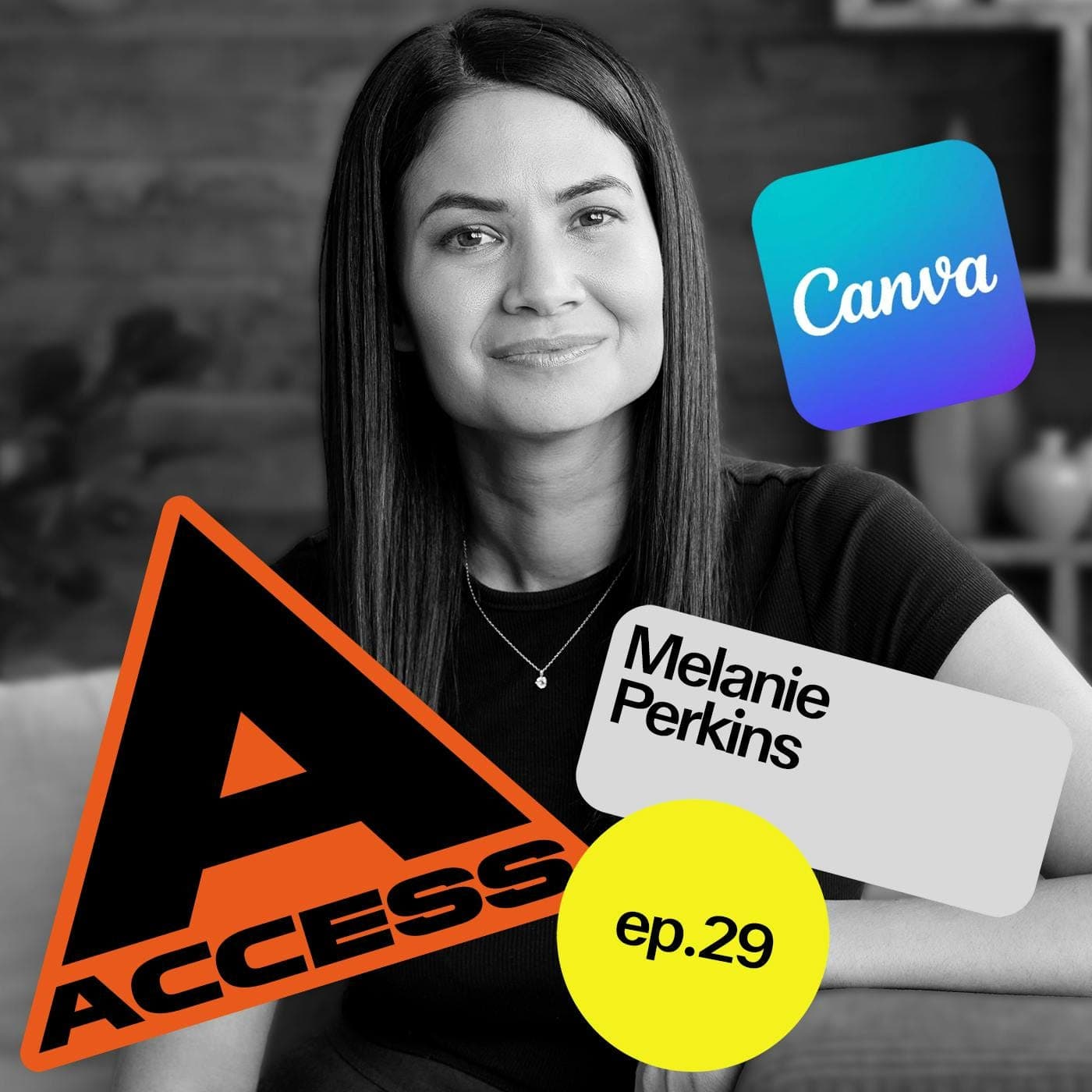
Canva’s CEO Melanie Perkins discusses Canva’s Create event news and Canva AI 2.0—shifting from a design platform with separate AI tools to an AI platform where users can prompt once and get an editable, layered design. The episode also covers the AI industry’s reputational crisis amid public backlash and attacks on AI executives (including Sam Altman), plus a lighter segment on AI “agents” tools like Poke/OpenClaw.
Guest backgrounds
Melanie Perkins is Canva co-founder and CEO (Canva: 12 years old; private company). Canva has 250M+ monthly users, $4B annualized revenue (Dec), and 100M teachers/students globally; launched in 21 countries.
Key claims
AI should empower people to achieve real-world goals; users don’t need to think about “agentic orchestration.” Canva AI 2.0 reduces fragmented prompting/reprompting by bringing tools into one tab and returning editable layers. Designers’ roles shift toward brand system/template design and curation.
Notable examples
Background Remover (2019), Canvas Chef/Chef search-to-editor workflow, “Magic Layers” (8M uses in 4 weeks), and personalized pitch decks built from brand templates and up-to-date info.
Written by AI. May contain mistakes. Listen to the episode to check what was said.
Chapters
Tap a time to open that second in VODiscussion on ClawCon
0:34 to 1:00
The hosts debate attending ClawCon and its recent events.
“It can help you with practically anything on the web, like restoring a vintage motorcycle from a 50-page restoration block, or finally break down that long article you've had open for weeks.”
Discussion on ClawCon
1:53 to 2:16
The hosts debate attending ClawCon and its recent events.
Reflections on OpenClaw
2:16 to 3:08
A critical discussion on OpenClaw's relevance and impact.
“Part of me really wants to go, especially when it was first announced.”
AI-Assisted Tools and Poke
3:08 to 3:56
Exploring the benefits of AI tools like Poke for daily tasks.
“when people used to jailbreak their iPhones, but then...”
User Experience with Poke
3:56 to 4:38
The hosts share their experiences and features of the Poke tool.
“But yeah, I've been pretty poke-pilled as well since last week.”
AI Assistants and Daily Tasks
4:38 to 4:58
How AI can simplify tasks traditionally assigned to EAs.
“Shout out to Mercury, who I'm also a new customer of.”
Poke's Limitations
4:58 to 5:24
Discussing the shortcomings and potential of the Poke tool.
“And just like little experiments like that.”
AI Personalization and Tone
5:24 to 6:39
The significance of tone and personalization in AI interactions.
“Yeah, I mean, dude, my overhead with meaning is like insanely low.”
The Social Network Sequel
6:39 to 8:07
Excitement builds for the upcoming Social Network sequel.
“I honestly didn't know the tone could be as much of a lever as it is in Poke.”
Impact of the Social Network
8:07 to 10:50
Reflection on the influence of the original Social Network film.
“Android people want to tweak their home screen with interesting widgets that don't work.”
Show all 34 chapters
Upcoming Guests and Topics
10:50 to 12:42
Preview of future episodes and guest appearances on the podcast.
“Yeah, I'm just I mean, Aaron Sorkin's obviously, you know, good at love a lot of his early stuff.”
Attacks on Tech Executives
12:42 to 14:01
Discussion about recent attacks on tech executives and industry backlash.
“And I asked the person if they successfully received it.”
The Reputational Crisis of AI
14:01 to 15:24
Explore the growing distrust and backlash against AI technologies amidst societal concerns.
“And it was about something to do with demonetizing a video or banning someone and the person got mad.”
AI and the Middle Class Struggle
15:25 to 18:02
Discuss the impact of AI on the middle class and the societal implications of technological advancements.
“Yeah, I think the first thing I want to say is violence is never the answer to some companies doing some things you don't like.”
Job Displacement and Future Opportunities
18:03 to 19:53
Analyze the dual nature of AI's job displacement alongside potential future job creation.
“But most Americans don't think this, Sam.”
The Stakes of AI Technology
19:54 to 21:33
Examine the current social tensions surrounding AI technologies and their implications for the industry.
“Has Dario written the only bad news essay?”
The Stakes of AI Technology
22:43 to 23:10
Examine the current social tensions surrounding AI technologies and their implications for the industry.
“It can help you with practically anything on the web, like restoring a vintage motorcycle from a 50-page restoration block, or finally break down that long article you've had open for weeks.”
Canva's Expansion and Future Plans
23:10 to 28:00
Delve into Canva's growth, user base, and the company's direction in the design industry.
“Are you in the throes of create rehearsals or what's going on?”
The Evolution of Canva's Design Philosophy
28:00 to 29:25
Explore how Canva aims to simplify design by integrating various tools into one platform.
“but I guess when you do something that's going pretty well, you've got a quarter billion people using Canva.”
AI Perception in Australia
29:25 to 31:46
Discuss the varying perceptions of AI and its implications in Australia, particularly in education and small businesses.
“And it's one of the most remote cities on earth, if not the, right?”
Empowering Users with Canva AI
31:46 to 33:54
Learn how Canva AI aims to simplify user experience and assist in achieving design goals.
“And then if you're a small business, being able to come into Canada AI and just like get research done on something, get a deck created, have things happen on brand and to be able to collaborate with your team.”
The Evolution of Design Roles
33:54 to 34:49
Understand how design roles are changing with technology and the emergence of new job categories.
“and you want the background remover and you click the button.”
Building a Brand System with AI
34:49 to 40:10
Discuss how AI facilitates the creation of brand systems and personalized content for organizations.
“Are we just letting that be a word that just kind of doesn't need to exist in their mind space?”
Design's Importance in the Age of AI
40:10 to 42:01
Examine the future of design creativity and its role amidst the rise of AI tools.
“that then the rest of the organization are able to utilize.”
The Evolution of Design Roles
42:01 to 43:27
Explore how AI is reshaping the role of designers and the importance of templates.
“Sometimes I can think because I just have an idea that I like actually going through the prototyping phase actually helps bring that to life and adds more color.”
The Evolution of Design Roles
44:01 to 44:28
Explore how AI is reshaping the role of designers and the importance of templates.
“You think you know a browser, but Gemini and Chrome?”
Canva's Integration with AI Tools
45:24 to 46:39
Discussing Canva's collaboration with AI platforms to enhance user experience.
“We've had 8 million uses of that in the first four weeks since that product launched.”
Navigating the SaaS Landscape
46:40 to 48:19
Insights on the current SaaS market and Canva's sustainable growth strategy.
“100 million people creating a presentation each month now.”
Product Development and User Requests
48:20 to 49:44
How Canva prioritizes user feedback to drive product innovation and development.
“I know there are a lot of rumors of the one person billionaire company.”
Mission and Strategy Amidst Change
49:44 to 51:07
Discussing Canva's mission and strategic goals in a rapidly evolving tech landscape.
“Well, she gives the sign off, Ellis, so that's easier for her.”
The Future of AI and Design Integration
51:08 to 54:01
Exploring the potential of AI tools in enhancing design processes and user workflows.
“I mean, OpenAI, you know, as you may have read on sources.news, is kind of going through a bit of a, you know, simplification, retraction of some of these bigger ideas back towards simplicity.”
Building Canva's AI Model
54:01 to 56:00
Insights into the development of Canva's AI model and its impact on design.
“I think we're just at the early stages of all of this.”
Design Innovations at Canva
56:00 to 1:00:10
Learn about Canva's significant breakthroughs in AI-driven design and user experience.
“We have a team of researchers of over 100 people now that have been working really heavily on this goal.”
Post-Event Rituals of a CEO
1:00:10 to 1:01:22
Discover the personal habits and relaxation methods of a CEO after a major event.
“You're going to have an agent orchestra, et cetera.”
Transcript
Automatic transcript. May contain errors.0:00This episode is brought to you by Accenture. When your advertising operations fall out of sync, everything else follows. Spotify and Accenture are working together to reinvent the rhythm of ad sales, using automation, analytics, and smarter workflows to simplify campaign delivery and access better data across the business. The result? Less time spent on operations, more time connecting brands with the moments and fandoms that matter most. Learn more at Accenture.com slash Spotify.
0:31Alex Heath:This episode is brought to you by Google Chrome. You think you know a browser, but Gemini and Chrome, that's new. It can help you with practically anything on the web, like restoring a vintage motorcycle from a 50-page restoration block, or finally break down that long article you've had open for weeks. Gemini and Chrome is here for it. Ready to make anything online make sense? There's no place like Chrome. Check responses set up required, compatibility and availability varies 18+.
1:00Ellis:Why do all my clients want to kill you? What do they have against you? What did you do to all of them? I mean, I can't comment on those other companies, but I guess when you do something that's going pretty well, you've got a quarter billion people using Canva, I think maybe they want a piece of that. Is Canva tech's most underrated company? Nine years of profitability, hundreds of millions of normie users outside tech that are so hard to get, and now a big pivot from design platform to AI platform. Today on Access, we have co-founder and CEO Melanie Perkins to discuss everything they just announced today at their big event here in LA.
1:36Ellis:But first, Alex and I discuss our waning interest in OpenClaw, my new addiction to the AI-assisted poke, which was made by last week's guest, and the big reputational crisis facing the AI industry. Welcome to Access.
1:52Ellis:my name is alice hamburger and i'm here with my lovely co-host alex heath we've got melanie from canva on the pod today with some actual news which isn't always the story of our show we're trying to get the real talk and the real takes not just the embargoes but we have a bit of both today but first alex will you be attending claw con in los angeles tonight we need to make LA tech happen.
2:16Alex Heath:Hell no. I was going to. I think it's going to be a madhouse. I'm too old for this shit, man. Really? A madhouse? Part of me really wants to go, especially when it was first announced. So these ClawCon pop-ups have been happening all over the world, really, for the last couple of months. I thought you'd live for the claw. Ain't no laws when we're using claws. We've talked a lot about the Clawfather, Peter Steinberger, and open claw. I have been very interested in it, but my view of it has actually changed in the last, I would say, couple of weeks. And I would say our episode with the CEO of poke Marvin last week actually played a role in me souring on going to this event as well.
3:00Alex Heath:I just feel like claw is a thing that we're going to look back on and go, wow, wasn't that a really cool nerdy time? Like when people used to jailbreak their iPhones, but then... Nerdy two weeks? Yeah. And then Apple started adding stuff to the OS and opening up over time. And I think the analogy here is services like Poke, which again, we featured on the show last week, basically simplifying what OpenClaw is for people like me who don't have time to chain together a bunch of stuff with a Mac Mini. Okay.
3:34Ellis:So maybe we can cut in all the times you've talked about OpenClaw and me being unimpressed for this exact reason from previous episodes of the show, because it just felt kind of so inevitable and also weirdly surprising that it didn't already exist in some way. And we're already starting to see people just natural language it and have the agents hook up MCPs on their own and have it all just work in the server with no Mac Mini. But yeah, I've been pretty poke-pilled as well since last week. I mean, it's honestly been pretty mind-blowing having a tool that's just built for this. I think, I mean, it is shockingly ahead of the game and was a few months ago.
4:10Ellis:I think my first exposure to some of the agentic natural language programming, every morning, do this, look at this, add to this. My first exposure to that was actually with Notion custom agents. But seeing with Poke that can handle Notion MCP pretty darn well, if not in some ways as well as Notion AI at this moment, it's like now I can do things like, hey, Poke, when you see client invoices hit on my Mercury account. Shout out to Mercury, who I'm also a new customer of. I just use whatever's on the show, I guess now.
4:44Alex Heath:Is this the third guest company that you've shouted out in our intro so far? We've got Ivan from Notion, Ahmad from Mercury. We have good companies. We do have good companies.
4:52Ellis:And so I say, when you see the bill hit my account on Mercury, market is paid in my Notion database. And just like little experiments like that. And I think one of the things Marvin said that was a good prompt was just think of it like an EA. Like, what would you ask an EA to do? And so that's one of those things, you know, that I would have asked an EA to do. The other thing I would have asked an EA to do is update all my goddamn services with my new Mercury credit card instead of my Chase one. And Poke said it could do that and then messed it up.
5:23Alex Heath:Whoa, you're going full Mercury, like with the credit card and everything?
5:27Ellis:Yeah, I mean, dude, my overhead with meaning is like insanely low. It's like$1 ,000 a month.
5:34Alex Heath:But what about those Chase points? I mean, come on.
5:37Ellis:I mean, my personal spending is going crazy on Chase. Okay. Put it that way. Shout out, Jamie. My business spending, very low. Okay. All right. And when Poke doesn't do so well, I say, hey, Poke, draft a bug report email to the team and send it, which is also very satisfying because I've been a bug reporter for my entire life, Snapchat browser company, et cetera. run. I spend a lot of time reporting bugs and now I can just fire it off, have poke do it for me.
6:04Alex Heath:So I try not to do this, but sometimes when we have people on the show, I haven't had time to really dig into the product that they build. Poke was one of those things where it just looked cool and I figured it was going to be a thing people were talking about. And I think correctly. So I think, uh, I saw poke in the news quite a bit last week, at least in our little bubble, but I hadn't quite tried it. So it's good to hear from you that you think it's legit. I've also been getting like the daily summaries from it and it's decent. It like forgot that I'm back on the West coast after a trip to the East coast last week.
6:38Alex Heath:So it's not quite as smart as I would like still a little rough around the edges, but you're right. I mean, the form factor and the, I don't know if taste is the right word, but just the approach that it has with the way it communicates and where it decides to prompt you a little more or go the extra mile seems to be quite good.
6:57Ellis:I honestly didn't know the tone could be as much of a lever as it is in Poke. People talk about Claude having a nicer tone. Yeah. Right, but people talk about Claude having a nicer tone, but Poke isn't just a nice tone that actually in some ways is the closest thing to it is probably the friend AI pendant. It's a little sarcastic, a little pushy. Fourth show. Definitely brief.
7:18Alex Heath:Death's mention you've made now.
7:19Ellis:Yep. And it makes fun of me sometimes, which I actually genuinely appreciate, but it also just knows when to be quiet and work. So I was talking about some potential dinner spots I was looking at for some trip. And I said, which one looked best to me? And it said, hmm, that surprises me. Not very Rick Rubin of tech of you. I'm like, Jesus, you're pulling quotes from my website and roasting me for that. Wow. Yeah. You weren't looking in Malibu for a restaurant. No. That would make you Rick Rubin. And it does feel like it knows me better than the others. It feels like they have some good prompts in place to remember your taste and things like that.
7:57Ellis:So it's given me very good recommendations. And it really does feel like a friend as opposed to your AI assistant who's going to write you a five paragraph essay every time.
8:06Alex Heath:Okay. So we're long, poke, short, open claw?
8:09Ellis:I mean, different audiences, right? It's like iOS and Android. Android people want to tweak their home screen with interesting widgets that don't work.
8:17Alex Heath:Well, that's great. Another thing that I wanted to talk about with you, Ellis, is that the social network sequel is apparently going to be good. I regret to inform you. So there was a teaser shown at CinemaCon this week. I saw a friend of the show, Matt Bellany, said that it might be the thing that actually breaks the internet, referring to Jeremy Strong's Mark Zuckerberg in this movie. Gave it five stars, which is high praise from Bellany. Stunning casting.
8:44Ellis:Couldn't be better.
8:45Alex Heath:Yeah, man. Kindle Roy is going full Zuck and I'm here for it. I think Zuck should -
8:50Ellis:I just can't wait to see the haircut. Is the haircut out?
8:53Alex Heath:The haircut's not out. So I think everyone had to have their phones put away to see this. I see. Okay. But I assume a teaser will drop. The movie comes out October 9th. I'm sure it's going to have awards buzz. I'm all for this. And I think Zuck, shout out to now our fifth access guest in this intro should embrace this. You know, he famously back in the day for the social network, the first one rented a theater for Facebook employees to go watch it and really leaned into the, the ridiculousness of it. And look, it's not going to be a favorable movie. It's about Francis Haugen, who I've met and interviewed and the Facebook files, which I covered extensively that were all the internal documents that came out about all the, you know, what's the right word?
9:44Alex Heath:Rough things that Facebook was doing in the way it was. Hashtag as I reported. As I reported as a, you know, shout out really to Jeff Horowitz, the Wall Street Journal reporter who famously wore a headband on national television as he was breaking this story, looking like he was in a dojo. I know Jeff as well. Why was he wearing the headband? Just the vibe, man. Oh, just in the arena. Yeah, he's just in the arena and now he's being played by the Bears, Jeremy Allen White and Francis Haugen is being played by Mikey Madison, which will be, I think, a very great cast. And yeah, I think Zuck, even though this is going to paint him as a savage monopolistic capitalist who doesn't care about children, I think you should lean into this.
10:33Alex Heath:I think you should rent a theater again. I think you should play into the memes because it's going to be, you know, obviously a hard one. And I think if you just ignore it, you kind of give it more life.
10:46Ellis:I mean, what choice do you what choice do you really have is, I think, an executive these days. But to laugh at the joke as well.
10:54Alex Heath:Yeah, I'm just I mean, Aaron Sorkin's obviously, you know, good at love a lot of his early stuff. I haven't liked some of the movies he's done in recent years. There was one set in a courtroom that I can't even remember. I think I fell asleep a couple of years ago. He hasn't had a ton of great stuff. So I'm hoping this is actually a return to form. And I didn't actually look to see if Trent Reznor was doing the soundtrack again. That would be dope. But yeah, we'll have to go see this. We'll have a little access premiere.
11:23Ellis:I cannot wait. For any number of reasons, Social Network is one of my top 10 movies ever. And it really is hard to overstate how influential it has been on the tech industry, you know, probably even more so than her and many others, because it incorporated music that has set the tone of coding for 15 years since then. So many of the archetypal narratives that executives take part in or have to combat, it really has just been so influential and really just a stunning movie. And so I'm hopeful that Aaron Sorkin is not washed and can make this happen again.
12:04Alex Heath:Yeah. And we're going to keep the tech meets Hollywood theme going. Next week on the show, we've got Jonathan Glatzer, who is the showrunner of The Audacity, a new show on AMC that is the spiritual successor to Silicon Valley, the former HBO show, I think. I talked about it briefly on the last episode, but really excited to have him on. He'll be our first non-tech founder type on the show. So we're branching out.
12:30Ellis:Can I get like a pre-read, pre-watch?
12:32Alex Heath:I've got the screeners. I'll send them to you.
12:34Ellis:Is that legal? Did you just cause yourself a problem?
12:37Alex Heath:If my poke was working, it would have already sent them to you. But we'll make sure to address that.
12:41Ellis:So I had poke send a calendar invite to someone. And I asked the person if they successfully received it. And they said, yeah, but I think poke misspelled the name of my company. And I was like, ha ha ha. Yeah. No, that was my fault.
12:56Alex Heath:See, that's also what I'm terrified with agentic AI is it's just really messing something up or compromising a deal or really embarrassing me. Oh, it asked me for permission.
Read the full transcript
13:05Ellis:Don't worry about that.
13:07Alex Heath:Yeah, but you're not going to look at everything. You're giving your life over to this thing. Well, the only other thing I wanted to talk about before we get into our convo with Melanie was I think a confluence of two things that to me. Molotov Mondays? Yeah, gosh. Um, for those who didn't see, um, it's important to laugh, I guess, but this is pretty serious. There were two attacks on Sam Altman's home. Uh, one of them through a Molotov cocktail over the gate. And then another was like a drive by, you know, firing rounds into the side of the, of the property. Thankfully no one was hurt. Um, and Sam posted a blog about it over the weekend that I'm sure a lot of listeners of the show have already seen.
13:49Alex Heath:To me, this is obviously a horrible thing and attacks on tech executives have been happening. I remember I covered in 2018, there was a horrific shooting at YouTube's headquarters. And it was about something to do with demonetizing a video or banning someone and the person got mad. And this stuff happens, right? But I think what's happening with AI, and I wrote about this in sources this week, is a real reputational crisis that I think the industry has not come to terms with and is not focusing on enough. So on Monday, Stanford, they do this big AI index every year. It's kind of the Bible of where AI is at.
14:28Alex Heath:And they release it once a year. And they had a bunch of interesting data this year about how horribly AI is being received by the general public and how the gap between how people feel about AI who work in it and are building it is really diverging from everyone else. And then you see these attacks on Altman's house and it's like, yeah, these are the consequences of what's happening, which is a lot of people hate AI and they hate what it represents. They hate the mass unemployment narrative that companies have been putting out. And it feels like it's reaching a boiling point. I wasn't sure if you got to look into all of this, But my takeaway is that I think the industry should stop finger pointing and focusing so much on the rat race of what everyone else is doing around, you know, you specifically, I'm talking about open and anthropic.
15:23Alex Heath:And they should think more about this because this seems like the biggest problem of all.
15:28Ellis:Yeah, I think the first thing I want to say is violence is never the answer to some companies doing some things you don't like. Nope. I will also say, I wonder if in some ways AI is kind of becoming the symbol for the wealth and equality and lack of agency and mobility that so many people are feeling. And while it's always been on the left or on the right to talk about how we describe the rich or the elite, the AI leaders seem to be something that both sides can agree on, are accelerating the demise of a specific group, the middle class or otherwise, that was already really, really, really struggling.
16:11Ellis:and telling them to go start their own agentic small business tomorrow while they're struggling to make ends meet and can't afford groceries is not really going to work. And so, yeah, it seems like it definitely demands a different tack. And I will say I was also scrolling some feeds and half the time I favorite something on X, I now get a notification later that it was actually fake from community notes. And I will say, I think regulation does happen fastest when everybody is dogfooding this bullshit. You know, and so, I mean, certainly it's in the news all day, every day, and could be the future of many companies, livelihoods, and, you know, populations at stake.
16:53Ellis:So I would expect there to be a very strong reaction over the coming years to a lot of this stuff.
16:59Alex Heath:I hope so. So this guy that attacked with the Molotov cocktail, he's a 20-year-old from Texas. He then went to OpenAI HQ, smashed the glass doors with a chair, and told security he was there to burn it down and kill anyone inside. And he had this anti-AI manifesto where he had a specific note to Altman saying, you know, if for some reason I don't succeed in killing you, I guess, then you should take this as a sign to, quote, redeem yourself. And then the memo was talking about, you know, AI replacing us, mass causing mass extinction. And then Altman puts out his post and he says that he sympathizes with this anti-tech sentiment that is clearly so pervasive.
17:49Alex Heath:But then he said, I believe technological progress can make the future unbelievably good for your family and mine. And that may be true. I believe that mostly, I think. I think you probably do too. We talk about AI all the time. We're nerds about it. We love to try it. It's helping us with our businesses. But most Americans don't think this, Sam. And this is the problem. So this Stanford report said that 38 % of Americans view AI positively, and that's the lowest ever recorded. And in China, it's 84%. So there's also this huge divergence happening with just the rest of the world. And then the trust in the US government to regulate is like 31%.
18:30Alex Heath:So people seem to just be incredibly pessimistic about AI.
18:35Ellis:Yeah, it seems like a little bit of a catch-22 for whichever administration is in power today or tomorrow. They don't want to cap the American growth and hegemony over tech. But it also, in some ways, is just kind of like a repeat of some of the stuff Bill Clinton gets criticized for accelerating globalization, which took so many jobs abroad. And sure, it did lower a lot of the cost of goods here. But for many people, they don't think it was worth it. And for many people, their salary or their wages haven't realistically relatively gone up in 20 to 30 years. I always say, I think it's the only chart that matters.
19:17Alex Heath:You know, you talk to people building AI and a lot of them privately believe that there's going to be more jobs in the future. But they all also acknowledge that there's going to be this period where a lot of people lose jobs really quickly. And I think that's the tricky part is communicating this vision on the other side of, you know, technology tends to enable new kinds of jobs. I mean, like we would not be doing a podcast 50 years ago. The idea that this could be a business was ridiculous then. So it will unlock a lot of new things, but that transitional period is going to be really messy. And no one in the industry seems to know how to talk about that.
19:53Alex Heath:And again, I just keep coming back to the industry is so focused on itself and competition and recruiting and virtue signaling to everyone in the bubble that they aren't paying attention to the fact that people are rioting about this stuff.
20:11Ellis:Has Dario written the only bad news essay? I guess the Citrini, as you say. But that was not a frontier lab.
20:21Alex Heath:Ullman has a lot of stuff about, you know, needing universal basic income because of such mass unemployment that's going to come, right? He has that world coin startup that he's involved with. I mean, they all talk about this stuff. I think there's a recalibration that needs to happen. And I'm not really sure what it's going to look like. But, I mean, I think the attacks on Ullman really show the stakes here. And I just hope that the industry wakes up. I mean, you kind of probably get, if I had to guess, you get lulled into a sense of this is just the way it is when you're an OpenAI employee and you're leaving the office and you see a sign reminding you to hide your badge as you walk out, which is something I noticed when I was walking out of OpenAI a few weeks ago.
21:03Alex Heath:I remember even going a couple of years ago, and this was well before all this mass unemployment rhetoric. And I was asking, like, why is this an unmarked building? Like, why is like, there's no way of knowing that this is the headquarters. And people were telling me at the time that they were already getting crazies showing up, talking about AGI and trying to find AGI. And, you know, this is just the stakes of this technology feel so high now that I just hope that people don't get used to going into their unmarked office every day and ignoring it, you know?
21:34Ellis:Well, on a lighter note, today we have Canva co-founder and CEO, Melanie Perkins, to talk about some upcoming news they're dropping.
21:41Alex Heath:Excited for this one. It's been in the works for a while. We've wanted to have Melanie on the show. She's obviously a super impressive founder and Canva is a very important company. We recorded this last week, right before their big event in LA, which is happening the day this episode drops. And they've got a lot of big AI news, which we get into. So thanks again to Melanie. Let's roll it.
22:09This episode is brought to you by Accenture. When your advertising operations fall out of sync, everything else follows. Spotify and Accenture are working together to reinvent the rhythm of ad sales, using automation, analytics, and smarter workflows to simplify campaign delivery and access better data across the business. The result? Less time spent on operations, more time connecting brands with the moments and fandoms that matter most. Learn more at Accenture.com slash Spotify.
22:40Alex Heath:This episode is brought to you by Google Chrome. You think you know a browser, but Gemini and Chrome, that's new. It can help you with practically anything on the web, like restoring a vintage motorcycle from a 50-page restoration block, or finally break down that long article you've had open for weeks. Gemini and Chrome is here for it. Ready to make anything online make sense? There's no place like Chrome. Check responses set up required compatibility and availability varies 18+.
23:10Alex Heath:Hi, Melanie. How are you? Great to see you. I'm well. How are you doing? Good to see you. Are you in the throes of create rehearsals or what's going on? Yeah, it's all happening. Create rehearsal, keynote prep, like the products coming. It's all happening right now, but it's exciting. Ellis has done some keynote prep in his time.
23:32Ellis:Yeah, I'm curious, like, what does that look like these days? I feel like some folks, including Apple, are just like, we're just going to do this all in post and just record it and then make everybody sit in an audience and just play the video. But there seem to be a lot of different approaches on, like, where is the leverage with the keynote these days? I don't know. What's your take? Oh, that is totally, that would be a very relaxed approach, wouldn't it? We have an audience of 5 ,000 people in our community come. It's a big event. We have a whole day of workshops and training, and it's a very live experience.
24:06I think the keynote goes live like an hour or something after it's recorded, so it's minimal post.
24:14Alex Heath:I got to see Jensen do his keynote at GTC a few weeks ago, and he doesn't have a script. He just freewheels it for like almost three hours. Are you very scripted? How regimented are we talking about?
24:26Ellis:The masculine urge to freewheel your two-hour keynote. I have to say we're a little more prepped than that. But we also have a lot more, let's say, creative flair you might see coming out next Thursday. There's a lot of elements and creative industries coming together, which we're excited to bring to life. So there is a little more than just freestyling it for two hours. How many cooks are in the kitchen approximately at this moment? Because I feel like keynotes are just so high pressure because they're live. And I feel like everybody wants to have their two cents, which can get a little crazy at times.
25:07It starts off pretty small. But then as we come up to the day, we've now got hundreds of people working. Because there's going to be like hundreds of people on stage. Oh, I don't know exactly the number on stage. So there are a lot of people prepping all sorts of things to bring to life on the day. So there's, I'd say, hundreds of people involved actually at this point.
25:28Alex Heath:Melanie, how big is Canva these days? Like how many users do you guys have? I don't know if you disclose revenue. I know you're private. But give us a sense of the scale. Because Create is such a big thing. I mean, thousands of people. We've got more than a quarter billion people using Canva each month. And we reached$4 billion in annualized revenue in December. How do you think about the growth? Like, has it always been kind of the last few years pretty steady or have you had kind of an inflection moment recently? It's been pretty steady for the last decade. We've been in the list for 12 years now and it's just been growing rapidly actually since day one, which has been pretty epic and continuous and steady.
26:04But I think because so many people have been using Canva, like one of our favorite charts is this cohort chart. And you can see people that joined in 2013. There's more people using Canva and paying for it today than there were back in 2013. and as more people from that cohort upgrade to our paid products and use it more over time. But then the same for every year since. So I think that's why it has been very continuous over the last decade.
26:26Ellis:I'm curious, how would you describe the growth? Is it moving into new teams within companies or is it just kind of more companies using the baseline stuff that's been there and been popular? Or how are you thinking about that? It's all of the above. So it's new people that have never used Canva before. It's people using Canva for more of their workflow. so they might come in to create a presentation and they stay for all our docs and whiteboarding and all the other things that you can create in canvas so having that interoperable visual suite at the heart of it means you can learn one product and then you can take that to every other product like websites and so forth and we've got 100 million teachers and students using the platform around the world we've rolled out into 21 countries and then thousands upon thousands of districts, small businesses, individuals.
27:12It's really the full gamut. It's quite fun when you look at a chart breakdown of the different departments of a company using Canva. It actually mirrors their company. So if there's more sales folk at their company, there's more sales folk using Canva. If there's more engineers at the company, there's more engineers using Canva. So it really is a very broad split.
27:29Alex Heath:Ellis has a question that he needs to ask you about his clients. Ellis, I just want to make sure you ask this.
27:35Ellis:Thanks for teeing me up, Alex. Why do all my clients want to kill you? I work with tech startups and I feel like we've got the deck ones. We've got the video ones. We've got the doc ones. We've got the design ones, obviously. What do they have against you? What did you do to all of them? There's such a vengeful spirit.
27:54Alex Heath:Is it really vengeful or just like people want what Melanie's got? I mean, I can't comment on those other companies, but I guess when you do something that's going pretty well, you've got a quarter billion people using Canva. I think maybe they want a piece of that. You just made two acquisitions, right? We did, yes. Yeah. So maybe you could buy some of these that Alice was talking about.
28:16Ellis:Well, I think part of the question is just kind of about the classic bundling, unbundling idea. I mean, every company starts small, gets big, adds more features, becomes a suite, wants to be for everybody. And then the startups come and peel out the individual use cases, make them simple again. And where do you feel like you stand in that trajectory right now? I think if you look at the first decade of Canva and the genesis of the company, there was a very fragmented industry. To just create a piece of design, you have to go to all these different products, go to different template sites, stock photography, and illustrations, and layouts, and a different piece of software for everything you want to design.
28:55Our whole thing was taking all of that fragmentation and bring it into one simple platform and making it accessible to the world. I think what's really interesting is actually if you look at the parallels of creation today, actually that fragmentation is occurring now with all the different AI tools, all the different things that have your memory and your context. And so the modern process of creation, we're really excited. Again, we bring it all into one simple platform and making it accessible to the world, which is exactly what we've been doing with Canva AI 2.0. So we're very excited about everything being in one place once again.
29:27Alex Heath:Melanie, you're from Perth, right? That's correct. And it's one of the most remote cities on earth, if not the, right? You're correct. I would love to know how people feel about AI in Perth right now. I don't know if you still live there or you spend a lot of time there, but Perth and Australia in general, I mean, we talk about it. You know, this show is very, we talk to people in the SF bubble all the time. And obviously, Ellis and I are pretty AI-pilled. We're using stuff constantly. I'm curious in Australia. I mean, we don't have many Australian founders on the show, and I would just be curious to hear what it's like down under.
30:02Great question. So I live in Sydney now, and I think that everyone has their own experiences with AI and with different products. And I guess some people find it if they're using a certain tool, one of the issues that a lot of people have is they have to prompt and reprompt and go over and over again to try to get the output that they want. I think there's a lot of problems that we're trying to solve with the existing tools with Canva AI 2.0. So for example, that prompting, reprompting thing. now with Canva AI, you can just prompt it once and then you can create the design that's in a fully editable layered format.
30:38And then you can just go in and edit any aspect of it. And you can have the normal tools that you know and love in Canva. And so I think that like everyone has their own experiences. I can't speak for all of Australia here right now.
30:49Alex Heath:But you know, in the States where it's always like, oh, like, you know, non-technical people are pretty negative on AI. They fear about job loss. They don't see it as like an uplifting thing. And then in other parts of the world it's a little different i was just curious if it alex thinks everybody has heard of open claw when no one has that that is fair i think you know for everything with like all technologies like is it help people aren't except for perhaps in silicon valley waking up and thinking about ai every single day it's waking up and like they have a job to do a teacher has a classroom to teach and so yeah a small business has a small business to run a and so forth like everyone has their own job to do and so where we really the way we really think about it at Canva is like how do we empower people to achieve the goal that they have in the real world with technology and AI is just another tool in our toolkit to help people achieve their goals it was why we were so excited to launch LearnGrid which is specifically for teachers around the world so it has curriculum aligned content materials so if you're in year five you're teaching maths in a certain district or in a certain country, you'll then have curriculum aligned content being able to get created really easily.
32:01And then if you're a small business, being able to come into Canada AI and just like get research done on something, get a deck created, have things happen on brand and to be able to collaborate with your team. I think sometimes it can feel a little scarier when it's like away from you and you're kind of hearing about these things, you know, and the messaging and the media, but then when you actually can use it and actually helps you to achieve your goal and you help your helps you and your team to be more efficient and to be able to get your work done I think that's when it becomes a lot more approachable you know our goal is always to make complex things simple and so we're really excited about bringing the power of AI to help people achieve their goals in the world I think that sometimes it can sound like there's this thing that's going to happen to us but actually what we are really working very hard at is ensuring that that thing is actually just another tool to empower you to achieve your goals.
32:51So it's a very strong focus for us, actually.
32:54Ellis:Yeah, I have a lot of respect for anybody who's building for everyday folks, call them normies or otherwise, because I do feel like that's a lot harder, realistically, to do. What do you think, I mean, you talked about making the complex simple, but do you have any like internal principles for that bar? Or what it means to design something that you feel like everybody from the teacher to the professional could use? Because I feel like that's quite a hard skill. This is one of the other reasons I appreciate Apple's, you know, forward moves with iOS and otherwise. They've been able to stay up to speed on a lot of this stuff.
33:29Ellis:I don't know about Liquid Glass and the new phone app in particular. But yeah, I mean, it's a tough line, isn't it? To try and bring new tech to everybody. How do you think about that? It's what we've been doing really for a decade. So we've always tried to give people the latest and greatest technology, but in a really accessible way that helps them to achieve their goals. You know, when we launched AI back in 2019 with Background Remover, and people, of course, loved it because they didn't have to do this manual task where you, like, have a photo and you want the background remover and you click the button.
33:58Classic banger feature. Yeah, you just disappeared. But even if you rewind even further back to Canvas Chef, which was actually Canvas name before we launched Canva. and that was all about being able to like you would have a search box and the idea was you just search for whatever you want from a lab report to a brochure to whatever and it would be able to create it on the fly and then you'd got jump into the the canvas chef editor and be able to um like move things around and drag and drop and collaborate exactly as you are today it was just like my prototype before we actually built canva and i think it's kind of interesting that like now if you look at canvas chef and you look at canvas ai 2.0 the ui is actually remarkably similar that you just got a search box you can jump in but then you would go into the editor and you can collaborate and do all the standard things that you want so i think like while ai is obviously very new and certainly generative ai and all the things that now is able to happen with identical orchestration and so forth i think to the standard person they're just trying to get their goal done and so if we can help facilitate that um it's pretty powerful are you telling teachers about
35:06Ellis:agents? Are we just letting that be a word that just kind of doesn't need to exist in their mind space? They don't need to know about it. We're going to talk about agentic orchestration, but we also don't expect them to specifically care. I think that we've got hundreds of people working behind the scenes to make this agentic orchestration really awesome. But from a user's perspective, they just say the thing that they want, they get it in a layered format that works the way they know and love from Canva. And then they can just use it how they would normally use Canva.
35:37Alex Heath:Are you going to have an actual orchestra at Create though? Yes. So we have, one of our team members said it is like an orchestra. And so for the internal team celebration, we put together like a team orchestra. It was hilarious. But we're actually getting a professional orchestra, which I'm yet to see that are going to be coming on stage next Thursday. and they're dressed as agents like from the matrix or how are we i think we're giving standard standard orchestral uh uh blacks i believe but there will be a little glitter there's gonna be a lot going on this is a big moment for you guys i mean looking at uh what your team sent over there's a lot here and how you're changing the interface and it really is consistent with i think a lot of the themes elsa and i've been covering on the show for the last six or so months.
36:29Alex Heath:You know, we've had Dylan Field from Figmon and we've had a lot of these kind of platform tool companies talking about how they're adapting to AI. And a line that struck me from your all's release that the team sent was, we're moving from a design platform with AI tools to an AI platform with design tools. What does that actually mean? That is a really great question. So from a user standpoint, there's a lot of things that just stay exactly the same as Canva. Our mission is to empower the world to design. If you come into Canva and you hate AI, you actually can just completely use Canva exactly the way you always use it.
37:04But I guess behind the scenes, Canva AI is a new tab that you can access on the homepage or inside the editor while you're actually designing. And that is where all of the power of that agentic orchestration comes to life. So you can type it, whatever it is that you want in, and then you can get your job done. And so previously in Canva, you had all these different really great AI tools, but they're all like quite fragmented. And so you'd get the tool at your hand when you needed that tool. You have to know where to find it. And so with Canva AI 2.0, it brings that all together into the one space.
37:41And so you can just type it in and it will go and find you the tool rather than you having to go in.
37:45Alex Heath:Oh, my God, this is incredible. It's pretty cool. I literally had this problem where I'm not like a power user. I have Canva installed and I needed to get something updated with my logo for my newsletter to send to someone. I needed to do it fast. And I was like, how fast can I do this? What tool do I need to use? I used Google. I was like, you should try Canva. And then I open it and I look at all the menus and I'm like, shit, this is going to take me like a while to figure out. And it was, Melanie, it was so basic. I don't even know what it was. It was like conferred. It was like increasing the size of something.
38:14Alex Heath:I feel so dumb about it.
38:16Ellis:It's one of the main AI use cases is being able to click all the buttons in the menus for you that you didn't even know existed. And that applies to like literally every product. And it's pretty wild. Like now with dictation, you can just like literally speak into your phone. Like I've been designing presentations, like when I get an idea at midnight, it's like literally on my phone. And I can just dictate what I want and then it will just like create it for me. And then I can do iterative editing because of the way it now works. Inside the editor, I can go, oh, actually, I didn't mean that. I wanted this other thing or I want to rearrange or try out this idea.
38:46And so all of a sudden you can have all of the design happening just by dictation on your mobile phone, which is pretty wild.
38:53Ellis:Well, so let me ask you, I know, you know, with the mission about empowering everybody to design, then you have some new use cases here. One of the ones that y 'all mentioned was building a custom pitch deck for a customer based on every email you've ever exchanged with them. Sounds great. But it also sounds like, is that not the work that that person was already, you know, is that not their job? And like, where's the design left in that type of world? Or are you thinking of design as potentially something bigger than that, like coming up with the framework for the decks and then that gets adapted, you know, or customized?
39:26Like, what is that job that that person's doing anymore? I think that's what's kind of exciting in this new era. Every, like in our company, every role is changing what it actually means. And in fact, if you look at the role of a designer over the years, that's changed. Like if you go back to each of the different ages, the role of a designer has been completely different depending on the tools that are available. I think that what we're going to see is a lot more brand system designers coming to bear as a really important role. So things that might have been a graphic designer before, just like creating a one-off graphic, is all of a sudden creating a brand system for the entire company to operate from.
40:02And it means that the sales team that often gets neglected by the brand designers all of a sudden can have this system where the brand designers are working on the templates that then the rest of the organization are able to utilize. And then all of a sudden every single customer can have a personalized pitch deck with all of the up-to-date information that can feel a lot more personal to that person or to that customer. And so I think we look at a lot of the jobs that are disappearing, but with AI and in In fact, with every technological revolution, a lot of new jobs come to bear. And so things like a brand system designer, I think, are exactly in that category where there's so much of a brand that is instilled in the template and in the way it's actually laid out.
40:43And the information is like a much more of a curation job as well.
40:46Alex Heath:Is what you're describing how Canva is changing internally too? Are you creating new kinds of roles? Very much so. Pretty much every role today is different from the way it was three years ago. If we look at the way our engineers work, it's completely different. If we look at what our product designers do, they're creating prototypes. If we look at what our PMs do and the way they do their research, it's completely different. It's all the same, like underlying principles are the same, like building great products for our customers, that doesn't change. The way we actually get our work done or the way we create brand templates across the organization, like all of these things are certainly changing.
41:22We've invested very heavily in upskilling our team, upskilling our systems to help everyone and come on this very important journey that we're all going on together.
41:29Ellis:I can definitely vouch for the fact that all designers just want to design brand systems or design systems. I think that's definitely true. But I know like one big question with this kind of like the whole debate, if you've heard it about friction versus frictionless and what you might gain or lose, where do you feel like the design creativity is going to live? I mean, is it that clear of a wall between the exploration stage and the scale stage? For me, design is always about like taking an idea and turning that into reality. And there's so many stages of design. Sometimes I can think because I just have an idea that I like actually going through the prototyping phase actually helps bring that to life and adds more color.
42:12And then I refine like sometimes 100 times after that point in time. And sometimes for me, I have an idea, but actually writing it out like prose is really helpful. and sometimes so I think you know at its essence we're always taking an idea from chaos all the way to clarity and there's lots of different tools and mechanisms that help to bring that to life and so I think that the role of design is actually more important now than ever before when we launched Canva at the start people were like what are designers going to do Canva's going to take away all design work and actually if you look at the last decade there's way more design is creating way more visual content than ever before.
42:52And I think that next leap is also going to be true, that brand designers are going to be creating, there's going to be a lot more brand designers required because they're going to be creating the templates. Actually, the brand intelligence that we're launching right now, it really leans heavily on the template side because a template actually imbues so much design principles and brand knowledge in a template of itself. So we, yeah, we're really excited about the way that will come to life as well and the new roles that will be created because of this.
43:27This episode is brought to you by Accenture. When your advertising operations fall out of sync, everything else follows. Spotify and Accenture are working together to reinvent the rhythm of ad sales, using automation, analytics, and smarter workflows to simplify campaign delivery and access better data across the business. The result? Less time spent on operations, more time connecting brands with the moments and fandoms that matter most. Learn more at Accenture.com slash Spotify.
43:58Alex Heath:This episode is brought to you by Google Chrome. You think you know a browser, but Gemini and Chrome? That's new. It can help you with practically anything on the web, like restoring a vintage motorcycle from a 50-page restoration block, or finally break down that long article you've had open for weeks. Gemini and Chrome is here for it. Ready to make anything online make sense? There's no place like Chrome. Check responses set up required, compatibility and availability varies 18+.
44:28Alex Heath:You've got all these connectors that you're plugging into Canva now where it's sucking in context from Google, Slack, CRMs, et cetera, right? So it's like the through line of Create this year seems like Canada's becoming this hub. And I'm curious about that philosophy because just to bring up like Figma again, he started basically making Figma like an MCP node where all of a sudden like Claude can talk to Figma. Do you want that? Do you want the big AI assistants to be kind of at a higher abstraction level of the interface into Canva and vice versa? Because right now it seems like you're wanting everyone to bring stuff into Canva, not necessarily have Canva open up.
45:12Alex Heath:Is that fair? Am I understanding the philosophy? It actually works both ways. So we already collaborate really closely with OpenAI and Anthropic. Canva is one of the top ups on both platforms. but then equally on the other side of the fence having can be the platform that is able to bring all the information in so when you're creating that pitch deck it can you know bring in the latest calendar invite in your gmail context so it's both i was i was curious if it's going to be both because this seems more like pulling in and i know you had the open the chat app and all that but i wasn't sure if this was a shift yeah no no very much so bi-directional are you able to
45:47Ellis:break down what people are asking for when they're doing it through chat gpt or claude i wonder just like how much design work is actually the stuff that gets marketed like generating logos and stuff like that or if if that's just kind of the flashy piece and most of it is is scaling executing automating yeah so one of the things that was pretty cool like the more content that is being created on these um third parties like on claude and chat dbt actually the more content that then gets brought into Canva. It was actually so much so that we launched something called Magic Layers recently because so many people are creating images in all sorts of places on the web and then actually get really frustrated because they want to be able to actually edit the text or edit whatever format it might be.
46:31We've had 8 million uses of that in the first four weeks since that product launched. So I think that across, in Canva, you can design presentations and I think we've had 100 million people creating a presentation each month now. So it's a very large plethora. I think being able to take an idea and turn that into a design, we kind of cover that full gamut.
46:55Alex Heath:What's your view of the SaaSpocalypse convo right now? Being someone who is very AI native and you're working with the assistants and the chatbots, but you're also doing your in-house AI, you probably are pretty glad if I had to guess that you're not a public company right now because it's rough out there. But curious, yeah, how you're viewing all that. What you think people are maybe getting wrong, what are they getting right? I've been doing this for a while now. Canva's been around for 12 years and kind of things like go yo-yo. At one stage they'll be like growth at all costs and then the next stage is like profitability.
47:31We've been fortunate we've been profitable for nine years so we've kind of avoided that yo-yo. But at one stage people are like spend all your money in the bank account And we've been fortunate to have got a very sufficient bank balance. So it kind of means that we don't need to worry too much about what's happening in the macroeconomic environment. And we just really focus on what we can control, which is delivering a great product to our community. I think being out of Silicon Valley, it does create a little bit less noise for us. And we just really focus on delivering a great product to our community.
48:02And I think that they're going to love, hopefully, what we're bringing out.
48:05Alex Heath:Well, being profitable certainly helps. That's definitely not in vogue in Silicon Valley. So no, and sometimes it is like, I think after COVID it became cool, but we're like, we've been profitable for like five years now. Now it's nine years. So we kind of just, we really focus on just building a good company.
48:23Ellis:I know there are a lot of rumors of the one person billionaire company. Are you seeing the team size actually change as a result for camera users as more people are able to do stuff on their own? For us, we've got very, very large ambitions. We always say we're 1 % of the way there. And so actually our team's way more productive and can do way more things. But we say 1 % because we just keep growing our dreams for what we'd like to be able to do with the company. And so it just means that we're able to do more things and like set our customers better. One of my favorite things is we get 1 million requests from our community each year of things that they'd love to see in the product.
49:02and we're actually launching, I think it's 41 at our event. And so, you know, just being able to serve our customers better to be able to help them achieve their goals. We've been really investing heavily in our team in upskilling everyone. We have something called AI Discovery Week. We have specialty training. So each specialty is going through the transition of learning the new skills for this new era. Yeah, we really see it that we can do so much more.
49:26Ellis:Let's coin it right now, long tail feature development. I feel like you're going to be able to just come up with ideas. And as long as you can get sign off, I mean, it doesn't even have to live somewhere in the app. If someone can ask for it, it could still work, you know, and obviously that's still resources. But I do think that is going to be fun.
49:45Alex Heath:Well, she gives the sign off, Ellis, so that's easier for her. Yeah, I mean, to the point about 1%, I mean, it's in the press release up high. It says the ambition is simple to be the place where all of your work gets done. I mean, that's putting you in competition with everyone. I mean, how do you think about that? I mean, is Canva, is your goal really to have Canva become like everything that, you know, Microsoft and Google and Notion and all these companies are doing? Like you want all of that activity to be possible inside Canva? The way we think about it is just like what is best for a user?
50:22And like having to go and navigate lots of different systems and lots of different tools is kind of annoying. and so having that all in one place kind of makes sense but then that doesn't mean we don't go and like have access to lots of different tools and places that you might be doing your work elsewhere but being able to have that all at your fingertips or the end of your query and it just having all that context you know for a long time our goal has been just to bring productivity and creativity together in a way that hadn't been done before and so that's where we saw as a huge gap in the market and we're certainly doubling down on.
50:54Ellis:It seems like it's It's got to be a stressful time to be a founder right now. How big does the suite go? What do we try and eat? What do we let leave? You know?
51:04Alex Heath:I don't know. She seems pretty zen, Ellis. You don't seem too stressed, especially a week before create. But are you? Yeah. To that question. Are you at all about any of this?
51:13Ellis:I mean, OpenAI, you know, as you may have read on sources.news, is kind of going through a bit of a, you know, simplification, retraction of some of these bigger ideas back towards simplicity. It's tough to know when to stop when you can kind of create everything. There's a lot of things that have changed, like what we can do technologically has changed radically for the better as far as like actually being able to bring our mission to life. But our mission is actually very stable. Our mission to empower the world to design, we break down into what we call our mission pillars, empower everyone to design anything with every ingredient, in every language, on every device.
51:48And then every year we pick off like what is the next most important strategic goal under each of those mission pillars to bring to life. And so, you know, we started off with social media, graphics and marketing materials, and then there was presentations, docs, whiteboards, websites, Canva code, and so forth. And so it's kind of like there's some things that change radically, and then there are other things that are like actually quite the same. And because we've been pursuing the same mission and the same strategy for such a long time now, it does take a little bit of the pressure off because you kind of know that like how these things will play out.
52:22Ellis:It's tough though, isn't it? I mean, you guys have a scheduler inside the product now, right? For scheduling meetings for yourself. Oh, it's so cool. Yeah. It's actually crazy. I can schedule with 15 different apps right now. I don't know which one to choose. I mean, is the idea that it's just whatever one's in front of you? Yeah, so what's really cool is like, so for the other day, we just got connectors to work and I was able to like, I was like, tell me about my week coming up and create me a docker you read about it to help me plan for the week. And I was able to go into my calendar, like look at my schedule, actually tell me how to optimize my time.
52:55And I found out like, I was like, it said that I had a massage coming up. It said I had a hectic week. And I was like, I didn't think I had booked a massage. And I was like, is there a problem? And I looked at my calendar. I was like, actually, my partner had booked me one. And so it's kind of fun just being able to have the document that you typically have to go and create with all these disparate tools to be able to be created on the spot. Or even research. Usually, if you're doing research, you have to go and scour lots of different places, and all of a sudden, the research can actually just get handed to you in a document that you can just share and collaborate on.
53:28It's kind of cool. You might be able to tell, I kind of love being able to take technology you like utilize it to help achieve goals. And like the amount of new technology that we now have inside our product and have built, it's pretty extraordinary. Like the way these things will come together in completely unexpected ways.
53:46Alex Heath:A lot of what you just described, I'm using Cloud for right now. And I'm curious, since you've been using, you know, the AI 2.0 stuff, are you using the other big assistants less? Do you think this eats into their time if Canva users embrace all this stuff? I think we're just at the early stages of all of this. Like the number of people that are currently using AI tools or even using, you know, is like quite small compared to the number of people on the internet, for example. I think there's going to be a lot that transpires over the years to come. That's a very diplomatic answer.
54:20Ellis:I mean, because I think, you know, it's tempting, right, to like add some of this stuff to the product just philosophically. I mean, shout out to a couple clients, Cosmos and Mobbin, you know, which are two very different types of inspiration, like one for kind of like more lifestyle art photography design, one for user interfaces. And, you know, that's kind of what they want to be is the research workspace where you can assemble stuff using powerful tools, better libraries, this or that. And then, yes, there is certainly a value to not have to copy and paste to be able to have it within your workspace.
54:54Ellis:I don't know if the jury's still out on kind of how people are going to use each of these, but it's interesting. There's just so much overlap right now, I feel like. And indeed, I mean, you have a huge edge just being the place where a lot of people already are. And you have the edge of trying to bring it to them seemingly successfully in a simpler way, you know? So there's that as well, just kind of the first mover advantage or even the distribution, if you will. Yeah, I think we're so early in the innings of like, what is the new software stack for companies? What's the new software stack for people at home?
55:29What's the new software stack for a teacher? I think, you know, it's so early for all of this that I think there's going to be a space for a lot of companies over the years to come. And companies that serve the community really well. You know, Canva AI, like, is obviously the goal is like everything in one place to like help streamline fragmented workflows. which we think is hopefully a pretty compelling proposition to our community.
55:54Alex Heath:I saw that you all trained your own model for this. I'm curious what that process was like. Had you done a foundational model before? What was that like? A huge effort over many years. We have a team of researchers of over 100 people now that have been working really heavily on this goal. We had this interoperable format between all the different types of products in Canva, which was a huge investment for the last decade. the same format for a presentation as a website as a video as a document so we knew that if we could crack that it was going to be a huge unlock for what we could do with AI inside our product and so it was really exciting to crack that and then in October last year we had this really exciting breakthrough as to how we could actually bring that to life in our product with identic editing and so that was a pretty significant and exciting unlock which is where we have a good do Do you have a good name?
56:48Alex Heath:You know, these frontier models, they need names. You got a good name for your model? They can have a design model. We haven't put like a scale. Well, this gets to your idea of like simplicity and the user shouldn't know, right? I'm being kind of facetious. But like I'm just curious too for these big consumer companies that invest in their own models. You know, the AI race is always contextualized by the labs and the models that people can name. And it's like, well, there's a lot happening with these other big scale companies. And not all of them are doing models, but some of them increasingly are.
57:23Ellis:Well, you could do what all the LA parents are doing and name their child like Picasso or Matisse. Could always just do that. I mean, I think it brings back to your earlier point around like simplicity. Like customers don't really care what's underneath the hood. they come in with a job to do out of the real world, teach a classroom, market their business, whatever it might be. And I think that's what's exciting is that we're able to abstract a lot of the complexity. Like Canva uses our own models in where we need to have expertise around design. And then we partner with a lot of other great companies and we're able to bring that technology in.
58:00But from the customer standpoint, they don't need to know like the hundred different things that are happening behind the scenes to help deliver their goal. They just need to see the thing at the end looks great and helps to achieve that original goal that they set. So we try very intentionally to abstract a lot of the complexity behind the scenes.
58:17Ellis:I know any model has its tendencies and tastes. Do you feel like you've identified any? Because I mean, there's got to be something, right? In the world of design, there are just so many opinions on what good design is. What's the bent of the model that you've trained? So for the hair, it's really fun to age it. Does it like liquid glass? One of my favorite things, I don't know if this particularly answers your question, but it is my new favorite thing. We've got this thing. It's in the onboarding for Canva AI, and you can create what's called an About Me page. And it's the first book in your memory library.
58:52And what it does, it takes all of your designs. You have to click the button, say, like, create my About Me book. And then it creates all of your designs and documents. And it actually creates a page that explains your preferences for things. and it's so fun because it like I didn't actually believe until I saw it with my very own eyes how much knowledge about you as a person is instilled in all of your designs and documents it was really interesting so I guess and then that actually becomes the memory that then powers all your other designs.
59:25Ellis:So what's your aesthetic? It was actually it got into my aesthetic but it also I got into my, it like kind of felt like a fun, weird personality profile because like it understood like that I have a two-step plan, build one of the world's most valuable companies and do the most good we can do. And like it understood like the way I think behind things. So I guess the idea is that it doesn't have a stand preference, but it really is your preference. It's like you've got your brand system in there and then you've got your memory documents. Says Mel, I personally think Vaporwave is pretty passe, but if that's your thing, all right.
59:57Well, actually I'm going don't have to say you're a Batman job here is on the product. I'm curious.
1:00:04Alex Heath:Now you have a keynote rehearsal to get back to and I have to catch a flight, but I did want to know maybe we can end it here. You do this big event every year. You get thousands of people. It's a spectacle. You're going to have an agent orchestra, et cetera. I'm sure there's going to be other special surprises. What do you do right after all this? Do you immediately go on a vacation? do you you know do not disturb and you disappear like what's your post create uh flow it's a great question like immediately after i i'm actually an introvert and i really just like a dark room yeah well thank you for being on with us just like low stimulation because it's like it's always it's so fun and there's like we've got 5 000 people there and like lots of you a lot of really high energy and so there's like a very very relaxed very chill at home maybe a massage exactly
1:00:57Ellis:what's happening in the cave are you reading gaming catching up on reality tv meditating it sounds like yeah i i've actually i've got into meditating i've got into singing balls recently which has been a very maybe that's why i've seen them i've seen balls great if you haven't ever
1:01:14Alex Heath:tried one of them before we'll have to give that a try well mel we really appreciate your time especially this week. Congrats and good luck on the keynote. Thank you so much. Break a leg.
1:01:27Alex Heath:That's it for this week's show. Thanks to Melanie for coming on. It was a great time.
1:01:31Ellis:If you like the show, don't forget to like and subscribe everywhere you get podcasts.
1:01:36Alex Heath:We are access.show online and you can find us in video at AccessPod on YouTube.
1:01:42Ellis:If you really like this episode, we would just love a five-star review or even a share with a friend. It really helps us grow. Indeed. You can find my newsletter at sources.news. And you can find me at Hamburger on Twitter and at Meaning.company for all your startup storytelling needs.
1:01:59Alex Heath:Access is part of the Vox Media Podcast Network, and this show is produced by Hooked Creators. Bye.
1:02:13Alex Heath:Bye.
1:02:35Ellis:Booking.com. Booking.yeah.
1:02:39Alex Heath:Fall is the perfect time to refresh and reorganize your space. At the Home Depot, find power tools and tool sets starting at$50 to help tackle DIY projects, home updates, and more. Whether you're drilling brackets to support new shelving or sharpening your hedge trimmer blade with an angle grinder,
1:02:58Ellis:the Home Depot has the tools you need to check projects off your list. Shop Labor Day savings at The Home Depot and gear up for fall projects with the right tools to keep your projects moving.
From the publisher
Alex and Ellis talk about why they are getting less hyped on OpenClaw, the Social Network sequel that might actually be great, and why recent attacks on Sam Altman signal a real reputational crisis for the AI industry. Then they're joined by Melanie Perkins, co-founder and CEO of Canva, fresh off the company's biggest product announcement in over a decade. They discuss Canva's shift from design platform to AI platform and what 9 years of profitability actually buys you. They also get into how Canva trained its own AI model, why every app on your computer is changing with AI, and why so many of Ellis's clients want to disrupt Canva.
Follow ACCESS on Instagram:
https://www.instagram.com/accesspodcast/
Follow Alex:
https://sources.news/
https://x.com/alexeheath/
Follow Ellis:
https://meaning.company/
https://x.com/hamburger
ACCESS is produced in partnership with the Vox Media Podcast Network.
Learn more about your ad choices. Visit podcastchoices.com/adchoices