
In short
Dan Shipper (Every) argues that AI use is shifting from chat to coding/agent workflows, with “Siri-level” assistants threatening ChatGPT for quick, context-aware tasks. He also discusses how Every tests models, why honest negative reviews matter, and how token spending enables discovery but must be managed.
Guest backgrounds
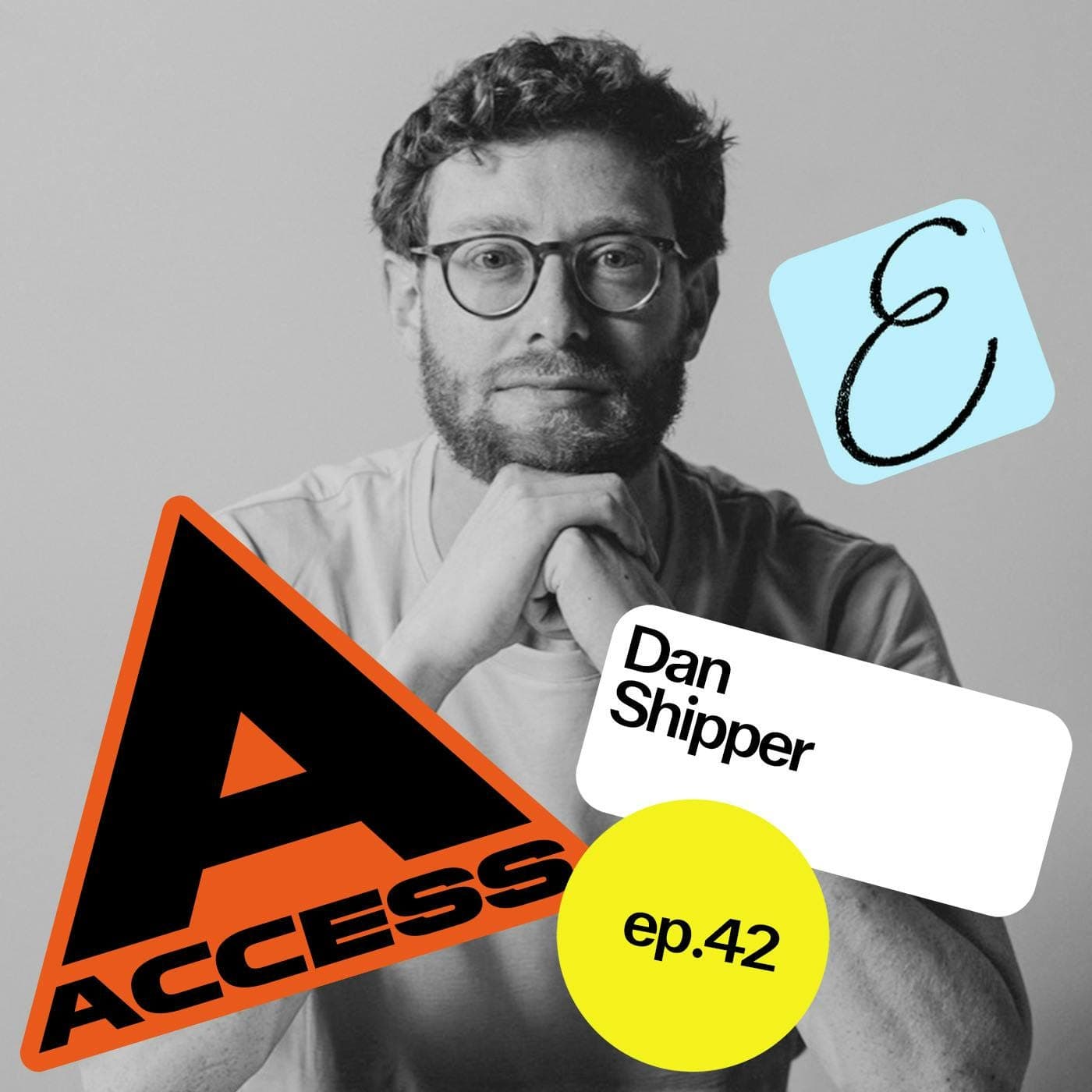
Dan Shipper is CEO of Every, a hybrid media/consulting/software company focused on AI model testing and writing. Every is known for “model testing” and for building tools/agents that scale human taste rather than fully automating work.
Key claims
- People will spend more time inside AI coding agents.
- The real opportunity is figuring out what humans do next, not automating everything.
- Honest criticism helps labs build what users actually like.
- Token waste is necessary for exploration, but CFOs will demand budgets; successful policy is “high budget for early adopters, limits for most.”
- Siri’s free, device-native context could outcompete ChatGPT for many everyday queries.
Notable examples
- “Two billion tokens overnight” during testing; token spend can reach ~50–100k/month per employee.
- Opus 5 review: model may improve with “low/medium thinking” and workflow changes.
- Voice + time-aware meditation; reading Heidegger with ChatGPT voice explanations.
- “Kate copy edit” agent: learns from 30,000 historical edits to scale an editor’s taste.
Written by AI. May contain mistakes. Listen to the episode to check what was said.
Chapters
Tap a time to open that second in VOMeet Dan Shipper, AI Innovator
0:03 to 0:26
Dan Shipper discusses AI's impact on work and his innovative approaches.
“Does it ever feel like you're being told to wave a magic AI wand and everything will just get better?”
Meet Dan Shipper, AI Innovator
1:32 to 2:20
Dan Shipper discusses AI's impact on work and his innovative approaches.
“A model that you don't like on day one can be a trash model.”
Exploring Daily Life with AI
2:20 to 4:20
Dan shares how AI is integrated into his daily life and work.
“I love your little every mic cube thing.”
The Evolution of AI Tools
4:20 to 6:50
Discussion on the rapid changes and adaptations in AI technology.
“But first, I thought it'd be interesting, actually, because I haven't heard you talk about this super recently.”
Using AI in Meditation and Study
6:50 to 9:10
Dan explains how he incorporates AI into meditation and studying complex texts.
“So sorry, but there's a lot to say here.”
AI Companions and Voice Technology
9:10 to 12:20
Exploration of AI's potential as a personal companion in intellectual tasks.
“And it was all based on Heidegger's philosophy.”
Future Implications of AI and Siri
12:20 to 14:03
Discussion on the implications of improved AI tools and their impact on existing technology.
“And I'm not sure exactly how their you know, RAG implementation works.”
Exploring Siri AI's Advantages
14:03 to 18:11
Discussion on the implications of Siri AI's free model compared to other services.
“And I think Apple doesn't really have to do the we're for power users thing.”
The Dichotomy of Connection and Disconnection
18:11 to 22:48
A conversation about the balance between using new technology and the desire for disconnection.
“And yet at the same time, you just got a brick.”
Honesty in AI Model Reviews
22:48 to 27:44
An exploration of the challenges and importance of honest feedback in AI model evaluations.
“And for something like Heidegger, would not be able to read it without this.”
Show all 30 chapters
The Intersection of Product Use and Audience Targeting
28:54 to 31:03
Explore the disconnect between early adopters and broader audience expectations.
“Sure, AI can write emails, summarize some documents, and even churn out a business plan in a few seconds.”
Understanding Market Dynamics in AI
31:03 to 33:30
Discuss how different user bases interact with AI and its implications for product development.
“direction of a certain segment of AI products.”
Navigating Productivity vs. Busy Work
33:30 to 36:23
Examine the balance between actual productivity and the illusion of productivity in AI development.
“That was extremely not obvious a year ago, even to people inside of the labs.”
Token Management and AI Experimentation
36:23 to 39:44
Learn about the challenges and strategies surrounding token spending in AI projects.
“You know, my favorite thing to cook is anything with lemons because after you cook something with lemons, your hands smell better.”
Client Perspectives on AI Token Usage
39:44 to 42:04
Insight into how organizations manage AI token spending and the associated challenges.
“i'm around 250 million tokens a day ish would be my average i don't know what that is in pricing terms, but it's a lot.”
Managing Token Budgets for AI Usage
42:04 to 43:10
Learn how to strategically allocate AI token budgets for teams.
“because it used to just be a chat and then a response.”
The Role of Individual Contributors in App Development
43:10 to 44:16
Discover how single developers can drive app success effectively.
“different pieces of software, Quora, Spiral, Sparkle, Monologue, Proof.”
Team Expansion for Successful Products
44:16 to 45:26
Understand when and how to scale teams behind promising products.
“you can sometimes end up tending to, and you have one person on each thing, and each thing is going sort of well, but none of them are necessarily breaking out.”
Innovations in Engineering: Compound Engineering
45:26 to 47:10
Explore a new engineering methodology that enhances productivity.
“But I mean, to your question about media companies, I think this is a really interesting extension of a media company.”
Using AI for Creative Workflows
47:10 to 48:26
Learn how AI can streamline creative processes and support expert work.
“And Kieran, who I mentioned earlier, really invented this way of working called compound engineering.”
Automating Copy Editing with AI
48:26 to 49:54
Discover how AI can assist in the editing process to enhance productivity.
“You mentioned our editor-in-chief earlier, Kate.”
Scaling Expertise in Organizations
49:54 to 51:07
Learn how to leverage AI to scale expert knowledge across teams.
“based on her previous work and the style guide we've built in the Google Doc.”
The Future of Personalized Media
51:07 to 52:36
Explore the potential of hyper-personalized media delivered by AI.
“Well, I think hopefully it will have a bunch of different skills in it that each skill is something that Alex knows or something that Alice knows that you can use or anyone in your org can use.”
The Challenge of AI Discernment
52:36 to 53:36
Understand the limitations of AI in discerning personalized content.
“hyper-personalized, agentically delivered media?”
Expertise in the Age of AI
53:36 to 55:49
Discover how experts can maintain value amid AI advancements.
“And that inherently kind of only comes from people.”
Navigating Marketing's Subjectivity
56:00 to 57:52
Explore the fluid nature of marketing and the subjective nature of finding the right message.
“And a lot of times when I talk to clients, it's like, there is no one right answer about your best hook.”
AI Tools and Future Predictions
57:52 to 59:01
Discuss the predictions about how AI tools will change and evolve in the near future.
“Dan, we have to end it, but I do want to end it on a prediction from you.”
The Closing Chapter
1:00:32 to 1:10:02
Final thoughts and stories shared as the hosts conclude their podcast journey.
“Thank you to Dan Shipper for being, duh, duh, duh, the last episode of Access.”
Sharing Where to Find Us Online
1:10:02 to 1:11:28
Learn about the hosts' online presence and upcoming projects.
“Well, where can our viewers find you going forward?”
Closing Thoughts and Acknowledgments
1:11:30 to 1:11:54
Reflection on the show and thanks to contributors and listeners.
“I added a nav bar to my website for the first time that looks like exactly like a liquid glass thing you might find in a cool app these days.”
Transcript
Automatic transcript. May contain errors.0:00Ellis:Support for this show is brought to you by Salonis. Does it ever feel like you're being told to wave a magic AI wand and everything will just get better? Sure, AI can chat and summarize. But what about big business problems like rerouting stock through a canal that won't unblock? Enterprise AI needs context for that, so Salonis provides it. The Salonis context model gives AI operational clarity so agents know how your unique business runs and how to prove it. Meet the model at C-E-L-O-N-I-S dot com slash context.
0:55Ellis:you're looking for. From a browse to a bike ride, this summer, find more on Facebook.
1:06Alex Heath:Before we get into today's show, a quick note. This is the final episode of Access. You can keep following me at sources.news and ellis at meaning.company. But don't go anywhere. The show's feed is going to live on and you're going to be hearing a lot more from me here very soon.
1:22Ellis:We'll talk more after the show about why we're winding everything down, what we're proud of, and what's next for the both of us. There are some interesting nuances to evaluating models. A model that you don't like on day one can be a trash model. If you use it on low or medium thinking and you get rid of your skills, it's way better.
1:40Alex Heath:Today, we have a guest who has been living at the edge of how AI is changing work, media, and the internet. Dan Shipper, CEO of Every. You have to be willing to waste tokens. I was testing 5.6, so I woke up the next day to a message from Ariel saying, did you spend 2 billion tokens overnight? I was like, fuck.
2:00Ellis:Dan breaks down why he thinks we'll all spend more time inside AI coding agents, however he is building agents to scale human taste, and why the real opportunity is not automating everything, it's figuring out what humans do next.
2:13Alex Heath:Plus, his two-phone system, billion token experiments, and why Siri may become a much bigger threat to ChatGPT than people realize. Welcome to Access.
2:26Ellis:I love your little every mic cube thing. Is there like an industry term for that that I'm not aware of? I have no idea. This is like, I actually, I was thinking about this because this is the first time I've seen this. And I thought you guys would like this because it's sort of, it's one of those things where you spend like six and a half years, like pushing a boulder up a hill and you're like um every single thing that happens you did and then and then eventually it starts rolling down the hill and you show up to your like recording studio and one of these is there and you're and you're like i had nothing to do with this but i love it you know and like that's a really nice feeling that's when you know you've made it that's when you know you've made it is you got the little cube and you didn't do the cube but was it an actual member of the team that did it or was it a gun for hire hired by one of your agents who just swooped into the office added that to your mic and it was obviously codex i mean poke did this the other day did you guys see this they had poke humans launch on july 4th and you could have them go do task gravity things but i was too afraid to use
3:29Alex Heath:Coke bought by Cognition. Shout out Marvin, former guest. A sentence that only a certain cohort of people will understand, Cognition buying Coke. But those are two companies. I think of you and Evry as the most AI-pilled human and organization out there that isn't a frontier AI lab. And people know you guys for the work you do on model testing. You are putting out a lot of writing as well. I think you're working on a codex history of codex opus, although I shouldn't use that word in this context, but a sonnet story, a sonnet. Yeah. About the history of codex. And you've got this interesting hybrid media consulting tech software company that you're building.
4:19Alex Heath:And we want to dive into all of that. But first, I thought it'd be interesting, actually, because I haven't heard you talk about this super recently. Can you just take us through a normal day for you and how you use AI. I assume it's changing like on an almost daily basis because you're testing everything. But yeah, what's your what's your day like? Are we getting out of bed and having an extended voice conversation with chat? Like, what are we doing these days? It is changing a lot. And I'll say it has changed radically in the last day or two, because OpenAI is new.
4:50Ellis:We've gone from years to months now. It doesn't happen. It doesn't change radically every day, but some days more happens than in weeks or years combined, you know, like whatever that quote is. So I'm definitely in one of those phase changes right now because chat GPT work and Codex's voice integration that they just released, it's so freaking good. So you're working from the toilet now is what you're saying? Everywhere. The toilet is the least of it.
5:28Well, I can talk about today. And today is like a little bit of a different kind of day because I explicitly took the week off to do to write this piece. I'm writing a history of Codex. I think Codex is like one of the most interesting product and just business stories of the last like 10 or 15 years. Specifically, OpenAI, synonymous with AI, launched ChatGPT, and then found themselves for the last year kind of behind Anthropic. And I think they used Codex to come back as a product which kind of disrupted themselves. And then they merged back in. And that almost never happens. And I think there's a lot of really interesting questions to be explored about how they did that and why it actually worked this time.
6:12But I took the week off to write that. And normally, basically, I structure my day with I spend half my day writing and half my day operating. and as the company has gotten bigger, we're about 30 people now, that has become more and more intense and I'm still shooting for that but it's a little bit harder to hit. So now I'm also trying adding in, every once in a while I'll do a little staycation where I write and it's been great. So I got to get up today. What did I do when I got up? Well, one of the, okay, this is just all gonna be me talking about chat to voice. So sorry, but there's a lot to say here.
6:52So one thing that's been really, you turned your dreams into action. Five minutes after waking up. One thing that's been really interesting about voice is it now has time awareness. So I use it for doing meditations. So I'm just like, I'm gonna do a 30 minute meditation. Let's do a guided set of timer. Here's the kind of style of meditation I like. And it's actually pretty good. I think that there's some room for improvement. I've been doing it on my phone. And I think if I did it in the chat GPT for work app, where it would have access to like my whole computer and stuff like that, I could have it grab transcripts from meditation teachers I like and add to that.
7:28But it'll get there eventually. It's just not all hooked up to everything right now. But anyway, I did one of those. It was great. Very, very helpful, especially to do a guided meditation that is personalized for me and what I'm feeling. And I can talk to it as I'm meditating. And it can sort of like interact with me a little bit, which is kind of interesting. And so I did that. And then I got up. I did a bunch of reading. I'm reading Being in Time by Heidegger and a couple other random things. But in particular, I don't know how much Heidegger you guys have read, but he's fucking impossible to understand.
8:06I've done several things to help me with this. the first thing, which has been my main method of reading Heidegger, is I vibe-coded with Fable an app called Verso that has all the text because it's out of copyright. And then I read it in paperback. Not that that would matter, but yeah.
8:25Alex Heath:I'll continue. A matter to who is the question. Yeah, a copyright joke. Yeah. So it's out of copyright. I have all the text. I read it in paperback, but basically it's sort of like a one-shot Kindle app. And I go to whatever page I'm on, and I can turn the page over, and it has a plain English explanation of whatever I'm reading. And then any of the words, I can highlight them. It saves all my highlights. I can just press explain. It'll explain it. I can say, what is the German? It'll talk about the German and how the translation misses things. It also, there's a professor I love. His name is Hubert Dreyfus, who famously wrote this book about why the first generation of AI wouldn't work called What Computers Can't Do.
9:11And it was all based on Heidegger's philosophy. And really good. I love that guy. And he has a lecture course on being in time that is on archive.org. And as part of this, the fable went in and grabbed the lecture. All the lectures restored it, put it into a player experience, transcribed it, and then also linked every page of the book to the parts of the lectures where he talks about that page. And so basically as I'm reading, I just like go to the part of my app and then I, you know, flip it over and then I see what Dreyfuss says and that really helps. But what I've been doing recently over the last, and recently is like literally like the last two days, I can just throw on ChatGPT voice and say, here's where I am in the book.
9:52And I just read the book to it. And then I'm like, what the fuck does this mean? And it's very good at helping me understand it. And just like waiting for me, I can read for 10 or 15 minutes and then be like, I'm stuck here. I wouldn't do that. I'm literally having it explained every single sentence because I'm in a very dense part of the book, but I could, if I was smarter, let it just hang out with me and then talk to me as I read. And I think there's so many places to go here with using it as a companion to do intellectual exploration that doesn't require a screen. But that's the first hour after I get up.
10:27I'll stop there.
10:28Alex Heath:Well, that's interesting because they haven't confirmed it, but I do think that is the thesis of the first device that open AI is working on with Johnny Ive. It's going to be, to my understanding, this kind of puck-like device that mostly sits on your desk or you take with you around the house for exactly that kind of use case. So it's interesting to hear you say, like you're already doing that with the phone app. I would guess that too. I mean, it's so funny. I feel so bad for Alexa and Siri right now. Like they suck so hard. And even the new Siri, have you tried it? I have not tried the new Siri and I've heard it's good.
11:00So the new Siri is really
11:01Alex Heath:good. I've got the public beta on my phone. Okay. Yeah. I've not tried the beta, but I've heard good things and that would be great if it was good. But I do think it's a big opportunity for them because, yeah, I don't really want to look at a screen and it's good enough that I don't have to anymore for a lot of things.
11:19Ellis:Ellis, are you using new Siri? I am. My two-year-old phone is crumpling a little bit under the weight of the public beta, but I had to know how the new Siri is working. And I've been really pleasantly surprised. I mean, whether it's pulling from local data from my notes, I mean, I've been switching back to Apple stuff, as one does in productivity worlds every year or two to see what's going on with the normies, whether it's Apple Mail, Reminders, Notes, obviously. And I feel like this is the realist reason we've had in years to use those products. And I mean, the other day, I was doing like a live shoot with an email app called VEC.
12:03Ellis:And I guess that's one of your core competitors. And we were talking about the whole idea they have with their recent campaign about the cold emails or the emails that you might have missed. And I said, find my first email with Rylan. And it found it in like 10 seconds. And it took a few days to index everything. And I'm not sure exactly how their you know, RAG implementation works. But having access to that material, especially for most people who aren't writing MD files of everything, I feel like is going to be pretty groundbreaking.
12:37Alex Heath:The indexing takes roughly a week, has been my experience and people I've talked to, because they're indexing everything on the phone. But that is the power of Apple is they have this context that no one else has.
12:47Ellis:No integrations required, no connections required. Poke forgets about my notion integration every week. I think it's a huge deal. And it'd be so fun and funny if Apple did the most Apple-y thing in the world, which is just skip all the two or three year knife fight and then just release the thing that everyone wants to use. It'd be really funny.
13:06Alex Heath:And I've been thinking about what the second order implications of this are. If Siri's really good now and people are even using the Siri app, like they would use chat, what happens to chat and Claude, right? That's an interesting question. I think the jury's out, obviously. I don't know, but it really depends on how good those things are. And I think generally, Apple is going to have to be super consumery. And I think that we're starting to see a bifurcation of AI into extremely consumery, and then power knowledge worker use cases that are reminiscent of coder use cases, but for people who are non-technical.
13:42And those are two different customer use cases. And I think right now, OpenAI, for example, is trying to put that all into one app, into ChatGPT for Work, which now has chat, work, and codex. And it seems to be working, but it's also a really tall order to make something that anyone can use. Like if you're just, you know, a mom in the Midwest and you have a question versus you're an AI-pilled builder orchestrating like 15 subagents, it's not necessarily clear to me that those should be the same app, but that's what they're trying to do. And I think Apple doesn't really have to do the we're for power users thing.
14:20Ellis:No. Well, this is so silly, but like this occurred to be yesterday is that as far as we know, Siri AI is going to be free. Yeah. Right. Yeah, it's totally free, which is kind of crazy. You know, I've been paying$20 a month for poke for, you know, a lot of other services. And that's quite an advantage. I think it could be like when Even Apple Music is paid.
14:42Alex Heath:I think it could be a lot, an analogy you'll appreciate, like when Instagram introduced stories and it didn't kill Snapchat, but it... Trigger warning, please. Yeah, Ellis worked at Snap at the time then. And it didn't kill Snapchat, but it severely curbed future growth. And a lot of people who would have maybe signed up for Snapchat for stories never did. And I think that could happen with the assistant market and Siri.
15:07Ellis:Well, I think Dan's potentially a good person to talk about this with is that the bifurcation isn't just kind of the productivity stuff for the personal stuff. But even within the personal stuff, I feel like there's quite a big difference between which AI is my muscle memory for asking quick questions and many, many other use cases. And I think all my quick questions have immediately started going to Siri AI for whatever that's worth. Uh-oh. You know, I always think we are have to be a little bit of the leading edge. So if you're using I'm not beta testing series. So I have to ask you what has happened then to your chat GPT anthropic poke use then?
15:47What are you still using them? And for what?
15:48Ellis:Yeah, I think the poke usage has gone down for all the quick questions. And what's funny about it, this sounds so stupid, but you know, the, the user interface does matter in terms of how upstream you are, of whatever someone wants to know. And when I was in the car, I was like hacking it, like literally sending poke a voice note, because it doesn't have voice mode. And I need to try the new chat GPT voice and whatnot. But it's just so easy now to just hold down that button in my car for Siri or for CarPlay and just ask a question now. Or when I drive by a restaurant, I say add that to my restaurants to try list on Sunset Boulevard.
16:30Ellis:And I used to have to ask Poke to edit a Notion note to do that. And sometimes it would not work. Wait, so Siri knows that you're next to a restaurant?
16:39Alex Heath:You just say add that to my list or do you say the name?
16:42Ellis:Oh, well, that's a whole other story. No, I say the name, but also what it does know is what song's on. So now I'm in the car. I say, what's this song about? And it knows. Even if you're using Spotify? Or is it just Apple Music? I'm an Apple Music guy, so I don't know. But I mean, it's got to be the same, what, now playing API or whatever it is that they offer. I bet it works. Or certainly if I'm looking at something on my screen, I say, add this to my notes or add this list of places. And it does it. It's quite useful. That's so amazing. I guess I got to get this. I do have an older, old-ish iPhone.
17:17I think I have an iPhone 15 or something like that. Dan, you can expense this.
17:23Alex Heath:Dan, I thought you lived at the frontier. I do, except all the iPhone generations are the same. Now I have my iPhone 15, and then I have an iPhone 13, which is my house phone. Basically, when I get home, I put the iPhone 15, which has all my work stuff on it, and I take the iPhone 13 off the charger, that doesn't even have a cell plan. It's just connected to Wi-Fi and it just has, you know, Chachi Bati and Claude or whatever so that no one can get in touch with me. I can't do any, you know, I can't be browsing stuff. I can't be doom scrolling. And that's been, it's a big life hack. Highly recommend.
17:59Alex Heath:Wow. You sound like a brick phone person. Like you do one of those at one point. I have a brick. This is my latest attempt at a brick-like lifestyle. Isn't this so interesting? So like we started this, like you're one of the most AI pilled people I know. And yet at the same time, you just got a brick. Like this is this interesting dichotomy of where we're at with tech is like, it's very exciting. We're all trying it. And yet we all also crave more disconnection from it than maybe we did in years past. Do you feel that? I've definitely always thought about this or not always. Like when I was in high school, I probably wasn't thinking about this.
Read the full transcript
18:35But I've definitely been thinking about this for a while. But I do think it's true. I do think as we get deeper into this new technology paradigm, it has become clearer that, at least to me, that the way that my brain operates when I'm using agents or anything on my computer is just different than the way that my brain operates otherwise. And it has become important for me to protect time that my brain is sort of operating differently. honestly a it feels better but b i do better work i'm more focused uh when it's to some degree limited and i'm not flipping back and forth that it makes a lot of sense to me um that people would
19:17Ellis:do that i mean setting aside the phone though i feel like you're really on the cutting edge of a lot of these new use cases with ai and i was trying to picture you reading and i feel like there's got to be a million thoughts that come to you the whole time. And I was curious how you file those, how you even take notes on your reading. I feel like it's really hard to focus as every potential thing now, every experience now, even going through the Redwoods, which some guy was posting about the other day, has become fodder for potential productivity. That's a good question. Which I think can be cool, but also quite worrisome.
19:55I've always read paperback books. And the office, which I'm in, is filled with books. and it's all just books that I have that don't fit in my apartment. And I don't really like reading digital books because they all have the same feeling, like a paperback or something that can hold just has a certain vibe that it's unique, which I love. Each one is unique, and that helps me remember it and make it its own experience. And I've always been one of these people that every true nerd is obsessed with organizing their book notes and taking notes and remembering what they read and whatever. So I've always had that thing.
20:31And I was into Rome when it came out. I've had all these different systems that I've written about. One thing I used to do is I used to take a blank sheet of paper. And as I was reading, I always underline. I always have a pen. I always have a red pen on me. And that's what I use to underline my books. And then what I used to do is I used to take a blank sheet of paper and I would handwrite an index as I was reading. So anything that was interesting to me, I would write it on an index. And then I'd have the blank sheet of paper in the book. And a office have those indexes. And then I started doing Rome.
21:01And then I think probably when I hit 30, I was like, this is useless. Like, why am I doing this? I exhausted myself on that as well. And I have this, I have, I have a couple of things. Like I have this note that I started keeping because of Robin Sloan. I did an interview with Robin Sloan and he started, he was doing this. And so I started doing it, which is, I called it, it's my ineffable list. And it's anything that just has that little like flavor of just, I just like this sentence for whatever reason. It's not necessarily facts. It's just like interesting sentences. It's a writer's notebook.
21:33Um, it's a commonplace book. And so I have that and that's an Apple note. And I just add to that all the time. But I, I do think that one of the reasons I love AI is this is like, this is any note taker's dream. It's any book lover's dream. Any, anytime I'm reading, I can just say, now I can just say at, you know, ChatGPT for work, hey, like, save this passage, and it just will save it, and then it'll bring it up. I don't think it's good at bringing it up in the right time yet. It's, I think it's discernment for which things would be interesting to me is actually pretty poor. But I do think that will happen.
22:08And so it's just the best thing in the world. And you're right, if you do that all the time, you're not really, it's not the same kind of reading experience.
22:17Ellis:And so for me, it, I mean, every sentence you look something up, every sentence you make a highlight, every other sentence you send it to a friend, you know? So I think it's, I think it's both. It's a, you realize when you have this available, how many questions you actually have and how much more deeply you can understand something. And then you also have to balance that with, it takes you out of, it takes you out of the experience and it makes the experience quite different. and which experience do you really want and which one is better for your purposes or where you are right now. And for something like Heidegger, would not be able to read it without this.
22:54And sometimes I like intentionally read it in a, I wanna read this first, see what I can get out of it and then do the lookups. But normally I'm just like going back and forth because it's just impossible. Something like someone like James Baldwin, Like, it's just nice to read James Baldwin.
23:13Alex Heath:I'm fascinated by Every's media strategy, your strategy. You just did the, um, the Opus five, uh, review early test and you were kind of negative on it, which was interesting. And people were noticing that. And I think giving you props for saying how you felt and like being honest about, because, Because what I observe, and this is maybe like my old journalist hat, is like this kind of cottage industry that sprung up of people who test models early, are very close with the labs. They get pre-release access to things in exchange for like publishing their thoughts. Like it kind of breeds this like very, I don't know, like soft kind of media environment.
23:57Alex Heath:And you all, I think, are like very enthusiastic about the technology and the promises of it. And that's true in everything that I see from you guys. But I think you got a lot of props for saying like, oh, like actually there's things about Opus 5 that I don't like. And I'm curious like how you think about that being the CEO of a company that also makes software, does consulting, all these things. But has this media apparatus. You literally have, I think, a person with a title like editor-in-chief, right? Like so you're making journalistic work. You're writing this codex thing like you were saying earlier.
24:29Alex Heath:How do you think about that and approach that? And maybe specifically on the reviewing models piece. Well, I think any kind of writing and any approach has its pitfalls. I think you're right. If you're in the early access community and you're one of these early people and you know people in the labs, it can feel hard to be negative. And it can feel who wants to just generally talk about something that they're not psyched about. It's just kind of like it's better if the model is better, you know, for your for your views and clicks. Right. That's a little bit of the way the incentive structures are set up.
25:03I think, on the other hand, like if you're a more disinterested, objective journalist, the incentives can sometimes be to just be super critical. And so it's sort of both have their downfalls. I think for us, the perspective that we come from is really we're trying to do this. We're trying to use this stuff to do our work and to lead our lives. and we just try to talk about what we like. And if we don't like something, that is a important feedback mechanism for the labs to make more stuff that we like. And it is challenging to think about how do we express this? Because I'm generally not pleased to be like, this model sucks.
25:49I don't really want to say that. But I sort of think of it in the same way as if you have a friend and they're making decisions in their life that you think are bad, somehow your relationship is sort of frayed, it's better for you to have an honest conversation with your friend. And we just happen to have that conversation in public because that makes your relationship better. It doesn't do anyone any long-term good to not be honest about how you feel. And so, for example, with Opus, it was pretty clear very early that we were not liking it. And we gave like real feedback to them in the process of testing it to be like, here are the things that are not working.
26:28And in their review, yeah, we were critical. And what we tried to do is explain there are a lot of, there are some interesting nuances to evaluating models. A model that you don't like on day one can be a trash model, or it can mean that it's a model whose powers are only unlocked in specific circumstances that mean that you have to break your workflow. And if you have to break your workflow, that is itself a big ding. But it also means that there's an opportunity, but there's usually, or sometimes there's an opportunity to learn how to use the model and get good results. So one of the things that we found, or really Kieran Klassen, who's the GM of Quora found, is if you use it on low or medium thinking and you get rid of your skills, it's way better.
27:14And so we put that in the review because it's a thing that people should know. It's like, you may not like this model, but if you use it in a completely alien way, you might get good results. And I think that that's started to bear out a little bit, like just from the vibe over the last couple of days. And so I think we have a commitment to just being honest and if we're critical, do it in a way that's constructive because what we really just want is AI that works for us. And I think that is a good strategy.
27:51Ellis:Support for this show is brought to you by Salonis. I'm sure you've heard a lot of vague promises about AI, like it's a magic solution or a miracle cure or a bit of pixie dust. And if you just add a little AI, suddenly your business gets faster, smarter, and easier. Sure, AI can write emails, summarize documents, and come up with a lot of synonyms for magic. But what happens when it comes to your biggest opportunities or your toughest business challenges? Most AI tools will tell you that's a great question. Then they'll pull from public information and hand back a list of generic suggestions. That's not much help when demand suddenly spikes and you're trying to reroute inventory through a supply chain bottleneck halfway around the world.
28:29Ellis:Celonis gives AI the context it needs to understand how your business actually works and where it can improve. Because AI isn't magic, but when it has the right context, the results are pretty remarkable. Learn more about how the context model gives enterprise AI operational clarity at CELONIS.com slash context.
28:50Alex Heath:Support for this show is brought to you by Solonis. Ever feel like you're being told to wave this big magic AI wand and everything will just be better? Sure, AI can write emails, summarize some documents, and even churn out a business plan in a few seconds. But what about when it comes to AI taking on your big business opportunities, your big problems? It will tell you that's a great question. Then scrape the public domain and give you some generic recommendations. Not helpful when you've got a spike in demand and you're trying to reroute stock through a canal that just won't unblock. Solonis gives AI the context it needs to know how your unique business runs and how to improve it.
29:27Alex Heath:It's sadly not a magic wand, but it does lead to some pretty enchanting outcomes. AI needs context. Solonis provides it. Learn more about how the context model gives enterprise AI operational clarity at C-E-L-O-N-I-S dot com slash context.
29:48Ellis:It's so interesting. I think writing about products that you use and love, you're a lot more informed on them, but you also may not represent the audience that the company wants to be targeting in the future, which I've always found to be a fascinating dynamic. For example, decades of reporters, myself included, writing about Twitter, which I still call Twitter, when they were trying to push to work for normies, whether it's with the algorithm or otherwise, you now see the dynamic just in general between the ways creators or early adopters use platforms and the masses. And yeah, you wonder, you know, how they felt after that.
30:29Ellis:And they say, well, it's not, maybe it's not for you anymore, or something like that. How are the reactions in your DMs and emails? It's a good, it's a good question. I think that, you know, Apple, for example, is the first company where I'm like, what they do with Siri, I may not be the best person to really pull that out and think about it. I would trust MKBHD with that. He's just so good at it. The comparison of Twitter and journalists is a really interesting one to pull out for me. And I do think, and this is maybe self-serving, that we'll have a pretty lasting connection to the direction of a certain segment of AI products.
31:13In particular, there's been this historical thing in AI where the stuff that developers do with it today are the stuff that knowledge workers are going to do with it in six to 12 months once the models get better. And so I think there's going to continue to be a lot of relevance for power users who discover new workflows, especially as the models change, that then get commercialized or productized for people who are not going to spend the time thinking around with OpenClaw on the weekend. And so I think we will sit there, but there are going to be more lanes that open up as more and more of the economy and society piles in here.
31:55And it'll change that landscape of who gets to cover it and what kind of coverage is best for sure.
32:01Alex Heath:How do you imagine that evolving even the next couple of years? Can you pull that out a little bit more? You don't have to give any secrets away. Yeah, the landscape and kind of how you see the media around all this evolving. To be honest, I don't know about the media side of it. I think the landscape is there's three or four-ish main constituencies. There are power users who are technical. There are knowledge workers who need to use it for their jobs and therefore businesses and teams and stuff like that. And then there's just regular consumers. Those are three big places that need to be served.
32:44There are a ton of obvious economic incentives to serve big enterprises and teams and do the things that those people want. What those people want is generally a function of what builders wanted like 12 months ago. And so if you go direct for enterprise people, I think you end up being behind. But you have to suffer the short-term pain of following people in every crowd or around the every crowd of people who are power users building at the edge in a way that feels like it's maybe not legible to big enterprise customers, but I think will be. A really simple example is right now, it's pretty obvious if you're programming, you should be using Cloud Code or Codex, and you probably shouldn't be looking at every line of code.
33:36That was extremely not obvious a year ago, even to people inside of the labs. And to us, it was like, of course, this is how we work. And I think that will sort of keep happening. So I think that the knowledge worker and enterprise market, you can see a preview of where that's going to be in 12 months by looking at what the builder market is. At some point, it may be that model progress stops happening as quickly in this generation. And in that case, I don't think that the builders will be necessarily as informative as like Coke needs SOC 2 compliance for their teams that are already deep into codex.
34:19And therefore, those needs are actually more important. But right now, that's not the dynamic. It's really easy to let the tail wag the dog and think about what big enterprises want and then sort of miss what they will want, which is sort of right now being defined. And then resolving both of those different constituencies with consumers is instead of a single vision, it's really hard. And I see some interesting movements. So like Syria is one. But a company I invested in is called Portola. And they have this AI alien friend. We lost that Quentin on last episode. There you go. You guys know him.
35:02Great guy. And used mostly by millennial Gen Z women, which is very different. My audience is 80%. He said moms are fully on board. There you go. And it's a very different take on AI that seems like, and I don't, maybe it's sort of agentic, but it's like, that's not the primary purpose of it. I think that category, for example, super under discussed will obviously be very, very important. And it's not obvious how it gets merged in with people who are using codecs.
35:34Ellis:One of the other things to me that makes it a bit fuzzier is knowing when you're actually being more productive or when you are doing work about the work. And I wonder how your team reconciles that. Like, oh, are we spending our day building products? Are we spending our day building better systems for building products? And this was the whole Rome research dilemma. It's like, oh, I spend all my days setting up note infrastructure instead of actually doing the work. And that's one of my favorite memes online is that all the dudes on YouTube who talk about notes and journaling are taking notes about taking notes.
36:12And this is, I mean, it's that exact thing just on steroids because it's so much easier and more fun to spend your whole day vibe coding your system for vibe coding than it was making your room. Exactly. Yeah. You know, my favorite thing to cook is anything with lemons because after you cook something with lemons, your hands smell better. You feel cleaner. You feel good. And I think, and we can contrast that with like garlic or, you know, raw fish or chicken or whatever. And with chicken, you're like washing your hands every like 15 seconds. You're like, this feels horrible. At least for me, I have OCD.
36:50So like, I'm convinced I'm going to put myself in the emergency room every time I make chicken. But anyway, proper use of proper system building, proper use of this to like to set up a system to help you do your work happens in the context of your work. It does not happen in theory. So usually you're doing something, you run into a problem and you're like, I'm running to this problem all the time. Let me, let me just do something real quick to, to build a system to like help me face this more efficiently in the future, it is not like building castles in the sky in theory that you might use eventually.
37:27So it happens in the loop in the context of your work. And usually like lemons, it like leaves you feeling better after. And if you are instead feeling like you're just like an empty shell of a human, like pulling the dopamine lever one more time to see if it finally solves your problem that you can't even really define the problem. That's when you have a sense that, hey, this isn't quite, this is quite, something's not working here. And luckily, I don't really have, like, I think probably everyone on the team struggles with this to some degree, but I have not really, we've not really had real conversations about this because everyone is shipping stuff all the time.
38:01So I think that in itself is a good enough bar is like, are you shipping all the time? If so, great. Whatever you're doing to do that is fine. The conversations we have been having, and I don't have a solution for that I think is really important, is just token spend. I like you know I was testing what model was it it was I think it was 5.6 I was testing 5.6 and usually we get tokens for free to do the testing but in this case for whatever reason the tokens were not free and I woke up the next day I do a message from my sister is our head of operations I woke up the next day to a message from Ariel saying did you spend two billion tokens overnight.
38:39I was like, fuck.
38:42Alex Heath:You're like, oops, we need to go raise another round. Yeah. Let's get to lunch today, boys. And there's a really interesting tension there because you have to be willing to waste tokens. If you're not willing to waste tokens, you're not willing to discover new things. Obviously, if you're spending, I mean, our our token spend is absolutely in the 50 to 100k a month range, if not more. That's a lot of money. That's per employee though, Dan. Come on, right? That's good. Obviously, yeah. My personal token spend, 100k a month. Is it really? It's 50k a month? No, no, no. I mean, for the company, yeah.
39:26What is my actual token? I had to switch to my to chat gpt i had to switch chat gpt workspaces i'm pulling up my my codex uh you also probably
39:35Alex Heath:get a lot of free tokens so you're maybe not the best i'm i'm at 9.4 billion lifetime tokens but this is on on just this workspace um and like yesterday uh let's see you know it looks like i'm around 250 million tokens a day ish would be my average i don't know what that is in pricing terms, but it's a lot. Yeah. And this is just personal. Like we also run apps that consume tokens. So sure. So trying to trying to let people experiment and trying to also then reflect afterwards, was this a good use of our tokens? Like, would you do that again? Is a really difficult problem that is very valuable to solve.
40:21I assume we will solve it eventually. I don't have an answer other than my current thought is if you have any run that spends a billion or more tokens, we send you a quiz that asks you questions about what you were building and how it was built. And if you can't answer the questions, you go on a wall of shame. And if you can answer the questions, then you become a token billionaire for the day. What if I just had Kodak's answer the questions? We'll have to make that not a thing. good luck no cheating no cheating um and i think that's like a sort of like light lighthearted way to make sure that people it's not that we're banning you from doing this it's just like really think about it and if you think about it and it's worth it great if not don't do it well
41:10Alex Heath:you consult a lot of companies on their ai strategy and individuals what are you hearing from them about token spend right now does it kind of map to what you're going through i think it maps. I think, again, it's one of those when you are really, I think, far away from the ground level of how things work and what's going on, it's really easy to swing from one extreme to another. And the first extreme was just spend as many tokens as you can. And the second extreme then went like really quickly to like token maxing is bad and blah, blah, blah. And it's like, and there's no ROI from AI and all that kind of stuff.
41:45I'm not saying our clients are like that. our clients are very smart. But like the general narrative is that forcing your organization to use a tool they don't understand as much as possible is obviously going to be a waste. And now that AI is powerful and can run for long periods of time, that the waste is a lot higher than it used to be because it used to just be a chat and then a response. And that's not that many tokens. But now I can spend 2 billion tokens without even thinking about it. And CFOs are looking at that bill being like, fuck, this is just, this is really terrible. And so it's swinging to the other extreme of, uh, you can't use tokens anymore.
42:20We're limiting it severely, blah, blah, which is also the wrong move. My, I think the general thing that we talk about with clients and the things I see be successful are technical people, you should have a$200 a month plan, non-technical people, you should have a$20 a month plan. Um, generally you should, uh, be able to stay within those limits. And you should identify a few of the people in your organization who you consider to be like true AI early adopters and give them a high token budget, because what they will do is experiment and find the workflows that the rest of your organization is going to use within the limits of their plan and have some sort of escalation process if someone's running into limits that need to be changed.
43:03But something like that feels like a reasonable policy.
43:06Ellis:It sounds like you have a lot on your plate. And among them is a handful of different pieces of software, Quora, Spiral, Sparkle, Monologue, Proof. I know some of them have just one person on them, but I'm curious how that's going. I mean, there's so many jobs, you know, within building a successful product from engineering to the product marketing to the roadmap. How is that going? I think it's going well. And we're in the middle of a sort of change in that strategy. One of the key early insights that we had is it is absolutely possible now to have a single person running an app end to end and doing really well at it.
43:50I think Naveen, who runs Monologue, is an extremely good example. It's just him. He's got some contractors, but it's mostly just him. And that product is growing really quickly and is a actually competitive with companies that have raised like$70 million or more. And yeah, there's like some support from us, but really he's like mostly doing it by himself. It's kind of crazy. If you take a talented full stack person and just let them rip, they can get a lot further than you think. And if you, as a company, spin up a lot of those, you can sometimes end up tending to, and you have one person on each thing, and each thing is going sort of well, but none of them are necessarily breaking out.
44:30And I think that what we need to do is develop a different move to be like, we've identified, we've explored the territory of a bunch of different apps. We've identified one or two that we're like really focusing behind. And maybe some of them can continue with one person, but if we think it's gonna, it's really something that we wanna like win the market with, we should put more resources behind it. And so I think we've started to add a subsequent move, which is we generally start with one person, and then to the extent it looks like something that we're going to really put the org behind, we built out a team.
45:02So we did that with, we have an agent product called Plus One, which is originally really built mostly by Willie, who's our head of platform, and maybe one other person. That has turned into, we haven't released this yet, but it's now in beta, we use it all the time internally, just in every agent. It's like an instantiation of every inside of your company that knows all the things that we know, that works in the way that we work, that anyone can use in Slack. And that has a - You're going to sell this externally? We will sell this externally. Right now it's in beta. But I mean, to your question about media companies, I think this is a really interesting extension of a media company.
45:39So that's going really well. And that has a team. It's a real engineering team. They're all using AI. And it's structured differently than our initial bets. I think this particular product, it's very obviously core to every and like what we do. And it's very complicated, much more, much more complicated than take your pick of, you know, I mean, monologue is a very complicated product, but it's to some degree, there's, there's, there's more under your control. I don't know. Naveen would probably argue with me about that. So, but it, it, it seems to require a bigger investment than a single person if we wanted to, you know, Anthropic has a, has a version of this called tag.
46:20If I want to keep with tag, it's hard to do it with one person.
46:23Alex Heath:So you use the word agent for the every agent. Is this taking actions using the every kind of corpus or is it just like a fancy MCP that has all the data of every that I can call coworker full coworker status can do everything. Um, it's natively built in with compound engineering and all the other ways that we work. Wow. So what are the early use cases for that, that you're having? I mean, internally that guy, That has to be kind of weird because it's literally an AI instantiation of your company. But I assume you're testing with some outside partners. What are they using that for? We are starting to test with outside partners, but that's very early.
46:58And just as a rule, we only really release things that we use ourselves and like ourselves. So we build for ourselves first and then move out. And I think we were one of the first people about a year and a half ago to start using cloud code. And Kieran, who I mentioned earlier, really invented this way of working called compound engineering. And in compound engineering, and this is something I worked with him a lot on, it's different from regular engineering in that when you, in regular engineering, every time you do a piece of work, it makes the next work harder to do because all the systems depend on each other and the code base is bigger and all that kind of stuff.
47:37And in compound engineering, you're trying to make the next unit of work easier to do than the last. Because what you do is after you do a feature, you look at all the things you learned, and then you compound that back into your prompts and your agent harness into all these different places so that the next one you don't make similar mistakes and things are more clear and all that kind of stuff. And that has grown into a really thriving plugin that lots and lots and lots of people use. It's actually probably like weirdly our biggest, our most scaled software product, even though it's just open source.
48:08And I think that that way of working, this is another example of things going from developers to knowledge workers. I think that way of working is going to come to knowledge workers and that a Slack agent is actually an ideal surface for it. Specifically, the idea of compounding. So like I do a unit of work and I compound it back into the agent so the agent gets better over time and is better at helping me do the kind of work that I do. And the reason I think it's really interesting in an organizational context, it means that everybody else in the organization can do the kind of work that I do, which might sound threatening, but is actually like the most important thing for expert knowledge workers.
48:46And I'll give you an example. You mentioned our editor-in-chief earlier, Kate. Kate is a tremendously good editor and also has, I don't know, probably a team of probably eight to ten people now and looks at everything that goes out. So all the pieces, but also now landing pages, emails, like all that stuff she looks at and has a particular taste for how it all should look and fit together. As you can imagine, that's a very stressful thing to have to do while you're also managing a whole team.
49:19Alex Heath:Well, you're talking to someone on this chat. Ellis used to oversee all words at Snapchat. So he sympathizes. So you know Ellis. and for literally like three years I've been trying to help automate this and the models weren't good enough and they just got good enough and so what we have is basically I took a corpus of 30 ,000 of our historical edits I turned it into a style guide all automatically and then we have a skill in the every agent that I can just say hey like throw a Google Doc in the Slack at every just like copy edit this and it will go and make suggested changes that she has made previously based on her previous work and the style guide we've built in the Google Doc.
49:58So instead of Kate having to go in and do every document from scratch, she goes in and there's already a bunch of suggested changes that are like, we think this is what you would do. And then she says, yes, no, yes, no, and makes her own edits. A, that sort of gets her closer to a pass that she's comfortable with. And sometimes she doesn't have to even review it for lower priority things. It's just a test landing page. Just run the Kate copy edit and we're done so she doesn't even have to see it. But what happens then is we just compound that back into after every pass, we see what she accepted, what she rejected and what we missed.
50:34And then it compounds back into the agent and it just gets better. And that will help her scale her taste to the rest of the organization without taking more of her time. And I think that's actually really, really critical for anybody inside of any organization that has any sort of expert knowledge. There's always going to be things that you're turned to by people who need that help from you, but also probably shouldn't take your time because you're repeating yourself all the time. And I think that this agent is going to be really good for those kinds of use cases.
51:06Alex Heath:So it learns from the context that it's in, even if that's outside of every, it's the every agent, but it could really be like the Alex agent at the end of the day. Yes. Well, I think hopefully it will have a bunch of different skills in it that each skill is something that Alex knows or something that Alice knows that you can use or anyone in your org can use.
51:29Ellis:Alex, you can't send your agent to do a paid Yahoo dinner. You have to do that personally. Well, I want to do that. Not yet.
51:36Alex Heath:Not yet. I want to do that stuff. I mean, I think ultimately that hopefully up levels everyone to do more of what they want to do. I mean, that's the promise of all of this, right? We got to get through the busy work first, but of setting it all up. It's really interesting that you're doing that. I mean, I'd be curious to get your thoughts on this, Dan. A conversation I've had with some founders recently that I've been meeting with, and it's come up a couple of times, is they're like, just make an MCP of your brain. All the conversations you're having that you are comfortable sharing publicly, and my agent will deliver it to me in a better, more personalized way than you will through one pass of your newsletter.
52:10Alex Heath:so i'd actually charge more to just have kind of raw token access to your granola whatever it is right and i'm thinking about doing this uh actually austin on your team has helped me um come up with some like you know early mocks of it um but it kind of is analogous to the it's more simple but to the every agent and i and i have thought about this a lot with the future of media is a big part of the future of media, hyper-personalized, agentically delivered media? I think it's a really important place to explore. We are very far away from that in the sense that, you know, I talked earlier about language models discernment.
52:52Can it discern what would be interesting to me of what you think? And if I have a go, if I say, here's my situation, if I have a go through all of your granola notes, it's going to come back with some bullshit. that's like, I can sort of see why you would say this, but like, it's not that interesting. So, so A, yes, B, doing that well is a really hard problem. And it's sort of open whether or not we're progressing particularly quickly toward that. But I absolutely think it's like part of the future. And it's a big part of the opportunity for people like us. It's like, obviously once you read someone's stories and you're into them you kind of want more access to them and obviously you only have so many hours in the day embodying that in something that you can query is and talk to you is like really cool and very important ellis you could have a meeting
53:48Alex Heath:mcp that scales your work with founders where you can have 10x more clients there you go that's my
53:55Ellis:ultimate goal, Alex. That is interesting though. And I mean, I know we're running out of time, but I was thinking a lot about your piece you did, Dan, called After Automation, about how a lot of this automation raises the bar, integrates best practices scale, but what that inevitably creates is room for what's different and what's new. And that inherently kind of only comes from people. And I think that's part of it is that whether it's kind of like Kate's copy editor guide or my own MCP is that it has to change. And it has to change as a result of the stuff that you learn, the experiences you have in your life, and whether it's art or marketing or otherwise.
54:39Ellis:If any part of the goal is to be new, then it's something that almost ostensibly can't be replaced by AI. And I would certainly like more research time in my day, even to play a video game, which I do consider research. I'm with you. I'm with you. Yeah, I think AI makes yesterday, this is something I wrote about in After Automation, it just makes yesterday's competence available to everybody. It's based on training data. So anything that was done yesterday is available to everyone. But today it's different. It's slightly different. And if you have non-experts using yesterday's competence to solve today's problems, it's going to be close.
55:20You're going to be able to one-shot an app, but it's not going to be actually good, especially because everyone else is the same thing now. And the job, the role of experts is to take that, what is now commoditized, which is the ability to apply yesterday's competence to any problem, and use that to actually make solutions that are a good fit for that problem, that particular problem in person, which is the actual valuable thing. and uh and so i think that is the opportunity for experts in this era yeah not just knowing
55:55Ellis:the whole corpus of information about a specific topic but being on the edge of moving it forward which is always going to be different and i mean you know marketing has like never been this objective exercise where there's one right answer the right answer is always moving forward and And that's how you end up with like 30 sites during the VibeCode era, whose headline is all, what can you build? And a lot of times when I talk to clients, it's like, there is no one right answer about your best hook. It could be your benefit. It could be talking about your audience. It could be talking about your history.
56:31Ellis:And it's almost like cyclical, like fashion, like a wheel that just keeps moving based on what's new or fresh at the very minimum. And yeah, I don't know. maybe you could program that into an AI, say, hey, if this is today's latest and greatest, cycle back to another possible answer in an area that's always subjective. But at least for now, I feel somewhat insulated. You would. You probably can, will be able to do that. But even then, you still have the, well, now I have to choose which of those is good. And so do other people. You're sort of moving, you're moving the capability, but there's still this, I make a distinction in that piece between agency and autonomy.
57:14So we think of agents as being agentic, but they're actually just, we're actually just talking about autonomy, the ability to like take something that we give it to do and just do it until it's done. And that's very different from agency, which is internally located desires and beliefs and goals and values, which agents don't really have. And until that changes, you can add any capability that you want. And it's still going to end up being something that we direct and control at the end of the day, which I think is probably a good thing. And I think is often missed in all of these discussions about capabilities.
57:52Alex Heath:Dan, we have to end it, but I do want to end it on a prediction from you. So six months out from now, what do you think about the way we use AI tools and how that will shift? Is there going to be a new way or a new way we're thinking about these tools and these models and their capabilities? I think Claude Anthropic currently has the mandate of heaven. I think OpenAI and Codex and ChatGPT for work will have the mandate of heaven. I don't think it's permanent. Everything goes back and forth, but they're doing something really good over there. I think that we will probably be spending a lot more time in our coding agent orchestration surface of choice, whether that's Chatty for Work or the Cloud Desktop app.
58:37Ellis:And in particular, you use the whole Internet inside of your coding agent. That's my big thing. That's so crazy. Using the in-app browser of those tools, I think is going to be a big deal. Are we inside the in-app browser right now? You are. I never leave it. Life is a browser. That's a first. How does that possibly work?
58:56Alex Heath:Dan, we really appreciate your time. Good chatting with you. Thanks for coming on. Thanks for having me. All right. Take care. Before Ellis and I get into why we're winding down access and our reflections on the last year of the show, a reminder that you'll be hearing and seeing more of me and the Sources universe here very soon. So don't unfollow, don't unsubscribe. And in the meantime, visit sources.news for the very latest.
59:26Ellis:This episode is brought to you by Facebook. So you were scrolling on Marketplace, and there it was, the bike you'd been searching for. You sent a message, and it turned out the seller was super chatty, kind of funny, and an avid cyclist. The next thing you know, you're in a cycling crew. Well, a community cycling group. The thing about Facebook, you might find more than what you're looking for. From a browse to a bike ride, this summer, find more on Facebook. This episode is brought to you by Accenture. When your advertising operations fall out of sync, everything else follows. Spotify and Accenture are working together to reinvent the rhythm of ad sales, using automation, analytics, and smarter workflows to simplify campaign delivery and access better data across the business.
1:00:16Ellis:The result? Less time spent on operations, more time connecting brands with the moments and fandoms that matter most. Learn more at Accenture.com slash Spotify.
1:00:32Alex Heath:All right. Thank you to Dan Shipper for being, duh, duh, duh, the last episode of Access. Access closed. Our last guest. Access closed. You've been waiting to say that. Yes. How are you feeling, man?
1:00:45Ellis:Feeling good. Yeah. We're the one-year wonder. It was a lot of fun. We made hats. We had amazing guests. Yes. We had a party in the Notion Vestibule. Yes. We learned a lot about making content, hashtag in the modern era. And I'm just happy we got to hang out once.
1:01:04Alex Heath:Me too, man. Me too. It's been great. There's really not like a dramatic reason for this. I think we both have been talking a lot about where we're at in our careers and personal lives. And shows take time to put together and all sorts of reasons. But really, it just came down to we both feel like for where we're at, it made the most sense to to wind the show down and do our own things. And I'm going to have a lot more coming with sources. So stay tuned for that. Sources.news. And you're going to keep crushing with meaning.
1:01:40Ellis:From the sound of it, you're actually going to let people subscribe to your brain at some point in the future.
1:01:45Alex Heath:That may be in the cards.
1:01:46Ellis:Maybe I will as well.
1:01:48Alex Heath:I agree with Dan that it's probably too early. The tools don't feel quite ready. And also, I just don't think enough people are experiencing AI this way for that to really be a product. But I do think it probably will be eventually. If I were an investor, that would be something I'd be looking at. But yeah, man. No, this has been awesome. I remember sitting down with you at a coffee shop in East LA a year and a half ago. And just like, should we just do a podcast together? And you thought about it for like a day and you were a quick yes. And then we were off to the races. And man, I would hold up our guest list against any tech podcast guest list, especially a first year show.
1:02:34Alex Heath:The kind of guests we've had on and conversations we've gotten to have are just really incredible. I feel really proud of it. And it's a catalog that I'm always going to look back on fondly.
1:02:44Ellis:Selfishly, you get to meet some of your idols, right? That's one of the fun parts about being in content again. And the not so fun part is I go to happy hours and people treat me differently again. I forgot about that. Go to the Figma conference and they're like, oh, yeah, you're back in media now. So I can't tell you this then.
1:03:01Alex Heath:I'm like, oh, yeah, that is the thing. I'm so used to that. But that was probably new for you. I mean, yeah, that was the interesting part of this is I never left media. You did for a while and getting you back into it. Yeah, I mean, I feel like you've liked it. I feel like you like the limelight. you like to ham it up a little bit. I mean, be honest.
1:03:21Ellis:It's been a lot of fun. Get some press passes that would have cost me and my business some money. Yeah. But I think, you know, if anything is becoming clear, and I think this relates to the conversation with Dan, is that we all owe it to ourselves to find the best format for sharing, monetizing, making use of our strengths. You know what I mean? and content is just one of the ways to potentially do that. And no matter what it is, you want it to feel aligned with what you love doing every day. And yeah, certainly getting back into content, being reminded of the landscape that we now face and just how hard it is, whether you have a story as a company or an app or something else you're trying to share all getting squeezed into the same algorithms.
1:04:16Ellis:And the same expectations with content these days. It was really a whirlwind to be thrown back into that. And a lot learned.
1:04:26Alex Heath:You know, the thing that I will take with me the most are the personal reach outs we would get from people who listen. And we had a couple of people even who came to the party in SF who just reached out cold and were fans and wanted to come. and getting those notes. And you were better about sending them than I was, but getting those notes every week really felt validating. And it felt like, oh, this is like, even though we weren't making a show for millions of people, we were making it for a very specific cohort of tech AI insider nerds. Getting that feedback was super cool to me. I'm sure it was for you as well.
1:05:07Ellis:I think my only regret is we weren't able to get Johnny. That was my bucket list item. So if and when you get Johnny, I'm going to be stowing away. And then I will pop out. Yep. And I will co-interview him with you.
1:05:25Alex Heath:Sounds good, man. Yeah, I'm planning to, you know, these kind of interviews have been part of my thing and what I have always done. And I'm planning to continue them under the sources umbrella. So more to come on that. Um, and yeah, man, I mean, it's been cool to see you connect with like guests we've had on the show that then, you know, become people you're working with at meeting. I mean, there's just been a beautiful kind of serendipity to that and, uh, seeing kind of how your business has grown, uh, over the last year as we've been doing this has been really cool to see.
1:06:01Ellis:Yeah, that reminds me. I can't use my favorite line anymore when I'm talking. Obviously, any advice I give to clients about what's most interesting is my opinion, right? It's like what's most interesting is not objective. But if they really push you back and they say, oh, that's not interesting, I'd say, well, just as one example, if you were on my podcast, this is what I'd want to talk about. that was always uh like a super uh secret superpower i could pull out whenever whenever was needed so yeah i'm gonna have to come up with i'm gonna have to come up with something else
1:06:35Alex Heath:yeah you could still do it just like a theoretical podcast or maybe you do a meaning podcast one day who knows maybe the ls ai does it yep um yeah i was considering it definitely a lot of feedback
1:06:46Ellis:from friends and fans about wanting something more in the storytelling world. Definitely seems like there's a white space for that. But yeah, I mean, it's also just learning about three years into my company, what I want my life to look like. And yeah, certainly adding one more dimension of founders with tough schedules to work around to my life definitely gave me a few more gray hairs than otherwise.
1:07:18Alex Heath:The scheduling behind this stuff is harder than it appears, yes.
1:07:22Ellis:What was it like for you kind of being off the news cycle with these interviews, getting more into more lifestyle?
1:07:30Alex Heath:Yeah. We always talked about that being a core thing we wanted to do, and I'm glad we did. It's been very good. It's been a good experience. It's helped me lean into parts of myself and my intuition and my curiosity that felt a little just kind of inherently closed off by the nature of being a journalist in a newsroom before doing sources and going independent. And really like challenging my assumptions of what journalism can be. This wild west of content creation that we're in that we talked about with Dan. And it's kind of fitting, I think, that we ended with him talking about new media because this has felt like this whole show has felt like an experiment in that.
1:08:15Alex Heath:And, yeah, realizing that I can bring kind of my journalistic sensibilities to an environment that is also about a good hang and getting to know the person. And you've been great at that, helping pull that out. And even though I've tolerated your Tyler Dank jokes, you have brought a sense of brevity to the podcast. So I appreciate that. Not as much brevity as Daniel showing up in a hot tub. That was definitely a podcast highlight was having a guest videoing in from a hot tub. But we've had some good funny moments.
1:08:54Ellis:For those who don't know, we literally pulled together the brand and the whole concept of the show to align with Alex's Zuck exclusive. That's right. On day one. And we pulled this thing together top to bottom in what, like three weeks or something like that?
1:09:11Alex Heath:Yeah. I mean, shout out to the homies in Lithuania. Yeah.
1:09:15Ellis:Practica with a K. Very, very cool dudes who I saw. It's funny. I think they did a recent poke branding exercise. Of course they did. It's a small world. They found the way to the startup clients that we talk about all the time, which is cool.
1:09:31Alex Heath:Yeah. Any other highlights for you before we wrap this?
1:09:35Ellis:Just getting the selfishly ask for product changes with the founders who make things that I like. That was the main thing I missed from being a reporter. That's the best. Hey, hey, you want to talk to me now, right? But now you have to hear my feedback and my feature requests.
1:09:50Alex Heath:That's the best. Yeah. I love doing that with Sam from Granola, Ivan from Notion, Steve from Reddit. Yeah, it is a special perk of this job.
1:10:02Ellis:Well, where can our viewers find you going forward?
1:10:05Alex Heath:Sources.news is going to be the home for everything going forward. Big things coming, so stay tuned. But yeah, sources.news. What about you?
1:10:14Ellis:Yeah. I hate to say it. I feel like Twitter has just been my entire career. I can't let it go. I've got it at Hamburger. You could find me on Twitter. I especially can be found now that the new algorithmic update, which hopefully sticks around, actually allows my followers to see what I'm posting, whether it is smashing or busted. I feel like when you follow somebody online, you want to see the sharpest stuff and the not so sharp stuff, you know, even like the new Strokes album, which I'm obsessed with. It's not their best album ever, but it's always interesting because you know who's behind it and what they're trying to do.
1:10:55Ellis:And I've been really liking seeing a lot more conversations with people's followers as opposed to just like what's most viral online these days. that was always such a strength of X in being kind of the water cooler for people who want to talk and think about technology all day so yeah you can still find me there and at meaning.company I'm currently doing a I'm switching from universe which it's not clear if it still exists and is being maintained to Framer and I was screwing around with Framer and I'm like oh I could actually make my own app here I added a nav bar to my website for the first time that looks like exactly like a liquid glass thing you might find in a cool app these days.
1:11:38Ellis:And so, yeah, look forward to a Meaning.Company refresh.
1:11:41Alex Heath:All right.
1:11:42Ellis:A full brand experience.
1:11:43Alex Heath:Well, I guess I'll read us out here one last time. That is it for this week's show. Thanks to Dan Shipper for being our final access guest. You can find him at every.co. and we really appreciate him coming on. And you can find me, as I was saying, at sources.news online. Stay tuned for much more.
1:12:05Ellis:Access is part of the Vox Media Podcast Network. Special thanks to our friends at Hooked Creators for being such wonderful producers, production partners, thought partners. And thanks most of all to you all for listening.
1:12:21Alex Heath:Thank you, guys. Really appreciate it. All right.
1:12:24Ellis:We'll see you on the internet.
1:12:25Alex Heath:Bye-bye. Bye.
1:12:56Alex Heath:provides it. Meet the model at C-E-L-O-N-I-S dot com slash context. Booking.com is the easiest way from a day surrounded by noise
1:13:15to a stay surrounded by nature. that's nice go on book it it's easy booking.com booking.yeah
From the publisher
Alex and Ellis sit down with Dan Shipper, CEO of Every, to talk about what it actually looks like to be the most AI-pilled company that isn't a frontier lab. They get into how Dan uses ChatGPT Voice to read Heidegger at 6am, why he accidentally spent 2 billion tokens overnight, and why he thinks OpenAI just pulled off something that almost never happens in tech. They also discuss what the new Siri could do to ChatGPT, and whether that's the Instagram Stories moment for the assistant market, why the developers building at the edge today are a 12-month preview of what every knowledge worker will be doing next, and what "after automation" means for people whose job is to have original ideas. Then Alex and Ellis reflect on one year of Access, why they're winding the show down, and what's next for both of them.
Follow ACCESS on Instagram:
https://www.instagram.com/accesspodcast/
Follow Alex:
https://sources.news/
https://x.com/alexeheath/
Follow Ellis:
https://meaning.company/
https://x.com/hamburger
ACCESS is produced in partnership with the Vox Media Podcast Network.
Learn more about your ad choices. Visit podcastchoices.com/adchoices