 Ask ChatGPT


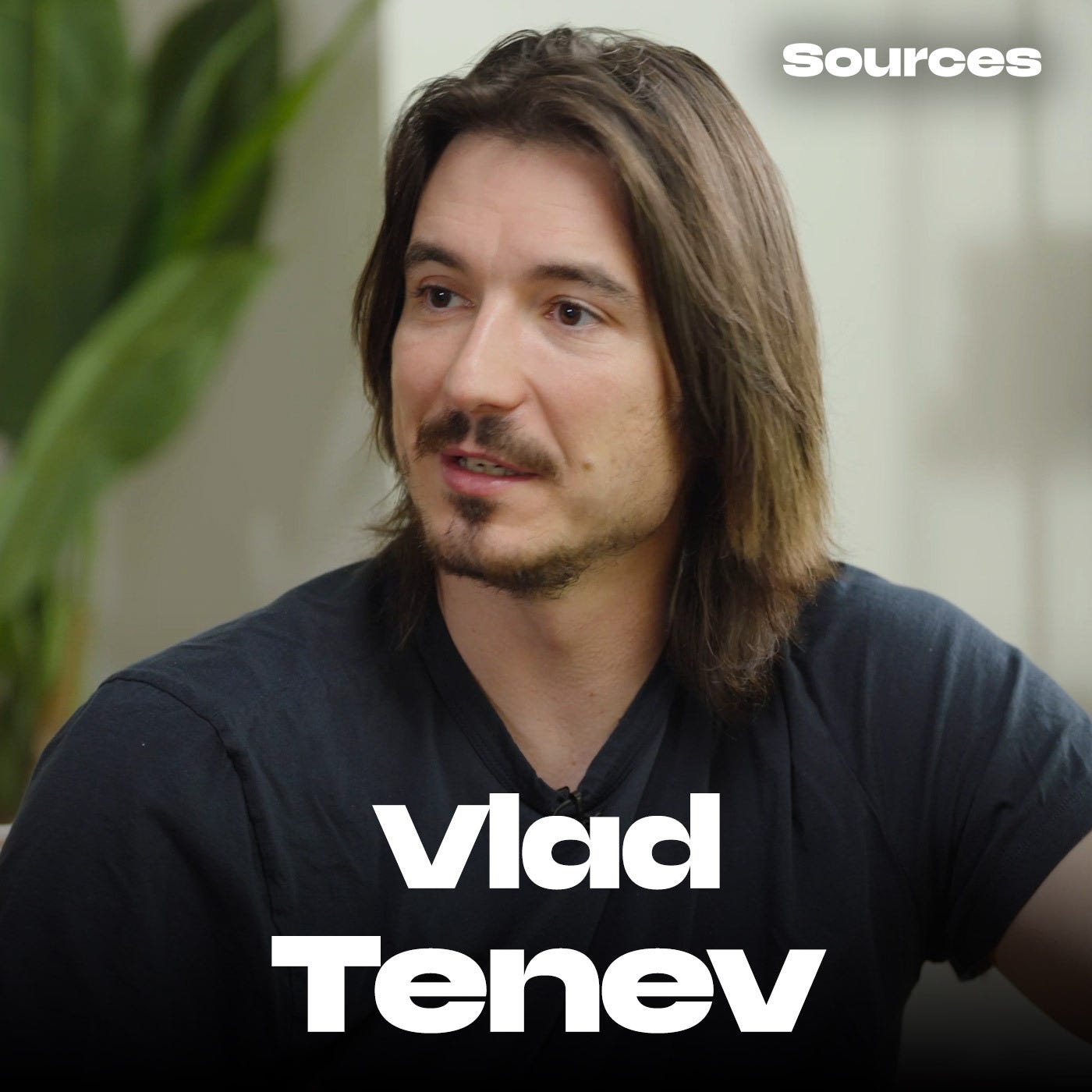
Vlad Tenev (Robinhood CEO) discusses “Robinhood agents” and agentic finance: using AI to place trades on a user’s behalf, starting with a separate, opt-in “agentic trading” account and expanding from equities to options, crypto, and limited margin. He also connects AI trading to broader Robinhood goals: democratizing finance/ownership (Robinhood Ventures, tokenization via Robinhood Chain/stock tokens), prediction markets, and future “24-7” agent-managed workflows.
The guest is Vlad Tenev, Robinhood CEO; he previously worked in algorithmic trading and now leads Robinhood’s push into agentic trading and related products.
AI agents will generate a large share of trading volume because they can operate 24/7, handle multi-asset complexity, and use tools/data humans can’t easily coordinate. Edge will shift via differentiation and ecosystems, not just “better AI.” Trade autonomy is guarded by default approvals and separate accounts.
iron condor option strategies constructed from user intent; Robinhood MCP “for Agents” setup in ~60 seconds; 100,000+ onboarded agentic trading customers; prediction-market “world cup” hub; tokenized stock access in 120+ countries; low-latency co-location as a future “hedge fund” capability to potentially democratize.
Written by AI. May contain mistakes.
Discussion on the development and purpose of AI trading capabilities at Robinhood.
“And we want to put all of the power of a sophisticated hedge fund or algorithmic trading firm in your pocket.”
Exploration of the user experience with AI trading and future implications.
“Did you have to do separate account for regulatory reasons or privacy reasons?”
Explore the challenges of options trading and how AI can simplify complex trading strategies.
“I mean, options trading is probably a great example.”
Discusses how differentiation is key to maintaining an edge in AI-driven trading environments.
“The edge in anything is built by differentiation.”
Examines Robinhood's agent marketplace and potential revenue models through subscription and partnerships.
“talk about all the other business lines you guys have?”
Insights on how low latency impacts trading strategies and future possibilities for democratizing access.
“Are there things that you can tease that people may not know about the edge that these big guys have that you're like, I'm going to bring this in?”
Explores the use of agents for productivity and managing tasks in both personal and professional contexts.
“running the company, also managing your money.”
Discusses how AI transforms product development processes and the potential effects on human creativity.
“And your bottleneck will be how quickly can your changes be tested against live customers?”
Examines the connection between AI, inequality, and Robinhood's mission to democratize finance.
“Now, again, that doesn't mean that it has the taste and people kind of get used to things and realize that this is an AI generated image.”
Learn about Robinhood Ventures and its unique investment structure.
“And we have Robinhood Ventures, which is our US-based, think of it as publicly traded venture funds that are - You're on the second one now, right?”
Explore the challenges of AI accessibility for individual investors.
“So yeah, when you look at AI, a big problem, and you juxtapose it with something like crypto, which was available to individual investors from the beginning.”
Explore the challenges of AI accessibility for individual investors.
“With Jira, you can easily share your work context with AI agents you already love, like Claude, Cursor, and GitHub Copilot.”
Understand current market concerns and their implications for stability.
“Banking services provided through Choice Financial Group and Column NA, members FDIC.”
Explore how ownership leads to a more stable society and economy.
“individuals are owners is a more stable society, right?”
Understand the benefits of tokenization for global access to US stocks.
“Well, we've been dancing around this and maybe we can land it here.”
Discuss the challenges and solutions regarding governance in tokenized stocks.
“If you're in Venezuela and you're looking to get exposure to US stocks, voting's nice, but it's probably not the higher order bit.”
Learn about the future of asset tokenization across various asset classes.
“And I think that's basically what's happened.”
Discover how prediction markets are evolving and their impact on news consumption.
“But yeah, for someone building a portfolio overseas to have low cost access to any asset that a high net worth individual here in the US would be able to have.”
Debate the role of AI companies in providing investment access to the public.
“I'm used to just switching the channels.”
Learn about the importance of democratizing access to AI and investment opportunities.
“So we talked a lot about one of the problems being that normal people just don't have access to invest in these companies.”

Get the gist, explore an idea or ask about something said.
 Claude
On Sources with Alex Heath, what are the key points of this episode?
Searching your listeningAutomatic transcript. May contain errors.
0:00Alex Heath: Vlad, I just got to see Robinhood agents and have a lot of questions. I think the big thing for me is it's the first time that a lot of people will probably be introduced to the concept of AI making trades on their behalf. And it seems like a big deal for not only you guys, but the industry, AI in general, how people use AI. I'd love to hear from you the genesis of this idea and why you guys decided to do it. Because you did the MCP thing recently where people can use Robinhood data and their own AI harnesses and all of that. But this feels like bigger. Yeah. I guess the origins of it, the motivation is that we want to empower traders with all the best tools.
0:47And we want to put all of the power of a sophisticated hedge fund or algorithmic trading firm in your pocket. the beginning of my business career, I was in algorithmic trading. So I have a little bit of experience of what that looks like and what it is. And I think this is, it's going to be a long mission that to some degree never ends because the wealthy always find a way to get better stuff, which means our job is never done. And that's part of what makes it very, very fun. So when we started our path to making Robinhood agentic and making this agentic finance category real, and by the way, nobody else is really doing this.
1:38So it's sort of like we're wandering through the fog and iterating on the infrastructure and the product at the same time. So the first version of it, which we launched with our Robinhood MCP, Robinhood for Agents, earlier this year, had two components. One was for trading. The other was an agentic credit card. And for trading, it started in a separate account. So it's very cabined off. You have to affirmatively move money from either your bank or from another one of your accounts to your agentic account. So it's separate from your retirement, separate from your main Robinhood account. At first, it could only trade equities without margin, so unlevered cash settled equities.
2:21And then over time, because we wanted to start light and kind of figure out how customers would use it and what they wanted. And so over time, we've expanded assets. Now you can do options. Now you can do crypto. We've added limited margin capabilities as well. And what we found was, first off, customers love it. We have over 100 ,000 customers that have actually onboarded onto our agentic trading offering. And as we look at the metrics, it's like continually and steadily increasing, especially when we add new capabilities and we unlock things like limited margin. And so the trajectory and the retention has been really, really good.
3:06But what people, there's a couple of things that are clear next steps that we want to improve that have been just adding a little bit of friction. One is not a lot of people want to use Cloud Code or Codex. And, you know, in our circles, we're a little bit more tech savvy. We probably know a lot of people using Cloud Code and Codex. But for your average individual, it's a little bit too complex. It's still kind of a developer tool for computer programmers. And the friction of going from your Claude, connecting it to an MCP, linking it to Robinhood, and having to monitor in a different place where you're managing your strategy is not ideal.
3:48So that's one problem that we fixed with Robinhood agents. The second problem is that a lot of times the general models, when you plug in an MCP, they don't want to trade. They're not comfortable with it. They don't see the trading traces in their training data. They're not built for it. And so we've spent a lot of work, and this is the part that I think will continue, to make the models very, very good at using our tools, being aware of what Robinhood can do and how best to take advantage of the huge ecosystem. And actually iterate to make it not just want to trade, but be really, really good at everything around it.
4:29And so that's the big step in Robinhood for Robinhood agents. We're bringing it into your app, making it so you can manage it in one place and really kind of giving you an integrated experience for agentic trading. And it's just the beginning. You imagine more asset classes, more capabilities, everything that you do as an individual on Robinhood should be accessible to your agent. And over time, we want to systematically go through everything that an extremely sophisticated algorithmic trading firm or hedge fund would have access to and give that to our customers through Robinhood. And that means improvements on performance and latency.
5:16You know, a lot of these high frequency firms, they compete over who gets to be the first port in the switch in the data center where the exchange or market maker is, right? So, yeah, it goes quite deep. So, more work on the performance and latency side, which we've been making incredible progress. More work on research and adding tools. Agent apps is a new thing where we can actually link to third party developers who provide tools for our agents, help them monetize and give that capability to users and more data and more integration with the broader Robinhood ecosystem. So yeah, we see a world where actually the North Stars, our customers should have an advantage over the hedge fund and the algorithmic trading firm.
6:06And there's just an endless amount of work to get to that point.
6:10Alex Heath: And for people who haven't used it yet or seen it, I mean, it basically takes 60 seconds to set up. You name your agent, pick your model, decide if you wanna have trade approvals on for the agent, which I think is important. You guys are making an opt-in for the experience so that people I think can just get used to it. because it's going to be a new concept for a lot of people, especially the average Robinhood user. Like you said, they don't know about all these sophisticated tools and data sources that professional traders have access to. We put a lot of guardrails in at the beginning, and some customers actually say, hey, I wanted to have access to everything.
6:45But at this point, we still want to make it to be an affirmative decision. Do you want it to be autonomous or do you want to approve everything? Well, by default, we'll make you approve everything, but we'll have a path if you want to try autonomous. And then the fact that it's in a separate account as well makes it so that you have to make an affirmative decision for it to trade your money. It won't just, you know, go rogue and do that. So we've spent a lot of time thinking through the trade-offs. And I think we have a good base from which we can continue to iterate and to lead this new market, which I think will be a really big market.
7:19Alex Heath: This episode is brought to you by Mercury, AI-native banking that's loved by more than 300 ,000 entrepreneurs, including me. Visit Mercury.com to learn more. Mercury is a fintech, not a bank. Check the show notes for details. This episode is also brought to you by Jira Byadlassian, where teams and agents get the context, coordination, and control to move work forward. Try it free at Jira.com. That's J-I-R-A dot com. Thanks also to Granola, the AI notepad for people in back-to-back meetings. It works everywhere you do and lets you focus on what matters. Try it at granola.ai slash sources and use the code sources for three months off.
7:58Alex Heath: The separate account piece, did you want it to be one account? Did you have to do separate account for regulatory reasons or privacy reasons? Do you see it ever being one account, the AI and you in your account? I think that, I mean, it would be very easy for us to link it to your main account. I think part of the reason we wanted to do it is just to start small and to make sure that, you know, if we do get feedback from customers, we sort of tiptoe into the experience. A lot of people have been asking us for putting into the main account, or you can imagine like a flag so that you could flag and turn on an agent, plug it into an existing account that you have.
8:41So yeah, that's something we're thinking about. But I don't think at this point, it's a limitation of the product. I think a lot of customers really like being able to move things over and keep it separate. So probably the default being separate account will continue, at least for the time being.
9:01Alex Heath: Out here in Silicon Valley where we are, we're here at your office in Menlo Park. I mean, there's whole startups being created to use AI to do autonomous trading, right? And it's a really interesting category and something I've been thinking a lot about and the idea of AI managing money for people. and not just, you know, sophisticated people, but everyday retail investors. And you're doing that now with this. I'm curious, like where you think this is going? Are we going to a world where most people have AI make their, not only their decisions, but their trades, execution, all of that, have AI do that for them?
9:37Alex Heath: Do you think that this is inevitable? I think a very large portion of the volume will be generated by AI agents. And I think that's because they don't have a lot of the limitations that we have as human traders. They can be up 24-7, right? They can be multi-asset class simultaneously. So one of the things that are challenging for humans using our Robinhood app directly is you have to go to different screens to get different asset classes. The more things we add to the app, to some degree, the more work we have to do to make the experience coherent. So for example, we started with stocks and it was very simple stock experience, but then we added options, crypto.
10:23Now we have futures, prediction markets. In overseas and some of our other products, we've got DeFi with Robinhood chain, decentralized finance products and assets. We've got perpetual futures, banking, retirement, advisory. So it's a lot of stuff. and that complexity is a challenge for humans, but for agents, it's just more context, more opportunity, more trade ideas. And so we've started seeing the earliest iterations of Robinhood agents. We see people constructing option strategies, right? And it's like, I have a very specific thing that I want to do, trade that I want to put on. Maybe it's an iron condor or something.
11:05And it's just, I can tell my agent and it'll take the data, it'll put it together. It makes that really, really easy. And that's kind of automation use case. It's like removing a paper cut. But you imagine we plug it into all assets, we plug it into all data sources, and you'll see the use case is getting more complex. The strategy is getting a lot richer. Yeah, I see a world where a large portion of the trading volume for an individual investor, for our customer base, writ large, is generated by AI agents. But that doesn't necessarily mean the vast majority of the assets are going to be agentically trading.
11:47I think the vast majority of the assets will probably be held long-term, but the trading activity will probably go more and more towards agentic.
11:58Alex Heath: It's an interesting time, too, because people are getting used to products like Muse, Instinct, et cetera, making purchases for them agentically and using AI to save money, pay for things. So I feel like your timing's actually pretty good because the average everyday AI user is starting to realize like, oh, I can use AI to interact with my money in a way that six months ago no one was really doing. I think, yeah, there was still that gap of, I don't really feel comfortable giving my AI my email or the keys to my brokerage account. I think we're going through the shift. And it happened with other new technologies too.
12:41I mean, I remember when the internet first became a big thing and people were very nervous punching their credit card number into a website.
12:48Alex Heath: Yeah, I remember. Didn't feel secure. It was like a safety concern. And it was even, it took probably 10 years before it became clear that it's actually more secure than handing your credit card over at a brick and mortar register. Same with mobile. You know, when we got started with mobile, it was still the Overton window hadn't shifted to mobile being your default way of managing your finances. Still, people thought of it as where I play games or do not serious stuff. So the idea of my finances being on my phone seemed sacrilegious almost. Yeah. Yeah, I think we'll see the same thing here. We're starting to see it.
13:28And so we're probably early, but I think the time is soon.
13:32Alex Heath: When your team was showing me the demo, I was thinking too, this really gets at the original mission you had for the company, democratizing finance. Because AI, those paper cuts you described, putting on complex trades, all these things, potentially a lot more people could be doing more complex things with their money and not even needing to fully understand all the complexities. Yeah, the AI could explain it to you. Yeah. You know, much better than reading a book. The interface becomes simple. Yeah. I mean, options trading is probably a great example. It's so complex. Options trading is very difficult.
14:06Alex Heath: And you all had, I think, still do have the best interface in terms of learning options. But I got to be honest, it still is complex. Yeah, particularly if you go into these multi-leg strategies. I mean, we can do what we can to illustrate and say, okay, well, this trade, you know, you've got limited upside, cap downside, you know, and we'll show that graphically. And we can generate all those visualizations and make them available to agents as well. What the agents can do is take your intent. It's like, hey, I want to put on a trade for this stock. I want to cap my downside. I want to have unlimited upside, those sorts of things.
14:46And they do a pretty good job of constructing the right legs of the options trade for you.
14:51Alex Heath: I'm curious where you think the edge will be in investing and trading as AI proliferates. I mean, you started this conversation by saying, we're always trying to play catch up with the big guys, trying to get people a leg up. The big guys are always going to be trying to get their edge. So this cat and mouse can feel like it's not stopping anytime soon. But if we think big picture, a world where everyone's using AI to manage their money. I think the edge will be always moving. There's not going to be like, oh, everything's still and, you know, the edge is right here, the alpha is right there. I mean, people are always building new products.
15:28Even us, you look at Robinhood Chain, which is our new blockchain that we rolled out, optimized for real world assets. I mean, as soon as that went live, it surprised us with just a huge amount of developer activity, DEX volume. A lot of the traders from other chains immediately started bridging over because there were all these new assets they could trade. The stock tokens, but also some of the memes and other assets. All of that was just a new ecosystem. So I think you'll see new ecosystems continue to form new asset classes. You know, a lot of the agentic trading interest has been in prediction markets, too, where you not only have your typical financial assets, but you can trade on real world events.
16:17You can trade on Fed decisions, sports. Crypto has become very popular. So you'll see new asset classes coming in. And I think the advantage that Robinhood has is we're one of the few, if not the only, where you could do all of these things in one place with one easily shared balance and uniform KYC, simple money movement. So for your agent, they can just have access to all these things. And then you can have strategies that incorporate multiple assets. And I think that's where it's going to start to get really interesting because that type of complexity, that type of strategy is going to be very, very difficult for a human unassisted to be able to put together.
17:00Alex Heath: So you don't worry about a world where everybody has the same kind of super powerful AI that can trade for them and then there's effectively no edge. The edge in anything is built by differentiation. If you're doing the same thing as everyone else, kind of definitionally, you have no edge. So you'll have to figure out how to be different. And I think that's been always true for trading. It's not as simple as like my AI is better than yours. There's a lot of like product stuff around it. I mean, if you have a better AI than other people, I think that would be one form of edge. But yeah, I don't think very many people will be training their own AIs.
17:35But I mean, connecting it to unique pieces of data. We'll have a proliferation of apps in the agent app store, which now we have a relatively small number. but it's going to be open and we're going to be adding a lot more. Things in some degree, to some degree, do get centralized because we have these models that are now looking at everything, but also the amount of things we can give them and the context and the tools are increasing as well.
18:04Alex Heath: And I want to ask about the agent marketplace, but on the model side quickly, are you guys doing a lot of post-training, fine-tuning on the big, you know, open AI bi-anthropic models? Robinhood's not going to make its own model for this, right? Yeah. Currently, we're not doing any fine-tuning, but we have done that internally for certain models. We've also pre-trained some specialized models for ourselves. Yeah. With this one, we wanted to start with the models that our customers would already know and give them some choice for what to deploy. But yeah, that doesn't mean that... I mean, you can tell already this product has evolved.
18:46So it's going to look completely different, probably six to 12 months from now.
18:50Alex Heath: The marketplace, is this in the same way you talk about all the other business lines you guys have? Is this the next one? Do you see this being more than just a way to make Robinhood agents better, but an actual business for the company? I do think the vast majority of Robinhood's business is going to be from transactions and assets. So just customers performing activities on the platform and bringing their money in and kind of the second order effects there. Subscription is a bigger and bigger thing for us. I mean, you look at Robinhood Gold for the main app, that's a multi-hundred million dollar a year revenue business started from a small base.
19:31We want to make it as good as possible and create this marketplace where developers and service providers can come in and have an incentive to plug in their data. Is it going to be as big as the Apple App Store? I'm not sure. But yeah, I guess I never try to presuppose and preordain how big each of my businesses will be relative to the other ones. It's not like people always ask me, well, what percentage of your business do you want crypto to be? I want my crypto business to be the biggest crypto business. I want the equities business to be the biggest equities business. I want them to compete with each other over which one's bigger.
20:11Yeah. Like why would I be like, oh no. Yeah. Crypto, I want to keep to like 7%. That's a really good 7%. Let's just not keep it. It's a portfolio of one.
20:22Alex Heath: Yeah. Well, no, but so the marketplace. It's a portfolio where everything just has to be as big as possible. The marketplace though, I mean, is the business model some kind of take rate or subscription sharing component? How do you, cause you've got like initially, you've got unusual whales in there. You've got some great data sources. What is in it for them except exposure to the Robinhood user? How complex do you want that to be? Like, do you think it stays that simple? I think so because whenever you get into like, for example, it's hard to do a transaction-based or an asset-based revenue share for a couple of reasons.
21:00One is a lot of customers don't want that information shared with the apps. You don't want the entire marketplace to see how much money you've got in your account. You also don't want them... People are very private about their trading strategies. You're not going to want people inspecting all of your trades. Sure. Right. So, yeah, one of the benefits we provide is we provide a layer of privacy. People know that people are already comfortable with their trading in Robinhood because they know we're not just sharing their trading data with everyone. So I think subscription is clean and it doesn't get us into these messy things of either making sure that the partners have to get regulated or that we don't want customers to feel like their data is going anywhere.
21:48Sure, of course.
21:49Alex Heath: Yeah. Is there anything that the big guys are doing, the hedge funds, et cetera, where you're like the quants, all that, that you're like, man, I'm trying to get that in right now to the marketplace? Are there things that you can tease that people may not know about the edge that these big guys have that you're like, I'm going to bring this in? I mean, a great North Star would be, and again, I'm not giving you any timeline for when we would have anything like this, but a lot of the strategies that the big guys have are unlocked by low latency. So you have to be physically proximate to the exchanges and the matching engines.
22:31And right now, Robinhood doesn't offer that. But, you know, of course, my beginnings were as a high-frequency trader. And, you know, I think it's an interesting question to ask ourselves. What would it look like? Can we democratize that? Can we actually... And we're starting with just making the performance and latency generally better. but one day can you deploy a trading strategy co-located with the exchange and do that in a very simple way where you don't have to be an expert in data centers or networking. You don't have to understand the details of that type of infrastructure engineering, but can we actually just make that easy for you?
23:14Alex Heath: I'm curious how you're using agents in your personal life for running the company, also managing your money. And I heard from your team, you really love loops. Yeah. You're doing a lot of loops. We could talk about that. But yeah, curious how you're using it and how it's evolved for you these last few months, because things are moving so fast right now. The first thing I started out with was just writing code. I became an engineer again. And you know, through that, I guess my North Star is that everyone should have a team of agents that's productive while they sleep. So we should be like a 24-7 company and not just in aggregate, but each person - It kind of mirrors the 24-7 push you're doing on like trading windows and all that.
23:58Each person should be a 24-7 agent manager. Your job becomes managing your agents, make sure they're well-fed and they're not hungry and they have the context. And, you know, you ask, all right, well, what does it take for your agent to be running fully autonomously? They have to have context. They have to be able to test their work because if they don't have the ability to test their work, eventually they stop. And they're like, all right, I'm done. You know, you do the testing for me, human. So it really just requires rethinking our entire infrastructure and making sure everything from the continuous integration, continuous deployment, the testing, like that, that's all really, really good.
24:46And it can scale and that, you know, we can actually automate pretty much everything. And I think that the future is all product development will be looped in this way, right? And your bottleneck will be how quickly can your changes be tested against live customers? And how quickly are you going to be able to tell, is this a good change or a bad change that we should throw away? Industry-wide, software engineering is completely transforming. You're going to see an end-to-end automation of product development and infrastructure development. One of the first places you're seeing it is actually AI research.
25:29People thought that would be the hardest and the last to go because it's just complex work. But really, if you think about it, it's pretty neatly sandboxed. I mean, AI models, there's already a way to test them without having them live. We have evals. So you have automated evals. The experiments are pretty sort of like narrow in some ways. Like you can run experiments, change the AI model, deploy a new feature. uh retrain it in some cases so so it turns out some of the first work that's being automated is the ai research work and and i think eventually it'll happen with with products too but product work is is a little bit harder because you have to go and get adoption from yeah real users they have to test it in the wild and and human adoption and in behavior change changes a little bit more slowly than, you know, things in the pure agent world.
26:28Alex Heath: And there's an intuition to products and an art really to it that I think also is going to be hard to replicate by AI. Maybe so. I don't know. I mean, they said AI would be the last to, art would be the last thing to be replicated. But, you know, some of the first things you saw right when Chad GPT launched was stable diffusion. You could say, make this, but in the style of Vincent van Gogh, right? And And it was, it's pretty good. Now, again, that doesn't mean that it has the taste and people kind of get used to things and realize that this is an AI generated image. But yeah, I think a lot of the design work benefits from AI as well.
27:13Alex Heath: Yeah. I'm really interested to hear your view on the conversation around AI, bigger picture and how people feel about it. Because I was thinking about, it's so visceral how people feel about it. They either love it and they're using it and it's improving their businesses and their lives, or they hate it, they detest it, they refuse to use it. Very polarizing. And the data centers are a problem. There's a lot of problems. And I was thinking about this concept of inequality and how it connects to the Robinhood mission and bringing inequality to finance and democratizing finance. And I wonder if you agree or not that I'm starting to think a lot of the negativity around AI may actually have to do with inequality.
27:52Completely agree. Yeah. And this is one of the reasons why we push so hard for individual investors being able to invest in private companies. Yeah. And we have Robinhood Ventures, which is our US-based, think of it as publicly traded venture funds that are -
28:11Alex Heath: You're on the second one now, right? On the NYSE. Yeah. We have two funds that have IPO'd, more are coming as well. You just had Crusoe on there, I saw. Yeah. Crusoe was Robinhood Ventures, One investment. Robinhood Ventures Fund Two is seed and series A stage. So Fund One is frontier companies that are leading their industries, typically late stage. So OpenAI is in there. Databricks. Databricks, exactly. Revolut. So really just top quality late stage names that are hard to get into. Available to mass market audience through a product that is traded on the NICI, like any stock. And the great thing about it is because we have so many retail customers, we provided retail distribution directly.
28:55So we went public, we raised capital, the bulk of which came from Robinhood individual investors. And then that capital was invested into these companies. It's an efficient structure, right? There's very, very little middle layers and no carry for Robinhood Ventures Fund 1. Robinhood Ventures Fund 2, we wanted to take it further and do something that nobody's done before, which is seed and series A stage companies. Companies nobody's heard of before they become household names.
29:24Alex Heath: Which is exciting, but I can say now as a new investor, also very risky. Yeah. I mean, the risk is highest in those, but also the potential upside and the opportunity is greatest. And actually there've been studies, there's a pitch book study that looked at, you're an investor, so you've probably seen this one, seed investing as an asset class had the highest aggregate returns, even accounting for a higher rate of company failures than any other class. The parallel is a beautiful thing. Yeah. So it's interesting. I mean, we solved the problem of individual company failures by diversifying in a broad-based basket.
30:00And when Robinhood Ventures Fund 2 went public, we seeded the portfolio with 80 companies. So it's going to be a large number of investments. We're building the machinery to do this. And of course, overseas, we have tokenization, which we've demonstrated with our tokenizing OpenAI and SpaceX for our European customers as a gift. And then now that the chain is out, we're obviously very keen on taking our tokenized stock products, stock tokens, and expanding that to other assets. So yeah, when you look at AI, a big problem, and you juxtapose it with something like crypto, which was available to individual investors from the beginning.
30:45From the first block of the Bitcoin blockchain, it was like an individual decentralized phenomenon. Normal people adopted it before institutions.
30:54Alex Heath: Became incredibly wealthy from it. Yeah. Yeah. And now, you've got crypto army. If there's a hint of government overreach, the crypto army is like swinging elections, right? The 2024 election hung on the balance of huge individual support for crypto. Juxtapose that with AI. No one has exposure to these. Nobody has exposure. Why do I want the data center in my backyard if it's just going to make these venture capitalists richer? Right. It's just expensive resource consuming slightly better Google. And if you think of it that way, of course you're going to hate it. Yeah. Yeah. I think, uh, and yeah, I think that's a big problem with, uh, people not having skin in the game, not rooting.
31:38If, if, if AI had, if there were more individual owners of these AI companies at the earliest stages, they would be defending it. Cause it's, it's my AI company. I wanted to do better. I wanted to, I wanted to expand and to grow because I benefit and I have skin in the game. So yeah, that's why we care so much about Robinhood Ventures and our efforts to get AI companies to, even before they go public, give individual investors some skin in the game. And, you know, it's exacerbated by the fact that private markets are getting flush with capital and companies feel less of a need to go public until they're now in trillion dollar plus valuations.
32:23Alex Heath: AI is only as useful as the context it has. But when that context is scattered across tools, threads, and DMs, your team and your AI agents are flying blind. That's the problem Jira by Atlassian solves. What's the goal tied to your project? What got decided last week in Slack DMs? Atlassian's teamwork graph pulls all of the valuable pieces together, from Jira, Confluence, GitHub, Slack, and more, so nothing falls through the cracks. You get 44 % more accurate results with 48 % less token usage. With Jira, you can easily share your work context with AI agents you already love, like Claude, Cursor, and GitHub Copilot.
32:59Alex Heath: Assign them work directly or connect your tools through MCP. All of this lets you spend less time digging through endless links and messages, chasing down what got decided and by who, and spend more time actually shipping. Learn more at jira.com. That's J-I-R-A dot com. I spend a lot of time context switching between meetings, often with no time to process one before the next starts. Thankfully, Granola runs in the background the whole time. It's an easy-to-use AI notepad for meetings that works everywhere, even on phone calls. I use Granola to recall what was said in meetings and create helpful summaries.
33:33Alex Heath: I use it every day to stay on top of what I need to get done with my team. It connects to my email and suggests follow-ups for me to quickly review and send, saving me valuable time. Granola isn't just a core part of my workflow. It's basically my second brain. Try Granola at granola.ai slash sources and use the promo code sources for three months off. One of the biggest pains I've had running Sources has been managing my books. I'm not an accountant and all of the software out there is unintuitive, clunky, and detached from where my transactions actually live until now. Mercury recently launched Mercury Books.
34:08Alex Heath: It's AI-powered accounting that works with your Mercury banking and credit card transactions, plus external cards and payroll systems as well. You can choose between cash and accrual accounting and quickly generate reports for your cash flow, P &L, and balance sheet. Like everything Mercury does, the design of Mercury Books is super approachable and clean. I finally don't feel overwhelmed when I'm trying to understand the big picture of my business. I love that AI does most of the heavy lifting, including for things like auto-categorizing transactions, and that Mercury's command AI agent can handle tasks end-to-end.
34:41Alex Heath: You don't need to be paying for separate accounting software anymore. And you can even invite your accountant or CPA to work alongside your Mercury Books with you. This doesn't cost extra, and Mercury will even help you find a human accountant if you need one. Visit mercury.com slash books to learn more and apply online in minutes. Mercury is a fintech company, not an FDIC-insured bank. Banking services provided through Choice Financial Group and Column NA, members FDIC. Framer is the AI website builder that powers the Sources Podcast website at podcast.sources.news. Framer brings AI agents into the same canvas where your website is designed, managed, and published, so you can move faster without giving up your taste or control.
35:20Alex Heath: I use Framer to make the Sources podcast website be the destination for everywhere you can find the show, plus you can also see recent issues of my newsletter. Start building with agents for free today at framer.com slash sources for 30 % off a Framer Pro annual plan. Framer.com slash sources. Rules and restrictions may apply. I'm curious how you're, I mean, we just had, we had SpaceX, right? But I'm curious how you're thinking about Anthropic and OpenAI and looking at those coming down the pike. Well, of course we see an opportunity because we have such a large retail customer base that we can very much be the voice of retail and help these companies at each stage in their life cycle.
36:01You know, pre-IPO with Robinhood Ventures. Now we're an underwriter in IPOs. We announced Aura, which is the first IPO that we're underwriting.
36:10Alex Heath: I assume that's just the beginning. You want to do a lot more underwriting? Oh, yeah, yeah. We intend to be disruptive in the space, too. The problem is, too, a lot of these underwriters charge high fees. Yes. So I think we can be kind of like the retail distribution experts. How do you break that underwriting cabal, really, is what it is? Yeah. Well, I mean, to be fair, there's some... It's important. It's an important job. I mean, I'm not trying to downplay the importance of it. Yeah. There's actually some things that we're not really well positioned to do and we probably won't focus on, at least for the foreseeable future.
36:47So I don't think we have any particular competitive advantage going and getting a bunch of large buy-side institutions or sovereign wealth funds to be connected to the company as investors. Goldman, JP Morgan, all these other guys. They're great at that. We don't have private wealth to nearly the same degree, but what we do have is everyday people and large numbers that love investing in these companies. And so I think we can be the default retail option and we can kind of represent retail as a part of the shareholder base. We also have really good data. The IPO process has been very, very manual.
37:37When you sit down as a CEO and you're having the pricing discussion, where should we price this thing at? A lot of it is just, you know, finger in the air. I don't know, you know, Cathie Wood might not be willing to pay that price and you want Cathie Wood, right? Which, you know, is important to people. But what we give people is, what we give issuers. It's just a precise demand curve at every price, which is data we get because everything is automated N10 for that offering. So through IPO access and underwriting, we can help companies at that stage. And even post IPO through our earnings and say shareholder products, we can kind of help them connect with their shareholders that way.
38:23Alex Heath: Is there anything macro in the market that concerns you right now? I mean, the Fed just raised rates for the first time in three years. The 10-year Treasury is near 5%. Yeah. Inflation concerns, you know, I think are still there. I think it's still elevated. And we've got these huge IPOs coming and everything feels fragile. Yeah. And midterms, obviously. I'm curious how you're thinking about all these big factors right now. Yeah. I mean, a lot of people say, well, you've got the inflation rate at above, what is it, 3%, 2%. I grew up in communist Bulgaria. So I was born during the final swan song of communism in the late 80s.
39:08And 1991, which was my last year in Bulgaria, the inflation rate was 180%.
39:17Alex Heath: Not quite there yet. Yeah. So that was rough. And life went on. In 1997, which was a couple of years after I moved to the US, Bulgaria had the unfortunate distinction of the highest inflation rate in the world. It was in the thousands of percent. So it was literally, they were adding zeros. They couldn't print the bills fast enough. They needed more zeros in the bills. And I think it It was very like you viscerally felt the fragility of the entire system. This is like nowhere remotely close to that. So, yeah. And again, like the market, the macro rates go up, rates go down. I think we have a lot of tools in this country, a lot of great innovation.
40:07The fundamentals of the economy in America are quite strong. The ingredients are there. I have reasons to be more optimistic than pessimistic. So that's good to hear. I feel pretty good now. I mean, you look at the center of the AI industry and what's driving so much of this innovation. It's still here. Yeah. It's not in Europe. Right. Hasn't moved to China.
40:31Alex Heath: And I do wonder how much we're maybe underwriting the deflationary aspect of AI and what that could unlock, right? Especially when you start getting into robotics and all these things and AI doing more things in the physical world. Yeah. cost of labor, all these things. We don't even really have a sense of that yet. Well, and also you got to factor in that for a long time, we were just exporting our industry. Yeah. But now with AI, we're building data centers here. We're trying to really figure out as a country, how do we get more energy here? Should we be building more nuclear and really taking advantage of that innovation.
41:09And I think those are actually long-term positive things because we have to figure out how to break the morass that got us stuck to a place where we couldn't build anything. And now there's just like huge momentum. Yeah. A lot of the things coming out of the administration we've been very positive to. One of the other things we've been working on is the Trump accounts. Robinhood does a lot of things. We're doing agentic trading. We have Robinhood ventures. We're doing the tokenization. All of it goes around this one idea, which I think is a very important one. It's ownership. And I think ownership of high quality financial assets is incredibly important.
41:51And not just important for the individual in the sense of, I can make more money, I have more skin in the game, secure my financial future. that's all great, but there's a societal benefit to it as well, which is that a society where more individuals are owners is a more stable society, right? People have a stake in the success of the industries around them. They have a stake in the success of the country. And so all of our products really ladder to this idea. Ownership of private markets, that's Robinhood Ventures. Ownership all over the world, that's tokenization. Trump accounts is one of the other things talking about the administration.
42:33Ownership from birth. How do you get someone to be immediately plugged into our economy from age zero so that they have the largest benefit? They get to benefit from compounding for decades more than they would have under normal circumstances. So that's probably going to be one of the most consequential things that most consequential legacies of this administration. Like this program will survive hopefully in perpetuity and lead to a more stable investor base and a more stable country.
43:09Alex Heath: And Brad Gerstner and everyone who's involved in that deserve a lot of credit for that. Yeah, I think it's, I do agree with you and the administration, obviously, but like, I'm glad that the companies in Silicon Valley and really stepped up with this and helped. And the app's great, right? It's a good experience. I'm glad you like it. Yeah. I mean, we, I think we take a large amount of pride and we have a little bit of a chip in our shoulder because this is our way of like serving our country in a sense, right? And it's obviously, it's not like we're picking up, you know, arms and going to battle, right?
43:43So I don't want to compare it to that. But, you know, the impact of what we do here could be generational. And also, the government is not known for building great products. In fact, we're all sort of like scarred to some degree by things like healthcare.gov.
44:02Alex Heath: The DMV, I mean, all that. Yeah, yeah. Although I went to the DMV recently. You did? In Redwood City, and I was like very impressed at how smooth it was. You went to the DMV? I went to the DMV, and then I realized, holy shit, I got to up my game. I had this view that government was kind of in the Stone Age, but things have gotten very smooth. The Redwood DMVs got it together. I had to get my real ID, and I went and stood in line and got my real ID really quickly. Wow. Okay, shout out DMV. I did not expect that. Yeah, so if you haven't been recently, I highly recommend it. Just try to pay your local DM via visit.
44:40And they're trying to get better too. Okay.
44:42Alex Heath: Well, we've been dancing around this and maybe we can land it here. And I can't believe we're actually just now getting to this. You've been saying tokenization throughout this conversation. I got to ask, man, like what you're stirring the pot with this, you know, like the AMC feud. Companies have been reacting very viscerally to this. I think you all just... Well, there's one company. One, but yeah, you had it on the private side a little bit, right? You had some reactions to that, OpenAI and others. And I think you all just notched a bit of a win, as we're recording this a few days ago here in the US, with the innovation exemption, right?
45:15Alex Heath: Which starts to unlock the US a little bit. But I'm still trying to wrap my head around, like, why are you pushing on this? Like, why do we need to tokenize stocks? Yeah, so the main reason is that it's actually really hard to get access to U.S. stocks if you're overseas. And in some markets, it's relatively easy and they have robust local capital markets and exchanges. If you're in South America, in a lot of places, it's just tough, right? And it was also tough to get dollars. For a while, if you're in a South American country, for example, with a hyperinflating local currency, those people were buying American Express traveler's checks.
46:03And that's why stable coins became so popular. A lot of the usage of stable coins was overseas from people that just wanted a better, cheaper way to get access to US dollars because they would keep their money in it. So in the same way, a lot of people want access to US stocks. It's companies that they've heard of got spacex got nvidia so many others and tokenization uh allows them to have access with actually some better better properties 24 7 fractionalizable so you can break up the token into little itty bitty chunks you don't have to buy a full share uh it can be in your wallet so So in particular, nobody can confiscate it from you.
46:50It's not in some local account. It's some financial system that maybe isn't as developed with as strong protections as we have here in the US. So in a sense, I think the companies will be very, very happy about this because it creates net new buying of their stock from a global market. Robinhood chain with our stock tokens are live in over 120 countries where, you know, people probably wouldn't have been buying these U.S. stocks. They don't really have an easy mechanism. So it just cracks that wide open and opens up an entirely new pool, capital pool of buyers that didn't exist before.
47:30Alex Heath: But then you've got the AMCCO and others pushing back. And I do think there's a fair pushback that I don't know you've gotten asked. Well, but you kind of saw he reversed yesterday, right? Well, yeah, sure. I think a lot of the AMC thing you have to take into account that there's like meme activity. We have a little bit of a history with AMC dating back to 2021. A little bit. That's a little bit idiosyncratic. So I'm actually not sure how much of it is confusion about what tokenization exactly is because this is like a complicated new technology. And, you know, you can imagine, best case scenario, I'm running my business.
48:08Why do I have to deal with like changing technologies around capital markets? It's like not high on my list. I'm trying to sell movie tickets and popcorn, right? Or also how much of it is just, you know, appealing to a retail base that, you know, gets excited when there's just people fighting. Yeah.
48:29Alex Heath: But I think the fair pushback I've heard is the voting. How do you solve the governance aspect of not actually owning the stock? Oh, yeah. I mean, we have a solution for that. We announced that we intend to add voting. The reality, too, is not a lot of people vote their shares. No, they don't. But I think it's a nice box check to be like, I actually have it. I actually have exposure that way. If you're in Venezuela and you're looking to get exposure to US stocks, voting's nice, but it's probably not the higher order bit. So I think, yeah, you can find all sorts of little nitpicks. People had this about electronic trading of stocks as well.
49:06They're like, well, I don't get the real certificate. It's really nice to have the real certificate. That's a real share. What is this seed and company thing? It's not even in my name. It's in street name. So all of these same criticisms actually landed when stocks started being traded and brokered electronically rather than physical certificates. So I think the cat's out of the bag. This is not reversible. Now it's just a question of how do we make all of these issuers and stakeholders and the exchanges in the US comfortable? How do we make them feel that this is good for them? And understand because actually, if you look at this, if you're an issuer like AMC or others, it's basically all upside, next to no downside.
50:00So it's just very clear that it's going to be a thing and it's innovation and change is never just uniformly accepted, but it's also inevitable. So yeah, and we're working with all the stakeholders to make sure everyone's kind of brought along, but yeah, it's happening. So, yeah, and now the SEC is behind tokenization. So, yeah, and part of the reason we actually started with Europe and when we were in our event in south of France, we said we want to deliver great products for our international customers. Like that's we're immediately adding value. We're shipping product. We don't want to just like talk about tokenization.
50:43Some people like to talk about it. It's kind of become a buzzword and, you know, they have interviews and stuff like that. We ship. We want to ship real product, put it in people's hands. And that's really the most persuasive thing. Sure. Yeah, I could tell you tokenization is the future, but maybe you won't believe me. How about I ship it? People use it. We see it demonstrating value. And if it adds value to these customers outside the U.S., maybe that also demonstrates to folks here that, hey, we should adopt this technology and figure out a path for it to work in these markets. And I think that's basically what's happened.
51:22I mean, we kind of called our shot many years ago, and we're doing what we can to kind of push the industry forward, not just overseas, but here as well. And I'll tell you the future. It's going to happen to every asset. Private markets coming. You'll be able to, we'll have tokenization of privates. It's an inevitability. We'll have any wealthy person's asset base of tokenization of wine, of real estate, right? It'll all trade 24-7 on permissionless networks like a stock. Yeah, and I think it'll be really cool. I mean, from a technical perspective, it's interesting. But yeah, for someone building a portfolio overseas to have low cost access to any asset that a high net worth individual here in the US would be able to have.
52:17Alex Heath: I wanted to check in with you on the state of prediction markets, especially going into the midterms. I think you've got Kalshi and Polymarket kind of battling out in the court of perception and Robinhood is a huge player. And you've been very bullish on prediction markets as we've talked about this in the past, the future of news. You were the first person I actually ever heard that said that, like, I think of this as the future of news. What are you expecting kind of, especially, I think the midterms will be a big moment. Every big election is, but how are you gearing up and how are you thinking about that category over the next several months?
52:50Well, we're building a great, uh, so prediction markets in the Robinhood app, and we've done a lot of stuff on the infrastructure side too, but as a customer, as a user in the Robinhood app, it's, it's gotten way better. And, you know, now we have bespoke experiences and hubs for all the major categories, world cup. We had a really nice world cup experience where we had all the information in one place, you know, golden boot winner, goal scorer. We had the different groups. Midterms, there's like a really nice native map experience where if you're trading, it's obviously useful and easy. But also if you just wanted to see like, how are the midterms going?
53:31Who's going to win the state of Indiana, you know? And yeah, we have a nice experience there. So it's constantly, the amount of work that we have to do to improve the product and improve the infrastructure is never ending, right? And we're seeing new types of categories come up. Crypto markets have been very, very popular. And so increasingly, we're starting to see connections and synergies between our prediction markets offerings and different assets like crypto. And we'll start to see more with stocks as well. You're seeing the maturation of the industry into a true tradable asset class and with like a huge retail component.
54:18Alex Heath: Are you not even going to have the TV on this midterm in terms of trying to follow things? Are you just going to be... I don't think I'm going to have the TV on very much. Yeah, yeah. I think that's gone away. That we're already moving away from that? Yeah. I mean, I just realized, even aside from prediction markets and following the elections, I think a big moment to me where I was like, wow, things are changing, is when I was trying to watch the NBA playoffs a couple of months ago. I'm used to just switching the channels. All right, it'll be on ABC or ESPN. And I'm like, where's this game? I can't find it.
54:57And then I went and I asked my AI agent, my personal AI agent. and it's like, oh, you got to go to Amazon Prime. So I'm like, man, okay. When the NBA playoffs are hitting Amazon Prime, I think it's the end of the line for linear cable. I still have mine, but yeah, I feel like it's going to be like a landline phone before too long.
55:22Alex Heath: I agree. Last question. I fortuitously had the chance to catch up with Tutor, your co-founder, at your AI lab, Harmonic, which is doing a lot of really interesting stuff. and approaching it from the view of math, building foundational models. And I won't spoil what's coming, but he gave me a tease and it's very interesting. He gave me a question to ask you. Oh, great. Yeah. He said, what do you think of AI companies using their platform to solve math versus giving the tools to everyone else to do it? Oh, gosh, what a softball to me. I know, right? I love that question. I was going to bring this up proactively, right?
56:01There you go. So we talked a lot about one of the problems being that normal people just don't have access to invest in these companies. And that's led to all these negative effects where the AI leaders are like, why is everyone mad at me? You know, I'm just running my business. Well, I mean, your shareholder base, through no fault of your own, but some of them actually, OpenAI, a great example, They've partnered with us and made investing available for individuals. But yeah, like most people don't really think about this. And most people are very much thinking about, all right, how do I grow my business as fast and big as possible and beat my competitors, right?
56:48But with something like AI, you have to understand that you have to have a license to operate at the end of the day. Like if the people are against your technology and your company, it's going to be very, very difficult. And I think one thing that is just a miss, frankly, is, and I can kind of see how they got there, is AI companies keeping these advanced models in-house and just making the discoveries. Their employees running them to make discoveries.
57:23Alex Heath: Open AI just solved a millennium problem and all of that. Yeah. Like I think the future where there's just these giant data centers in people's neighborhoods that are just running workloads from the employees of the AI companies and the AI companies are making all the discoveries and creating all the inventions and, oh, maybe they're creating the drugs and producing them, right? That's like a very centralized, almost dystopian future. And I I think for a multitude of reasons, it's the less likely future. I think the more inspiring one is building the tools so that normal people get access to them.
58:05So I think it would have been a much better outcome if it was a mathematician that was using the open AI model that was coming up with these discoveries and not just employees running it and spending, what it was, tens of millions in compute. So yeah, I think that's the future I believe in. And that's, I think, the more likely one.
58:33Alex Heath: Well, thank you for your time. Appreciate it. All right. Always a pleasure. Banking should feel like modern software. Get everything you need in one place. Visit mercury.com to learn more and apply online in minutes. Mercury is a fintech, not a bank. Check the show notes for details. Granola is the best AI notepad I've tried. It works everywhere. on a video or phone call in person or an Apple Watch. Try it now at granola.ai slash sources and use the promo code sources at checkout for three months off. Jira by Atlassian is where your team and your agents work from the same context. Try it free at jira.com.
59:09Alex Heath: That's J-I-R-A dot com. Framer is the AI native website builder that lets you build faster without giving up control. Visit framer.com slash sources for 30 % off. Rules and restrictions may apply. Thank you.
Robinhood wants to put an AI hedge fund in your pocket.
CEO Vlad Tenev tells me how Robinhood Agents brings AI trading into the app, and why he expects agents to generate a growing share of individual investors’ trading activity.
We discuss how much control to give an AI that can trade your money, why Robinhood keeps agents in separate accounts, and where investors will find an edge when everyone has access to powerful models.
He also explains his push for every Robinhood employee to have agents working while they sleep. Tenev argues that the AI backlash is partly an ownership problem: most people can’t invest in the companies driving it. We get into Robinhood’s push to open private markets to everyday investors, the coming AI IPOs, and his response to criticism of tokenized stocks. We also discuss prediction markets and why he objects to AI labs keeping their most powerful tools to themselves.
Thanks to the show’s premier sponsors: Atlassian, Granola, and Mercury.