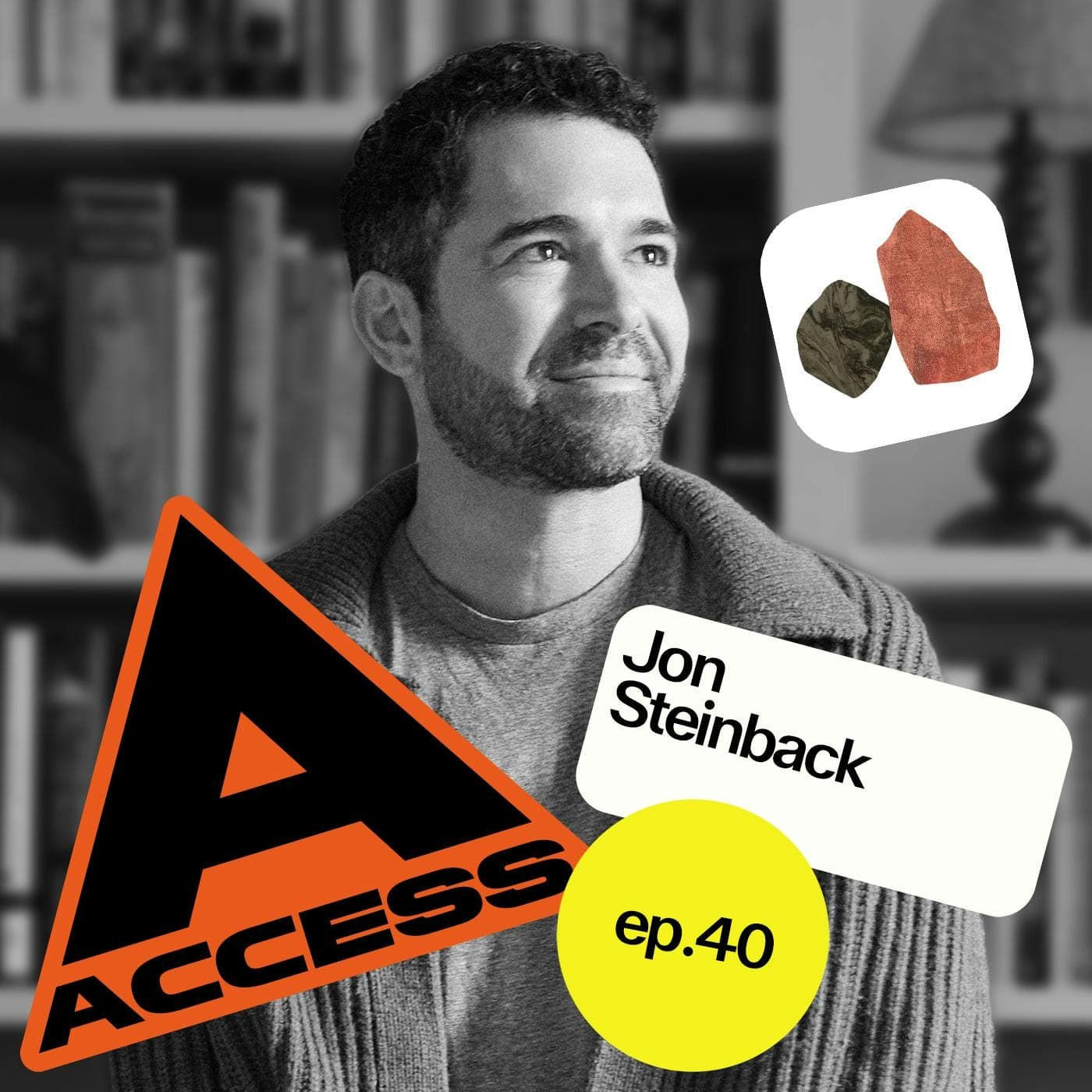

In short
The episode debates whether AI writing tools will improve writers’ thinking or just produce “AI slop,” and spotlights Marker, an AI writing app designed around the writing process (pre-writing, writing/transcription, and rewriting/editing) rather than a prompt box. The discussion also connects this to broader internet trends: a move back toward community and trust (Foursquare-like “friend recommendations”) versus algorithmic, engagement-optimized feeds.
Guests (backgrounds)
- John Steinbeck, founder of Marker; previously worked at Google DeepMind (creative/marketing) and earlier at Foursquare and The Verge.
- Ellis Hamburger, founder of Meaning, a storytelling studio for tech companies.
- Alex Heath, founder of Sources.News, covering scoops about the AI race.
Key claims
- Marker strips away Google Docs-style “toolbar” thinking and supports discovery and revision.
- LLMs can help writers rewrite and think, but shouldn’t replace voice or shared human context.
- The future is a “moderate middle ground,” not turning off tech or fully outsourcing writing.
Notable examples
- Marker features like “XXX/TKTK” placeholders, inline thesaurus, and a facilitative editor that asks what the writer intended.
- A child using Whisper with Marker because she can’t type.
- Foursquare’s “trusted recommendations from friends” as a model for rebuilding trust.
Written by AI. May contain mistakes. Listen to the episode to check what was said.
Chapters
Tap a time to open that second in VORevisiting Foursquare
2:10 to 3:40
Discussion on Foursquare's impact and the nostalgia around it.
“I feel like it's been a solid 15 years, which means I'm very old, and that makes me uncomfortable.”
The Future of Community Apps
3:40 to 6:01
Exploring why new versions of Foursquare are lacking and the desire for community-focused apps.
“I actually ran into Dennis, the founder of Foursquare recently at a meetup in New York, and he was showing me.”
Trust in Social Media
6:01 to 7:43
Analyzing how social media has changed and the importance of trust in recommendations.
“I was going to say hopefully it erodes human connection, but yes, it should propel us to greater links between each other.”
John's Career Path and Experiences
7:43 to 11:40
John discusses his career from Foursquare to DeepMind and the creative aspects of AI.
“on like the human side of the internet there.”
Building Marker: A New AI Writing Tool
11:40 to 14:01
John explains the vision behind Marker and the need for better writing tools.
“Did you figure out what time is by the time you left?”
Revisiting the Writing Process
14:01 to 19:02
Explore how writing tools have stagnated and what could improve them.
“Like I think there are more independent publications.”
The Vision for Marker
19:03 to 20:41
Discuss the future of Marker and its potential to revolutionize writing.
“So I guess what I'm interested in, though, is this just writing or do you see Marker expanding into other things?”
Voice Input and Its Impact
20:42 to 22:27
Examine the role of voice input in writing and its evolving acceptance.
“We refer to it internally as like the telemetry of people's writing.”
Integrating AI into Writing
25:17 to 28:00
Learn about using AI in writing workflows and its broader implications.
“It's time to talk about my writing setup.”
Disrespect and AI Features
28:00 to 29:00
Explore the overwhelming presence of AI features in modern tools like Google Slides.
“Like you open up Google Slides now, which is where I have my pitch deck, and they've got bars on the right.”
Show all 27 chapters
Evolving Discourse on AI and Writing
29:00 to 30:00
Discuss the changing conversation around AI in writing and the middle path approach.
“It was really funny you reflecting on going viral because we've been having discussions about AI and writing for over a year now.”
Finding a Balance in AI Tools
30:00 to 31:10
Examine the balance between using AI tools and maintaining original writing styles.
“I mean, I just think, you know, you can, uh, him and hall and they, of course the labs like still content to train.”
Model Architecture and User Engagement
31:10 to 33:20
Learn about the architecture behind AI writing models and how they foster user interaction.
“And at the moment, I realized I was using not this, but that.”
The Complexity of Replicating Voice
33:20 to 35:40
Understand the challenges AI faces in replicating an individual writer's unique voice.
“So if you've ever had the pleasure of working with a professional editor, they'll often sit down and give you a large group of feedback.”
Human Creativity vs. AI Limitations
35:40 to 37:10
Discuss the limitations of AI in capturing human creativity and social context in writing.
“But I think that's just a testament to the complexity of writing and the complexity of the communicative task you're engaged in.”
The Role of Ideas and Expression in Writing
37:10 to 39:00
Explore the distinction between ideas and their expression in the writing process.
“We have somebody right now who's telling me they're working on it for a wedding speech.”
The Value of Human Connection in Writing
39:00 to 41:20
Reflect on the importance of human connection and nuance in effective writing.
“And I think there's just something - The ultimate burn, a web app.”
Emerging Writing Tools and Startups
41:20 to 42:00
Examine emerging companies focused on enhancing the writing experience for users.
“And I feel like there's a lot of people who just recognize this for what it is and value the human connection that real writing brings.”
Exploring AI Writing Tools
42:00 to 43:51
Discussion of various AI writing tools and their impact on creativity.
“I'm curious if you're familiar with them, any thoughts on them.”
The Future of Writing
43:51 to 45:34
Insights on the evolving landscape of writing and its mass appeal.
“writing is kind of corporate or work writing.”
The Dissonance of Discovery
45:34 to 46:33
The importance of the writing process and discovery in creativity.
“Your favorite writing phrase or thing you rely on, are you an emdash guy?”
Pre-Writing and AI Integration
46:33 to 48:53
How AI can enhance the pre-writing process and creative workflow.
“When I saw the materials tab, I was like, oh, that's quite interesting.”
AI's Role in Writing Today
49:59 to 56:00
Discussion on the balance between AI assistance and personal writing style.
“It's a question that is always top of mind with AI.”
The Human Element in AI Writing
56:00 to 58:08
Explore the importance of human creativity and personal experience in the writing process, even when utilizing AI tools.
“I would still try and bring people through that experience.”
Crafting the Perfect Manifesto
58:08 to 1:00:16
Learn about the careful balance between style and substance when creating impactful written works like manifestos.
“running because I find that the AI doesn't know what I would find is interesting.”
Experiences from Cannes
1:00:16 to 1:02:11
Gain insights into networking dynamics and the unique atmosphere of conferences like Cannes, enhanced by the setting.
“By the way, I'm going to put you on the spot.”
Interacting with AI and Hivemind
1:02:11 to 1:04:44
Discuss the evolving interactions with AI and how tools like Hivemind facilitate spontaneous human-like conversations.
“him, uh, CEO of Reddit, you know, stuff like that, that doesn't happen, uh, in a normal place.”
Transcript
Automatic transcript. May contain errors.0:00Jon Steinback:This episode is brought to you by Facebook. So you were scrolling on Marketplace and there it was, the bike you'd been searching for. You sent a message and it turned out the seller was super chatty, kind of funny, and an avid cyclist. The next thing you know, you're in a cycling crew. Well, a community cycling group. The thing about Facebook, you might find more than what you're looking for. From a browse to a bike ride, this summer, find more on Facebook. This episode is brought to you by Accenture. When your advertising operations fall out of sync, everything else follows. Spotify and Accenture are working together to reinvent the rhythm of ad sales, using automation, analytics, and smarter workflows to simplify campaign delivery and access better data across the business.
0:49Jon Steinback:The result? Less time spent on operations, more time connecting brands with the moments and fandoms that matter most. Learn more at Accenture.com slash Spotify.
1:03Jon Steinback:I think there's like a much more moderate middle ground future in a lot of what we're building that is not turn off all the technology or let's build a Dyson sphere around the earth. And I think that's where a lot of the technology will end up and I think that's where it's most interesting.
1:18Alex Heath:AI can generate words but can it help you figure out what you actually think? John Steinbeck is the founder of Marker, a new AI writing tool built around the creative process, not just a prompt box.
1:29Jon Steinback:Now we're building features of like, how do you make the getting your ideas into a developed format more efficient? What we hear from the people using it is they just feel like more supported and fulfilled when they're writing with Marker.
1:41Alex Heath:This week on the show, we talk about why Google Docs feels stuck in the past, the trade-offs of leaning on AI to write for you, and the big question for writers now, does AI make us better thinkers or just smoother producers of slop?
1:54Ellis:I'm Ellis Hamburger, founder of Meaning, a storytelling studio for tech companies.
1:58Alex Heath:And I'm Alex Heath, founder of Sources.News, your home for scoops about the AI race. Welcome to Access.
2:08Ellis:John, welcome to the show. I feel like it's been a solid 15 years, which means I'm very old, and that makes me uncomfortable. Were you back at Foursquare at the time? I was. It's a real throwback, isn't it?
2:22Jon Steinback:I remember at the time you were at The Verge, which is still the hottest publication out there aside from present company. But you've been following your career very closely since then.
2:33Ellis:Yeah, I've kind of been all over the industry since then. So much has changed, but it doesn't look like you've aged a day. I guess you have a little beard now and now you have your own startup. But for real, I miss Foursquare so much, man. Like there is nothing like it. Like, what am I supposed to do? Like I guess with my AI, I say, hey, when I ask you about recommendations, check infatuation and Eater. But like Foursquare was always months ahead because the cool people were using it and raiding new places. And it was literally the most trusted recommendations. I think Alex was a fan as well.
3:06Alex Heath:Oh, yeah. I was in New York when Foursquare was in its heyday, covered the company actually, Business Insider. And then at The Verge, I think a little bit, I remember the Swarm launch. Dude, I had the exclusive on the Swarm launch, Alex. Of course you did.
3:24Jon Steinback:I have to say, I feel so sad that something like this doesn't exist right now. I feel like Foursquare took a little bit of my innocence because we were building the version of the future that we wanted to exist. And that it does it like 15 years later, there's not a better way to explore with your friends. It feels just sad. We need to build good things.
3:43Alex Heath:I actually ran into Dennis, the founder of Foursquare recently at a meetup in New York, and he was showing me. He's still tinkering, man. He's doing this.
3:52Jon Steinback:He's bebop, man. I keep telling him, bring it to London.
3:55Alex Heath:This AI gossip thing. He was doing it during New York Tech Week, and it was sending me some interesting texts. But yeah, Dennis, shout out Dennis, one of the OGs of New York Tech.
4:05Ellis:Well, I mean, he's certainly auteur mode, isn't he? One of those founders who just kind of tries to build the same thing with little permutations over and over again?
4:13Jon Steinback:I feel like there's like something pure at the heart of the internet where creative people can tinker and they might find a huge audience for what they're doing. And that to me is the beauty of it all.
4:25Ellis:Well, since we're on the topic, John, I mean, why doesn't a new version of Foursquare exist? I mean, maybe you've played with Corner. There's Zest Maps now from a friend of mine, but there's just nothing quite like it.
4:39Alex Heath:Zestmaps? Is that what you said? Dude, Zestmaps is cool.
4:43Ellis:If you're comfortable sharing your plaid-like connection to your bank, it'll scan. Isn't that funny? It's like all new tech or AI things. It's like, give up everything, and you get restaurant recommendations. But it's smart. So John, I'm sure, knows all about this, but it's hard to get people, especially normies, to check in, which powered Foursquare's recommendations and everything like that. And so Zest just looks at your credit card transactions and it's like, oh, you went to Wilds. Oh, you went to the Laurie's House of Prime Rib or wherever you cool people go in San Francisco, Alex. And so it checks in for you using your credit card transactions.
5:25Ellis:I'm going to look this up. Well, John, why can't a Foursquare exist?
5:31Jon Steinback:I still think it can. Maybe Dennis will go out and build it. I think the most interesting thing for me right now is that people are going back towards community. I think on the other side of the AI spectrum, you get a lot of people just leaning in to connecting to people around you. And I talked to a founder that I probably shouldn't say what he's working on right now, but he's got another new version of how do you connect with your local community. And I think we're going to see even more experimentation around this because people value it a lot. I think in the upswing of the social internet, the modality of place didn't quite take off.
6:08Alex Heath:Slop go up, human connection go up. Is that the correlation?
6:13Jon Steinback:Oh, yes. I was going to say hopefully it erodes human connection, but yes, it should propel us to greater links between each other.
6:21Ellis:Yeah. I mean, it's the ultimate signal. I feel like in the age of slop, people are definitely finally realizing that like the consensus of the entire internet doesn't necessarily provide the best recommendation or the most interesting recommendation. Or what we learned during the four square days a million years ago is that the recommendation that matters is the one your friend gave you so that you could talk about it. I think about that all the time.
6:49Jon Steinback:I, this is, so we're really dating ourselves, but we're going to just dig back to like 15 to 20 years ago. I was at, in the Foursquare days, I was at a fireside chat with Ev Williams where he defined social media. And it was so simple, but I'd never heard it before. And it really changed my outlook. He's like, social media is media whose value is determined by your social connection to the sharer. And it feels like so, so pure in the sense of like, that's how these early platforms were designed to use. And we've, we've essentially, we essentially don't have that anymore. Like it's now algorithmic media.
7:20Jon Steinback:You might be following somebody that you've never met before seeing a lot of their content. And that just erodes the trust in these networks. And I think you're seeing the counter movement, which is how you like reinvent trust and reinvent essentially like social media or media you follow because you have a social or parasocial relationship with the person sharing it. And I think that's what we're going to see the most interesting experimentations on like the human side of the internet there.
7:46Ellis:I mean, do you think people want it, you know, having some experience in the world of building social products, like Instagram kind of proudly states, which just continues to confuse me, that people don't seem to want content from their friends. And now less than like 15 % of the content on Instagram is between friends. I think people do want that stuff. It just isn't as good at being clickbait. And so it dies on a platform that is primarily driven by engagement. And I do still really enjoy my close friends stories on Instagram. And I do think they prioritize those, which is good. But yeah, there really isn't a place for that type of sharing anymore.
8:24Ellis:And I wonder if it was just kind of a novelty at the time, being able to share with all your friends, and if that just doesn't need to exist anymore. Or I don't know, do you think there's a place for it?
8:34Jon Steinback:I mean, I hope so. I think the future of society depends on us being able to connect with the people around us and like have trust in what we're consuming. I think it is hard. Like you're facing off against the forces of optimization. And it's always like, okay, I'm two seconds into a clip. It feels compelling. So I'm going to keep watching. And then suddenly you're 30 minutes down. But I think people walk away from that. And you hear this, I think you feel viscerally yourself and you hear it from other people. It's like, that doesn't make them feel better. Those 30 minutes didn't feel amazing.
9:07Jon Steinback:Whereas you give them something that is like inside the social world that they live in. And that's a much better experience. But I think it requires innovative new models to fight against how optimized these things are to just hijack our attention.
9:21Alex Heath:John, very excited to talk about Marker. But first, your career arc is very interesting. So Foursquare in the early days, a few stops along the way. And before going to start Marker, your own company, you work at Google DeepMind running creative and marketing. How did that happen?
9:39Jon Steinback:I mean, how does anything happen? It was one conversation led to another and then 18 interviews later, you have a job. But I think if I was to look back a little bit at the arc of my career, I've always been obsessed in where the latest technology is intersecting with creativity. And I've tried to follow that, especially where people are involved and where the most people can benefit from it. And this was pre-ChatGPT, but I felt like AI was the future. And you have a couple conversations with the people there, and they are just brimming with creativity. And getting to have a front row ticket to the innovations going on there felt like an opportunity I couldn't pass up.
10:23Alex Heath:That's interesting, John, because when you think of the frontier labs, I wouldn't say brimming with creativity is the first way I would describe how the people inside these labs think. I think they're certainly creative in the way they attack model architectures and pushing the frontier and so to performance and all these things. But an appreciation for the arts? I'm not sure. It's interesting to hear you say that because it's not how you think of one thinks of frontier labs, I would say.
10:51Jon Steinback:Yeah. And like if you were to time travel back a few years to 2021, I think the research was a lot more spread out around the frontiers of AI. I think that was obviously pre-LLMs as we currently imagine them. And you had people doing things like how will AI help us understand incomplete Grecian urns so that we can have a fuller mapping of what's going on there. You have a lot of really interesting explorations in storytelling and like understanding intelligence. I remember the first one-on-one I had with Demis. I was asking him, as one does, what is stressing you out right now or what's on your mind?
11:27Jon Steinback:He's like, we have no idea what time is. Isn't it so wild? I think that very much felt like the energy of the time. The AI race obviously took a much more focused direction, but I think DeepMind is just this amazing place of creative exploration.
11:44Ellis:Did you figure out what time is by the time you left? Absolutely.
11:50Jon Steinback:I've left it to him. He's got to have something to get a second Nobel Prize.
11:54Alex Heath:Something Demis said at a dinner I was at with him recently was like he thinks a lot about that there aren't enough philosophers covering what's happening with AI. So back to that humanity aspect that we're getting ahead of how this is going to impact all of us and not spending enough time on that, which I think a lot of people feel right now.
Read the full transcript
12:16Jon Steinback:I think there's a lot of questions about what these models will do to society, to like the jobs marketplace. And it seems like a lot of things that are happening right now to be really polarized to the extremes. And I think part of the reason we started Marker and part of the reason I wanted to work on a more specific problem, specifically writing, was I think there's like a much more moderate middle ground future in a lot of what we're building that is not turn off all the technology or let's build a Dyson sphere around the earth. And I think that's where a lot of the technology will end up. And I think that's where it's most interesting, like where it intersects with people and creativity.
12:59Ellis:You got dudes in SF stepping over homeless people while they think about Dyson spheres. It's just like the most ridiculous image.
13:11Alex Heath:Yeah. Yeah. Well, speaking of marker, I was playing with it last night and something that feels very intentional about it is when you open it, it's a blank page. It's not a prompt box, which is maybe something. What can you build? What do you want to know? Yeah. I was expecting like, good evening, Hemingway. Like, what are you thinking of? Blah, blah, blah. You know, it's nothing like that. It's a blank page. It's very old school in that sense. And that's a little bit daunting, I got to say, as someone who has maybe outsourced too much of my brain to AI in the last six months. That was interesting to see.
13:43Alex Heath:Talk to us about kind of how you were thinking about building this and why you saw an opportunity to do this AI-powered writing software.
13:52Jon Steinback:Yeah. I mean, I'll just start at the beginning, which is like Brian, my co-founder, and I started Marker because we just really love writing. And in many ways, writing is experiencing a renaissance. Like I think there are more independent publications. You have 4 million people who've self-published on Amazon pre-AI. But at the same time, the tools we use for it are eroding the craft. Like LLMs treat writing as an output rather than a process of intentional decision making. And you have two pieces of software, each with a couple billion users, Word and Google Docs, that are essentially transcription and formatting engines.
14:31Jon Steinback:Like you open up a new Google Doc and you have 39 buttons across the top, most of which have to do with where words sit on the page. And there's almost nothing that helps you actually with the task of writing. And I think, you know, writing tools have not changed in about 20 years since the invention of Google Docs, which essentially made Word Docs connected. And we think there's a chance to actually revisit the foundations of writing and build essentially a Google Docs successor that addresses them, that takes people through the writing process and doesn't fixate on just getting your words down and formatting them on a page.
15:09Ellis:That's so funny. I think a lot of founders say blank hasn't changed in 20 years, and that's why we built this tool. But I think in your case, it's actually true. Yeah. Like, like, it's almost like the way that notion innovated on the writing process is just removing the toolbar. And now I go back to Google Docs, and I'm like, oh, my God, this feels like the Stone Age, literally. But I mean, in your mind, like, what are the primitives that would make a writing product as opposed to, let's say, a word processing product?
15:40Jon Steinback:Yeah, I think number one for us, and you talk about the blank page, but it's really a blank screen. in the same way that 20 years ago, Google Docs kind of like did away with the save button slowly.
15:50Ellis:Oh my God, I totally forgot about that. I used to have like a muscle memory tick literally about hitting command S to save after every sentence. That used to be a muscle memory.
16:00Jon Steinback:And it's so wild that like now almost nothing we write ends up on a printed page, but we still use that skeuomorphic page. We stripped away all the Chrome. So there is some formatting there, like general markdown stuff, but it doesn't appear on the page. and we asked ourselves what writing is uh and happily there's a lot of prior art from the last 43 years especially from academia uh that's been ignored by the software industry but writing is uh not to get all academic but there's this uh seminal paper by flower and haze and they talk about three stages uh which we we refer to as pre-writing writing and rewriting pre-writing Well, it's like AI training.
16:42Jon Steinback:Yeah, kind of. Post writing. But with a much more contextual human. Reinforcement writing. Yes. Recursive self-intelligence. And so we were like, what does the pre-writing process look like of getting your ideas out? What is the transcription process, which is what Word and Docs focus on and the output of LLMs focus on? And then if you ask anyone, including I'm sure the two of you, most writers estimate that about 70 % of their writing time is the rewriting process. the editing process. And we're like, how do you help people at each stage there? So we established those three pillars and now we're building features of like, how do you make the getting your ideas into a developed format more efficient and more like keep you in a place of discovery and thinking about things?
17:28Jon Steinback:How do you make the transcription as easy as possible? And that's things like, you know, you can use XXX or TKTK and it looks up, but you can stay in the flow of writing. That is very cool. We have the inline thesaurus where you highlight a few words and it looks at the whole sentence and gives you alternatives. And then from an editing perspective, you can obviously add all your friends and have discussions. But we also built a facilitative editor. And this is, again, like not how do you change this word or tinker with this, but how do you keep people in a place of discovery? So you make observations and ask them what they intended by it.
18:02Jon Steinback:Like there's a lot of points in this paragraph, like which one to you feels the most important. Or like, is there a reason you put this so far below? And again, that pushes people back into a place of thinking about what they want to communicate. And what we hear from the people using it is they just feel like more supported and fulfilled when they're writing with Marker.
18:22Alex Heath:I love the XXX thing. I mean, I frequently know the direction of what I'm trying to say or the dot I'm trying to connect, but I don't have the, you know, the fact in my brain. and it's such a nice reverse engineering, like how people actually write kind of feature that I love. And you've actually got the, we've been talking about Google Docs a lot, but you've got the creator of Google Docs as what an early investor who's giving you quite an endorsement, which says a lot, I think.
18:54Ellis:Not quite an endorsement. He literally said it's the first real advance in writing platforms since Google Docs 20 years ago.
19:01Alex Heath:Yeah, here, here. It's a big endorsement. So I guess what I'm interested in, though, is this just writing or do you see Marker expanding into other things? We are obsessed with writing and that's where we're at.
19:17Jon Steinback:The thing that I think about when you say that is just writing. People spend all day writing in different places. You're writing an email to your parents. You're writing a memo to your team. You might be writing on sources. You might be writing for a client. um like writing is is the most universal creative uh creative thing that people do and we think there is so much room uh you mentioned steve newman one of the founders of google docs who's who's an early investor in us um another one is cal henderson one of the co-founders of slack uh and who backed us because he's like i want this to exist in the world uh and then he followed it up with and you guys have a long road ahead of you and i think of building this platform like We're so proud of where it is today, but we go through the wave of like, oh my God, it's great.
20:02Jon Steinback:And then the next day, like, oh, we've got a lot of work to do. There's so much more to uncover in the writing process. And I think this is something where there is just a tremendous amount of room for us to keep building amazing tools for people to help them in the craft of writing.
20:17Alex Heath:And writing is obviously a thing that most people do all the time, but it happens in a lot of different surfaces, right? So if I'm writing in superhuman, I'm not necessarily writing in marker. So that's what I was also saying about expanding. Like, do you need to suck in some of those surfaces or find a way to get there versus having Marker be the thing that people just go to and then copy paste out of?
20:37Jon Steinback:We want to be everywhere people do writing eventually. Like we made a very conscious choice to build the platform first because, again, to the idea that like writing isn't a moment in time, it's not an output, it's a process. We refer to it internally as like the telemetry of people's writing. How many times have you revised something? What was the process? How did each person collaborate? And all those things are incredibly helpful for understanding how to support somebody's writing process. So I think we want to create the best possible experience on an end-to-end composition platform and then move to places where people do their other writing as well.
21:17Ellis:I'm super curious for your thoughts on Whisperflow and the other AI dictation products. products, I personally have a really tough time with it, which almost like reveals to me maybe that I need to see it in order to like think it or something like that. Like when I'm dictating, I'm like, where do I look? I like kind of look to the bottom of my screen or like something like that. I don't even know what's going on. Do you find that that's like a different flow or a different process in people's minds for doing that? Or do you expect that that's where everything is going. I think a lot of people believe that these days.
21:52Jon Steinback:I think a lot of scenes are changing. And I think voice input as a modality seems to be one that is growing tremendously. I'll give the example. I have an eight-year-old daughter who loves to write, but she has no idea how to type. So she uses whisper with marker to write her stories. And I totally get that. I'm a lot like you, Ellis. I need to see the words on screen coming out of my fingers. I think that's part of just the way I've been hardwired by my upbringing. But I also know people who are just like voice as input pilled and like are constantly talking into their phones or into their surfaces to get their words out.
22:32Ellis:That's actually a brilliant example, your eight-year-old using Whisper because that could be it, honestly. That could be it. As far as this behavior goes, I learned how to type because of AOL Instant Messenger. And that was what incentivized me to type a lot faster. Meanwhile, if dictating is so natural and easy, and it's getting dramatically better all the time, and even navigating your computer saying, actually delete that line that is here, if not coming imminently, where will the incentive be around typing? Is it just for when you're in a crowd and can't talk? Then we have the products that let you just kind of mumble into it.
23:14Ellis:You know, that could be it as far as the incentives go.
23:17Jon Steinback:And I think one of the things we've learned about writing is that people, like you talk to two different writers or a hundred different writers and they have a hundred different ways that they go through their process. Like some people have notebooks, some people have obsidian, some people do their drafting in Apple notes and then move them to Google Docs so they can share it with people and they'll create 10 Google Docs. Yeah, I know. And I think the same is true of inputs. Like I think one of the things about the three stages, the pre-writing, writing, and rewriting, is people are not, that's not a linear process.
23:48Jon Steinback:People are jumping between them to do different parts of their project or even within an individual paragraph. And I think for some people, voice input might be part of that. I think editing is probably going to be easier with a cursor and keyboard in the future, no matter how good these models get. But I think it's going to be a lot of different things that even an individual uses.
24:17Jon Steinback:This episode is brought to you by Facebook. So you were scrolling on Marketplace, and there it was, the bike you'd been searching for. You sent a message, and it turned out the seller was super chatty, kind of funny, and an avid cyclist. The next thing you know, you're in a cycling crew. Well, a community cycling group. The thing about Facebook, you might find more than what you're looking for. From a browse to a bike ride, this summer, find more on Facebook.
25:11Jon Steinback:moments and fandoms that matter most. Learn more at Accenture.com slash Spotify.
25:22Alex Heath:It's time to talk about my writing setup. I want your thoughts on this, John. I don't know if you saw, I went kind of viral. I did an interview with Wired about how I'm writing sources. And it was about how all these different tech reporters are using AI because it's obviously a hot topic to use AI at all in the reporting creative process. I basically dictate everything. I do type, but I think I dictate probably 60 % to 70 % of what looks like typing to other people these days. I use co-work, connected to all my stuff, my transcripts, my skill file, which is trained on all my writing. And it's like my editor and it's like my rewrite desk all in one.
26:05Alex Heath:And then I talk to it like an editor. So it's maybe also just the writer. But I give it a very long prompt with the source data to go pull from, recommend some structures, recommend some kickers, some leads, some like nut graphs to focus on. I say, I really want to hit this. I want to hit this. I want it to be a little pithy, blah, blah, blah. I'm very descriptive. But I let the first pass of the writing be done that way. And then I massage it. So in that setup, would I bring the first pass into Marker and then edit it from there? Or would I revamp this workflow entirely, you think?
26:40Jon Steinback:I think you should go end to end with Marker.
26:43Alex Heath:No, more seriously, it feels like your setup works for you. The blank page is what terrifies me. Yeah. Because I would rather, but maybe I would just dictate into it in Marker first, like I do for the Cloud Prompt. The problem is with Marker, you don't have like my Granola MCP, that sort of thing. You have your memories. You have that file system that you can upload things into, which I appreciate. But maybe that's an opportunity to do some MCP stuff where you can pull in more data sources now.
27:11Jon Steinback:Yeah, I was just looking at our MCP test today because I think there's a lot of demand for that. I think one of the things we've been thinking about is we want this to be a mass product. Like I, you know, there are a few billion people on Word and Docs. I think a lot of people care about their writing and respect their writing and want to do it on a surface that treats them with respect. And if we're going to do that, we have to make this as simple as possible. So I think we're like you've probably noticed this in the UI. It's so stripped back and the tooling and the fundamentals are things that we put a lot of thought into.
27:45Jon Steinback:But we do wonder, like, what does it look like when you MCP with Granola?
27:48Ellis:I do feel disrespected by Google software. So I like to hear that you're trying to respect me. I mean, I'm like literally in the midst of like switching back to Apple shit, not only because my phone is running out of RAM after two years, but because the software upsells take a year to get through instead of having every PM fighting over every single thing. Like you open up Google Slides now, which is where I have my pitch deck, and they've got bars on the right. They got bars on the bottom. They got bars on the left. They got bars on the top, all pitching you different AI features. And I feel disrespected.
28:24Alex Heath:So you're going to use keynotes and pages?
28:28Ellis:Oh, no, I'm just kind of like, well, Notion Mail. Notion Mail sadly died the other day. So I do hear that the people at Apple actually do do it that way, which blows my mind. Of course they do. I don't know how it's possible. Yeah, no, I'm trying to find my new slides service at the moment.
28:49Alex Heath:Yeah. Yeah. I mean, also, can we just appreciate that granola MCP is a phrase that grown men can say on a podcast in the year 2026, and at least a subset of people will know what that means. Just wild times we live in.
29:01Jon Steinback:It was really funny you reflecting on going viral because we've been having discussions about AI and writing for over a year now. We go and meet with publishers and agents and reporters and people running Substacks. And a year ago, the discussion was very aggressive, I would say. And that there's a lot of feeling like these LLMs have stolen all the written word since the beginning of time, including our things. And I never want to use that. And I think one of the most amazing things, because I think the tooling has changed and like the ways that the tooling has changed have evolved really quickly is the discourse is now like, well, what does the future look like?
29:39Jon Steinback:Because it's probably not a quill in an ink block, but it's also not outsourcing all your writing and i like part of our thesis from the beginning is there's a middle path um that we hope there's a good way to use these tools um that supports the writing process and doesn't just like feed things into the machine um and i think i'm amazed that that is becoming a more acceptable conversation for us for us to have like we went and met with one of the largest literary agencies in london a couple weeks ago and they were like yeah we'd love to test this which like we were pretty gobsmacked and amazed about the speed, the speed at which the discourse is changing around this.
30:19Alex Heath:Well, it's inevitable. I mean, I just think, you know, you can, uh, him and hall and they, of course the labs like still content to train. Um, that's known at this point, the, you know, anthropic burning books has been published, all that stuff, but this is happening no matter how you feel about it and you can choose to use the tools or not. I mean, that's kind of how I feel about it. And, um, you obviously want to do in a way that feels right and ethical for you. And maybe that's a good way we can pivot into, I think, a question Ellis had too about just the model architecture. Ellis, do you want to ask that?
30:52Ellis:Yeah. I mean, you could ask today's AIs about how to write and they will give you a lot of things that they have seen before, whether it is story structures, whether it is phrases like not this, but that, which is especially funny to me because I caught myself doing that in college. And at the moment, I realized I was using not this, but that. I command F'd in my document. And there were like five examples. And I was like, well, fuck me. I found my little tick that I do. But it seems like your model that you're using is less about trying to, I don't know, give you best practices and more help give you alternatives or push you forward.
31:35Ellis:How would you describe that? I mean, it's cool to see that you think of it as the thesaurus because people ask me how I use AI for writing, and I describe it as almost like an idea, thesaurus, as opposed to a word, thesaurus, especially when you're trying to find something a little different. How would you describe what goes into the model and how it helps you write in a world where others are maybe giving you, oh, here's the story structure that thousands of books have used, etc.?
32:01Jon Steinback:Yeah, like there's so many studies about how LLMs are deeply problematic for the creative process. Like you have LLM outputs and they have brilliant vocabulary, like very elaborate grammatical structures and an incredible clustering of really boring ideas in the middle. And one of our foundational decisions was we do not want to be style police here. We're not trying to make everybody's writing sound the same. We're much more interested in supporting idea generation. and we often say we write with people rather than for them like we're not generating in that central column of text in fact anything that we suggest has to be approved by the user to go in for their writing and the other thing is we just look at the at like the architecture of information about a piece so like writing in its simplest form is you want it's something you want to say to someone and when we're looking at what somebody is writing we look at i think it's right now 19 different things like the rhetorical strategy, the inferred audience, the stylistic moves.
33:00Jon Steinback:And we use that as a filter. This is when you're using the editor. We use that as a filter to think about things. And then we come back with three things that we want to do when you click our editor button. The first is some, again, this is the feedback that's facilitative. So it's not a word choice, but it's really what you were trying to get across and if it matches what we inferred. The second is summative feedback. So if you've ever had the pleasure of working with a professional editor, they'll often sit down and give you a large group of feedback. And that's fed in both through those 19 dimensions and the comments we had throughout.
33:36Jon Steinback:And then we try and engage the writer in a discussion about their piece, especially the places where we feel there's some tension between what's on the page and what we're inferring there. We use a mix of different models. Like we use some small, very quick models for things like fact checking. We use models that are really good at that. But we intentionally are just trying not to write in people's voice prose because, frankly, we just don't think it's very good out there.
34:04Alex Heath:That's really cool. So you basically went very deep on post training from a writer's perspective. It sounds like you didn't get any proprietary kind of text content. You're using off-the-shelf models, orchestrating them, and doing a bunch of post training. That's the model approach?
34:21Jon Steinback:And one of the interesting things we're seeing is we're already getting what I think is a pretty unique data set, which is the circularity of data from people using the product. And we see things like the comments that we give to people on their writing are 50 % more likely to result in rewriting than comments from another person. And that makes sense. Like most people that you share a document with are not trained editors and might not be pushing you back to that place of discovery. But I think that's a really nice validation that like LLMs, rather than being something that replaces thinking, can actually push you back into a place of deeper thinking.
34:59Alex Heath:In the same way that I had Claude build a skill based on all of my writing over the years, can Marker do that? Can it ingest all of my writing to learn me? We can't do it right now.
35:10Jon Steinback:I would say there's two dimensions of that. We can learn about your writing style and we can try to like one could try and approximate your writing style. We just haven't like if I'm being my most honest self, I haven't seen a good example of style transfer. I think you can get LLMs that write not unlike you, but it's really difficult to get them to write like you. And it's pretty wild that we have models that are powerful enough to shut down the most advanced spy services in the world today, but they can't replicate your voice, even with all the examples they have. But I think that's just a testament to the complexity of writing and the complexity of the communicative task you're engaged in.
35:52Alex Heath:Well, and the thing I'm trying to be cognizant of as well is that the only thing it's seeing is in the past, right? So it's not seeing sparks of creativity, ingenuity, the humanness of like processing something that maybe literally just happened to me and the connecting the dots that happens in real time, all that stuff that makes us human. the AI doesn't see. And so if you're relying too much on your backdated work, even if you're contributing net new things on the edges, I am worried that maybe I'm creating a long tail slop version of myself is something I'm starting to think about.
36:30Jon Steinback:Which would still be a great writer. But I think like the other thing that it doesn't get is the shared social context. Like if you were writing a speech for a giant dinner that was celebrating Ellis. Like you would draw on your shared experience. It's going to be a wonderful dinner, Ellis. Ellis just sat up and did a little dance when you said that.
36:48Ellis:I was picturing Alex at one of his Yahoo dinners he does. But you made the dinner a lot better for me.
36:56Jon Steinback:We're always celebrating you. But you lack any of the shared context you have. Like an LLM could never do that. Like some of my favorite emails from users are like it really helped me with this like email I've been struggling to write to like a mother or a loved one. We have somebody right now who's telling me they're working on it for a wedding speech. It must be so bizarre to get up and deliver a slop wedding speech because it is all personal experience. And there should be an equally easy way that still maintains your humanity at the center of that process.
37:29Alex Heath:There's going to be best men who have run granola their entire lives in every contest and they're going to use it with Claude to write their best man's speech.
37:37Ellis:I say, hey, do you mind if I bring my plod to this bachelor party? Just so I make sure I can get the memories for my speech later. Because I'm not going to remember them.
37:46Jon Steinback:I think I get a second time to say Granola MCP in this podcast. God.
37:50Ellis:We'll see that. I mean, there's a distinction here though, right? I mean, like, as I've built my studio over the last few years, something really core that I've realized, and I kind of realized this previously as well, but I couldn't frame it up, is that there's a big difference between ideas and their expression. And while I think that AI could fetch a memory for you just fine, that's great. And maybe it could imitate your tone. What you're talking about as the criteria for success as a writer, which I agree, is the communication of the ideas. and if the ideas are new, then how could the AI help you with that?
38:29Ellis:Perhaps it could help you bring it out of yourself, but it's not going to know it because it isn't from the past. Maybe if you're writing a paper trying to bring together a bunch of things that you've already written about or a trend piece, it could help with that. But those are two very different things, right? The ideas and their expression.
38:45Jon Steinback:Yeah. And when we were fundraising, there was one VC who said to us, I don't think writing will exist in five years. which I don't know, it's a prediction of the future, but it treats writing as if it's something like a web app or something like that. And I think there's just something - The ultimate burn, a web app. A web app, which we're a web app right now too. It's a huge compliment. But I think there's just something magical to your point, Ellis, about the chaos of writing and throwing people back into the chaos, not taking out the part of the writing process that makes us human. And we talked about Google Docs earlier, but you open it and in place of a cursor, it says generate document.
39:31Jon Steinback:And I think you want to look - Does it really now? Maybe they've moved it around. Everything's shifting a little bit, but I think you want people to own the space that they're developing and sharing ideas.
39:44Ellis:But that's the thing. It's like all the AI is built for people who spend their day turning docs into keynotes and keynotes into docs. And if you want to generate that in a different format, fine, you could do that. But this is why I think all the advantages of slop are going to be super short-lived. Whether you're creating slop text or video, it is applying every known best practice to it to raise the bar for whatever it is. But where is the newness? There is inherently no newness, and that is what drives good content long-term, I believe. And in Alex's case, the newness is primarily a function, not of his style, which he's, I don't know, outsourcing, but the information he has.
40:25Alex Heath:Yeah, I should probably focus more on style. Well, I don't know.
40:29Ellis:I mean, it depends what the goal is. If your goal is to transmit your scoopage.
40:35Alex Heath:Yeah, I don't think anyone's reading me for my creative prose or ever have done it for that. So I'm trying to lean into what works for me. Yeah, they're reading you for what you overheard in the bathroom at Davos. Exactly. But I do think there can be both and tools should support both, right? And maybe marker is more towards the other side of people who, you know, the pros is the point. I don't know.
41:00Jon Steinback:Well, you know, and there's all sorts of different pros. Like if you're scheduling a meeting over email, it's not a pros exercise. And there's a sliding scale. But for us, we've always said, like, if your audience is people and you care about the relationship with those people you care about the words you put down and if you've read like if you've tried to put llm slop in that place you recognize it doesn't reflect what's in your head you know every every word is a choice and every choice creates nuance and this thing is devoid of the nuance that you wanted to to give to something you've got you know paul graham tweeted the other day if he knows an email as slop he's he's like blacklisted that person forever uh the pope tweeted the other day that everybody should agree their writing and contribute more ideas into the world.
41:46Jon Steinback:And I feel like there's a lot of people who just recognize this for what it is and value the human connection that real writing brings.
41:55Ellis:Another company that comes to mind that I worked with a couple of years ago is called PseudoWrite. I'm curious if you're familiar with them, any thoughts on them. I know they are focused on novels at the current moment, and they've built all these little tools that help you figure out the skeleton of what you're writing. Curious for your thoughts on this, and if there are any others in the space you know of in this emerging new area.
42:18Jon Steinback:I mean, I get so excited when companies have the writer at their center. I think one of the craziest things of the last year is we felt like there's a real future here, but every writing startup that's come out is essentially like a prompt wrapper versus something that creates a writerly experience. I think PseudoWrite's doing a great job. Ellipsis is obviously like the anti-AI version of this, and I think they've built something really amazing. I love what I would describe as the more niche ones that have been wildly successful, like Hemingway and Scrivener. I hope that there's a lot of people who are approaching writing with a specific window for the person they're building it for.
42:58Jon Steinback:So I like all of that. I hope and I believe something like what we are building will exist and be massively popular in the future. And I hope we're the ones to build it. But more than that, I just hope it exists.
43:13Alex Heath:Yeah. I mean, I do think it's important that it exists, but how big do you think this can get realistically as a company?
43:18Jon Steinback:Realistically? I mean, I think 500 million people are creating essentially a page of something a week that they share with other people. like the comps in this space that we constantly hear about are multi-billion user products from two of the largest companies in the world. And I think there's like people are doing writing everywhere. And I think there's, I just think there's massive, massive potential here.
43:47Ellis:Yeah, I know you've said you want it to be mass. And I do wonder, you know, how much of that writing is kind of corporate or work writing. And if you intend to build for those use cases as well. But at the same time as like sub stacks are ascendant, I think the attention crisis that is coming for so many people, hard to read long form. I feel like notifications are a big user problem potentially for you on your device, preventing you from reading. You read that books are dead, books are alive. How do you see this from a mass point of view? What are people reading and writing at scale?
44:27Jon Steinback:That's a great question. I don't know the answer to that. I think it's changing. I see bookshops having a bit of a renaissance, obviously self-publishing. I loved your interview with Chris Best. I think what Substack is doing is amazing. I think what Patreon is doing is amazing and Kit and Beehive and all of them. And I think right now is probably the day that people have written the most words in history. And that'll be Eclipse tomorrow. But it's also the day when machines have written the most. And I think we need to keep pushing if writing, no matter how it evolves, is going to be as big as we want it to be in the future.
45:12Ellis:The way I frame it is like, this is just part of how I sell myself. But it's like every show needs a script, right? Like whether it's a video or a novel, or even a strategy for a tweet, like it all starts with getting ideas on the page. To that extent, I think writing will always exist.
45:33Jon Steinback:I very much agree with that.
45:35Alex Heath:Maybe we can end it here, John. Your favorite writing phrase or thing you rely on, are you an emdash guy? Are you a colon guy? Do we stand the emdash? Do we keep it going? Do we fully retire it as many want to do right now?
45:54Ellis:Can you disallow semicolons from the editor?
45:56Jon Steinback:It's a non-deterministic thing. I love that we are having societal level conversations about the emdash. That to me is a sign that people are engaging with the topic. The thing I love most, the phrase I love most is the dissonance of discovery. And that is when you're going through the writing process, you discover something that you didn't realize when you set out to start it. And I think if we can create that experience for people, we'll build a very successful product that people are really excited to use.
46:27Ellis:Yeah, it's funny. never occurred to me that you could almost have like a video editor library in the sidebar for your writing as well as your videos. When I saw the materials tab, I was like, oh, that's quite interesting.
46:38Jon Steinback:People tell us their favorite feature is just having two things side by side like that.
46:43Ellis:Yeah. How did you come up with that feature?
46:45Jon Steinback:Well, I think a big part of our question is, what does the pre-writing process look like? And it's the notepad. It's documents you're looking at, but they need to be accessible because you're drawing for them. Again, you might be doing some writing, you might be doing some revision, and you might jump back to think about the source material. And AI makes that really wonderful. Like you can look through all of your materials while you're doing the writing process. You can get suggestions that come to you. And I think we put the three primitives there, which is like, what is the writer experience of transcription?
47:16Jon Steinback:What's the place that holds all their thoughts that they have put together when they created it? And then how do you create an amazing editor that can help them refine? Yeah, I mean, are they almost laid out like
47:25Ellis:sticky notes you know how like a lot of people write you know stories and whatnot yeah and you
47:30Jon Steinback:see like you see in our ui there's there's just those buttons you have like editor materials the observations which is our understanding of your piece um and share like those are those are the only four buttons we have and that to us is is the core of the writing experience final final
47:45Ellis:question because i always have to one up alex um you're john steinbeck making a writing app that would almost be like if Alice Hamburger made a hamburger shop. Have you not? No, not yet.
47:59Jon Steinback:I talk about this. It's a lot of responsibility, isn't it? I talk about this with my mom all the time. She is Colombian and insists that she did not name me after the writer John Steinbeck. It was very traumatic in middle school when we read Of Mice and Men and the teacher kept asking what Steinbeck thinking and I thought I was being called on every day. But life has a weird way.
48:21Ellis:And the bully said, come on, bro, write something for us. Write us something good, John.
48:27Jon Steinback:And that's what we're going for. Yeah.
48:30Ellis:I'm thinking of the Finding Nemo scene where everybody asks the clownfish for a joke. It's a lot of pressure, isn't it? All right. Thank you, John. So good to see you. All the best. And thanks for coming on. Thank you guys so much. Thanks, John. And that's it for this week's show. Stay tuned after the break for Alex and my reactions.
48:53Jon Steinback:This episode is brought to you by Facebook. So you were scrolling on Marketplace, and there it was, the bike you'd been searching for. You sent a message, and it turned out the seller was super chatty, kind of funny, and an avid cyclist. The next thing you know, you're in a cycling crew. Well, a community cycling group. The thing about Facebook, you might find more than what you're looking for. From a browse to a bike ride, this summer, find more on Facebook.
49:47Jon Steinback:moments and fandoms that matter most. Learn more at Accenture.com slash Spotify.
49:58Ellis:Alex, how do you feel about that interview, man? I feel a lot of feelings. It's a question that is always top of mind with AI. I mean, you operate like your network and your ability to reach people is, I feel like, very hard to clone. But so many people are starting to tell me at least like, hey, are you worried about AI? Or like, I tried to generate some headlines or some manifestos with AI and I got something pretty good. But I do feel like we got to a pretty interesting answer toward the end of the podcast, which is like, the way that you write, if there is any style of any kind to it is a product of like your entire lived experience.
50:43Ellis:And for me, at least when I go to write headlines for tech companies, it is we exist in a context of everything that has come from the last 20 years of tech and either riffing on it, subverting it, co-opting it, or at the very least knowing when something's already been done. You know what I'm saying? and AI doesn't seem to know any of that. And so to that extent, to the extent that clients even continue to want something new as opposed to just something pretty or something that sounds good, I feel insulated, but I don't know.
51:17Alex Heath:Yeah, I think what I was saying about how the AI is only backwards looking is the thing I think about a lot and trying not to rely too much on that and become a unintentional creeping slop version of yourself is a thing that I'm trying to avoid with my workflow and how, frankly, probably over-reliant I've become on these tools. There was a moment where I was traveling recently on a plane and I didn't have great internet and I needed to work on the newsletter and Claude wasn't working. And I was like, oh my God, do I need to write an article from scratch? Gotta raw dog it.
51:54Alex Heath:And that was a weird feeling. That didn't feel good, like to be overly reliant on what is a, frankly, like expensive, constantly changing products from a company that, you know, is trying to invent AGI. It was a weird feeling.
52:10Ellis:I don't know. I'm actually, I try and always sit in the middle of the two strong opinions if I can about like, is AI the best or the worst?
52:18Alex Heath:You're a nuanced thinker.
52:20Ellis:Thank you. But I mean, your usage doesn't really scare me. I don't think Like as for your livelihood or your cognitive abilities, like I'm not sure that your lever is, is quote unquote, the writing as I see it.
52:39Alex Heath:Yeah, I've never thought that. I think for certain people, the writing is certainly the lever. I think that's becoming rarer, to be honest. I think the bar for that gets higher and higher with how good LLMs are and products like Marker even at massaging things. So I think you need to be a true savant and, you know, really be studying and spend a lot of time with the craft of writing pros to excel at that these days. But I do think the other part of the barbell or whatever you want to say is like the information and what you're communicating and that being the thing and the writing being merely a vehicle to deliver that thing.
53:20Alex Heath:That's how I've always thought about it. And, you know, if I had this AI stuff that we have now 10 years ago, I would probably be using it the same way. I wouldn't have like changed, you know, over the years and been like, oh, like I'm so precious about my writing. And, you know, there are moments where you're in it, you know, and you're like, oh, I'm jazzed about this. This is like feels inspired. It's coming straight.
53:43Ellis:God, I'm good.
53:44Alex Heath:God, I'm good. You know, it's coming straight off the top of the dome onto the blank page. but that doesn't happen that often. And it usually, there's a lot of like external pressure happening. It's like racing to get a scoop or it's something that is so just ingrained in me. Um, and something I've spent so much time on that I don't need AI, but, um, yeah, I, I am trying to balance those two things. It is something that, uh, you know, we're, we're rare. Um, and that, uh, we're zillennials or at least I am, I don't know if you know about this, the, the zillennial old term, but it's someone who, uh, was born during a specific window in the early nineties.
54:21Alex Heath:And, um, which I am, and you saw life, uh, you weren't an adult, but you were adult enough. You were grown enough to see and remember life pre the internet. Uh, you also weren't, uh, you were still in your kind of formative years. So, um, to be able to like, see how I did writing in school pre all this, how much I hated it. I hated writing papers. Um, I love the ideas in papers. Yeah. I love the ideas in papers and the process of like putting it all together, but I hated like the process of writing the paper from a blank page. It would take me forever. Um, just because I like that zero to one blank page thing has always been hard for me.
55:03Alex Heath:I always like, I need a starting point. Um, but seeing that, um, and then seeing where we are now and like, man, if I had all these tools in college now, I think college would be a lot more fun. Like I think I would be able to focus on the things that were interesting to me, which is like learning new things, putting ideas together, but also maybe, you know, I'd be dumber. Who knows? That's one way to think about having fun in college.
55:30Ellis:I think though, like for you, I mean, especially, I think this stuff is very useful and relevant. Like everybody in AI says that AI is going to help you do the busy work faster so you could focus on what matters. And I think in your case, literally, it's having more conversations, going to more things, learning more about what's happening in the world and in people's minds. I did think, though, of one aspect of your storytelling that I do like that you don't want to automate away is just how you talk about the experience of going to some exclusive event. Yeah. You know what I'm saying? Like, I wouldn't automate.
56:05Ellis:I wouldn't have the AI write that. I would still try and bring people through that experience. Yeah, the human part of that. All the way to standing at the urinal next to Jensen as you are. And you're pretty tall, so you could probably get a C over that, make people a little uncomfortable. And I want to be in that moment with you.
56:25Alex Heath:The human experience, the value of communicating that I think only goes up. How you present the raw info, the raw scoopage probably doesn't matter as much. I mean, I'm curious for your stuff, man, because you're writing these manifestos, you're writing headlines, kind of positioning. I imagine AI is an accelerant to all that. It helps you a lot. But there's that human aspect of what you do and connecting the dots in the way that only you can that you definitely want to protect. Are you pretty deep on AI in your process? Or is it still pretty kind of raw shower thoughts, you know, raw dogging it?
56:58Ellis:Yeah, I mean, I'll break it down. I think, you know, So upfront with clients, I could have them do a learning session, either on their own and just send me a voice note, answers to my questions, or to do a video chat with an AI persona, something like Listen Labs, you know, or some of the others that will have an actual conversation with you and prompt you further using my questions. But of the same topic, they don't always know what's interesting because they haven't quote unquote been in tech.
57:29Alex Heath:Like, yeah, I would never outsource like you interviewing a client to an AI. That seems...
57:35Ellis:Well, but you tell me this. I mean, you know what's going on with the Frontier Labs. Like the context windows today are small. Are you going to be able to say, consider every piece of tech news on every website for the last 20 years as you consider differentiation? Are you going to be able to say that at some point?
57:53Alex Heath:Probably. You could probably do a version of that now with a little fine tuning on some things. I think so. Yeah, but I still don't think you're going to want to hand off your interview process. That is the creative process for you.
58:05Ellis:Right. And so I don't do that. And once I do my interviews, I take notes myself, even though I have AI meeting notes running because I find that the AI doesn't know what I would find is interesting. And then I also do the translation to my like kind of canonical document I do where I write down a company's core beliefs and all their pain points in the customer that they're trying to resolve and how they resolve them. And I have my own constraints that force me to kind of right-size all those things. And then on the writing side, I consider the stylistic or expressive elements of the manifesto being secondary to like, did we get to the very best version of how can you get attention given who you are, what you've built, everything you know?
58:56Ellis:what is the problem that you're trying to solve in the simplest, most unique form? What is the solution that best plays to your differentiation and innovations? What are your differentiators? To me, the outline of those ideas is the hard part. And the style or expression of the manifesto is always going to be in flux, just depending like fashion on what type of prose is going to be ahead. And so to that extent, I do have to continue evolving my own style, even if I try to remain neutral. Because the M-dashes, I mean, it sucks. You know, I'm an M-dash fan. And what's funny is that AI learned M-dashes from all the writers.
59:35Ellis:And so now we have to move ahead with the style. But I think understanding... No more M-dashes. Yeah, understanding what ideas are interesting.
59:43Alex Heath:Oh, yeah, it is? I think it's max two M-dashes per certain word count.
59:50Ellis:It says, Alex, I've met the quota, but I really want to use it. That's literally happened.
59:54Alex Heath:I've literally been yelling at Cloud about that before. Yeah. Well, and I think for you, the value of you getting out there, going to config, which I know is like your Coachella. You were doing that while I was in France. Like going out and getting that real world data into your brain and continuing to build on that feels also increasingly important for what you do. as the LLMs expand in capability in their context windows and can ingest more, the value of new goes up, I think. Yeah.
1:00:25Ellis:By the way, I'm going to put you on the spot. I don't know if you actually listened to the episode, but there was a funny joke about you in the intro. I did catch it, I think, but it's been a minute. Remind me. Wasn't that funny? I was like, I'm Alice Hamburger and my co-host Alex Heath is out of office today at an offsite with his AIs.
1:00:48Alex Heath:Yeah, pretty much.
1:00:50Ellis:I like to picture that.
1:00:52Alex Heath:Yeah. No, I was sweating my ass off in Cannes. Thank you for holding the fort down for me. Yeah, what stands out in hindsight? It was fun. Besides the Yahoo dinners. Yeah, I was there with Yahoo doing a bunch of fun stuff. But, you know, it was creator central. and it really felt like folks like me who are kind of doing their own thing had like taken over that that conference uh in a way where you know we were outnumbering all of the you know traditional media folk um like reporters and uh people that were there and is it kind of like ces where it
1:01:29Ellis:just happens to be the place where it's like it's like davos it's like davos for cmos in the south
1:01:36Alex Heath:of France is how I would describe it.
1:01:38Ellis:Why do they have to go that far to do that? Just because they don't know all these things, all these fancy things.
1:01:43Alex Heath:I don't know. There's something about dropping you in an exotic, hard to get to expensive place that I guess just forces people to, uh, to be there and actually like be present. You know, I think if it was like in New York, it would be nowhere near as serendipitous and magical. You know, it's like you're, you're, you're on stage at the Tiesto party with Yahoo and like, you know, you go to the bar backstage and Steve Huffman is there. Shout out Steve, former access guest. Like got to catch up with him, uh, CEO of Reddit, you know, stuff like that, that doesn't happen, uh, in a normal place. Are the scoops better, uh, internationally or domestically?
1:02:21Alex Heath:Uh, there is an international flair to scoops. Um, but to be honest, I was seeing people that I normally see in San Francisco, New York, or LA. So didn't necessarily spend a ton of time with Europeans.
1:02:34Ellis:Oh, no. I mean, like those people internationally, I think there's probably an element of human nature that is like, oh, yeah, I'm not even in the same country. Oh, yeah. And the rosé is flowing. The lips can be a little looser because it feels – The rosé is flowing. Yes, exactly. Yeah. So is that what everybody was drinking or was there like a drink of the summer?
1:02:54Alex Heath:No, it's definitely – it's still rosé in can, but I tried to stick to wine mostly. but I went a little too hard a couple nights. Yeah, man. I needed Z-Biotics. Shout out. I was about to ask. Early sponsor that we never had Z-Biotics. I needed that. Forgot that a couple nights, but it was fun, man. Missed you that week. The episode with Jason was really cool. Got a lot of good feedback on that. I'm excited to try that. And yeah, more to come.
1:03:24Ellis:Yeah, I've been chatting with Hivemind a bit. And it's funny, like talking about the chaos and spontaneity of human interaction and art and craft that makes it interesting. You know, you could ask Hivemind something or it'll ask you something and it'll happen at a very random time of day. And it won't tell you the answer immediately. Like it needs to go out and get the answer from people, if at all. and uh it's quite it's quite interesting and fun and it really does kind of feel like that idea matchmaker in a way whether should i use this for sources i mean try it yeah yeah i will uh get it while it's hot i guess i would say yeah i don't think jason put in anything about like i mean i i it asked me something and i was like well i'm worried about telling you the answer because you'll tell somebody.
1:04:18Ellis:And then it was like, well, I'm not going to tell someone anything unless you tell me it's okay. This is like me talking to a source. This is like exactly how I talk to people who leak me things. If you made it to the end of the episode, Jason said that it scooped the something or other three hours early. What was it? See, this is what I need. All right, I'm going to get on it. Okay, I'll let you get to your hive mind. Thanks so much for tuning in. If you like this show, don't forget to like and subscribe everywhere you get podcasts.
1:04:48Alex Heath:We are access.showonline and you can find us in video at AccessPod on YouTube. If you really like this episode, we'd love a five-star review or even share with a friend or agent.
1:04:58Ellis:You can find my newsletter at sources.news. And you can find me at Hamburger on Twitter and at meaning.company.
1:05:05Alex Heath:Access is part of the Vox Media Podcast Network and this show is produced by Hooked Creators. Bye.
1:05:15Booking.com is the easiest way from a day surrounded by noise to a state surrounded
1:05:31Alex Heath:by nature. That's nice. Go on, book it. It's easy. Booking.com. Booking.yeah.
1:05:44Jon Steinback:You matched on Hinge. You're vibing. Then her energy completely changes. What do you do? I'm Raven Smith and I wrote and read a real love story about this exact sitch. Listen to the free audiobook now.
From the publisher
Alex and Ellis sit down with Jon Steinback, founder of Marker, the AI writing tool that refuses to write for you. They get into why Google Docs hasn't changed in 20 years, how most AI writing tools are quietly making you a worse thinker, and what Marker does differently: an editor that asks questions instead of generating answers. They also dig into Alex's own AI writing workflow and whether outsourcing too much is slowly turning him into a slop version of himself, why voice input might replace typing for the next generation, and why the co-founder of Google Docs called Marker the first real advancement in writing software in years.
Follow ACCESS on Instagram:
https://www.instagram.com/accesspodcast/
Follow Alex:
https://sources.news/
https://x.com/alexeheath/
Follow Ellis:
https://meaning.company/
https://x.com/hamburger
ACCESS is produced in partnership with the Vox Media Podcast Network.
Learn more about your ad choices. Visit podcastchoices.com/adchoices