
In short
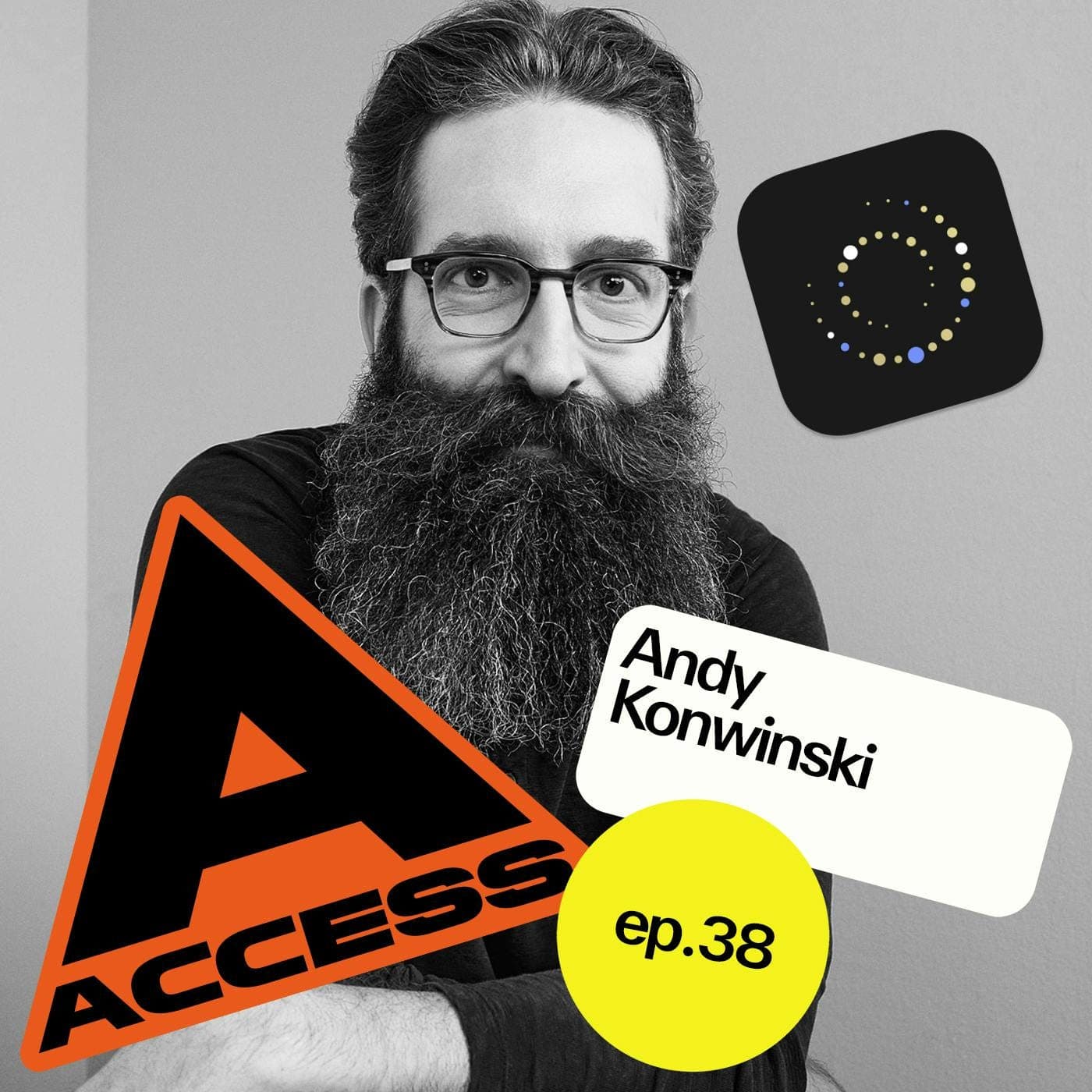
Andy Konwinski argues that AI power is consolidating in closed labs, risking democracy and the future of open research. He describes Laud (Laud Institute) as a $100M+ effort to keep frontier AI research open by funding researchers, infrastructure, and communications so breakthroughs don’t get “plucked” into a few big companies.
Guest backgrounds
Andy Konwinski is a co-founder of Databricks and Perplexity and leads Laud. Ellis Hamburger is founder of Meaning, a storytelling studio for tech companies. Alex Heath is founder of Sources.News, covering scoops in the AI race.
Key claims
Closed-lab AI reduces “diffusion of innovation” (peer exchange, conferences, open publication), threatens academia’s training pipeline, and centralizes control of a “foundational resource.” Compensation and GPU costs pull researchers away from academia. Safety and centralized control are different; the goal should be an open alternative, not “one key” control.
Notable examples
Laud’s Moonshot ($10M, multi-professor university projects), Slingshots (smaller grants with API credits/engineering/communications), and residencies at Berkeley/Stanford/MIT. Discussion of Anthropics “Fable” controversy (silent capability downgrades for research) and government export controls. Health examples include using Claude to research leukemia/drug trials and an “embryo twin” digital simulation project.
Written by AI. May contain mistakes. Listen to the episode to check what was said.
Chapters
Tap a time to open that second in VOAI and Technology Dynamics
0:34 to 1:44
Explore the evolving relationship between AI and big tech.
“It can help you with practically anything on the web, like restoring a vintage motorcycle from a 50-page restoration block, or finally break down that long article you've had open for weeks.”
Introduction to Andy Konwinski
1:44 to 2:19
Meet Andy Konwinski and his mission with Laud.
“how the top researchers actually feel about where AI is headed, Anthropik's recent controversy with its new model fable, and why Andy thinks big tech should fund the open alternative.”
Laud's Mission and Intent
2:19 to 3:32
Andy shares the vision behind Laud and its impact on AI research.
“Maybe Ben Franklin was an alum of Hogwarts.”
The Importance of Open Research
3:32 to 5:04
Discussing why open research is crucial for societal benefits.
“I also care a lot about diffusion of innovation.”
Impact of Power Dynamics in AI
5:04 to 6:22
Analyzing the shift in power dynamics within AI research.
“These are all things that moved humanity forward.”
Future of Academia vs. Industry
6:22 to 8:19
Exploring the tension between academic research and industry demands.
“And so a big part of what I'm kind of championing with LAWD is impact out of research still that benefits and moves humanity forward.”
Motivations Behind Leaving Academia
8:19 to 10:54
Understanding why researchers are attracted to industry.
“There are breakthroughs still happening, but the type of research happening in the closed labs is very different than the type of research that traditionally could happen in the open.”
Diffusion of Innovation in AI
10:54 to 14:00
Exploring how innovation spreads within the tech industry.
“And the capitalist objective function, while I believe in it and I benefit from it and society benefits from it, isn't a great one for reproducing the successes of research culture.”
The Evolution of AI Technology
14:00 to 15:24
Explore the development of AI technologies and their historical context.
“We built it at Berkeley and then we built Spark and it kind of was born out of Mesos.”
Funding Research Outside Big Tech
15:24 to 18:19
Learn about funding models supporting researchers to remain in open research.
“So a big part of LOD is absolutely grant writing.”
Show all 34 chapters
Communicating AI Research Effectively
18:19 to 19:55
Discuss the challenges of effectively communicating AI research to the public.
“I think that's partly why we're speaking because I'm so passionate about it and I know you are.”
The Need for Leadership in AI
19:55 to 21:54
Examine the lack of clear leadership in AI and the need for relatable public voices.
“Yeah, I think that's a big part of the perception issue with AI or even with a lot of technology, especially software over the last decade or so, is that people love to build for themselves.”
Perceptions of AI in Society
21:54 to 23:39
Investigate how AI researchers perceive societal issues and public sentiment towards AI.
“much into the weeds and over explaining, as opposed to having some high level message.”
Perceptions of AI in Society
24:22 to 24:41
Investigate how AI researchers perceive societal issues and public sentiment towards AI.
“It can help you with practically anything on the web, like restoring a vintage motorcycle from a 50-page restoration block, or finally break down that long article you've had open for weeks.”
Imagining a Positive Future with AI
24:41 to 28:06
Discuss the potential positive and negative futures shaped by AI technologies.
“I mean, a lot of the people I talk to, maybe not at y 'all's elite level, I'm just not sure very many people are able to describe what the better future looks like for the most of us.”
The Dual Nature of AI Advancements
28:06 to 29:19
Explore the potential benefits and risks of AI, particularly in healthcare.
Personal Experiences with Health and AI
29:20 to 31:03
Learn how AI has personally impacted research and information access for families facing health crises.
“Yeah, I think it probably was on dial-up.”
The Gap Between Innovators and Society
31:04 to 33:45
Discuss the disconnect between AI researchers and the general public's understanding of technological advancements.
“like us and you've got your family and all this.”
Consolidation of Power and Democracy
33:46 to 36:04
Examine the implications of AI development on societal power structures and democracy.
“And that brings me kind of very quickly back to this problem with consolidation of power and the threats to democracy.”
Risks of Centralized Control in AI
36:05 to 37:50
Analyze the dangers of centralized control in AI technology and its consequences for society.
“like the week before we're recording this with Anthropic releasing Fable, nerfing it for research capabilities where you couldn't use it to help do AI research or train another model.”
Navigating the Future of AI and Society
37:51 to 42:00
Discuss the necessary balance between innovation, safety, and public participation in AI advancements.
“The threat to democracy of centralized control is real.”
The Risks of Centralized Power in AI
42:00 to 43:58
Exploration of the dangers of centralizing AI power and its implications.
“It could lead to, um, I mean the, the wealth disparity on steroids, the power disparity, disparity that we're talking about.”
Funding Innovation and Government's Role
43:58 to 46:30
Discussion on alternative funding mechanisms for AI innovation, focusing on government involvement.
“I call that feudalism with better branding.”
The Internet's Early Advocacy for Openness
46:30 to 47:27
Highlighting the critical role of early internet advocates in promoting open protocols.
“I don't remember how much it was for, but AT &T AT &T said no because they had a competing protocol that they owned.”
Creating an Open AI Infrastructure Commons
47:27 to 49:27
Proposal for an open AI infrastructure that balances collaboration and competition.
“but because a few scientists believed in this led to a subsequent paradigm, like a generation of Florida, like wild West innovation, tons of it.”
The Need for Collective Action in AI Research
49:27 to 53:25
Emphasizing the importance of researchers collaborating to form a unified front in AI.
“And I believe that if we build it, they will come.”
The Emotional Landscape of AI Researchers
53:25 to 56:00
Insights into the diverse feelings and motivations of AI researchers in today's landscape.
“And by the way, the AI infrastructure of today, there isn't an infrastructure that has won today.”
The Dystopian Experiment of AI Development
56:00 to 1:03:19
Explore the complex emotions and societal implications of AI researchers creating their replacements.
“But so I would generalize it to that, this like sense of profound power that something's going on, that they're part of something big is a common thread.”
The Dystopian Experiment of AI Development
1:03:20 to 1:03:32
Explore the complex emotions and societal implications of AI researchers creating their replacements.
“Stay tuned after the break for Alex and my reactions.”
The Dystopian Experiment of AI Development
1:04:01 to 1:04:34
Explore the complex emotions and societal implications of AI researchers creating their replacements.
Reflections on AI and Historical Perspectives
1:04:34 to 1:10:02
Discuss the connections between AI advancements and historical lessons in technology and society.
“I just shaved last night, so I look freshly bar mitzvahed.”
The Role of Optimism in AI Research
1:10:02 to 1:11:48
Discusses the need for optimistic leadership and the impact of figures like Steve Wozniak in AI.
“Well, one of the things we talked about, too, is just kind of like, you know, not having too many leaders to look up to.”
The Appeal of Alternative AI Missions
1:11:49 to 1:12:52
Explores how top AI researchers are drawn to impactful missions beyond profit, such as those proposed by Andy.
“Yeah, I mean, I think Andy's doing something that's like strategically very unique.”
Podcast Recommendations
1:14:19 to 1:14:34
Mentions a new audiobook and discusses its narrative.
“i didn't like what you said odin pauses about the future this is the love story of real hinge couple odin and edward written and read by me curtis garner listen to the free audiobook now That's awesome.”
Transcript
Automatic transcript. May contain errors.0:00This episode is brought to you by Accenture. When your advertising operations fall out of sync, everything else follows. Spotify and Accenture are working together to reinvent the rhythm of ad sales, using automation, analytics, and smarter workflows to simplify campaign delivery and access better data across the business. The result? Less time spent on operations, more time connecting brands with the moments and fandoms that matter most. Learn more at Accenture.com slash Spotify.
0:31Alex Heath:This episode is brought to you by Google Chrome. You think you know a browser, but Gemini and Chrome, that's new. It can help you with practically anything on the web, like restoring a vintage motorcycle from a 50-page restoration block, or finally break down that long article you've had open for weeks. Gemini and Chrome is here for it. Ready to make anything online make sense? There's no place like Chrome. Check responses set up required, compatibility and availability varies 18+.
1:00There's upsides and there's potential downsides. And that's true about technology in general. It's really true about AI. And I think we can cure cancer, perhaps most types of cancers, completely by the end of my life. What happens when every top AI researcher gets an offer they can't refuse? A few companies end up owning the future of the tech industry. Andy Konwinski, co-founder of Databricks and Perplexity, is trying to stop that. His new effort, Laud, is putting over$100 million behind AI researchers to keep their work in the open instead of disappearing into big tech. Actually, a lot of sits right there and kind of paving the path to help students know how to capture the world's attention.
1:36It's that much more important in the time of AI because AI researchers have left society behind entirely. This week on the show, we discuss how the top researchers actually feel about where AI is headed, Anthropik's recent controversy with its new model fable, and why Andy thinks big tech should fund the open alternative. I'm Ellis Hamburger, founder of Meaning, a storytelling studio for tech companies.
1:58Alex Heath:And I'm Alex Heath, founder of Sources.News, your home for scoops about the AI race. Welcome to Access.
2:09Alex Heath:Andy, great to be with you here in an undisclosed location on the east side of LA that could only be described for people watching on video as Hogwarts. I don't know, although there's a bust of Ben Franklin behind you, so maybe Hogwarts isn't fair. Maybe Ben Franklin was an alum of Hogwarts. I think for anyone in tech who thinks they are a renaissance man, this is where they would aspire to do their best thinking and writing in Obsidian. We have Ben Franklin behind us. We've got some beautiful artwork. It is genuinely inspiring. And your beard is also inspiring. Oh, thank you. This is apparently like nearly every issue of science that was ever published in bound form.
2:50Yeah. Beautiful. Wouldn't Claude love to be here too? Let's talk about cloud. It'll go into Alex's cloud after this. Yes, it's already here in spirit.
3:00Alex Heath:So Andy, we want to talk about LOD and the AI world and your view of it, because it's really interesting and unique. But I want to start by actually positioning to you what I would describe LOD as, which you're trying to keep the future of AI and the concentration of power that's happening an AI out of big tech's hands or at least diffuse it more. Is that fair? Is that the mission? That's not the mission of Laud precisely, but that is certainly - Directionally. That is one thing that I care a lot about right now and always is diffusion of power. I also care a lot about diffusion of innovation.
3:39So I would say the root of Laud for me goes back to being a PhD student and then observing a type of research, which by the way, research as I've internalized it in my life and I hang out with researchers, I did research, I still do research, is discovering and disseminating knowledge. So being here, sitting amongst these libraries and wizard-like settings, which is how I think of academia, is that. It is that effort. And my experience as a younger person, coming into that, you know, you think of it like the church of academia, like pursuit of knowledge and discovery of light for our species. There's a corner of that effort that is all about translating the discoveries into impact for society.
4:24And of course, what happens in academia is the breakthroughs happen in the open. That's like we have the secret sauce that millennia old tradition going back to the monastic years of how do we make breakthroughs and publish them? How do you cure diseases? How do you discover things about electricity, refrigeration? The ideas that get distributed out to the world move humanity forward. And that captivated me, and I loved being part of that, and in particular, the part where we translate the ideas into impact. And so what LOD is, is an organization that aims to help researchers have impact out of their research.
5:02Now, what's happened in the AI paradigm, which aligned with my creation, creating LOD and LOD kind of catching stride in a very meaningful way now as we come up on a year celebrating our anniversary, is we've seen a consolidation of power in the world around this technology paradigm. I'm a student and a fan of technology paradigms from history, going back to railroads and electricity and refrigeration and, you know, more recently cloud computing and mobile and the personal computer, you know, like the Internet. These are all things that moved humanity forward. But throughout all of those, academia and more generally open research was able to produce breakthroughs and ideas that were disseminated out.
5:43And also it was able to do it because of dissemination. scientists talking in their living rooms and in libraries and in classrooms and at conferences. This paradigm, the most important one of all of them, the one that's accelerated to grow 10 or 100 times faster than any other one, is different in that for the first time, the power dynamics, the shift has occurred from how much of the breakthroughs might be able to happen in the open versus in behind closed doors. The frontier research happening in AI right now, is at closed labs. And that's a problem for democracy. It's a problem for my daughter's futures.
6:22And so a big part of what I'm kind of championing with LAWD is impact out of research still that benefits and moves humanity forward. And I believe for that to continue happening and for humanity to prosper, for all of humanity to benefit from AI, open research needs to continue to thrive. I know a lot of people point to the military innovations, you know, that begot sell networks and so many other things or even for going to space and whatnot. How do you frame that within the narrative you just shared? Is it that once those things were kind of out or things were over, they made their way into more or less the public domain?
7:01Yeah. There's always a balance between secrets and discoveries being disseminated. Industry, which as you know, I've co-founded successful companies. I'm a capitalist at heart. Industry is the exercise of taking knowledge and creating advantage and strategic secrets, intellectual property, trade secrets that let you translate the breakthroughs happening in open science to product and solving people's problems. That is just as important as the knowledge discovery. And that's true about the public good for through government as well so the national defense sector all of those things there are many uh government initiatives if you go back to the manhattan project countless examples where you need secrets uh to build on top of the discoveries that happen in
7:56Alex Heath:the open but the problem now is that all the secrets are behind the closed labs right yeah Yeah, and that the rate of discovery will actually long-term diminish if we extinguish the tradition of open science, the academic institution itself. If that implodes, then who's going to train the next generation of research scientists? If you were to just buy, you know, you were mentioning capitalism, the drive of capitalism that these researchers can now get plucked out of academia and make millions of dollars a year at Anthropic or OpenAI, wouldn't that also mean that the research will continue and there will be new ideas and new breakthroughs that will just happen inside OpenAI or Anthropic and not in academia?
8:39Alex Heath:Like, isn't that still going to happen? It could. There are breakthroughs still happening, but the type of research happening in the closed labs is very different than the type of research that traditionally could happen in the open. Open research is able to take advantage of this diffusion idea where scientists talk to each other. Collective intelligence builds on each other. It's why we have so many conferences and peer review. And the whole mechanism itself is about collective intelligence. This gestalt principle or phenomenon, the sum is greater than the parts with discovery and invention.
9:09That can happen behind closed doors. But one thing I know for sure is that for the history of this country anyway, there has been a balance between things that, let's say, DARPA and NSF and even industry arms that do research and publish it. the transformer architecture was published in the first place by Google. And that was during a time where they were at, uh, containing a tradition where industry published and that has shifted now.
9:40Alex Heath:The amount of publication that these labs do has gone way down, way down. Uh, in some cases, much closer to zero, depending on the lab that you're talking about. And, uh, that, that, that shift could lead to the end of academia. And the academia consists of all this institutional knowledge, this memory. Like we have advisors and advisees. When you go get your PhD, some of the most profound inventions, let's say what John Schulman did with deep reinforcement learning, one of many Berkeley and Stanford and MIT and Carnegie Mellon PhDs that have gone on to change the world and change industry with their inventions.
10:18what these folks did is uh they trained for five six years at the right hand of another luminary researcher in this advisor advisee relationship it's one of dozens of institutional mechanisms that academia has to train up the next generation in fact the primary goal of academia even though it is discovering discovery discovering knowledge and disseminating it um is teaching the next generation like self-propagate the machinery to discover knowledge and move humanity forward through it. These labs will have to recreate all of that. They'll have to have their own conferences, they'll have to have their own advisor, advisee.
10:54And the capitalist objective function, while I believe in it and I benefit from it and society benefits from it, isn't a great one for reproducing the successes of research culture. I think there's also a tendency to try and get closer and closer to the applied once you go internal maybe, or correct me if I'm wrong. Absolutely. I'm curious about the motivation because I don't think I ever understood professors and PhDs and academics to be primarily motivated by money? Is it just that the money is so crazy? Or is it that they're being told, hey, do what you do internally, and then it just doesn't quite work out that way?
11:30You mean the motivation that would get them to leave academia? There's two things. One, when we built Databricks in 2013, the salary difference between staying in academia and going to industry is maybe two to three x now it's 10 to a thousand x uh so you're some phd students even first second third year pcs are turning down two million five million ten million dollars a year in equity for that that now if you look at the trajectory of this equity you can imagine like that's more than ten million dollars a year fast forward six months i talked to an
12:04Alex Heath:anthropic researcher a few months ago who had just left no he's not public there's people don't know who he is, he's making 30, 40 million a month in equity gains. Yeah. So the thousand is not an exaggeration. There are people with that many zeros, if you multiply what these PhD students will get if they stay in academia. PhDs at the top programs right now get paid less than$100 ,000 a year to be a PhD. It's like an internship, basically, to learn the discipline, not to make money. You get to hang out in these kinds of rooms, though. Right. It's the primary perk. It is one of the best perks. and the association of inventing and impact.
12:42That's really what motivates this type of person. Whereas when you go into tech, you have to live in one of those places you'd see on Reddit slash male living spaces. That's like a mattress on a floor or something like that. Somewhere that is a badge of pride. But yeah, that's different than the gilded halls of this building. But it's not just the compensation difference. Actually, there are many researchers who would say no to that. It's access to resources to do frontier research. It's those two things combined. One or the other, people, I wouldn't be nearly as worried about existential problems for academia or just open science and open research.
13:20But because of the two things, you need one or two orders of magnitude more dollars in GPUs than you used to to stay doing research at the frontier right now. Do we have speakeasies now of these researchers who have to go underground to talk about how cool their shit is now that they're NDA to death? I haven't heard of a speakeasy, but informally. Because I think they want to talk about this stuff, right? I do talk about, you know, I mentioned diffusion of innovation, this idea that scientists getting together and talking. Collective intelligence. The ideas build on each other. That's how citations work and related work sections of your paper.
13:56The ideas build on each other. I've witnessed that myself with like Mesos. We built it at Berkeley and then we built Spark and it kind of was born out of Mesos. And Mesos itself was born out of Hadoop. And there was billion dollar industry around Hadoop. And then eventually billion dollar industry.
14:10Alex Heath:You could be saying Lord of the Rings characters, but you're talking about technology. Yeah, sorry. Those are big, important projects from a past technology paradigm from a distant age of 2013. And I list the names of the projects because they built on each other. And that concept of diffusion of ideas is so essential to the science. And yes, what is happening in industry is scientists go spend time at one top lab. And a year later, go spend time at another one of the top labs. And then six months later, they go spend time at the third of the top labs. And they just do this rotation and bounce around.
14:50Alex Heath:Collect equity like infinity stones. The equity goes up a little bit each time and they get to stay up to speed on what's happening. That is a form of diffusion of innovation, actually. It's partly why the labs can compete with each other. But it's happening at such a tiny scale compared to what we've done in open research, the culture that we have here at universities. What does this look like in terms of trying to address it? You guys have a couple programs at LOD where you try to fund and give grants to researchers to basically say, don't go to meta, don't go to open AI, whatever. Keep doing your thing in the open.
15:25Alex Heath:We'll give you money. Yeah, yeah. So a big part of LOD is absolutely grant writing. LOD is at its heart of what we do operationally is we give the right resource to researchers at the right moment to help them maximize their impact. And what researchers who want to have massive impact do is they have the idea, they prove it out with some research experimentation. and then they want to capture the world's idea, the world's imagination with that idea. So they want to ship that research as a tweet or, you know, it could be a paper that they post on archive or a blog post. And then ideally they want to go jump over to industry and monetize it.
16:00And actually not just like, it's not the monetization that drives them primarily, even though that's nice. It's the getting their idea into people's hands and their strollers and their cars and their bloodstreams, right? That's like what these people love because that's how you measure impact. strollers cars and bloodstreams so my favorite products to invest in use cases right there speaking from experience i imagine yeah quality stroller you too i think right like oh yeah makes a difference um i would keep investing in innovation for stroller technology yeah i think we need more innovation on the wheels i've got one of those baby zen yo-yos and when i walk it down the street it's like just one wheel like this guy for that we got agi but we can't do stroller wheels.
16:42It's just too difficult. It's the hardest problem of all. Yeah, yeah. I need to ask Claude to start a company to improve strollers for us. So what they're doing is hopping around for the diffusion of innovation, but it's not happening at the same rate. Give the right resources to the right researchers just in time. That could be when they're at their startup already. So we have a venture arm and it could be while they're still doing research. So we have Lott Institute, which I put a hundred million dollars into to do grant writing. And we at the institute we invest in labs projects and people and those are three different grant sizes so for labs we have a program called the moonshot program that's 10 million dollars for a kind of three to five professors at a top university with let's say 20 to 50 phd students for three years it's a big effort focused on societal problems ai's impact on health care scientific discovery and then smaller next smaller is projects so individual researchers phd students usually who have a cool idea they want to ship it to the world we plug in they'll call those slingshots and we plug in to give them either api credits to do inference for their research or an engineer or communication support so how are you going to do your amplification strategy when you launch your project what's your readme look like right now or just straight cash or gpus so that's how we help those individuals we have a residency program where top phd students at berkeley and stanford and mit spend time sort of embedded outlawed and get even more access to gpus and our these this infrastructure that i just talked about like communications and the communications is one of the bigger parts of it actually would love to spend a little time thinking talking about that you know in the context of podcasts and talking to reporters and journalists and um what that I believe AI needs a whole lot more communications than it has.
18:36Alex Heath:You're speaking to the choir here, man. I think so, yeah. I think that's partly why we're speaking because I'm so passionate about it and I know you are. Obviously, money is where your mouth is. Every startup tweet in your Twitter feed, I wrote. That's Ellis' claim to fame. I'm just joking. It is important, though, because there's so much work happening and it's like, how do you stand out? Yeah, yeah. And just the basics of having researchers speak to the world is not obvious. it's not something that over the millennia in academia we've optimized for we discover the knowledge but the road from the path from research to impact or research to startup is is actually not that well trod uh that's actually a lot sits at right there and kind of paving the path and help students know how to capture the world's attention um it's that much more important in the time of AI because like AI researchers have left society behind entirely uh and that's like you mean in terms of just the wavelength they're on left yeah yeah out of touch with the problems that people perceive when people have data centers built in their backyards like how do they feel about that my cousins in in Illinois who are police officers how do they feel about AI I don't think most of my friends who work at Anthropic or OpenAI or startups are very in touch with what's going on out there.
19:55Yeah, I think that's a big part of the perception issue with AI or even with a lot of technology, especially software over the last decade or so, is that people love to build for themselves. And what we like to build for ourselves is new to-do apps and notes apps and tools to make CRMs more efficient and to fix all of our internal tooling or to make a quick buck and vertical SaaS or something like that. And I feel like you've spoken a bit about public goods. You don't see a whole lot of companies, at least the ones getting the headlines, in terms of the quantity at least, who seem focused on that type of stuff.
20:31And I mean, I wonder if some of the researchers... What do you say specifically? What do you mean by that? Like what type of stuff? I would say software for other white-collar people doing image generation or some other white-collar work as opposed to, let's say, you mentioned health. or something like that. It's just not quite as glamorous.
20:50Alex Heath:Reskilling or trying to manage your job loss. Reskilling is an interesting one where you actually do see researchers focusing on working with blue-collar folks on how to use Frontier AI for taking pictures of plumbing fixtures. And there's sort of the embodied, helping repair people. I think one of the Moonshot seed grant recipients is a Stanford team that includes Eric Brynjolfsson and D.E. Yang. And they're doing re-skilling. And they've run workshops that include people responsible for things all up and down the stack. So the re-skilling focus in particular is more plugged into the sort of full spectrum of potential job displacement long term.
21:40Yeah, and I think I would probably argue that even when there are good hearts trying to build very valuable things, they still kind of suffer from that intellectual issue, as many Democrats do, of just getting very much into the weeds and over explaining, as opposed to having some high level message. I mean, you see the success of someone like Obama's message as opposed to what we've seen since with, you know, a whole outline bullet list as opposed to just one word. It really is that simple, you know, when it comes down to communication a lot of times. And, yeah, I'm just not sure how many big, famous, loud voices we have out there who are trying to make that stuff more palatable, you know, and I do think we need more of that.
22:22Yeah, I do think some of the biggest problems, maybe the biggest one in this sphere that I care about around the consolidation of power and the crisis that we find with AI leaving a lot of society behind is about an absence of leadership. It's a vacuum of what I think of it, like you mentioned Obama, like somebody who speaks and the message resonates. Yeah. And it's uplifting. Yeah, and it's inspiring. Because they're speaking. The post is coming on next episode, so we'll ask him.
22:51Alex Heath:I mean, because they are speaking, but Dario is saying, hey, half the jobs are going to go away. That's the problem. A lot of technical leadership. And the incentives are a little bit wrong, or actually completely wrong, for CEOs and VCs to speak to the world and bring the world along with them and kind of speak truth. The incentives are to paint a rosy picture and a picture of prosperity and panacea when Claude gets to AGI. and although I guess the narrative is more altered in the last week that Dario's been talking about but the incentive is one to tend to want to talk about the positive outcome of this technology and that's not the perception of people in my kindergarteners class and the teachers at my daughter's preschool.
23:48This episode is brought to you by Accenture. When your advertising operations fall out of sync, everything else follows. Spotify and Accenture are working together to reinvent the rhythm of ad sales, using automation, analytics, and smarter workflows to simplify campaign delivery and access better data across the business. The result? Less time spent on operations, more time connecting brands with the moments and fandoms that matter most. Learn more at Accenture.com slash Spotify.
24:19Alex Heath:This episode is brought to you by Google Chrome. You think you know a browser, but Gemini and Chrome? That's new. It can help you with practically anything on the web, like restoring a vintage motorcycle from a 50-page restoration block, or finally break down that long article you've had open for weeks. Gemini and Chrome is here for it. Ready to make anything online make sense? There's no place like Chrome. Check responses set up required. Compatibility and availability varies 18+.
24:49I mean, a lot of the people I talk to, maybe not at y 'all's elite level, I'm just not sure very many people are able to describe what the better future looks like for the most of us. And I'm curious, you know, what you think the best everyday version of that is that you've heard? Is it about quality of life? Is it about health? Is it about the reduction of pain? Is it about prosperity, more entrepreneurship? Anything in particular? Well, I'm really worried about civic discourse and the polarization of it in our society. And one of the topics in the Moonshot grant program was to have researchers use AI to help people who disagree come to a common ground and to identify their things that they have in common.
Read the full transcript
25:36and you get people on two sides of gun control who in left to the internet's devices might just flame at each other uh you can use ai which maybe put ai sycophantic uh side to to good use and have an ai that might care a lot about brokering common ground so there's lots of studies out there by done by academics that have shown like with with kind of rigor that you can use ai to moderate conversations and have people agree more. Well, I hope that it, you know, play it out if we do it right, where you end up with less polarization and less tumultuous times in our democracy, even existential times for our democracy.
26:25Alex Heath:Well, and to Elsa's question about the positive view, I know, I mean, I talked to some researchers, not as many as you, and I know that some of them have positive views. But to be honest, the thing I've found, you know, in the private conversations is a lot of them actually have a fairly dystopian view of what could happen. And they understand the gravity of all of this and they're preparing for it. People read the headlines about, you know, Sam Altman's bunker and all these things. Right. But the researchers themselves, I mean, they talk about automating their jobs first, right? This, this is the whole concept of recursive self improvement and, you know, take off and all these things is like, and the labs are starting to talk about it very publicly even in recent weeks, right?
27:03Alex Heath:You had Altman have that note about RSI and all of that and delaying the IPO because of how weird that could be if that gets unleashed. So I think there may be an element of this. And I mean, correct me if I'm wrong, but maybe the researchers sometimes shouldn't be saying what they feel because it's scary to people to hear how people who are building this stuff at the frontier actually feel about where the world is headed. It can be, for me, I've had some moments where I'm like, oh, wow, like you really believe all this. And maybe the other side of this is the world needs to hear this. The world needs to hear how these people view this because they're building it.
27:39I think the world needs to hear what... I think researchers need to think about it more than we are. I think we need to talk about it. And I think we need to talk to the world about it. I feel strongly about that. And if we're worried, let's talk about how we're worried. If people think we shouldn't be building it, they shouldn't be building it. They should say that. um i personally think that the scientists i know all nearly all of them find identify as very being very pragmatic so there's upsides and there's potential downsides and that's true about technology in general it's really true about ai we can mess everything up um i do worry about my daughter's future for sure keeps me up at night and i think we can cure cancer i think we can cure many types of cancers perhaps most types of cancers completely by the end of my life uh i think that's what's on the table i'm not saying for sure i'm not a lot has to go right um but i want to be able to nudge it and so do most scientists most researchers most people wish they could have a little bit of nudge uh for the good for their kids right so um that's my sense is that they're pragmatic they get that there's downsides they believe there's massive upsides and i felt some of the upsides my parents have had cancer and i used clod actually to do deep intensive research about my parents cancer i learned about my mom had leukemia and i learned about blasts and the specific uh drug trials for multiple specific drugs i could never have become an expert to the level i was anywhere it's it's science fiction what i was able to do in two weeks when she was in the hospital after her pre-leukemia advanced leukemia it was a profound experience for me to be, to be unlocked on that knowledge, to have that knowledge be made accessible to me.
29:24So I do personally have even like the felt experience of the, some of the positive impacts, even in that way, even before we cure cancer, empowering families to ask the right questions to the doctors is one thing that I felt personally. Yeah. Uh, my dad, who's probably listening right now, had to, uh, very long time ago, comb through the early internet for hours and hours and hours, God knows how many hours, on our very first iMac computer when my mom was sick. On a dial-up mode, maybe? With cancer. Yeah, I think it probably was on dial-up. And I can't imagine how scary that must be to feel like, oh, I'm actually the one of the whole care team who's spending the most time doing the research or something like that.
30:04That's how it is, for sure. And obviously, I mean, he's a lawyer, but he's not a researcher out there reading papers, and who knows how many of them were even published at the time. Right, yeah. And so I'm a big believer in the health information angle for sure. Yeah. There's another one of the moonshot projects is digital embryo twin. So can we use AI to help make a full resolution twin of an actual specific embryo? And then you can, with that full resolution twin of it in the computer, you can simulate all sorts of things and understand genetic defects and prevent genetic defects early enough.
30:40so and there's some very real statistics about the the impact that being able to identify genetic
30:46Alex Heath:defects um early enough would have how much do you feel like you're talking to people who are living obviously in the future but just have this very grounded sense of where the world is about to turn that the rest of us don't have and like how do you bridge that in your mind because you're living in that world you're talking to these people and then you're also talking to people like us and you've got your family and all this. So like, how do you, how do you deal with that? And how big is that gap? Is it as big as I think some perceive it to be? I feel like sometimes I feel like it's a big gap when I talk to these people and how convicted they are about AGI and, you know, all these things that are going to happen.
31:25Alex Heath:And it feels like most people just have no idea. Yeah. I do think even within the technical community and the deep research community, there's different times at which people have their like, oh crap moment. Like for me, some of the stuff for my mom's, the research of my mom's cancer. And before that, coding agents is one where a lot of people in the last six months have had that moment where they're like, wow, something's different about this. Maybe we are riding that exponential, which is to say that the progress keeps happening. And now one very large, important segment of our industry, which is software generation has been fundamentally disrupted and that plays it all the way back to universities where you know computer science enrollment has shifted in the last 35 years you know like flattened and after 20 30 years of being the like the most steep increase increase in in training now it's flat uh so it's it's a real societal thing percolated all the way through society and people understand that when their kids drop out of the cs program so it's touching their lives already in that way um now go all the way up to the frontier i think each of us has this moment or has a lot of researchers having this moment where it starts to feel like you're living in sci-fi that's how i would say it feels uh and i'm a big fan of sci-fi you know star trek star wars cyberpunk genre and i'm just so used to reading about things that feel like science fiction i would say living through when i was a kid and the internet came out or mobile these were like wow my my phd advisor used to talk about how cell phones are like tricorders like this sort of early thing that was in star trek that was cell phone like actually it's like look we did it we you know the technology opened like a clamshell exactly yeah uh so but now it's it's bigger ones like could we cure cancer and you know you know things like the matrix people talk about getting agi pill that's a direct reference to the the movie the matrix and i wonder how many people even know that that's the origin of the year um so even there at the frontier people it's a complex emotional experience to to know how profound it is and it does i think in many folks stir something deep that and and for me what it stirs is needing to raise my hand and stand up and point out that there's this absence of leadership and that we like the world needs to be brought along society is transforming, is going to transform.
33:46And that brings me kind of very quickly back to this problem with consolidation of power and the threats to democracy. Basically, I have this long list of species level things going on. And I think the best minds in our species need to be working on the species level considerations right now. That includes economists and lawyers and doctors and policymakers and union leaders, like you name it, religious leaders. The Pope should be weighing in on this regularly. So I think every part of society needs to be spending brainpower on this. Yeah, you are an impressive student of all this stuff. And I'm curious if you've thought about how literate the leaders at any given time were in the technological revolution.
34:30Is it naive to say that it's like, oh, yeah, with our, you know, octogenarian leadership now, it is uniquely a moment where they are especially out of touch with what's going on? Or has it always been that way? I think the rate of progress has never been anything like this. And that's hard to get your brain around. When you talk about a century and a decade, something like that, that's real. And so we've had balance. I talked about the balance between academia and the balance between pay rates. There's been balance between different sections of society. And what's happened in the last five years and especially one year is capitalism and for-profit entities have just gone on a breakaway just sprinted far away from at the speed at which they're moving the progress that they're making uh including companies that i'm part of and that you know like that is what industry was built to do to to make progress to to invent and just sprint uh it's good at it and that's not the same speed that our governing machinery was built to operate at it's not the same speed that academia.
35:34I like to call it the oldest company there is. Indeed. And probably the most important one. It's like our startups are messy enough. So I think the problem is more that this paradigm is so different than past ones. And what worked in the past in terms of policy being able to catch up over decades isn't going to work where policy has to catch up over months or weeks. So innovation has to happen at the intersection of the public good, industry, and academia.
36:04Alex Heath:And you're seeing this coming to a head even in just the last week, like the week before we're recording this with Anthropic releasing Fable, nerfing it for research capabilities where you couldn't use it to help do AI research or train another model. Silently. Silently. Did you pull an all-nighter to use Fable, by the way? No, I didn't. I should have, though. I got to do one hour plus 70 turn prompt, and that was really interesting. This is that news would have been telling you that, you know, try it while you can. Right. But the community reacting to that and Anthropic kind of walking that back a little bit, but just in time for them, the U.S.
36:41Alex Heath:government to say, oh, no, this thing is so capable and you can jailbreak it that we're actually going to put export controls on it. And, you know, foreign nationals can't use it, which includes people in inside Anthropic like Andre Carpathy, who I know is affiliated with LOD. And that's just wild. It's a wild situation to be in where the consolidation of power we've talked about has gotten to such a point now where these people in government who, to be honest, yeah, they don't fully understand it, but they're reading the headlines, they're getting told how capable it is, and they're putting the brakes on it in a way that is not ideal for anyone, right?
37:16Alex Heath:And I'm curious when you saw that, just these events of the last even few days, your reaction and where you think this is headed, because it feels like it's going to get worse maybe before it gets better. Yeah, I think it's clear now that the consolidation of power is a risk, not a feature. Yeah. It is not something that's good for us. And we're seeing that play out in real time. There's a difference between safety and centralized control. That's just, we need to take that as a given. The threat to democracy of centralized control is real. And so the debate between open versus closed, that sort of actually ensued amongst researchers.
38:01What happened, if you are following along on the Twittersphere, which I'm sure we all are, is when Anthropic released Fable 5, they put these limitations on. One, for cyber and biology, that if you use it, if you try to ask questions around those things, it'll bump you back to Opus and it'll tell you. But two, if you try to do AI research on it, things that they perceive to be maybe distillation or things related to frontier AI research and explicitly because they were worried about other people making progress as fast as them, then they would also downgrade you but not tell you that. And so it was this silent manipulation of the alignment.
38:49the like what your your experience as a user was no longer what you thought you were having and it was buried in their terms and you know like the deep in the model card not on the blog post that's what the scientific community reacted so strongly to was like this the secondary thing of like one it's clearly that clear that there are a lot of incentives for anthropic uh dario talks about safety being the the biggest but they're the company the world's most successful company like the 9 billion to 47 billion in revenue in nine months that's real and uh so there are clear conflicts of interest if you're building the thing that's become the most successful product company that ever existed and and saying only we get to have access and just a week before one of the co-founders of anthropic published the blog post his blog post about recursive self-intelligence how Claude is using Claude to build Claude.
39:43And there was some graph of all this graph that was full of Claude, like Claude's calling Claude's calling Claude's. And literally within the span of a week, you're talking about how Anthropic is using it to accelerate all their progress and then saying, we're worried about this acceleration so nobody else gets to do it. It's not actually that this debate, I think, that I think is so worrisome or that they chose to make this decision about policy and roll it back. That's whatever. I have an opinion about it. But the more interesting thing is a completely different narrative. It's that they felt the prerogative to make that decision in the first place.
40:20Intelligence is clear, especially at these levels, like biological concerns, crypto, the cure to cancer. It's a foundational resource. These breakthroughs are different than past breakthroughs where, sure, it's happening in closed proprietary labs, but it's going to change everybody's lives. It's going to change our daughter's lives. and our son's lives and our parents' lives. Dogs. Dogs' lives, sorry, yeah. Everybody's life. It's a foundational resource. And the question is who controls it. And the thing that's common between open science and open research and democracy is participation and that legitimacy comes from broad participation.
41:04So that's true in meritocracy. that you see at universities and open beyond universities for open research the ideas are vetted peer review dissemination and all these different ways uh it's the secret to the to the innovation and it's the secret to just like keeping society benefiting and moving all of humanity forward it's true for democracy and that's self-apparent when in the definition of democracy that you have representation you have sovereignty you know that's like the beauty of democracy and why we've spent so much energy in democracy defending and centralized power and why we left centralized power in the first place to build this nation.
41:38So, um, when it comes, that's the thing that changed for me. And that was so profound in the last week was this new thing entered the zeitgeist of a company and a person, Dario, exercising control over what I, what I believe is a profound and fundamental foundational piece of technology that every human has a stake in. uh so we need to figure that out we we have to avoid centralization of power and have a solution to to safety uh we the the answer is not to throw the doors open it's not like yes publish everything clearly biological threats are real cyber threats are real but the answer is also not let somebody who has really good intentions hold the key like the one key or even three people hold the key there's got to be a there's got to be a thing that addresses both well because the key
42:27Alex Heath:approach that we're on right now, let's be honest, it's going to lead to, it could lead to riots. It could lead to, um, I mean the, the wealth disparity on steroids, the power disparity, disparity that we're talking about. I mean, the end state of this is, uh, is fairly dystopian, even if everyone in Anthropic and they've, you know, they're a public benefit corporation and all of this, they decide to lay, lay it down at some point. I don't know. I feel like the capitalism of all of it is too involved in these companies now to, for the, the, the truism of like how they set out to go actually being realized?
43:00Alex Heath:I mean, I think maybe the cat's out with that. Well, I mean, they set out with capitalist intention. So in spite of there being a mission, like non-profits, actual non-profits, you make a choice when you create a company, whether you can be a for-profit or a non-profit. And non-profits disclaim from the beginning, they say, how I define fiduciary responsibility is fundamentally different than something that is for profit. And I think that is why universities, which are non-profits by definition or by requirement, function the way they do. And it is a critical thing that I don't... And by the way, I'm a capitalist.
43:39I build companies as well. And I believe in the power of that. But I do agree that you can't disentangle the incentives. And so the answer is, if we weren't to do something different. If we weren't to innovate, what we end up with is essentially a few organizations, maybe two or three, having all the power and potentially in this profound way, given that AI is shaping up to have all this power. I call that feudalism with better branding. Yeah. There's so much of it that just seems kind of like these days, like, well, if I don't do it, others will. Do you think there is an argument to make at that level or just trying to use the machinations of capitalism to try and better fund alternatives?
44:28I actually believe that it's not even just the mechanisms of capitalism to fund alternatives. There are other funding mechanisms. The U.S. government has deep pockets. It has actually been the primary source of innovation funding, NSF, DARPA being the two biggest. And it's a no-brainer for both the U.S. government and democracies and governments across the world to spend more money than they have historically on any other type of initiative. They should be 10, 100xing their spending on how to make sure that frontier AI work is embedded as a government concern. That does require innovation. Like I said, they need to operate with more experts.
45:11So there needs to be computer science researchers who have roles within and adjacent to government at far more depth and volume than we have today. We have some, but they're very rare in my community, right?
45:27Alex Heath:The parallel would be like right now there being two or three companies building the internet, right? Yes, the internet is the perfect parallel. If that were to be happening right now. That's really good, Alex. I like that. We'd be having the similar conversation about concentration of power. And it was a problem in the early internet that a few scientists cared a lot about and raise their voices about. So VentSurf, who actually will participate in a lot of Vent coming up for this exact reason, and invented the TCPIP protocol that was foundational to the internet at the lower layers. I played with some TCP in my life.
46:03Alex Heath:Does that always say it, TCPIP? TCPIP. TCPIP. Transmission control protocol. You tweaked your MySpace a couple times ago. Well, you've used it probably like 10 ,000 times today. at least that's how many packets have been flying off that iPad via TCP IP. That early chapter of the internet where certain scientists had to stand up and say, this should be open. People don't realize the internet was offered for sale to AT &T in the early days. And AT &T said no. It was like, I think in the seventies, maybe 74. The internet. Here's the internet. Yeah. It was called ARPANET at the time. $10. I don't remember how much it was for, but AT &T AT &T said no because they had a competing protocol that they owned.
46:42And they could have bought this other one, but they already had this big investment in the one that they wanted to win. So why would you want the two because they thought they could win? And there were other competitors to the internet, like half a dozen that had viable shots at making it a closed thing. That early stance of several researchers, including Tim Berners-Lee, who invented the World Wide Web Protocol that opened up the internet for people to be able to have chat rooms and have web pages in the first place, it blew the doors off the internet in a way. He was another staunch advocate of open.
47:10And that's why the protocols in the first place were published and, and the, you know, decided on by many key people across industry and academia and that foundation that they built and maintained in the open, not because it was the right thing to do, but because not because everybody saw it being the right thing to do, but because a few scientists believed in this led to a subsequent paradigm, like a generation of Florida, like wild West innovation, tons of it. And what we've ended up with today, just like so everything is basically stands on the internet. It's stood on the shoulders of the internet.
47:43Since then, cloud computing, data. I mean, just look at the way that LLMs are trained. The pre-training phase, still most of them, the majority is scrapes of the internet. So like the internet itself is the, was one of the primary secrets to the breakthrough for AI. um that it's it's like immeasurable the productivity output of keeping that early base open and that infrastructure so what i'm championing like i'm not just hopeless that like we don't just need to accept feudalism with good branding we should do something about it but the what i believe is you should provide a great alternative so a heavyweight contender in the open that's in the ring with the big labs and brings the world's best minds to bear on the problem across institutions.
48:33We need an open AI infrastructure commons. And we already have academia, which is a technology commons where a lot of innovation happens, but it needs to be tighter than that. And it needs to be at the intersection of academia, industry, and the public good, so the US government and philanthropy. And it needs to have the best minds doing open science having enough resources as gpu billions of dollars and access to state-of-the-art models that includes proprietary models if possible uh in order to make sure that you've got the right balance of open researchers and diversity of perspectives with control and influence over the protocols and experts not only policy makers but you want policy makers in there too and uh and and also um having access to actually continue to innovate so like make new breakthroughs that they publish.
49:20So that's what I believe needs to happen that would address much of my worry.
49:27Alex Heath:Yeah. I mean, fun facts, little known story that most people probably don't know about is that Sam and Greg, when they were initially doing funding for OpenAI, the fundraising, they approached the US government and asked for money. And the government said no. And it's kind of wild that like what could have been right uh and uh yeah i don't know if i have i keep saying like cat out of the bag but i i don't know if all this can be done at this point i mean if you go back to where the internet was in those early days the amount of money the amount of power and scale was so much smaller compared to where ai is now right and so has has the train kind of already left the station, I guess, the cynic in me.
50:09I could hear why you might think that. I stand at a position where I know dozens and dozens of the smartest people in computer science research because that's what I've built LOD to do is go meet them and give them the resources they need to be successful in the open. And I believe that if we build it, they will come. Those things we talked about resources you don't need both you don't need to pay them better than the big labs irrational pay salaries and uh and give them access to the frontier you can pay them less and give them even they actually don't even need to be playing that the the race with scaling laws of the big labs is you need these billions and billions of dollars of compute these massive data centers you can thrive in scarcity i want an open contender in the ring with anthropic and open ai and google uh but i don't think it needs to fight with the same way like where they fight in rows we can fight in ditches.
51:05Scarcity can breed innovation. So there should be some pre-training. We can't do it with a few million dollars. We need billions of dollars for this open commons like the internet. But it's still for sure in the race. I think that window's closing though.
51:24Alex Heath:Really? Yeah. Every month, another PhD student realizes the situation we're in and makes the jump and professor. Yeah, I assume at this point, the labs will just show up in a class and be like, raise your hand, do you want this or not? And the whole class is gone. Just like they used to do at the big business schools when PricewaterhouseCoopers would come down and say, who's getting on the bus? Yeah, I mean, do you see that? These raptures in these programs? or no well the labs are also very selective uh but um it's a slow i would say it's a slow it's a slow shift well uh everything's accelerated so it's not all at once they don't come and get 10 people at a time or a whole classroom just disappearing uh but week over week and month over month it's happening and it's not for lack of funding like a few billion dollars in in the economy and for our us government or any you know modern government that's aligned with democracy the kind of western democracies uh they could afford it it's just the it's that absence of leadership again like getting the right folks to team up uh where they have to have the level of trust you do have to get the best researchers in open to team up and that's something that i personally care a lot about doing uh it takes a certain uh you don't do research yourself if you're meeting with researchers and convincing them to co-fundraise together or to kind of show up to an event and talk about their roadmaps and uh put their names on a website together to to like message and to talk to journalists so uh but it's i think it's one of the most critical tasks of our time to get this group to come together to represent the commons.
53:22And there couldn't be more than one internet. One had to win, and it could have been AT &T's. But I just hope that... And by the way, the AI infrastructure of today, there isn't an infrastructure that has won today. There are models that have won, and each lab has their proprietary infrastructure. And if you look at, let's say, what Satya just blogged about, Satya Nadella, he blogged about his belief that we will have an ecosystem, a thriving ecosystem, where enterprises will continue to exist. Not everything's going to collapse to one or a few AI companies that will eat the entire family. What a beautiful world where enterprises can continue to exist.
53:57I could still buy Nike shoes or New Balance or something. And in that world, you want a thriving ecosystem as well. And so I do actually agree quite a bit with Satya's points that he made that we don't want a few labs to eat the whole economy. And, uh, yeah,
54:17Alex Heath:if you were to synthesize, um, all of the things you hear from the top researchers you talk to every day about this moment and how they feel about it, what would that be? What would be the, the high level summary of the pulse of the super elite group that most of the world never hears from? I love that question. There are very different points in the space. Some people who've left to join Anthropic, they believe Anthropic has this aura around it. Very different than any of the top labs. They're special in that people leave Anthropic a lot less often, and the sort of messaging goes deep about the exponential, about the safety concerns, about the need to get there first for safety reasons.
55:05What Dario says gets repeated a lot. So that's one perspective that's kind of pretty far out there and on one side and then certain researchers who are holding strong views on open, you know, like strong views on the need for open models and like they believe in its essence to democracy. So if I had to pick one TLDR that describes both, one thing that is common across the whole spectrum i think is the the profound understanding and internal experience and now i think getting to emotional experience of how ai is going to change everything so there's this awe and a little bit of because most of these people are builders they're engineering types they like to work on hard problems there's a giddiness like an excitement that like, wow, like what a time to be alive.
55:56And that there's an optimism too. And there's worry. But so I would generalize it to that, this like sense of profound power that something's going on, that they're part of something big is a common thread.
56:10Alex Heath:Yeah, I mean, if you handed someone a tool and said, use this to build your replacement, I don't know how many people in different fields of life and work would look at that and go, yeah, sign me up, I'll do it. And for some reason, these researchers, they are psyched about it. And it's, it's, uh, it's an incredible intellectual experiment. Um, it's also kind of dystopian. It's also like, maybe, um, maybe it's like, everything's going to be great. Maybe it just leads to more invention. But I just, that idea to me is something I've been wrestling with lately. The idea of, you know, willingly and excitedly designing your replacement, which is what, maybe replacement's not the right word, For those that are less worried about that or for whom they're not losing a lot of sleep, I would say that there's this experience that we've gotten from technology that every time that displacement and reskilling has had to happen along the way.
57:03There were switchboard operators at some point and there were many jobs. At some point in the United States, a vast majority of people were farmers, worked adjacent to farming. Technology has reduced the number of people that do farming. there are elastic and inelastic job types. And that's what I've learned through the reskilling projects that we're funding. So technologists tend to have this optimism where as technology displaces some types of skill sets that humans do, we reskill and we move to a higher level of abstraction, which gives us more leverage over the world around us and lets us, I think this is where the different points of view emerge of some believe that lets us to, can let us get to a spot where we live these prosperous lives of just doing whatever we want, this renaissance life.
57:48Is it still as relevant, though, when that transformation is so overnight and so cross-industry relative to in the past? I think it makes it so that you can't lift and reapply how this has worked smoothly in the past without having to solve new types of problems. and that's why talking to the people who are doing research about reskilling is so interesting and economists working on it and thinking about it and like the experiments they're running in the beyond coding like people who use ai in call centers because that's another part of the economy that's been disrupted how like do ais help the best performing uh people who answer customer support calls or the worst performing or the median and are any of those people worried and can we use it itself to teach people faster to be good at customer success or customer support?
58:42So kind of hearing some of the results from the people studying reskilling, I do think it will be possible to achieve some, like we should be working on it. And I'm an optimist when it comes to, I believe we can solve problems. I believe we may need to do things quite differently and be more innovative and uh hopefully and i and i also think that there's some big problems some some big problems and some hairy ones just rather someone say the human uh desire is infinite and we'll always make things for that you know what i'm saying as opposed to kind of like some something a little bit fuzzier i don't know uh i sure hope it works out you know i do i i believe um that the the risk of downside like there are others who are worried about safety right so there are clear downsides uh biological threats job displacement is a big one um just economic instability from the rate at which jobs are are or job function is placed one of them one of the most concerning for many people is the widening chasms between different pockets of perspectives and look at the left and the right or accelerations and doomers or these spectrums and we seem to be pooling at the ends.
1:00:01And that's different than when I was a kid. Like in the era of Walter Cronkite, people kind of tended to talk to their community more and you disagreed more respectfully, more frequently than you do now. And I think that that's actually a set of social conditions. That was a lucky centralization of power. that was a lucky centralization of power then uh wait which part of that was centralized oh yeah sure uh he was i mean he wasn't the only one here no there were like three yeah okay so there are there uh that maybe maybe that was true i guess there was centralization across the broadcasting networks is not what you're pointing out um but and i think that that that is something that polarization that i worry a lot about and it actually was a trend that we were seen before the AI paradigm from the social media paradigm.
1:00:51Maybe you and I talked a little bit about this last time we chatted. And I think AI can make it much worse. And the only thing in common through it all is meta.
1:01:04Alex Heath:I still call it Facebook. I hope that it comes for podcasting last. I don't know when we're going to send a podcasting agent into an interview instead of us but maybe a year maybe two who knows uh maybe never maybe you know i i don't know that i believe we get to decide you know um what we're gonna do and i believe we have prerogative and it's i guess maybe most importantly is i think a choice you two have been made to be journalists right now independent journalism covering ai and a choice that i think uh i advocate for computer science researchers to do, which is to say no to multi-million dollar per year offers, have that in common of expressing agency at a time where you two have voted with your feet that you think you can make a difference.
1:01:57Alex Heath:You don't even want to know the offers we've turned down, Andy. Blow your mind. Well, maybe let's end here optimistically. So you're a year into law, or almost a year. You've done a lot. In a couple years, if everything goes right, what has happened? How is the world different? Great question. At the heart of it all, as I said, we give resources to researchers who can have impact on the world. I want to help researchers build technology that moves humanity forward. So we happen to be at a time in history where things are moving forward faster than they ever have. We have to deal with that. Lots of hard problems to solve.
1:02:41And I'm out there trying to talk to the absolute best candidates to solve that kind of problem all the time. So in an ideal world, we have this thriving set of ecosystem of researchers working on the world's hardest problems, being super well-funded, and spinning out impact in the form of projects and products that kind of continued to make a better future for my kids rather than one that we could lay awake worrying about.
1:03:17Alex Heath:Well, I guess we'll leave it there. Yeah. Thank you. Yeah, thank you. Super fun. I appreciate it. And that's it for this week's show. Stay tuned after the break for Alex and my reactions.
1:03:32This episode is brought to you by Accenture. When your advertising operations fall out of sync, everything else follows. Spotify and Accenture are working together to reinvent the rhythm of ad sales, using automation, analytics, and smarter workflows to simplify campaign delivery and access better data across the business. The result? Less time spent on operations, more time connecting brands with the moments and fandoms that matter most. Learn more at Accenture.com slash Spotify.
1:04:33Alex Heath:all right ellis i feel like we should have worn robes for that i know being in this room let's see you called him the the gandalf vei is that's what i said is that something you made up it is i hope he doesn't feel offended by that that's meant to be like that it's meant to be a compliment i mean when you see the beard how can you not right oh of course i think all beards know that gandalf is the goat a wise sage you know i think he definitely fits that bill as i'm trying to embody the Rick Rubin for storytelling vibes, I did begin growing a beard, which you can see in some previous episodes, but it just looked like absolute shit.
1:05:08I like the look now. You like it now? Yeah. I just shaved last night, so I look freshly bar mitzvahed.
1:05:15Alex Heath:It looks good. I don't know how long you'd have to grow a beard for it to be like Andy's. Yeah, I just don't have the density, I don't think. The density's impressive. Many secrets in that beard. I was going to say many secrets in the beard, many tickles for the children uh that sounded terrible but uh as you heard on the episode hopefully we're talking about a better future for our kids yes that was the context that was the context of that comment yeah i didn't expect this to get so uh you know big picture um you know problems in the world there's two kinds of big picture right there's like lame big picture yeah like maybe an executive will say that isn't actually saying anything yeah but uh the dude has clearly read his books.
1:05:55I mean, really nice to just like have a historian on the show. I mean, I don't know. I don't know about you, but like so many of the folks that I talk to and I'm around are younger and often working on like first principles. We can deduce whatever we need to do here. Of course we can, you know, but it's like, there are actually some lessons to be learned from history and it's not that they're ignoring it. It's, it's just that, you know, it's like build it from scratch, do it yourself, figure it out along the way. And I'm not sure how often the history textbooks come up. Wouldn't it be something if this would actually be a good prompt?
1:06:28Maybe I could add this to my prompt for Claude or Poker or whatever. Anytime you tell me some information, ground it in a piece of history that is relevant or instructive in some way. I mean, wouldn't that be something when you ask something of ChatGPT or Claude?
1:06:45Alex Heath:You would be that guy at every dinner that's like, well, did you know that in the 60s, blah, blah, blah, like you'd just be doing that all the time. I mean, better than only knowing what you read on Twitter, I think. That's true. And you're saying this as Ben Franklin's bust is literally behind you right now, which is very apt. Yeah. Speaking of, though, I mean, we talked a little bit about Andy's a fan of science fiction, and so am I. And there just don't appear to be too many science fiction writers who are, I mean, there hasn't even been time, I think, to like respond to the AI wave and then write an actual book about it.
1:07:17And I mean, can you imagine like maybe there's a book coming out next year that's talking about ChatGPT 3.5 or something like that? They would have had to cancel it or something. But I don't even see too many people asking AI about what the utopia would be and crunching some numbers on it.
1:07:31Alex Heath:We should try that. It just seems like not very many people are working too hard to try and, I don't know, play it out. And so it was nice to hear from someone who really is thinking about it. Yeah, for sure. We didn't say this during the episode, but the last time I hung out with Andy was a dinner that he had Neil Stevenson come to, which was quite a flex. And a bunch of top AI researchers were there. And to see how they were all just so fixated on Neil and had clearly read all his stuff and played a formative role in shaping who they were and what they were working on. I mean, sci-fi does become reality.
1:08:06Alex Heath:And it is like every day, especially right now. Yeah, that surprised me because I didn't get the impression that Neil Stevenson and the other elder statesmen science fiction writers are fans of tech in any way, shape, or form. And I think a lot of them are very actively antagonistic. And I do believe, yes, while today's AI people read their work as a teenager or a young adult, in a lot of ways, those were very different versions of the future, very different versions of where technology was going to go. whether it was Blade Runner or, you know, otherwise. Whereas I think AI is kind of like this future that in a way no one really expected.
1:08:49I think all we really expected were like, oh, some days we're going to have robots who could talk like people. But I don't think anybody really in the science fiction world, at least that I've read, and I've read a lot of it, expected that there was going to kind of be this like embodied AI character that could summon the power of 5 ,000 PhDs. I feel like one of the closest things I could think of is Dr. No in AI artificial intelligence, the underrated Steven Spielberg movie. And that was kind of like a chat GPT type situation.
1:09:16Alex Heath:Steven Spielberg, dude, I just saw disclosure day. That shit was so trash. Oh my God. Should I? Oh my God. It was so bad. Yeah. Oh man. I have tickets for tomorrow night. I feel like it's like a mandatory viewing. It's so bad. Oh no. Anyway. Um, yeah, no, I, I really appreciated everything Andy shared with us. It's nice to talk to someone who can be that LLM for the modern AI researcher's brain because he talks to so many of them. Can you imagine the group chat? Oh, I'm sure. It's crazy. What would you do to be a fly on the wall for that group chat? Well, I need to figure that out with Andy after this.
1:09:55Alex Heath:But, yeah, I thought it was great. It's really fun to do this in person, too, and to do it in this really cool undisclosed location. Yeah. Well, one of the things we talked about, too, is just kind of like, you know, not having too many leaders to look up to. I mean, is there anybody that came to mind for you, I wonder, that's kind of on the more optimistic side? And I think we'd all agree that, you know, having a bit of both is a very healthy tension and healthy skepticism. And I do think if you're in the world of science and research, you have the skepticism built in. You know, the last tech co-founder leader that I felt like really spoke for the quote unquote common man that I remember being impactful in my life was actually like Steve Wozniak.
1:10:40Alex Heath:And there's no like Wozniak of AI. Yeah. So no. Yeah. No role models to speak of. Yeah. Well, what do you make of Dario's latest writings though? To be honest, I haven't gotten through all of this. it um yeah i just don't think he's a sympathetic character right i mean he's uh he's the guy out there saying all the jobs are gonna go away yeah and that he's inventing the thing doing it and then it's also like too powerful to be used but then freaks out when the government says that and makes it so so i don't know i think anthropic uh it could be a really hairy you know fall for anthropic given just the trajectory of all this stuff and the way they've messaged it kind of coming to head with the tech and rolling it out and trying to get it out.
1:11:26In the absence of, and I think he has written a bit about like more specific predictions for the future. And, you know, Andy was talking about curing cancer, which is definitely a common one. But in the absence of a single North Star, that's kind of like an outcome. It certainly seems to be moving researchers to join them just to kind of be to save the world from itself. That's certainly a motivating mission.
1:11:50Alex Heath:Yeah, I mean, I think Andy's doing something that's like strategically very unique. And I do think, I mean, I just know this, that a lot of top AI researchers are paying attention. And so, yeah, I mean, I think the thing is like, they've all made so much money that now already that they, I think, want to be doing something that will be something that their kids look at and go, oh, wow, like, I'm glad you did that. I don't know. I think stuff like what Andy's doing represents that for a lot of researchers. It's like, oh, I can like, I don't have to go just make Chachi PT better. I can do something that's open and helps push forward academia and all that.
1:12:27Alex Heath:So I think what he's doing is really important. Yeah. I remember reading that bit, uh, even from, I think it might've been from, uh, from Dario's point of view on like how few folks are leaving because of that mission. And it is an attractive thing. And I think Andy's telling a different story in that regard as well. and um i mean people are also not leaving anthropic because that stock do go up also true but uh yeah what is an ai research by with their uh fu money alex to be honest i don't i don't know um they don't you you wouldn't really be able to tell i mean there's not a ton of social signaling in the ai research world so i don't know bunkers
1:13:11well should we leave it there yeah let's leave it there that's it for this week's show thanks to andy for coming on if you like the show don't forget to like and subscribe everywhere you get
1:13:20Alex Heath:podcasts we are access.show online and you can find us in video at accesspod on youtube if you really like this episode we would love a five-star review or even share with a friend or agent you can find my newsletter at sources.news and you could find me at hamburger on twitter and at meaning.company for your storytelling needs. Access is part of the Vox Media Podcast Network, and this show is produced by Hooks Creators. Bye.
1:13:50Alex Heath:Booking.com is the easiest way from a day surrounded by noise to a state surrounded by nature. that's nice go on book it it's easy booking.com booking.yeah i didn't like what you said odin pauses about the future this is the love story of real hinge couple odin and edward written and read by me curtis garner listen to the free audiobook now That's awesome.
From the publisher
Alex and Ellis sit down with Andy Konwinski, co-founder of Databricks and Perplexity, to talk about his new effort Laude, which is putting over $100 million behind AI researchers to keep their work in the open. They discuss why top researchers are turning down millions to stay in academia, what happens to open science if the closed labs win, and why Andy thinks the AI industry has a serious communication problem. They also get into Anthropic's recent Fable controversy, the dystopian views some researchers privately hold, and how Andy used Claude to help his family navigate his mother's cancer diagnosis.
Follow ACCESS on Instagram:
https://www.instagram.com/accesspodcast/
Follow Alex:
https://sources.news/
https://x.com/alexeheath/
Follow Ellis:
https://meaning.company/
https://x.com/hamburger
ACCESS is produced in partnership with the Vox Media Podcast Network.
Learn more about your ad choices. Visit podcastchoices.com/adchoices