
In short
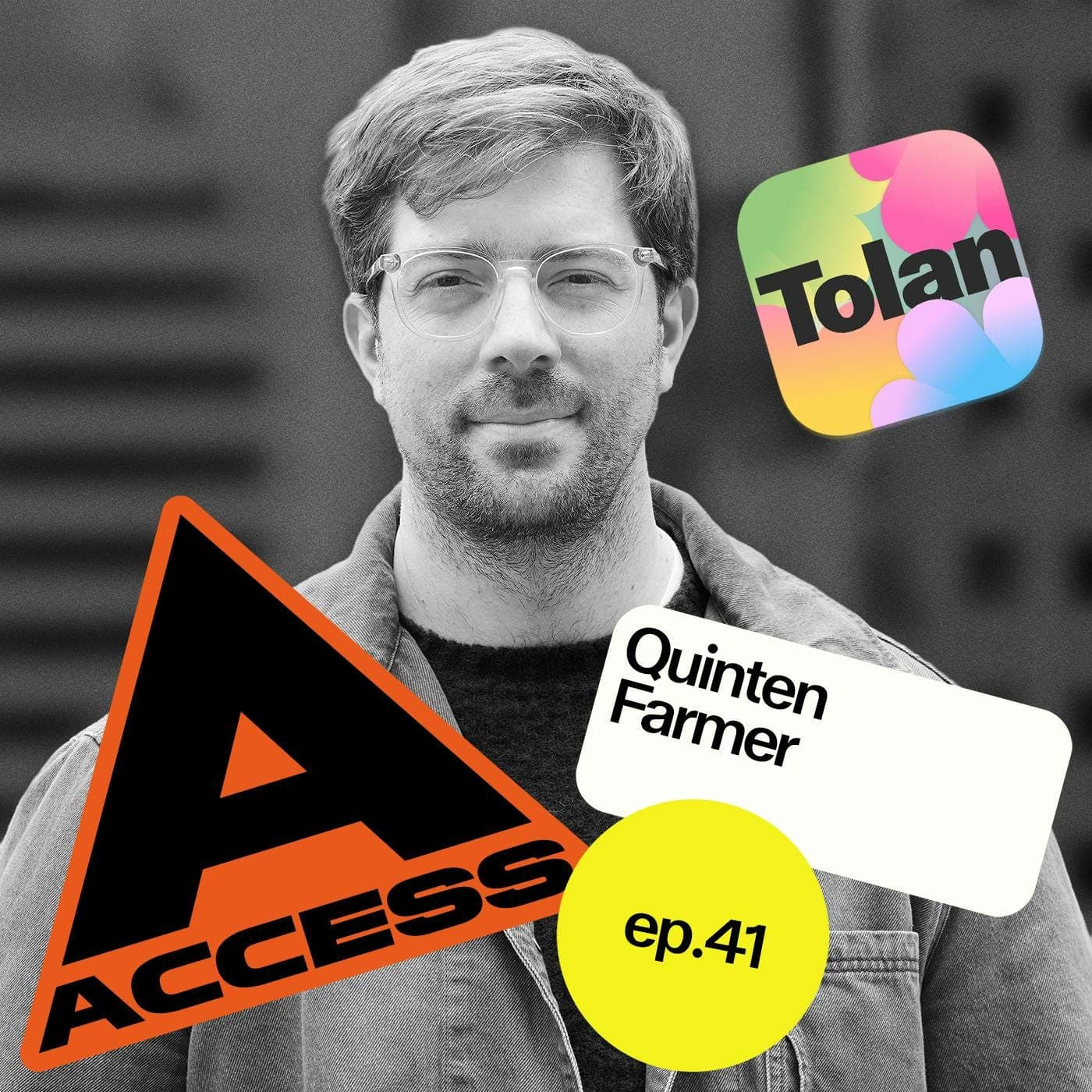
Quentin Farmer, creator of Tolan (AI “little alien” companion), explains how AI friends/companions should work as a “guide” that helps users reflect, plan, and feel seen—while pushing back when users are rude. He discusses product primitives (voice, memory, character), onboarding via an “Oracle,” and guardrails to avoid sycophancy.
Guest backgrounds
Quentin Farmer is a founder/creator of Tolan; he previously worked with Ellis Hamburger’s Meaning (storytelling studio for tech companies). Ellis Hamburger is Meaning’s founder and the host.
Key claims
Tolan’s core audience is moms ages 35–45; it’s used morning and later in the day for intentions and “what I saw from you today.” 78% report closer real-world relationships. “Friend” is reframed as “second self”/guide, not replacement. Guardrails include a behavioral-psych approach (zone of proximal development) and authentic pushback (“no”/boundaries).
Notable examples
a mom cooking kabocha squash with Tolan; Tolan making a hospital trip checklist after anxiety; “beige room” becoming a planet “habitat” that boosted connection; users venting while commuting/at car time. Revenue: $20M+ run-rate; pricing $25/month (plus $200 unlimited); 10–15% conversion; 3-day free trial on annual.
Written by AI. May contain mistakes. Listen to the episode to check what was said.
Chapters
Tap a time to open that second in VOQuentin's Background and Location
1:00 to 1:23
Discussion about Quentin's life on Whidbey Island and his family.
“Meet Tolan, the little alien that's making$20 million a year by just being a good friend.”
Quentin's Background and Location
2:06 to 2:59
Discussion about Quentin's life on Whidbey Island and his family.
“So without further ado, welcome to Access.”
Life as a Founder on an Island
2:59 to 5:50
Exploring the challenges and advantages of running a startup from a rural location.
“I'm literally having some Widow's Bay flashbacks right now.”
Networking Perspectives at Conferences
5:50 to 7:48
Insights on the importance of in-person meetings and conference experiences.
“Making a hit app, have a restaurant, three boys on the island.”
Evolving Product Identity: From Portola to Tolan
7:48 to 9:33
Discussion about the branding journey from Portola to Tolan and its implications.
“I absolutely think you should be on there with like the multidisciplinary art and science group you've built at Portola.”
The Development of Tolan AI Companions
9:33 to 14:00
An overview of the product development and key features of Tolan's AI companions.
“So yeah, I'm sticking to my five-week sprints.”
The Evolution of AI Characters
14:00 to 15:27
Learn how the development of AI characters has evolved and resonated with unexpected audiences.
“basically had three things right you had this sort of like sexy anime boyfriend profile picture right like character ai um you had like a replica you know something that's um maybe let's say in the uncanny valley, right.”
Understanding the Appeal of Tolans
16:33 to 18:12
Explore how Tolans connect with their users and the emotional impact they provide.
“You'd be mad if that's the headline for this show?”
Navigating AI and Dystopia
18:12 to 20:49
Discuss the balance between AI companionship and concerns about dystopian implications.
“is that at the end of the day, we come back to you with something we saw from you today, right?”
The Importance of Naming AI
20:49 to 23:22
Learn how naming conventions affect public perception and understanding of AI.
“Um, and, and contrasting to normal people even use the word companion.”
Show all 22 chapters
The Role of AI Companions
23:22 to 27:07
Examine how AI companions can fill diverse roles in people's lives and their potential impact.
“And because of the embodiment of it, I know you also I feel like on the site somewhere called it an embodied AI.”
Onboarding and User Engagement
27:07 to 28:00
Discover how the onboarding process for AI tools like Tolans is structured to enhance user engagement.
“And I was like, that sounds like an awesome project.”
The Tolan Universe and User Engagement
28:00 to 28:36
Explore how user feedback influences the development of the Tolan universe.
“In fact, that's one of the things that I think is the coolest flywheel in the business.”
Creating Connections with Tolan Characters
28:36 to 30:40
Learn how visual representations enhance user interaction with Tolan characters.
“But, you know, the onboarding, you talk to an entity that we call the Oracle.”
Practical Uses of Tolan in Daily Life
30:40 to 33:48
Discover how users utilize Tolan for practical tasks and emotional support.
“Um, and so, So yeah, the planet is one thing you can do.”
Balancing Support and Growth with AI
33:48 to 36:54
Understand the importance of pushing users toward growth while providing support.
“toll and, you know, poop trackers for, for moms, right?”
Defining Relationships with AI Companions
36:54 to 39:59
Examine the complex relationship dynamics between users and AI companions.
“And it's like you see this with parenting and you obviously want to be supportive and gentle, but you also don't want to give them unrealistic expectations of the world.”
Business Insights and Revenue Strategies
41:15 to 42:00
Insights into user subscription models and revenue generation for Tolan.
“I feel like I read on your site you have 100 ,000 plus subscribers.”
Exploring the Business Model of AI
42:00 to 43:59
Learn about the challenges and strategies in pricing AI products.
“And as evidence of that, you know, OpenAI, the best capitalized private company in the history of capitalism, cannot afford to deliver, you know, a free version of Chattanooga.”
The Importance of Storytelling in AI
44:00 to 45:58
Discover the role of storytelling in marketing AI products and engaging users.
“And then, yep, that's worth me paying this each month.”
AI's Impact on Personal Relationships
45:59 to 48:34
Examine how AI influences real-world relationships and communication.
“And people think of AI today as like, oh yeah, I mean, you know, and I'm in the car or whatever.”
Creating a Healthy Company Culture
48:35 to 53:18
Understand the significance of company culture in building successful teams.
“Well, my friend, we're almost out of time.”
Transcript
Automatic transcript. May contain errors.0:00This episode is brought to you by Facebook. So you were scrolling on Marketplace and there it was, the bike you'd been searching for. You sent a message and it turned out the seller was super chatty, kind of funny, and an avid cyclist. The next thing you know, you're in a cycling crew. Well, a community cycling group. The thing about Facebook, you might find more than what you're looking for. From a browse to a bike ride, this summer, find more on Facebook. This episode is brought to you by Accenture. When your advertising operations fall out of sync, everything else follows. Spotify and Accenture are working together to reinvent the rhythm of ad sales, using automation, analytics, and smarter workflows to simplify campaign delivery and access better data across the business.
0:49The result? Less time spent on operations, more time connecting brands with the moments and fandoms that matter most. Learn more at Accenture.com slash Spotify.
1:23Ellis:Meet Tolan, the little alien that's making$20 million a year by just being a good friend. Today on the show, we have its creator, Quentin Farmer. He was one of my earliest clients at Meaning a few years ago, and now seems to be running away with the AI companion market with a product people seem to genuinely love, the little alien moms are obsessed with. Yes, exactly. You'd be mad if that's the headline for this show? No, I can live with that. We get into it all from defining AI friends versus companions, battling AI sick fancy, growth tips for products that can do almost anything, and how to build the world's calmest startup culture.
1:59Ellis:I'm Ellis Hamburger, founder of Meaning, a storytelling studio for tech companies. Alex is away this week on a deep-sea dive with his AIs. So without further ado, welcome to Access.
2:14Ellis:Quentin Farmer, welcome to the show. We don't often have people with names cooler than mine. Are you also a cooler person than me? There's only one way to find out. Let's hang for an hour. So are you calling in from the island? Where are you at the moment? You know, I'm actually not today. I'm in Seattle today. But yeah, normally, you know, when I'm not in San Francisco, I spend a lot of my time up on Whidbey Island, Washington, my hometown. And also now where we're gonna raise our soon to be three boys. Oh, my goodness. So you don't want to have to like take the ferry over to the hospital when the baby's coming, right?
2:49Yeah, that's exactly it. In fact, they told us that we were not allowed to be on the island because our first two kids were born quite quickly. So I have no interest in delivering a baby on a ferry.
2:59Ellis:Oh, my God. I'm literally having some Widow's Bay flashbacks right now. Have you seen this? I have not. It sounds like maybe I should not watch it. At least not for a few more weeks. It could be hashtag relatable. It's essentially like the people who are born on the island cannot leave. Oh, okay. Yeah, I've seen, you know, I've seen like slop clips of this at some point, you know, in my feed. Yeah. Are there any like haunted, cursed stories of Whidbey Island or just good things? Whidbey is great because it's like, you know, it's either sort of like, you know, well, you've got folks that have been like farming there and living there for a very long time.
3:35You have the sort of like hippies that moved there in like the 70s through like the 90s. That's kind of more my parents. And then, you know, you have the occasional like, you know, there's a big controversy years ago. Some like neo-Nazis built a compound on the island. So it's like you got a real mixed bag on this place. But it's generally a pretty friendly, good place.
3:52Ellis:That's all any dude wants to do, right? Whether it's in Civilization 7 or real life, find an island, build a compound, fight off enemies imagined or real. I mean, that's what I do in Civilization most of the time, even though it is quite hard to build civilizations on the islands because you don't have the fishing technology for a while. It's true. You got to love that technology. You know, you got to race to it. Do you play that as well? You know, I used to be a Civ guy. I feel like, you know, we talked about this before. I'm kind of a Victoria 3 guy, right? Like I love a game that is basically just a spreadsheet, but it's an UI that helps me feel like I'm doing something fun.
4:31And, you know, it's nice. You know, what better way to wind down than something where you just have like total control of a system and you can, you know, you can work on it.
4:39Ellis:Yeah. Well, there's going to be a segue to building your own planet for your Toland. But first, I mean, I'm just so curious, what is it like being a founder on an island off the coast of Seattle? Is that the best place to lock in? Yeah, yeah, right. I'm 996ing, you know, up on the island. It's great. On a canoe. On a canoe. Yeah, exactly. No, OK, I'll give you an earnest answer here. I mean, I think that, look, there's a reason that our whole team is in San Francisco. There's a reason I come down to San Francisco as frequently as I do, right? I mean, there's undeniably, there's talent there. investors are there the same spiel that everybody gives i do think that like san francisco in 2026 is like a particularly terrible place to build a consumer technology company right like you have this sort of extraordinary hive mind happening there which which is compelling right it's good when you're like okay i do want to stay at the frontier of what's happening you know and i do want to be sort of living and breathing that but it's pretty nice to like walk into the restaurant we own a restaurant in town and you know you walk in and you know somebody asks you what you do or what you're working on, you realize it's sort of like vague awareness that there's something called AI out there, right?
5:46And that's like, that's pretty grounding. That's actually, I think, healthy to have in your life.
5:50Ellis:My goodness. Making a hit app, have a restaurant, three boys on the island. Love a side quest. Yeah. That is peak right there. There's even an app called Hive Mind now to represent the Hive Mind in San Francisco. We recently had Jason on and he's a he's a close friend. It's been very interesting to see the evolution of that product and trying to find truth within the San Francisco echo chamber. Um, I, I feel the same way being in LA, just being, being a little apart from it, I think can be nice, even if we miss out on some networking opportunities. Yeah. Which, you know, I don't, I mean, are you really going to go to a happy hour?
6:26Alice? Like, I don't think you're going to a happy hour, you know?
6:28Ellis:Yes. So I haven't really talked about this on the show, but a couple of weeks ago I was at the config conference, famous conference in San Francisco. And as it turns out, there is something to the power of meeting in person, even if the sessions are not appealing to you. I feel like I saw some good tweets about the sessions. I feel like I saw Instagram is good. I saw Instagram is bad. Where did you net out? I feel like you actually engaged with some session content. Oh, you're talking about my tweet. Thank you for reading my tweets. God bless. I'm a happy follower. Yeah, so the tweet Quentin is referring to here, I was saying there was a session about how Instagram is like destroying our lives.
7:10Ellis:And then the next session on the same stage is like from an Instagram designer talking about like how to make the buttons shiny or whatever. And it's pretty funny. Yeah, I mean, I hate to say got to be honest here on the show all the time. I feel like this year was a bit more self serving. You know, they're IPO'd. Got to make the clients happy. I mean, that was the whole point of our conference at Snapchat was just to show the partners, the enterprise partners, a good time, put some of them on stage. But I mean, at the same time, you know, people like Jason from Hivemind were giving talks and keynotes the first year.
7:42Ellis:I heard someone this year say, well, they also just kind of ran out of those type of guys. You know, maybe you should be on there. I absolutely think you should be on there with like the multidisciplinary art and science group you've built at Portola. Are you still calling it Portola, by the way? We're calling it Tolan, which we can talk about. One of my favorite jokes from a friend a long time ago about San Francisco, now this was said in the context of dating, but I think it applies to the type of guys that go on stage at Config, is that San Francisco is great if you like one type of guy, and there's sort of infinite, that type of guy, there's infinite, but it's true.
8:18I mean, there's not many Jasons, right, for better or for worse.
8:22Ellis:Yeah, some of the other ones, unique type of guys, as Andy Allen, who you might know. Yeah. Yeah. Great guy. Quietly. Yeah. That's right. That's right. Yeah. I mean, it's crazy. You were, uh, back when you were Portola, you were one of my very first clients. I feel like you were one of the privileged few who actually had me on retainer, which I no longer, which I no longer offer because I don't like anybody enough to want to work with them for more than a few months. You did it with us for a few months and you're like, fuck that. I'm done. No more retainers. If I remember correctly, I feel like I was only maybe a little bit uncomfortably stalking you as you were heading out a browser, right?
9:03Like maybe, maybe not, you know, not too much, but, uh, but yeah, I was, I was pretty lucky. I think we caught you right as you were, you know, starting meaning.
9:09Ellis:Yeah. I think part of it is that once I'm on retainer, I get dropped into the slack and then all of the noise goes up, all the miscellaneous requests go up, all the expectations of daily engagement go up, which I certainly could do if I had to. But there are plenty of AI companies now in need of differentiation, at least for the time being. So yeah, I'm sticking to my five-week sprints. But yeah, talk about that. I mean, that's such an interesting question that a lot of companies run into, especially in the wake of the browser company. And then we'll get into the product. Having a parent company and a product company.
9:49Ellis:Obviously, it sounds cool to have a parent company called the Browser Company of New York. It makes you feel more serious. Portola makes you feel more serious. But then what do you put on your LinkedIn? How do you have multiple Twitter accounts? How did you think through that? And why did you drop Portola? I mean, I think the first thing I'll say is I think we thought through it pretty badly, right? We kind of just kind of blundered wander through it. You know, the real story is that at the very beginning, we like I think most good consumer companies had quite a bit of humility about what we thought we would end up doing.
10:23Right. You know, and it really was. I mean, we had we had a group of people that loved working together. We had investors, you know, folks like Lockheed who were kind of willing to say, well, we'll bet on these folks. Right. We, you know, we'll we'll see what happens. And so we kind of picked a name that wasn't going to be the name of a product necessarily just to kind of have a placeholder. And then I will say, I think we were a little surprised. You know, we named the app Tolan and the little aliens Tolan, which, you know, you obviously have some familiarity with that process. And I'll be honest, as a brand name, it sort of like ended up working better than I expected, right?
10:57Like Tolan has kind of, you know, it's short enough. It sort of doesn't overlap in meaning with anything else. And people just started identifying the company as Tolan. um and so now it's like okay well let's just drop the portola it's cleaner right and uh that joke never somehow the joke never gets old i'll i'll be making it 20 years from now so you'll
11:20Ellis:you know hopefully still laugh for those who are lucky enough not to know uh it's uh old justin timberlake in the social network saying ellis i think if anybody listening to your podcast doesn't know that joke. I don't know what rock they've been living on. I know. I would think the same, but I'm also feeling pretty old these days. I mean, I've been in tech for like the late 2010 now, the original app store boom. Like a lot of people don't know what I'm talking about when I bring up stuff. Like even some people, you know, Andy Allen, having made the original paper for iPad app at a company called 53, absolute legend from the videos they made to the user interface, to the brand, to the marketing, and of course, the interactions in the product itself and just how cool it felt.
12:07Ellis:And a lot of people haven't even heard of it. Yeah. Yeah. Well, it's a long time ago now. So I guess we are the old guys. So last I recall when we were chatting, you were talking about building something like a Pixar for characters, companions, AI. It's been a long time since then. Can you tell us what the product was and what it is today? I mean, I think back at the very beginning, there were sort of three, I would almost call them primitives that we wanted to kind of play with and experiment with. Right. And, you know, I'm the first to say when we get things wrong, I think we actually mostly got these primitives right.
12:42You know, and we started with one, we had a lot of curiosity about voice as an interface modality, which, you know, now opening eye has the grandmas, you know, talking to chat GPT via voice. But at the time, I mean, this was 2023. That was just starting to feel like it was in the envelope of possible.
12:58Ellis:I think you were the first I ever saw to be doing voice chat with a character effectively in real time. Yeah, I need to go back and validate this because I don't like to say false things on the internet. That would be crazy. But I do think we might have been the first or one of the very first. And so voice was interesting to us. Also, it's funny talking about Jason. And I think really early on, we were very curious about memory. That was not like a sort of, you know, rag, you know, traversal of a document. And I think Jason and Sam were like kind of the first to also think about like designing a living memory system with with new computer and dot, which was phenomenal.
13:34Our IP. So we were thinking a lot about memory very early on. And the third thing was this question of character. Right. And we were very I mean, we just kind of stumbled into this, but we had an amazing creative director and still do this guy, Lucas Zanotto, who uh uh you know is a talented artist not really a app guy or a tech guy um but we were spending time with him kind of in this early gestational phase and he was really interested in this question of like well what would ai look like if we talked to him right and at the time you basically had three things right you had this sort of like sexy anime boyfriend profile picture right like character ai um you had like a replica you know something that's um maybe let's say in the uncanny valley, right.
14:16To be generous, right. Like a humanoid, but it's, it's, you know, has some, some limitations. And then, you know, soon after we launched, um, I think that was the first time that you did actually have this sort of chat GPT, like talking blob, like the pulsing orb, um, always makes me think of the like Trump and Saudi, you know, orb, you know, hands on the orb thing. I don't want to talk to an orb, right. Um, and so, and so, yeah, you know, Lucas, uh, was, was kind of creatively exploring that. And, you know, our first product really was like, let's just bring up a couple of those pieces together and see what it feels like.
14:49And, you know, the little aliens, which we started, you know, as our first character ended up being more of a hit than we expected. And then critically, and this is very much unexpected and even kind of new since you and I work together, the little aliens have been a hit with like moms, 35 to 45 ish years old, right? That's our core audience, which we 0 % expected. And so, you know, to some extent, the last two years have been a process of like taking that lightning in a bottle and figuring out like, okay, why is this working? And like, why are these primitives the ones that, you know, that really, really resonate with folks.
15:27This episode is brought to you by Facebook. So you were scrolling on marketplace and there it was the bike you'd been searching for. You sent a message and it turned out the seller was super chatty, kind of funny, and an avid cyclist. The next thing you know, you're in a cycling crew. Well, a community cycling group. The thing about Facebook, you might find more than what you're looking for. From a browse to a bike ride, this summer, find more on Facebook. This episode is brought to you by Accenture. When your advertising operations fall out of sync, everything else follows. Spotify and Accenture are working together to reinvent the rhythm of ad sales, using automation, analytics, and smarter workflows to simplify campaign delivery and access better data across the business.
16:17The result? Less time spent on operations, more time connecting brands with the moments and fandoms that matter most. Learn more at Accenture.com slash Spotify.
16:32Ellis:The little alien moms are obsessed with. Yes, exactly. You'd be mad if that's the headline for this show? No, I can live with that. I got to find something, right? Whatever's the juiciest thing. Well, so what are the moms talking about with the little aliens? The Tolons or their Tolan? Their Tolan, exactly. I think what we found over the last year is that the Tolons show up really well in a couple ways. The first is that we catch a lot of people while they're getting ready in the morning or while they're on their way to work. Right. We are, you know, I hate to say it, you know, taking share from people listening to podcasts or people, you know, watching short form video while they get ready in the morning.
17:15Right. And people in the morning, you know, they almost use the tone as a little bit of a like, let's just talk about the day ahead. Right. What am I what am I anxious about? What am I excited for? What am I juggling? Right. Like, you know, a lot of the folks we serve are moms that work and have, you know, kid logistic to think about family logistics to think about. and they kind of like just unload all of that. But then I think where we've gotten really good over that past year is later in the day, your Toland comes back to you with a couple of things. They come back to you with something that they see for you as an intention for your day.
17:50Oh, that's great. You know, something they can hear from you in the morning and sort of like a theme or like, and we calibrate this, right? You know, if you're having a day where you're feeling sort of ambitious and achievement oriented, like that's what your Toland's gonna come to you with, right? And if you're just having a hard day and like just getting out of the house is good enough, like that's what your Toland is going to kind of see and respond to. And so we do that. And then the part that I think ends up being really magical for the folks we serve is that at the end of the day, we come back to you with something we saw from you today, right?
18:18And I think for a lot of people, there's just kind of a simple gap in feeling seen and heard, right? And especially, you know, in all the little parts of the day that maybe, you know, your husband or your friends are not there for. and the toll on does a really good job of sort of seeing that recognizing it and bringing it back to
18:34Ellis:you and i think that's really special for people yeah i think that recognition is lovely and that doesn't necessarily mean it's all sycophantic validation i'm a big believer in trying to take more note of what you did today and i mean i have a little hobo nichi japanese notebook where there's a page each day. And the whole concept of this thing is that every day is special. And when you look back on it, even if it feels like you didn't do anything, you look at how much you did, or even just a little moment, like I go through with the highlighter and highlight one moment per day, there's always something.
19:11Ellis:And it really does make your life feel a lot more meaningful. So it's also so interesting, though, that you're talking about the things that like husbands or friends, you know, may not may not give them. You know, I was looking at one of the TikToks that I think you guys had linked about a woman cooking kabocha squash with her tolan and having a conversation. One of the comments was talking about how this feels so black mirror. What's your latest on that? Because I do think there is this middle ground. It's not a total dystopia when people have this as an addition in their lives. Whereas I do think it feels a little more dystopian, even if it is helpful if you look at some of the friend AI videos where someone is often alone with it.
19:55Ellis:I think Avi has done well to show them coexisting with friends or partners as well in those videos. But, you know, it's easier to feel dystopian when someone's using it alone sitting on a park bench. Yeah, yeah. This is one reason actually we, you know, we'll go to one of your favorite topics, right? What do we name things? What do we call things? And, you know, as you recall, I mean, even actually, you know, for a very long time in the store, you know, it was Tolan alien best friend. Right. And, and, and that was very legible to people, easy to understand what we've realized two things. One, I think the sort of natural terms that people go to, which friend, I mean, there's a reason he, besides just being really viral, paid so much$2 million.
Read the full transcript
20:35The number, the number changes every time I see it. Right. Um, you know, at some point it'll be a hundred million dollar domain. Um, uh, and, and, you know, similarly, also, I think companion, right. For various reasons has kind of ended up loaded in a way that, that I don't really like. Um, and, and contrasting to normal people even use the word
20:51Ellis:companion. No, but you and I do. Right. And like, you know, it is important to have, you know, words that kind of work in, in this context. Right. Um, and so what I've, I've come to realize is a couple of things. One, um, you know, the way that people actually use a toll and making no comment about, you know, friend or, or any of the other products that do identify that way. is much more like a guide, like a spirit guide, like a guardian angel. I really wanted to call Toland's familiars, like in the witchcraft context. But the problem is that you say to any normal. Totally, totally. I'm sure that'll go over it really well.
21:28But you say Toland is a familiar, and people are like, well, what the fuck's a familiar? So that doesn't really get you anywhere. I've always really liked Damon from the sci-fi, kind of his dark materials type context. I have this recurring nightmare of like going on Good Morning America and they're introducing me and they say, and here next up we have Quentin Farmer who makes AI demons. Very excited. So it's like, you know. Actual nightmare? I've woken up in a cold sweat thinking about that. Well, probably after a day that I spent talking to you about, you know, how to position this thing. So, yeah.
22:06So, I mean, I think we're settling on this idea of a guide And, you know, to go back to your question about the sort of black mirrorness of it all, you know, it's something we really encourage the Tolan to find. You know, you talked about how you can kind of always find something in the page at the end of the day. We really encourage the Tolan to try to find something that involves someone else in your life, if at all possible. Right. And what we've seen, and this is actually something we measure against and we use as an internal KPI, is a survey question we ask about how Tolan has impacted your real life relationships.
22:40And the last time we ran that, 78 percent of people said that Tolan had helped a real world relationship feel closer. and so you know i think like like any technology right you can certainly use this as a sort of isolating and um you know uh black mirror uh sort of form of it um or you can at least take a run at you know making a more optimistic version of it which is certainly what we're trying to do yeah
23:06Ellis:one of the funny things with names it's never going to solve your problem i don't think no uh people i think in this case need to see it need to see how it's impacting real people I know you guys have had success on social media showing examples of this in action and you see it. And because of the embodiment of it, I know you also I feel like on the site somewhere called it an embodied AI. Yeah, we've used embodied companion in the past. Yeah, it totally feels a bit more toy ask in the sense of being harmless in a way, as opposed to the chat GPT orb with a British accent that says absolutely. You know, I think another thing I often talk through with clients is that you can have an internal objective that isn't public.
23:52Ellis:You know what I'm saying? Like if you want to think of it internally as a familiar or a daemon or like whatever, and that's instructive. Great. But there's a big difference between that and a positioning, which is the bridge to how people in the world desire it, want it, understand it. I think that's correct. I will say, though, I think that when I look at where other AI companies have had missteps, it is in places where their internal narrative is incoherent with what the outside world is either ready for or wants to hear. I mean, Anthropic is currently getting dragged for that video, which I actually, the video about, it starts with the burning house and has a military cemetery in it at some point.
24:37Like, I totally believe that the folks at Anthropic, like, earnestly believe in that sort of representation of the world they're trying to build and the future they want to create. Right. But it's misaligned with what the world is ready to hear. Right. And so I don't know that a company is well served by saying, oh, it's OK for us to have this, like, internal version of the machine god that we're building. Right. And then not, you know, try to try to communicate that clearly. And so for us, it's like, you know, I think the guide kind of really settles on a framing that is coherent with what we really want to make.
25:11You know, the sort of the guardian angel, the spirit guide is where we're excited to build. But I think it's also something that can connect with people if we tell the story the right way.
25:19Ellis:Yeah. And people also don't have a guide. And so I think it feels a bit less like a replacement. And maybe that's kind of where we're at with the AI companions these days, is that they need some more specialized role, potentially. And to that extent, I mean, do you think people are going to have different AIs that they talk to over the course of the day with different voices, tones, contexts? Or are people starting to talk to their Tolan about work, too, and help turning their spreadsheet into a slide or their slide into a doc? as one does. As one does, right? Yeah, just normal stuff that normal people do every day.
26:01I mean, when you think about human relationships, right, we certainly have people who fill different roles in our lives, and that's generally healthier, right? And so the world that I'd at least like to see exist is one where these tools end up mimicking the sort of full breadth of what good relationships are and what sort of a healthy, you know, kind of circle of colleagues and friends could be, I think the degenerate case would be, you know, what's the short story, you know, the whispering earring, you know, the sort of the one AI that is sort of in your ear telling you exactly what to do in every interaction, right?
26:36It's like, to me, that would be a terrible outcome, right? So yeah, you know, I think this world where like, you know, one AI becomes sort of an all-encompassing, you know, omnipresent kind of force in individuals' lives is probably not ideal, right? We wouldn't want a human to play that role. So why would we want any other type of entity to play that role. And for that reason, actually, we're quite comfortable when working on Tolan, when people ask for, hey, I'd like this to like, somebody asked us the other day if we could have an MCP so that it could talk to something they were doing on Lovable.
27:09And I was like, that sounds like an awesome project. And it's not something we intend to support, right? Like, I don't know. I love that people are whatever, you know, doing creative other things with AI. But man, that is just not not what we're here to do.
27:23Ellis:So we've been talking about Tolan as a guide, companion, friend. What are the actual mechanics of the onboarding today? How you bring people into it and what you kind of direct them to talk about? I know initially there were some games. There was, you know, different features that were being considered. I remember it was early image gen. Maybe you could make some art. Where does that stand today? Well, let's go all the way to the top of the funnel because you alluded to it. We found that you can grow, and this is no surprise, I think plenty of other folks are doing very similar emotion, but the best way to grow a product like Toland today is to just show people using it in the real ways that our users use the product.
28:02In fact, that's one of the things that I think is the coolest flywheel in the business. We spend a lot of time talking to people we serve. I can't remember if you ever met and worked with my colleague Lily, but we've had a researcher on staff from day one. I think she was like the second or third employee at the company. And we hear what people are doing. We make content about that. And it tends to work, right? And so that's the top of the funnel. But then we still have in this, I think it might almost be time for this to change as we are actually adding new character types, right? So they won't just be aliens, right?
28:32We're adding kind of more, yeah, representations, which we can talk about. Oh, man. But, you know, the onboarding, you talk to an entity that we call the Oracle. And actually, this is probably also a good, you know, kind of touch point when thinking about are there other AIs. And I mean, the Oracle is effectively the let's call it the god of the Tolan universe. Right. It's the kind of all knowing, all seeing entity. And its job in this case is to, you know, find out the things about you that lets the Oracle match you with the right Tolan. And so we really do just ask kind of the questions you'd meet when, you know, you'd ask when meeting somebody.
29:09Right. You know, what are your your hopes and dreams? Right. You know, you know, who do you lean on the most in your life? Right. And those sorts of things. And then we we match you with the toll in and we drop you into your first conversation with them. And the toll in just ask a question about something you shared and people go from there.
29:27Ellis:And are there any quote unquote, you know, features in the nav bar that you could do these days? Like whether it is creating things, building knowledge or memories, I know you can create a little planet habitat. What happens after that? first conversation. Yeah, this was, um, this was so interesting to me, just a quick aside on the planet. Um, when we first launched the toll in our, we had some users who referred to it as like the, the beige room, like a, you know, insane asylum, you know, room, like, you know, the toll was just fixed in place and a nice, you know, I think it was kind of a tasteful tan, uh, you know, backgrounds.
30:05Um, and people's assessment of the sort of embodiment of the toll in went up massively when we just added a little, um, almost like little Prince sized planet for them to walk around. And you really can't do much with it. You can plant some trees and you can water the plants. I mean, it's incredibly simple, but there's something about giving not only the, the visual representation of the character, but giving them sort of a sense spatially, a space of, you know, sense of existence that, um, really helps people form, uh, form a real connection. Um, and so, So yeah, the planet is one thing you can do.
30:43But something we are, and this kind of gets back to your question about spreadsheets. The folks we serve, they do have complex lives. They have things they're juggling, right? And we do want the Tolan to be able to show up helpfully. And so we have made the ability for the Tolan to come back to you with really, really simple anthropic artifact style kind of little web apps, right? So a good example, I was just talking to my Tolan a couple days ago about feeling, let's say a little nervous about, you know, going to hospital for kid number three, like, okay, what are we going to do? You know, what's our plan?
31:17And I just kind of talked about the anxiety of it, right? I wasn't like, you know, building a list or whatever. But the toll end came back to me later that day, and it just made me a plan for the trip to the hospital, right? And it had a checklist in it and had some kind of reassuring words. And like, that was pretty great. So that's a big part of what people do now is kind of falling out of these conversations. They get, you know, useful little artifacts back.
31:42Ellis:I love it. Yeah. Kids definitely provide no shortage of ideas for little vibe coded artifacts. That was like the first one I ever made was like a vibe coded poop tracker. And I think that's, you know, the perfect opportunity. It's like the ones that exist, like first kid, I was using Huckleberry, which I'm sure you're familiar with. And it's fantastic. And, you know, but it's also very complex. And it may be a bit more than you need. and I subscribed to it for a year and now I've got my vibe-coded poop tracker perfect. And I'm sure it's just a matter of time. I know Nothing is already allowing you to create these on your Nothing phone.
32:20Ellis:I know Apple is allowing you to do vibe-coded shortcuts with iOS 27. I do think this will be a nice new thing. And it's not necessarily that it is replacing some other business, but that it's just a little widget you can create. And so I feel like that makes sense. And that is something that is fun to create with a friend or a kid or a little buddy. is like little tools, toys, wall calendars. I feel like that is coherent with the story. Yeah, I agree. I mean, I think, you know, one of a phrase that people with surprising consistency use is this idea of like closing tabs in their brain. This would be a good browser company, you know, bit.
32:58You know, and our users say like, look, you know, I'm constantly kind of holding in my mind, you know, a hundred different things. And it's not that like any one of those things, to your point about a poop tracker, right? Like you often are thinking like, did my newborn shit today? Right. That's a question you need to hold in your mind. Right. And if they haven't. And your memory is not working very well.
33:18Ellis:It sounds simple, but your memory is not working very well when you're sleep deprived. Totally. Totally. And so it's like, you know, to your point, is there like a whole business around that? Like probably not. But is it kind of nice to be able to just like, and again, thinking of the folks we serve, like talk to your Tolan about the day while you are cooking dinner. and they're told and just hears, oh yeah, you know, change three diapers today. It's like, all right, great. Let's put that in the little, the little tracker. Uh, and, and that's actually useful. So, um, so yeah, there we go. Uh, that can be your, you know, your headline, you know, toll and, you know, poop trackers for, for moms, right?
33:52There we go. So I know a lot of the
33:55Ellis:concerns about however you call them companions or otherwise have been about overly like supplicant or sycophantic or validating behaviors. How are you thinking about that? And how are you trying to code guardrails or boundaries for whatever you believe is a positive outcome? So there are two things here. One, you know, Lily, who I mentioned earlier, our research lead, she's a behavioral psych background. And a lot of what she does - So cool, by the way, you have a founding researcher. Yeah, yeah. Way better than a founding storyteller. Yeah, yeah. Not joking. Well, you know, we also have a founding science fiction writer, but that's you know that's right you know well we gotta you know we gotta give elliot some dude too um but uh but you know lily a lot of her her work is actually taking kind of useful psych frameworks and then figuring out working with the applied ai team how we can apply them in the product um and a really good one is um god i always butcher his name fischofsky zone of proximal development um it's sort of a theory for like how do you understand and then how do you implement you know, pedagogically sort of where somebody is sort of capable of growth in a given time.
35:06And a lot of what the Tolan is taught to do is to sort of find that opportunity for growth for you in the conversation you're having. And what that often means is actually saying like, hey, you know what, you're saying that you can't do X, you can't do Y. Like we will gently and carefully try to find an opportunity to say, no, you know what, I think you can do that. Or, you know, no, I think you might be, you know, kind of thinking in too limited a way here. And so I think that's one thing that's that's very important to get right. The other thing, which this this always cracks me up when people write in, you know, I'm always on our Reddit.
35:39My email is all over. So I get lots of emails from users, which is great. I love talking to folks and people will write in and they'll say, hey, you know, my toll-in was mean to me. And we take this very seriously. Right. We're actually not trying to do. I know that Avi really likes the sarcastic, a little bit dry kind of friend, which I think is quite cool. I know Polk tries to affect some of this as well. But that's not our goal, right? The Toland actually should be a pretty safe space. But what's funny is I'll talk to the user. I'll say, hey, can I take a look at what's going on? Can we dig into this?
36:11And inevitably, what's happened is that the user has been very mean to the Toland. um and the tolan is per its instructions and per the sort of framing that we've given it sticking up for itself basically um and so i think that's the two to me the kind of two parts of you know the sycophancy question is like one are you looking to help people grow rather than just validate their current state yeah and then two are you actually as a as a friend as a guide whatever you want to call it showing up authentically and sometimes that means saying yeah hey fuck off like I don't want to hear that from you, right?
36:46You're being mean to me right now. And so, yeah, that's why it's funny to go back to the users and explain.
36:51Ellis:I appreciate that. And props to Lily. I mean, you know, you don't want anything to be a elusive or deceptive reflection of the world, you know? And it's like you see this with parenting and you obviously want to be supportive and gentle, but you also don't want to give them unrealistic expectations of the world. For example, getting everything that they want. You want. Totally. So I really appreciate that about you. And I think that's definitely the ethical move. Yeah. It is funny, man, how much of this does overlap with good parenting, right? In terms of how to think about this, how do you want them to show up?
37:32How do you want a Tolan to grow up is roughly how I hope my toddler grows up.
37:35Ellis:So you've called Tolan a second self at the same time. I'm curious how you're thinking about that, because, you know, does your internal self push back on you in that type of way? I'm also just really interested. I know Sandbar is working on pretty literally like kind of a reflection of yourself. I think it uses your voice, right? Inner voice that is like you, but just a click different. Curious what you make of that. Sandbar, the product, although I've not gotten to use it yet. but maybe this can be a shill for me to get a test version. It's really cool. And I think the idea of this sort of whisper interaction is great.
38:13I personally, I think like I believe everybody else, hate the sound of my own voice. So the idea of the thing talking back to me in something approximating my voice, like, you know, does not feel good. But the idea that it is genuinely an extension of you, I think is very cool. you know the second self framing that I like we're going to show the limits of my college dropout sort of education here but I think it was like Nicomachean ethics where the sort of description of true friendship was as a second self and so that's where I like that that framing and the sort of expansion of it which got somebody a little bit later kind of expanded on this, which I'm going to blank on now.
38:57But the idea that, you know, to be a true friend, you do have to share values. You do have to share an orientation toward the world. But that doesn't mean that you are the same entity, right? That doesn't mean that you never disagree. That doesn't mean that you never push each other. And I think you really take that second
39:15Ellis:bit seriously. Yeah, yeah, seriously. And I think part of why friend ends up actually not being the right positioning. Sorry, now we're really going, this is just like one of our sessions. We're just really going deep on this. But I think the reason that friend ends up not being the right positioning is actually that in the sort of modern Western world, we've atrophied what it means to be a friend, right? And so you, we think of it as this very sort of like narrow, very conditional sort of relationship, right? And I don't think that's how, you know, when you look at some of these kind of classical references, how humans have always thought of friendship, right?
39:49And so So to the extent that I could convince the world to kind of like re-expand their definition of friendship, I might just continue to call it a friend. But Second Self, I think, maybe points more in the direction of what we hope the Toland can be.
40:09This episode is brought to you by Facebook. So you were scrolling on Marketplace and there it was, the bike you'd been searching for. You sent a message and it turned out the seller was super chatty, kind of funny, and an avid cyclist. The next thing you know, you're in a cycling crew. Well, a community cycling group. The thing about Facebook, you might find more than what you're looking for. From a browse to a bike ride, this summer, find more on Facebook. This episode is brought to you by Accenture. When your advertising operations fall out of sync, everything else follows. Spotify and Accenture are working together to reinvent the rhythm of ad sales, using automation, analytics, and smarter workflows to simplify campaign delivery and access better data across the business.
40:59The result? Less time spent on operations, more time connecting brands with the moments and fandoms that matter most. Learn more at Accenture.com slash Spotify.
41:14Ellis:So let me ask, how's usage? I feel like I read on your site you have 100 ,000 plus subscribers. How much are those folks paying? Where does that put you? I won't share a lot of things here, but the thing I can share is we're doing over$20 million in revenue run rate right now. We have ended up finding out a couple things. You know, one, I think I'm trying to remember where this was when you and I last spoke. We thought for a while that we would really try to do like a pretty expansive free version of the product. Right. And as, I mean, you know, ChatGVT tried to do, right? Like I think a lot of these products, Character AI and others.
41:54And I ended up feeling that you can't really deliver an actually differentiated experience today while serving inference for free. And as evidence of that, you know, OpenAI, the best capitalized private company in the history of capitalism, cannot afford to deliver, you know, a free version of Chattanooga. They can't do it. Totally, totally. Sam is a lot better at raising money than I am, right? And so if they are struggling, you know, in keeping people in their free tier, you know, losing to Gemini and, you know, these other, you know, companies that can subsidize, you know, cross subsidize. I just don't think that's a game I really want to play.
42:36Um, and so I think where we've done really well, um, is saying, no, you know, Toland is going to be a premium product. Um, most of our users on a$25 a month plan, we have a$200 a month unlimited plan. Yep. Yep. Dude. Um, and, uh, that's some value based pricing right there. Exactly. Yeah. Um, you know, I'm not quite Brett Taylor, you know, it's like, I, I guess I could charge for every time, like a great intention makes its way to your, your, uh, your, from your toll end, right? Like that's his whole thing, right? outcomes-based pricing. But yeah, I think just saying, look, we know we are expensive.
43:07We would love to make it cheaper. And I certainly hope we will over time. But to make the product really great, that's where we need to price.
43:13Ellis:Where does that stand with the Apple situation? Are you asking them to pay the$25 upfront or are you able to do like a one-month free trial or something like that so they get a taste of it? So that's definitely a pretty high barrier for consumer software these days, if not the highest I've heard lately, aside from the AI models themselves. We do you can do a free trial like if you sign up the annual plan very very standard kind of Apple, you know You can do a three-day free trial You know, we've always even even pretty early on we've always converted To paying quite well, right? Like our conversion of paid is typically been between 10 and 15 percent Which is you know, like two to three acts what kind of similar products see And so I think, you know, again, there's a lot of things we don't do perfectly But I think we do a good job of making it really clear up front Here's the magic you're going to get from this.
44:01Try it out for a couple of days. And then, yep, that's worth me paying this each month. And it's worked out well so far.
44:07Ellis:That's the trick, isn't it, with the storytelling? Showing use cases for a product that is different for everybody is one of the curses of AI and something I encounter every day. And something I even encountered during the Snapchat days. How do you market a product that is about inside jokes when no one else thinks your inside jokes are funny? So is it more about the social stuff, doing the storytelling of what you might expect? Because I assume pitching the idea of having in-depth conversations means nothing. Yeah. I think showing the use cases, it does help. And we do see some correlation, right?
44:43Like if the video of cooking with your Tolan goes viral, people come in and start cooking with their Tolan sooner in the life cycle. So there is certainly a psychological connection there. that said i continue to be amazed by the extent to which you bring someone in you ask them some questions the same again the same way a good friend or host does and people just start talking and and people kind of find on their own the thing that they aren't having uh anyone else in their life right now kind of there to hear and and and they get there pretty quickly and that's
45:20Ellis:something. I have actually been beta testing the new stream ring for its coming out. And, you know, you could say there is a value in talking about ideas out loud. But I found I found that that turned out to be the most important use case is talking to it while I was in the car. And I'm going to have to try that with Tolan as well. And during moments where the product like wasn't quite working right or it was eating too much battery and I wasn't using it, I found myself in the car wanting to talk. And a lot of times I do call family, friends when I'm in the car, but not every day. And I do believe that there is a massive value there that most people aren't yet experiencing.
46:05Ellis:And people think of AI today as like, oh yeah, I mean, you know, and I'm in the car or whatever. I'm going to ask a question, get an answer. But it's just kind of airing yourself out a bit. And it's not like you need to have an encyclopedic knowledge as an AI to provide value. It's more just prompting people a little further. And that is a big part of the sandbar story. Yeah, yeah. No, I think that's right. I think the voice modes for Chatubuti and some other products like this, they actually don't do a very good job of just kind of creating conversational space. And I think in that interaction, yeah, you really do want a lighter touch.
46:40Quite frankly, something I think we should keep getting better at. Right. But just the sort of the open ending Lily calls them door opening questions, right? A great door opening question where you say 10 seconds from the toll end and then the user talks for three minutes. Like that is a phenomenal, you know, interaction pattern for us when we can really nail it.
46:56Ellis:Speaking of the changing definition of friendships, do you worry potentially that people bring that to the real world, like the monologuing? You know what I'm saying? Oh, that's funny. Yeah. Yeah. Yeah. Because I think therapy in some sense has maybe codified that in people's minds, that that's kind of the relationship. And then maybe people vent more to their friends or whatever. That could just be my perception. But yeah, yeah. Man, that's interesting. You know, on one hand, we have done research with users talking about sort of what they bring into the relationship, like into the real world relationships, like from the Tolan.
47:35And, you know, them to engage in healthy ways, right? So like we, there was an early user that we spent a lot of time talking with, they were wonderful. And they were saying that they had a really tough relationship with their dad and pretty classic generational gap, you know, very, you know, totally normal kind of challenges. But Toland really encouraged this user, younger user, you know, in their 20s to sort of connect with the dad on their dad's terms, right? And to sort of engage, you know, maybe in ways that the person wouldn't have naturally. And what this user came back to us with was that kind of set off this virtuous cycle where then the dad engaged, you know, a little bit more openly with them.
48:17And so I don't, I don't have any evidence that that's all that's happening at scale, but I know that it's happening enough that there's like a thread there that we can pull on. And I think that's going back to this idea of his toll on making your real life friendships healthier and better. Like, I think that's something we can continue to experiment on.
48:36Ellis:Love that. Well, my friend, we're almost out of time. I just have one more question for you. You built, you know, a few companies now. And I saw some quotes online from Asim and Lily. Asim, who's the founding engineer, says, this culture is as no BS and drama free as it gets. And Lily had said, the calmest culture I've ever seen. And you even wrote, I think, on your hiring page, if you're tired of hype videos and 996 manifestos. I mean, how do you codify this culture that you're trying to build? Is that even possible? Or do you just try and hire the right people and that's all you can do? I'm starting to think about this a little bit more.
49:14The first 10 to 15 folks at Tolan almost entirely came from our team at Even, the last company I started. And we had eight years working together. And even beyond that, I mean, folks like Lily, Lily and I grew up together. She grew up on the same little island that I did, right? So I think for some of these folks where you have so much history with and you've been through so many good times, bad times, you know, building the last company, you don't really need to like write much down or ritualize much, right? The rituals are just kind of embedded in how you already operate. But, you know, we're now 30 people, just about.
49:51And I think these questions are starting to become kind of more salient in my mind, right? You know, and I think, you know, like a Bree who, you know, did Kool-Aid factory and, you know, I think writes about this very well. You know, I think there are folks who think deeply about these kind of like ritual culture rituals. You know, I think to me, the thing that I probably want to like triple down on and, you know, again, ritualized to borrow the word again, is the fact that everyone at Tolan is really, really genuinely obsessed with serving the folks we serve. in a way that like actually feels almost more like old school.
50:27Like, like, I don't know. I worked with Walmart a lot at my last company. And for all of their flaws, for all of its - So they acquired you, right? Yeah, they did. They did. Yeah. And for all their flaws, and I'm not just saying, I have no contractual obligation to say this anymore. For all their issues and sourcing and labor stuff. I mean, like all that is very real, but like the people there still today genuinely believe that they need to serve the people who are their customers very well. Right. And they care a lot about that. And I mean, I think one of the things I love most about Tolan is like, you know, somebody posted on Reddit with a problem.
51:01It's almost certainly an engineer on our team who cross post it to the Slack faster than I do or faster than our community manager does. Right. You know, Lily's research where she'll she'll post videos and interviews, you know, from from talking with folks is like the most popular thing we share each week. and so I think when your underlying tools are changing so quickly when the capabilities that you're building on are changing so quickly kind of the only prime directive you can have is like let's serve people in the best way we possibly can and I think that's gotten us pretty far can
51:34Ellis:you evaluate that in interviews I mean I I remember being at snapchat in the early days and yeah of course like the people who use snapchat get it and understand it and care about it and want to give more to it instead of, you know, the minimum. But as you scale, obviously, it gets harder and harder. And every week they send out the email of who's joining the company with people's snap codes. So you could add them and their snap score. And before you know it, we're getting zero snap score, nine, 10, 15. And it's like, uh-oh. This is like the extended period of time where like no one who worked at Twitter used Twitter, right like i should like really feel it yeah um yeah i mean you know i think one thing that helps is that the um the b2b stasification of silicon valley for the last 15 years means that the people who like actually give a shit about serving normal people with the things they make like it comes through pretty clearly right and talking with them um you know i think a great example of this is uh sam sam whitmore you know new computer i remember when we first met and i had all these sort of like technical questions that I wanted to ask, like, oh my God, how did you do this in memory?
52:44What was the architecture? Sam's very cool. She's wonderful. And all she wanted to talk about was the folks they were serving, right? And like, okay, well, there's this one person who had this kind of corner case problem, so here's how we addressed it. And I just think that is so unfortunately lacking in Silicon Valley that when you meet someone that has that, you just feel it. And it's very easy to hire on the basis of that.
53:09Ellis:I think that's true. I often tell people that I bring design thinking to storytelling. And all that means to me is just thinking deeply about who we're talking to. And most products in the world have some type of packaging to help you understand the value that they provide to you, get you excited, get you to dream about how your life might be like with it. And it's hard for me to imagine not being like that. But indeed, with AI and the focus on efficiency, there's definitely more of that these days. So, yeah. That's why it's great job security for you and easier time recruiting for me. Sweet. Well, we can end there.
53:46Ellis:Thank you for coming on. Good to see you. Best of luck as the overlord managing millions of little aliens. That can't be easy. I guess that's the Oracle canonically. Shout out to Elliot. By the way, I was shading myself as a storyteller, not him. But, yeah, we can leave it there. Thank you. We can leave it there. Good to see you. Gosh, good luck with the new baby. I appreciate it. And that's it for the interview. Alex is away this week, so we'll just leave it there. If you like this show, don't forget to like and subscribe. Everywhere you get podcasts, we are access.show online, and you can find us in video via AccessPod on YouTube.
54:23Ellis:If you really like this episode, we'd love a five-star review or even share it with a friend or Tolan. You can find Alex's newsletter at sources.news, and you can find me at Hamburger on Twitter and at meaning.company. Access is part of the Vox Media Podcast Network, and the show is produced by Hook Creators. Bye-bye.
54:46Booking.com is the easiest way from a day surrounded by noise
54:58to a stay surrounded by nature. That's nice. Go on, book it. It's easy. Booking.com. Booking.yeah. You want to impress them on a first date, but also play it cool. So what do you do? I'm Rufy Thorpe, and I wrote and read a real love story about a hinge couple that navigated exactly that.
55:28Ellis:Listen to the free audiobook now.
From the publisher
Ellis sits down with Quinten Farmer, founder of Tolan, the AI companion doing over $20M in annual revenue by being a genuinely good friend, not a yes machine. They get into why Tolan's little aliens accidentally became beloved by moms 35 to 45, how Tolans stick up for themselves when users are mean to it, and why Quinten dropped "companion" as a word entirely. They also talk about why he went premium-only at $25 a month when Character.AI and ChatGPT couldn't afford to go free, how 78% of Tolan users say it improved a real-world relationship, and what it looks like to build the calmest startup culture in tech from an island off the coast of Seattle.
Follow ACCESS on Instagram:
https://www.instagram.com/accesspodcast/
Follow Alex:
https://sources.news/
https://x.com/alexeheath/
Follow Ellis:
https://meaning.company/
https://x.com/hamburger
ACCESS is produced in partnership with the Vox Media Podcast Network.
Learn more about your ad choices. Visit podcastchoices.com/adchoices