
 Ask ChatGPT

- Podcasts
- Space by Stansons
- Cookie-Cutter Offices, Colour & Designing Spaces That Care
Space by Stansons13 Oct 2026 · 43m · 16 chapters
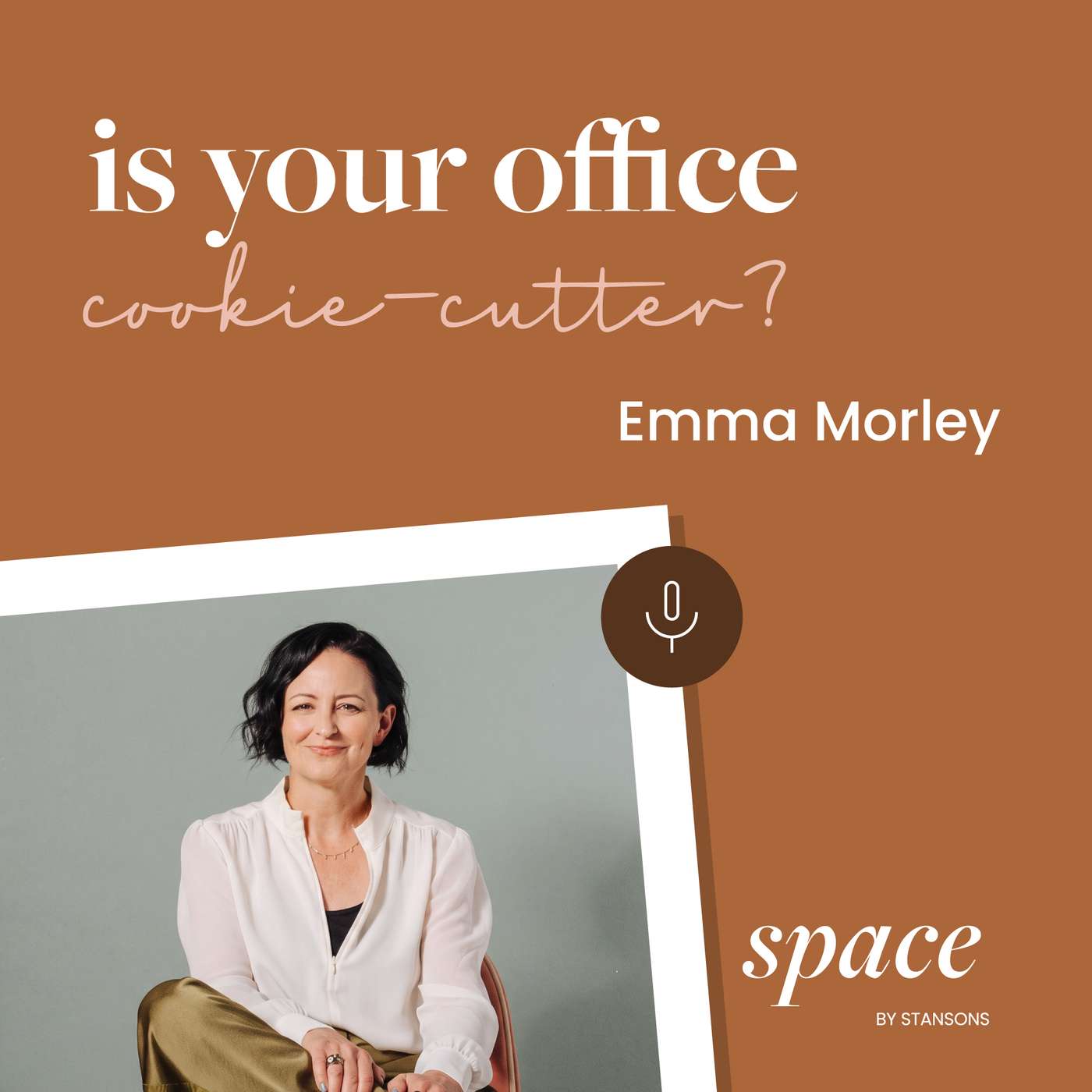
Cookie-Cutter Offices, Colour & Designing Spaces That Care | with Emma Morley, Trifle
In short
How to design non-cookie-cutter offices that reflect a company’s culture, support wellbeing, and use color/material choices to influence how people feel and work.
Key claims
Generic “plug-and-play” landlord spaces lead to sameness and miss opportunities to show care. Offices should provide varied “landscapes” for different times/needs (focus, collaboration, calm, energy). Wellbeing and mental health are now central to workspace strategy; people thrive when cared for and given different types of spaces. Color should be used confidently (with softer tones for some rooms, bold accents for others) and can be updated easily via paint, upholstery, and rugs.
Notable examples
“What If” innovation company reception/café with gumball machine, cow statue, football table, and buzz; “Dead Good” bold color scheme; a 70s-style brown/yellow concept; burgundy/blue and yellow/brown palettes; using rugs as replaceable color.
Guests
Emma Morley, director of Trifle (design studio; logo created by designer Erica Weathers, including an asterisk meaning layered creative process and collaboration).
Written by AI. May contain mistakes.
Chapters
0:00
The Importance of Unique Spaces
Learn why individuality in workspace design matters for businesses.
“But I think we're slightly at risk of everybody looking the same.”
1:26
The Meaning Behind Trifle's Asterisk
Explore the layered significance of the Trifle logo designed by Erica Weathers.
“So my friend Erica, Erica Weathers, she's a brilliant designer.”
2:20
Missed Opportunities in Workspace Design
Understand how businesses often overlook the potential of their physical spaces.
5:30
The Risks of Cookie-Cutter Designs
Examine the downsides of generic workspace designs and their impact on branding.
“And the process takes a long time, the design process, and then the build can take way longer than people expect.”
8:23
Design for Feelings, Not Just Aesthetics
Discover the importance of emotional engagement when designing workspaces.
“And in this room, you know, there's some lovely things going on.”
10:34
Creating Energizing Spaces
Learn how to design spaces that energize and foster collaboration among employees.
14:00
Designing Collaborative Spaces
Explore the importance of designing spaces that foster collaboration and focus.
15:36
The Role of Color in Design
Learn how color influences human psychology and space dynamics in workplaces.
18:06
Sustainability and Changeable Design
Discover why adaptability and sustainable practices are vital in design choices.
“But I think generally what we often talk about is like think about the things that are easy to change.”
21:12
Color Trends in Interiors
Discuss the evolution of color trends in interiors and how they reflect cultural shifts.
“You're talking to not a very colourful person.”
Show all 16 chapters
23:23
Embracing Bold Colors
Examine the growing confidence in using bold colors and patterns in office spaces.
27:37
Personal Reflections on Design Journey
Reflect on the journey of integrating color into office design and personal growth.
28:02
The Journey of Embracing Color in Workspaces
Emma reflects on her journey in putting color into office designs and the importance of collaboration.
31:05
Well-being in Office Spaces
Discussion about the evolution of office design with a focus on well-being and productivity.
“of furniture there's some brilliant brilliant wonderful people and there's some amazing you you know, design architectural practice out there as well.”
33:36
Future of Office Spaces and Work Culture
Exploration of future trends in office spaces post-COVID and the impact of technology.
“So 16 years fast forward, what's going to be different again?”
37:19
Materials and Aesthetics in Design
Emma discusses her favorite materials for office design and the evolving trends in aesthetics.

Ask about this episode
Get the gist, explore an idea or ask about something said.
 Claude
On Space by Stansons, what are the key points of this episode?
Searching your listeningTranscript
Automatic transcript. May contain errors.
0:00But I think we're slightly at risk of everybody looking the same. We don't want that, right? We're unique as individuals and businesses are unique. Why therefore should our spaces all look the same? You know, we want something different. If you walk into a space and you can see that it is well considered and the company is clearly looking after people with how that space is put together and how it's designed, it makes you feel like they care. And ultimately, everybody wants to work for somebody that cares about them. Three years after we've started this podcast, we thought it was time to make sure that those lessons and the takeaways from our amazing guests were actually actionable.
0:44Something you can really put into place. So we have launched show notes, a bi-weekly email, get into your inbox and that will give you the key headlines that is indexable, findable, actionable. We can really start to make a difference in creating healthy, happy workspaces. So the link's below or you can head to stansons.co.uk forward slash space. Look forward to seeing you sign up. Hey, welcome to another episode of Space by Stansons. today I'm with Emma Morley and director of Trifle. I love the little asterisk by the way. It's just cool isn't it? Yes. What's it mean? I'm glad that you like that and you've clocked that.
1:26So my friend Erica, Erica Weathers, she's a brilliant designer. She created our logo many many years ago and it had the little asterisk on the end which kind of stood for in a similar way to what a trifle is. So it's about all the different aspects, all the different layers of the creative process. So, wow, there you go. I love that I have no idea what I'm going to ask and then I just suddenly it comes and then suddenly I learn this really cool thing. Well, it's nice. I always thought it meant, this is just interpretation from the outside world, but you know how you use an asterisk and it means like, oh and this and this and this or whatever like there's more to you than just i think you can probably say the same thing yeah there's more to you than just the name yeah absolutely i think like in in this in the design industry um there's a lot of uh companies especially design studios and architectural practices that are about the name you know the surnames or you know and I totally get that and I think that's just not me that's just not me I like being part of a collective I think the creative process is highly collaborative it's never about me it's always about we so um yeah it was really important that I had a business name that kind of stood for that I suppose and so yeah a trifle is very layered we talk about like we used to we used to have this really funny website sorry this is a right tangent i love a tangent our first website was so brilliant again the erica was uh you know designing and i i came up with all these silly ideas like we had to have like a spoon of trifle so you could really see the layers on the spoon yeah we had this kind of like you know a little like the cherry on the top you know when you're kind of styling that that's kind of represented of styling the space at the end and adding all the trimmings so yeah anyway there you go this is this is oh an office is like a cake i'm here i'm here for it do you think that businesses underestimate the opportunity that their physical space brings yes i really think they do i obviously it's a really different world now the world of office design workspaces um thankfully but you know we still do find ourselves you know invited into spaces and I'm always like you've missed a trick guys you know when you walk into a space as far as we're concerned at trifle you should walk in and you immediately get a sense of what that business is like like who are they what makes them tick what's the culture like what are the people like that work there what is that brand trying to say to the world and it's that classic you know you shouldn't judge a book by its cover but when you very first step into a space I really feel that there should be you know that connection with with everything everything to do with that business and so often that's not the case you're walking into spaces where they are quite generically designed and they're almost like could fit anyone and you know there might be a name and that'll be the only thing that tells you tells you anything and and for us that's a real missed opportunity I feel that I genuinely feel that is that because people just don't understand or combo of um things going on and and I do want to say I feel like like there are so many wonderful amazing offices and workspaces they're really off um and you know in this day and age you're seeing things that you're just kind of like that is smart that is really clever you can see how much consideration has gone into that so i don't want to take that take that away from the industry because i think there's a lot of amazing work going on but i think often what's happening and i suppose this is this is something that is is quite uh commonplace at the moment is you've got landlord's designed spaces you know there's the kind of plug and play recipe which is very common at the moment and i really get that right taking on a big design project it's the same with a home as it is with a with a workspace taking on a space that needs a lot of work doing is an enormous task right it's time consuming and there's so much that you have to think about and there is so much you should be thinking about.
6:10And the process takes a long time, the design process, and then the build can take way longer than people expect. And things are really costly now. So I think there's, I can absolutely understand the appeal of just moving into a place and it's like plug and play. Get it. But I think the slight problem with that is what we're seeing is there's kind of cookie cutter, ready-made spaces. And therefore it's like, well, what's that saying about you? you know what is that saying about you what are the textures that you've used the type of the type of wood the colors like how what's what's going on with the ceiling and the plants and the lighting and it's kind of that all of that whole recipe is for us it should be personalized personalized to that business yeah if it's cookie cutter you're kind of a cookie cutter company which no one's and that says that they are do they nice way of putting it by the way well i think it flips it on his head a little bit it's like oh you're a cookie cutter company like no one says yes do they oh I feel like there's a blog post in that we should do one together yeah I tell you what I'm such a distracted person when I hear things my mind goes zooming off and I start to think of that sort of thing and I'm like wow this is really yeah it's great it's great plug bookmark this it's good yeah you know and I do I do get it I do get it right this is also part of the challenge in our industry is I think for a long time, you've had really big D &B companies and the, and the way that they operate.
7:39And many of them are phenomenal, right? They're absolutely brilliant at what they do. But the slight challenge I've always have is that it's almost like a slight kind of masking of how long the design process takes and what those fees are. Cause you're kind of getting a, you know, you're buying something that's like, here's your final price, right? if I'm buying a package holiday right there is and I think therefore when people then start kind of you know maybe investigating or maybe well with an architectural practice for and we'll explore this route once they start seeing how long that takes I think it and and the cost right I think it can be off-putting so I do understand it I really do understand it but I think we're slightly at risk of everybody looking the same it's a bit like in Hollywood where suddenly everybody's on a zen pick and having botox yeah and all the same fillers you know we don't want that right we are unique we are unique as individuals and businesses are unique why therefore should our spaces all look the same you know we want something different yeah i like it do you think we're designing for aesthetics too much and we should like just be designing for how people feel ah great question i think ultimately everybody wants to walk into a place and it looks nice, sorry, right, and it's gorgeous.
8:58And, you know, I walked in here today and it's so many interesting things going on with the acoustic ceiling and the way you've used the drapery to kind of, you know, I can see how you can change the face, the face of the space. And in this room, you know, there's some lovely things going on. And so I think you do want things to look like they are well designed, But for us, it is that connection, right? So it's how does this space engage me? And that does get emotional. That is about feelings. And so it should be. Because if you walk into a space and you can see that it is well considered and the company is clearly looking after people with how that space is put together and how it's designed, just makes you feel it makes you feel like they care right and ultimately everybody wants to work for somebody that cares about them no i mean okay that's maybe a sweeping statement i think no i think everybody wants to be cared about and i definitely think for the younger generation yeah a hundred percent i think they are living more like on a monthly subscription fee for everything if you know what I mean and their life is more flexible they got this mindset of moving and changing and chopping a lot more which is fine which is great they're not sort of tied down quite like the older generation would have been um and so their mindset just to flip and move is much more there and they want that kind of lifestyle piece and those kind of third space clubs and those like that care and that nurture and that space to flourish and yeah that's why they're buying into those subscriptions absolutely absolutely and we i think you know there's more more understanding of how diverse you know people can be and and how how like one company can be and and i think actually catering to those you know all the different needs and requirements is obviously a challenge but i think simply put just making sure that you have got different types of spaces for different types of times of the day or feelings or stuff going on or focus work and then you need you know you need a bit of quiet just having that landscape of space spaces types of space really is the the key for us that kind of you know underpins what makes a successful workspace if i told you i wanted a space that people feel really energized where would you start going first of all for me there's something about like when you first walk into a space like what's going on in that reception area um for a long time you offices kind of you you came in there'd be a reception it would probably be quite closed off you know to the rest of the business and then you go in and you might see some desks and you might see a meeting room and then somewhere down the you know far away there'd be a little bit of a scrappy kitchen or tea point um and i think that that that area actually where people gather the the tea point the cafe is so critical to the success of a space and pulling all that together you know we've we've we've designed a lot of spaces where it makes sense to actually have like some kind of cafe area with reception with some informal seating but you can have meetings so when you're coming into a space it's not just here we are it's all very formal sign in you know and then wait wait here actually if you can walk in and there's a there's a bit of a buzz i always think that's really nice and um i i'm really lucky because i used to work with an absolutely incredible innovation company called what if and oh wow yeah yeah yeah but so they had um and i'm going back a really long time now so um i think this is where i have to work out my maths you know i'm going back nearly 25 26 years ago when i first went there i just was like what is going on like there was a gumball machine there was um a giant cow statue there was a reception there were like there were cafe seating it was there was just so many things going on there was a football table right so 20 26 years ago So that's quite unusual.
13:26But I think the way that those guys thought about space taught me a lot, you know, because people just loved coming. Like clients love coming to that space because it was so different. You walked in and it was just like, you know, lots of different things going on. There'd be a, you know, there might be a bit of a serious meeting going on over there. There could be something else and be working there. There'd be people playing on the, on the football machine. and it was just like it was just so lovely to walk into obviously that doesn't work for everyone but i but i think that can be a kind of really wonderful space for people separate from that i suppose it's just those kind of key collaborative areas and how they feel i think is really important so areas where people don't have to book but they can just come and work as a project team and work you know speaking working solving problems whatever it is they need to do and actually something that i think it can be really useful is that not all of those spaces have seats you know so actually having some active standing areas can be incredibly um energizing um but again you know what's energizing to you might not be energizing to somebody else so it's taking all that into consideration as well because possibly somebody needs something a little bit more um focused or they just kind of want to they want to be in a zone with background hum but not too many distractions so again it's just coming back to that let's make sure that those all those different types of spaces that are built in from the offset yeah no it's really interesting as soon as I said a space that's energizing you talked about bringing people in and it wasn't a color it wasn't a material it wasn't a furniture piece it was nothing you were like talking about bringing people to give a vibe and I was just like that's so cool because it applies also to calmness it also applies to focus spaces it's just like the human energy yeah yeah absolutely doing its work I think if we're not designing spaces for the humans that need to work there then what are we doing you know it's not just about looking at a space and going right we can fit in six meeting rooms and 200 desks you know that's like that's a really old school way of thinking about space i think but it's interesting you said about color and i was just gonna say but color does play on human psychology though so talk to me about that yeah so so because i think obviously creating a space that people want to right collect in and collaborate in it's then thinking about what are those ingredients and and again some people might not want to be in a room that's kind of got really bold colors and lots of different things going on and artwork and and for other people's that for other people that can be energizing so something we always think about when we're designing meeting rooms and collaborative areas is right maybe some of these should be a little bit pared back you know they can be we can still have some nice colors but they might be a little bit softer and there might be some nice kind of tactile elements to that space and in others you know let's go for it let's make them bold and and have some really fabulous inspiring artwork I think plants is always a really big one as well I know you've got lovely plants in here which is great um but I think you know there's something about that right they're they are you know they are living and actually sometimes even even if they're just fake and they're hanging in the corner there's something about that connection to nature which is really important for people i'm a massive advocate of nature i think it does so much but color do how do you design for color with color and it not date that's my problem yeah it's a good one and i think there's some really clever furniture brands around at the moment who are starting to think about this in the way that they design because if you're investing in a significant piece like say a beautiful sofa no it's a key question is like i don't know say we're going for a scheme and there's some lovely kind of um greens and blues and let's say we let's pretend we're designing a space right and the important an important part of the brief is around wellness and connection to nature and actually the clients already said you know we want some natural tones in there and then you might suggest a really nice bold sofa you know maybe it's a bold green sofa and they're like well how's that going to look you know in a few years time so thinking about kind of actually how things are reupholstered is a really key you know element these days in terms of sustainability and being able to change things up.
18:15But I think generally what we often talk about is like think about the things that are easy to change. So for example, the paint on the walls, right? Decorating is a real easy one. So you can almost experiment with it. You know, if you wanted to, you could have a, you've got, say you've got four meeting rooms and you could do a gradation of one colour. You know, so one is very muted and the final one is very bold. and see how people respond to them because changing paint is not complicated it doesn't take too long but I think it's the uh yeah for us it's also like we are we are I suppose it's impossible not to be influenced by what's going on out in the wider world fashion tends to influence interiors very much so but you know the things we're seeing in fashion you know now no doubt will be interiors in a couple of years time so um i think people just shouldn't be afraid of it shouldn't be afraid to use it because ultimately you're never going to please all the people all the time right why do you get people scared of it i don't know i don't know if it kind of it's strange right because i think about when i grew up in the in the 70s you know we had like a massive like this massive purple chair and then like all the hallway was like a chocolatey brown oh i love that yeah i remember that i remember that because as a little kid if it was a bit dark you'd like you'd walk into the store great mind you i'm here for chocolate brown but but i feel like i feel like like the 60s and 70s were quite experimental in terms of yeah like now I remember my nana's house you know there's like mustard and oranges and like really bold colors yeah and I don't know it's weird I feel like something happened like through the 80s and 90s where everybody kind of started to kind of pare things back and go very neutral and you know and I I don't know what I don't know what that was about but I feel like there's a resurgence now where people are less scared probably because they're seeing it more out in the world I think Imagine walking into What If being the exception and advertising agencies being the exception, but 25 years ago, walking into an office, it would be really unusual to see colour.
20:35And I feel that probably because people are a bit more experimental with their homes and hospitality is so much bolder these days, I think hospitality is really influencing workplace as well. So I guess there's a bit more confidence around it now. I think people just fear it because they feel like, what if I get sick of it? Or what if I change my mind in a couple of years? Or, you know, but I just don't think you can live like that. I think if you love something, you've just got to roll with it and go for it. I'm not a massive colour person, actually, strangely. You're talking to not a very colourful person.
21:14Well, neither am I. um but just generally i'm actually quite a muted person but i love bits of color because it's personality and i think that might be why people are scared of it because people are a bit scared to wear their heart on their sleeves i think that's i think that's a very fair point you know but it's also you're kind of prompting me as well to say what we would say to people is if you are really fearful of it you know pick a few pops you know so maybe the maybe the reception sofa is a kind of relatively neutral color that there's an armchair that's a bit old or there's some cushions you know and there's a couple of plant pots so i think you know just just have a little experiment with it and see see how it feels it can be fun and really really fun and that's the other thing i think offices can be really dull you know and we're at work a long time and you know we all really would rather be having a bank holiday weekend every week so i think you know when are in those spaces we should we have a responsibility to make to make sure they are fun for people and make sure they you know they want to be there yeah no it's cool what do you think of color is that's coming in in the next couple of years or so oh crikey that's a that's a good one i feel like we've kind of had um we've had a lot of interesting color combos is what i'm what i'm seeing a lot more of in interiors so i've got one in my head i'm hoping you say it i'm can you say it carry on i'm gonna hold it um you know and actually there's a few brands that i think have done this really really well actually um and you're starting to see so for for example we did this we did a scheme for really for a really lovely brand that we work with a lot and they are really bold with color and shout out to the guys at dead good oh i love that brand that brand is wicked aren't they great wicked absolutely go go go yeah and we we were kind of designing a space for them and it was um we put one together this is gonna sound so wrong but we didn't use it in the end but we did like a whole brown and yellow and it was so 70s you know and like really full-on anyway we all decided the world wasn't quite ready for that but i think you know things like burgundy and blue you know like that's really interesting we've seen a lot of that around in the last kind of year or so and i can see that you know and also all the things that people say um there's there's a load of sayings that people always have about is it like red and green shouldn't be seen yeah i didn't bring the great together yeah orange and pink yes absolutely give it to me yeah exactly um you know and green green for me kind of goes with almost anything i don't like pink and green but it's a bit weird because i know it is a thing i know it is a thing you've got plants in this pink room and they look lovely true true that is true my color is i was totally hooked when you said yellow and brown i am obsessed with it i wear it because i feel that yellow is neutral for me yeah it's not really a color it is but anyway so i'm hooked on yellow and brown but also blue and brown yeah like a nice pale blue i can't even thing for what it's called yeah but yeah i can see it um with a nice brown i'm so obsessed with it but i'm talking to people about it and everyone's like really and i'm like yes please please do a scheme because i want to see i would love yellow and blue yellow and brown blue and brown and like brown being the grounding with all these like nice like light pastels that kind of providing the variation you need to come and see the new floor story collection of rugs floor story shout out to floor sorry uh my husband's business my husband simon he's he does rugs and they the collection that is about to be launched at ldf there are some fabulous color combos that i think you will love so you need to come and see them yeah that's actually such another great way to add color to a room rug absolutely rugs go with it go and you can go wild yeah and you can go so big it looks like a carpet yeah I just rug my house because I've got a four-year-old I mean what can go wrong it's better than a carpet do you know what I mean yes exactly it's more replaceable oh I love that what's the color that's going out oh going out yeah I mean you might want to say pink because I feel like pink is we've had like millennium millennium pink for such a long time but I feel now it's coming in in different tone you know it's coming in different shades at the moment so i that's a really hard one what's going out i don't know we've had burgundy is another one that's been really been coming really popular i can't see it going out but i feel like it's a bit marmite for people they're a bit when right you have to really define burgundy because i have like the plummy tones of the ready are the ready and the brick dusty and they're like oh there's so much right but this is the power of color right true right if you can take one color and you can go along that spectrum with it and when you're designing a bespoke rug with floor story and they open the the pom box oh i mean because they just have like every you know there'll be a section like this which is just the burgundies um you know and that's the that's the that's the power of color people just shouldn't be afraid of it i love going back to having a meeting room four meeting rooms and starting here and going there oh what a takeaway yeah what a trial and error why not to see how people respond to them and how easy is it to paint yeah i'm going to give a shout out to coat paints because i'm like quite upset seeing as today we're seeing as today we're shouting out to brands yes they have just got the coolest tones of color like this room is one of their colors but they just somehow managed to make color modern yeah like not to be like it's not cheesy it's not icky it's not it's just modern and it's cool and it works i totally agree they're that margate house range that they bought out oh yeah it's just beautiful we're using i think they've got the yellow in there yeah they've got the yellow in there well the color that we're just about to use we had a big design meeting for a residential project yesterday and there's one it's one of their reds it's called wilderness red i think and it is like it's a but it's it's a burgundy but it's a very red burgundy it's beautiful color anyway yeah we could talk about color like i love i love talking about color because it's all about human psychology and i really enjoy that but you also have like taps into fashion and i really enjoy that so there we go talking about color though and how it times and everything you started triathlon 16 years ago you've just had your birthday yes have you did you have a big bash well we had a big bash last year because it was 15 it felt more I don't know why it's like around the number so this year what you just had to cross I think we just like went we think we went out for a boozy lunch nice what would you tell yourself today what would you tell Emma 16 years ago oh my goodness I'd say you're you're right to start putting colour in offices because it was not common common practice when we started trifle and we just went for it oh my god there's so much i guess weird it out weird it out confessions i mean there's so much i think i'd probably say like don't be afraid of taking on people right because i think in the early days it was just me in a in a room the dark room working till 4 a.m constantly um you know i think when you're starting when you're starting a business for the first time and it's just you that first kind of bringing people in it's you you're having to let go of the reins right and you're having to put trust in others and if it's been you for a long time that can be really hard to do i love being part of a team you know and i love i love kind of working with other people so i'd say yeah definitely don't be afraid if there's anybody out there starting a new business and you're kind of thinking about it a bit on the fence just just go for it if you need the help go for it don't work till 4am um uh but yeah i think like there's probably also you know in terms of like actually being brave and bold and you know i i was probably a bit less i was probably less pushy than what i am now because i think that comes with confidence right and i think like in the in the early days when you're you know you're you're kind of trying to suss things out and you're maybe being a bit quieter right and actually just just go for it go for it because you've got ideas in your head you sort of care what people think too much were you ever at that stage definitely because i think what happens is you think you might have an idea and you might be you're you're judging the idea right before you then say it out loud what's the worst that can happen right because also not every idea that you have is a good idea right you only learn that by getting them out there and talking about them so I think kind of being yeah being braver and bolder and going for it yeah I wish I'd done more of that and I also spent a lot of time I did reflect on this I think it was last year I wrote wrote a little bit about this but I remember going to um Clark and Wild Design Week for the first time last year and uh no no no like not in the beginning no but it was just last year when I think that I kind of went you know oh I've been you know I've been coming to this event for 15 years and now you know i love it but in the early days coming like and tiptoeing around the edge do you know what i mean a thing like no imposter syndrome like i don't belong i don't know anyone all of us yeah yeah yeah and and actually you know what this is a really friendly industry it's really friendly really really open especially within the world of furniture there's some brilliant brilliant wonderful people and there's some amazing you you know, design architectural practice out there as well.
31:20And I think actually people are always willing to stop and have a chat with you, you know? Like it is just, I don't know, I really love that. I know people that work in other industries that it's definitely not as friendly. No, for sure. So, yeah. We are a chilled industry. It's cool. It's very cool. And obviously you've, 16 years, you've done the whole like COVID thing and come out the other side. What's the biggest change you've seen in offices in the last 16 years? If you wanted to ask me one word, I'd say well-being. Probably. When we started Trifle, we were saying to people, you know, it'd be nice if you had it, like, you don't just want to pack this room with desks and have some meeting rooms around the edge, right?
32:09have a little bit of extra space for people to collaborate and to eat, to take a breather, you know, to sit and have a coffee with a colleague, you know, inevitably they're going to end up talking about work anyway. It's not, you know, these things, you shouldn't feel worried that these types of spaces are going to make people less productive. It's actually quite the opposite. And I remember almost having like, you know, like round the boardroom table, very heated discussions with business leaders who'd be like now we need to cram some more desks in and and you'd be like well if you do that you've got like what do they where else do they go if you tie tying people to their desks is not the answer to productivity they need to be there we are roaming free unique individuals we need to be able to do that we were not designed to sit at a desk all day and I think that that is fantastic you walk into spaces now and everybody pretty much is considering that even if the office isn't the most wonderful it could be people are you know they're giving a bit more room now around a cafe area and and I think that that's um that's the the best change COVID put health and mental health at the absolute front of this you know at the front of a lot of people's workspace strategies which I think is absolutely the right thing to do because we know that people are more productive if they're looked after if they're cared for if they've got different types of spaces to go if they've got lovely kind of you know interesting natural diverse environments that that's what helps people thrive at work oh absolutely yeah no it's I suppose it's interesting that people did used to do that I can sort of imagine that they did, but wellbeing, even subconsciously, is considered.
34:02Yeah. So 16 years fast forward, what's going to be different again? Oh, wow. Get your little cute fortune ball. My little magic ball. Yeah, it's a funny one, you know, because I think we've already had a little bit of a funny moment where people went quite extreme post-COVID. And we're like, half the desks that we're used to, that's all we need. and now you've seen them kind of, you know, increasing back up again. And I think, you know, I'm sorry, I know the whole working, you know, working from home is not popular with a lot of people in our industry. But actually, I think that should be and will be here to stay where people will be in the office, you know, three or four days a week and they won't be chained to their desk five days a week.
34:48Anyway, I hope not. You know, so I hope that that will come back round because I feel like it's flipped the other way now in a lot of industries where it's like, you will be in five days a week again, you know. And generally that's not necessary. However long they are or aren't in the office, do you think we're going to go back to those desk days? Or how do you think the office will? Oh God, I really hope not. Well, I think the reality is, is with the new world of AI and everybody having a chat GPT assistant and all of that, we could, you know, we could actually end up with less humans in offices, let's be honest.
35:23we don't know we just don't know they're walking around with goggles on no desks just sitting there tapping things those robot those robots running up and down delivering coffee so people never have to move to nobody
35:39can you imagine there'll be one lone person in an office just going like this please i hope that i hope that won't happen quite but now you know i like to think that there'd be be more a more kind of all-round holistic experience you know I actually love walking into here I said to you straight away I was like oh like there's no desks it's just all very open um and yet there's plenty of places to be and sit but it's you know it feels feels different in here I think that's really I think that's really nice and I'm and I'd like to imagine that that'll be the case in the future that you'll have a nice desk and you'll be surrounded by it'll be surrounded by plants and you know and everything and people will be more split up and then there'll be kind of open areas where people are gathering and because i think we're all going to be just working in really different ways in the future so i think that we could see less desks again yeah i think so i think it'll become more yeah relaxed but not what you could get at home because there'll be a fitness center right next door there'll be like specific like waters and vitamins and spas and mental and physical health and coaches the wellness aspect of work is is is ever growing i think i mean absolutely if you're if you've got some of those added bonuses to your working day then that's right you're going to want to be there i think people will come in maybe not five days a week but i think maybe people will come in but there'll be such a reason to come in like what we're talking about now isn't a reason compared to what it will be yeah i think that's kind of totally changed but it's so interesting it's almost impossible to answer that question because if you said can you believe what's happened in the last 18 months right in terms of how people are working how ai is now so incorporated with people's daily lives right i wouldn't have known that you know a couple of years ago let alone 60 so i think you know the the way that the speed of progress oh there's an amazing stat around this which obviously i can't remember uh being perimenopausal woman but there's a there's this amazing stat about how you know how the world changed you know from the 1900s you know to 1950 and then you know how how it's kind of evolved in the last 10 years is no one could have predicted it like it's there might be some very clever people out there that could predict it but yeah it's you know it's just got like about it though is it's very leveling i feel like everybody's got access to the same level of information slash education slash i don't know you can be a very average joe and like you can access like really tough if you take the time and you don't just do them scroll and you can actually really get like amazing resources books like you got access to the top minds like which before years ago not that i was there but like that was quite exclusive bubble and you kind of had to be born into it to know it or something it feels like whereas now yeah I feel like you can know everything there's a world of knowledge at our fingertips and everybody's a business owner yeah I feel that not this you haven't got that kind of business owner and employee mindset it's like everybody's a business owner now everybody has got access to that way of thinking yeah which I think will just continue like with the younger generation absorbing that information and yeah so that's quite cool anyway so going forward quick five questions um making some up as I go along what's a material you love a material that's so that's that's so difficult like there's so many there's so much to choose from and do you know what I I've all I have always loved wood wood wood light or dark and tend to be a little bit darker i would say i think like ply has got a is an amazing product to use um in offices and obviously it's really it's good it's a sustained good sustainable option um but yeah i suppose good old-fashioned wood i love wood i love wood sitting around a wooden table feels completely different to sitting around a marble table you know yeah i've done a marble as well but it's really different different feel there is something nice about wood also very versatile like you go all sort of which ways can't it yeah um what's material you don't like i i don't think there's any there's anything that i really don't like i think i think there's some quite nasty kind of plasticky laminates out there which are not amazing um but then you've got kind of incredible brands out there doing amazing things with plastic you know so um yeah god that's a really difficult one that's probably as far as i can go what good cheap laminates what do you think about nasty laminate what do you think about chrome coming back in yeah i love chrome i love it you for it well i also love that whole um you know that mid mid-century style where you uh all that kind of shiny chrome of the 60s i think you know it's quite fabulous and sort of the kind of brushed that you're seeing a more aluminium that's i think yeah loving i'm all for it but i love brass as well so you know depends on the project yeah and the space no that's cool and are you a tuck up and read a book person or go out and socialize both cool and are you a weight training sort of person or cardio sort of person both oh yes i went to weight training this morning so did i yes um plant do you prefer plants or artwork both these are too difficult yeah
41:35have you actually got both i know i actually have i have cats but i love dogs i do love dogs yeah you've got to say cats if you've got a cat i was a cat will hate you forever oh thank you so much emma it's so interesting to talk to you and the journey that you've had and um your passion for people and how space is actually a big opportunity for harnessing the best out of people how we utilize color with that and your journey as well like 16 years ago setting up trifle with an asterisk please i'm smashing it so you should be so flipping proud it's amazing and you're a great person to interview and you're very yeah really good voice so thank you for being in the industry thank you thank you for inviting me guys it's lovely and i love being part of this industry so yeah very honored to be here amazing and do the whole like and subscribe thing that we're supposed to have polished this frame that we say but we know I never do but I want to speak to more great people like Emma so get on there like rate subscribe and we'll see you next time I find it simply fascinating how physical space can totally change how we think feel and behave meaning it can pause distractions it can connect us it can mean we do our very best work and that's where Stansons steps in.
42:57This show is created by Stansons who design, make and install curtains and acoustics to create the perfect environment for people to flourish and do their very best work. You've got a project on? We know how it feels. Reach out and we'll start to talk.
From the publisher
Why do so many offices look the same? Emma Morley, Director of Trifle*, talks with Guy about giving workplaces their own identity, using colour with confidence and designing spaces that show people they're cared for.
✨ Subscribe to Show Notes: https://www.stansons.co.uk/space ✨
This week on Space by Stansons, Guy sits down with Emma Morley, Director of Trifle*, to explore personality in the workplace, the power of colour and why no two offices should look the same.
Emma explains the layered thinking behind the Trifle* name and why walking into an office should immediately tell you who a company is. She warns against landlord-led, cookie-cutter spaces that make every business look the same. She also explains that a well-considered workplace shows people they're cared for.
Turning to colour, Emma shares practical ways to use it with confidence. You can start with paint, add bold pops through furniture and rugs, or test one colour at different strengths across four meeting rooms. She also reflects on 16 years of running Trifle*, from hiring help sooner to being braver with ideas. To finish, she looks at how wellbeing, hybrid working and AI are shaping the future office.
In this episode:
- Why businesses underestimate the opportunity of their physical space.
- The risk of cookie-cutter offices that all look the same.
- Designing for how people feel, not just how a space looks.
- Using colour with confidence, from paint and rugs to bold accent pieces.
- Lessons from 16 years of running Trifle*
- Wellbeing, hybrid working and the future of the office.
More from Space by Stansons
All episodes
We use cookies.They keep VO running smoothly and help us improve it. Privacy policy