
 Ask ChatGPT

- Podcasts
- Space by Stansons
- Is Your Office “Wellness Washing”?
Space by Stansons27 Oct 2026 · 25m · 12 chapters
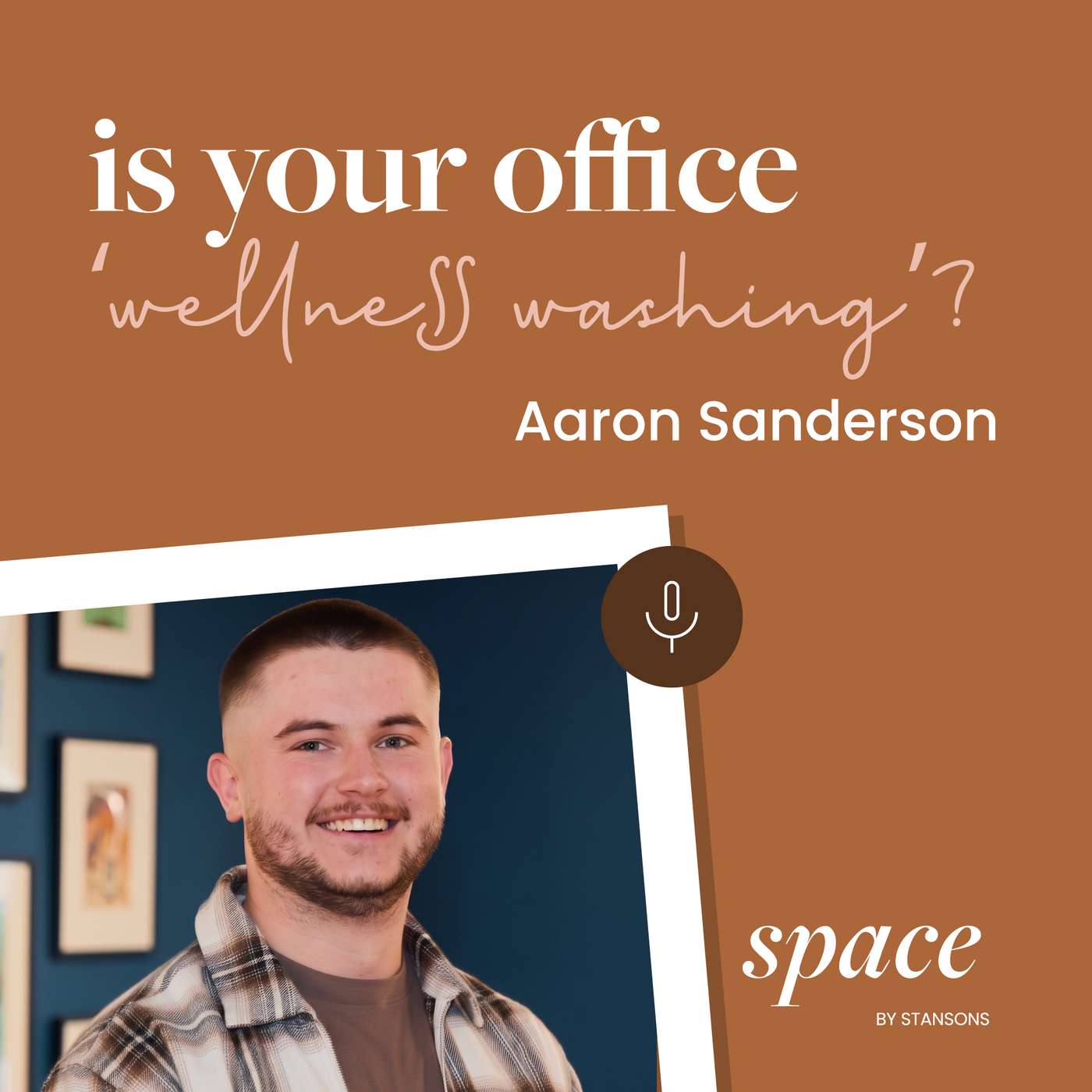
Is Your Office “Wellness Washing”? | with Aaron Sanderson, Peldon Rose
In short
The episode discusses whether office “wellness” is genuine or “wellness washing,” arguing that the next evolution in workplace design is not gimmicks but improving existing spaces through choice, flexibility, and wellness features (e.g., wellness/mothering rooms, acoustics, neurodiversity-friendly design). It also covers design decision-making: asking “why” behind each choice, avoiding trend-chasing for 5–10 year leases, and resisting value engineering that removes key elements like ceiling finishes.
Guests
Aaron Sanderson, an interior designer at Peldon Rose (spelled Peldon/Peldon Rose in transcript), recently awarded Mix 30 Under 30 Rising Stars 2026; Peldon Rose supports and develops young designers. (Co-guest mentioned: Peldon Rose as the firm.)
Key claims
Wellness should be built into everyday options rather than blanket solutions; ceilings and materiality matter for completeness; trends are inspiration, not long-term direction.
Notable examples
flexible work areas (breakouts/darker corners), acoustics to prevent reverberation, ceiling finish alternatives to existing grids, clay paint (Balworks), stainless steel’s durability, and moving away from moss/plant walls while keeping biophilia/plants.
Written by AI. May contain mistakes.
Chapters
0:18
Aaron Sanderson's Recognition
Discussion about Aaron's recognition as a rising star in design.
“Many years of the same issues, but Sanderson.”
1:30
Path to Success
Aaron shares his journey and the hard work behind his achievements.
“A little surprised definitely yeah it was a nice feeling obviously it's a great feeling to be recognised as a 30 under 30 especially with Mix and obviously everyone in the industry know who mix are and what they do.”
3:24
Evolving Office Spaces
Exploring the evolution of office spaces and the impact of wellness.
“And then also I think it always comes back to hard work, right?”
6:32
Flexibility in Design
Discussion on the importance of flexibility and choice in office design.
7:40
Wellness and Employee Well-being
The role of wellness and its implementation in office design.
“in our designs and instead of saying, here's a meeting room, use it for this.”
10:05
Timeless Design vs. Trends
Aaron discusses the balance between trends and timeless office design.
“and the different types of demographic within that brand and that sort of thing.”
11:21
Challenges in Design Choices
Aaron reflects on the challenges of making design choices in projects.
“really, in a space and make sure that when it represents not only the brands that the office is built for, because again, we can follow trends, but that might not match who we're building the space for.”
14:00
The Importance of Ceiling Design
Explore how ceiling finishes can enhance the sophistication of a space.
“or defined brief or the restrictions necessarily or making up the project yeah so you can make up whatever you were.”
16:44
Favorite Materials and Trends in Design
Learn about trending materials and furniture pieces in contemporary design.
18:42
The Comeback of Stainless Steel
Discuss the resurgence of stainless steel in design and its applications.
“Again, you've got that point of difference from a solid surface that we might use for a traditional countertop.”
Show all 12 chapters
21:12
Shifting Perspectives on Green Walls
Examine the declining popularity of green walls and the ongoing love for plants.
“And I think that's kind of gone through its phase now.”
23:24
Music for Focus and Creativity
Discover different music styles that aid focus and productivity.
“If it's writing, I can't have any lyrics.”

Ask about this episode
Get the gist, explore an idea or ask about something said.
 Claude
On Space by Stansons, what are the key points of this episode?
Searching your listeningTranscript
Automatic transcript. May contain errors.
0:00It's more maybe a point of reflection now and kind of looking back at what we've done and start asking questions more like why have we done these things? Is this right? Is this the direction we're going rather than saying what new things do we want to add in these offices? Because the next stages are, it's not what's new, it's how can we improve where we're at and why we're at this point. Hey, welcome to another episode of Spaced by Stansons. Today I'm with Aaron Sanderson. Sanderson, not Saunderson. No, not Saunderson. Many years of the same issues, but Sanderson. Sanderson interior designer Peldon Rose smashing I always get that bit wrong it's wicked it's wicked to get it wrong yeah Aaron is just being awarded Mixed 30 Under 30 Rising Stars 2026 so boom you're like a big name big name made it you've made it Hyda Mar something like that yeah I bet you do get job offers after you've been Mixed 30 there's a few messages in the inbox Yeah, always.
0:58Yeah. But yeah, I mean, I'm happy where I'm at. Let's say that. Yeah, it's a good place. Tell me this. So like just straight in, you're making say under 30, what happened? Did you know it was coming? So I probably got told a few months back. So yes, I did know it was coming. It was a few months back in a one-to-one with my manager, Colin, Colin Murphy, told me that they put me forward for the award. I mean, initial reaction was like, oh cool sweet I mean I kind of had this target in my mind that I wanted to be at some point but it was like when rather than not if but when I was going to sort of get to that point I kind of had that in my mind of this is what I want to be I want to make sure that I can get to this point where I am recognized as a as an up-and-coming designer in the industry yeah so yeah I found out a few months back and then kind of kept on the hush on the down low because you're only nominated you hadn't been awarded yes correct yeah so I'm waiting for the the announcement and then found out maybe yeah I suppose it was on the day that I'd all gone through yeah crazy so how many people are nominated to how many people I wouldn't know I wouldn't know no unfortunately not I get told very little yeah oh mate what was the reaction when you heard were you surprised?
2:16A little surprised definitely yeah it was a nice feeling obviously it's a great feeling to be recognised as a 30 under 30 especially with Mix and obviously everyone in the industry know who mix are and what they do. I think it's great to be part of the cohort of this year's 2026, definitely. Unfortunately, I was in New York at the time when I was in New York at the time, so I missed the party. But yeah, when I found out, I think it was pride, the main emotion that really came over me. It was pride to know that I'd got to the point where I wanted to be. Yeah. And what was that like in terms of you're trying to get to a point to get mixed way and was it a specific project or a specific style?
2:58I don't think it's specific projects or styles of how I want. I think it's more just a career aspiration of wanting to be recognized, wanting to be the best that I can be and sort of keep moving forward and through my career. So I think I said on my LinkedIn post that it's almost the start of my career really is this isn't like i've done it now this is now just the start it's what's next it's how can i keep improving how can i keep getting better i think that's kind of a key point that i want to make and how do you do that for like any inspiring to want to be mixed say under 30 is that how do you push yourself to break ahead of that it's a combination of many many many things i suppose it's it's been in the right place at the right time i think i think i was lucky that i i'm working for such a great company in pelton rose who are very supporting of young designers and and will push people through and help them in what they feel might be needed to go in one direction or the other.
3:51And then also I think it always comes back to hard work, right? You've got to put the work in, you've got to put the time in. Design's a, not a cruel industry, but it can be a cruel industry at times where if you don't put the hours and the time in, you are going to almost fall behind. So I think it's a mix of all sorts of things. And then you've got to want it. You've got to want to do the work. You've got to want to put the hours in every day. You've got to enjoy what you do. I think that's sort of the combination of all those things kind of got me to the place where I'm at. Mate, it was amazing.
4:18Congratulations. I think it's such a good thing, isn't it? Like to have on your... On the CV is the kind of thing to say, right? I'm trying to think of a better word, but yeah, basically it is, isn't it? And it's nice. I do also agree. Like it's a real like good, solid like start. Yeah. Like it's like, now you can kind of do anything. Yeah, I mean, yeah. Anything's a big word, right? anything do anything i can do i can do what i've been taught to do shown to do and what i want to do i think is the thing if i choose to to do something i believe that i can have the ability to do that i think hopefully that's sort of thing that's again trusted in me to be able to do on projects and pull pull things together that i need to but i think yeah it's the recognition that what i am doing is the right thing in the right direction yeah what's your next big goal The next big goal, I was really just sort of settling into it as sort of more of a senior role, I suppose.
5:13I'm a project designer currently. I'm getting my own project, working on my own project, but it's that sort of really grabbing hold from an initial start of a project all the way through as mine. I think that's my next step. It's going to be kind of grabbing it by the horns, winning it through a pitch, developing it through all the concept development stage, getting it through site and seeing it being built as as mine i've done it once already which was an amazing experience and uh something that i mean i'll remember but to be more consistently get involved in in the early stages of pictures and then really pushing that through is the next step for me it's wicked i'm so passionate about like younger designers because they are our future like they genuinely are and you hear people say that to you when i did when i was young and then you're like and you and you actually start then start to think and i see people like you like flourishing and i'm just like yeah like it is just what we need like designers coming through like new ones coming through like fresh thinking fresh blood like new ways of just hope i was gonna say looking at the world but it's like kind of bigger than that just a whole different outlook to life yeah it's so good i'm so pleased you have done it um what is like in terms of the spaces you're seeing what are you seeing that people are putting in or what how do you see the office like kind of evolving going forwards over the last i suppose since kobe i mean i joined this industry on the back of kobe i graduated during kobe so i was really a sort of turning point i'd like to say more so i think we've sort of done so much evolution in the past six or seven years that it's more maybe a point of reflection now and kind of looking back at what we've done and start asking questions more like why have we done these things is is this right is this the direction we're going rather than saying what new things do we want to add in these offices because we've been through all the the processes of of slides and offices and all that sort of thing with google and and it was a nice gimmick at the time people loved it at the time but it was was it actually what was required in an office and needed in an office so i think the the next stages are it's not what's new it's how can we improve where we're at and why we're at this point yeah and what is that what sort of things are you seeing that to transpire to be so i think a massive shift has been definitely the direction towards wellness and uh giving choice and flexibility in spaces that's that's a key key mantra really that we're looking at now in our designs and instead of saying, here's a meeting room, use it for this.
7:50Here's a desk, you sit there for seven hours of the day. It's giving people choice and flexibility too. If they want to work in a breakout space because that's where they feel most comfortable, if they want a slightly darker corner of the office, again, because that's their preference and how they prefer to work, it's those options rather than a blanket across the whole office. Yeah, giving people choice essentially. I do see wellness coming in so big massively yeah it's like your generation as well like that is I'm like 80 years old back in my day you're back in my day you never asked that I knew you're a lucky little bastard basically but yeah no it is like wellness is a massive thing it totally is like longevity, well-being, like how are you seeing people when printing out wellness in terms of ideas?
8:42In terms of, I think a lot of the things is, again, it sort of just flow back to that choice aspect, but the wellness in terms of flexibility of space is, again, where you can choose wherever you want to go. Obviously, the wellness rooms, mothering rooms, they're a key part in every design we look at. It's places where, again, I think important, obviously, acoustics in a space like this where you can, because materiality in places like this where you're very aware of, sometimes you can go into a room and you've got that reverberation and you feel like, oh God, you're overwhelmed. So it's adding the layers into spaces that make people feel comfortable instead of sort of saying wellness, wellness is abroad.
9:22Everything's, you can almost wellness wash in a way. So it's specifying, it becomes almost a second nature to us as designers now of kind of what pieces we're looking at to include into a space from i can't i don't i don't really give a specific but i think obviously the main ones are making sure that flexibility choice neurodiversity design so we're looking at all sorts of colors and and make sure that it's nothing overbearing or again if there is an overbearing space then is there an alternative for someone to go to work to it's more and more of the yeah i keep floating back to this this choice choice choice but i think that's really the kind That is key.
9:59I do think it is what it is. Like, it's so hard to put it in a box. I do agree. And I think it is looking at every brand and the different types of demographic within that brand and that sort of thing. So I know I'm totally with you. What's something that you're seeing that kind of going out that you wouldn't have out that kind of a material or colors? I kind of look at trends slightly differently in a way. I think trends are great as highlighting ways that we have done things in the past or how people see things are going. But trends are great for one, two, three years maybe, and then they'll die out.
10:36Whereas office design, what we do, usually you're signed in for a five to 10 year lease. So when I'm looking at design, I really want to kind of make sure that how it looks on day one, people will still love that at the end of the 10 year period that they're there. So obviously we're going to be informed by trends and how we sort of see different materiality come into a space that really trends are sort of a great way of looking back and referencing things. And they can be used, but I don't really say this color is trendy now four years down the line. You might be like, oh, who chose that? So it's sort of trying to be timeless with our design.
11:13I think that's kind of a key thing that we love to do, making sure that each piece is going to stand the test of time, really, in a space and make sure that when it represents not only the brands that the office is built for, because again, we can follow trends, but that might not match who we're building the space for. An office is designed to be a home for a business. Our business might not be today and want to be referenced by the trends of the time. So I always kind of have to take a look at it and figure out what's right for them. And again, at some point it might be that trend is perfect for them.
11:49So yeah, of course we go for it. But I think looking at trends to me are sort of great ways to take inspiration and then look at it on a case-by-case basis for a design. What is like a proper pain point that you have? Proper pain point that you didn't expect to have? I think when you come into the industry, you almost expect that as a designer, you sort of hope that what you do is going to be correct almost immediately. And it's never going to be right we if we were correct every time we wouldn't be what we're doing what we're doing would be i don't know philosophers or something like this is a correct answer mathematician right there's no correct formula i'm probably quite formulaic and sometimes in how my brain works sometimes a bit of a right or wrong but obviously a designer you can't be so you've got to kind of always i always think it's one of the things for me was asking why like so almost kind of reverting back to this has been selected but then like as a designer I go I like that but then you kind of go why do you like that why would the client like that why is that the right choice.
12:57It's sort of almost a thing of referring back to sort of the basic principles of why you're designing something why you've chose this option against something else I think that was sort of a key point rather than just when you first come in the industry you think almost at university you're almost designing for yourself. You're told you're not, but it's toeing the line of, do you like it? Yeah, cool. Okay, find some reason why and then almost backdate the reference and make that choice. Whereas now it's very much got to be a choice that you make has to be backed up by the concepts that you're driving through a project, the cost ultimately through a project.
13:39is it right for the brand the client so there's almost these stage of asking why for every choice that you make and i think that was something that's had to be learned there is a big gap between university and real life like everybody says that yeah but no one's kind of quite put it to me like that before so i found that really interesting that is kind of you haven't actually got a client or defined brief or the restrictions necessarily or making up the project yeah so you can make up whatever you were. And that's really interesting, but to then get your head around that. What do you not like to be VE'd on your project?
14:14I think one of the first things probably is ceiling finishes a lot of the time. And I think that was probably one of the things I came into the industry, again, not fully respecting in a way of sort of, the floors, you've got to have a flooring finish. Most of the time you can get away if not a raised access floor, but the wall finishes, oh yeah, you look at that, you walk into a room, first thing you probably see is that. But then ceiling finishes, I think we can do so much with. And a lot of the time it kind of reverts back to, oh, there's an existing grid there already. Can we reuse that? And it's sort of like, yeah, of course we can do.
14:49We can do things to adjust and make that work. But I think there's so many special and interesting use cases for different types of materiality in the ceiling now that we can start looking at alternatives. You can't paste it across the board in a project, but there's some special areas, I think, or certain areas where you can start to introduce some different ceiling finishes. And I think they're sometimes some of the first things that get removed in my experience. But I think usually we'll try and find alternatives, really. We never really, VAs, we have to do it. It's part of the job. But it's sort of, Valor Engineering is all about finding the alternative rather than omitting it completely and getting rid of.
15:32I'm glad you bring up ceiling. I do find a lot of designs go up to eye level. And when a ceiling is designed nicely, I think the space looks so sophisticated and complete. It looks so designed, for the want of a better word. I mean, so many times you walk into a space and you look up and it's just a white MF ceiling. You kind of go, okay, it does the job. But what else could be done to supplement the actual design around the space? I think that's a key thing I always look to do is It's classic three dimensions. We work in three dimensions. We don't, we spend so many, like so often looking down at a floor plan that we sometimes actually figure, oh, there is a ceiling here.
16:12Obviously, there's a ceiling there, but what else can we do in these spaces? I think like you say, you walk into a room, you kind of, you feel the difference when it's being all fully considered and the ceiling, the walls, the flooring all ties together as a cohesive piece. And for you as a designer, you would obviously notice a ceiling like that. but I think for anybody else they might not be like oh my goodness the ceiling's done but it still does deliver that sense of completeness or there's probably a better word yeah you know I mean it's I love a good ceiling proper good ceiling you can't beat it no one ever says it but it's so true like yeah personally even like just it's a proper thing for me so it's nice to hear that what are some materials or furniture pieces that you're absolutely falling in love where you keep coming back to you find it super useful I mean we I think we've had a bit of a Nora 11 problem shout out to Nora 11 we always try and try and get their pieces in the beautiful we've been to the strict showroom I've been a handful of times and each time I go in I'm like this furniture's beautiful obviously it's on the pricier side but I think when you walk into a space like that and you see these furniture pieces these I think you just kind of feel like a lot of time it won't work in a design but the one time that it will or sometimes that it will we push for it, we try and get it into the space they're beautiful to me, I love them You're not the first person to say that Oh really?
17:44Cool, okay, good to know They clearly are They're doing something right Hey guys at North Heaven if you're not listening That's a great shout out Is there any other paints, any materials I think again we've potentially been looking at, I think Balworks are one that we've been using a lot, like a clay paint. Is that that kind of clay? Yeah, we've used that a lot. Again, it was that sort of next step of bringing more depth and texture into a room, whereas still paint is obviously a lot more expensive of a paint, but it's giving that a bit more, like I said, the texture, it gives a different feeling to a space rather than flat matte paint so I think that was something that we kept going back to and I think recently we've probably said a lot of time but I think stainless steel is making a massive comeback right not loads of people have said it yeah really but I definitely have seen it and in fact I've asked people what do you think about stainless steel yeah I think so yeah stainless steel is I think again it kind of refers back to what I said earlier about the trends obviously I think might have been 70s inspired more so they were using it a bit more then but it was very much in vogue then and then it's gone through like everything does in cycles through design and probably it's a very durable material obviously so when we can introduce something that's very durable again when we're looking at a project lifespan that's 10 plus years it's used in commercial kitchens all the time obviously because it's used to clean hard wearing then if we can introduce that into a in a commercial office space.
19:24Again, you've got that point of difference from a solid surface that we might use for a traditional countertop. But then if you bring that in as a stainless steel countertop, you've got all the benefits of it. But it's, again, a more trendy at the time sort of piece. Again, it's that thing of, it will look good in 10 years time, hopefully. Who knows? Come back to this in 10 years time and let me know, right? Let's see. We'll have probably gone full around the houses again. Yeah, we'll be there. Coming back in again. Are you seeing in polished or in brushed? How are you seeing it? There's a massive mixture.
19:54I think we had a few years back, or a year or so back, it was chrome that was very much in vogue and very much in sort of being placed in design. I think it's then kind of come back around to a bit of more stainless steel. I think it's use case by use case or it's polished or matte or brushed. Yeah, definitely. I'm not on it yet. You're not? No, I'm not sold. I have to be honest. but um i probably will yeah probably will get there i'm just like oh no it's again it's the right right project at the right time right yeah i'll be everywhere i could probably if i saw it done nicely probably but yeah i'm just like i i still remember that when it went out of date
20:39so yeah i'm not like i'm not all the way there with it yet but loads of people love it and i I know that once it's flipped and it's done nicely and a bit of a fresh twist to it and it's it does come together and maybe what you pair it with compared to what it's been paired with before and it's all of that isn't it yeah it it does come around but it always comes around in a fresh way yeah not just yeah not just the same yeah so it's always it's always like a bit edgy and a bit of fun and in a new way so it will be yeah I've just yet to yet to yet to experience yet to get on board oh well what are you moving away from what sort of materials are you moving away from what sort of materials are you moving away from I never want to tie anything away I think maybe the green walls I think they've been done for a few years now I think we had that period like sort of moss walls and plant walls I think when I first came into the industry it was very much that was if you wanted a feature wall have you thought of this?
21:45And I think that's kind of gone through its phase now. It might be making its way out or has made its way out. I've not seen it in any of our designs for a while now. It's tough to say. I think everything's got its place in the right scheme. I do agree with Mossfall. I've got so many planting friends and they're probably listening to me. Yeah, sorry. Sorry, any planting friends. Yeah, please don't give me because I do love you and I do love your products. I do love plants. 100 % but mothfalls they smell weird yeah that's number one yeah there's always the maintenance upkeep of the and the if it goes wrong slightly the whole thing dies and it's a replacement and it's yeah there's a whole whole background to it there's yeah I think they might be might be done you're still doing a lot of plants though oh 100 % yeah we've got to yeah all the all the plant guys we will use you still definitely you're not out yeah plants will never never never be out that's one thing I will die on.
22:39You reckon they did sort of get less popular at one point didn't they? And then they've got more popular again. Yeah I think again Covid had a big twist on that I think obviously I don't know any different I wasn't in the industry before that so I might be at that point but I think plants are vital for what we're trying to achieve like we mentioned go back to well-being the benefits of biophilia in the offices are numerous obviously I'm not going to name every single because I probably can't name every single piece but they bring so much life to a space that I think really if you walk into a space and you don't have that extra layer of biofilium it can feel sometimes missing something I think that's kind of something that will never really go away as that natural element to a space yeah I reckon and you've been great you have shared so much good stuff so thank you so much I'm going to ask you a question just before you go and that is what music do you listen to to focus I just made that up Oh, it varies depending on the task I'm doing.
23:41If it's writing, I can't have any lyrics. If I need to start writing a presentation deck, I'll listen to maybe some acoustic guitar or classical piano sort of thing. If I'm trying to smash through some visual markups or something, I need something a bit more probably energy. I've got such a varied music taste. You can probably ask anyone that I listen to pretty much anything. but that's I've gone from range from drum and bass to heavy metal to country music probably though at the moment I think that's the thing that's most played in my household at the moment so yeah it's a various various mix of all sorts nice love it country music's close to place it's definitely it's trendy I'll say that it's trendy at the moment it'll die out soon probably good thank you so much mate I appreciate your time thank you very much congratulations Thank you.
24:34I find it simply fascinating how physical space can totally change how we think, feel and behave. Meaning it can pause distractions, it can connect us, it can mean we do our very best work. And that's where Stansons steps in. This show is created by Stansons who design, make and install curtains and acoustics to create the perfect environment for people to flourish and do their very best work you've got a project on we know how it feels reach out and we'll start to talk
From the publisher
✨ Subscribe to Show Notes for more from Space by Stansons at https://www.stansons.co.uk/space ✨
This week on Space by Stansons, Guy sits down with Aaron Sanderson, Project Designer at Peldon Rose and one of Mix’s 30 Under 30 Rising Stars for 2026, to talk about career ambition, giving people choice, and designing offices that stand the test of time.
Aaron shares what the Mix award means to him and why he sees it as the start of his career rather than the finish line. He explains how a supportive employer, hard work and enjoying what you do have helped him progress. His next goal is to lead a project all the way from pitch to site.
Turning to workplace design, Aaron says the industry has moved past gimmicks like office slides and into a period of reflection: it’s not what’s new, it’s how we improve where we’re at. He explains why choice and flexibility sit at the heart of wellness, from wellness rooms and acoustics to neurodiversity-led design. He also warns against “wellness wash”. Aaron makes the case for timeless design over short-lived trends, because offices are often designed for a five-to-ten-year lease. He and Guy also discuss why ceilings are so often overlooked, stainless steel’s comeback, clay paints, and why moss walls may have had their moment, though plants will never be out.
In this episode:
- What being named a Mix 30 Under 30 Rising Star means, and why it’s only the start.
- Hard work, ambition and the support that helps young designers progress.
- Why the future office is about improving what we have, not adding gimmicks.
- Choice, flexibility and neurodiversity as the foundations of workplace wellness.
- Designing for a ten-year lease rather than short-lived trends.
- Learning to ask “why” behind every design decision.
- Why ceilings deserve more attention, and value engineering should mean alternatives, not omissions.
- Stainless steel’s comeback, clay paints, moss walls and why plants are here to stay.
More from Space by Stansons
All episodes
We use cookies.They keep VO running smoothly and help us improve it. Privacy policy