
 Ask ChatGPT

- Podcasts
- Space by Stansons
- The Art of Designing with Intention with Michelle Carr
Space by Stansons1 Jul 2025 · 51m · 20 chapters
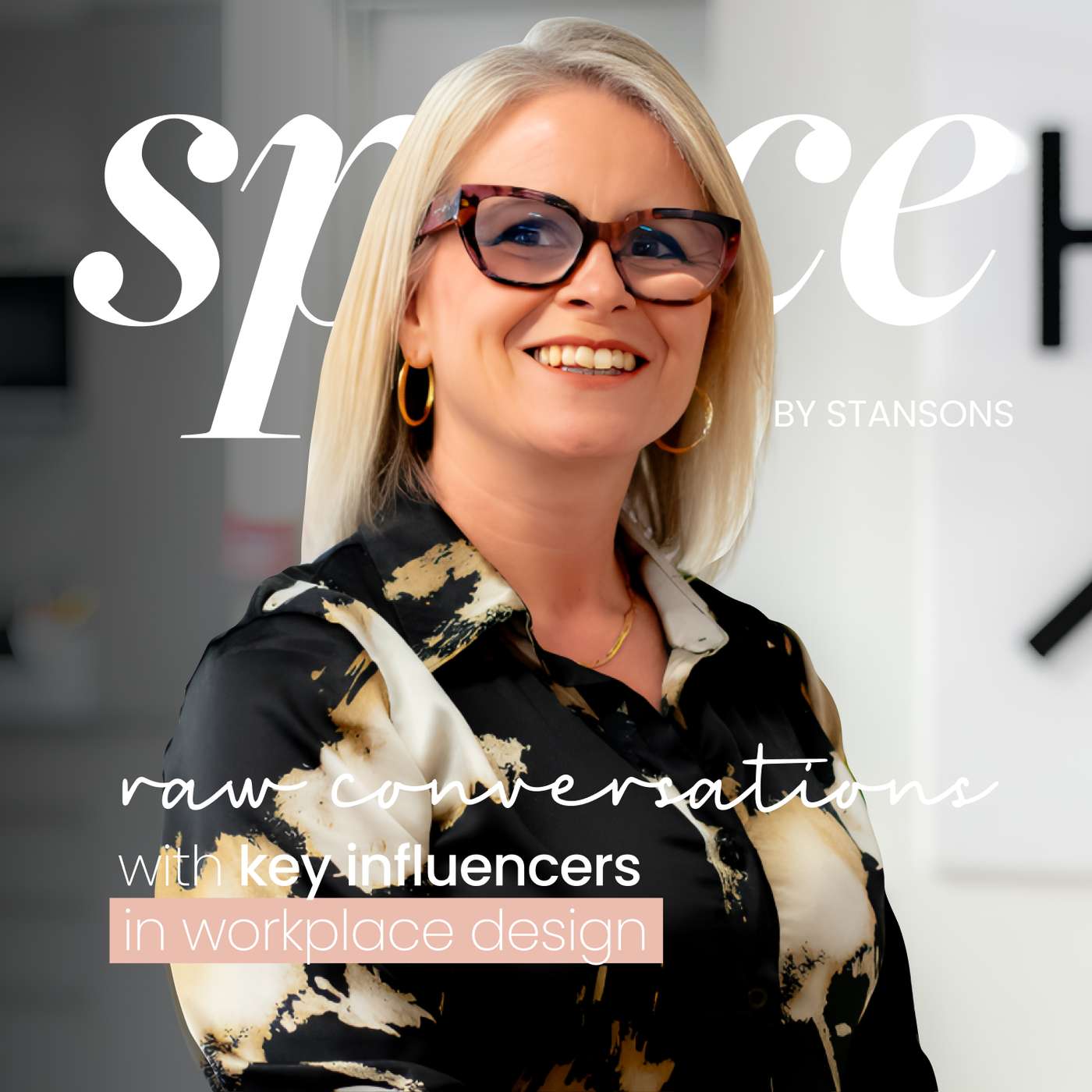
The Art of Designing with Intention with Michelle Carr
In short
Designing workplaces with intention—using mind maps, “people-first” discovery, psychological and occupancy data, and brand essence (beyond colors) to create narrative, wellbeing-focused environments.
Guest
Michelle Carr, Creative Director at Habit Action. Background includes ~3 decades in design/build/workplace design; worked at Morgan Lovell (including workplace strategy with Monica Parker/Hatch Analytics) and Mara’s (fast-paced, growth-focused culture). She was recruited via the New Designers Exhibition in London and has led workplace discovery sessions and concept-to-space translation.
Key claims
Shame is overcome by owning/talking it out. Effective design starts in the brain/hand via mind maps, then becomes block/space planning. Her “4 F’s” cycle: finding (discovery), feelings (how people feel), form (concept), function (practical fit). Brand should be intangible (how it feels), and design should be elevated by relationships and local culture.
Notable examples
Nuffield Health head office (Epsom) with “narrative workplace,” heat-map occupancy data, post-surveys (satisfaction up; occupancy up ~30–40%); boardroom acrylic “history of hospitals” books; a cake shaped like a doctor’s bag. Scopco in Hampstead (wellbeing/sustainability centered; CLT used; occupancy up ~36%). Viva Systems offices (Oxford, Budapest, Paris, London) designed with consistent essence but local variation.
Written by AI. May contain mistakes.
Chapters
0:45
Michelle's Journey in Design
Michelle shares her background and the evolution of her design career.
“Is that just generally how you like plan for anything?”
2:11
The Importance of Mind Mapping
Discussion on how mind mapping aids in the design process and creativity.
“I can, you know, that connection with your hand and writing and the brain, it really helps to get the flow.”
7:25
Early Influences and Projects
Michelle reflects on her early projects that shaped her understanding of design.
“the work hard play hard culture you know it's you know yeah it's not for everybody but it works and And sometimes it aligns with your life and then other times it doesn't.”
11:14
Creating a Narrative Workplace
Exploration of a significant project that emphasized the impact of design on people.
“We designed the head office for Laffield Health down in Epsom.”
14:00
The Importance of People in Design
Learn how focusing on people shapes design and creates memorable experiences.
“But, you know, we crafted kind of wallpapers to capture timelines and things, but it was all about the people and how that space could benefit them.”
14:42
A Memorable Cake Experience
Discover how a unique cake made by Michelle's mom symbolizes design success.
“And as part of the Andover experience, I got my mum to make a cake.”
15:50
Data-Driven Design Decisions
Explore how data on occupancy can influence design and improve user experience.
“But that was the turning point for me where I really connected to the people, connected to the brand, to the why, and really started thinking about all of those homes.”
17:42
Adapting to Change and Hybrid Work
Learn about the impact of hybrid work on design and how spaces adapt.
“to find out how the space was being occupied how people were happy and, you know, if they were happy, if they needed to change anything.”
18:22
Workplace Discovery Sessions Explained
Understand the process of workplace discovery and its role in design.
“Yeah, it's a way of actually mentioning that.”
21:30
The Four F's of Design
Discover Michelle's framework for design focusing on feelings and form.
“Probably, as an essence, I've been doing it and formulating it the last, say, 15 years or so.”
Show all 20 chapters
23:45
Self-Discovery in the Design Process
Learn how self-awareness influences Michelle's approach to design.
“One of those things, my brain never switches off.”
25:30
Recent Projects and Their Impact
Explore the design strategies used in recent projects focusing on sustainability.
“Wait, when you're saying about the wall bar, I'm thinking you're so northern.”
28:00
Designing Around Essence
Explore the significance of designing spaces that reflect their essence rather than just corporate branding.
“Yes, so for me it's really important that it's designed around, any project is designed around an essence, not just about the red, the white and the blue or whatever the corporate colours may be.”
29:46
Collaboration and Networking in Design
Learn how building a strong professional network can enhance design projects and creativity.
“And, you know, we used a lot of kind of new technologies to us on that project.”
31:29
Crafting Spaces with Local Flavor
Understand the importance of local culture in designing international office spaces.
“Oh, whether internal and external, it's phenomenal.”
35:05
Impact of Design on Employee Experience
Discover how thoughtful design can improve employee experience and workplace satisfaction.
“Do you actually like keep the offices the same because it's the same brand, so it needs to kind of flow through consistently for brand consistency?”
40:09
Vision for Future Design Impact
Discuss aspirations for creating a positive impact through regional design and improved office standards.
“And these poor people are coming to work and, you know, and some of them have worked for these companies for 15, 20 years and they don't actually know what good looks like, what they should be coming to work.”
42:00
Designing with Intention: A Broader Impact
Discover how design can create a wider and more positive impact in various contexts.
“You know, that's what you, I could say that's what he did years ago.”
46:40
Embracing Vulnerability in Personal Growth
Learn about the importance of vulnerability in personal development and self-awareness.
“I was like, oh my goodness, what a stupid thing, what have I done?”
48:43
A Golden Nugget: Believe in Yourself
A powerful reminder to believe in yourself and find your unique space to grow.
“Don't sweat it if it's not working somewhere.”

Ask about this episode
Get the gist, explore an idea or ask about something said.
 Claude
On Space by Stansons, what are the key points of this episode?
Searching your listeningTranscript
Automatic transcript. May contain errors.
0:00And I thought, I'm going to have to get back to the office. I said, oh, how was it? Why are you back so early? I thought, I'm just going to own it. Oh, well, it was a week early. I'll be going there next week. They all kind of laughed and, you know, I was like, oh, it's silly. But in certain situations, if you're feeling a bit like shame, the best way to get over that shame factor is to talk it out and is to own it. Then it doesn't possess you. Everybody, I'm chatting to Michelle Carr, Creative Director at Habit Action. But you've had like tons of experience. You've been everywhere. Not too far.
0:37But I've been to a few of the big players in the design and build world. I'm kind of embarking on almost my third decade in design and build. Oh, wow. So, yeah, I still love it. Amazing. what I loved about Michelle's story is like now she's created a doctor at Habash and she's actually like kind of shaped the brand of the company where she's at it's like a more of a boutique brand um and that's that's it yeah I think it's a when people-led people-led brand yeah and she's really shaped that and like in her personality and she's got a massive passion for people and like bring the best out in her team and also like how um then like the workspace is bringing out the best in their team that's yeah i get that real vibe from you and i love it and obviously i'm like saying hymn sheet stuff so i definitely wanted her on the show so and now she's here so welcome michelle thank you thank you lovely speaking and like this is the coolest mind map I've ever seen.
1:45I've already gone that far. Sorry, it's just what you're doing. It's freezing. Is that just generally how you like plan for anything? Yeah, it's just how I think. You know, if you give me a spreadsheet, I wouldn't know what to do. So I'll give me a list. So I often take a list, even from being a junior designer, I'd take a list of whatever the brief was and basically mind map it out. because that kind of sticks in my head better. I can, you know, that connection with your hand and writing and the brain, it really helps to get the flow. And, you know, things sticking your head a bit better. And then it translates really well from that into block planning, space planning.
2:25But I can really think creatively because I'm not governed by lines. I don't even like a north pad with lines. I prefer a notepad with black pages because then I've got no boundaries. If anyone can't see bits because they're not looking, it is like the mind map of mind maps, a big circle, some bits are highlighted, I guess that's the more important bits. There's some square borders, some round borders, some no borders, some wiggly arrows, some straightish arrow. And it literally looks like a, you know, you Google that mind map picture image on Google that, it's like the perfect one. took me 10 minutes before i set off no i love me it's really cool so michelle um you're at habit action but now but wave back or whatever like you started off what is like an early memory of a project that's really kind of shaped you beautifully into what you are and who you are gosh it's been so many you'd think about it i bet yeah it was one only one an early one i mean And if you think of, I suppose, an early memory, for me, if we go back even before work, it was all about tracing paper.
3:38I kind of crafted a love for tracing paper. My dad came from work one day and was like, oh, Cheryl, look at this. And I was mesmerized by the fact that you could kind of draw something and then draw something else. And then it would evolve, probably a bit like a mind map. and um you know from then you know really when I was at school my love of design came from you know the generic um kind of design process not to say it but it's kind of like the standard so when you're at school you're learning about uh saying in what was called cdt back then um design technology it was all about the design and and the the why you know who is it for who the why the what the where and the when and then how you're going to do it and that love for that preparation for that research for that um real kind of connection back to the why started really really early on and even you know I suppose my mind maps whenever I'm starting a concept or a project or a presentation or whatever, it begins its life as a mind map, looking at what are we going to do?
4:55You know, why I'm going to do it? How are we going to do it? What is it going to be? You know, all of those primary kind of things that you really need to be thinking about. So the love of design, you know, I didn't kind of, I knew I didn't want to be, you know, working admin or, you know, be a PE for somebody or even a policewoman. You know, I just knew I just wanted to draw and create and craft. So I was, you know, really lucky to be able to live my dream. I got picked up at the New Designers Exhibition many moons ago in London. And, you know, I've been in London ever since. I think from an early memory, I mean, I started off in the regions as a concept designer.
5:42And I sat in the corner of the studio, basically just drawing. Back before you were doing everything in 3D, everything was hand-drawn. Price and nursery. Yeah, sketching. Or workplaces. Or workplaces, and it all started with a nightmare. And then it grew, and it grew to concepts. So did you draw each space that you were going to build? Yeah, and then created it, and I drawed it in 3D. And you had some clever guys who are still in the industry now. who, you know, did the 3D Max and visualisation, but it obviously has to start from the brain and the hand and, you know, the kind of the concept. So, you know, as an early memory, I kind of transitioned probably from that studio up in Luton into working with Morgan Lovell.
6:36I was with Morgan Lovell for, gosh, I was there a couple of times first time of three years next time of 15 years I did a long stint I left to go with Mara's for a bit but it hasn't been to Mara's I don't know it's it's it is a fantastic place to work if you want to put in and you want to grow and you know the energy and the I'm sure I can't really describe it you know it's a real it's a place where you can go and learn the trade and grow and you're mastered you know I think it takes a certain level of stamina to to go at that pace um for for you know the duration but you know I think the the energy the team the the work hard play hard culture you know it's you know yeah it's not for everybody but it works and And sometimes it aligns with your life and then other times it doesn't.
7:39And when things don't align with your life, you kind of go and find something new. And then you go and you find your tribe and your people and what you were about then. So I think, you know, anybody in design, particularly in design, should go and work at Mara's for a bit. Because, you know, it's definitely a place where you go. She gets so many stories about Mara's and you don't make every which way. So it's really cool to hear that. And yeah, I think, you know, you've got to challenge yourself and in challenging yourself, you grow. Yeah. And without that, you know, what's the point really? But I think, you know, when I was, I suppose going back to that question, if, you know, an early memory, I was probably say it's a mid memory, let's say, but it was really an early or the first project that really started my thought process.
8:33and connection with how people feel and the impact of design. At Morris, you mean? At Morgan Lovell. At Morgan Lovell. Right. Yeah, yeah. Yeah, because, you know, back, see, when I first started, and, you know, the office design and commercial office design was very different. It was all about a list. You go and see a client, you go and see the space, you craft a list from the brief of what it is, see their requirements whether it was 150 desks you know storage post reception whatever meeting room suites maybe training rooms and it was all very you know about that list that you collected and you didn't really find you know it wasn't about more than that I don't think yes you you crafted a design you crafted a concept you you know definitely answered the brief it was It's definitely about the form and the function.
9:28But I don't necessarily think, you know, like until, you know, probably the last 15 years, really, it's been more about the people and the brand and the culture and the essence. And maybe some practices, you know, always been doing that. that but I could say it like from my point of view my experience within D &B and particularly the the time you know 15 years ago when I was working at Morgan Lovell with Monica Parker and Monica Parker is director and owner of Hatch Analytics and she's an author published author as well and I worked she was the workplace strategy um lead there and you know she was all about the psychological she was all about people and how they feel and you know that really woke me up her kind of mission was always about you know understanding the narrative of the workplace and understanding why we would do these things and for me that kind of woke me up a bit and thought, wow, you know, it isn't just about, you know, answering the brief, challenging it, making it aesthetically pleasing, you know, and bringing the brand in, absolutely.
10:50But it's about the people and what they want out of it, how they feel, and really digging into that and kind of bringing the essence of that along with the essence of the brand as well. Yeah. So that was a project, that was one of your memories, a project with Monica. Yeah. So that was for Morgan Lovell. Yeah. So it was for Morgan Lovell. We designed the head office for Laffield Health down in Epsom. Okay. I know that. Yeah. It's elite. It's elite. Okay. And you know, that was an amazing project to be involved in. And particularly, you know, working from the conceptual side, translating the workplace strategy into a design concept and then taking it forward from that design concept into the actual, you know, space plans and details, working with the clients.
11:51You know, there were amazing clients, that team there, you know, really interactive with the HR department and connecting with the people and looking at the brand lessons. But the mission of that project was creating a narrative workplace. So by doing that, it was all about, you know, telling the story of Luffy of Health. And we did some amazing things, you know. What did we do? Oh, gosh, we did loads of fun stuff. But it wasn't just for the sake of it, because this was like the Google era as well, you know, when it's everywhere. When was it? Oh, gosh, I bet it was in 2000. and or 10 maybe yeah okay maybe yeah just quite forward thinking yeah maybe it was maybe a bit earlier I can't the years blend in yeah but so that marriage didn't work place you know that really had to have the essence of of Nuffet House and really harness the the wellbeing factors of obviously or look at things at the field, and it offered in terms of their gyms, food kind of offering for their staff.
13:05It was all, you know, about the work settings, how that impact has a positive impact on their staff. And, you know, as part of that journey, we really, through what Monica did, she captured the data. and then we then translated that data and that essence of the brand in in quite quirky ways really so for example in in the boardrooms in um areas we crafted worked with acrylic eyes actually and crafted these bound books which actually represented the world like architectural models of their history of hospitals. So, you know, there was line drawings of these, there was some books in the shape, some of the spines were just named for some of the hospitals, and so on.
14:01But, you know, we crafted kind of wallpapers to capture timelines and things, but it was all about the people and how that space could benefit them. You know, they were touching down spaces and kind of softer work and environments. And then, you know, it's not about a desk, but then you add your, you know, the meeting rooms and things, you stand and look, your collaboration and so on. But at the end of the project, you know, you're talking about people and team and how to make a difference. And, you know, through a 22 week project on site and, you know, let's say the 22 weeks with that client even before then.
14:42And as part of the Andover experience, I got my mum to make a cake. So my mum made a cake. What did she do with that, Bob? She did a cake of a doctor's bag. And so she made a doctor's bag and the stethostopes were all kind of coming out of it. But, you know, some of the design elements, like the manifestation that we crafted, and, you know, she piped kind of on the sides. So it was really, it captured the design essence of what we were trying to do or what we created. Yeah, and kind of, and the client was like, wow, how, you didn't have everybody. I was like, no, no, it just felt like it was appropriate, you know, and that's such a good journey.
15:25And, you know, it's about creating that memorable experience, you know. And, you know, you still think about it, I think 15 years ago, I'm still talking about that. But yeah, I think that was quite pivotal in my career, kind of taking it from your standard old school design process, design offering and design build point of view. So, you know, you've got your list of requirements, you've got your design, you might splash a bit of brand colours. and then, you know, the build. But that was the turning point for me where I really connected to the people, connected to the brand, to the why, and really started thinking about all of those homes.
16:11Yeah, you've touched on like Monica got together like data and then gave it to you. What sort of data was she collecting? So Occupancy, so she kind of captured from their existing space, you know, how they were utilising their current space because they were downsizing quite a lot in terms of headcount and just that switch before it was gone hybrid, you know. They were just starting to kind of do that and kind of use that information from, you know, that heat maps and, you know, it's kind of old school, actually, in terms of, you know, going round with the clipboards, who's in that meeting room, only one person, why is there only one person in there?
16:58It seats in it, you know, and really studying that. It was a huge kind of colouring process on the storage and, you know, because paper was pretty heavy then. So there's all of that scanning and process to go through and shredding. And made it more digital. Yeah, to make it more digital, to bring it into that, you know, to reduce the footprint, really. so yeah that was I think that was an early memory in my career if we were to break it down into thirds of how that really started to wake me up to who I am what I believe in and what we should do because as part of that we went back in and did a post survey to find out how the space was being occupied how people were happy and, you know, if they were happy, if they needed to change anything.
17:54And I think their, you know, satisfaction score went up considerably high. Their occupancy level, you know, rose, I can't remember the exact stats, 30-odd, 40%. But, you know, it was a huge positive impact. I mean, things have changed now. I think they've kind of reduced because they were in my four floors then. So they've reduced that, you know, things change. and you know COVID changed some other things for everybody. Yeah, yeah, it's changed all the game. Yeah, it's a way of actually mentioning that. So what are you working on now? What current streams are you on and how are they different to that?
18:34Again, I touch a lot of projects, obviously working with my team and working, so I've obviously some of my projects and I touch my team's projects as well from, you know, a kind of more zoomed out approach, obviously. But I lead the workplace discovery sessions where, you know, it's kind of a real, I fab, I describe it as a real gentle brief discovery. So we're collecting the brief. But we do it in a, in the mind of a scenario.
19:19sometimes sometimes you turn into a checklist but you know from these discovery sessions you know we'll go in and we'll look at you know really understanding the culture of the business what works what doesn't um some different images to see to truly to extract what they like and what they don't like and what challenges they you know is happening now i mean some of these images might be you know stock images of i don't know uh lion a lion roaring or a time um clock or somebody's swimming underwater or you know just to try kind of get to the point of understanding what challenges and how that company takes you know what are their successful points yeah so So what are these images?
20:08That's on the door? So we'll kind of look at them as being in our discovery session as, oh, I don't know how to pronounce it, they accompany through images. Oh, I see. Yeah. Yeah. So we kind of really get to the core too. Yeah. So we'll do it in words, we'll do it in images. understand, you know, really try and extract softly the essence of what is working now, where they want it be, you know, what isn't, what is, what's really good. And it just really immerses you as a designer and as a person to really listen and understand something before you put pen to paper. I think... Go on. No, it's all right.
20:59I was just going to say, like, you know, all of this kind of discovery thing and you talk about even self-discovery um you know and you look at your own values and you know what makes you tick and what in terms of the design process and how you know I particularly look at things but through our process and my how I to kind of move things forward it's it's really I would kind of cultivate this thing called my four F's and it starts with the discovery it's all about how people feel you're finding out so you're finding how people feel the feelings are the second component so find findings and feelings and then you create in the form and then then that kind of comes out that is the function so it's you know it's a really cycle of you know a design or my design ethos of connecting the people you're you're finding out how they feel and before you then craft the um the the kind of the design the concept which is obviously the form and the function but the form has to work you know and has to work for the people it has to work functionally in the building um you know and additionally you know you need to link those back to the to their brief you know some of their their core values might be from a sustainability point of view for example and it might be that circularity is really important.
22:30It might be that, you know, they want the essence of what they do to be entwined right through the scheme, which is something that I believe strongly in because, you know, you don't, years ago, haven't, you know, your brand was just your brand colors and you'd walk in and it was whatever color your brand was and it was plastered all over the columns and the walls and you know for me it's got to be you know brand is so much more than that it's more abstract now isn't it it's more of your the intangible bits yeah it does the fragrance and like oh how did that make you feel like oh like and yeah does that what the brand wants you to feel so yeah and i get that yeah but that's an amazing self-discovery when did you do that the whole four things that's really deep and really i'm mindful and really really you're really self-aware aren't I have become that, yes.
23:24Yeah. When did you do that? Probably, as an essence, I've been doing it and formulating it the last, say, 15 years or so. But I identify it and draw it out on myself, I would say the last couple of years or so, where I've kind of identified it. One of those things, my brain never switches off. And I woke up one morning early. That's it. It's like an eureka moment. Seriously, at what level are you? I was like, right, okay, but I've got my feelings and it's about form and it's about bunching. But what's the other F? It's finding. But it's, yeah, I think it's just important to find your anchor points.
24:15and you know those kind of anchor points then you know I've been doing some work with a coach and Bob's amazing and he's really helped me to um understand myself more and have confidence um in myself and you know it does waver don't get me wrong four more sets in and you kind of challenge yourself but I think you know establishing my values I think were it was a really key thing and what I stand for and I'd established those probably before I'd been just come up with with my four F's um but as far as my values are concerns really it's just was really important for me to find joy in what I do on every day things that I touch you know you know even if it's you know complimenting some stranger on the tube you know like wow that's amazing water bottle you know like oh wow thanks very much you know And that connection, it's just so nice to be nice.
25:30Totally. And it just... In the South. Wait, when you're saying about the wall bar, I'm thinking you're so northern. I know. No one does that. Other than that, my brother just looks so grumpy. It's just like, I'm totally with you now. Totally with you now. When I first moved down when I was 21, people used to move away from me on the tube because they thought I was a widow, I think. Because, well, get on and go, like I was getting on the bus. You know, because I get on a bus as long. And I'm like, why? They should have fallen away from me. I'm just being nice. Culture shock. Yeah. A whole couple of hours.
26:08But back to the project. What is a project that you are working on? Can you tell us or not? I'm working on a lot of projects. If it's no, you can just say no. Okay. Wow. I don't. There's so many. I mean, we've finished, gosh, we've recently finished a project, probably a recent project or a current project. I've got lots on the drawing board. If we're thinking of something that's about to try and, you know, something that's just finished about a year ago or so, I finished a job at a scopco in Hill Hampstead. I don't understand Matt makes sense compressors but you know if you go skiing you need a compressor at the top of that mountain because it's generating the snow but we you know that was a really unique project where you know we did a lot of strategy we did the the workshop discovery that client engagement piece you know the understanding the why and establishing the why of a project and sustainability and well-being were really key, you know, even more so than the brand, you know, than the brand colours and palette and all of that stuff, which is great because just before we were finishing the job, they rebranded the global issue.
27:38So it was amazing that we centred the design kind of aesthetic around the well-being and the people's desires and the overall essence rather than what was their all's call for us. You see. Sorry, I thought you were going to say they rebranded and you had to redesign it. No, no, no. Yes, so for me it's really important that it's designed around, any project is designed around an essence, not just about the red, the white and the blue or whatever the corporate colours may be. You know, obviously there's an element of that brand awareness and those colour tones, but I don't think that a space should be dominated.
28:23You know, we're not in the 90s anymore. They were the years where things were dominated by your bright colours and your lime green columns and whatever else was going on. But, you know, that is a project. It's a very similar story to the Nuffield Health, where, you know, it was about their people, their story, their wellbeing, And, you know, we went back and looked at, you know, how the space has been occupied. And, you know, their occupancy level has gone up over 36 % because they've got, you know, the appropriate facilities. They've got a lovely gym. They've got a lovely kind of breakout canteen space that's subsidized.
29:10and we've got lots of kind of open spaces, that connection to the natural light. You can go outside on the top floor from the first floor where we took an atrium to this building, our two atriums, and we basically increased the size of the warehouse by lifting the atrium up to increase the size of the workshop space. But then that allowed the people on the first floor to get out directly from their workspace into a new outside terrace space. So that was really cool. And, you know, we used a lot of kind of new technologies to us on that project. We used a construction material called CLT, cross-laminated timber.
29:59No idea what that is. It looks like this, but it's pie. But it's a... Or is it structural timber? It's structural timber. so it's a time and program it gives you beautiful design aesthetic it brought that scandy feeling you know worked um one of the things for this job actually i've worked with some really lovely internal um designers because it was such a long job um and more kind of played our part in it but But also what I did was connected with some other designers in my network. So there's a lady called Barbara Kiss. I used to work with her at Morgan Lovell. She's amazing. So I worked with her on developing that concept and the overall design setting, which was amazing and great that we kind of paired up doing that because I got COVID and it was quite a challenging time.
31:02And the ex-colleague of mine, Elia Mitchell, I worked with at Morgan Lovell again years and years ago and she has since worked with us a lot more now and she kind of got that job from a detailed point of view through its site. So what I'm finding is your network becomes key as you go on. And you know, you find your people and you find your, you know, your tribe. Oh, whether internal and external, it's phenomenal. Like you'll see you have the internal team, which is like a super good letters tribe and then you, like the village around you is just wow. It opens doors. It does. Yeah. And I think before, I mean, even like knowledge sharing, you know, back in the day, it was all very competitive.
31:52okay it still is competitive but it was all very much closed doors back in the day where now you know companies share things you know wider conversations there's so much freedom and knowledge and I think from since Covid actually people want to share they want to talk you know you've got the sustainable design collective excuse me who you know SDC I'm thinking about three years in but they're all about knowledge sharing they had Keir Sargent there from H.O.K. earlier on in the year she was launching a book there but these people like Gavinda Karana I worked with her my first job and she's there and she's one of the she works at one of the design directors at Mordis all of these people you've had early connections with and we're still on the journey and we like to share.
32:55Speaking about journeys, people and relationships, I suppose. In COVID, we went a job with a technology firm called Viva Systems. and they're amazing amazing company very you know a global um global company we did their office down in in oxford and since then you know we work really closely with their global um workplace um like fm and we've really struck up a really wonderful work and really you know we get him We get what they want. We know the essence of the company. We know how they tick. And so since then, we've designed their Budapest office. We've just finished their Paris office. And we're just on the drum board now and about to go to the side.
33:56We've done their London, New London HQ, which is really exciting because that's in one of the more sustainable buildings in London and we've we've designed we're about to go outside just waiting on all of the leases to be signed but we've it's going to be lovely it's in the old wall that's building just off my run-up board but this client he's he's kind of an eccentric Spanish guy and he's honestly he's just lovely but he's so knowledgeable um and you know he'll challenge and you know every design we do you know it's always better than the next you know it's all you know that every the next job is or there's always elements of you know what that was if you know the last job or who they are and what they need but the next offering just is elevated further and then it goes up and up and they really do like working with us from a relationship and a design and build point of view because, you know, there's no labouring, you know, from a, I think they find across the globe, obviously some, you know, in America, they prefer to probably go more traditional in their boat with architectural and then consultants and, you know, but obviously the programme gets stretched out and you know that the clarity you think from their fine potentially is you know it's not quite as quick and easy but different countries do it differently and I suppose where I'm going with this is you know that that relationship is key and understanding how people feel and you know always elevating the offering but it's capturing those local flavors as well is quite fun, you know, because the Budapest office was very different to the, to, to the Carus office, which was from the Oxford and, you know, different to the US office.
36:02Do you actually like keep the offices the same because it's the same brand, so it needs to kind of flow through consistently for brand consistency? Or do you just like totally embrace each like local culture? I think you've got to embrace the local culture. I think there's components of how the company works and how their different teams work. They've got specific guidelines on terms of the size of desk and how the closed rooms or offices, which are more like pods, because they're doing so much calls on teams. They're like an IT training type company. So they've got a little bit of open plan, but then lots and lots of small offices.
36:57So the essence of that doesn't really change because those are the components that they need as a business. or, you know, the overall design essence of Viva Systems is communicated. And that's consistent, but I wouldn't say any design looks the same. There's always something different. There's always, I think, flow and connection are very important to the client, which I'm fully in line with because you know you want spaces to flow and you want that visitor experience to be exciting and to touch the right points and to you know be memorable and it's about kind of crafting those touch points in so they create it.
37:50Yes experience isn't it and it's also is reducing friction between transitioning between spaces. Yeah. I love what you're saying. It's amazing. I do want to ask you as well, though, about a future project. If you could do anything, work for any brand, anywhere, anyhow, anywhere, what would you do? Oh, that is a big question. The most out there thing. I could work for, do anything, work anywhere. Oh, gosh.
38:29This is going to sound really proper sad. Oh, cool. I do my doing job of, you know, crafting visions that are aligned with peoples that, you know, really help translate that culture, that brand essence, that...
38:56I can't think. I'm just to have... I asked you about the wildest dream, anywhere, anything, and you said, like, kind of, you are already living your dream. And the way that you're taking people's emotions, how they think and how they feel and how they behave, and actually impacting that in a positive way, which is basically your dream. And you said it sounded a bit sad. And I was just saying, that's not sad. I'm so happy that you're doing and living your dream. No, I kind of am. I think I get complete joy from delivering a successful vision. And I love when we get the challenge back from clients and from internal and, you know, to get that successful project.
39:56You know, it is about the relationships that you build along the way for me. and you know I suppose I would like to have and continue really to have a more positive impact um you know more even regionally and northerly you know because the more you know spaces you go to in the regions that are you know really successful businesses and you know and it's about production and distribution, they still have office space. And that office space is substandard. And these poor people are coming to work and, you know, and some of them have worked for these companies for 15, 20 years and they don't actually know what good looks like, what they should be coming to work.
40:54And it's not revolution. You know, you get about your white-collar workers and your blue-collar workers, you know, all the white-collar workers, you know, we're in London, you go to Manchester, you go to Leeds, you know, everybody's got really nice offices. And some of the lucky, you know, kind of larger manufacturing and distribution companies, you know, yet they have them too. but I'd like to see more of them. So, you know, it's that education and that, you know, the art of the possible, but to bring in, you know, our thought process of, you know, really understanding, really kind of discovering what them as a business need, who the business is, what they do, what their essence is, what their people want, but what they also need, and then balancing that with the business.
41:54But then in terms of the design, you know, the design can't just be design for design's sake. You know, that's what you, I could say that's what he did years ago. He had to design in my design originally. Yeah, I'm going to have a grass on an angle because that's going to look really cool. You know, it isn't just, you know, it's so much more than that, you know, and it probably was then, but as a junior designer back then, you're just thinking, oh gosh you could do that that would be amazing but now it's evolved you're more aware you know it's it's an amazing thing that I think to have a wider and more positive impact you know wider than just here could be a good idea I do agree with you actually I'm really with you on that it's very like London and oh they've got the money and the streets are paved with gold and it's a load of bullshit But it is true, isn't it?
42:50It's like my mindset, isn't it? Whereas if you went to like, I don't know, Dorfolk or something. I don't know why I said that. It's really nice, but it's something really terrible at Dorfolk, so I don't even know what it is. But like, are there officers to stand up, bring out the best in people? How has she changed that? I wonder. I don't know. It's more of, it needs to be a large, wide revolution. But I think, you know, we're on it and we just need to do more of it. And I think it's outstanding people in, you know, in these situations to, you know, know that they can have better. But, you know, it's a day job, even like from a manufacturer and industry point of view, you know, when you've got the factory and, you know, they're clocking in, they're clocking out, you know, they're producing something, you know, and they're just doing that.
43:38And, you know, it's a broader, wider business. And, you know, there's other things that get, you know, that gets sucked up. you know they might have machines that need to be invested in you know and that's quite a common story you know where we've been brought in to look at from a strategy point of view and to understand you know how that business ticks and only you know only to find once you've designed that vision actually you know the ovens have all broken or you know you know so they need to put that investment into something else so then it's the people that that suffer really um who who are going to work And I think, yeah, I'm a strong believer in business culture is how you formulate and it's strengthened by people being together, collaborating, working together.
44:25I'm not saying five days a week, you know, that works for some, it doesn't work for everybody. but you know you've got to get that level and i think you you lose essence of you know companies values ethos teams when you're not physically in the same place um as often as potentially yeah i'm yeah i'm really with you i do know there's this whole like remote companies and tech start up and they do really well and they can hire people from all around the world. So their point is that they can attract and retain talent from anywhere. They've got the best team sort of thing. And I, they're both. Generation singers as well.
45:09I do kind of get the mindset behind it, but I think even in any sport, it's not about the individuals, it's about the team. Yeah. And like PSG have just won like Champions League in football. and it's not that they've got any stars, is that they work together really well as a team. And I think the same in the business. I think it's about how you work together as a team. It's not about necessarily picking all the stars. I mean, we are very lucky to have like amazing people, but the bigger focus should be on bringing people together, bringing our communication together, bringing that. It sounds so cliche.
45:44It's actually boring and it's overlooked, but it's so important. And it's hard as well. Yeah. You know, and I think you live and you learn and you can make decisions or you can say things that potentially think, oh, I could have managed that better or, you know, but we're all on a journey. And I think it's that that, you know, makes you stronger or actually makes you more mindful of your impact. um i think sometimes it isn't until after the event like you're realizing oh okay um but you know you just try and be um be your best self really yeah i'm gonna ask you one more question you need to wrap up um you've covered it you're self-aware you've done loads of personal development you've got a coach i would like really strong stuff and now it's something that i like really recommend to everybody that's listening but what is one podcast you would recommend just or do you not read books in podcasts well i do it's so i'm i quite i i really like um fern cotton's happy place podcast when i'm not listening to yours for a really design information um happy place happy place you would listen to that wouldn't you i don't even know what it's about but michelle would listen to happy place oh that's a weird recommendation that is good and um the book i'm reading at the moment is um oh gosh it's a brenia brown book and it's by brenia brown embracing your vulnerability something like that it's about vulnerability anyway and that is incredible actually if you're starting to feel a bit like you're going off track a bit and you need to understand yourself a little bit more you know it's actually what it's taught me I'm only half way through it is it's good to own your kind of own your shame so sometimes I do silly things I turn up to an exhibition a week early done that.
48:04I was like, oh my goodness, what a stupid thing, what have I done? And I thought, I'm going to have to get back to the office. I said, oh, how was it? Why are you back so early? I thought, I'm just going to own it. Oh, well, it was a week early. I'll be going there next week. They all kind of laughed and, you know, I felt like, oh, I was a bit bit silly but you know in in certain situations if you're feeling a bit like shame the best way to get over that shame factor is to talk it out and is to own it and basically and then it doesn't possess you because you i know yeah strong message yeah i think so and i think you know from a if i I was a junior designer now, you know, all the advice I would give to myself is really, you know, to find your people, find the place, find the space where you align because it's there where you will grow and you can inspire and you've got the right people around you.
49:14Don't sweat it if it's not working somewhere. Be brave. you'll grow equally somewhere else probably faster because they're you know more no people or more the way that you prefer to work because you know we all unique and we all success we all can be successful we're all passionate we you know it's it's you know a creative world out there you know So I'd say just be yourself, believe in yourself, you are good enough and don't kind of get beaten down. I love that. People just need that seriously take notes. That's a golden nugget. But now on a serious note, thank you so much, Michelle. It's been an amazing chat.
50:02I've got about 400 more questions I could ask you, but I think time is going to say that we have to wrap up. But thank you everyone for listening, joining in on Space by Stansons again. So generous, your comments and the feedback we're getting and guests, suggestions and everything. And keep following and do a review because algorithms are fancy things. I don't know anything about them. All I know is when you like and follow, it doesn't take very long and it makes all the difference. So thank you so much. And thank you, Michelle. Thank you. Lovely being here. You're welcome. Thank you.
From the publisher
What if workplace design could transform both company culture and employee well-being? In this episode of Space by Stansons, host Guy Stanley sits down with Michelle Carr, Creative Director at Habit Action, to explore the need for a shift in workspace design - from the purely aesthetic to being deeply human-centred.
What You’ll Learn
- The "Four F's" framework: Finding, Feelings, Form, and Function that transforms workplace strategy
- Why workplace design must embrace cultural authenticity and local context
- The power of creative discovery sessions using imagery and dialogue to extract genuine client needs
- How to measure workplace success through occupancy rates and employee satisfaction metrics
- Why sustainable office design should balance regional identity with global brand consistency
- The critical importance of designing spaces that foster team collaboration while supporting hybrid work models
- Why post-project evaluation and relationship building are essential for long-term design success
With over 26 years of experience in workplace design and strategy, Michelle Carr currently serves as the Creative Director at Habit Action. While she started her career as a graduate designer working on prominent projects for Sky TV and NTL, Michelle has evolved into a thoughtful leader who champions the intersection of creativity, functionality, and human-centred design. Her approach to workplace strategy goes beyond aesthetics, focusing on creating destinations that enhance employee well-being, productivity, and connection, exemplified in award-nominated projects like Atlas Copco's headquarters transformation, which achieved a 35% increase in office occupancy.
If you enjoyed this episode, make sure to subscribe, rate, and review it on Apple Podcasts and Spotify. Instructions on how to do this are here: https://www.fame.so/follow-rate-review
Episode Highlights
- [00:00] Intro
- [01:45] The Need For a Mind Map
- [03:15] Tracing Paper and Morgan Lovell: What Shaped Michelle
- [11:17] Creating a Narrative Workplace and Story-Led Design
- [16:12] Translating Data Into Design
- [18:25] The Importance of The Gentle Brief
- [21:29] The 4 Fs Framework: Finding, Feeling, Form and Function
- [23:25] The Importance of Knowing Yourself & Your Values
- [26:09] What Michelle’s Up To Now
- [31:47] Knowledge is Power and the Sustainable Design Collective
- [36:02] Why Embracing Local Culture is So Important
- [38:06] Michelle’s Dream Project & Making Good Design Accessible
- [44:50] Why In-Person Collaboration Is Key
- [46:42] Michelle’s Recommendations & Closing Thoughts
Episode Resources:
Michelle Carr on LinkedIn: https://www.linkedin.com/in/michelle-carr-36916535/
Habit Action on LinkedIn: https://www.linkedin.com/company/habit-action/
Guy Stanley on LinkedIn: https://www.linkedin.com/in/guystanley
Learn more about Stansons Group Ltd. here: https://stansons.co.uk
💬 Comment below your favourite part!
More from Space by Stansons
All episodes
We use cookies.They keep VO running smoothly and help us improve it. Privacy policy