Ask ChatGPT
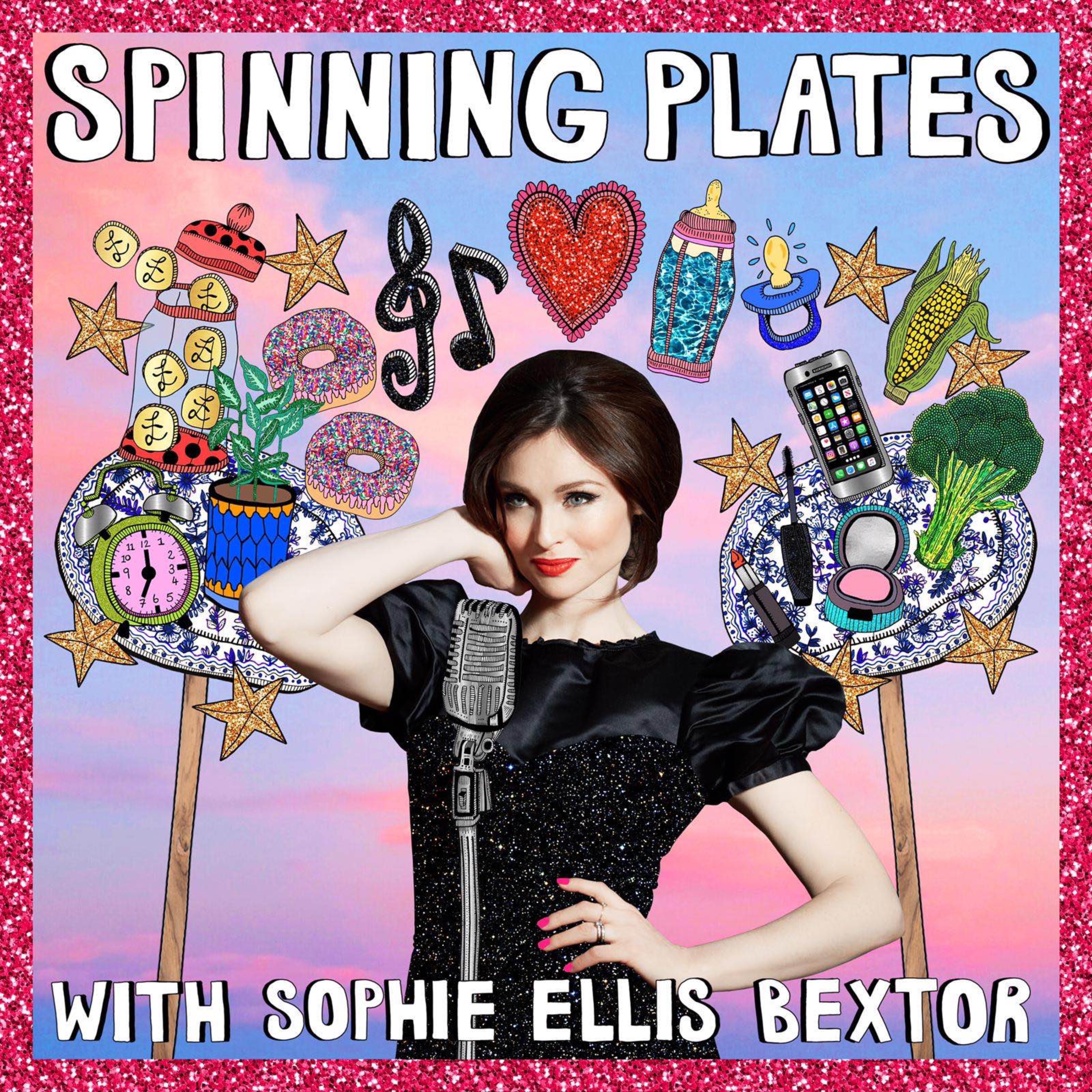

 Spinning Plates with Sophie Ellis-Bextor
11 May 2026 · 1h 23m · 28 chapters

Conversation with Dr Sian Williams about anxiety—how it can be clinically necessary yet unhelpful—plus how to manage it using her framework (functional vs unhelpful worry), grounding/acceptance, and “productive vs unproductive” worrying. It also covers her career in journalism/trauma work and parenting while managing anxiety.
Dr Sian Williams is a journalist, broadcaster, author, and mother of five (four biological children and one stepdaughter). She trained as a trauma therapist to first responders, is a registered counselling psychologist, and has worked as a trauma assessor for the BBC. She later pursued advanced psychology training (including a psychology doctorate) and published a new book, The Power of Anxiety.
Anxiety is both protective and potentially disabling; don’t “fight” it—notice, name, accept, and act. People should catch mental health needs earlier (upstream), not only when someone is “broken.” Small actions reduce anxiety, especially for eco-anxiety.
Her own high-anxiety experiences; a traumatic third birth involving emergency surgery and her son’s early seizures; and her work interviewing people about pivotal traumatic moments (e.g., a guest gently invited not to share details of a child’s death).
Written by AI. May contain mistakes.
Sophie discusses the realities and logistics of running the podcast.
Sophie introduces guest Dr. Sian Williams and her expertise.
“And then I was like, look, it's all booked up.”
Dr. Sian Williams shares her insights on anxiety and its effects.
“So all talking about anxiety and how it shapes us.”
Exploring the positive aspects of being a sensitive person.
“I could have done a radio and television for 40 years had I had the kind of anxiety which I know can completely rob you of yourself, can keep you inside, away from people and places and opportunities.”
Explore how being a sensitive person impacts the fields of journalism and psychology.
“And I understand why that was the narrative.”
Discuss the complexities of balancing motherhood with a demanding career in journalism.
“It's a funny thing, isn't it, when you're mothering someone and there's almost like this moment in childhood where suddenly they realize there's a whole world out there and that lots of grey areas exist.”
Diving into the learning experiences and challenges faced during the early years of parenting.
“whatever narrative I suspected, although I probably suspected wrongly, might come up.”
Reflect on the thrill and challenges of working in the news industry for over three decades.
“You're not doing either job as well as you could.”
Discuss the importance of trust and independence in the field of journalism.
“I mean, it was a fascinating time when I look back on it.”
Discover the challenges and liberating experiences of early career responsibilities in journalism.
“Just go for it and make the mistakes, of which there were plenty, plenty of mistakes.”
Understand the emotional challenges journalists face when reporting on tragedies and personal stories.
“What were the raw ingredients of that that were present then?”
Learn about the journey of becoming a trauma assessor and its importance in journalism.
“He wasn't fully, didn't seem fully present.”
Gain insight into how personal trauma influences professional responsibilities and emotional health.
“I did that and was aware of my perfectionism in that as well, because I was determined, having been quite an average student, I was going to get really good marks.”
Explore the importance of mental health support for journalists and emergency responders
“If you're basically being accountable to something that maybe wasn't very accountable to you, I think, in some ways.”
Discuss the hidden traumas new mothers face after childbirth
“And I think that that can be the case as well.”
Learn about the unique anxieties faced by today's youth and how to cope
Understand the importance of managing anxiety through action and awareness
“But being able to do something, however small, take small steps is part of what it's about and noticing it.”
Learn techniques to manage anxiety and find grounding during stressful times.
Discover how to recognize and prioritize your core values in life.
“It's part of my past, but not let it influence your present or determine your future.”
Understand the importance of curiosity and flexibility in personal growth.
“so that you can all keep marching forward together.”
Explore the complexities of emotions and the therapeutic process.
“No, I think it's for all of us to sometimes ask ourselves, what is behind this and the feelings that come up?”
Discuss the challenges and insights of being a step-parent and the anxieties of motherhood.
“doing this professionally once I'd qualified about five years ago but I was I was doing it for three years prior to that in training.”
Explore the dynamics of motherhood and anxiety, particularly in blended families.
“But as far as the children are concerned, they feel, I say I have five children.”
Discuss the importance of music in creating lasting family bonds and memories.
“That's quite a happy one, thinking about family soundtracks.”
Learn strategies for managing parental anxiety and understanding children's emotions.
Discover how the care for orchids parallels self-compassion and nurturing our well-being.
“They're always there and very resilient.”
Explore insights from Dr. Sian Williams' work and the impact of her show on listeners.
“It's been such a pleasure talking to you.”
Hear about the host's journey with their children's education and upcoming transitions.
“I must confess I lied to you about having a cup of tea because I still haven't got home.”

Get the gist, explore an idea or ask about something said.
 Claude
On Spinning Plates with Sophie Ellis-Bextor, what are the key points of this episode?
Searching your listeningAutomatic transcript. May contain errors.
0:00The to-do list doesn't stop, and neither does the pressure to keep up with it. If you've been running on fumes, Grow Therapy makes it easier to find care that's covered by insurance and actually built around you. Whether it's your first time in therapy or your 50th, Grow makes it easier to find a therapist who fits you, not the other way around. You can search by what matters, like insurance, specialty, identity, or availability, and get started in as little as two days. And if something comes up, you can cancel up to 24 hours in advance at no cost. Grow helps you find therapy on your time. Whatever challenges you're facing, Grow Therapy is here to help.
0:38Grow accepts over 100 insurance plans. Sessions average about$21 with insurance, and some pay as little as$0, depending on their plan. Visit growtherapy.com slash ACAST today to get started. That's growtherapy.com slash ACAST. growtherapy.com slash ACAST. Availability and coverage vary by state and insurance plan. Parles-tu français? Hablas espanol? Parli italiano? If you've used Babbel, you would. Babbel's conversation-based technique teaches you useful words and phrases to get you speaking quickly about the things you actually talk about in the real world. With lessons handcrafted by over 200 language experts and voiced by real native speakers, Babbel is like having a private tutor in your pocket.
1:24Start speaking with Babbel today. Get up to 55 % off your Babbel subscription right now at babbel.com slash acast. Spelled B-A-B-B-E-L dot com slash acast. Rules and restrictions may apply. Do you keep hearing podcast ads like this one, for example, but always wonder how you actually get involved with them for your own brand or organization? Well, it's easier than you think. We're Acast, and we give you the platform to do it all yourself. Browse thousands of popular podcasts, choose the shows that match your perfect audience, set your budget, and launch. And if you want a hand, our podcast specialists are there to help you launch with confidence.
2:07This is podcast advertising without barriers. Get started at acast.com slash advertise.
2:22Hello, I'm Safiyela Spexter and welcome to Spinning Plates, the podcast where I speak to busy working women, who also happen to be mothers, about how they make it all work. I'm a singer and I've released eight albums in between having my five sons, aged between seven years old and nearly 22, so I spin a few plates myself. Being a mother can be the most amazing thing, but it can also be hard to find time for yourself and your own ambitions. I want to be a little bit nosy and see how other people balance everything. Welcome to Spinning Plates.
2:58Hey, how are you? I feel like it's been a while. I don't know how much I've shared with you about how this podcast works, but basically when I started it oh golly six years ago now I thought right how do other people do podcasts and I decided right I do 10 10 weeks on month off 10 weeks on month off and the month in between the month off is usually more like five weeks and sometimes six so yeah I guess it's been about six weeks hasn't it it was my intention to make it a month but as i probably shared podcast is pretty pretty dinky little thing really in terms of its uh infrastructure uh obviously as me host uh researcher guest booker then there's my producer friend claire who sits with me on 95 percent of the recordings makes exquisite edit notes that get sent to Richard and then Richard my husband does the edit and then we have Ella May who does the gorgeous artwork that's actually it so what that means is if for example Rich has been away working with the feeling for a week like he was a week before last and I say oh we were supposed to the podcast go out again start a new series on Monday, it can sometimes get a little woolly.
4:30That's okay. Such is life. And if your podcast is called Spending Plates and it's about being a working woman who also happens to raise your family, I feel like these little bits and bobs of actual life getting in the way of publishing my podcast is probably pretty much accurate for daily life. So there you have it. And the main thing is don't worry. I got you. I got some amazing guests. really really nice women uh so it's been a joy i've already done very i'm very pleased with myself i've already recorded uh seven episodes i think so when i put oh sorry noisy drop booked another one today i am i'm on my way home from i just did a school trip my um my fifth and smallest child was very keen that i'd come on a school trip and there was one in the diary and I could see that actually I was free that day, which, you know, as you know yourselves, can be an unusual thing.
5:27And then I was like, look, it's all booked up. The parents are super keen. It's done. I said, the only way to be able to go on that school trip with you, Mickey, is if one of the parents dropped out. Yesterday morning, lo and behold, a note on the WhatsApp. We've had someone drop out. Can anyone step in? So I was like, ah, shucks. Farewell free Friday. Off I go to the Science Museum. You know what though, it's sweet. There's something quite interesting and insightful seeing your small person and how they are in a school environment. So yeah, also it gets me off the hook for doing a few more. Anywho, today's podcast guest is actually someone whose podcast they host is my favourite podcast.
6:09It's a podcast, sort of in name, it's also a bona fide radio show. It's called Life Changing. It's a Radio 4 programme. So, on BBC Sounds in podcast form, it's half an hour long, which is great because you can kind of fit it in from beginning to end in a journey pretty much. But also, it's fascinating. And it's a topic I'm super interested in myself because it's about how a single life event can actually change your entire life. and once you're the other side of that event there becomes a real concentric circle the before and the after of what happened on that day at that time and it's all sorts of stories some of them are really immediately positive but a lot of them involve intense trauma and a point where your world as you know it has absolutely vanished with one single moment and some of the guests just so articulate about these extraordinary life experiences and guiding them through it is dr sean williams uh she's a journalist she's a broadcaster she's an author she's mother of five um four biological children and a stepdaughter so she has two something get this right for you two sons in their 30s she has um then got a stepdaughter and another child in 20s and then a teenager bottom who's 17.
7:38I think I've got that right. It's all in the blurb. And she immediately had just such a soothing voice. She lives and lives a very interesting life. She's trained as a trauma therapist to first responders and she's registered counselling Hi, sorry, Road to Work, registered counselling psychologist, and yes, Radio 4 broadcaster. And she's also just published another new book called The Power of Anxiety. So all talking about anxiety and how it shapes us. She herself had moments of high anxiety woven into her personal and her professional life. So speaks from experience, has studied how anxiety works, and has written this brilliant book which kind of can be your little companion for when worry comes to spend some time with you.
8:34I don't think there's many people anxiety leaves alone forever is there. Just sometimes it can be something you've always known, you may be a bit of a worrier. For other people, it can be triggered by different events. But anxiety, there's healthy worry and then there's the point where it slips into dysfunction. So, I mean, look, I know I say this a lot, But I do feel like I could have spoken to Sean about lots of different things all day But I had to condense it for you into roughly an hour. So here we are What a joy to be back as I said, I've got some lovely people lined up for you But this is a great one to start with and let me tell you this as well Sean's voice is gonna relax you okay?
9:14I don't know how stressed you're feeling generally But just once you stop listening to her voice you're gonna feel all your all your muscles are gonna just like hmm to release the tension. So how nice is that? Two gifts in one. Good stories, good anecdotes and good wisdom and the ability to relax. Perfect. All right. I'm going to go and wander home from this school trip, get the kettle and have a cup of tea, have a listen back with you and then I will see you on the other side. Good to have you back. And if you're new here, thank you for showing up. Welcome to Spinning Pits.
9:52It's such a lovely thing to sit opposite you, Sean. I'm really looking forward to it. And it's funny because I know there are so many ways we could fill our time in the conversation. You've done so much in your career and are doing so much. So I could talk about your news journalism, broadcasting, your trauma counseling, your book, your podcast. I'm going to start just with a little fangirl moment for your podcast because it is, out of all the podcasts I listen to, it's my absolute favorite. it's been my favorite for a very long time yeah life changing is the podcast and I find it all kinds of everything actually but I also really notice what a brilliant interview you are with the people who sit opposite you most of whom might not be very used to being interviewed about something that's very personal and in a nutshell it's when someone's experienced something that's like a sort of pivotal moment a moment of trauma that's shaped the future path whether they were knowing it or not and so I think you are clearly a very good listener very gentle with people and I think one moment that really stayed with me you were speaking to a woman who's uh had two children with um oh it was so sad they had um their genes meant basically they had a life expectancy that was not oh and there was one point where she was talking about her daughter when her daughter died and you just really gently said you don't have to tell us this and I thought it was so caring.
11:20It really, honestly, it really got me. Even thinking about it now gets me. Oh, it's so hard. I know, me too, me too. She wanted a white Christmas, didn't she? Yeah. She wanted to give her daughter a final white Christmas. Yeah, there was lots of beauty in that conversation. Yeah. But I think also sitting next to me is your new book, so I think we should start here. Okay. We could quite easily spend a whole hour talking about anxiety. But why don't you tell me about your relationship with anxiety? Well, anxiety is one of those funny things because it is both a clinical necessity, so we need it, and also it can get in the way.
12:02It can be not helpful. when it's switched on and it is helpful is when it reminds us that there's I don't know there's a knocking in the car and we need to get it sorted or something in a relationship or a friendship doesn't feel quite right and we need to pay attention to it there can be lots of ways that anxiety goes oh here we go and and we feel it in our body we feel it obviously in all the thoughts that go ricocheting around our head and we see it in our behavior. When anxiety is less helpful is when it stops you being the person you want to be or doing the things you want to do. I'm lucky in that anxiety didn't stop me doing the things I really wanted to do.
12:51I don't think I could have done a radio and television for 40 years had I had the kind of anxiety which I know can completely rob you of yourself, can keep you inside, away from people and places and opportunities. And those are the people I work with. But it's always been there. And it's a lifetime companion for me. And I think sometimes it's in the foreground, sometimes it's in the background, sometimes it's helpful, sometimes it's not. Perhaps the journey into psychology was partly to try to understand how best to live with complexity, difficult emotions that pop up and you think, what do I do with this now?
13:37But yeah, so I was very sensitive as a child and a worrier. And I remember being told to grow a thicker skin and to not be too sensitive. And I think, and you're frowning, Because I know you are a sensitive and compassionate person who understands that sensitivity is an absolute gift and it is not something to shut down. We don't need to grow a thicker skin. And I understand why that was the narrative. You know, you think back to the 60s, 70s. I'm saying I want to go into journalism. That's a roughy-toughy old business. and for a sensitive soul, I could see why those who love me might have said, and not also for you.
14:27They're trying to protect you. Yeah, of course they are. I understand that. And actually, I did want to do it. And I think being sensitive has helped in both journalism and psychology. And in the book, I talk about highly sensitive people who are likely to be more anxious and experience the negative more intensely, but they are also adaptive, creative, intuitive, empathic. They think and feel deeply. Those are amazing skills. So it's how then do we, if we're highly sensitive people, and I don't know whether you've done the quiz there, I'd be really interested if you've done the quiz in the book.
15:06But if you're a highly sensitive person, you are more responsive to music. You're more responsive to art you're it is a more intense and deeply felt experience for you but you have to look after yourself in it and I think that's what hopefully part of the book is about helping people manage that stuff and go don't try to fight anxiety because it's going to be there but appreciate the difference appreciate when it is helping when it is harming notice acknowledge accept and then act what can I do with it is it productive or unproductive and unhelpful yeah and spotting that difference can sometimes be quite hard firstly your voice is lulling I feel like all my muscles are relaxing when you're talking to me it's really nice if I had any anxiety if you completely evaporated at this point um but um i yeah i completely agree i suppose uh the way i've termed it if i'm ever having conversations around anxiety is to do with if you're if it's functional or not functional yes and just keeping a bit of a watch on yourself and look this book is so timely uh the world is so rich and you can be walking in one direction and looking at one thing on your phone that's making you laugh and then the next second it's something completely horrific and you're being bombarded and there's uncertainty about world politics there's uncertainty about the environment and complete uh transparency about the chaos of those conversations as well yeah the i don't knows ring very loud too with what what to do next for lots of things lots of opinions so I think you know this is a really big moment um and obviously you've also you've so you'll haven't been navigating your own experience with anxiety and also you've been raising and continue to raise uh five children so you have your sons in their 30s year old is two yeah and a stepdaughter in her 20s and then two teenagers at the bottom 19-year-old son, 17-year-old daughter.
17:23Yeah. So that's a lot of people. It's a funny thing, isn't it, when you're mothering someone and there's almost like this moment in childhood where suddenly they realize there's a whole world out there and that lots of grey areas exist. And so how to navigate their worries and also your own. As a sensitive soul, how did it feel to become a mother? Surprising. I was in my 20s, late 20s. I think I was 26 actually when I had my first son. And he was glorious and unexpected. And I thought, I'm not quite sure how to perform this role. I remember one of the first things my dad said, because I was working in Liverpool as a local radio reporter.
18:19And I'd just come down, I was coming down to London, you know, bigger job, Radio 4. And as a producer, my dad said to me, what about your career? And I thought, yeah, how am I going to manage that? And because it's already, it was already quite a male environment then. My mum was absolutely thrilled. And I thought, how do I do this? I'm not sure what the role means. It was a really strange and glorious and chaotic time, I think, because I didn't tell anyone at work that I was pregnant until I was seven months. Wow. So. How did you manage that? I was small and I hid it well. And also, I think because I was new to the newsroom, they didn't really know me well enough to go, oh, hang on.
19:13So. What was your instinct about that? just that you wanted to keep the focus on what you were there for? Yeah, I think it was, I felt I had a lot to prove and I didn't want anyone making a judgment based on me leaving to have a child or me not being fully present or whatever else would have come up, whatever narrative I suspected, although I probably suspected wrongly, might come up. I felt this is a big job for me you know loads of people who were there at the time were Oxbridge and I wasn't I was there weren't that many women who worked in that environment so I wanted to leave I guess my private stuff at home to be dealt with privately and my work stuff which is all encompassing and I say is because it was and still is of course it is it's very immersive stuff you've got deadline I mean you know what it's like you're you're a you're a performer I mean we do very different things but you know when you're going about to go on stage how things I mean we're talking about anxiety you know I bet there are some times when anxiety shows up for you when you're about to step out there and and you need to be in the zone you need to be in the role don't you definitely this is who I am now for this role yeah absolutely does that make sense yeah completely and I I'm the sort of person where if I'm feeling very nervous about something I won't normally say anything I kind of just pretend it's not I model how I want to be treated until I've sort of yeah and then afterwards I'll be like I was actually really nervous that was a big moment So there were lots of moments like that and me thinking, should I talk to somebody?
21:10Who do I trust here? Lots of going into the loos and having a little and coming back and go, you can do this, Sean, you can do this. so it was a it was a strange time and a glorious one and sometimes I look back on the pictures of me and Joss who's now 34 and I'm a child looking after a child not having a blueprint not knowing none of my friends had children for quite a while I just did not know what I ought to be doing and And then how to manage this with a very intensive job where I was leaving the house at half past six in the morning, getting back quite late. I was still quite new in that environment.
21:56We had somebody living next to us, an amazing, amazing woman called Anne, who was Irish. She had a very big family, Anne and Mickey. They had about five kids. I say about because they had more kids after that. a really warm glorious loving family and Anne said you look like you could do with some help here because I was my mum and dad lived miles away and I said I really could and she said well I tell you what you know let me look after the kids and she when I had my second one um a couple of years later and she she did and she was just it was a lovely environment for them to be in and It was just next door.
22:42And until I worked out, how am I going to do the working life and also be a mother? And it was, as we all do, it's a, it's, you often think you're not doing it. You're not doing either job as well as you could. And I think it's watching out for that perfectionist bit of you that goes, because your mind is elsewhere at the moment, you can't be a professional or because your mind is elsewhere at the moment, you can't be a good mother. And it can feel very polarized. And I think it's understanding that care and love and attention are enough. And it's learning. We're all learning. We're all trying to do it as well as we possibly can and just give ourselves a bit of space and compassion to go, you're doing a good job, actually.
23:38Might not be perfect, but you're doing as well as you can. There was a lovely instant when I decided with my first book, I don't eat meat. And I thought, well, let's see if I can bring up this child not eating meat like mine. So I did these little puree ice cubes, as you do, a sweet potato and banana and all these things. And I remember taking them around to Anne. And I said, so this is what he's having today. those are his because we're weaning and blah blah and then I get back from work and he's in this loving chaotic household eating Irish stew and you're gonna go with the meat and and like big proper hunks of you know meat wow and I no teeth I know that is a challenge and I looked at her and said I was hoping he might be vegetarian and on your own see she turned to me and she said you can't be a vegetarian all day oh my word and i should have an on the podcast it was so funny and so she was she was just thinking well she's clearly you know we need to feed him well he needs to have a proper meal in him this this hungry baby let's give him some decent food so yeah so anyway none of them none of them are vegetarian wow but she sounds pretty amazing and I love the idea of this household because it sounds like in your working life, and actually you said in your friends, you were the first one to have this baby and maybe there weren't that many women in your work environment where you felt like there was a reflection of what you were dealing with.
25:17Because it is a lot to go from those two things. Particularly as even before motherhood entered the picture, it sounds like you were feeling like you had something to prove, maybe to your dad a little bit, saying, he said, stay away from this career. and you've gone, ah, I'm actually going to do that. And then you're thinking, okay, now I've got the new job, I'm having a baby, but I'll leave that till that point. Then I'll announce it, sort that out and kind of muddle your way through. It's quite a lot of things to juggle at once, I think. I think it's a lot of things to juggle when you're in your 20s.
25:49Yeah, I mean, now, you know, having my stepdaughter in her 20s, having seen my two big boys through their 20s, it's a complex time and a different time for them and I see the complexities that they're trying to wrestle with as I'm sure you do with yours you look at your kids and you think they are different challenges that they're facing but they're no less complex they're they take they take a bit of I don't know they take a bit of navigating without sometimes you having all the information at your fingertips to be able to do it in a way that you'd like. So yeah, it was an amazing time though.
26:35What an opportunity. And I was in Liverpool and Manchester and Leeds and Sheffield before I came down to London. So I did the most incredible, quite intense and sometimes difficult news stories and knew that this was the job that I loved, knew that this was what I wanted to do. And so being offered an opportunity to work on big current affairs programs that I used to listen to as a kid, The World at 1pm, The World This Weekend. You know, it's just, and now I'm working on them. And then I'm actually putting them out on air. I'm the one in charge of the running order who's going to say, this is the news today and we're going to deliver it to you at one o 'clock.
27:18You know, that's mind blowing. for a 20-something year old. So it was exciting. It was thrilling. It was challenging. It was, you were learning. You were like a sponge just sucking everything up. And it was, yeah, yeah. I mean, it was a fascinating time when I look back on it. Yeah, and never a boring moment, I bet. It's just completely sort of lots to thrive on. If you're hungry for it, there's a lot of nourishment. There is, but I guess that's the thing about news isn't it and I was in news for 35 years daily news and the thing about it then of course is that nobody got in touch to say you weren't doing it right I mean apart from you mean like feedback yes apart from your bosses who would say I'm sure but but there was a lot of trust there as well I was given a lot of trust to run a program quite early on in my career I think and there are some bosses who will say right it's up to you and if you mess this up that is your mess up but I will support you in your mess up and that's quite liberating and also scary yeah I remember sending a message to them on a computer my overall editor when I was editing the world this weekend and it was a big old day and I said I'm going to lead on this and there were just two words he sent back which were brave choice and I thought oh what does that mean what does that mean what does that mean and what that means was yes no none of that it was just you're on your own girl you know that you've got to do this and just choice brave choice so you were given freedom and responsibility at a time when you still felt quite young that's probably the best It's time to make those.
29:11Yeah. Just go for it. Just go for it and make the mistakes, of which there were plenty, plenty of mistakes. And I think it's actually having people around you who are forgiving and who say to you, I have been where you are. And I trust in who you are, but I know you're learning. I know things will go wrong. And they went wrong plenty of times. And in fact, when I first started on the telly in 1997, when News24 started as a rolling news, and I went from production, which I loved, to presentation, which I was a bit unsure about, there were loads of falling off air and just the autocue not working and the wrong straps or astons or names over the, you know, over different pictures.
30:02I mean, it was just, I thank goodness that there's not much out there, which will remind you. Of how we were all learning in that space and place. But yeah. But all those layers that have gone into all the experience of it, there's a lot to be taken from it.
30:21The to-do list doesn't stop and neither does the pressure to keep up with it. If you've been running on fumes, Grow Therapy makes it easier to find care that's covered by insurance and actually built around you. Whether it's your first time in therapy or your 50th, Grow makes it easier to find a therapist who fits you, not the other way around. You can search by what matters, like insurance, specialty, identity, or availability, and get started in as little as two days. And if something comes up, you can cancel up to 24 hours in advance at no cost. Grow helps you find therapy on your time. Whatever challenges you're facing, Grow Therapy is here to help.
30:59Grow accepts over 100 insurance plans. Sessions average about$21 with insurance, and some pay as little as$0, depending on their plan. Visit growtherapy.com slash ACAST today to get started. That's growtherapy.com slash ACAST. growtherapy.com slash ACAST. Availability and coverage vary by state and insurance plan. Parles-tu français? Hablas espagnol? Parli italiano? If you've used Babbel, you would. Babbel's conversation-based technique teaches you useful words and phrases to get you speaking quickly about the things you actually talk about in the real world. With lessons handcrafted by over 200 language experts and voiced by real native speakers, Babbel is like having a private tutor in your pocket.
31:46Start speaking with Babbel today. Get up to 55 % off your Babbel subscription right now at babbel.com slash acast. spelled B-A-B-B-E-O dot com slash ACAST. Rules and restrictions may apply. Hurry into Menards right now and save big money. Miracle-Gro Raised Bed Soil helps you grow bigger, more bountiful plants. It provides the right foundation your plants need to thrive with a 100 % organic formula that requires no mixing. Add Miracle-Gro Raised Bed Soil to help your plants grow with organic nutrients you can count on. Visit our garden center or check out our weekly flyer on Menards.com for more great deals happening now.
32:29Save big money at Menards. At Great Wolf Lodge, there's adventure for the whole family. You and your pack can splash away in the indoor water park where it's always 84 degrees. There's a massive wave pool, a lazy river, and tons of water slides for your pack to enjoy together. And the fun doesn't stop there. Get ready to explore and play at Adventure Packed Attractions from MagiQuest, a live-action game that takes place throughout the lodge to the Northern Lights Arcade. There's also a bunch of great dining options and complimentary daily events like nightly dance parties, all under one roof. And the best part?
33:06With 22 lodges across the country, you're always only a short drive away from adventure. So bring your pack together at a lodge near you. Book your stay today at greatwolf.com and strengthen the pack.
33:22And I'm wondering your latest skills that you, you know, did a new degree in psychotherapy and honed to become a counselor. What were the raw ingredients of that that were present then? Because I guess you're dealing with news stories and how to deliver the news. but it comes down to individual stories and individual voices and what were the seeds of that talent? Yeah. I think when you're speaking to somebody who is in a difficult and dark place and often in news, you will be talking to people and it's their worst day ever. That's what news is. And you're sent there to be witness to that and to hear their voice.
34:15And then if they wish it to, to be able to broadcast to people, to let them know what's happening, to be transparent about the thing that this person or these people are experiencing. so it's a huge responsibility and when you first start doing it I'm not sure are you aware of that responsibility you're aware of the weight of emotion and and how much of it can you take on and what do you show and what do you not how do you protect people who are vulnerable in that yeah yeah what's part of the news and what's something they've just yeah they're sharing without really knowing what they're sharing.
34:54Exactly, exactly. Because sometimes somebody who's grief stricken, and I remember this in the late 80s covering Hillsborough disaster, somebody who's in shock might not be aware that they've even spoken to you. So true. So you have to be so mindful from the very beginning of your responsibility as a journalist. And I think, so I was very aware of how carefully you have to handle somebody's life experience and their vulnerability from quite early on. I'm not sure I felt I had the skills to be able to hold that in ways that I felt fully confident about. And I trained as a trauma assessor in the BBC because I had seen my colleagues coming back from similar riots, disasters, tragedies, war zones, difficult, you know, cases of child abuse where they were sitting in a court endlessly, that kind of stuff and thinking I don't deserve to have these emotions that I'm feeling because it's not my suffering, it's somebody else's suffering.
36:04And then that guilt leads to more trauma, more difficulty, more struggles with emotion. So and I thought, oh, this is interesting. and how can we best help the storytellers so that they can still do their jobs. And actually that's what I'm doing now in another, in the NHS, but in another way. But at the time, at the time I trained to be a trauma assessor where you're with somebody, a fellow journalist, who's been on something difficult and you're not going deep into the emotion, you're hearing it factually so they feel safe and contained. And then you go back to them a bit later and see how they are and if there are any flags that suggest held trauma.
36:49Because obviously, in a traumatic event, you are going to experience difficult stuff. Yeah. And that's normal. So it's a normal response to an abnormal event. And anyone who's experienced difficulties or trauma or grief or loss or suffering will know that. the sudden feelings that come up from nowhere that perhaps you've never experienced before that you go oh what's this that is normal but it it becomes something that's more difficult when it becomes long lasting yeah so I trained as a trauma assessor and then I had a very complex and difficult at birth with my third son and he was born without oxygen and he was ill and I was in emergency surgery because I suddenly lost four and a half pints of blood very quickly and we were both very sick and are very lucky and also he took a long time after I mean thank goodness he was okay He took a long time to come into the world.
37:53He wasn't fully, didn't seem fully present. He wasn't engaging. It was hard to connect. Do you mean like, were you talking months there or weeks? Oh, well, yeah. Yeah. And longer. And then he had fits for the first four years of his life. He had fits. So, and I thought, we're going to have to learn how to manage this little brain because this is different to the other two. and I was working at the time I was still on BBC Breakfast at the time so I needed to I felt I needed to manage this and then just manage the family and go back to holding family and work and it was a very different situation that I was in that now looking back I think oh that was a lot yeah it was a lot and I think that's that and also having seen what I've seen push me into doing a there was a master's science master's program that came up at the University of Westminster in psychology and it was about the brain how to understand the brain and I thought yeah that would be useful to know we might all need that but especially me and him and I signed up to it not thinking it would go anywhere but just thinking I've got a bit of time now because I'd been doing BBC Breakfast and in 2012 when I had more time when it moved up to Manchester and I couldn't go with it because of the children I thought I've got a bit more time I now I'm doing a weekend job I can do this I can do this psychology and so I did it and it was some years after seth had been born because we were still trying to work things out i think um and i did the masters and absolutely adored it and thought wow i love psychology i love the brain what lights up which bits of the brain light up when we're traumatized or struggling or anxious or compassionate or mindful or which bits of the brain do that and then how does that affect the way we think and feel and act and behave.
40:06That was so thrilling. I did that and was aware of my perfectionism in that as well, because I was determined, having been quite an average student, I was going to get really good marks. And sometimes when I didn't, you'd get somebody saying, yeah, okay, well, you know, scale back because you're learning and you're going to fail. and that's quite grounding very grounding but yeah so I did that and then I did a counseling psychology doctorate professional doctorate in counseling psychology so that's how so fascinating oh I think you you have an interest in people and I can hear that when you're interviewing you have a compassion and an interest and a fascination I do I think you would love it yeah i mean i like your description of doing a degree when you found that you had like young children were still working i think some people's response to finding their diary loosening would just be like okay but i love the fact that you were like i'm going to learn what i'm going to do an actual degree i think i would find it fascinating i just hope i've got i think i might be a bit lazier than you sean do you think i don't think you know until you're in it maybe so i mean i definitely think i definitely think i definitely think the counseling aspect of it i find fascinating i think there's such a privilege in people sharing their stories i think there's so much wisdom i think there's so much for want of a better term healing that can come out of the conversations yeah and i mean there were a lot of things i was thinking while you were talking i was thinking about when you were training as a what do you call a trauma especially no yeah so I was a trauma assessor so it's assessing trauma rather than because I didn't have the skills to manage post-traumatic stress disorder so is that a role you were doing you said you were doing with your colleagues yeah but was that a role that was already existing but you just did someone help you with that for example yeah so I was trained okay and and I think I but I mean when you were when you were first reporting on things was someone checking in on you as well did you was there some was was that was that interesting question because sometimes i feel like there's a bit of a gap with those things that comes quite late when the when enough people have said this has actually been very difficult for me is when the mental health of the reporters might have been noted so when you're coming back from no i know is anybody checking in on you that is such an interesting question and nobody has ever asked me that.
42:47That's quite a big thing, I think. If you're basically being accountable to something that maybe wasn't very accountable to you, I think, in some ways. I wonder whether, had somebody checked on me, I might have done what I see so often now when I'm with journalists or emergency responders who I work with in the NHS, firefighters and police officers and ambulance workers, who say it's my job it's what I'm paid to do I've been doing it for x years I've I'm doing this one thing now and tomorrow it'll be something else or later in the day it'll be something else yeah there is no time to pay attention to how I am in this yeah where does it go though I know and and also it's not mine to hold it's theirs to hold I don't feel I think I probably at certainly in the late 80s and coming from a family that didn't indulge emotion
43:52I think and I use that word indulge emotion because I think that it might have been seen as a bit of an indulgence that that I probably wouldn't have heard if somebody had said how are you I would have I might have shut it down because there is simply too much to be getting on with yeah I can understand and I hear that all the time now since since I've qualified as a doctor of counseling psychology I'm with people all the time and a lot of them wait until they're broken to go, okay, now I can't do, can't live the life I want to live. I can't work. My relationships are breaking down. I feel flat or I'm constantly vigilant.
44:41Either way, there's a feeling of, I don't know what's going on here, but I've come to a bit of a dead end and now I need help. And I think what we need to do is catch people further upstream. So at the time, yeah, of course, it would have been helpful perhaps for somebody if they had asked how are you for me to take a moment to think about how I was or to process we don't a lot of us and I think this goes with a lot of people in life and just before we started talking on air we were talking off air about how quickly how busy life can be and how quickly life can go and how we're often not present reflecting on what's here now.
45:26And I think that that can be the case as well. If you're working and you've got children, there is always a to-do list. There is always something else to be looking at that means that you don't stop and think. And sometimes thinking can feel dangerous. So I haven't got time to bring that stuff in here. Do you know what I mean? Of course. I mean, I just think things have a habit of catching up with you at some point. Yeah, they do. They do. They do. And the other thing I was thinking when you were speaking, I'm really sorry you had such a traumatic time having your third baby. That's a lot to go through and a shocking amount of blood for you to lose.
46:09And your poor bubba having repercussions from the birth is a lot to carry. and I do think there's a lot of trauma that can people that can experience when they're having a baby that gets swept to one side when the baby's here and everybody does the things we do to just go oh the baby's here flowers balloons and I think I think you see a lot of walking wounded post new birth and I don't know if couples single people I don't know how where they're what's around them to deal with that when when the headline is your baby's here and you can go home now yes i don't actually know where that where that goes as well no you're right your baby's here and safe and of course you are profoundly grateful that that's happened yeah and you know that's what you're hoping for and you know that's what you're hoping for that's what you're looking exactly and and also because
47:04you can hold the two things at once you can be profoundly grateful for for this child and also you can be thinking that was tough and do I have space now to acknowledge that yeah I you can hold both I think it's hard for many to do that because of the demands of being a new mother again or being a new mother for the first time exactly there are so many competing demands that allowing space for your own stuff, again, might feel a bit too overwhelming or threatening or dangerous. Sometimes, Sophie, I think it's not until somebody notices it in us that we don't see it in ourselves. That's very true.
48:01And I think also you haven't got loads of experiences to compare it to. So I think there's always a story of someone first-hand or second or third-hand who had a worse outcome. So you feel maybe you're letting yourself sit in an emotion that you don't need to give it that much space because actually you're the one who got lucky enough to bring them home. Yeah, exactly. I think those comparative anecdotes that get swashed around. I think you're right. It can maybe mask being able to say, actually, that was really tough. And I don't know if I'm quite the same person as before. But then, I mean, you obviously had a baby after that as well.
48:41How did you feel about your fourth pregnancy after that? Well, I was going to ask you about yours because you've had five children. Yeah. Were they all very different? Yes. And actually, I had my most complicated ones first without knowing about other ways of doing it. So I had my first two prematurely. I had something called preeclampsia. yes so I had uh Sonny two months early and then Kit two months early and they were very small babies my second baby was two pound six that was definitely there was a lot going on with poor Kit I mean he's 17 now he's the same age as you were all the time and he's you would never guess it in a lineup he's he doesn't betray his tiny tiny stature at birth I remember listening to you talking to Jacinda Ardern the former New Zealand Prime Minister and she was talking about and hearing you talking about that and and how you connected with those tiny babies the importance of connecting when they are surrounded by white beeping machines yeah and finding your role as a new parent to them when you feel a bit useless actually and you can't have visitors but I had a very good example of my sister being born early and that really helped because I'd seen her be happy and smiley yeah so I thought right well that's that's what we're heading towards yeah um and I mean I must have been gung-ho I had another three but I do sometimes look back I think that was enthusiastic it's funny I don't think I really like much like what exactly the themes we've been talking about I don't think I really stopped to think about it too much and I think I was just very keen to grow a family above the noise of the what might be's and I think that I don't know I don't know what that says about me that's a good phrase optimism above the noise of the what might be's I suppose that could tally with your the anxiety actually yeah because would you agree it's quite an epidemic at the moment with how it presents are we just talking about it more has it got better visibility oh gosh that that is interesting I suppose it's hard to answer really well the conclusive one isn't it how are we going to know what people didn't tell us I think I think at the moment there's a lot more information for younger people to process and a lot of things coming at them some of which is useful and some of it less so because it's disinformation or misinformation and I think filtering that is a tough job for them and also perhaps financially they're facing more difficult times than certainly I was I think it's it felt a lot more linear maybe that's the wrong word but the the complications of trying to find a job at the moment and sending out loads of CVs to be judged by AI before you sit in front of a real person facing that level of rejection is tough tough and also can I get on the housing ladder do I want to get on the housing ladder what what are my finances going to be like how long do I carry this student loan for the world looks really frightening at the moment there's a climate crisis is there anything i can do about it i was talking to my children about this actually the weekend it was mother's day and they came down for mother's day and and on them that's good yeah right way around and i i asked them you know what what is what is it now that is making young people anxious what's the the main thing and it's not of course one thing it's a whole plethora of stuff that they're navigating so is the world a more anxious place than it was I think young people are dealing with an awful lot of stuff that was different when I was growing up and I think they've had to develop some pretty good filters to work out what's worth attending to and what isn't and part of that is understanding what they can do and what is outside their control so controlling the controllables and and there's a lovely study in the book which is about young people who engage in some form of sort of eco what's the word eco activism and that can be a litter pick or just doing something local really small but those who are most anxious about what's happening in the environment become less anxious when they play a part however small that is yeah because they're engaging with the community they're connecting and i think i think that kind of thing can help with anxiety where you go this seems overwhelming okay what can i do in this circumstance and we can all do a little bit of something because the world is uncertain so how do we navigate uncertainty we learn to live with uncertainty by saying what's productive worrying what's unproductive worrying what's habitual worrying if i can do something about the the productive worrying it's productive and it will it will help me unproductive worrying probably isn't very useful at all where your brain just goes round and round with all the what ifs that you can't answer.
54:21But being able to do something, however small, take small steps is part of what it's about and noticing it. Oh, here it is. And saying, it's not your fault. This is anxiety trying to keep you safe. This is anxiety trying to keep you out of danger. And it's okay. Now I've noticed it, named it, accepted it, acknowledged it. What can I do? And seeing where it shows up in the body. A lot of people try to outthink their anxiety. So they spend loads of time in their head going through worst case scenarios and catastrophizing. And I think if you're thinking, that can stop you feeling. And if you're all feeling, that can stop you doing.
55:03And if you're doing, that can sometimes mean you're trying to escape thinking and feeling or withdraw from it or ignore it and it's how do you hold all three together to say this is a thinking feeling doing thing and therefore I need to act on all three levels yeah and you know you you said going back to the birth and you said how was it with a fourth the the anxiety about the third birth could have stayed in a perpetual worry. The feeling was I acknowledge actually that that was a lot harder than I acknowledged at the time. I now know, actually it was a health visitor who said, oh, we might need to do something about this.
55:51You know, do you realize this, that and the other? That was helpful. But feeling anxious perhaps about the fourth child because of the third child experience. not not allowing the what-ifs and the catastrophizing catastrophizing to take hold not allowing the kind of you know the heart grip of emotion to stop you doing things or the stomach tightening which keeps you so rigid and thinking what can i do well what i could do was speak to the people who are the experts in this area and say is slightly to happen again if it does happen again what can we do is there anything preventative we can do and Evie was born by cesarean and it was a very different experience completely different experience but it's the is there something I can do to navigate this and and think about it feel it but then do it yeah I like that that's as you say the controlling the controllables as well yeah giving yourself taking stock of it and and and feeding back into like right what's the practical takeaway from this if i do that will that mitigate some of the things that are providing me with this worry exactly and it's about it's about having an anchor in the storm if you think about anxiety being like an emotional storm which can toss you toss your little boat over and leave you struggling in the waves if you think about just anchoring how can i anchor Very often that's a grounding technique or a breathing technique.
57:26How can I be here now? Not thinking about that trauma that happened in the past or that thing I was told in the past about not being good enough or worthy or lovable or not being listened to, not being heard. You know, how do I acknowledge that? That stuff is there. It's part of my past, but not let it influence your present or determine your future. And it's being kind to that stuff or you in that stuff in the past and going, and I'm here now. And what do I do while I'm here now? And I think that sort of breathing, the connecting, the grounding stuff is helpful as an anchor in the storm. I really do.
58:12So it's the acknowledging, the connecting and the engaging that you need to engage, engage with yourself and the outside world. And I think a lot of engaging is about reconnecting with your values. What things are important to you? You know, what's the stuff that when everything else falls away, you hold closely to your heart? They may shift your values. If I asked, I'm going to put you on the spot a bit now. If I asked what your values were, what would be the first words that would come to mind for you? First thing that popped in there, well, I suppose family and kindness are quite intertwined, actually.
58:57Don't overthink. No, I'm not. I'm just trying to think if what I'm not thinking is right answers. I was thinking the ability to express yourself without judgment, actually, and be given a good people who accept you for who you are and help you sort of navigate life in a way that means you can rub alongside other people, keeping yourself intact. but also not upsetting people along the way.
59:27And I think, yeah, prioritizing, nurturing the relationships that matter to you, actually. I think you can't just settle for, oh, that will take care of itself because of what has been. I think you have to walk in the present with yourself and with the people around you that matter to you so that you can all keep marching forward together. I think those things really matter. That's so interesting. so that's so curiosity yes yeah oh yeah being curious is actually one of the best things you can yeah because you are curious about other people oh yeah and I think that's also like all the people I love spending time with the curious people yeah it's such a nice feeling I much prefer it to when I thought I knew everything so that comes with uncertainty though doesn't it being curious comes with a dose of sort of feeling not sure and actually not sure is a is a good place to be because that means that you are more open to the stuff that might be in your periphery if we're certain safe certainty is quite a rigid dangerous place to be yeah and being having safe uncertainty and being curious and open and oh okay let's see what comes up so i i think you can play more in the in the gaps they're can't you?
1:00:41You can have more fun with risking not working out how you think or if you do that, you know, I suppose I'm very lucky because I work in a creative space. So I've been allowed to nurture that side of me and keep it alive. And I know not everybody's lucky enough to to play for a living. So I do appreciate that. So play, play is a value. Definitely. Having fun. Having fun. Yes. connecting yes being compassionate yeah being curious being happy in the doing without wondering without having a goal or mind that means that it rests on really yes that's been that served me well everything would fall apart without that i think yes because you realize that is the thing i think when you're younger it's all about you know the climb and the lads and of course that's you need that that's actually helping you out because that's when you're working out who you are and working out the values I guess yeah but then when you get old enough to be able to um to still be playful with it means that you can um that that whole goal of like this this must feed into that if you can alleviate that a bit then the value is in every day and then living more in the moment I think yeah yeah I think it depends a little bit on what suits your brain though some people really like to have a bit more of a trajectory I don't I get a bit unnerved if I I start thinking, how will I feel in a year and a half or something?
1:02:07I don't know. I'm not very good at that. No, I think it's about psychological flexibility, isn't it? It's about having a flexible approach to what might come up. Because values and goals are very different, I think. I agree with that. And I think probably, you know, with your Anne, with her big family next door, when you've got all the chaos of a young family, you realise pretty quick that whatever objective you thought you had it's not going to work out that way so you're so right I mean it couldn't it couldn't I've never had a five-year ten-year 20-year plan ever no I've just thought this has popped up and seems interesting yeah what what do I think it would be like if I tried it and can I try it without it having to be the best without it having to be I must do this really really well you know who And I think it's worth asking if that thought comes up is whose judgment or expectation are you doing this for?
1:03:15That's always a big question. Yeah. Whose praise are you still seeking? Is that something you ask yourself? No, I think it's for all of us to sometimes ask ourselves, what is behind this and the feelings that come up? Are we trying to do it to prove to somebody else that we have worth and value? Is it enough for us to do it and to fail and make mistakes, but to just bring that curiosity to it and see what it's like? because whatever happens and wherever you go with it it'll reveal something to you that you didn't know and be useful to you in a way that you didn't know i think sometimes a lot of people are guided by a self-critical voice and that self-critical voice can come from somewhere definitely might not be theirs it might be theirs it's probably not most times i think and it's loud it's it's one of those things that is so much louder than a self-compassionate one definitely and many people haven't been taught to be self-compassionate feels selfish it feels indulgent agreed and it's not it's definitely as you say like when you think about how you your family uh you know you said yourself your your your childhood family maybe didn't indulge emotion or chat but you've obviously in your household have made it a very big part of how you live your lives but then you will see that roll out and now you have your I do want to know that with your conversations and engagement with people's trauma where does where do you how do you deal with that where do you put that for yourself how you where's that being stored well I think when you start and I guess I started doing this professionally once I'd qualified about five years ago but I was I was doing it for three years prior to that in training.
1:05:11When you start, it's hard because if you've been a problem solver, and I think as a parent, you have to be a problem solver because stuff is thrown at you and you think, what do I need to do in order to get this sorted for whoever? Yep. Relatable. Okay. So you tend to be a bit of a problem solver. And actually in journalism, it's very much, okay what are the top lines here you know what are the facts and it's bish bash bosh and that's the story and out it goes and it's you can do it not in a tidy fashion because news is never tidy but but you can write the story and the story is and it goes out and then something else the following day when you're working with people's lives and their emotions and their deepest most difficult stuff.
1:06:02It's untidy and it's messy. And if you bring a problem-solving perspective to it, it'll go wrong. And I learned that really early on in training. It's not your job as a psychologist to solve people's problems. It is your job to be with them to help them navigate the difficulty and the complexity of emotion that they're experiencing. Because they are the expert, not you. You know, you, Sophie, are the expert in your own life and your own emotions. If I were working with you, I'd be alongside navigating with you and looking at some of the things that came up and being curious and interested. Where does that come from and how does that show up and what does it say and what is it?
1:06:53Does it make you do something? And if so, what is that and how can we work with that? But it's not saying, I know, Sophie, you've got this issue. What we need to do is that because that doesn't get you anywhere. So the solutions come from the person who's sitting in front of you, not from you. However, when you're starting, you feel like you've got something to prove and you want to help people. Of course you do. And so your immediate instinctive reaction is, right, let's do this. because if we do this it'll take some of the pain away and it's a lot muckier than that and you have to go to the dark places and stay in the dark places sometimes stay in the stuff because it's when you're staying in the stuff that you look around you and you go oh okay right what what do we do now we're here and where has it come from i remember being with um one guy who was a journalist who had post-traumatic stress disorder from being in iraq when he thought his team had been blown up with a rocket that had come overhead and smashed into the office luckily they were all okay but he developed post-traumatic stress disorder and what got him out was exploring what he described as the labyrinthine sewers in my mind and he said what you find down there can be quite dark but it's also quite interesting tells you quite a lot about yourself and there's a um philosopher, Danish philosopher called Ludwig van Wittgenstein.
1:08:25Ludwig van Wittgenstein. Ludwig van Wittgenstein. Every time I say his name. Ludwig van Wittgenstein. And I've probably still said that incorrectly. Wittgenstein said to his students, you must go the bloody hard way, because when you go the hard way, it's nasty. But when it's nasty, that's when it's most important. so there you are with people trying not to solve now what you do with their stories initially is you try to work stuff out it's like being a detective all right well maybe if we try this or try that and instinctively you because you've been taught a lot of different techniques you'll go right maybe cbt didn't work but maybe psychodynamic will work or maybe person-centered will work or maybe all these different tools that I throw at it will work and stick something's going to stick and I think it's being comfortable in the uncertainty and the silence which was new to me in journalism you don't keep in radio you keep the needles wagging otherwise you'll fall off and they'll put on an emergency program so you don't want dead air but but in therapy the work is in the pause because they are doing their work I'm trying to give a pause to process that and what was coming up what was coming up in the pause not here, not in the podcast
1:09:59you'd fool me into thinking I was having a session anytime time um i have two last questions for you i wanted to know when i knew we were going to speak today and i was thinking about anxiety and motherhood i was thinking motherhood is pretty ripe ground for a lot of new anxieties not least worrying about all the things that can happen to your kids so oh I did actually want to know as well when did you become a step mum how old were you so how was your step daughter when you met she was 8 and she's now literally oh it's 20 odd years yeah that's a big relationship I have a step parent as well I met when I was 7 I think it's quite a fascinating dynamic and I always say I've been raised by 4 parents not 2 because happily for me my mum and my dad both remarried before I was 10 and they stayed with those relationships and I have siblings on both sides as well Do you know what's really interesting is that my stepdaughter doesn't call her step-siblings half or steps they are brothers and sisters they are my three brothers and my sister and from the very beginning that was what it was I know as a step-mom I've got a different role to her mum.
1:11:31But as far as the children are concerned, they feel, I say I have five children. As I say, I have a very different role to the role that she has with her mother, but I still feel as though she is one of the kids. Yeah, she's part of the family. Just one of the kids. and so yes maybe navigating that to start with is always going to be oh this is different so yeah you've got to find your way I think you've got to find your way yeah yeah for both of you but it does it does come right yeah it does and I just I'm so thankful that they are with each other and that when I'm no longer here they will still be with each other they'll still be supporting each other and looking after one another and when my when my kids were down for the weekend we were listening to music because I've got to choose a couple of tracks that that have meaning to me for something I'm doing called inheritance tracks whereas you inherit a track and then you give one to your children and good name inheritance it's really good yeah yeah on radio four and and and so we were running through all these all these different all these different bits of music that have meaning for all of us.
1:12:47And that is so lovely. And I just think those things, those connections will still be there when I'm long gone. And it will connect them to their childhood and their parents and also to one another. That's the power that you have as a musician and a creative to have something which holds people together when words are too much, when emotion is too much. Yeah. You know, that you can... Oh, yeah. No, I do notice that music is the art form people choose, you know, first dance at your wedding, song at your funeral, when you gave birth to. There's lots of times when people have a soundtrack where they appreciate all the arts, but it is a real privilege to be part of that.
1:13:36Yes. That collective. I do understand that. And, you know, obviously my family have loads of our songs like that. So I do. Yeah. I love that. And when people tell me if I've been lucky enough to be part of their life somehow, I'm like, oh, I take that as a real compliment. I do. I like the fact that's how music works. You will be. You'll be part of so many people's lives. It's so special. It's so special. And we know that, you know, all the research suggests music lowers cholesterol or stress hormone, can boost dopamine, which is the reward neurotransmitter, that it takes us to people and places and moments and memories that might be hard for us to access otherwise.
1:14:14It's like a, it's an incredible shortcut. It's crazy, really, when you think of how much it can do in your brain and how instinctive it is. You know, like people would say, oh, you're a children musician. but I'm like what child doesn't respond to music I think it's a real yeah part of how we're mapped really oh and and and a baby's first words or babbles that's music nature is full of music so lovely it's it's all around us isn't it it's everywhere but I just think I and I don't know what maybe oh it was the weekend it was connecting with certain pieces of music that hold us all together as a family do you have a piece of music that unites your family would you say I think we've got a few.
1:14:57Have you? I think we've got lots of songs. Yeah, definitely. I took us down a different path there, Stephanie. That's quite a happy one, thinking about family soundtracks. Yeah. But yeah, how do you think for when you do have your small people at the age where they leave the home and they have funding for their lives, how do you deal with that anxiety of where they are and what they might be doing? and actually kind of links to the other question I wanted to ask you which is with your experiences through life changing you must have lots of these cautionary or at least these are this awareness of all the ways life can change on a dime oh yeah do you pass these cautionary tales on to your kids um and how do you deal with the the what ifs of when they're out there not knowing where they are I think what life changing has has taught me and psychology to a certain extent but it is that it's not the thing it's your reaction to the thing okay which determines how you are going to deal with and cope with and live with that sliding doors moment or that turning on a dime where something happens and you're thinking oh hang on how do I manage this then so whether it's you know somebody who had a brain tumor who looked at his reflection and saw half of it in dark and it was monstrous and half fit and light and it was angelic and thought I need to capture that image and became a painter who is now showing in some of the top galleries in London a famous painter you know it's he could have had that not happen to him nobody wants a traumatic experience had that not happen to him though he would not be that person yeah so life can throw us the curveballs and obstacles and hurdles and however you look at it and it's it's the it's the how you work around them it's the what you do with that thing so i think that although they don't listen or to a lot of what i do and they don't watch a lot of what i do um yeah so but they receive your wisdom though oh who knows who knows whether they receive oh come on you're such a good listener like your teenagers must love it must be well i don't know it's quite hard to get through to them sometimes i don't know actually i like the chats from teenagers well i do too it's kind of my favorite bit of parenting they're a lot more switched on than I am they're a lot more emotionally engaged I did say to my son the other day the one who has a wonderful and different brain I said um you're happy aren't you and he said no mum I'm just emotionally regulated and I thought that was such a funny and lovely thing brilliant no mum I'm just emotionally ready okay and then my daughter saying to me I love that I know isn't that great my daughter I almost want that on a t-shirt I'm just emotionally regulated.
1:17:43I'm not happy. I'm just emotionally regulated. I love that. You can have that. What a wonderful way he sees the world. But I also completely get what you mean. Yeah. Well, if you do get t-shirts printed, can I have one? I think we could read your book and then I'll wear them. Yeah. So that's, they are, I think they are wiser than I was at their age when I felt I was just fumbling about as a young person, a parent, trying to find my way. They do seem wiser. They're certainly more connected with their emotions. Yeah. Evie, my youngest, who's 17, she did say to me once, I'm not very good with conflict.
1:18:26And I tend to, I know what my behavioral tendency is, which is to withdraw and avoid rather than to be with. So, and that goes back. a long time for me for various different experiences. And she also said to me when she was angry, you have to be here to hear my anger. So I needed to stay in the room and hear her anger when she was 12. So I think they are much more emotionally regulated perhaps than I was. When they go out into the world, it is understandable, absolutely understandable for us as parents to worry because all the worst case scenarios especially if we don't hear from them yeah come shooting into our brain yeah and and I think being aware that that's understandable noticing when it comes up and thinking how helpful is it that this is going there I remember when my son and I think this is a feature maybe of the fact that they connect with us in ways that I certainly couldn't connect to my parents when I went away you know I backpacked around Thailand and Spain and Portugal and did the most did risky things actually and they were none the wiser now we know yeah I think we know where they are we know where they well sometimes we know where they're going and therefore if they don't connect with us we think something has happened to them and we think it's our job as it of course is to protect them and look after them and therefore when we don't hear the brain fills in the uncertainty gap with things that might have happened yeah because the brain hates a vacuum and knowing that there's a vacuum and knowledge it will come up with stuff what if what if there's this what if they've hurt themselves what if they've been attacked what if they this what if they've that you i mean it's endless the number of scenarios that the brain can come up with yeah that I absolutely know that that has happened when one of my sons went off to Mexico on his own and we all said to him before he went all you have to do is drop a text message saying I've arrived or every now and again not asking for every day yeah every now and again I'm here it's all okay that's all I wanted I'm guessing he wasn't so good with this week three week three i am googling have there been any disasters in mexico i am i am looking for answers where i know it's going to take me to the wrong place yeah and i really had to pull myself back from that and actually it was his sister who i don't know how she got hold of him but she said ring your mother she's driving us mad so I think we have to acknowledge that there's going to be uncertainty and worry there yes is that productive if it's not productive can we let it go or can we schedule a worry time that's all that's also quite a good thing is I'm not going to worry until 10 past six until half past six tonight and often when you get to 10 plus six the stuff that you were worried about has dissipated it's not so important and urgent but yeah I mean it's you know we want to keep all our children safe and it doesn't stop does it well that's why I've been laughing while you've been talking because it reminded me not long ago I went to the corner shop and my phone ran out of battery while I was on the phone to my mom and when I got back there was like she'd called Richard he was out on the doorstep literally gone to get milk or something she thought I'd been attacked or hit by something so I'm going to pass this all on to her actually we all do it and it's normal and it's understandable and we can forgive ourselves for doing it because it's our natural instinct to want to keep the people we love safe indeed is it productive is it helpful if it's not helpful then let it go if it is helpful we can do something about it well she did something about it but it's nice it's nice to know she cares oh she does care she speaks very fondly of you we we end up being at a lot of events together that's sweet because we we support the same charity me and your mom so um yeah she's always yeah yeah she adores you and thank you for such a brilliant conversation but also i will i'm gonna do the i'm gonna do the quiz are you i know where it is yeah i was looking at it only this morning so please do the quiz because it what i love about the quiz is that it um it shows whether you're sensitive in different areas and also whether you're sensitive to the negative or the positive yes you have to know that about yourself yes and and I think when you engage with it it'll perhaps show you perhaps I mean I think you're quite intuitive anyway you may know all this stuff anyway but for me when I did it it was a bit of an aha moment I knew I was highly sensitive but actually it makes sense that I'm highly sensitive in these areas so connecting with people interpreting or trying to interpret their response sometimes that doesn't always work but I know that that's my sensitivity is in something called emotional reactivity which is my own emotions and other people other people might be more sensitive to music arts it might be yours but you know or you might be all of them but and then it's and now what do I do with it And what we know, it's the difference between an orchid and a dandelion.
1:23:55It's so, which is a lovely theory by a pediatrician called W. Thomas Boyce, who said the dandelions are like sort of hardy and they burst up through the cracks in the pavement. They're always there and very resilient. And the orchids are fragile, but also magnificent. They can wilt in the wrong environment, but in the right environment, they are magnificent. How do we help our orchids to thrive? We give them light, so early morning light. We keep them green. We immerse them in nature. We show them love. We make sure that they have, or if they don't have, we help them learn how to be self-compassionate.
1:24:38And those things, we give them the right soil and the right light and the right nourishment, and they are magnificent. Yay. Here's to the orchids. Here's to the orchids. Let's have more of them. Absolutely. Thank you so much. It's been such a pleasure talking to you. It really has. I really enjoyed it. Thank you.
1:25:03Thank you so much to Sian. And actually, I still need to do that survey in her book. But I have been reading it and it's fascinating and helpful. I've actually found being able to talk through how anxiety works It's very helpful for not just myself, but for people close to me when they're going through similar things. So, yeah, she's doing a good deed for us all. And do check out Life Changing, the show she does. Honestly, you'll be gripped. Some of those stories, man, they just never leave you. And I've actually done that thing of listening to some of them twice because you're just so blown away.
1:25:39And sometimes you find yourself pretty moved as well. The people who come on, I think it's a mixture of people that the BBC have got in touch with and people who have reached out. so you often get that nice thing where people are kind of ready to share, talk through something. So it never feels like you are, you know, people are oversharing. It feels like a space where people feel safe to explore all the emotions that came out of that and finding themselves an unlikely member of the club of, you know, having had a life-changing moment. I must confess I lied to you about having a cup of tea because I still haven't got home.
1:26:16I've been wandering around. It's actually quite a nice day and the school trip finished a little bit early So I've been able to get on with some other bits and bobs while I've been out I've actually got to start the whole process of secondary school options for my fourth and University options for my second and I don't Know massively what I'm doing with the uni thing. I've never really done that before my eldest just did a foundation in London quite straightforward so wish me luck new new chapter of education begins in the Elizabeth Jones household anyway I'm rambling I will see you again next week as I said more beautiful wonderful guests it's so exciting so thank you to Richard for doing the edit thank you to Claire for her beautiful producing thank you to Ella May for the glorious artwork and of course thank you to my guest Dr.
1:27:10Sian Williams for being so generous with her time her wisdom and to you it is you gives me your ears and stops this being just me talking into the ether to no one which actually right now as i'll record it it is i actually know there's a dog looking at me it's not exactly no ears at all it's in canine ones are leaning in all right sorry i can tell that i've got a little bit of a friday feeling i'm just happy to be relieved of the duty of counting small children that aren't my own and i'm just not listening to me on a school trip what's that about I was never that defiant anyway all right whatever you're up to this week have a lovely one I'll see you again soon thanks so much bye
1:28:18I love you.
1:28:41Crafted by over 200 language experts and voiced by real native speakers, Babbel is like having a private tutor in your pocket. Start speaking with Babbel today. Get up to 55 % off your Babbel subscription right now at babbel.com slash acast. Spelled B-A-B-B-E-L dot com slash acast. Rules and restrictions may apply. Here's a tip for you. There's a podcast out there with fans waiting to be your next customer. They tune in every week, they trust the host, and that host wants to talk about brands like yours in their own words to their audience. The problem is, you just haven't been introduced yet.
1:29:22We're Acast, where that introduction happens. As the world's largest podcast marketplace, we let you browse shows, see who's listening, and book host-read sponsorships or run your own ads all from one platform. Transparent pricing, real-time data, complete control. Start advertising on podcasts by visiting acast.com slash advertise.
Dr Sian Williams is a journalist and broadcaster and author. She trained as a trauma assessor while working at the BBC and is a registered counselling psychologist. She presents the fabulous Radio 4 series and podcast ‘Life Changing’ which I totally recommend.
She has 5 children, the eldest being in their 30s, the youngest 17.
Sian told me about having her glorious and unexpected first son when she had just got her first job in the newsroom in London. She also talked about how she values her close relationship with her step daughter.
Sian has just published a new book called ‘The Power of Anxiety: How to Ride the Worry Wave’ which talks about turns sensitivity into a strength.
I felt instantly relaxed by Sian’s beautiful voice and gentle counseling manner… and almost revealed all my deepest secrets to her!
Spinning Plates is presented by Sophie Ellis-Bextor, produced by Claire Jones and post-production by Richard Jones.
Hosted on Acast. See acast.com/privacy for more information.