Ask ChatGPT


 Stay Tuned with Preet
29 Oct 2026 · 56m · 15 chapters
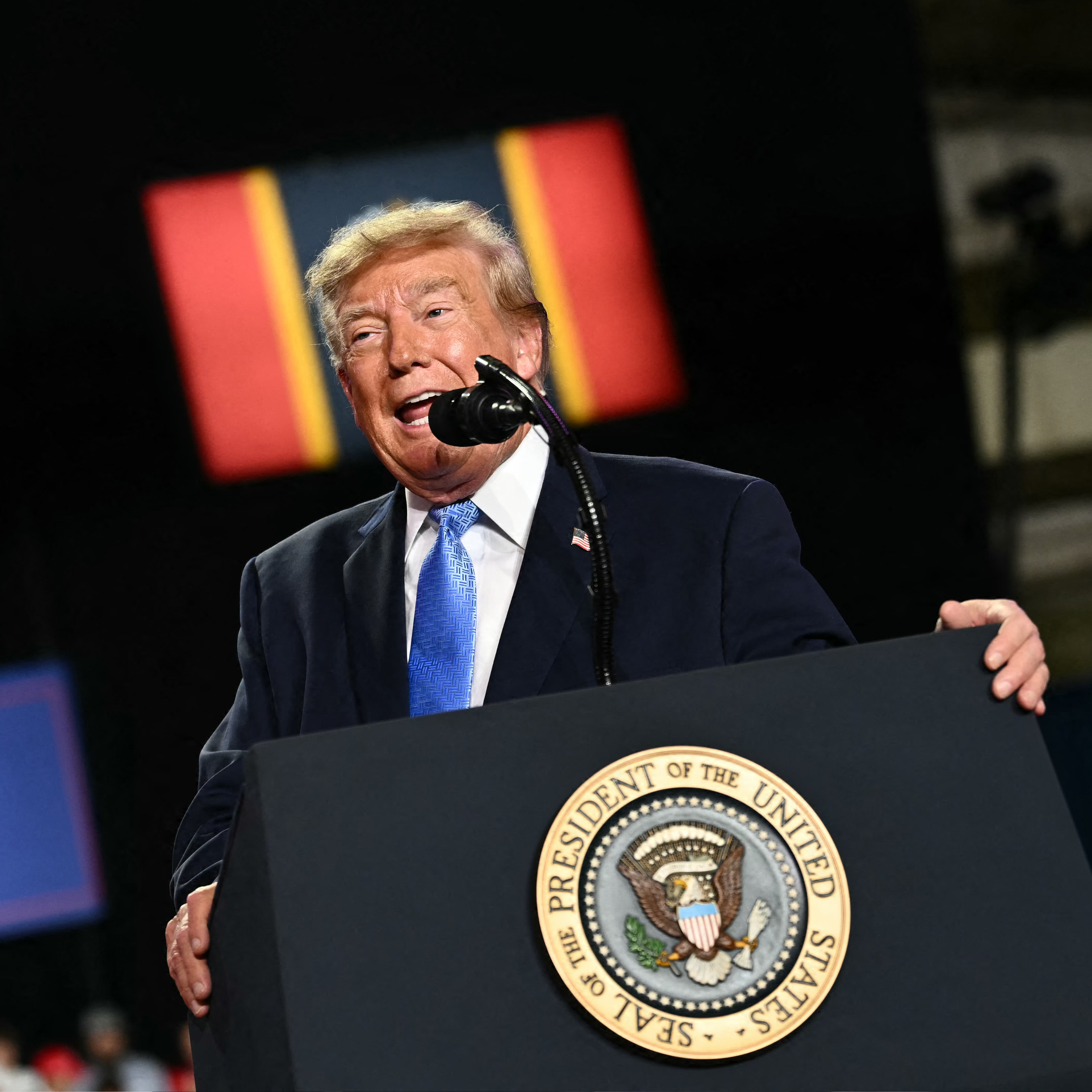
Anne Applebaum discusses why Donald Trump’s popularity is declining ahead of the U.S. midterms, drawing parallels to Viktor Orbán’s political downfall, and what accountability could look like in a post-MAGA era. She also addresses how a lame-duck Trump might behave, and the damage to U.S. reliability abroad.
Anne Applebaum is a Pulitzer Prize–winning historian and staff writer at The Atlantic, and she hosts the podcast Autocracy in America.
Trump’s decline is driven by voters linking economic pain and deterioration to corruption and personal enrichment, not just inflation. Like Orbán, Trump has centered himself (“I am the state”), so when outcomes worsen, he becomes the focal blame. Accountability should be strategic: fast oversight on a few egregious cases plus immediate actions benefiting Americans. If Trump loses badly, she expects anger, paranoia, and revenge-seeking behavior. U.S. allies now doubt American reliability, including concerns about U.S. technology (e.g., Starlink).
Hungary/Orbán’s family wealth and “grotesque” corruption stories; Venezuela oil deals and Maduro-linked cronies; Trump’s tariffs and decision to invade/expand war with Iran; Trump’s cabinet appointments (e.g., RFK Jr., Hegseth); Starlink/Elon Musk in Ukraine; potential investigations into DOJ institutional damage and stronger conflict-of-interest and civil-service protections.
Written by AI. May contain mistakes.
Discussing Trump's decreasing popularity and its implications.
“So you are our last guest before the midterm elections in the United States.”
Exploring the parallels between Trump's situation and Viktor Orban's.
“So what really did in Orban in the end was the perception that the country is deteriorating.”
Linking Trump's actions to economic deterioration and public perception.
“But also the campaign of the political opposition led by Peter Madjar articulated that.”
Analysis of Trump's leadership and governance style.
“Does that put him in even a worse position than Orban, or how do you compare those?”
Strategies for Democrats should they regain power in Congress.
“I mean, these are not, these, this is not an image problem.”
Discussion on prioritizing domestic issues to engage voters.
“So let's say the Democrats hypothetically take back the House and or the Senate.”
Explore the complexities of corruption in Venezuela and the importance of accountability in political actions.
“Maybe the ballroom is one and the donors to the ballroom.”
Discuss the implications of Trump's political decline and potential erratic behavior in his final term.
“So I'm not going to ask you to predict, as we agreed, an election result.”
Explore how Trump's actions have impacted U.S. relationships with allies, particularly Canada and Europe.
“You know, the idea was that, you know, whatever happened, we could count on having a decent trading relationship with the United States because everybody understood that it was mutually beneficial.”
Discuss the potential trajectory of the Republican Party following Trump's presidency and the implications of his actions.
“And the trade mess is completely self-created.”
Analyze how future generations might view Trump and his presidency, including the possibility of nostalgia.
“So I think it's really the fate of him and what happens to him that also will shape the future of the Republican Party.”
The host transitions into listener questions about legal topics.
“Find your favorite holiday recipe at creamcheese.com.”
An in-depth exploration of the legality and implications of live streaming executions, using the case of Nidal Malik Hassan.
“This question comes in an email from John.”
The host shares personal feelings and insights ahead of the upcoming midterm elections, expressing cautious optimism for the Democrats.
“So lots of folks have been asking me, both in email and just generally in the world, how I'm feeling at this moment.”
A passionate appeal for the importance of voting, discussing voter suppression and the significance of participating in elections.
“rejection, hopefully overwhelmingly, of Trump and his tactics and his staff's tactics and his cabinet's tactics and also their values.”

Get the gist, explore an idea or ask about something said.
 Claude
On Stay Tuned with Preet, what are the key points of this episode?
Searching your listeningAutomatic transcript. May contain errors.
0:00Are you a pet owner? Every six seconds, a pet owner in the U.S. gets hit with a vet bill over$1 ,000. Always an unwelcome surprise. That's where Fetch comes in. Fetch is the most complete pet insurance for dogs and cats, according to ConsumerAdvocate.org. You get paid back up to 90 % of vet bills at any vet in the U.S. and Canada, with claims paid back in as little as two days. Go to FetchPet.com slash save right now for your free quote. That's FetchPet.com slash save.
0:57For investing, consider the fund's investment objectives, risks, charges, and expenses. Visit statestreet.com slash IM for prospectus containing this and other information. Read it carefully. Spy is subject to risks similar to those of stocks. All ETFs are subject to risk, including possible loss of principal. Alps Distributors, Inc. Distributor. From CAFE and the Vox Media Podcast Network, welcome to Stay Tuned. I'm Preet Bharara. A defeated and failed leader isn't going to inspire people into the future, at least not most people. and people who want to win elections will look for something new.
1:33I'm Preet Bharara. My guest this week is Anne Applebaum. She's a historian, Pulitzer Prize winning author and staff writer at The Atlantic. She also hosts the podcast Autocracy in America. She joined me today to discuss Trump's declining popularity and what accountability might look like in a post-MAGA world. That's coming up. Stay tuned.
2:00Anne Applebaum, welcome back to the show. Thanks for having me. So you are our last guest before the midterm elections in the United States. I'm not going to ask you to predict what's going to happen. We don't know what's going to happen. The polls say one thing. You never know. But let me ask you this. So it is clear that Donald Trump is in less of a good position in terms of popularity in the country. then he's been in a long time, if you believe those polls. I'm not asking about outcome. I also know that you have talked and written about Viktor Orban of Hungary a lot. And one of the things that people talk about with respect to Orban was his authoritarian streak, his strongman persona.
2:42But that's not the thing that I understand you believe led to his political downfall. it was some combination of high prices, inflation, the economy on the one hand, plus corruption on the other, which you might say are manifestations of or consequences of or reflections of the first thing. How much of Donald Trump's predicament politically now is like Orbán's? It's very, very much like Orbán's, but I don't know yet whether all of the Democratic candidates running have made the connection for people. So what really did in Orban in the end was the perception that the country is deteriorating. In the case of Hungary, it was becoming, literally becoming poor.
3:28It wasn't just inflation. It was run down social services, health care, education. And at the same time, really grotesque stories emerging about Orban's sons and family and their fancy cars and their fancy hotels they built and their fancy houses. Making$2.2 billion while in office, something like that? Something like that. Well, I don't know. Orban probably didn't make quite as much money as Trump has done. And then what you got was a political campaign that linked the two things together. And people said, look, they've created a state that's good for them, a political system that's good for them and is bad for you.
4:08And they are taking money out of the system and it's affecting you. In other words, they are rich and that's why you're getting poorer. And people understood the connection in Hungary because it was true and they could see it. But also the campaign of the political opposition led by Peter Madjar articulated that. And that, interestingly, it's been very important in an election in Serbia a few days ago. It's what the Navalny movement in Russia was doing before Navalny was arrested and killed. This link between corruption and what you are experiencing is very important to explain. And I mean, I'm beginning to hear people explaining it.
4:52I was going to say, I mean, I feel like in the last number of days, as the campaign draws to a close, people are articulating that they're talking about corruption. They're talking about the excesses of the ballroom of the airplane of the golf courses. How much, how much of Orban's strategy was sort of, um, telling people not to believe their own eyes and their own pocketbooks. Uh, the Trump folks are saying we have a great economy. Inflation either does not exist or it's really, really, really temporary. The other thing that affects, I think, Trump's standing is that unlike in the normal time where a president has some plausible deniability of bad things happening in the economy because it's a complicated thing, it's interconnected with global economics, and if something goes wrong in Japan, something can go wrong in the United States.
5:43But here you have the combination of the war in Iran, plus tariffs that were deeply unpopular, that people can draw a direct line from those decisions, not even by a cabinet official, not even by a brain trust, but by the president himself. Does that put him in even a worse position than Orban, or how do you compare those? These were his personal whims. The tariffs are something he's been talking about for years. The war in Iran, nobody was calling on him to have a war in Iran. There was no mood in the country that we need to go to a war with Iran. It was absolutely his personal decision. And in that sense, he also bears the same responsibility as Orban.
6:28Orban was also linked directly to decisions that corrupted the Hungarian economy, that ended the independence of courts, and so on. And so people identified him personally, you know, also because he took so much responsibility for the state. You know, he kept saying, in effect, I am the state. I'm in charge. I'm the buck stops here. He gave a speech every year in which every single year he would say how marvelous the economy is and how great it's going to be next year. So in that sense, he was doing the same thing. He was just constantly gaslighting people. Um, and, but once you make yourself the center of the political system, it's, it's not, it's, you know, in the case of the Trump administration, there isn't even really cabinet government in any meaningful sense.
7:11I mean, we've, we've seen these televised cabinet meetings where members of the cabinet go around the table and they say, it's, you're so marvelous, Mr. President, it's such an honor to be working for you. Um, and so he's made himself the center of everything. And therefore, when things go wrong, you know, he's the one to blame. Could he have done anything to course correct in terms of language and rhetoric, if not policy? It's hard for me to think my way through into Donald Trump's brain and imagine what he could have done. But I mean, yeah, I mean, he could have not done the tariffs. He could have not invaded Iran.
7:48He could have, you know, he could have thought about what he was doing for the American people. I mean, instead of beginning his, you know, his term by cutting people's health care, he could have begun his term by expanding health care. You know, I mean, he, you know, I mean, but these are, these aren't just PR differences. It's not like he could have said something differently. He could have just started with different priorities. He could have not built the ballroom. He could have not destroyed the East Wing. He could have not taken a jet. You know, these are all, there's, I don't think there's any, any kind of, um, you know, publicity he could do that would fix it.
8:27I mean, these are not, these, this is not an image problem. But he was trained, he was trained on the concept and the notion, which, which was borne out again and again and again, that he could shoot someone on Fifth Avenue and not lose any support. And he said that now, I don't know, nine, 10, 11 years ago. And every time people thought that he was doing the political equivalent of shooting someone on Fifth Avenue, Trump was right and everyone else was wrong until he wasn't right anymore. Is that the way it works with leaders who are full of their own bravado? So strongman leaders build a myth, right?
9:08And they build a kind of cult around themselves. And people who are in the cult feel that he's representing them and speaking for them. And they allow him to get away with all kinds of things because he's doing it for us. You know, he's doing it on our behalf. I mean, even there was a, there's been even excellent writing about how corruption sometimes doesn't bother people because this was, I once read about Hugo Chavez, the former dictator of Venezuela. You know, he bought himself a fancy plane and Venezuela has a lot of poor people in it. They were voting for him. And they said, well, it's really our plane.
9:43You know, he's buying it for us. And so there is this link that they can make. But once it began to look like Trump wasn't doing it for us, for MAGA, you know, for his supporters, and he was doing it for his own personal profit, and he was making his kids rich, and he was making himself rich, and he was building a ballroom for himself, essentially. I mean, that's what it looks like. and he was taking fancy planes from foreign governments for himself. You know, that magic is broken. You know, he's not building, you know, an America that's for all of us. Mind you, there's still a very, very important part of the American public who do still support him.
10:25So, you know, and they can't be discounted. I don't know what the number is now, between 30 percent, 35 percent. Is it possible to go below that in any liberal democracy? Below that, you're in the realm of, you know, him not being perceived as legitimate anymore. So then, yeah. But who knows? I mean, he's made one terrible choice after the next, whether in terms of the economy, in terms of, you know, his personal decisions, his personnel decisions. You know, he appointed, you know, genuinely crazy people to his cabinet, people who would have never been near any other American government of any political stripe in the past.
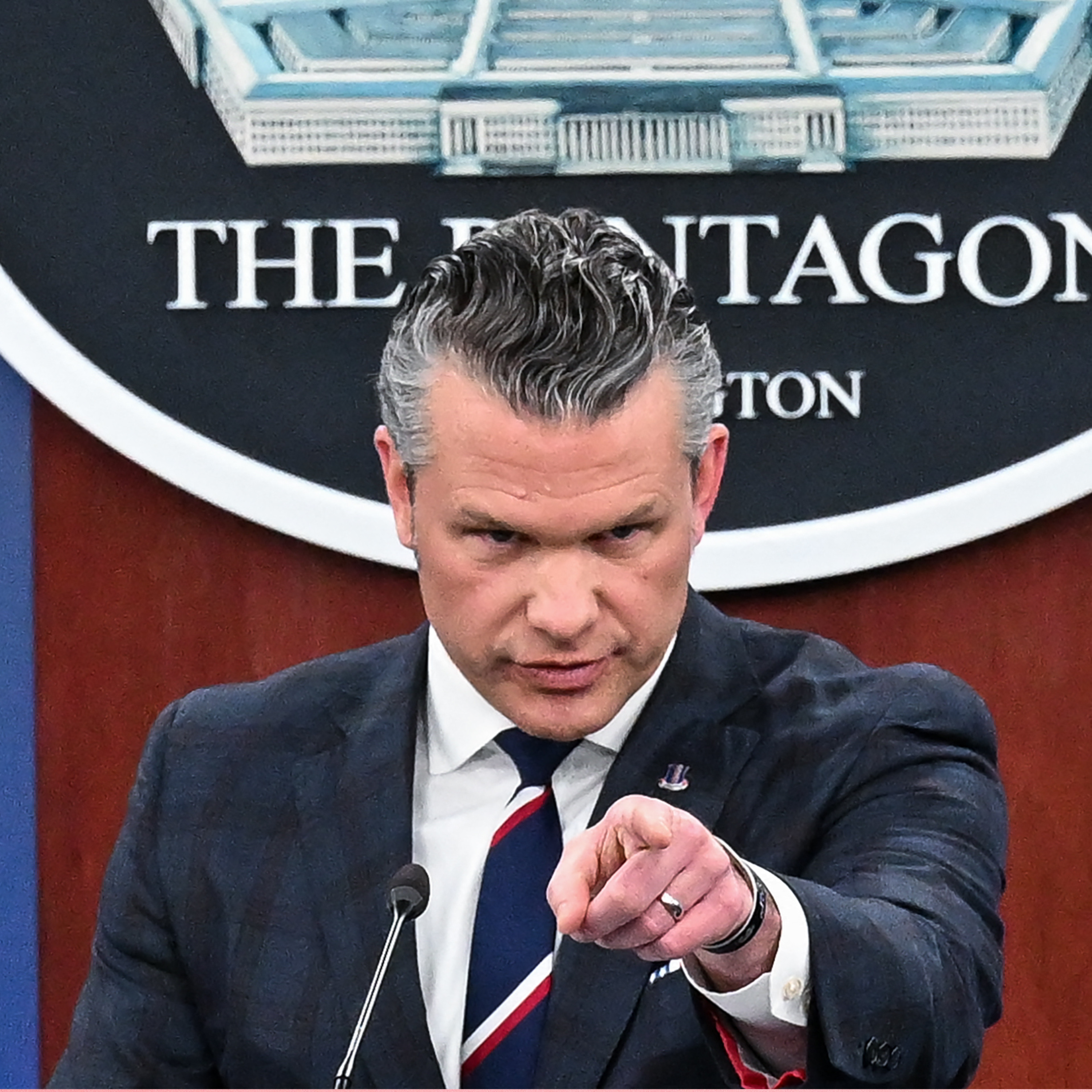
11:05You know, a RFK Jr. who's a conspiracy theorist who doesn't believe in the measles vaccine. I mean, what, you know, he puts him in charge of American health. I expect you to name Hegseth first. I was getting to him. You know, a Fox News host who's interested in the jawlines of people in the military, as opposed to the U.S. military being a huge international operation with two million people in it and massive spending and complicated decisions to make. and you put someone like that in charge, I mean, this is deeply unserious. And so maybe at some point, even Trump's most dedicated followers begin to understand that.
11:48So let's say the Democrats hypothetically take back the House and or the Senate. Do you have advice to them, given your understanding of history and analogs in other countries, of how you do that in a way that constrains the president to the extent necessary, but with an eye towards 2028, which is the real ballgame in many ways, because it's for the presidency. In some ways, is it a blessing for Democrats to get power purely in purely political terms, or is there also risk there? There are risks. I mean, there are risks that they get bogged down in investigations that don't interest people, you know, their risks that they waste time.
12:35I mean, what I think seems to me that what they need to do is be strategic. First of all, they should understand they need to move fast. And the bonus or lift they'll get from a victory won't last forever. And so they will need to do things very quickly. And they will need to do two different kinds of things at once. And on the one hand, yes, they need to do oversight. And they probably need to pick a handful of particularly egregious cases where they examine the president's, you know, whether it's his personal behavior or his administration's behavior. I would pick Venezuela. I've just been there and just written about it.
13:11It's a kind of enclosed case. And the other thing they need to do at the same time is look, you know, is find some things that they can do to help Americans immediately, whether it's looking at healthcare, whether it's looking at restricting the war. I mean, they have to look at something that will give people a sense that they're interested in what happens to ordinary Americans. And those are connected, but they are sort of two different processes. So they'll have to walk and chew gum at the same time. Yeah. You said earlier, I always have this view that Americans don't necessarily care so much about things that go on outside the country.
13:53So it was interesting that you picked Venezuela to put at the top of the list. Is that something that will capture Americans' imagination or not? I'm looking for discrete projects. Maybe the ballroom is one and the donors to the ballroom. You know, Venezuela interests me because Venezuela is constantly portrayed by the president as this huge success. And actually what we've seen happen in Venezuela is they develop this very opaque, possibly corrupt oil deals between the United States and cronies associated with the Maduro regime. And focusing sunlight on that and how it's worked is just an example.
14:32And you could look at many examples. You could look at the negotiations in Russia. You could look at numerous business deals that have been done around the world from Kazakhstan to Latin America. But you need to pick one of those deals. You need to pick, in addition, one of the – maybe it's the ballroom – one of the schemes that the president has set up to collect money in exchange for some of his personal projects. You need to examine those and go through the details of them so that people understand what it is, what are the mechanisms. You know, as I said, there are many of these stories. There are too many to choose from.
15:10They'll need to choose a few that are particularly symptomatic and can be explained easily. Right. But then so they choose a few. Let's say they choose one or two. What's the end result of that? If Hakeem Jeffries called you and said, should we move to impeach the president or not, do you have a view on that in the abstract? So I would only impeach the president if I was sure that there were enough votes in the Senate to convict him. Good. Yes, I agree with you. I mean, you could obviously impeach him on almost, you know, there are multiple things he's done which are impeachable and fences. But that's not the point.
15:40The point is that it has to be seen as whatever they do, it has to be effective. And they have to show that they've achieved something. Yeah, I mean, you use the term bogged down. And I can't think of anything, particularly given the history and the track record and the failures of the past, to go down that same road again. Putting aside whether or not you think it's appropriate constitutionally, and it probably is, and appropriate ethically and morally, it probably is. But it's a political exercise, so politics has to be part of the determination too. It has to succeed. Has to succeed. And not take the entire two years plus.
16:15You can start a proceeding like that, and it could easily not conclude until after he's done with his second term. Well, you know, I mean, there will be further investigations at the end of the term as well. But the point is, they need to do things that will have a beginning, a middle, and an end, and that will show some result. And by the way, that's very difficult when you control Congress, but not the executive. Yeah, no, 100%. And there's another, I think, complicating factor here, and that is, which I think is something I think about when we talk about the Justice Department, not in 2027, but in 2029.
16:54How do you engage in accountability in a way that doesn't overly give grist to the other side to say you're taking revenge? Do you have any thoughts on that? Well, clearly you don't prosecute people on false pretenses, which is what this administration is doing. You know, you don't look for— They shouldn't indict Kash Patel three times? You know, they should look for actual crimes, and they should look for incompetence. I mean, so if they're going to look at—I mean, this is not about the leadership, but if they're going to look at what's happened to the Department of Justice in here, I'm sure you know more than me.
17:34But they're going to need to look at who was hired in these years. Are they people who are qualified? What happened to qualified people? Why have so many people resigned? What happened to them? I mean, they need to look at the institution as a whole and how to fix the institution. It's not just about, you know, it's singling out a couple of people. But this is a job for the next few years. This is not something they're going to do in the next six months. I mean, it may also be, I mean, this is, you know, and again, the lot will depend on the exact result. that the Congress and maybe the next president need to look at putting into law some things that we all thought were, that turned out to be norms.
18:16In other words, you know, I mean, there are laws about not firing civil servants for political reasons, but we need to, obviously, we need to make them tougher. There are laws against, you know, public officials having conflicts of interest, but clearly we need to make those more harder as well, and we need them to include the president. So looking at also legislation that will fix the system and make sure this, you know, this kind of extreme corruption doesn't happen again. I mean, that's a longer term project, but it's really, really important. Right. And you might as well get started now. Yeah.
18:51I mean, you wouldn't want the next president to say, well, Trump got away with all that. So now I can do it, too. And, you know, I can enrich my family and I can set up my own cryptocurrency company and let, you know, the Emirati shakes invest in it. I mean, so we, you know, we have to make sure it just can't happen again.
19:12I'll be right back with Ann Applebaum after this.
19:20Are you a pet owner? Every six seconds, a pet owner in the U.S. gets hit with a vet bill over$1 ,000. Always an unwelcome surprise. That's where Fetch comes in. Fetch is the most complete pet insurance for dogs and cats, according to consumeradvocate.org. You get paid back up to 90 % of vet bills at any vet in the U.S. and Canada, with claims paid back in as little as two days. Go to fetchpet.com slash save right now for your free quote. That's fetchpet.com slash save.
20:00Hear that? That's me in Tokyo learning to make sushi from a master. How did I get here? I invested wisely. Now the only thing I worry about is using too much wasabi. Get where you're going with SPY, the world's most traded ETF. Getting there starts here with State Street Investment Management. Before investing, consider the fund's investment objectives, risks, charges, and expenses. Visit statestreet.com slash IM for perspectives. containing this and other information. Read it carefully. Spy is subject to risks similar to those of stocks. All ETS are subject to risk, including possible loss of principle.
20:28Alps Distributors, Inc. Distributor. Kate holds the key to every brand asset your business has ever made. She's the only person who knows the difference between teal, turquoise, and the correct company blue. But she's going on vacation. Luckily, before the company falls into design disarray, you realize you can put Kate into Canva. Save every color, font, and logo to a brand kit everyone can access. And Kate can vacation happily in the knowledge that no one will ever use Comic Sans. What will you canva today? So I'm not going to ask you to predict, as we agreed, an election result. And I know that you're not Donald Trump's therapist, at least not lately.
21:10But given your training and expertise, as we would write at the beginning of every FBI affidavit, based on your training and experience, Ms. Applebaum, if Donald Trump goes into the final two years of his second term, having lost the house, let's say for this hypothetical, the house and the Senate, he really is not going to try to run again because he can't. Um, he's in his eighties. I'll give you the binary choice, but you can pick something in between. Is he going to become self-constrained and more cautious? Is he going to remain the three choices? Or is he going to remain the same guy that he has been?
21:46Or is he going to become even more erratic and, um, unpredictable? So I'm afraid that if you look at the historical record, if you look at what happens to autocratic figures and leaders at the end of their term, and you can go back to the Roman Empire and it starts then, you see that as they begin to fail and as they begin to see the end, and in some cases it's because they fear death and they fear everything they've done being eradicated. They become more paranoid. They become suspicious of people around them. They become more resentful of the people who elected them, who don't love them anymore.
22:28They sometimes do very erratic things. Sometimes they lose inhibitions. They lose inhibitions. So the uninhibited, if you're at the apex of uninhibitedness, What does losing inhibition mean? You could start a war. You could unleash your anger. Another war. You could unleash your anger on Americans. You could—I actually almost—it's funny. I'm trying to think about this now, and I don't want to even speculate because I don't want to think of the awful things that could happen. But, I mean, look, he will be a very—you know, he will be—if he loses badly, he will be angry. He will be resentful. He will be, he will want revenge.
23:12He'll want revenge on Americans. He'll want revenge on the people who defeated him. You know, he'll start talking. And then, of course, we haven't even talked about how he might react to the election. I mean, he may say it was rigged. He may not accept it. I mean, I know that people are going through those scenarios right now. I mean, it's going to be even worse for him because he won't have a chance. There is no upcoming moment of vindication for him or comeback. He's done his comeback. and and also his only play which is to just be himself which is problematic and and worn thin um is also not he'll have you know he likes to say he don't you don't have the cards he said that to zelinski you don't have it he doesn't have any cards left so a guy like him who doesn't have any cards left um i agree with you you know it's interesting we were discussing the kinds of things that the Democrats may investigate and look at.
24:06And we're thinking about things that have happened in the past. There may be an ongoing roster of things, given the behavior that you say is fairly predictable, for them to be looking at it real time as they're unfolding, as opposed to things that have happened already. Is there precedent for that? There's a precedent for radical change. I mean, remember another thing about Trump is that he's, because he's old, he is physically declining and in some way mentally declining. I'm not a doctor and I can't explain exactly what's happening, but he's, he is already more uninhibited. You know, he's saying very strange things at his, his, you know, his rallies about men's bodies.
24:48I mean, I don't think he would have said that two years ago. He's, he, you know, so you can, you can, you can see the physical decline as well. And that will also affect how he, um, how he behaves, how he thinks, how he acts. And it also will affect how people around him behave. Well, they also start to, because, you know, politicians are a transactional bunch generally. Um, not only that. And I mean, do you see any, um, harbingers of defections based on some of the things that have been happening in the last few weeks. So you'll have a lame duck president who will, you know, in my hypothetical, will have been shellacked in the midterms.
25:29People are going to want to think about who the next president is going to be and what the world's going to look like after Trump. That's going to be another thing that weakens him. Yeah, no, people may well leave. Remember, you know, people may well leave because they want new jobs. You know, people aren't going to want to stick around. Well, I'm talking about Republican senators who leave the fold as opposed Oh, I see. I see. I thought you meant people leaving the administration. Possibly. I mean, you know, also as his agenda becomes more unpopular, and especially if the midterms go very badly for them, then they'll begin to understand that the future is not the MAGA movement and the future is not following whatever Donald Trump does.
26:08And that people have been rewarded for defying him or for arguing against him. And so, yes, you would then, I mean, so, So, I mean, we didn't, we, you know, this is, this is, of course, the most profound effect of the midterms could be a change in the mood in Washington and, and more broadly, as people understand that this is, this was not, you know, that the 2024 election was not some kind of seismic shift that would make America different and, you know, never the same again. but it was just another election and it was an era and it's coming to an end. And then you'll begin to find people looking for the next thing, looking for the next possibility, looking for the, you know, what are the better ideas?
26:54It's an opportunistic place. Very. So lots of things have been damaged that you write about and think about very deeply, including alliances, including partnerships, including our reputation, including the degree to which people around the world rely on us, also internally in the United States. I know you're thinking about these things as you write and talk. Are there certain things that you worry are beyond bringing back, whether they're particular? So for example, USAID. Is that something that can be brought back or not? The prior strength of NATO as a group of partners who relied on each other and trusted each other.
27:35Can that come back? And to the extent any of these things, you can pick anything, either optimistic or pessimistic. How much effort and work and time will it take? So the main thing that has been lost is the perception of the United States as a reliable partner. And as someone who, you know, goes through different eras and there's, you know, this kind of president and that kind of president, but that there are predictable elements to your relationship with America. And this is something that our very closest allies have felt the most strongly, you know, Canada, some European countries, some Latin American countries.
28:11You know, the idea was that, you know, whatever happened, we could count on having a decent trading relationship with the United States because everybody understood that it was mutually beneficial. Whatever happened, we understood that U.S. understands that European security is part of American security. and, you know, and so we, you know, some element of it will always be there. This is now gone, and actually I have to say a lot was destroyed just in the last two or three weeks with this strange Trump turn towards Putin just in the last few days. That really shocked people. I mean, I know nobody should be shocked, but it was the abruptness of it and the cruelty of it, you know, that suddenly Trump started blaming the Ukrainians who were, you know, who are still the ones under attack and still absolutely refuses to put any pressure on Russia to end the war.
29:02It shocked a lot of Europeans who already expect things to be very bad, but somehow this was even worse. And so rebuilding that sense of us as a reliable partner, I think that's going to be really difficult. And I don't think it's going to happen soon. Well, that takes time. You can't do like a tangible thing on a Tuesday to recover that, right? That just, it takes time. No. And there are things like, you know, U.S. technology, people just treated U.S. technology as something that was neutral. You know, America invented it. We all use it. It's fine. I mean, now people are worried that U.S. technology is, these are hostile products run by hostile companies.
29:42You know, so this was, this was the lesson of Elon Musk playing around with Starlink in Ukraine. So there are multiple European governments were looking at using Starlink as part of their defense systems and now don't want to use it because it's unreliable. And that affects all kinds of U.S. businesses and companies. So there's a world of, you know, there were a lot of things people bought from us or did with us automatically that people will now think twice about. And I don't think that will go away. I mean, there are some elements of the alliance you'll be able to rebuild, but that automatic assumption that American allies had, that your American technology was, you know, was automatically the best thing to have, you'll see that that won't come back.
30:26Are there some relationships that you think are more easily mendable? Like, I don't know why I think this, because I don't have any real expertise, but because they're close, Canada. Can we fix our friendship with Canada more easily than with other countries? Canadians are more shocked than almost anybody. I mean, they're and more horrified and surprised than anybody because they, you know, they automatically thought of themselves as a kind of permanent partner of the U.S. for obvious geographic reasons. I mean, you could do, it would be such a relief to the Canadians to just trade normally with America again, that you could fix a lot just by saying, let's go back to where we were five years ago and, you know, go back to the trade arrangement that we had.
31:13Sounds trial. We should give them some more sports franchises, maybe. We should give them some more sports franchises. Bring some baseball teams back. Yeah, maybe that's the answer. You can do that on a Tuesday. It's a concrete thing. It will take a long time for Canada to feel comfortable with the United States again, but you could make a lot of Canadians, you know, at least want to take holidays in Florida again if you just fix the trade mess. And the trade mess is completely self-created. It's nonsense. It's created by the United States for no reason. Yeah, I feel like the lack of an ocean makes kissing and making up easier.
31:46But, you know, that may be naive. Maybe. And also Canada isn't as dependent on us for security. And so some of the anxiety that you have in Europe, you know, Canada is not, well, I should say they are dependent on us, but they're not imminently under attack, whereas Europeans are. Other than by us. So this makes the, exactly, well, hopefully that's not going to happen, but this makes the situation in Europe feel more acute and people are now much more aware of the dangers of American technology. I mean, the Canadians don't have that security pressure. So maybe, yeah, maybe they would come back.
32:22Do you have the following worry? We were talking about the last two years of the Trump presidency. And again, in the scenario in which, well, I guess in any scenario, but certainly in the scenario in which legislature changes party, does that present any particular vulnerability as perceived by our adversaries of tumult and chaos and even greater polarization and unpredictability of Trump that they can exploit? Do you worry about national security in the last two years for those reasons? I mean, it's not only because of Congress. It's because of Trump as a lame duck. You know, Trump feeling like he doesn't care anymore what American people think anymore.
33:03And by the way, I think that also affected his behavior towards Russia. You know, Putin is unbelievably unpopular. I saw some statistics that show he's sort of 3 % of Americans, 4 % of Americans like Putin. Zelensky is very popular. He's more popular than Trump, actually. And so, you know, what you saw was Trump saying, I don't really care what Americans think. I don't care what my party thinks. I don't, you know, I don't care what Congress thinks. I'm just going to do this thing because I like Putin or whatever, whatever was his explanation to himself. And you'll see more of that. So you'll see more and more of him saying, it doesn't matter what Americans think.
33:37I do what I want. And this, and this will be a source of chaos, no matter who controls Congress. But you don't, do you think that, that, that China, for example, can take some advantage in this lame duck period that it wouldn't be able to take? They're doing it already. I mean, this is, you know, we're already, we're already at the phase where, uh, where, where rivals of the United States are using this moment to shore up their own interests, to convince people that America is unreliable. And so, you know, they should be, they should be allied more closely with China. I mean, this is already happening.
34:15I mean, the, the, the loss of U.S. status is already, you know, it's already with us. And of course, you're right that in the last two years, it could get worse, but it's, you know, I, it's, it's, it's, it's well on its way. So I want to ask you in historically when, when a, and Trump, I think does not have any pure precedent or analog for, and certainly in this country and maybe not anywhere. When someone like that leaves the scene peacefully, right? We have a lot of people who have left the scene of his kind violently. When someone like that leaves the scene peacefully, what is, is there some trend of what follows from, from the party or the cohort that that person comes from?
35:00Is it like Trump light? Is it Trump modified? Is it Trump double down? Does history teach us anything about where the Republican Party goes after Trump? This is going to be a very unsatisfying answer. I mean, it sort of depends how he leaves and under what circumstances. If he spends two years as a lame duck president doing crazy stuff and unpopular stuff, then the party will abandon him. And you will see people say, I don't know whether they'll go back, try to reinvigorate, you know, Reagan Republicanism, whether they'll find some new version of who they are. But then you'll see people abandoning him.
35:37You know, so, you know, people don't want to. A defeated and failed leader isn't going to inspire people into the future, at least not most people. And people who want to win elections will look for something new. If he, you know, if the Republican Party did manage to win the midterms, if he somehow left office with a feeling of, you know, that he'd achieved something great, you know, then you would see the MAGA movement continuing on. So I think it's really the fate of him and what happens to him that also will shape the future of the Republican Party. Right. So my question was about the short term.
36:13In the longer term, I wonder if, you know, memories fade and the fatigue goes away. and you can imagine, I know it's hard to imagine, uh, listeners, but you might have a crappy democratic president in the future, you know, suspend your willing disbelief about that. Uh, at which point it, let's say that's 12 years from now, people will fondly remember Trump. They'll forget the craziness. They will forget a lot of the bad things. They may even forget about gas prices or maybe not. And, and do people like Trump who had an outsized influence on not just politics, but also culture and attention and the psyche of the country, just maintain a gravitational pull into the future because they were so consequential?
37:01I mean, it depends how the people of the future talk about him and how history is written. Some people are going to miss him. Some people will miss him. And there's another weird thing that happens, which is people are always nostalgic for the time when they were young, you know, whoever was in charge. And I've heard this from people. So you think younger people when they're older will remember, you know, that guy at least talked straight to us. Ah, but we were so young then, you know, when I was 20 then, you know, so, I mean, that sounds crazy, but I mean, I've heard people who lived in very ugly societies say that about the past.
37:35In Poland, people would talk about martial law, which was objectively a terrible period. And they sort of remember nostalgic things about it. But, but no, you know, I mean, I, you know, I can't, because I can't say what he's going to do over the next two years. I mean, if we were just to judge on these two years, I would say he'll be remembered as a disaster. I mean, I think the, you know, and he's going to leave these grotesque monuments, you know, he's destroyed the White House, you know, he's, you know, he's talking about building a hideous arch, you know, he's destroyed the Kennedy Center.
38:10I mean, he's sort of, you know, he's leaving monuments. Well, those are things we can bring back. The Kennedy Center, we can bring back. The ballroom is going to be a big problem. It's going to have to be knocked down. Anyway, another subject. But he's seeking to leave his imprint in various places. And I think actually it may wind up reminding people of how unpleasant it was when he was president. I mean, another thing that will also affect how he is remembered is related to your previous question is, you know, what does his party decide? You know, if his party seeks to get away from him, if they reject his legacy, then you'll have him remembered in a different way.
38:51So, you know, history will be written five years from now and then 10 years from now and then 20 years from now. And so each time it will, I agree that it will look different. Although I find it hard to, with the scale of corruption and the numerous bad decisions, I find it hard to imagine people being able to explain this period in American history as being successful. On that note, Anne Applebaum, thank you so much for coming back. We'll look forward to having you after the elections and many times thereafter. Thank you. In a segment exclusively for paid subscribers, Anne Applebaum shares her reporting on what the far right calls civilizational allies.
39:36This is what they're replacing. So the old idea that America was a nation of values. To try out the membership, head to staytuned.substack.com. Again, that's staytuned.substack.com. After the break, I'll answer your question about the legality of live streaming and execution.
40:02Ask yourself, what are your best people spending their time on right now? Expense reports, receipt chasing, month-end close that takes weeks. You become what you spend on, and that's not what you're building toward. Brex is the intelligent finance platform that eliminates that work before it starts. AI agents that handle the manual stuff automatically so your team can spend their time on what actually compounds. It's time to get Brex AF. Learn more at brex.com slash AF.
40:58earn up to 10 % back on hotels. And in 2025, Engine customers save more than$300 million on travel with zero booking fees, no contracts, and no BS. More than 1 ,000 businesses join Engine every month. Join them and get$500 when your business signs up and starts traveling at engine.com slash Vox. As soon as autumn rolls around and you swap your iced lattes for pumpkin spice, that's your signal to start thinking about the holidays. The decor, the gifts, the shopping lists, but more importantly, the holiday treats. Cheesecakes, cookies, is there anything better? And when the recipe calls for cream cheese, there's only one option.
41:48Philadelphia, the original cream cheese, made with fresh milk and real cream. This holiday season, whether you're going all out or keeping it simple, make it really Philly good. Find your favorite holiday recipe at creamcheese.com.
42:10Now let's get to your questions. This question comes in an email from John. Is live streaming and execution legal? Would any part of it be unconstitutional? Well, John, that's a great question, and the answer is especially complicated in the case of Nidal Malik Hassan. That's the person in question here. So just to remind folks, in November 2009, Hassan shot and killed 13 people at the Fort Hood Army base in Texas. In 2013, an Army general court-martial convicted him of 13 counts of premeditated murder and 32 counts of attempted premeditated murder. he was sentenced to death. I don't think there's any doubt or dispute that Hassan's actions were an abomination, even evil.
43:00President Trump approved Hassan's execution by firing squad following a recommendation from Defense Secretary Pete Hegseth. Hegseth then announced that the execution would be live-streamed, saying that people need to understand that there are, quote, serious consequences, end quote, for such crimes. One could argue that people already know that without a live stream. In any event, the live stream announcement that prompts your question drew bipartisan condemnation. Senator Tom Tillis of North Carolina said that he supported Hassan's death sentence, but called live streaming the execution beyond disgusting.
43:37Lisa Murkowski of Alaska said this, there is no need to live stream any execution, including this one. It's useful to understand how America's attitude towards public executions has evolved over time. At one point in our history, public executions often drew crowds of thousands. Authorities at the time, this is a while back, viewed these hangings as a way to deter crime and teach the public a moral lesson. But slowly, over the course of the 1800s, crowds attending public executions stopped treating them like solemn events. Executions started taking on a carnival-like atmosphere, with merchants selling souvenirs and alcohol.
44:19Crowds often became unruly, and there was something of a bloodlust in the audience. In response, authorities began conducting executions in private, with limited audiences. and that has been true for a very long time. By the late 1930s, almost a century ago, public executions had largely disappeared in the United States. What is often considered the last public execution in the country was the hanging in Kentucky of Rainy Bethia, which was in 1936. So you might think that some or all of the support for public executions would come from people who support execution generally. But that's not so.
45:02By the late 1970s, some journalists and death penalty opponents were pushing to televise executions. Their argument was that the public should see what the government was doing, and they believed that witnessing an execution would actually turn people against capital punishment. For example, in 1984, Texas prisoner James David Autry asked to have his own execution televised. He himself hoped that watching him die would generate opposition to the death penalty, but his request was denied. In 1988, Senator Mark Hatfield, an opponent of capital punishment also, proposed allowing television coverage of federal executions for much the same reason.
45:46His proposal was also rejected by the Senate. Then in 1993, the Justice Department implemented federal regulations for executions. One provision expressly prohibited, quote, photographic or other visual or audio recordings of the execution, end quote. DOJ justified the regulation saying this, quote, The Department values preserving the order, privacy, and solemnity of the proceeding more than these speculative effects, end quote. That DOJ rule faced a challenge in 2001, at the time of the execution of Oklahoma City bomber Timothy McVeigh. An internet company called Entertainment Network sued for permission to film and live stream his execution.
46:30They argued that the recording ban violated the First Amendment. But that request also was rejected, this time by a federal district judge in the Southern District of Indiana. Now, what complicates your question a little bit is that Hassan's case wasn't brought by DOJ. It was not brought in a civilian court. The DOJ regulation governs federal civilian execution not military courts martial. Now the army has its own rules limiting who can witness an execution, including a prohibition on witnesses under 18. A live stream, for example, would raise questions under those rules as well as under the Eighth Amendment's prohibition on cruel and unusual punishment.
47:13Also, Article 55 of the Uniform Code of Military Justice expressly prohibits the military from inflicting cruel or unusual punishment. and an inmate could argue, given current circumstances and current standards, that publicly broadcasting an execution adds an element of humiliation and degradation to the punishment itself. But whether a live stream would violate either provision is an unsettled legal question. And for the time being, at least, it will remain unsettled because on October 15th, following that bipartisan backlash, Trump announced on social media that Hassan's execution would not be live-streamed.
47:53He posted that he thought streaming the execution, quote, might have been a strong deterrent for the world to witness how America deals with terrorists and scum, end quote, but that many very good and well-meaning people would rather not watch him die. I am one of those people.
48:12So lots of folks have been asking me, both in email and just generally in the world, how I'm feeling at this moment. I'm recording this now on Wednesday morning, six days before the election ends, the midterm elections end. Already millions of votes have been cast and tens of millions of more votes will be cast. Now, usually if you listen to the podcast on a regular basis, when I talk about how I'm feeling about something, and this has been a feature of the last decade or so, I cite to that very, very important defining film, Gross Point Blank. And there's the scene when the John Cusack character is talking to his therapist, Alan Arkin, who asks him the question, how are you feeling?
49:00And Cusack says, I feel uneasy, man. And uneasy is the way that I can, I think, describe how I felt for quite a long time. Not despair, not hopelessness, like some people have felt, not a total kind of fear about what Donald Trump is doing to the country, but uneasy. And I'll tell you, as we approach November 3rd, I will be upgrading my condition from uneasy to cautiously optimistic. Now, as you heard, Ann Applebaum was loathe to predict what's going to happen. I too am a little bit superstitious. I'm not predicting victory in both the House and the Senate for the Democrats, but I think that's a reasonable possibility.
49:43And so without jinxing anything, I am hopeful and, as I said, cautiously optimistic that there will be a big win for Democrats, which more importantly than the Democrats getting some power would be a symbol of repudiation and rejection, hopefully overwhelmingly, of Trump and his tactics and his staff's tactics and his cabinet's tactics and also their values. It's inherently dangerous to rely on polls. Some polls have been wrong, but I did see a political scientist on television, of some note, point out that as a matter of fact, it is true that the polling was off in 2016 when Trump won, in 2020, and I think also in 2024.
50:29Those were presidential years, and Donald Trump was actually, not just metaphorically, on the ballot. But the polls were pretty much dead on, according to this expert, during the last two midterm elections, 2018 and 2022. That gives me some optimism that the polling numbers that are pretty gigantically in favor of the Democrats are accurate. also the fact that the Trump folks feel the need to campaign in deep deep deep red states like Kansas and Mississippi I think is a further sign that not just the polls but the the mood you feel and Applebaum referred to the mood of the country you might refer to it now as is the fashion the vibe in the country all I think support the conclusion that the polls are right and if you think about it, I've been saying this for a couple of months now.
51:22You've got the war in Iran that nobody wants and that Donald Trump promised he wouldn't do. You've got inflation as a result of the tariffs, which nobody wants. You've got the particular impact of inflation on the cost of gas, on the cost of diesel, which nobody wants and which Trump minimizes and actually mocks concern about. You have his breaking of his promise that I think was important, not just to his base, but probably to a lot of independents about full release of the Epstein files. And then you just have the natural political human dynamic of fatigue. And by the way, whether you like him or not, I think that Donald Trump can safely be described as wearying and fatiguing more than any other politician in modern times.
52:11He is the greatest thief of our attention that has ever been elected to the presidency. And people get not just fatigued, but fed up. On top of that, you look at his disproportionate focus on what? On the ballroom, on the arch, on a plane he got from Qatar. These things don't comport with the trials and tribulations that people are feeling in this country. So I'm cautiously optimistic. So folks, friends, listeners, just be aware that I've gone out on a limb with my cautious optimism self-description. Please justify my optimism by doing that most important thing that a citizen can do in the United States of America.
52:55And that is to vote. If you have early voting in your state, go vote. If you haven't voted yet, have a plan to vote. If you have friends and family members who you know are supportive of what we're talking about, make sure they go vote. Maybe offer them a ride to vote. Make sure they have a plan to vote. Because the slight risk is if people are overly optimistic, that's why I said cautiously optimistic, if people are overly optimistic, they will sometimes figure their vote doesn't matter because my guy's going to win. and I don't need to go to the polls because everyone is saying the Democrats are going to win.
53:35Well, there's no such thing as a self-fulfilling prophecy in this regard. So no matter how optimistic you are, notwithstanding what I'm saying about optimism, act like an ultimate pessimist and make sure that you get out there and everyone you can persuade to get out there does too. And by the way, voting at this moment, whether it's early voting, mail voting, or in-person voting, is more than it ever has been before, an act of patriotism and honor of your citizenship. And why is that? Because as you know from listening to me every week, and many of you listen to the Insider Podcast, I do with Joyce Vance every week, there has not been a time in modern American history where one side has tried so hard to suppress your vote, to denigrate your vote, to overturn your vote, to distort elections, to lie about elections, and dilute that right you have in this country to choose your leaders.
54:41And in that context, when they are fighting hard as hell in Alaska, in California, and in so many other places in this country, to make your vote not count, the best thing you can do to repudiate that un-American, unpatriotic, unlawful, unconstitutional behavior is to proudly go to the polls, cast your ballot, and wear your sticker. By the way, the other thing you know, if you listen to the podcast and you hear me speak about public servants and you hear some of our guests who also write about and celebrate and honor public servants like Michael Lewis did a few weeks ago and many, many others.
55:22Let me just, on the eve of the election, before we have results, before we see if anything goes wrong, before the recriminations begin, just repeat my respect and admiration and give thanks to the countless people who make our elections work, who man the polls, who count the ballots, all of which make democracy possible. And when you vote, maybe you pat them on the back and give them a thank you also.
55:54Well, that's it for this episode of Stay Tuned. Thanks again to my guest, Anne Applebaum.
56:02If you like what we do, rate and review the show on Apple Podcasts or wherever you listen. Every positive review helps new listeners find the show. Send me your questions about news, politics, and justice. You can reach me on Twitter or Blue Sky at Preet Bharara with the hashtag AskPreet. You can also call and leave me a message at 833-997-7338. That's 833-99-Preet. Or you can send an email to lettersatcafe.com. Stay Tuned is now on Substack. Head to staytuned.substack.com to watch live streams, get updates about new podcast episodes, and more. That's staytuned.substack.com. Stay Tuned is presented by Cafe and the Vox Media Podcast Network.
56:49The executive producer is Tamara Sepper. The supervising producer is Jake Kaplan. The lead editorial producer is Gloria Thiel. The editorial producer is Claudia Hernandez. The audio and video producer is Nat Wiener. The senior audio producer is Matthew Billy. And the marketing manager is Leanna Greenway. Our music is by Andrew Dost. I'm your host, Preet Bharara. As always, stay tuned.
57:42without you having to do a thing or without you having to think about it. And Firefox is independent and backed by nonprofit Mozilla. Choosing it supports an internet that puts people first. So come back to Firefox. Visit Firefox.com to try it yourself.
58:01Kate holds the key to every brand asset your business has ever made. She's the only person who knows the difference between teal, turquoise, and the correct company blue. But she's going on vacation. Luckily, before the company falls into design disarray, you realize you can put Kate into Canva. Save every color, font, and logo to a brand kit everyone can access. And Kate can vacation happily in the knowledge that no one will ever use Comic Sans. What will you Canva today?
This week on the Stay Tuned with Preet podcast, historian, Pulitzer Prize-winning author, and The Atlantic staff writer Anne Applebaum joins Preet to discuss Trump’s declining popularity.
Preet and Applebaum delve into the chaos President Donald Trump has brought to the Oval Office and how he has damaged the United States’s reputation as a reliable ally. Plus, how Republican midterm losses could impact Trump’s last two years in office. They also examine the reasons behind waning support for Trump among his MAGA base. Finally, they discuss Trump’s legacy and what accountability might look like in a post-MAGA world.
At the end of the episode, Preet answers a listener question about the legality of livestreaming an execution. And Preet offers some words of wisdom ahead of the midterms.
In an exclusive segment for paying subscribers, Applebaum explains the far-right’s concept of “civilizational allies” and the unsurprising quality they all share.
Join the Insider community for access to bonus content from Stay Tuned and weekly episodes of the Insider podcast hosted by Preet and Joyce Vance. For a limited time, visit staytuned.substack.com/midterms for 30% off the annual membership price. Thank you for supporting our work.
Photo by Kent NISHIMURA / AFP via Getty Images.
Show notes and a transcript of the episode are available on our website.
Watch this episode on our Youtube channel.
Shop Stay Tuned merch and featured books by our guests in our Amazon storefront.
Have a question for Preet? Ask @PreetBharara on BlueSky, or Twitter with the hashtag #AskPreet. Email us at [email protected], or call 833-997-7338 to leave a voicemail.
Stay Tuned with Preet is brought to you by CAFE and the Vox Media Podcast Network.
Learn more about your ad choices. Visit podcastchoices.com/adchoices