Ask ChatGPT


 Stay Tuned with Preet
12 Nov 2026 · 1h 10m · 23 chapters
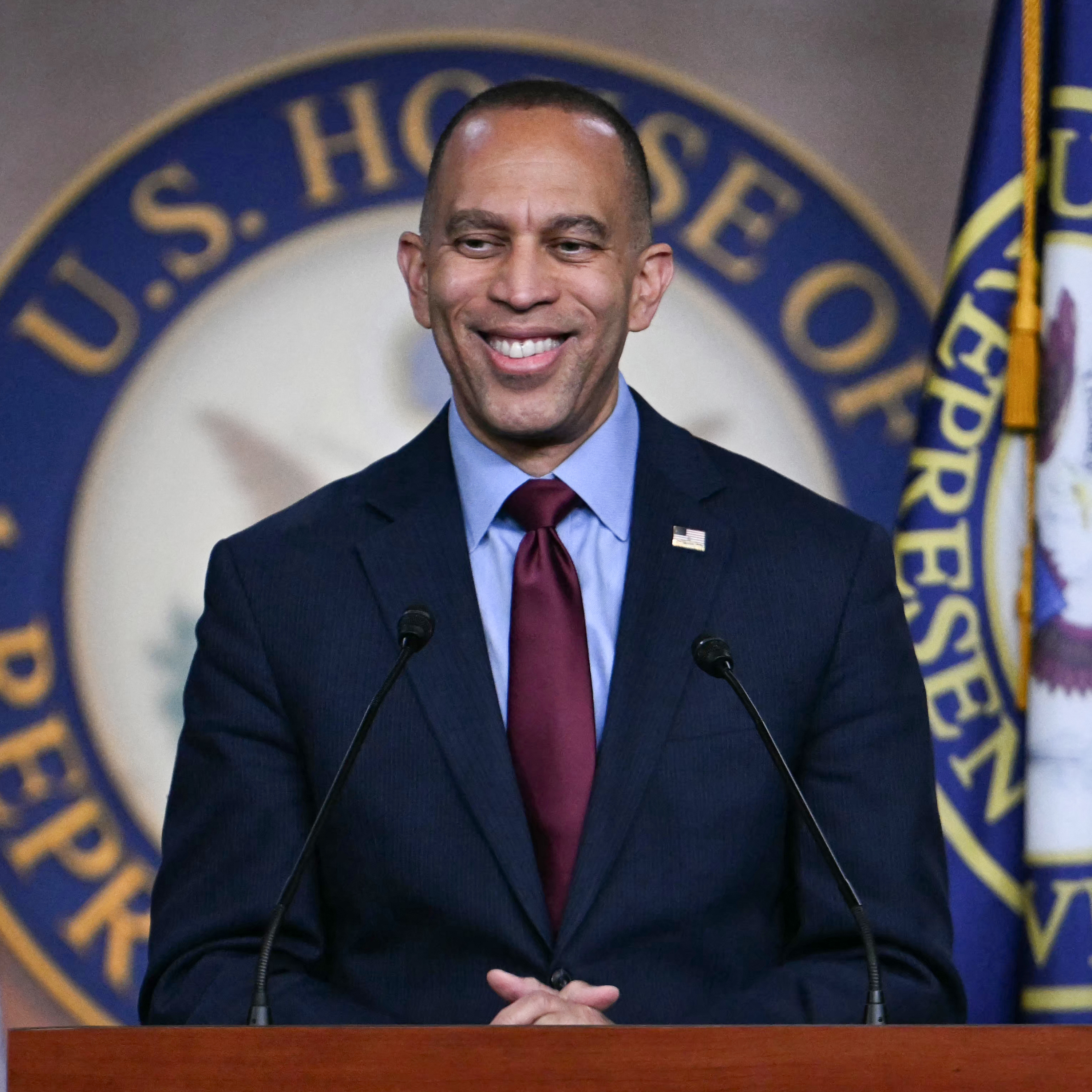
Post-midterm analysis of Donald Trump’s political future and what the election signals for both parties, including why the GOP lost, how Trump is responding, and what issues (especially the economy) drove voter behavior. John Dickerson also discusses party strategy for 2028, coalition management in Congress, and whether politics is shifting toward more “accountability plus affordability.”
John Dickerson is a journalist and author. He writes for The Atlantic, co-hosts Slate’s Political Gap Fest, and has written three books including The American Presidency. He spent 16 years at CBS News, moderating Face the Nation and co-anchoring CBS Evening News.
Trump’s “fifth avenue” invincibility narrative is weakened; fewer Republicans turned out than in 2024, though most Trump voters still back him. Blaming the loss solely on Iran is inadequate: exit polls show 66% said Trump made the economy worse, and voters felt the administration focused on other priorities. Trump’s response is to blame others (e.g., Susie Wiles, candidates, and “history”). Republicans face internal recalibration for 2028; Democrats must balance accountability with affordability.
“Iran” as a scapegoat tied to J.D. Vance; Trump appearing in House primary ads 66% of the time vs 3% in general ads (about 22-fold difference); references to “Epstein” ads and character issues; examples of past slogans like “It’s the economy stupid”; discussion of ranked-choice voting and primary-system faction incentives.
Written by AI. May contain mistakes.
Discussion on the implications of the midterm election results on Trump and the GOP.
“So it's been a week now since most of the election results have been in.”
Exploration of whether Trump's unwavering support among voters is changing.
“and that a share, so the share was smaller and a few number, I think 98 % of Harris voters voted for the Democrat, 91 % of Trump voters voted for the Republicans.”
Discussion regarding how Trump and his supporters are interpreting the election loss.
“now the question is who jockeys for the leadership of the party and how do they read the landscape?”
Examination of economic issues impacting voter turnout and Trump's policies.
“In other words, you say, look, presidents are elected to do tough things.”
Discussion on the legacy of political slogans and the importance of the economy.
“It's more, I think it generally all comes under the heading of doesn't keep the eye on the ball.”
Explore how economic factors shape voter expectations and outcomes.
“what are you going to say that's different from it's the economy stupid?”
Discuss past elections and their economic narratives, especially 1976 and 1980.
“their kids have a better life than they did.”
Analyze the Republican Party's dilemmas post-election and Trump's influence.
“It seems like there can be no greater shellacking than that.”
Discuss Trump's ability to remain relevant and potential paths to a comeback.
“I mean, those are very difficult questions for the Republican Party.”
Examine the internal conflicts within the Democratic Party and the need for cohesion.
“Well, he's still the president, incredibly powerful over two years.”
Learn about the difficulties politicians face in addressing their constituencies effectively after elections.
“And you should be able to do it eloquently in public.”
Explore how Trump's presence affected Republican election strategies and results.
“You know, I had never seen this stat before.”
Delve into the complexities of party loyalty and choices made by Republican members regarding Trump.
“Once you say he's gone too far, you call into question all your previous times where you didn't say he'd gone too far.”
Discuss how political compromises have shifted over time, especially in relation to Trump’s presidency.
“that I thought that partisanship was locked in more in America for a variety of different reasons than it appears to have been.”
Examine how Democrats are engaging voters and the significance of their messaging post-election.
“It came back this last election in huge, in a massive wave.”
Discussing whether a memo influenced the political responses seen post-election.
“if you're gonna win in Texas and Kansas, you have to all write a - Was there a memo?”
Analyzing the reactions of Republicans to recent election losses and the concept of grace in politics.
“Vance, who's in a kind of a pickle, for which I don't feel sorry for him at all because he created his pickle.”
Exploring the implications of war decisions on political outcomes and leadership responsibilities.
“Sometimes, you know, so Vivek, I see a direct line between the point you make here about how people are dying in this war.”
Debating the moral implications of political power and the expectations of leaders.
“Alongside that, you don't hear a lot of people talking about decency or necessarily acting decently.”
Examining the importance of shared facts and truthfulness in political discussions.
“Before the horses get out there, what does the job require?”
Discussion on the importance of hope and compromise in a functioning democracy.
“And I'm not quite sure how we do that, although I think the voters started that process in the most recent election.”
John Dickerson hints at insights about Trump's impact on unity.
“Could Donald Trump perversely be the great unifier of America?”
An exploration of the Justice Department's role in defending administration officials during impeachments.
“and whether a new Supreme Court justice could decide a case argued before they joined the court.”

Get the gist, explore an idea or ask about something said.
 Claude
On Stay Tuned with Preet, what are the key points of this episode?
Searching your listeningAutomatic transcript. May contain errors.
0:00Support for the show comes from Fetch Pet Insurance. If you have a dog or cat, here's something you need to know. According to Forbes, one in three pets will need emergency treatment this year. And every six seconds, a pet parent gets hit with a vet bill over$1 ,000. Vet bills don't have to hit that hard. Fetch is pet insurance that covers accidents, illnesses, and emergency visits, and pays back up to 90 % of eligible vet bills. No wonder pet parents give Fetch an excellent rating on Trustpilot. Get a free quote in minutes at FetchPet.com slash save. That's FetchPet.com slash save.
0:42Support for the show comes from the International Rescue Committee. You've seen the headlines. Wars, floods, and other crises that are forcing millions of families to flee their homes. Many are living in makeshift shelters without enough food, water, or medicine. You can help. The IRC is on the ground in over 40 countries, delivering emergency aid where it's needed most. For a limited time, all gifts will be matched to make an even bigger impact. You can give now at rescue.org slash rebuild.
1:19From CAFE and the Vox Media Podcast Network, welcome to Stay Tuned. I'm Preet Bharara. One of the fascinating things about this moment we are in for both parties is a kind of jump ball about what it means to have morals and values in politics, the role of power, why you have power.
1:43I'm Preet Bharara. My guest this week is journalist and author John Dickerson. He's a contributing writer at The Atlantic, co-host of Slate's Political Gap Fest podcast, and author of three books, including The Hardest Job in the World, The American Presidency. He spent 16 years at CBS News, where he moderated Face the Nation and co-anchored the CBS Evening News. He joins me to discuss what the midterms mean for America's political future. That's coming up. Stay tuned.
2:18John Dickerson, welcome back to the show. Thank you, Preet. It's good to be with you again. So it's been a week now since most of the election results have been in. So that's enough time to take a historical look back, is it not? And decide what all the lessons are? Is it enough time? I think it is. I mean, it is and it isn't, because some of the lessons will be determined by how each of the parties read them, you know? All right, let me ask you this question. and apologize for using terms that Democrats use in the way that they use it. Has the fever broken? The fever being the sort of view of Trump that he can do no wrong among a substantial enough portion of his supporters that he got reelected twice as president.
3:07There is some evidence that the fever has broken. What has certainly been repealed is the idea that he, Donald Trump, had repealed the laws of political gravity, that he could do whatever he wanted, whether it was with the courts or the public. And Congress was complete. The leadership in Congress was supine. And the courts were either not serving their role or they just couldn't keep up with the pace of his activity. There is definitely evidence in the exit polls that fewer Republicans turned out relative to Democrats and relative to Trump's performance in 2024. and that a share, so the share was smaller and a few number, I think 98 % of Harris voters voted for the Democrat, 91 % of Trump voters voted for the Republicans.
3:51So the share was smaller and those who did vote, a small number of them went over and voted for Democrats. So that suggests that at least among the Republican base, the hardcore Trump voting base, there's a tiny bit of change. But I think if you look at the focus groups and everything that happened after the election, there are still the vast majority of Trump supporters still support him and find other ways to explain the election. That's just not enough anymore. You wrote, I said the exact same thing on the podcast last week, which either makes us both brilliant or we weren't stating anything super intelligent.
4:26But you said in 2016, Donald Trump said he could stand in the middle of Fifth Avenue and shoot somebody and not lose any voters. In office, the line became a way of governing, do the unheard of and dare anyone to stop you, and you go on to give a bunch of examples. I think that's exactly right. But, you know, there have been prior occasions where we thought that the Fifth Avenue rule had been repealed and we were wrong. Is this different because he's a lame duck and it's, you know, it's been a decade? Yes. Although he's going to still operate as if it has not been repealed. I mean, you heard him, in fact, respond to the election by saying the polls are wrong.
5:02we had great rallies. If you define the world by the rallies, if you define the country by yourself, then you've narrowed it down to a position where nothing's changed. But because he's a lame duck, now the question is who jockeys for the leadership of the party and how do they read the landscape? And they'll read it differently than he does. That is something I want to get into in some detail with you, but you mentioned a couple of things. I want to ask you, what do you think we should make of the fact that some people, Trump supporters and Trump apologists, such as they are, are trying to explain the election results away.
5:44They can't say everything was wonderful. They have to blame something or somebody or some phenomenon. And my view is that it's a combination of things, all of which, or any one of which may have been sufficient. But there is a school of thought now, or at least a school of rhetoric now, that's suggesting it's just Iran. It's just Iran. And if it hadn't been for Iran, the president would have won. And that's a way of sort of, I guess, conceding what you have to concede, because he lost overwhelmingly, his people did. But cabining it to one policy decision. What do you make of that? Well, the first is a sort of flip answer, which is, other than that, Mrs.
6:24Lincoln, how is the play? I mean, he's the commander-in-chief. There's no more serious move. He came to office in 2016 by saying that George W. Bush should have been impeached for his conduct in the Iraq war. So this is no small thing. The chief architect of the It Was All About Iran is J.D. Vance, the vice president, who, in making his claim, absented himself from whether it was a good idea or not, which shows you, tells you something about J.D. Vance. But yeah, so Iran is an enormous thing, but it's not, I think, the whole bundle. Sixty six percent of voters in the exit poll said that Donald Trump had made the economy worse.
7:07That doesn't begin with Iran. That starts with tariffs. It starts and it is consumed by or is, I should say, characterized by the fact that the president's concerns were not the country's concerns. When it was brought to him that people cared about affordability, he said originally the word was a hoax. His closing statement was about the reflecting pool. And after the election, his next statement was about the ballroom. When he has been passionate, it has not been about the things that people are most worried about. And that goes back to the beginning of his second term of his administration. But if you had to put the best face on it, if you were organizing the political and communication strategy of the president or people who have put their lot in with the president, viewed in that light and grading on a curve, is the cabning of this to Iran such a bad idea?
7:58It's not. You could even you could imagine expanding it. In other words, you say, look, presidents are elected to do tough things. And Iran having a nuclear weapon is something that is an existential threat to the to America and the West. And I took if I'm now speaking in voice as Donald Trump and I made a tough call. And that's why you hired me. And a lot of people are hurting as a result, but they would hurt more and so on and so forth. And you can make that claim about immigration. You know, we saw in the polls that while the administration was supported originally by the president's crackdown on undocumented immigrants, the people eventually started to feel like he had gone too far.
8:37So you could imagine putting that in the same kind of language. You could even imagine trying to do that with tariffs. And it at least makes the case that whatever pain you've experienced at the ballot box is all the result of doing the job too well. The problem is that nobody would believe that. But that's the best case you could make. Are you surprised in any way with how Trump has responded to the shellacking? Yes, in the sense that when you lose so thoroughly, so far down into the deep shale of American politics, you know, this isn't just the House and the Senate. I mean, it's, you know, Democrats were winning rock, paper, scissors games at recess in middle school.
9:19I mean, it was such a thorough victory that in this case, it is a referendum on him and it associates him with the word he hates the most, which is that he is a loser. I mean, he is, and whether he admits it or not, his party is seeing it as this. His policies, his behavior made him an enormous loser. And so I would think his response would be more visceral than it has been. And I don't know, we haven't seen the full response, of course, but that has surprised me. But he has to blame someone. It's never himself. So who does he blame? Susie Wiles, who has been cast aside? Does he blame J.D. Vance, who's in a precarious position?
10:02Who? Yes, I think he blames Wiles. Where did all that money go that we spent out on the campaign? He blames the candidates. They weren't tough enough. They didn't go after Democrats enough. He blames the sort of the quirk of history. He's talked about that. It's like this weird rule he says, you know, when the - In the midterms. In the midterms, the president's party, you know, loses. So I think he has a series of different things that he can blame. In politics generally, how important is it that the person who engages in a certain policy, that that was against what they had said they were going to do.
10:43It's not necessarily hypocrisy so much as, you know, the fight against expectations. So for example, Bill Clinton survived, you know, a sex scandal and Trump survived a lot of allegations about sexual misconduct, but neither one of them put themselves forward as men of, you know, chastity and virtue. and people have said if Obama had had such a scandal it would have been devastating even if it was a milder scandal because he sort of did put himself forward as that kind of a person and the reason I mentioned it is obviously when we talk about Iran Trump basically said read my lips no more wars how much of an impact does that have is that the whole ball of wax?
11:28Well, it seems like there, when we, when we talk, when we look at the share of, of Republican voters or sorry, Trump voters, those who voted for him in 24, who did not turn out, there's plenty of evidence that that's part of it. It's more, I think it generally all comes under the heading of doesn't keep the eye on the ball. The ball was the economy and prices. And the president was concerned about everything else, including, and most especially Iran. And he never made the case for the war. I mean, And he has said, you know, we got to stop him from having nukes. But of course, that ran into the fact that he had already boasted about removing nuclear weapons or the capability for nuclear weapons from Iran a year before.
12:06I think one thing I would add to this thesis would be the Epstein business, because I think, as you quite rightly said, his voters have already priced in and waved away the personal character flaws, which if you covered politics in the 90s, is still head snapping. I mean, the entire book of virtues, which William Bennett wrote, was written as a kind of response to the moral corrosion of Bill Clinton. I mean, the entire party and its culture was built around this. But anyway, I think that did soften up the idea that when Epstein, when the Epstein promises were not fulfilled as far as his voters thought, And Republicans ran something like$56 million, sorry, Democrats ran$56 million worth of ads since Labor Day, including Epstein.
12:55I think that that had a, it not only was a promise not kept in the eyes of some voters, but it had a kind of ring of truth for a president whose character was not considered of sterling quality by voters. that his voters, they may have discounted it and not cared about it. But Epstein plus that character, I think probably played a role in this election. I want to, you know, I want to take you back to the, you mentioned the nineties, the sort of late eighties, nineties, and maybe even the early two thousands. And, and wonder if like certain things have changed or not changed. So you said it's the economy.
13:34I almost heard you say it's the economy stupid. Now for the younger listeners out there, they may not remember that the entire slogan of the Clinton campaign in 1992, which seems like, I think we're about the same age, for guys like you and me, it seems like yesterday. But that was, if I'm doing the math correctly, 349 years ago. It's the economy stupid. And I asked Rahm Emanuel, who may be running for president a couple of months ago when he was on the program, what are you going to say that's different from it's the economy stupid? And he basically said, no, that's still true. So that's a political, is that correct?
14:12Is it always the economy stupid? I think it is, but it's a shifting picture. Sometimes it's prices, sometimes it's employment. We are in a moment of great fragility because it's not just prices and we've got the employment scare with what artificial intelligence will do, perhaps changing employment in a way it's never been changed in American history with rapidity, with entire sections of jobs being wiped out. And you have the three roots to the American dream, or at least three key things, healthcare, education, housing, the inflation rising faster than prices. And so it combines into a problem, which is the next generation is going to be worse than this generation.
14:59There was for a long time, as you know, 90 % of Americans could expect to have their kids have a better life than they did. Now it's about 50-50. So the economy is the route into an enormous set of questions about, going back to your point about expectations, what do you expect in an American life? And who's on your side trying to figure out how to make life and opportunity more accessible for you as a person who doesn't have the benefits of having wealthy parents or being born into great wealth? I'm just trying to think in modern times, You're much more of an historian than I am. Has there ever been an election that really wasn't about some aspect of the economy?
15:39I know it changes. The only one I can think of, and tell me if I'm wrong, but I haven't gone through all the years in my head as you were speaking, 1976. Yeah. You're Nixon. I mean, yes. That was about trust. That was about trust, right? Right. But then immediately the next election, 1980, was maybe more about the economy than any other election that we've had. Yeah. Although, you know, and for good reason, but also, you know, I think culturally there was a kind of government's gotten big and fuzzy and Carter's mismanagement of it, but it all filtered back to the economy. In other words, you got, you know, you're angry about the economic situation.
16:20Here's some things of this current administration that we can attach to that. And so, but I think you're right. 1976 certainly was, you know, I will not lie to you as a slogan. And I guess, you know, the other thing I would say, Preet, is the George W. Bush ended every one of his campaign stops saying, you know, when I raise my hand on the Bible, I will restore honor and dignity to the Oval Office. His closing message in every speech was about character and culture, not so much about the economy. It seems to me this is a very important moment for a lot of different stakeholders in American politics, right?
17:01And the decisions people make now, things I guess can always flip-flop. But let's look at the various constituencies. Let's look at the group of people who are thinking about becoming president in 2028 on the Republican side, right? So you have to decide, are you going to break with the president? Are you going to partially break with the president? Are you going to run as a MAGA candidate? Are you going to run as MAGA improved, MAGA light, MAGA heavy? Are you going to try to bring back traditional Republicans? Describe how you think about the choices for that group of people in light of the election.
17:38Because you don't have a lot of opportunity to turn on a dime once you cast the die for yourself in the coming weeks. Yeah. Yeah. Yeah. It's so tricky. I mean, Democrats have a whole basket full of challenges, too. But for Republicans, you have to decide, how do I how do I receive the message of the election? First of all, just absent the president, what is the message of the election and what will the electorate look like in 28? Those two things are not the same. So you have to figure all that out. You have to do that math on your own. Then you have to figure out where's the crowd. Is there a first movers advantage on any of those positions you mentioned?
18:16Is there a more MAGA than thou position to take? And what is it? Or is there a lane for, for lack of a better character, a kind of Mitt Romney? I don't mean Mitt Romney himself, but a kind of what we would have, what you and I grew up with as regular Republicans. Is there a lane for that person? And that person could, if they saw such a lane, could say, look, let's be, you know, what basically Karl Rove said in his Wall Street Journal editorial, which is that Donald Trump burned the Republican Party to the ground. And it must be rebuilt based on the following things, and then go through and reacquaint Republican voters with those values that they believed in and that they have either suspended or forgotten or whatever during the Trump administration.
19:04But that takes a lot of guts. And it also means you're going to get white hot rage from um the mega base which is still very much behind the president and thinks that anybody who isn't behind the president has been brainwashed by the press or has trump derangement syndrome or some other thing and um so you're you're you may think you have an advantage but taking that position will get you all kinds of grief just ambient grief um that's that's hard to you know republicans have learned that's hard to get through ambient grief be a great title for a book. Maybe you can write that book. You know, just going back to recent history, or I guess not so recent, is the Republican Party in worse shape today post this election than the Democrats were after 1984, when I have to remind young people that a president of the United States won 49 states?
20:03It seems like there can be no greater shellacking than that. It's almost worse than losing 50 states, right? Yeah. In ways that I can't really explain. Like 49 to one seems worse than 50 to zero. And do we overstate the dilemmas of parties when there's a recency effect and we've just experienced an election? I think so. And we have a pendulum that swings in American politics. And so, you know, there used to be an adage, the best time to vote, you know, the best time to support a party is when everybody's writing it off. However, we are talking about the largest victories in the House since, you know, the second largest victory in the House in terms of seats flipped by Democrats since World War II.
20:47We are talking about broad and deep victories and the kind of confusion in the Republican side that that we discussed with a very active and vengeful leader of that party. In other words, you fibrillate away from Donald Trump, he's going to put he's going to put his finger on you. And, you know, that has led to the end of a lot of careers. And so the Republican Party is in a real pickle right now. And also there's two more years of unpredictability from the president. And people who might have said, well, I didn't see the tweet for the last 10 years when the president did something that was outrageous.
21:28They now have to have a they're thinking of a future after Donald Trump. And can you keep saying, I didn't see the tweet and still expect to succeed in the future? Because the future has now been shaped by this devastating result against your party. And so if the country really is listening, if you can't say, I didn't see the tweet and get away with it, then how do you change your behavior? I mean, those are very difficult questions for the Republican Party. And it'll be informed by, as you're right, over time, people will try to calibrate how they act based on how Trump does. So if Trump, who's sort of at a bottom position now, remains there, it becomes an easier path for a lot of people to figure out how to conduct themselves.
22:15But if he has spikes, for whatever reason, then maybe the calculus is different. So the question is, so let me just say one more thing about Donald Trump, which I think is a neutral fact, whether you like it or not. That guy doesn't quit unless you consider bankruptcies of various easily money-making businesses to be quitting. But he hasn't quit politically since he's been on the stage, right? He was pretty much at bottom two when he lost to Joe Biden. And he came back and he won the presidency and he gets underestimated again and again and again. You know, Barack Obama was underestimated, in my view, for a long time, until he became, I think, at an equilibrium of estimation and sometimes is overestimated.
22:58But Donald Trump continues to be underestimated. Are we underestimating him now or does he have some, are there still some cards he can play in the remaining two years or not? Like, how can, sketch out a picture of a comeback for him. Oh, of a comeback. Well, he's still the president, incredibly powerful over two years. He's an extraordinary politician. He has rewired an entire party in his image. How could he come back? It's a little tricky. I mean, part of it could just be weight on the - On the economy. A year from now, weight of the economy on Democrats. And Democrats have massive infighting.
23:36They start to be defined by the most outrageous behavior of some congressman in a hearing. And so the question starts to be asked. I'm now sketching the kind of worst scenario for Democrats. The questions start to be asked, you know, what happened to you? You were elected to help us with our concerns about the economy and you're off on this wild goose chase over here. The press coverage doesn't work out for them. What's that wild goose chase? It could be like impeachment, right? I mean, I can't imagine that Democrats will go for an impeachment, but the nature of the the goose chase is only partially controlled by democratic leadership, by which I mean, A, it, you know, there's a funny thing happening in the way the democratic party is being covered right now.
24:24Anytime you win by the size and breadth of the democratic victory in Tuesday's election, you have a coalition that is going to have some conflict in it. That's the nature of politics. It has been since the beginning. And yet a lot of the coverage is like, well, now begins the democratic crack up. Of course, there's going to be tension in the party. It just is. It's like going to a coach before a football game and saying, you know, I don't know, how's your offense going to do with all that tackling going on out there? Tackling is a part of the game. And so Democrats may mess it up in a thousand different ways.
24:56But the tension inside the party is not evidence of some problem, nor would it have been for the Republican Party. Right. It could be evidence of the opposite. I heard, I don't usually associate your style with Jim Carville's style, a little bit different, and you have fewer expletives in your general usage, at least on the podcast. But he has a nice alliteration about it. He says, as you just mentioned, that's what a coalition is. There are people of different points of view, and you have to calibrate among the constituencies within a coalition. He said, we're a coalition, not a cult. In a cult, there's no dissent.
25:37Does he have a point? Oh, 100%. And this is where, in my business, we do a disservice to the people we're trying to inform by framing everything as a like, oh my God, the fighting is beginning. The Democratic leaders have a huge challenge, which is that they have a coalition and they also have a very strong, passionate part of their coalition that would like to see real accountability from the Trump administration and theatrical accountability. And they have, one of the ways you can rise in the Democratic Party is by being theatrically against Donald Trump. And that, you know, is gonna help some people the way it helped conservatives like Marjorie Taylor Greene and Lauren Boebert.
26:19There are other, you know, as we all know, many of the Democratic senators were elected in places where that will not help them get reelected. That's what having a coalition's about. How you manage that as a leader? You know, Nancy Pelosi was able to manage the squad and her frontline candidates pretty well. That's what determines a good leader. And so we'll see if they can handle that. But that's the fix ahead for the Democratic leadership. Since you mentioned that skill, is Hakeem Jeffries up to the job? He may be up to the inside part of the game, part of the job. What it seems that the Democrats need, as all parties do, and they may have it in some of the new senators in particular who have found a way to reframe political discourse in an age where it had gotten pretty curdled.
27:11The idea that you can't have both accountability and affordability to just play with alliteration, you must have both. That is the job of Congress, to address the needs of the people and also to check the executive branch. Any leader should be able to make the case when they are asked, you know, are you going to be vindictive? Should be able to make the case that if the system isn't running well, if there is corruption or if there is advantage merely because you pay a lot of money to a politician, then the things that people care about, whether it's housing, healthcare, or education, are never going to get addressed.
27:48And you should be able, particularly since you knew this was coming, to be able to make that case pretty eloquently about how you have to do both. And the reason you have to do both, by the way, get back to our previous conversation, is you've got a constituency that wants you to do both. So you've got to solve that problem. And you should be able to do it eloquently in public. If you don't do it eloquently, you have two problems. One, you don't inform the independent voter who's watching and is going to make pretty quick verdicts about how well you're doing. But you also don't speak to your own coalition.
28:18And so I get half of your people saying, oh, my gosh, they're going to be, you know, having hearings all day long about the Trump administration. And then you have the other half saying, oh, they're going to waste all their time trying to fix affordability issues and won't hold anybody accountable. So you sort of anger both of your largest constituencies.
28:39I'll be right back with John Dickerson after this.
28:47Support for the show comes from the International Rescue Committee. You've seen the headlines. Wars, floods, and crises that are forcing millions of families to flee their homes with nothing but what they can carry on their backs. The reality is that many of them are living in makeshift shelters in the cold without enough food, without clean water, without the medicine their children need to survive. You can help. The International Rescue Committee is on the ground in more than 40 countries providing families with what they need to survive. food, clean water, medicine, safety. And right now, for a limited time, every gift you make will be matched so your donation makes an even bigger impact for the people who need it most, families who have lost everything.
29:32This is a moment to act. You can give now at rescue.org slash rebuild. That's rescue.org slash rebuild.
29:45Support for the show comes from Fetch Pet Insurance. If you have a dog or cat, here's something you need to know. According to Forbes, one in three pets will need emergency treatment this year. And every six seconds, a pet parent gets hit with a vet bill over$1 ,000. Vet bills don't have to hit that hard. Fetch is pet insurance that covers accidents, illnesses, and emergency visits and pays back up to 90 % of eligible vet bills. No wonder pet parents give Fetch an excellent rating on Trustpilot. Get a free quote in minutes at FetchPet.com slash save. That's FetchPet.com slash save.
30:27Support for the show comes from Article. If you're looking to create a space that expresses your unique style without compromising quality, then look no further than Article. You can browse curated collections of well-crafted furniture that come in a variety of styles. Mid-century modern or coastal or Scandi-inspired pieces, whatever it is you prefer, Article has the range to satisfy it. Their thoughtful design approach gives you the freedom to mix and match furniture to your heart's content. Article also takes great care in curating its collection, focusing solely on high-quality pieces that will stand the test of time.
31:04They offer fast, affordable shipping across the U.S. and Canada with options for professional assembly if you prefer a hands-off experience. If you ever have questions or even want some free interior design help, Article's customer care team is available seven days a week. Plus, Article offers a 30-day satisfaction guarantee, meaning you can shop with confidence. Article is offering our listeners$50 off your first purchase of$100 or more. To claim, visit article.com slash Preet and the discount will be automatically applied at checkout. That's article.com slash Preet for$50 off your first purchase of$100 or more.
31:48You know, I had never seen this stat before. And I thought this was really remarkable. And as you say, those two numbers explain the last 10 years. And the two numbers are, in this past midterm election, Trump appeared in House Republicans' primary ads 66 % of the time. This is crazy to me. And in their general election ads, 3%. If I'm doing the math correctly, that's a 22-fold difference between the primary and the general. Wow. Wow. Yeah. Amplify. Well, so that is pretty obvious. The president was, well, on the one hand, he was saying, pretend I'm on the ballot. The members in his party wanted nothing of the sort.
32:41Yeah, exactly. He was toxic. I mean, those numbers you just read are, the president was toxic. What intrigues me is the question now in terms of the electorate and in terms of history, all of those members of the Republican Party made choices of varying sizes in their lives to defend the president's behavior. And what happens to those choices in the electorate we just saw? Does everybody get a pass when the Trump era changes? Or has a line been irrevocably drawn? because when you do finally break, and I've talked to members about this, and the conversations I had started 10 years ago, when you do finally break with Donald Trump and say he's gone too far, then it's a perfectly reasonable question for somebody to say, well, okay, he went too far on this thing, but he didn't go too far on Charlottesville, on this, on this, on this, on this.
33:41Once you say he's gone too far, you call into question all your previous times where you didn't say he'd gone too far. And the reason that is a question of the moment is a lot of Republicans are going to look at this election and say, gee, a lot of the country thinks he went too far. How do I exist in that new world so that I can have an ambitious political career? It's a weird dichotomy that we're very familiar with, but the level of it, of the extremism that you get in primaries, on the Democratic and Republican side, versus the centrism or overlapping consensus you get in the general election, it's just very stark in the example of Trump.
34:28more stark than any other that I can think of, which is a reason why a lot of places, including many municipalities, are moving towards ranked choice voting. So more people are able to weight their preferences. Can you think of another example? I mean, it almost should be the case that you can't have someone... It should be mathematically impossible for this to be true, right? For someone to get elected to the presidency, and then within like five minutes of being elected to the presidency, which required, you know, you know, this time the popular vote was won and obviously electoral college, and then have this discrepancy between the primary and the general.
35:08What does that say about our politics and how do we get away from that? Or should we get away from that? If we listen to the founders, we should get away with it. We get away from it because the primaries have calcified a version of faction or party that they were terrified of. I mean, that in other words, people would vote based on the jersey that the person was wearing that they were trying to elect, not on their character or their values or whether they had the right policy ideas for the country. So if you go back to first principles, we should absolutely get rid of the locked-in partisanship that the primary system has created.
35:46One of the reasons that some of us were skeptical of the size of the tsunami that happened is that that I thought that partisanship was locked in more in America for a variety of different reasons than it appears to have been. And I think one of the ways you can possibly change it is look at the primaries in the Democratic Party. Some of the early ones are now open primaries, which means people who are not Democrats can participate. And I'm stealing this idea from Mike Murphy, who was pointing this out. But if that's the case, you have a possibility that the electorate in a place like Michigan, which is earlier in the process now, can sort for a more, it's what happened on the Republican side when McCain had lost in South Carolina to George W.
36:32Bush, but then he went up to Michigan and beat Bush in Michigan because it had a more moderate electorate. That would lead to possibly outcomes that are more associated with the goals of the founders than what we have right now. I keep being fascinated by the 49 state. I need to go back and read what you do. Maybe you can recommend a book or two about the 84. Because in some ways, based on what you're saying, and I'm sorry, I keep returning to it. Do you agree that in some ways that is a good sign about how democracy was practiced? Because it necessarily required millions and millions of voters who registered with one, they were called Reagan Democrats, who registered with one party.
37:20And if you're a Democrat, you didn't like it because you wanted the Democrat to win. But at least as a matter of principle and theory and practice, it meant that people were willing to forego their tribe and vote for the other guy because they thought the other guy was better. And that's a good thing. Is that so? You had 143 members of the House in 1980 who represented a district that had voted for the opposite party for president. 130 of them were Democrats. So Reagan came to town knowing he had 130 Democrats who, when they went to go get reelected two years hence, knew they had voters who had voted for Ronald Reagan.
37:56So a lot of people talk about the deal that was put together by Tip O 'Neill and Ronald Reagan to extend the life of Social Security. And they make it a characterological drama about two Irish men who like to drink and tell jokes. It was that. But it was also the fact that there were 130 Democrats who knew that their constituents had voted for Ronald Reagan. So they were willing to work with a Republican president because their futures in some way depended on it. Those Reagan Democrats, those boll weevil Democrats. And Tip O 'Neill needed those boll weevil Democrats to be in his caucus so they'd vote for him to be speaker.
38:31So the structure of politics incentivized what the founders wanted, which was a compromise and representation of a whole diverse country. A lot of that has disappeared. It came back this last election in huge, in a massive wave. I mean, you have Democrats representing districts that were plus double digits for Donald Trump. Kansas, Texas, we know the story. Now the question is, what does the political system do with that new foundation, which some of us thought was kind of gone? You know, part of the reason why it worked in 84, and a lot of people don't like Reagan, you know, a lot of Democrats.
39:13And, you know, people have different views as the years have gone by. But Reagan made, I think, and I was a teenager, so I may, you know, have a distorted hindsight here. but he made an attempt to be palatable at least to to people in the other party right he didn't push them away he didn't move excessively to one side like trump has done even while he remade the party because that's the way what's the word again you build a coalition and you get elected to office and i i wonder why more politicians don't seem to have done that now the one thing that i I found, I don't know if you've seen this, very moving.
39:51And I was stunned in a montage that one of the cable networks put on TV. And the montage is Democrat after Democrat. It's almost as if they were issued a talking point because it was so consistent. Democrat after Democrat after Democrat. Upon giving the victory speech in places where they assumed they would win and in improbable places too, all said the same thing, which is, I'm going to be a senator for all Texans. I'm going to be a governor for all people of this state. And I think it was like 10 or 11 politicians said that. That's not a phrase you hear that often. Well, you definitely haven't heard it in the era of Trump because Trump from the first term, quietly at first, and now he's basically explicit about it, wanted to punish blue areas.
40:43He doesn't, you know, the idea that the presidency is the presidency of the entire country, it does not really, that's not his conception of the presidency. And so - It sure isn't. Yeah. So you don't, you haven't heard a lot of that in the person who's been the centerpiece of a lot of political coverage. I mean, one of the things that we'll have to see what happens is now the microphones are just commanded because of the positions they have in power by more people with a different view of how government works. And so what happens, you know, when there's just more news about the way a different party sees the world, including the point you've just made, which is a lot of those speeches also during the campaign were sort of more hope focused.
41:29There is a greater emphasis on explanation, how policies work, how they can pay off. You haven't heard a lot of explanation out of the Trump administration. It's mostly just assertion, both assertion that things will work out and assertion of how awful the other side is. So what does that look like in changing the vibe of politics in this period where the people at the microphones are from who just see things in a totally different way? I should note also that great insight you had, Preet. Somebody was making sure, I mean, some of it is, if you're gonna win in Texas and Kansas, you have to all write a - Was there a memo?
42:04Find the memo. Yeah, I don't know if there was a memo, but it's one of two things. There either was a memo and that was really smart, or two, the system, the systemic forces, are making it a memo. You don't need to write the memo because everybody's responding to the same thing, which is the constituency is broad And that's probably healthy for politics. If there was no memo or conference call, then it's pretty extraordinary. And it's extraordinary regardless, because someone had the wherewithal to suggest this is an important thing to put in your speech. Because that's not how a lot of competitive people think, right?
42:43And particularly in the age of Trump. I won, the other guy lost, the other guy's a loser. There's no magnanimity. You know, Trump, it's not even there's no magnanimity. It's, you know, I had to overcome the other guy cheating to win. And if I lose, it's only because the other guy cheated. There's no magnanimity in either direction, either in loss or in victory. And we lose something when that happens, which is why. In other words, it shouldn't have been just, I shouldn't have been moved by that montage because that should be how it is. Right. And you did see some Republicans in the Ohio Senate race, in the Iowa governor's race, and Dan Sullivan in Alaska, which is still being counted, but who responded the way you and I expected from the politics that we saw for most of our lives, which is, you know, you lose, you take it, you lose with grace.
43:31You, you know, say a version of what Thomas Jefferson said, which is whether he was elected or Adams was elected, the country would be in good hands. In other words, people of goodwill and good faith, even if they have policy views you disagree with, are gonna be, you know, you wish them the best and that the people have spoken and sort of we're all now on the same team. You haven't heard a lot of that, but you did hear it from some Republicans on Tuesday. And the question there again takes me back to, does that lane exist? Does a lane of what we would have recognized as a kind of garden variety Republican from 20 years ago, does that lane exist and who tries to ride through it?
44:14You write about J.D. Vance, who's in a kind of a pickle, for which I don't feel sorry for him at all because he created his pickle. And Vance's analysis of the election result you describe as follows. Republicans didn't lose because their voters stayed home. They showed up and many voted for Democrats. Asked what would bring them back, they told a pollster, end the war, lower prices, put America first, change the relationship with Israel. Anyone who wants to defend the war, he writes, should argue that losing the Senate was a price worth paying. And this is your insight, which is a very important one, but notice how he measures the cost in Senate seats.
44:57A leader who steps onto the stage at a moment of maximum reflection owes the country a different calculation. The question isn't whether the war was worth the Senate, it's whether the war was worth it. Boy, that is an example of... of stating the obvious, but in a way that has, no, no, no. But I mean, this is a high comment. Who is the person who said that a philosopher, I think it was something like a philosopher's job is making the obvious meaningful. And that's what you, what you did there. My first question is your choice of words about, um, a moment of maximum reflection. Why is it a moment of maximum reflection?
45:39Well, it should be after an election. We've come to see the moment right after these big losses as turning points in party history. Bill Clinton said the era of big government is over after he got hammered in 94. Bush called it a shellacking in... Or no, did he call it a thumping? I can't remember which. I think Obama called it a shellacking. Was Obama thumping? Was Bush? Was Bush in 06, Obama shellacking in 10. Words have been associated with the size of the victory and also then the recognition from the people in power whose team got so walloped that a course correction is required, that they have heard the voters, that they have recognized that they might have gone too far or whatever it was, that they are not impervious to the signals of politics because it's kind of the first order of the job to be, you know, to listen to what the country thinks.
46:36And so after this historic, what some have called an extinction level event, a little reflection is in order. So that's why I thought it was that for Republicans and also because Donald Trump didn't govern lightly. I mean, he made a choice to go to war, a war of choice that the country does not support. And his tariff regime was an economic war with the globe that nobody asked for. And so if you're not reflecting on those two policy choices after this response from the electorate, then why are you engaged in politics at all? Well, that's a great question. Because if you're engaged in politics, you're kind of answering the question because politics is a certain way, right?
47:25Politics is about winning. Politics is about power. Politics is practiced in a lot of circumstances about demonizing the other side. for some people in a certain party it's about suppressing the vote you know we spent a lot of time talking about how you know maybe voters care about politics too much it occupies too much of our time obviously there are people for whom politics is not important but i think this passage that you wrote that i i just read is even more profound than what we've discussed so far and it and it sort of gets to the point that maybe the politicians have forgotten that there's something more important than politics.
48:03Sometimes, you know, so Vivek, I see a direct line between the point you make here about how people are dying in this war. Americans have died in this war. Americans are coming home maimed from this war. Innocent people in Iran are dying from this war. He doesn't give a shit about any of that. He talks about the Senate seats. Right. And what I thought was striking was this is a moment where he chose to walk on stage. I think you can be, I think you can offer grace to a vice president whose job is to be loyal, is to give counsel behind the scenes. And, you know, I think it's a debatable, I think you can defend the position that as a vice president, my job is to give good counsel to the president, but I'm not going to go out there and break with him.
48:47Now, other people can argue, what do you have a conscience for? Leaving that aside, He chose to walk onto the stage, which means he chose to break with that norm of being just loyal to the president. And if you're going to break, if you're going to choose to break that seal, then to only talk about it as a pundit and not as a leader when there have been such costs and where the question of whether the costs have been worth it, given what's been gained, you know, is pretty much a central question of the presidency. And for somebody who wants to be president to then just bail on that question, while at the same time sort of choosing to take the stage as a kind of act of truth telling, seems to me to have it completely backwards.
49:30And so it felt like a moment to try to think about the job he wanted, which was to be a leader and the obligations of a leader relative to what he was doing, which was basically just playing pundit. You just don't see and hear politicians often talk about doing something because it's the right thing. Part of that is, you know, lawyering causes people to think about things a certain way. Your profession, you know, that often, because it's the nature of things, treats politics as a sport. At the end of the day, who our leaders are and what decisions they make about healthcare and about tariffs and about the economy and about a living wage and about sending young men and women perhaps to die in war is something bigger than politics.
50:19It's more important than politics. Alongside that, you don't hear a lot of people talking about decency or necessarily acting decently. And I take your passage here also to encompass, you know, that conduct by Vivek Ramaswamy, who I put on my list as the most bitter, the most sweet victory for the Dems or in terms of loss. The sweetest because it was a rejection, I hope, and a repudiation, I hope, of a really disgusting kind of politics. Do you think that was a one-off in either direction or not? Right, he found the bottom. I mean, one of the concerns in politics was that there was no bottom and he discovered it.
51:03And it wasn't just that he had taken this moment of personal pain and just this awful story and sought to take advantage of it, but that he then, when asked about it, tried to turn it into an act of virtue or an act of his, as a sign of his kind of, he did what it takes and he's, you know, he's a tough fighter like Donald Trump. And then to have Trump and Vance essentially back him up on this. I can't remember what collection of words Newt Gingrich used to describe the ad, but when Newt Gingrich is saying that you have failed morally - When you've lost Newt on decency. And what I mean is Newt perfected the idea of shocking people with a very tough attack to get their attention.
51:52So in other words, he knows how to play hardball. And so I think for a very long time, when people talk about ads or behavior that is morally indefensible, they will remember that ad and Vivek Ramaswamy and his gloating about his toughness in the wake of having run the ad. Is there any argument to be made that doing the right thing actually is the pragmatic and politically good thing to do? And why don't we teach that more often? Now, while you're thinking, the counter to that is the very successful politics of Lee Atwater, going back to the period we were talking about before, the 80s and the 90s, swift boating worked.
52:43Yeah. Right? Um, the, that ad, the ad they ran against Michael Dukakis, um, Willie, the Willie Horton ad worked. Can those still work today or have we come some distance from that? Well, it used to be that, you know, Richard Ben Kramer's book, What It Takes. So, you know, how tough you were in a campaign gave a little window of insight into how tough you would be in the office. Maybe you wouldn't be morally ambiguous, but you had the guts to do hard things. But there was always a switch that was thrown, which is to say what you did in the campaign, and we're talking about George Herbert Walker Bush now, you know, a person who, when he governed, didn't govern in that fashion.
53:30So that switch disappeared with Donald Trump. And so what he was doing in the campaign, we've seen kind of a straight line to his behavior in office. And so I think one of the fascinating things about this moment we are in for both parties is a kind of jump ball about what it means to have morals and values in politics, the role of power, why you have power. Why do you, you know, if Johnson was asked, I think it was the Civil Rights Act where he was told about the political downsides. And he was like, what's the use of having power if you can't do this? So what does everybody think about power?
54:10And what are the constraints on power? I think we're actually in a delicious moment before the presidential campaign for 28 starts. And before people start to get candidates, they back and they'll start to define the presidency as requiring attributes that their favorite candidate has. Oh, wouldn't you know it? Before the horses get out there, what does the job require? Yes, it requires toughness. It requires sometimes making brutal decisions. In fact, most of the presidential decisions are brutal. So how do we test for that? What are we looking for? And how do we answer the question you posed to me about, you know, is it always the best thing to do the right thing?
54:48And when might it not be? And if it always is, you can think of no case when it's not. And also, by the way, lying to the public? It turns out it is, you know, when Eisenhower lied about the U-2 spy plane flying over Russia, most people would think that was a perfectly reasonable lie. So is lying always bad? And in which case, is it good or okay? Well, when does it hurt you? It hurts you politically. Like the worst lie you can tell politically is if you lie about something that the voter cares about. So, you know, lying about having produced all the Epstein documents is a much more damaging lie than lying about the record of Joe Biden.
55:33Right. They're both, you know, you can come up with examples of both. The one is politically damaging. The other is probably politically enhancing. Right. It's all about context. It is about context. And we are in a context moment where we have to rescue the idea of verifiable information before we can even have the kind of conversation you and I might about what are the marginal cases of truth telling. Because Donald Trump has been on a, you know, since he became the nation's chief birther, suggesting that Barack Obama was not born in the United States, he has been on a protracted campaign to dismantle the idea of verifiable information.
56:11And that project of reclamation, of returning the idea of shared facts and a conversation in which people are dealing with at least the same reality, we got to get back to that first before we can talk about some of those finer points. And I'm not quite sure how we do that, although I think the voters started that process in the most recent election. As a journalist who reports things in real time, but as someone who cares a lot about history, as I know you do and you've written about, and as someone who gets asked questions about what the future holds, and usually we talk about what the future holds for next week or next month or impeachment for next year.
56:51What do you think the longer term prospects are for this country of ours? To the extent that people were, they are more hopeful than they were before last Tuesday. And I think you can argue that, as you said earlier, that's a neutral statement by which I mean this. A functioning republic requires a functioning democratic process. And I'm going back just to the original blueprints of the thing. A system that encourages compromise because in a diverse nation, that's the only way you can get things done. When you elect Democrats in states or districts that Donald Trump won by double digits, that is a systemic way of ensuring compromise because they won't be reelected if they do things that are too far distant from their constituents.
57:35It also requires people holding on to hope when there's absolutely no reason to do so. And I think for a lot of members of the Democratic Party, just as it was once the case for members of the Republican Party, they looked at President Trump, who has plowed new furrows of executive power and breaking of norms in America. So even though I compared to the two parties, there's no question that Donald Trump has gone way beyond anything we've ever seen. There were a lot of people who lost hope. There were a heck of a lot of people who didn't. And having hope in things unseen and in the faith in the system makes the system healthy.
58:17It's going to lead to a lot of people expecting things the system can't do and a lot of angst and agita because that's what politics is. But there were so many people who held on to hope in a period where there were a lot of reasons not to. I think that's got to be healthy for a political system. I look forward to the pieces that will be written about how Trump was good for America because it tested America and was good for democracy because he tested democracy. Those are coming, aren't they? You know, they are, Preet. And I remember a Republican senator when Trump was being inaugurated the first time saying, you know, I'm going to go back and see why I essentially believe in free trade, because I have to defend the position now.
59:04And among the things that there is an opportunity for now in both parties is for everybody to go back to first principles and say, why do we believe the things we believe? Assertion is not enough. And that includes my profession, for sure. And there are a lot of things that we do by habit that makes condition worse for our fellow countrymen. And so we have first principles to go back to as well. And, oh man, if everybody could do that in this moment where so many first principles have been questioned, that would be wonderful. God bless you for that thought. It's exactly how I feel about it. That a lot of our pain and anguish and discomfort and polarization and fighting and lack of conscience is we're not thoughtful.
59:58We're not thinking about what we're doing. We're just doing. And if you can replace a habit of just sort of conformity with precedent and what everybody else says you do just because that's what you do, and you replace it with a habit of thoughtfulness, you'd be a lot better off. So thanks for being so thoughtful, sir. This was a pleasure. Thanks so much. It was a great pleasure. Thank you so much. Could Donald Trump perversely be the great unifier of America? In a segment exclusively for paid subscribers, John Dickerson shares his thoughts. I mean, the exit polls had him as the most unpopular president since they've been measuring presidents in exit polls.
1:00:39To try out the membership, head to staytuned.substack.com. Again, that's staytuned.substack.com. After the break, I'll answer your questions about DOJ's role in the impeachment process and whether a new Supreme Court justice could decide a case argued before they joined the court.
1:01:08I'm Bridget Reed. And I'm James Walsh. The Alexander brothers moved in a world of multimillion-dollar homes, exclusive parties, and powerful people. Behind that glamorous lifestyle were years of rumors and allegations that they were committing sexual assault. In our reporting for New York Magazine, we investigated what people knew and heard from women who came forward to tell their stories. Now, that reporting is the basis for a new three-part docuseries, The Wolves of Real Estate, The Alexander Brothers. You'll see exactly how privilege protected them and how they were finally stopped. Stream all three episodes now, only on Peacock.
1:01:54Now let's get to your questions. This question came in an email from Blake. Attorney General Todd Blanche recently said on CNN's State of the Union that the Justice Department would defend administration officials, including Pete Hegseth, against congressional investigations or impeachment efforts. Is that permitted? What role, if any, has the Justice Department historically played in defending administration officials during impeachment investigations? investigations? Blake, so this is a great and, at the moment, pretty pertinent question. There's a lot of confusion about the Justice Department's role when executive branch officials face investigations.
1:02:30Obviously, there are different kinds of investigations. You've mentioned a couple. But first, just a little background. After Stephen Miller was named White House Chief of Staff, Congressman Robert Garcia, he's the California Democrat, expected to chair the House Oversight Committee in the next Congress, he suggested that Miller should, quote, lawyer up, end quote. Attorney General Todd Blanche responded on social media, quote, the chief of staff already has a lawyer, the attorney general of the United States and the Department of Justice, end quote. When asked about that statement on CNN, Blanche defended the Justice Department's role in representing administration officials.
1:03:08Critics responded that the attorney general represents the United States, not individual members of the administration? Well, the truth is a little bit more complicated. The actual rules are more nuanced than either Blanche's simplified social media post or some of the criticism suggests. It's in fact not unusual for the Justice Department to represent executive branch officials under certain circumstances. DOJ routinely represents officials sued in their official capacities. In those cases, the lawsuit is effectively against the government. DOJ represented me on at least one occasion when I was the United States Attorney.
1:03:47DOJ can also represent officials who face proceedings in their individual capacities, including congressional investigations. But that representation is subject to conditions. So the DOJ manual lays out essentially two basic requirements. One, the conduct in question must reasonably appear to have been performed within the scope of employment. and two, providing representation must serve the interests of the United States. And if you think about it, there's good reason for this policy. One is that a challenge to an official's actions can also be a challenge to the government's authority. Suppose a cabinet secretary implements a policy and gets sued.
1:04:25The outcome could affect not only that secretary, but also whether future secretaries can take similar actions. So there's a policy interest at stake. DOJ has an interest in defending the government's lawful powers, regardless of who happens to hold office at that moment. Executive privilege, always a controversial subject, is another reason DOJ may get involved. It protects certain confidential executive branch communications, including presidential deliberations. When Congress demands those communications, DOJ may defend the confidentiality needed for presidents and their advisors to have candid discussions.
1:05:01Of course, the protection has limits, and White Houses, from time immemorial, have pushed the envelope, but Congress has legitimate oversight powers of its own. Here's an example from my time in government, Operation Fast and Furious. You may recall it. ATF agents allowed suspected illegal gun purchases to proceed in an effort to identify trafficking networks supplying Mexican drug cartels. but investigators lost track of many of those weapons and it became a huge scandal. During the congressional investigation, Attorney General Eric Holder withheld certain documents after President Obama asserted executive privilege.
1:05:41The House held Holder in contempt and the Oversight Committee sued to enforce its subpoena. During that proceeding, DOJ lawyers defended Holder in his official capacity and handled the litigation and related discussions. I should also point out that officials often hire their own outside counsel at their own expense, which is sometimes the wisest choice because of conflicts or for other reasons. Now we'll have to wait and see what the scope of the investigations are with respect to Hexeth or Miller or others. Some of their actions may very well be crimes and should be investigated. But when they are investigated, there is a reasonable chance DOJ can lawfully represent them.
1:06:26This question came in an email from John. John asks, if Justice Alito or Justice Thomas retires before January, what happens to cases already argued this term but still pending? How would those cases be decided? That's a very good and smart question, John. Many people are waiting with bated breath to see whether either justice will retire. I think it's very, very unlikely, but it's still worth considering what would happen to cases for which they've already heard oral arguments, as you ask. So there's no constitutional or statutory rule that prevents a new justice from voting on a case argued before they join the court.
1:07:02But that would seem a little bit odd, and so under standard court practice, that justice does not take part in the consideration or decision of that case. This arises not uncommonly. A situation like this arose around the time I started working in the Senate in 2005. You'll recall that in that July, Justice Sandra Day O 'Connor announced her retirement effective upon the nomination and confirmation of her successor. Her successor was Sam Alito. He was confirmed on January 31, 2006, right smack in the middle of the Supreme Court's term. That meant that O 'Connor retired with cases she had heard argued, but still awaited decisions.
1:07:42So it goes right to your question. One option for the court was for the remaining eight justices to decide the cases. Federal law requires six justices to constitute a quorum, so eight is plenty enough to decide a case. And a majority opinion issued by an eight-justice court carries the same procedural authority as one issued by a nine-justice court. And a majority opinion issued by an eight-justice court carries the same presidential authority as one issued by a nine-justice court. That happened after O 'Connor retired in at least two cases. But what if the remaining justices split four to four?
1:08:17Well, that happens on occasion too. The effect of that is that it leaves the lower court's judgment standing and a tie does not establish a binding precedent. There is another option, though. The court can order the pending cases to be re-argued so a new justice can participate in the argument. After Alito joined the court, it re-heard arguments in three cases. All three ultimately produced five to four decisions with Alito in the majority. So that was a consequential decision. There's a particularly famous example involving Roe v. Wade. Two justices retired shortly before the court's 1971 term began.
1:08:55When Roe was first argued that September, only seven justices were serving. After Justice Lewis Powell and William Rehnquist joined the court, Chief Justice Warren Burger used this other option that I mentioned. he led the effort to have the cases re-argued so the new justices could participate. Justice Henry Blackmun supported that approach, writing, quote, I believe on an issue so sensitive and so emotional as this one, the country deserves the conclusion of a nine-man, not a seven-man court, end quote. Of course, he used the masculine gender because Sandra Day O 'Connor had not yet arrived on the court.
1:09:31And so the court heard arguments in Roe v. Wade again in October 1972 during the next term and issued its famous now overturned 72 decision in January 1973, recognizing constitutional protection for the right to abortion. But again, just given the dynamics and given the timing and given the volatile nature of even some Republican votes in the Senate, I really don't think Justice Alito or Justice Thomas will retire. But if they do, we'll be staying tuned. Well, that's it for this episode of Stay Tuned. Thanks again to my guest, John Dickerson.
1:10:33at 833-997-7338. That's 833-99-PREET. Or you can send an email to letters at cafe.com. Stay Tuned is now on Substack. Head to staytuned.substack.com to watch live streams, get updates about new podcast episodes, and more. That's staytuned.substack.com. Stay Tuned is presented by Cafe and the Vox Media Podcast Network. The executive producer is Tamara Sepper. The supervising producer is Jake Kaplan. The lead editorial producer is Gloria Thiel. The editorial producer is Claudia Hernandez. The audio and video producer is Nat Wiener. The senior audio producer is Matthew Billy. And the marketing manager is Leanna Greenway.
1:11:19Our music is by Andrew Dost. I'm your host, Preet Bharara. As always, stay tuned.
Veteran political journalist and author John Dickerson joins Preet this week on the Stay Tuned with Preet podcast. Dickerson spent 16 years at CBS News, where he moderated Face the Nation and co-anchored the CBS Evening News. Now, he writes John Dickerson Field Notes, a Substack newsletter and podcast, is a contributing writer for The Atlantic, and co-hosts the Political Gabfest podcast.
What do the 2026 midterms reveal about the state of American politics? In this episode, Preet and Dickerson unpack the major takeaways from the elections, examining what went wrong for Republicans, what went right for Democrats, and where both parties go from here. They also discuss the reasons behind President Trump’s declining support, both among the broader electorate and within MAGA. Plus, is lying ever okay in politics? And what can we expect from the 2028 race for the White House?
At the end of the episode, Preet answers listener questions about the Justice Department’s role in the impeachment process, and whether a new Supreme Court justice could take part in deciding a case argued before they joined the Court.
Could Donald Trump become the great unifier of America? In an exclusive segment for paying subscribers, Preet and Dickerson share their thoughts on unity during moments of crisis.
Join the Insider community for access to bonus content from Stay Tuned and weekly episodes of the Insider podcast hosted by Preet and Joyce Vance: staytuned.substack.com
Photo by Jim WATSON / AFP via Getty Images.
Show notes and a transcript of the episode are available on our website.
Watch this episode on our Youtube channel.
Shop Stay Tuned merch and featured books by our guests in our Amazon storefront.
Have a question for Preet? Ask @PreetBharara on BlueSky, or Twitter with the hashtag #AskPreet. Email us at [email protected], or call 833-997-7338 to leave a voicemail.
Stay Tuned with Preet is brought to you by CAFE and the Vox Media Podcast Network.
Learn more about your ad choices. Visit podcastchoices.com/adchoices