Ask ChatGPT


 Stay Tuned with Preet
2 Nov 2026 · 19m · 6 chapters
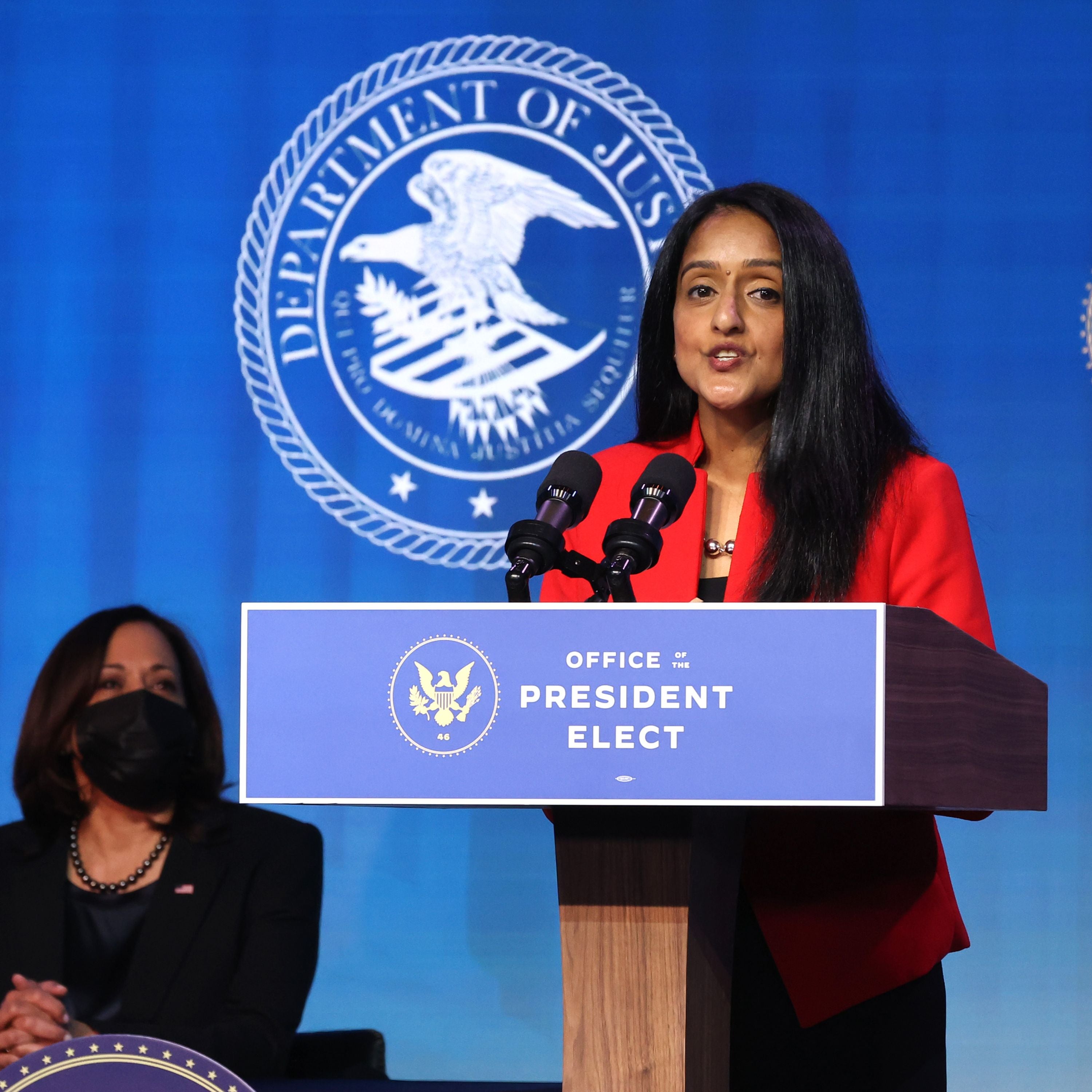
Vanita Gupta, a civil rights attorney and NYU Law director, discusses threats to the midterms, focusing on Trump Justice Department election interference efforts in Alaska and California, DOJ’s shift from civil litigation to criminal investigations, and what to watch on Election Day and after.
Vanita Gupta served as U.S. Associate Attorney General, led DOJ’s Civil Rights Division, and now directs NYU Law’s Center for Law and Public Trust.
DOJ’s lawsuits are “bogus” because they lack federal claims and seek remedies courts can’t order; states run elections, so federal interference is improper. DOJ is allegedly weaponizing criminal tools (grand jury subpoenas) to intimidate election officials and voters. DHS/ICE involvement in noncitizen-voter list comparisons is described as unprecedented; ICE has no role in election enforcement.
Alaska’s “two Dan Sullivan” ballot issue (incumbent Daniel Sullivan vs. similarly named spoiler), dismissal by a federal judge and DOJ’s planned appeal; California case where DOJ seeks Supreme Court review; references to DOJ actions involving Rep. Ilhan Omar and unprecedented DOJ posture.
Written by AI. May contain mistakes.
Discussion on the potential legal challenges and issues surrounding the upcoming elections.
“It's not starting tomorrow, it's ending tomorrow.”
An in-depth look at the election situation in Alaska and the issues caused by candidate name confusion.
“That doesn't mean that the solution or the response dreamed up by the Trump administration is right, proper, just, or even legal.”
Analysis of the Justice Department's lawsuit related to the Alaska elections and its implications.
“Yeah, look, it's a little rich when the people who have perfected dirty politics, perfected the weaponization of the Justice Department to interfere in elections, who have denied who won the election in 2020.”
Discussion on the alleged politicization of the Justice Department and its impact on elections.
“This decision was obviously a public decision.”
Exploration of how election officials and civil society are preparing for potential disruptions.
“So we just have to mark this as a radical departure for what the department's typical role is.”
Learn about ongoing legal battles and the role of federal agencies in elections.
“The courts have been holding the line thus far.”

Get the gist, explore an idea or ask about something said.
 Claude
On Stay Tuned with Preet, what are the key points of this episode?
Searching your listeningAutomatic transcript. May contain errors.
0:01Hey, folks, Preet here. Joyce Vance and I are out with a new episode of the Insider Podcast. It's a day early because of the election tomorrow.
0:08Preet Bharara: Today, we're joined by our good friend and colleague, Vanita Gupta. Vanita is an experienced civil rights attorney who served as United States Associate Attorney General, led the Justice Department Civil Rights Division when Preet and I were there, and she's now the director of the Center for Law and Public Trust at NYU Law School. She joins us today to discuss the biggest threats to the midterm elections, including the Trump Justice Department's moves already underway in Alaska, California, and elsewhere, and what to watch for on Election Day and the days after. We're sharing a free segment of the episode with Stay Tuned listeners.
0:42Preet Bharara: We hope you enjoy it. If you'd like to become a member of the Insider community, now is a great time to join. Help support our work and get access to exclusive subscriber benefits. And for a limited time, get 30 % off our annual membership at staytuned.substack.com. Now, on to the show.
1:03So look, we have the election. It's not starting tomorrow, it's ending tomorrow. There is a lot of consternation about legal challenges. President of the United States has a history and a track record of doing weird things. It's one way of putting it. With elections, election challenges, we have a situation in Alaska. We have a situation in California. We have the potential of DOJ monitors. And Vanita, the world-class expert on these issues, is going to break it down first. Should we begin in Alaska or somewhere else? Let's start in Alaska. Okay. You have the incumbent senator, Republican, whose name is?
1:39Daniel Sullivan. So he goes by Daniel. He goes by Daniel Sullivan, incumbent, I should say. And Republican on the ballot. And there is someone else that's going to be on the ballot named Dan Sullivan. And this has caused a lot of concern. Can we just, I'll just speak for myself for a moment. In all this discussion about whether or not the certification should or should not happen in Alaska, whether or not there's voter confusion or not, I like to be on the record for saying that to the extent there were people on the Democratic side and there's allegations that the Democratic nominee, or at least her staff, was aware of and supported the idea of having somebody be a spoiler with the same name as the incumbent Republican, that that's nasty and terrible and shouldn't have been done.
2:25That doesn't mean that the solution or the response dreamed up by the Trump administration is right, proper, just, or even legal. But I just wanted to get that off my chest. Anyone else? Yeah, I'm with you on that. I agree. I think it is perfectly fine and normal to have the reaction that these dirty politics are not something you like or I like. And so there's maybe different views about the propriety of this type of thing. But the fact of the matter, and this matters legally and hopefully kind of for the public, is that it's unfortunately regularly done by consultants on all sides. And it doesn't mean you have to like it.
3:09I don't like it. But I think right now what the Trump administration is doing is trying to kind of exploit this revelation against a backdrop of a lawsuit that they filed before any of this was revealed that was a junk lawsuit that was literally did not contain a real federal claim. and a lawsuit where the remedy that the Justice Department was asking for was not a remedy that could be authorized by court. And so this is where we are, and I'm happy to talk a little bit more about this lawsuit and this litigation, which a federal judge just yesterday kicked out and dismissed, although the government is now asking, has filed its notice of appeal.
3:58But I don't think we need to like the dirty politics, But the lawsuit itself, I think, really is a bogus lawsuit by the Justice Department that no court can really entertain. Yeah, look, it's a little rich when the people who have perfected dirty politics, perfected the weaponization of the Justice Department to interfere in elections, who have denied who won the election in 2020. Won't let anyone become a federal judge or a member of the cabinet if they correctly say who won the election in 2020. You know, it's a little bit rich. It's a little bit rich.
4:32Preet Bharara: It is, and to put a fine point on it, if the Trump administration was really disturbed by this kind of behavior, which I've heard called ballot stacking, you know, the same thing happened in Washington state on the Democratic side during the gubernatorial primary there, and DOJ did not rush into court there to defend the Democratic incumbents. So it's just clear that this is more electioneering and dirty tricks, which we all agree have no place in politics. And maybe Americans will develop a finer sensibility about this and we'll see new laws passed. But it does seem to be business as usual as opposed to something unusual as the government's trying to make it out.
5:11Can I explain a little bit just to make sure everyone, because there's a lot of litigation in the news right now, just what's going on in the Alaska litigation. So putting aside our views of the propriety of this type of political tactic, the bottom line is it really doesn't change the very meritless nature of the Justice Department's lawsuit, which, as I said, doesn't state a federal claim and doesn't actually ask for a remedy that a court could administer. The Constitution is really clear that states are in our elections, not the federal government. And to Joyce's point, this whole issue of two Dan Daniel Sullivans on the ballot was litigated up through the Alaska Supreme Court, which said it was OK to have two candidates named Dan Daniel Sullivan on the ballot.
6:05They will thus affirm this decision last June. And they made clear kind of in the aftermath of that decision to have very clear markings on the ballot that list the incumbent Senator Daniel Sullivan with the words incumbent and Republican next to his name after that. And for months, the Justice Department did nothing. This decision was obviously a public decision. There was news coverage of it. And it wasn't until Alaska voters were actually voting in the last two weeks that the Justice Department decided to weigh in in this manner. And why? Well, the president took full ownership and said he demanded that his Justice Department, because that's where we are now, take this action and do this.
6:53Apparently, inside the department, there was a lot of consternation about the viability of this tactic, so much so that there was reporting that Hermit Dillon, like, didn't sign the papers, but my successor, Stanley Woodward, did. And what's kind of crazy about all of this, on top of all of this, is that, you know, Alaska voters are pretty smart. They can read their ballot. They can decide who they want to vote for. and there's no federal law prohibiting recruitment of or, you know, acting as spoiler candidates. So that fact that the state Supreme Court said that this is legal is the end of this inquiry.
7:28But then the New York Times, you know, reveals some of the backstory about how we ended up with two Dan Daniel Sullivan's on the ballot and the Trump administration is, you know, jumped in to now open criminal investigations and issue grand jury subpoenas. And I will just say, You know, this lawsuit that they filed, you know, a federal judge throughout yesterday, as I said, they've appealed to the Ninth Circuit. I don't think it's going anywhere. But these grand jury subpoenas are intended to kind of be—this is a narrative play. I thought this from the day they filed a lawsuit, that it read more like a press release than it did a lawsuit.
8:05There isn't a first-year law student who would have written that complaint. It didn't have a federal claim. But now, you know, it's a real threat. It's all part of the weaponization and how the department is using its criminal authority to target perceived political enemies, to target now what they're saying might be, you know, some type of conspiracy, et cetera. But it is a wild departure from the typical role of the Justice Department that has had across Republican and Democratic administrations for decades around trying to protect the right to vote and not interfering in elections, particularly, especially as people are voting.
8:44So we just have to mark this as a radical departure for what the department's typical role is. Does this case end even on the terms that the Trump administration brings it under? If after a count, the Democrat Peltola wins by more votes than the spoiler Dan Sullivan gets? I'm not sure that it will. So yesterday on the Sunday morning show, the incumbent Senator Dan Sullivan said he would accept the results. But then in the same breath said, you know, there could be a fraud committed. I think that the Justice Department may try to kind of continue on with this alleged criminal investigation. But what would be the basis for continuing with respect to the election result if she wins, for example, by thousands and thousands of votes more than the spoiler got?
9:36Well, they may try to investigate the people that were involved in the recruitment of the other Dan Sullivan. So that would be, you know, the folks that were named in the New York Times article. But that's a separate proceeding against those people. What basis would they have, even on their own terms, to nullify the election? They have no basis. They have zero basis. Again, certification is a ministerial act that, by law, county and state officials are required to do after they count the ballots. and there is no way, and this was part of what the federal judge said yesterday, which is voters have a right to privacy, right?
10:16Like you can know if somebody has voted, but you can't know who they voted for. So there's literally no way for the Justice Department to do what they said they wanted to do, which is to investigate after the fact and block certification to give them time to do that so-called investigation to make sure that voters who voted for the other Dan Sullivan, weren't confused without violating voter privacy. And so the federal judge has thrown that out. There is no remedy for the Justice Department through this litigation.
10:45Preet Bharara: What you're saying, I think, underscores that this is DOJ playing politics, not performing its usual and legitimate role in elections. And just for folks who haven't spent years at DOJ like you have grappling with these issues, can you level set and talk about what role DOJ is intended to play in elections? Yeah, the Justice Department has to enforce federal law, and there are several federal laws. You know, there's what remains of the Voting Rights Act, which we can talk about separately. There's the Help America Vote Act, and there's the National Voter Registration Act among some of them. So every day, the department is enforcing those laws.
11:26But there is also a very longstanding policy that is very firm at the department, that the department may never engage in overt criminal activity or any type of overt activity that could be perceived as or result in influencing the outcome of an election. This department has blown straight through that policy with any number of things they have done in the last few weeks, including the Alaska and California litigation, but also the investigation of Congresswoman Omar and the raid and the, you know, the search that where they took her daughter's equipment and her equipment, etc. There's a long list of kind of steps that they have taken in the last few weeks.
12:10The Jim Comey third charge by information. I mean, all of this is quite unprecedented. And the department has not taken any of those steps across the recent decades. And as I said, this department has acted in a fairly radical way by interfering in the normal process of elections. You both know this. I have participated over the last year in scenario planning exercises with state and local election officials, state attorneys general, members of Congress in the House and the Senate, voting rights organizations, all preparing for the usual types of crises that state and local election officials prepare for.
12:54That's like, you know, concern around cybersecurity and hacking and tornadoes and hurricanes, etc. But the biggest one that was the center of all of our scenario planning was the concern around federal interference in our elections. because we knew that we have a president who cycle after cycle has tried to deny legitimate results, try to undermine people's trust and faith in our elections, is gearing up to try to discredit election results that he doesn't like. And so they've been ready and the lawyers have been ready for all of the shenanigans that the department is currently carrying out. And I would say it's not just DOJ, it's DHS as well.
13:40There's been a lot of preparation for this, and it should not require this level of mobilization from across civil society and election officials who, frankly, are doing this work in many parts of the country under threat to their personal lives, to their families. It's really a terrible statement on our democracy, but they are also ready. So they have been holding the line. The courts have been holding the line thus far. the Justice Department and the administration, have lost almost everything to date. They are 0 for 27 on their efforts to get private voter data from states that have challenged those demands.
14:17They lost the U.S. Postal Service, where the Supreme Court said, no, you cannot do this in this election cycle. And they currently have been losing in their efforts in California and Alaska.
14:30Preet Bharara: You know, I want to pull one thread before we move on from something that you said here, because you included DHS within the scope of the objectionable government action alongside DOJ. And in some ways that implicates ICE. There are other parts of DHS that have been involved, too. But I think it's worth focusing on ICE and whether or not they've historically played any kind of a role in election enforcement. ICE has no role in election enforcement. We've, you know, historically, Joyce and Preet, you both know this, that the Justice Department has been very, very careful about ensuring, even in the monitor program, that it does every cycle to not have criminal prosecutors or federal law enforcement as monitors to avoid any kind of confusion on the part of voters or intimidation of voters.
15:23so that they know that when DOJ monitors show up, they're not there for kind of criminal enforcement purposes. They're there to ensure that federal law is being complied with. And so to have DHS, and I would say it's, you know, Homeland Security Investigations that has been conducting all kinds of efforts to produce lists of alleged non-citizen voters, etc., and then comparing it with state voter lists, all of this is unprecedented. And ICE has no role in our elections. There is a law, there's a federal law that says non-citizens cannot vote in federal elections. And every day, 365 days of the year, in order to comply with the NVRA, which is a federal law, the state and local officials are constantly cleaning up their roles.
16:17They are examining their roles to take off people who have died. They're taking off people who are ineligible to vote. That is the purview of state and local election officials. So the question a lot of people will have is, how will this play out even with a paltry legal argument? Will it go to the Supreme Court before there's a certification? Is there time to do that? Is there a clock ticking? How's it going to end? Well, what's interesting right now is that just as we have been taping this, the Justice Department, which waited a few days, I'm not exactly sure why, but has filed an application for cert in the California case.
16:58And we don't know whether the Supreme Court will want to hear the case or will just dismiss it. So we'll see how that goes. And in the Alaska case, obviously, DOJ has now filed for appeal, its notice of appeal before the Ninth Circuit. Look, the bottom line, though, here is that the Justice Department is going to lose these cases. They're losing their civil cases. They're turning to criminal enforcement, which is why they've sent out grand jury subpoenas in both California and Alaska. Yeah, they're not doing so great in the grand jury either, by the way. They're not doing so great in the grand jury.
17:33And the grand jury in this era has proven to be a pretty significant backstop in a number of instances. But I think a lot of this, honestly, is to intimidate both election officials and voters. And the thing of it is, is we are seeing voters rush to the polls.
17:58Thanks for listening. To hear the full episode, become a member and get 30 percent off our annual membership by heading to staytuned.substack.com.
18:07Preet Bharara: Thank you for supporting our work. Thank you.
18:39I am for prospectus containing this and other information. Read it carefully. SPI is subject to risks similar to those of stocks. All ETFs are subject to risk, including possible loss of principal. Alps Distributors, Inc. Distributor. Hear that? That's me in Tokyo learning to make sushi from a master. How did I get here? I invested wisely. Now the only thing I worry about is using too much wasabi. Get where you're going with SPI, the world's most traded ETF. Getting there starts here with State Street Investment Management. Before investing, consider the funds investment objectives, risks, charges, and expenses.
19:08Visit statestreet.com slash IM for prospectus containing this and other information. Read it carefully. Spy is subject to risks similar to those of stocks. All ETFs are subject to risk including possible loss of principal. Alps Distributors, Inc. Distributor.
On this week’s episode of the Insider podcast, former U.S. Associate Attorney General Vanita Gupta joins Preet Bharara and Joyce Vance to discuss the biggest threats to the midterm elections. In a free excerpt from the show, Gupta explains why the Trump administration’s attempt to preemptively block certification of Alaska’s Senate election over a dispute involving two candidates with the same name is unlikely to succeed.
To listen to the full conversation, become an Insider today. You’ll get access to complete episodes of the podcast and other exclusive content. For a limited time, get 30% off the annual membership. Head to staytuned.substack.com/midterms.
In the full episode, they discuss the Trump administration’s petition asking the Supreme Court to review a judge’s dismissal of its lawsuit to remove nearly 20,000 alleged noncitizens from California’s voter rolls. Plus, what to watch for on Election Day and the days after.
Insiders, click HERE to listen to the full analysis.
Subscribe to our YouTube channel.
Photo by Chip Somodevilla/Getty Images
This podcast is brought to you by CAFE and Vox Media Podcast Network.
Learn more about your ad choices. Visit podcastchoices.com/adchoices