
- Podcasts
- Strategy & Tragedy: CEO Stories with Steph Melodia
- On the brink of bankruptcy to Forbes 30U30
Strategy & Tragedy: CEO Stories with Steph Melodia18 Jun 2025 · 47m
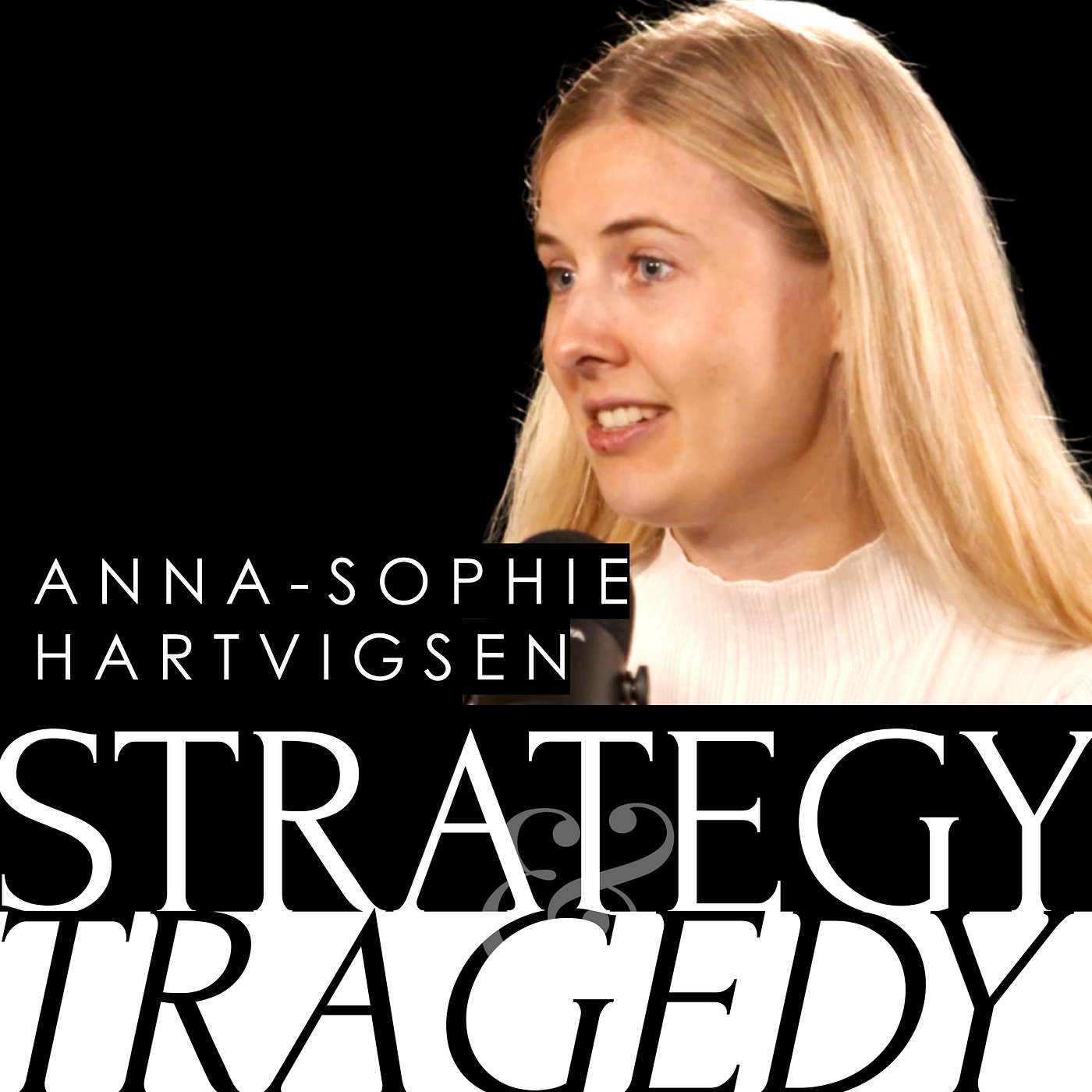
On the brink of bankruptcy to Forbes 30U30 | with Anna-Sophie Hartvigsen, Co-Founder of FemaleInvest

 Add vo to ChatGPT or Claude to ask about everything you hear
vo listened to this episode to put together the overview and transcript, so there may be the odd mistake.
In short
Financial gender equality and why women’s participation in investing matters; how FemaleInvest (co-founded in 2017) builds women-focused financial education and community, then scaled from free events to an online membership and fundraising success despite COVID and fundraising bias.
Guest background
Anna-Sophie Hartvigsen, co-founder of FemaleInvest. Consulting background; not originally from finance. Started investing after noticing inflation eroded her savings while working minimum-wage jobs (waitress, teacher, etc.). Met co-founder Emma in business school; later met Camilla.
Key claims
No country has financial equality for men and women; stereotypes and a system not built for women block participation. Research suggests women can be better investors (less emotional trading, longer holding). In heterosexual marriages, many women leave planning to partners and later face negative surprises.
Notable examples
56% of married women leave planning to partners; 80% die single/divorced and face surprises. FemaleInvest grew from a Facebook page (400 signups) to 25,000 in-person attendees in 18 months. Near bankruptcy during COVID, then Forbes 30 Under 30 recognition (March 2020). Raised $24M; 107+ rejections before EduCapital.
Guests
Anna-Sophie Hartvigsen (main guest). Co-founders Emma and Camilla (not interviewed separately in this episode).
Transcript
0:00There is not one single country in the world where men and women are financially equal. That is the problem that Anna-Sophie Hartvigsen is on a mission to solve with her business, Female Invest, which she co-founded with Emma and Camilla in 2017 and joins me now on Strategy and Tragedy. Welcome to the show. Thank you so much. All right. First of all, how does getting women involved in investing help everyone? Well, first of all, investing is not a pie where you get less when someone else takes a slice as well. If anything, the pie gets bigger when women start investing. We get more growth, we get more initiative out in society, and that benefits everyone from individuals to companies and society as a whole.
0:46So what's holding women back? What's getting in the way? So from the moment we are born, we are raised in a society where stereotypes around women and money are so prevalent. The financial system is also not built with women in mind. In fact, women weren't even legally allowed to participate until quite recently. So at every step of our journey, we have the odds stacked against us. So women do not keep from investing because they aren't good or they aren't smarter. They don't want to. The system just wasn't built for them. And in fact, there's research that shows that women can be better investors.
1:22Can you talk to us a little bit about that? Research clearly shows that women are in fact better investors. And we see this around the world among both private and professional investors. And when we look at why women are better, we see that they are less emotional than men are when investing because they tend to hold for longer and trace less based on emotions and things going on in the market. So for anyone listening who are afraid to make mistakes, that very fear will make you a very good investor. It just stands in such stark contrast with that stereotypical view that women are more emotional.
2:01Where does that come from, that trope? I think it comes from society trying to brand emotions in women as something bad. Whereas when men show emotion, when they show anger, they show frustration, then they're seen as strong leaders. But when women do it, they're seen as unreliable and emotional. So women are definitely not the emotional gender, especially not when looking at investing. So another symptom of the patriarchy. Definitely. And so how is Female Invest helping to solve this problem exactly? So we are creating financial education by women and for women. And there are two parts here. So first one is delivering the content with other women so that our audience can see role models.
2:48And then the second part is that the financial life of a woman just is different. It looks different with career breaks, motherhood, money and love is very, very different. We see, for example, that in married heterosexual couples, 56 % of married women leave financial planning to their partner. And when 80 % of them then die single because we marry older men, we get divorced, then the vast majority get negative financial surprises. And that's just one example of the financial journey being different. And we need to tailor to that. I love what you're doing. Clearly, I love the mission that you're on.
3:29And what I'm so fascinated by is the fact that you, correct me if I'm wrong here, but like you didn't come from a financial background yourself. I don't know if you've had any financial role models in your family or anyone close to you. What I saw is you come from a consulting background. So for me, what I'd love to hear about is how did you get so interested to the degree of not only recognizing that there's a problem here, but building this incredibly successful business around solving this problem? It's definitely been a journey. So I've always been interested in money since I was a kid, like having money, having the freedom, the opportunity that comes with it.
4:08Where do you think that comes from? I think it's a character trait. I think it's a freedom essentially to be able to do what I want. So I got my first job when I was 13 years old and I've done basically every blue collar job up until I was 19. What was your first job at 13? I was walking with elderly people who couldn't leave the home themselves. So I was like walking back and forth. I've been a full-time waitress. I've made sandwiches. I've worked in a clothing store. I've been a teacher. I've done all of it. Love that. But by the time I was 19, I then had decent savings. And this is when I learned that my savings were losing value in my bank account because inflation was higher than the interest rate.
4:52And I just couldn't live with that. So I started researching what to do. And I mean, everyone had heard about buying property. So that It was my first thought. And I actually booked a meeting with my bank. And it was a one-hour meeting where they even prepared a slideshow with all of the reasons why I could definitely not buy property. No. Because I did not have enough money for it. Wow. So I left and I almost like apologized out the door. Wow. And then I was like, hmm, what else could I do? And that's when I started thinking about investing in stocks. And can I just jump in here, sorry. Like at this point, is this just coming from yourself on your own or are you getting are you seeing this from any external sources?
5:36Because this is not a normal story. People don't just be like, hmm, my savings are losing money because the interest rate is lower than inflation. Maybe I'll buy a house. Maybe I'll book a meeting with the bank. Maybe I'll look at like where does that I want to try to unpack that a little bit to understand, you know, your your uniqueness in that. it's a good question I think it really just comes down to the the character trait of wanting a freedom of wanting to you know do things on my own schedule and do things my own way plus I worked minimum wage for so many years and that's really hard work so I just couldn't live with the fact that my money was losing value viscerally feeling this money that exactly that you've worked so hard for and so where do you know like where to where to turn and also I'm just really curious to hear about it also what comes across to me is like a lack of the fear factor here as well I feel like there's a lot of young people women through you know social conditioning etc that would be just too afraid too scared it's off-putting to I mean even just trying to understand like most banks websites can feel like deciphering hieroglyphics right so where did you turn to for help?
6:46so I didn't really have anywhere to turn for help and looking back on my journey I think the most costly mistakes I've made have been mistakes because I didn't have anyone to ask so for example with the property example I actually had saved up enough to buy like a very cheap maybe one bedroom apartment but when the first bank said no I just thought that the bank is like you know one entity if the bank says no that's like a hard no yes because I didn't know you could just go and ask someone else or ask my parents if they would you know guarantee the loan stuff like that I only learned so later and now I think I really missed out on a good profit had I bought that apartment 12 years ago um so I think I had very costly mistakes because I didn't have anywhere to turn and that's part of the problem I then realized hence female invest yes all right so you're looking into like ways to make your money work harder for you what happens next I know you went to business school whereabouts is that in the story so at this point in time where I start investing I actually work as a full-time waitress and I google you know what are stocks how do you buy stocks start to learn about it I borrow books I talk to people I hit people up on social media who know stuff about it and are there any good books that helped during this time I think I went for two two advanced books which made the topic feel so much even harder than it actually was.
8:12And then in the end, what got me started is that I went to a party at my friend's house. And at that house party, there was a guy who already invested and he wrote down the name of a trading platform on a napkin. And I took that napkin home. And the next day I made my first investment. And that's how it really started. Exactly. And that is how it does often start is that when you're completely new, I mean, just to anything, it's kind of like, okay sure I can google things I can try you're there sort of searching in the wild wild west on your own but until you actually have a human to human conversation and a specific recommendation it feels like you're feeling around in the dark right yeah okay amazing so this is what got you excited got those juices going let's fast forward to business school meeting your two co-founders what happened there so I started investing a lot I started talking about it to anyone you know to try to find community and I was so disappointed in business school because even there there weren't really any women investing and what's the taboo like in Denmark around money is it the same as here in the UK it's not really talked about or I think it's a bit it's a bit less of a taboo but we still definitely don't talk numbers or how much savings or how much we make so you really are kind of going against the grain trying to like break talking to people about it but I was just so fascinated about it because I started doing pretty well with my investments.
9:36So I just, you know, wanted someone to talk to. And yeah, the disappointment was huge until one day I'm sitting at a lecture and this girl comes up and sits next to me. That's my now co-founder Emma. And she said that she heard from other people that I'd been investing and she had two and she'd thought about starting something with investing. And that's how the whole conversation started. We met Camilla shortly after, but that's really, we weren't friends. We didn't know each other beforehand. We just united over this passion for investing and this shared journey of how difficult it was to find other women who were interested.
10:17And as organically as that has happened, that is the best way for co-founder pairings to come about is sharing a united passion for the same mission that you're working towards. And actually not having been friends already can help, right? Because you kind of keep it professional, I guess. You get to start kind of from that blank canvas. And I think there's another lesson that I want to extrapolate for our listeners, which is the power of talking about something. You know, sometimes entrepreneurs, especially when they've got an idea before they've launched something, they feel very, maybe they want to keep their cards close to their chest.
10:51They don't want to share it too much. They don't want somebody to come along and steal the idea. But actually, if you are vocal about it, you put it out there, you're increasing the chances of attracting the right partners to come to you. So it sounds like it was all sort of like destined, meant to happen. so how did female invest get formed and will kind of accelerate through to your own fundraising and entrepreneurial journey with the company as well yeah so i mean the first step was just to create like a small group we imagined you know 10 to 20 maybe 30 women who could meet drink some wine talk about stocks and we had no idea how to find those 20 30 women so we made a facebook page and we We called it Female Invest just so women would know that this was for them.
11:38Super clear and obvious. And I remember the day we launched the Facebook page, we had 400 women sign up. And we were like, what? Wow. That was not the intention. Wow. What incredible market validation, right? And interestingly, these women, at least most of them, did not invest yet, but they wanted to learn how. So we started hosting educational events, first in small group rooms at university. then in the lecture hall. Were you monetizing this at this point? No it was free it was a non-profit right then we outgrew the lecture halls we started partnering with companies just to physically have space to fit these women and it became massive like it was wild.
12:17And these companies they're not sponsoring you at this point? So they paid a little bit but like symbolic like two thousand pounds three thousand pounds. Yes and within the first year and a half we'd done like a road show of in-person events and more than 25 ,000 women had in-person attended. And, you know, we made it cool, like champagne, house music, cool vibes, just completely, you know, rethinking it. And that's when we knew there was something there and we should maybe turn it into a business. Oh my God. Anna-Sophie, this is so incredible. It's so exciting. I hear so many stories of how entrepreneurs have got like an itch to scratch and they want to do something and they're kind of out there in search of a problem whereas this sounds very much like it was problem first like clear and center and i'm absolutely impressed by the rapid growth so quickly with this facebook group amassing 400 subscribers members so rapidly what do you think that was down to was it the name was it like referrals i think it was just a huge untapped demand like as we already talked about I mean women want to grow their money we are more educated than ever before we have more money than ever before and then there's just no one taking us seriously to the extent where they are building stuff for us so I think it's really just like starting to peak at that untapped demand yeah yeah this is where it's like the timing the market appetite there's such a this is such a fantastic lesson I really want to underscore for for listeners which is putting something out there putting it to the test and being very objective with those results so even the fact that you were clear enough with your initial expectations before even all of like maybe 20 you know because I think that getting on the front foot with that helps entrepreneurs to then assess afterwards whether or not like was this a failure was it a success so the fact that you've gone out there first and be like maybe 1020 actually this is 400 this is unequivocally a crazy number so this is amazing I love hearing this story this is incredible so you're on to something how do you now convert this from a non-profit community to a monetized business so that's a good question and you don't learn these things in school like who do you call right do google what do you again again They ain't figuring it out.
14:44So yeah, we had to figure everything out from scratch, from putting up the legal entity, which we could barely cover the cost for with the money we had from the non-profit because we could move it into the for-profit. And then we just started from scratch. We knew at this point that we weren't able to scale fast enough because the events often had me as a speaker and I just physically could not be in so many places. So we knew we had to go online, also to meet international demand because we started out in Scandinavia. And that's when we got the idea to make an online membership. And this was also around the world where COVID started happening.
15:27And I actually remember that we were sitting in, or maybe a little bit back, so we got an office and that office had rent of 60 pounds per month, which was like barely what we could afford. And a month after we got our first office, COVID closed the world. And I remember we were sitting there. We were just crying because we had to cancel all the revenue from events that we had coming in, refund the tickets. And we were as close to bankruptcy as you can be. So painful. I've got these promises. So painful. We actually took a walk around the lakes in Copenhagen just to discuss how we were planning to announce the bankruptcy.
16:08Because it's not really great to start out. your first job with a bankruptcy, especially not when everyone told you that you were crazy, this would never work, you're not the right person to do it, yada yada. And then we went home after that walk. And then the next morning, we woke up and we were on the Forbes 30 under 30 list. And Forbes had shared us on their Facebook. And I mean, you cannot quit. So we went back to the office. we brought our toothbrushes and then we just spent lockdown in each other's company like sleeping in the office sometimes and then we did everything ourselves from the content to the advertising to the platform to the everything oh my god and that became the beginning i have got literal goosebumps while i'm listening to this talk about the highest highs and the lowest lows in your entrepreneurial journey right yeah it's crazy i'm sure you've got many more where they came many more and the crazy thing is wow I always expected it would get less as we scale but the highs just get higher and the lows just get lower oh my god don't say that we're supposed to be encouraging people to go into it never stuck them up you just learn to live with it oh my god that's a good lesson actually no you just learn how to live with it I love that I feel like there's a deep kind of therapy message in that oh my god Anna Sophie I'm like I feel like I'm out of breath just listening to that story I feel like I was there with you empathizing going from this office on the brink of your business shutting down yes and then the Forbes 30 under 30 and then like okay we got to go back out there so did that give you just kind of a renewed sense of optimism to pick it back up again and pivot or was it a practical was there like a practical benefit that Forbes 30 under 30 gave the business or both so I mean it Forbes 30 under 30 doesn't really give you anything other than recognition.
18:06And since we were now all over the internet, it was just too embarrassing to quit. And we're all proud people. And of course, we were also deeply passionate about this. So it was a mix of fear, failure, and passion for the movement that really kept us going. I love that. I love that. Well, I'm so, so happy that it did. And now looking back on that particular moment, what what would you tell the Anna Sophie of that what was I don't know if you remember like the specific dates but like before the Forbes 30 on the 30 came out I think it was actually March 18th love that okay perfect so the 17th of March when you're like the lowest low oh my god we're gonna have to announce that you know pronounce our death so many people already doubted us so all the doubters were going to prove right.
19:01What would you say now to that Sophie of the 17th of March 2020? I would say that you already have everything you need to solve this problem. And it took years for us to start trusting that no matter what obstacle we face, we can solve it. And now we are, you know, years into our journey. So now whenever I lose faith, I just look at the evidence and the evidence suggests that every single time we've had a challenge that looked impossible to overcome, we have found a solution and that gives a lot more peace of mind. But in the beginning, you don't have that. You have nothing to show. There's no proof.
19:42You don't really know with yourself if you have what it takes. So that definitely gets easier in time. Yeah, I love that. And on that note, I just want to add, there are so many BS tips and tricks when it comes to building your self-confidence but the number one way so this is for any listeners as well if you're feeling a bit low if you're feeling a bit in the dumps down in the dumps if you're questioning you're doubting yourself the single most effective way to boost your self-confidence is to give yourself enough irrefutable evidence that you got this so echoes your point with like we've now especially you know now that you have got the wisdom what you've amassed and now got under your belt is the evidence.
20:25And so as much as like, you know, you want maybe say like morning affirmations in the mirror or you wear your favorite outfit or listen to a hype track to get you pumped up, it's the irrefutable evidence to help boost your confidence. How much easier did it make having co-founders in the trenches with you at that time? It made the entire difference. Like for sure, neither of us would be here if we'd been trying to do this journey alone. And I think it comes down to so many different benefits of having co-founders, from having just the mental support of someone who truly understands what you're going through, who believes in you, who's cheering you on, who you can share the frustrations with.
21:05That means so much. But also just having someone who's equally invested in it with you. I mean, I told you when we started out, we weren't friends. We just bonded over this mission. But now Emma and Camilla are some of the closest people in my life. and I'd say they have probably an impact on my life to the same degree as my parents have. It is crazy, like everything is shaped around them. Yeah, of course. My work wives, they shaped my outlook of life, of what I thought was possible. And it keeps happening. And it seems to me, at least, I don't have the data on this, but it seems slightly rarer, dare I say, to have like a three co-founders, a trio in the mix.
21:44Whenever I do come across co-founders, it tends to be like pairs. It's a yin and a yang. How does that work in terms of like the dynamic with three of you? You know, there's that saying like three is a part, three is a crowd, you know, so. I think it's so nice because it gives a bit more flexibility. So when we make decisions, for example, if two really want to go with something, the third always just, you know, bends in and we go with that. If there are, you know, tensions or when times are tough or someone is down, then we're always like one more person to step in. One can be a mediator. Yes, and even just now, practically, we've had three children between the three of us.
22:20I've had zero, but I feel like I have two kids still because we're so close. So when one person has a child, everyone else has to, you know, step in. Yeah, it takes a village. Wow, amazing. And had we been just two, that would have been so much harder. Wow, yeah, okay. God, Anna-Safia, I'm so happy to hear like how things all kind of fall into place. And that's not to say it's been easy. Of course, we've already touched on some lows, but this is just, you know, I feel like sometimes we can try and force things to happen, you know, especially with the business success. But even now on the subject of like co-founder relationships, it's like that doesn't always work out.
22:55So I'm really happy to hear that not only did you hit on something incredible where there was this huge market appetite, but the three of you coming together has worked out really well. We need to talk about your own fundraising. Quick one. This is Future Steph coming to you from beyond. if you're enjoying this episode then you can probably guess what i want you to do please do me one tiny favor that costs you nothing and takes a second of your time hit that subscribe button it really helps to support this show and i'm really grateful for you listening let's get back into it we need to talk about your own fundraising uh remind us of the stat and how you are now one of the top female-led startups having raised this much money So we have raised$24 million and I've tried to now Google as much as I could.
23:49And I think at least to my knowledge, we are sadly the female founded startup in the UK to have ever raised the most, at least from what I was able to find. And the same in Denmark. So that's a lot of money. And I would say as someone having gone through the fundraise and we've raised in many ways from debt financing to angels to VC is the majority of the money. And I'm not surprised at all. Like when I heard that 2%, you know, the 2 % of funding goes to women. When I heard that the first time, I think like many others, I started to make up explanations like, oh, maybe there are fewer women entrepreneurs.
24:27Maybe they don't want to raise money. Maybe this and that. but having gone through it that's not where the problem is like the glass ceiling in fundraising is so thick that you just can't fathom it until you live it and we finished our series a last year and there were so many moments where we were just looking at each other and disbelief like did this really just happen what were some of those moments oh so many like there are so many things I also feel like I can't say. So what we've actually done now is we've created a Google Docs and then we just filled it out with anecdotes to get things out.
25:04But I think the big picture is just a systematic exclusion for sure, like not being invited, even when you are invited to a dinner, like no one talking to you, everyone ignoring you. We've had multiple times where, you know, we always sit as the only women at these dinners. And often you start by going around the table saying kind of what you do how much money you raised being skipped at the table has happened multiple times yes and it's you know the first time it happens it's like oh maybe they just didn't you know see me but then it happens multiple times this is disgusting and this is like in the what do you do in the moment you know like oh hang on you skip me so so at first you don't really say anything because it's also awkward you're already out of place no one really wants to hear what you have to say and now i think this is wild yeah and i think it's now a mix of like we've tried to remove ourselves from spaces where we clearly aren't welcome like strip clubs should be surprised how many deals are made at strip clubs how are you supposed to sit there as a woman you know being taken seriously when all the men are talking about you know the dancing you know it's like how is that supposed to work of course um wow so that's definitely been a challenge and it keeps being a challenge.
26:23Like I don't think you move past it. And it's very hard sometimes to keep my cool when I see male founders with metrics that are a fraction of ours, a product that's not even done, no experience, you know, raising like this with no data room because everyone believes in their potential. And when we have like such a detailed data room, we have the traction, we have the everything and then it's still not good enough for some reason. Absolutely. It's having to run twice as fast to get half as far, not even that. Oh my God, Anna-Sophie, you know, the parallel here that I'm witnessing is almost like harking back to when you were first starting Female Invest, when you were looking around for help.
27:06it's the classic if you can't get a seat at the table you build your own and you've done this as three women coming together together to help other women to invest the same thing needs to happen in so many different facets of business but here as well in the fundraising um it needs we need more women to be making more money to be able to pay it forward and invest in other women because i I personally am kind of over, you know, I think male allyship was a trend a while ago. And I don't know how much that's actually moved the needle or how many male allies are putting their money where their mouth is and helping with situations like these.
27:44I think so many men, even though they mean well, but because they haven't lived the bias, they're still blind to both their own bias. And they have no idea what we're actually going through. I remember we even had, that was at a later stage in the fundraising, we were pitching this kind of male VC and it was a smaller VC. And in the end, he was like, yeah, you know, he wouldn't invest. And the reason was that our numbers were too good. So if we truly had the numbers that we set, it didn't make any sense that we were pitching him because someone else should have snatched it up, some of the better VCs.
28:20So he felt like there was something we didn't say. So for that reason, he was out. and we were like it's a bias you know even when you're presenting the irrefutable evidence there's always an answer it's like well this is too good to be true yeah it can't be I don't know why but it can't it can't be yeah I really hope that there are some guys listening in to this right now and I have a fear that it may be majority women that are still with us if there's any guys still listening to this I love you I appreciate you a lot from the bottom of my heart wherever you're listening to this give us a signal like leave us a comment like give us a wave wherever you're listening to this if this is on youtube on spotify i think you can leave comments because like we're not here finger pointing we don't want to get anyone's backs up we don't want anyone to get defensive and you know yes whilst the patriarchy exists we're not blaming specific men although maybe anna and your co-founders maybe have had one or two round experiences but nothing is going to change unless certain guys in those positions of power start to become aware of that unconscious bias and in the meantime do what you've been doing and keep plugging away and keep building and keep fundraising and stay awesome so coming to something that's hopefully a bit more positive and practical I'm not going to ask you like how you navigated these dicks because they're dicks where did you then turn to so again if there are women still listening here and if they are currently fundraising or they're thinking about it i don't want this to be off-putting because you clearly yes have done it you've raised 24 million dollars congratulations amazing you've achieved that but again it's a it's a it shows the sad state of affairs that you know you're up there at the top of that much where have you where did you go to to get that money so i think one key thing to remember for anyone listening is that it only takes one.
30:19It only takes one VC to say yes for you to close the round. So to give you an idea of the numbers game, we stopped counting after 107 no's. And those are people we had like breakfast, coffee, dinner, multiple pitches, often all the way up to IC. 107, we stopped counting. How many did you get as far as IC? And that is, break that down for the listeners as well, in case they don't know. So the way it works when you pitch a VC is often that you start with some analyst in the middle. If they like what they see, they forward you to a partner, then you pitch again. Often they have more data requests.
31:00You go back, you deliver, you pitch maybe to multiple partners. If they like it, they put you to the IC, so the investment committee, which is often like a bunch of old white men and then you pitch again and then they can say yay or nay um and we got there like i don't know 40 50 times many many times so you got to 40 50 ic level yes and instead of rejection yes oh that's hard but it's not done until it's done so we just kept going and in the end we found that one who said yes which is Europe's largest female founded VC I think EduCapital EduCapital so education capital and then we got some follow on funds and all of our existing investors decided to invest as well I mean I did want to ask which number that was after 107 but you stopped counting rough gauge how many more do you think it was until you got to edu capital 200 probably yes well it was wild oh my god so just to like put that into perspective for people as well because i feel like certain like i mean even you fundraising like 24 million is like that's hard to grasp so just the sheer numbers i think this is really really important to like underscore for listeners is 200 rejections let's say yeah like that is i'm trying to think of like how to break that down you know what is that's like and it's hours hours behind each there's like four rejections a week have I done my maths right I feel like I'm a bit right yeah and then we did it in a much smaller time frame so we started so we warmed up the market for a few months before and then we started investing I think in February and then my co-founder Camilla did it full-time just pitching rejection pitching rejection traveling around also the world to meet in person with investors to get rejected.
32:59Such a waste of time. Yeah. And a couple of quick questions off the back of that. One is, who's the most tenacious of the three of you? I think probably Camilla and myself. Which is why Camilla took the lead on that fundraising. Yeah, so we have split roles. So she took the lead because she also does finance, data. It's a very numbers heavy role. And then I was responsible for the growth of the company, meanwhile, because you need to have better results than ever because all of them want to see how you close the next month or the next month. And then Emma managed our product meanwhile. I mean, this also goes back to the case for the three co-founders because if you're fundraising each of these different job functions, which would kind of go beyond the normal day-to-day business as usual, like how are things dialed up so much more when you're fundraising.
33:50And so now having gone through so many rejections, what would you do differently if you had to fundraise again like could you have like I've had other guests on here for example say how they would have maybe done like more research to not waste as much time they would have done their due diligence a bit further or do you think you just simply have to go through that process and kiss a load of frogs so I will maybe sound a bit full of myself now and I just want to say there are so many things we could be better at that we're not good enough at we make mistakes every day that's out of the But when it comes to fundraising, I have to this day never, ever met founders who were better prepared.
34:32I've never seen a better data room, a better deck. I've never heard of someone who did more research in terms of talking to network, listening to podcasts, like reading blogs, everything. Like, I don't think it's possible to be more prepared than we were. So I think it just came down to the numbers game. And I think the one thing I maybe would do differently would be around mental health, because it's really hard. So next time, if we have to fundraise again, going into it, I think we'll definitely prioritize getting sleep, still eating, like three times per day, making sure to exercise. Because if it's a process that drags on for months, it does become unsustainable.
35:17And to add to this story, while this is going on and Camilla is fundraising, she is pregnant. And she has a horrible pregnancy and she pukes multiple times per day up until she gives birth. Oh my God. And A, we keep it secret, which is very hard. I've got goosebumps again. And B, we ended up signing the term sheet on her due date and she gave birth as the money were being transferred. Oh my God. I've got goosebumps. This is the first, her first pregnancy, was it? The second pregnancy. The first time we fundraised, Emma was pregnant. Oh my God. This is so wild. It just goes to show, doesn't it?
35:55It does. What you can do, and you're pregnant in the mean, and you're making another human in the process. I don't know how she did it. That was amazing. Do you think any of the investors that rejected you regret their decision? It's hard to say. Maybe one day if we end up IPOing or selling for a massive amount, maybe then they will. But I think many of the rejections boiled down to not believing in the market or not believing in us. So I guess that doesn't change. Does revenge fuel you at all? Sometimes. I think mainly when I see much less talented men just, you know, scoot to the top, whether it's entrepreneurship or elsewhere, where I just feel like the recognition of how easy they've had it.
36:43And as you say, it's not at all a vendetta against men. We wouldn't be here without the amazing support of so many men. We employ a lot of men, but it is kind of hard to see that bias, that complete lack of awareness of the privilege they have. I feel even for us, like we have raised so much money now, but realistically, had we had the same talent and the same business, but a different skin color, we probably would not have raised that much money because the odds are even less in favor of black women or black people in general. So I think it's just important to recognize your own privilege. Yeah, exactly.
37:19Yeah. Wow. Anna-Safi, what a wild ride. And you came out the other end stronger than ever. What doesn't kill you makes you stronger. And you've got this record-breaking amount of cash under your belt. So congratulations again. How are you investing that amount fundraised to take Female Invest to the next level? And what's that impact that you guys are driving now? So we are investing in a few different things. we are investing in our product. We're actually in the middle of a big project to relaunch everything and make it a lot better. Then we are investing in growth, both in our home market here in the UK, which is now the fastest growing market, but also in the US, which we just started entering in March of this year.
38:04And those are the big things. So doing better and doing bigger. Love it. Better and bigger. I love it. On the subject of growth, What I have to ask you about is any practical activities, channels that have worked for you in terms of growth levers. I mean, it already sounds like you've already kind of got the winds in your sales. You've got that market appetite there already. So you've really got that product market fit that it's just a case kind of dialing that up. If you can break down like what has helped you kind of grow the business. And I would love linked to that to hear about the fantastic guerrilla marketing campaign that you did at the London Marathon.
38:41So, I mean, we are community-based and we started out as a community. And that's the reason why we've made it this far. So I would say for anyone listening in, figuring out what is your mission and then getting really, really good at storytelling and making it about something bigger. Like when you join Female Invest to learn about money, it's not even about money. It's about freedom, power, independence, change in the world. and that attracts a lot more people and makes them feel a lot stronger, just like we feel about it. So figure out your why and get very good at storytelling, that why, communicating it.
39:21We have used a lot of different channels and I think they all support each other from the organic channels where we actually don't convert massively. We just build the community and the message to getting people on board for free webinars, for example, where we then give free education, convert at the end, paid ads. We've done so many things. And the campaign you're now talking about, the marathon campaign, was something we did at the London Marathon recently where we rented so many billboards along the route where we put up myths around women, like women don't have the endurance. And then we put in small to be held down by the patriarchy.
40:03And we had people running in our t-shirts saying investing is a marathon, not a sprint. And we chose specifically the London Marathon because women were legally not allowed to run more than four miles until quite recently. I can't remember the year. So it just seemed like such a nice arena, you know, somewhere women used to be excluded from. Now we make up half of runners. We do amazingly well. And basically all we need is the chance and then we can do it. And it's the same with investing. And we've done a lot of campaigns like that. at one point we built like a gigantic hourglass to symbolize how time is ticking and financial gender equality and we dragged it all around London like we've done some crazy stuff and you know it makes it fun yeah it makes it mission driven and it builds community and conversation starters as well right you know I think we talk about community and you know it's like okay what does that mean how do you how do you get that and you you're doing these really mission-driven creative activations that get people to the amount of times that I've that I've sent the images of your campaign to other like these guys did you see what they did at the London Marathon Anna Sophie you're giving me so many goosebumps the whole time I'm listening to you I'm just like I'm feeling so like fired up and rallied and I just feel like I'm totally bought into the same mission as well and so happy to see you succeeding what is the impact that you've had so far with female invest like how many women have you helped invest their money camilla just sent me the numbers yesterday hot off the press so in our membership the paid membership we've had more than 150 000 women pay for the membership in the free education that we also do we've had more than 750 000 women and i mean through our channels we have around 60 million impressions per month so it is massive numbers and we often hear of course from our members that their lives are changing but also just from women you know seeing us seeing the movement we've created and then getting the courage to make changes in their own lives how inspiring anna sophia i'm so happy to see you have this success i'm genuinely so happy for all of you you mentioned a few specific like use cases is there a specific story you might be able to tell of like one particular user who's helped achieve financial empowerment through female invest yeah so the stories that always make the biggest impression on me is women who are slightly older and who have gone through life and experienced the consequences of not being financially independent especially women who go through divorce and if they haven't talked to their partner about how to split finances maybe they stayed home with the kids, worked part-time, no one ever talked about it, and then their financial situation is just in strambles after the divorce.
43:00Maybe they don't even know where the money is sometimes. Exactly. And we've had quite a few of those women come to us with things looking very dark, children to take care of, and then just turning everything around, you know, starting with the budget, the personal finance, understanding your rights into actually having money left every month, building wealth, and then a few years down the line being in a completely different position incredible so inspiring oh my god and i'm so happy to hear that you're having this impact and like genuinely changing women's lives traditional closing question is the show's called strategy and tragedy because often the best lessons come from the biggest mistakes we've covered some of the low periods that you've been through what's one tragedy so to speak that's taught you an unforgettable lesson oh i have so many maybe we can have time for top three maybe stretch it um so i think something that happened quite recently is that we made a bet in the company where we bet it like i don't want to say the exact number but like in the millions on something that turned out to not work the way we thought um and we just bet way too much money compared to how much money we actually have in the bank and that was definitely an expensive lesson we haven't done it before we'll never do it again to always test your hypothesis which is usually what we're doing and I don't have any good coming out of that but that was one thing yeah and I think another tragedy would be all of the times that we had you know external people crushing our dreams by closing doors or saying no whether it is investors saying no or when we wanted to publish our book so many publishers said no as well um but we always just kept going and again to anyone listening I don't think most people understand how much grit it actually takes the people you see making it like how many no's I think it's hard to fathom until you do it yeah um and that's just I think how we got to where we are today Anna Sophie thank you so so much for coming on the show what a pleasure to sit down with you and I really appreciate you breaking down and just being so honest about mistakes and and showcasing that unglamorous side of the business because that is what the show is all about the show was born because I'm plugged into this ecosystem and I got to see firsthand the realities of entrepreneurship beyond the LinkedIn humble bragging the sifted press coverage and so I really appreciate you coming on and not only being so open about where things went wrong but showcasing yourself here now demonstrating you're here you're smashing it you're still standing so it's not to put anyone off it's just to give that more kind of realistic view of like what it actually takes and you can do this thank you so so much any kind of final wise words you want to share with our listeners before we leave you I think a final word would be that even though it looks like, you know, people are smashing it or it's easy or someone is having success, then I think as women, especially supporting each other, like it means so much more than you think, because behind the scenes of every woman or minority or someone who's succeeding in a system that wasn't built for them, like no matter how successful someone looks, there will always be a lot going on behind the scenes.
46:28So just that, you know, supporting and cheering each other on, like that importance never stops, no matter if it's your friend or someone you see on social media, then just put the love out there because it's a currency and it helps a lot as well. That is a great message to leave this on. Anna, thank you so, so much for coming on the show. Thank you so much for listening. We'll be popping all the URLs in the show notes, Female Invest, check them out, get involved. Thank you too for listening. Really hope that you've enjoyed this fantastic interview with Anna Sophie. Maybe we should get your co-founders on next time and have a party with all of us.
47:01Hit that subscribe button if you haven't already and I'll see you next time.
From the publisher
Anna-Sophie Hartvigsen is an award-winning entrepreneur, bestselling author and TedX speaker. She's listed on the Forbes 30 under 30 list, and closing the gender investment gap with FemaleInvest by educating women on investing and personal finance through educational events, e-learning and strategic partnerships.
In this interview, Steph and Anna cover:
💰 Why getting more women into investing helps *everyone*
💰 What makes women better investors and where they can start
💰 Anna-Sophie's founder story, meeting her co-founders, and starting FemaleInvest
💰 From the brink of bankruptcy to being listed on Forbes 30 Under 30 - overnight!
💰 Top lessons learnt from fundraising $24M - and the biggest surprise
💰 Creative marketing tactics
💰 And more.
Learn more about FemaleInvest here: https://www.femaleinvest.com/en-gb
Get involved in the conversation:
🤍 Instagram: https://www.instagram.com/stephmelodia/
🤍 LinkedIn: https://www.linkedin.com/in/stephaniemelodia/
Watch on YouTube: https://youtu.be/XFx6rPcEAC0
🙏🏼 Support the show on Patreon: https://www.patreon.com/user?u=108229517
Don't forget to subscribe, rate, review, and share with a friend!
More from Strategy & Tragedy: CEO Stories with Steph Melodia
All episodesWe use cookies.They keep vo running smoothly and help us improve it. Privacy policy
Scan the code with your iPhone camera
Listen in the app.
- Play everything vo finds for you
- vo remembers everything you hear
Go to the App StoreFree on iPhone