
In short
Podcast Summary: Strategy & Tragedy: CEO Stories with Steph Melodia
Episode Title
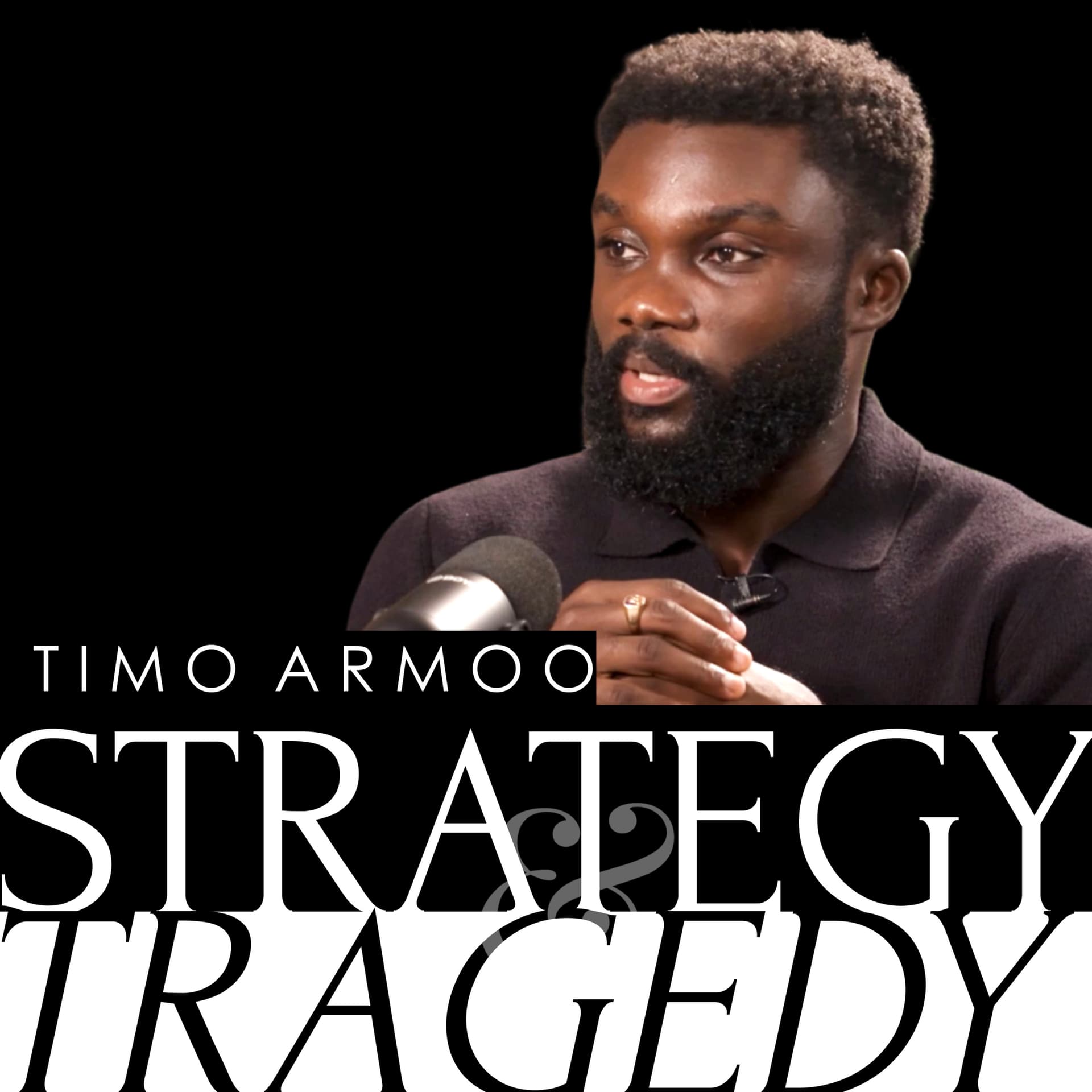
STRATEGY & TRAGEDY EXCLUSIVE: Timothy Armoo reveals his cheat codes for success
Overview In this episode, host Stephanie Melodia interviews Timothy Armoo, a successful entrepreneur, investor, and author of the book *What’s Stopping You?*. Armoo is known for founding *Fanbytes*, a Gen Z-focused influencer marketing agency, which he scaled to 80 employees and sold in an 8-figure deal. The discussion centers around Armoo's business journey, mindset, and insights into entrepreneurship.
Key Themes and Discussions
- Normalizing Success
- Armoo discusses how he normalizes success through environmental exposure.
- Worked in luxury hotel lobbies to mentally rehearse and normalize achievement.
- Acknowledges upbringing on a council estate in South London as a contrast to these experiences.
- Mindset: “It’s Not That Deep”
- Introduced a relaxed intensity philosophy to deal with setbacks.
- Treats challenges as manageable rather than catastrophic.
- Example: After losing a £500K investment, he reassured himself with the phrase, "it's not that deep."
- Value of Small Beginnings
- Emphasizes that all significant achievements start small.
- His first £5 profit from a tutoring business was more important than later successes.
- Foundational experiences shape future success.
- Power of Self-Talk and Belief
- Advocates for intentional self-definition and positive self-talk.
- Encourages avoiding negative labels and building a "chair of belief" based on past successes.
- Relates this concept to principles from *Psycho-Cybernetics* by Maxwell Maltz.
- Personal Tragedy as Motivation
- Discusses the impact of his father's death on his drive to succeed.
- Transformed grief into determination for business success, framing setbacks in the context of overcoming loss.
Key Takeaways
- Success Environment: Actively place yourself in environments that represent success to normalize it.
- Relaxed Intensity: Adopt a mindset that treats obstacles as manageable, reducing stress and improving decision-making.
- Celebrate Small Wins: Acknowledge every achievement, regardless of size, as a building block for future successes.
- Intentional Self-Definition: Cultivate a positive self-image through self-talk and affirmations based on evidence of past successes.
- Leverage Personal Experiences: Use personal experiences, both positive and negative, as fuel for motivation.
Audience Engagement
- Melodia invites listeners to reflect on which parts of the interview resonate most with them.
- Encourages audience participation through social media platforms.
Additional Resources
- Book: *What’s Stopping You?* by Timothy Armoo
- Event: RSVP to the *What’s Stopping You?* online event on January 10, 2026.
Closing Thoughts Timothy Armoo emphasizes the journey of entrepreneurship as one of growth, learning, and resilience. He encourages aspiring entrepreneurs to embrace their narratives, leverage their experiences, and approach business with a mindset that prioritizes both action and positive self-belief.
Follow-Up Listeners are encouraged to subscribe, rate, and review the podcast to support its growth and reach.
---
This summary encapsulates the essence of the episode, focusing on key insights and lessons shared by Timothy Armoo to inspire current and aspiring entrepreneurs.
Written by AI. May contain mistakes. Listen to the episode to check what was said.
Chapters
Tap a time to open that second in VOFrom Rags to Riches: Timothy's Journey
0:45 to 4:12
Timothy shares his journey from selling Fanbytes to understanding wealth.
“I think the underlying reason that it probably is, is a need for significance and achievement.”
The Truth About Money and Happiness
4:12 to 4:30
Timothy discusses why money can lead to happiness contrary to popular belief.
The Emotional Weight of Loss
4:30 to 6:00
Timothy reflects on the emotional impact of losing his father at a young age.
Overcoming Self-Blockers
7:48 to 11:18
Timothy discusses the mental frameworks that helped him succeed.
“So when I was around 13, I discovered this website called retire21.com and it's still alive actually.”
Normalizing Success
12:04 to 14:06
Timothy explains how to normalize success through environments and mindset.
“During Fanbytes, I remember, and for those who don't know what Fanbytes was, basically we had around 20.”
Expectations and Mentality in Business
14:06 to 16:01
Learn about the importance of managing expectations in business and how a relaxed mindset can lead to success.
Personal Loss and Business Perspective
16:01 to 19:36
Discover how personal experiences can shape business perspectives and how to maintain resilience in challenging times.
Starting Small: The Foundation of Success
19:36 to 23:24
Understand how every significant achievement begins with small steps and initial successes.
“It definitely puts things into perspective.”
Celebrating Milestones in Entrepreneurship
23:24 to 26:52
Learn about the importance of recognizing and celebrating small victories in the entrepreneurial journey.
“Looking at other also successful, the LinkedIn humble brags.”
The Power of Self-Identification
26:52 to 28:00
Explore how self-identification influences success and the role of literature in personal development.
Show all 24 chapters
The Power of Self-Talk and Personal Transformation
28:00 to 31:42
Learn how self-talk influences success and the importance of positive beliefs.
Building Unshakable Beliefs Through Evidence
32:10 to 35:36
Discover the importance of gathering evidence to support your beliefs and aspirations.
“So let's say your belief is I can become a successful entrepreneur and you have one belief which is when you were 12 years old you started a tuck shop and you made a hundred dollars.”
Money and Happiness: The Reality of Wealth
35:36 to 40:08
Explore the relationship between financial success and personal happiness.
“From your very unique vantage point, what has been the biggest surprise in your journey from rags to riches, let's call it?”
Giving Back: Personal Stories and Social Impact
40:08 to 42:07
Hear about personal experiences of giving back and addressing homelessness.
“Yeah, I mean, I have a and I think I said this in a Times article.”
A Personal Encounter with Homelessness
42:07 to 44:14
Timothy shares a poignant story about a homeless man, highlighting the complexity of helping those in need.
“just thinking, come on, there's something up here.”
Understanding the Layers of Social Issues
44:15 to 46:10
Discussing the deeper issues of homelessness and mental health, Timothy reflects on the importance of understanding before acting.
The Impact of Personal Content Creation
46:11 to 48:24
Timothy discusses how his content has inspired others to create businesses and change their lives.
The Importance of Enjoying the Journey
48:25 to 50:28
Timothy emphasizes the significance of enjoying the process and relationships over merely reaching goals.
Significance Beyond Financial Success
50:29 to 53:06
Exploring the motivation behind success, Timothy shares insights on the need for significance and personal achievement.
“And I think for a lot of people listening to this, the surface reason you tell yourself is money.”
Navigating Life Post-Success
53:07 to 56:04
Timothy reflects on the challenges and realizations following the sale of his business, emphasizing the need for purpose.
“So have you heard of the whole superiority complex?”
Reflections on Achievements and Personal Growth
56:04 to 56:42
Timothy discusses the importance of personal fulfillment beyond success.
“What that feeds into then is what are you doing now?”
The Cheat Codes for Overcoming Self-Doubt
56:42 to 59:04
Timothy shares insights from his book on overcoming self-doubt and achieving goals.
“Here is everything that you need to do in order for you to actually then achieve the thing that you want to achieve.”
Navigating Post-Exit Entrepreneur Challenges
59:04 to 1:00:25
Discussion on the identity crisis faced by entrepreneurs after exiting their businesses.
Introducing the 'What's Stopping You' Live Event
1:00:25 to 1:01:42
Timothy reveals details about an upcoming live event related to his book.
Transcript
Automatic transcript. May contain errors.0:00Timu Amo is an entrepreneur, investor, international speaker and now published author. Timu is perhaps best known for founding Fanbytes. as we scaled it to 80 employees, raised over$2 million in funding and won clients such as Deliveroo, Samsung, the UK government, before selling it in an eight-figure deal. Never shared this before. After we sold Fanbytes, I thought, okay, cool, I'm done. I don't ever need to work again. Like, I'm good. The thing that I really wanted is happen. One day you wake up and you go, wow, this is the life I designed. I'm giving away£10 ,000 of my own money to different people to help fund their ideas.
0:36i brainwashed myself too many people walk around with an inferiority complex yeah more people should walk around with a superiority complex i'll be super candid again another exclusive i truly truly truly don't believe that business is hard the thing that's difficult is the thing in between your ears it's just getting your psychology right it's just not freaking out it's just thinking calmly i've teased the subject of wealth you have transcended so many levels of wealth what has been the biggest surprise in your journey from rags to riches i really hate when people say like money doesn't make you happier same i think that's a bunch of i am significantly happier now with money the whole idea that money doesn't make you happier is just rich people propaganda you're not an out of touch billionaire that doesn't know the reality of what like the everyday person lives through in my wallet i always carry around at least 500 pounds in cash just to give to people every single week i give out 500 pounds legacy is just driven by ego and it still makes me just like have goosebumps and she starts crying like profusely crying a lot of people listening to this the surface reason you tell yourself is money.
1:57I think the underlying reason that it probably is, is a need for significance and achievement. One day I cried. I've never actually told this story before. I just felt so emotional that I had to then go to the bathroom and I just started crying. I had found him in his room, passed away. So an incredibly traumatic thing for a 21 year old who was just living with his dad. Every other thing just became almost a footnote when you have a dad who has passed away that you've witnessed. Welcome to Strategy and Tragedy, the UK's top 20 business show. If this is your first time here, then a very big warm welcome.
2:38I'm your host, Stephanie Melodia. And if you are tuning back in, then welcome back. It is so great to see you again. I am so excited to interview my next guest. Timu Amo is an entrepreneur, investor, international speaker and now published author. With his new book, What's Stopping You? coming out in January. Timu is perhaps best known for founding Fanbytes, a Gen Z focused influencer marketing agency, which he started while at university. And within just five years, he scaled it to 80 employees, raised over two million dollars in funding and won clients such as Deliveroo, Samsung, the UK government, before selling it in an eight figure deal to Brain Labs in 2022.
3:23Timu has since brokered two more exits, earning him major recognition, including being named as Forbes 30 under 30 for one. He's also committed to social impact with the FanBytes Fund, backing influencer campaigns for black owned businesses. Timu, welcome to Strategy and Tragedy. Thank you. Thank you. It is amazing to have you here. Now, with your new book, super exciting. You say we all have a version of us who is the confident, successful person we know we can be. But too often we get in our own way. I certainly did. And it took me years to overcome myself and eventually become successful. So, Timu, I'd love to hear from you.
4:03Well, you wrote it. Yeah, I know. and now that I'm hearing it that's good whoa that was a banger yeah banger by the book there's more there's more of that goodness where that came from and it ties in so perfectly to the great title right what's stopping you exactly it ties in perfectly so I'd love to hear what are some of the mental frameworks principles that helped you overcome some of those blockers and ultimately win at this game of life win at this game of life well I mean the first thing I really like the fact that you called a game of life because I think that it is a game and as a result it is a system of inputs and also outputs and so if I think about myself growing up in South London living on the council estate with my dad being a black kid growing up in South London there was basically only one input i was getting which was basically you basically have to be one of the mandem right um and i had lived in ghana for 10 years and i'd come here and so all my inputs were basically shaped by my environment which was basically it wasn't cool to be smart that was a big thing it it was basically the only way you made it out quote unquote was becoming either a footballer or a rapper and the truth was because I spent a bit of time in Ghana I had this like very weird undertone in my mind of you can do more you can be more but it was just this nagging feeling every single time and I credit my mom a lot when I was in Ghana my mom would find people who were traveling from London to Ghana and pay them so that they could send me books to read which was just incredible like i i absolutely i'm so grateful for that because that's the reason why i really love readers so i think there were all of these different things that happen in my life which told me that i i was meant to do something significant i was meant to do something special but also my physical environment was showing me the complete opposite and that's why I say there's a version of you because there's almost the external version that you see which which says all right council estate smelly staircase dad works in social care divorced parents that version there is like beaten at you every single day but then internally there's that version of you where you're like well actually here is all the evidence that I have to basically show that this could be different and that this is different.
6:49Shout out to Mama Amu straight off the back. How cool is she for getting these like books to you? That's so sweet. If you're tuning into this right now, then first of all, a big heartfelt thank you. I really appreciate it. And secondly, there's a very high chance that you're on your own entrepreneurial journey right now. So whether you're a first time founder and you're figuring things out and you feel like you're on your own, or if you've done it before and realize that actually this whole entrepreneurship business is a lot easier said than done, then I might be able to help you. If you feel like you vibe with my energy and feel like you need some of that professional big sister direction, support and advice, then I'm opening up a few select spots for that one-to-one coaching, mentorship and growth strategy for ambitious founders.
7:31There's a link in the show notes, so check it out and I would love to hear from you. All right, let's get back to the episode. So how did you overcome that? Because I get what you're saying, like there is this internal niggle and you're never going to get away from that right if you've got something in that and thankfully if you've got at least one of your two parents are kind of nurturing some of it but to your point like you've got the social pressures you've got what you're seeing role models like you need a lot more to counteract that and overcome say so tell us kind of the rest of the story what gets you beyond just the niggles well so I think there were two main things that really helped me one was I brainwashed myself and so I'll explain what I mean.
8:13So when I was around 13, I discovered this website called retire21.com and it's still alive actually. And I remember just stumbling across that site and just reading these stories of people who are just a bit older than me and they were building online businesses, they were making money and just thinking, oh my God, it's, it's possible. It's possible for you not to wait for you to be an adult for you to then go and do things I think right now there's a very popular phrase online which is you can just do things right yeah and I think that yeah and I think at that point I was very much like wow yeah I can just do things and so that was one way I just brainwashed myself by consuming so many of content like that where it just normalizes success the second thing that I did and I highly encourage people to do this now is so as i mentioned i grew up on oakland road right and what i would do every sunday starting around 14 15 what i would do is every sunday i would go to the posh's hotel and i would just sit in the lobby and i would work away on my like toshiba laptop and for me it was almost my way of like brainwashing myself to say I'm actually meant to be here so I would choose Claridge's and it got to a point where I'd go every Sunday to Claridge's and I'll sit in the lobby and I worked at the doorman got to know me and the doorman was a guy called Ian and I remember one day I came he said hello sir and I remember thinking oh my god this is insane like he is calling me a sir um so i think actually the piece of advice to a lot of people would be you might feel mentally stuck and a big part of it might also be that you might feel that mental stuck then translates to being physically stuck and even if it's as simple as one day take yourself out to a very nice hotel just work from there take yourself somewhere and just have like a really nice tea what you're doing is you are normalizing to your brain that like this is normal because your brain doesn't know what is normal and what is abnormal so with constant I guess you can call it mental rehearsal what would happen is that you will start to normalize these things and doing that at a young age just took me away from that kind of dark mental space that I was in incredible I'm so impressed by how ahead of the curve you were right because this is like pre-instagram yeah yeah sorts of trends pre you know they've got this huge great movement at the moment with like visualization manifesting and exposing yourself to these environments to this level of success um which i which i love but this is turning back like the sands of time and so i'm curious right like yeah this is this is incredible and i love the key word that you mentioned which was like normalizing success yeah this is something i've observed from you and other very very successful outliers is it's no big deal like it's no big deal um I remember you you commenting someone was uh interviewing you about exiting selling your business in this eight-figure deal that I mentioned and what age were you when you did that you're in your 20s yeah I was 27 incredible right so like before the age of 30 you've had this incredible business success and uh and your response to that was yeah like like it was all part of the plan you know it was just like yeah fine no big deal so i'd love first of all for you to just kind of expand on that because i'm fascinated but also reconciling that laissez-faire attitude with these humongous ambitions yeah we're just talking about the book as well that we've got here too and definitely pre-order or buy it if it's out now because it's awesome but you say about this too like this is the first book that you've published you've got this incredible deal but your ambition is to get that to be a sunday times bestseller yeah but you're like chill about it as well so like yeah let's square the hole with that there is um there's a very have you ever heard of the story of the duck who's on the lake right and above the lake the duck looks very very calm but then under is paddling crazy right i think that's probably me yeah that makes sense yeah which is that you know yes like during fan bites right Right.
12:40During Fanbytes, I remember, and for those who don't know what Fanbytes was, basically we had around 20. I'd spotted this idea, which was basically that influencers were going to be the next big thing and brands will need a way to tap into those influencers. And I had seen the idea had worked in the US and I thought, well, we should basically do that also in the UK. and most importantly because we were part of the gen z audience we should position it like brands to tap into a gen z audience using gen z influences and that was actually like a very specific practical intentional decision that i made because i thought well i've seen this game before i've read enough books to know that when there's a period like this of crazy um growth in some industry there comes to be some sort of consolidation further on and the people who actually win in that consolidation are the people who are specialized in some way um and so with fanbites i saw that and i went okay cool we are going to build this business which is going to be all around helping brands to tap into that now here is something very interesting which is in the first four years of fanbites i was a very intensely stressed person um and we were growing but it was just as if we were just absolutely just pulling and pulling and pulling and trying to make things work just as if after here i can't i never pronounced the name correctly yeah the what's it the greek like pushing the ball yes yes yeah exactly right just pushing and for some reason all our other competitors the ones who were doing well it didn't seem like it was a crazy amount of effort for them and I thought to myself okay what are we doing wrong or what am I doing wrong and I realized that the thing I was doing wrong and this is going to sound counterintuitive the thing I was doing wrong was I was expecting it to be very hard yeah and because that was my expectation anytime something went wrong or anytime something went a bit left i treated as if it was an absolute catastrophe so like actually in my book there is a so the book is split into 11 different cheat codes is what we call them and one of the cheat codes is cheat code number eight which is it's not that deep right this is what i wanted to ask you but i love it yeah and it's not that deep it's just something that we always said in south london and and i remember once in business we had an investor pull out of a deal to invest 500k and at the final minute he basically decided not to and i remember my first thought was oh it's not that deep and i remember just feeling this sense of weightlessness to be like oh okay it's not that deep because we're gonna figure it out and so I think when I started to take on that sort of mentality of well nothing can really kill us and anything that happened is not really that deep anyway the moment that I started to internalize that it's almost as if I had what I can only describe as a relaxed intensity yeah and that really helped and I think for for your listeners that feeling of almost like practicing a it would all work out things are expected to go slightly wrong but that's fine because that's part of the game when you adopt that mentality everything changes for you yeah super interesting to you i remember one of the talks i went to you repeated that phrase a few times yeah not that deep i really latched on to it you being able to react in the moment with that last minute investor fallout by saying to yourself it's not that deep how much mental rehearsal did you have to be able to take your mind there immediately in the moment so i'll tell you something that really helped me and it may not be what you expect it's actually because of a lot of personal things that happened so when i started fan bites at 21 just a few months before my dad had passed away so he had passed away because of a stroke in fact even worse I had found him in his room passed away so an incredibly traumatic thing for a 21 year old who was just living with his dad so sorry to hear that Timo so I think what happened was every other thing just became almost a footnote when you have a dad who has passed away that you've witnessed and also just before he had passed away for the first time ever and it's just because he was like an african dad who basically didn't know how to show feelings um for for the first time ever an article had actually come out about myself i think it was i don't know where it was i think was in the times of the daily mail and for the first time he was like oh timo um i'm very proud of what you're doing I don't quite understand what it is but I'm very proud to keep going keep going and then literally a few days afterwards he passed away and so for me I've always had this internal thing of well this thing has to work and so something very funny is on the 5th of May 2022 when we sold the business I remember going up to the rest of my team and telling them about you know why the deal made sense all the kind of logical professional reasons and then I just went off script and I just went and another reason why we had to make this work is because my dad passed away just a few days before we launched this and I promised him and I told him that this thing was going to become a success.
18:49And then suddenly everyone in the company, just in that moment, like it all made sense. It all made sense why I almost had this very relaxed intensity towards things. It all made sense why when things went bad, I always corralled the team together to say, let's fix it together. Now, for people listening, I don't think that you need to have some kind of like family trauma happen to you but i think that those sort of things put things in enormous context so i've had so many things even since the fan by sex i've had so many things bad happen and i've just gone well that's all right it's not that deep we'll figure it out and in the book i talk about like different ways to frame circumstances and problems in order to make sure that you always get sight of the bigger picture.
19:40Wow, Timu, thank you for sharing that. And I'm so sorry. It definitely puts things into perspective. And it's funny because the conversation I just had before was on a similar sort of lines with someone going through this horrible kind of tragedy and how when you haven't had that experience, like, of course, I get it. I understand. I empathize. But unless you've been through that experience, it is hard to shortcut that. it is hard to feel that motivation and mission on a cellular level right i mean i love how you kind of use that emotionally to corral the troops and that all does make a lot of sense but is there anything else in the book that kind of speaks to someone who thankfully hasn't gone through that yeah but can still change that energy so in chico number two i believe is everything big starts small and if i had a tattoo i don't like tattoos because i'm scared of needles but if i did have a tattoo it would just say like everything big starts small because so fanbites was the company i started at 21 um before that i started a bunch of them that all failed at 17 i started a business called entrepreneur express which sold for 110 grand right and i was a 17 year old kid and I was like whoa that's the most amount of money I've ever made but then at 14 was actually the first ever business I started which was a tutoring business and in that tutoring business I basically was teaching people maths and then I ended up building a network of tutors where I will be the middleman and I will basically take a cut between the people who want to tutor and the tutors.
21:21Now, why do I give that context? Because if you actually look at my life, you would go, wow, the most significant amount that he made was when he sold fan bites and he made the money, et cetera. But actually, I think the most significant amount of money I ever made was that five pound cut that I took when I started that tutor business. I was charging people 15 pound an hour to connect them the tutor would get 10 pounds and i'll get five pounds and that for me if that hadn't happened none of this would have happened because at that time like being a poor kid from south london i had proved to myself that i could think about an idea a tutoring business i'm going to tutor people i'm going to connect with two people and make money from it i had basically painted a self-image which said i am the sort of person who can make money and if that hadn't happened i wouldn't have then gone on to do the thing at 17 i wouldn't have then gone to do the thing at 21 so the reason i share that story is because there's going to be a lot of people who are listening to this who basically are like cool i want to start that big business and i want to do this and i'm looking on social media and seeing this person with like 50 employees and 100 employees and all this stuff but it all starts off with that first contract that first customer who paid you 20 pounds for your fashion brand and you go wow incredible like i had this idea and i put it out it all starts with that and when you internalize that when you truly internalize that that big idea with hundreds of employees and multiple revenue and blah blah blah all starts with that first deal that first customer that first signature that first yes you start to realize that you should be like almost obsessing just more about that and really enjoying that as opposed to just saying i'm going to enjoy myself when we are bigger i'm going to congratulate myself when we're bigger it should be i'm going to congratulate myself now for even doing that first thing love it you're a mic drop it's not that deep but that was i love that that's deep that's deep i love it i love it and it's a message that really needs highlighting that in the age of social media I a thousand percent was a victim of that rubbernecking.
23:40Interesting. Looking at other also successful, the LinkedIn humble brags. And you're like, oh, they've got the office. They've got the neon signs. They've got this. And you're just constantly looking at, you know, the summit, the Mount Everest. You got the whole journey, not the destination sort of cliche. But you also, this is a very important thing. Sometimes people say, like, don't compare yourself to others. I disagree with that. I think that as human beings, we are comparison creatures. and what i would what i would then say so in in ghana because i'm from ghana there's a very famous quote which is do they have two heads right so if an auntie or uncle or anyone sees you know someone your age or around your age do something and you're like oh man i wish i could do that then the question is do they have to do they have two heads and that is effectively saying like that person is no different to you so people say don't compare yourself i think that you should compare yourself but then you should then ask yourself do they have two heads what is different between me and that person because in most cases it is that they have just applied very simple things and done it over a sustained period of time because it is extremely hard and we're not talking about comparing yourself to like the elon musk of the world etc because like i truly believe there are some people who are just geniuses but most of us are not geniuses we're just doing very basic things by just doing it for a sustained enough period of time and we have enough self-talk to ourselves saying we can do this we can do this and then you wake up one day i remember in fan bites one day i cried um i've never actually told this story before strategy exclusive um And one day, this was after COVID, and then we brought people into the team.
25:32And I remember I came into the office at midday, and we had about 65 people there who were all just like working on their laptops and everything else. And I just came in, and I just felt so emotional that I had to then go to the bathroom, and I just started crying. and the reason i started crying was because all i ever wanted when i was younger was like just to build something i was proud of and at no point did i think the company would get to this stage at no point did i think i'd be coming up the stairs and because our office was not even big enough for the team of people so we had people taking calls on the stairs and and we had people you know closing these deals with like nike and samsung whilst on the stairs trying to juggle the laptop on their thighs and i started crying because like wow it's happened the thing that i really wanted is happened and this would be the case for so many people who are trying to say build businesses or do anything like get that promotion get into that healthy relationship is you wouldn't see it happening and then one day you wake up and you go wow this is the life I designed and when that happens you really need to like take stock of it oh Tira that's so sweet I was like enjoying it as well right it's like taking stock because it is easy especially in entrepreneurship right to just be like head down grinding putting in there and you're like wait a minute like that was such a sweet moment to just kind of be present take stock of your team your style i love how you paint that picture as well like overflowing into the stairwell um i definitely want to talk to you about wealth and i know you talked about this before so i appreciate you being open about what's typically a taboo subject yeah just before i move on to that i just have one more quick question like what is coming across like leaps and bounds to me on the other side of the table here is how wise you are like way beyond your years and there's so much of what you're talking you know i already mentioned you know this whole kind of before when you used to go to clarages and exposing your person to this world of success to normalizing success there's something else you mentioned which was like i am the type of person we now know like all the the psychological power of how we self-identify um i know atomic habits i absolutely love right and talks about like if you want to go and run you don't go and run you call yourself a runner like where did that come from for you like are you like is this thanks to mama amu buying you all these books like because again also with you saying like not growing up around these people this stuff like all this stuff just found out yeah in the past few years
28:17so i think there are two main sources one was books and it's and it's a big reason why i penned down this book because i thought wow books really helped you transform my life and if in some way my book can help someone else that'd be great yeah amazing and by books i mean one of the most profound books i ever read was a book called um psycho cybernetics which is an amazing book and i'll give a brief summary but basically it was written by a guy called maxwell malts and maxwell malts was a plastic surgeon and he basically realized something that say both of us could have a scar on our face and we'd both go to him and he'd fix your scar and you'd be like great I'm good I'm amazing I'm done he'd fix my scar and it'd be gone but then I would still walk around as if I have this scar on my face not be able to look people in the eye not be able to do so many things and he basically concluded that the brain can't actually tell the difference between what is real and what is fake and the brain is what he called an auto-suggesting mechanism right so if you tell it certain things it believes certain things and then it acts in that way and so i remember reading that book probably around like 16 17 and it almost being a just almost as if someone had like opened up my brain and turned on the bulb and said look at this like this is how your life is and so as a result of that that's why i've become a heavy proponent of the things that you say to yourself and so i pull up so many of my friends when they say something like oh i'm the type of person who no no no no no no no don't say that you know i'm the type of person who doesn't show up on time i'm the type of person who always forgets things it's like you forgot that one thing that doesn't mean you're the type of person who forgets everything and then if you keep telling yourself that what happens is when the opportunities come for you you tell yourself oh i'm gonna forget it anyway so then you don't do it and so being able to really own the self-talk that you give is very important and then i think very candidly the hardest part about business especially as a first-time entrepreneur is that you don't know what you don't know and so as a result every single thing that comes up seems like it's going to be the worst thing that's ever going to happen to your entire business it's a reason why for example the average age of a successful entrepreneur actually i'm gonna ask you do you know the average age of a successful entrepreneur like 50 like 40 something there you go yeah the average age of a successful entrepreneur is 42 yeah and it's because basically they spent their entire career figuring out all the unknown unknowns so the only thing that is left is just the known known so they just do the thing that they ought to do and so for me when i think about life philosophy or business frameworks it often is basically that i've done all the things not to do i have been i have been negative self-talk i have been um i've been very selfish i've been i've been unnecessarily intense to people and then i realized oh that doesn't get me the thing that i want so therefore i'm just going to do the opposite of that and so a combination of that and books has been transforming yeah that makes complete sense quick one so sorry to interrupt i'm sure that you are on the edge of your seat listening to this interview at least i hope so i'm so aware of all the other podcasts that are already out there so the fact that you've decided to tune in and listen to this one is not lost on me if you can just go that one step further and hit that follow or subscribe button doesn't cost a thing takes two seconds now is your chance to do that it means so much really appreciate your support thank you so much now let's get back to the interview and i can imagine like timo armor of today does not need to like wake up and say morning affirmations in the mirror at least not anymore maybe when you were 12 but like for anyone who does need a bit of extra help with like if they're falling into that trap of like uh not quite or is that like you saying with that negative sort of self-talk what advice can you give and is there anything in the book again that talks to that step one is awareness that you're doing this and then step two is actually evidence so here's what i mean by that i believe that all our beliefs about who we are are all basically based off evidence that we have told ourselves so if you imagine you have your if you imagine that you have a chair i'm going to call it the chair of belief if you only have one evidence point which says you are a sort of person.
32:59So let's say your belief is I can become a successful entrepreneur and you have one belief which is when you were 12 years old you started a tuck shop and you made a hundred dollars. Great that's one belief. The problem with that is if you imagine a chair it can't really stand on just one thing but if you build up enough very small evidence points that oh and also I had a small design service and I charge a stranger 100 pounds and they paid me cool that's another stick and then also I was able to do a presentation at my workplace in front of 10 people cool that's another belief and what you should do is very much write down on a sheet of paper this is all the things this is all the evidence points that I have that I am the sort of person who can actually end up becoming a successful entrepreneur And if you do that, what you find is you have a belief chair, which is built on so much strong foundations that is virtually unshakable for you then to go, oh, I can't actually do this.
34:04And so if you're in a space now where you're almost talking to yourself negatively, A, be aware of it. And then candidly get a sheet of paper out and just write like your little successes. And it can be anything from the thing that you did at nine to the thing they did at 12, the thing they did at 29. There's all these little things that you did that prove that you are actually someone who is a winner. And eventually, as you just look at that, you go, wow, that person is a winner. I should probably start acting like that. I love that answer too. And I love how this goes beyond like the hacks, the vacuous motivation, because like it's not enough to just do like morning affirmations.
34:45you're like okay fine i'll just keep telling him i am a successful entrepreneur whatever like if you don't actually believe that so you do need to collect that advice that evidence but also i think part of like that that brain hacking we do on ourself is like we can pick and choose the evidence that we want to fit whatever narrative we want right so like whichever story you could almost pick like this is one narrative you could even just as a thought experiment do like the complete opposite your brain can probably find evidence for both oh 100 this is where you want to pick can choose yeah how does that help you i mean actually that's a very good point cheat code number one in the book the title is literally we are the stories we tell ourselves yeah like just yeah plain and simple we are the stories that we tell ourselves tell yourself a good story you win tell yourself a bad story you lose yeah whether you believe you can or you can't you're right all right i've teased the subject of wealth so let's come on to that i'm really excited to talk about this okay so you have already mentioned a few times even on this podcast you've talked very openly online everything about your kind of humble beginnings right you've said already a couple of times you're a black boy growing up on a council estate yeah kent road you have transcended so many levels of wealth yeah you are a stunning and unique case for social mobility in a very short space of time, you've just transcended like 16 different levels of classes, right?
36:09From your very unique vantage point, what has been the biggest surprise in your journey from rags to riches, let's call it? My biggest surprise and this answer may frustrate people because when I first heard it, I was also frustrated was...
36:33was that life just goes on. So when you achieve anything, whether it's a financial goal or whatever goal that you are trying to pursue, you tend to think that at that point, something is going to change. And yes, all your financial concerns are done. I also, by the way, side note, I really hate when people say like, money doesn't make you happier. Same. I think that's a bunch of bullshit. I agree. I think that's a bunch of bullshit. I am significantly happier now with money. It's just to lie rich people to our poor people, right? Just to keep them down. It's absolutely... The whole idea that money doesn't make you happier is just rich people propaganda.
37:22It does make you happier. Now, having said that, it's because generally most of your concerns and worries are financial things. And can I ask, sorry, just on that note. so obviously there's kind of like level one just removing that anxiety because like money pressure is like there's nothing worse right and it eats you alive on a constant basis so once you've eradicated that what kind of going up a few levels to like where you're at now what what like big or small cheap or expensive what makes you happy now i'll tell you what the biggest thing for me is it buys speed so it buys speed to do things so for example after we sold fanbites I thought okay cool I'm done I don't ever need to work again like I'm good and that lasted for like two months and then I went well I need to do something with my time and I'll tell you the biggest thing was that for a lot of projects that I then took on And I thought about it in the same way the old me had thought about it, which was, all right, I'm going to like find people.
38:30Then we're going to try and figure it out and I'm going to train them and I'm going to do this. I'm going to do that. And then I spoke to a friend of mine who just thought, well, there's someone else who's figured out the thing that you want to do. Just pay them and then they'll just do it for you. And I thought, oh, yeah. And so, for example, right now we are starting a new company and I need a very good CEO for it. And I realized that I could just go to like five of our competitors CEOs and just say, hey, come do this. Right. And I'll pay you well and you get a cut of the upside. So I think it's speed is also like speed when it comes to things like health.
39:07i've had several family members who are well family members and friends who unfortunately have had like some health scares and they've been thinking all right i need to go to the hs or even if they go private it's not really like like super private um and then i've had to do stuff like you know pay for a really good doctor from switzerland to fly over come and treat them do that stuff and then go and that's speed because it could have taken six months but then it took like two weeks and so that has been a big thing like and how does that shape your worldview like especially mentioning health care as an example right like having come from yeah the streets it's called jenny for the block here right like you're not like you're not an out of touch billionaire that doesn't know the reality of what like the everyday person lives through like you know that people have to wait however many months for the nhs so how does that mean And knowing that you can afford that for either yourself or your close ones.
40:07But then also knowing that so many people can't. Yeah, I mean, I have a and I think I said this in a Times article. So in my wallet, I always make sure I carry around at least 500 pounds in cash. Oh, yeah. Yeah. Just to give to people like every single week I give out 500 pounds to people. Now, for some reason, and I've never been through this, but like for some reason, homelessness like really gets to me, really gets to me. And so actually quite a few times in Oxford Street, especially when it's like dark and cold, what we'll do is that we'll go to John Lewis, we'll get them mattresses or duvet covers and that sort of thing.
40:49That's something that is like very meaningful to me because, you know, people often talk about this idea. This is actually something that I think I really hate when people talk about this. they talk about legacy a lot and i think legacies is driven by ego um the truth is a lot of us you know maybe five ten people would remember us but then over time they wouldn't yeah um and so i've never really believed in legacy but i have believed always in like being as helpful and as youthful as you can given what you've got and so that is i use a lot of my money for that and that's not virtue signaling i also use a lot of my money to make more money um but where i can especially if it's something like 500 pounds a week i am more than happy to do that especially for things which feel very visceral to me so for example with the homelessness problem have you ever entertained solving the issue more at its core a more sort of systemic sort of level yeah so two points on that so one of the most profound things and again i've never shared this before but there you go yeah um one of the most profound things i did i remember this was in south bank and i saw this guy homeless guy and like for a week every day at cm and i remember just thinking, come on, there's something up here.
42:17So then I started talking to him. And then he basically told me that he, unfortunately, had been a victim of sexual abuse. And as a result of that, he had left, he had fled his family home, they couldn't give him anything at all. And so therefore, he ended up on the streets. And I remember saying to him, okay, cool, let me help you. And so there, there's a premier in near in south bank so then the next day he and i went to that premier in and i said for two weeks i'm gonna pay for you to be here um and then we'll you know buy you a nice shirt etc i'll even like help you i'll get my ea to actually help you to apply for some just like very simple jobs like super laborer jobs um etc and he was you know very appreciative grateful etc and then we would text every day and then after a while he stopped texting and i thought okay what's going on and about a month afterwards i came back and i saw him same place still duvet cover asking for money and i thought to myself and then i spoke to him again i said james what's going on and he said something very interesting to me he said i preferred it here and i just remember in that moment thinking i don't know enough about this problem yeah i don't know enough about this situation i think that it is all right let's find you a warm place let's get you set up let's give you money but it's much deeper than that and i don't think i'm in the period of my life now where that's something which i that's something which i deeply want to solve on a big scale but i do think there will be a time when i do in um have you ever heard of this whole like um learn earn return thing yeah yeah right so the whole idea is that you split your life in thirds your first third you learn your second third you earn and then your third third you return everything that you've earned um i do believe in that and i think though right now i'm still in my earning phase yeah and the bit i can do to support people like james etc yes but then i think at some point touch wood when i get to you know 50 55 i think at that point i would just be obsessed about returning and one of the things i really want to focus on is the homelessness stuff and also mental health as well because i have a lot of family members lots a lot of family members who struggle with things like you know bipolar schizophrenia autism it's just rife through my entire family um and so whatever we can do to solve that will be a big thing well appreciate you sharing that story that's so eye-opening right and i think it's easy to come in from the outside and have maybe a bit of this savior complex yeah and kind of be like i'm so comfy i'm so cushy and then apply that to someone else like don't you want this too so really eye-opening i get what you're saying with like i don't know enough about this issue you're doing sort of what you can bits and bobs for now i know i had something definitely not on the same scale whatsoever but i had a similar sort of success with the different sort of social cause and it really motivated me to then look at you know you started out here with homelessness and now it's expanded over to like mental health and then you're like this list gets very long very quickly and you're like this world like there's a lot of problems to solve i mean like at the core as an entrepreneur you're a problem solver yeah and so there's a bit of like how can you have impact and effectively solve a problem without spreading yourself too thinly falling into that savior complex and trying to do it too much yeah one of the biggest things actually just on that point um one of the people from my team because i built a pretty decent size a personal brand and one of the people from my team i would always say stuff like hey guys look if a post doesn't go well or if something goes well it doesn't matter you know as going back to my book it's not that deep um and i would say it's not like we're saving lives here and then one of them says well actually we are because there have been so many stories countless hundreds of stories of people who have consumed my content and then have gone on to start small service-based businesses and then as a result of that they have then gone on to change their lives in some way they've gone to change their family's life I remember one story and it still makes me just like have goosebumps each time is I was at king's cross station and this woman comes up to me she said oh excuse me are you timothy and i said yeah and then she starts crying like profusely crying and i'm like what's going on like we're in king's cross right now i know what's going on and she said that basically her son had been to prison for five years and somehow her son had found my content and the son decided to change his life and he came out and started a car wash business and in their first year just due to the things that I talk about in their first year they were going to do 500 ,000 a year and he had changed his life he had hired his friends who also were previously in the gang life and also now he takes care of his mom and i remember just feeling like wow that all came from just me looking at a camera and being like hey guys you should do this yeah incredible and so in our small way and i hope for everyone in their small way they realize that maybe the thing they're doing might be like the most capitalistic thing in the world but like in your small way try and leave some sort of impact to someone yeah not legacy not like i agree with you on the ego on that one for sure and i guess what comes up is like there's two potential paths you can take you can either recognize the impact that you're having or that you are having more of an impact than you recognize or i can imagine how that kind of pressure can change your mo right because your whole motor operandi has been it's not that deep and in a counter in like a counteractive way you've you've achieved that same result but you're doing it by sort of opening that valve and releasing the pressure if that makes sense yeah anyway i want to make sure we uh close the loop on you being so wealthy i'm not that wealthy you mentioned because there's a couple more questions one was did we close the loop on you saying like the biggest realization through kind of achieving your wealth has been yeah just goes on yeah just just that life just goes on man like yeah just that life goes on i remember the day after we sold and i remember the next day i went to sainsbury's and i was expecting there to be like a choir for me oh my god the guy has done it you know timo and then i go and there's no choir and i'm livid um and you know life just goes on And, yeah, it was just a realization for me that you should 100%, and I know this sounds so cliche, and if I heard this earlier on, I would roll my eyes, which is you should 100 % enjoy the journey of the thing.
50:01like the people that you do it with and the way you do it and the environment that you do it with that's the fun bit because you get to the destination and it's good 100 is good and i hope everybody listening to this achieves every single dream that they ever want and but to also take a lot of stock that is the journey and the people that you do it with that matter tremendously more than the actual destination and if someone had told me that i would have said like complete cap complete rubbish but it's not yeah but it's not yeah my last question on this is motivationally for you right i can imagine how growing up again as a young black boy on a council estate i can imagine how i can just you know barely even imagine how underestimated you were right and i i wouldn't be surprised if there was maybe a bit of a chip on your shoulder and so many okay cool right so many entrepreneurs do have that sort of drive how has that motivation changed for you after achieving that yeah success and financial freedom so when i was 16 i got a scholarship to a school called christ hospital and christ hospital is like a 16th century edward the sixth school you wear these very elaborate gowns it's kind of like harry potter on earth basically um and i remember going there and through my schooling before that i was always known as the intelligent one and then i went to christ hospital and i met really genius people really smart people you know people who are basically groomed to oxbridge from like 12 and i realized that was not a game that i could win i couldn't win the intelligence game and so that was partly a reason why I then started that business at 17 because I was like okay you guys can win the academic game but I'm gonna win the business game right now why do I tell that story I tell that story because actually I think it is symptomatic of for me the biggest driver has always been and I'm sure it comes down to some childhood thing the biggest driver has always been for a need for significance.
52:18And I think for a lot of people listening to this, the surface reason you tell yourself is money. I think the underlying reason that it probably is, is a need for significance and achievement. Because when I was growing up with my dad, council house, etc., I told myself that the thing was money. It was money, it was growing the business, it was, It was, I know if I make money, I'll change my life. And I have as a result of money. But I think underpinning it all was just this deep desire to feel like I was significant, to feel like I had achieved something. Yeah, that makes sense. I think that is something a lot of people listening to this should aim to tap into.
53:04It's fine. So have you heard of the whole superiority complex? i don't think enough people walk around with a superiority complex okay i think too many people walk around with an inferiority complex and more people should walk around with a superiority complex which should be uh i'm that guy i'm that girl and i can do the thing main character energy main character energy like walk around with main character because the truth is in your life you are the main character like we are all extras in someone else's life and if you just walk around as if you are an extra in your own life then that's not a really great way to live and so for me I've always believed I was main character I've always believed that I was meant to be significant and so now even after the you know business success financial success I still think that there is more to do because i want to also like prove to myself how much of uh potential that i have and how much more significance i can have yeah so that hasn't gone away for you even though you've achieved like this huge success this financial but it did for but i mean candidly it did for about two years it did for about two years i'll be i'll be super candid here um again another exclusive um so we sold in 2022 i broke up with my partner in 2023 and it wasn't anything wrong she did it was because i basically did not know what i was doing with my life i just didn't know i was just like now what and i'd been with her for seven years and she was great but i just felt this restlessness of now what and this is actually a piece of advice to your listeners as well which is hopefully everyone would achieve the thing that they want to achieve but then it's also very important for you to then understand what does that help you do and I didn't have a good idea for what that helped me do I think in the book I talk about the importance of how to think about playing long-term games with people and candidly when I was starting up in business I just was like okay I'm going to build this business then I'm going to sell it before 30 and then I'm just going to die I was just like okay and then what but you should also have that same thing for your life your career which is i get the promotion and then it helps me to do what i grow the business to a million a year but what does that help me do i get the you know i start the family all right but like what does that help me do and having that understanding of that is such a major thing because you don't want to be the person who has achieved the thing they want and is sad and it doesn't make anything lost yeah well perfect segue as we wrap up this interview and I appreciate all the strategy and tragedy exclusives and all the stories.
56:18What that feeds into then is what are you doing now? What are you doing next? What's the epiphany? How's that helped you realize? Yeah. So two things. I mean, one reason I wrote the book, What's Stopping You? was because I really, really wanted to help people to confront themselves, to overcome their past self. and more importantly to then live the version of the life that they wanted and actually wrote it more as a letter to my younger self who was struggling and a lot with you know self-doubt and feelings of insecurity and breaking through and saying look guys here are 11 cheat codes for you things like it's not that deep things like how to write a how to write a more positive story to yourself there's even a chapter there which we didn't get into which is like cheat code six is how to build a network when you are a nobody, right?
57:16Here is everything that you need to do in order for you to actually then achieve the thing that you want to achieve. And so that has been a big focus of mine for the last year, writing this book, getting it right, getting it to a position where I felt like, yeah, okay, this is something which is ready to be given to people and to help them actually change their lives and also do the thing that they actively want to do. And then from a professional perspective, one of the things I did, which is super interesting, was after we sold fan bites, I wrote a list on my phone. And it was basically 30 things I wouldn't do again.
58:01And it was basically trying to look at all the mistakes that I had made. the list ended up being 119 because it was just like oh and then i messed up here i messed up here i messed up here i messed up here but now i feel like i'm in a position now where i have the i have a very good idea of the type of business that i want to get involved in and so i've set up a fund or i've set up a company i guess you can call it a pe fund and it's called irrational media and what we do is that we go and we buy up media brands around things that uh yeah i'm i'm not going to disclose the full strategy but we buy media brands we scale them and then we sell them on and so i'm in my zone of genius business wise but then i'm also in my zone of genius in terms of like truly being able to help and impact people with my story and also business lessons um this book what's stopping you is kind of partly a self-help book but then partly business book because i truly truly truly truly don't think that i truly truly truly don't believe that business is hard i think unless you're trying to build rockets or send people to mars the actual tactics of business are not hard they're very predictable they're very teachable the thing that's difficult is the thing in between your ears it's just getting your psychology right it's just not freaking out it's just thinking calmly so that's why like a lot of the first cheat codes are focused on that and then the rest of the cheat codes are very business centric they're very right here's how you get your customers here's how you grow a business here's how to do this here's how to raise money here's how to network and so those are my two things that i'm really focusing on that incredible tiru thank you so much for sharing this on the show and it kind of feels like what a journey like i know i've asked you so many questions but i have way more i feel like this is also just like scratching the surface but you've been on one hell of a roller coaster you've had the lowest lows the highest highs i think like more than anyone really and there's almost this obviously like the story isn't fully written now but it does kind of feel like there's a bit of a happy ending now right it's taking you time to figure this out and you know we didn't talk about this too much either but we've got that like post exit founder identity crisis crisis which is like what play me the world's smallest violin right but you've got the amount of entrepreneurs that exactly like they've achieved that summit they've climbed the peak and then it is like what do I do now and so I appreciate that like soul searching and it's just so satisfying to hear there's an answer and how you're doing that now in these two different ways sounds really exciting so if you haven't already pre-ordered the book yeah it sounds awesome what's stopping you you've had a flavor of it now with all the different cheat codes and we'll watch this space with the rational media yes that's exciting that's gonna be exciting actually a very interesting thing about what's stopping you is so um it's out on jan the 15th but then on jan the 10th what we're doing is we're hosting a live event called what's stopping you live nice and in there what we're doing is amazing amazing amazing what we're doing is so we're getting people like simon squibb dan priestly tim campbell from the apprentice all of these people are coming on to the event and you get to ask them questions you get to pitch them your business ideas and even better i'm giving away like 10 000 pounds of my own money to different people to help fund their ideas that's great and so it's what's stopping you live i'm sure the link is in my bio on insta and on linkedin if you just go on it it's a free event you just sign up so exciting we'll make sure we pop the link in the show notes thank you so much for sharing that as well that is amazing do you know where it will be can you share location well it's a live event i would be in a secret event in old street okay but uh but it's a live event because we have like thousands of people registered Yeah, yeah, yeah.
1:02:16So it's a virtual life. Exciting. Amazing. All right. Read the book. Attend the event. 10th of January. Very exciting. Timo, thank you so much for coming on the show. Great questions, by the way. Thank you. This was literally 10 % of the questions I want to ask you. If we had three hours, I could keep going. Don't worry. I appreciate it. Hope you've enjoyed this. Hit a like, follow, subscribe. Like, come on, mate. It doesn't cost anything. Takes two seconds. If you haven't already done it, please do it now. Our episodes are weekly, every Wednesday, 6 a.m. UK time. Hope you've enjoyed this. Leave us a comment if you have and hopefully see you next time.
1:02:50Take care, guys.
From the publisher
📕 Buy Timothy Armoo’s book, ‘What’s Stopping You?’ https://www.amazon.co.uk/Cheatcodes-Timothy-Armoo/dp/0241719224
🔥 RSVP to the ‘What’s Stopping You?’ online event on 10th January 2026: https://live.whatsstoppingyoubook.com/
🎤 Book Steph to speak at your next event here: https://www.stephaniemelodia.com/keynote-speaker-resilience-growth-creativity
🤍 Want Steph to mentor you? Apply for 1:1 founder coaching here: https://docs.google.com/forms/d/e/1FAIpQLSchRTqGNNhrN8xph4Gh4RuVJNU_mc31cT8bl08nXRQeM6rd8Q/viewform
-
In this week's episode, Stephanie Melodia interviews Timothy Armoo, entrepreneur, investor, international speaker, and now published author with his new book, ‘What's Stopping You?’ out now.
Best known for founding Fanbytes, a Gen Z–focused influencer marketing agency, which he started while at university — and within just five years, scaled it to 80 employees, raised $2M in funding, and won clients including Deliveroo, Samsung and the UK Government - before selling it in an 8-figure deal to Brainlabs in 2022.
He has since brokered two more exits, earning him major recognition including being names as a Forbes 30 Under 30 honoree, for one. He’s also committed to social impact with the Fanbytes Fund, backing influencer campaigns for Black-owned businesses.
We discuss:
- Normalising success through environment: Timo deliberately exposed himself to success by working in luxury hotel lobbies as a teenager, which helped him mentally rehearse and normalise achievement despite growing up on a council estate in South London.
- "It's not that deep" mindset: How Timo developed a philosophy of relaxed intensity, treating setbacks (like losing a £500k investment) as manageable rather than catastrophic, which reduced stress and improved decision-making throughout his entrepreneurial journey.
- Everything big starts small: His first £5 profit from a tutoring business at age 14 was more significant than his later 8-figure exit because it proved he could execute ideas and make money, establishing the foundation for all future success.
- The power of self-talk and belief: Drawing from books like Psycho-Cybernetics by Maxwell Maltz, he emphasizes being intentional about how you describe yourself, avoiding negative self-definitions and building a "chair of belief" supported by multiple evidence points of past wins.
- Personal tragedy as motivation: His father's death just before launching Fanbytes became a driving force, giving him perspective that business challenges weren't truly catastrophic and fuelling his determination to make the company succeed as a promise to his late father.
-
Which part of this interview resonated with you the most?
Get involved in the conversation:
🤍 Instagram: https://www.instagram.com/stephmelodia/
🤍 LinkedIn: https://www.linkedin.com/in/stephmelodia-keynotespeaker/
🎧 Don't forget to subscribe, rate, review, and share with a friend!