
- Podcasts
- Strategy & Tragedy: CEO Stories with Steph Melodia
- Transform your business and change your life with storytelling expert, Mark Leruste of StoryCast®
Strategy & Tragedy: CEO Stories with Steph Melodia11 Jun 2025 · 55m
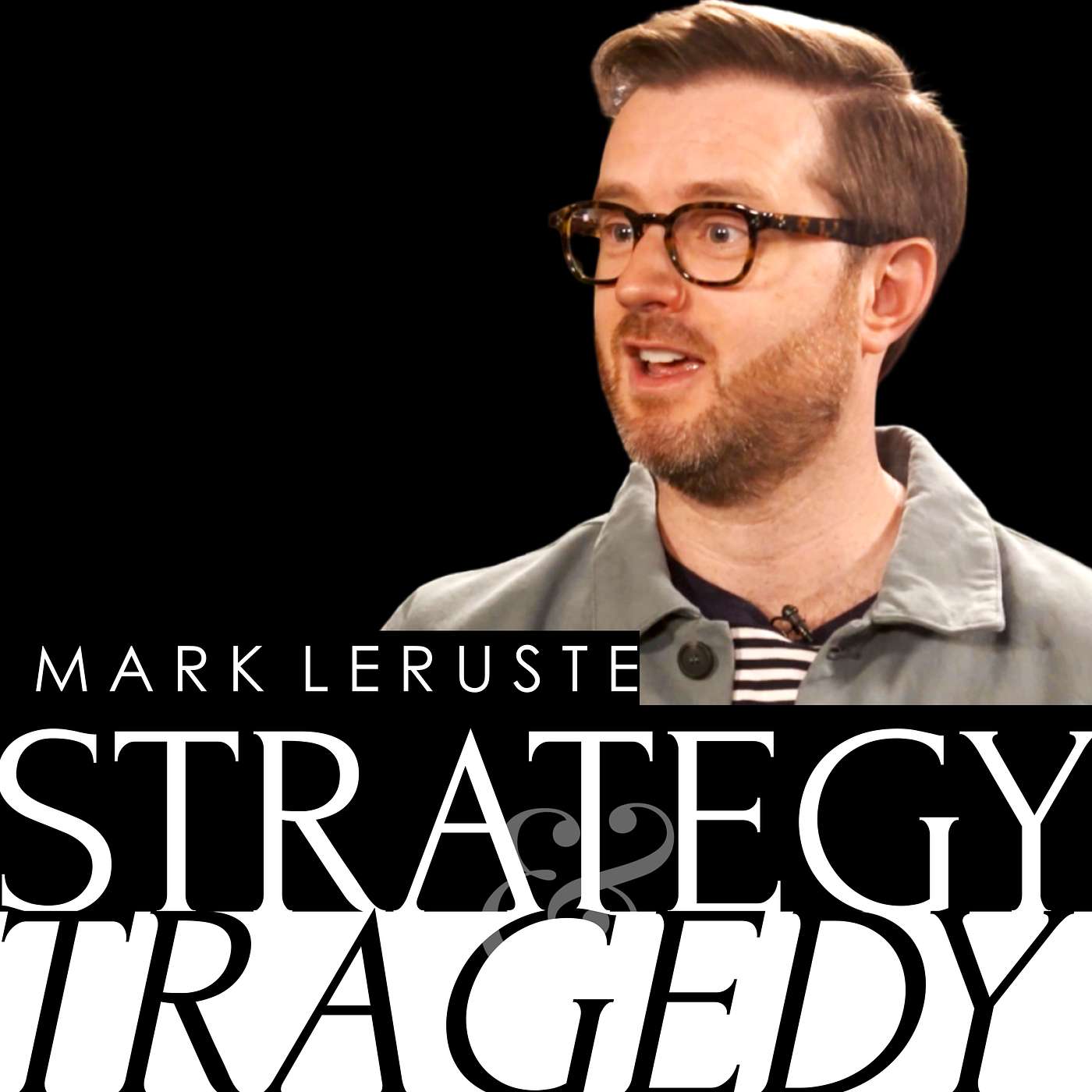
Transform your business and change your life with storytelling expert, Mark Leruste of StoryCast®

 Add vo to ChatGPT or Claude to ask about everything you hear
vo listened to this episode to put together the overview and transcript, so there may be the odd mistake.
In short
Storytelling for business impact and personal leadership—how to connect with audiences, build trust, and prepare teams for uncertainty; plus mental health realities of entrepreneurship and managing self-worth and social media.
Guest
Mark Leruste, storytelling expert and founder of StoryCast®. Background includes running Movember as a country manager (France, Spain, Belgium, Switzerland), building campaigns that increased registrations via story, and later becoming a keynote speaker/author (book No in the Dark) and TEDx speaker/podcaster.
Key claims
Stories are humans’ “native language” and a battle-tested way to cut through noise. Leaders fail by using overly complex frameworks or making stories about themselves; impactful stories are “about you, but not for you.” He teaches a simple “three C’s” structure: Context, Connect, Conclusion (land the plane: “what’s in it for me?”). Entrepreneurship isn’t for everyone; mental health toll is real; don’t tie self-worth to outcomes.
Notable examples
A 1991 Euro Disney TV recording where a joke backfired—lesson: know your audience. Movember “rusty effect” joke driving registration spikes. Ryan Reynolds/Matthew McConaughey’s Welcome to Wrexham using community-focused storytelling to transform Wrexham AFC’s value and trajectory.
Transcript
0:00Mark, why should people care about storytelling? Well, if you care about making an impact and connecting with people on any sort of level, whether that's for your business or for your reach, then you need to pay attention to the native language of the humans, which are stories. In fact, if you look at over 400 ,000 years ago, the way that humans evolved around fire and cooking and extended their days into the night, they used to share stories. now i never know how people know this anthropologist but it kind of makes sense if you think about it because you're probably sitting there around the fire and steve is sharing a story about like don't eat that berry it's going to give you the shits you know or something like that or like don't you know be careful over there there's some predators sort of going to catch you this is how you catch a prey or this is how you find shelter so sharing stories was actually part of a survival mechanism and paying attention was the same um and in today's world where everybody's so focused on AI and like we've got to adapt to technology and we've got to focus and double down on technology actually what I say to companies and to leaders is slightly different I say we can't predict the future there's no way of seeing what the future will be so instead of obsessing about what the future will be obsess on making sure your teams are ready for anything the future can throw at them and the one battle tested thing that's helped countless companies and leaders outperform the market and stand out cut through the noise build trust and inspire action our people use story so Absolutely.
1:19Love that. Fantastic answer. What do you think people get kind of wrong about it? What do you think is the main stumbling block? What's the struggle with storytelling? So from a general perspective of storytelling, I think people don't apply a simple structure, which I talk about in my book. And we are very happy to share the framework with you later. That's number one. The number two is that they make the stories about themselves and they sort of get lost in their own stories. And this I'm specifically talking about people who are trying to build personal brands or leaders within companies or organizations trying to build, you know, inspired teams.
1:50That they sort of make the story about how great they are. and they sort of failed to see the most important part, which is, okay, well, what's in it for me as the audience member, right? And there's seven steps to making impactful stories. Happy to share through that as well. Well, on that note, I do remember seeing you recently posting about your story is about you, but it's not for you. So would you like to expand on that? Yeah. So, you know, obviously I try and get leaders to be more authentic and vulnerable within their organizations, teams, and with the outside world. And one of the things I try and get people to talk about more is about themselves or part of themselves or why certain things feel personal to them.
2:28And one of the things that a lot of people say is that, well, I don't want to come across as self-centered. I don't want to come across as I want to milk my story or I'm trying to somehow manipulate people to feel certain things because, you know, so it's a lot about the outward sort of focus on other people, if you want, in a way, in the sense of like, what do you think about me? because the story is about me. And what I say to people is like, yes, your story is about you in its essence because you're sharing something that happened to you or that you went through or that you resonate with or whatever it is.
2:58But if you understand the power of storytelling the way that I love to teach, it's actually the most impactful way to share a story is when you make it about the audience. So it's about you, but it's not for you because it's a gift for your audience. So really a story is a vehicle for a message you're trying to land. It's a bridge. And I love how that, the bridge, exactly as you say, that sort of, pulls into the middle there the people who maybe go ott to your previous point on like the personal brand and get lost in their own story and then you've got the others who've got the fear of becoming of coming across self-centered yeah so that sort of brings i guess those two audiences together there which is converting that into what's in it for the audience yeah so have you got any we mentioned on practical frameworks we will get stuck into like how to actually do live exercise on storytelling but have you got any practical tips on converting something about you to the audience like could we see your life well so i think you know the the easiest way to start it is to look at my um impact formula the storytelling formula and it's called the three c's it's very simple because if you study storytelling or anybody listening or watching is into storytelling that you've probably heard about the 12 steps of joseph campbell's hero's journey or the monomyth you've probably heard about the five whys that in journalism um and there's all these amazing frameworks right out there but one thing i noticed especially with leaders and business leaders entrepreneurs founders is that they're quite complex so they're a bit hard to implement in real time especially like you're on a podcast you're on a panel you're on a stage you're in a team meeting you're at a all staff meeting or sort of a town hall type meeting and you get asked a question and you go to pull out a story out of your sort of story bank which i call in the glow in my book i called you know the story bank you're going to pull it out and sort of run it through a framework and 12 steps seven steps five steps are kind of complex so I came up with a three-step framework and I'll share with you now and it's called the three c's um so the first one is called context that's really sort of um tell me so it's effectively give enough information that I don't have to think about um the relevance yeah I don't even give me enough context so I can understand where you are and my mind's not wondering and I'm going to give you an example after we do the three c's so we can in real time you can see um that's just context right it's kind of like tell me second but the second part is connect so also take me That's when you go into the emotional resonance or you go into the pinnacle moment or there's a sort of climax moment in your story.
5:14And most people kind of stop there. Like, right. Most people can sort of get into the story, share sort of like the fun moment, the sad moment, the tragic moment, you know, or whatever it is. But the third part that misses is what I found observing a lot of leaders and working with leaders is the third part, which is conclusion, which is tell me. And that is land the plane. Tell me what's in it for me. Why should I listen? Why should I care? so i'll give you an example uh relevant to sort of um you know one of the seven first seven steps of of sharing stories with impact so it's 1991 and i'm sitting on this bus i'm really excited because we're off to euro disney and we're not going to go and see mickey we're actually going to go and witness jonathan ross recording a tv show um he had he's gone back to but he used to have this sort of evening talk show and he's going to interview dina ross right and so because they wanted to do this big thing at uri disney and have an audience they asked all the local schools all the sort of um uh english-speaking local kids to come and watch and this is a dream come true right because back then i want to be an actor i want to be in tv and so i get there and there's like 900 people in this auditorium and it's amazing and we're seeing like how the sausage is being made you know cut and like they redo a take or whatever it is and in between takes right they have these women walking around with microphones sort of warming up the crowd if you want i don't feel they've been to a live recording but they have these sort of crowd warmers i don't know what you call them and at one point she says uh would anybody like to say a joke like does anybody have a joke and like three kids raid their hands and i'm one of those kids and i'm thinking as i'll go up you know towards the microphone and all the other kids start sharing these jokes like you know why did the chicken cross the road or whatever it is and um and i'm like i've got the joke like it it absolutely like smashed it in the courtyard this morning like just nailed it everybody was in stitches so i'm going to say that joke and in case you're wondering I'm not going to say this joke live now because what I will say is that involves a parrot Jesus and a coca-cola and uh and I say the joke right at the end of my joke half the room goes like oh and the other was like oh like awkwardly laughing and the woman snatches the microphone on my hand and she goes like okay thank you very much and she leans in and she's like don't ever say that joke again and I was really confused right I was really confused because I was like, but this joke did so well in the courtyard with my mates.
7:27And somehow I've just been told never to say this joke again in public. And the important lesson I learned that day was know your audience. It's not about the story. It's not about the message. It's not even about what you're trying to say. It's about knowing who you're speaking to so you can meet them where they are. Love that. So that live, right? That's the three Cs. If you think about what I just said, I said it with the context that it's 1991. You know, I'm in a bus. I'm excited. I'm not going to Euro Disney. Then I take it to the moment where she snatches the microphone and she kind of says, don't ever tell that story.
7:54That's the sort of climax. And then I go, what I actually learned that day, the difficult way was you've got to know your audience. You learn the play. Yeah. And another way that you can use to say this that's quite easy is just say, and the reason why I'm telling this story is, if you get lost in your story and you're kind of going off on a rant, one way to come back is just to say, and the reason, you're probably wondering, asking yourself why I'm sharing the story or the reason why I'm sharing the story, and then you're there. Love that. Gets the crowd back in. Yeah. Bearing in mind, this is kind of very sort of business-focused, entrepreneurial audience.
8:20Let's connect that. Obviously, this is applicable to everyone, but just connecting it specifically to business now because storytelling matters not only when you wrote a podcast or to kind of you know get the get the crowd engaged but even in fundraising like pitching time and time again like the data has gone to show like the story that you tell especially if you're early stage like many of my listeners are that story you tell to get the investors along that journey get that conviction can you talk a little bit to the I guess more of like the measurable impact and um the measurable impact in the storytelling in business yeah i mean look i'll give you a personal story as i probably would probably guess by that but um the truth is they used to have this joke at um movember so i used i used to work at the movember foundation i was one of the country managers and uh and there was this joke that we called it the rusty effect um and it was effective when i used to go into market so i'd go into so i ran movember france remember spain remember belgium and remember switzerland and um and when i'd go into market you'd see a sort of spike in registrations and the reason being is i was just using story right that was the only thing i was using so i'd go out there i had a you know backpack a very questionable mustache and sort of a story and that's what i did i used to share sort of um the story of november and and sort of my story towards that and and you would see a definite sort of link between activation communities and and results the other thing is that if you think about um actually i'll give you a concrete example because i shared this example yesterday in the keynote i gave um to 400 plus business leaders and wrexham afc right so it's a sort of a small welsh football club you know mining town proud you know and my mom's welsh and so um in 2021 two hollywood actors canadian an American unit, Ryan Reynolds and Ryan Macken.
10:13I can never pronounce his surname. I'm dyslexic, so forget about that. And they buy the club, right, for$2.5 million. Over the course of the next four years, the club gets back-to-back promotions, goes from Division V to be coming now into the Championship League. For people like me who have no idea about football, which is, I don't know about football. What you need to know is that they were at the bottom of the professional league, and now they're literally one promotion away from being in the Premier League. and now they're worth an estimated$133 million. Now, you could argue there's many things that happened, but I'll tell you what I saw from a storytelling perspective.
10:49Ryan Reynolds is a genius at taking a brand or a product that might be in a saturated market or might be a struggling market and turn it into one of the most valuable assets. And he does that through storytelling. He does that through band building. And the way that they did it is that they did a documentary called Welcome to Wrexham. and they humanized the club, the supporters, and they made it all about the community. It wasn't about the Ryans. And it was all about the club. It was all about the community, this story. And they had this vision. It was a crazy vision when they were in Division V, which was like to turn Wrexham AFC into a Premier League club.
11:26And so this idea that this was even possible, and obviously they invested money and they got the people in and players, all this stuff. But this storytelling ability enabled them to build a franchise or like a club that's becoming a staple name. And it's just one promotion away from being the product. It's completely crazy. And there's countless stories like that. You see brands who embrace storytelling as a way to leverage their product. And I think also people don't buy necessarily the best product. They tell the product that tells the best story. Yeah, I love that. That makes complete sense.
11:55what I just connect that to sticking with the entrepreneurial theme is in the great TED talk that you gave a number of years ago you highlighted the disparities between the glamorous life of entrepreneurship which I think more and more people are realizing that is not the case and the show as well is absolutely the purpose of that is to get behind the scenes and actually understand more of the realities what can you kind of share with entrepreneurs to help them kind of prepare for the realities of what that journey looks like yeah so look i'm eight years into the journey right give or take nine years wait wait what are you 2025 yes nine years there'll be nine years this year that i've been running my business yeah almost a decade that feels pretty crazy which will mean i'll almost be more um uh sort of a business owner than i have been an employee which is interesting anyway yeah so it feels longer with covid in the mix as well like Right.
12:48Yeah. And I'll say something that might be controversial, but I actually don't think that everybody should be an entrepreneur. Right. Like this was my harsh reality that I realized. I don't think everybody is necessarily built to be an entrepreneur. And it doesn't mean that you're less than by saying that. I just want to make that very clear. There is not a superior hierarchy of if you're a founder, if you're not a founder, if you're not an entrepreneur. The reason why I say this is that I think there can be a sort of glorification of entrepreneurship online. And it's like build to build is to follow your dreams.
13:15And for some people, 100%. And I think entrepreneurs and founders can solve some of the world's most meaningful problems. And we need entrepreneurs. We need business owners for sure. I also think that some people would be probably happier within a company where their values feel more aligned with the work that they're doing, where they feel the mission is compelling, where they feel that the vision is worth fighting for. and they want to help build this sort of company where someone else is perhaps founding it or leading it. I want to caveat my answer with that because I think we can be quick to think like, I want to run a business because I'll have all the freedom that I want and I'll have all the opportunities, all the money, and it's not at all like that.
13:50You know this. Anybody who's spent enough time with people who've built businesses from single digits to eight figures such as yourself and me, for my podcast, The Unconventionalist, I've interviewed like hundreds of people through that. is that you realize that you've got to have the ability to sustain the highs and the lows. It's going to take a toll on your mental health like big time. You know, there's studies I talk about in my TEDx talk, you know, the study of Dr. Freeman, who sort of studied entrepreneurs and the link with mental health. And there's like a higher probability of you having like depression, anxiety and like all this stuff.
14:22So that's the first thing I'll say. The second thing is if you're committed to it and you've got an idea, you want to do it. It's like, have the grace to recognize that it's not going to be easy all the time. And don't try your best and not tie your sense of self-worth to the outcome of your startup or your company or your business. It's really important, really hard to do in life, but so important if you can get this. Because it's sort of like you're trying to create this thing. It's an extension of who you are, but it's not who you are. And we can get so tied up that if I don't make my numbers, that means I'm being rejected.
14:53If I ask for a sales, I'm the one who's being rejected. so i'll say to people to try and really dissociate yourself even if you're building a personal brand right which is what so i keep in mind that i spent about a decade as an employee and i went through different variations of positions but you know as a manager and i was generating about six million euros of revenue for a business school i was working with you know i raised 2.8 million euros from for for men's health for food november um so i was a pretty high performer when it came down to what i was doing i was really good at it and i thought that when i would transition to running my own business it'd be easy i'd be like oh all the mistakes that somebody just make all the stuff that i was judging criticizing and i would never do that you know then i would be like of course i'm a unicorn i'll be different and boy was i wrong right like when it started i was like all this sort of weird stuff that's coming up around i don't want to pitch to you i don't want to say a number because it feels weird and awkward and i'm not quite sure and all this weird stuff goes starting mixing up and i realized like oh it's because i'm internalizing this business like this is an extension of me so therefore if you reject my business you're rejecting me and so i would say to people to try and find a way to say this is a product it's a service it's not you even today right so my product is a keynote so i effectively go into companies or conferences and i and i deliver a sort of inspiring keynote it's not it's me because i'm performing but it's the it's the product people don't buy me necessarily right like i'm not a simon sinek or bernie brown yet whatever what the thing is yes yes but but what i do is i'll solve a problem and so what i have to remember is like if someone doesn't pick me for their event or someone doesn't reply yes to a pitch it's just that they i didn't do a good enough job to to express the value that i could bring or it just wasn't right for them but it doesn't mean i'm inadequate it doesn't mean that i'm not enough it doesn't mean that i'm not lovable and i know it sounds weird to say this but i think it's an important conversation that a lot of people aren't having yeah and the final point i make is you've got to find a community of people who will be real with you and will tell you like if it's time to stop it's time to stop or if it's time like push push you know or if it's time to rest just rest you know sometimes just if someone said hey it sounds like you've been on the road a lot like i've been right now you can hear like i'm run down at the moment um maybe like take a break you know maybe you don't need to say yes at every gig you're gonna get maybe like some of them you can sort of say hey i'm sorry i'm busy i'll come back next year so have a community that can have your back because i really think that um the way that you thrive is by is by making sure that you surround yourself in a really sort of positive is a weird one but like a sort of optimal environment and i'm not just talking about like your flat or the car the bike that you ride i'm talking about the people you surround yourself and people who genuinely want you to succeed and i've and i've seen this and you've seen this where we are sometimes in a community and it and it almost feels like they say that that's great but it's not genuine and it's like it's almost like you feel bad to share some of the wins that you've had or maybe you said you know and shout out to mic drop community members watching this hopefully you know i think that's an amazing community for example of speakers who are actively trying to help each other out and share each other and it's and look i'll say this and i'm not proud to say this i think you know a lot of people think that i'm i'm i'm naturally generous and able to connect people and give and all this stuff i've had to learn it because i think i was wired as a kid because of the quote unquote trauma i went through as a kid that i was really on my own that I had to make sure that I did everything I needed to do in order to survive and thrive.
18:10When I've come to realize that actually we do much better by helping each other out and that if you succeed, then I succeed. It's like almost a Ubuntu sort of mentality of like, I win when you win. Yeah. A mutual friend of ours actually introduced me to the concept of the go-giver. We're all familiar with like being a go-getter. Yeah. Actually being a go-giver. Yeah. And that value that you get exactly to your point there on helping others. it's not you're not giving away anything of your own no it's you're actually you stand to gain more than anything yeah and it's the opposite of like a scarcity mindset yeah really i've really had to and i'm trying to do this with my kids like the growth mindset this kind of idea like they'll say like oh why don't i have the same amount or and i'm always going you know if you spend your time comparing yourself you spend your time you're never going to be content whether you have right and like you know sophie devonshire uh when you to give a shout out to she's amazing at this right she's the CEO of the marketing society and um she's so good at connecting she's like a super connector right she's the one who connected me to my publisher she's the one who connected me to a speaking agency who booked me and stuff so she is always really out there actively connecting and inspires me to do the same so when I can connect people yeah you know when I can get people into gigs and stuff I love doing it it's such a productive ripple effect isn't it because it does make you feel like you want to do the same you want to pass it on pay it forward you kind of brushed past trauma as a kid is that something you're okay to talk about i'm just intrigued what that was about yeah um no so it's no secret but so i'm i'm dyslexic um as i like to say i'm a proud dyslexic thinker with a adhd powered brain it's kind of like the way that i great um i know this now but back then this is in the early you know the 80s 90s and um it wasn't really a thing especially in france it's archaic educational system And so I was...
19:53What's the France relevance? Oh, because in France, it's like, even still to this day, I would say it's about five to 10 years backwards compared to the US and UK when it comes down to neurodiversity. And you grew up there, didn't you? Yeah, I grew up. Yeah, sorry. Yeah, thank you. Yeah, I was born and raised in France. Thus the name LaRousse. You know, I often say when I'm on stage, I'm like, I'm half British, half French. Nobody's perfect. It gets you a few laughs in the UK. I said the same joke in France. It bombs, right? And I would realize, oh, self-duplicating humor is not a French thing.
20:21um so yeah i was born and raised in france and look i was a really sort of creative active probably bouncing i thought i was probably a real pain let's be honest as a kid as a teacher must have been a nightmare but because i couldn't read out loud i couldn't spell i couldn't do basic maths i was basically bullied on on an almost daily if not weekly basis by my some of my french school teachers so in two pivotal years when i was like five to six or six to seven and then eight to nine or something like that and it left a lot of scars right it left a little scars because if you're constantly being reminded that you're inadequate that you're just stupid that you'll just amount to nothing um you sort of internalize that and i was then held back a year uh when i was maybe about 11 something like that 11 or 12 was help i eventually was kicked out of conventional education i was 16 and i went into this sort more sort of in theory supposed to be like more professional route where you're not academic academically sort of gifted normally if you go these sort of things and it's looked down upon a lot in france at least back then but through you know a series of events i managed to get into university and you know my life turned out to be you know gray and i'm really grateful for my life but i still to this day it's really interesting so for example when i was given doing my slides for yesterday's keynote i originally had like 460 slides right for a 45 minute keynote yeah then i break it down to 220 slides so i went on stage over 220 slides for 45 minutes.
21:41And what's interesting is that I think part of it is driven by the fact that I still, to this day, feel like people will know that I'm stupid or that I'm inadequate. And so I need to make sure I put up smoke and mirrors. So if I boom, boom, boom, if I do all this, like me, smart stuff, quotes, and like, I can hide. And it's taken me a lot of time to sort of unpack that and to go, actually, I'm a creative. I'm just someone as a creative who happens to operate in a business world and I love marketing and leadership and impact all that stuff but yeah it's it's that sort of childhood wound that still you know sort of drives the train at times and drive the car which I'm still working through yeah um and and thus the whole idea of you know I was so driven when I was a kid um I was so committed internally I was convinced I'd be an actor I was just convinced right yeah because all the teachers were sort of going you know you're not gonna match or whatever and thank god i had the anglophone section there who sort of was a beacon of hope because we had six or seven hours of english a week and um and then i was on set of a tv show called the count of monte cristo with jean de pardieu and um i was so excited i was like oh my god this is it this is the beginning of everything right because i'd been through auditions and i wasn't one of the last kids to get picked for a film of jane austin with uh jane ayer john austin whatever the film was and they said oh sorry you didn't get it it was up to you and this other kid he looked more like the main actor i don't know if it's you and mcgray with someone like that and then um but we'll give like there's this extra piece if you want you know this tv show i was like yeah great i'll do it so i'm on set and i'm just in costume they purred my hair whatever it was there was like little chairs and hot chocolates and sandwiches it was just the best right and trailers and i'm standing there this guy in my mind he's like 67 he must have been 24 right i'm a kid so he's but honestly he must have been like actually quite young but in my mind he's like this really old guy and um it's like what you're doing here i remember he had like this long hair and he was like juggling or some some weird stuff and i'm like oh i'm i'm gonna become an actor i'm gonna be over the next brad pitt the next tom cruise like you know just so you know and he's like right yeah no that's not happening like one in a million make it you'll be waiting tables for the whole life like look at us you know there was like all these guys sort of wailing around like this is what we do just to get a paycheck you know it's and i just remember as a kid just going oh my god that sounds awful i definitely don't want that you know reality check yeah the reality check and and so i was like well i better you know and so when it came down to studying you know university i studied business really as i thought it was a backup plan yeah i'm gonna study business and i'm gonna go into acting and if acting doesn't work out yeah i'll go to business and i'm glad you know obviously you're doing incredibly well now so obviously happy ending so to speak everything's worked out really well but listening to your story there i can't help but wonder what a dangerous recipe that is going into the world of acting with already these wounds from childhood and already having low self-esteem trouble with your self-worth understandably through the bullying and then obviously you know going something like acting it's just going to like amplify that 10 000 times so you know um you never know you know things maybe work out for a reason but i get to perform i mean honestly like i was thinking about this yesterday the weird thing is my wife can't understand this right So I sent a picture yesterday.
24:52So, you know, I don't know when this is coming out, but people can scroll back on my LinkedIn feed and they'll see a picture of me taking a selfie on stage with 450 people in the background. And I walked into the room, right? And there's like this incredible production. We're talking like, I haven't seen anything like this in the UK. Like these LED screens all around and music and like this huge ballroom, which I think could probably hold a thousand people, right? And I get in there, I send the picture, I'm like, look how awesome this is, it's amazing. I'm always like... Not a lot of people would see that and get excited, you know, and count the minutes till you get on stage.
25:25So so when I walked on stage yesterday, you know, and I'm on that stage, I'm home. It's so it's so weird to explain this, but like I am home. I get on that stage. I feel super comfortable. It's like if I'm talking to you right now, but I just have 450 people in front of me. And someone asked actually in the Q &A to say, how do you find the difference between sharing a story to one person versus a group? And I was like, well, obviously, I'm not as animated if I'm just with the one to one, because it'd be so weird if I'm like walking around like. And what you really need to do as a leader, you know what I mean?
25:52So that is probably the thing. But otherwise, from an energy level, I'm as connected, as inspired and as passionate about this message as I would be if I'm talking to you on a podcast, on a one-to-one over a coffee where I drink tea, but on a stage. Yeah, love that, love that. Well, I think if anyone gets that, I definitely do, Mark. But I appreciate that we are both in a very tiny minority. With Alex Merry, we talked about how the very vast majority of people, like 97 % or something, would literally rather die than go and speak on stage. so we're a pair of weirdos you and I but hopefully our audience can really take something away from what we're talking about what I want to connect this back to and I'm really glad that the story has kind of taken this direction because I did want to circle back to your points around self-worth in entrepreneurship because there was such a great answer you gave before on like preparing people for the realities of entrepreneur everyone should be an entrepreneur I do agree with you on that so there's a couple of things so one is with comparisonitis and social media um it's there's a couple of tension points because you've got the nature of the world that we live in today in 2025 but also in business and especially if you are bootstrapped or you're really trying to make kind of each penny count personal brand at least you know for me i've definitely found that has been one of the most powerful if not the most powerful way to build a business without the media budget and paying the zuck tax which I talk about as well can you talk to the mental health side of that given like your previous role at Movember quick one so sorry to interrupt I'm sure that you are on the edge of your seat listening to this interview at least I hope so I'm so aware of all the other podcasts that are already out there so the fact that you've decided to tune in and listen to this one is not lost on me if you can just go that one step further and hit that follow or subscribe button.
27:41Doesn't cost a thing, takes two seconds. Now is your chance to do that. It means so much. Really appreciate your support. Thank you so much. Now let's get back to the interview. Can you talk to the mental health side of that? Given like your previous role at Movember, your own personal journey with not tying it to your business, your self-worth and just kind of that, avoiding that comparisonitis in social media. It's really hard. Like I'm just going to say this straight up. I'm not going to come here and think that I've got it all figured out. it's really hard so my everyone's gonna have their own stuff that sort of they peg their their sense of success right so the the narrative that i had growing up was money equal success right so you know no fault of her own but my mom might be talking about you know so and so look at like they've got this big house like that you know they've got a great job loads of money there's always this narrative of like money equals success so for me um like the amount of my bank account equals my amount of worth and it is so messed up because it's so ridiculous i know people who are millionaires if not billionaires and they will tell you trust me when i say this money gives you ease and it gives you loads of sense but it will not bring you happiness that sense that you're feeling in your heart that if you would get like a million or whatever it is in the bank that you're And if you're living, you're not right.
29:00And I've seen this my whole life, by the way. You know, I've been very fortunate in the sense that, you know, I landed a TEDx talk. It's had over 1.3 million views. My podcast won an award for best podcasting interview at the Business for Podcast Awards. My book, No in the Dark, won the best self-development business book at the Business Book Awards. And I could go on, right? I thought that I would feel different when these accolades happened. Hey, spoiler alert, doesn't. Doesn't change a thing, right? It's great on that day. But then the next day you're like, right, shit, the hole's still there.
29:32That's normal. Yeah, that nagging feeling is still there. So we hear about it all the time. We know this. The implementation is the hard part, which is this idea of trying and know that just you being alive is enough. And the way that you show up with your friends and your family matter more. Because one of my TEDx talk, I think one of the reasons why it resonated with people is that I sort of, you know and I was very scared by the way to share this part of the story online because I thought my business would tank I thought that that would be career suicide effectively because I was going to talk about how I struggled how I didn't know how I was going to pay my mortgage how I was on the floor crying one morning going like what am I doing you know I thought this is going to be easy but I think it's about really giving yourself the grace of understanding that it's going to be hard and you've got to know the foundations that you need to put in place in order to function just operate at a functional level if you want so for example for me i know that if i eat a bunch of junk food if i don't exercise if i don't hydrate if i don't sleep well if i'm on social media doom scrolling i'm screwed like forget it my mental health you know i've got adhd and so i try and manage as much as i can and so find your baseline of some things that you can do the other thing which is i think is is really really hard um is to is to try and limit your usage of social media and i know we all know this we'll say this and you know alexander bell's an amazing uh speaker on this about the the tech rules and how you know we need to make sure that we uh rule tech and before tech rules us but it's it's a really important aspect i think it's especially now right like think about it i heard someone on this where i'm talking about this um chatbots are going to redefine the relationship that our kids have with friends you know the same way that we didn't pay attention to social media how it would affect the brain of teenagers and young kids we're going to go through this with chatbots now because imagine kids interacting with chatbots they have a friend on demand all the time answering all their questions being there whenever they need they don't understand anything about limitations or why would they need to go make out friends on the outside world when they've got this bot right here so all these things that you know as parents or non-parents we need to be aware of and and then again um i i try and and and observe people like i look around who do sort of things so i'm fortunate in the way that because I'm a parent I I am so aware of the um finite amount of time that we have on this planet especially with people that we love you know I see my kids grow before my eyes and I feel like it's sand slipping through my hands and I have a chart in my uh gym my home gym that um that people find really weird like my wife and my friends just find it really anxiety driven but it really helps me It's effectively a sort of a big poster, right?
32:16And it has 52 weeks per line. And it has about 90 lines going down, right? And it's my life in dots. And every week on Sunday, I fill it with a black marker. And it reminds me of how did I spend my week? You know, how did I spend my time? Who did I connect with? And when I get all this sort of stress, and thanks about, we talked about this, you know, like in the speaking world, there are moments like well i had a good you know i had a good ride it's over you know no no gigs are coming in no leads are coming in and then it just goes crazy right and it's this circle um so for me it's just to remember that and i never i never would have said this before i really wouldn't i would have been like i was all about business and success and and all this stuff and i think i've seen enough entrepreneurs like the one that really threw me off actually it was tony sue you know the founder of zapos um his book delivering happiness is one of the like an amazing book and And this guy, like, yeah, I really, and then he died.
33:11And, you know, Fanarty had all this sort of mental health problems and struggle with a lot of stuff. And you hear these stories over and over again of these, quote, unquote, air quotes, and I'm doing air quotes, people just listening to this, who are successful on the outside, but deeply broken on the inside. And so I really would love for people to lean more into mental health support, finding community and exercise. I mean, I'll shut up because I'm going to rant, But the one thing at Movember that doctors all agreed on, right? You couldn't like do tomatoes help prevent prostate cancer or not.
33:43Everyone's debating this, whatever. But the one thing that every doctor said, exercise is the best medicine for your mental health. It just is like, you know, the oxytocin that will release the hormones that you're creating. Like I'm a different human being when I go to the gym, just so we're clear. I'm usually a horrible human being when outside of the gym, even grumpy. And I'm like, I just feel like a tiger in a cage. um so just exercise that's the answer no i love it i love that so much like the fundamentals just getting those fundamentals right sleep yeah nutrition yeah all the good stuff and it's not always going to be like this yeah i need to say this i'm victim of this where i'm like if i don't have my morning routine i just i just can't do it forget it like i don't have my sort of like 10 minute calm meditation on i can't do my journaling with my green all that no so again I heard someone say this it was love I loved it it said sometimes it says you gotta you gotta lower your ceiling and raise your floor something like that I love that it's like if you've only got time to just focus on water today you know Robbie Thompson taught me this you know if all you can do today is just hydrate enough you just do that that's enough make it easy make it easy do whatever you can you know instead of like oh well I punctured a wheel so I might just puncture all wheels right right I've got a few more questions before we wrap here so one is i'm having these like brain i personally haven't slept enough so i keep having these like brain fart moments so this is definitely going to be cut as we're going to cut this i apologize to my editor um because there's so much i want to dive into what was i going to say all right a couple more questions on the social media front before we wrap here one is just sticking with kind of personal branding and business as well whether you are a keynote speaker or an entrepreneur or you're the founder of a SaaS business whatever it may be we were just talking before we hit record about you using LinkedIn and really just focusing on one channel and just doubling down on that yeah and we were just talking about how it can be such a time suck yeah not just the content creation you were saying you were like two hours on a post this morning very understandable let alone all the commenting the engaging and everything else so totally with you on all those fundamentals on like taking care of yourself don't get sucked into that too much social media is just not going to do anyone any good but keeping it on the business benefits here as well where it's like we know the power of personal brand we know i guess the question here is like what advice could you give when you are when you have that temptation to be like if i just post a bit more if i do a bit more commenting if i spend another if i do another channel like there's no ceiling to any of that well i'll go back to my mate daniel priestly who's you know he says abs anything but sales i think it's really interesting because i think social media can be a procrastination yeah and we're avoiding to do which is actually having conversations with potential customers generating leads converting leads and growing on business um i think social media should be part of his strategy but it shouldn't be the only strategy if that makes sense um and so i i know that sometimes you can think like oh i just need to if only i was posting daily like i've posted daily for over six months on linkedin right and And I didn't, you know, yeah, I get a bit more audience, but I didn't necessarily gain more traction.
36:58And, you know, someone posted, I wrote this sort of reflection of one year of posting regularly on LinkedIn, what lessons I learned. And the comment thread are amazing. If you can go back and find that post, the comments are just filled with like tips and insights from like these really helpful sort of LinkedIn members. And one of the things I learned is actually it's sort of about being strategic. so you know when we talk about business one of the things i think is not being spoken to about and you know i've got to give credit i think it was alex and mosey who kind of spoke about this and then um elena who also mentioned this but there are three things that i think are really under spoken about and aren't celebrated enough especially as us creatives you know like oh no it's one of them is um impulse control so they're always gonna be shiny objects this new platform this new technique have you tried this carousel have you tried this live uh newsletters webinars you know there's always new things new channels and so you think that that is the magic one that is the magic pill that's missing right so impulse control is about saying no i'm gonna commit for the next 12 months which is what i've done i want to get out of linkedin because i'm like i should be on youtube which i'm going to be transitioning to youtube at some point soon um but i've committed so right now my strategy is impulse control second one is operational discipline operational discipline is the ability to go like i am executing on the thing i'm going to do um and just having that ability to do and the third one is ruthless prioritization um as someone again with my little spicy brain um it's really hard all those three things are pivotal to business and they're really hard especially if you're creative one person band right and so there are a few things you can do you can leverage ai to help you be basically your your sort of chief operating officer, or you can find someone, a team member that you can sort of bring on, whether part-time or full-time to help you really give those strong foundations.
38:48That's a really important point I want to say, because we can talk about social media tactics and stuff that works, all this stuff. But if you need to understand the fundamentals that social media is part of your strategy, it's not the only one. I am connecting with people virtually. I'll have like, you know, I don't do a lot at the moment because I'm on the road a lot and I'm traveling a lot for work, but I'll try and have a random catch up on a Zoom and I don't know where it's going to lead, right? I mean, case in point, we're having this conversation today. We actually met up and we connected on Zoom after being part of Mic Drop.
39:16I also go and make sure I reach out to my previous contact, my previous clients. I said, do you know anybody who might be looking for a speaker at an event coming up? Because they'll know. So people, I think. are you quite regimented with that sorry no no i'm not like so i have a i have a structured crm pipeline um which is really it's kind of like lead in contact made um meeting scheduled uh proposal sent negotiation one lost that's my that's my pipeline right and so i move contacts throughout this pipeline and um and i checked my crm system not as much as i should do but that's kind of what reminds me so when i get you know and also little tactics you know alex bell will be much better at this but he you know things that delete your i don't know was it you no who was it did you delete your linkedin on fridays someone else yeah anyway someone else in the group um community deletes their linkedin app on friday night and reinstalls it on the monday i forgot what it was um so things like that things like you know take back the control yeah i mean you know we again i don't want to talk too much about parenting and stuff but we're seeing now there's a battle right there's a battle happening with our kids around screens and so schools now you know some schools have introduced ipads and stuff in schools but other schools like in denmark and in spain are banning them because of the impact it has on the brain and we had a very conscious commitment very early on that we just wouldn't uh expose our kids to their screens we you know they can watch cultures once in a while watch the films in a while but it's not part of their conscious sort of belief that this is something they could do so they are some of the most creative kids you'll see when they're like you know they'll play and they'll create games and all this stuff and my wife who did you know you know she's got a neuroscience background at oxford did a master's there she's got a psychology background and you know from university of paris and did a childhood sort of child child something psychology anyway so that's her stuff right and she's always been the one that's been much more firm than me just like no this you know this will impact their brains and the reason i'm saying this is that um you can see there is no way you can win a battle against an iPad.
41:19Exactly. If you have the choice between creative free play, being bored or getting on an iPad, you will always try. Now I'm saying this as someone who also gets why, like, you know, especially during COVID, you know, I'm going to meetings and calls, well, you're going to watch a few more cartoons than you would normally do. You know, you're at a restaurant, you want to have a meal with your partner, yet you're going to get the phone or iPhone. Like I get why. There's no, it's not at all coming from a place of judgment. It's just coming from a place of, we need to recognize that we're coming with a battle.
41:43And the reason why I'm saying this, it's like if you're an alcoholic and you're keeping alcohol at home. The battle is 10 times harder. And so if you don't have certain coping mechanisms in place to make sure you're not overusing social media, such as deleting apps on your phone that you could just be doing on your computer once or twice a day, right? It's going to be really hard because you're fighting against an army of people whose sole purpose is to grab your attention and to keep you on there as long as they can. Exactly. They're literally such powerful companies. Yeah, yeah, yeah. And you're not going to win.
42:15You're just not going to win. As much as I've got willpower, it ain't happening. Yeah, yeah. Link to that. My quick penultimate question just to sweep in there is actually a question from one of our listeners who is also a parent. So while we are on that topic, let's just spend a bit more time on that. They were asking, what can you speak to? How did you phrase it? It was something around kind of like truth is not as attractive with social media and, you know, some of the leadership these days. And our question was around how can we, I guess it's similar to that temptation, falling into those traps, whether it is social media or buying into certain leaders who are spinning certain stories.
43:02the truth today in 2025 is a loose concept thank you exactly yeah i get it 100 i think i think we're in the age of you know i think i wrote about this and definitely talked about this that i had this thought one day i woke up i was like oh one day while kids will ask like did you used to have real actors like did you actually have humans used to act that was a thing you know now we have like this sort of ai agent but like actors aia actors you know on film we watched that Black Mirror episode last night. Oh, really? I haven't seen it, but I didn't know that was it. Yeah. But, you know, it, yeah, it's like the, there's a part of me that's both fascinating and terrified, right?
43:42I'm thinking about, for example, Alex Hammond, what was his name? I forgot his name, the guy who did the Free Solo documentary, if you haven't seen it. He climbed El Capitan. It's in Yosemite. I've seen it in real, so I can tell you it is insanely high and you climbed it without any rope or any safety equipment. If you haven't seen the documentary, see it. It's one of the most amazing human feats. so i see that and i'm like that's amazing but what happens if we you know put a prompt make someone climb up this facade with that and you rope and we see it will it impact or or then appreciation of the human ability to do it so there's this line being blurred between and it's great like for example from imagine like disney disney said if you can dream it you can you can build it you can make it whatever i don't think you ever imagined that that is so true now like i can think about something i had a friend right she wanted to create a jewelry line or something I'm like, describe me what the draw you want to do.
44:28I put the prompt in. I throw the draw. He's like, oh, my God, that's insane. I'm like, yeah, like we're coming into a world where talent in a way that we used to think is changing, truth in the way that we're changing. I think obviously, you know, this is completely apolitical in terms of an observation. But the way that Donald Trump has managed to run his campaign, the way that Brexit managed to run the campaign, it became a thing where people said, but it's not true. But that doesn't matter. This wasn't a battle for truth. exactly it just wasn't it was about who's got the best story yes and best stories aren't necessarily the most ethical you know what i mean like there's sometimes yeah so i'll i'll go back because we're in the parenting conversation one of the common conversations we have around our table is but so and so get to do this right like for example you know i don't know if so and so can are allowed to have x amount of screen or get to do this or whatever it is and the line i always say to my kids is that's great for them but we have different ways of doing and everybody gets to do their own thing we focus on how family operates you're always going to navigate in a world where people do things differently it's not about judging it's just about respecting what they're doing but we focus on us and for me for leaders listening to this or entrepreneurs business like you might be tempted to fall into the well if it's winning why wouldn't i do it exactly we'll be on the right right side of history yeah is what i would say just like do what feels right to you be in your integrity so you know if you're if if you want to be honest about something be honest about something if you don't want to lie or build false narratives then don't do that right you don't have to because winning at all costs for me comes at a cost and that cost is our integrity and i want to sleep well at night love that love that mark my final traditional closing question what's one particular tragedy that's taught you an unforgettable lesson oh um the two come to mind um the short one is um when i was younger someone we knew it was a friend so but someone we knew from our from our sort of group of age group um took his own life when we were about 15 or 40 i can't remember we're quite young it was i had it was a really new concept back then it was not like today mental health is being spoken to um and shortly around that one of my brother's best friends took his life in a pretty yeah pretty brutal way and um so my dad i remember we sat us down and we were all outside i think they were like my brother and his mates were like outside morning sort of like candles and and my dad was there and i remember he said something that stayed with me forever he said you know the two things he said one of them is that he said you will never understand why someone takes that because it is the most how do you say it you know especially it was in friends but it's like it's the most and i put air quote like a natural thing to do as human beings because we will if you throw a baby in the water they will try and survive yeah they will naturally try and find a way they will try like you know most most like natural you will try and fight so to end your life means that you've you override a human basic instinct that is no longer in the world of being rational and it's one of the biggest tragedies, right?
47:34So that was the first. The second thing he said, he said, taking you alive, suicide, is a permanent solution to a temporary problem. And that line has stayed with me. You know, this idea that the reason why it's a tragedy is that it's a permanent solution to a temporary problem. And I think in a way that, yeah, shaped me, I guess, you know, sort of trying to understand when I'm around people who are struggling with their mental health and, yeah, that comes up. And then the second really quick one is. I think just like linking with the entrepreneurial highs and lows as well. I think you also touched on like those fundamentals and having been there myself personally where you haven't had enough sleep.
48:16You haven't had good food and you can't see the wood for the tree sometimes. And then you're kind of like you get some bad news and someone lets you down and it's kind of like, oh, my God, one thing after another. it does when you're in the moment yeah it does feel to that great line of permanent problem sorry permanent solution to a temporary problem yeah i think that we at least just only speaking for myself here it's like i think i can sometimes forget the perspective yeah because you're in the moment and you're kind of like head down you're down in the dumps you're like wow this is so shit and i kind of i guess that speaks to also the great stuff you're saying about the community as well and having someone else to like just lift your head back and just be like you know it's not that deep or just go and touch some grass or you know this this too shall pass yeah i mean look i think one of the big trends at the moment are community i mean so i don't live in london anymore right and apologies for my nasal sound it's like getting unreal i'm like no longer be able to breathe in a second high pollen pound today no worries um you know one of the things i've noticed walking around london yesterday are run clubs yeah it's insane like i was on oxford street area yeah i'm not quite too you know gym shop and like as it and like you know all of them were all and i thought i was like yeah that makes sense in the world we feel most disconnected where ai and technology is going to take over like community building going back to what the thing we've lost through religion that used to want to serve its purpose um and i just want to speak quickly to what you just said i learned this from tim ferris have you ever heard of the acronym halt I'm not sure yeah so if you're feeling like that Halt is am I hungry am I angry am I lonely am I tired um am I hungry eat something um am I angry go and exercise am I lonely um go and meet a friend am I tired have a nap I mean it sounds so stupid and simple but it's worked so many times I feel like exactly what you said yeah you know I'm ready to give it up and I go halt and I go I'm tired yeah yeah yeah well I really need to get rid of my penta progression and then the second yeah sorry the second one is um well it's it's a it's a weird one but I think it's very much linked to what I do right so it's sort of um it's it's 2009 and I go through a really bad breakup um effectively I found out that my girlfriend's cheating on me and look I'm no saying i've cheated on girlfriends i don't want to come across as someone who's like a higher um you know higher being and i'm not i found actually it's like this horrible sort of moment you know i break up with her she's a colleague um and makes things very difficult so i kind of quit the job i leave i go back and live in my parents house my grandfather gets diagnosed with terminal cancer um just a lot of stuff i need a lot of things happens right and i'm and i'm living and i'm staying at my parents house which i'm very grateful for but i was very difficult because I was like this on a trajectory and my career was doing well, all this stuff.
51:16And I was struggling to get up in the morning. I was struggling to connect with people. Like I'm a social being, I'm outside, I'm outspoken, I extrovert all this stuff. I just was kind of recluse in a lot. And I think one morning it was probably two o 'clock in the afternoon. I was still in bed or something. And like my mom walked in and I told her that I was, thought I was depressed. And she was like, oh my God, you know, don't tell anybody. You're never going to get a job or whatever. and it really it really like scared me you know this moment of oh i can't talk about the fact that i have depression because i might not be loved i might not be accepted i might not get a job and she was doing her best to protect me and we've spoken about this since that is in my book low in the dark the story um and i really appreciate for what she was trying to do and so fast forward to being in paris for the movember foundation where i'm launching movember france and i talk about the movember foundation the amazing work the research the groundbreaking stuff they're doing the awareness the funds all this stuff and there's a journalist in the room and she effectively says you know but why did you want to know to remember france right like you had a job and you quit like why do you want to remember remember france and i remember being at this crossroad of deciding like do i just say the vanilla answer because it's a great foundation and i think men should look silly with mustaches to do a good course whatever or do i say because i went through a really tough time and when i was going through this tough time i discovered movember it gave me a sense of meaning a sense of belonging a sense of purpose a sense of community a sense of set of values it got me out of bed got me creative got me raising money and i really loved it and and i just wish there were more people talking about this it wasn't like today this is mental health is way more spoken about than you know 15 20 years ago whatever and i thought that the world was going to open up beneath me and get and i was going to get swallowed or at best get thrown pints at me or like tomatoes.
53:01And it was going to be like, again, you know, the end of my launch on November. And instead of disconnection, what I got was connection. And that was for me the biggest surprise because this guy, Matt, came up to me at the end. He was like, I just want to say thanks for, you know, tonight, but especially thank you for sharing your story because I've never seen another guy openly share your story like that. And I've been also going through some stuff. And I just want you to know that I'm going to take part in November and I'll get my colleagues to join in. and that was the the penny drop moment for me and i think that's the opening story of my book and you know we went off to win 2.8 you know to raise 2.8 million euros for men's health we got 110 000 people to sign up and my team and i won an award pretty much every year um and it taught me that you know the the story that will change your life isn't the story that you hear it's the story that you'll share you know and if you want to transform your business and change your life learn how to share your story you know your personal story in a powerful way mark love how we've come all the way full circle.
53:56This is a perfect way to wrap this episode, although coming back to this power of storytelling and how it might be about you, but it's actually for other people. Thank you so much for coming on. It's been such a pleasure. The time has flown. Great to hear your incredible stories. I'm sucked in and grossed and enthralled, as I'm sure all our listeners are as well. Lots of practical tips for our entrepreneurs as well. Thanks so much for having me, Steve. Thank you so much. Thank you so much for listening. Really hope you've enjoyed this. You know what to do if you did. hit that subscribe button and we will see you next week
From the publisher
TW: Contains themes of mental health including depression and suicide.
Founder of StoryCast®. Leadership Communication Expert. Global Keynote Speaker. Award-Winning Author of GLOW IN THE DARK 💡
Mark Leruste helps leaders harness the power of their stories to build trust and inspire action. He’s worked with the likes of Google, Microsoft, and Nike to communicate and connect in a way that resonates and drives real impact.
His TED talk, ‘What they don’t tell you about entrepreneurship,’ has amassed 1.3M views, and Steven Bartlett listed it as the number 1 TED Talk every entrepreneur should watch.
In this interview, Mark and Steph discuss:
🎤 Why storytelling matters
🎤 Practical frameworks (like the 3 C's) to help you become a better storyteller
🎤 Inspirational examples from Mark's time at the Movember Foundation
🎤 The blurred lines between storytelling and the truth
🎤 Entrepreneurship and mental health
🎤 And so much more.
Transform your story into your most powerful asset through engaging talks, masterclasses and coaching programmes for business leaders to leverage the power of personal storytelling to connect with their audience, build trust and inspire action with StoryCast®: https://www.storycast.co/
Book Mark to deliver a talk to your organisation: https://www.markleruste.com/
Get involved in the conversation:
🤍 Instagram: https://www.instagram.com/stephmelodia/
🤍 LinkedIn: https://www.linkedin.com/in/stephmelodia-keynotespeaker/
🎬 Watch the episode on YouTube: https://www.youtube.com/@stephmelodia/
🙏🏼 Support the show on Patreon: https://www.patreon.com/user?u=108229517
🎧 Don't forget to subscribe, rate, review, and share with a friend!
More from Strategy & Tragedy: CEO Stories with Steph Melodia
All episodesWe use cookies.They keep vo running smoothly and help us improve it. Privacy policy
Scan the code with your iPhone camera
Listen in the app.
- Play everything vo finds for you
- vo remembers everything you hear
Go to the App StoreFree on iPhone