
In short
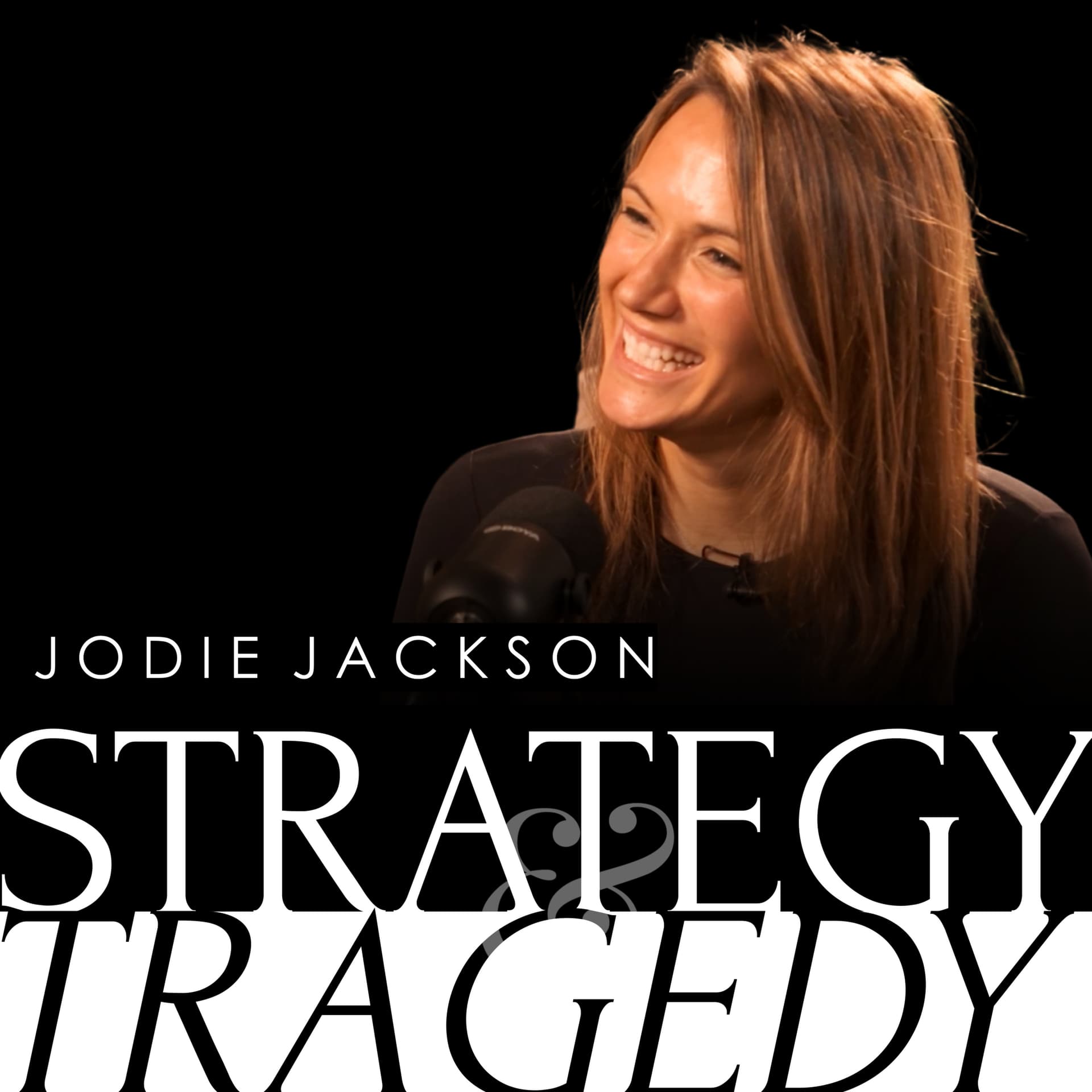
Podcast Episode Summary: Wired to WIN with Jodie Jackson
Podcast Title: Strategy & Tragedy: CEO Stories Host: Stephanie Melodia Guest: Jodie Jackson Episode Title: Wired to WIN: The 4-Step System Entrepreneurs Use to Reprogram Their Minds for Success Episode Description: In this episode, Steph interviews Jodie Jackson, a neuroencoding specialist who trains entrepreneurs to reprogram their psychology for greater success.
---
Key Themes and Discussions
Introduction
- Stephanie Melodia introduces the podcast, focusing on authentic entrepreneur stories that showcase the realities of business life.
- Emphasis on the need for mental and psychological strategies among entrepreneurs.
Guest Introduction
Jodie Jackson
- Jodie Jackson is recognized for her expertise in neuroencoding, which focuses on engineering the psychology of entrepreneurs for enhanced performance.
- Jodie's personal journey began with a media-induced breakdown that led to her exploration of positive psychology and the impact of media on mental health.
Major Insights from Jodie Jackson
- Media's Influence on Psychology:
- Jodie shares her experience with anxiety triggered by excessive news consumption, highlighting the need for a "media diet audit."
- She emphasizes the importance of focusing on positive news and solutions rather than negative narratives.
- Mental Nutrition:
- Encouragement to actively choose what content to consume, as it shapes thoughts, feelings, and ultimately actions.
- Suggests doing a media diet audit to identify and replace negative inputs with positive, solution-oriented content.
- Four-Step System for Reprogramming the Mind:
- Clear Result: Define what you want to achieve to activate your brain's reticular activating system.
- Release: Identify and neutralize limiting beliefs that hold you back.
- Rewire: Use mental rehearsal and visualization to connect emotionally with your desired outcome.
- Receive: Foster a mindset that recognizes and embraces new opportunities aligned with your goals.
- Overcoming Self-Doubt and Resistance:
- Acknowledges that self-doubt is a common barrier for entrepreneurs and highlights the need to feel safe in one's ambitions.
- Discusses the concept of "fearing success" as a byproduct of moving toward unfamiliar goals.
- The Role of Imagination:
- Jodie stresses that the brain cannot distinguish between real experiences and vividly imagined ones.
- Encourages using imagination positively to visualize success and train the mind to feel safe in pursuing it.
Practical Tips
- Engage in Positive Media Consumption:
- Follow solution-focused news outlets and subscribe to newsletters that highlight positive stories.
- Practice Mental Rehearsal:
- Regularly visualize your goals and experience the emotions associated with achieving them.
- Neutralize Limiting Beliefs:
- Use techniques like memory confusion and emotional anchoring to disrupt negative thought patterns.
- Vision Boards:
- Suggests using vision boards to keep your goals visible and reinforce your commitment to achieving them.
Final Thoughts
- Jodie emphasizes that success is 80% psychology; without the right mindset, even the best strategies will falter.
- Encourages listeners to invest in their psychological growth as a foundation for achieving business success.
---
Key Takeaways
- Transformation Begins with Awareness: Acknowledging the impact of media on mental health is crucial for personal and professional growth.
- Mindset is Key to Success: Reprogramming one’s mind is essential to align thoughts, feelings, and actions with desired outcomes.
- You Are More Resourceful than Your Resources: Believing in your ability to affect change is fundamental to realizing your potential.
Conclusion Jodie Jackson's insights frame a powerful narrative on the significance of mental health in entrepreneurship. By practicing intentional media consumption and adopting a structured approach to mindset reprogramming, entrepreneurs can enhance their chances of success and fulfillment in their ventures.
Listen to the episode for more insights and actionable strategies!
Written by AI. May contain mistakes. Listen to the episode to check what was said.
Transcript
Automatic transcript. May contain errors.0:00Welcome to Strategy and Tragedy, the UK's top 20 business show. I'm your host, Stephanie Melodier, and I've created the show to bring you raw, real, authentic entrepreneur stories because there's not enough of them. There's a lot of the LinkedIn humble bragging. There's a lot of the glitzy press coverage. But there isn't a space where you actually get to hear the realities. Hence the name of the show, Strategy and Tragedy. If this is your first time here, then a very big warm welcome. And if you are tuning back, then so great to have you back here again. Now, this is all about setting up entrepreneurs for success.
0:33And what I'm doing this year is I'm peppering in incredible subject matter experts to come in and share their passions, their expertise to also help you in your entrepreneurial journey. And our next guest is absolutely no exception. I am so excited to interview Jodie Jackson, who is a neuro encoding specialist who trains entrepreneurs to engineer their psychology for success so they can think better, feel better and achieve more effortlessly. As a global speaker and founder of Neurosuccess Studio, we're going to be diving into the science of self-influence, how we can retrain our subconscious patterns, upgrade our emotional habits and optimize our mental inputs so we can think clearly, feel stronger and perform at our best consistently.
1:21Ultimately, we are getting Wired to Win. Jodie, welcome to Strategy and Tragedy. Thank you so much for having me. Wired to Win. I am so excited to dive into this whole topic, but let's start at the beginning because your journey began with discovering one unique insight that opened your eyes and became this catalyst for all of the work that you're doing now. So what was that moment for you? So it began sort of back in my early 20s. And as many things do, start with a problem that you need to solve. And it was when I was in my early 20s, I had what I now call a media-induced breakdown. So I was an early adopter of one of these.
2:02This was before we had TikTok, before Instagram had taken off. And what that looked like for me was I was having extremely high levels of anxiety. I was having panic attacks and I was quickly becoming depressed because of that. and um and what it was that triggered it was that I was watching the news every single day for about three years um and that was because of the the work that I was doing at the time at university and um it really damaged my psychology and I did what a lot of people did at that time uh well at whenever they get to that point because I'm sure I'm not the only person that finds the news depressing even if you don't have that extreme reaction um so I did what a lot of people do which is switch off and what I found was that this didn't help me right it made me feel slightly less bad slightly less often but it did not make me feel significantly better and so I did something and I did this before I understood the science behind why what I did was so powerful this was the catalyst that changed everything is I started a website and it was called what a good week and I was desperate right because I was feeling all of these overwhelming feelings about the world and I felt like the world was broken and because of my experience I felt like I was broken and I just felt like I need a different story I need to listen to something different I need to feel something different and so I started this website and I found all sorts of news stories I went on a hunt every week I'm like I'll look at the mud like the negativity but I'm gonna find gold and so I had a purpose when I was looking and I was finding all of these stories um of people fixing the world making it a better place huge innovation that was taking place that impacts all of us but it was like quietly improving our lives like no one was really making noise about it because that's not what the news does right the news reports on everything that goes wrong instead of everything that goes on and that was something I quickly realized is that two things firstly the news creates an incredibly distorted picture of reality but amplifies it to be the whole thing and that colors our experience obviously of life and and when I actually changed what I was looking at when I expanded my lens to see stories of solutions it transformed my psychology it moved me from someone who has experienced anxiety to someone who felt incredibly optimistic instead of having a fear of other people I developed this faith in other people because I was witnessing so much courage compassion and care being taken place daily um and essentially it just made me realize how powerful our media diet is because that one shift changed my life and I became obsessed with understanding what that was and so you know I won't go into the sort of length of time but it was about sort of 10 years I then went back to university I wrote a book I was working with some of the world's leading neuropsychologists neuroscientists behavioral scientists peak performance specialists um and essentially if I could like compress that decade into a sentence it is that when you change what you consume you change who you become and we're going to kind of unpack a lot of that is in this session but that was kind of my my big revelation of understanding just how powerful your media diet was just through my own experience and then when I researched it when I started learning more about how your mind rewires I then became fascinated with this field of self-influence and actually how you can recondition yourself because what this experiment with the media taught me is your mind is programmable and we are all understanding that now as media influence is becoming more and more discussed your mind is programmable and what I'm so excited about and what I love is being being able to help people program it by design by choice being able to install what they want and de-install what it is or uninstall what it is that they don't want that holds them back and I find that process just fascinating amazing what are some practical actionable very even just kind of like micro reps small steps that our listeners can start to take where this process doesn't feel just like my story began my first step is always mental nutrition and what I mean by that is what are you feeding your mind and the reason why I love this and it's the lowest hanging fruit is because you're already there so when you think about like you know when we're going to discuss some of the other things of what you can do it might feel like another thing to do or another thing to think about at first you know you train it to become automated but at the start it might feel like another thing to do with your media habits and you can pick up your phone and look at your screen time or whatever it is you're already there so i'm not asking you to go to the gym i'm asking you to watch what's on your plate it's something you're already doing so that for me is always the lowest hanging fruit do a media diet audit actually look at what is coming into your mind because your mind is your most valuable asset right and if you had we're filming this in If you had a property outside the studio, a million pound property in central London, you would not leave the door open.
6:54Love that analogy. Everyone closes their doors. You've got buzzers on it. You've got gates. You've got cameras. Whatever it is. And you've got insurance if anything goes wrong. And yet with our minds, we're so loose. We're so open. We allow things in. And if people understood the power of their thoughts, there'd be so much more guarded of them. If you're tuning into this right now, then first of all, a big heartfelt thank you. I really appreciate it. And secondly, there's a very high chance that you're on your own entrepreneurial journey right now. So whether you're a first time founder and you're figuring things out and you feel like you're on your own, or if you've done it before and realize that actually this whole entrepreneurship business is a lot easier said than done, then I might be able to help you.
7:33If you feel like you vibe with my energy and feel like you need some of that professional big sister direction, support and advice, then I'm opening up a few select spots for that one-to-one coaching, mentorship and growth strategy for ambitious founders. There's a link in the show notes, so check it out and I would love to hear from you. All right, let's get back to the episode. So I love how you say, okay, we were already there, as in we're already on our phones, we're already consuming media. I think part of the problem is, is there are a lot of people that are just kind of passive, myself included, right?
8:02Like I'm definitely not saying, but like passively consuming this content without realizing it. So let's say for example, going back to your initial realization which was stepping back and eliminating from something wasn't enough there's a key lesson in that as well which is whatever change you want to make in your self-improvement journey you have to replace it it's not enough you have to replace it with something else it's not enough to just kind of step back it doesn't help you it's not effective so what can we start to what are the replacements we can make with what typical social media habits we might already be doing?
8:40I mean, one of the things that I would say, and it's been the biggest help to my mental health and to my success, is read about solutions. So do read stories of solutions, because there is so much change happening right now, right? The easiest thing to do is to default to fear. But there is so much opportunity as well. And sometimes it doesn't feel like a choice. You know, if someone just says, oh, feel happy or think positive or this, that and the other. You know, if you're feeding your mind a lot of fear, a lot of negativity a lot of drama a lot of chaos and then you're trying to engineer yourself to be positive to be optimistic to be upbeat it's like there's this conflict that's happening the easy way right that's the hard way is to have poor input and then try and clean up that on your symptoms of that yeah yeah just just just feed yourself stories of progress and innovation because i tell you now right this isn't naive a lot of people when i started this journey was like oh you're putting your head in the sand it's naive the story of humanity is one of progress it is not one of failure if you look over the history right forget the front page news of whatever it says today if you look at the history of humanity it is one of progress it's not to say that it's linear doesn't just go up and up and up sure we've had fluctuations but you know if in doubt zoom out that's my first thing it's just like look at this and then um and when you do that you'll find it's just a natural side effect you don't have to try so hard yeah you're actually become more aware of opportunities you become more aware and what you focus on expands that's just like one of the laws of thought what you focus on expands so give yourself permission to generate optimism and there are so many psychological benefits of optimism but but not least of all because it's true and actually what we're manufacturing here is cynicism and it's not not only is it unresourceful it's very distorted and skewed so so give yourself a fighting chance to have an accurate picture of reality and include solutions because they won't be provided for you this day and age we really need to hear this we really need your bout of optimism we really need this like refreshing perspective because a of course there is all of this stuff going on in the world at the moment but your point of kind of zooming back out and getting that perspective is really healthy and i can you know hear the cynics sort of saying like naive you're putting your head in the sand like that makes total sense but it comes down to the choice that we have as well right and like who is suffering in that process um interesting on the cynicism something I wanted to ask you was it makes us sound more intelligent and we are taken more seriously when we are more cynical and when we do speak more negatively like this has been a psychological kind of phenomenon and then you put a bit of culture on top of it as well I feel like there's a British sort of cynicism that we kind of have to what can you speak to that what can you say to like if you're surrounded by other sort of cynical thinkers oh change the room get out the room the room rewires you yeah i mean everyone's heard that saying you become the sum of your closest i don't know however many uh people it is that you spend time around but it really does and it's whether you're in a physical room or whether you're in a digital room right i changed my digital diet and it changed my psychology whether you're in a physical space or you're in a digital space, who you surround yourself with, the stories that you surround yourself with is going to affect how you think about certain things or all of the futures you imagine, actually having faith in that vision and knowing it belongs to you.
12:04And if somebody else can't see it, that's okay. It's not their prescription. There's a story that I'm going to share with you. So there's a guy, Roger Bannister. You heard of him? Yeah, he's about. So he's the first guy to run a mile in under fun. Oh, yeah. Okay, yeah, yeah. So at the time when he was training to run this and be able to break this four minute mile barrier, everybody said it was impossible. Right. He was in the wrong room. Everybody said it was impossible. Even like the leading physicians, physical doctors, experts, all of those people said the human body just could not travel at that speed for that long.
12:35And if they did, it would cause serious injury. But he didn't believe that. Right. He had a different belief. And that belief allowed him to train for years with focus and commitment. And then on May 6th, 1954, he did it, right? He ran a mile in under four minutes. And with that, it created evidence that it was possible, right? People considered it impossible. And now it was possible because he had that belief to be able to bring it to life. And what I find amazing about that story isn't that he validated what it was that he had that inner certainty for. It was that it took just 46 days for somebody else to break that four-minute mile barrier.
13:12and in the decades that have followed more than a thousand runners have gone on to do the same and it's not that any of the runners had enhanced physical qualities from the runners who had tried and failed before them they had enhanced psychological qualities because they had proof of the possible right and this is something in psychology it's known as the roger banister effect it's a very lazy day in the lab when they came up with that but it's essentially it means that when you expand your belief for what is possible you also expand your capacity to achieve it and in terms of speaking to you know I started this when I was uh about 21 22 I began really noticing the effects of media on my mental health and when I sort of spoke about it and you know the news is too negative and actually it's really damaging to human psychology and actual societal health and all these other things um I was labeled naive you know I was young I just didn't understand this was what other people would say like you just don't understand how the world works you don't understand how the news isn't there to make us feel better the news is there to actually make us know better yeah um and so i i leaned into the science because i was like i feel this so deeply in every fiber of my body because the thing is you can't know about the significance of a solution without understanding the reach of a problem so every time i was reading about solutions people don't solve problems that don't exist so if you're learning about a solution you are also too learning about the context of where that sits and it does give you a good perspective on some of the things that are happening in the world as well it's not like you're just blinkering yourself it's for me it's a more complete picture of storytelling because often the problem isn't where the story ends yeah and the solution isn't where the story starts it's right so it's just like living in yeah butterflies and rainbows and just kind of linking off to it that's yeah and so i leaned into the science and i went and did a master's in positive psychology i didn't want to do clinical psychology i wasn't interested in understanding it's not i wasn't interested but it wasn't my primary focus in understanding psychological dysfunction.
15:09I wanted to understand psychological health because what I had realized through my experience was, you know, these feelings of optimism, of hope, of faith in other people, all these kind of more elevated states of mind made me feel so much more empowered. And when I felt more empowered, I became so much more resourceful as a human being. Like I wrote a book. I was like, what? That would never, if my school teachers would have seen me write a book like there's no way that that would have been predicted in my future but there was so much of my potential that I tapped into from witnessing other people unleash theirs from being in a better state of mind from having more hope about the future I was able to like just lean into it and press for harder because I was like I can see this so clearly and I'm so believing of it I can take action consistently towards it and so to kind of overcome some people's um perspective of me which was i i was naive i just lent hard into the science and i'm so glad i did because now i have such a robust understanding of it but that's why i did my master's in positive psychology i wrote my book um you are what you read i trained with neuropsychologists to become a neuroencoding specialist um just with all of the other stretches in between i was like i want to understand the science so that there's no mystery what does jody jackson's media diet look like today my media diet very much supports the goals that I'm trying to achieve so right now they are focused on who I need to learn from online who has the results that I want what nuggets are they sharing and how can I learn from them I still read solutions focused news stories like that's something I will never give up because it gives me such good for me like good mental hygiene and I read from a number of different sources and one of them is fix the news which is brilliant and positive news and um it's the happy broadcast on instagram so i kind of just have these peppered around and i subscribe to the newsletter so i don't even have to look for it it just comes to me which is wonderful so i don't know whether you wear glasses i do so i'm wearing contacts right now um and you know when you've not when i'm not wearing my contacts it's hard to see if things are fuzzy when i put them in it's crystal clear and if somebody else was to give me their prescription i can't see necessarily through their glasses they're not my prescription and that's something that I've come to learn through this process is you're not always going to be in the room with people that champion you and that's at that moment you have to really lean into being your own champion being able to hold your vision that's where mindset comes in because you cannot fit a big vision in a small mindset you have to be able to develop that internal resilience trust and certainty and belief more than anything we can talk about beliefs because they're the kind of underarching thing of everything that goes through this or the underpinning I should say of everything that runs through this but you know trusting that your prescription the thing that you can see clearly that makes so much sense to you for all of the different experiences that you've had or all of the futures you imagine actually having faith in that vision and knowing it belongs to you and if somebody else can't see it that's okay it's not their prescription at your very simplest your psychology is the consistent conscious and unconscious thoughts that you have about three things about other people about the world and about yourself so that's why the news was so disruptive to my psychology because it really disrupted all three of them um and when i shifted my media diet i shifted my belief in all of those three areas people were incredible they were resourceful they were courageous they were compassionate they were daring they were brave you know all of these different things changed my belief about the world is actually we're in a we've we're living in one of the best times in human history wow that was a shock to the system but i realized that and the third one is myself you have you are more resourceful than your resources it doesn't matter what the current state of reality is you have the power even as an individual to be able to affect change in your own life or in the lives of other people and so that was the biggest belief and it literally came from just that one shift in my media diet but they have been the most fundamental shifts in my belief systems that have changed my life so deep diving continuing on the subject of kind of upgrading our mental wiring.
19:16There was a quote I read that you put out there, which was most people don't fail because they lack strategy. They fail because they've never upgraded the operating system running the strategy. So I'd love for you to explain and expand on that one. So, I mean, in a nutshell, it's not that people don't know what to do, it's that they don't do what they know. I definitely feel like I need to put our hands up to that. Yeah. And we're all guilty of it at times. And it's it's it's that essence that unless you why yourself for the results that you want, you will find yourself fighting against them for a number of different reasons.
19:51And so if you're not in alignment with the success that you're trying to create, you will procrastinate. You will, you know, all these other kind of self-sabotaging behaviors and you won't necessarily achieve what it is that you want to do. the first step to get that alignment or I guess the clarity on what it is that you want first because sorry actually something that's just come to mind is with another incredible Jodie on the show as well I shared this quote I think I just heard it that day and it really resonated it was let's see if I remember word for word it was something like we are not kept from our goals by obstacles but by a clearer path to a lesser goal yes and ever since I've heard that love that Can you say that one more time?
20:30Yeah, yeah, exactly. We are not kept from our goal by obstacles, but by a clearer path to a lesser goal. Okay, yes. You've just tapped on something so powerful there, right? A clearer path to a lesser goal. And it's because we have so much availability for distraction, for all of these other things, and for smaller visions instead of the big ones, right? Sometimes we don't allow our mind to dream as high as we could. the lesser path is the bit that i want to just like pull out from that because our bodies our brains are wired for efficiency right that's just how we design and your mind your brain i should say weighs two percent of your body weight and it takes up 20 of your energy so if you are if you are um trying to conserve energy your brain is one of the biggest places that it will do it and that's why we have thinking shortcuts and biases and all these other things that we do automatically right And whatever you do automatically is the path of least resistance.
21:28Because if you feel a certain way, but you want to feel it, say, for example, you experience, say I was a really nervous speaker and I wanted to come on your show and be super confident. But actually inside, I was feeling very nervous. Then there's that effort. Right. And it may be less effortful. Say, do you know what? I'm just not going to do the podcast. It's too much effort or it feels too stressful or all of those other things. And that's what we're talking about. when your inner wiring isn't aligned with the goal that you're trying to create. It creates friction. It creates resistance. And if that is, if the path, if the ease is what your mind prefers, that is why we can sometimes move ourselves in spaces we don't want to be or we can not do the things that we know we need to do or want to do because there's this effort that needs to be addressed.
22:14So how can we overcome that? So this is what my system, and I can just walk you through it. So this is the kind of thing that's taken me throughout all this process has taken me up to this point to actually now have a system that I can help people engineer the psychology and for success in the same way. So the first bit is have a clear result, right? It makes it so much easier because if I was to say to you, Stephanie, oh my goodness, right? Let's meet in London in 2026. You'd be like, cool. Chances of us meeting zero. Whereas if we said, okay, let's meet at Cafe Nero on Dean Street at 11am on the 12th of January, chances of us meeting are incredibly high.
22:51And your brain is like a goal-seeking machine. It really is. Like there is so much that your subconscious does in your favor. Or I should say, not necessarily in your favor. There's so much your subconscious does by command. Often we don't give it directive commands, right? So if you get very, very clear on what it is you want, you activate something in your brain called the reticular activating system, right? And what this is so if I was to say to you now look around the room and I would love for you to tell me everything that you can if you're happy to go along let's do it I love these live exercises and you can do it at home as well do it with us join it yeah do it with us so I'm going to ask you to just look around the room right now and see everything that you can that's green okay and I'll give you 10 seconds one two three four five six seven eight nine ten okay close your Okay.
23:44Now I would like you to just think about what it was that you saw. Maybe mentally count up how many things it was that you saw. And then think about where they were in the room, how big they were. Were they all the same color green or did they have different textures? Were they purely green or were they part of a pattern? And just think through that right now. Okay. And now, keeping your eyes closed, I would love for you to think about and imagine, count, and see everything in the room that is red. Okay. And just keeping your eyes closed, just see if you can tell me any of the things that were red.
24:22In fact, you work from this studio a little bit. I know. See, I was like, I'm very familiar with the surrounding. Okay. But now you can do that at home as well, so you can see. So if you open your eyes now and just look around and just see how much stuff now that's red. Yeah. And so I want to ask you now, how effortlessly was it or how effortless was it to see the green when I asked you to see the green? Yeah. It just kind of like pops out. Right. Right. And it's similar with the red. When I then said red, I noticed because I'm not familiar with this space and I was looking around too. And I was thinking, wow, there's actually a lot of green in here.
25:00But then I was like, wow, the red, there's the vase. There's all of the lights and accessories on the cameras, the top there. You know, there's certain things that we may not have seen previously, even though you're familiar with this space. Maybe you saw something new that was read. And that is essentially what happens to your brain. So when you give it a command, you give it an instruction in clear direction, it will naturally and effortlessly notice what it is that you've told it to look for. Seek it out. Seek it out. But it kind of pops out. And that's why sometimes things feel like serendipity or synchronicity or like, oh, it just kind of came out of nowhere.
25:34But it didn't. You were just very tuned into it and you might have missed it before because you weren't directly looking for it. So that's one of the first ways is get very clear on the result that you actually want, because it will be easier to see and you will notice it. You know, like I said, the law of what you focus on expands. And that is kind of this is a demonstration of why that works. Should we get back to your process? Yes. Yeah, yeah, yeah. So that was the result. Get super clear on the result. So then step two is release. So this is where you have to release the limitations, the conflict with that, right?
26:07So the limiting beliefs that we all have, you know. Maybe this should be the other way around, right? So I've just come from like a founder session, sorry, where the goals they were setting were so clearly limited. Like even with the goal setting, like step one, right? And it was like, wait, those limitations need to be removed as part of that goal. Yeah, yeah, yeah, yeah, yeah. It's interesting. So I feel like this process isn't a one and done. Yeah. Like this is the system that I use for every next level or every next chapter is getting super clear on what it is that I want. Looking at what is holding me back.
26:42And then the third step is rewiring so that you're kind of mentally rehearsing and stepping into that version that you're creating for yourself. And then the step four is receiving. So we can walk through all those steps. But the reason why is because it helps. There is a kind of inner knowing. At least this has been my experience of my life and the people that I've had the privilege of working with. And because I work with a lot of entrepreneurs, founders, thought leaders, a lot of them feel like they didn't even choose their goal. Their goal chose you. right and there's a line that i love that one of um the speakers that i heard recently say is um god doesn't call the qualified he qualifies the call right so the people that i have found that goal is just needs some clarity to it but there is an inner knowing there's a calling there's something that they feel like is in their heart to serve or show up for like they know that they are meant for more they know that they're meant to do more you don't have to convince them of that but they struggle with whatever it is that's holding them back from that magnificent vision and version that they have what are the most common things that have held people back in your experience um self-doubt a lot of self-doubt just because what their current reality doesn't match their vision so there's this kind of disconnect between this is what i want but this is where i am and it's that kind of uncertainty of what it would mean to be able to get there how much it would disrupt their life or um what they would need to be or who they would need to be to be able to get to that goal so there's a lot of self-doubt so on that sorry hot take what's your what's your take on vision boards oh love them as part of a process as in like it's not but vision boards is you're getting clear on your result and what you're doing by having a vision board is you're priming your ras your reticular activating your system every day because we are creatures of comfort and we might have this moment of clarity knowing exactly what it was that we want but then we carry on with the life that we've been living and actually when you're able to see it every day and you can stare at it every day it's reminding your ras is speaking to the subconscious part of your mind that says this is what is important this is what we're going after and it helps you hold your vision because when it's purely in your imagination there's a lot that lives in your imagination so some of this is actually good to get out of your mind and somewhere visibly you can see it so that you can stay connected to it and just constantly prime yourself to to to be connected to that vision are there any other practices to help people kind of reduce that disconnect from their current reality to their desired reality oh yeah so i mean this is where the release and rewire that's like the key mechanism so the the getting result is just helpful because it's very difficult to um you know if we put 10 different gps locations in you just wouldn't get anywhere so having a clear result is very helpful but then you need to do that inner work of releasing and rewiring so um yeah so we we look at the limiting beliefs that kind of are holding you in place and then we the best way i can describe it it's not even that you let go of your limiting beliefs it's that you allow them to let go of you you emotionally neutralize them because the only thing that really charges a belief is certainty and emotion and so if you can emotionally neutralize you know we talk about getting rid of limiting beliefs you don't need to get rid of them you just need to stop being emotionally driven by them so if you can neutralize the emotional connection that you have to that belief you'll find it stops driving your behavior because this is the formula for action as i think so i feel as i feel so i do as i do so i have so if you can change how you feel you change what you do so we emotionally neutralize the limiting beliefs easier said than done though can you give any tips on emotionally neutralizing so i'm going to take you back to the sentence that you said and i'm not going to get it word for word but about the path of least resistance yeah so um what happens is our mind runs automatically you can think of like a dirt road and if you're trying to drive a car down it it might be bumpy it might be slow you might get the wheels stuck they might spin in the same spot and that's kind of what happens in your mind when you're trying to carve out a new thinking pathway like a new neural pathway you're trying to generate a new automatic thought it can be a bit bumpy and clunky um whereas the thoughts that you currently run right your limiting beliefs they're like a highway it is like we can jump on that and go down 100 miles an hour and be there rapidly and so that's essentially how your mind works and you know these neural pathways are covered by um this kind of it's like a fatty insulation you know like if you think of like an umbilical cord type thing but like around your neural pathways and essentially the stronger that is the quicker that fires so what you're talking about is you just have automatic thinking in your brain versus something that you're now trying to do differently it requires that effort so what we do with um you know the rewiring is building that new pathway to become the highway but around the releasing a technique that i use is memory confusion so that we interrupt the pattern so when your mind fires as it would with that thought we interrupt the pattern which creates a scotoma it's like a blank spot in your mind it's like when you go into the kitchen say if you've been sitting down here and you think oh my phone needs charging and then you take it into the kitchen you get in there you're like what the hell's completely forgot what i came in before i I don't even know why I came in.
32:10It's sort of like that. So you interrupt the pattern. How do you do that? Sorry. So I do that through a process. There's kind of a number of different ways that we do that. But essentially, use your physiology, use your words, and use your emotions. So we do some state anchoring before to be able to get you in a peak state. Then we run the play. We interrupt the pattern, create a scotoma, input what you want. So it's kind of like this is the process that I do with my clients around being able to interrupt limiting beliefs. Because what you're doing there is you're just kind of slowing down your brain.
32:39from being able to just do it as quickly. And then you're reengineering a different emotional response to it. And so you're kind of neutralizing it. So this is just, and there's lots of different techniques. So I use the stop technique. There's also havening, which is a process of touching. We can use tapping. There's lots of kind of different ways to be able to interrupt your pattern and create a different emotional connection to it. So that's release. And then rewire is mentally rehearsing. There's a lot of things that we do around visualization and around emotionally charging yourself to connect with what it is that you want.
33:10Because when you're doing that, you're switching the emotion. The emotion is rapid, right? It's what we make so many of our decisions from. And so you're switching the emotional pull away from what it is you don't want to feel to actually what it is you do want to create. And so you're just re-engineering yourself and rewiring yourself to act more in alignment and feel more in alignment so that it happens automatically. so that how you want to think how you want to feel is actually how you think and how you feel this might be a how long is a piece of string type of question but i have to ask what's like the time frame range for these sorts of transformations my program six weeks so you could get results so we do it in six weeks yeah so we go through that process in six weeks yeah so so i have um sort of pre-recorded modules which are an hour long and then you have an activity to do every day because think about it just like if you wanted to get a six-pack you go to the gym and you do the activities so if you're talking about rewiring your mind your mind is just like a muscle your neural pathways can weaken and strengthen and it just depends which ones you're practicing and your your brain really it rewires through and your nervous system i should say because when i say your brain we think about we're just talking about this but you're talking about your nervous system you're talking about your subconscious your beliefs all of the things that kind of live beneath the surface and they really run through repetition and emotion so that's what my program does it uses we really work with emotional states and we use repetition and that's the process that rewires your automatic and that's the super important word your automatic response so that you're redesigning you know what is naturally inside of you yeah so that that is what fires and what happens automatically and this is why i know that you consciously even use the term like training with the work you do as well and i feel like even like as you're moving your body language it's almost like i feel that it's almost like pt energy from you right like i get like the fitness like it definitely comes across the brain can't tell the difference between what's real and what's vividly imagined imagination is our creative force but if you can use your imagination right most people use their imagination the worst way possible they use it to worry and to think about all the things that can go wrong if you can use your imagination in the best way possible and you can visualize and you can do all of the things that be able to help train your nervous system and your brain that this is real that this is possible and that you feel safe here and that you're excited by it then it allows you to more easily bring that reality into form of that it's funny hearing you say about like imagination is vivid like the brain can't tell the difference because I woke up at 4 30 this morning from a nightmare and it took hours for my heart rate to go back down again yeah literally hours this show was like lying and i was like it was just a dream it was just a nightmare and it's like i'm awake now like it wasn't real but it was i have very very vivid dreams very like and especially there's a lot of emotion as well so that it sticks with me for the whole day right and it's like i have to make more of that conscious effort to be like it didn't happen you're away so when you were in a dream like you were you had a fight with someone or like your partner cheated on you it's like it didn't happen it wasn't real and you know one of my mentors joseph mcclennan he's he's incredible and I've learned so much from him and he says really this work is giving people the power to dream while the rest of the world is having a nightmare and that is what it is it's using your this process to be able to tap into your imagination um in the most powerful way to be able to train yourself to effortlessly be in alignment with what it is you want to create so that you can pull it into form so that you can bring that reality into your current reality incredible I love it Jodie we're running out of time so before I ask you my traditional closing question obviously you are such a subject matter expert you spent 10 plus years working on this you've mentioned your studies working with the top leaders in you know neuroscience and everything there must be some of so much more that we haven't already covered so what else can you share with our listeners success is 80 psychology and you can have all the right strategy in the world but if you don't have the psychology to be able to effectively execute on it consistently with a feeling that feels good then you will get in your own way in some way and a lot of people they actually fear success and that's a whole nother subject that we could go into but essentially this is the work that helps you train yourself to feel safe in your ambition you know not to feel intimidated by it but feel excited by it and and get you wired for that reality where it doesn't feel like effort it doesn't feel hard and it doesn't feel like grind or all of the other things that can slow us down and create that resistance.
37:42So, you know, most entrepreneurs will invest in strategy first. My biggest invitation is invest in your psychology because it's the thing that's going to make the strategy become effortless. Fearing success. Let's talk about that. That's something I've definitely come across. It doesn't make sense, but of course, it doesn't always make sense. Like what's the blocker there? So it's essentially familiar versus unfamiliar. so to your nervous system what is unfamiliar feels unsafe and what is familiar feels safe and you will you know our biggest the job of the mind is most number one job is survival it is not success so we are all chasing this success we're all thinking about you know how we want our life to look what it is we want to achieve all of the things we want to create but if what we're trying to do is so unfamiliar to what we currently feel there's a lot of inner resistance that says this is risky we don't know what this looks like because your brain also loves to predict and so you're moving it into a space where it's unfamiliar and unpredictable and to your brain that's kind of signaling something that's where you have these whoa whoa whoa that's where these limiting beliefs can get very loud and start kind of working as a protective mechanism to be able to keep you where you are even if you've outgrown where you are it will work hard to keep you in alignment with where you currently are what your identity currently is and so that's why um that's why this work is so powerful like i said it doesn't need to be real you can vividly imagine it and like i said the nervous system and the brain it we it rewires through repetition right so when you repeatedly connect to that vision and the version of your future you do it often enough it becomes safe and familiar to your nervous system and so it feels safe it needs that extra reassure it needs that extra what most people do is they mentally rehearse and they say things to themselves you know they speak into their limitations and they speak into their doubts and they speak into their fears and all of those other things that keep them kind of stuck where they are and then there's almost a sense of relief you know like oh thank goodness we didn't have to do that but then you get this pain of like oh it's like growing pains you know like these shoes don't fit anymore and it's uncomfortable and so when that you know like there is that pull um but it can feel hard at times and that this is the process of like one of the things that I always say is this process of moving from effort to ease like you rewire to rise you don't rise and then try and figure out how to drag all of this baggage with you because it's heavy and it's hard but when you can shed when you can release when you can rewire when you can rehearse it so often Michael Phelps one of the most decorated Olympians of all time.
40:21He practiced winning so often in his mind that when he finally did, he said it felt like deja vu. That is how familiar you need to feel with your ambition for it to feel safe going off. Jodie, thank you so much for sharing. So I know this is just scratching the surface with your pearls of wisdom, with your insights. I love that you've been able to share some practical tips so listeners can put some of these things into action. Really love that we managed to squeeze a little live exercise as well. So as we wrap, my traditional closing question is what's one tragedy that's taught you an unforgettable lesson Jodie?
40:52Without sounding like a broken record it really is that first experience that broke me because it made me just learn depths I would never have you know it made me passionate about something I didn't even necessarily care about previously and I think when you have more when you grow you kind of have more to give and I feel like especially when I see so many people suffering you know we're experiencing one of the biggest mental health crisis um you know when I understand the impact of media and how powerful it is and I know like how incredibly powerful your mind and thoughts are and we're just not feeling them right it's kind of like you know it's it's the same way that we woke up to nutrition and processed foods and everything else and actually how we can look after our body in the 20th, 21st century.
41:44It's the same with your mind. And so I think, you know, my breakdown taught me invaluable lessons that I had to learn. And now I'm in the position where I just want to share that knowledge because I feel like it's been my psychological armor and shield and sword and everything that I've needed. And I really want to give people that same protection against the harms that when you're not training your mind but also um just the incredible power when you do like this is not a zero-sum game it's not just getting you back to where you were this is unleashing a whole new level of yourself that you will be surprised by and so that's the the biggest thing that i really realized is just it took me to break to come back longer yeah love that jodie thank you so much for coming on the show you're very pleasure to have having me thank you so much for tuning in i really hope this has helped you get wired to win if you enjoyed this episode please hit that follow subscribe button wherever you're listening to this doesn't cost a thing but really helps us out hope you enjoyed this hope this episode has helped you kind of level up for 2026 the new year as well if you're not already following please do so now and hopefully see you next time thanks a lot
From the publisher
Apply to work with Steph here: https://docs.google.com/forms/d/e/1FAIpQLSchRTqGNNhrN8xph4Gh4RuVJNU_mc31cT8bl08nXRQeM6rd8Q/viewform?usp=header
Stephanie Melodia interviews Jodie Jackson, a neuroencoding specialist who trains entrepreneurs to engineer their psychology for success so they can think better, feel better and achieve more, effortlessly. Discover more here: https://jodiejackson.com/masteryourmind
In this week's episode, Steph and Jodie discuss:
- How media shapes our psychology
- Why you need to do a "media diet audit" NOW
- The power of focusing on solutions, not just problems
- How to hack your brain's filtering system
- Emotional neutralisation, not elimination
- Your mind is programmable by design
Let us know what resonated most with you from this conversation! Leave a comment or get involved in the conversation:
🤍 Instagram: https://www.instagram.com/stephmelodia/
🤍 LinkedIn: https://www.linkedin.com/in/stephmelodia-keynotespeaker/
🎧 Don't forget to subscribe, rate, review, and share with a friend!