
 Ask ChatGPT

 Talking HealthTech
5 Aug 2026 · 25m · 10 chapters
RingCentral’s cloud migration for healthcare voice communications in Australia, combining staged replacement of legacy on-prem PABXs with AI features to improve efficiency and patient experience, plus security and data residency claims.
Steve Saunders, RingCentral; 7 years at RingCentral, focused on the healthcare sector in and around Australia.
Voice/telephone is the #1 enterprise application in healthcare (5–10x other verticals). Legacy PABXs are end-of-life and require costly upgrades/engineers; moving voice to cloud shouldn’t reduce availability. Migration should be de-risked via staged rollout and connecting old and new systems. RingCentral unifies voice, SMS, fax, and call centers under one admin/support model. AI adds pre/during/post-call automation: appointment bots, call triage (e.g., MRI 14 minutes to 7), live transcription/translation, and post-call sentiment/keyword analysis. Security: Australian data centres for patient info; AI processing onshore; encrypted in transit/at rest; no data sold to marketers; no using data to train future AI models.
Justice health alerts for keywords like “suicide” or “bomb threat”; live transcription for pathology/technical terms; bot-assisted booking and triage for MRI.
Written by AI. May contain mistakes.
Steve Saunders discusses his role at RingCentral and the importance of efficient communication in healthcare.
“So it's something I'm really passionate about.”
Exploration of why voice communication remains critical in healthcare settings.
“Unless it's like I'll either go see them in person, but that's like really hard to do.”
Discussion on the limitations and challenges posed by outdated telephone technology in healthcare.
“And so what makes RingCentral difference is that we service that marketplace very well.”
Overview of the transition from legacy systems to cloud-based solutions in healthcare.
“And I very much break this down into transition and transform.”
Insights into how technology can improve patient experiences and operational efficiency.
“Like any kind of large migration, you're often not going to do.”
Discussion on innovative uses of AI to streamline healthcare communications and improve outcomes.
“We've given the patient a good experience, but we've also helped that healthcare provider be more efficient and give them 50 % of that FTE back during that conversation.”
Explore how voice data is managed in healthcare and its implications.
“And like you say, and it's what we're seeing in other parts of healthcare too, in terms of the actual consultation and having scribing and things.”
Discuss the importance of security and data sovereignty in healthcare.
“So it's, you know, kind of high stakes and obviously high reward for the clinics and the hospital systems implementing it, but also it's not done well.”
Examine the challenges healthcare providers face regarding technology adoption.
“And if it doesn't come up in your first conversation, you'll leave that first conversation thinking, oh, there was something we didn't cover.”
Learn why selecting a long-term tech partner is crucial for healthcare.
“So we're up there with, you know, we are the market leader undisputed.”

Get the gist, explore an idea or ask about something said.
 Claude
On Talking HealthTech, what are the key points of this episode?
Searching your listeningAutomatic transcript. May contain errors.
0:00Peter Birch: Welcome to the Talking Health Tech podcast. My name is Peter Birch. Today on the show, I'm joined by Steve Saunders, RingCentral. G'day, Steve. How are you going, man? Good. Thanks, Peter. Good to see you again. Great to be here. Thank you for having me. Yes. Always good to have a chat. Often see you out and about at the industry events and various things. I don't think we've done like a full length feature podcast episode as yet. I think we've probably done some rando sessions here and there, but it's wonderful to have you on the podcast today. For those unfamiliar with, I guess, you and RingCentral more broadly in the healthcare space, tell us a bit about it and we'll go from there.
0:37So a little bit about myself, Steve Saunders, as you now already know. I've been with RingCentral for seven years and I focus very much on the healthcare sector in and around Australia. and very much focusing on two specific outcomes for healthcare, which is very much about helping healthcare organisations become more efficient through their operation, but also helping them also improve their patient experiences. So it's something I'm really passionate about. And I think something that RingCentral is well-primed to do.
1:07Peter Birch: Yeah, I got you. What you just described could be interpreted in terms of the things you make, but differently by different people based on their experiences. Tell us a bit more about how you do that. How we do... Oh, like the enterprise solutions and the blah, blah, blah. It's like phones, like internet. Yeah, let's break it down. I'm a simple guy, yeah. Let me give you, Peter, some anecdotes that I hear from CIOs across healthcare, both public and private, quite frequently. Voice is the number one application. And when I say voice, I'm talking about the telephone. I'm talking about a conversation between a consumer or a patient and their healthcare service provider.
1:52And healthcare customers continually tell us it is the number one application across their enterprise full stop. Critically important that they can service telephone conversations, both from external, but also when you're in a large hospital that a specialist can talk to a nurse, a nurse can initiate a code blue. It's the communications in and around clinical healthcare.
2:16Peter Birch: Because, I mean, yeah, and it is interesting in this world of there's a million different ways to communicate with people in various apps and formats and physically and virtually and 100 % always. Unless it's like I'll either go see them in person, but that's like really hard to do. But then often the fallback is, look, I'm just going to give them a call. and and let me let me sort of expand on that because you're exactly right there are plenty of applications a way that we could communicate with our service providers but we as the consumer as the patient have a preference to talk to someone about what it is whether that's because it's confidential whether it's because it's personal because it's real time but it's very close to us that we need to talk to these people rather than do anything else and and the statistics that we have bear out very much that healthcare as a user of telephone services is 5 or 10x from a number of other vertical markets that we service.
3:17Peter Birch: And like there are a number of different ways you can get a phone and sorry I didn't mean to be like you know cute about it but like obviously healthcare has some different needs when it comes to voice. Tell us about like the And given that your world is healthcare in RingCentral, what are those kind of key things that make healthcare different when it comes to these kinds of, not just phone site, but just the services you provide generally? So I'm going to elaborate on voice being the number one application across and the telephone being critically important. And the challenge that healthcare organisations have today is that they've had and they still have legacy on-premise telephone technology.
3:57it's called a PABX, they've had these on site for lots of years, decades, and these PABXs are coming to end of life. And healthcare providers don't know what to do next. Everything else is going to the cloud, but because voice is so critical, the CIO says, well, I'm not taking voice to the cloud at this point. And so what makes RingCentral difference is that we service that marketplace very well. and globally we have 22 ,000 customers to demonstrate that we are relevant in this sector. And so if I continue to sort of on that narrative, these legacy PABXs will continue to work until they don't.
4:43And when it doesn't, it's going to impact their care coordination. And again, continuing to evolve that thought process is these on-premise PABXs, their legacy end of life they're often supported by not by the manufacturer now themselves they're supported by local third-party providers they require ongoing expensive upgrades and they require specialized engineers to service and maintain these things and so again coming back to they're at the juncture of what do we do next what comes next for for health care
5:17Peter Birch: yeah definitely i mean because i i think about health care it's a pretty broad spectrum of services that are provided big and small yeah yes like every health care provider is going to need a phone in some capacity i guess but where i'm thinking that the bits you're talking about is probably um most relevant in that kind of large public hospital kind of space where there's a number of different phone lines and there's like everything's connected uh everything's at different age in terms of technology um yeah i'm not even sure where you'd start with that yeah and and they look at these you're exactly right in these large campus facilities where they've got clinical services but a whole bunch of peripherals as well um you know the it team will say well we've got dial tone the phone works until it doesn't um but the other part to this is it doesn't support a modern clinical functioning environment.
6:12And really these phone services are not contributing now to healthcare organisations evolution, which is how do we make you more efficient, do more with less. And whether you're public or private, that's a key aspect of doing more for less, but it's not doing anything to improve the patient experience. And if we take that patient experience a little bit further, the telephone conversation requires a synchronous conversation between two human beings and if the service provider is not available to take your call then the patient experience is terrible because the long wait times i'm not available i can't contact you
6:49Peter Birch: when it's convenient to me i was gonna say like are we like yes i 100 agree that you like for optimal patient experience and and i guess clinician satisfaction to the like in terms of allowing them to do their work you've got to have working phone lines but are we trying to like really do stuff around the edge is it like how how optimized can you make a good connection but i guess as you just started pointing out then it's not like you can just pick up a phone and then you speak exactly to the person that you need to especially in these these large things tell me a bit more about the because you talked about you know improving the patient experience side and the efficiency gains and all these things like how much like how far can we go down this line to um really optimize something that just existed for a long time yeah so let's let's sort of look at that in terms of how do we take a customer from where they are today to where they need to be into the future.
7:38And I very much break this down into transition and transform. And the key thing here is to de-risk this transition from where they are today with these legacy on-premise PABXs to something which is quite futuristic and cloud-based with omni-channel capability and AI infused. That's where we're gonna get to, but that's not where we start. And the first notion to Quell is that we're going to replace this on-premise hardware with cloud, but cloud is not as service available or service resilient as the PABX is today. Whereas I argue now to the CIOs, well, we can demonstrate that we have greater service availability than your on-premise equipment today and that we will have less service outage.
8:27You won't need expensive engineers. You won't have downtime for outages and upgrades and those types of things. So the first point here is moving to cloud doesn't mean you sacrifice service availability of voice critical, mission critical services. And the second part is they're always going to be nervous about a transition. So we start in a staged environment, we look at non-critical services, we move those across, they understand how the system works, we understand how their network performs and then we start moving into critical areas, whether it be emergency services, whether it be nurses stations, operating theaters and those types of things.
9:03Part of that transition allows us to connect the old technology to the new technology. Part of that allows us to connect in these large campus environments, their data centre to our data centre, improves security, improves resilience and reliability. And then within that, we build layers of resilience. That's all just in the transition piece. And then we start transforming all of the other services and features that we can. again these legacy pabx's don't provide a lot of functionality other than the telephone and we know that healthcare uses a lot of facsimile they use a lot of sms they have call centers and so at the moment they've got multiple vendors with multiple services that are all disparate they're not unified whereas ring central brings all of that into one place one single admin portal one single contract one single support arrangement to do all of those things that healthcare seems as deems as to be mandatory for running a healthcare operation.
10:03Peter Birch: Yeah, interesting. And so, well, that's a good point. Like any kind of large migration, you're often not going to do. You might, I guess, but like you just said, you might transition bit by bit and have like a strategic approach and a gradual kind of flow. But, yeah, it's more than just the phone line, I think you were saying too. So for the services and the things you do, Are there different kind of, is it modular? Are there different kind of like areas that health systems can kind of lean into? Or is it all kind of just like once you're on, that's the whole kind of kit and you better use it all?
10:40Yeah, that's a fair point. And again, trying to keep this simple. I think the first part is putting the platform in place. And let's call that the RingCentral platform. And then from that, we can just build and add functionality and capability, not as a revolution, but as an evolution. And again, coming to this point of once the transition is complete and you have the platform in place, then we start looking at things like how do we help you be more efficient? I'm going to give you some examples in a moment. But then how do we improve that patient experience longer term ongoing? I've got healthcare customers now that fall into four and five year contracts, and we're still going transformational activities because as technology evolves, we can help them improve their operational processes and procedures.
11:20It just carries on. One of the things we now bring to it that these legacy vendors can't do is to start to infuse the AI across the top. And what we're now, it's the buzzword, and what we're starting to do is pre-interaction, during the interaction and after the interaction, using AI to help those two levers of efficiency and patient experience. One of the things we can do in the transformation is allow patient appointments to be booked using a bot. So rather than having to wait for a human to be available to answer that phone call that we talked about needs to be synchronous, if they're not available, the bot can make change or cancel the booking.
12:05Or in the example where you might be needing to book an MRI, which is a 14-minute process, we might do some triage with the bot and take that 14-minute call down to a seven-minute call, then transfer that to the human being. And we've done two things. We've given the patient a good experience, but we've also helped that healthcare provider be more efficient and give them 50 % of that FTE back during that conversation. During an interaction, we can live transcribe the call and we find that really useful in healthcare because in healthcare, if you're getting a pathology result or you're talking about some quite technical medical term, having the transcription live in front of you helps the person receiving the call understand what it is you're talking about.
12:48and if English is not your first language, we can then live translate that from the patient's preferred language to English for the person receiving the call. And then post-interaction, we can do all the analysis of what took place during that interaction, what was the sentiment of the call and what were keywords and concepts or phrases that came out of that call, whether there be competitive information because you're a private sector or whether it's a community safety issue or there are words or utterances during that conversation that should be alerted to people to understand what was going on.
13:25We're doing this in a justice health situation at the moment where they've decided that the telephone used to be a tool for fun for these inmates and we are taking the calls and if the word suicide is used or the word bomb threat is used, we bring that out and we alert the people that need to know what's going on.
13:46Peter Birch: Yeah, there's some really good use cases on like, it's not just infusing AI technology or avatars and all that just for the sake of it, because it's cool. It's kind of like, you know, these are ongoing issues that haven't kind of had the opportunity to be addressed this way. And like you say, and it's what we're seeing in other parts of healthcare too, in terms of the actual consultation and having scribing and things. It seems like a no-brainer for a CTO to really kind of focus on how you capture that properly. Pete, to that point, what we've seen up until now is that voice has been the last bastion of unstructured data.
14:25So organisations, public and private, they can see what's going on in email. They can understand what's happening on their website. There are analytics around all aspects of the business. but the voice conversation which is the number one app at to this point has been unstructured data no one knew what was taking place how well we're serving those customers how efficient we're operating as a business and now we can bring all that data out and not just give it to the it teams but we give it to marketing we give it to patient experience we give it to the operational officers to understand how to improve
15:02Peter Birch: it reminded me too there's a and this is a cheap plug to check out some other content on the talking of that podcast but on the um you know the ai receptionist kind of front i'm i spoke to so colette thomas from one of the health clinics in the u.s i think on um those types of um on a same kind of platform but and two things i think that you know there's a lot of benefits and they've seen like kind of measurable outcomes through using that technology, but also kind of demonstrates for you, I mean, this is a global kind of capability that if it's relevant in other parts of the world, it's going to be relevant in Australia too.
15:40Peter Birch: It does take me to my next, you know, kind of point though, something super critical in any industry, but particularly healthcare, especially if we're documenting and recording more and more information, all of a sudden the bounty on this information gets higher and higher and the onerous responsibility exists of the heart of sovereignty and the risk and security piece. So it's, you know, kind of high stakes and obviously high reward for the clinics and the hospital systems implementing it, but also it's not done well. A lot of things can unravel pretty quick too. So I imagine that kind of whole security piece is pretty front and central for RingCentral, given your breadth, size, and experience and stuff.
16:23Peter Birch: You tell me. Yeah, absolutely it is. And if it doesn't come up in your first conversation, you'll leave that first conversation thinking, oh, there was something we didn't cover. But at the top of every conversation we have with every healthcare provider, the typical questions are, where is your data stored? Where is your data processed? How is it secured? And it's something that we do very, very well at RingCentral. Security is architected right through the platform. And I'll give you some examples that we conform in Australia to all of the data privacy principles of Australian law which you wouldn't hope and expect.
16:57All of the customer facing patient information is stored within data centres within Australia and more and more so now we're getting the the question where is your AI processed and we can confidently say all of our AI process is onshore and I think if we go one step further to that it's not just about where the data is stored, whether it's processed, it's where it's accessible. and we can make sure that it's only accessible to Australian residents. In turn though we don't sell data to marketing companies for them to go and do whatever they do and we don't use the data to train AI models for the future either.
17:38So it's all contained within the Rink Central platform and all of the data in transit and in REST is encrypted on Rink Central platforms. We do security assessments all the time whether it's at the beginning of a contract, whether it's an annual review of security but these security questionnaires can be 150 questions long and they go right through the full gamut of security and data privacy yeah got you how do you
18:02Peter Birch: guys kind of find the landscape of what you do more broadly because um often in health care sometimes you know if someone says oh who are your who are your competitors often the competition is complacency or like the act of not like by not acting and actually the act of not acting because like by not acting you're making a choice not to do something so yeah but I might have just made some assumptions but the like what what's your take on the current landscape generally where you fit in it where you kind of lean into and how that benefits it's intuitive question And fortunately for us, it's not the number one reason, but one of the, you know, if we ever downgrade an opportunity, the number one reason for downgrading opportunity is not a competitor.
18:52It is to exactly what you've described, it's do nothing. And if I come back to the very first point of CIOs at the moment are working, well, what do we do next? What comes next after this legacy on-premise PABX? And it is frequent for us to say, to working with this, getting close to contract and they say, now we're gonna kick this can down and write another year. We're gonna upgrade and extend the service contract on this existing PABX. And we're gonna come back to this in a year's time and think about it. Because there is a nervousness to making that transition. So that's the first point. The second point is that Microsoft Teams is prevalent everywhere.
19:30And as good as Microsoft Teams is, it's not a clinical application. You wouldn't put Microsoft Teams at a nurse's station or an emergency room. It just doesn't have the functionality required for healthcare. It's not architected for the resilience of healthcare, but it is probably the number one app that providers think, well, we're using Microsoft Teams everywhere else. Let's go and put that in the clinical environment. And it's quite easy for us then to move them away from that level of thinking. So we've got to get them over the hurdle of do nothing. We've got to get them over the hurdle of, can we just deploy Microsoft Teams everywhere?
20:06No, you can't. and that's where we start talking about the differentiators of RingCentral which is we are the largest provider of cloud communications globally and not a lot of people know that we have more cloud that's pretty big so I'm just reflecting on that I mean that's pretty there's a lot of cloud communications that goes on correct and and we are by some percentage larger than the rest of the field in terms of cloud communications we are larger than Microsoft in cloud communications And if I go back to the other point that we've got 22 ,000 healthcare customers globally and over 600 ,000 cloud communications customers globally.
20:46So we're up there with, you know, we are the market leader undisputed. If I just take a couple of moments to be indulgent, we've all heard of the Gartner Magic Quadrant and it has four quadrants. It's got a leaders quadrant.
21:02Peter Birch: Love a good quadrant. Yeah, that's right. They love the quadrant. RingCentral is the only provider in the leaders quadrant of Gartner 11 years consecutively. So other providers have moved in and out. RingCentral consistently 11 years top right market leader. And that's, you know, I guess across industries, right, and across the world. So I guess for Australian healthcare systems that think, oh, like if they've not come across RingCentral, I guess they probably haven't been looking hard enough. I've seen you out and about it, a lot of different things. But, yeah, a lot of experience under the belt that probably applies into healthcare, but that experience in the system too.
21:44Peter Birch: If there was any other kind of advice or reflections or things that you kind of would provide to those health systems that are in that situation, they've got the renewal reminder. I'm sure it doesn't work that way, but the renewal reminder for the PAVX this year and they could just keep it on auto renew for another 12 months or they could look at something else if like if we're going to leave with one or two kind of key thoughts what would those be yeah i think um it's going to again sound self-indulgent and perhaps even a little bit arrogant but i think one thing we've talked about a lot is the platform but i think healthcare providers need to choose a partner for the long term for the transition and transform and more and more the more we do in healthcare in australia or globally, the more I think healthcare providers are recognising it's not just the platform, the technology, it's the expertise, the advice, it's the partnership that goes with that, that sets us apart from everybody else.
22:41The fact that we focus in Australia on healthcare as we do, we've got a deep knowledge of that, we've got strong reference capability, we learn from our customers every single day as much as we benefit our customers every single day through efficiency and patient experience. And I think it's often an understated fact. Don't just take vendor A, B, and C and look at their technology. You've got to look at their pedigree in healthcare and how they will add value to your business on longer term.
23:10Peter Birch: Makes sense. Look, Steve, I appreciate you making the time for this conversation. All the details for RingCentral will be in the show notes of this episode on whatever you're listening to or watching it on. and there's a comprehensive listing in an article and stuff on our website, Battering Central and all the content we've done over the years that you can kind of dive into more. And I know you're always down for a conversation, so I'm sure people can work out ways to get in touch with you through the internets and have more of a conversation. So, Steve, thanks for making the time. Look forward to doing it again soon.
23:42Peter Birch: Thanks so much. Thank you, Peter. Thanks for having me. we hope you enjoyed this episode of talking health tech make sure you like and subscribe and share this episode with someone who might find it valuable for more information and resources about health care innovation visit talkinghealthtech.com
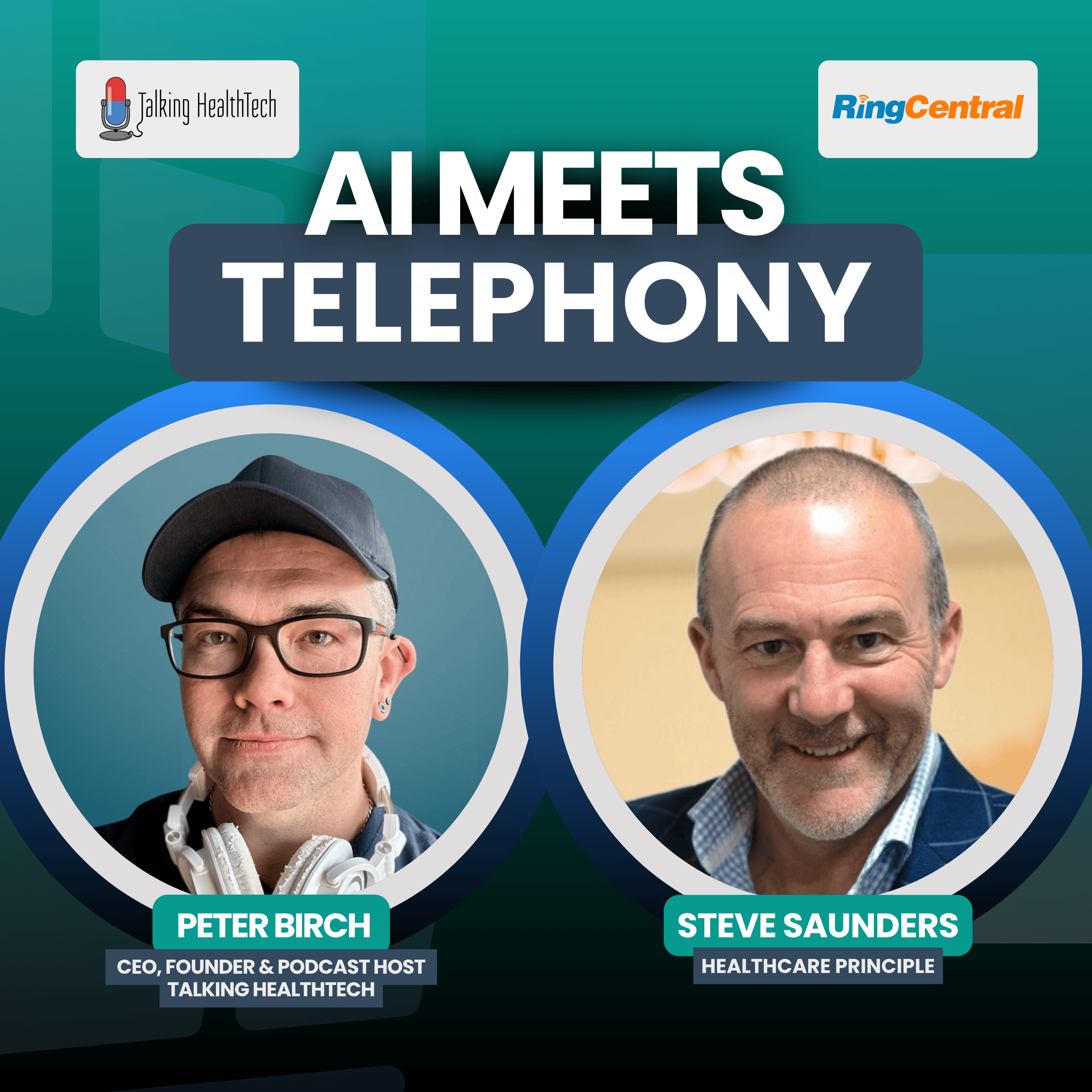
In this episode of Talking HealthTech, Peter Birch speaks with Steve Saunders, Healthcare Principle at RingCentral, about what is really at stake for Australian healthcare organisations still running on legacy phone systems and why the move to cloud-based communications is becoming increasingly urgent.
They cover the risks of relying on ageing PABX infrastructure, the barriers that slow down migration decisions and how a modular, evolutionary approach to modernisation can reduce risk and build confidence across an organisation.
The conversation also gets into the role of AI and automation in transforming how healthcare manages calls, appointments and patient interactions, as well as the critical importance of data sovereignty, privacy and security when moving to cloud-based platforms.
Steve shares why voice remains the most important communication channel in healthcare, why general-purpose tools are not built for clinical environments, and what healthcare leaders should look for when choosing a long-term technology partner rather than a one-off supplier.
For more information check out RingCentral at www.talkinghealthtech.com/ringcentral
Have a question about this episode? Reach out directly to Steve:
Steve Saunders
Healthcare Principle | RingCentral
📞 +61-2-9157-6831
Key Takeaways
📞 Voice communication remains the number one application in healthcare, with unique requirements compared to other sectors.
☁️ Healthcare is at a crossroads, moving away from legacy on-premise PABX phone systems towards resilient, cloud-based communications platforms.
🤖 AI tools are being used for pre-interaction triage, live transcription, translation, and post-call analytics to improve efficiency and patient experience.
🛡 Data sovereignty and security are top priorities, with strict compliance with Australian regulations and onshore data processing for AI.
🔄 Major barriers for adoption are fear of change and complacency, not just competition from other vendors.
Timestamps
00:00 - Introduction & guest background
00:37 - Why voice is critical in healthcare
03:41 - Unique challenges for healthcare phone systems
07:31 - Transitioning from legacy to cloud
11:25 - AI & efficiency in communications
16:25 - Data sovereignty & security
18:39 - Industry landscape & barriers to change
22:09 - Advice for healthcare providers
Check out the episode and full show notes on the Talking HealthTech website.
If you’re enjoying the show and want access to exclusive healthtech discussions, meetups, and member-only content, you can learn more about becoming a THT+ Solo Member here: talkinghealth.tech/solo_shownotes
And if this episode was useful, leaving a review or sharing it with someone in the industry always helps.
Mentioned in this episode:
Use the free Talking HealthTech Glossary for plain-English explanations of digital health terms, acronyms and concepts across the industry: talkinghealthtech.com/glossary.


