Ask ChatGPT

 Talking HealthTech
2 Nov 2026 · 33m · 17 chapters

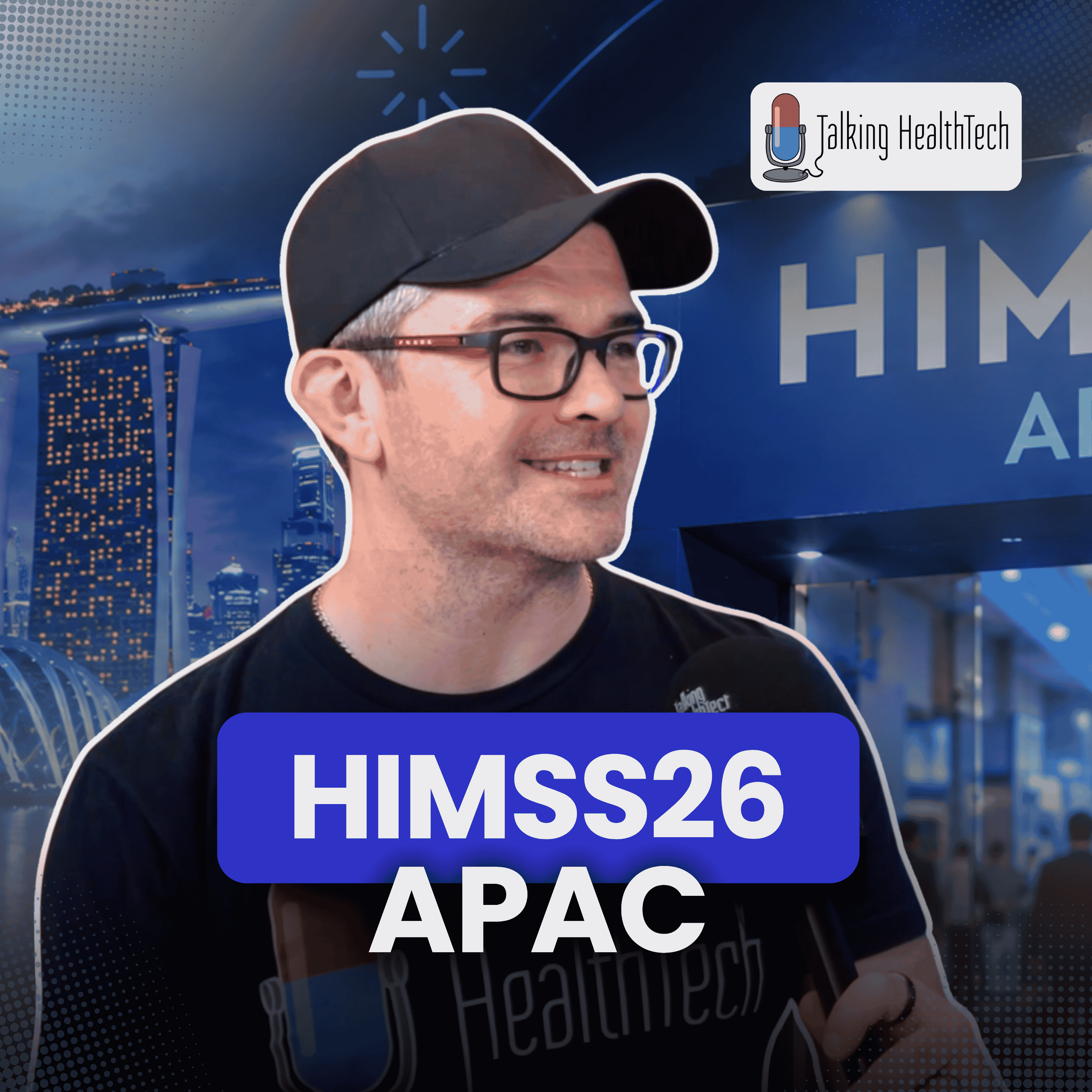
How InterSystems is integrating governed AI into its EHR to reduce clinician administrative burden and improve workflow “seamlessness,” trust, and human oversight. It focuses on IntelliCare (2025) and its “ambient clinical orchestration” module, which turns clinician-patient conversation into structured EHR outputs (draft notes plus proposed diagnoses/orders) rather than only transcription.
Dr Emeline Ramos, physician executive leading InterSystems clinical team across Asia Pacific (based in Melbourne). Dimitri Fanebos, leads InterSystems EHR product business globally (based in Sydney).
Bolt-on AI is hard to adopt if workflows aren’t end-to-end seamless; IntelliCare embeds AI inside TrackCare to inherit security/consent/revenue-cycle integration. Trust requires governance, auditability, explainability/provenance, and human-in-the-loop review before record entry. IntelliCare aims to surface recommendations, not autonomous clinical decisions.
MIT Sloan-affiliated research in Jakarta found about two-thirds of doctors reported improved eye contact/rapport. In Thailand, nurses reduced shift handover from up to an hour to ~10 minutes using ambient orchestration.
Written by AI. May contain mistakes.
Discussion on the role of AI in healthcare and the work of InterSystems.
“And it's the hottest topic and will be for a while, probably for good reason too.”
Exploration of how AI integration is transforming Electronic Health Records.
“So we are very enthusiastic about the possibilities of AI to transform the way our users work.”
How AI minimizes cognitive burden for healthcare professionals.
“love to hear some of those examples of, you know, looking at your own customer base, those benefits that, that they're seeing with AI, that example is a good one of the, you know, just taking some of that.”
The positive effects of AI on clinician-patient relationships and rapport.
“But that's the IntelliCare system figuring out, based on your conversation with the patient, what the SNOMED code should be rather than the user having to go through the code tables.”
Discussion on the complexities of integrating AI into existing healthcare systems.
“Just if I could jump in for a moment on that, it's not just doctors.”
Exploring the future decisions healthcare leaders face regarding AI integration.
“Yeah, I mean, and you're right that that is a pretty major topic of conversation.”
Learn how seamless technology integration affects clinician efficiency.
“So you may have an EHR and then you have a couple of bolt-ons.”
Explore the complexities of trust in AI systems within healthcare settings.
“You almost want the technology to be the boring thing that just works and the focus is on the consultation.”
Understand the importance of human oversight in AI-generated outputs.
“So I think trust, if you address a lot of these points, then I think that, you know, you have a system that can be trusted by the end users who are using it.”
Discover the future of AI as a supportive tool rather than a decision-maker.
“You can listen back to the recording and then you can review the output before it goes into the record.”
Learn about the challenges and responsibilities of implementing AI at an enterprise level.
“And this is where it becomes incredibly important.”
Examine the balance between interoperability and user-friendly interfaces.
“there's extra needs and responsibilities as well because I think about data quality and governance and that's all stuff discussed at a board level.”
Explore how AI is changing documentation practices in healthcare.
“random thought i thought of then and particularly in the world of you know in that in the chat-based world, so to speak.”
Learn how to create tailored length of stay calculators using data science tools.
“And any time, not just in the chat, but even this is where it gets really interesting.”
Explore how customer feedback shapes the development of agentic AI tools in healthcare.
“And you're not going to ask every person working in a hospital to stare at a rectangle chat screen.”
Discover how AI is evolving from a mere assistant to a collaborative coworker in clinical settings.
“But with the relevant guardrails and the relevant safeguards, because you're there as a clinician to do tasks and to do a job for the patient.”
Understand how AI agents can manage complex tasks to streamline hospital operations.
“You ask for a patient summary, ask for the chart.”

Get the gist, explore an idea or ask about something said.
 Claude
On Talking HealthTech, what are the key points of this episode?
Searching your listeningAutomatic transcript. May contain errors.
0:00Peter Birch: Welcome to the Talking Health Tech podcast. My name is Peter Birch. Today on the show, I'm joined by Dr Emeline Ramos and Dimitri Fanebos from InterSystems. G'day team, how are we going? Going well. How are you doing? Really good. Feeling well and jealous by your view of Sydney Harbour there, Dimitri, but not to start a Sydney versus Melbourne thing early, Emeline, but your Melbourne backdrop there with the wall is probably not as fancy as the Sydney one, but that's... That's the only chance I'll get to have a dig at someone from Melbourne. But great to have you on the show. Thank you, Pete. Hey, it's great to connect here because, you know, there's been a lot of discussion, obviously, in healthcare around artificial intelligence.
0:45Peter Birch: And it's the hottest topic and will be for a while, probably for good reason too. And Intersystems is in amongst a lot of different parts of healthcare. But for those unfamiliar, I might get you both to introduce and give more context about you and the work you do at Intersystems. emeline i might start with you okay thanks uh pete um emeline ramas from a physician executive for intersystems um i lead the clinical team across uh the asia pacific region and uh yeah based in malbourne australia gotcha and dimitri um so yeah i'm dimitri i i lead our ehr product business globally and i'm based in sydney got it and so with ehr and i know like i'll say a lot of the um and follow around into systems, funnily enough, around the world and hearing some of the discussions and presentations, examples that the team are sharing of real good use cases of, of course, technology, but artificial intelligence in healthcare and some of the value it brings.
1:44Peter Birch: And I guess if you've not been under a rock, you would know that some of the biggest, exciting, be it transformational, use cases of AI has been around that ambient scribe piece, something like that sounds really cool. It's got the interest and awareness from the clinician side. But I'd love to hear a little bit more from you, Dimitri, about if we're applying that same kind of thinking about newer technologies into something like the EHR, what kind of thinking does that unlock? Yeah, no, it's a good question. So we are very enthusiastic about the possibilities of AI to transform the way our users work.
2:23So much so, in fact, that we launched a really distinct product in 2025, InterSystems IntelliCare, which is, when I say the, you know, previously our EHR business was TrackCare, which is our global traditional EHR that's deployed in 29 different countries today. But we believed that the opportunities presented by generative AI were substantial enough that it was worth actually launching a whole new product to allow us to really reimagine the way the EHR can be used and the way doctors and clinicians interact with the EHR. And it's based on the foundation of TrackCare, so it's a comprehensive, proper global EHR with everything you would expect from that.
3:10But by embedding the AI inside the EHR, it gives us some capabilities that you wouldn't have with like a third party ambient scribe. So just, you know, we'll talk more about ambient. But we call our ambient module ambient clinical orchestration, not ambient scribing. Because, yeah, sure, we transcribe the conversation. We can do multiple languages, multiple people, MDT meetings, all of that kind of stuff. But the note goes straight into a draft in the EHR, but it also proposes orders and diagnosis and presenting complaint and those kinds of things for the user to just validate and confirm. So it goes much beyond the traditional scribe role to actually orchestrating the downstream systems and really translating that unstructured data into the structure you need to place lab orders and things like that.
4:01Hmm.
4:03Peter Birch: Yeah. Well, I want to stick with you for a sec, Demetri, because, you know, on that point, that's a good example of, you know, this is not just implementing the latest technology just because it's, it's, there's a fair bit of rework required, but, you know, obviously with some payoff that have to be, I'd love to hear some of those examples of, you know, looking at your own customer base, those benefits that, that they're seeing with AI, that example is a good one of the, you know, just taking some of that. perhaps cognitive load or administrative burden and or at least helping the journey through for a patient or a workflow by suggesting stuff but you tell me well like what's the some of those benefits that customers are seeing yeah so i mean the way the way i like to think of this is traditionally hrs like a lot of traditional enterprise applications force a fair bit of cognitive load on the users so clinicians whether they're physicians or nurses or whoever else you're dealing with this fairly unstructured world of nobody says I'm going to order you this LOINC code.
5:05You say I'm going to order, you know, full blood count or whatever it is. And we've historically tended to shift a lot of that mapping burden actually onto the users. So in some countries, doctors must put in a SNOMED CT diagnosis in order to place an order. And that's for billing purposes. It's not because the doctors actually care what the SNOMED code is. So, giving a doctor a SNOMED code lookup, even a really nice one that does some predictive stuff, is still a burden that you're shifting that really should be a technology burden that you're shifting onto the user. So, the approach here is to try and, as much as possible, remove all of that.
5:43So, an ambient clinical orchestration is a really good example of that. So, you have the conversation and all of the, you know, looking through dropdowns and mapping as much as possible. There's always some of that, but we're trying to remove as much as possible of that and shift that kind of unstructured, destructured, determinology mapping version. So when we propose a diagnosis, for example, in the ambient clinical orchestration, that is mapped to a SNOMED code. But that's the IntelliCare system figuring out, based on your conversation with the patient, what the SNOMED code should be rather than the user having to go through the code tables.
6:21Peter Birch: yeah yeah lean into our strengths right the the computers are better at the repetitive they should do yeah mapping stuff 100 but emilene you know i sometimes think this too with the um increased adoption of ai in health care and um you know some health care systems more than others might embrace and and think about oh what else can we do you know there's on one hand it could be the novelty that everyone's getting pretty excited about we've been in health care for a long time. There's, you know, this is a new way of doing things and this feels right. But, you know, we can't really make too many decisions based on feelings in healthcare or at least justify them to, you know, those that we need to.
7:02Peter Birch: You know, ultimately we need outcomes, right, and those outcomes need to be measurable. From a clinician's side, are you getting any feedback from the clinicians using solutions that they're really seeing some of those benefits? Absolutely. And we actually have had an external researcher who was affiliated with MIT Sloan, examined one of our deployments in Jakarta, Indonesia. And, you know, the analysis is still being finalized. But one of the early findings was that I think about two-thirds of participating doctors stated that they had improved eye contact and their rapport with their patients.
7:41I mean, typically, you know, I'm sure you see your doctor too, you go and see your GP, and a lot of the time they are facing the computer screen or the typing on the keyboards. And I think that's one of those things where it's not that easy to measure. I mean, how do you measure eye contact and how do you measure, you know, that forming that kind of relationship with your patient? And yes, you know, of course, we can measure click burden and we can measure, you know, time saved for patient consultation. But a lot of the important measures that are coming through that are important to clinicians are these things like maintaining eye contact and in some ways reducing cognitive burden, which Dimitri alluded to earlier, and this feeling that it reduces burnout within the clinician population.
8:31So yeah, some really exciting metrics and benefits coming through that's not really related to clicking on a mouse or looking around the screen. Yeah. Just if I could jump in for a moment on that, it's not just doctors. So, Emily and I visited one of our customers in Thailand a couple of weeks ago and heard, you know, what really unusual, you know, for those of us in this industry, what I can only describe as joy from the nurses who are using ambient clinical orchestration to provide patient summaries, to write handover notes. And, you know, one of them told us that the shift handover previously had taken up to an hour and it was time that she wasn't actually paid for.
9:16It was, you know, the end of her shift. She had to spend another hour handing over to the next shift. And she's reduced that to like 10 minutes within telecare. And so that's it. And if you multiply that by all the wards and all the nurses you employ, it's some pretty incredible benefits. And I think that the MIT research that Emily mentioned will probably surface some of that as well.
9:37Peter Birch: I feel like you need to be a better analyst than I am because I'm not one, but the, you know, maybe it is one of these things too that like surely we can demonstrate. And there are examples and I've seen intersystems speak about them too. Like the need to be able to point to things and say that, you know, this, we're seeing this, you know, marked change and the surveys and feedback, external reviews and great. But I think if you can change the general sentiment in relation to healthcare, both on the clinician side and that they don't feel as drained from, from just doing the caring and from a patient side, like, yeah, a hundred percent.
10:06Like if they're having better eye contact, maybe they're listening more.
10:10Peter Birch: Maybe they're asking more questions. And then there's longer term, surely it'd be nice if we could then attribute some of these benefits of hopefully healthier populations or better care provided to some of these fundamental. These things are becoming fundamental, which actually leads to my next point, you know, to I'm interested from both sides, actually. But Dimitri, you know, being a fundamental, if AI is going to be at the fundamental core of what's going on, a few health systems everywhere have got decisions to make because when it comes to investment into technology, because on one hand, they've got, you know, this investment of decades of things that have been added on in terms of the technology that's operating within their system.
10:57Peter Birch: And there are tools out there where you can kind of add them on top and then, you know, integrate them in and do all of this. And then you've got the other approach of just kind of build it from the ground up as like AI first. And that can feel like daunting or, you know, is there a sunk cost fallacy that's kind of working on there? And, you know, you're both having conversations with health systems and hear the sentiment, not just here, but globally too. How are healthcare leaders kind of grappling with these decisions to make of like, do we just bolt something on? or do we kind of really look to bring it to the core?
11:29Yeah, I mean, and you're right that that is a pretty major topic of conversation. So, I mean, one point is it's already happening whether you like it or not. I've yet to meet a doctor who doesn't have ChatGPT on their phone or open evidence or Claude or whatever. So there's this kind of wild west world of these unregulated tools with unknown data provenance that are being used today because they're such an incredible assistant. So, you know, I think IntelliCare is a little unique because it's not a brand new thing that's built off to the side. It is built on the foundation of TrackCare. So it inherits the security model, the consent model, all of the revenue cycle management and the, you know, really robust integration with pharmacy, all the stuff that's really hard and statutory reporting, all of that stuff that's really, really hard and doesn't really lend itself naturally to AI, that's kind of there in the platform.
12:30And then on top of that, we build this kind of governed, controlled AI. And, you know, we just recently completed our MDR 2A certification under the EU Medical Device Act as a complete system. And I think we're the, there's one, I'm aware of one local vendor in Sweden who's done this, but apart from that, I think we're the only one who's actually certified the entire EHR end to end. And that wasn't easy. It took a big invest and a lot of structure and a lot of governance on our side. And I think, you know, that's, nobody would ever guarantee any system is safe in healthcare because that's sort of the nature of things.
13:09But I think that level of control, structure, security, governance is really appealing, particularly to larger organizations who are looking for a platform that they can, And, you know, people base their entire business on inter-systems platform. And we take that really seriously.
13:25Peter Birch: Are you finding the same thing, Emily? Well, look, bolt-on solutions are quite difficult, right? I think it's important that your EHR has interoperability and it allows, you know, the clinician to complete the workflow seamlessly. I think that a lot of the tools that are coming through, they're amazing, especially the ones that are based on generative AI. But the problem with that is you can't just have an amazing tool because you have to allow the clinician to complete their workflow from end to end. So you may have an EHR and then you have a couple of bolt-ons. But if you look at a clinical workflow, are you expecting your clinicians to do their documentation in your EHR, use another product for Ambient, use yet another product for clinical decision support?
14:18And are you expecting them to log in three or four times? No matter how good that bolt-on solution is, if the workflow is not seamless, it's almost as if the technology has just disappeared in the background and allowed the clinician to do what they need to do. And if that's not the case, then you're going to find it difficult to get your clinicians to adopt that.
14:39Peter Birch: Yeah, well, that's right. You almost want the technology to be the boring thing that just works and the focus is on the consultation. Then you've done a good job. But it can't be too boring. Otherwise, you don't want to use it. So there's a balance there. But, you know, another common piece that we talk about a lot with AI in healthcare. We're big on trust in healthcare. emeline well you both know that but particularly from a clinician's point of view um i'm interested in uh what what the word is on the ground what you're seeing from healthcare systems that you speak to uh how they're finding this uh balance of uh you know wanting to use you know keep up as you know i think demetra was saying it's coming anyway versus the responsibility that happened the barriers that exist in in doing something like this look i think trust is a is a complicated thing uh a page i don't think it's just the one thing um it has to be a combination of things that are related to the user some of it will be related to the organization that's adopting the ai tool and and a lot of it has to do with with a product that they're using you know i think in terms of in terms of trust you know and we all know that um a generation bias fairly new technology and it can hallucinate with all that it can produce errors so you know we're not we're not shying away from that fact but you know you you have to have you know if you look from the top down you have to allow for an organization to to be able to put in place you know enterprise wide governance for for whatever tool that you're using because you can't just simply rely on the clinician to shoulder the burden of clinical safety.
16:22You have to use a tool that allows the organization to put in place governance as a whole. And of course, you have this idea of auditability. Can you try and figure out what the response was and how that response was generated? Has this tool been tested for safety? What kind of models are being used? And, you know, does it allow the clinician to actually review the output and to decide, put the clinical lens against that output so that before it enters the patient's medical record or before they accept that decision, that there is that human in the loop. And we use that term quite often. There's a human in the loop that is in the middle that takes responsibility for the output before that enters the medical record as a record.
17:14So I think trust, if you address a lot of these points, then I think that, you know, you have a system that can be trusted by the end users who are using it.
17:29Peter Birch: This human in the loop piece, I want to stick with you, Emmeline, just for this one too, because, again, something I've thought about a bit. And I guess we all know the feeling too, like outside of healthcare, whatever you're using a large language model tool for, depending on how you've prompted it, it can give you like a lot of information. And then it's like, cool, now I've got to consume this information and still make a call on something, obviously, unless you were just searching it for the fun of it. in healthcare too i'm not sure success would be oh we we got it to crunch a lot of information and just serve up everything to you so now you know but ultimately it's in the hands of the the human to work out what to do with that and so in the end it's still the same kind of pressures that a clinician faces now they've just got a bunch more information to consume about it or like and now there's conflicting bits and pieces so there's because the answer is a bit more complex and i'm curious from a technology side so i'm here from both of you um you know is how do you go that next kind of step of like not just getting the technology to do a lot of the heavy lifting but ultimately then the clinician's got to work out what to do with it you can't push the technology too far into actually actioning everything because then we're like oh there's no human in the loop like what have we done some more thinking about what that looks like emily Look, we released a couple of early functionality with IntelliCare around, you know, as Dimitri mentioned, Ambient.
18:59And Ambient, we show the user exactly what was captured, when it was captured. You can listen back to the recording and then you can review the output before it goes into the record. I think that these are key steps to ensuring that the clinician understands the provenance of that information that's entering the medical record. And in terms of key output, everything that the AI produces should just be a form of recommendation. and it's not really you know we don't really want the ai making decisions um or even deciding things like a treatment plan or or a care plan because we're not we're not quite there yet we're getting really close but we're not quite there yet and demetri what about you from a because there's
19:52Peter Birch: probably a bunch of things from a technology side but you tell me like i imagine user experience and use like the the interface and even though it can give you all the information in the world what information and what does it need to be a person about? Yeah. There's quite a lot to unpack there. I mean, I think a year ago the industry in general was sort of trying to use human in the loop as this get out of jail card. And it's not, you know, we all know humans and humans will, you know, click yes, yes, yes, and get through things as fast as they can. So it's, it's important and it's one of the core design principles, but it's not the only thing that we need to do.
20:29And Emily touched on some of this, explainability, transparency. So when we're surfacing information, always having a link to the place where the information came from so you can double check. And this, we're at the moment, our intended use is very much not to offer advice because we needed to get the system that surfaced information, helped you navigate the record, helped you take action out first. But we do very much intend on moving towards some kind of decision support advice system. And this is where it becomes incredibly important. And like Emily said, this is not about, you know, putting a diagnosis in the record.
21:06It's about surfacing information that based on this evidence, which might be your local standard operating procedure, or it might be something that you source from a third party like Elsevier or Walters Kluwer, based on everything I know about the patient and based on this thing where here's a link, you might want to consider this and maybe it's three things to consider. But I think we're, you know, we're very careful from a design perspective in clinical stuff to not take action. Now, I think revenue cycle and some of the administrative places, there's probably more opportunity because of the sort of risk reward ratio changes a little bit.
21:44There's opportunities, particularly as we get into our agentic workflows to drive more operations. But I think with clinical systems, you've got to always work within these constraints. One just anecdote I'll share is that our customers tell us they start off using the AI chat to say, hey, does the patient have any allergies? Give me a summary of the patient, whatever the question is. And they're very careful to go back and double check. And here's where the human in the loop thing starts to fall down. Once they get through a couple of times and they actually trust it, they never close that chat and they just stay in the chat and they get comfortable with it.
22:19Now, of course, they're always going to verify something that has a really serious impact. But the combination of improvements in the model and some of the harnessing we've done and the double checking and things like that, the systems are very, very accurate these days.
22:34Peter Birch: And I think, you know, building on that too, and I guess some of the unknowns, all the things that healthcare leaders in health systems would be thinking about. Yeah, so not just even a single hospital, but when I think about extrapolating out some of those challenges and stuff that you need to take ownership and accountability for across an enterprise or a group of clinics and having a solution that's kind of built for enterprise too, I think that brings, there's extra needs and responsibilities as well because I think about data quality and governance and that's all stuff discussed at a board level.
23:11Peter Birch: Does that all kind of play into, because that's kind of IntelliCare's thing, right? The whole enterprise. Yeah, absolutely. I mean, most of our customers around the world operate more than one hospital. We do have some hospitals, but we have entire countries like Scotland. We have portions of countries in Chile. We service, I think, about 70 % of the population. there's you know territories and countries everything down to sort of high-end specialty private hospitals and they all have the same um you know they're all looking for obviously a reliable platform that handles all of those data quality issues highly interoperable we like to think of our both track air and telecare as the most interoperable EHRs in the world actually because you always have to you know there's always an ERP or um or you know external government systems in some countries we connect to government revenue cycle clearing houses or or e-prescription services and stuff like that so i think this concept of a solid base uh single source of truth to operate your enterprise is really compelling i um i thought of something as you were talking and i was going to say not to go off script we don't even have a script so even just random thought i thought of then and particularly in the world of you know in that in the chat-based world, so to speak.
24:30Peter Birch: And even in healthcare, that's kind of more people are interfacing with technology through the message thread with the large language model. And then things are connected with MCPs. And yes, interoperability is important, all of that. But if we strip it back, often people use other systems because they're a different user interface. And yes, they had a database and it's structured and all that kind of stuff. But if everything is just on database and accessible through a single thing, is interoperability still as important when it comes to different technologies and platforms that use or are you going to enter a world where everything is a homogenous blob of just you know data that then is presented to people through a chat like I get your point Dimitri around you got to connect in with government systems and all of that kind of stuff because that's like outside of the walls but have you had given any thought to I feel like I need to think more about this after the podcast but it just made me think well like what does software even look like as we kind of continue to progress absolutely so you know for example, we're in the middle of a strategy meeting here this week, and we were talking about documentation.
25:31And one of the points I made to our sort of knowledge leader is, as of today, you're not writing for humans anymore. So forget about all the time you're spending formatting and this thing looks nice, and oh, that's a heading two and it should be a heading three. None of that matters. Write it in markdown, write it in text, because there's all kinds of tools, maybe not today, but by a year from now, 80 % of your consumers of documentation are going to be agents who are consuming it on behalf of somebody. And actually, a lot of this is probably true for the EHR itself. So we still have UI, and we're still going to build UI, and it'll be some number of years.
26:13But some other enterprise systems, not necessarily in healthcare, have announced already that they're kind of shutting down the UI and considering themselves a target for agents rather than for humans. But I don't think we're going to get that. You still need, you know, people need nicely formatted lab results with color coding and, you know, you need a flow sheet, you need a med chart, all that stuff. But I think very much so we're, the beauty of having this new system in telecare that we're building is it does allow us to really get creative and reimagine how our users are going to interact with the system.
26:50And it may not be by traditional fixed UIs. I think a lot of it's going to be by generated UIs that are much more personalized and flexible, but also just chat interfaces.
27:01Peter Birch: It makes me think about the, and it's still happening now, and it's pros and cons of, you know, before you'd get your news from a couple of channels on the TV and the newspapers that were physically printed out, whereas now everyone's got a curated feed. And yes, that's great. It's hyper-personalized. Also, we're all in our little bubbles of things. So yeah, what even does my user interface within a hospital may in 10 years look entirely different because I prefer it this way and it's all the same information. I mean, we've been as an industry talking about for years this idea of a platform and then people can build apps up of it.
27:39And there's always been a hurdle there that the infrastructure and the standards haven't quite gotten to the point where it meets the promise. But we're in a completely different world now. And our agentic gateway, you're going to be able to define MCP servers that represent some tool and define that as a tool. And the EHR then has access to that tool. So if you wanted, for example, to write your own length of stay calculator based on your own data, got a data science team, however you write it, if you can give us an MCP server, you could have that defined as a tool in the AI chat. And any time, not just in the chat, but even this is where it gets really interesting.
28:20If you've got icons on patient banners and in workflows, anywhere where the system needs to know the length of stay, potentially it could be your length of stay, which is highly customized to what you need versus the algorithm that we've implemented.
28:34Peter Birch: Hold on to your hats, right? No, but the, just made me think about a few more things. But let's round it out though, Emmeline and then Dimitri, if you've got anything else to add. But thinking about, I think we've touched on a little bit and looked to the future already, but just to kind of put a cap on then. looking at the agentic plans moving forward, Emmeline, and thinking about what your customers actually need to, because it's, you know, cool for us to kind of riff on what things might look like, but in the end, healthcare has got to get done every day. And you're not going to ask every person working in a hospital to stare at a rectangle chat screen.
29:09Peter Birch: So what are customers asking for? How's that shaping what you're doing, particularly in the agentic AI space? And what are you looking forward to? We started, as I said, we started with Ambientia, which is about capturing and making clinical documentation easier. And then we've gone on to embedded AI, which is, you know, in IntelliCare, that's about servicing relevant clinical contexts and about gathering all of this complicated, complex data from all over the EHR and then providing the clinician with a summary. You know, Demisa can talk a bit more about our agentic roadmap, But for me, the next step is then, OK, well, I've entered some data.
29:52You've given me a summary. Now help me do my job. But with the relevant guardrails and the relevant safeguards, because you're there as a clinician to do tasks and to do a job for the patient. You know, the art of caring is not just about taking a history, but you actually have to make a decision and decide what happens next for this patient. And I think that's where I'm really excited about Abita Egenti, because I think that it can make a really significant impact to the clinician's workflow. Sounds right to me.
30:29Peter Birch: What about you, Dimitri? So, yeah, I mean, we're in a really exciting time. So as somebody perhaps lacking in patience, this is what I love. Patience with a CE or TS? But with a CE. We're not talking science fiction. The stuff we're talking about is not five years away. This is stuff that's coming. We have prototypes today that I could show you that are exhibiting these kinds of behaviors. And so, you know, being an impatient person, I'm really excited to get this stuff out there. So we've just released our first version of our agentic gateway, which opens up, which is the platform that opens this up.
31:06And a good way to think about this is it's kind of like going from an assistant to a coworker. So an assistant is the traditional chat CPT model of you can ask a question and you get an answer. You ask for a patient summary, ask for the chart. An assistant is an entity that you can delegate tasks to, and in some cases, quite complex tasks, like things that sound simple. like, I've got this emergency patient and I need to admit them, can you go find a bed for me? And in English language and layman's terms or laypeople's terms, that sounds easy. But anyone who's ever spent any time in a hospital understands the complexity of pulling around the wards and figuring out the reality of who's about to be discharged, where are the free beds.
31:49And that's the kind of thing that agents can take that burden off of the person who traditionally would just be on the phone for a half an hour trying to figure it out. And that's just the tip of the iceberg. There's all kinds of these complex multi-step tasks that the agents can take over. And the agents are guided by skills and they have access to tools. All of this is governed in the platform. So you can control this particular agent only has access to these tools. And these are the skills the agent will follow. And I mean, the sky's really the limit in terms of the good stuff we can do. It's a really exciting time.
32:21Peter Birch: Bang on the guy. I appreciate the time you've spent having this conversation. I think it's very relevant to the types of discussions happening within health systems and the stuff on the minds of the industry. So all the details will be in the show notes this episode, people to check out and lots of content within two systems there for you to dive into as well. But Emmeline, Dimitri, I really appreciate you making the time. Thank you so much. Thank you so much. It's been great. We hope you enjoyed this episode of Talking Health Tech. Make sure you like and subscribe and share this episode with someone who might find it valuable.
32:55Peter Birch: For more information and resources about healthcare innovation, visit TalkingHealthTech.com.
In this episode of Talking HealthTech, Peter Birch speaks with Dr Emeline Ramos, Physician Executive for InterSystems across Asia-Pacific, and Dimitri Fane, Executive Director of EHR Product Management at InterSystems.
The discussion covers the evolving role of artificial intelligence in electronic health records (EHRs), the impact of ambient clinical orchestration, challenges and benefits for clinicians, and strategies for building trust and adoption of AI within healthcare systems.
The conversation looks at why InterSystems chose to build AI into the core of its new EHR, IntelliCare, instead of adding it on top of existing systems, and what that means for safety, governance and day-to-day clinical work.
Dr Emeline Ramos shares real-world feedback from clinicians already using the technology, including a nurse in Thailand who cut her end-of-shift handover from up to an hour to around 10 minutes.
Meanwhile, Dimitri Fane explains how agentic AI is set to move from assistant to co-worker, taking on complex, multi-step tasks under strict permissions and oversight.
The episode also explores why keeping a human-in-the-loop approach remains essential, how interoperability underpins safe and sustainable care, and why technology needs to fade into the background for clinicians to truly adopt it.
Key Takeaways
🩺 AI in EHRs reduces clinician cognitive and administrative burdens by mapping unstructured to structured data and proposing actions, not just transcribing conversations.
👀 Clinical deployment of ambient workflows supports improved patient rapport, more eye contact, and a reduction in clinician burnout.
🔒 Trust in AI hinges on robust governance, transparency, and having a clear human-in-the-loop to validate AI-generated outputs before they impact patient records.
🛠️ Healthcare organisations face key decisions between bolting on new AI tools versus adopting EHRs that seamlessly embed AI at the core.
🌐 The future of EHRs points towards agentic AI, where digital agents can execute complex, multi-step workflows, freeing clinicians to focus more on patient care.
Timestamps
00:00 - Introductions & AI in healthcare context
02:14 - AI transforming EHR workflows
07:15 - Clinician feedback & benefits
11:20 - Bolt-on vs AI-first EHR platforms
15:28 - Trust, governance, and clinical safety
29:14 - Agentic AI & future direction
Check out the episode and full show notes on the Talking HealthTech website.
If you’re enjoying the show and want access to exclusive healthtech discussions, meetups, and member-only content, you can learn more about becoming a THT+ Solo Member here: talkinghealth.tech/solo_shownotes
And if this episode was useful, leaving a review or sharing it with someone in the industry always helps.