Ask ChatGPT

 Talking HealthTech
14 Oct 2026 · 39m · 17 chapters

Special episode from InterSystems Asia Ready 2026 on Asia-Pacific health tech trends: digitization, data interoperability, and AI embedded in clinical workflows. It includes hospital leaders’ experiences moving from paper to electronic records, preparing “dirty” data for AI, and using ambient documentation/AI assistants with human-in-the-loop guardrails.
Written by AI. May contain mistakes.
Dr. Apichai Chayarot discusses BNH Hospital's transition from paper to digital records.
“Collaboration starts with the conversation, Team Health Tech.”
Dr. Chayarot explains the data challenges faced during digitization and the importance of clean data.
“What has this kind of set you up for now?”
Discussion on how digital tools can improve clinician-patient interactions.
“And then once we went live, we did it pretty quickly.”
Interview with Don Woodlock on the role of InterSystems in healthcare AI innovation.
“We talk a lot out and about in different countries and things, but last time was a couple of years on the podcast.”
Discussion on the unique challenges and opportunities in the Asia-Pacific healthcare market.
“Do you think also that potentially there's opportunities in some parts of the region where they can almost leapfrog some of the technical debt or inertia that may exist in other parts?”
Learn how AI can seamlessly fit into existing workflows and improve clinician efficiency.
“And we decided to be a little bit more patient to build it natively into the workflow and offer it that way.”
Discover the importance of trust and transparency in AI adoption within healthcare.
“So for instance, the very first release, what we focused on is not, you know, medical advice or, you know, anything advanced.”
Explore the significant shifts in digital transformation across healthcare organizations.
“And so that opportunity about artificial intelligence can be exciting, but sometimes healthcare organizations aren't sure where they might start with that journey.”
Understand the potential applications of AI to improve clinical outcomes and workflows.
“in clinical workflow and it will give some physician to give recommendations to physicians and physicians still in control of determining what is relevant and what takes for patients.”
Learn about the challenges of integrating technology into diverse healthcare settings.
“Trent Dean, I'm the CEO of Gateway Health, and we work in northeast Victoria and southern New South Wales.”
Discuss the future of healthcare technology and its role in addressing increasing demands.
“On one hand, it might feel appealing to kind of build everything in-house.”
Discusses the challenges faced in regional Australia regarding healthcare delivery and technology adoption.
“but the signals that you could bring back to Australia and say, hey, we need to act because X, Y, Z.”
Explores the importance of patient perception in the adoption of AI and healthcare technologies.
“Do you find that the, you know, we spoke about the community for a little bit there in terms of the needs of that.”
Shares key takeaways from the InterSystems event and the international nature of healthcare challenges.
“So lastly, when you come back to Australia, is there any other key takeaways you'll bring from this trip or any other final thoughts from InterSystems Aja Ready in 2026?”
Describes the role of integration in healthcare systems and the feedback loop between partners.
“Yeah, so I think this region is where we see the growth potential for our company.”
Discusses trends in healthcare technology, including AI scribes and data interoperability.
“So I think InterSystems always maintains very close relationships with all of their partners, especially partners around healthcare.”
Emphasizes the value of attending healthcare technology conferences for networking and learning.
“And, you know, you are not going to find this kind of outlet of talking to the inter-systems people and to your peers together in the same room.”

Get the gist, explore an idea or ask about something said.
 Claude
On Talking HealthTech, what are the key points of this episode?
Searching your listeningAutomatic transcript. May contain errors.
0:00Peter Birch: Have you ever heard a term in digital health and just quietly had to Google it later? The Talking Health Tech Glossary has got you covered. We've got hundreds of terms in plain English explanations written for our industry and all free to use. You don't even have to sign up for anything. Just go to talkinghealthtech.com slash glossary. Welcome to the Talking Health Tech podcast. My name is Peter Birch. I'm here in Bangkok, Thailand at InterSystems Asia Ready 2026. And in this episode, you'll hear a number of conversations I've had with hospital leaders within the region and Australia too, and some of the technology partners and the leaders from InterSystems themselves about the exciting developments in technology and specifically what's happening in the Asia-Pacific region.
0:44Peter Birch: You'll catch all the discussions that I had here at InterSystems Asia Ready 2026 in this special feature episode and more information available about all the guests that appeared in this episode available on our website, which is in the show notes of this episode. Collaboration starts with the conversation, Team Health Tech. Let's make it happen. My name is Dr. Apichai Chayarot. I'm Assistant Hospital Director of BNH Hospital. Amazing. Tell me a little bit more about BNH Hospital. Well, BNH Hospital is the first private hospital in Thailand. It was founded in 1898. Wow. So it's now 128 years old.
1:19Amazing.
1:20Peter Birch: I assume the technology within the hospital would have changed a little bit from the time of inception to now. But tell me a little bit about the technology and how technology has been used, maybe up until this point, firstly. Yeah, because up until about 20-some years ago, when I started working full-time at B &H Hospital, it was 2003. Everything was, of course, in papers. Yes. And along that line, we evolved into using the electronics record. But initially what we used was just to key in the diagnosis in the coding system and key doctor's fee. And the pharmacy would use the keying in the medical orders into the system so that it goes to the finance department.
2:04But that's just about all. Up until about 2017, I started doing some more administrative works, doing some IT department system that helped them develop into electronics records. So I started by giving the team a clear direction that we have to go paperless. Starting from that point, we actually went on and succeeded into turning people from using papers into using the electronics recording. Of course, the more senior doctors, I was afraid at that time that they would not or they would be even against it. But fortunately, everyone saw the future at that time. And everyone helped. We designed the system together.
2:55We designed the user interface together. and we were able to customize how they would see their own medical records on the screen. They tried to make it as much familiar to the papers that they're used to as possible. And that's how we went on.
3:13Peter Birch: Yeah, getting that initial buy-in, I feel like that anxiety or that concern that you spoke about of, you know, I need to bring the clinicians along with this journey because you can have all the best preparation and project management around and it could make the best financial or operational sense. But in the end, if the clinicians say, well, we're not going to use it. It's medical records after all. If the clinicians doesn't use it, what's the point? 100%. And so what was the real kind of driving reason to move from paper to digital? Because it could almost be like a no-brainer. It's like, well, we have to be paperless.
3:48Peter Birch: But was there a particular challenge that you're just like, we can't address this unless we're digital? Well, I would have to say at that point of time, we were looking at data collection that would be useful in the future. And also we were looking at a very full medical records room full of all this rotten paper and everything. So we had to get rid of that. And we have to gather all the information into the digital form so that we can use it forward and we can keep it for longer for use in the future. That makes sense. And I guess now in 2026, and we're here at InterSystems Asia Ready, and just generally in the industry, there's a lot of talk about artificial intelligence and new technologies and all the different things you can do once you're on a platform.
4:35Peter Birch: What has this kind of set you up for now? Like what's the current state and what are you looking forward to? At this point at B &H, we turned to track care about three years ago. And about last year, we started the preparation for the AI assistant for the hospital. And then we were about three, four months after we went live on the AI assistant. And actually, just last month, we started using the ambient of the IntelliCare system, which is, I think we are number two global that started using this. However, before that, the challenge was the data, because our data weren't that much in the IT term.
5:26It was a very dirty data. yeah yeah so we you know we spent at least two years prior to getting up onto the track care to to clean the data before we went up so that was the uh that was the technical technical
5:39Peter Birch: i feel like at that stage too that almost feels like uh um because sometimes that process can take a very long time and it for the people involved in that process it might not feel like you're seeing much momentum because it's doing a lot of that groundwork you would hope then you would start to see a bit of an exponential change or at least progress once you've got that right data then you can you start to feel it compounding are you at a stage where you feel like now you're starting to you potentially will start to see the benefits around implement doing some of that foundational work and implementing some of these newer technologies i yeah i think we are starting to just see that yeah okay because you know well you know just to tell you that during which time we were actually trying to clean up the data and everything, onto the user's point of view, I was just prepping them along the line so that they had a full awareness of where we are going.
6:35And then once we went live, we did it pretty quickly. And now just after one plus year after using the full system in and out patients. And that means we are practically a paedalist organization at the moment. So with the data we have about less than two years, I think we still haven't seen much of the use of data in terms of clinical yet. But, you know, the data from other sides of the patient's information are being used in the marketing side of the business already.
7:19Peter Birch: Yeah. Lastly, then, you know, we've spent a lot of time focusing on the clinician side of things or like, you know, the view from the hospital. Is there a point in which you consider the patient's perspective in all of this given that are you expecting that the interaction that patients have with a clinician will feel the same or better or is there a particular objective you have in mind for the hospital or for the clinical care from a patient's point of view with all this technology? Well I would say this is a subjective view that we are looking at. I would say, first of all, if the doctor uses less time on the screen by using the keyboard, by using, let's say, voice to text, and the less time of looking back into the records to see previous medications, previous diagnosis and everything, and we use the AI to do that, doctors will definitely have more time to talk to the patients, and there would be more human touch into the service.
8:26However, I mean, usually a doctor would be talking to patients. Some doctors might just do the keyboard at the same time, but some of the doctors would just finish with the patients and everything, and then they come to use the keyboard. And that would take quite a bit of time before they can see the next patient. So also another thing is that apart from having more time with the patient, in a particular person, I think the patient would have less waiting time as you are.
8:55Peter Birch: Yeah.
9:00Peter Birch: So yeah, digital health has got a pretty serious acronym problem, and we've all got our favorites, but it's a lot, right? And you don't really want to be the person in a meeting that has to ask what something stands for after you've been talking about it for the past couple of weeks. That's why we've built the THT Glossary. It's a free, ever-growing library of digital health terms that we explain in simple language, written for people who actually work in the industry. So it's useful if you're brand new in the space, or you're one of the veterans that just want a refresher before a meeting, or maybe you want to check to make sure we've got everything in there.
9:36Peter Birch: It's all there for you. Have a look at talkinghealthtech.com slash glossary. Bookmark it, send it to your team. It's the kind of thing that should exist. So we created it. Hope you enjoy. My name is Don Woodlock. I'm president of InterSystems. It's great to speak to you again, Don. It's been a little bit. We talk a lot out and about in different countries and things, but last time was a couple of years on the podcast. We're here at Asia Ready 2026 with InterSystems. Tell me about it. Tell me the purpose of bringing everyone together here in the region specifically. Well, I think it's very important for customers to network with each other, to share best practices.
10:10I mean, we're at the beginning of an AI era, let's say. And I think what people need is each other to understand how to make it successful, what use cases really work, how to handle the change management, how to build that trust. I mean, there's so many good topics, in addition to just the technology topics, which we cover about navigating this era and really making it great. So that's the purpose of bringing everybody together.
10:36Peter Birch: Definitely. I feel like for inter-systems too, that's particularly important given that got the global presence and, you know, really focused in particular regions about the challenges that are faced. But also the, you know, seeing over there the different implementation partners and the technology partners that connect in and then all of the presentations and use cases from hospitals. I guess having that opportunity for some, you know, in some areas might be competing, but generally collaborate with each other can all come together in one particular space and almost share notes. I feel like that's it.
11:09Yeah, certainly. Certainly. I mean, it's a multifaceted problem and opportunity. So an ecosystem of partners having customers and their IT departments, their clinicians, as well as us as a technology provider, really all working together is the key to success, I feel.
11:29Peter Birch: And this particular region, tell me a little bit about what might be similar to other regions, but also quite unique when it comes to health care in the Asia-Pacific region and technology. So interestingly, so we're in electronic health records and in 29 countries around the world, but all of our initial implementations of AI are here actually in this region. So I think there's a spirit of trying new things, of being kind of on the frontier, maybe lighter from a regulatory point of view than some other regions. So we really like it. You know, it's a place where we do a lot of first of a kind work and AI is a good example.
12:14I mean, we're first here and it's exciting.
12:18Peter Birch: Do you think also that potentially there's opportunities in some parts of the region where they can almost leapfrog some of the technical debt or inertia that may exist in other parts? Say, I'm thinking, you know, selfishly in Australia, there's, you know, this intertwined mismatch of different technologies that you kind of need to then work out how to put on a standard kind of platform and all of that. Whereas coming from paper to a digital platform really gives you an opportunity. Yeah, that's true. I mean, we're in some cases on the first digitization and an opportunity to do it right. I kind of learn from other countries where there's legacy systems, there's switching costs, there's a lot of data in these systems.
13:00So it becomes a little bit harder to move quickly. And so I don't know if I think about it as a leapfrog as much as you can move faster when you don't have the weight of technical debt, the weight of 40 years of data, the weight of your old system and the way it works. So it's nice.
13:18Peter Birch: And so the AI piece, it's obviously a hot topic right now, a lot of potential opportunity. Are you finding it's a let's apply an AI layer over the top of the technology that's here? Or is it really kind of a let's infuse it from the bottom up? I'm trying to think of other. Well, the way we think about it is it should be native to the workflow applications and not sort of standalone and separate. I think there's a role for standalone, separate AI. I'm sure you use it. We all use it in that manner. But to have the impact, it really needs to be tucked into that workflow. And that's a choice we made.
13:58You know, other EHR vendors, they partnered with AI companies to just try and, I don't know, get to the market quickly with something. And we decided to be a little bit more patient to build it natively into the workflow and offer it that way. And we're really happy with that decision because now it's come out, people love it, and it's a very natural fit with the rest of the workflow.
14:22Peter Birch: That natural fit with the rest of the workflow piece, I think, is important because so often when there's changes to the way you do things in technology, I guess historically, you're almost being tested to try and remember which thing I need to click next to do all of that. Whereas I'm assuming in the AI world, it's like leaning more into that conversational kind of piece. Is that the general kind of vibe? Yeah. I mean, I'll tell you a story of the first, one of the first users of our AI assistant. So we have an electronic health record. So picture a screen that has the patient on the top and has problems, meds, allergies, immunizations, documents, you know, regular tabs and scroll bars and stuff like that.
15:03And then you click on the AI system and the right one third of the screen moves over and you can ask questions. So has the patient been in here before? Summarize the patient, blah, blah, blah. So I'm talking to the very first doctor that's using it. And I basically said, well, he had opened up the AI system, asked four questions and then went and saw the patient. It was in the ED. And I said, well, when he came back, I said, do you ever use the other two thirds of the screen? You know, the part that we took 20 years to build. And he said, no, I don't use that anymore. I just use the AI assistant.
15:35And I'm like, wow. And he was only live two weeks. So I was like, wow, how quickly the world changes. And so having this natural way to interact with software, I think it's super easy to use. It's very, you know, it's just intuitive. And so as we build more and more capability, I imagine the whole face of software, at least the way a user might interact with it, is going to change pretty dramatically. Yeah.
16:02Peter Birch: Yeah. You know, you picture the old kind of, well, it's funny that we say old, but the way of putting data into fields in a user interface into the digital filing cabinet, so to speak. And then your job is to remember which kind of drawer it went in. Yes. Um, the, the only challenge that I'm sure, I'm sorry, the challenge that I'm sure many clinicians kind of face, maybe if this is that they're not so, uh, in the world of AI or they, they haven't been involved in the build from the ground up is that it's kind of like, if that's your only interaction, you're, you're putting a lot of trust in the system that, you know, it, what it's giving you is in fact, information that came from the correct drawer, if you know what I mean.
16:38Peter Birch: So, um, and this is a challenge that I guess we're all facing in every kind of industry what's your kind of take in that balance finding that balance between making it super easy and taking a lot of that cognitive load off a clinician um in in just presenting them data but also then um both ensuring it is actually correct but also winning the hearts and minds i guess or providing that confidence to clinicians well i i think of our ai adoption as a journey of trust yeah so you kind of have to take one step at a time. So for instance, the very first release, what we focused on is not, you know, medical advice or, you know, anything advanced.
17:15It's just kind of a just the facts implementation. Okay. So you say, please summarize the patient chart or answer these questions. And then we have links right at the bottom where you can go check the data. So, and we expect the physicians the first time you use it or the ninth time you use it to go check and make sure everything's okay. And then over time, you have built trust and maybe you won't check all that stuff. Or maybe you check it when it's very important to what you're about to do for that patient. So that will take us to step one. Then step two might be more advanced use cases or agentic AI where that next layer of trust needs to be built.
17:54And so having that, in our case, having the transparency, having one click to check the data, having human in the loop for anything substantial. Those are all part of the journey. I don't think it's sensible to just have AI sort of drive the car for you, even though it can drive cars. But but but from, you know, actually impacting patient care, we have to take it seriously. Yeah. And and so we built guardrails in the way the user experience works to make sure the human is still in charge of of everything that happens.
18:27Peter Birch: Makes sense. Lastly, you know, here I'll let you get back to all the action that's happening here at Systems Asia already, Because what would you hope that people from around the region, and I guess the world too, take away from the annual meetup within Asia Pacific for inter-systems? I mean, my hope is that the interested folks learn from the leaders. You know, the people that have done it first, we have them on stage, they're talking. And we hope that next rung of people that are going to take advantage of the technology are learning from them. So I think that's important. Secondly, as a software company that's very customer focused, we want to hear from our customers.
19:07We want to hear what we should be working on, what their challenges are, where we should focus our efforts. And of course, we want to tell our customers all the good things we've done. So, you know, we spend a lot of time in conversation and breaks and other sorts of things, making sure the dialogue is rich at an event like this.
19:30I'm Dr. Thurad Pacharapa I'm ship operating officer of Wehtani International Hospital, Thailand Thank you very much
19:37Peter Birch: Can you tell me a bit about digital transformation in the hospital What's the most significant digital transformation you've seen within the facility so far? We have been achieved embryonic statistic validations and our next step is going to be would like to build data lake in which it will serve as a single sort of group for whole organization and connect critical and operational data for AIs and data analytics. And so that opportunity about artificial intelligence can be exciting, but sometimes healthcare organizations aren't sure where they might start with that journey. What do you think is the biggest opportunity within your facility for utilizing artificial intelligence?
20:26Currently we use AI to optimize our workflows. We have not used AI for clinical decision making yet, but anyway we developed the data models in which we can detect potential risk of patients, but it's not embedded in clinical workflow and it will give some physician to give recommendations to physicians and physicians still in control of determining what is relevant and what takes for patients.
20:57Peter Birch: That opportunity makes a lot of sense to me, but I guess when you're providing lots of services across a healthcare setting, sometimes all those bits of information can live in their own silos or could be fragmented. What kind of challenges does that present to you in having fragmented data within a healthcare setting? We have advantage because we have clinical data integrated in the RACCAS system. However, the challenge is like how we connect those clinical data with operational data from other systems. So that's why we plan to build our data lake as a single sort of route. That makes a lot of sense.
21:36Peter Birch: And so we're here at the InterSystems Asia Ready event. What has been your experience so far working with InterSystems and what's made that partnership valuable to you? So along with digital transformation studies, it does itself as partners who work together with us to build a digital foundation. The next step for us is like we're going to implement the interleague care in which AI is going to be embedded in clinical workflow. The features just like AI assistance, ambient documentation and coding are going to be very helpful. Amazing. I mean, it's good to be able to have those partners that you can work with over time and build on progressively.
22:16Peter Birch: Lastly, thinking about the future, looking into the next three to five years, where do you see the biggest opportunities for digital transformation within the facility? We are ambitious to move from reactive to proactive and preventive care. Okay. If we can have AI that's embedded in clinical workflows and analyze long-term patient data, give recommendations to patients with right information at the right time. It's going to be very helpful. And ultimately, we would like AI to help us to deliver better outcomes, improve efficiency and improve patient experience.
23:02Dr. Trent Dean, I'm the CEO of Gateway Health, and we work in northeast Victoria and southern New South Wales. Amazing.
23:09Peter Birch: That's the New South Wales, Victoria thing, so like Aubrey-Rodonga kind of area. A lot of community. Yeah, yeah, yeah. Gotcha, gotcha. Had to come all the way to Bangkok to have a conversation with you, though. What's going on there? Fill the gaps. Yeah, so we've worked within the systems of summer applications and just recently implemented a new application within their team. And it's so important right now that we use data effectively for our clinicians and rather than just having technology for technology's sake, actually making sure it works for us. And that's what's been great with this relationship.
23:37So here we are in Bangkok, balmy Bangkok from the cold winter of Albury to have a yarn.
23:44Peter Birch: Yeah, there we go. Well, tell me a little bit more about the technology needs, particularly within the medical side of things that you do. Like what's the core kind of challenge that you think technology has a real role to play? Yeah, I think it's more about how do we use information, but most importantly, how do we give time back to our clinicians? You know, they didn't get into healthcare just to provide time in front of a computer and to do documentation and all that jazz. So what we're trying to do is how do we make systems integrate, you know, across many platforms? And that's one of our bigger challenges.
24:15But making sure the data is useful and can actually inform decision making whilst giving them more time face to face with their clients.
24:22Peter Birch: Yeah. And there's different parts of the workflow too that I imagine you've looked at and said, well, what role does technology play here? because sometimes you might look at it from an administrative logistic point of view. How do we free up even the front desk or administrative tasks in roles that technology is better placed? The interesting side is getting the clinicians involved and starting to shape things around decision support and even more from a clinical side. At what point in that, I don't know if it is a spectrum or a journey or whatever the analogy is, but what are the different parts of healthcare you're really looking at technology playing a role?
24:56Yeah, well, co-design is really important. We know that by clinicians, what they want and what they get are often very different. So they want information at their fingertips. They want to be able to start a reliable, you know, not having to trawl through different systems to work out whether this is the same client that's using different parts of our service. But most importantly, like you just said, how do we use AI tools? And we've introduced one, a different organization, different company, which allows us to automate our inflows of still fax machines, if you can believe it, and faxes. but they don't know how that comes in to save time for our admin team so they can also do better service for our clients as well.
25:31But it's not about just introducing applications or AI just for the sake of it. We've got to work out where it's going to be best placed to make sure information is useful and time is available. That's the real sweet spot for me.
25:41Peter Birch: Yeah, 100%. And I speak to different groups of clinics where there's sometimes questions around buy or build technology because everyone's got their own unique workflows or perhaps there's like broader kind of systems or processes that need to connect in. On one hand, it might feel appealing to kind of build everything in-house. On the other hand, you know, you may look to invest with key partners to be able to build alongside with you. You know, why is it important for you to find those right partners to work with on the technology side? Yeah, what's the key word? Partner. You've got to find a group.
26:19There's so many vendors and consultants and my LinkedIn pings any other day with someone trying to sell a product off the shelf. We've got to put someone who actually wants to work with you and understand your problems and then work the solutions there, and that's key. And the other thing we go back on that conversation earlier is our clinicians are very keen and have a strong risk appetite, very safe risk appetite, might I add, to make sure there's no harm to the client or our staff, but they are ambitious and want to see innovation. They're looking at how we can trial AI tools. How can we make this better?
26:48Because we know the future's not going to be the same by what healthcare's done. We know that we've got an ageing workforce. We've got an aging population, chronic disease is increasing, and we haven't got more staff or more workforce available to do that. So how do we make it easier for them and using the tools that are available? So I'm very keen to work with our team and the partners like InterSystems about how we can introduce that in a co-design way. Yeah. And that grows greater benefit for our clients ultimately.
27:13Peter Birch: Yeah, 100%. Having these conversations here in the Asia-Pacific region is interesting in and of itself. those challenges that you raised around ageing workforce and population and increasing burden of chronic disease. I don't know. I've, um, I was reminded today that, you know, population of just Thailand alone is 71 million or something like this. Um, and so often that, that reminds me coming into other regions that are perhaps more densely populated that, uh, in Australia, we, we feel the challenges, but in other parts of the world, they, they feel the same and potentially other challenges too, but almost at like a heightened level, which creates a bit more of a burning platform for change?
27:49Peter Birch: Are there any kind of takeaways from, you know, even just part of the day that you've been at so far and hearing about stories from other healthcare facilities in the region that you think, hey, here's a bit of a, not a canary in the coal mine, that's a bit dramatic, but the signals that you could bring back to Australia and say, hey, we need to act because X, Y, Z. I think that the challenges are just the same. I mean, we're on a border community in a regional Australia where geographies, you know, the tyranny of distance is half the challenge, making sure we can get workforce in those areas, people having to travel out for outreach and services, people living longer, but with more chronic complex diseases.
28:24So when we talk about what's happening here in Bangkok, we talked about 127 year old service, getting it from paper through to digital. It's not dissimilar in Australia in steel pockets, and particularly in community health. We have very passionate workers. We have very needy and needy-filled communities that need these supports outside of acute and tertiary centres. So community health has a real power to keep people out of that sector, that acute need, how do we keep them, as our value is and our goal, is people living well. How do we keep them living well but also is in technology to do that?
28:54Does it make their intake into the system easier? Does it help them access information and make them improve their health literacy? So there's so many avenues to this. So the burning platform is equal as far as I'm concerned and we're learning lots from each other. I think places like Thailand and Bangkok can learn from us as well as we're seeing some of the implementation that we've done.
29:13Peter Birch: Yeah, definitely. Do you find that the, you know, we spoke about the community for a little bit there in terms of the needs of that. And you look at the public sentiment outside of our little bubble of, you know, chatting about how cool healthcare technology is. And depending on what parts of the community you are, there are certain sentiments that people have towards emerging technologies and use of AI and what happens with my data. or I don't even know what this thing is that you're talking like. I don't even care. Like how do you think after doing all of the internal work on, you know, ensuring everything's good for clinicians and stuff, which you need to do, how do you balance that with almost perception for patients?
29:55Peter Birch: Because it doesn't matter what actually happens. It's what the patient perceives as well. I think the world's changed. The genie, as we say, is out of the bottle. And in many ways we're catching up to what this new tool is. And it's like when I think of the internet 20-something years ago or the wild, wild west. it's not a similar feeling. I think the difference here is it's a certain amount of equity that's created when everyone has access to these same platforms for information, for learning. But the real issue, as you rightly touched on, is how do we maintain safety, confidentiality, privacy aspects to AI, but also how do we make sure the data's being used in a meaningful and ethical way, that we're doing good decisions rather than harmful decisions.
30:32But also how do we also, to your point, create that health literacy and confidence within that program? And that, to me, is where the clinicians and organisations and leadership need to be at the forefront to drive this change because it's coming.
30:45Peter Birch: Yeah, it'll happen regardless, won't it? So lastly, when you come back to Australia, is there any other key takeaways you'll bring from this trip or any other final thoughts from InterSystems Aja Ready in 2026? Yeah, well, it's been great to meet more of the InterSystems team and some of the visionary stuff they're heading for the next couple of years. That's great. Two, I think it's about touching base with some of my own colleagues from other sectors, whether it's Bendigo Health or EACH, wonderful compatriots and people who have similar stories and also those pain points. And I think three, also, we're not alone.
31:21This is an international problem, not just an Aubrey-Wodonga problem or a Victorian problem or an Australian problem. and where we can lead that way, I think that's the opportunity for us. But most important, we've got to be ready to embrace it with open eyes and not shy away from it because it's going to happen, as we've said, where we placed and how we feel about that is sort of secondary. We've got to be ready for it.
31:45My name is Sergei Shutov. I'm managing director for Banksy Global. This is the implementation partner of Inry Systems. We are based in Australia.
31:54Peter Birch: Gotcha. Sure. And what brings you to Asia Ready 2026? Why this region? Yeah, so I think this region is where we see the growth potential for our company.
32:08And they just, you know, very good with innovation and implementing the new technologies. So just interesting to see what people around the region are doing as well, so that we can maybe bring in a better Australia.
32:20Peter Birch: Yeah, that makes sense. And when you say implementation partner for intersystems, what are the kind of implementations or work you're doing for clients? Yeah, sure. So a lot of our work is based around integration. So we are using the InterSystem IRIS integration capabilities to connect different systems in different intersystems clients together. This includes some track care work to connect their EMR with other third-party systems or with different devices. and as well sometimes we are developing a little customer-based applications or little like web apps so that customers can go and either provide some data like questionnaires or check some status of their current cases and things like that.
33:16Integration capabilities in that regard help a lot in the way that you don't have to provide access from outside world into your corporate systems yes it can be like this kind of guard rails between what the external systems can do and what kind of data you provide externally
33:39Peter Birch: yeah and do you find as a implementation partner particularly on the integration side which can be you know the messy part of uh of healthcare um regardless of how set up everything is you know every healthcare system has their own nuanced ways of doing things in different kind of platforms you know you're sort of like the eyes and ears on the ground and and get to see the real world of like what this thing actually looks like um how important is it you for like or how often are you providing kind of feedback back to inter systems or back to the broader ecosystem given what you're seeing on a day-to-day to kind of help shape you know the next direction of what you do given that whilst you might just be the i imagine it's not just like well here's the thing and we're going to plug it in, there's a lot that you're seeing that you might need to then start to feedback to.
34:23Peter Birch: Is there any of that going on? Yeah, absolutely. So I think InterSystems always maintains very close relationships with all of their partners, especially partners around healthcare. And one of the cool things is that they have the developer community, which is kind of technical community website where I know my company and my staff posts a lot of articles around things that, you know, kind of gotcha, things that you might not do every day, but then when you need it and you do it once, you kind of want to share it with other people so that they don't have to spend a lot of time trying to figure it out.
35:05So it's kind of this mutual help between partners, even though we do compete with each other sometimes. it's nice to see this kind of cooperation going on as well.
35:17Peter Birch: Like a community almost. I guess what's that saying? The rising tide lifts all boats and all that kind of stuff. So yeah, 100%. And is there anything in this particular region that, because you mentioned potentially things to bring back for Australia or look at how challenges are faced here. Is there anything in particular standing out within this region so far that is dominating a lot of the conversations you're having with participants here at the event? Well, I think from the healthcare perspective, and it is same in Australia to some extent, but the background, listening scribes, AI scribes, you know, the cool and hot, cool thing.
35:59So this is something that is implemented in the region very aggressively. And I would say in Australia, it is very hot topic as well. So we see a lot of movement in that regard. Another thing is data interoperability, fire. Again, Australia catches up, you know, with Spark and other things. But, yeah, depending on region, you know, to some extent, Australia and other developed countries have a problem because they were automated like 20 or 30 years ago. And now when you are coming to one of the hospitals here, which has everything on paper, they can implement all the nice and shiny and new things.
36:52When you are coming to an organization where they have 20 systems that are tied together with a scotch tape, to some extent it is more difficult to actually implement something new there.
37:06Peter Birch: Yeah, 100%. Any other final thoughts or last things that is exciting you about this particular area or the region here as well? I just want to say that the conference like this here in Asian region and in the US is a great opportunity for everyone who is involved with intersystems technology or think about being involved with intersystems technology to come and have a look and have discussions with a lot of intersystems people who are coming here from all over the world, from Boston, from Europe. And, you know, you are not going to find this kind of outlet of talking to the inter-systems people and to your peers together in the same room.
38:02So I would just recommend everyone to come to the next one. We hope you enjoyed this episode of Talking Health Tech. Make sure you like and subscribe and share this episode with someone who might find it valuable. For more information and resources about healthcare innovation, visit TalkingHealthTech.com.
38:26Peter Birch: That's it for this episode. I hope you enjoyed it. Make sure you subscribe to our newsletter on TalkingHealthTech.com slash newsletter so you can be across all the things we do at Talking Health Tech above and beyond this humble little podcast. Thanks so much.
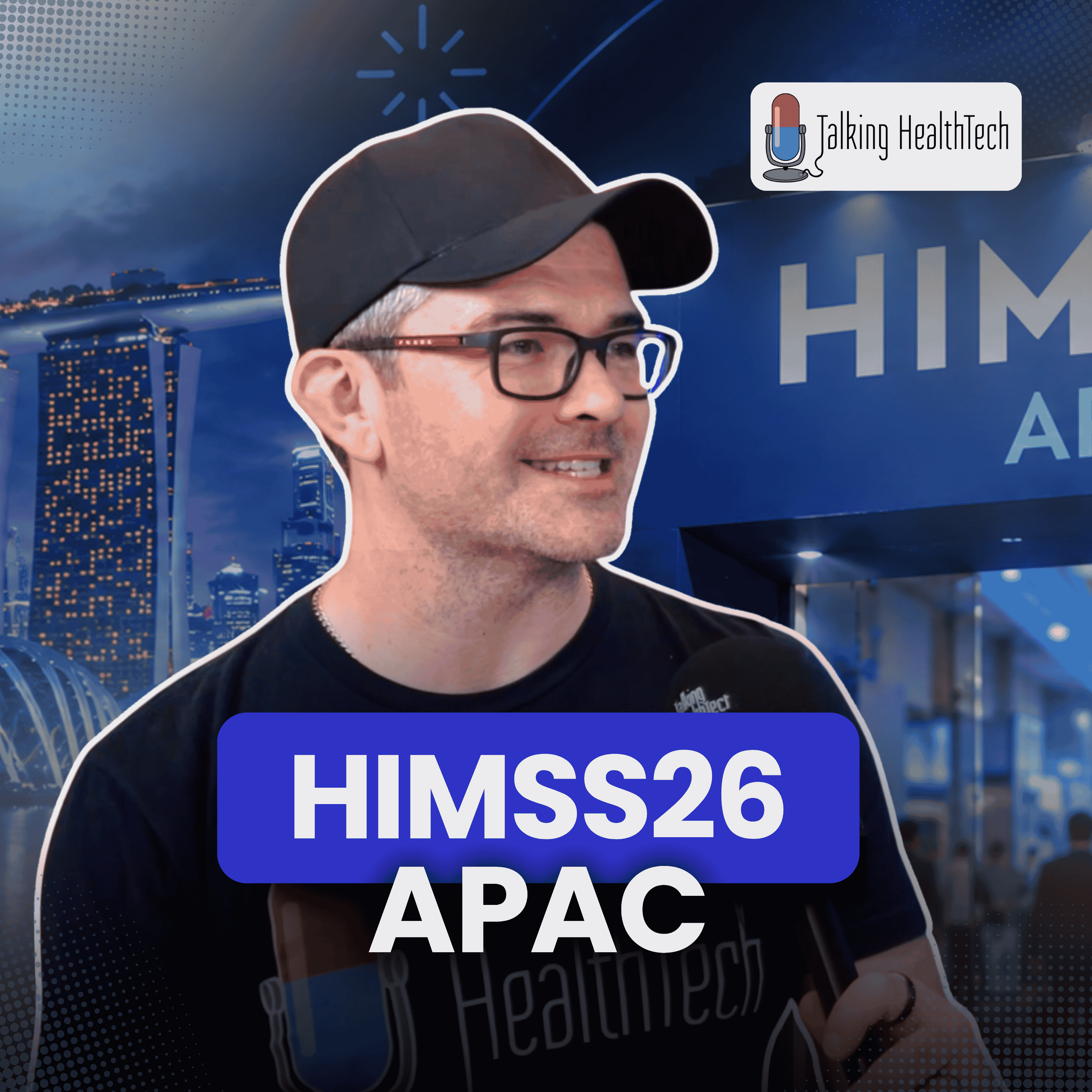
In this episode of Talking HealthTech, Peter Birch speaks with Sergei Shutov, Don Woodlock, Dr Tullawat Pacharapha, Dr Apichai Chaiyaroj and Dr Trent Dean to discuss hospital digital transformation, regional innovation, interoperability and AI integration in healthcare across Asia-Pacific.
The episode, recorded live during InterSystems Asia READY 2026 in Bangkok, provides a snapshot of conversations with healthcare executives and technology partners on their strategies for modernisation, collaborative approaches, and the challenges and opportunities unique to the region.
Their discussion includes the role of integration in building a strong digital foundation, the importance of bringing clinicians into the design of new systems, and the rise of AI scribes and ambient documentation.
The guests also discuss the promise of the FHIR standard for data interoperability, the gradual journey of building trust in AI, and the need to keep patient experience, privacy and safety at the centre of every decision.
They also share how hospitals in Australia and Asia are approaching the shift from reactive to proactive, preventive care.
Key Takeaways
🦾 AI adoption is being driven aggressively in Asia-Pacific, with both operational and clinical opportunities emerging
🌏 Hospitals in the region can leapfrog legacy issues by moving directly from paper to advanced digital platforms
🔗 Integration and interoperability remain fundamental challenges; Data lakes and FHIR standards are critical focus areas
🫱🏼🫲🏽 Partnerships and collaborative ecosystems between vendors, clinicians, and IT leaders are essential for successful transformation
⏳ Clinician and patient perspectives on digital change need continuous engagement, co-design, and focus on trust
Timestamps
00:00 – Intro
00:41 – Sergei Shutov, Managing Director, Banksia Global
07:06 – Don Woodlock, President, InterSystems
16:49 – Dr Trent Dean, CEO, Gateway Health
25:33 – Dr Tullawat Pacharapha, COO, Vejthani International Hospital, Thailand
29:05 – Dr Apichai Chaiyaroj, Assistant Hospital Director, BNH Hospital, Thailand
Check out the episode and full show notes on the Talking HealthTech website.
If you’re enjoying the show and want access to exclusive healthtech discussions, meetups, and member-only content, you can learn more about becoming a THT+ Solo Member here: talkinghealth.tech/solo_shownotes
And if this episode was useful, leaving a review or sharing it with someone in the industry always helps.
Mentioned in this episode:
Use the free Talking HealthTech Glossary for plain-English explanations of digital health terms, acronyms and concepts across the industry: talkinghealthtech.com/glossary.