Ask ChatGPT

 Talking HealthTech
19 Oct 2026 · 40m · 17 chapters

From HMA26 Bangkok, the episode covers how Asian healthcare leaders are modernizing systems and adopting AI—especially embedded AI in EMRs, workflow integration, multilingual support, and radiology/clinical AI to improve speed, efficiency, and patient outcomes. It also emphasizes “knowledge integrity” (using trusted evidence rather than probabilistic LLM output) and reducing revenue leakage and missed items.
Written by AI. May contain mistakes.
Discussion about Amalga's healthcare solutions and their importance in the region.
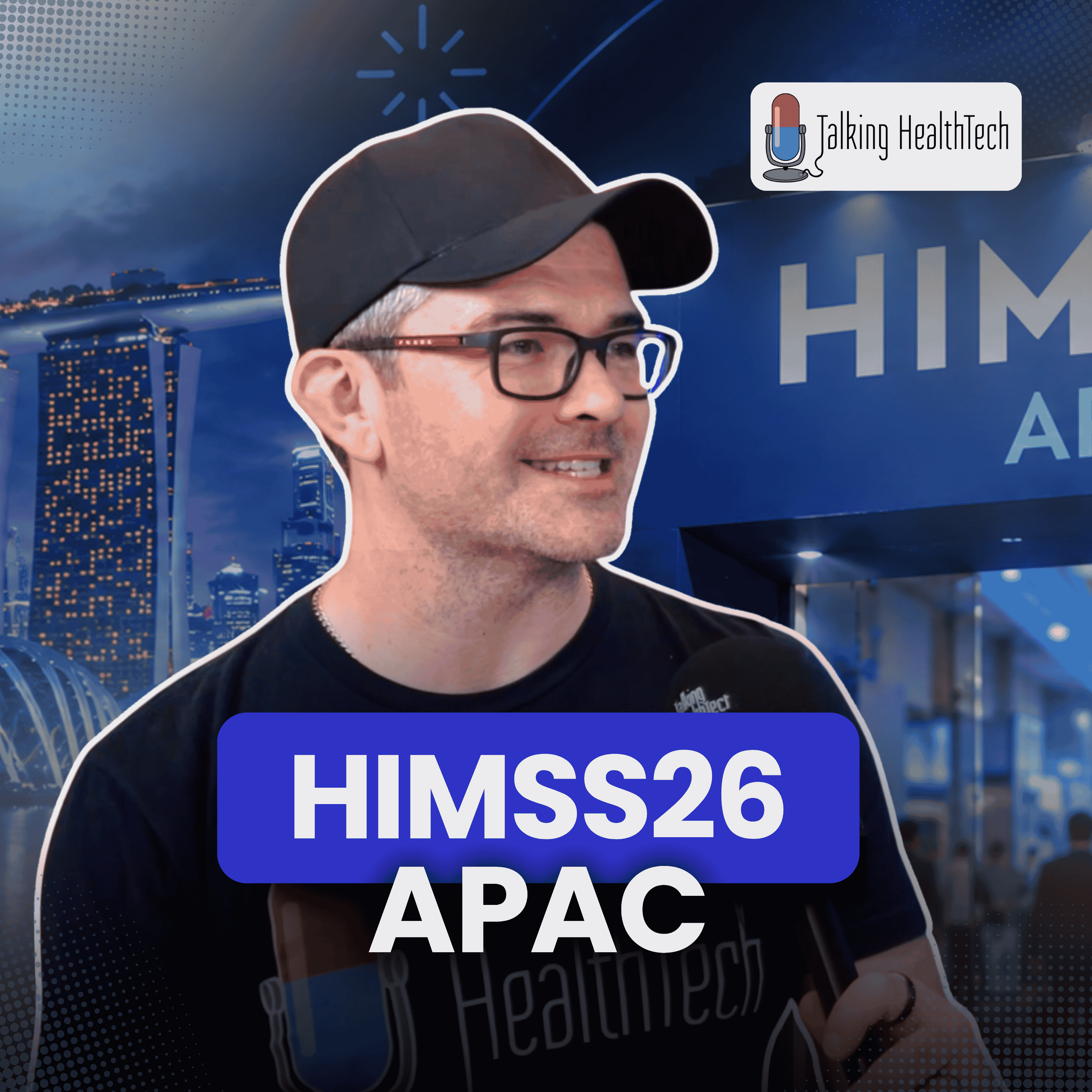
“I'm here at HMA26 in Bangkok, where the healthcare leaders from across the region come together to learn how to do healthcare better and share their ideas.”
Exploring the modernization of EMRs and the integration of AI for improved usability.
“And they can then do the vital signs, log them, and they can write a progress note.”
Insights on the conversations and interests of healthcare leaders at the event.
“Well, the conversations we've had this morning in this booth that we're sitting in, we were buzzing at the morning tea break.”
Discussion on the importance of providing accurate medical information amidst the rise of AI.
“I want to come back to that valid knowledge piece because that's pretty pertinent in this day and age.”
Exploring the shift towards AI systems and its implications for healthcare.
“And talking to others, I think we're sort of the brains within all of the ecosystems that people are building.”
Discussing the specific needs and literacy levels regarding AI in the Asia-Pacific region.
“Is there consistency globally, or is there something really that the broader Asia-Pacific region really needs right now?”
Understanding how AI can incorporate evidence-based medicine for better patient care.
“Number one, the second part that we have heard a lot, and that is also a global trend, is how this type of support AI enabled can be more integrated into the workflow.”
Exploring the need for better integration of AI tools within healthcare workflows.
“Like did a model interpret a study for patient care or did people who understand what they're doing interpret a study for patient care?”
Examining the varying digital readiness and challenges across Asia-Pacific healthcare systems.
“So we do see the same type of request here.”
Discussing the adoption of AI tools and the future implications for healthcare leaders.
“It's emerged and all over us in terms of artificial intelligence, new technologies, new ways to do things.”
Learn how AI can enhance patient care and staff satisfaction in healthcare.
“So we hit all those boxes with having good embedded AI into the platforms.”
Explore Harrison AI's rapid expansion and impact on healthcare globally and in Asia.
“And yeah, so we're here at HMA in Bangkok.”
Understand the challenges in radiology and how AI can help close the gap.
“So we started the Asia business a bit more than three years ago.”
Discover how AI is transforming radiology amidst growing demand and technological advancements.
“And we generally see technology as being able to close that gap.”
Learn about the shift in healthcare AI focus from quantity to quality solutions.
“and excitement around large English models and AI generally, I guess you come along for the ride a little bit in that, as does the rest of healthcare, I guess.”
Hear about key conversations at HMA focusing on improving healthcare systems and workflows.
“And during HMA this week, and obviously you're very familiar with the region, but what are the types of conversations you're having with participants here?”
Get insights into upcoming AI tools and innovations for healthcare systems.
“We have very strong now and established portfolio of products.”

Get the gist, explore an idea or ask about something said.
 Claude
On Talking HealthTech, what are the key points of this episode?
Searching your listeningAutomatic transcript. May contain errors.
0:00Peter Birch: Have you ever heard a term in digital health and just quietly had to Google it later? The Talking Health Tech Glossary has got you covered. We've got hundreds of terms in plain English explanations written for our industry and all free to use. You don't even have to sign up for anything. Just go to talkinghealthtech.com slash glossary.
0:30Peter Birch: I'm here at HMA26 in Bangkok, where the healthcare leaders from across the region come together to learn how to do healthcare better and share their ideas. During this event, I got the opportunity to speak to some of the healthcare technology providers and the innovators who are creating the solutions that will help healthcare managers across Asia deliver better patient outcomes and improve efficiency across the system. You'll catch all of those discussions in this feature episode, and I shared my reflections from that across my LinkedIn profile and our newsletter as well, so go check those out.
1:00Peter Birch: Collaboration starts with the Conversation Team Health Tech. Let's make it happen.
1:04Christian Cella: I'm Kerry Campbell, and I'm the Clinical Director for Amelga, and we provide a hospital information system and EMR.
1:12Peter Birch: So good to chat with you again. Normally it's in, oh, it could be anywhere, but often in New Zealand, but we're not in New Zealand. We're in Bangkok for HMA. tell us a little bit more about Amalga and this region firstly.
1:26Christian Cella: Right, so Amalga's HIS has been around for 30 odd years especially here in South East Asia so we're a New Zealand company but our large team is here in Bangkok and so we have an office here in Bangkok and we also have a business in Vietnam so whilst being a New Zealand company we do have customers in New Zealand but we've got lots and lots of customers in Vietnam, Thailand and in the Philippines.
1:54Peter Birch: You're right, there you go. So what's been happening with the, because the last conversations on the podcast, I think there was a lot of the talk around the movement into Heal Well and that's kind of been quite a while now that that's been there and the movement of the organisations and the spin out for Amalga and all of that. But the focus right now, what are the kind of things that are being built to and for what reason, I guess?
2:16Christian Cella: Right. So we're really working hard on modernising the EMR portion of our hospital information system. And that's really needed for usability, but also to make it mobile responsive. And so it has been in the past desktop based, which, you know, that has served as well in the past. But now people actually want a mobile responsive, easy to use, clean and clear electronic patient record. And so we're really working hard on that. And we're embedding AI tools into that as well.
2:52Peter Birch: And do you think it's something to do with, you know, it's been a while coming, but often when technology was created for the purpose of the clinician or an internal staff member using a platform, wasn't so much thought placed in like let's make this thing look nice or even be practical it's kind of like this is the place where you put the information and I guess any focus on creating something that's easy to use on the move was more for a patient side of things but for hospitals that's not too often that's been the case until only recently but this focus on creating something that's like mobile responsive and dare I say maybe even a little bit nice to use uh is is kind of a
3:28Christian Cella: newer piece but becoming remarkably important absolutely and there's there's um great demand out there for it. Certainly there'll be doctors and nurses and physios and occupational therapists who will still use a desktop for where it's appropriate but if you think about an award situation the nurses don't sit at computers and so they are walking around the wards they're going into a bedroom sometimes planned but other times the lights on so they go into the bedroom into the ward room and while they're there they need to actually do the vital signs or do the fluid balance chart or write a progress note and they don't have the chart with them so then they'd have to go back to their desktop computer or dare I say grab the paper chart and hand write it so having the electronic patient record in your pocket on a pocketable device like a mobile phone the nurse can for the opportunistic times can grab that out of their pocket can actually read about the patient so can see the allergies and everything so they may walk into a room where the patient isn't their patients, one of their colleagues' patients, and they could quickly see that the patient's on strict bed rest, so don't get them up.
4:36Christian Cella: And they can then do the vital signs, log them, and they can write a progress note.
4:42Peter Birch: It's good also to have someone like yourself who's done all of that stuff in the past, so you kind of know first. I imagine a lot of your work is working with clinicians on the frontline to work out what's needed right now for those particular situations, but I'm particularly interested being here in the region, you know, being a New Zealand-based company, and we know that globally every country is different, every hospital is different as well. Are there any commonalities you're finding as, you know, looking into other parts of the world that you're like, hey, regardless of where we are, these things remain the same?
5:15Christian Cella: Yeah, absolutely. And a lot of that is the patient care and the nursing care and the doctor care and the record. So everybody in any country writes progress notes. Everybody in all the country does full risk assessments. There are different workflows, but we need to develop our record so that it can match any of those workflows. And the other difference, of course, is multilingual. And so with our Vietnam customers, the doctors and nurses write their notes in English, but they could do a patient summary to hand to the patient and it could be in Vietnamese. Yeah, right. So what we've done is we've embedded an AI scribe into our electronic record so that if the doctor is doing a consultation with a patient they could use the AI scribe.
6:07Christian Cella: The doctor's note can be in English and then they could have the patient summary to hand to the patient to take home in Vietnamese. And it's embedded in the product as opposed to having it separate.
6:19Peter Birch: it yeah that point around being embedded in a product is um one that i imagine a lot of technology providers and even um hospitals i guess would be thinking about um there is a uh a large amount of ai tools or um it's probably more of the focus on the tool sometime as opposed to the problem that needs to be solved it's kind of like you know we need to embed ai and then maybe we'll work out why later but um you can either choose to kind of put something over the top or kind of build it in, it can be difficult sometimes to build something into a platform when the platform's already built because you've kind of re-architected sometimes.
6:57Peter Birch: So would you say your approach has been more about how do you make the AI components just part of the platform as opposed to putting something over the top?
7:04Christian Cella: Absolutely. And the last thing doctors and nurses want is another tool to go and log into. So we've embedded it into the workflow as well. So yes, we can have an AI tool, but when we embed it into our platform, we make sure that it works for the user. So that in this screen, you'll click here and then you can get the AI tool working. So we've got another one, which is pre-admission risk screening. So that is the patient fills in the pre-admission forms with the allergies and the medications and all of that. So where that lands in our HIS, in our hospital information system, in our EMR, the AI tool runs across that and pulls out all of the key factors that the hospital has identified that would make a person a red flag so that the nurses can then come in and focus on those patients first and get those patients pre-assessed and then work down the amber, then the green.
8:06Christian Cella: so it's embedded across the nurses don't have to go into another part of the system
8:13Peter Birch: That feels like it's important to me Lastly, here in Thailand, in Bangkok what are the types of conversations you're having here with Deluxe because strong representation from health systems here at HMA it's great that people can take time away from a busy schedule of actually being within a healthcare setting What do you expect the types of conversations are here during the event or what would you hope people take away?
8:42Christian Cella: Well, the conversations we've had this morning in this booth that we're sitting in, we were buzzing at the morning tea break. We had hospitals from all around, mainly Asia, all around Asia, asking us around our EMR. So a lot of them have the administration systems, but they're really interested in the EMR and they're really interested in the mobile responsive EMR, the clean look, and that it looks modern and it functions modern. It has all of the features that a modern EMR need and that it's built around workflow for the start. Easy to navigate, has AI. It's a real big feature, as we know, everywhere we hear AI.
9:26Christian Cella: So they're very interested in the AI scribe, very interested in the pre-admission screening, and we also do, which isn't linked directly to the EMR but more of the billing part of our system, is a revenue leakage AI, we call it BillSmart, whereas the AI runs across the bill and would say, actually, for this doctor doing a total hip replacement, they always use this item and the item's not here. And so it gives us a percentage chance that it's been missed. and so those are the real exciting things but being mobile responsive and having dashboards like a nursing dashboard which identifies very quickly what are the overdue medications for this patient
10:11Peter Birch: I assumed it was come for the virtual golf and stay for the EMR maybe
10:16Christian Cella: absolutely and people are coming for the virtual golf and the branded golf balls
10:23Peter Birch: got all the options any other final thoughts here during HMA?
10:26Christian Cella: Well, it's really buzzing here. There's people everywhere. Hospitals in Asia are really crying out for accessible, user-friendly electronic patient records. And we've got one. And it's been in Asia for 30 years. And it's modernised.
10:51Carey Campbell: I'm Sheila Bond. I'm a physician at the Brigham Women's Hospital and Harvard Med in Boston. And alongside my clinical career for the past 12 years, I've been working at the intersection of content, technology, and helping users understand what good medical practice is through information delivery. And now I lead, I'm the head of clinical AI at Walters Kluwer and in charge of getting our AI offering off the ground, up-to-date expert AI. And it's just been a total thrill. I think what's key to us is, and what our identity always has been, is making sure that valid knowledge is what our users act upon.
11:40Carey Campbell: So we've had to really think about how to build that right in the AI era.
11:45Peter Birch: So yeah, digital health has got a pretty serious acronym problem and we've all got our favorites, but it's a lot, right? And you don't really want to be the person in a meeting that has to ask what something stands for after you've been talking about it for the past couple of weeks. That's why we've built the THT Glossary. It's a free, ever-growing library of digital health terms that that we explain in simple language, written for people who actually work in the industry. So that's useful if you're brand new in the space or you're one of the veterans that just want a refresher before a meeting, or maybe you want to check to make sure we've got everything in there.
12:22Peter Birch: It's all there for you. Have a look at talkinghealthtech.com slash glossary. Bookmark it, send it to your team. It's the kind of thing that should exist. So we created it. Hope you enjoy. I want to come back to that valid knowledge piece because that's pretty pertinent in this day and age. But what about yourself, sir?
12:39Victor Stulen: So my name is Christian, Christian Cella. I'm a VP and general manager for what we call the international segment within the health division of Walter's Kluver. I'm in his organization since 18 years now. And what I've been running is multiple of our businesses and specifically how to internationalize some of our solutions. Up to date, I was born in the U.S. 30 years ago and now I'm responsible for almost 140 countries around the world where we have been able to drive the adoption of UpToDate. And in this era, I hope to drive more adoption of our new version, that is Expert AI.
13:19Peter Birch: Yeah, love that. And just back to your point earlier around ensuring clinicians are acting upon relevant and accurate information, I guess it sounds like from a Walter Schler perspective, that's always been, you know, one of the core kind of drivers. But in the age of any kind of information can be generated from anywhere at the click of a finger, I imagine that's just only heightened that focus and your ability to, like, carve out that expertise. Like, how is that, in the age of AI, how is that kind of doubled down your focus on ensuring quality information is presented to clinicians?
13:55Carey Campbell: Yeah, it's made it absolutely top of mind for us, right? It's been our business for a long, long time. And I think our position is to sort of shepherd in this new era. And talking to others, I think we're sort of the brains within all of the ecosystems that people are building. Our content itself is tried, true, trusted for medical care. There's 100 studies over the history of UpToDate that these words and this information improves outcomes for patients and in health care. So our interest in making sure that legacy continues and grows is enormous. And I think for me, it's really exciting. And the way I think about it a little bit is that, you know, traditionally we take our expertise.
14:46With UpToDate, we've got 7 ,600 physicians or other clinicians around the world who help us write our content now.
14:54Carey Campbell: We took that expertise and that knowledge and we transformed it into the written word for our users. Now we're taking all that expertise and knowledge and we're translating it into AI systems that deliver valid knowledge so it can scale and get out there.
15:09Peter Birch: It's the right time to do that. From the international side, we're here in Thailand, here in Bangkok, and thinking about the Asia region specifically, what are you finding of the particular needs within this region when it comes to information and the services that Walter School provides? Is there consistency globally, or is there something really that the broader Asia-Pacific region really needs right now?
15:35Victor Stulen: I think there is a big consistency globally, meaning that everybody's sort of moving to this new type of solution and start adopting. We have been on the road for now 10 days across multiple Asian countries. What I think is the difference is the high level of literacy of the Asian population in AI adoption. And sometimes I would say more profound discussion of what is the right AI tool to adopt in the medical setting as a clinician. So that was quite a grateful surprise for all of us to see this type of match with what we are doing. Number one, the second part that we have heard a lot, and that is also a global trend, is how this type of support AI enabled can be more integrated into the workflow.
16:27Victor Stulen: Meaning, how can we retrieve also the patient context to provide more precise recommendation to the clinician.
16:35Peter Birch: channel so what is that the two topics no that makes that makes a lot of sense and the um you were up on stage earlier today uh sharing some insights with attendees here at HMA tell us about
16:44Carey Campbell: what you're sharing ah yeah so um we're talking about how uh you make sure that knowledge gets to the next generation in a way that helps them make better decisions and is still valid um so we talked about how we designed our system to do that and not only how we design it um but you've got to measure that and show that with data. So we went through some of our data points. And I'd say, you know, key philosophical things to hit upon is just understanding the nature of this technology. It still is a probabilistic technology when you talk about a large language model. So it's how you develop the system to employ that where it works, right, for our narrative interpretation, but not necessarily for generating clinical recommendations.
17:29Carey Campbell: And I think that's at the heart of our system is making sure that we use the model in the right way and that we use our knowledge and that we use our content in the right way and then that we can measure that. So for me, you know, I've been talking a lot about what I think the right foundational measurements are in this era is, you know, whether you can measure that what you're putting out in your AI solution is actually true to what we call a ground tooth source. And specifically, you know, we also talked about the history and the evolution of evidence-based medicine and how important that is to patient care.
18:06Like medicine has been through, you know, its waves in many form.
18:10Carey Campbell: And the whole point and purpose of evidence-based medicine is to make sure that people are acting on sound information, not something that is plasma, right? So AI can produce that plausible information, but is it sound? So the other thing that, you know, I've been calling knowledge integrity and how you measure it. And that is, you know, when you're putting forth a clinical claim in any AI system, can you say whether that clinical claim is coming from model knowledge? Like did a model interpret a study for patient care or did people who understand what they're doing interpret a study for patient care?
18:44Carey Campbell: Because there's a big, big gap. And we just went through really, you know, how many, how many decades of evidence-based medicine to make sure that the information that we act on really is valid because it makes a difference.
18:57Peter Birch: Seems like a small technicality, but a huge implication if that's not well understood and then acted upon. So that's really cool. Lastly, what are you hoping that people take away from the discussions here at HMA with Walter Skloa? And hopefully this rounds out your little Asia league after the last couple of days. And what do you think are the most important things like shaping the decisions that a lot of the clinical workforce and frontline and executives in Asia hospitals are thinking about here at HMA this week?
19:28Victor Stulen: Yeah, I think I go back to the integration in the workflow and the ecosystem. So the ecosystem is very historically a mix of many vendors, many technology, and all of this needs to get more connected. So I think there is big needs for that connection. And we are sort of the brain behind, as we were saying, and this is happening here and globally. We do see multiple vendors that are partnering with us to integrate our solution into the workflow. In the US, Abridge, Microsoft and Epic. So we do see the same type of request here. And I think the hospital manager really is what they want. They want a single sort of solution or ecosystem that is more connected.
20:18Teodor Stoev: So my name is Victor. so I am the leader here for the commercial leader for healthcare informatics in the region so I'm originally Dutch I lived for a long time in Australia like yeah yeah and now yeah I'm residing in Singapore and covering Southeast Asia and Korea but always been in informatics and
20:38Peter Birch: always been in technology fields yeah interesting and so with Philips what's the particular focus and the problems to solve in the Asia-Pacific region at the moment?
20:48Teodor Stoev: Yeah, I think that's a loaded question, to be honest. Because I think it's like if you look at APEC, it's kind of like a mosaic of cultures, of countries, of languages, of everything is like mixed, right? Like as in if you go one hour south, then you'll find a different country with a different culture. So it's very hard to have like a one problem fixes all. Sorry, one solution fixes all. So that's why, like, we look at it like more at like digital archetypes and see like, as in, OK, so right. Which countries are falling into which category, so to say, right. For instance, you will have digitally developed countries like Singapore or Australia that are normally like they've been going through the gears, right.
21:37Teodor Stoev: Like of having on-prem solutions right now and now going to cloud, for instance. But you also have countries like, for instance, a great example is Vietnam, where they've actually they're still doing. If you go to the hospitals right now, some of them are still doing film, for instance, for radiology. And they can make a big leapfrog, right? Like as in from like going from film to something completely digital and like cloud based. Right. So they kind of jump the gun on like all the infrastructure problems that currently are residing in some of the other countries. Yeah.
22:08Peter Birch: So many great examples in in the region. right and i always love how we we group any it's true anywhere in the world it's grouped geographically out of convenience as opposed to like what the actual health care needs might be and i guess that makes sense too and and and that's what makes it interesting and diverse but then that brings that um challenge because there's a lot of consistencies and a lot of common um objectives that health care systems have around the world in terms of delivering better patient care and need to do more things with less these days and all of that yeah and then you overlay this, you know, I was going to say emerging.
22:42Peter Birch: It's not emerging. It's emerged and all over us in terms of artificial intelligence, new technologies, new ways to do things. But, and I know this is front and centre in terms of a lot of the content that you're sharing here at HMA. Tell us a bit more about the role that AI is playing, the conversations that you're having with delegates here at HMA, but also just generally people in the Asia Pacific region about artificial intelligence.
23:07Teodor Stoev: Yeah, definitely. And perhaps also like good to mention, right, like Zinn. So I'll have a presentation later about this as well. I think if we look at some of the data, so for instance, we did a FHI, like a future health index report with Philips. And then for the 2026 data, we get over 20 ,000 respondents, right, like Zinn, across the globe, like different countries. And it gives us a really good perspective of like what is happening and how is the AI adoption going. I think what we're seeing now is that actually the adoption is outpacing the enablement, which basically means that everyone is using AI these days.
23:47Teodor Stoev: And so we see as well, some of the clinicians are using their personal tools, right? Their chat GBTs, their Gemini's, their cloths in order to work with AI. But of course, we also need to give them the tools that they already have it themselves. And maybe a bit of a bold statement, right? But I think like AI works brilliantly if it's embedded into like the systems that they're already using, but doesn't work that well if it's standalone. And so I think that's where we still see a bit of pathway of like getting them to use it better in better ways. And not just having like a bulky tool that will actually cost you time instead of save you time.
24:31Do you think there's a lot of health systems that are, I mean, everyone's sort of working it out as we go.
24:35Peter Birch: And yes, we can have strategy and you can have kind of leadership and a desire to be more AI enabled because that's what we need to do. But like any tool, like once you, I feel like sometimes there's healthcare leaders that don't want to commit to any one particular horse because it's kind of like, well, what is the future of this space? And like, show me the evidence and show me like some practical things, like take me beyond that, the story and the potential. It's kind of like, what does this actually look like? And if I back this horse, so to speak, you know, am I back in a winner? Because it's hard to unpick anything once you embed it.
25:09Peter Birch: Are there kind of examples and real world things that you're able to show, you know, some of these healthcare leaders to give them that confidence to be able to actually progress and not get stuck in this inertia?
25:19Teodor Stoev: Yeah, I mean, great question. And actually, I mean, it shows that, I mean, I feel like you're peeking into my life, you know, because like these are the conversations I'm having like literally like as in every week with healthcare leaders, right?
25:31Peter Birch: We survey all our guests prior for a couple of weeks. So, yeah, that's all we have.
25:36Teodor Stoev: And we use AI. Yeah, yeah, yeah. No, but definitely, that's the question, right? Because, like, nobody wants to back a horse and then, like, in the end, like, find out that, like, you know, there's 10 other ones that are way better and being locked in. So, actually, that's also something that at Philips, like, we're looking into as well. So, for instance, we launched a product called AI Manager, which is basically like instead of giving you a specific AI it's like a platform kind of like an app store or like you know a play store or something like that where you can decide which AI you want to use and so we basically enable that platform to have like all the AI on there and you can select which AI you want to use and if you don't want to use it anymore you stop using it but then you've got a single point of integration and you don't have to back one horse but you know that you're always open to all the horses that is running along right?
26:29Teodor Stoev: So, yeah, I think that's an option. But in the end, I mean, I think the most easy way for healthcare leaders to get an answer to this question is they need to, normally when we have the conversations, they're looking at, okay, so what is, for my organization, what is the number one and the number two priority, right? And maybe the top three, let's say, right? And then from those challenges that they're having, they're looking, okay, so which AI can help me resolve those challenges, right, that I'm seeing? and then you will always be right because like in the end you don't have to i mean it doesn't matter which which horse you're begging or whatever but if you're solving a problem for your institution or for your organization i mean you're winning right so that that's kind of like where you need to go to instead of yeah more like zinda hype right like where people are saying no no but we use ai we use it okay but what are you doing with it right yeah 100 hey um lastly thinking
27:21Peter Birch: about the uh the week we've had here in bangkok at hma the types of conversations you're having with delegates here what are you hoping that people take away from the sessions and the networking things that you're hosting and the and the presence here at the booth um what are you hoping that they take away from those discussions here with phillips um well i hope that they take
27:39Teodor Stoev: away from all the vendors right like as in like as in the the that's right now ai is here right like as in everyone is using it um like i said like as in adoption is here um so i think now it's about and we're getting a bit like the same as back in the day right like with with internet being introduced with smartphones being introduced with you know ai is here to stay it will be here so now it's about okay how can we put guardrails around it but also make it as useful as possible for the people that are using it because what we want as philips as well is we want to have increased patient care we want to have increased staff satisfaction right like in the healthcare professionals need to save time i think we also need to reduce the cost right and ai is a an important driver for that.
28:25Teodor Stoev: So we hit all those boxes with having good embedded AI into the platforms. And that's what we are trying to do. And that's also what we're trying to show today and here during HMA.
28:40Dr Sheila Bond: My name is Theodore. I represent Harrison AI and I'm looking after the Asia business. Amazing.
28:47Peter Birch: And yeah, so we're here at HMA in Bangkok. Tell us a bit more about... Well, actually, it's been a while since we've spoken to Harrison AI, and I think a lot's changed over the last couple of years too. Get us up to speed. What's the main focus for Harrison AI?
29:01Dr Sheila Bond: In a few years, I think we went pretty fast globally. So before jumping to Asia, we're now in over 1 ,000 hospitals. And when you look just the number of years that it took us to do that, I think it's pretty phenomenal. But that also shows the growth in demand and in interest of what we are doing. And that is clinical AI, radiology driven, really supporting radiologists, emergency physicians and the health care systems to get better outcomes on their imaging and improve the workflows. So with over a thousand sites now globally, I think it's a testament of that great work that we've done. And in Asia alone, I think we've seen a real transformation.
29:47Dr Sheila Bond: So we started the Asia business a bit more than three years ago. And we are currently in every major market in Asia. We have now over 20 customers. Most of them are the large private and public providers. And we have really seen that drive among the large providers to drive efficiency, to drive the improvement in healthcare outcomes. And we're very happy to be able to support that.
30:15Peter Birch: Yeah, I love that. And so, as you say, the drive is like improve efficiency. And I imagine then that's just due to the sheer number of, the sheer amount of healthcare that needs to be done and the amount of diagnosing, the images need to be done. Humans aren't going to be able to do, haven't got that capacity, but there's obviously a demand. Do you find that this is particularly something that's unique to Asia or is it just more heightened given the balance of complexity and stuff that we have?
30:42Dr Sheila Bond: I think globally, there's not a single country that actually has the number of radiologists that the country needs. In Asia, in most countries in Asia, that just happens to be even a wider gap. And the reality is, you know very well, it takes a lot of time to train radiologists, right? It's hard work, long hours, long years. and the imaging is growing exponentially. So what we have seen is really the gap actually, it just keeps on increasing. It's not going down. And we generally see technology as being able to close that gap. And what we have seen is really supporting the radiologists, not only to close the gap that is existing, but really to help them being that second pair of eyes, being able to prioritize.
31:34Dr Sheila Bond: So make sure there's so many studies each of them needs to read, especially when you look at the public sector, but also private. And we really have seen a great work that they have done with us being able to prioritize and making sure that read the critical studies first. Read the ones where the patient really needs care now. and of course that from a healthcare system perspective drives efficiency, drives economies of scale and that has been also a major driving point within Asia when we work with customers to make sure we support our radiologists with reading the critical studies first and making sure that we obviously the care is delivered to patients as soon as possible.
32:22Peter Birch: And do you find, because, you know, knowing Harrison AI over the years and also in the area of radiology, actually, because I think radiology was probably one of the earliest kind of examples of best use case of AI. It's still doing.
32:39Dr Sheila Bond: If you listen to all the big tech AI, not radiology, you know, all the big guys, I think radiology still pops up as the best example right now in terms of AI changing how people work.
32:55Peter Birch: But then in this current climate where I guess the hype and excitement around large English models and AI generally, I guess you come along for the ride a little bit in that, as does the rest of healthcare, I guess. But have you found that that's increased the interest in solutions like yourselves? Or is the interest just always going to be there because of that challenge that we need to do more with less?
33:22Dr Sheila Bond: I think definitely that's part of it. But I think what has happened in the last few years, because there has been a big drive, and I think there was a significant shift in the last few years from quantity to quality. And what I mean is there have been many different AI providers out there with different focus. But what we have seen is really a market that has been educated, has tried different solutions. And now it's really a push for a quality solutions that actually deliver. And I think that on our side is something that we are very proud of with everything that we have put to market so far.
34:06Dr Sheila Bond: being recognized globally among the leading models and products. And the other big change, I think, linked to that is, I think, many of the customers now is that maturity of the customers. And you see that in Asia and beyond. I think it's very clear that initially everyone wanted to get an AI, put it into the existing workflow and see what happens. And I think now with AI, what is happening is many customers, many healthcare providers are first thinking, okay, how do I redesign the workflow and let AI earn its place in that new workflow with more efficiency? And I think this is where we have seen the biggest gains because I think most of our customers also stopped just trying to push AI to the existing workflow.
34:58Dr Sheila Bond: But we really sat down and said, OK, how do we change the workflow given the technology you have now, the opportunities you have now, the workloads you have now, and don't try to fit it in a workflow that was developed decades ago that obviously is not as relevant as what you are facing today?
35:17Peter Birch: Yeah, I've noticed that too, that often the mantra within technologies will shape around the workflow of the clinician. But I guess if you're going to do something transformational, there's a bunch of analogies that explain that too, that there's no point doing it the old way when there's a very new way that could really have those compounding effects. And during HMA this week, and obviously you're very familiar with the region, but what are the types of conversations you're having with participants here? because often it's quite a, for HMA, it's quite a clinically focused crowd and, you know, both executive and a lot of frontline I see walking around too.
35:49Peter Birch: What's front of mind for attendees here at HMA when they come and speak to Harrison AI?
35:55Dr Sheila Bond: Yeah, I think a lot of the discussions are around similar topics that are how do we deliver better patient care, faster, more efficiently, and with a better quality. And those are the discussions, I think, again, that we have been having for some time. The discussions this year, I think, are getting that next level in terms of what do we need to change in our workflows? What can we do? What are the use cases? And I will give you one example. Up until recently, when we had our discussion with customers, even though we are a radiology-focused solution, actually a lot of the value that can be derived on a healthcare system level, whether it's a private hospital, whether it's a public hospital, is actually also allowing emergency physicians having access to AI results because not always you have a neuroradiologist or radiologist being able to read a study on the spot.
36:54Dr Sheila Bond: And sometimes you, as an emergency physician, need to call a next step on the spot. And this is where I'm talking about customers really realizing, hey, when I look even for a relatively niche area like ours, which is radiology AI, I think the discussions are really, especially here in HMA, where you have a lot of management, in terms of how this benefits the entire system, not just the radiology department. And those discussions are getting, I think, more and more common. And we talk about how we improve radiology. We talk about how we improve emergency. And when you start to compound, actually, the benefits across the entire healthcare system.
37:39Dr Sheila Bond: And I think that has been very, very exciting for us. And something we've really seen that becoming almost the norm of more of the discussions, especially from C-Level where people are looking at the healthcare system and the healthcare system they're responsible for in totality.
37:58Peter Birch: Makes a lot of sense. Hey, last question before we wrap. The forward-facing stuff, looking at RS and AI stuff you're working on, what are you looking forward to putting in the hands of the healthcare managers, the clinicians, the healthcare system over the coming months and potentially use.
38:18Dr Sheila Bond: Yeah, I think we continue. We have very strong now and established portfolio of products. Our Chess X-Ray CityBrain products, especially within Asia, very well established. And this year we have our City Chess really coming to life in the market. So that is super exciting for us. And of course, we're looking at our Harrison Ratt open models, which is also an area where we definitely see future growth coming. We have a lot of interest. We as a company are really committed in that space. And we see that as a great area in the years to come to develop. And we are also very encouraged in Asia specifically, we've seen that transition to hybrid and to cloud deployments, which in the past sometimes has been a bit of a challenge, especially as the models grow, right?
39:12Dr Sheila Bond: The more models, not just us, but the industry, all models become larger. They require more resourcing. And what we've seen is customers really recognizing that when they see across the hospital. It's like, we really need to see how we do that in a way that actually we can deploy, we can use the new technology. And I think we've also been very encouraged to see a big shift really moving to a lot more cloud solutions. which again I just think will fast track even more adoption of technology hours and others. I think at the end of the day we want to make sure the patient and the healthcare providers have the best possible technology available to them and I think that will just make it possible.
40:10Carey Campbell: talkinghealthtech.com.
40:14Peter Birch: That's it for this episode. I hope you enjoyed it. Make sure you subscribe to our newsletter on talkinghealthtech.com slash newsletter so you can be across all the things we do at Talking Health Tech above and beyond this humble little podcast. Thanks so much.
In this episode of Talking HealthTech, Peter Birch speaks with Carey Campbell from Amalga, Dr Sheila Bond and Christian Cella from Wolters Kluwer, Victor Stulen from Philips, and Teodor Stoev from Harrison.ai.
Together, they discuss healthcare technology innovation, the integration of AI into medical workflows, and digital transformation across the Asia-Pacific region.
The guests discuss the rise of mobile-ready electronic patient records, the importance of building AI into the systems clinicians already use, and the need for trusted, evidence-based clinical knowledge as AI-generated information spreads.
They also explore how radiology is becoming a testbed for clinical AI, why hospitals are rethinking their workflows instead of bolting on new tools, and how cloud adoption is helping health systems scale.
Language support, cultural awareness and the challenge of choosing the right technology without being locked in are also part of the discussion.
This episode features a handful of the conversations that Talking HealthTech captured on the floor of HMA26. Each guest offers a practical view of what hospitals and clinicians across Asia need from digital health now and in the years ahead.
Key Takeaways
🩺 Mobile and User-Friendly EMRs: The demand for mobile-responsive, user-focused electronic medical records (EMRs) is driving product modernisation for improved clinician usability and patient care.
🧠 Embedded AI in Healthcare Platforms: Embedding AI tools directly into clinical workflows, rather than layering them on top, is seen as essential for adoption and utility among clinicians and administrators.
🌏 Regional Digital Transformation: Asia-Pacific healthcare systems are at varying stages of digital maturity, with some regions leapfrogging directly into cloud and AI-powered solutions, driven by pressing resource shortages and local needs.
📝 Knowledge Integrity in AI: Ensuring that AI-generated recommendations and clinical information are evidence-based, trustworthy, and seamlessly integrated remains critical for clinicians.
💡 System-wide Efficiency Gains: Healthcare leaders are focusing on solutions that not only impact single departments but provide efficiencies across entire organisations, especially in radiology and emergency medicine.
Timestamps
00:00 - Peter Birch: Opening from HMA26, Bangkok
00:43 - Carey Campbell: Amalga and EMR Modernisation
10:31 - Dr Sheila Bond & Christian Cella: Wolters Kluwer Clinical AI
19:11 - Victor Stulen: Philips APAC Digital Health
27:33 - Teodor Stoev: Harrison.ai Impact in Asia
Check out the episode and full show notes on the Talking HealthTech website.
If you’re enjoying the show and want access to exclusive healthtech discussions, meetups, and member-only content, you can learn more about becoming a THT+ Solo Member here: talkinghealth.tech/solo_shownotes
And if this episode was useful, leaving a review or sharing it with someone in the industry always helps.
Mentioned in this episode:
Use the free Talking HealthTech Glossary for plain-English explanations of digital health terms, acronyms and concepts across the industry: talkinghealthtech.com/glossary.