
In short
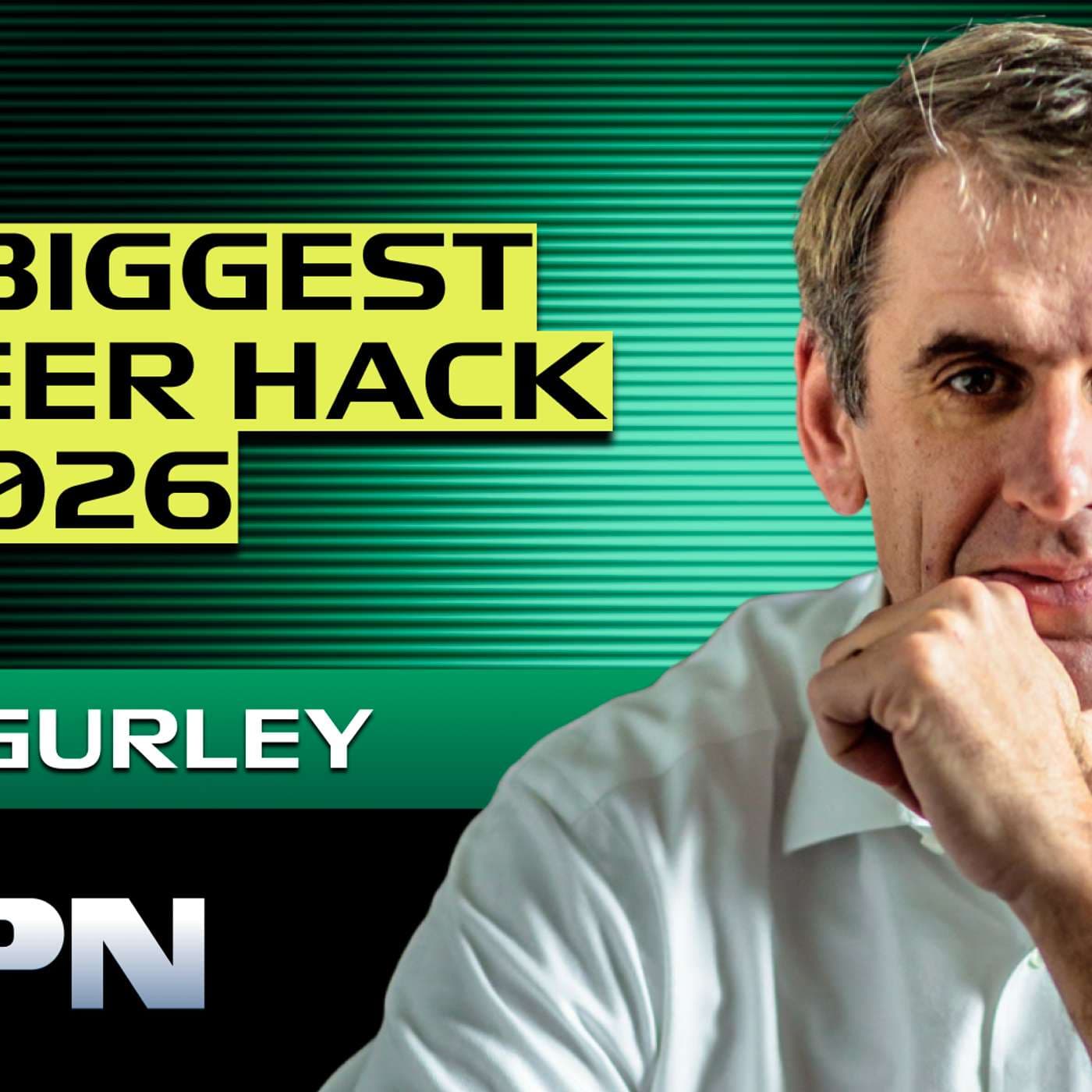
Podcast Episode Notes: Full Interview with Bill Gurley - "College Kills Creativity"
Podcast Overview
- Title: TBPN (Technology's Daily Show)
- Hosts: John Coogan and Jordi Hays
- Broadcast: Live on X and YouTube, weekdays from 11 AM - 2 PM PST
- Where to Listen: Available on X, Apple Podcasts, Spotify, and YouTube.
Episode Summary In this episode, Bill Gurley, author of "Running Down a Dream," discusses the themes of his book and shares insights on creativity, career exploration, and the implications of AI on personal growth and skill-building. He emphasizes the importance of "high agency" and hyper-curiosity in a rapidly changing technological landscape.
Key Topics Discussed
- Motivation Behind the Book
- Gurley has been involved in venture capital for 25 years but did not want his book to be solely about that field.
- The content was inspired by a passion project developed over eight years, initially presented at his alma mater.
- He aims to provide value to a broader audience, not just venture capitalists.
- The Role of AI and Hyper-Curiosity
- Gurley argues that high agency individuals can leverage AI as a "self-learning superpower."
- Emphasizes the importance of continuous learning and being the most knowledgeable person in one's field.
- Points out the irony where those disengaged at work find AI threatening, while high agency individuals see it as an opportunity for growth.
- The Problem with Traditional Education
- Gurley critiques traditional college pathways for being restrictive and limiting creativity.
- He argues that students should be allowed to explore various interests before committing to a major.
- Emphasizes the necessity of giving people "permission to explore" different career paths.
- Financial Speculation vs. Skill-Building
- Discusses the trend of young people engaging in day trading and financial speculation rather than focusing on building durable skills.
- Warns that day trading is often not a sustainable skill and can lead to risks without learning actual value-creating skills.
- The Evolution of Venture Capital
- Gurley notes that the venture capital landscape has become increasingly competitive, with larger funds dominating the market.
- He shares concerns about the impact of mega funds on startup ecosystems and how it may lead to fewer public companies.
- Insights on Global Competition (China)
- Reflects on the competitive landscape of AI and tech between the U.S. and China, highlighting the importance of learning from China's successes.
- Raises concerns about regulatory actions that may create barriers for U.S. tech companies against Chinese competitors.
Key Takeaways
- High Agency: Emphasizes the need for individuals to take ownership of their career paths, especially in the context of AI.
- Creativity & Exploration: Advocates for educational systems that support exploration and creativity.
- Financial Literacy: Warns against the lure of quick financial gains through speculation, encouraging skill-building instead.
- Venture Capital Dynamics: Highlights the changing dynamics in venture capital and the implications for startup growth and innovation.
Conclusion Bill Gurley's insights offer a comprehensive view of the current landscape where AI, education, and personal growth intersect. His book serves as a guide for individuals navigating their careers amidst rapid technological advancements and shifting economic paradigms.
Next Steps
- Read "Running Down a Dream": Gurley's book is available everywhere books are sold and aims to provide insights into building a fulfilling career.
- Follow TBPN: Stay updated with daily discussions on technology and innovation by subscribing to the TBPN newsletter and following them on social media platforms.
Written by AI. May contain mistakes. Listen to the episode to check what was said.
Chapters
Tap a time to open that second in VOThe Inspiration Behind the Book
0:46 to 2:26
Bill discusses the reasons and motivations for writing his book.
“And the whole joke is like, we know you, we don't know basketball, but we're doing the paparazzi thing.”
AI and Public Perception
2:27 to 4:36
Exploring how AI narratives are breaking into mainstream consciousness.
“I do feel like this is a book that you can read if you're a venture capitalist, insider, startup founder, and be like, okay, I'm seeing the world from Bill's perspective.”
Navigating Career Paths and Creativity
4:37 to 7:27
Bill shares insights on finding one's career path and fostering creativity.
“Buffett says he's a net buyer of stocks.”
Harnessing AI as a Superpower
7:28 to 8:50
The paradox of AI for engaged individuals vs. those not in love with their jobs.
“And so there's this intense pressure in our industry and everywhere to figure out a job and then attach your, you know, make your entire identity that job.”
The High Stakes of Day Trading
8:51 to 11:22
Discussion on the risks of day trading and the importance of building value.
“Yeah, I think the ability to, anyone can ask a dumb question at any point all day long, and you don't have to be embarrassed about it.”
The Evolution of Venture Capital
11:23 to 14:02
A look at how venture capital has changed over the years and its implications.
“But if you are the most curious person that's constantly learning in your field, you will do extremely well.”
The Public Company Challenge
14:02 to 15:49
Discusses the complexities and costs of going public for companies.
“growth years of these early IPO companies.”
AI Exposure and Investment Risks
15:50 to 16:42
Explores the risks and perspectives around retail investing in AI.
“It's going to take a, it would take someone being very determined to make it happen.”
Market Speculation and Bubbles
16:43 to 18:08
Analyzes the relationship between technological advancements and market speculation.
“I don't know that you need to be in that place.”
The Chinese AI Landscape
18:09 to 19:28
Considers the competitive dynamics of AI development in the U.S. and China.
“which I think would be the most likely thing that would happen.”
Show all 12 chapters
Geopolitical Risks and U.S.-China Relations
19:29 to 21:20
Explores the geopolitical tensions between the U.S. and China and their implications.
“I said then and I still believe now, the biggest threat to the U.S., let's call it AI hedging me, is the Chinese open source models.”
Venture Capital and Non-Traditional Industries
21:21 to 24:40
Discusses the risks of venture capital in non-traditional sectors like defense and energy.
“There's been trade wars, yes, and things are tense, but nothing's really happened.”
Transcript
Automatic transcript. May contain errors.0:00John Coogan:And without further ado, we have Bill Gurley. He is the author of Running Down a Dream. Bill, welcome to the show. Thank you so much for taking the time on a busy launch day. Congratulations on the launch. We're doing great.
0:13Bill Gurley:It is a busy launch day.
0:14John Coogan:Yes, yes.
0:15Bill Gurley:How many podcasts are you doing this week? I can't imagine. It's just some number beyond my comprehension.
0:21John Coogan:Well, we appreciate you taking the time to come chat with us.
0:26Jordi Hays:Before we jump into everything, I got to say somebody, I think it was a week or so ago, made a fake TVPN graphic that was pretty silly. And I just wanted you to know we didn't make that. That was somebody else. I almost emailed you about it.
0:43Bill Gurley:No, I tried to jump in on the parody myself. Yeah, you did. But then I was like, wait, does he? I don't know.
0:49John Coogan:Well, we did early on when we were a little smaller and a little more free loose with the jokes, we posted a picture of Bill at a basketball game as a spotted and you replied and said like, no, the person next to me is like the owner of the team. And the whole joke is like, we know you, we don't know basketball, but we're doing the
1:10Jordi Hays:paparazzi thing. Never heard of him.
1:12John Coogan:But we're very excited to have you. What – why the book now? What was the impetus for actually writing the book?
1:20Bill Gurley:Yeah, look, I think especially for a show like your own, I'm known as someone who spent 25 years in venture capital and the book is not really about that. So I developed a side passion project that started about eight years ago on this topic. And it was at a time where I was reading a ton of biographies, and I noticed a through line between three different subjects of things they were doing that I kind of felt most people weren't doing but could do. And I put it together. I gave it as a presentation at my alma mater where I got my MBA. And they put it online. A few people noticed. James Clear noticed.
2:03Bill Gurley:That was one of the things that kind of woke me up to the possibility. And as I began to hang up my boots in venture, which takes a while, I turned my attention to this. And it was something that meant a lot to me. I could have written a book on VC. I don't know how many humans that could have possibly helped, but a small fraction compared to what I hope this can do.
2:25John Coogan:I think the projections are by 2030 there will be more venture capitalists than people if the trend continues. But it is an interesting point. Maybe I made a mistake. I do feel like this is a book that you can read if you're a venture capitalist, insider, startup founder, and be like, okay, I'm seeing the world from Bill's perspective. That's helpful. But I could also give this to someone who's never heard of you or venture capital or knows what a safe note is, and they could get value out of it. And I'm interested to hear your thoughts on the translation that's happening right now around AI narratives as they break into the public consciousness.
3:00John Coogan:We saw this with that viral X article, something big is happening. I had that forwarded to me by family friends. I overheard someone in a restaurant talking about it who clearly is not an investor in an AI lab. They're just some random person, and they realize that there's something happening. And I'm wondering about these transitions of communication that what's happening in Silicon Valley is going to have an impact and how what you've seen in the past translates to average Americans.
3:30Bill Gurley:I haven't seen – so first of all, the venture capital community, appropriately gets excited about these big tech waves because they lead to disruption and they lead to kind of accelerated new wealth creation around these companies that break out. And that's happened over and over and over in my career. And I don't remember one. I mean, if you take the mobile wave or the PC wave or the client server or SaaS, I don't remember any of those kind of being thrown at the public consciousness this fast. And so I do think it's different this time from that front alone. That said, you know, we've had pretty high market caps for tech companies for a long time now, starting with the ZERP period.
4:16Bill Gurley:And you're getting to a place where, you know, anytime the market switches from half full to half empty and a skeptic's mindset, But we have had those moments. So maybe not driven by the wave, but we certainly have those moments. And it's all okay. It will always be okay. I think people freak out. Buffett says he's a net buyer of stocks. If people are intellectual and curious and hungry, they should be sharpening their pencils right now trying to figure out where they want to find entry prices on some of these companies.
4:51John Coogan:Yeah, that makes sense. I mean, it feels like a lot of the book is about finding a career, and I feel like that will resonate specifically with people who are nervous.
5:01Jordi Hays:Well, yeah, it resonated with me because when I was thinking about when John and I first met, we had both built some companies. We both invested in some companies, but we were trying to find our life's work. And it was such a pain, like that period where you're searching, if you're a high agency person, you like doing a lot of things, it can be deeply painful because you're like, I want to be productive. I want to be making the number go up, but I don't have a number right now. And if you had asked either of us when we first met, hey, would you ever think about broadcast media? would you ever think about being in front of a camera both of us you know john had made some youtube videos but it was just for fun and if and if a big you know if a network like cnbc had said hey would you guys consider uh you know hosting a show he would have been like yeah like thank like honored but no way that you just never imagined and then you sort of just and so as somebody who like wants a lot of control over their life and their destiny and and like feels like they have historically have had control, that period of just like searching is like is is painful.
6:07Jordi Hays:And I feel like a lot of the book is is helping people through that moment. So in some ways, when I got our copy, I was like, wow, I really wish I had this.
6:16Bill Gurley:You know, I'd like to go back to the word, the phrase you used of high agency. I think that one of the problems that has kind of evolved is that our college, our common college pathway has actually become more restrictive. And I think there's less agency and kids are being encouraged. They have to sign up for a major before they ever go to the college. They get stuck on these pathways. And there's not a lot of exploration. exploration. There's not a lot of search for creativity or obsession or the kind of thing that really gets you going. And I think the journey you went on is perfectly fine. I think that's another thing, which is letting it be okay for people to bounce around and see what they can find.
7:01Bill Gurley:Because once they latch on, and we have examples in the book where that doesn't happen until 40. Sometimes it's at 30. Sometimes it's, I didn't become a venture capitalist until I was 30. And that was clearly my dream job. And the first two stops were fine and interesting and building blocks towards that. So I think that is part of the message is to get comfortable with that and give people permission to do that type of exploration.
7:27Jordi Hays:Yeah. Enzo, Enzo Ferrari, Estee Lauder, I think the Red Bull founder, too, all were, I think, in their 40s when they started their companies. And so there's this intense pressure in our industry and everywhere to figure out a job and then attach your, you know, make your entire identity that job. And it's so constrictive. Yes.
7:51Bill Gurley:And I circle back to the first question just about this AI stuff that's out there. I think there's this massive paradox where if you are not engaged at work, if you don't love what you do, you know, you go home and you don't try and improve on your own time. AI feels very threatening. For high agency people who are kind of on their own custom career path, which I hope this book encourages more and more people to be on, AI is like a superpower. There's like you can learn constantly, like you can find people who you should be connecting with. You can have it do things for you so that you're operating with the power of more than one person as you move forward.
8:34Bill Gurley:And I just think that's quite an ironic paradox that for certain people, this is the best of times. There's never, ever in the history of the world been a better time to self-learn. It is all out there at your fingertips. It's like magic.
8:55Jordi Hays:Yeah, I think the ability to, anyone can ask a dumb question at any point all day long, and you don't have to be embarrassed about it. And I think that that is underrated today in terms of how many, if like generally, you know, there are no dumb questions, and yet people still don't like asking dumb questions to their peers or mentors or whatever. And I feel like that's an underrated element of AI today.
9:25Bill Gurley:No doubt. No doubt.
9:26John Coogan:What do you think about hyper-financialization, young people day trading, meme coins, all of that? It feels like a trap for young people where it can feel like you're learning about AI or learning about technology, but then instead of actually building a product, creating value, you're sort of just trying to shuffle chips around the poker table and ultimately just take risk.
9:53Bill Gurley:Yeah, I mean, based on my understanding of day trading in a Wall Street context, you know, prior to maybe the crypto world, I don't, I'm not aware of any signal that suggests that's a durable skill. And I think the data points the other way. But one of my messages is, like do what you love, do what you're passionate about. So if that's the thing that you're going to wake up every day, you know, I don't want to be discouraging.
10:24John Coogan:Yeah, yeah, yeah. Just maybe you'll land or start a fund that takes it really seriously and creates some captured value or routine.
10:33Bill Gurley:You know, I was probably overly skeptical of at least many of the crypto messages that were out there, But the stablecoin rail seemed like a real, real innovation and something that has scale. And I think maybe we're still yet to see some disruption coming down the path.
10:51John Coogan:Yeah. I mean, we just talked to the Collisons about that. Ken Griffin started as a day trader. He was in college. He was buying convertible debt. And he was looking at where the convertible debt was mispriced and made a bunch of money and then grew it into a massive team with a fund and high frequency trading arm and all this stuff. What are you making?
11:11Bill Gurley:I was just going to say the thing that will differentiate you more in your career than anything else is to be the most hyper-curious person that's trying to do this thing. And once again, that's put on steroids with these AI tools. But if you are the most curious person that's constantly learning in your field, you will do extremely well. And I said it in the book, but I'll say it here. I can't make you the most talented person in your company or your group or your field, but you have no excuse not to be the most knowledgeable person because the information is all out there.
11:50Jordi Hays:What kind of things were you doing to learn about industries and companies in the beginning of your venture career that maybe you'd be using a deep research query to do today?
12:00Bill Gurley:Well, the first thing is you develop, and I think this is all the great VCs in the Valley, you develop this hyper FOMO of anything and everything. And one of the reasons I know that it's time for me to move on is I haven't put together a claw about yet, but I know my older self would have done it immediately. And it's just that kind of thing. You can't sleep on not knowing something. or hearing that there's a company you don't know about. And you develop that as an instinct, like as a positive tool, to just be hyper-paranoid about new companies, new things, new information, new technologies.
12:44John Coogan:Is venture capital eating the world? Is venture capital scaling so much that it's eating into other asset classes? We're seeing mega funds. I'm interested to think about what's durable about your approach to investing. What's additional? What's substitutive? How is venture changing?
13:03Bill Gurley:I think from the minute I entered venture to today, venture has gotten nothing but more competitive. As an asset class, it's gotten more and more competitive and people get more and more aggressive. We're in a very interesting time where people have grown funds to the size of equivalent to the largest PE funds. and they're moving money, especially, you know, you just said the Colson's on, you know, you look at the Stripe or the Databricks case, they're using those large funds to convince the companies to stay private longer, maybe forever. That's just a very different world than the one that I grew up in.
13:45Bill Gurley:I think they turn around and the people that do those rounds turn around and tell the LPs, their investors, look, if you want exposure to these growth years in these companies, you need to come through us. And so if I were using cynical words, I'd say they hijacked the growth years of these early IPO companies. Amazon went public below a billion in market cap. It's hard to fathom that today with what we have going on here. And that's different.
14:15Jordi Hays:What's the solution, though? I don't know. Because there's different, you know, AngelList has been, you know, available and scaling for a long time now. Robinhood has their new. Yeah, I know.
14:28Bill Gurley:I know. The problem with getting the retail investor into this crazy world of venture capital is most venture capitalists are well aware that in a fund of 10 investments, seven are going broke and bankrupt. And I don't know that the retail investors got the right frame of mind for that type of activity. I also, there's a reason that public companies have public audits and file these financials in the way that they do. And I tell you, when a company gets ready to go public, everyone sharpens their pencils, the auditor, the lawyers, everyone really tightens up. And I think every venture capitalist knows that numbers that are in a PowerPoint may or may not be correct.
15:11Bill Gurley:But I don't know that retail investors know that. So I think it could be a dangerous world to go down that path you're talking about. But ideally, the thing to do is just to make it a lot easier to be public, lower the cost of being public, really scrutinize the cost of D &O insurance and the lawsuits that come to the table because that makes people not want to be out there on the field. it would require the SEC to steer themselves in the face and say, look, the number of public companies in the U.S. is half of what it used to be. And is that a problem? I think it is. But is that a problem? And what are we going to do to fix it?
Read the full transcript
15:50Bill Gurley:But there's not an overnight fix. It's going to take a, it would take someone being very determined to make it happen.
15:58John Coogan:Do you think that there's a world where the AI backlash is less if the big labs got out earlier? I'm just thinking about the average American can't get allocation in SpaceX, Anthropic, OpenAI, and they're seeing bills go up and they're worried about AI, but they don't have exposure. And if they could at least see that they're somewhat allocated to that, that might be...
16:28Jordi Hays:In the same way, housing prices going up sucks until you buy a house.
16:32Bill Gurley:The way you describe it sounds more like how a politician would describe it than how I actually think it might play. I don't know that there are that many retail investors out there going, oh, my job's under threat for me. I wish I could own Anthropics.
16:47Jordi Hays:Isn't that part of why this sort of fear-based fundraising approach that the lab you know some of the labs have taken where if if somebody's telling you your job's gonna go away of course you want to give them as much money as you can as a as a hedge yeah i i don't
17:05Bill Gurley:look i there's an interesting irony that if you wanted ai exposure you're pretty good just owning the index nvidia is such a large part of the index you have exposure to microsoft and google and Facebook. I don't know that you need to be in that place. And we are now already at a place, I would say, every time there's a new technology wave, people get rich quick. When people get rich quick, speculators come in, Charlton's, those kinds of things. And eventually that leads to a bubble. People are confused when they think, they say, oh, you say it's a bubble, you're anti-AIDS. No, the fact that it's real causes the bubble.
17:46Bill Gurley:And that's why pools rush in. The beginning of the gold rush, there was really gold there. They were finding it. At the end, it got speculative. It will get speculative. I think it would be really ironic if we invite retail investors into a Goldman-led SPV of open-air Anthropic right before the recent, which I think would be the most likely thing that would happen.
18:12John Coogan:Sure, sure.
18:14Jordi Hays:How are you – what are you thinking about around China as of today, February 20, 26? We have DistillGate this week. A lot of people are talking about it. But what's on your mind?
18:29Bill Gurley:Can I ask you a question about that? This is remarkably naive on my part. So these model companies are saying that their API was hit 16 million times. Is that correct?
18:41John Coogan:Yeah.
18:41Bill Gurley:Something like that. I don't even know if it's API, but a bunch of... How did that happen? Are you not tracking who connects to...
18:48John Coogan:Yeah, you set up a whole bunch of different front companies or you're reselling access. So if you go to the iTunes app store right now, there will be an app called...
18:58Jordi Hays:Yeah, or you use OpenClaw to set up 16 million accounts.
19:00John Coogan:Yeah, or you can go to the app store right now and look for like chat AI, and it will hit the other APIs, but you're going through an American company. Maybe they don't have security. So there's a lot of different ways to exfiltrate data. And then also a lot of data just hits the open web because you go to ChatGPT, you run a deep research report, and then you just publish it on your blog or on the internet.
19:22Bill Gurley:But now they've been able to trace those things down. You know, I share the skepticism Elon does, and this goes way back to my speech at All In on regulatory capture. I said then and I still believe now, the biggest threat to the U.S., let's call it AI hedging me, is the Chinese open source models. And the developers, even in the U.S., that are working on their own are using those. And you can see that on all the tables that are out there. And so it is a highly competitive, like just globally competitive reality that in an ecosystem where there's six to ten open source models that can all learn off of each other, that's going to be a really incredible primordial soup, if you will, for innovation to evolve.
20:20Bill Gurley:And I fear, mainly because I'm well aware that, like, OpenAI, I mean, Anthropic is the biggest spender on lobbying whatsoever. I always fear when these things come out that they're just trying to encourage more of that regulation. And if that happens, I think it could be, like, if they try and make it illegal to use a model that has any Chinese, like, ancestry, I think that could end up in a really weird place. And the place to really pay attention to and look out for is who's going to serve the rest of the world. In the Internet era, there was a fence around China and the U.S. companies served the rest of the world.
21:03Bill Gurley:If we if we get super heavy on U.S. regulation, you may find there's a fence around the U.S. and China serves the rest of the world. That's what I'd be worried about.
21:12John Coogan:How are you thinking about great power competition more broadly? Like I'm an American bald eagle. I'm as American as they come. At the same time, I feel like I've been worried about a confrontation over Taiwan for years. There's been trade wars, yes, and things are tense, but nothing's really happened. Is China somehow like underrated in your mind? Is the geopolitical risk overstated in some way? Like what are you seeing that's not consensus?
21:40Bill Gurley:If you've seen some of the stuff I posted, and I think this stuff I'm posting is highly consistent with Ethan's point of view. It comes from a place of if you're going to declare that there's this relationship that we need to optimize, I think – and if your goal is to lower the risk of any major blow-up between the two, I think it's imperative to have as much knowledge as possible. And so one of the things that I don't like is when you see people out there spreading rhetoric, that's just not consistent with the reality. And so I'm just like, let's get eyes wide open first. I also think that there are things we could learn from China about how to run infrastructure in the U.S.
22:30Bill Gurley:They're clearly better at it than we are. And if you just, you know, close your ears and say, oh, my God, they're the evil competitor and they cheat all the time. You don't ever get yourself in a position where you're going to learn, you know, from them, maybe what they're doing well and what we're not. And so I'm, you know, Elon, I guess he was on Cheeky Pint with the gentleman you were just talking to.
22:54John Coogan:John Carlson.
22:55Bill Gurley:Yeah, he talks about how competitive they are. And I'm just like, let's be realistic. Let's not. I also worry a little bit that the venture community has gotten into all these military companies because venture capitalists start to look like warmongers. It's ironic. Way back when, when the All In Pod just got started, they were giving, oh, what's her name? It was on the Boeing board. Nikki Haley, was it? Yeah. And they were like, oh, she's a warmonger. She's looking after his defense company. Now every VC's in Andrew. They're doing the same thing. Let's be consistent.
23:33John Coogan:Yeah, yeah, yeah, yeah. Are there any other industries that you do think are interesting that sort of butt outside of the typical mandate of venture capital? You know, like AI fits very neatly into the software, continuum, internet, cloud, mobile. I thought crypto was a little bit outside of the wheelhouse, but a lot of VCs made it work. Industrial, energy, defense, these are sort of things that are a little bit outside of the typical software VC mindset.
24:06Bill Gurley:I'm going to have to run, but I would tell you one thing. Every time venture capital gets easy, people take risk with companies that are less of a great fit for the venture capital model. And when I say a great fit, like they're either heavy CapEx or they have they have low gross margins. They require tons of capital to keep surviving. And and history is pretty good at like bringing people back around to how hard those are to do with venture capital. So it's interesting for me to see those experiments being run. You know, there was near death with Tesla many times. And it's a lot easier to get in those difficult situations when you're using debt and leverage, which we're seeing all over these data centers.
24:57Bill Gurley:And so I just a word of warning. Be careful. It ain't easy. You know, Jordy, last question.
25:04Jordi Hays:Now we got to let our guests jump. But congratulations.
25:10Bill Gurley:Hopefully everybody can get out and buy them down a dream.
25:13John Coogan:It's available everywhere. Books are sold. Go check it out. Thank you so much for taking the time to come chat with us. We'll talk to you soon. Good luck. Goodbye.
From the publisher
This is our full interview with Bill Gurley, recorded live on TBPN.
We discuss his new book, why “high agency” and hyper-curiosity are the ultimate long-term edge (especially with AI as a self-learning superpower), and why the real risk for young people is mistaking financial speculation for durable skill-building while the best opportunity is using AI to become the most knowledgeable person in your field.
TBPN is a live tech talk show hosted by John Coogan and Jordi Hays, streaming weekdays from 11–2 PT on X and YouTube, with full episodes posted to podcast platforms immediately after.
Described by The New York Times as “Silicon Valley’s newest obsession,” TBPN has recently featured Mark Zuckerberg, Sam Altman, Mark Cuban, and Satya Nadella.
Sign up for TBPN’s daily newsletter at TBPN.com
TBPN.com is made possible by:
Ramp - https://Ramp.com
AppLovin - https://axon.ai
Cisco - https://www.cisco.com
Cognition - https://cognition.ai
Console - https://console.com
CrowdStrike - https://crowdstrike.com
ElevenLabs - https://elevenlabs.io
Figma - https://figma.com
Fin - https://fin.ai
Gemini - https://gemini.google.com
Graphite - https://graphite.com
Gusto - https://gusto.com/tbpn
Kalshi - https://kalshi.com
Labelbox - https://labelbox.com
Lambda - https://lambda.ai
Linear - https://linear.app
MongoDB - https://mongodb.com
NYSE - https://nyse.com
Okta - https://www.okta.com
Phantom - https://phantom.com/cash
Plaid - https://plaid.com
Public - https://public.com
Railway - https://railway.com
Ramp - https://ramp.com
Restream - https://restream.io
Sentry - https://sentry.io
Shopify - https://shopify.com
Turbopuffer - https://turbopuffer.com
Vanta - https://vanta.com
Vibe - https://vibe.co
Follow TBPN:
https://TBPN.com
https://x.com/tbpn
https://open.spotify.com/show/2L6WMqY3GUPCGBD0dX6p00?si=674252d53acf4231
https://podcasts.apple.com/us/podcast/technology-brothers/id1772360235
https://www.youtube.com/@TBPNLive

