
In short
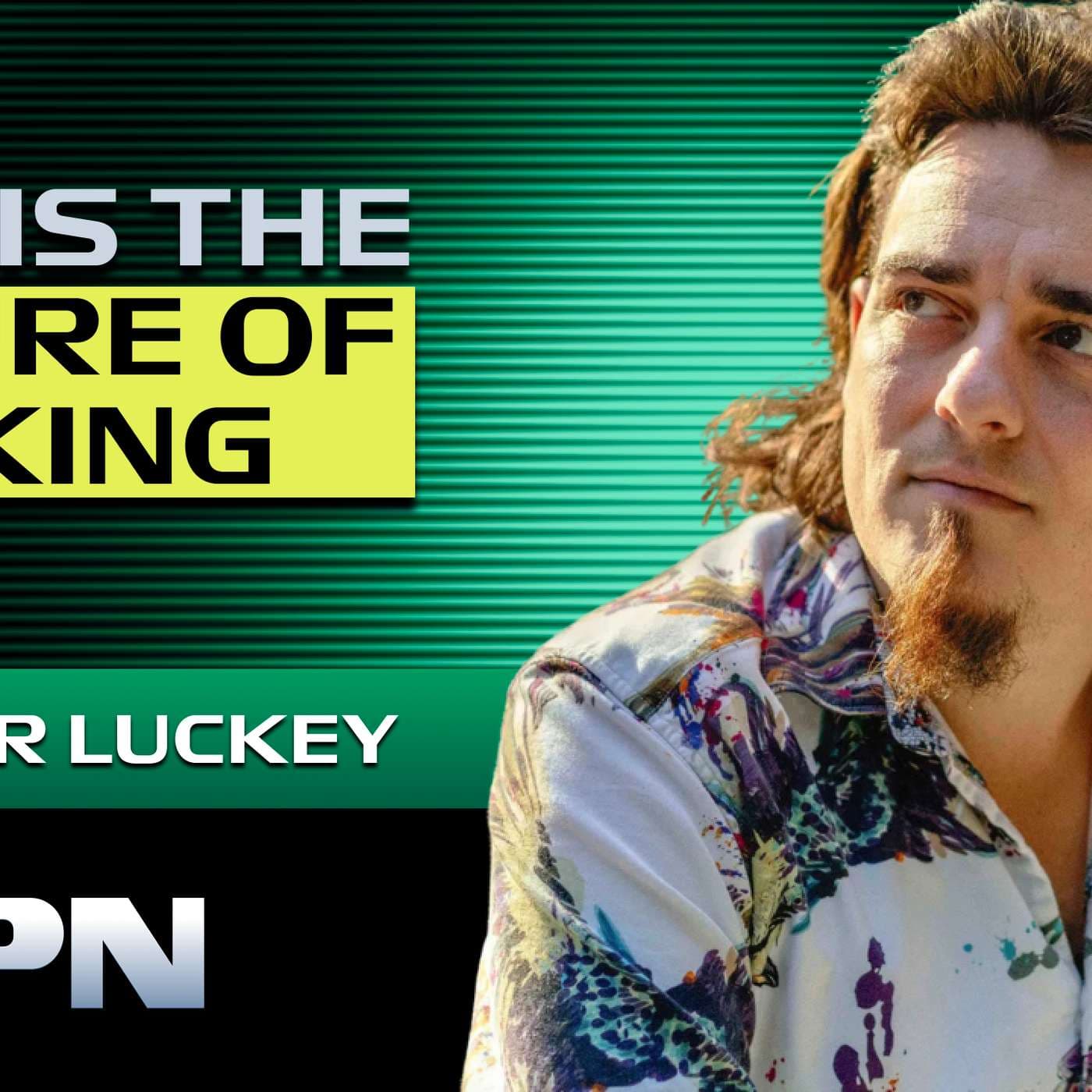
Palmer Luckey: Why I Started My Own Bank - Episode Summary
Podcast Information
- Podcast Title: TBPN (Technology Brothers Podcast Network)
- Hosts: John Coogan and Jordi Hays
- Broadcast Schedule: Weekdays from 11 AM to 2 PM PST
- Platforms: X, Apple Podcasts, Spotify, YouTube
- Featuring: Notable industry figures like Mark Zuckerberg, Sam Altman, Mark Cuban, and Satya Nadella.
Episode Overview In this episode, Palmer Luckey discusses the launch of his new banking venture, Erebor, which is specifically designed to support deep tech industries following the collapse of Silicon Valley Bank. The conversation covers a range of topics, including the need for a new banking model, the implementation of dollar-backed stablecoin settlements, the gaming industry's evolution, and the future of virtual reality (VR).
Key Takeaways
- Background and Motivation for Erebor
- Personal Necessity: Luckey was motivated to create a bank to better serve his personal business needs, as existing banks did not understand the complexities of deep tech industries.
- Response to SVB Collapse: The failure of Silicon Valley Bank illustrated the risks of relying on traditional banking systems that may not align with U.S. interests, prompting the need for a bank dedicated to deep tech.
- Core Principles of Erebor
- Alignment with U.S. Interests: Erebor will prioritize American businesses and comply with U.S. law while resisting foreign influence.
- Fraud Prevention Strategy: Luckey emphasizes proactive cooperation with the intelligence community to mitigate fraud risks, contrasting Erebor's approach with banks that react only under court orders.
- Network Effects: While there may be some initial network effects for early adopters, the expectation is that all banks will eventually have to adopt such innovations to remain competitive.
- Banking Experience and Client Needs
- Customer-Centric Approach: Erebor will design products based on direct customer feedback, focusing initially on conservative offerings like equipment financing rather than residential mortgages.
- Regulatory Climate: Luckey acknowledges the complexities of regulatory requirements that necessitate a banking intermediary, which drives the need for Erebor.
- Charter and Independence
- Importance of a Banking Charter: Erebor's charter allows it to control its destiny and reduce dependence on third-party infrastructure, preventing censorship and external decision-making heavily influenced by foreign entities.
- Risk Management: Luckey believes having control over operations leads to better practices and accountability in the banking industry.
- Future Product Development
- Product Rollout Strategy: Focus will be on products that directly support client needs, emphasizing a partnership with businesses to provide services that add value without unnecessary risk.
- Physical Presence and Security
- Plans for Physical Branches: Erebor intends to have physical vaults to secure assets, underscoring a commitment to tangible banking practices despite the digital age.
- Gaming and Innovation
- Shift in Gaming Industry: Luckey criticizes the gaming industry's move from innovation to extraction, advocating for a return to creating compelling and enjoyable games for consumers.
- Educational Value: Luckey sees value in introducing children to classic gaming experiences rather than contemporary monetization strategies prevalent in modern games.
- Reflections on VR and Hardware
- Optimism for VR: Despite challenges, Luckey maintains a positive outlook on the future of virtual reality, asserting that major companies like Meta are still investing heavily in the sector.
- Innovation in Hardware: He discusses his experience with various hardware projects, including retro gaming consoles and his recent investments in unique motorcycles.
Conclusion Palmer Luckey’s insights on Erebor reflect both a deep understanding of the tech landscape and a vision for a banking institution that prioritizes American interests and the needs of the deep tech community. His perspectives on gaming, VR, and hardware innovation are grounded in a desire to push boundaries while remaining aligned with regulatory frameworks and customer needs.
Written by AI. May contain mistakes. Listen to the episode to check what was said.
Chapters
Tap a time to open that second in VOThe Birth of Erebor Bank
0:45 to 2:54
Palmer discusses the motivation and inception of Erebor Bank.
“I mean, you have farmers banks that serve communities that are doing agriculture.”
The Importance of Network Effects
2:54 to 4:28
Palmer elaborates on potential network effects in banking and technology.
“I think that pretty quickly, everyone is going to realize that they need to support these things.”
Erebor's Unique Approach to Compliance
4:28 to 6:24
Discussion on Erebor’s alignment with U.S. interests and proactive fraud prevention.
“It means that people who don't want to engage in fraud are going to be thrilled about being on a platform that doesn't have that type of activity on it.”
Product Prioritization at Erebor
6:24 to 8:05
Palmer shares insights on the types of financial products Erebor will offer.
“These are things that we have a lot of customers who are very interested.”
The Challenge of Bank Charters
8:05 to 9:46
Palmer explains the implications and challenges of obtaining a bank charter.
“We decided that we needed to get our own charter because of the type of bank we were going to try to run and the ability to have the buck stop with us.”
The Future of Banking Infrastructure
9:46 to 10:55
Discussion on physical branches and the evolution of banking infrastructure.
“I think most people can conceptualize, like, setting up a crypto wallet that holds coins, but when you want to hold real dollars, you don't actually have a physical bank vault, I imagine.”
Updates on the M64 Console
10:55 to 13:03
Palmer provides updates on the M64 console and its production status.
“Where did you go further with this project than with the Chromatic?”
Reflections on Memory and Technology
13:03 to 14:03
Palmer reflects on technology's evolution and the need for efficiency.
“We've covered the gamer rebellion against AI.”
The Evolution of Software and AI
14:03 to 15:01
Discusses the necessity for efficient software in a hardware-constrained world.
“I mean, you remember what Bill Gates said, right?”
Gaming's Shift from Innovation to Extraction
15:02 to 16:41
Explores the transformation in the gaming industry and its impact on youth.
“Can you talk a little bit about how you think about gaming and the concept of just raising the next generation kids?”
Show all 17 chapters
The Rise of Vibe Coding
16:44 to 18:34
Introduces vibe coding and its implications for hardware enthusiasts.
“What would your life be like if vibe coding existed when you were 20?”
The Future of VR Technology
18:35 to 21:44
Examines the current state and future potential of VR in consumer markets.
“It feels like the only real thing that you can do these days is just a home theater, if you don't have a home theater.”
Navigating Co-Founders and Trust
21:47 to 23:28
Shares insights on building trust and selecting co-founders in startups.
“It's mostly just that when I try and pull stuff out of meta, they're like, no, no, no, we're not ready to talk.”
Blockchain Solutions for Founders
23:29 to 25:54
Discusses the potential of blockchain in establishing founder credibility.
“Remember, I started Oculus when I was 19 years old.”
Collecting Failed Innovations
25:56 to 27:54
Explores the appeal of collecting commercially unsuccessful hardware.
“It says Trump says we have an incompetent Federal Reserve chair who loves high interest rates.”
Discussing eVTOL Aircraft and Regulations
28:00 to 28:21
Learn about the challenges and regulatory aspects of eVTOL aircraft.
“It just means they couldn't figure out how to make a business out of it.”
Casual Conversation About Shirts
28:21 to 28:51
Discover the host's preference for Hawaiian shirts and where he sources them.
“This one is a Rain Spooner and a Hawaiian shirt.”
Transcript
Automatic transcript. May contain errors.0:00We have Palmer Luckey in the restream waiting room. Let's bring him in to the TBPan Ultradone. Palmer, how are you? You are live. You are live, sir. Can you hear us again? Yep. I hear you loud and clear, though, with a little bit of delay. So we'll try to keep it zippy. Well, we're going to say probably five words in total and you're just going to go crazy. Tell us what's happening. Tell us what's happening. So, I mean, Trump is complaining about tariffs. Iran is on the brink of War and Erebor, the new bank for the tech community building things that actually matter, has officially received its charter and become operational.
0:41So it's a pretty good set of things that are going on. Big hit. Congratulations. Big hit. Take us back in time. When did this project start? What was the inciting element? Why is this important? How did you pick this to work on? look there's a lot of there's a lot of things that I could point to but it really boils down to I've been looking at starting a bank for a while primarily for my own personal use because there weren't banks out there that really understood my business my businesses the things that I was doing Silicon Valley Bank was doing a reasonable job but then they went out of business and took everybody's money with them and had to have the government bail everybody out I think that was really kind of the thing that got me very serious about it.
1:27I realized that you didn't have banks that were aligned with the United States, interests that were aligned with deep tech, hard tech, energy, the things that are really complex and hard to understand, but that do really matter, that could also serve them in a meaningful way. I mean, you have farmers banks that serve communities that are doing agriculture. You have banks certainly that are doing oil and gas quite well but when it comes to tech it's a pretty sparse field and so I started thinking how do you build a bank that could serve those things how could you do it a very conservative way very very low risk way where you can ensure you're not going to go out of business you're not going to force everyone to rely on government bailouts you may not be able to survive a total financial collapse banks rarely can but you can at least be the last man standing and so thinking about that and then also a lot of things that new technology enables like using US dollar backed cryptocurrencies to have 365, 24-7 settlement of payments, which is something that a lot of businesses need and very few get.
2:26You kind of stack all these things together and it becomes clear that there's room for a company to be a real bank for real companies doing real things. So is there a network effect there? Because if I'm on Erebor and Jordi's on Erebor and we can both have 24-7 settlement, but someone else is on a different bank and they don't have 24-7 settlement, we're going to have a good experience. and then maybe to get out of the network? How does that work? I think that there will be network effects, but to be honest, whatever network effects there are, it will probably be pretty short-lived. I think that pretty quickly, everyone is going to realize that they need to support these things.
3:01And I think that when, like, seeing this administration's support for using specifically dollar-backed stable coins, so not saying we're going to move everybody off of the dollar, we're going to move them off of, you know, the United States currency as the reserve currency for the world, But I think probably most banks are going to get drug into this. The difference is that we are trying to do it from the start. So is there a network effect? Probably, but I think most of the forward-looking companies that would value that network effect, that one in particular, see that in the next few years, probably all banks are going to be forced to adopt this to be competitive.
3:34So what is the ideal banking experience for you besides stability and low risk? Is being able to talk to somebody, is that a bug? Should we just, is Airborne just gonna be, you know, a chat bot that you say talk to a human and it says, unfortunately I cannot do that. I am an AI chat bot. I think it's gonna be a long time before we hand things off to the chat bots, if only for regulatory reasons. Like you set aside the risk, which is a huge factor. You set aside the fact that we have our own banking rails which are extremely efficient and that we can settle at any time, I mean, those are huge factors on their own.
4:07But even if you knock off kind of all of these obvious advantages, there's a lot of other things that you get from having a bank that is strongly aligned with the United States, strongly aligned with U.S. interests, strongly aligned with the U.S. Department of War and also the intelligence community. And there's a lot of ways that that manifests. For example, one of the things that we're doing is rather than working with the intelligence community only under court order to kind of go and respond to when they think there's crime going on in the platform, we're preemptively going out there and saying, no, we're going to work with them from the very, very beginning to help make fraud almost impossible on our platform, which is great for me too, because it means that people who want to engage in fraud are going to go to other banks.
4:46It means that people who don't want to engage in fraud are going to be thrilled about being on a platform that doesn't have that type of activity on it. And to the extent that it exists inside of their own platform against their will, they know that they have a willing partner that is willing to work with the government rather than hide these things. I would say maybe think of it as like the opposite of HSBC, where they were banking the cartels and desperately trying to avoid any sort of government intervention that would make that clear to the public markets, put Erebor way at the other end of that spectrum.
5:14I think there's also a lot of other banks that, whether they're good or bad people, is irrelevant. You might have good people who nonetheless are very beholden to European markets, Chinese markets, other foreign markets that they need to keep happy, either because they want to keep them happy and make money or because they don't want their executives in those jurisdictions to get arrested. Erebor is taking a very different approach. We're saying, you know what, we're an American company, we're an American bank that supports American companies, and we will comply with U.S. law, but we will not comply with spurious rulings from people who have no real jurisdiction or authority over us.
5:49And you'll find a very hard time finding a bank that takes that position. I'm not aware of any other than us. How do you think about rolling out products? A bank can do everything from mortgages to equipment financing to venture debt to capital raises, take someone public. That's kind of what, you know, you go to a big bank, they're going to help you IPO. What do you want to do first? I think that right now, you know, look, we've just barely opened. So give us a little bit of time. The products that we are prioritizing are based entirely on the customer feedback that we're getting, the things that they tell us they need, the things that they tell us that we can most help with.
6:26in a way the existence of a bank to me is almost this antiquated thing like you you would hope that companies could really just do all of this stuff themselves or at least most of it themselves but the the regulatory climate the way that the banking system works requires that you have this intermediary in the form of a regulated bank to make these things happen and so I kind of think of our business as part and parcel of these companies that need us and we're gonna work very very closely with them and focus on the things that they care about. That's probably not going to be, for example, residential mortgages, but things like equipment financing, very conservative, very conservatively played where it's not going to turn into a risk management problem, allowing them to work with the legacy banking system and plugging into that in the least painful way.
7:12These are things that we have a lot of customers who are very interested. Oh, and we need to not lose their money. If we can do that, we'll be doing better than many other banks. Yes, yes. Talk about the trade-offs of going the charter route. You know, the last 10 years, most of the banking products that founders have used were built on top of existing charters or spreading deposits across multiple. Well, people would just avoid getting a charter at all. They want to be a fintech company, and they basically will dance around the fact that realistically what they're doing is basically being a bank.
7:46Like, look, there's a lot of things that you can do without having your own charter. There's things you can do partnering with other companies. There's a lot of things you cannot do without having your own charter. Yeah, sort of against, it's kind of anti-hyper growth. Like, you can't just scale to 50 billion of deposits tomorrow, even if there's the demand, right? So maybe speak to that. We decided that we needed to get our own charter because of the type of bank we were going to try to run and the ability to have the buck stop with us. The moment that you're dependent on somebody else for the key infrastructure, the key risk management, the key licensure questions, they can kick you off the platform.
8:26They can be forced to kick you off the platform. Maybe they're doing it for good reasons. Maybe they're doing it for bad reasons. I mean, you've seen this play out, for example, with Steam and their payment processors and their banks and their payment processors banks, where they're basically censoring games because there's some circle of people who all claim it's not them pointing down the chain. It's that guy, it's that guy, it's that guy, it's that guy. But they all agree, even if they can't agree, who's causing the censorship that if you don't censor, they're going to drop you. They're going to drop your account.
8:53They're going to debank you. They're going to depayment you. And so one of the things that you have to ask yourself when you're making yourself dependent on another bank or another payment company is, am I setting this up where they get to make my decisions for me? And are they making their decisions for me? or is the Chinese Communist Party making those decisions? Is some political party that is extremely hostile to some business on our network the one actually making that decision? So if you don't control your own charter, if you don't control your own destiny, the buck doesn't stop with you, and you're always gonna have to keep other parties happy.
9:24And I think that was not something that we were interested in. We wanted to be able to run the bank the way that we think it needs to be run, and if we are debanking somebody, we are gonna have to take responsibility for that, and I think that actually leads to much better behavior. I would love to see that type of behavior across the industry. Physical branches. How are you thinking about that? I think we're going to start with Fort Knox, and then we'll expand from there. I like it. Yeah, maybe actually dive deeper there. Like, what is a bank these days? I think most people can conceptualize, like, setting up a crypto wallet that holds coins, but when you want to hold real dollars, you don't actually have a physical bank vault, I imagine.
10:05So once you get the charter, does that take just give you the ability to maintain a database and a ledger? What is a bank? What is a bank? I mean, there's lots of forms it can be. I think if you want all the details, you can actually read through a lot of our applications. Sometimes it's actually a matter of public record and you can see that. Andrel will, sorry, not Andrel, Erebor will have a physical vault and we will have a lot of treasure in it. So we are not trying to be a pure digital, pure, you know, pure ether company. And in fact, a lot of the companies that are very interested in working with us want us to have secure, actual vaulted storage.
10:40I'm not saying that that's going to be the first thing that we focus on. That's our key differentiator. But we are not a bank of the ether. We are of terra firma. Yeah. Last time you came on, we talked a lot about Mod Retro. I'd love an update on the M64. What makes that product special? Where did you go further with this project than with the Chromatic? And just general, like how you're thinking about the M64? Well, for people who aren't familiar with it, The M64 is a tribute to the Nintendo 64 that I'm building, one of the greatest multiplayer consoles of all time. We're building a console that is compatible with all classic N64 games.
11:17We're re-releasing a lot of classic N64 games so that you can buy them if you don't already have them. We're actually doing new releases of cancelled N64 games that never even made it to market, either because they were cancelled and ported to GameCube, or because they ran out of money, or because the studios imploded for interpersonality reasons. There's a lot of cool stuff coming out. The M64, I guess the main update is that it's in mass production right now. It is not eventually coming. It is in mass production right now. We've decided we're not going to launch it until we build up sufficient stock to meet the demand.
11:50One of the mistakes I think we made with the Mod Retro Chromatic, which was a tribute to the Game Boy and Game Boy Color, was that we started selling them, and then all of a sudden we sold out. And then you have people who hear about it, they read about it, their friends are all talking about it, they go to try to buy one, and they can't buy one because it's sold out. And there's a question. Will they remember to come back and buy it some other time? Will they still feel like going and immediately buying it? Exactly. And so you kind of end up with this dead-end call to action. And so we've decided this time, and by the way, this is especially bad for the game publishers that we're working with.
12:21Let's say that it's someone who's re-releasing a game or somebody who's doing a brand new game. Some of the indie developers we're working with on the Chromatic. They're out there promoting their game. They're trying to market their game. They're doing a whole marketing activation, trying to convince people, hey, come and buy my new Game Boy game, come and buy my new Nintendo 64 game. Well, what happens if you can't buy the console? A lot of people are like, oh, I'll come back later and buy it. And then they don't. And so what we want to do is not let down our developer partners this time and make sure that we maintain stock.
12:49So the goal is that the M64, no matter how many people hit our website, is not going to sell out. And so we are mass producing. We're stockpiling, I think, tens of thousands of them so far, more and more to come. What is the supply chain actually like right now? We've covered the gamer rebellion against AI. Gamers are rising up. You know, the supply chain is okay because of the type of hardware that we're building. There's a lot of consumer hardware right now where people are trying to buy memory, and it's a huge problem. But remember that the Nintendo 64 doesn't have exactly a lot of memory. You know, it had 16 megabytes by default, 32 megabytes with the expansion pack.
13:34And so it turns out that you don't need that much memory to perfectly replicate the Nintendo 64 original hardware. It might be actually the least memory impacted consumer electronics product of the year. And so this was your plan then all along. Yeah, you saw this coming. You knew the AI boom was coming and you said, I'm going to make the final console. Yeah. No, we got to return to monkey. We got to go back to the beginning. I mean, really, what am I doing here with something with 32 megabytes? I mean, you remember what Bill Gates said, right? What was it? 64 kilobytes of RAM ought to be enough for anyone.
14:12Let's figure out how to use AI to build applications that fit within reasonable memory footprints. I'm only half kidding. I think you might have seen me going back and forth with Shamath on Twitter a couple weeks ago, talking about how this AI software platform for building software using AI should definitely support export to Windows XP Service Pack 3 compatible applications. And I really am only half kidding. There is actually a lot of government hardware that is still running those, financial hardware that's still running these, mostly offline stuff. And so having apps that can run on those is actually useful.
14:51But man, it feels crazy to need a few gigabytes of RAM to have a start menu. It feels pretty crazy that you need 16 gigabytes of RAM to take 30 minutes to search through a bunch of text files. Surely we can do better than this. Can you talk a little bit about how you think about gaming and the concept of just raising the next generation kids? I have three kids, and I think I could probably get an emulator and run it on an iPad and slam that over to my kid's face. and he might not know the difference, but is there another angle to the M64 that is about like some of the things that you can't do with it are actually good for the world, maybe?
15:34I mean, you have to remember that the gaming industry, like many industries, figured out what actually worked a long time ago. They figured out how to make fun games, they figured out how to make things that people keep coming back, but it's moved from innovation to extraction. And I will I stole that line from Nirav Patel, founder of Framework, because he put it so much better than I did. But there's these industries that have moved from innovation to extraction, and they're now in the extraction phase, where they try to make tons and tons and tons of money, and actually pushing the limits is not the top priority for some huge majority of the dollars that are in industry.
16:08And so, there's a lot of stuff that you can learn, especially when you're learning it from the ground up, by going back to when people were just getting the basics right, when they were still innovating, building things that were really compelling to people. I recently had a kid, I have a second on the way, I'm planning on starting them with, I don't even if I'd say the classics, this isn't like a vintage play, it's starting them with a good foundation. That foundation happens to be largely old games, but I'm not going to be throwing them into the slot machine, microtransaction, gamblerama that is dominating kids' games today.
16:41It just seems like a crazy thing to do. It's a Skinner box. Yeah. Don't go in the Skinner box. Talk about vibe coding. What would your life be like if vibe coding existed when you were 20? Advice for people who are 20 now in the world of vibe coding. You went into hardware very early. That feels like a great move. Is that still a great move? Walk us through all that. I mean, the biggest beneficiaries of Vibe Coding are going to be the hardware nerds like me. It's going to be the shape rotators, not the word cells. Everyone's focused on how the word cells are going to be wiped out by AI. But for the shape rotators, it's going to be incredible.
17:24I was always a pretty terrible software engineer. I'm not a programmer by trade. I've taught myself enough to glue things together and make them work. But when I started my first company Oculus or actually when I started mod retro when I was 14 or 15 You know, I knew just barely enough about software if I would have been able to build crappy stuff by outsourcing it to a computer I actually would have been able to accomplish things a lot faster than trying to do it myself And people might say Palmer you should have just learned to code You know you sure should have should have just learned to do it yourself But I think it's pretty easy to look at my track record and realize I started Oculus when I was 19 after building prototypes since I was 15, I was only able to accomplish what I accomplished because I focused on what I was good at, which was optomechanics, a little bit of electrical, and then the product integration of all of these different components.
18:13I didn't have time to learn to program. If I'd spent another year or two learning to program at even a reasonable level, I would have been two years behind on everything else. And so I am a big fan of vibe coding, even if everything that comes out of it is slop, even if it is all shit, it's better than I was able to make. How are you thinking about VR these days? I recently watched the Matrix from start to finish in an Apple Vision Pro. I enjoyed it. It feels like the only real thing that you can do these days is just a home theater, if you don't have a home theater. But it doesn't feel like the industry's embraced that at all.
18:47And everyone's sort of writing down their investments and pulling back at a time when the display technology does seem to be good enough for that narrow use case if you cut out the weight and move things around, but where do you see this, where do you want consumer VR to go and then where do you think it actually is going? So I will challenge your premise there, which is that people are pulling back. I think that's driven mostly by people sensationalizing meta, firing a bunch of people. But you have to remember, they got rid of 10 % of the Reality Labs team in one layoff. Remember that they have something like 8 % or 9 % annual churn naturally and organically, not including firing.
19:25Sure. I mean, what you're really talking about is basically pulling six months of churn forward into a single month. And they're still spending more on VR than anybody by an order of magnitude. They said they are not spending less on content. They're just not putting it into first party stuff like Facebook Meta Horizons. You might have seen they've announced Meta Horizons is no longer a VR app as of yesterday. It is now a mobile focused app only. So what they've done is they basically killed a few of these failing efforts that didn't make sense. and they're now putting those resources into things that are working.
19:56And so I wrote a bit about this on Twitter, where people need to understand this is not the end of VR. It's not collapsing. They are still spending an enormous amount of money. They're bigger than anybody else by an order of magnitude. And I think if you pay attention to what's going to be coming out from Meta and others over the next 12 months, you're going to see a lot of progress. Like Apple Vision Pro, yes, they, so yes, Apple Vision Pro was ahead of everybody on visual quality, on display quality. But let me tell you a short story. Imagine that an American company went to a Japanese display vendor and they said, we want you to sell us your new 4K micro OLED displays.
20:35The company gives them samples of those micro OLED displays. The samples cost about$1 ,000 each because the yield on that production line is only about 10%. In other words, 90 % of the displays coming off the production line are not up to par, they're not working, and that's because these are engineering samples. They're not meant to actually be a working product. And they said, listen, here's our engineering samples, just wait two years, and the yield is going to be up to 90%. We'll be able to sell these to you for a couple hundred dollars. And then imagine that that American tech company had a guy named Tim Apple call them up and say, no, we're going to build a product with this right now today, using our engineering samples.
21:11They said, but Tim Apple, that's crazy. That means that your headset was going to cost like$3 ,000. He said, I don't care. I'm going to sell a headset that should launch in 27, in 2024, 2025, and I'm going to do it for$3 ,500. That's what Apple Vision Pro is. It was never intended to be a product of the times. It's a product of the future hauled into the present by spending enormous amounts of money. And so Meta and Sony and Apple and Google and all of these other companies, they are going to be hitting that level of visual fidelity. They're going to be doing it with headsets that are far smaller, far lighter than what you see from Vision Pro.
21:46And I actually remain very optimistic. That's great. I love it. I think things are going pretty well. I'm extremely optimistic. It's mostly just that when I try and pull stuff out of meta, they're like, no, no, no, we're not ready to talk. And I think that they're just being cold shoulder to me because they don't want to leak it yet. But I am very optimistic. Well, you know what the problem is? They don't have a charming, charismatic pitchman who knows how to talk about this stuff with you. They got to solve that. They need to figure out what they're doing. You know, it reminds me of something.
22:17Being here, I'm on the floor of the New York Stock Exchange behind me. And back in the Oculus days, when we sold the company to Meta, one of the first things that happened was New York Stock Exchange emailed our contact email, and they asked if I would come and ring the bell to New York Stock Exchange. Sounds pretty cool, right? Like, hey, like, you've been acquired by this major public corporation in the form of Facebook, come and ring the bell, maybe, you know, maybe someday we'll do something else with you. And unfortunately, I didn't see that email for about seven years, because another Oculus executive intercepted the email, said, oh, no, Palmer can't make it, but I would love to come.
22:54And he came, and he rang the bell without telling me about it. And so I found out about it later, in unrelated litigation, that email came up in discovery. And anyway, I've not had a chance to ring the bell yet. Maybe when Andrew goes public, I'll finally be able to ring that bell. But I got to admit, I have a long memory and a long memory of grudges, and I won't say who it was, but there's probably a handful of people out there who can guess. You have a lot of co-founders now, a lot of executives that you work with. How do you select for folks who won't do that to you? How do you select the right people?
23:29Extreme loyalty. Trust, I don't know. I mean, it's important. Remember, I started Oculus when I was 19 years old. You also got to remember the story of who is a founder, who is a co-founder. It's fluid and dynamic and always changing with the ebb and flow of history. One of my ideas is to have a blockchain company where everyone agrees what the founding story is and who the co-founders are, and then it goes into the blockchain so that nobody can come back and say that they're a co-founder. There's a guy running around now who says that he's a co-founder of Oculus who was very much so not a co-founder.
24:07I swear, I swear, I think I met this guy. I told you this story off air. Oh, tell me the story. So I was at a dinner party at my friend's house and my buddy was like, hey, this guy works at, I'm not going to name the company, but you guys probably have some tech stuff in common you guys should meet. I go up to him and I said, hey, hi, I hear we should meet. And he's like, hey, I was like, what's your story? He's like, I started a company called Oculus. Now it met. And I was like, oh, interesting. Like, never heard of you before. So it might be this guy. We won't put him on blast. Here's the crazy thing.
Read the full transcript
24:42I don't even know who you're talking about. We talk about it another time. And I told him, I was like, oh. Because there's multiple people who are saying this, including a guy who literally has a documentary being made about him how he's the founder of oculus so it's it's always you'll appreciate you'll appreciate i was like oh that's that's awesome like uh palmer comes on the show all the time and then he completely backs backs backtracked it was like it was like well yeah yeah yeah you know i i joined like you know uh you know and but i was on the founding team like he he backtracked but uh look you so to the point you ask me how do you select these people carefully i was 19 years old when i selected the first people that i was working with i've learned a lot i've been stabbed in the back a lot and i'd probably make very different decisions if i were doing it today and it's worth noting remember that i started oculus on my own with no co-founders nobody involved in a lot of like i brought on people that i am happy to call co-founders even though they didn't join the company until months later who I had never met when I started the company.
25:43That said, there's some people I'm honored to share the title of co-founder with, and there's other people that I'm not, which is why I really want this blockchain thing. Somebody needs to vibe code this slop and get it out there. Super important question. Have you played Federal Reserve Simulator yet? It's a new game. It's on Steam. On Steam. You've got to try it out. You're a banker now. I've not even heard of it. You're a banker now. You've got to get the reps in. You might really enjoy this. You've got to do it. Federal Reserve Simulator. Federal Reserve Simulator on Steam. I think it's right there on the screen.
26:12It says Trump says we have an incompetent Federal Reserve chair who loves high interest rates. Very, very, very interesting. What hardware are you collecting recently? We just learned you can buy a steam powered car and drive it around. Jay Leno has one that's 120 years old. What hardware am I buying? Am I buying? Collecting, not just buying, collecting. Yeah, I know. There's a few things I could bring up. To be honest, I've been too busy to buy really good stuff. But I recently got delivered one of the first Jetson Jetson ones, which is a small eVTOL aircraft. I was one of their first customers and their first delivery.
26:52I also have a collection of motorcycles. The theme of the collection is commercial failure. And so all of my motorcycles were huge commercial failures. The more of a failure, the better. And so I've been buying some failed two-wheel drive motorcycles. I've been buying some failed military motorcycles. How do they ride? Oh, incredible. Look, there's really bad failed motorcycles. There's others that failed because they're too good. One of the crown jewels of my collection is a Honda Rune. It was basically a personal project created by the CEO of Honda. The document that they used when they were creating it has actually been leaked now.
27:27And at the start of the document, it says, performance is the only object. Price is of no importance. And so they wanted to build the ultimate cruising motorcycle. And the story goes that they lost over$100 ,000 per bike in the end. And so I've got one of the handful of Honda Runes that made it out of that program. A beautiful Honda room with a couple thousand miles, metallic purple and chrome. and it's one of my favorite motorcycles, if not the favorite. So commercial failure doesn't mean a product's bad. It just means they couldn't figure out how to make a business out of it. Sure, sure. Back to your Jetson 1.
28:04Have you been flying it? Are you taking it like half a foot off the ground and then a foot off the ground? What is the path to commuting to work in it? I think given the regulatory climate around eVTOL aircraft, it's best that I not say one more word. Perfect. Perfect. Where do you get your shirts? Where do I got my shirts? Well, it depends. I buy Tommy Bahamas. This one is a Rain Spooner and a Hawaiian shirt. So I've got a Century Tower. I've got a Ghost X on it. They're headquartered on Catalina Island, California, in Avalon. So I buy from a whole bunch of different places. I'm an equal opportunity Hawaiian shirt purchaser.
28:51I like it.
From the publisher
This is our full interview with Palmer Luckey, recorded live on TBPN.
We discuss launching Erebor, a bank built for deep tech after SVB’s collapse, the push toward 24/7 dollar-backed stablecoin settlement, what it means to align a financial institution with U.S. interests, the gaming industry’s shift from innovation to extraction, and the future of VR.
TBPN is a live tech talk show hosted by John Coogan and Jordi Hays, streaming weekdays from 11–2 PT on X and YouTube, with full episodes posted to podcast platforms immediately after.
Described by The New York Times as “Silicon Valley’s newest obsession,” TBPN has recently featured Mark Zuckerberg, Sam Altman, Mark Cuban, and Satya Nadella.
Sign up for TBPN’s daily newsletter at TBPN.com
TBPN.com is made possible by:
Ramp - https://Ramp.com
AppLovin - https://axon.ai
Cisco - https://www.cisco.com
Cognition - https://cognition.ai
Console - https://console.com
CrowdStrike - https://crowdstrike.com
ElevenLabs - https://elevenlabs.io
Figma - https://figma.com
Fin - https://fin.ai
Gemini - https://gemini.google.com
Graphite - https://graphite.com
Gusto - https://gusto.com/tbpn
Kalshi - https://kalshi.com
Labelbox - https://labelbox.com
Lambda - https://lambda.ai
Linear - https://linear.app
MongoDB - https://mongodb.com
NYSE - https://nyse.com
Okta - https://www.okta.com
Phantom - https://phantom.com/cash
Plaid - https://plaid.com
Public - https://public.com
Railway - https://railway.com
Ramp - https://ramp.com
Restream - https://restream.io
Sentry - https://sentry.io
Shopify - https://shopify.com
Turbopuffer - https://turbopuffer.com
Vanta - https://vanta.com
Vibe - https://vibe.co
Follow TBPN:
https://TBPN.com
https://x.com/tbpn
https://open.spotify.com/show/2L6WMqY3GUPCGBD0dX6p00?si=674252d53acf4231
https://podcasts.apple.com/us/podcast/technology-brothers/id1772360235
https://www.youtube.com/@TBPNLive

