
In short
Podcast Episode Notes: TBPN - "Why My Article Just Tanked the Market"
Episode Overview
- Host(s): John Coogan and Jordi Hays
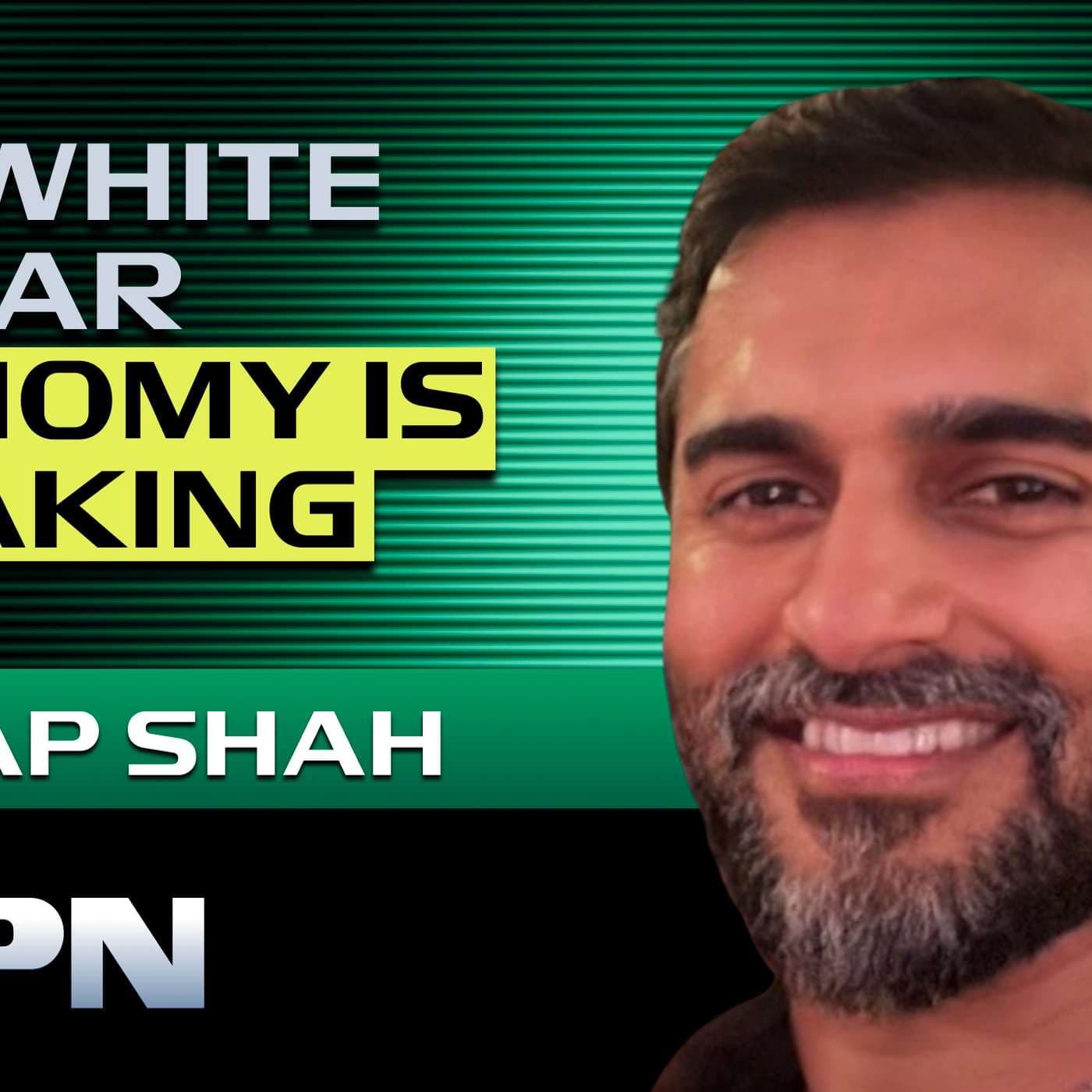
- Guest: Alap Shah
- Date: [Insert Date]
- Streaming Schedule: Live weekdays from 11 AM - 2 PM PST on X and YouTube.
- Episode Theme: Discussion on the implications of AI on white-collar jobs, market dynamics, and potential economic solutions.
---
Key Topics Discussed
- Introduction to Alap Shah and Market Impact
- Alap Shah discusses his recent article that triggered a noticeable sell-off in the market.
- Emphasizes being a "messenger" of concerns rather than the source of panic.
- AI and White-Collar Jobs
- AI Adoption: Shah reflects on his 15 years in AI and 20 years in investing, highlighting how advancements in agentic AI have transformed productivity.
- Job Market Trends: Reports that jobs in the information sector have declined by 8% since 2022, raising concerns about the future of white-collar employment.
- Layoffs vs. Technology: Discusses how layoffs are often attributed to efficiency improvements from AI rather than entirely new technologies rendering jobs unnecessary.
- Economic Implications of Job Loss
- Labor Market Dynamics: Highlights the fragility of the white-collar job market and its importance to the broader economy.
- Contagion Effect: Discusses the potential repercussions of a sustained decline in white-collar jobs, which could lead to a decrease in consumer spending and overall economic slowdown.
- Market Predictions and Historical Context
- Compares the current situation with past predictions regarding technological disruptions (e.g., the internet's impact on retail).
- Discusses the difference in pace and effect of technological adoption today compared to the past.
- Corporate Strategies and Market Dynamics
- Moat Analysis: Explores the competitive landscape for companies like DoorDash and Uber, suggesting their business models may face challenges from new entrants leveraging AI technologies.
- Emphasizes the importance of customer lock-in and discusses how AI can disrupt traditional demand aggregation models.
- Future of Work and Industry Trends
- Emerging Industries: Shah speculates on the growth of leisure-related industries if labor dynamics shift significantly due to AI.
- Reindustrialization: Considers how the reallocation of labor from white-collar to blue-collar roles could reshape industries.
- Political and Economic Solutions
- Shah emphasizes the need for political alignment to address job displacement and economic inequality resulting from AI advancements.
- Discusses potential taxation strategies and the necessity for societal restructuring to accommodate AI's economic impact.
---
Key Takeaways
- AI's Role in Job Decline: The rapid advancement and adoption of AI technologies are contributing to a structural decline in white-collar jobs.
- Economic Vulnerability: The reliance on white-collar employment for consumer spending poses risks to the overall economy if job losses continue.
- Future Market Dynamics: Companies with strong brand loyalty and customer lock-in may withstand disruptions, while those primarily aggregating demand and supply may face significant challenges.
- Call for Action: A need exists for proactive solutions to mitigate the economic fallout from job losses due to AI, including potential government interventions and societal changes.
---
Concluding Thoughts
- Alap Shah’s insights highlight the need for a balanced conversation about AI's potential to disrupt labor markets and economies. The discourse around solutions to these challenges is crucial, and the implications of ignoring them could be profound.
---
Additional Notes
- Follow-Up Content: Shah hints at a future article discussing solutions to the issues raised, indicating ongoing exploration in this critical area.
- Feedback from the Financial Community: The episode reflects on the varying interpretations of Shah's article, underscoring the importance of framing discussions around emerging technologies and their societal impacts.
---
Podcast Availability
- Platforms: Available on X, Apple Podcasts, Spotify, and YouTube.
- Newsletter Sign-Up: Daily insights and updates available at TBPN.com.
Written by AI. May contain mistakes. Listen to the episode to check what was said.
Chapters
Tap a time to open that second in VOThe Triggering of a Global Sell-Off
0:45 to 2:30
Alap discusses the thought process behind his report that triggered a global sell-off.
“And so especially the last six months, as I've just been using agentic coding myself and my teams have adopted it, it's just been a step change function in how much we can get done.”
AI in the Labor Market
2:30 to 4:45
Exploration of how AI and automation are affecting job markets and white-collar employment.
“Agents and LLMs broadly are just sort of on the tech tree as a continuum from software.”
The Connection Between Wages and Consumption
4:45 to 7:40
Alap explains the relationship between white-collar jobs, wages, and overall economic health.
“I think the issue here is that it's all just one labor market.”
Unpacking Economic Predictions
7:40 to 11:00
Discussion about historical predictions regarding technology and market dynamics and their relevance today.
“and all of that has moved to the internet.”
Future of Labor and Market Dynamics
11:00 to 13:20
Insight into how the labor market will adapt to emerging technologies and the potential for economic shifts.
“And so they are going to the outsource providers, the Accentures of the world.”
Challenges for Delivery Services
13:20 to 14:00
Alap discusses the challenges faced by delivery service businesses in a rapidly changing market.
“So it makes it much easier for new entrants to come in and for existing, you know, second, third, fourth tier players can really sort of say, I'm going to like relax my margins, try to get more top line.”
Customer Lock-In vs. Driver Flexibility
14:00 to 14:40
Explore the dynamics between customer retention and driver flexibility in food delivery services.
“provocative in thinking, thinking through because, you know, it's an amazing business and they're gaining a bunch of market share.”
Supply Challenges in the Delivery Market
14:40 to 15:30
Discuss the supply-side challenges faced by delivery services and potential solutions.
“They have a narrative that is important to their business.”
Impact of AI on Delivery Platforms
15:30 to 16:50
Analyze how AI could optimize delivery services and affect consumer experiences.
“I would imagine the agent to route to the platform with the supply that is going to be able to deliver in the shortest possible time horizon.”
Market Dynamics and New Entrants
16:50 to 18:20
Investigate how market dynamics allow new entrants to challenge established delivery services.
“Maybe it'll find you just via SEO and you can just put out like, we only take a 5 % cut instead of 15 % and the agent picks you.”
Show all 18 chapters
Future of Delivery Services and Automation
18:20 to 20:10
Explore future trends in delivery services, including self-driving cars and automation.
“Yeah, I think it's interesting because we're here debating this somewhat temporary thing because self-driving cars, robotics, changes all of that in a huge way.”
Economic Implications of AI Adoption
20:10 to 21:40
Discuss the economic impacts of AI adoption on labor and market structure.
“The P &L also just looks a lot better than anyone else.”
Debate on Marxist Perspectives
21:40 to 23:30
Engage in a debate about Marxist critiques of capitalism and technology's role.
“Production rises, but no one can afford to buy.”
AI Labs and Public Concerns
23:30 to 25:40
Examine the responsibility of AI labs in addressing public concerns about technology.
“Because if we don't, then something like this is likely to happen.”
Need for Solutions in AI Policy
25:40 to 26:40
Highlight the urgency for AI labs to propose solutions amid growing challenges.
“And so Dario especially has been the loudest here.”
Future Jobs and Leisure Industries
26:40 to 28:05
Speculate on future job markets focused on leisure and human experiences.
“I disagree with a lot of something big is happening.”
The Future of Work: Reindustrialization and AI
28:05 to 29:13
Explore the shift towards reindustrialization and its implications for employment in the age of AI.
“a hundred years so i'm deeply skeptical but this time is different i want to be different let's Let's bring on the leisure.”
Navigating Pressure in Creative Work
29:13 to 30:28
Discuss the pressures of following up on successful work and the dynamics of creativity.
“I think there's there's certainly going to be a lot more opportunity in those sectors.”
Transcript
Automatic transcript. May contain errors.0:00John Coogan:And without further ado, we'll bring in our first guest of the show, Alap.
0:04Alap Shah:How are you doing? What's going on? Doing great. How are you guys? Doing great.
0:09Jordi Hays:Is this your first time triggering a global sell-off? The first time so far, but I'm just the messenger is the way I look at it. We've got a lot of opportunities and a lot of scary things coming down the pipe.
0:23John Coogan:Okay. So, yeah, take us through the thought process. How long has this been simmering? what was the actual process of putting together this report? And then what do you want people to take away from it? And then maybe we can go into some of the reactions and your reactions to those reactions.
0:39Jordi Hays:Absolutely. The process ultimately is that I've been building in AI for 15 years and I've been an investor for 20. And so especially the last six months, as I've just been using agentic coding myself and my teams have adopted it, it's just been a step change function in how much we can get done. and just thinking through, hey, how is this going to, we're early, we're a startup, we're going to be at the leading edge of how people are adopting things. Assume the corporate world is a year or two years away, it's going to be pretty profound. And I think the underlying thing as sort of an amateur macroeconomist is we're just not producing white collar jobs to begin with.
1:17Jordi Hays:I hadn't actually seen the extent of that until I kind of looked at specifically what we call like the information sector, so different parts of kind of technology. those jobs are down 8 % from the peak in 2022 already. Those are the places where people are adopting the most aggressively already. We know every week there's firings out of big tech. In that world, what happens when the technology that big tech's been using for a while has gotten a lot better and now your average corporate starts using it as well? It can get quite scary. We wanted to think through the implications of that. But how much of those layoffs do you think are, you know, we've talked about a bunch of those layoffs on the show.
1:57Alap Shah:They're usually attributed to AI. But if you dig under the hood, it's like they just wanted to kind of resize or get more efficient or they're reprioritizing resources. And not actually because they just launched some new agent and suddenly everything's changed. Hey, we don't need these thousand engineers anymore.
2:18Jordi Hays:So I think those are all great corporate euphemisms, and of course that's how they're going to say it. But I think the way I would think about this is it's not necessarily like agentic powers happened and now everyone's going to get fired. Agents and LLMs broadly are just sort of on the tech tree as a continuum from software. And so software has been making companies more efficient for decades, and that has caused a lot of downstream effects. And now that software has just become much more intelligent. And so in that sense, I think companies that are efficient have been doing a form of this for a really long time.
2:51Jordi Hays:And we think about the age starting now in 26 is just something that's going to accelerate that.
2:57John Coogan:Okay. So, yeah, what else was key in the thesis or maybe potentially overlooked that you think people should be really focusing on?
3:09Jordi Hays:I think the problem, A, the first thing, the most important thing is just the labor market dynamics. We've just been in a really weak labor market for a while, and that's before these things roll out. But then you put that together with the fact that we just have a very structural environment where what is the thing that drives our entire economy? It's wages. Most of those wages that are ultimately driving all the discretionary spending is coming from the white-collar worker. And the problem with that is that we're now entering this place where you made all these assumptions on like loaning money to all these companies, you know, to mortgages and everything else.
3:48Jordi Hays:Like white collar economy is our economy. If you all of a sudden just take a leg out of that economy, it has a contagion effect into basically every asset in the world. And so that I think is the part that people haven't thought about because when, you know, people were making these loans, no one ever consumed a world in which, wow, okay, now like white collar jobs are in sort of permanent decline. If that's at 2 % a year, then I think we can skate through. But if it's at 4 % or 5 % a year, then we need action a lot more quickly.
4:15John Coogan:Is the white-collar economy actually the full economy, or is it more just like the stock market? Because it feels like white-collar workers are disproportionately allocated to assets versus consumption. And you see things like there's a lot of health in more blue-collar sectors. health care is growing and then you also see dynamics like just you know like we've seen like like jitters in the in the consumer market for a long time and then we just see the health of the American consumer just continuing continuing continue and it feels like it's maybe driven by something like lower level and there's always this disconnect in my mind between like the economy and the market?
5:00Jordi Hays:It's a great question. I think the issue here is that it's all just one labor market. And right now, blue collar is doing better because there are not firings there. I think robots are probably 24 to 36 months behind other forms of LLMs that are just diffusing through society. But the problem is, let's just say that it's one labor market ultimately. If the white collar jobs are going away, let's say in our scenario, we talk about 5 % of folks might get fired in a couple of years. those 5 % if there aren't white collar jobs for them to relocate into then they're gonna have to move into the gig economy and the blue collar labor force and so that puts pressure yeah on the entire labor market not just the white collar one and to answer your other question health care is growing education is growing yep the reason those things are growing ultimately and we did some work in our piece to try and isolate white collar that is not government driven and so the government continues to spend more yeah that's why health care is growing they're the biggest payer in in health care they're they're guaranteeing all the loans in the education industry.
5:59Jordi Hays:And so those sectors continue to grow because government spending grows. But again, it gets very circular if government spending is coming primarily from taxes and primarily payroll taxes, because the average worker pays a lot more in taxes per dollar than the average corporate does. And so some corporates make a lot more money, workers' payroll taxes go down more, then there is a bit of a contagion effect into bonds as well there too.
6:23Alap Shah:on saturday john and i were going back and forth about uh some of the really wild predictions around the impact of the internet that were being made in the 90s there was clicks replace bricks
6:34Jordi Hays:people were predicting total die off did well i mean to be fair i mean to be like i'll just finish
6:41Alap Shah:they were expecting a total die off of all brick and mortar stores in five to ten years which was like widely discussed prediction. It was like, why would you ever go to a store to buy something if you could just get it online sent to you directly? Yeah. A couple others. So like, not as relevant to your piece, but people were predicting like permanent high growth, the end of business cycles. There was the like media disintermediation narrative, which was like the Napster era, everyone was going to get all media for free forever. Newspapers would die off. Record labels would die off.
7:23Jordi Hays:Aren't you guys the media disintermediation narrative? Yeah, we are.
7:28Alap Shah:But 20 years later and CNBC is still a much, much bigger business than all business media, at least in our world.
7:39Jordi Hays:But newspapers, magazines, completely gone, right? and all of that has moved to the internet.
7:45John Coogan:Totally, totally.
7:46Jordi Hays:It's just like 5 % employment shock in a quarter is way different.
7:51John Coogan:I mean, like a 5 % unemployment shock is completely different if it happens over a quarter than if it happens over two decades, right? Like these are just fundamentally way different things. The other thing, yeah.
8:02Alap Shah:The last thing I would say is like there was like this concept of like frictionless capitalism, meaning that like middlemen would be eliminated because you could just go directly to the source and that would push pricing pressure down. My question, and I know you guys are not writing your piece saying like, you know, this, we believe we will stake our entire reputation on this sort of narrative. But what do you think, what, how much did you pay attention to like the 90s, early 2000s Internet predictions? What do you think they got wrong? Why is this time different in terms of how a new technology will diffuse the economy?
8:43Jordi Hays:I think the difference is if you just plot what's happening to technology, it's all just going exponential. These are all just continuous timelines of like, we have microcomputers, we have the internet, we have mobile phones, and today, you know, we have very, very powerful AI. And so I think most of the predictions that you ticked off there, it's kind of interesting. I would, you know, just looking at them today, you know, I would say they couldn't really happen until you had proper AI. Because if you have the ability to just freely have commerce the way you do today, it doesn't work if you still have to do all the work.
9:19Jordi Hays:Ultimately, you have to go and you have to log. And think about the amount of friction there is in buying a product for most people today. You still have to go to the website. You have to put your credit card in. It's all work. We only have gotten to the tech required for those predictions, I think, this year. And that's why this is the year that I think it really begins. Because now it is completely seamless. you just and no one's really doing this yet but it's gonna happen I think you know in the next six months is just tell your agent you know tell Gemini tell chat GPT go buy these things it has your credit card and now that world that they were describing is truly gonna come to pass yeah what about the canary in the
9:54John Coogan:coal mine analogy I was looking at unemployment statistics in India and the Philippines and it doesn't seem to be doom and gloom over there I don't know I I didn't dig in super far, but would you at least expect that the unemployment rate would spike overseas before it spikes in America? Or do you think this all happens simultaneously?
10:20Jordi Hays:It's a tricky question. I think ultimately white collar work is a lot more of our economy than it is the economy of India and the Philippines. And they are much sort of like more immature economies that are growing through investment and things like that. But certainly, I think we called it out, the consulting sectors in India are certainly going to be challenged in other places as well. But the reality is, the timing is everything in the markets, clearly. But the trick here is, if you're a corporate and you are hard-pressed to get AI into your organization today, ChatGPT and OpenAI will send you a forward-deployed engineer if you have a billion dollars in budget.
10:57Jordi Hays:If you have a$10 million budget, they're not going to. And so who are those folks turning to? they can't usually do it themselves. And so they are going to the outsource providers, the Accentures of the world. And so I think those businesses are likely going to be in a lot of trouble over the medium term, but they probably will have a big bump from people really putting that AI into their organizations first. And so it's a bit of a tricky timeline there.
11:20John Coogan:What moats do you think hold beyond this? Because I think a lot of people latched on to like the DoorDash example as something that they thought had a moat and that in the post you sort of underline like how that could maybe not be as durable as a mode as people thought. But in the long case, like what what modes do exist? Like do network effects stay? Do complex coordination, intellectual property? Like what what doesn't break down?
11:53Jordi Hays:You know, real brand value, where people are choosing you over other things because of the brand and the status signaling across brands matters a ton. network effects are more powerful than ever, I think, in this world. So things like Meta really have a lot to sort of gain in that sense. But I think things that look like they're network effect businesses, but in fact are just the ones that are doing the hard work of aggregating demand and supply, I think will be more challenging. So DoorDash is a good example there. It's not necessarily the biggest risk versus some of the other things, but I just was in a thread with Gavin Baker talking about this.
12:25Jordi Hays:But the problem for DoorDash and Uber and folks like that is right now they're doing two jobs. They're doing the job of aggregating demand and the job of aggregating supply. They're both hard jobs, but the demand side is the harder side. And we think the world of the future, there are lots of folks in, let's say, food delivery. Instacart wants to get a bunch of market share. And Grubhub wants to get a bunch of market share. And so let's say the agents are the ones doing the buying. It's 2028 and 40 % of the sales are through agents. you just tell Gemini, hey, order me some noodles. In that world, it's going to go to each and every provider.
13:03Jordi Hays:And right now, there are four providers that do that. But now it's very easy. If I'm building a startup in this space, previously, I had to get all the drivers on board, get all the restaurants on board, and acquire customers. Now, Gemini and ChatGPT are acquiring the customers for me. And all I have to do is get the supply side going. So it makes it much easier for new entrants to come in and for existing, you know, second, third, fourth tier players can really sort of say, I'm going to like relax my margins, try to get more top line. And so you think that, you know, whatever the 15 % VIG is that DoorDash gets today, maybe it's more than that.
13:36Jordi Hays:You know, some of that, I would think Gemini and ChatGPT are going to ask for themselves, wherever I send the traffic, I'm going to get a piece of that. And then some of that's going to go back to the consumer.
13:46John Coogan:Yeah, it feels like, was this the most like stretched or controversial prediction?
13:54Jordi Hays:It seems like it was certainly the one that got, you know, that's getting the most chatter. And I think we did it for a reason. We wanted to be a little provocative in thinking, thinking through because, you know, it's an amazing business and they're gaining a bunch of market share. But the fundamental idea that you're, because what did the lock-in, right? Like do the drivers have lock-in on DoorDash or on Uber? Not really, right? They're, you know, most drivers are doing Lyft and Uber, so they're not locked in. The real lock-in, And the real business value, the franchise value of an Uber or a DoorDash is the customer lock-in.
14:23Jordi Hays:Because the customer gets comfortable. They've got everything saved. They want to hit a couple buttons. They don't price shop. Agents are happy to price shop as much as possible. And so if you take that away, then it's a real problem for businesses that are ultimately built on customer lock-in.
14:35Alap Shah:Yeah, I don't know. I think the interviews that we've had with Lyft, I mean, again, take it with a grain of salt. They have a narrative that is important to their business. But like if you ask these people, what is the greatest challenge? It is managing managing the supply side. It is not the demand side is not where they're saying like, hey, like this is really what we need to solve. It's like, hey, as we get more drivers on the platform, revenue naturally, naturally goes up. And so I'm just hard pressed to imagine a world in which, you know, somebody, think about if somebody in my town, which is like 15 ,000 people, like Vibe codes a delivery app.
15:22And I go into ChatGPT or with another agent and I say, like, I want food.
Read the full transcript
15:28Alap Shah:It's like the agent wants to get the best possible service. I would imagine the agent to route to the platform with the supply that is going to be able to deliver in the shortest possible time horizon. And imagining a world where there's like this, you know, vibe coded small team operating that just happens to aggregate as much supply, which is just as increases the likelihood that my order will be delivered on the best possible timeline, which is going to be the number one factor for customer satisfaction. I just don't see how solving the front end kind of demand piece actually makes a better consumer experience, which I assume the agent would optimize for on behalf of the user.
16:12Jordi Hays:So let's consider what actually happens here, right? You make the order on DoorDash. DoorDash sends it to the restaurant. The restaurant essentially, you know, sometimes they use their own driver. Sometimes they send the drivers from DoorDash. but now imagine the agent can take you directly to the restaurant site and place the order directly with the restaurant and you can keep half the savings and the agent can keep half the savings but where's the driver where's the driver never coming from because i i feel like i understand i
16:45John Coogan:understand the the customer demand side like you start with an llm or an agent who shops around for you. So maybe that's solved. Maybe it'll find you just via SEO and you can just put out like, we only take a 5 % cut instead of 15 % and the agent picks you. I understand getting all the restaurants on board because you email them and say, hey, it's 5 % instead of 15%. They're sure, we'll turn it on. But for the drivers, how do you actually reach out to them and get them on the platform? And how does AI like lower that cost? Because right now I think about like, What was the driver marketing budget over the last decade at Uber or at DoorDash?
17:26John Coogan:It's probably in the billions of dollars. I feel like to generate that much liquidity, I have to invest that much to onboard all those drivers, build awareness. Maybe it just goes viral because they're like, hey, I can make more money here, but that feels hard.
17:42Jordi Hays:I think it's going to take time, but I think there are a bunch of smaller driver aggregation networks that exist today that are not the ones that we know about. For instance, I started a business called Thistle, and we do delivery of healthy foods to your door. We split it between half of them are our own employee drivers, and the other half, I think we have like 500 or 700 drivers that we just use a third-party service to provide. So I think there are a lot more of these businesses. All those businesses now will also just have huge opportunities to kind of take market share. Ultimately, what we're saying is the friction in doing commerce is going way down.
18:15Jordi Hays:Places where there are rents, the prices can go down. But ultimately, this is just an opportunity for more and more entrepreneurs to kind of build businesses for the new world.
18:22John Coogan:Yeah, I think it's interesting because we're here debating this somewhat temporary thing because self-driving cars, robotics, changes all of that in a huge way. But we use the term sloppable for companies that can be vibe-coded away and clankable for companies that can be disrupted by robotics. and I've always put the delivery services more in the clankable category than the sloppable category. So I was shocked to see.
18:51Alap Shah:What would you have spent more time on if you knew you were going to get 50 million views and the markets would react in the way that they have?
19:02Jordi Hays:I would have finished writing the third piece where I talk about solutions, which I have not gotten to yet.
19:08John Coogan:A lot of people are demanding solutions. You just hit me with a ton of problems. That's funny. Do you think that there's any, there's this question about like, in my mind, like, yes, Google and NVIDIA are public, but Anthropic OpenAI and XAI through SpaceX are not public. There's sort of like this massive, you know, multiple hundred billion dollar sell-off in the public markets that sort of should, if you believe your thesis, that should sort of funnel to the labs, I would imagine. When I read it, there's a lot of doom and gloom about companies that are out there, but it's a lot of bull case for AI labs.
19:48John Coogan:But that can't happen in one day because rounds happen every once in a while. They're private. There's all these different things. But do you think that the world would change when the big labs get out in the public markets?
20:03Jordi Hays:I think it's absolutely going to change. I have a strong suspicion that Anthropic is going to go in the next three to six months. They just have so much momentum and there's a lot of value being first. The P &L also just looks a lot better than anyone else. So I would think that gets public and it's going to be pretty interesting if it happens. Certainly labs are ultimately, they seem like they're very well positioned to win. I would wonder over the medium term, like, you know, what happens with some of the Chinese models and whatnot, if people actually want just something that's more local and something that they own.
20:32Jordi Hays:But it does seem like the most likely outcome is going to be that the existing incumbents are going to get the most share. And I think Google is particularly well positioned since they already own all those customers today and they can finance losses from inference a lot longer than everyone else. But I think ultimately, like there's a world in which the labs are the biggest winners here. There's also a world in which like you end up with just a lot more competition and people trade and change. But the thing that seems very clear to me that the absolute like there's no way they won't be the hugest winners here is going to be the underlying tech, meaning the semiconductors.
21:05Jordi Hays:So, you know, everything.
21:06John Coogan:You can go even deeper. You could go into commodities and copper and energy and oil and natural gas and stuff. And people have.
21:14Alap Shah:Did you see some of the criticism was that the essay was very Marxist?
21:22John Coogan:Mahit said,
21:24Alap Shah:Marx writing during the Industrial Revolution predicted capitalism would periodically devour itself. Firms replace labor with machinery to boost profits, but competition diffuses the technology, drives prices to marginal costs, and the gains get competed away. Meanwhile, displaced workers lose purchasing power, hollowing out the demand the whole system depends on. Production rises, but no one can afford to buy. What's produced, the contradiction between production and realization. Zitrini's piece describes this exact dynamic, then declares there's no natural break. It's the most Marxist piece of financial analysis.
21:55Alap Shah:Not my word. I don't think you were expecting that critique. And makes the same errors Marx did. Yeah. Creative destruction doesn't just destroy, it creates industries we can't yet conceive of yeah that's interesting i mean maybe that's going in the solutions is that going into solutions so let me address it a few ways barst is a really
22:13Jordi Hays:smart dude uh he got a lot of things right very early marxist can mean communist marxist can also mean just understanding how capital and labor interact and in that sense yes it was marxist he had he was very insightful um but i i think the thing that uh that we're missing here is that there's the economic layer, but ultimately it's the political layer that matters. And we're in a world where we've had two parties and both parties economically have a little bit of difference, but not a huge amount of difference. And so we kind of bicker, but in a world in which jobs are going away really fast, I think there's going to be a much stronger alignment for just the laboring class overall to say, hey, we need to fix this problem.
22:57Jordi Hays:it's a very fixable problem. What we're actually expounding here is that GDP, if done properly, will absolutely explode. We're getting way more efficient. We've built a machine dot. We build machine intelligence. But we have to structure our society such that as those things happen, hopefully very slowly, we do the right thing from a taxation perspective to say the winners should win. But if that's what's causing the displacement, let's sort of make the pie a little bit bigger for everyone. And that, I think, ultimately should be something that appeals to a lot of folks in the AI complex. Because if we don't, then something like this is likely to happen.
23:33Jordi Hays:And AI progress will slow down because we'll have an economic crisis and we're not going to go to finance nearly as much of it as we otherwise would.
23:39Alap Shah:So do you think the future is what Anthropik's head of sales position in France, the company will be spending 530 ,000 euros per year, the government will get€340 ,000 and the employee will get€190 ,000. Is that the level of taxation do you think we're headed for?
24:01Jordi Hays:I think when we're at France's level of government spending, then the math probably means roughly that. I would say that government spending would be at France's level, I'm guessing, five, seven years from now if this scenario comes to past. And so I think we'll head there over time. But I think it's less a question of the percent of spending and how much goes to the employee versus goes to the government. And ultimately, what is the size of the total pie? So the bet here is that the pie, if done properly, can just increase multiples of what it is today. And thus, it's just a win-win.
24:35John Coogan:One question. I mean, it sounds like you're working on potential solutions post, which I'm I'm very excited to read, thank you. I'm interested to know your reflection on the messaging that's coming from the leaders of the AI labs because they've outlined many sort of low probability but potentially negative scenarios. We have the white collar work number, we've had many of these comments from lab leaders, but I rarely hear them follow it up with, And the answer is print, print, print, or interest rates will save us, or unemployment insurance, or UBI. Like, all of those, like, solutions that I think people, it's funny because people are quoting your post being like, this is easily solved with this solution.
25:24John Coogan:It's like, okay, well, that's great, if we all agree. And I think you might with some of the quotes. People are all over the place. But I'm wondering about your reflection on the messaging from the labs around solutions versus pure focus on problems.
25:39Jordi Hays:I think it's a really interesting question and very interesting setup in that the labs are, on the one hand, want to get the word out there. And so Dario especially has been the loudest here. There's a really good Axios article from last May where he kind of sounded the alarm bells. He's saying people are not listening. Obviously, a lot has changed since then. But they can't go so far as to say, like, hey, if you put the pieces together, then this is how it's going to play out. I think it's too sort of damaging to sort of their reputations and like, you know, their ability to fundraise and things like that.
26:12Jordi Hays:And so I think it's other folks like ourselves that kind of have that duty to go and really start thinking that through. It seems like Anthropic is pretty engaged. Should that conversation really start happening? I think this is the year it needs to really start happening. And so I think they all kind of get it. And so it's just a question of how do we as a society start moving in that direction?
26:31John Coogan:Yeah. I think, obviously, I'm still processing part of the piece. I agree with some of it. I disagree with some of it. But what's really underrated is just how useful this process of writing an article for a particular audience is. I disagree with a lot of something big is happening. but it hit with a very different audience than machines of loving grace or the adolescence of AI or of machine intelligence. And there's pieces that are written for like, you know, AI insiders, leaders, researchers. Then there's like the broader tech community. Then there's like everyday people. And you clearly hit the nail on the head with like speaking to the financial community.
27:18John Coogan:and we see that in the markets, not amazing results, but maybe it's worthwhile because we will get really great solutions and a better conversation around it. So I think in due time, this discussion needed to be had. So thank you.
27:36Alap Shah:What's an industry or job of the future that you could see emerging?
27:43Jordi Hays:I think, again, if we solve this, like everything related to sort of leisure, is gonna absolutely zoom and that those are gonna be the biggest growth industries of the future right like what do humans want to do total chess key victory watch polo
27:57John Coogan:like a cloned horse play polo for sure yeah so you know imagine humans have like the entire day
28:04Jordi Hays:to just enjoy themselves uh instead of having to work now that is something i've been promised for
28:10John Coogan:a hundred years so i'm deeply skeptical but this time is different i want to be different let's Let's bring on the leisure. Boom. I'm here for it. I'm here.
28:20Alap Shah:Anything in your solutions, Doc, around reindustrialization? I mean, the frustration that so many people in tech that have been building in kind of hardware in the real world or trying to recruit people that are getting offers from social media companies or now labs or SaaS companies. You know, one of the problems for America in the last 20 years was that if you just wanted to make$100 million, you probably were much more likely to do that building enterprise software than building critical infrastructure or anything in the real world. So is that is kind of new new infrastructure and reindustrialization like a potential landing point for people that had the 180 K a year PM job that might be going away?
29:12Jordi Hays:It's a great question. I think there's there's certainly going to be a lot more opportunity in those sectors. And I think we've we've done some pretty smart policy things that are moving us in that direction. but we're also you know just in a lot of ways so far behind china there and doesn't ai affect kind of those jobs both uh for you know on the reindustrialization side just like it does for writing code and so that's where i think it will get trickier i think over as a country we're going to spend an awful lot more on that i think we're going to we're going to catch up but we're not uh it's not clear that's going to be through just creating a bunch of additional jobs versus the ultimate thing we're seeing with AI period is just high agency people who really know how to reuse the tools can just do the work of many, many people.
29:54Jordi Hays:And I think that trend applies in every industry to some extent.
29:58John Coogan:Yeah. What an exciting time. Thank you so much for taking the time. When's the next piece dropping?
30:05Jordi Hays:Hopefully by the end of the week, but don't hold me to that. Now when you know that it could,
30:12Alap Shah:it'd be hard for the follow-up to get as much reach as this one. That's kind of the way these things go. But now the pressure's on to really pay attention to every single word. Just don't have any sequel anxiety.
30:22John Coogan:You'll be fine. We're excited to read it. And we'll talk to you soon.
30:25Alap Shah:Yeah, great to meet you. Have a great rest of your day. Thanks so much.
From the publisher
This is our full interview with Alap Shah, recorded live on TBPN.
We discuss whether AI is triggering a structural decline in white collar jobs, why agentic AI may compress platform margins at companies like DoorDash and Uber, how labs like Anthropic and OpenAI could capture enormous value as public markets struggle, and what political and economic solutions might prevent an AI driven contagion.
TBPN is a live tech talk show hosted by John Coogan and Jordi Hays, streaming weekdays from 11–2 PT on X and YouTube, with full episodes posted to podcast platforms immediately after.
Described by The New York Times as “Silicon Valley’s newest obsession,” TBPN has recently featured Mark Zuckerberg, Sam Altman, Mark Cuban, and Satya Nadella.
Sign up for TBPN’s daily newsletter at TBPN.com
TBPN.com is made possible by:
Ramp - https://Ramp.com
AppLovin - https://axon.ai
Cisco - https://www.cisco.com
Cognition - https://cognition.ai
Console - https://console.com
CrowdStrike - https://crowdstrike.com
ElevenLabs - https://elevenlabs.io
Figma - https://figma.com
Fin - https://fin.ai
Gemini - https://gemini.google.com
Graphite - https://graphite.com
Gusto - https://gusto.com/tbpn
Kashi - https://kalshi.com
Labelbox - https://labelbox.com
Lambda - https://lambda.ai
Linear - https://linear.app
MongoDB - https://mongodb.com
NYSE - https://nyse.com
Okta - https://www.okta.com
Phantom - https://phantom.com/cash
Plaid - https://plaid.com
Public - https://public.com
Railway - https://railway.com
Ramp - https://ramp.com
Restream - https://restream.io
Sentry - https://sentry.io
Shopify - https://shopify.com
Turbopuffer - https://turbopuffer.com
Vanta - https://vanta.com
Vibe - https://vibe.co
Follow TBPN:
https://TBPN.com
https://x.com/tbpn
https://open.spotify.com/show/2L6WMqY3GUPCGBD0dX6p00?si=674252d53acf4231
https://podcasts.apple.com/us/podcast/technology-brothers/id1772360235
https://www.youtube.com/@TBPNLive

