In short
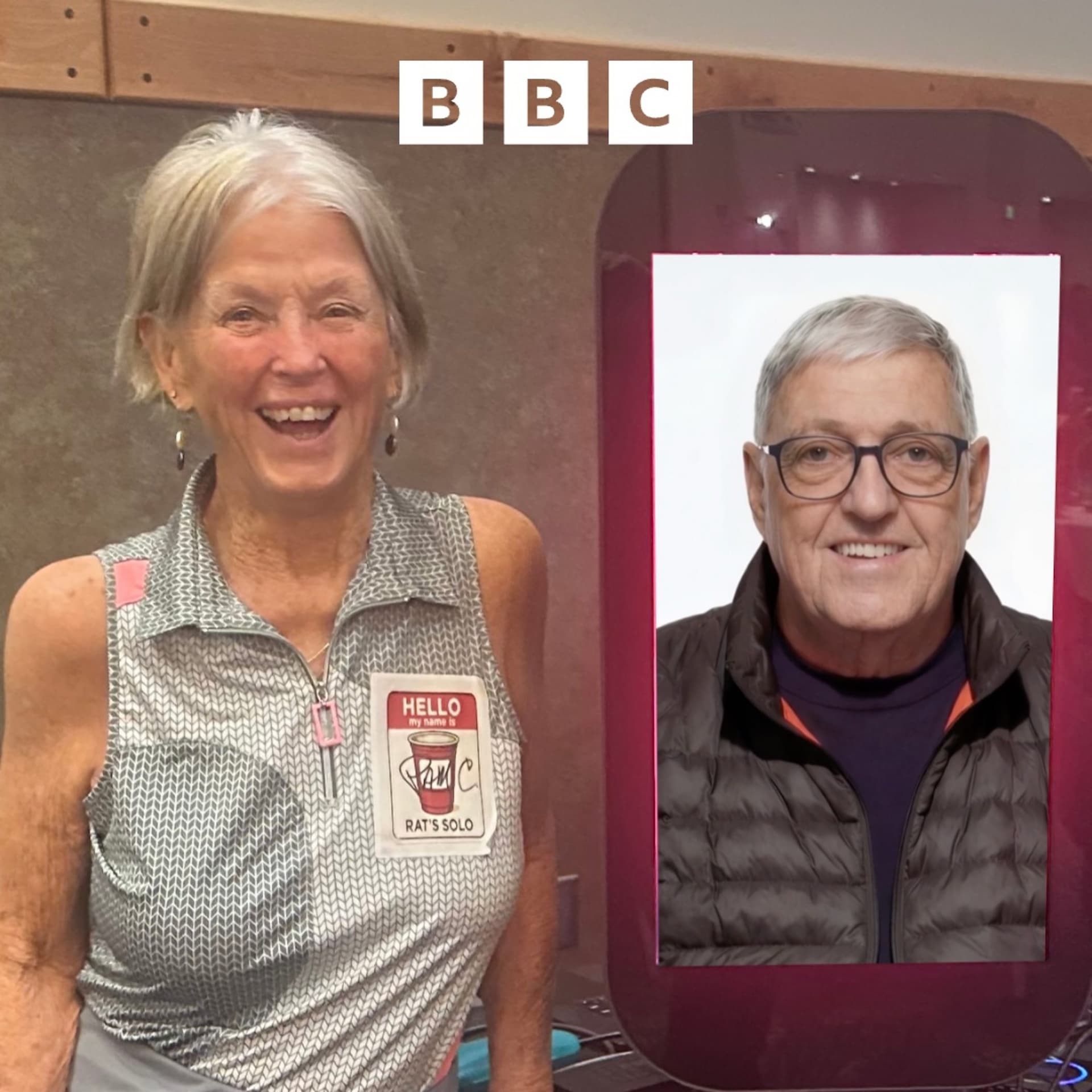
Tech Life episode focuses on using technology to remember and monitor health. Main story: Pam Cronrath (rural Washington state) created a “Rat Wake” hologram of her husband Bill Cronrath, who died in Sept 2025 after 60 years together. She worked with Proto and Hyperreel to build a full-size, lifelike hologram using archived video/audio and a scripted 8-minute “lifestyle Q&A” at his memorial; Bill answers questions via Bill’s nephew as emcee. Bill is portrayed as “The Rat.” Pam says the voice was hardest to recreate, using recordings from younger and later periods.
Key claims
the hologram brought her comfort, helped her grief, and let family feel connected; it surprised ~200 attendees.
Notable examples
Bill’s “jumping in the way back machine” wedding-day exchange (Oct 6, 1967) and “I love you” moments. Other guests: Prof Will Dixon (University of Manchester) on knee-replacement outcomes using smartphone/wearable step data linked to NHS records (kneesteps.com); Nushin Hashemi (January AI) on virtual glucose monitoring via meal photos/scans predicting glucose without sensors.
Written by AI. May contain mistakes. Listen to the episode to check what was said.
Chapters
Tap a time to open that second in VOExploring Grief Through Technology
1:31 to 2:14
Discussion on how technology can change how we remember loved ones.
“A lot of people who have an iPhone, for example, will be well used to opening up their health app and seeing their step count.”
Pam's Unique Memorial for Bill
2:15 to 2:50
Pam Cronrath shares her experience of using hologram technology for her husband.
“If you've recently lost someone close to you, you might want to step away for this part of the programme.”
Introducing Bill's Hologram
2:51 to 3:38
Bill's hologram speaks at the memorial, surprising attendees.
“speaking directly to family and friends.”
The Creation Process of Bill's Hologram
3:39 to 4:50
Pam explains how she created the hologram and the technology behind it.
“I started by asking her, why a hologram?”
Experiencing the Hologram Live
4:51 to 6:06
Pam recounts the family's emotional reactions during the memorial.
“At the memorial, Bill's hologram didn't just speak, it answered questions.”
The Impact of the Hologram on Grief
6:07 to 7:22
Pam discusses how the hologram helped her cope with her grief.
“And that's where this story really begins.”
Sharing Bill with Friends and Family
7:23 to 11:20
Pam reflects on the joy of sharing Bill’s hologram with loved ones.
“So you talk about watching them sitting when we're sitting around the table when the Proto came up.”
The Future of Hologram Technology
11:21 to 12:30
Discussion about the potential of hologram technology for the public.
“She was not connecting the dots that we were doing a pre-recorded kind of thing.”
Living with Loss and Technology
12:31 to 13:40
Pam shares her ongoing journey of grief and the role of technology.
“I'm a humble person by the rich life I've had.”
Knee Surgery and Patient Data
15:36 to 21:52
Professor Will Dixon discusses using data to improve knee surgery outcomes.
“a recent interview I did about AI in healthcare.”
Show all 11 chapters
Virtual Glucose Monitoring Technology
21:52 to 27:08
Nushin Hashemi from January AI explains their innovative glucose monitoring app.
“And if you live in the UK and you think you might be eligible to take part in Will's study, the website address is www.kneesteps.com.”
Transcript
Automatic transcript. May contain errors.0:00This BBC podcast is supported by ads outside the UK.
0:58Transcription by CastingWords
1:07Hello and welcome to Tech Life, the programme about technology and the impact it has on all of our lives. I'm Shona McCallum. Today we're looking at how it's possible to remember a loved one by recreating their lifelike image, expressions and voice using hologram technology. In a moment we'll bring you one quite remarkable story. Later on, if you've had a knee operation and have a smart device monitoring your health, the doctor might want to see you now. They're already tracking step counts. A lot of people who have an iPhone, for example, will be well used to opening up their health app and seeing their step count.
1:46And virtual glucose monitoring tech for diabetics with the help of AI.
2:10We start today's programme with themes of grief and loss, but also of happiness and remembering loved ones. If you've recently lost someone close to you, you might want to step away for this part of the programme. Now, we talk a lot on Tech Life about how technology is shaping the way we live, but sometimes it also changes the way we say goodbye. Pam Cronrath lives in rural Washington state in the US. When her husband Bill, her partner of 60 years, passed away, she wanted to honour a promise she'd made to him, a super wake. What she created surprised everyone in the room. Working with hologram technology companies Proto and Hyperreel, Pam arranged for a lifelike hologram of Bill to appear at his own memorial service, speaking directly to family and friends.
2:58Let's start with Bill himself, who is affectionately known as The Rat. Hello everybody, and welcome to your first and only Rat Wake Party. Now, before anyone gets confused, I'm not actually here in Valhalla with you today. I left this earth in September 2025. But thanks to a company called HyperReal, you still get me, the rat, in hologram form. Is this going to be fun? That was Bill, not a recording played on a screen, but a full-size hologram created using archived video and audio and carefully scripted by Pam herself. I started by asking her, why a hologram? I was presenting at a medical conference several years ago, and they had a guest speaker that was a doctor that was a hologram on the East Coast, and I was on the West Coast.
4:04I was so impressed with that, that when Bill passed away, I started knocking on doors to try to see if I could do something like that, because I love technology too. I'd promised him a super wake years ago. So when he did pass away and he had told me at that time, why don't you spend, really go all out and spend a couple thousand dollars, you know? Well, as I have told everybody since then, I've probably been at least 10 to 15 times his$2 ,000 on this project, but I still think he would be inspired by all of this and thankful that it happened. Me knowing him like I did for 60 years, I wrote the script for the hologram and we pulled it off with my nephew being the emcee like it was him interviewing Bill.
4:57At the memorial, Bill's hologram didn't just speak, it answered questions. Pam arranged a lifestyle Q &A with Bill's nephew acting as master of ceremonies, so convincingly that some people in the audience believed the conversation was happening in real time. Rat, we're going to start with jumping in the way back machine. Going back to your wedding day, October 6, 1967. Everything's ready, except the groom. You're 21, you just quit college, joined the Navy Reserves, and you're late to your own wedding. Was it all getting a little too real? I found Pam and said, I think we should wait. Maybe we need more time.
5:42Pam, in the very assertive tone she is known for, I don't care if we get a divorce tomorrow. We are getting married now. And here we are, 60 years later, no divorce. Best decision I ever didn't make. Pam, I love you. Behind the technology was a very human motivation, grief, memory and love. And that's where this story really begins. What was it like seeing him recreated in that way? Because it was very lifelike and it's something that you'd worked on for many months. Well, the voice is critical. I think that's the hardest part of all of this is getting the voice right. And Bill was a quiet, humble guy.
6:30not like me and we didn't have a lot of recordings of him that we could pull from and I had to go back a lot of years and you know even when you go back like we did your voice changes over those 20 years or whatever so not maybe as dramatic as you might think but especially when Bill had gotten weaker the last few years here his voice I think had changed so I had some recordings that I shared with Tim Coleman, who finally did do the major work on developing the Avatar. I had sent him a recording of Bill when his voice was younger, stronger, and one that was more just like a year ago or so. He kind of basically, in my opinion, went between them.
7:14It was everybody that listened, including my son. This was a surprise for the whole family. The only people that knew what we were doing was my nephew and he and I with Hyperreal and Proto, but my kids. So you talk about watching them sitting when we're sitting around the table when the Proto came up. They're just, I don't have enough pictures to show how aghast they were so surprised about what was going on and what was happening. You know, when Bill came on that avatar and started speaking, I mean, he felt like it was his dad right there talking to him. All the family did. So you were pleased with the results then?
7:58Yeah. And I had it recorded. The whole wake was recorded and I was just listening to it again. And yeah, it means a lot to me. Yeah. Especially when he says, I love you, you know, on the tape. I'll give you just a wee moment. Okay. What do you think he would have made of it? He would have been so over the top for him too I had never talked to him about that I saw that hologram It sounds like something out there, like an AI world that you can't really relate to You know what I mean? And yeah, he would have, just like my kids, he would have thought it was something else But he would have loved it So how did you choose the words then?
8:47that Bill spoke? I tried to share what I felt were, and was eight minutes long, which I remember everybody says, you know, you don't want to be too long on these things. And so I kept it with some incidences that some people knew about, and maybe a lot of people there didn't, hadn't heard, but still found them humorous, you know, because we just had, we just had so much fun, period. Yeah, 60 years of marriage. There's obviously a lot to choose from just to distill it down to those eight minutes. Clearly losing your husband is really difficult. And I guess what I'm trying to get at is how did this hologram help you personally through your grief?
9:32You know, did it did it bring you comfort? Did it give you something to work towards? Did it help you kind of feel like you were still in some some way connected to him, even though he had passed away? yep all yes to all of what you just stated there in my opinion yeah as uh and my motivation around that was hoping that i would have still be able to use that like looking at pictures and looking at old videos just gives a lot of comfort and now i've got the hologram also so i mean i still look at a lot of pictures that we had and little video clips and stuff like that and when you're hurting like I've been and still am by the way seven months later it it helps I don't know it helps to make you feel like that person's right there with you.
10:23And what was it like to share him with the people who loved him because I've watched the video of the wake and clearly it was a packed house and so much admiration for him in the room. Yeah, I just felt like Bill and I had no bad friends. So I knew everybody who actually came there, those 200 people were very vested in us as a couple and their relationship that they had with Bill because Bill just made everybody feel like they wanted to be around him. There was 200 people in the room. What did they make of the technology and the hologram, as it would have been obviously a surprise, not just to the close family members, as you've mentioned, but just the wider congregation?
11:13In fact, I had one friend there. I heard this. She wasn't sitting by me, but I heard her say, how? Now, Bill died. How did they do that? You know, how did this happen? Why? She was not connecting the dots that we were doing a pre-recorded kind of thing. But I mean, it was that realistic. And if you didn't know it was coming, it was pretty impressive. This is something that we've seen celebrities do. But do you think it's maybe becoming something a bit more accessible? Do you think that having had your experience, perhaps it's something that people should consider? And would you kind of urge people to consider it as something that has brought you a lot of joy at a difficult time?
11:57Yes. Yeah. I think the industry is going to have to come somewhat to the people. You know, I think it's going to be, quite frankly, it's going to be like the computers started out$5 ,000 or whatever, some ridiculous, and now you can buy them at Walmart for$2.89. It's that kind of stuff with this AI. I think the holograms are just going to take off. These companies, to me, have a huge opportunity to bridge over to the public in a way that, you know, but it's probably going to happen right before our eyes. Believe me, I was very, very appreciative. I'm a humble person by the rich life I've had. I really have been so blessed.
12:38And I know that. I know it's tough. I know. Yeah, it still is for me. I mean, you know, I just, I had a friend who lost his wife three years ago, and he told me it's still terrible lots of days, you know, and I, gosh, I know I should be easier, but, you know, it's just what it is. And I've given up trying to act like I'm not having what I'm having. You just take it day by day. That's exactly right. it was the biggest loss in my life for me so it's it's colossal isn't it it's yeah when it's when they're gone they're gone and the hologram does i think that it helps it's going to be like my other pictures to look and and revisit that's what it's going to be it's going to be part of that whole life story of Bill and Pam.
13:44And that was the very impressive Pam Cronrath speaking to me from the United States about her beloved husband, Bill, and her deeply personal and very striking use of hologram technology. It's a story that raises big questions about how emerging tech is reshaping memory, mourning, and the ways that we stay connected to the people we love. At the BBC, we go further, so you see clearer. With a subscription to bbc.com and the BBC app, you get unlimited articles and videos, ad-free podcasts, the BBC News Channel streaming live 24-7 plus hundreds of acclaimed documentaries. From less than a dollar a week for your first year, read, watch and listen to trusted, independent journalism and storytelling.
14:29It all starts with a subscription to bbc.com and the BBC app. Find out more at bbc.com slash unlimited.
14:49this is tech life on the bbc world service with me shona mccallum i'd like to know what you made of my interview with pam she certainly made an impression on me and i think her emotional words also had an effect on everyone here in the tech life office producer tom was getting a bit teary at one point. Is a hologram something you would like to try as a way of remembering a loved one or have you used some other form of tech to preserve memories of someone who's no longer with you? In last week's Tech Life, Chris Vallance was trying and failing to avoid being run over by a virtual car. I have to admit it was quite funny and it's worth listening back to by searching online for our BBC Tech Life homepage or finding last week's podcast edition from your usual provider.
15:35Hello to Francisco de Freitas, who's emailed us from the north of England after hearing a recent interview I did about AI in healthcare. He wrote, I listened with horror as your first interviewee stated that he could see a future where we will be monitored 24 hours a day. He seems to have forgotten that privacy exists for a reason. That's certainly part of the debate that's ongoing right now and we've got more about health tech for you in a moment. If you want to get in touch with us you can email our address is techlife at bbc.co.uk or you can whatsapp us a text or a voice memo the number is plus 44 330 1230 320 please include your name and where in the world you live you might already know this from personal experience but arthritis of the knee can be very painful.
16:32Millions of people around the world will know what I'm talking about. If you've undergone knee surgery to make it better, one question you've probably asked your doctor is, how much more mobile will I be after the procedure? Well, a doctor in England is hoping to give patients a more accurate answer to that question. Will Dixon is a professor of digital epidemiology at the University of Manchester and a hospital doctor looking after people with arthritis. He's involved in a project to use data gathered on patients' own smartphones or wearable devices to work out how much benefit future patients will get after a knee operation.
17:09Here he is telling me more about it. So over one in five people aged over 50 have knee arthritis, knee osteoarthritis and there are over 120 ,000 people who need a knee replacement in the UK every year. When somebody comes towards having a knee replacement, they try and weigh up the benefits or the potential downsides of having the operation. So they need to know why would they do it. Well, nine in 10 people get better with respect to their pain, but we don't have very good information about how much better their physical activity will get after their surgery. And that's what we're trying to discover in this project.
17:46And how are you going about discovering that then? Well often in research we need to collect information from people across large numbers to understand how the average person might do but interestingly we already have all of the data that we need to know how much people will get better after their surgery because there are already 120 ,000 people having the operation and we know about what surgery they've had and for a large number of those people they were already tracking their physical activity patterns both before and after their surgery. The problem that we're trying to solve though is how you join together those two key bits of information so that we can do the analysis and work out how much better people's physical activity gets.
18:32I guess it might be surprising to people to hear that if you're going in for a knee surgery that you don't necessarily you know need to track that keep a diary of it or anything for the clinicians I mean this hasn't been done before and now it's almost like retrospective. Yes it is retrospective that's exactly right so we don't need to collect any new information because often the devices that people have are already doing that they're already tracking step counts a lot of people who have an iPhone for example will be well used to opening up their health app and seeing their step count. So we've got the ingredients there.
19:11We just need to join them together. And so tell me about what you're looking for people to do that have had the surgery then. How do they participate? Yes, we're trying to find people who've already had a knee replacement, who were using a smartphone or a fitness tracker device such as a Fitbit or a smart ring. And if they're willing to, they can go to our study website and sign up to take part there we need to collect a bit of brief information about their surgery they have to be in the UK and then we collect their NHS number so that we can link their activity data to their health record information and then they have to give us a permission to pull the data from their device.
19:53And the devices themselves can they be a wide range they don't need to be the top of the range expensive wearables? We've got a range of different devices that we can support. We're not able to link to every single device, but we're able to link to iPhones, Apple Watches, Fitbits and Oura rings because those companies have made a way available for researchers to pull the data with people's permission and consent. And it's step count that you're most interested in. That's right. Yeah, we're interested in measuring how much people's step count changes following the surgery. So we know that different people have different levels of step count before their surgery and so you act as your own control.
20:36So if you were able to do 10 ,000 steps before your surgery we're seeing how much more or less than 10 ,000 steps will you get to ultimately a year or so after your surgery. But if you only managed 5 ,000 steps before then we're interested in how much more or less than 5 ,000 you get. And what are you hoping to achieve with this work? We're hoping to get information that will help support the next patient as they go into their operation so that they can make more informed decisions about whether they'd like to proceed. And obviously focusing in on the knee at the moment, but is this idea of patients sharing before and after operation data possibly going to work for other problems or other parts of the body?
21:18Yes, indeed. So conceptually, we're trying to work out how you join together data from everyday consumer devices, so smartphones and wearables that contain and collect all sorts of health relevant information. But you often can't make use of that with respect to health until you link it to health data. So we're trying to learn through this project, how we can go out to the public, get their consent and permission to link the data sources together. And then it could, in theory, address a whole series of different research questions. And that was Professor Will Dixon. My thanks to him. And if you live in the UK and you think you might be eligible to take part in Will's study, the website address is www.kneesteps.com.
22:11Let's stick with health tech for a moment, because when we asked you at the end of 2025 on TechLife, which bits of technology had really made a difference to your lives, one answer came up again and again. Continuous glucose monitors or CGMs, especially from our listeners living with diabetes. So when I was at a tech conference in the US recently, one company I was interested in talking to was January AI. They're using artificial intelligence to tackle a big everyday question. What does this food actually do to my body? their app lets you take a quick photo of your meal or scan the barcode on something you're about to eat it works out what's in your food predicts how your glucose levels are likely to respond breaks down the nutrition and even suggests better options and here's the clever bit it does all of that without a glucose monitor without needles without wearing anything at all now the conference itself was busy but I did manage to grab a few minutes with Nushin Hashemi, January AI's co-founder and CEO.
23:18She's currently working with other companies that want to plug this kind of tech into their own health products. We talked about where AI could take healthcare next but I started by asking her just how much of a game changer a virtual glucose monitor like this was for people with diabetes. We did not market it to an insulin intense population. All of our data is around healthy prediabetes and diabetes that does not use insulin. So just to give you an idea of numbers, in the United States, 138 million people have diabetes and prediabetes. Only 10 million of them use insulin intensely. So 128 million other people was our target audience.
24:02And so So people with glycemic dysfunction loved our product because they were able to see what was spiking their food without having to wear a sensor that is both expensive and invasive. And they were able to ultimately get educated, which is what the purpose of the sensor is. Ultimately, you wear a sensor to understand what is happening in your body. And we were able to give them this virtual sensor so it could be available all the time. and it wasn't screaming overnight and they didn't have to spend a lot of money or stick something into their arm so we actually had the best experiences with people with pre-diabetes who used it to evade diabetes what what are the next steps what does success look like for january so we are really a deep technology company and we are we do serious technical work and we feel that the best way for us to do good in the world is to distribute through other people who really are directly in touch with consumers.
25:09So we are deployed in several different places, a lot of longevity companies, but we are very interested in health systems and very interested in bringing lifestyle medicine into clinical care. We're very interested in helping doctors and clinicians make sense out of lifestyle data because currently healthcare has been episodic, right? It's based on limited data and the insights come too late, basically after, generally after you're sick. But the future we're looking at is that there will be abundant data because we will combine not just what's in the clinical records, but as well as your lifestyle data and potentially behavioral data.
25:55So do you think we will move into a model of preventative health? Yes, I think not only we will move to the model of preventative health, we will move to the model of personalized health. I think once we have AI deployed at scale, it will be unethical to keep giving people population health care, because general health care, it would be completely wrong to do that. The only ethical way to practice medicine is to actually give people hyper-personalised care. Do you think that there's a danger that it can make the gap between the rich and the poor worse? You know how many people can't afford healthcare.
26:40In the short term, it has always been that way. Am I concerned? Yes, I am. However, I believe that you will see the pace of change accelerate. That's Nushin Hashemi, the co-founder and CEO of US-based January AI, with her thoughts on tech and healthcare.
27:07That's it for another Tech Life. I just love hearing your stories about how technology is deeply affecting your lives. And there's not a more difficult time than dealing with death. It was amazing to hear how creating the hologram of her late husband was something that brought deep comfort to Pam and helped her grieving process. Is grief tech something you've used or have thought about? Maybe Pam's story has affected you too. You can share your thoughts by contacting us. Our email address is techlife at bbc.co.uk. Or you can WhatsApp us on plus 44 330 1230 320. You can also send a voice message.
27:48Please include your name and where you live. Today's Tech Life was produced by Tom Quinn and presented by me, Shona McCallum.
28:11At the BBC, we go further so you see clearer. With a subscription to BBC.com and the BBC app, you get unlimited articles and videos, ad-free podcasts, the BBC News Channel streaming live 24-7, plus hundreds of acclaimed documentaries. From less than a dollar a week for your first year, read, watch and listen to trusted, independent journalism and storytelling. It all starts with a subscription to BBC.com and the BBC app. Find out more at bbc.com slash unlimited.
From the publisher
Pam Cronrath tells her deeply personal story of creating a lifelike speaking hologram of her husband, Bill, after he passed away. Pam wanted to honour a promise she'd made to Bill, for a "super wake". And so Bill's hologram appeared in front of two hundred guests at the event, and surprised them with a verbal greeting.
Also this week: if you've had a knee operation and have a smart device monitoring your health, the doctor might want to see you now. And virtual glucose monitoring tech for diabetics - with the help of AI.
Presenter: Shiona McCallum Producer: Tom Quinn
(Image: Pam Cronrath is standing beside the hologram of her husband, Bill. Credit: Todd R. Kenaston )