In short
Tech Life Podcast Episode Summary: Archiving Achievement
Episode Overview Host: Chris Vallance Producer: Imran Rahman-Jones Editor: Monica Soriano
In this episode, the podcast explores how technology influences our lives through four compelling stories, including discussions on government censorship of historical achievements, the vibrant tech marketplace in Lagos, innovations in quantum computing, and innovative auditory explorations in astronomy.
---
Key Stories
- Jessica Peterson: Archiving Achievements
- Background: Jessica Peterson, a former US Air Force flight test engineer, faced the removal of articles detailing her work and contributions under new Department of Defense policies.
- Key Points:
- Peterson's work involved testing critical systems, such as the automatic ground collision avoidance system, which has saved lives.
- The Department of Defense issued a memorandum that mandated the removal of content promoting diversity, equity, and inclusion (DEI), leading to her achievements being erased from military websites.
- Peterson highlights the emotional impact of this censorship, especially as it affects young women and minorities seeking inspiration from role models in engineering and military fields.
- She advocates for the preservation of historical content, emphasizing the importance of representation.
- Tech Market in Lagos: Computer Village
- Report by: Mercy Frank
- Overview: Computer Village, Africa's largest tech market, serves as a hub for technology, ranging from smartphones to advanced gadgets.
- Key Insights:
- The market operates amidst inconsistent power supply, leading vendors to rely on generators.
- Business owner Ifeo Oluwa describes her journey from computer repair to high-end tech sales, highlighting the challenges of being a female entrepreneur in a male-dominated space.
- The future of Computer Village is uncertain as government plans may relocate it, raising concerns among local businesses about affordability and community cohesion.
- Advancements in Quantum Computing
- Discussion with: Dr. Chris Balance, founder of Oxford Ionics
- Concepts Explained:
- Quantum computers utilize quantum mechanics to solve complex problems much faster than classical computers.
- Current machines require extremely low temperatures to function and are still largely experimental.
- Potential applications include simulating chemical processes to improve efficiency, such as energy-intensive fertilizer production.
- Data Sonification in Astronomy
- Interview with: Professor Wanda Diaz
- Innovative Technique: Diaz, who lost her sight, turns astronomical data into sound, allowing her to study space in a new way.
- Key Ideas:
- Data sonification can enhance understanding in both science and art, creating multisensorial experiences.
- Diaz emphasizes the importance of inclusion in science and how auditory data can reveal phenomena that visual observation cannot.
---
Key Takeaways
- Censorship of Historical Content: The removal of articles related to DEI efforts by the US government poses risks to representation and the accessibility of educational resources for future generations.
- Vibrant Tech Ecosystem: Computer Village illustrates the dynamism of the tech market in Nigeria, while also highlighting the challenges faced by entrepreneurs, especially women.
- Quantum Computing Potential: While still developing, quantum computers promise revolutionary advancements in various fields, from chemistry to climate science.
- Inclusive Science: The work of individuals like Professor Diaz emphasizes the need for diverse approaches in scientific inquiry, showcasing how technology can accommodate various forms of perception.
---
Audience Engagement Listeners are encouraged to share their experiences with technology in their daily lives by emailing techlife@bbc.co.uk or sending a WhatsApp message to +44 330 1230 320.
---
This episode of Tech Life exemplifies how technology is interwoven with personal stories, societal issues, and groundbreaking advancements, serving as a reminder of both the challenges and opportunities that lie ahead.
Written by AI. May contain mistakes. Listen to the episode to check what was said.
Transcript
Automatic transcript. May contain errors.0:00Hello and welcome to Tech Life on the BBC World Service with me Chris Vallance. Today, four stories on how technology affects us every day. We hear from a former US flight test engineer whose work saved lives. She tells us what it feels like to have her work wiped from military websites under a new policy. We explore the biggest tech market in Africa, Computer Village in Lagos. I lift the lid on a quantum computer to find out how these mind-bending devices work and why they matter. And if we could hear the stars, what would they sound like? Stay tuned to find out how the sounds of space are enabling new discoveries.
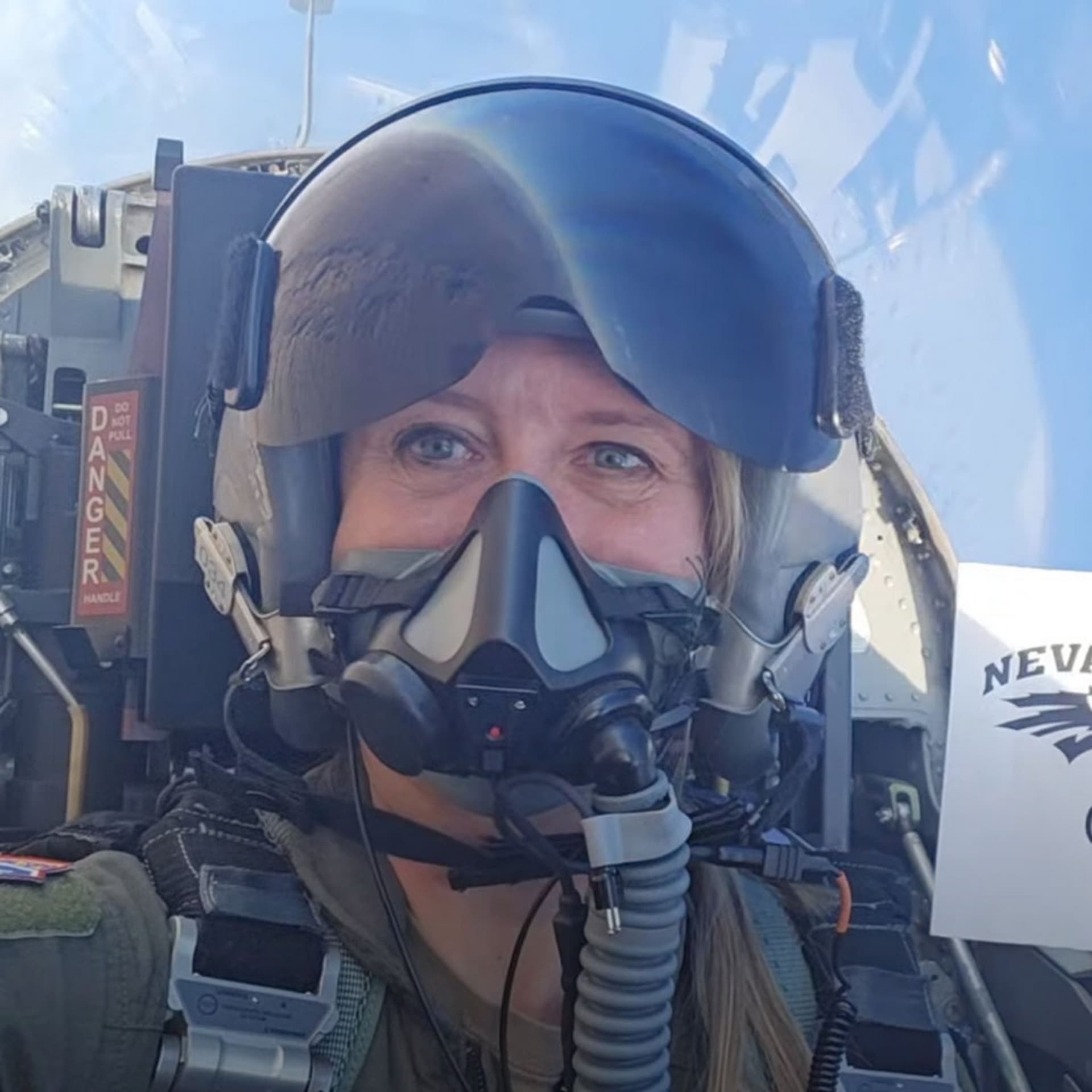
0:56We're starting this week with a story from the US. One of the first things President Donald Trump did on taking office was to sign an executive order ending what it called radical and wasteful government diversity, equity and inclusion initiatives. In the military, new instructions from the Department of Defence told forces to remove any articles on their own websites, which they say promote these so-called DEI efforts. Articles targeted include a report of an all-female flyover at a woman's soccer game and one about gender disparities among engineers in the military. Both of those examples include stories from Jessica Peterson, a flight test engineer, who went by the callsign Sting, who served at an Air Force base in California.
1:45I worked for the Air Force as a civil servant, so not active duty. I was a civilian for 18 years, and my career was doing flight tests. So testing new aircraft, new systems, new capabilities for the Air Force. I got to go through test pilot school as a civilian engineer. So I did that. And then after I did that in 2017, I became an instructor. So I instructed flight tests to pilots and engineers, both getting to fly. So I've gotten to fly in a ton of airplanes. It's been an amazing experience. And then I'm also teaching academics. I kind of get the impression you're downplaying things a little bit because, I mean, you know, you say, oh, I was just sitting in the back seat.
2:26I'm pretty sure sitting in the back seat of an experimental aircraft can be, you know, quite an endurance test given the kinds of things that military aircraft have to do. It's not like strapping yourself into economy class. No, yeah. So there's a lot of training that you do. You can pull up to nine times the force of gravity in an F-16. So I had to go through the centrifuge. So there's the physical aspect of it. And then obviously there's the technical aspect. So I say, yeah, I strap myself in the backseat. But really the reason that you're there is because you're testing new computer capabilities or new systems or new sensors.
3:00So you do need to have a lot of technical knowledge of what you're testing. For example, one of the systems that I spent a lot of my career working on was the automatic ground collision avoidance system. So this is a system that takes control of the aircraft if the pilot passes out. So to test that system, we had to purposely fly the airplane at the ground to make sure that the system would activate. And so I got to be in the backseat as we're testing that, diving towards the ground, monitoring safety parameters, so things like altitude and airspeed and dive angle, and making sure that we were safe.
3:31In fact, that saved someone's life, didn't it? That system. 13. Yeah, we've we've saved 13 pilots lives with that system now. It first went out on the F-16. It's now on the F-35. The F-22 has a variant as well. I got to meet one of the pilots whose life was saved. That was incredibly rewarding. And I still, you know, tell kind of tell that story, how important that system has been, how it's really been embraced by the community and the importance to get on more aircraft, because we don't have it on all of our aircraft yet. So why did you get involved in outreach programs? And these are, I think, forgive me if I'm jumping ahead of myself here, but these are outreach programs aimed at encouraging women, for example, to go into these kind of engineering type roles where traditionally they're underrepresented.
4:19Yeah. So, well, I mean, first I'll say that my outreach is really for everyone. I do resonate with women and with girls, because I'm a woman, right? I found that I would get a lot of energy in myself when I would share what I was doing. I would see other kids' excitement. And then as I did it more and more, I saw how important it was because a lot of kids, I mean, they hear about engineering, but they don't really know what that is. So for me to be able to give them a very tangible thing where they could understand why they're learning math and science and going through this, why it's important.
4:50And yet some of your achievements have been sort of, if you like, deleted from the internet. What's been deleted and why? Yeah, I mean, it really was quite shocking to me. Several weeks ago, there was a memorandum that came out from the Office of the Secretary of Defense for the United States. And that came out and said that they needed to do a tech refresh, a digital technical refresh. The main guidance was anything that was related to diversity, equity and inclusion efforts needed to be removed. And so So unfortunately, I had multiple articles and multiple things that were put out by Air Force Public Affairs that while the intent of the article was maybe to highlight things that we were doing, it also would mention that we were that I was a female, that we were one of the small percentages of the number of people in the career field.
5:43And so because of that, it made it susceptible to being removed. How do you feel about that? When I first heard that was going to happen, I didn't feel I was bummed, but I kind of was like, well, we already did this. It's already reached the kids. It's OK. You know, like, well, we'll do more stuff in the future. But then it was when I brought it up and mentioned it to my daughter. I have a teenage daughter and I saw her emotional response. So how she felt about these things being intentionally removed. That's when it really hit me. It was like, oh, my gosh, we are intentionally removing this content.
6:16about a gender. And it wasn't just about women. There's content about different races and different minorities that's been removed as well. That's when I realized how hurtful this was and how damaging it is really to the next generation to show that this content is being intentionally removed. I mean, what do you make of the argument by the US Secretary of Defense, he's made this in speeches, that DEI initiatives, these diversity and inclusion initiatives, They divide the military rather than unite it. I mean, do you have any sympathy with that view? I would say for the majority of my career, I've never felt like an outsider.
7:00You know, I've been very often the only woman in the room. But because of my qualifications, because of my knowledge, my expertise, I'm just one of the team members. Right. And so for me, I haven't felt like it's been this divisive thing. I am worried that some of the messaging that's coming out will make it divisive. I would say, though, you know, independent of any perspective on DEI or those types of things, it's not right to remove historical content. And so that's for me, there's no line. Right. Like we should not be deleting historical articles and historical contents, no matter what the content is in there.
7:40Right. Like that's just that's a line that should not be crossed. And so for me, I think that's pretty black and white, shouldn't be deleted. I mean, obviously, it's a whole career. But is there anything in particular you're sorry about it being taken down? You know, so I mean, I talk about the outreach piece and some of the videos that have been removed. One for me that also was very hurtful or damaging that was removed is we had an article where we talked about purposely getting flight equipment that would work for females. So things were anatomically correct for females. And that article has been removed.
8:14And part of the effort for getting that has been removed as well. And I think this is really damaging because it's another barrier that women have to overcome. And specifically, you know, this is something that people don't like to talk about, but it was trying to get equipment for bladder relief systems for women in aircraft. And historically, while they wouldn't talk about it, women would tactically dehydrate so that they wouldn't have to go to the bathroom in an aircraft. And there's all kinds of physical issues that go along with that. It reduces your performance capability, right? And there's other medical issues.
8:46And so I worry about that too. It's not just the messaging, but it's also getting rid of capability and building barriers for women to go into these career fields. Jessica Peterson there. And before you write in to point it out, yes, some of those articles will still be available on sites like the Wayback Machine. In fact, some groups are organizing to ensure that articles are publicly archived in this way. But these articles are only really available if you look for them specifically and won't be indexed by search engines such as Google. Well, we contacted the US government about the deletion of articles online, and they referred us to a February memo to defence leadership, which instructed the removal and internal archiving of, I quote, news articles, photos and videos promoting diversity, equity and inclusion, including in content related to critical race theory, gender ideology and identity-based programmes.
9:43And if you've got any thoughts on that story, do get in touch. We'd love to hear from you.
9:54Now, usually when BBC colleagues send us reports, they file the audio electronically over the internet. But we're very lucky today because our reporter, Mercy Frank has travelled from Nigeria to Scotland to bring us a slice of tech news in person. Hi Mercy. Hi. Now you've been to Computer Village in Lagos, somewhere that's pretty important to the tech lives of many Nigerians, but whose future is uncertain. It's called Computer Village for a reason. It's like a super busy giant garage sale for anything tech. It spans the area of two football pitches. Now from smartphones to personal computers to virtual reality gadgets, intelligent home appliances, even software applications, anything tech, you name it, they've got it.
10:44Right now, pay small amounts, collect your phone immediately and then pay the balance within three to six months. Isn't that amazing? It is packed with thousands of people and electronics. It's such a frenzy of activity. I mean, you hear vendors calling out. Their voices are most times drowned by the constant loud noise from generators powering the stalls because people have to provide their own electricity, as there's the problem of inconsistent power supply in Nigeria.
11:17It's kind of a mixture of contemporary buildings to attract young buyers. Then you have old buildings that were turned into stores. You can also find very tiny stores co-shared by micro-business owners. Then there are those who walk and sell out of we borrow kiosks. Sounds amazing. How did it start? It's hard to imagine, but it was only a stretch of farmlands known as Otiba. That was in the 1960s. Twenty years later, some heavy computing and software stores began to spring up. Things kind of took off in 2001 with the mobile revolution in Nigeria. Now it rakes an estimated one million US dollars a day, although it's hard to find reliable numbers partly because of many of the businesses there are not registered.
12:07And apparently there are some questions around the legitimacy of some of the tech on sale. Well, the disorganised nature of the place provides an opportunity for unsuspecting customers to fall prey to buying counterfeit products. However, the village elected officials in collaboration with the government are making efforts to sanitise the markets by arresting those who have been reported. You've been speaking to one of the business owners there. Yes, Ifeo Luauke runs a shop in Computer Village. But Ifeo had a degree in computer science. She saw the gap in the tech repair markets. And that was how business started 15 years ago, from just computer repairs.
12:48She has launched into sale of high-end tech gadgets and has evolved from hardware to Internet of Things and cybersecurity. I started to collect laptops for my friends in school. I'll bring it to the market because I had people who were already professionals in the business. So they will help me to fix. And from there, I started the business. And moving forward, I was able to expand and get my own stock. Is it still quite rare to see a female business owner in this space? Yes. Ife Oluwa said it's something that she get asked about a lot. For people outside, they are always amazed, like, oh my God, you are in Computer Village?
13:29They keep asking me, yes, I am in Computer Village, it's not a big deal. How do you cope? How do you cope? It's just men that are there, how do you cope? I say, well, I mind my business. I will say that it's good for us to have more women in this place. I promise, I wish I had, I don't have any female friends in this place. I wish I had women that we can sit down, you know, like a community. Now, as I understand it, the future of the market is still in some doubt. Yes, it is. For years now, the government has spoken about moving the whole market to a separate part of Lagos. So I wondered to hear Ife Oluwa's take.
14:04I think they want to make it nicer. They want to repackage the place. But we don't yet know when they want to implement that. We don't know if they are still going on with that. I feel like it's for the best interests. How does that impact the history this place has? And of course, business as well, because it's the same. Oh, it will affect a lot of businesses. Because a lot of people might not be able to afford the new place. It's not just even about the... It's a community that you need something, you can go to the next store, you find it. You know, it will affect a lot. Fascinating stuff there, Mercy.
14:41Thank you so much for bringing that to us. That's the BBC's Mercy Frank. Thanks, Chris.
14:51You're listening to Tech Life on the BBC World Service with me, Chris Valance. Now, as you know, this is a show about the tech in your life. So starting this week, we'd really like to know about the tech that's important to you, the tech you depend on to do your job and to live your life. Well, Mercy Frank is still here. mercy what tech could you not do without my headphones my noise cancellation headphones oh noise cancellation that's that's a definite asset in modern life isn't it yes that moment of calm and quiet sure it is i'm a music lover it makes me feel the music down deep inside on even when i'm walking because i do a lot of audio editing as well i need to just you know just be with me and my work.
15:38So it's my goodness, I can't do without it. Thank you so much. Well, we'd love to hear from you about the tech that's vital to your life and work, whether it's a Falcon rocket, or a fax machine. Email us on techlife at bbc.co.uk, or send us a WhatsApp, even better, a voice note to plus 44 330 1230 320. And I'll repeat the details at the end of the programme. Now there's been quite a lot of news about quantum computers, machines that work in a fundamentally different way to the computers we use every day. Machines that maybe, one day, will help us solve some vital problems. But what is a quantum computer?
16:25Dr Chris Balance, founder of Oxford Ionics, should know. His firm has just delivered a quantum computer to Britain's National Quantum Computing Centre. So at the early 19th century, people thought they had physics understood. It was how balls roll down hills, how all of the world works around them. But as people started looking at smaller and smaller objects, in particular atoms, they found out that physics was very different. And this was the birth of quantum physics. And it turns out, when you look onto really tiny systems, the world doesn't behave like the big picture we see. And if you find a way to use these tiny quantum effects in a You can make computers that are far more powerful than anything else out there, that can solve problems in minutes, that would take classical computers millions of years.
17:10But what do these machines actually look like? Well, like early flying machines, today's largely experimental machines come in all sorts of different designs. Some work at room temperature, others have to be kept colder than deep space. On a visit to London recently, I dropped by the offices of Quantum Motion, a UK company that's also set to deliver a machine to the National Quantum Computing Centre. Hello, my name is Anna Stocklauser and I'm VP Product at Quantum Motion. I'm James Palastimek, CEO of Quantum Motion. Now, we've got something here that looks like a sort of chandelier made out of metal tubes, gold and sort of steel coloured metal tubes.
17:53you see these a lot when people are talking about quantum computers what have we got here this is a very advanced version of a refrigerator it's called dilution refrigerator and it can it can cool down to temperatures that are close to absolute zero so colder than outer space and those are the temperatures we need to operate our quantum computers that's minus 273 degrees So quite cold. Yes. What's the noise we can hear, by the way, as we're talking? So that's the compression of helium gas. So in your refrigerator at home, you will have a fluid that goes around and takes the heat from the inside to the outside.
18:41We need exactly the same thing. Only in this fridge, what we need is something that doesn't solidify at temperatures close to absolute zero. And there is fortunately only one thing that does that, and that's helium. So you are pumping around liquid helium. So when you open the fridge door, particularly if it's an old fridge, and you hear that sort of whirring, whining sound, this is the high-tech version of that, essentially. Precisely. So looking again at this wonderful sort of chandelier-shaped structure, the actual computational bit of it, the chip, that's quite small. Where does that sort of sit in it?
19:16So our chip sits right at the very bottom. so it has to be at the coldest possible temperatures of this fridge. Your company is one of many pursuing the goal of making a quantum computer. What will a quantum computer be able to do? It will allow us to understand nature at the deepest level and that's right, nature at its deepest level is quantum mechanical and so if we want to understand that we need to be able to have a computer that allows us to delve inside, look at that at its deepest level. And that's a quantum computer. Will these replace existing computers, the kind of computers you've got in your phone?
19:55That's not the way we think about it at the moment. I think quantum computers will integrate with classical supercomputing solutions to solve problems that are not even tractable today. For example, in chemistry. So chemical reactions can be simulated with quantum computers that we could not begin to simulate with classical computers. So new chemical processes that are more efficient? I mean, I know, you know, we get a lot of people who work in agriculture listening to our program. So making fertilizers is very energy intensive. Could we speed that up, make that more efficient? Yes. So the expectation is that we could use quantum computers to find chemical processes that allow us to generate fertilizers at much lower energy costs than it's currently done.
20:46At the moment, what you can do with quantum computers is quite limited. I think they're experimental devices, we could call them. How long will it be until we start getting things that can solve the kind of problems that you're talking about? It's an excellent question, and I think a lot of experts have different opinions, but I think around five to ten years, we will see very impactful results.
21:14Well, as you can hear, a bit of a change of sound. I've left the studio and I'm just popping across the road from the BBC to the Glasgow Science Centre. It's here that the RNIB, a charity for blind and partially sighted people, is hosting a conference, and among the keynote speakers is Professor Wanda Diaz of the Universidad del Sagrado Corazón in Puerto Rico. Professor Diaz is an astronomer who, after losing her sight, now studies space by turning scientific data into sound, a technique called data sonification. She believes that there are new discoveries to be made by turning our ears to the heavens and listening, as well as looking at the stars.
22:05So what we are listening is to all the components of the electromagnetic field within the planets and how it is modulated by the cosmic rays. And that's based on data from astronomical observation? That is real data acquired by different satellites. The constellation of satellites is real data and I use it to do data analysis. And what it allows me to determine is turbulences happening in the interstellar media. Turbulences.
22:39I lost my sight around 2003 at that moment when I was withdrawing from physics, mathematics and science. I thought this is a way that I should test. And if I test it to be effective, this may be a way for me to perform my beloved science. And I fell in love with astronomy because that was what opened hope, that brought hope into my heart. And at the University of Glasgow, together with the Harvard Smithsonian, we evidenced that using audio, it increases the traditional astronomer or the professional astronomer sensitivity to events in the information that by nature are blind to the human eye. Indeed, we're talking at the Science Centre in Glasgow.
23:30So at a major conference that's really showcasing how tech can assist people with sight loss or partially sighted people. Not only assist us, it's that our skills are needed in order to be able to spot things and to identify things in the information that by nature will be blind to the human eye. What kind of things does the data, the sonification help? For example, harmonic to sub-harmonic ratios that may be indicating you that different processes are taking place in the start.
24:15What is really exciting is that I'm exploring for the unknown. So the fact that I may hear a change in those numbers, it's very, very, very exciting. I mean, do you see applications outside science for this turning data into sound? They're doing it. Specifically, for example, for people to understand better medical measurements, if they are monitoring their blood pressure or their temperature over a range of time. also in the arts for conveying information for example on a painting. The stars, the sky, the planets, they've all been the inspiration for art. Yes. Do you see your sounds as perhaps an inspiration for art, the sonification of data, a new way of being inspired?
25:07I do, I sure hope so. For new artistic renderings to emerge or for the artistic renderings to become multi-sensorial. I wish I could be in front of the Mona Lisa and just feel sensorially how her smile flirts with people, right? I depend on description. I would like to feel, as people can see the tone of her skin, I would like to feel that inside my body, right? And the beauty of this is that audio gets into your body literally. So you are engulfing, you are swallowing all of that and feeling it into you. That's Professor Wanda Diaz telling us about data sonification. Well, that's it for this week's Tech Life.
25:59We hope you found some useful data in our sounds. Remember, you can always get in touch with us, techlife at bbc.co.uk or WhatsApp us on plus 44 330 1230 320. Today's programme was presented by me, Chris Valance, and produced by Imran Rahman-Jones. Our editor is Monica Sorian.
From the publisher
A former US Air Force engineer found articles about her were removed from the internet, on US government instructions. She tells us why she wants to archive them for the future. Then, we go inside Africa’s biggest tech market. Plus, the blind astronomer who listens to space. And quantum computers may be on the verge of a breakthrough. We explain why this matters.
Tell us about the one bit of tech you use in your life everyday – get in touch by emailing techlife@bbc.co.uk or send us a Whatsapp on +44 330 1230 320.
Presenter: Chris Vallance Producer: Imran Rahman-Jones Editor: Monica Soriano
(Image: Ex-US Air Force flight test engineer Jessica Peterson in the back seat of a T-38, taking a selfie video as the plane does an upside down roll. Credit: Getty Images)