
In short
Tech Life Podcast Episode Summary: Beyond the Tip of the Iceberg
Episode Overview In this episode of *Tech Life*, host Imran Rahman-Jones explores the intersection of technology and environmental science by examining icebergs, artificial intelligence (AI) hallucinations, accessibility for visually impaired individuals, and even the biological study of rhinos through their waste.
Key Topics Covered
- Icebergs and Climate Change
- Increased iceberg presence due to climate change.
- Importance of studying icebergs for understanding their impact on marine ecosystems.
- Introduction of robotic gliders for iceberg research.
- Interview with Dr. Natasha Lucas, physical oceanographer, discussing the capabilities of these gliders.
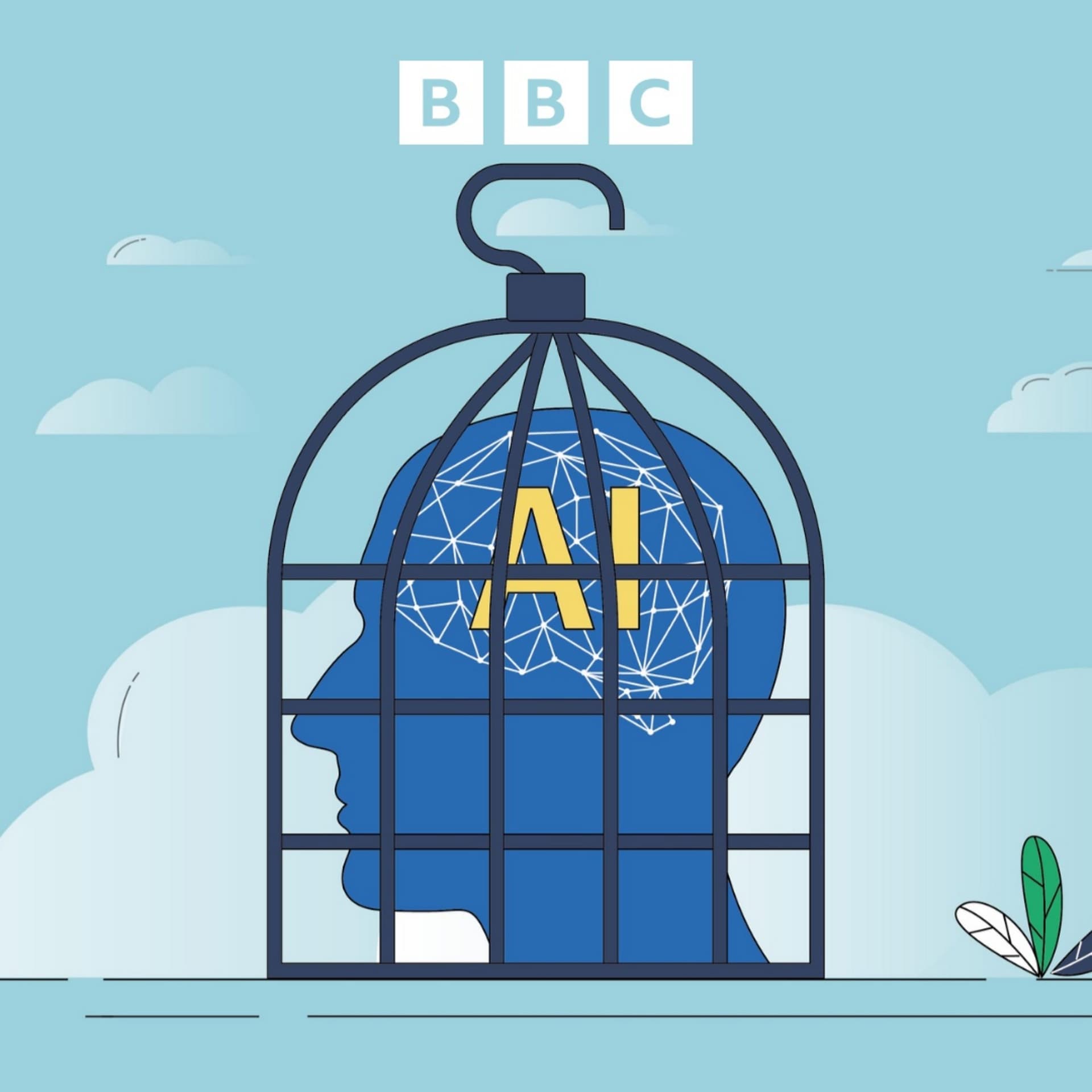
- Artificial Intelligence and Hallucinations
- Explanation of AI hallucinations where models produce false information.
- Case study of a man in Norway who experienced false accusations due to AI output.
- Insights into the mechanisms causing hallucinations in AI and potential solutions.
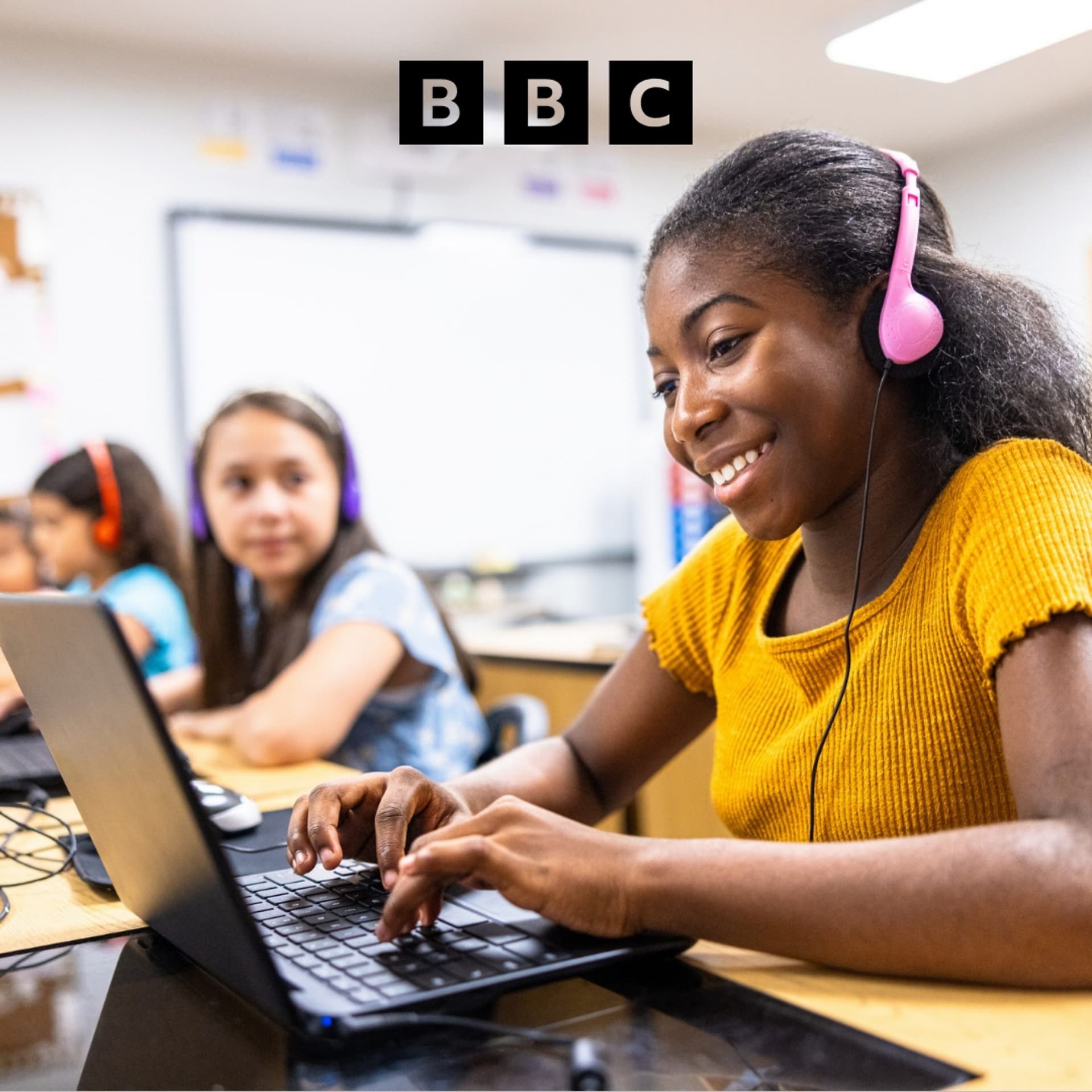
- Tech for Accessibility in Media
- Exploration of how technology can assist blind and partially sighted individuals in enjoying television.
- Discussion with Sonali Rai from the RNIB about the current state of audio description services and the need for consistency across platforms.
- Conservation Science and Rhino Research
- Overview of the use of hormone analysis from rhino poo to inform breeding programs.
- Alistair Keane's visit to Chester Zoo, highlighting the efforts to save the eastern black rhino.
Detailed Discussion Points
- Icebergs and Robotic Gliders
- Background: Global warming has resulted in more icebergs breaking off from glaciers.
- Research Importance:
- Icebergs carry fresh water and nutrients, affecting ocean life.
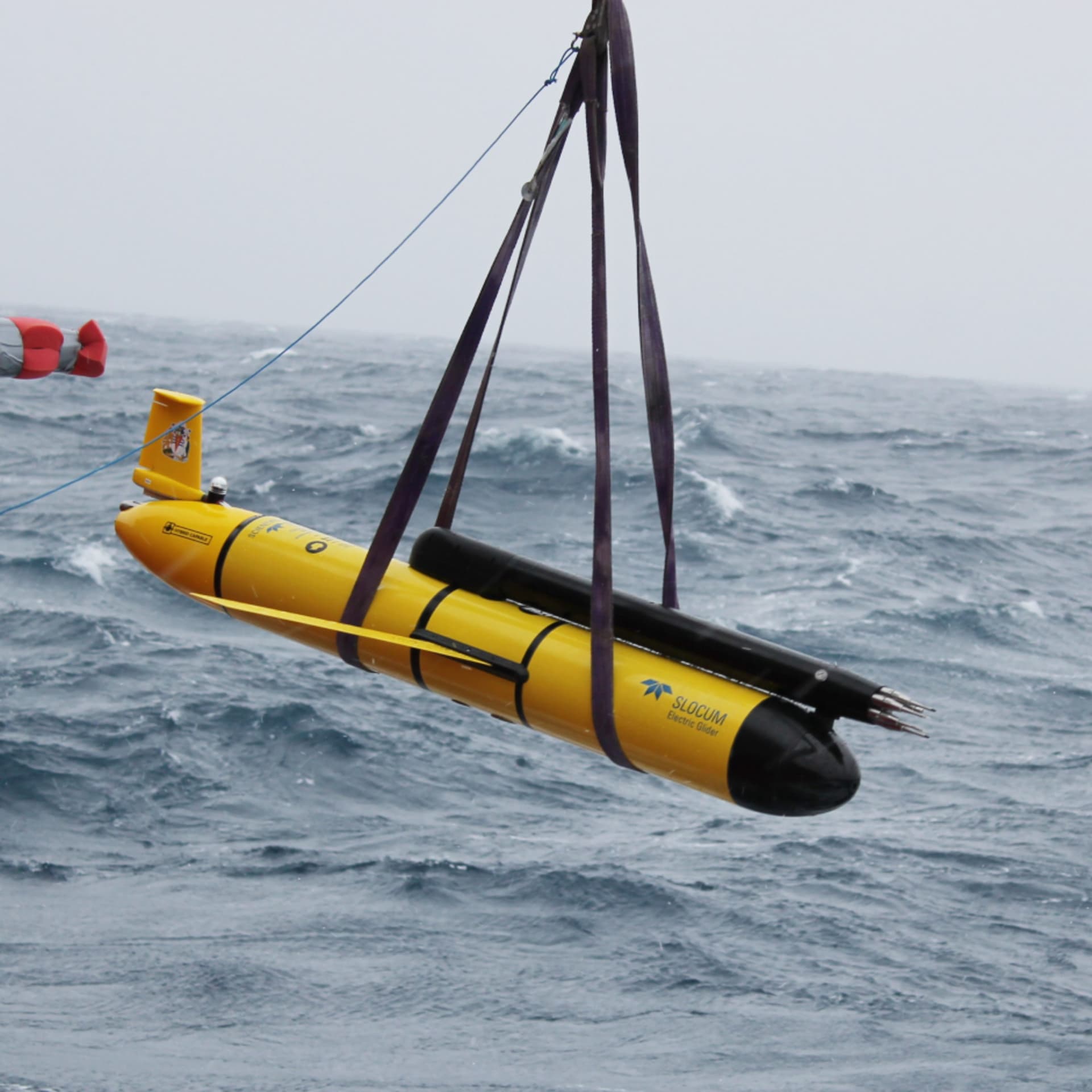
- Robotic Gliders:
- Autonomous, torpedo-shaped devices equipped with sensors.
- Collect data on temperature, salinity, and more while navigating near icebergs.
- Allow for safer and more extensive data collection compared to traditional methods.
- AI Hallucinations
- Case Study:
- A Norwegian man named Arve Hjalmar Holm was falsely linked to a crime due to ChatGPT’s inaccuracies.
- Key Insights:
- Hallucinations represent a major challenge for AI reliability.
- Discussion with AI expert Simone Stumpf on the need for transparency in AI operations.
- Potential solutions include "red teaming" to identify and rectify AI weaknesses and incorporating real-time web searches to enhance accuracy.
- Accessibility in Media
- Current Challenges:
- Fragmentation in audio description availability across different platforms.
- Need for a unified approach to accessibility in media.
- RNIB's Role:
- Researching how to improve user experience with synthetic audio descriptions.
- Emphasis on maintaining quality when transitioning to synthetic voices for narrative delivery.
- Conservation Efforts with Rhino Research
- Importance of Poo Analysis:
- Hormone levels in rhino feces can indicate breeding readiness, aiding in conservation efforts.
- Field Reporting:
- Alistair Keane learns about practical conservation efforts and the scientific methods employed at Chester Zoo to protect endangered species.
Conclusion This episode of *Tech Life* presents a multi-faceted examination of how technology is being leveraged in various fields — from environmental science to AI and accessibility. The integration of tech in research and conservation highlights the potential for innovation to address pressing global issues.
Call to Action Listeners are encouraged to share their experiences with AI hallucinations and discuss the essential technology they rely on daily by contacting the show via email or WhatsApp.
---
Podcast Production Team
- Presenter: Imran Rahman-Jones
- Producer: Tom Quinn
- Editor: Monica Soriano
Contact Information
- Email: techlife@bbc.co.uk
- WhatsApp: +44 330 1230 320
Written by AI. May contain mistakes. Listen to the episode to check what was said.
Transcript
Automatic transcript. May contain errors.0:00Welcome to Tech Life on the BBC World Service, the programme about technology and how it affects the world all around us. I'm Imran Rahman-Jones and this week we're looking at icebergs. Climate change means there are more of them in our oceans, breaking away and slowly melting. Scientists need to study them, but how? We speak to an expert about a piece of kit opening up new research opportunities. Can we trust artificial intelligence? One of its problems is that it hallucinates. I'll be explaining what that's all about. We find out about the tech that's helping blind and partially sighted people follow what's going on on TV shows.
0:42And our reporter Alistair Keane gets his hands dirty examining rhino poo.
1:06Last month, the world's largest iceberg ran aground in shallow waters off the remote island of South Georgia in the South Atlantic. And it's huge, about twice the size of London and weighing almost a trillion tonnes. Scientists say it's packed full of nutrients, which could create an explosion of life as it melts. But at the same time, smaller chunks might break off, becoming hazards to passing ships. As global warming affects the polar caps, how do you study a gigantic mass of ice floating in cold waters? Well, experts have just published details of a research mission that used underwater robotic gliders.
1:45They're torpedo-shaped devices with small wings and fitted with sensors, and they've got right up and close to a melting iceberg for the first time. Dr Natasha Lucas is the lead author of the study. She's a physical oceanographer at Bangor University in Wales and honorary researcher at the British Antarctic Survey. She told me why studying icebergs is so important. We're interested in icebergs because icebergs break off from glaciers. They flow around the oceans and they dump fresh water and nutrients far away from the source where they originally broke off. One of the ways you monitor them is through robotic gliders.
2:27How are they helpful? Because I think before that we were using satellite images or you had to get on a boat and get as close as you could to the iceberg. The satellite imagery to be able to look at icebergs, there's been some recent work done at looking at the freshwater and the volume of freshwater using satellites. Previous to that, yes, it was ship surveys. Now you can go near to icebergs and take measurements called CTDs, which is conductivity, temperature and depth. But that's a single drop in the ocean and it's very labor intensive. So it takes a manned team to go onto a ship and drop these instruments.
3:07There's a sense of danger as well being close to icebergs with ships. So the gliders, they really do fill a niche. They allow data because they're not manned, they're autonomous, they're completely remote. They allow data to be collected, particularly in the winter season where ships aren't able to go to Antarctica or it's not as easy to go to Antarctica in the winter because of the weather and the ice cover so these gliders are filling that gap allowing us to get right up next to the icebergs I can't rate enough how great these new bits of kit are we've gone from in 2012 we were doing measurements and it was exciting to have a measurement for for about 10 days when I first started.
3:48And now we've just pulled in a glider last year that was out for nine months. So the way that this technology is rocketing in its advancements is also very exciting. So they're really coming on in the last few years. What do they look like now? Good question. So they're actually expanding in length all the time. In order to be able to deploy the glider for nine months, we actually extended the glider. So normally they're about two meters in length they move up and down in the water column by changing the density so they they have an oil bladder inside them that they fill or contract the oil back in and what that does is that pushes water in and out and changes the density of that or the buoyancy of that instrument of the glider and then that sinks and rises in the water column and the wings when it sinks it the wings give it lift and that propels it forward so that's what moves it in the water column.
4:43These gliders can go from the surface all the way down to a kilometre in depth and back up to the surface again. They used to be about a metre to two long, but they're being extended and these extra battery packs are being put in and extra instrumentation in order to be able to A, study for longer and B, to give us a bigger instrument suite. So they're sort of like rocket shape or they're kind of torpedo shaped, right? And then I guess, do they have sensors along them that can collect different types of data? Yeah, they're about two metre long torpedoes with wings. The sensors that they have on them, they measure temperature and salinity and depth by standard.
5:23And then there's extra sensors you can have on. So we have fluorescent sensors which shine light into the water. And then from that, we can detect organic components like chlorophyll, which is found in phytoplankton, dissolved organic matter and photosynthetically activated radiation, which is a really nice long word. But what that basically means is the radiation at a wavelength that's able to promote photosynthesis. So you're able to basically take them out on a boat, drop them in, and then they go off and start collecting. How do you then get the data from the glider back to your computer? Yeah, that's a really good question.
6:06So the gliders come equipped with all sorts of sensor arrays on them to be able to talk to us while they're in the water. So when they come to the surface, they use GPS to locate where they are. And they use iridium, or the equivalent of a satellite phone, to be able to talk to us. So a sparse data is sent back via satellite phone to be able to tell us roughly what they're measuring once every 10 meters. And then when we go and pick them up, we're able to download the data off the memory cards. And that tells us the data roughly every meter. So from the surface to a kilometer in depth, we can get temperature, salinity, turbulence, organic matter information, all the way down to a kilometer.
6:51And you talked about picking it up, you posted a video of online of you picking up the one that had been out for nine months. So let's just hear a little bit of that. No! Okay.
7:07No, no, no, no, no, no, no! Woo! But tell us what was going on in that clip. You were on the boat, right? Yes, that was a very exciting project. That project was called So Chic, and it was one of the first projects to be able to look at turbulence and properties of the water all the way through the winter season down in Antarctica. We used two gliders to measure the properties of the water for a full year cycle. Unfortunately, we lost one of the gliders due to technical issues, but the other glider was out for nine months. It was a real pioneering mission. The glider came into trouble in the last two months, and it was a real struggle to keep it going.
7:51the team working very hard day and night to be able to keep this glider alive and not to sink so we were extremely excited that we were able to get to the glider at the surface we were worried that the battery power that was available on the glider was going to wear out so so we really worked hard to collect this glider in high seas the crew members on the agulis 2 were phenomenal and they managed to work hard to fish it out the water so my excitement was just this this sheer outflow at having this amazingly cutting edge data come back when we thought we might lose it. Well, it's a fascinating job Dr Natasha Lucas has there.
8:30Our thanks to her for talking to TechLife.
8:41Now, be honest, have you ever searched your own name online? I'll admit I've done it, but I didn't get anything like this back. A man in Norway has put a legal complaint in about chat GPT after it falsely told him that he had killed two of his sons and been jailed for 21 years. He wants its makers, OpenAI, to be fined. This is the latest example of so-called hallucinations where artificial intelligence invents info and gives it out as fact. Hallucinations, one of the biggest problems for AI models today. How do you know which answers to trust? My full name is Arve Hjalmar Holm. There is nobody in the whole world who ever have had exactly the same name as I have.
9:32Arve is originally from Trondheim in Norway and was playing around with ChatGPT last year and asked it about himself. This is some of its answer. Avhiyal Mahalman was accused and later convicted of murdering his two sons, as well as for the attempted murder of his third son. Ava does have three sons, but the rest of the answer is not true. In fact, Trondheim police told us in their municipality, two murder cases were registered in 2020, the year that ChatGPT said it happened. Neither case, they said, bears resemblance to the hallucinated one. I was shocked. I'm sure that people who know me well will know that such hallucinations about me are false and downright crazy.
10:18But other people like neighbours or potential future employers, colleagues, landlords and so on, they might think like, well, this sounds very extreme, but ChatGPT must have gotten this from somewhere. There's no smoke without fire. Ava went to a European digital rights group called NOYB, and they've now filed a legal complaint against ChatGPT makers OpenAI with the Norwegian Data Protection Authority. I don't pretend to understand the technological side of this. And I don't know if most users of these LLMs, if this is explained to them that they really, I don't know, will understand it or if it will make much of a difference.
11:04Well then, let's find someone who does understand them. This is actually an area of active research, right? How do we construct these chains of reasoning? How do we explain what is actually going on in a large language model? Simone Stumpf is Professor of Responsible and Interactive Artificial Intelligence at the University of Glasgow. Even if you are more involved in the development of these systems, quite often you do not know how they actually work, why they're coming up with this particular information that they came up with. So not great if we want to work out where hallucinations come from.
11:47But what if we just ask the AI model to tell us what it's doing? That could help, but... The only thing that we have to make sure is that this explanation is actually true, right? Because it's quite easy to provide an explanation, but it's not actually what is going on, even though it's understandable. But there is another trick up the developer's sleeve, and that's in the training of the AI. If you can teach it what not to say, you might be able to stop some hallucinations. Part of this process is what's called red teaming. Companies employ people to try and break their model in as many ways as possible in the hope they catch problems before the product is released.
12:32So I was looking into does the model produce, I don't know, propaganda for terrorist organisations, recruitment posts. Computer scientist Dr Paul Rotke did this for OpenAI for their GPT-4 model. We found this vulnerability that you could also get it to produce recruitment posts for Al-Qaeda, for example. Once you know this, you can kind of calibrate for this behaviour and train the model to be a bit more discerning. That clearly works, but it's a bit whack-a-moley. You're kind of finding something, fixing it, but that doesn't mean that there isn't other things that you haven't found. And back to the case in hand, Ava Hormann in Norway.
13:13It's impossible to look through the vast data which trained ChatGPT and find which bits it used to produce the fake result. But newer models have a tool they think will help increase accuracy. So the more plausible solution to this is to basically allow the model to search the web and incorporate this real-time knowledge into its answers. And that's what ChatGPT say they've done. This is what an OpenAI spokesperson told us. We continue to research new ways to improve the accuracy of our models and reduce hallucinations. While we're still reviewing this complaint, it relates to a version of ChatGPT, which has since been enhanced with online search capabilities that improves accuracy.
13:59AI companies will hope including real-time search results go a long way to reducing inaccuracies, But they're still not perfect, as I found out when I searched Arva Holman's name again on ChatGPT. It nearly got all the information right, but still managed to get details wrong about his legal case. The legal case he has out against ChatGPT.
14:33you're listening to tech life on the bbc world service with me imran raman jones well have you ever come across an ai hallucination tell us about it was it total gibberish or did it seem plausible at first sight you can send us a voice note or a text message on whatsapp Our number is plus 44 330 1230 320 or send us an email to techlife at bbc.co.uk Brian McCorkle from Scotland sent this in after we asked about the tech you simply can't do without. Brian writes, my most useful gadgets are my headphones. At age 79, my hearing isn't as good as it used to be. And he says he uses them to listen to television as well as podcasts like Tech Life.
15:21Thank you, Brian. And we've had this voice memo sent in from another Tech Life listener who's a student in Cameroon. Hello, BBC Tech Life. I am Nakobe Motse from Yaoundé in Cameroon. The one bit of tech I use in my life every day is ChatGPT. It helps me brainstorm research ideas, draft proposals and refine my communication. It's become an important tool allowing me to process information fast and explore new perspectives on health and climate issues. Thank you Nukombe and good luck with your studies. It's great when we can hear directly from you, our listeners, so we'll repeat our contact details at the end of the show.
16:05And still to come, how technology and poo is helping protect rhinos.
16:16How can tech help people who are blind or partially sighted with watching TV? It's something the UK charity, the RNIB, or Royal National Institute for Blind People, has been looking into. One of their projects is research on how to better describe what's happening on the screen. Here's an example from the BBC show Strictly Come Dancing, with a synthetic voice giving the audio description. The Strictly dancers swirl away from the giant glitter ball. Please welcome Tess Daly and Claudia Winkleman. Blonde Tess in a blue velvet trouser suit, brunette Claudia in a pink satin one. Well, I've been speaking to the RNIB's Sonali Rai, who works on media and tech accessibility.
17:03She told me how she thinks the TV industry is doing at the moment. I think it's a split. There are some very traditional services where they're doing really well. So let's say, for example, linear television. There's a lot of content available to people who use audio description regularly. But on emerging services, so video on demand at the moment is extremely fragmented. So you get audio description on some of the platforms, on some of the apps, but the others are missing. And what the broadcasters need to do is almost do an audit of how many services they have and how much audio description and accessibility is built into those platforms and services.
17:42Because at the end of the day, I don't want to think about if I switch from my tablet to my television or to my phone, what's going to work and what's not going to work. It has to be consistent, and that's what we need. So the quality or the level of accessibility is different, even if I'm watching the same thing on different devices? It's very different at the moment. It's not a reliable service because it's so fragmented. So, for example, a certain broadcaster will have audio description on the Apple TV because it works with iOS. but when you switch to your Samsung TV in the living room, there's no audio description.
18:15And the talking menus are not there. It's not just about content, it's also about being able to navigate, being able to find the content that has audio description. Is there anything you can say about how the platforms are doing worldwide? I think most platforms at the moment are not set up to deliver audio description because they don't have that additional audio track that you need to deliver audio description. However, that said, there are global services like Netflix doing exceedingly well because it's built into their DNA. So there is not a single app that does not deliver description. And there is a very consistent way of switching it on, switching it off, trying to look for titles.
18:57So that's a consistent experience. And that almost shows, you know, at which point they started thinking about accessibility. And that's what broadcasters across the world need to start factoring in when they're designing a new service, think about accessibility then. Because if you start thinking about it at the end, retrofitting doesn't work, it's expensive, and it just doesn't give you that experience. And you've been looking a bit into synthetic audio description. So this is using AI to describe what it sees on the screen? So these are two different topics. So synthetic audio description is when you're using synthetic voices.
19:35And we know there are platforms, there are services that are already, just using only synthetic voices and we are getting a lot of complaints and the reason we're looking into it because we need to understand what type of voices work because we know broadcasters, service providers will be moving to it they want to save costs but the cost should not be saved at the expense of my viewer experience that is not right so what we're trying to do here is set some minimum quality standards for synthetic voices try and see does sound mixing audio mixing has a has a part to play does that need to be improved to improve my experience if i'm using synthetic voices our research shows that synthetic voices are more acceptable in sort of factual reality sort of environment you know if i'm watching a documentary it might be acceptable but if you're talking about fiction uh no absolutely stranger things you can't have synthetic voices on stranger things is this because people don't like that they're kind of quite robotic and they don't get the emotion?
20:37I think feedback has been very consistent. So any content that requires emotional delivery, emotional engagement, that intonation, synthetic voices don't work at the moment. But I think just remember, you know, we are at the worst we'll ever be. We can only improve from here. In terms of the synthetic voices, is someone writing the script and then it's being read out? Thankfully for now, yes, it's humans writing the scripts and they write fantastic scripts. But we are looking into AI-generated scripts as well. And the reason we are looking into it because there are lots of use cases where human effort alone is just not sufficient.
21:17So I'll give you an example. I think the perfect example is social media. There is so much video content which is completely inaccessible at the moment. How do you make it accessible? I don't think there is any company, any provider that can actually take on the responsibility for ensuring that everything online is accessible. So if there was a tool, an authoring tool, that could be built into different websites that you can just use to create that description, but at the end of the day, I think at the moment, AI just complements human effort. So it gives you that basic script, and then the author or the content creator needs to look at it, edit it, and give it that shape in which it can go out.
22:00That's Sonali Rai from the RNIB speaking to Tech Life at a recent conference event.
22:10Eastern black rhinos are a critically endangered species, but global breeding programmes are now starting to make a difference with a bit of help from science and tech. One of the secrets to the success is what scientists are able to learn from hormones in the rhino's poo. A familiar voice on Tech Life, Alistair Keane, visited Chester Zoo in the UK to find out more. Emma! Car lady! Come on! I'm up early to join Callum Garner, one of the black rhino keepers at Chester Zoo. This is Emma in front. She's got lovely long hairy ears, so we can tell there's her. And then this is Cthulhu. So Cthulhu's in like her young teenage years at the minute.
22:55Do you have a favourite? No, we don't have favourites. We're not allowed. Being a zookeeper might sound like a fun job, but we've got a slightly more grim task to do today. You've got a sample bag. You ready to collect some poo? Let's go and do it. Yeah. So you want to break the ball apart, and then you just want to pinch bits out of the middle. The poo is actually really important to us here. Collecting then four samples every week. From that our scientists can tell us when it's best to mix our rhinos because they're part of the European breeding programme and it can be dangerous mixing them but if we know she's in Easterus it's more likely that it could go well and hopefully it will go well.
23:40The efforts here are part of a global conservation programme. The zoo is home to Europe's newest and largest endocrinology lab analysing samples sent from all over Europe. Hello. I've got a sample for you. Thank you. John O 'Hanlon is one of the scientists. The challenging bit is, particularly for rhino, so because of what they eat, they're browsers. So they eat trees, they eat grass. There's a lot of bark in the samples themselves. And so what we want, you want the pooey bits. I can smell the sample now. Hitting me. You get very used to it after a while, to be honest, and rhino is not the worst by far.
24:19The ultimate goal is to see populations of critically endangered species grow in the wild. Dr Sue Walker is the head of science at Chester Zoo. So what we're trying to do here with the science is try and put evidence towards how we can kind of better use the resources that we have. We are at crisis points. There are lots of species that are going extinct. Is that a lost cause, actually, if things have gone too far? It can be really challenging. It can be quite negative to think about sometimes, but I think, I firmly believe we can actually make a difference. I've seen it happen in my lifetime.
24:55So when I was younger and started off as a scientist, I ran hormones in the lab for black rhinos and I never conceived of the fact that the next generation, their prodigy, would be returning, but they have. So we actually have put black rhinos back into the wild and the science behind it absolutely has made a difference. So I have a lot of hope for the future. While science still struggles to keep up with the rate of extinction, advancements in tech are bringing new hope of saving these animals in the wild. Alistair Keane there taking one for the team. And you can watch Alistair meet the rhinos Emma and Kasulu on Tech Now, our sister programme on BBC TV channels.
25:41Icebergs, hallucinations, rhino poo, all in a week's work here at Tech Life. Who knows what we'll be bringing you next week? Remember, you can send us a message about AI hallucinations you've seen and we're still enjoying hearing from you about the tech you simply can't do without. Our email address is techlife at bbc.co.uk or you can WhatsApp us on plus 44 330 1230 320. Tell us your name and where you live. Today's Tech Life was produced by Tom Quinn, edited by Monica Soriano and presented by me, Imran Rahman-Jones.
From the publisher
Tech Life looks at icebergs. Climate change means there are more of them in our oceans, breaking away and slowly melting. Scientists need to study them - but how ? We speak to an expert about robotic gliders, which are opening up new research opportunities.
Also in this edition, can we trust artificial intelligence ? One of its problems is that it hallucinates, so we find out more about it.
How can tech help people who are blind or partially sighted watch TV ?
And our reporter gets his hands dirty examining rhino poo!
You can tell us about the one item of tech that you use in your life everyday – please get in touch by emailing techlife@bbc.co.uk or send us a Whatsapp message or voice memo on +44 330 1230 320.
Presenter: Imran Rahman-Jones Producer: Tom Quinn Editor: Monica Soriano
(Image: A photograph of a robotic glider suspended above the water. Credit: Doctor Natasha Lucas)