
In short
Tech Life Podcast Episode Notes
Episode Title
Can Sewage Make Tech Cleaner?
Episode Overview
- Host: Chris Vallance
- Producer: Tom Quinn
- Editor: Monica Soriano
- Focus: The episode explores innovative methods for carbon capture using sewage and organic waste, the implications of generative AI in music, and a listener's personal tech-related story.
Key Topics Discussed
- Sewage as a Carbon Capture Solution
- Context: Microsoft is financially supporting a project focused on storing sewage underground to mitigate greenhouse gas emissions.
- Guest: Julia Reichelstein, Co-founder and CEO of Vaulted Deep.
- Mechanism:
- Organic waste (sewage, manure, food waste, paper sludge) is injected deep underground, preventing carbon emissions and methane production.
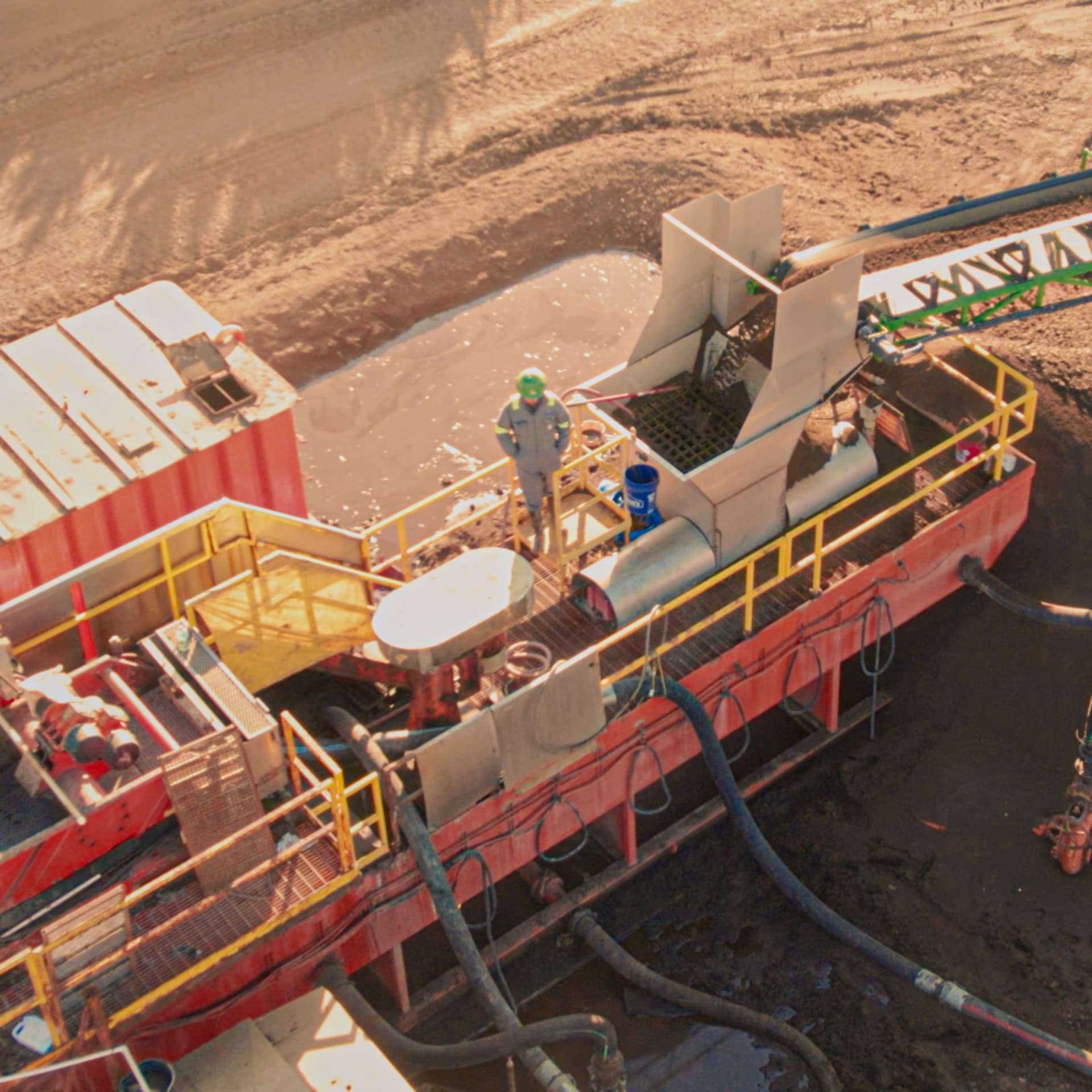
- The technique utilizes slurry injection technology, initially developed in the oil and gas sector, to safely store waste deep underground.
- These geological formations are stable and have successfully contained hydrocarbons for millions of years.
- Importance:
- The project aims to remove up to 5 million metric tons of CO2 over 12 years, contributing to Microsoft’s net-zero carbon goals.
- Concerns about leakage or danger to groundwater are mitigated by the proven geological stability.
- Impact of Generative AI on the Music Industry
- Guest Contributor: Graham Fraser, musician and reporter.
- Discussion Points:
- Generative AI's ability to create music from text prompts is reshaping how music is produced and consumed.
- Industry veterans like Bjorn Ulvaeus (ABBA) and Imogen Heap express both excitement and caution regarding AI's role in music creation.
- Key Quotes:
- Ulvaeus: "I'm writing a musical assisted by AI."
- Heap: The music industry is struggling to keep up with the rapid advancements and implications of AI on intellectual property (IP) and the essence of creative work.
- Concerns:
- The vast quantity of AI-generated music raises questions about authenticity and compensation for artists.
- Cecile Rabeber (CEO of Sassem) highlights the risk of AI replacing human creativity and the importance of protecting artists’ rights.
- Listener's Tech Adventure
- Featured Listener: Patrick Wiggins from Utah, USA.
- Story Highlights:
- Wiggins, an experienced skydiver, discusses the Automatic Activation Device (AAD) used in parachuting, which opens a parachute automatically if the jumper forgets to do so.
- Shares an amusing anecdote about a mishap during a jump where he forgot to turn off the AAD, leading to both parachutes deploying simultaneously.
- Also recounts a tech adventure involving losing his iPhone during a skydive and successfully tracking it down with a friend’s help.
Key Takeaways
- Innovations in Waste Management: Storing sewage and organic waste underground represents a novel approach to combating climate change and reducing carbon emissions.
- AI's Dual Role in Music: While generative AI offers exciting new avenues for music creation, it also poses significant challenges regarding artist compensation and the preservation of musical integrity.
- Real-Life Tech Experiences: Personal stories from listeners add a human element to discussions about technology, showcasing both its potential and pitfalls.
Contact Information
- Feedback and Stories: Listeners are encouraged to share their tech experiences via:
- Email: techlife@bbc.co.uk
- WhatsApp/Voice Memo: +44 330 1230 320
Conclusion This episode of Tech Life demonstrates how technology is being utilized in creative and unexpected ways to address environmental challenges and transform industries, while also reminding us of the personal stories that often accompany our interactions with tech.
Written by AI. May contain mistakes. Listen to the episode to check what was said.
Transcript
Automatic transcript. May contain errors.0:00Welcome to Tech Life on the BBC World Service, the programme about technology and the change it brings to all our lives. I'm Chris Vallance. This week, why Microsoft is spending big on a scheme to store sewage deep in the bowels of the earth. Also, is AI bad for music? We don't know what's real anymore. We have generative tracks that get put up, thousands of them on services. They don't know how to detect them. And we plummet to earth with one of our listeners. It's rather embarrassing. The one time, and I was 16 at the time, I wasn't paying as much attention as I should have. I forgot to turn it off.
0:39And boom.
0:59Now, as we speak, millions of tonnes of sewage, manure, food waste and other yucky stuff are being pumped hundreds of metres underground in the US, where it will stay there for centuries. It doesn't sound like a clean technology, but Microsoft is backing the tech to help offset the carbon emissions from its power-hungry data centres. It's just done a deal with a firm called Vaulted Deep to remove up to 5 million metric tonnes of carbon dioxide over 12 years. and Vaulted Deep are doing it by building a system to inject the stuff we all flush away and other waste deep into rocks beneath the earth.
1:43So how does that work? Julia Reichelstein, the co-founder and CEO of Vaulted Deep, dished the dirt. Yeah, I mean, so we take a wide range of organic waste. So when I say organic waste, I mean literally anything that came from a plant originally, right? So a plant was grown, it sucked carbon out of the atmosphere. Plants do that through photosynthesis. They do it really well through photosynthesis. They're taking that carbon dioxide out of the atmosphere. Those plants are then being useful in the economy in some way, right? A human eats it. A cow eats it. It's gone through an industrial process, right?
2:15And at the end, it turns into an organic waste, right? So you can think about biosolids, which is exactly human waste from a waste-to-art treatment facility. You can think about manures from feedlots. You can think about food and ag waste, even paper sludge from paper mills, right? There's all of these different types of organic wastes that today just don't have sort of better homes, right? And is the idea that if you just left this stuff lying around, it would be digested, if you like, by bacteria and other things and eventually release carbon into the atmosphere? And presumably also maybe methane as well, which is another very powerful climate warming gas.
2:51Exactly, yeah. So in the best case scenario, what happens today is it goes back out to local environments and it's decomposing into a combination of CO2 and methane. Both of those are greenhouse gases. And so when we take those wastes and we don't let them go back out into above ground local environments, we're helping to fight climate change by putting that carbon really deep underground, by avoiding that methane production, and then also by avoiding those pathogens going back out into local environments. So you store this underground. Now, talk us through the mechanics of that, because you store it very deep underground, I believe.
3:28We take this organic waste, we put it really deep underground, we call it a day. But there's a lot that sort of enables that, right? And our core technology is a slurry injection technology, which sounds sort of niche. But really what it is, is how do you put solids underground? So the vast majority of geologic injection is a pure gas or pure liquid. it's really quite difficult to put a solid laden liquid, right, a slurry, really deep underground. It's really easy to plug your well. And so this is sort of our core technology that actually was developed in the oil and gas sector in the 80s. It was born out of the Clean Water Act in the U.S.
4:03And my co-founder actually commercialized this core technology in the oil field space. So actually taking oil field waste, which is all that oily, rocky water when you drill for oil and gas, they used to sort of leave that on the Earth's surface until the Clean Water Act. They said, no, you have to do something with it. And so then they invented the slurry injection to sort of deeply sequester oil field waste underground. But then really, we found that we could actually take that core technology and apply it to organic waste for the first time. Also sort of taking this slurry injection technology approach.
4:34So where are you putting it? I mean, are you digging holes and putting this stuff in? Where are you getting the spaces where you pump this stuff? So the good news is there is a lot of space in the subsurface. You could think about sort of that's where all the excess carbon came from originally, right? We produced it out with, you know, producing oil and gas, hydrocarbon production. And there is just a ton of pore space down there. There's, you know, many different reports, but, you know, gigatons and gigatons of space in the subsurface of where we could store carbon. So these are natural sort of spaces in the rock, are they?
5:08Exactly, yeah. So what we do is we generally utilize sort of a basin structure. and this has sort of a more porous sandstone generally rock more porous rock that actually has like literal think about like literal little pore spaces so there's little sort of air pockets in this rock where you can actually push the carbon into it push the waste into it it'll be sort of permanently stored there's generally thousands of feet underground so generally we're 3 000 plus feet underground and so it's really permanently trapped deep in the in the subsurface because i imagine some people will be a bit worried they'll be thinking well gosh i mean is my house, is my water supply sitting on top of a giant sort of pool of, you know, really unpleasant stuff?
5:51How would you reassure them that actually, no, it's there for good? It's not going to suddenly leak or sort of erupt in some way? Yeah, this is the exact same geologic formations that have kept hydrocarbons underground for millions of years. So the fact that we don't have oil pools like shooting up from the Earth's surface is pretty good evidence of that, right? So, you know, they've been effectively locking away oil and gas for millions of years. We've actually been doing this in the city of Los Angeles for over 15 years. So that well has been operating at commercial scale for over 15 years. We've never had any sort of lack of containment, no leakage, no seismicity concerns.
6:30So you've got a big new customer, Microsoft, who are essentially using your system to offset some of the carbon that they emit through the operation of their computers. How does that work? In two ways here, we have a waste disposal, waste management business where we're sometimes getting paid to take the waste from our customers and put it really deep underground. So we have a disposal service. And then also because we're removing carbon from the atmosphere, again, those plants captured carbon from the atmosphere and then we're storing it somewhere permanently. We sell a durable carbon removal credit on the voluntary market.
7:12So what that means is companies like Microsoft have net zero goals, their climate goals saying we will get to net zero emissions by some date. And generally those companies are pretty serious about mitigating, so really dropping down their current emissions by adoption of electric vehicles and clean energy and some more traditional climate technologies. But then also generally there's these sort of set of emissions that are really hard to abate. They're really hard to replace with sort of clean alternatives. And companies like Microsoft with net zero goals have committed to buying high quality carbon credits, basically to make up that delta on that sort of final hard to abate emissions for that last mile.
7:56And that was Julia Reichelstein, the co-founder and CEO of Vaulted Deep.
8:12You're listening to Tech Life from the BBC World Service with me, Chris Vallance. And thanks to everyone who contacted us to say they enjoyed my visit to the UK's National Quantum Computing Centre in last week's show. If you missed it, it's still available as a podcast or by typing BBC Tech Life into your favourite search engine. Now, as you may know, for the last four months, you've been telling us about the tech you simply can't do without. But loads of you got in touch to tell us about your essential technology from wind-up clocks to navigation devices for trucks. But like all good things, it's coming to an end.
8:50So to mark its conclusion, we got back in touch with listener Patrick Wiggins, who lives near Salt Lake City in Utah, in the United States. He told us about his bit of tech that he could choose not to use, but always does. It's an AAD, or Automatic Activation Device. It's used by parachutists, and Patrick, who is 76, has been skydiving from planes for 60 years. And that's not all Patrick's been up to. He's had plenty of tech adventures, from astronomy to becoming an inadvertent iPhone crash tester. But I began with Patrick telling me what an AAD is. Sure. Automatic activation device, as the name implies.
9:38If you don't, it opens the parachute for you. And some people go, well, why? I mean, do you forget? And believe it or not, it does happen. People will get really involved in like shooting videos or something and they forget. And of course, well, it's not a very forgiving sport if you hit the ground at full speed. So it's a device that if you forget, or if maybe you're physically incapable, you have a heart attack or something, it will open the emergency or the reserve parachute for you. This AAD, has it saved a lot of lives, do you think, over the years? The original versions, I got to say, I started jumping in 1965.
10:20And the versions back then were pretty clunky. But I think that version, I think it started around 1959, before I started jumping. and they kind of faded out by maybe the early 70s. And now, of course, computers have pretty much taken over and the AADs of today are much more reliable, much more easy to use. And so that's what most everybody uses. The old ones were a little haphazard, were they? Were there problems with them? Yeah, well, there were a few problems. I kind of encountered one of those problems. Well, tell us about it. First of all, once you're in the plane and you're climbing to altitude, Once you get above a certain altitude, you turn it on, right?
11:02It's a physical knob. You turn it. It's armed, okay? So then you get out of the plane. You free fall for a while. You open the parachute, and down you come. And if you forget to reach down and turn the knob the other way, suddenly there's a boom. And the secondary, the reserve parachute, suddenly comes flopping out. And if you're not quick, then suddenly you have two parachutes inflated over your head, which actually, by the way, isn't terribly dangerous, but it's rather embarrassing. The one time, and I was 16 at the time, I wasn't paying as much attention as I should have. I forgot to turn it off and boom.
11:44But my reflexes as a 16 year old was pretty quick. So I was able to grab it and keep it from falling down. And so I'm trying to steer the main canopy with one hand and hold the reserve canopy in with the other hand. Made it to the ground OK. Today, you don't have that problem because they arm themselves and they disarm themselves. As well as that unexpected development with the AAD, you've had some other tech mishaps. Well, you've been free falling out of a plane and one of those actually made the news. It involved your iPhone. Tell us about that. Yeah, I'm actually fairly well known in the area with local media because of all the science stuff that I do.
12:30But at any rate, I was talking to one of the reporters about what had happened. And we got to do a story. But basically what it was is just a regular jump. And it's on video, by the way. You can find it on the on the YouTube. But basically roll over on my back, which you do sometimes just to look up. And I saw something just kind of passed me. And at first, I thought it was maybe a piece of paper had fallen out of my pocket because it went away so quickly. But shortly after getting on the ground, I couldn't find my phone. And I remembered the piece of paper. And it's like, oh, sheesh. So a friend of mine had another iPhone.
13:07And he turned on the find your iPhone, tuned it into mine. And I still remember saying when the signal is detected, it's alive. and we literally just followed the signal over to a bunch of big grassy area and there it was laying in the weeds perfectly good shape not a problem picked it up and yeah so it survived a free fall and made it on the news did you uh did you get any communication from apple did they thank you for sort of you know road testing it kind of disappointed me because it did make the news you'd think they've had somebody that was watching. But if you think about it, phones, iPhones, whichever kind, don't weigh very much.
13:47They blow masks. And they've got, for their masks, a lot of surface area. And as a result, the terminal velocity is not that fast. And plus, it landed in weeds. And I'm sure that helped to slow it down. If it had landed on concrete or something, that might have been a different story. So as well as being an extreme iPhone tester, you're also an astronomer and you've got an observatory built into the back of your house. Yeah. Now, first of all, amateur astronomer. I don't get paid for it. Now, I do work for the University of Utah, the Department of Physics and Astronomy, but that's doing lectures in the local schools and that sort of thing.
14:26Well, I volunteer for NASA as well with the Solar System Ambassador Program. So I've got my hats all over the place. But in my backyard observatory, That's where I do some actual real research. I've actually made, if I do toot my own horn, made a few discoveries and been written up for it. So I'm kind of happy about that. Well, you have to tell us about your discoveries now. Well, it started off actually in the late 90s when finding asteroids was actually not that hard. It was before the big search engines were doing it. And so myself and my then wife, we were looking at some pictures we'd taken.
15:03and there was something there. And it wasn't on the matching screen, if you will. That meant something new was there if it wasn't an artificial problem with the image. And it turned out to be our first find. And a couple of days later, we found another one. And it was like, wow, this is pretty easy. What were these things? Minor planets or asteroids, if you will. The first one, by the way, is named for my hometown, Elko. So if you look up Minor Planet Elko, E-L-K-O, you'll see our first find. So I think we've got five of those to our credit. Then on my own, I got into supernova searches because it's very difficult for an amateur with a smallish telescope like mine to make discoveries of minor planets because the great big telescopes are looking for them.
15:57So I switched to supernova discoveries and, yeah, I've managed to bag nine of those. So that's something that amateurs can still do. Although even that, now that the Roman telescope has come on board, they're going to be able to see the whole sky from the southern hemisphere like every three nights. If they get one of those in the northern hemisphere, I'm going to retire. Patrick, thank you so much for talking to us. I really appreciate it. That was great fun. Well, this is fun. Yeah, I've been telling people, I think this is my first, what would you call it, international interview? Well, we hope we'll hear from many more of our listeners like you who've had a sort of a mini adventure with technology.
16:37Yes, and tell them, I mean, seriously, if you've got something, let people know about it, because this little thing that I had, not many people knew about, and now a lot of people do. So if you've got something and it seems insignificant, yes, please write in, call in, whatever it is that you guys do and let them know, because who knows, maybe you'll be doing the same thing I'm doing. So I appreciate your interest in my interest. And that's listener Patrick Wiggins there from Utah in the United States. Thanks so much, Patrick. So as you heard at the end, Patrick's experiences have given us an idea.
17:16We want to know what tech has given you a story to tell. We'd like to hear your micro-adventures with technology. Did a gadget let you down or save the day? Perhaps a sat-nav sent you the wrong way? Or maybe your phone survived a dunking in the sea? No matter how many, we want to hear your tech adventures. You can contact us by email. Techlife at bbc.co.uk is our email address. Or send us a WhatsApp or voice note. The number is plus 44 330 1230 320. Remember to include your name and tell us where you live. We'll mention these details again at the end of the show.
18:09Now, as you may know, all the big US talk shows from Letterman, Conan to Stephen Colbert have live studio bands that play musical intros to guests. Well, tech life is no different, so cue the music.
18:42Well, that's Tech Life's Graham Fraser, ladies and gentlemen, in the studio playing Abba's Thank You For The Music on a real, actual, live tuba. And we should say, Graham, that you are a proper musician part of an award-winning brass band, which is why we asked you to put down the tuba and investigate how musicians were adapting to a new type of instrument that can create music from just a few sentences of text. I am, of course, talking about artificial intelligence. Thank you very much, Chris. Well, yes, the subject of AI and the music industry is an ongoing one, and I recently had a chat with several people in the music industry about the challenge of generative AI.
19:22We start off with the words of the man who co-wrote ABBA's. Thank you for the music. Right now, I'm writing a musical assisted by AI. The words of ABBA legend Bjorn Ulvaeus, who was speaking recently at the South by Southwest Festival in London. I was in the audience that day, and Bjorn talking about his AI companion was, unsurprisingly, not the only mention of AI and music at that festival. Singers, songwriters, streamers and regulators are all getting to grips with the constant changes in artificial intelligence and how generative AI in particular is having a profound impact on the music business.
20:12The unmistakable sounds of Grammy Award winning artist Imogen Heap. She has embraced technology and is working on an AI model of herself called Mojin. She's also focused on oracles, a digital project she hopes will connect up different parts of the music industry. She spoke to me about her views on the music business, including the protection of creative works, also known as intellectual property or IP. This period of time is a chance for us to lay the foundations because we have a music industry which is toppling. It's buckling in its own weight. It can't deal with all the data. It can't deal with all the misinformation.
20:55We don't know what's real anymore. We have generative tracks that get put up, thousands of them, on services. They don't know how to detect them. And we are racing against technology. And we can't win because we don't have a home. We don't have a unified source of true information about IP. My name is Cécile Rabeber. I'm the CEO of Sassem, the society in charge of protecting and collecting the right for music creators around the world. AI obviously presents many opportunities for artists and for all people in different parts of the music business, but it does present its challenges. So tell me about some of the challenges that you're dealing with at Sassem.
21:35There is tool now that, thanks to very short prompt, are able to issue, you know, music that is supposed to replace the human creation. So on one side, there is wonderful opportunities to create and to improve the creation for creator as a tool. But on the other side, I should say the dark side of AI, the generation of all this content that could replace one day all the human creation is a very big danger. On the digital platform, we can see that there is more and more content uploaded every day coming from this AI tool. And Deezer, a French digital platform that we partner with, is really fighting against that with us to get rid of all this content.
22:29It doesn't mean that it should not be listened by the consumer if the consumer first is aware that it's AI content. But the most important thing is that Deezer agree to really remove that content from the basis of revenue of the real creators. You heard Cecile there mention Deezer, one of the biggest music streaming platforms in the world. I caught up with the company's CEO, Alexei Lontourne. AI has been there for a long time. AI has been the massive technological improvement that we've seen over the past 10 years. on what we used to call machine learning, data science, and so on, that has improved, especially the music streaming apps, this ability to have 100 million of songs and to serve users with the exact song that they will love.
23:16There is also a tool to help artists create music. What we have seen more recently that is, you know, frightening a little bit some people is the rise of Gen AI that is able to generate song just from a prompt. Just typing a few words and then it generates a song that looks okay. And that has, I think, created a much more passionate debate. So we don't see much, you know, songs that are 100 % AI generated being massively successful. Second topic is, you know, fairness of remuneration. We see all those apps using this technology of Gen AI, generating millions of revenue and not yet paying a dime to the content they are using for training their algorithm.
24:02What is very clear to us is that if someone trains his algorithm on copyrighted music and then generates revenue thanks to this algorithm, there should be a way to compensate the catalogue it has been trained on.
24:22Fans of Apple may remember this soundtrack to one of its famous adverts. The voice behind it is the singer-songwriter Yael Naim. I love doing the cooperation with fast fashion, with the word getting fast, and anyone now can, of course, push on a bottom and create a song. Creativity and growth needs time, and music is not only about a business, it's also something that is important for our humanity and for the social link and for the mental health. And it transcends culture, it transcends country and language. As the music industry continues to explore the possibilities and challenges of generative AI, Yael Naim and some of the others I spoke with think we should never lose sight of what music truly is and why humans should always be central to its creation.
25:19And thank you so much to Graham Fraser there, not only for the report, but for the excellent tuba playing. He's just dismantling his kit as we speak.
25:32Well, sadly, we're out of tune. I mean, out of time. If you've any thoughts on Graham's report on generative AI in music, please do get in touch. Maybe you're a musician and you're using it. Let us know. And if you have a micro-adventure to tell involving tech, we want to hear about it. You can write us a short message or send us a voice memo. WhatsApp us on plus 44 330 1230 320 or email techlife at bbc.co.uk. Please tell us your name and where in the world you're writing from. Today's Tech Life was produced by Tom Quinn, edited by Monica Soriano, presented by me, Chris Valance, and the tuba was Graham Fraser.
Read the full transcript
26:20You
From the publisher
Thousands of tonnes of excess sewage, manure, food waste and paper sludge are being pumped hundreds of meters underground in the USA, where it will stay for centuries, preventing greenhouse gases from being released. Microsoft is backing the method to help offset carbon emissions. We speak to the co-founder and CEO of Vaulted Deep.
Also on Tech Life: We sound out some in the music industry about the impact of generative AI. And a high altitude Tech Life listener tells us about the time his tech went wrong.
We enjoy reading your messages about Tech Life. Please get in touch by emailing techlife@bbc.co.uk or send us a Whatsapp message or voice memo on +44 330 1230 320. Please include your name and where you live.
Presenter: Chris Vallance Producer: Tom Quinn Editor: Monica Soriano
Image: Slurry injection technology in use on location in the USA. Credit: Vaulted Deep