In short
Tech Life Podcast Episode Notes: China's Booming EV Industry
Episode Overview Host: Zoe Kleinman Producer: Tom Quinn Editor: Monica Soriano Air Date: [Insert Date Here]
Main Topics
- The rapid transition to electric vehicles (EVs) in China.
- A look into supercomputers and their applications.
- Innovative tech solutions for disaster zones.
Key Themes and Discussions
- China's Electric Vehicle (EV) Boom
- Current EV Market Trends:
- Global sales of electric cars exceeded 17 million in the previous year, representing a 20% market share.
- In China, nearly 50% of all cars sold in 2024 were electric, making it a dominant player in the EV sector.
- China produces over 70% of the world's electric vehicles, with significant advancements in manufacturing and technology.
- Government Incentives:
- Heavy government subsidies have accelerated the transition from petrol and diesel vehicles to electric ones.
- Michael Dunn, an auto industry analyst, emphasizes China's state capitalism approach, which contrasts with Western methods of encouraging EV adoption.
- Innovation in Technology:
- Battery swapping technology showcased in Shanghai allows quick battery replacements, lowering costs and increasing convenience for EV owners.
- Companies like Xpeng are gaining traction in international markets, reflecting a shift in perception regarding the quality of Chinese-made vehicles.
- Supercomputers: The Fastest Machines on Earth
- Definition and Functionality:
- Supercomputers consist of interconnected high-performance computers designed for large-scale computations.
- They are utilized in various fields, including climate modeling, drug development, and healthcare data analysis.
- Current Rankings:
- The latest Top 500 list indicates the top three supercomputers are based in the United States, with the leading machine named El Capitan.
- Technical Insights:
- Adrian Jackson, Director of Research at EPCC, explains supercomputing terms such as petaflops and exaflops—measuring processing speeds and capabilities.
- Supercomputers are crucial for simulation tasks that require significant computation power, impacting both scientific research and commercial applications.
- Solar-Powered Tech for Disaster Relief
- Introduction of Beamwell:
- Beam Global has developed a solar-powered device that provides clean drinking water, electricity, and mobility in disaster zones.
- The Beamwell device is designed to work in harsh environments and can produce approximately 750 gallons (3000 liters) of drinkable water daily.
- Operational Benefits:
- It operates independently from the national grid, making it ideal for deployment in areas with damaged infrastructure.
- The device is rugged, capable of withstanding extreme weather, and facilitates the delivery of essential supplies.
- Funding and Deployment:
- Initial deployments are supported by charitable organizations, with potential for future commercial applications.
- Listener Engagement
- Audience Interaction:
- The podcast invites listeners to share their must-have technology and personal experiences with electric vehicles.
- Contact methods include email (techlife@bbc.co.uk) and WhatsApp (+44 330 1230 320).
Conclusion The episode of *Tech Life* provides a comprehensive overview of critical advancements in electric vehicles in China, insights into the world of supercomputers, and innovative tech solutions aimed at improving disaster response efforts. Each segment highlights the transformative impact of technology on society, emphasizing both the rapid developments occurring globally and the challenges that lie ahead.
*Listeners are encouraged to engage with the show by sharing their own technology stories and thoughts.*
Written by AI. May contain mistakes. Listen to the episode to check what was said.
Transcript
Automatic transcript. May contain errors.0:00Welcome to Tech Life on the BBC World Service, the programme about technology making an impact on all our lives. I'm Zoe Kleinman. This week we hear from inside China on the remarkably fast electric vehicle transition going on there as the country moves away from petrol and diesel-powered cars and lorries and EV production soars. That's in a moment. Who has the fastest computer in the world and what's it used for? An expert tells us everything we need to know about supercomputers. And I'll be finding out about a new piece of tech that can provide electricity, transport and clean drinking water in disaster zones, all using solar power.
0:58do you live in a part of the world where electric vehicles are an increasingly common site on the roads i've certainly noticed that here in scotland according to the international Energy Agency, sales of electric cars or EVs exceeded 17 million globally last year, reaching a sales share of 20%. But in China, electric cars accounted for almost half of all car sales in 2024. One in 10 cars on Chinese roads is now electric. And China is the powerhouse of EV manufacturing, responsible for more than 70 % of worldwide production. The BBC's transport correspondent Nick Marsh visited China to witness for himself the acceleration towards EV technology.
1:45Here's Nick's report.
1:49This is a battery swapping station in Shanghai. There are thousands of them for the city's legions of electric vehicles. You simply drive in and the machines do the rest.
2:04In a matter of minutes, your flat battery is taken out and replaced with a fully charged new one. It's state-of-the-art technology for less than the price of a full tank. I've had my eye on an EV for a while, this schoolteacher tells us. She says all her friends and family drive EVs. She's one of the many millions to have benefited from China's Green Revolution this century. Thanks to heavy government subsidies, the former nation of bicycles is now the world's leader in EVs. Even the southern city of Guangzhou, known for its polluting factories, is today a sea of green number plates. When I was there, the roar of rush hour had been reduced to a gentle hum.
2:52So green means it's an EV, and blue means that it's not an EV. Now we have green here, another green behind, an electric moped. Here's another green one here. The point is that for most countries, EV is seen as the future of driving. But for China, the future has arrived. It's here now. None of this is an accident. For the past two decades, China's been on a mission to dominate the technologies of tomorrow. and it's thrown the full weight of its economy into it. So in the West, we're accustomed to, oh, is there a tax break? Or does a buyer get a rebate when he buys such and such vehicle? Michael Dunn is an auto industry analyst who spent two decades in Asia.
3:39You've got to think completely differently when we step into China because there's subsidies in every possible form. So whether you're buying the car or building the car, providing the electricity or putting together the battery, everyone is entitled to money and assistance. What we're facing is this thing called state capitalism, where the government is actively working hand in hand with companies to say, auto industry, electrics, goal is to dominate it. Here's how we're going to get it done. What other resources do you need? He calls it state capitalism. Western countries call it unfair. The truth is that they're worried.
4:22Today, seven of the world's top 10 EV producers are Chinese, and many of them are recent startups, like Xpeng. I met with their president, Brian Gu, in Guangzhou. China has done it in a way that really fostered the most competitive landscape there is. There's no favoritism to anybody. Anybody can compete. After barely 10 years, Xpeng's fought off fierce competition within China, and now it's ready to go international. We are selling well in Europe. We just launched in UK in March. We see tremendous interest in our products. It is traditionally a stigma attached to some Chinese products but I would say probably it's more related to older generation of Chinese products.
5:06We actually see a lot of encouraging signs, European and UK customers seeing China can produce high quality and very good technology products. This one here is the best seller, is that right? What's it called? Correct. The best selling models. As I was given a tour of the showroom, it felt more like being in Silicon Valley rather than China's old industrial heartland. Well, everyone here is young, they're casually dressed, there's a trendy coffee bar right in front of me here in the showroom where I've just been given a tour. And there's actually, I can see right in front of me now, three, four internet live streamers who are talking into their phones, literally selling the cars in real time online, which is something I don't think I've ever seen before.
5:54After the showroom, I was invited on a test drive of their latest model.
6:02Their newest car has voice activation, an inbuilt entertainment system. This is video streaming. Correct. It's also got genuinely impressive self-driving capability. The car's just slowed down by itself. By itself. My foot is actually off the brake pedal. So you're not touching anything. Not touching anything. And it was quickly put to the test. What are these guys doing? Whoa. Whoa. These guys are going down the wrong way. These guys are driving down the highway the wrong way. Yes. To make a U-turn. Yeah. And we're still here. Yeah, we are. We are alive. No one's being hurt. The total price for this car?
6:41$20 ,000. Seems that China has made luxury mainstream. Here's Michael Dunn again. Chinese are thinking about a future where they manufacture just about every single car for the world. They're looking around saying, anybody can do it better than us? Yeah, we're going to pretty much build every car in the world, OK? Now, in a world that's scrambling to meet climate targets, this might be considered great news.
7:10Sun Jingguo, who I met at a Guangzhou charging station, says that the world can thank China for this technology. But there's politics at stake too. And instead of thanking China, countries are slapping tariffs on their EVs. it's a desperate attempt to try and buy some time and catch up in the green tech race but the way things are going that may already be too late thank you to nick marsh for making that report for us from china and if you have an electric car we'd like to hear from you how are you finding it what's good and bad about the technology let us know our contact details are on the way shortly
8:03You're listening to Tech Life on the BBC World Service with me, Zoe Kleinman. Thanks to everyone who contacted us since last week's show. And we're delighted that even more of you are sending in messages about the one item of tech you simply can't do without. This one is just going to run and run, I think, isn't it? Emmanuel Iannati from Zambia sent us this WhatsApp. The piece of tech I can't live without is my mobile phone, says Emmanuel. That's mostly because it's where I access the BBC World Service. Thank you for keeping us informed, updated and educated. Oh, that's lovely to hear. Thank you, Emmanuel.
8:36Hello to Nasir in Sudan. Like Emmanuel, Nasir got in touch to say his mobile phone is the device he can't do without. I know the feeling. And let's say hi to Janice Sobel from Chicago in the United States. She emailed to say she's been a truck driver for three years and her essential tech is her trucker GPS device made by Garmin. Jana says, I use the Garmin along with the Trucker Path app, which allows for a high degree of customisation to help drivers find truck stops, rest areas and other common destinations. Jana also says she loves the show. Thank you for concepting us, Jana. If you'd like to tell us about the one item of tech you simply can't do without, or anything else you've heard on the programme, you can email us.
9:18Our address is techlife at bbc.co.uk. or you can send us a WhatsApp text or better still a voice note, we like those. The number is plus 44 330 1230 320. I'll repeat those details at the end of the programme. And still to come, solar-powered tech that could help people in need in disaster zones. Our main goal is just to provide very rugged technology to people that need it.
9:57There are league tables for all manner of things these days. There's even a league table for supercomputers. It's called the Top 500 list. It's published twice a year and the latest one is just out, ranking the machines on speed. It shows the top three supercomputers in the world are in the United States. The next seven on the list are spread across Europe and Japan. But what do we know about supercomputers? Did you know they have a lot of GPUs inside them? That's graphics processing units and they make them run fast, really fast. We thought it would be a good idea to find out more by speaking to an expert, so we got in touch with Adrian Jackson.
10:36He's Director of Research at the EPCC, a supercomputer centre at the University of Edinburgh in Scotland. I started by asking Adrian, what makes a computer a supercomputer? The name does cover quite a wide range of technologies, But really, it usually means more than one computer connected together. And each one of those connected computers is high performance. And nowadays, that may mean something like a lot of GPUs in it to do machine learning tasks. But it generally means a collection of computers, each of which is designed to give you large amounts of computing power. And they're big, aren't they, in every sense?
11:17Absolutely. So you'll have seen that data centers and AI technology is big in the news. And these data centres and AI technologies very much look like supercomputers and in fact are supercomputers. So the one we have in Edinburgh, we have three or four rooms and each room can be filled with computing technology. So it can be hundreds and hundreds of computer servers all connected together. And what kind of things would you do with them? Well, computing actually has expanded to cover a massive area of our lives and our society. So if you went back 30 or 40 years, the things we would be doing with these supercomputers would be physics simulations, chemistry simulations, so research and science.
12:02But that really has expanded out into lots of different fields. So they're used for computational simulation, so modelling the real world to explore it for science and for research and for engineering. But they're also heavily used in things like healthcare for analysing data and processing the data that comes out of machines like scanners. And for also supporting a wide range of commercial and research activities. So we're talking about the really big jobs, aren't we? Things like modelling the impact of climate change or churning through millions of possible combinations of formulas for new drugs, new medicines.
12:44Absolutely. And indeed, the weather forecasting organisations have long been at the forefront of supercomputing because forecasting what the weather is going to be like tomorrow or next week or climate, what the climate is going to be like next year or 10 or 100 years, relies very much on lots and lots of calculations to work out what the weather is going to be like. And the people who use supercomputers are companies and governments, aren't they, really, rather than individuals? Yes, although there's heavily used in research organisations or universities and in the academic sector. But yeah, a lot of it is dominated by large scale government organisations and large scale industry players.
13:28The top three supercomputers in the world in the list that's been released this week are all in the United States. And the number one is a supercomputer called El Capitan. Again, another chart topping run for it. What can you tell me about El Capitan? So El Capitan, like the other large systems in the US, is one of these platforms that's been put together to do large scale science, large scale simulations. And just like all our big computers for AI these days, relies very heavily on GPU technology to get those extreme performance figures. So it has a large number of GPUs plugged into it and they're used all together for simulations or applications or machine learning models to get very high amounts of compute power.
14:18And when we're talking about ranking supercomputers, how do we do that? Are we measuring speed? Are we measuring memory? Are we measuring processing power? What do you need to sort of shoot your way to the top of this list? so there are different ways to benchmark so to get the performance of these kind of computers the top 500 list very much relies on that processing speed how many of these mathematical operations can this computer do when working with all the parts of it together in a certain amount of time and it's measured in petaflops isn't it indeed indeed so this is the floating point operations per second.
14:59It's like its own language. I love that it's such a big number that we can't even use the sort of the normal computing terms that we use to measure size or speed. And indeed, these top systems are actually exaflops. So they're bigger again than petaflops. There are 1000 petaflops of these top systems. So one or two exaflops. Can you give me an indication? Is there a way to describe how fast that is? You can really think of it as connecting, say, 10 ,000 very powerful PCs together. So 10 ,000 computers that may have, say, eight GPUs in them, and then you've got 10 ,000 of them working together.
15:43You obviously work with supercomputers very closely, Adrian. Do you come home and fire up your laptop and think, oh, this is just rubbish? Well, not really, because in reality, where these supercomputers are, they're in data centres, they are remote from where we are. So most of the time I'm not working in there in the building with a supercomputer. I'm actually working on my laptop and then connecting over the network to the supercomputer. So we always have access to that supercomputer, even from our laptops as well. It's very rare that I'm actually in the data centre itself poking around at the hardware.
16:18Do you like doing that, though? I absolutely love it. It really is an experience, particularly nowadays, actually, these systems are moving to what we call liquid cooling. So the rooms now tend to be a bit colder and a bit less noisy, but in the past when they were all air cooled, you had lots of fans running. You had aisles which were hot and aisles which were cold. And it really felt like heavy engineering projects that you're walking through. When I was last in a data centre, I sort of moved from the normal aisles, which are quite loud, aren't they, because all the computers are whirring away, to the AI aisles.
16:51And it was like standing underneath an aeroplane as it took off. You could really, you could hear how much more powerful that section of the data centre was. Is that the same with a supercomputer? Can you kind of hear how hard they're working? Absolutely, except for nowadays, we've really, for efficiency and environmental reasons, moved towards this liquid cooling approach. and that takes away some of those fans that you have in the room because instead you're pumping some kind of cooling liquid around the systems and then extracting the heat elsewhere. So unfortunately nowadays you can't quite hear them working as hard but they definitely are working very hard.
17:29Supercomputers are big, they're expensive to build, expensive to run and as you say there are environmental factors as well which adds to the cost. Is the development plateauing at all, or is it still kind of build, baby, build? Well, certainly with the machine learning boomer at the moment, it's very much build, baby, build. If you look at what the hyperscalers are doing, the companies that run large-scale platforms, cloud platforms, but also hosting a lot of AI resources, they really are up in the development of their data centres and building more and more of them. At the same time, we see improvements, algorithmic improvements in how the models work, how simulations work, which means that they can be accomplished with less computing power.
18:17And we saw that earlier in the year with the DeepSeq models that came out and really showed the same performance of these very large computational models, but using less compute resources. But I think we are still seeing strong demand for increased compute capacity at the moment. That's Adrian Jackson, an expert in supercomputers from the University of Edinburgh. My thanks to him.
18:43Now, let's talk about a piece of tech which could help people in need of water and electricity in disaster zones around the world. Beam Global is a US-based clean technology company which, among other things, makes solar-powered car park charging points for electric vehicles. Well now they're adapting that car park solar charger to make a three-in-one device which turns seawater into drinking water, which provides electricity for cooking and lighting and which charges electric mopeds so that water and other essentials can be delivered to people further away. It's called Beamwell and it looks like a large canopy full of solar panels with the bikes and water tucked underneath.
19:27It's about to be deployed for the first time in the Middle East. Desmond Wheatley, the president and CEO of Beam Global, has been telling me more about the new device. It was actually based upon our EVARC product, Electric Vehicle Autonomous Renewable Charger. And this is a product that's rapidly deployed and provides electric vehicle charging, but without any construction or electrical work. It doesn't need to connect to the utility grid because it generates and stores its own electricity. And so the Beamwell products, based on the same underlying technology, fits inside a standard legal size parking space, has a solar array tracking following the sun over the top of it.
20:06And then it sits on what we call a ballast and traction pad. And that's what gives the product stability and allows us to deploy it without having to glue it down or bolt it down or do any kind of on-site construction. Is it heavy? Yes, it is. And actually weights are a friend. the product weighs about 10 ,000 pounds and most of that weight is in the ballast and traction pad and that's why the product's able to survive 160, well in fact it's rated for 160 mile per hour hurricane category 5 winds but it has in fact survived greater than 185 mile an hour winds and of course a product that's going into disaster and conflict zones needs to be very rugged and Beamwell certainly is.
20:46Now it does three different things doesn't it in one unit. What are the three things that it does? Yeah, three really vital things, frankly. It generates and stores its own electricity, which we provide for cooking, the refrigeration of food and medical supplies. Very importantly, it turns salt water or dirty water into clean drinking water. This is vital in conflict zones and also post-hurricane type of environments. And then also, interestingly, it provides mobility. What we've discovered is that it's not good enough to provide food and water supplies. You also need a means to deliver those to people in places where normal vehicles can't travel.
21:26So we have electric motor scooters and they're able to travel into places where the roads are full of rubble or where there simply aren't any roads or the roads have been destroyed. And that mobility aspect of this is really crucial to the efficacy and the utility of the product. And it's solar powered, so it doesn't need any infrastructure support, does it, from any kind of national grid? That's right. So we've learned in 15 years of deploying thousands of these things in the harshest conditions across the world that we can generate enough electricity to provide these vital services. And why did you develop it?
22:01What was it that sort of sparked the idea, if you like? Yes, actually, I was contacted by friends of mine who operate in NGOs, actually in Gaza, and they were trying to feed and provide water to non-combatants. And of course, the utility infrastructure there was no longer functioning. So they needed a supply of water. They needed electricity. And then it was really them that pointed out to me the crucial aspect of the e-mobility, the ability to deliver the food, the water and the medical supplies to people who need them. I think that was the clincher for us because we have specialised so much in providing clean electricity for electric transportation of all sorts of things, even aircraft we've powered with our products.
22:44This was the differentiator for us. And our ability to package this in a product which fits inside a standard shipping container and deploys in less than an hour but provides electricity, water and mobility was a sort of clincher. And in its use, in its uses in disasters and in areas of need, who's paying for that? So in the early instances, these are being funded by charitable enterprises, both in the United States and in the regions where they're being deployed. We're not certain that it will always be like that. And, you know, frankly, our main goal is just to provide very rugged technology to people that need it.
23:27how they fund it obviously as long as it's legal uh is is uh something that we'll try to be helpful with that but it's not really our area of expertise often when i speak to people who are developing hardware like this they say that their aim is to make it smaller they're trying to shrink it but it sounds to me like you're not trying to make this any smaller are you the the absolutely crucial thing the two metrics that are really important to us uh are number one it has to be able to fit inside a standard 20-foot shipping container, because obviously that way you can ship it anywhere in the world and deploy it.
23:59For example, the British Army is a customer of ours in Cyprus. Obviously, those products were delivered inside 20-foot shipping containers. And then in the electric vehicle side of the business, fitting inside a standard legal-sized parking space, but without reducing the parking. So you don't take away the space. You can still use it. Those are the two most important metrics. And then after that, we just try and jam as much energy efficiency into the product so that we can get the maximum amount of energy out of the smallest footprint possible. And how long out of interest does it take to clean how much water?
24:33Yeah, so this product's going to produce about 750 gallons or approximately 3000 litres of fresh drinking water from salt, brackish or dirty water each day. So, you know, we're not trying to run a water theme park here or a car wash or something like that. This is a product which is designed to keep people alive while utility infrastructure and other vital services are brought back online. And is it easy to fix if it breaks down? Every part on it is designed to be hot swappable. Again, we've had thousands of these things deployed in the field for one and a half decades now. Now, the break fix on them is pretty minimal, but those pieces which are most prone to fail are designed to be hot swapped by somebody with rudimentary tools and very little technical knowledge.
25:23That's Desmond Wheatley from Beam Global there talking about how tech can help relief efforts in disaster zones. He was speaking to me from sunny San Diego.
Read the full transcript
25:37We've run out of time for this edition of Tech Life, but there are just a few seconds left to remind you that you can contact us if you want to share your thoughts on the world of tech or something you've heard in today's show. Or maybe you can tell us about the one item of tech you can't do without. Our email address is techlife at bbc.co.uk or you can WhatsApp us on plus44 330 1230 320. Please include your name and tell us where you live. Today's Tech Life was produced by Tom Quinn, edited by Monica Soriano and presented by me, Zoe Kleinman.
From the publisher
We hear from inside China on the remarkably fast electric vehicle transition going on there, as the country moves away from petrol and diesel-powered cars and lorries. BBC Transport Correspondent Nick Marsh reports on the latest EV technology that's making Chinese brands popular and affordable.
Also on Tech Life this week, who has the fastest computer in the world ? And what is it used for ? An expert tells us everything we need to know about supercomputers. And we find out about a new piece of tech that can provide electricity, transport and clean drinking water in disaster zones - using solar power.
We enjoy reading your messages about the one item of tech you simply can't do without. If you want to tell us about your must-have piece of tech, please get in touch by emailing techlife@bbc.co.uk or send us a Whatsapp message or voice memo on +44 330 1230 320.
Presenter: Zoe Kleinman Producer: Tom Quinn Editor: Monica Soriano
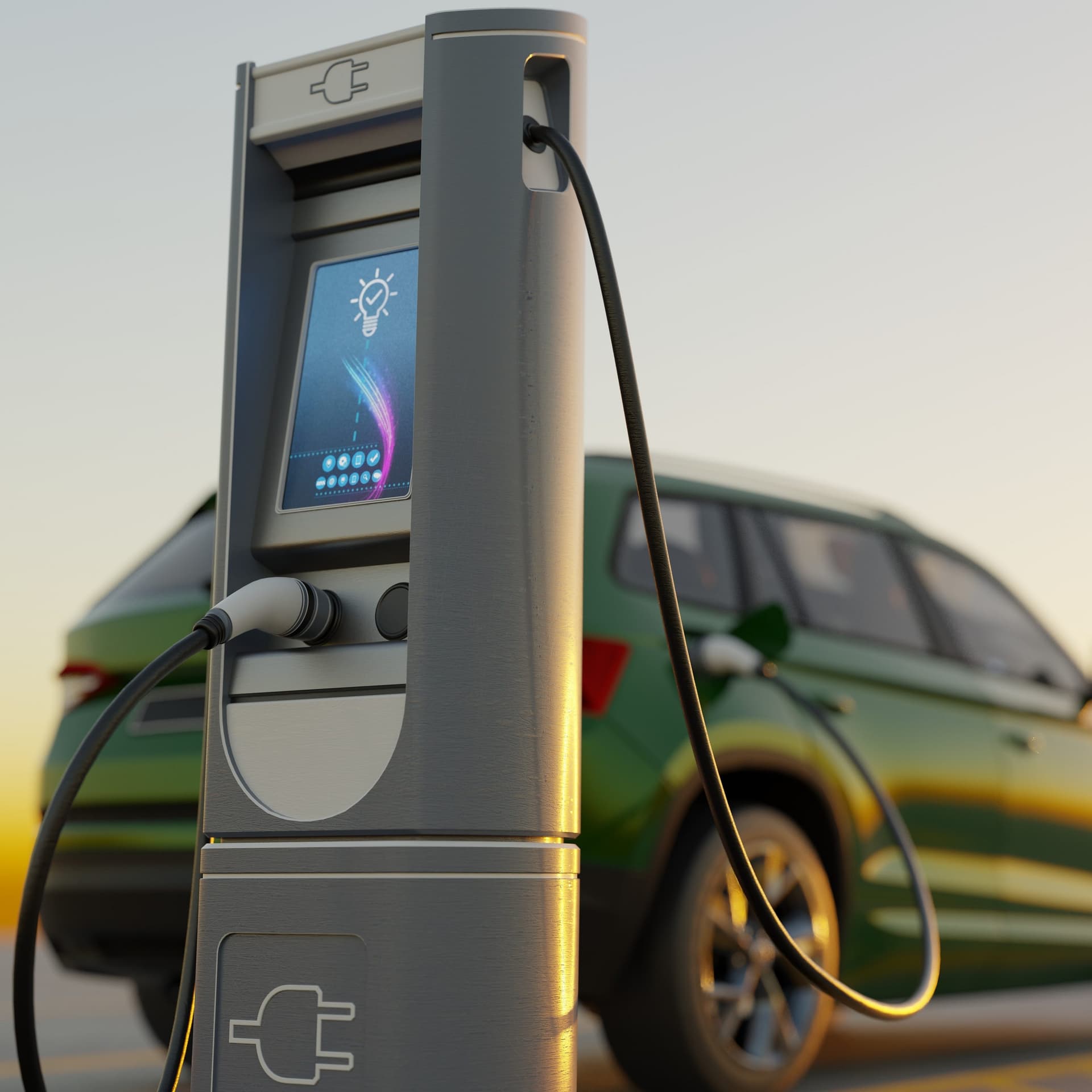
Image: A photo of an electric car charging in China. Credit: Master/Getty Images.