In short
Tech Life Podcast Episode Notes: Digital Twin Cities
Episode Overview Episode Title: Digital Twin Cities Presenter: Chris Vallance Producer: Imran Rahman-Jones Editor: Monica Soriano Episode Description: This episode explores the concept of digital twin cities, discussing the advantages of creating digital mirrors of urban environments and featuring innovative projects that utilize this technology.
Key Topics Discussed
Digital Twins
- Definition: Digital twins are virtual replicas of physical entities or systems, used to simulate real-world behaviors and scenarios.
- Applications:
- Urban planning and infrastructure development.
- Operational decision support in military and emergency services.
- Environmental impact modeling.
Case Study
Skyrol
- Participants: Jason Kennedy (Co-founder) and James Bowne (Principal Systems Engineer).
- Technology: Use of AI and big data to create simulations of human behaviors within environments.
- Example: Successful modeling of the entire island of Bali with approximately 70% accuracy.
- Purpose: To aid in decision making for infrastructure projects, such as subway system construction in Bali, allowing planners to test various scenarios without real-world consequences.
Agent-Based Modeling
- Explanation: This modeling technique simulates individual behaviors within a population and extrapolates them to predict collective actions.
- Data Utilization: Anonymized data from mobile phones and marketing analytics to track population movements and behaviors for calibration.
Military and National Security Applications
- Operational Use: Used by militaries for training and decision support to simulate complex scenarios and responses without real-world risks.
- Example: Modeling potential impacts of cyber attacks on infrastructure and national security strategies.
Concerns and Ethical Considerations
- Bias and Trust: Importance of transparency in modeling processes to ensure unbiased decision-making.
- Encouragement of Independent Testing: Advocated for governments to test and compare different models to validate findings.
Carbon Capture Project by Ruby
- Participants: Nika and Leila Mashouf (Founders).
- Innovation: Turning CO2 into cellulose for textile production.
- Process: Utilizes enzymes to convert captured carbon into usable materials without depleting natural resources.
- Applications:
- Initial focus on clothing but potential for broader applications across various industries.
- Recognition through awards, highlighting the viability and innovation of the technology.
Environmental Monitoring
Lacuna Space
- Overview: Development of small satellites for environmental monitoring.
- Functionality: Low-cost connectivity for remote sensors to transmit data on ecological parameters.
- Design Considerations: Emphasis on sustainability, ensuring satellites deorbit naturally to minimize space debris.
Key Takeaways
- Advancements in Modeling Technology: Digital twins can significantly improve urban planning and operational decision-making by providing a virtual sandbox for testing scenarios.
- Importance of Environmental Innovations: Projects like Ruby and Lacuna Space demonstrate how technology can address climate change and environmental monitoring while promoting sustainable practices.
- Interdisciplinary Applications: The discussed technologies showcase the convergence of AI, environmental science, and urban planning, illustrating the multifaceted impacts of tech innovations on society.
Listener Engagement
- The podcast encourages listeners to share their experiences with technology and suggest topics for future episodes. Feedback can be sent via email or WhatsApp.
---
This markdown file serves as a detailed summary of the Tech Life podcast episode, highlighting the main discussions, key technologies, and innovative projects presented in the episode.
Written by AI. May contain mistakes. Listen to the episode to check what was said.
Transcript
Automatic transcript. May contain errors.0:00Imagine if there was a digital mirror image of where you live. a virtual version of your city filled with virtual versions of the people who live in it. While the tech exists and some think it could help us make better decisions. Today we're talking digital twins on Tech Life with me, Chris Vallance. Then from digital twins to real life twins, two young sisters who've just won a major prize for their project aiming to take carbon dioxide and turn it into clothes of all things. and 3, 2, 1, ignition. And liftoff of 9, go SpaceX, go transport 14. That was a SpaceX rocket which took off in the early hours of this morning in California.
0:46It launched lots of new satellites into orbit, including a tiny one from a firm who believes space tech doesn't have to be big to be useful on Earth.
1:14Flight simulators have been part of pilot training for years, and with hundreds of passengers' lives at stake, much better to make a rookie error on a virtual plane than a real one. But the decisions that governments and other leaders take, whether it's planning healthcare or preparing for military action, can affect millions of people. Wouldn't it be nice if we had simulators for those? Well, now some businesses are using AI and big data to create digital versions of countries and their populations, so these critical decisions can be virtually tried out before they are made. Skyrol is one start-up at deploying this kind of digital twin technology around the world, and I've been speaking to co-founder Jason Kennedy and principal systems engineer James Bowne.
2:04So when you think about modelling and simulation, the easiest way to look at it is you use simulation every day. So every single time you open up your phone and you look at your weather app, somebody simulated a whole bunch of potential futures where sometimes it rained, sometimes it didn't, sometimes it had lightning, sometimes it didn't. So when you see that 60 % of rain, that means 60 % of those simulations said it was going to rain. That's what we do, but rather than weather, we do it for human behaviors. So imagine, if you will, looking through a looking glass and seeing an entire city and seeing every single person go about their day on every single road using telecommunications, using networks, using power, using water.
2:49We simulate all of that. How do you simulate, though? I mean, what are some of the most complicated things in the universe, human beings? So this is where it becomes really exciting, right? So the same technologies, the same computing power that has really helped AI become the juggernaut it is today and that powerful piece. We're using those same kind of technologies and a whole bunch of advancements in science to allow us to do what's called agent based modeling. Now, it's not accurate for any one individual, but when you look at the whole, it becomes quite accurate. Now, we have to do a lot of stuff to calibrate that.
3:28And James is going to show some of this where we use a whole bunch of marketing data and AI to extrapolate that into essentially journeys of tracking phones and other things. Not people. They're all anonymized. They're just digital fingerprints. But then we can actually use journeys, and then we can calibrate all that. And we've gotten to the point where we've modeled the entire island of Bali with about a 70 % accuracy. You said you would demonstrate some of what you do. So let's see that. Yes, I'm going to throw it over to James. And this is a program we're doing for Bali. So Bali's rolling out a new infrastructure, a new subway.
4:05So James, I'm not sure if you have a simulation running yet. I always feel bad throwing it over to you guys before if I know you're running something. Can you see that? Yes, so we're looking at, I assume, the island of Bali. And it's displayed in a sort of a map made of lots of little pixels. So yeah, basically what you're seeing here is all the different civilian entities going about their day-to-day pattern of life within, across the island of Bali. The different colours, I guess, are indicating the current behaviours under which they're taking. I believe, for example, given it's the end of the day, the pink is the different sort of leisure activities.
4:39As we zoom in a bit further, you'll start to see a bit more detail about each of these entities. So you can see which of them are traveling in cars, which one's a sort of idle at home or at work. And you can also see, given the uniqueness of the island of Bali, a significant number of mopeds. And you see this is a particularly busy road here as people are sort of approaching, traveling north here. If I zoom out a bit more, you'll start to see one of the road closures that I introduced earlier, and you'll see like no traffic traveling on those particular roads, we can start to see how you can start to make decisions using a digital twin such as this.
5:14So how would that work in practice? How would a decision maker use that? So in this case, the Bali subway system is going to be building out a subway system that goes along the east coast and along the south, right? They're going to close a whole bunch of roads during that construction. So now they have an almost impossible problem. They have to close is an impact, a whole bunch of roads that are already not working very well, while they try to introduce a subway system and new roads. And they want to do this over the next five years, five to 10 years, while still giving their tourist a positive experience and growing tourism.
5:53So how a decision maker uses this is they get to test what roads to close, what strategies to do, what construction they're going to do, what alternative service roads are going to do. And they get to build all that in the simulation. They get to do comparisons like this, where they can compare different plans and see what those impacts are. And this is why modeling simulation lets you get those insights. You just can't get anywhere else. What context do you use this tech for? I mean, you're using it here with Barley to help them model the behavior of people when the roads are disrupted. But what other contexts do you do this modeling for?
6:28The context is we generally work with is operational decision support. So this is the stuff we do with our militaries. So the men and women who are trying to protect our countries and Western democracy have some of the hardest decisions to make in the world. We do training. So our military, our warfighters, today they train in a lot of virtual environments. So, I mean, as a journalist, I did riot training and I did that in a fake village with actual police officers. The other half of the police are pretending to be rioters and people are throwing real petrol bombs and fake bricks. And, you know, you learn a bit from doing that.
7:13But are you saying in the future that might be replaced by a virtual environment? A hundred percent, without question. And you can do things that you can't replicate. So now imagine driving a convoy through a city. How do you replicate a convoy with traffic through an entire city where there's real risk in that? Right. So if you look at some previous wars, they take out the lead car. You're stuck. Now you can't. How do you replicate that in the same way you can't? So, again, right now, the training we're giving our warfighters isn't good enough. The future training will be more and more virtual, which is more cost effective.
7:50It allows you to train things you can't do in the real world. it's better for the environment and it makes sure our war fighters aren't learning on the job and then we work in the intelligence community so that's kind of the stuff we're doing and some of the partners we're working with so so in i mean to talk about intelligence would that be sort of things like modeling you know the impact of cyber attacks on infrastructure would that be the kind of thing you'll sort of you'll sort of for that national security right so obviously i can't i can't get into a lot of specifics but it would imagine in areas that are very sensitive like in the UAE?
8:22What happens if you took out a desalination plant? And then what happens if you coupled that with a fake news campaign saying bottled water was tainted? And then what happens if you dragged, you know, there's only two major lines of internet that go in. What happens if you stole a ship and dragged an anchor across both of those? So now you can't get anything across the internet. You have millions of people trapped on a whole bunch of islands across Abu Dhabi. they've lost their water, they don't think they can drink their bottled water, they've lost the ability to have internet, and there's only a few bridges to take out, and then you have these people trapped.
8:58That's actually the fears of modern warfare. You can imagine, you know, you're talking about it would enable you to discover the critical points that an enemy might target. The flip side of that is being able to identify the critical points in your enemy's infrastructure. Without any question. And so it's offensive, it's defensive, and it's recovery and sustainment. And we're asking decision makers to do that without the right tools. And modeling simulation is the right tools, advanced modeling simulation, the stuff that they've never had before delivered quicker, stuff that we're seeing here today.
9:36Do you see an arms race in modeling in terms of the defense applications and the cybersecurity applications? Yeah, so 100%. I mean, the arms race you see today is going to be around AI, it's going to be around drones, and it's going to be around, and you'll hear them say digital advantage. A major part of digital advantage is modeling and simulation, AI, and then drones. And how can a decision maker be confident that your modeling doesn't reflect, say, particular biases or corporate interests of your organization? Yes, I mean, really, really strong question, right? And so our core technology is a modeling and simulation platform.
10:16The truth is you don't have to use any of our models. And in fact, we have a whole ecosystem of model providers that are not us, including the government. So for one of our government customers, we took something that's a DSTL. This is the science lab here in the UK that works with defense. We took one of their models and that's what they used. So the nice part is don't trust my models. In fact, this is something I wish more governments did. Ask the questions. Run our models and run somebody else's models and compare the two. And then you can make better decisions. And there's clarity for everybody in that.
10:51Thanks to Jason Kennedy and James Bowne from Skyrim.
10:59You're listening to Tech Life on the BBC World Service. And as you know, we like to hear from you, our listeners, wherever you are. Last week, we reported on efforts to stop AI making things up and instead admit that it doesn't know the answer. Angus from Gloucestershire in the UK messaged on WhatsApp to say he gave Microsoft's AI assistant co-pilot a go and asked it to do some simple coding. Unfortunately, he says, the code it wrote was wrong and threw up many errors. After a lot of debugging, we got there in the end, but it wasn't the smooth experience I'd hoped for. Angus says he's been a bit wary of all AI answers ever since.
11:40And David told us he corrected OpenAI when it got the date of a UK Supreme Court ruling wrong. But, kindly, it did thank me for pointing it out, David tells us. Ah, but I bet it was crying silicon tears inside, David. And if there's an issue you'd like us to cover, or you'd like to tell us about the technology and your life will work, you can send us a text, email or voice message. Our email address is techlife at bbc.co.uk, or you can WhatsApp us on plus 44 330 1230 320. Do let us know your name and tell us where in the world you're listening from.
12:27Now, one of the great problems of our age is climate change. And on Tech Life, we've been reporting on tech solutions that may help fight it. Carbon capture systems are designed to remove climate-warming carbon dioxide from the atmosphere and lock it away. Some projects aim to store the gas deep underground. But a Californian start-up called Ruby takes a different approach, turning it into cloth. cloth. Ruby was founded by two real-life twins. I'm Nika Mashouf, co-founder and CEO of Ruby. And I'm Leila Mashouf, co-founder and CTO at Ruby. Well, we've just had a piece on digital twins, but you are actually twin sisters.
13:10CEO and CTO, startups are stressful enough as it is. How does it work being close relatives and also involved in a startup? up. Yeah, it's been a journey, but I couldn't imagine starting a company with anyone else because it is so stressful. And I think what we've learned as being twins and being so close growing up, we've learned to argue really efficiently. So we get to the bottom of things quickly. And then we're able to just like move forward into the next thing that we have to do. Well, tell me about your system, which is a carbon capture system, and it turns carbon dioxide, the principal greenhouse gas, if you like, into cellulose.
13:52So tell me about that and explain what cellulose is. So cellulose is this amazing polymer found all across nature. And it's the structural material that makes up trunk and branches and leaves and a tree. And we're mimicking that process, but without needing to harvest the tree. we use these special molecules, these special components called enzymes, which are like nature's chemical engineers. They're found in our cells and plants. They help reactions happen, but we've found a way to harness them outside of a cell. So imagine just a basic tank, a chemical reactor, you have these specialized enzymes in there and they can grab on to the CO2 or the waste carbon coming in, build that into these long stringy polymers and produce the materials that we use without actually needing to rely on limited natural resources, land, water, forests, etc.
14:48And Leila, you're using this, you're turning the cellulose into clothing. Yeah, that's exactly right. So what we do with the cellulose pulp that we create from CO2 is we actually drop it into the same processes that are typically used today in the textile industry. And so what that means is we dissolve it in a process and we extrude it, meaning we create long stringy fibers that then become the fibers that are woven into your clothing. So it's actually a very seamless process that we can drop our product into typical textile manufacturing. And this process has just won a fairly significant award, hasn't it?
15:27Yeah, we were just honored last week to win a prize from the European Patent Office as part of their Young Inventors Prize 2025. And Capucine is happening. The Nature Guardians Prize will go to... Nika and Leila Massoud. It was this really fantastic event, exciting honor for us. you know, surprise. And yeah, we were just really pleased to be honoured and this invention really to gain more momentum and publicity. So is your fabric that's been, you know, that starts life as carbon dioxide in the atmosphere, this greenhouse gas, is that fabric in the shops right now? So, so far, we've been able to make fibres and yarns using industrial equipment with manufacturers.
16:21and we have some amazing partnerships with some of the big retail brands you might know and their manufacturers for example H &M, Walmart, Patagonia about 10 different brands and manufacturers we're in partnerships right now with we've made it to the yarn stage and now we're focused on scaling up because we've demonstrated that the properties are high quality textile grade materials. And next, you can look forward to us making garments and doing commercial launches. So, you know, you could just replace the materials you're using every day in your clothing. As you've described, you know, this is mimicking photosynthesis.
17:01Why is your system better than nature? Why are you improving upon nature? A lot of those processes come from limited natural resources like forests, which take decades to grow, even, you know, tree plantations. and arable land for cotton, for example, fossil resources and energy. Because that has been a criticism of carbon capture projects, hasn't it? That essentially that they produce more carbon in the energy they use than they save by capturing it. But here you're saying actually you're replacing an industrial process with one that produces less carbon, essentially. Yes, that has been a key challenge of carbon capture.
17:44And it's really technology dependent. So most tech that's out there is either using kind of pure chemistry, or using metal catalysts. And also all the way on the other side of the tech spectrum, they might be using pure biology, like using bacteria or microbes to capture carbon and you run a fermentation process. Both of those processes use a significant amount of energy and they have various trade-offs like low yields or low product quality. Ruby's technology is right in the middle of that spectrum. So we take the enzymes from nature that have evolved over millennia and we can actually continue to evolve them using AI and engineering techniques to be incredibly energy efficient.
18:33Cellulose is used for more than just clothing. So, I mean, do you see applications for this beyond clothing? Yes. Cellulose is such, it's used across so many products, you wouldn't even imagine how many things have cellulose in them, actually. So it's used in packaging, building materials, beauty products. But the other thing that I do want to say is we think what we're building is the new way of manufacturing chemicals and materials, period. And so cellulose is the first product that we've made, but we've already been able to make other polymers like starches and also basic chemicals like ethylene, ethylene glycol, glycerol.
19:14So it's above like a six to ten trillion dollar total market of things that are carbon based and they're basic chemicals or more complex materials that Ruby's process can actually replace in the future. That was Nika and Leila Meshouf. And if you've got any thoughts on that, do drop us a note.
19:495, 4, 3, 2, 1, ignition. And lift off of Falcon 9. Go, SpaceX, go, transport 14. Well, that's the sound of the latest SpaceX Falcon 9 rocket taking off from California on Monday afternoon. It carried 70 different payloads for various companies in what's known as a ride-share mission. On board was a small satellite from a British company which makes little devices to connect to environmental sensors in remote places, a water quality monitor next to a river, perhaps, and it transmits the data they send back to Earth. Rob Spurrett is the head of Lacuna Space, and I Zoomed him for a chat just before takeoff.
20:35I started by asking him whether he gets nervous ahead of launches. I'm less nervous about the launch these days. I'm just really nervous about when we first turn the satellite on once it's there. Is it going to work? Is it going to do exactly what we want it to do? That's where I get most nervous. So it's the unboxing of your cube satellite that's the nail-biting moment. Absolutely. Absolutely. Yeah. So tell me about your tech. Tell me about Lacuna and what it does and what it looks like. Yeah. So Lacuna, we're just trying to solve the problem of connecting things and devices really cheaply. We're trying to bring the cost of connectivity right down so you can connect small, cheap and simple sensors.
21:29So there's a couple of aspects to this. Firstly, we're not doing broadband. We're not sending great big messages. And how we tend to describe it to people is it's to enable sensors that are out there in remote places to be able to send a message. They're tweeting a message, as it were. So how is it being used? Tell me about that. Out in Asia, we're monitoring sort of plantations there for improving the efficiency, for improving the irrigation. We've got projects where we're looking at the conservation of peat land. We're also measuring water quality. so the runoff from farms and farmers all really important information to be able to you know monitor and improve the quality of our rivers which of course is a very hot topic at the moment your device the lacuna transmitter and the satellite it goes into space on they're small if i had one in front of me on a desk what would it what would it look like yeah so the the sensor from a transmitter it fits into the palm of your hand and um yeah the remarkable thing about the technology is that that will work and send messages back off of a single battery charge for several years and the satellite themselves are quite the cube sat that these things are attached to that's small as well yeah this is one of the remarkable sort of uh innovations in the in the satellite world is that we've been able to shrink the size of the satellites massively and still be able to do incredible things.
23:21And they're getting smaller and smaller all the time. Whereas, you know, the early part of my career, I worked on satellites that were the size of double-decker buses and things. We're now down to things which are, you know, like a shoebox size. there are people who worry about the the amount of satellites that we're putting into space i mean i think astronomers are concerned there's also a concern that you know we might get collisions between satellites and end up with with with particular orbits unusable because of the because of the volume of space junk there is is this a risk with these kind of micro satellites that that in a sense space is going to become incredibly crowded yeah absolutely it's it's a valid concern um i mean still these things are incredibly spaced out um i mean there is excuse the pun but there is a lot of space up there but there are certain bands around especially between 500 and 600 kilometers that are very popular and very sort of heavily populated with satellites so we have a lot of constraints that are placed on us before we launch um and we take those constraints very seriously we have to make sure it's going into an orbit where where there is a very very low probability of a collision we have to do all that analysis before we get the license to launch and also most importantly we design all of our satellites so that they will naturally decay and fall back to earth within five years so uh in that way we ensure that they're when we've finished with them, when they've stopped doing their useful work, they do de-orbit and get out of the way.
25:04And that's a requirement that is becoming very commonly placed upon the operators' satellites, and also to make sure that when they do degrade, when they sort of burn up in the atmosphere, they do properly burn up in the atmosphere, so they They don't have any huge, heavy components on them. There's lots of regulations now. However, that doesn't help us with all the historic stuff that's been put up there. We have to live with that. And that's Rob Spurrett telling me about what has been so far a successful launch.
25:48Well, we're almost at the end of this week's Tech Life. As ever, we're keen to hear your ideas for future programmes. If there's a story you'd like us to look into, please do get in touch. And do keep telling us about the tech you use at home or at work. You can get in touch with us at techlife at bbc.co.uk or WhatsApp us on plus 44 330 1230 320. This week's programme was produced by Imran Rahman-Jones, edited by Monica Soriano and presented by me, Chris Valance. You
From the publisher
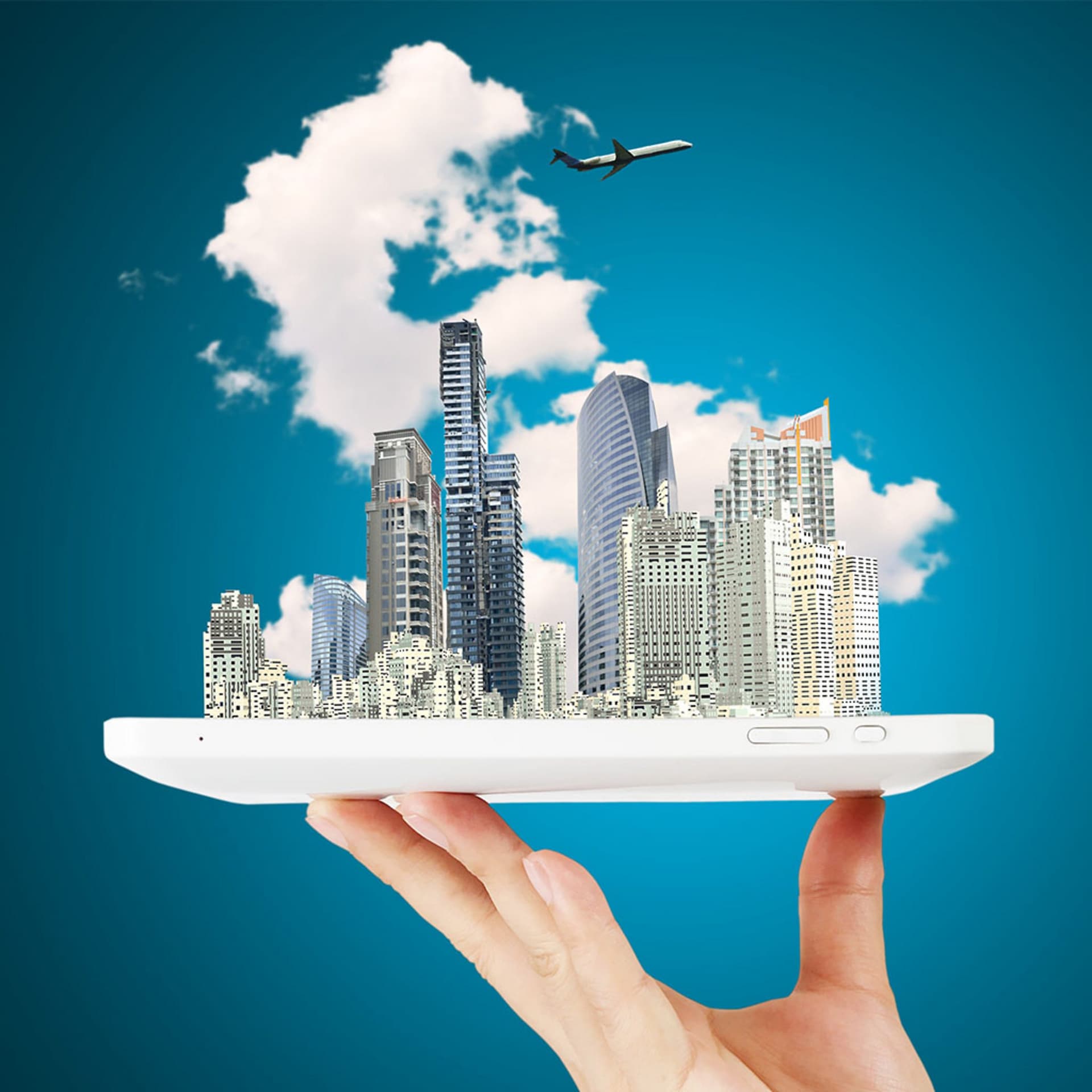
What are the advantages of creating a digital mirror of a city – or an entire island? We speak to a company making digital twins to create simulations of the real world. Then we hear from a real set of twins about their award-winning carbon capture project. And the company sending tiny satellites into space to help environmental researchers.
Presenter: Chris Vallance Producer: Imran Rahman-Jones Editor: Monica Soriano
(Image: A graphic of a person's hand holding a mini city on its fingertips. Credit: Getty Images.)