
In short
Tech Life Podcast Episode Notes: Driverless Cars in the Fast Lane
Overview In this episode of Tech Life, host Chris Vallance explores the rapid development and integration of autonomous vehicles, particularly focusing on self-driving taxis like Zoox, and examines how new technologies, such as quantum sensing, are being utilized in military contexts. The episode features field reports, expert interviews, and discussions on the implications of these advancements.
Key Themes The Rise of Autonomous Vehicles
- Historical Context: Autonomous vehicle technology has been anticipated for decades, with early prototypes dating back to the 1970s. The first significant milestone was demonstrated in 2005 with a self-driving Volkswagen Touareg named Stanley.
- Current State: Autonomous vehicles, such as Zoox, are now operational in cities like Las Vegas, providing an insight into their design and functionality.
Zoox Robotaxi Experience
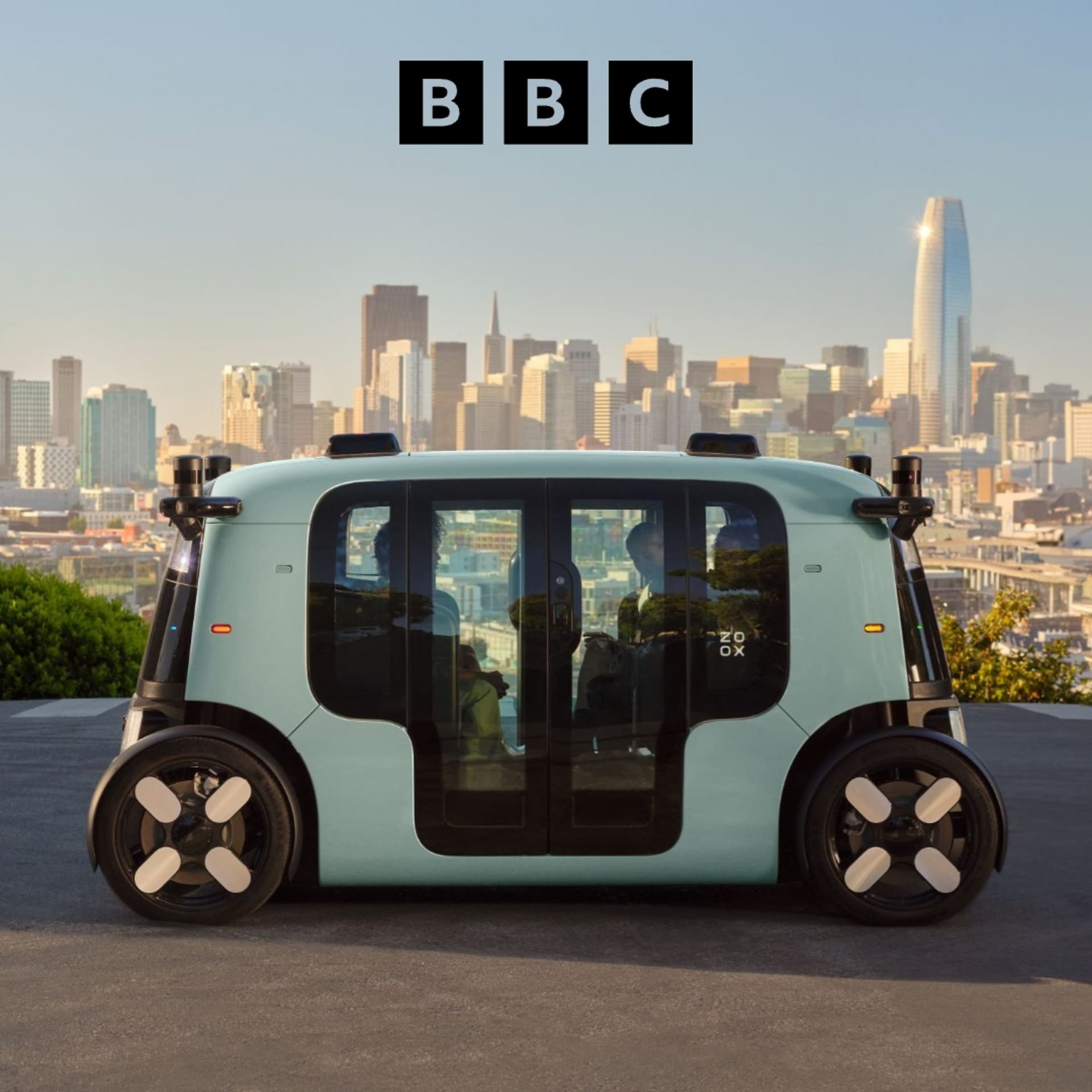
- Design: Unlike traditional taxis, Zoox is designed symmetrically with no steering wheel or pedals, resembling a “loaf of bread on wheels.”
- Safety Perception: The passenger reported feeling safe during the ride, noting that the vehicle effectively navigates complex traffic situations. Statistics highlight that 88% of driving accidents involve human error, suggesting that these vehicles could improve road safety.
Global Expansion and Regulation
- Pilot Programs: Various countries, including the US, China, and parts of Europe, are conducting pilot programs to test the reliability of autonomous taxis.
- Regulatory Framework: The UK has initiated the Autonomous Vehicles Act to establish guidelines for ensuring safety standards in self-driving cars. The goal is to have regulations in place by the second half of the following year.
Expert Insights Professor Philip Koopman (Carnegie Mellon University)
- Gradual Implementation: Emphasizes that the rollout of self-driving technology will be a slow process, city by city, over decades.
- Legal Considerations: Raises questions about liability in accidents involving self-driving vehicles, highlighting a lack of legal framework in the US compared to efforts in the UK.
Professor Jack Stilgo (University College London)
- Innovative Technology: Discusses the potential of self-driving vehicles to enhance road safety and improve urban life by reducing traffic and allowing for more green spaces.
- Challenges Ahead: Points out that the technology might not be universally applicable, especially in complex urban environments. He highlights ongoing technical challenges, including infrastructure dependencies and unpredictability in human behavior.
Quantum Sensing in Military Applications Research Overview
- Innovative Technology: The episode explores a new portable brain scanner developed through quantum sensing technology, which allows for real-time monitoring of soldiers' brain health post-exposure to blasts from heavy weaponry.
- Potential Impacts: This technology aims to assess and potentially mitigate brain damage caused by repeated exposure to blast waves, with implications for military training protocols.
Conclusion The episode concludes with a reflection on the transformative potential of autonomous technology in society, while also acknowledging the myriad challenges that lie ahead as this technology continues to develop. The discussion raises critical questions about safety, regulation, and societal adaptation to new technologies.
Listener Engagement
- The host encourages listeners to share their thoughts and experiences regarding self-driving taxis and the implications of this technology on their lives.
Additional Resources
- Contact information for listener feedback: techlife@bbc.co.uk, WhatsApp: +44 330 1230 320.
This episode serves as a comprehensive examination of the current landscape of autonomous vehicle technology and its broader implications for society and the military.
Written by AI. May contain mistakes. Listen to the episode to check what was said.
Chapters
Tap a time to open that second in VOThe Rise of Autonomous Vehicles
0:39 to 1:36
Exploration of how autonomous vehicles are transitioning from labs to city streets.
“You're listening to Tech Life on the BBC World Service, the programme about technology and how it's changing all our lives.”
The Evolution of Self-Driving Cars
1:36 to 3:24
Discussing the historical context and milestones leading to modern self-driving cars.
“The very last word is the totally automatic car.”
Experiencing the Zoox Robo-Taxi
3:24 to 4:30
Shona McCallum shares her firsthand experience riding in an innovative driverless taxi.
“Tech Live's Shona McCallum is here to take us back to the American West to see what's now the state of the art.”
Safety and Public Perception of Robo-Taxis
4:30 to 6:27
Discussion on the safety of autonomous taxis and public acceptance in urban environments.
“Please fasten your seatbelt for your safety.”
Regulatory Challenges for Autonomous Vehicles
6:27 to 7:43
Examining the legal frameworks and regulations necessary for the deployment of self-driving cars.
“Well I think that's the feeling across the world.”
Accountability in Self-Driving Car Incidents
7:43 to 9:30
Exploring the complexities of responsibility in accidents involving autonomous vehicles.
“All this is going to have to be adapted for these autonomous vehicles, isn't it?”
The Promise and Challenges of Autonomous Vehicles
9:30 to 10:41
Insight into the potential benefits and current challenges of implementing self-driving technology.
“Well, let's answer Professor Koppman's question.”
Technical Challenges and Infrastructure Dependence
10:41 to 14:01
Analyzing the technical issues that still hinder the widespread adoption of self-driving vehicles.
“To find out, I spoke to Professor Jack Stilgo of University College London, who researches the governance of emerging technologies.”
Technical Challenges of Driverless Cars
14:01 to 16:54
Explore the current technical challenges facing self-driving technology and its integration into urban environments.
“They're not yet tackling big transport problems for cities.”
Human Interaction with Autonomous Vehicles
16:54 to 18:38
Discuss the complexities of human interactions with self-driving vehicles and their impact on road behavior.
“Are people going to learn how to kind of game these machines, if you like, because they don't really understand what they're doing?”
Show all 14 chapters
Policy Implications of Self-Driving Cars
18:38 to 19:23
Examine the potential changes in laws and regulations as self-driving cars become more prevalent.
“you had to cross at the designated crossing spots.”
Research on Sound and Brain Health
21:26 to 24:50
Discover new research on the effects of gunfire on soldiers' brain health using portable technology.
“that's the sound of an artillery gun firing being on the receiving end is certainly bad for your health, you don't really need a scientist to tell you that.”
Advancements in Portable Brain Scanning Technology
24:50 to 26:53
Learn about breakthroughs in brain scanning technology that allow for field research on soldiers.
“So this enables it to be a system that's far lighter and less cumbersome so we can then put it in the back of a truck.”
The Cuban Missile Crisis Explained
28:01 to 28:16
Explore the events and tensions during the Cuban Missile Crisis and its resolution.
“How close the world came to nuclear war.”
Transcript
Automatic transcript. May contain errors.0:00This BBC podcast is supported by ads outside the UK. I am Nina Khrushcheva, the great-granddaughter of Nikita Khrushchev, the leader of the Soviet Union in 1962. And I'm Max Kennedy, the nephew of U.S. President John F. Kennedy. We explore what was a terrifying moment in history. The story of the Cuban Missile Crisis. How close the world came to nuclear war. And what they had to do to pull it back from the brink. The bomb, Kennedy and Khrushchev. All episodes available now, wherever you get your BBC podcasts.
0:39You're listening to Tech Life on the BBC World Service, the programme about technology and how it's changing all our lives. I'm Chris Valance. And if you spend a large part of your life in the car, perhaps you're driving right now. Tech is changing that as we speak. In a growing number of cities, autonomous vehicles are leaving the lab and hitting the roads. Tech Life's Shona McCallum takes us on a journey to the near future, by robot taxi, of course, and how quantum science is helping us understand what happens to soldiers' brains when they fire one of these.
1:35Cars that can drive themselves have been just around the corner for, well, a long time. This BBC report was broadcast in 1971. The very last word is the totally automatic car. No driver at all. The whole thing's remotely controlled by cables and electric routes under the road. Steering, accelerating, gear changing, braking and stopping. The radar device on the front will one day be able to tell how near you are to the car in front of you and slow you down automatically. Basically, it's all needed because you and I are not as good as machines. For years, a vehicle with a robot driver was pure science fiction.
2:16But in 2005, I saw a first step on the road to making it a reality. In the rugged landscape of the Mojave Desert, I watched as a self-driving Volkswagen Touareg, nicknamed Stanley, navigated a 211-kilometre course in just under seven hours, winning a grand challenge set by the US Defence Advanced Research Projects Agency. Ladies and gentlemen, Stanley, first vehicle. The key to its success, leader of the team behind Stanley, Sebastian Thrun told me, was machine learning. Instead of trying to meticulously write down as a programmer what constitutes a road, we train Stanley. We go out on the drive and say, hey, we're driving over here, not there.
3:03That is the road. And Stanley learns from it, features that make it recognise the roads in the future. So in a sense, you teach it to drive. We teach it to drive just the way we teach a person to drive. Well, Sebastian went on to co-found Waymo, and 20 years on, self-driving cars have arrived in some of our cities and on the roads. Tech Live's Shona McCallum is here to take us back to the American West to see what's now the state of the art. Hi, Shona. Hi, Chris. Good to be with you today. So you flagged, via an army of tech PR people, I expect, a cutting-edge self-driving taxi. Tell me about it.
3:42Yes, so I didn't actually flag it. I ordered it on the app, of course. I was in a driverless taxi in the US, which is called Zoox. It's a robo-taxi that's already picking up passengers in Las Vegas on the famous strip that's where I took my ride. and it's special in that it doesn't look like an ordinary taxi that you're used to. So most robo-taxis that you picture basically look and feel like a normal car, right? They've got steering wheels, pedals and a driver's seat. But Zoox is completely different. The doors open sideways and when you get inside there's no front or back. It's completely symmetrical.
4:16Some people have described it as a loaf of bread on wheels and I actually think that's quite a good description. Looks a bit like a toaster almost. Exactly. It was a really interesting experience to climb aboard. Here's a little bit of me reporting on that journey in Vegas. Please fasten your seatbelt for your safety. I've been for a drive in a Zoox owned by Amazon, a turquoise and black, small, fully driverless vehicle already carrying passengers here on the streets of Las Vegas. It's different from other robo-taxis because it's not like a retrofitted car. Hi, good afternoon, ladies. Thank you for riding Zoox.
4:54His design is unique, much like a train carriage on wheels. Continue. Press the close doors button. My first observation is no driver, no pedals, no steering wheel, but it feels quite normal. So far, the vehicle has handled a left and a right turn. It's also stopping at traffic lights right now. We're on a bit of a junction, actually, and we're in the middle lane, but it seems to be able to navigate quite complicated roads pretty well. Zoox, like other autonomous vehicles, relies on a combination of radar cameras and other tech to create a detailed 3D map of its surroundings. Watch your head and check for traffic as you leave.
5:35Don't forget your things. You went out on the streets of Las Vegas. Did you feel safe, particularly surrounded by all those giant cars that they have in America? Yeah, I did actually. And I think that's partly down to the design because there was no expectation really that there was a driver. and also there was loads of them on the road. Once you actually went on the journey, I realised that there were several of them stopping at the various hotels where they dropped off and picked up from and you passed lots of them on the road and I think as well the drivers there have an awareness of these vehicles and gave them plenty of space.
6:10Certainly we weren't cut up at traffic lights or anything like that. And also the statistics really, Chris, speak for themselves. 88 % of crashes currently involve human error as a contributory factor. So robo-taxis are supposed to be safer and actually I did feel very comfortable inside one. Well is the plan for these driverless taxi pilots to become more widespread? Well I think that's the feeling across the world. There are various versions of this technology in place. We have it in the US, China, the Middle East and Europe and governments are really gradually updating the laws to allow this wider testing.
6:44Companies are obviously using these pilots to improve their safety and their reliability And although at the moment they are in specific cities and routes, I think the global direction is towards that broader rollout. Let's have a listen to Professor Philip Kopman from the Carnegie Mellon University. He's written a book called Embodied AI Safety. It will happen very gradually. this technology of dedicated robotaxis or dedicated long-haul trucks that have no place for a person, no steering wheel, is going to be a long, slow grind. Robotaxis are city by city by city. No one's going to throw a switch.
7:26And then all of a sudden, you can go coast to coast with no need for steering wheel in the vehicle ever. We are decades. That's a 25-year kind of problem. The roads are covered by lots of laws, car safety, there's lots of regulation around that. All this is going to have to be adapted for these autonomous vehicles, isn't it? Yes, and the UK has taken a significant step with the Autonomous Vehicles Act. So in December last year, the government launched a call for evidence for road users, industry and charities to really gauge the temperature before working out more of the details. And that process ends in March.
8:06Responses will then be reviewed and used to refine that framework with further consultations expected later this year. So a lot of work going into this area. But the goal is to have a fully implemented regulation in place by the second half of next year. And that will allow these types of vehicles to operate permanently on our roads. Max Sugarman is the Chief Executive of Intelligent Transport Systems UK. That's the national voice of the transport technology industry here. The government is rightfully very focused on how we have all the procedures and methods in place to make sure that they are as safe as possible.
8:43And there's two in particular criteria that they've set. One is that every self-driving vehicle in the UK has to be as good as, if not better, as a careful and competent driver. And the second one is that the rollout of self-driving vehicles has to have a positive benefit on road safety. And separately to all of this, there are these pilot schemes that we're hearing about. So that's what Waymo and Uber have announced in London. And this will be subject to strict safety requirements and approvals from local transport authorities. Let's listen to Professor Phil Koppman again. The UK has done a great job of trying to put legal frameworks in place.
9:20That's still a work in progress. The US has essentially no legal framework for this. But if a robotaxi has a crash, who's held accountable? And is the entity held accountable the one who actually can control safety? In the US, that's severely broken. The UK is trying to get that right. Well, let's answer Professor Koppman's question. If you have a fender bender in one of these in the UK, who's held responsible? Yes, and I think that is a question that a lot of people are grappling with. One of the key things that I have been discussing with all the experts in this field, and academics say that, you know, we're doing a good job to try to address it, but there are different people that have, you know, the possibility of being liable.
10:03So is it the person who controls safety, the operator? Is it the manufacturer? Is it the software provider? We need to really bottom out who is responsible and make sure that responsibility is clearly defined before we see them on the road. Shona, it's been a delight as always. Thank you for taking us on this journey through the world of self-driving cars. Nice to be here. Thank you, Chris. Well, Shona's report raises all sorts of questions. Our environment, how we work, the economies and societies in which we live are all shaped by cars. Sometimes the way we die is too. Could self-driving technology change all that?
10:39And will it be a change for the better? To find out, I spoke to Professor Jack Stilgo of University College London, who researches the governance of emerging technologies. Self-driving cars are a hugely exciting technology. And just the sheer technical accomplishment of getting a vehicle to drive itself through a world that is also populated by lots of other things and people is extraordinary. What that means for ordinary people, I still think is up for grabs. It might be the sort of thing that is revolutionary for some parts of the world and still doesn't really touch others. So who knows? When you say revolutionary for some parts of the world, where are you thinking of?
11:23So it may well be that the technology is really well suited to places that are already really dependent upon cars, where the roads are set up to be very car friendly. in those circumstances, you can imagine a self-driving car, it's easier for the machine to do its job, to recognise the things around it and move through the world. There are lots of places in the world, London, Rome, Delhi, Accra, where the roads are altogether more complicated and the ways of getting about are more diverse. And it may well be that it's either too big a a technical challenge to get the technology to work in those circumstances, or there just simply isn't the market for it.
12:08So like a lot of forms of transport, I think what we might see is that things look very different depending on where you are. What's the promise of autonomous vehicles? We have a lot of people piling a lot of money into researching the tech. What is the sort of the positives that it might bring? More than a million people die every year around the world on the roads, which is a disaster. just in public health terms. So a lot of the self-driving car companies, they talk about the safety benefits. They would say that humans, yes, most of the time are safe, but just the sheer number of miles that humans drive mean that when humans get distracted or drunk or just the chaos of the roads, it makes it inherently dangerous, right?
12:53So if you could rationalise that with artificial intelligence, then the hope is that you could solve a chunk of those problems. And the companies then would also have suggested benefits around things like traffic moving more efficiently, cars not having to park, so being able to move out of cities and maybe make cities nicer places to be in, that sort of thing. Listening to you talk, you sound as though your feeling is we're not quite there yet, and yet we've got these vehicles on our roads, isn't it? isn't it job done? Haven't we shown that they work? We've got these taxes in San Francisco, we've got taxes coming to London.
13:33For some people in some parts of the world, these technologies have now become not quite ubiquitous, but just sort of every day. So if you're in San Francisco, you're really, really likely to see one of these things. There are thousands of them now on the roads. The reality is more complicated because cities are very different. Also, it's still not quite clear what problems the technologies actually solve for people. So So they're not yet cheaper than the alternatives. They're not yet tackling big transport problems for cities. So it's not clear why cities would be enthusiastic about the technologies.
14:11We still haven't worked out exactly how they're going to fit into our future cities. What sort of technical challenges are we seeing that are posing problems at the moment? In terms of the ways that the technologies work and the ways that the technologies fail, we're still seeing, for example, that the technologies are dependent upon infrastructures like the electricity grid, like systems of remote operators. so that there was an incident that Waymo got into relatively recently where the power went down and then a bunch of Waymos across the cities became bricked in effect. They just sort of stopped working.
14:57And so you sort of see that even though Waymo have been on the whole very responsible and very safe, they run into these problems from time to time. And you have issues like when a vehicle encounters in the emergency services dealing with a chaotic, unpredictable sort of situation where they might have police tape across the road or a fire hose that's laid across the road. And a self-driving vehicle doesn't know what to do in those circumstances. And it may well be that there's nobody that the police or the fire department can talk to in those circumstances. So that interaction is still a weird one.
15:33The other situation I wonder about from personal experience on several occasions is how you handle when you have single track roads, which are common in lots of parts of the world, they're common in parts of the UK. There's that difficult negotiation that goes on between drivers, isn't there, about who's going to reverse up to the nearest passing place. And presumably people will discover that maybe the driverless cars will always reverse. So if you're in one, you're always stuck going back. We all know that a lot of the road network in a lot of different places, you know, is pretty, you know, it's almost quite medieval, that idea.
16:10And it sort of relies upon a human to human interaction to work out how we're going to deal with those sorts of situations. And I think that we're sort of faced with a couple of choices there. Is the technology just going to stay in those sorts of well-structured environments where, you know, what to do next can be relatively easily programmed into its logic systems? or are we going to eventually discover that the technology is really, really useful and people like it and they get so much from it that actually we need to redesign parts of the world to suit the machinery of the technology, which is in effect what we did with the motor car, right?
16:52But that's quite a big choice. What about the sort of adversarial kinds of behaviour from people? Are people going to learn how to kind of game these machines, if you like, because they don't really understand what they're doing? Like all AI, they're just sort of following, if you like, an elaborate set of rules or probabilities. I think we can certainly expect forms of, you know, there might be forms of active resistance to the technology. Some people just might not like it. We can also expect forms of mischief. So self-driving car companies do worry that, for example, cyclists are going to just move in front of one of their vehicles and think, well, this thing's never going to drive too close to me or it's never going to behave badly.
17:37So I'm just going to toddle along at 10 miles an hour and be protected by this sort of machine. The difficulty is that for an AI system, you sort of need to treat pedestrians and cyclists and other road users as just other objects in the world, as fairly sort of passive. But what we know when it comes to new technologies is that people behave in unpredictable ways and people will become more active and they will actually change their behavior in response to the new technologies. So they will have these sorts of games that self-driving car companies will have to work out what to do in those in those sort of circumstances.
18:14Maybe that's fine, but maybe governments will feel the need to pass new laws. I mean, that's what what happened with the arrival of the motor car. About 100, 110 years ago or so, American policymakers decided to ban the act of jaywalking, the idea of walking in the street. It was made very clear that streets were for cars and that if you were a pedestrian, you had to cross at the designated crossing spots. The rules of the road might need to change for a world of self-driving vehicles. And some people might like that, but some people might not like it. That's Professor Jack Stilgo of University College London.
18:53My thanks to him for talking to Tech Life.
19:23All episodes available now, wherever you get your BBC podcasts.
19:53What's your experience of it been? Would you be keen to take a self-driving taxi? Or perhaps you're a taxi driver worried about robotic rivals taking your work. Whatever you think, we'd love to hear from you. You can send us an email to techlife at bbc.co.uk or you can drop us a voice or text message via WhatsApp. Plus 44 330 1230 320 is the number. But do tell us your name and where in the world you are messaging us from. For example, Gil Raymond got in touch from South Sudan to say hello. And hello to you. Great to know you're listening. Listener Toby Boyd from Portland, Oregon in the United States says he streams the World Service on a Raspberry Pi running Volumio.
20:40Now you're showing off there, Toby. Toby howed our show last week about Chinese tech firms developing open source AI products. Toby says, I don't think there's any contradiction in Chinese AI companies championing open source. Toby also said, it's nice to see some real AI progress being made that isn't just about a cash grab. Well, if you want to share your thoughts on this show, I'll repeat the contact details again at the end of the programme.
21:15now you may want to hold on to something get your ear defenders on because get ready and fire
21:26that's the sound of an artillery gun firing being on the receiving end is certainly bad for your health, you don't really need a scientist to tell you that. But if you've ever been near a large gun being fired, you'll know the blast can leave your ears ringing. In fact, scientists suspect repeated exposure to bangs from big guns going off could cause damage to the brain. Investigating this is tricky though. Guns don't tend to be fired in the vicinity of hospitals, and the brain scanning machines are too big to transport. But a new type of portable brain scanner, powered by quantum sensing technology, means that for the first time soldiers can be scanned in the immediate aftermath of firing heavy weapons.
22:10Professor Karen Mullinger of the Universities of Nottingham and Birmingham is co-leader of the research. When people are operating weaponry there's a blast wave, so there's a wave of pressure that comes through the air and will go through the person so obviously they'll hear a large bang and if they don't have their ear defenders on then that might damage their hearing but in the same way that blast wave is traveling through their entire bodies including their brain the thing that we're trying to answer is does this actually cause damage to the cells in their brains or not. So there's a growing amount of evidence to suggest that probably is causing damage and that over a lifetime of operating this these weapons then there is evidence from people who've sadly passed away and then left their bodies to science that if they've been exposed to large amounts of pressure waves throughout their careers then their brains appear to be damaged but we don't know at that what we call the acute phase so the phase when they're actually operating the machinery and they're actually operating the weaponry what's happening to their brain and whether we can measure changes which then we can use that information to inform how to change either how the weaponry is operated or change how the weaponry is made or just give people say longer time off between and doing training exercises so what this lets you do is sort of if you like do a kind of before and after comparison exactly right there where they you know they've just fired you know before they go and fire the gun the big gun and then afterwards you can look at the change precisely so that's the that's exactly what we want to do and what's enabling you to do this is a is a sort of new kind of portable brain scanner if you like that relies relies upon quantum technology do you want to say a little bit about that there's been lots of exciting developments in this area so meg itself which is measuring these magnetic fields from the brain isn't a new technology there was a older sort of sensor that's been around for around 50 years but that relied on liquid helium which is at minus 293 degrees celsius and it was a large amount of that liquid helium so then it's quite a heavy device and then we also needed it to be in a very large magnetically shielded room to be able to measure the small magnetic fields from the brain.
24:49Over the recent years my colleague Matt Brooks has been working on developing new technology which as you've said Chris is related to quantum technology which measures this brain activity in a new way so it's still measuring the magnetic fields but the sensors are completely different in how they're made up and so we no longer need that liquid helium. So this enables it to be a system that's far lighter and less cumbersome so we can then put it in the back of a truck. Also those magnetically shielded rooms I've mentioned, colleagues at the University of Nottingham have been working really hard at developing magnetically shielded rooms that have a much smaller weight.
25:34So instead of being 10 tonnes, they're around about two tonnes. So again, much easier to be stuck on the back of a lorry. And finally, we also have worked on having electronics that require a lot less power. And so we can now operate the system that we will be putting in the back of the truck with a car battery, as opposed to needing an awful lot more power to be able to operate it. So these three breakthroughs in physics have allowed us to be able to put the system on the back of a truck. And what the soldier, the service personnel actually experience is quite interesting, isn't it? When you look at it, it looks like a regular military helmet, except it's blue and covered in sensors.
26:22And then you've got all these sort of pipes running into a backpack that they wear. So, yeah, we have a helmet that we have varying colours depending on head sizes. All the sensors are within that helmet. And then, yeah, they wear a backpack and that houses all the electronics. And the pipes that you see are actually just wires that are connecting the sensors to the electronics that are in the backpack. That's Professor Karen Mullinger.
26:52And that, alas, is the way tech life ends. with a bang, not with a whimper. Remember, if you'd like to help shape a future show, we always love to hear your ideas and suggestions. And do let us know your thoughts about autonomous cars. Are they transporting us to a better future or leading us up a blind alley? Whatever you think, you can email us at techlife at bbc.co.uk or WhatsApp us on plus 44 330 1230 320. And do keep across our work at bbc.com forward slash technology. This program was produced by Tom Quinn and presented by me, Chris Valens.
27:45I am Nina Khrushcheva, the great-granddaughter of Nikita Khrushchev, the leader of the Soviet Union in 1962. And I'm Max Kennedy, the nephew of U.S. President John F. Kennedy. We explore what was a terrifying moment in history. The story of the Cuban Missile Crisis. How close the world came to nuclear war. And what they had to do to pull it back from the brink. The bomb, Kennedy and Khrushchev. All episodes available now wherever you get your BBC podcasts.
From the publisher
Autonomous taxis are already part of everyday life in some cities. What will it be like when self-driving car tech gets up to full speed ? And we find out how scientists are using quantum sensing technology to peer inside soldiers' brains on the firing range.
Presenter: Chris Vallance Producer: Tom Quinn
(Image: A Zoox robotaxi containing passengers is stationary on a road. The skyscrapers of San Francisco are in the background. Credit: Zoox, Inc.)