
In short
Tech Life Podcast Episode Summary: Hearing My Voice Again Totally Blew My Mind
Episode Overview
- Title: Hearing My Voice Again Totally Blew My Mind
- Presenter: Shiona McCallum
- Producer: Tom Quinn
- Description: This episode discusses the profound impact of AI technology on individuals who have lost their ability to speak due to illness, featuring Yvonne Johnson, a woman with motor neuron disease. The episode also covers industry insights on AI, memory chip pricing, and the booming video gaming market in Africa.
Key Themes
- AI and Voice Restoration
- Personal Stories: Yvonne Johnson shares her journey with motor neuron disease (MND) and the emotional significance of regaining her voice through AI technology.
- Identity Loss: Yvonne explains that losing her ability to speak affected her sense of identity, making her feel isolated.
- Voice Recovery: AI technology allowed for the creation of a synthetic version of her voice, using previous voice recordings, which she describes as "mind-blowing" and nostalgic.
- Family Impact: Yvonne's children expressed joy at hearing their mother’s real voice again, feeling a connection to their past.
- Technology's Role in Communication
- Speech Therapy and AI: Richard Cave, a speech therapist, details the process of voice cloning and AI's ability to help those with speech impairments.
- Voice Cloning Process:
- Requires short audio recordings (e.g., WhatsApp voice messages).
- Takes only a few hours to create a digital version of a person's voice.
- Inclusivity: The technology aims to serve diverse populations, allowing for voice cloning in various languages.
- Industry Insights
- AI in Tech Companies: Discussion with Tolga Kurtoglu, CTO of Lenovo, on the shift from hardware-centric to AI-first business models.
- AI-Powered Computing: Lenovo is focusing on enhancing user interaction with AI via voice and other natural mechanisms.
- Supply Chain Challenges: Kurtoglu addresses rising component costs and their effects on the tech industry, emphasizing Lenovo's robust supply chain management.
- Video Gaming Market in Africa
- Growth Statistics: The African gaming market is booming, generating approximately $2.3 billion, growing at over 12% annually.
- Mobile Dominance: Mobile gaming accounts for around 90% of gaming revenue due to limited broadband and hardware access.
- Popular Games: Casual games like Candy Crush are prevalent alongside competitive games like PUBG.
- Regional Hubs: Nigeria, Egypt, and South Africa lead in revenue, but the market is diverse with varying infrastructure and regulations.
Key Takeaways
- Emotional Impact of Technology: AI is not just about innovation; it can have deeply emotional implications for individuals facing health challenges.
- Emerging Market Dynamics: The rapid growth of Africa's gaming sector highlights opportunities driven by mobile technology and a youthful population.
- Industry Evolution: Companies like Lenovo are adapting to technological changes and market demands, focusing on AI integration while managing economic pressures.
Concluding Thoughts The episode illustrates the transformative power of technology, from giving individuals their voices back to reshaping industries, emphasizing the human stories that lie at the heart of technological advancements.
Contact Information For feedback or to share your experiences with AI technology, listeners can reach out via:
- Email: techlife@bbc.co.uk
- WhatsApp: +44 330 1230 320
---
This summary provides an overview of the key discussions, themes, and insights presented in the podcast episode. It highlights the poignant experiences of individuals using technology to reclaim their voices and the broader implications for society and industry.
Written by AI. May contain mistakes. Listen to the episode to check what was said.
Chapters
Tap a time to open that second in VOUnderstanding the Impact of AI on Voice
0:45 to 2:04
Exploring how AI is changing the lives of those who have lost their ability to speak.
“There are real concerns about where it's heading, but there are also stories of AI making a profound difference.”
Yvonne Johnson's Journey with MND
2:04 to 3:00
Yvonne shares her experiences with motor neuron disease and the loss of her voice.
“She's a mum of three and married to her husband, Orville.”
Hearing My Voice Again
3:00 to 4:20
Yvonne describes the emotional experience of regaining her original voice through AI.
“but first I want you to hear from Yvonne herself.”
The Importance of Communication
4:20 to 5:54
Yvonne discusses the significance of her AI-generated voice in her daily life and relationships.
“I now feel relevant and feel heard and seen in conversation.”
Role of Speech and Language Therapists
5:54 to 8:02
Richard Cave explains the technology behind voice cloning and its implications.
“That was the end of her prepared responses, but we kept talking.”
Advocating for Access to Technology
8:02 to 12:18
Richard discusses the need for inclusivity in AI technology for voice restoration.
“He's a researcher at University College London and he's also a consultant for 11 Labs, which we featured on Tech Life before.”
Listener Feedback on AI
14:25 to 15:11
Discussion on listener feedback and insights about AI's impact.
“This is Tech Life on the BBC World Service with me, Shona McCallum.”
Upcoming Topics in Gaming
15:11 to 15:36
Preview of future topics, particularly on gaming in Africa.
“If you want to contact us particularly about the AI voice tech that Yvonne used earlier in the show, you can reach us by text or voice note on WhatsApp.”
Lenovo's AI Transformation
15:36 to 19:25
Interview with Lenovo's CTO on the shift towards AI.
“The cost of living is rarely out of the headlines.”
Supply Chain Challenges
19:25 to 22:28
Discussion on the impact of supply chain issues on technology.
“I can confidently predict that our software and services related revenue will continue to increase in the future.”
Show all 11 chapters
Africa's Growing Gaming Market
22:28 to 26:49
Insights into the burgeoning gaming market in Africa.
“That's Tolga Kurtoglu, the Chief Technology Officer at Lenovo.”
Transcript
Automatic transcript. May contain errors.0:00Shiona McCallum:This BBC podcast is supported by ads outside the UK.
0:30Yvonne Johnson:Listen to podcasts.
0:34Yvonne Johnson:Hello, I'm Shona McCallum. Welcome to Tech Life, the programme about technology and how it can change lives. Artificial intelligence is advancing at a breathtaking pace. There are real concerns about where it's heading, but there are also stories of AI making a profound difference. Today, we're looking at one of them. People who, through illness, have lost the ability to speak. Speech synthesizers have helped for years, typing words that are then spoken aloud, but the voices sound flat, electronic, robotic. They just don't sound like you. That's now changing. AI is giving people their voices back in a way that's personal, emotional and recognizably human.
1:20Yvonne Johnson:That story is coming up. Later, I'll be speaking to an executive at Lenovo about rising component costs at a time when the price of tech is under growing pressure. And big things are happening in Africa's video gaming market.
1:35Shiona McCallum:It's growing at over 12 % annually, which is nearly double the global average.
1:41Yvonne Johnson:I'll be finding out what's going on.
2:00Yvonne Johnson:We start today with Yvonne Johnson. Yvonne is 55. She lives in the UK. She's a mum of three and married to her husband, Orville. For almost six years, Yvonne has been living with motor neuron disease. It's a condition that gradually weakens the muscles. Over time, it's affected how she moves and taken away much of her ability to speak. For Yvonne, losing her voice wasn't just about communication. it meant losing part of who she is. But now there's something remarkable. Artificial intelligence is helping Yvonne speak again and not with a generic robotic voice, but with her voice. Before she became ill, Yvonne sent voice messages to friends and family.
2:43Yvonne Johnson:Those everyday recordings, moments she never imagined would matter, have now become priceless. Using AI, they've been turned into a digital version of the voice she once had. Her London accent, her Cockney tone, hers. We'll explain how the technology works shortly, but first I want you to hear from Yvonne herself. Because typing is slow and tiring, I sent my questions to her in advance. We then met on a video call where I asked the questions and Yvonne played her prepared replies. I began by asking her how it felt to lose her ability to speak. Here's Yvonne's answer in her AI-generated voice. Well, I can still speak, but not clearly enough anymore to have lengthy conversations.
3:27Yvonne Johnson:Losing the way I used to speak has taken away part of my identity. I felt a bit isolated and sad, as I was once a very vocal, loud speaking person, which worked well with my job role as a benefits advisor for the local authority. And what was it like hearing your voice again? hearing my voice again totally blew my mind I forgot how slightly cockney I was seriously a wave of nostalgia passed through me I actually felt torn with my emotions one part was of me feeling proud of my slightly cockney accent and the other part of me feeling so emotional, not having my original voice anymore. Ultimately, I now have control of the identity that I lost to motor neuron disease.
4:21Yvonne Johnson:I now feel relevant and feel heard and seen in conversation. And what do your children think of the technology? My children were overwhelmed. They actually never realised how much they missed my loud voice talking on the phone to my friends or even screaming at them to wake up on mornings. They actually feel the technology used to create my AI voice is amazing because it keeps my original speaking voice alive. And how much has the technology impacted the quality of your life, Yvonne? My AI creative voice has impacted my life in a very positive way. First and foremost, I don't sound like a robot unlike other apps I have used.
5:14Yvonne Johnson:I sound like me and I can have conversations with family, friends and even strangers using my genuine voice. I can even have conversations over the phone if need be. So it gives me a sense of independence as well as using my voice to communicate with loved ones. I will be finding ways to use it to raise awareness amongst people that have very little or no knowledge about MND. I can also use it to talk to the congregation in my church, which I have missed doing since my speech changed. That was the end of her prepared responses, but we kept talking. I asked a few more questions, Yvonne typed, and her voice played back.
6:03Yvonne Johnson:We've shortened the pauses while she was typing. But here's the next part of our conversation. I just wonder how your health is. I mean, obviously, we're communicating on Zoom. You look well to me. Could you just tell our audience how you're keeping just now? Well, my health has deteriorated very slow, but remain positive and continue to live my best life, building wonderful memories. Obviously you're speaking to us today you mentioned raising awareness of MND how important is that? Oh very important to me As a woman of colour my community refrained from talking about health issues Yes okay so I can understand that how loud your voice is then within that community.
7:05Yeah.
7:08Yvonne Johnson:I feel that if I extend the knowledge, people from not only my community will feel at ease to share help others going through the same experiences. I just wondered, is there anything else you wanted to add? If there's anything else you wanted to say? I just want to encourage others to share and to be heard. My sincere thanks to Yvonne Johnson for taking the time to share her story. In another heartwarming moment, a portrait painting of Yvonne was auctioned, raising around£15 ,500, or roughly US$21 ,000, for My Name's Doddy Foundation. The charity was set up by Scottish rugby legend Doddy Weir after he developed motor neuron disease and it supports research and people living with M &D.
8:01Yvonne Johnson:Now behind Yvonne's AI generated voice is Richard Cave, a speech and language therapist. He's a researcher at University College London and he's also a consultant for 11 Labs, which we featured on Tech Life before. Richard has been involved in bringing this new speech technology to life. I asked them about his role and how the rollout has been going. So I work predominantly with people that have changed and lost voice. That includes people living with motor neurone disease like Yvonne and many others, but also people living with head and neck cancer, with surgery, with trauma, with Parkinson's.
8:40Yvonne Johnson:Lots of acquired or progressive conditions where voice has changed and is lost. I work with them to help them as best I can retain a sense of their identity with a voice bank or voice clone, which is a synthetic version of their natural voice, usually from recordings that they can use in a communication device. Yes. You mentioned Yvonne and we spoke to Yvonne. It was amazing to see her use the technology. And, you know, as far as I was concerned, having a lovely conversation, speaking to her in her authentic voice. And she told us about the difference it had made to her life. Can you explain how that tech works, please?
9:24Yes.
9:25Yvonne Johnson:So with Yvonne, I've been working for her a while and her voice has changed and it's almost lost now. But fortunately, she had some recordings of WhatsApp voice messages that she'd left for her family and friends. And her friends found them all and family sent them all. And I used about 50 of them. They're all short messages, kind of just saying stuff, stuff that you say to your family, nothing special. and loaded them up into 11 labs. And that was long, long, long enough. It was about 10 minutes worth of recordings in total. And within a couple of hours, that voice was ready. And remarkably quite fast then, this process to get the voice up and running.
10:13Yvonne Johnson:You just upload it to 11 labs suite and then it's ready. Yes, it is fast. And this is what AI has done. that it's made voice cloning, amongst so many other things, quicker and easier to do and better all at the same time. And, you know, we live in this world of AI that everybody talks about it, but actually, you know, I spend my life trying to make sure that AI is for everyone, including Yvonne, including everybody else I work with, that they get the benefit too, including, you know, people that actually would prefer not speak English, would prefer to speak Tamil or Hindi or Ukrainian or Korean or Mandarin.
10:57Yvonne Johnson:The world has changed. And in that respect, so much for the better, so much more inclusive and so much more equal. Where do you see this technology going then? Is there still room for improvement? There is room for improvement because this AI technology is changing and improving all the time. Our challenge as speech and language therapists and other people that care about people like Yvonne is to ensure that, you know, as AI develops and evolves, that people like Yvonne all over the planet continue to get the benefit, that they continue to get really good stuff and are not excluded. If we don't talk loudly and work with the tech companies and just make sure that they have a voice, then it's the easiest thing in the world for them to be ignored because things are moving so quickly.
11:57Yvonne Johnson:And I feel that's my role. A speech therapist working with a tech company and a speech therapist as a researcher at UCL working with technology, I'm acutely aware of how things are moving. and how we have to keep talking and advocating for people like Yvonne and her family to make sure that they get the best of everything, just like everybody else. There's so many people with conditions beyond M &D. I mean, how do you foresee this technology rolling out to a wider population? It's building awareness that this technology is here. When people hear for the first time about voice banking and voice cloning, they expect to hear their voice and for the first time in the last year or so that's what they're getting and this this is this is like finally we're getting a technology that what people expect is what it is and it's an emotional experience isn't it totally i mean when i saw yvonne and Orville renew their wedding vows.
13:05Yvonne Johnson:It wasn't about speech therapy. It was about them loving each other and helping Yvonne to tell Orville how much she loved him using her voice. And that's, you know, that's what I signed up for as a speech therapist. Exactly that. And hopefully many, many other things that, you know, that people really care about. My thanks to Richard Cave. You can really hear the passion that he brings to his work and how much it means to him. If you've benefited from AI voice technology, we'd love to hear from you. Our contact details are coming up shortly.
13:47Yvonne Johnson:Got a business problem? There's a TED Talk for that. Stay updated on everything business on TED Business, a podcast hosted by Columbia Business School professor Modupe Akinola. Every week she'll introduce you to leaders with unique insights on work, answering questions like, how do four-day work weeks work? Do will a machine ever take my job? Get some surprising answers on TED Business wherever you listen to podcasts.
14:25Yvonne Johnson:This is Tech Life on the BBC World Service with me, Shona McCallum. On last week's show, we were talking about AI and chatbots. Listener Subhanshu Tiwari sent us this nice text message from New Delhi on WhatsApp. Hello, BBC. I truly enjoyed today's shortwave broadcast in India. It was an insightful and engaging session on artificial intelligence. That's kind of you to say so, Subhan Shu. It's also great that Shortwave is still punching through the airwaves in India. You also asked us if we could explore how AI is likely to influence software engineering roles and operations jobs with multinational organisations.
15:04Yvonne Johnson:Well, AI will impact a lot of jobs in the near future, something we're keen to look at more closely in a future programme. If you want to contact us particularly about the AI voice tech that Yvonne used earlier in the show, you can reach us by text or voice note on WhatsApp. The number is plus 44 330 1230 320. Please remember to include your name and the country where you live. And you can also email us techlife at bbc.co.uk is our address. Still to come, the reasons why video gaming is really taking off big time in Africa.
15:49Yvonne Johnson:The cost of living is rarely out of the headlines. Inflation, politics and global events are all pushing up the price of everyday essentials. And a lot of us are watching what we spend. But the pressure isn't just on consumers. Tech companies are feeling it too. The cost of memory chips, once one of the cheapest parts of a computer, has jumped sharply since October, with supply chain problems adding to the strain. So how does a global giant like Lenovo absorb these costs and keep innovating? I've been speaking to Tolga Kurtoglu, the company's chief technology officer, But I started by asking about Lenovo's pivot from traditional computing to artificial intelligence.
16:34Shiona McCallum:We've been known as a computer manufacturer and a device company historically, but at the moment we are going through what I would describe as a tectonic shift and transformation from being a device-first or hardware-centric company to being an AI-first company, and I'm particularly pretty excited about that journey.
16:55Yvonne Johnson:AI-powered computing is a phrase that our audience will have heard. What does that actually mean?
17:02Shiona McCallum:The users want as natural as possible interaction mechanisms with their devices to interact with their AI. That's not only limited to text, but if we think about more longer term view of that, we can think about, of course, voice and voice interactions. One can think about eye gazing, facial impressions, gesturing and many other forms that are yet to be innovated to be able to interact with the AI agents. Today, it looks like we're chatting with a chatbot. Tomorrow, maybe something very different, including, of course, voice based interactions with those agents and models.
17:41Yvonne Johnson:Yeah, I think you're right. We're seeing, you know, that on email and prompts and tools that we're using in the way that we work. But I just wonder, you know, do you think people will begin to notice AI agents really changing the way that we use PCs? And I guess one of the ways that you're indicating that that might happen is through voice, which I don't think we've really seen kind of rolling out just yet.
18:05Shiona McCallum:You know, a lot of our interactions today were interacting, for lack of a better word, you know, chatbots. That's a very back and forth question and answer type of interaction mechanism with those models. As we continue to make the switch towards fully agentic experiences, that will also change. Today, none of us are using a single device. Our vision is one AI, multiple devices. So independent of whether you're using your laptop, your tablet, or your mobile phone, or even extends into your earbuds and other variables and things of that nature, all of those devices should have a collective understanding of who you are.
18:45Yvonne Johnson:Yeah, that's really interesting. And we're hearing more and more about those personalized responses and going for something from just small productivity and almost kind of fragmented use to something perhaps, which you're alluding to, that's a bit more transformative. So I think that'll be really interesting. Do you see yourselves making more money then from software and AI than hardware in the future?
19:11Shiona McCallum:That is a hard one to comment on, of course, but it's definitely our goal to build these AI capabilities. And then, of course, our revenue should also reflect this intense focus and investment on the AI. In terms of which one would be more or less, I think time will tell. I can confidently predict that our software and services related revenue will continue to increase in the future.
19:35Yvonne Johnson:I just wonder if I can bring you on to talking a little bit about supply chains and components costs, because we know that component prices, especially RAM, have more than doubled since October last year. Are you seeing that hit your hardware supply chain? And if so, how are you managing that?
19:55Shiona McCallum:Yeah, it's a great question. I think that's a topic that's top of mind for all the major players in technology developers in the industry. We, of course, operate in that. I think a couple of things. One, we have one of the most robust supply chains globally in the world to be able to actually manage things like this, volatility and uncertainty in supply side or overall dynamics of our supply chain. So our supply chain group is actively working with all the manufacture of individual components, including the memory that you that you've alluded to, to make sure that we're connected to all of them.
20:36Shiona McCallum:And we have the most up to date information in terms of availability and things of that nature. And we'll continue to dynamically manage the situation no matter which way it evolves.
20:47Yvonne Johnson:Are the increases being absorbed by you or are they passed on to the consumers?
20:53Shiona McCallum:Well, that's a question that's better suited for our business leaders that sets the pricing strategy on that and whatnot too. But of course, we want to make sure that we tap into the most availability and supply that we can get on that and then manage the price dynamics accordingly as well.
21:11Yvonne Johnson:Do you think that if these problems continue to be an issue, we'll see longer wait times for new devices as we progress through the year?
21:21Shiona McCallum:well it depends on the the severity of the situation and inventory levels and and and the overall overall supply picture so our our commitment to our customers is to get their get their devices as as as quickly to them as possible it would be very speculative for me to to comment on what that might look like given the unknown nature of the of the of the situation in
Read the full transcript
21:45Yvonne Johnson:the longer run and i guess for our audience it's worth noting that you know there are obviously geopolitical tensions that influence this type of thing, which, of course, you don't have any control over. But you do obviously have contingency plans in if, for example, a key supplier would be disrupted. Is that a big problem? Presumably that's kind of board level discussions?
22:08Shiona McCallum:No, I think I can answer that. I think that's why we have an incredibly diverse supply chain footprint that we've built over the years. In the recent times where we saw similar uncertainty or volatility in the supply chain, we've successfully managed to navigate that. So we have a lot of confidence in our supply chain capabilities from that perspective.
22:28Yvonne Johnson:That's Tolga Kurtoglu, the Chief Technology Officer at Lenovo.
22:38Yvonne Johnson:Video games are huge, but what's played and how varies around the world. Exola is a company that helps game creators turn their games into businesses. They asked industry specialist Spiel Fabrik to take a close look at Africa's gaming market, and the results are in. Chris Hewish, Exola's president, ran me through the key headlines.
23:02Shiona McCallum:Africa is one of the fastest growing gaming markets in the world. The video game market in Africa generated roughly$2.3 billion U.S. last year, and it's growing at over 12 % annually, which is nearly double the global average. So while it's still smaller than the U.S. or China, in terms of growth velocity, it's one of the most dynamic regions in the world right now.
23:28Yvonne Johnson:And why is that?
23:29Shiona McCallum:Well, it's really growing fast for several reasons. Mobile is the dominant form of gaming within the continent. It's the entire market. Around 90 % of gamers' spend in Africa comes from mobile. And this is just not a consumer preference. It's structural. So you have limited broadband, limited access to expensive hardware like consoles, but smartphones are widely accessible. Combine that with a young population who is very eager to engage in gaming and growing infrastructure, it really creates a good opportunity for a fast-growing market.
24:06Yvonne Johnson:And what kinds of games are most popular on the continent?
24:09Shiona McCallum:Well, there's really two primary types. Candy Crush and casual puzzle games like that are the predominantly most popular games on the continent. But there is also a fast-growing competitive segment of gamers who are playing games like PUBG, which is a first-person or third-person shooter where you compete against other players.
24:33Yvonne Johnson:And what about the geographical splits? Because obviously Africa is a huge continent, many different countries. Is there particular parts where you're seeing more growth? Are there particular hubs emerging?
24:45Shiona McCallum:So Africa is a very complicated and fragmented market. It's almost like 50 markets all rolled up into one. And what we're seeing is that it's really being led by three strong game ecosystems. You have Nigeria, Egypt, and South Africa, which are all in the lead. They are the revenue leaders. But it really is highly heterogeneous. Infrastructure, regulation, income levels, and language differ dramatically by country.
25:14Yvonne Johnson:And what about for the game makers themselves?
25:18Shiona McCallum:You know, the game makers, that is an area that is growing. You know, it's an area that's been tough, quite honestly, because there's not a lot of government or financial support for these game makers. So the game makers are still much more in that indie mold or independent mold of people that are kind of just passionate about making games and they're making them. They still are making them for global audiences because local purchasing power is still developing. Many African studios are designing for international markets. Then they're doing that to reduce commercial risk and also attract outside investment.
25:54Shiona McCallum:You know, the upside is they get global exposure, but the downside is it can really slow the growth of locally focused cultural storytelling.
26:03Yvonne Johnson:So does that mean that there's not that many games out there with African themes or storylines?
26:08Shiona McCallum:Exactly. So there are not that many games, although they are growing in number, but there still are not as many out there as we're seeing from other regions. And Africa is one of those markets that is still waiting for the big breakout cultural hit. So it's only a matter of time before that happens in Africa, but the infrastructure and support still needs to be there.
26:30Yvonne Johnson:That's Chris Hewish, the president of XOLA, speaking to me from North Carolina in the United States.
26:41Yvonne Johnson:As we wrap up today's tech life, I'm thinking again of Yvonne Johnson, whose voice lost to illness has been brought back through AI. It's a reminder of how technology isn't just about gadgets or games, it can change lives. In the meantime, if you'd like to contact us about anything you've heard today, you can email. The address is techlife at bbc.co.uk or you can WhatsApp us on plus 44 330 1230 320. You can also send us a voice message. Please include your name and where you live. Today's Tech Life was produced by Tom Quinn and presented by me, Shona McCallum.
27:37Yvonne Johnson:Got a business problem? There's a TED Talk for that. Stay updated on everything business on TED Business, a podcast hosted by Columbia Business School professor Modupe Akinola. Every week, she'll introduce you to leaders with unique insights on work, answering questions like, how do four-day work weeks work? Do will a machine ever take my job? Get some surprising answers on TED Business wherever you listen to podcasts.
From the publisher
AI tech is giving people their lost voices back. We chat to Yvonne Johnson, who has motor neuron disease. She's lost much of her ability to speak. But artificial intelligence is helping Yvonne to be heard again, with her own voice.
Also this week: we discuss AI and the price of memory chips with a big computer manufacturer. And video gaming is booming in Africa.
Presenter: Shiona McCallum Producer: Tom Quinn
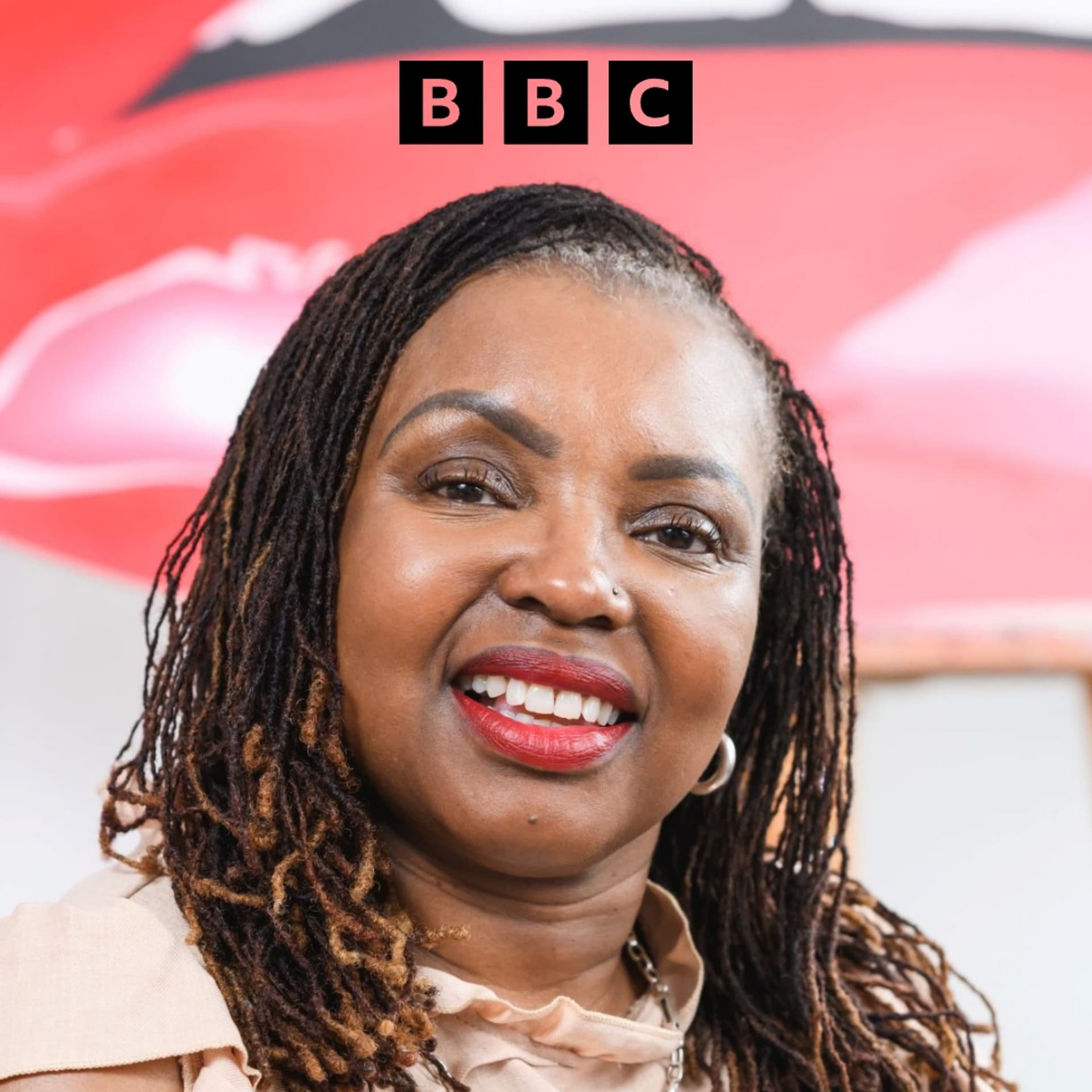
(Image: A photo of Yvonne Johnson. She is smiling directly at the camera. Credit: Portrait Of A Voice.)