In short
Tech Life Podcast Episode Notes: Jamming and Spoofing
Episode Overview
- Title: Jamming and Spoofing
- Host: Zoe Kleinman
- Producer: Tom Quinn
- Editor: Monica Soriano
- Focus: The episode discusses satellite navigation, the rise of signal interference, digital archiving, and a unique energy initiative from the Faroe Islands.
Key Themes
- Satellite Navigation and Signal Interference
- Main Concern: An increase in cases of jamming (interference) and spoofing (false signals) of Global Navigation Satellite Systems (GNSS), critical for the safety of shipping and aviation.
- Expert Insight:
- Ismail Cobos-Delgado (International Maritime Organization) explains:
- Jamming: Disrupts GNSS signals, rendering navigation systems ineffective.
- Spoofing: Involves broadcasting signals similar to GNSS, causing erroneous positioning.
- Extent of the Problem:
- Reported increase in jamming and spoofing instances, especially in geopolitically sensitive areas like the DPRK and Black Sea.
- Concerns about state actors being involved, alongside potential criminal activities.
- Safety Risks:
- Erroneous situational awareness can lead to severe navigation risks, such as collisions or groundings.
- Call to Action:
- Governments are urged to protect GNSS frequencies and penalize illegal jamming and spoofing activities.
- Digital Archiving
- Guest Speaker: Dr. Naomi Wells (University of London)
- Importance of Digital Preservation:
- As a large part of cultural and societal interactions move online, preserving digital content is vital.
- Concerns exist about relying on private companies to maintain digital memories.
- Methods of Archiving:
- API Monitoring: Allows for some scale of data collection from social media.
- Web Crawling: Captures and saves copies of websites for future reference.
- Challenges:
- Legal issues surrounding intellectual property and privacy.
- Awareness needed among individuals about their public data being archived.
- Significant financial and technical resources required for effective archiving.
- Faroe Islands Space Initiative
- Introduction to the Project:
- A non-traditional space program focusing on utilizing tidal power rather than space exploration.
- Luna 12: An underwater energy kite designed to harness ocean currents using tidal energy generated by the gravitational pull of the moon.
- Technology Overview:
- The underwater kite collects kinetic energy and converts it into electricity.
- The initial deployment scheduled for 2024, operations expected to last up to a year before maintenance.
- Future Aspirations:
- Goals to expand capacity beyond 1.2 megawatts to possibly 3-4 megawatts.
Audience Interaction
- Listeners are encouraged to share their favorite everyday tech and experiences via email or WhatsApp.
Noteworthy Segments
- Volunteer Project for Wikipedia Images:
- The segment covers "Wiki Portraits," a project aimed at improving the quality of images on Wikipedia through volunteer photographers.
- Photographers participate in events to capture better images for notable individuals, addressing issues of poor-quality or outdated photos.
Conclusion
- The episode wraps up with a reiteration of the importance of understanding technological impacts on daily life, highlighting issues from navigation safety to digital preservation.
---
This structured note-taking format presents a comprehensive overview of the podcast episode, summarizing crucial discussions and insights while maintaining clarity for the reader.
Written by AI. May contain mistakes. Listen to the episode to check what was said.
Transcript
Automatic transcript. May contain errors.0:00Welcome to Tech Life on the BBC World Service, the programme about technology and its impact on our lives. I'm Zoe Kleinman and this week we're looking at satellite navigation and the worrying increase in cases of interference. How could this affect shipping and aviation safety and what can be done about it? I'll be finding out about digital archiving, what should be saved for the future and how to do it. If you're a well-known person on Wikipedia, your photo might be getting a refresh. And the tiny islands in the North Atlantic harnessing the power of the moon.
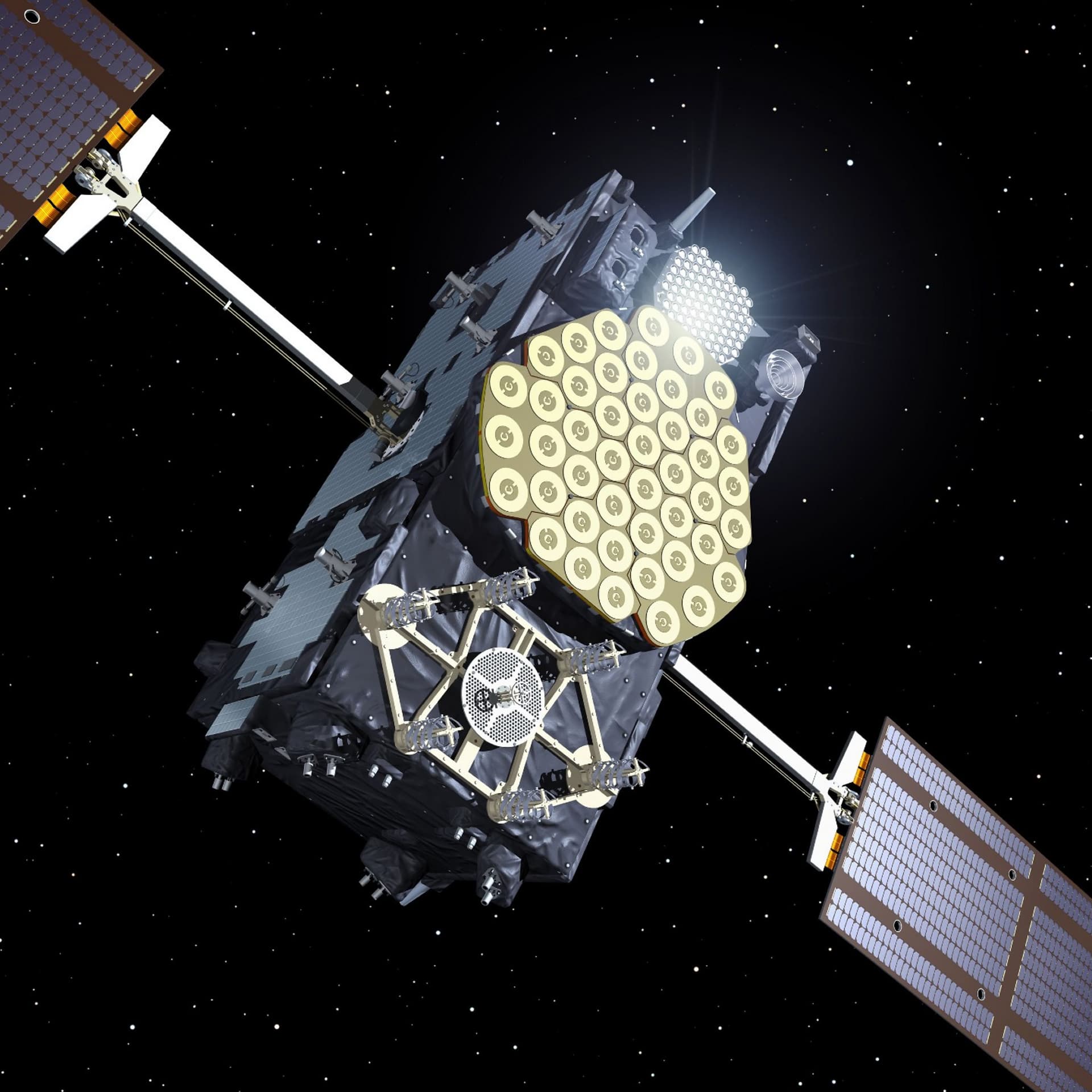
0:53We start today with a problem that's affecting technology which many of us use in our travels, but it's also critical to the safety of ships and aircraft around the world. I'm talking about satellite navigation. Three United Nations agencies have joined together to warn with grave concern about an increase in interference in sat-nav signals. The interference comes in the form of jamming and spoofing that disrupts global navigation satellite systems. These are constellations of Earth-orbiting satellites providing positioning, navigation and timing services worldwide. Now governments are being asked to protect these critical frequencies.
1:35I've been speaking to Ismail Cobos-Delgado from the Maritime Safety Division of the International Maritime Organization, one of the three UN agencies raising concerns. I asked him to explain what jamming is. Well, jamming is a radio frequency interference. And this is interfering the global navigation satellite systems, among which we have GPS. It's only one of them. But the general concept is global navigation satellite systems. And this interference prevents receivers from locking onto satellite signals and has the main effect of rendering the whole system, navigation system, ineffective or degraded for users in the area affected by the jamming.
2:20And let's continue our little glossary before we really get into this story with what spoofing is. Spoofing is a different concept. is the broadcast of a signal that is similar to a GNSS, Global Navigation Satellite System signal, and it causes the calculation of erroneous positions and provides false guidance. So spoofing is more difficult to detect and it often poses a much higher risk to safety. And how easy is it to do either of those things? How easy is it to jam or spoof the signal? Well, it seems quite easy to do. And the only thing that you need is an equipment, and this is quite accessible to the sector and to states and administrations, to have this kind of elements and this kind of equipment to provide these signals.
3:14And who is doing this? It's state actors, is it? It's countries rather than criminal gangs or even individuals, or is it all of them? Well, it's a good question because we don't have direct access to the sources of these signals and interference. What we are receiving here is information by member states indicating the cases where the GNSS interference has taken place in different areas. And this recently has been more linked with international waters near the DPRK, Democratic People's Republic of Korea, and also in the Black Sea. So what we can kind of work out is that these cases seem to be related and have intensified in areas with ongoing geopolitical issues.
4:05And you've seen an increase in the number of cases? What we have seen is an increase in the cases raised here in IMO. We don't know exactly if this is the case in general terms, that there has been an increase. But what we have received here is an increase in cases raised by member states. And we have recently worked with the International Telecommunications Organization, ITU, and also with ICAO, in order to have a joint statement with them, with the Union and the Organisation for Civil Aviation, encouraging member states to take action and to those perpetrators of these kind of signals to stop using these kind of mechanisms that put at risk the safety of navigation.
4:51What kind of action can be taken? Is it illegal? This goes against the international regulations, of course, because we have very clear provisions in the SOLAS Convention and also the International Civil Aviation Organization has its own provisions for aviation. And this is breaking this kind of regulations and provisions that we have in place. It's difficult to do something. We can monitor this harmful interference and try to identify the sources of transmission. and this is something that requires specialized equipment and mostly military equipment many times. The other thing that can be done by administrations is just to ensure that national legislation penalizes these kind of actions because this is endangering the safety of shipping and the safety of civil aviation.
5:45So, of course, it's not that we have a law saying you cannot take this kind of action of jamming and spoofing But of course, it's breaking the provisions that we have in place internationally. I've been looking into this prior to have a conversation. And there are many examples, aren't there, of some quite serious near misses that have been as a result of jamming or spoofing signals. Can you give me a couple of examples? So this kind of action can lead to erroneous situational awareness. So what we have, as I mentioned, is position, navigation and time data of the own ship that has been modified, even the ship's course.
6:33And consequentially, this is leading to wrong decision making by masters and deck officers. And this is having serious risk to safety of navigation. And it can finally end in collisions or grounding. This is something that may happen. My thanks to Ismail Cobos Delgado from the International Maritime Organization.
7:19London this week to look at these questions. One of the organisers is Dr Naomi Wells, Deputy Director of the Digital Humanities Research Hub at the School of Advanced Study at the University of London. I asked her what got her interested in archiving digital material. Well I study languages, cultures and societies and increasingly over the last two decades we've seen that so much of our lives are lived in the digital realm and it increasingly became clear that we need to understand what's happening in that digital realm. Because if we're only studying what people are doing in offline and kind of physical spaces, we're only really getting a very small part of that complex picture.
7:58And really, we are living in a world in which we're generating more digital content, arguably than physical, are we? Absolutely. And this is a trend that has dramatically increased in recent years. And this is why we talk about in our kind of communities, we talk about born digital. So we're really emphasising that so many of the texts, the materials, the objects we create are increasingly digital. And a lot of them, it's not that all of those physical materials have disappeared, but a lot of them have moved to these online spaces, or a lot of us are using some physical, some digital. But it's clear that we're going to be increasingly creating more and more digital materials in the future.
8:40And why is it important that we preserve them? So if we think about how much of our lives are lived in online spaces and how much culture, society, politics, how much of that is happening in the digital realm? And then we imagine historians of the future and we think, what will they know about our lives if we don't capture these digital materials? So we're really talking about capturing digital memory. And if historians of the future don't have access to this material, they're really only going to get a very partial picture of what was actually happening in the 21st century. And currently, we rely on the companies whose platforms we're using to sort of retain that archive for us, aren't we?
9:24Whether that's a social media account or a news organisation or whatever. But of course, they might not be around forever either, may they? Absolutely. And that's a real issue that we've been exploring a lot at the University of London. We're very concerned that these companies are really driven mainly by commercial interests and we can't really trust them to maintain, to sustain our digital memories for the future. And actually, this is where there are a lot of archiving initiatives. They're based in national libraries, places like the British Library, the National Archives in the UK, but also internationally.
10:00International organisations are doing this work of actually saying we can't trust commercial companies to do this work for us. So actually, we really need to take the lead in preserving this data, preserving these memories and taking responsibility for this in the longer term. And how do we go about doing that? How do you start and manage an archive like this? It's a combination of approaches. There's one thing that's called an API, an application programming interface. And this allows you to download data at scale from social media platforms, for example. The challenge with that is that the social media companies are again in control of what data we can get access to.
10:41So there are limits to what we can actually collect from that. But the other approach is something called web crawling. and so with web crawling what particularly cultural heritage organizations are doing are essentially they're capturing copies of websites so they're essentially recording a website and then they're able to save that into a file a kind of file where you can recreate a website that may not exist anymore that may have changed and so there's really interesting different ways of approaching this but it is very technologically challenging and it creates a lot of ethical and legal questions as well.
11:15Oh, like what? So when we're talking about the kind of legal question, we're talking about intellectual property. Now, intellectual property, we kind of know how that works for physical books. You know, we know how copyright works. We don't actually quite know and we don't have all the answers to what that means in some of these digital spaces. When we think about social media, you know, whose intellectual property is that? Is it the social media companies? Is it the individuals concerned? So that can raise an awful lot of questions that we have to kind of think through in terms of how do we respect people's intellectual property while at the same time archiving these materials.
11:50And then the other question around ethics is really the question around privacy. So when we're talking about archiving the web or archiving social media materials, when we're doing it at scale, we're normally talking about archiving public accounts, so public social media accounts, public websites, so things that aren't behind passwords or where people haven't closed their accounts to stop that happening. But that can still create issues because some people don't really realise when they're posting to social media that this is public material. I think a lot of people don't realise that, do they?
12:23Absolutely. And I think that's where we may, it may legally be public, but we do need to kind of educate people, make them more aware that you are creating public data. All of this sounds a bit expensive. Do you need lots of money? Yes, and this is a real challenge. When we are talking about doing it at scale, that is where it's very expensive. And we actually recently, one of our PhD students, Beatrice Canelli, did a really interesting piece of research where she highlighted the global inequalities, because this is so expensive that only in kind of very well-resourced institutions tend to be in the global north.
12:59there are kind of massive inequalities here of which countries can actually archive and preserve this data so this is a real concern for us this kind of inequality of access to the kind of technical equipment the staffing you know you need people who have really specialist expertise here so it is very expensive and that is a real challenge that organizations are facing that's dr naomi wells from the university of london
13:32You're listening to Tech Live on the BBC World Service with me, Zoe Kleinman. I must say hi to Robert Alcock, who's emailed us from Greece. Robert says he's been enjoying Tech Live for a long time now. Thank you, Robert. And he listened to last week's show. We talked about Bitcoin mining in Zambia using excess electricity generated by a hydropower project. Robert says there's an extremely energy efficient alternative to Bitcoin. It's called money. Now, I've been asking you to tell us about your favourite bit of everyday tech that you simply can't do without. Jeff Elvis Tarny from Monrova in Liberia is blind and says he can't live without his Bluetooth earbuds, which help him use his screen reader.
14:13That's the software which describes what's on the screen of your device. Jeff works in radio and says using his earbuds means he's able to listen to his screen reader without interrupting his broadcasts. Thanks, Jeff, for telling us about that. If you want to get in touch about the tech you can't live without or anything else on the show, you can send us a voice note. We like those or a text message on WhatsApp. Our number is plus 44 330 1230 320 or email us at techlife at bbc.co.uk. And still to come, it's takeoff time for the Faroe Islands Space Programme.
14:55If you're a regular user of the online encyclopaedia Wikipedia, you might have noticed that some of the photos of well-known people are, well, maybe a bit so-so, maybe a bit hmm. Using snaps taken by professional photographers costs money and Wikipedia, which is largely sustained by volunteers, doesn't have the budget for that. So a project's been started by volunteer photographers to improve the images that are used, as Tech Live's Graham Fraser reports.
15:29The hustle and bustle of the red carpet at the premiere of the hottest new movie in town. Photographers are pointing their cameras at the film stars, asking them to look here or there. They are working for huge agencies like Getty or media organisations from around the world. But there is another photographer here who is volunteering for an outlet you might not expect. Wikipedia. The online encyclopedia is benefiting from a project called Wiki Portraits. The group of volunteer photographers have one aim, to increase the number of quality images on Wikipedia and its sister site, Wikimedia Commons.
16:11As you might have noticed, some of the pictures of notable people on Wikipedia are not the best. Two of the co-founders of WikiPortraits are Jennifer Lee and Kevin P. Rave. Wikipedia has, for the longest time, had missing or poor quality portraits and photos of people for its biographies. So this kind of issue has always been in the back of our minds as Wikipedia editors. There are other people who have been very, very bothered by this and didn't necessarily know what to do about it. And so there's a whole range of people who are coming our way, people who have already contributed to Wikimedia Commons as photographers and just like being part of something bigger.
16:53To people who have been super bothered by the terrible photos on Wikipedia and want to save the world from them as well. And the bad photos at some point are like so funny. There's some amazing blobs of humans. An image of Saturday Night Live comedian Emil Joachim during a stand-up show was so overexposed you couldn't even see him. It was removed from his profile a few days after it was uploaded last year, with a volunteer editor noting, having no picture is better than what's currently there. And then there is the footballer Kyle Bartley. His Wikipedia picture is 14 years old. In it, he has an opponent's fingers in his nose and mouth.
17:37So why are some pictures on Wikipedia not great? Well, professional photographers attending movie premieres or sporting events tend to work for companies who are paying them. Their work is subject to copyright. Those same photographers are not going to upload their work to a website where anyone can use their pictures for nothing forever. Meanwhile, at Wikipedia, there are strict rules for photography and copyright and the pictures uploaded on the website must be a contributor's own, freely licensed or in the public domain. Here is Kevin Pairavi again. We love professionals, we love hobbyists, amateurs, anyone who knows their way around their camera.
18:15Wiki Portraits has been going since last year. One of the photographers involved in the project is Brian Berlin, a high school photography teacher from New York. It's helped me be a better teacher to getting able to like take these photos of people learning a lot about that red carpet aspect of things of being like, all right, you have three seconds. This person's going to stand there and like look at you and you got to get the photo right. But having a better photo of somebody, I think it just it gives better. You're giving better information to somebody who's accessing Wikipedia by having a better quality photo.
18:48Elijah Wood, I took a photo of Elijah Wood. That's now his photo on Wikipedia. And he was so nice. He was just like such a kind person. And he was hanging out with the photographers and was like, oh, it's so cool that you're doing this. Like, this is such a cool thing. Frank's son is another New York-based photographer who has taken pictures for Wiki Portraits. Like others in the group, he has been pleased to take photographs of some underrepresented filmmakers to help their profiles on Wikipedia, as much as he has enjoyed taking pictures of the established celebrities. One experience he remembers fondly was when he took the picture of Letitia Doche, the French actress, writer and director at the Cannes Film Festival.
19:27She's like, my photo is terrible. It's from like 10 years ago. But she's like, I'm so excited to update it because anytime people search for me, it's my Wikipedia and it's an old photo. And I, you know, I don't know where to get a new photo up there. And so we were able to update her photo. And, you know, I think she was pleased. Some of the biggest names in the world of entertainment already have a Wiki Portraits image as their Wikipedia picture. Along with film festivals, their photographers have volunteered at the Edinburgh Festival Fringe and the Nobel Prizes. 55 photographers from around the world have either volunteered for them or planned to, and the project is also working at sports events.
20:05So what are the hopes of the future? Well, the project's founders hope to attract more photographers from around the world to cover a variety of events in their own countries. But the red carpet will always have a draw, as Jennifer Lee explains. Our dream is to get credential for the Met Gala and then for the Oscars. That's when we know we've made it. That's Jennifer Lee from Wicked Portraits, ending that report by Tech Live's Graham Fraser.
20:35Here's a quiz question for you. Where are the Faroe Islands? Well, they're about halfway between Scotland, where Tech Live is made, and Iceland in the North East Atlantic Ocean. There are 18 islands with a combined population of around 55 ,000 residents and even more sheep. But now this small nation is launching the Faroe Islands space programme. They've even got a promotional video. Global superpowers are competing to control lunar resources. One of the world's smallest nations will now join them. With one difference. This space programme will never leave Earth.
21:23I've been speaking to Martin Edlund, the chief executive of Minesto, one of the partner companies involved in the space programme. I asked him if it involves rockets. No, we're not talking about rockets. We're talking about underwater energy kites that are being launched in this beautiful group of islands called the Faroe Islands in the middle of the Atlantic. And what is their connection to space? Well, imagine the connection to space is really to draw attention to the fact that we can do much more on Earth than what we've done so far in utilizing resources and renewable sources. So we are playing a little bit with words when we say that we've launched a space program where we do not leave Earth.
22:12And what we do is that we are, Minesto and our partner SKF, we are working on a large scale deployment of tidal power plants. And the connection to the moon is quite obvious here because the gravitational forces between the Earth and the moon is what generates the power that we want to harvest. I've got to admit, this is a take on the space race that I haven't seen before. I spend a lot of time looking up and you are sending your equivalent of a rocket down. Is that right? That's right. I'm fully submerged to operate in a trajectory safely in the water column, sailing on the forces generated from the currents in the ocean.
23:06And it's called Luna 12. Correct. Which is another nod to the moon. And it kind of looks like an aircraft, doesn't it? Yes, that's correct. What will it do? Well, it will collect kinetic energy, energy from the movement of the ocean. It will collect it via a turbine and a generator and transform it into electric energy. that makes it basically a power plant driven by moon power and therefore having fun with the space programs and so forth as a mean of communicating and talking about what we do. And how big is it? It's 12 meters between the wingtips. And the weight is around 28 tons. Quite big then?
23:59It's quite big. And we're aiming at even bigger spaceships, if you may say so. So this is 1.2 megawatts and we will probably be able to get up to three, maybe four megawatts long term to even sort of challenge the cost context even more to bring costs down. I just want to ask you quickly, how long can the Luna 12 stay underwater for? So the first one we had when it was installed in 2024, we had a four month grid connected period where the system autonomously work with the tides to generate electricity. The plan is, of course, to have continuous operation over a year and maybe do a service check once a year or once every second year when the technology matures.
24:47So it's quite stable and good conditions down there in the water column. It's much worse to be on the surface where you have a lot of less, more irregular forces and that will impact anything you install. And it goes in a kind of figure of eight pattern, doesn't it? How deep is it? Well, the current installation is at 80 metres of water depth. And the flight trajectory, it's tethered, attached to the seabed with a cable and basically a rope. And that is what is holding it back and holding it in its trajectory. So when the current moves, there will be a lifting force generated on the wing. And that force is used to push the system forward.
25:34That's Martin Edlin, the chief executive of Mineste, speaking to me from Gothenburg in Sweden.
25:45Well, it's mission accomplished for this edition of Tech Life. Remember, you can get in touch with us and let us know what you think of today's show or make a suggestion for a future episode. And we'd love to hear more examples of tech you simply can't do without. Our email address is techlife at bbc.co.uk or you can WhatsApp us on plus 44 330 123 20. Tell us your name and where you live. Today's Tech Life was produced by Tom Quinn, edited by Monica Soriano and presented by me, Zoe Kleinman.
From the publisher
Tech Life looks at satellite navigation and the increase in cases of signal interference. How could this affect shipping and aviation safety, and what can be done about it ?
Also in this edition, what digital material of cultural significance should be stored for the future ? A volunteer project is improving Wikipedia's photographs. And we find out about efforts to harness the power of the moon on the Faroe Islands.
Tell us about the one bit of tech you use in your life everyday – get in touch by emailing techlife@bbc.co.uk or send us a Whatsapp on +44 330 1230 320.
Presenter: Zoe Kleinman Producer: Tom Quinn Editor: Monica Soriano
(Image: An image of a Galileo navigation satellite. Credit: BBC)