In short
Tech Life Podcast Episode Summary: Pinterest Boss on Online Safety
Episode Overview
- Title: Pinterest Boss on Online Safety
- Presenter: Chris Vallance
- Producer: Imran Rahman-Jones
- Guest: Bill Ready, CEO of Pinterest
- Main Topics:
- The role of Pinterest in social media and online safety.
- Insights into cyber safety, particularly concerning children.
- Discussion on the implications of cyber-attacks and data theft.
- The end of dial-up internet and the introduction of AI pets.
---
Key Insights
Interview with Bill Ready (Pinterest CEO)
- Pinterest Overview:
- A digital pinboard platform allowing users to curate interests.
- Known for a predominately female user base but is growing among men.
- Safety Measures:
- Addressed the dangers of young users interacting with strangers on social media.
- Introduced strict privacy settings: accounts for users under 16 are private by default and turned off for social features.
- Despite initial stock drop (20%), user growth surged due to prioritization of safety, especially among Gen Z.
- Response to Tragedy:
- Reflected on the tragic case of Molly Russell, a young girl whose exposure to harmful content on Pinterest contributed to her death.
- Committed to leading industry changes in trust and safety, emphasizing user well-being.
- Global Reach and User Engagement:
- 80% of Pinterest’s active users are outside the US.
- Focus on actionable content, particularly shopping, to enhance real-life interactions rather than just screen time.
Cybersecurity Segment
- Cybersecurity Company Insight:
- Discussion with Robin Brettel from cybersecurity firm LabOne highlighted key vulnerabilities in stolen data.
- AI is being utilized to analyze vast amounts of unstructured data from breaches, uncovering sensitive information.
- A concerning statistic: for every stolen dataset, approximately 482 other organizations are exposed, leading to significant security risks.
- Impact of Cyber Attacks:
- Issues surrounding data breaches and the types of data often stolen, such as financial information.
- Discussion on the societal implications of unregulated data exposure and the potential for identity theft and fraud.
The End of Dial-Up Internet
- Dial-Up Service Conclusion:
- AOL announced the discontinuation of its dial-up service, marking a significant technological milestone.
- Discussion on the history of dial-up and its role in connecting early internet users to the online world.
- Statistics on current usage highlight that while dial-up is declining, it still retains a small user base in certain regions.
AI Pets Discussion
- Introduction of Moflin:
- A robot designed to serve as an emotionally intelligent companion, recently launched in various markets.
- The reaction to Moflin reveals mixed feelings about the necessity and efficacy of AI companions.
- Expert Commentary:
- Dr. Emily Collins discusses the psychology behind human interactions with robotic companions.
- Raises ethical concerns regarding the exploitation of perceived vulnerability in AI designs for potential surveillance.
---
Conclusion This episode of Tech Life provides valuable insight into the evolving landscape of technology, particularly in the realm of social media safety, cybersecurity, and emerging AI technologies. It emphasizes the dual nature of tech advancements—while they offer new opportunities for connection and creativity, they also present significant challenges in safety and ethics that need ongoing attention and regulation.
Written by AI. May contain mistakes. Listen to the episode to check what was said.
Transcript
Automatic transcript. May contain errors.0:00Welcome to Tech Life on the BBC World Service, the programme about tech and how it's changing all our lives.
0:15no you haven't gone back in a time warp to 1999 we'll be talking more about that sound later on also on the program a cyber security company uses ai to unearth the critical information hidden in hackers' stolen hordes of data. On average, for every stolen data set, 482 other organisations have been exposed as a result, and that exposure could be something that leads to them being attacked. And finally, we wrap it all up with a fluffy item. It's really cute. It's really cute. Yeah, really cute. But first, we're going to hear from the kingpin of the pinboard-based social media platform, Pinterest.
1:18rest. Now in many parts of the world there's been no bigger tech story than the role social media plays in our lives. How do we keep the good things and limit the harm it can enable particularly to children. We don't often get to discuss these issues with the heads of social media firms, but TechLive's Shona McCallum has been chatting to Bill Reddy, the boss of Pinterest. Shona, welcome to the studio. Tell us about Pinterest. Well, Pinterest, Chris, you might recognise the red and white P logo. It's an app which lives on mobile phones and serves as a digital pin board, if you like, where you can search for all your interests.
1:58Maybe smart work outfits might appeal to you or kitchen inspiration. I've mainly used it for ideas for decor around my house and it kind of makes a mood board for you. You can pin all the ideas in one place and revisit it at any time. But like all social media platforms, there are questions over safety for young people. So that's what I started by asking Bill Reddy to address. As a tech CEO and as a dad, I looked at what was happening across social media platforms with random strangers able to contact young teenagers online. And it just makes sense when you say it out loud that it's not safe for strangers to be able to contact children online.
2:41Most people say, well, of course not. But somehow social media has conditioned us to accept that that's okay. And so at Pinterest, I made accounts private only for under 16, private by default for under 18. And what that really means is that it's not a feature you can turn on and off. We just said full stop. We're basically turning off the social features for users under 16. And while our stock dropped over 20 % when we did that, a year later, we had nearly doubled. And Gen Z is now more than half our platform. because it turns out young users are looking for safer, healthier alternatives. So Gen Z, you're very popular with Gen Z, but your user base is predominantly women and you're the man in charge.
3:26Does that bother you? Well, you know, if you, you know, I'm quite happy about our user base. You know, shopping is a core use case for our platform. We do skew towards women, which is fantastic. We're also growing with men. On your last point about me being the man in charge, if you look at our team, more than half my executive team is women, more than half the management in our company is women, which shouldn't be a unique thing to say, but it actually is quite a unique thing in the world of tech. Now, Bill Reddy's been at the helm of Pinterest for three years, but I wanted to ask him about a case that was before his tenure, Molly Russell.
4:02She was a 14-year-old from London who took her own life, and a coroner later ruled that the material that she had been exposed to on Pinterest contributed to her death. First of all, just as a parent of a young daughter, like I just, it's such a tragedy, and I can't imagine the pain her family feels. And while that happened before my time here at Pinterest, I think about it every day. When I came in as CEO, I shared that a primary reason I joined Pinterest was to prove that you could have a more positive alternative to social media. And we made trust and safety and user well-being central to our reason for being.
4:43When you look at what we've done relative to other platforms, I think we've put very strong actions behind those things. because I think it's a tragic example that more absolutely can and should be done. And I think while that was a tragic situation, it has galvanized us around why it's so important that all tech platforms take these things really, really seriously. And again, we've looked at that and said, we want to lead the way on this. And I think if you look objectively at what we're doing, you know, publishing our results on our emotional wellbeing impact with users, leading the industry on those things, committing to continue to be better, sharing the work that we have done with others in hopes that others in the industry adopt it as well.
5:34You know, we absolutely are looking to lead the way on these things. And, you know, again, I think about Molly every day and the work that we do, and it guides us. I'm sure now that I mean the story of Molly Russell that was really big news here in the UK but Pinterest has a broad global audience doesn't it? Yes that's right 80 % of Pinterest users and that's half a billion monthly active users are outside of the United States and although Pinterest is seen as more of a shopping destination in the US Bill Reddy says that's a focus now for the rest of the world. So when you arrive on your pinboard and you find that green sofa that you really like, you can then click through and make a purchase.
6:17International, outside the US, is where our fastest user growth is happening. And at the core of that has been us making the platform more actionable, particularly around shopping, where people can solve things in their real life. We actually don't measure success based on view time. I think so many social media companies, their primary measure of success is how much they can maximize the view time of the user. We don't optimize for view time. In fact, to the contrary, we optimize for how much we can help somebody take an action in their real life that's going to make their real life better, that's going to get them off of a screen and doing something in the real world with real people, with friends, with family.
6:57And the more we've driven that actionability with shopping being one of the largest use cases that has been central to our growth not only in the United States but around the globe and certainly in the UK as well. The UK is you know quite a large market for us there's a lot more that we're going to do to solve for shopping in the UK and Europe as well. What's your aesthetic on Pinterest? What's on your boards? You know sneakers are a big one for me. I'm quite into sneakers. I grew up in a little town in Kentucky. My parents had a little auto repair shop and so I grew up working there. And so I'm a car enthusiast as well.
7:33So classic automobiles and things like that are a big interest for me also. Do you see yourself as a rag to which a success story? A lot of what I've talked about in terms of how I think about customers comes from my background. You know, I mentioned I grew up in a little town in Kentucky. I was first in my family to go to college. Yeah, Silicon Valley was a universal way from where I grew up. But I grew up in a place where I had to look customers in the eye. And if we didn't do good things for customers, we weren't going to eat well, literally. And those were formative experiences. And I think one of the things that has happened is that you have so many people that are building these platforms that have hundreds of millions or billions of users that have never had to really look customers in the eye.
8:13We've got nearly 600 million users. I'll never get to meet all of them. If I couldn't look them in the eye and say, I did my absolute best to do the right thing for them, then we're not going to do it. Bill Reddy, the boss of Pinterest there. Fascinating stuff, Shona. Thanks so much for joining us. Pleasure.
8:33Well, if you've an opinion on anything you hear on the programme or just want to share your Pinterest board, do get in touch. We'd love to hear from you, our listeners. Hello to Chris in the US who has emailed in from his office while waiting for his company's tech support to come and unlock his laptop, which had frozen his account for security reasons. He said it got him thinking about how much cyber security has changed in the past 25 years. Once we only needed a password to get into our email. Now we have many, many virtual and physical keys needed to access even the simplest computer systems.
9:13But he says a few hours of frustration is a small price to pay if it helps protect us from cyber attacks. And stay tuned, Chris, because we'll have more on cyber attacks in a bit. Well, do please keep emailing in your thoughts and ideas to techlife at bbc.co.uk. or why not send us a voice note on WhatsApp. The number is plus 44 330 1230 320. We read and listen to everything you send us. Still to come, we say goodbye to dial-up internet and can a robot pet really be as good as the real thing? I'm not really too sure about it. It just looks like a big furball. That's cute.
10:07Well, now a story that may unfortunately impact quite a few of our listeners. Every day, data is stolen by hackers and placed on the open internet, often because a company or organisation hasn't given in to hackers' demands to pay them big money, not to publish it online. These data breaches can contain huge amounts of information, including thousands upon thousands of pages of documents. Before the advent of AI, analysing these documents would have been impossibly time-consuming. But now, using artificial intelligence, a cyber security company called LabOne has gone through 141 million of these stolen files and found they contained a goldmine of sensitive info.
10:58LabOne's co-founder, Robin Brettel, gave me the rundown. Every time there's a ransomware attack, data is stolen. And the data that's stolen is unstructured files. The things that we create when we're at work, so spreadsheets, invoices, contracts, email messages. So we've analysed these files to try and make sense of the information that is now out there in the public domain and what could be used by criminal groups to attack and cause more problems for society going forwards. And this is really interesting, isn't it? Because this, what you call unstructured data, i.e. the mountains of text that we produce in emails, reports, you know, anything really that we type ourselves as human beings, that's not in the form of a table.
11:49Previously, that would have been really hard for a hacker to go through. It would have taken them years to go through mountains of data. but now they can do it much more quickly. Yeah, they're acting like data scientists and using the same tools that we have available to us. So AI and generative AI. So if we personalise this and we make it about each of us, we all know that we have certain information that we don't want in the public domain. So typically we would think about our email address and passwords but if you extend that out to maybe medical information, your birth certificates your driving licenses this sort of information if it was exposed in and the criminals could find those packets of information and stitch them all together they could create a complete profile of you and then they might use that to find a way to defraud you for example so in other words they can piece together a jigsaw to get a complete overview of you your company and the and the the ways that they might get into your company or they might blackmail your company or exactly or your staff uh social engineering is a it's a big problem deep fakes so the fact that the deep fake knows there was an invoice sent between two companies and the po number that was used suddenly means the deep fake becomes very believable I mean, what is there that you found that's concerning about the data that's being published?
13:25Well, when the hackers break into an organization, they steal the files. And then if the company doesn't pay the ransom, they will dump those files in the public domain. And the files contain all sorts of things. We found 93 % of the data that's stolen is financial data. but also we found that on average for every stolen data set 482 other organizations have been exposed as a result and that exposure could be something that leads to them being attacked i mean you give this the fact that this data can cover loads and loads of different organizations you give it a name you call it the blast radius don't you and so we do call it the blast radius of an incident and yeah 482 on average but we've covered incidents where 11 ,000 17 ,000 organizations have had exposure as a result so sometimes the exposure can be absolutely enormous.
14:31I mean what should we be most worried about is it is it the the loss of data or is it the disruption that these attacks cause? I mean, we've seen continuing as we speak, we have the disruption caused to Jaguar Land Rover, the car manufacturer, because of a cyber attack that it suffered. You know, everything stopped, workers sent home. Should we be worried about that primarily or worried about the fact that lots of personal, private sensitive data is being published online by hackers? Clearly, we all want to stop the disruption. And there are many, many security companies who focus on different aspects of securing an organization.
15:16At LabOne, we felt no one was really looking at the unstructured data and the risks that presents to all organizations and people. When wealth statements for people are in the public domain and that's unknown, that could become a fraud risk. I think for disruption, we would all like the disruption to stop. We just need to make it harder and harder for the criminals to find ways to attack us. People listening may worry about their own data. I mean, there's so much hacked data out there. They may worry that their data has been published online by hackers in one breach or one security incident or another.
16:01What can people do to protect themselves? and how worried should they be? So I don't want to be alarmist. I think the criminals right now are very heavily focused on large organizations. On an individual level, it's probably not hugely significant that the data's out there. There's so much data out there already on each individual. Just be careful about what you do share. Photos, videos can be stitched together and create deep fakes. So I guess the higher profile you are in your organisation or your role, the more of a target you might become. And that's Robin Brettel from cybersecurity firm LabOne.
16:59That's the sound of connecting to the internet over dial-up and at one point it used to be the main way to connect to the internet. But it's a sound that is fading out as dial-up disappears. Tech Life's Imran Rahman-Jones is here to tell us more. Hi, Chris. As you'll know, that's how we used to get on the internet, through the phone lines. But now, of course, we can connect via 5G and broadband and satellites. So why are we talking about this now? We're talking about this now because AOL, which was one of the early tech giants in the US, has said it's finally ending its dial-up service at the end of September.
17:39The end of an era. It is in many ways, but it did surprise me to learn that in the US, 127 ,000 households were still using it in 2024. That's according to their Census Bureau. As for the rest of the world, I asked the UN's International Telecommunication Union. They don't hold exact figures for dial-up usage, but they do for something called narrowband, which is basically a proxy measure. And they say in most countries, it's generally used by less than 1 % of households. but in some places it is higher so six percent in japan three percent in france and two and a half percent in portugal now when i was looking into this i was wondering what the dial-up sound actually did so what those weird noises actually meant so i did a bit of research and i'm going to play you the sound and we'll go through it
18:38so we all know that's the first bit of uh of the dial-up noise so imagine you want to get online what we've just heard is your modem using the phone line to dial the internet provider's modem to connect and then those two modems start talking to each other basically working out how they'll connect and making sure they speak the same computer language as each other and then you get this.
19:08So that first bit was the modems taking off what's called the echo suppressor. So that's what stops you from being able to hear your own voice back when you're talking on the phone. But modems don't need to do that. So they get rid of it. And then my favourite bit, the little twanging noise that we heard, is the modems really getting into it. So they're working out the best way to connect talking about which bandwidth to use what's available and they're exchanging all that information between each other in just that little noise and then this bit that just goes on for a while it sounds like white noise that's the modems then scrambling the data and doing a sound check on each other so they know what they sound like on the connection and then hopefully if it's all gone to plan.
19:54After that, you're online. Who knew? Who knew? Imran Rahman Jones knew. And you've also been speaking to someone who was in charge of many of those internet connections back in the day. Yeah, a man called Steve Case, who was a co-founder of AOL, or America Online, as it was then known. And at one point, it was the biggest internet service provider in the US. Now he's a venture capitalist at his firm, Revolution. evolution. Having dial-up go away is a little bit bittersweet because of those memories of those early days, you know, 40 years ago when we were just getting started. But certainly, I understand there's a march of technology, a march of progress, and you got to keep moving forward.
20:36I saw that you posted on LinkedIn, those dial-up days represented accessibility, possibility, and the early spirit of online community. So what was that early spirit to you? Well, the early spirit was basically we saw the Internet as a way to connect people to each other, connect them to information and education, all kinds of different tools and resources, which, of course, now is the case. And most people kind of take it for granted. It went from something that most people didn't know about or care about to something that everybody wanted to be part of. And that's when the Internet really kind of exploded in the late 1990s.
21:15Were you seen as a bit of an outsider when you first started, you and your colleagues first started? Was it seen as a safe bet at the time or was it risky? Yeah, in the early days, we started in 1985 for most of the, all the 80s and even most of the early 90s. You know, we were viewed as kind of fringy. I'd go to a technology conference and people there would be talking about, you know, personal computers and software and semiconductors. And nobody really cared about what we were doing. We were kind of off on the fringe. You know, maybe there were one or two Internet people at these conferences.
21:49And so it was a little bit lonely and, you know, pitching an idea that most people thought was a little bit crazy. But, of course, eventually it turned around and every company decided they needed to integrate the Internet into their strategy. And so it's a reminder. sometimes revolutions happen in evolutionary ways and you really need the patience and perseverance to stick with it because it's rare that things are really overnight success. In the case of AOL and the internet, it was really a 10-plus year-in-the-making overnight success. That's the co-founder of AOL, Steve Case, talking to Imran Rahman-Jones.
22:28Thanks so much for explaining the dial-up tone. I never knew. Thank you, Chris.
22:39That mewling is Moflin, a robot that's been a sell-out hit in Japan and recently had its US and UK launch. I've got one with me. It looks a little like a toupee with eyes, or maybe a guinea pig without legs. Casio, who make it, call it a palm-sized, emotionally intelligent AI companion. reaction in the office has been a little mixed i think i could say it's kind of cute i quite like it oh i think i think i've made a friend you don't like it no i think it's really weird so it's not gonna it's not gonna drive away the blues for you no i've had it sort of sat with me while i've been working a lot and i found that it's kind of like having a dog which i would really like and can't have because I can't afford one.
23:31This isn't far off the price of a dog. It's still very expensive. Well to find out what the public make of this animal-like robot I've stepped out of Tech Life's global headquarters here in Scotland and I've been showing it to some families and a key issue has been its price. It's also really cute. Yeah really cute. Should I tell you what it sells for yeah go for it 369 pounds hey it's a wee animal look what is it's a new wee animal oh he's really cute in there it's quite expensive how much 369 pound you'd buy a couple of cats for that give me claps say bye bye bye bye well casio told us the uk recommended retail price of£369, that's nearly US$500, reflected the sophisticated technology they said was inside it.
24:26And to be fair, real pets do come with some pretty high bills as well. But Moflin is far from the only animal-like robotic companion designed to provide entertainment and support. We've had robotic dogs, robots that look like seals. So why do we, as human beings, respond to these animal-like gadgets, which, after all, are just machines. Hello, I'm Dr Emily Collins, and I'm a research fellow at the University of Manchester in the Department of Computer Science, and I specialise in human-robot interaction. Anything that looks vulnerable, enlicits a vulnerable state in us, is going to make a human being feel compassion towards it.
25:07So if you can build something like that into a machine, then you can hopefully then use those machines in the same way that you might use a dog but maybe can't have a dog. So we are predisposed to find cute robots comforting but Dr Collins also has a warning that this is something that unscrupulous tech makers could exploit. If you're building very cute robots those cute robots may be more acceptable in certain places when those cute robots are actually doing surveillance for somebody who shouldn't otherwise be in that scenario. So there are benefits to making something look innocent and vulnerable.
25:41It's why the best spies are just sort of, you know, middle aged women just tottering around doing the groceries. It's just anything that looks completely not nefarious. Always be wary. Dr Emily Collins from the University of Manchester. Lots to think about there, eh, Moflin?
25:59Well, we're at the end of this week's programme. As ever, we'd love to hear from you, our listeners, do you think robots can provide companionship and comfort? Or perhaps you find the idea of becoming attached to an inanimate object off-putting? Get in touch with us at techlife at bbc.co.uk or WhatsApp us on plus 44 330 1230 320. This week's programme was produced by Imran Rahman-Jones, presented by me, Chris Valance. And I think it's time to put Moflin back to bed.
From the publisher
An exclusive interview with Bill Ready, boss of social media platform Pinterest. Plus – what is actually stolen in a cyber-attack, the end of dial-up and are AI pets the future?
Presenter: Chris Vallance Producer: Imran Rahman-Jones
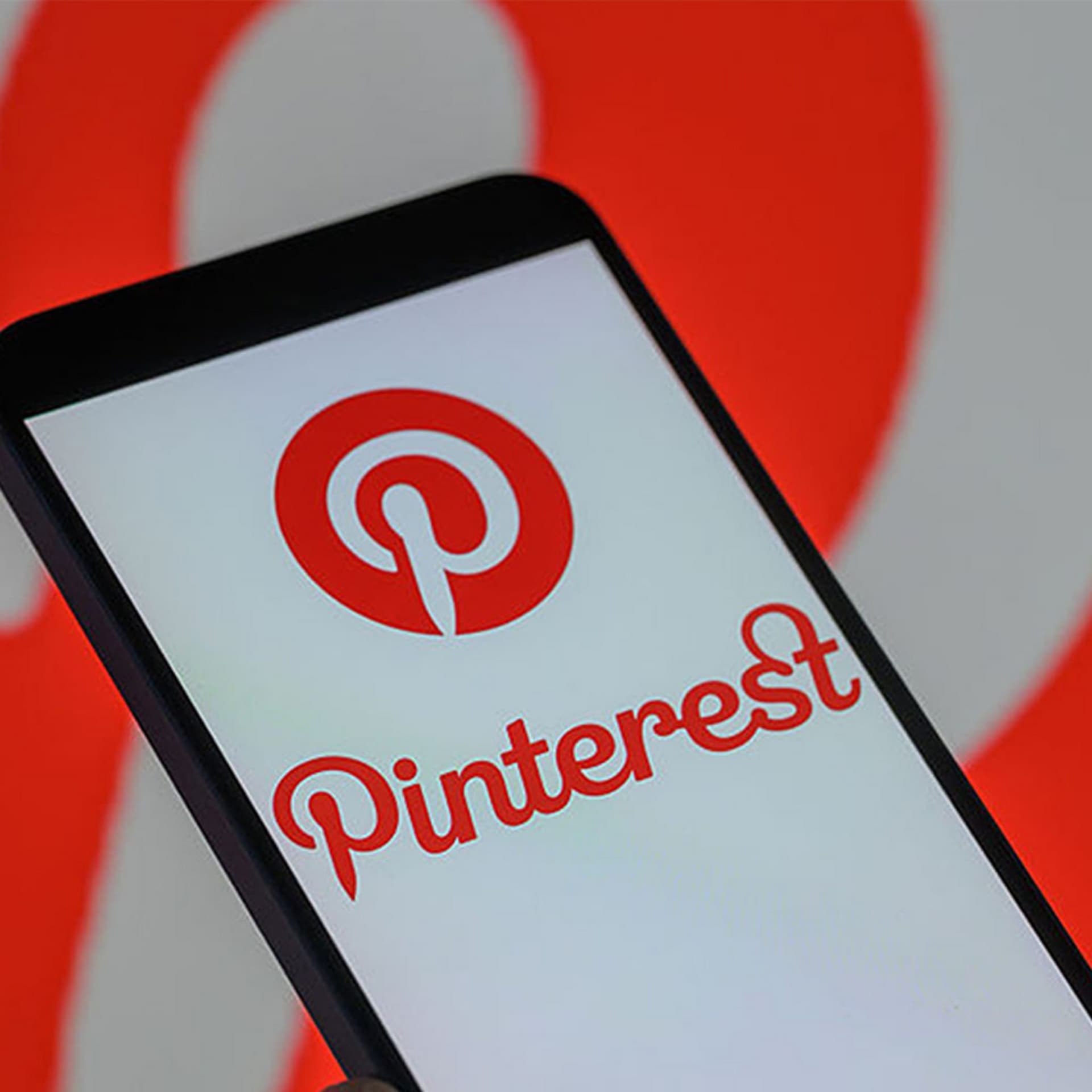
(Image: A phone with the red Pinterest logo on it. Credit: Getty Images)