In short
How “attribution science” links specific extreme weather to human-caused climate change, and how that evidence is being used (or could be used) in climate lawsuits; plus two other Tech Life segments on AI’s environmental footprint and a NASA space robot returning home.
Guests/backgrounds
Dr Frederica Otto, climatologist and co-founder of World Weather Attribution (WWA); Dr Noah Walker-Crawford, research fellow in climate litigation evidence at Imperial College London; Alex de Vries-Gau, Dutch academic and founder of Digi-Economist; Prof Sethu Vijaykumar, University of Edinburgh robotics professor (Alan Turing Institute); Elle Miller, PhD student working on tactile sensing/dexterous hands (also previously at NASA JPL).
Key claims
Attribution studies compare event likelihood/intensity in current warming vs a counterfactual “no human influence” world; WWA has found climate change increased risks (e.g., Turkey/Greece/Cyprus wildfires ~10x; Pakistan floods rainfall ~22% more intense; Hurricane Melissa ~5x more likely). In principle, major fossil-fuel companies can be held liable; the 2015 Peruvian farmer Saul Luciano Yuya case against RWE was dismissed in 2025 for insufficient concrete evidence for his specific home but helped establish liability in principle. AI data centers may drive up power/water use and e-waste; AI servers could generate 131–225 million kg e-waste in 2030. Valkyrie’s series elastic actuators enable safe, compliant humanoid movement for space maintenance.
Notable examples
Hurricane Melissa (95+ deaths); RWE glacier-flood litigation; e-waste recycling limited to about a quarter or less; Valkyrie’s return after work at University of Edinburgh starting 2015.
Written by AI. May contain mistakes. Listen to the episode to check what was said.
Chapters
Tap a time to open that second in VOClimate Change and Extreme Weather
1:12 to 2:13
Discussion on how climate change is affecting weather patterns.
“Hello and welcome to Tech Life on the BBC World Service, the programme about technology and how it's changing all our lives.”
Understanding Attribution Science
2:16 to 3:21
Exploration of attribution science and its role in disaster analysis.
“extreme weather events are becoming more intense and more frequent, scientists say.”
The Process of Attribution Studies
3:25 to 6:22
Detailed explanation of how attribution studies are conducted.
“So an attribution study is when scientists examine a specific extreme weather event to establish whether climate change made it more likely or more intense.”
Real-World Examples of Attribution Science
6:26 to 7:40
Discussion of specific disasters and their connection to climate change.
“And some of the most notable examples from 2025 alone include wildfires that ripped across Turkey, Greece and Cyprus.”
Attribution Science in Climate Litigation
7:41 to 9:07
How attribution science is being used in legal cases related to climate change.
“Are there examples of instances where attribution science has been used in legal cases?”
Challenges in Climate Litigation
9:11 to 9:56
Challenges faced by legal systems in understanding climate change evidence.
“And that will put significant pressure on investors to move their money away from fossil fuels and toward renewable forms of energy production.”
Tech's Role in Climate Change
10:01 to 10:44
Discussion on how tech firms are contributing to climate issues.
“And I mean, there's so much dramatic worrying news around at the moment.”
Listener Engagement and Feedback
11:46 to 12:25
Interaction with listeners and sharing their thoughts on previous episodes.
“You're listening to Tech Life on the BBC World Service with me, Chris Vallance.”
The Impact of AI on the Environment
13:00 to 14:01
Exploring the environmental consequences of AI and its resources.
“The computers powering the tools and chatbots we use are hungry for power.”
E-Waste Crisis from AI Servers
14:01 to 19:27
Explore the significant impact of AI servers on electronic waste generation.
“But behind it are huge amounts of computing power, physical computing.”
Show all 12 chapters
NASA's Valkyrie Robot: A New Era
19:28 to 24:10
Discover the advancements and significance of NASA's Valkyrie robot in space exploration.
“And if you live somewhere where dealing with e-waste is a bit of a problem, do get in touch.”
Future of Robots in Healthcare
24:11 to 27:04
Learn how robotics technology from space can revolutionize healthcare services.
“So Elle's a PhD student with us, and she's been working on the next generation of tactile sensing with dexterous hands.”
Transcript
Automatic transcript. May contain errors.0:00This BBC podcast is supported by ads outside the UK. This is Mike Bolo of Lexicon Valley. And I'm Bob Garfield. Are you one of those people who sometimes uses words? Do you communicate or acquire information with, you know, language? Hey, us too! So join us on Lexicon Valley to chew over the history, culture, and many mysteries of English. Plus some wisecracks. Find us on one of those apps where people listen to podcasts.
0:59what stories that make you sound way smarter at dinner. Subscribe to Cool Stuff Daily now, because the future's happening fast, and it's way too fun to miss. Hello and welcome to Tech Life on the BBC World Service, the programme about technology and how it's changing all our lives. I'm Chris Vallance. This week, climate change is making devastating extreme weather more common. Tech Life's Yasmin Morgan-Griffiths explores the science that could help communities take polluters to court. I've been looking into attribution science which can help establish whether a flood, wildfire or other natural disaster was made more likely by climate change.
1:42We'll also look at whether the boom in AI is causing a boom in electronic junk. And as astronauts shoot for the moon, we meet the veteran space robot that's finally going home.
2:13As climate change heats up our world, extreme weather events are becoming more intense and more frequent, scientists say. That rather abstract phrase, extreme weather events, describes a harsh reality that some of you may have experienced. Extreme weather means hurricanes, floods, wildfires and droughts. Events that destroy homes and cause injury and loss of life. Tremendous devastation caused by Hurricane Melissa. Terrifying, the worst day of my entire life. Once a village, now an island. There's no food.
2:56The most destructive wildfires ever to hit Los Angeles. This was a beautiful home. I had a lot of good times here. Unsurprisingly, some victims would like to get compensation from the polluters causing global warming. But to do that, you have to prove a link between an individual disaster and climate change, which is where something called attribution science comes in. TechLife's Yasmin Morgan-Griffith has been looking into this for us. Hi Yasmin, welcome to the studio. So what exactly is attribution science? Thanks Chris. So an attribution study is when scientists examine a specific extreme weather event to establish whether climate change made it more likely or more intense.
3:40There are researchers doing these studies in institutions all over the world, but one of the most significant is World Weather Attribution or WWA. Dr. Frederica Otto is a climatologist and the co-founder of the organisation. I asked her to explain to me how it works. For each type of hazard, we have different criteria. So, for example, for heavy rainfall, the criteria are 10 or more people have died or a million or more people are affected or 50 % or more of the population of a country are affected. we meet and look at which events have triggered globally. And then we make a decision whether to do a study based on, is it a part of the world or is it a type of hazard where we don't have many studies yet?
4:28The second step after choosing to actually do a study is to find out what has actually happened. And that sounds trivial, but it is sometimes actually quite difficult. Ideally, we will look at weather station data. In many countries, there are only a few weather stations, and that is a big limitation. So we look at satellite data and see, okay, how does that link to the impact? Okay, but how do they show that the event wouldn't have happened anyway without climate change? So this next bit is a little bit complicated. Once the scientists have taken all the observations and the data from the event that they're studying, they then try to establish how often an event like that would be likely to happen in different global warming scenarios.
5:12So to do this they look at historical data but they also run the observations through something called climate models. Those are computer simulations which allow the scientists to see how variables like temperature and rainfall interact with the physics of our world. So first they would run it through a model that simulates our present reality where the world has been warmed by 1.3 degrees Celsius because of humans burning fossil fuels. And then they can make a comparison by putting the same variables from the extreme weather event into a different climate model, which simulates a world where humans hadn't caused climate change.
5:50Here's Dr. Frederica Otto again. Is the event we have just observed in the warmer world, is it a one and two year event? Is it a one and 10 year event? We compare that with the same event if it had occurred in a world without climate change. Is it still a one in 10 year event, in which case climate change wouldn't have any influence? Or would it have been a one in 100 year event, in which case then we could say because of climate change, this event has been made 10 times more likely. So Yasmin, are there examples of disasters where this has been done? So, so many, Chris. And some of the most notable examples from 2025 alone include wildfires that ripped across Turkey, Greece and Cyprus.
6:35WWA found climate change made them 10 times more likely. There were also some very deadly floods in Pakistan. WWA found climate change made the rainfall that caused it up to 22 % more intense. And one of the most memorable recent examples was, of course, Hurricane Melissa. That was one of the strongest storms in modern history, which killed at least 95 people across Jamaica, Cuba and Haiti. And WWA's study found that a storm of that strength was made five times more likely because of climate change. And given what you say, I can imagine that this has been used in litigation. That's right. So attribution science isn't actually a new thing.
7:19In fact, the science has been evolving gradually since the 1990s. But what is much more recent is that it's becoming an increasingly powerful source of evidence in climate lawsuits, where essentially people will bring companies or governments to court if they are big emitters of fossil fuels, arguing that they should pay for the damage their pollution has caused. And has this actually been done? Are there examples of instances where attribution science has been used in legal cases? Yes, and I'm going to tell you now about one of the most famous climate lawsuits to date. In 2015, a Peruvian farmer called Saul Luciano Yuya sued the German energy company RWE, which is one of Europe's biggest emitters of fossil fuels.
8:03Mr Yuya argued that the company should pay for flood defences because those emissions contributed to the significant melting of glaciers near his home. Attribution science played a key role in that case as it moved through the court system over the course of a decade. It established causal links between the emissions of RWE, climate change and the melting glaciers. So that case was eventually dismissed in 2025, with the court ruling there wasn't enough concrete evidence of danger to Mr Yuya's home specifically, but it did result in a very significant development in climate law. Dr Noah Walker-Crawford is a research fellow in climate litigation evidence at Imperial College London, and he helped to launch Mr Yuya's case.
8:47The court found that in principle, these major fossil fuel companies can be held liable for their contribution to climate change. That means, in principle, major polluters can be made to pay for climate change impacts. So it may only be a matter of time until one of these cases is successful, until we have a precedent, and that could really open the door to a large number of future cases. Once fossil fuel companies have to pay out for climate damages, that raises serious questions about their business model, because it means that greenhouse gas emissions equate to a financial liability. And that will put significant pressure on investors to move their money away from fossil fuels and toward renewable forms of energy production.
9:32And it'll also put a lot of pressure on politics to find more sustainable long-term solutions to address climate change. Now, although courts around the world are starting to recognise that climate change is a significant issue, legal systems are still adapting to what is a relatively new issue for them to deal with. There are ongoing challenges in getting legal professionals and scientists to understand each other better so that a more robust legal framework for climate litigation can be developed. Fascinating stuff, Yasmin. And I mean, there's so much dramatic worrying news around at the moment.
10:06it's really easy to forget that climate change is still there and there are still dire warnings that we aren't doing enough. And it's increasingly a problem big tech firms need to address. Yes, we've been hearing so much recently, haven't we, about how data centres use such a huge amount of water and electricity. And as more and more of them are built to fulfil big tech's expanding AI ambitions, we have to think about what energy sources are being used to power them. And so if governments can't scale up clean energy fast enough to keep up, we could see the carbon footprint of AI data centres tick up pretty quickly as well.
10:44And that's something that governments and tech companies have to address if they're serious about tackling their climate impact. And indeed, we'll have a little bit more on that later in the programme. Thanks, Yasmin, for that report. Thanks, Chris.
10:59Every day, the world gets a little weirder and a lot more awesome. Cool Stuff Daily takes a look at everything from mining in space to the latest in the fight against cancer to how AI is basically changing everything. It's all the cool stuff you didn't know you needed to know. Join us for Cool Stuff Daily as we take a quick look at science, tech, and the wait, what stories that make you sound way smarter at dinner. Subscribe to Cool Stuff Daily now because the future is happening fast and it's way too fun to miss.
11:46You're listening to Tech Life on the BBC World Service with me, Chris Vallance. It's time to say hello to some of our listeners. Cholan Lovo tunes in from South Africa. He heard last week's show about AI and how it could improve healthcare. Cholan WhatsAppped us to say he uses the public health system and he's concerned about the amount of time patients wait to see a doctor. He hopes AI will help reduce the weight and speed up treatments. Martin Anderson listens to us in the southwest of Scotland, not that far away from our studio here in Glasgow. I'm waving, Martin. Can you see me? Martin emailed us to say he enjoys the show.
12:24It gets him thinking. Well, that's good to hear. If you want to share your thoughts about anything in this week's show, Techlife at bbc.co.uk is our email address. Or WhatsApp us. The number is plus 44 330 1230 320. Feel free to send us a voice message, but please tell us your name and where you live. And still to come, a robot designed for space finally goes home.
13:00Well, now to AI. And the AI revolution is a hungry one. The computers powering the tools and chatbots we use are hungry for power. That electricity demand generates planet-warming pollution. The computers are also hungry for water, water used in power generation, and water to cool them. And all this computer hardware, banks and banks of computers called servers has a limited life expectancy. Eventually, it breaks down or becomes obsolete. And so AI also generates a lot of electronic waste, known as e-waste. New research has put a number on just how much e-waste may be generated. The good news is it's lower than previous estimates of 5 million tonnes by 2030.
13:49The bad news? It's still a lot. The study's author is Alex de Vries-Gou, a Dutch academic and founder of Digi-Economist, a company that researches the unintended consequences of digital trends. With AI service specifically, what you're dealing with is that after these machines are used for a certain amount of time, we don't know exactly how long, let's say five or six years these machines get disposed and it's the disposal of this equipment where we start talking about electronic waste so essentially e-waste from ai service is the moment we start disposing of these ai service that we've been using for a couple of years and i think it's worth pointing out that you know the apps can seem you know just sort of ephemeral can't they things that things that don't have a physical presence there's just a search box and you're talking to a chat bot or whatever.
14:44But behind it are huge amounts of computing power, physical computing. Yeah, that's indeed the case. If you're interacting with AI apps like ChatGPT or anything similar, what happens is that question you're asking is going to be sent to a server somewhere, and that server is going to be responding. And obviously, nowadays, we have a whole lot of server equipment that's being used to provide this type of services. So actually, if you look at the data center landscape, potentially up to half of the total power demand by data centers could already be due to AI servers. And given that AI servers now have such a huge presence in the data center landscape, they're obviously also going to have a big impact at the end of the line when all of that equipment is going to get disposed.
15:36And that's what I try to quantify. I tried to quantify exactly how much EUAs does this produce in a couple of years. I first of all looked at how many of these AI servers have been produced, first of all. Secondly, how long are these AI servers going to be used? And thirdly, by the time you get to 2030, what does that mean in absolute EUAs output from these servers? And the number I found was that by 2030, EUA servers alone could be responsible for 131 to 225 million kilograms of EUA generations in that particular year. And it's not a cumulative amount, it's just for 2030. And that's pretty huge because that amount is actually the equivalent of the total electronic waste generated by countries such as, for example, Norway or Austria.
16:27So it's pretty substantial by itself. When we think of waste as, you know, filling landfills, as a physical problem that needs to be dealt with, can you give a sense of the sort of the scale of the physical problem? You appreciate it's like the e-waste output of a country. That gives you an idea it's pretty big anyway. But I just wonder if we can kind of help the audience visualize how much that is. The tricky part with e-waste is that in general, we don't really know what happens to it. This is actually the core problem with electronic waste. So only a quarter or less than a quarter of all electronic waste globally is being recycled.
17:03So we know what happens to it. It goes into a formal circuit and that's all properly managed. But then the rest, it ends up somewhere and we don't really know where. There used to be this e-waste capital of the world in China. So this big chunk of global e-waste was just shipped off to that specific city and then just dumped there. We know the consequences of this. So we know that when you have a big pile of e-waste just laying around for a while, what's going to happen is that the toxic materials in there are going to be leaching into the groundwater, leaching into the soil. Then after a certain amount of time, maybe people will start to take this equipment apart for valuable parts and throw the rest into an incinerator.
17:45And at that point, also the toxic materials will still end up in the air as well. We know this is the rough outcome of electronic waste. The difficulty is how do you quantify the exact externalities if you can't really trace what's going on with it? And I suppose a lot of this must be happening in developing countries as well. I mean, you spoke about UAE historically ended up in China. I guess the suspicion is it ends up in places where it can just be dumped, where the authorities or turn a blind eye or regulation either doesn't exist or isn't enforced. Yeah, unfortunately, that's the case. The e-waste just goes wherever it's the most convenient to dump it.
18:31That's just not right. This essentially means that this is going to be ending up in, let's say, the most vulnerable locations on the planet. And I think this is something that we really need to keep in mind here. So it's not just a lot of waste with a lot of bad consequences, but it's also most likely going to be ending up at the most vulnerable communities. Is the figure that you've arrived at better than previous estimates or is it worse? Actually, one year prior to my own research, someone else did some research on this topic as well. And what they found was that the potential e-waste stream of AI could be 4 to 20 times larger by 2030 than the number that I found now.
19:13Now, I guess the good news is that if you look at my numbers, at least it's less than what was previously found. At the same time, it's still a significant number, considering this is still more than the entire e-waste output of certain countries like Austria. That's Alex de Vries-Gau. And if you live somewhere where dealing with e-waste is a bit of a problem, do get in touch.
19:44Well, NASA is back in the business of sending human astronauts to the moon. And not very far from TechLife Global Headquarters in Scotland's capital city, Edinburgh, I met a NASA robot that was also preparing for a journey. Valkyrie was developed by NASA with a view to developing tech to assist with Mars missions. Well, it didn't quite get to the Red Planet. Instead, in 2015, it arrived at the University of Edinburgh, where researchers worked to improve its skills. Earlier in March, I visited the robotics department as staff and students said their final farewells ahead of disassembling Valkyrie for transport back to the US.
20:23And before we play that tape, I should explain a bit of tech speak. When you hear references to an actuator, in simple terms, that's a reference to parts of the robot that make things like an arm or a leg move. So this is how my visit went, beginning with my guide, a senior academic who spent years working with Valkyrie. Hi, Sethu Vijaykumar. I'm Professor of Robotics at the University of Edinburgh, and I'm also the Programme Director for AI and Robotics at the Alan Turing Institute. And we're here in the School of Informatics. It's called the Field Robotics Lab. So this is where we do all sorts of robotics, and robotics for extreme environments, for health care, and for assisted living.
21:02Now we're here because you're saying goodbye to one of your robots. It's hanging on a frame here, on a kind of gantry here. And it's a humanoid robot. It's large. It's white. It looks very sci-fi. It looks kind of like a Power Ranger. It's got that 80s TV kind of look to it. And on its side, on a little gold epaulette, is the NASA badge. It's called Valkyrie. You're saying goodbye to it because it's going back to NASA, isn't it? Tell me about this robot and why it's important. Yeah, so this came to us in 2015. NASA reached out to us and said, we have a state-of-the-art humanoid that we've just built.
21:48We are looking to get smarts on it. It's perfect in terms of its form factor. It's got some new technologies that people haven't explored, things like series elastic actuators, which can basically change the stiffness of each of the limbs on demand so that it can be compliant, safe. So it was a two-year negotiation process with NASA. I had to sign something called the Space Act Agreement. And at the end of it, we managed to get her over and started working on it from 2015. Why was Valkyrie important and what was it meant to do? So Valkyrie is designed to work in space. One of its primary goals is to maintain assets in space.
22:33So, for example, if you've got the space station, at the moment astronauts have to go do EVs, go out, do actual sorties to sort out any issue with the external panels, the repair. And that's an extremely dangerous job, not least because of space debris, but also everything else that can go wrong. and the idea is robots like Valkyrie can take people out of harm's way by doing a lot of the jobs that astronauts currently do. That's one thing and the other aspect is about maintaining assets when astronauts have left the space station or potential future habitats and do this effectively without having to rebuild stuff from scratch.
23:18So sort of being a caretaker. Indeed, indeed. And will you be sorry to see the Valkyrie go? Oh, absolutely. We've had this amazing relationship, especially with Outreach, with the Edinburgh Science Festival. We've had lots of public come through our doors, seeing Valkyrie in action. I'm thinking maybe there was a 13-year-old or an 8-year-old who's now inspired by looking at the Valkyrie robot and said, oh, I want to do robotics, I want to do STEM subjects. I wouldn't be surprised if we had some students in the current cohort who had seen Valkyrie 10 years ago and has now decided to pursue a career in AI, in robotics, and thinking about use of robotics in solutions across the different domains.
24:04So yeah, extremely proud, very sad to go, but it has to be done. So let me introduce Elle Miller. So Elle's a PhD student with us, and she's been working on the next generation of tactile sensing with dexterous hands. and Elle has got a very interesting history having worked with NASA at JPL as well. Elle, firstly are you sorry to see Valkyrie go? Definitely, so I'm a PhD student now but I always looked at these robots in awe and in Sethu's lab and it was part of the inspiration to come here and so yeah, sad day for all of us. Now we've got some of your equipment you're working on, we've got a robotic hand here.
24:48What are you studying, what are you researching? So I study a few different robots. So at one level we study, I guess, segmented parts of the body, so hands, arms, things like that. But I also go all the way up to humanoids, actually working with researchers in Japan. And Sethi was saying that you worked at JPL, I think that's right. I did, yes. Jet Propulsion Laboratory, which is a NASA lab and facility. What were you looking at there? We were looking at autonomous off-road driving. and so going back to space robotics, imagine that you've got a vehicle and you want to explore Mars or the moon.
25:26This vehicle needs to be completely autonomous. It needs to drive fast in order to explore entire planets and things like that and so we are looking at how AI can be used to do this. I take it you have faith in that space exploration will be assisted and robots will be a big part of space exploration. I mean, they're already a part in terms of the rovers and things like that, but the kind of robots Valkyrie is, they're going to be a big part of space exploration in the future. Absolutely. I mean, so a human requires food, water, oxygen, emotional support, things like this. Crudely, like a robot doesn't.
26:10A robot just needs batteries and energy. And so in terms of safety, there's a big case for sending robots to do all of these manual tasks and keeping the bases active and things like that. And what are you particularly excited about? Because the future is entirely ahead of you. You've got your whole career ahead of you. What are you excited about seeing emerge and develop? So I'm actually working on robots for health care at the moment. and it might seem quite a leap to go from space to healthcare in a hospital, but surprisingly the technology is exactly the same. You can go working for a space company to working for robots in a hospital, but the underlying systems, the hardware, the AI, it's all using the same techniques.
26:56And so I think this physical human-robot interaction is a very promising region to explore, particularly with things like our ageing crisis, demographic shifts, the burden on caretakers and things like that. So we're exploring how robots can be used to help hospital staff, help caretakers at home, help bring independence to people with motor impairments. For me, that's really exciting. Well, thanks to Ellie Miller and the University of Edinburgh robotics team.
27:34Well, it's almost time to pack up this edition of Tech Life. Just a reminder that we'd love to hear from you. Have you had to say farewell to a loved piece of old tech? Maybe you have an old tech relic you can't part with. We'd love to hear your story. So why not get in touch? You can email us at techlife at bbc.co.uk or you can WhatsApp us on plus 44 330 1230 320. Please include your name and where you live. Today's edition was produced by Tom Quinn and presented by me, Chris Fallons.
Read the full transcript
28:30There is a place where we can find answers, where journeys break new ground and connections unlock opportunities, where innovation can spark real change and our actions can push our world forward. Singapore, where business events can create lasting impact. Have you ever received a call from a stranger regarding student loans you don't owe? An unpaid parking ticket for a car that you don't even own? If so, you might have been the target of a scam orchestrated by criminals thousands of miles away. I'm Tristan Redman, one of the hosts of the Global Story podcast, and we're taking an inside look at the highly lucrative scam factories of Southeast Asia.
29:16Listen to the Global Story on bbc.com or wherever you get your podcasts. Thank you.
From the publisher
Climate change is making devastating extreme weather more common. Tech Life's Yasmin Morgan-Griffiths explores the science that could help communities take polluters to court.
Also this week: we look at whether the boom in AI is causing a boom in electronic waste. And as astronauts head back to the Moon, we meet a veteran NASA space robot that's on a mission to return home.
Presenter: Chris Vallance Producer: Tom Quinn
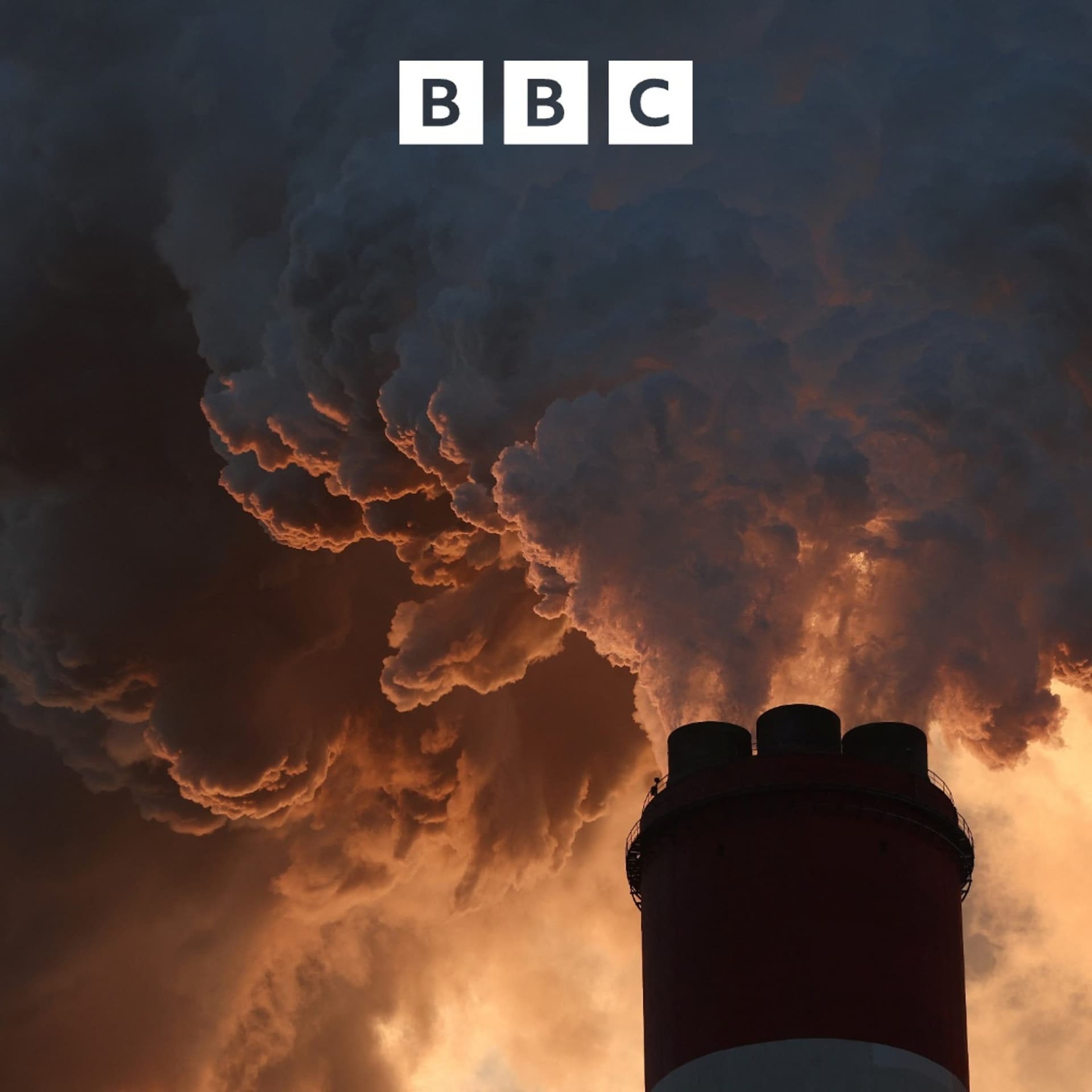
(Photo: Smoke billows from a chimney at a coal-fired power station in Eastern Europe. The light of the sun is obscured by the dense dark smoke clouds. Credit: Reuters)