In short
Tech Life Podcast Episode Summary: Red Lines for AI
Episode Overview Podcast Title: Tech Life Episode Title: Red Lines for AI Presenter: Shiona McCallum Producer: Tom Quinn
Description: This episode discusses the urgent need for international agreements on artificial intelligence (AI) to prevent risks that could threaten humanity. The discussion features insights from Stuart Russell, a prominent computer science professor, who emphasizes the necessity of establishing clear "red lines" that AI should not cross. The episode also explores AI's impact on various sectors, including the legal profession and health awareness in Ghana, as well as a feature on a young tech enthusiast from Dubai.
Key Takeaways
Global Concerns about AI
- Over 200 prominent individuals and 70 organizations call for international agreements to define unacceptable uses of AI.
- Concerns highlighted include:
- AI potentially surpassing human intelligence.
- Risks of engineered pandemics.
- Widespread disinformation.
- National security threats.
- Economic impacts, including mass unemployment.
Interview with Stuart Russell
- Stuart Russell, a professor at the University of California, Berkeley, discusses the potential existential threats posed by advanced AI systems.
- Key Points from the Interview:
- Machines could one day outperform humans in critical areas, leading to loss of control over their actions.
- The 10% to 30% chance of human extinction due to AI, as estimated by some AI company CEOs, is alarming.
- Red Lines Concept: AI systems should not replicate themselves without human authorization or be used for malicious purposes.
- Advocates for regulations similar to those in the pharmaceutical industry, where safety must be demonstrated before deployment.
Current State of AI Regulation
- Current AI regulation efforts have been weak, primarily relying on voluntary self-regulation by companies.
- Calls for a global regulatory body to enforce standards and prevent “jurisdiction shopping” by companies seeking lax regulations.
- Concerns over the timeline for effective regulation, with Russell suggesting that significant incidents might be needed to spur action.
AI in the Legal Profession
- AI's Role:
- Enhancing legal work, particularly in document management and complex legal research.
- Potential to reduce the number of junior lawyers needed due to efficiency gains.
- Comments from Raghu Ramanathan, President of Legal Professionals at Thomson Reuters:
- Current AI tools can perform tasks traditionally done by paralegals or junior associates.
- While commoditization of basic legal tasks may occur, the demand for complex legal analysis will likely increase.
Healthcare Innovations
Holograms in Ghana
- Portable hologram technology is being utilized to deliver breast cancer awareness messages in Ghana, where the survival rate for the disease is low.
- Dr. Beatrice Wiafiyade, a breast cancer surgeon in Ghana, collaborates with U.S.-based company Gemini to provide immersive health messages using holograms.
- The technology allows for high-resolution projections that can enhance communication and education around breast cancer.
Young Tech Enthusiast Feature
- Isana Adwan, a 12-year-old tech YouTuber from Dubai, shares insights about her passion for STEM fields and her plans to interview notable figures in the tech industry.
- Her YouTube channel focuses on broadening curiosity in science, technology, engineering, and math (STEM).
Conclusion This episode of Tech Life highlights critical discussions surrounding the ethical and practical implications of AI technology on a global scale, the legal sector, and healthcare. The conversations emphasize the need for proactive governance and the integration of technology into everyday life to improve outcomes, particularly in health education.
Contact Information Listeners are encouraged to share their thoughts on AI and its implications for employment and society through the podcast's email (techlife@bbc.co.uk) or WhatsApp (+44 330 1230 320).
Written by AI. May contain mistakes. Listen to the episode to check what was said.
Transcript
Automatic transcript. May contain errors.0:00Hello and welcome to Tech Life on the BBC World Service, the programme about technology and how it affects all our lives. I'm Shona McCallum. This week we're looking at some of the serious concerns about artificial intelligence. You might be familiar with chatbots or have experimented with generating images or videos using AI. It can be fun. But there's also potential dangers and some of the world's leading experts have expressed fresh concerns. I'll be speaking to one of them. That's in a moment. Later we look at how AI is making an impact on the legal profession. AI is at this moment not quite replacing lawyers, but it's enhancing the work significantly.
0:42And find out how holograms are helping to spread breast cancer health advice in Ghana.
1:06Let's get straight into it on Tech Life today with a call. Establish clear international boundaries to prevent universally unacceptable risks for AI. At the very least, define what AI should never be allowed to do. That's Nobel Peace Prize winner Maria Ressa addressing the United Nations a couple of weeks ago. A global call for AI red lines, which more than 200 of us have signed to prevent universally unacceptable risks for AI. As she said, she's one of 200 prominent Nobel Prize winners, politicians, scientists and leading artificial intelligence researchers, making an urgent call for binding international measures against dangerous use of artificial intelligence.
1:55Now we have heard similar pleas in the past, but what's different about this one is the variety and the breadth of people who are joined up. Their concerns include AI that can far surpass human capabilities, that machines will be more intelligent than us, and they fear escalating risks such as engineered pandemics, widespread disinformation, national and international security concerns and mass unemployment. I've been speaking to one of the signatories, Stuart Russell. He's a professor of computer science at the University of California in Berkeley. Back in 1951, Alan Turing, who was the founder of computer science, actually predicted that we would have to expect the machines to take control.
2:41In 1951, it wasn't that much of an immediate concern. Now it does seem to be something that we have to worry about. and the CEOs of the AI companies themselves say that they expect, depending on who you ask, somewhere between a 10 % and 30 % chance of human extinction. And do you think that's a genuine prospect? I think if we create machines that are significantly more capable than human beings in every relevant dimension, then we would no longer have a say in whether we continue to exist any more than gorillas and chimpanzees have a say in whether they continue to exist with respect to human destruction of their habitats, for example.
3:34And you've been talking about regulating AI. Tell us what you mean about when you talk about red lines. people are a little bit particularly in america they're very allergic to the idea of regulation for technology but we need to actually get a handle on this we cannot afford to take a 20 to 30 chance of human extinction so you would like to say ai systems have to be safe in the same way that we say medicines have to be safe. So you can't just sell medicines. You have to prove that they are safe and effective before you can sell them. So the idea of red lines is to basically point to unacceptable behaviors, specific unacceptable behaviors, such as an AI system replicating itself without human authorization or breaking into other computer systems could be helping terrorists to build biological weapons.
4:48These are specific unacceptable behaviors and the red lines say that you can't deploy AI systems unless you can show us that they're not going to exhibit these behaviours. I mean, tech companies and governments have talked about the need to keep AI safe. And they've been doing various things. There's been various AI summits, which I'm sure you know about. I mean, how do you think that they have done so far? And are you worried that we're kind of running out of time here? Overall, I would say the progress on actual regulation so far has been fairly weak. The kind of thing that we're asking for is something that says you can't deploy your product unless you meet certain requirements.
5:36And we regulate many other product categories that way. But all the companies have agreed to so far is voluntary self-regulation, essentially with a bit of disclosures. But essentially, they can and they have disclosed that their products fail every single safety test, but they still deploy it anyway. That's the state of regulation that we have now. So who do you think should enforce regulation? Do you think a new global body would be a good idea? Well, I do think that the regulations need to be coordinated across different jurisdictions so that you don't get sort of jurisdiction shopping where companies move to wherever there's the least regulation.
6:21And what often happens, for example, in civil aviation or in shipping is that you have a global body that makes sure that the national bodies are regulating their own companies, their own industry in the right way. Do you think that AI governance can ever be proactive and one step ahead of the tech breakthroughs? If we enforce these red lines, that actually then requires the companies to do a level of safety engineering that so far they have not done. They make efforts to prevent their systems from behaving badly, but those efforts don't seem to be very effective. As soon as these systems are released, people start posting transcripts or videos showing the systems doing all the things they're not supposed to do.
7:15And tests are showing that the systems will literally allow a human being to die rather than allow themselves to be switched off. If we have this type of regulation, the companies will have to do the same kind of safety engineering that the nuclear operators have to do, where they need to understand how their systems work, be able to predict and control their behavior. Anyone in the AI industry will tell you that we essentially have no idea how these AI systems actually work. And that's the main reason why they keep misbehaving is because we don't know how to stop them from misbehaving. Now you've called on governance to happen, these red lines to happen by next year.
8:02Is it realistic? I think we face an uphill battle with the U.S. administration because its view is that AI should not be regulated so that the U.S. can dominate the world. That's their language, not mine. I suspect, and I have heard this from some of the CEOs, that regulation might not happen until there's a Chernobyl scale disaster. And what CEOs would say that? I mean, you're talking about the big AI companies? Some of the CEOs of some of the large AI companies. How worried are you? I try to be optimistic all the time. And I've been working hard for more than a decade on how we could build AI systems that are safe.
9:01But we're up against a$20 trillion industry backed by the government of the most powerful country in the world. I'm not sure that logic and common sense will prevail here. I think there's an enormous amount of self-interest and self-delusion driving this process forward. But we will continue to make the argument. I think we do have some powerful allies. One is the general public. The vast majority of people in all the countries that have been polled do not believe that we should create machines that are more intelligent than human beings. That's Stuart Russell, Professor of Computer Science at the University of California in Berkeley.
9:41Do you agree with him about red lines for AI? Do you have fears over AI? Our contact details are coming up shortly.
10:00This is Tech Life on the BBC World Service with me, Shona McCallum. One of our listeners, Richard Warner, emailed us about last week's show. Richard didn't say where he lives, but he heard Chris Valance's interview with the boss of Axon, the company that makes tasers. Richard didn't think it was right to use a taser to arrest someone, and he thought it was overstepping human rights. Maybe you agree or disagree with Richard. If you missed last week's show and want to catch up with our interview about tasers, you can find it online or from your podcast provider. hello to Isaac Chongel from Zambia he whatsapped us to say I like the idea of a high-tech pet because it doesn't need toilet training vaccines and doesn't carry disease but it shouldn't have monthly subscriptions or a spy on me well Isaac you must have been listening to our program from a few weeks ago when we talked about the mothlin a cute furry pet-like robot sadly there's nothing cute or furry on this week's show.
10:58Sorry, Isaac. And still to come, the young tech YouTuber in Dubai.
11:08Now, here's a good news story. It's about tech helping in the fight against breast cancer in Ghana. There, the disease is a big problem and the survival rate is lower than in many better developed countries. So a pilot programme is underway to bring portable hologram devices with practical health messages to clinics and villages. One of those involved is Dr Beatrice Wiafiyade. She's a breast cancer surgeon in Ghana and president of Breast Care International. Here she is recording a health advice video message in Tui, which is a major language spoken there.
11:56Joanne Stanway is a breast cancer survivor and CEO and co-founder of Boston-based Gemini, a US company which makes hologram content and partners with ProtoHologram, which makes the devices. She worked with Dr. Beatrice to record her messages and bring the hologram units to Ghana. I asked her how it all came about. We brought the portable version of our technology to a Global Health Catalyst Summit at Harvard University this summer. And while we were there, we were able to demonstrate the technology and how that could be used globally in healthcare. And we met Dr. Beatrice Wiafiade from Ghana, who's a leading breast cancer surgeon and the founder and president of Breast Care International.
12:44And she was instantly excited about holograms and was quite the visionary right after learning about the technology and seeing it, about how it could be applied in Ghana. And with her focus on breast cancer and her enthusiasm for the technology, we decided to explore this further. And tell us about the tech then, because people listening might not have an idea. They may know a little bit about holograms, but how is this technology used in this use case? Certainly. So the technology includes what I described as a 30-inch tabletop hologram, which is essentially a vertical monitor that allows a person or an object to appear as if they're in the same room, but they are being projected onto this monitor.
13:39The original technology is a seven-foot device that we also have, but that was impossible to bring with us to Ghana. So if we focus on the smaller unit, it allows us to project content that, if prerecorded, could be a human or an object or a combination of both. It could be an avatar, conversational AI persona. and we decided to use this particular technology in Ghana because of the immersive experience. You feel as if the person and the information you're receiving is right there with you in the room. So imagine seeing a medical professional as a hologram, very high resolution, having a conversation with you.
14:33That can be done using AI, but also live. Like we're able to speak over Zoom today and everyone's used to that technology. You can have two-way communication as well. And what makes it different and a better method then than just talking on a video call as we're doing? For the Ghana use case, we were able to capture a hologram of Dr. Beatrice. And even though in a 30-inch unit, it appeared as though she was in the room with the people that she was communicating with when we were there a week ago in Ghana. And so the experience is much more immersive. And also with the AI capabilities, we can do language translation as well, which we believe will be extremely beneficial moving forward.
15:21So you've just come back from your tour of Ghana. How was it being in the country? It was extraordinary. I've never been to Africa before. We were very excited to have been invited to see how the technology could be applied in Ghana for breast cancer education. We landed in Accra, and then we went to Kumasi for a celebration of Breast Cancer Awareness Month. And the enthusiasm and the joy was really the thing that impressed us the most. Sometimes when we look at new technologies coming in, there can be issues over trust, and especially when you're looking at a sensitive area such as health. Do you think people trust these holograms?
16:08The people of Ghana are very familiar with technology. They have smartphones, they're used to absorbing information digitally. So what kind of information will the holograms relay to patients? We started with holograms with Dr. Beatrice talking about breast self-exam instruction and the importance of early intervention and some of the myths and misperceptions about breast cancer in the culture. And you yourself are also a breast cancer survivor, is that correct? I am. I've been cancer free for eight years. Fantastic. Tell me about your own experience then and how I guess more poignant this project might be for you because of what you've been through.
16:57I was extremely fortunate, always have been. I've always had insurance. I've always had very active medical professionals keeping me informed. And I didn't even for a moment have any of the same concerns as the women who we spoke with in Ghana. So the heartbreaking part for me was realizing the privilege that I have in this country and being even more dedicated to getting good information out to women in Ghana and elsewhere in the world using this technology so that cancer can be diagnosed and treated early so they no longer have that extremely high mortality rate due to late stage disease. That's Joanne Stanway from the US-based company Gemini on how holograms are spreading breast cancer awareness in Ghana.
18:01Earlier on the programme, we were discussing artificial intelligence. Well, now we're taking a deeper dive into one area where AI is making an impact, and that's the legal profession. There have been predictions that tech will lead to job losses in the sector as it can easily do routine work. TechLife's Chris Vallance has been chatting with Raghu Ramanathan. He's the president of legal professionals at Thomson Reuters. The company provides legal software for professional customers, including many lawyers. Chris started by asking Raghu if he thought AI will replace lawyers. AI is at this moment not quite replacing lawyers, but it's enhancing the work significantly.
18:43So tell me about how it does that. Yeah, so let me give you some specific examples. Like, for example, lots of lawyers are required to pore over tons of documents and create legal timelines. That takes many, many hours. AI can do that 78 % faster with 60 % more details in the timeline. That's just one example. You can apply it for a lot of different legal work. So tell me about your product. How would it be used in a law firm? What kind of tasks would it handle? Sure. Our product is called co-counsel, and it handles a range of activities that lawyers do. So the way it would work in a law firm, when we launched it two years ago, we would have said it works at the level of a paralegal or a junior associate.
19:31And as time's gone by, it's been steadily, steadily upping its capabilities. And we just launched a product which we call Westlaw Advantage, which by many accounts already starts to operate at the level of a junior partner. What it does, take Westlaw Advantage, the product that I just said, you can give it a very, very complex legal research question. It can break down the problem into smaller research parts, come back with the answer, look at grey areas and keep iterating and planning till it gets a comprehensive legal research brief out to the lawyers. What does this mean for employment in the legal profession?
20:14Will this essentially mean that law firms need less junior staff? This is a hotly debated topic. I've met so many law firms and they have very, very differing points of view. Some large law firms have started curtailing the intake of new lawyers and others have gone the other way and they have the largest class ever. My personal point of view is this. First of all, if lawyers continue to deliver what they deliver, they need 30 to 40 percent less lawyers in a few years' time for such output. But part of the bet that I'm making is the legal output or the profession and the services will change compared to what they deliver today.
20:59And because of these new services, there will be an uptick in demand. and I expect the demand for lawyers to continue to be strong. Do you think it will lead to a de-skilling of the profession in the sense that, you know, a GPS and GPS-enabled maps meant that anyone could become a taxi driver? I mean, people would disagree about that, but it certainly led to it being much easier to navigate accurately around a town. Do you think that the same might happen to the legal profession in the sense that more people will be able to become lawyers and therefore things like wages will fall? I think it's going to have two differing effects.
21:36So the first effect is going to be commoditization of some basic activities that you go to the lawyer, right? If you have a family law kind of issue, you probably can get a decent answer from AI before even you approach the lawyer, and that's a fact. But at the same time, the one thing that's constant about law is there are a lot of gray areas and there are a lot of room for interpretation. So in another sense, lawyers will have to up the game. The real lawyers who survive and thrive in this new AI arena will be those who are complex thinkers, problem solvers, who can up the ante for their clients and are able to look at legal in a much more in-depth way.
22:20Do you think we'll see AI lawyers in court? Yeah, so you will definitely see lawyers with AI in court. I'm not sure that you will see any time in the near future AI lawyers in court. You will also see judges with AI in court. And let me give you a couple of examples. One of our clients recently just called us very, very thrilled, saying that during a litigation, during a testimony, they used our AI. while the cross-questioning of the witness was going on to ask AI to come up with the questions and that helped them win the case, right? So you're going to be seeing AI used in courts a lot. Same thing with judges.
23:04We are working across the court system in the US, in UK and many other places. And judges are starting to increasingly use AI to look at very complex cases and frame their own opinions. That's Raghu Ramanathan, the President of Legal Professionals at Thomson Reuters, speaking to TechLife's Chris Vallance. And we'd like to hear from you if your area of work is already being affected by AI. Do you worry about AI taking your job? Please let us know. Our email address is techlife at bbc.co.uk.
23:41And finally, we'll end this week's programme with a young tech enthusiast living in the United Arab Emirates. Hello Tech Life, I'm Isana Adwan. I'm just 12 years old, but you already have your YouTube channel. Tell us about that. So I just started interviewing people because I told myself, what's the best and quickest way to get different backgrounds and different careers on my channel? Because we're going from a marine laboratory in the Maldives all the way to a NASA astronaut in space. and even some pioneers in supercomputing. So inspiring curiosity, we're talking about science, technology, engineering and maths.
24:22These are some things that you really enjoy. Yes. I mean, I love them. I mean, I do maths every day and science. I mean, I just love how the world is made out of science and it's just so fun. And who's your favourite interview been? I mean, I can't really pick one. If I had to choose maybe like a few examples and of course, it ranks in no particular order. First of all, Mr. Jack Selby, amazing person. And it's so cool how he works on so many different projects. And it's really inspiring on seeing how one person can manage so many things in life. And then, of course, Miss Amy Shelton from C2Y, Center of Childhood Youth in Johns Hopkins, USA.
24:57And it's really cool how her background in neurology was able to come into place into this center to actually help kids. Then Professor Jack Dongara, one of the pioneers of supercomputing. I was really inspired because it really opened me up to AI and it really was something special to me. So who else is on your list then to interview? If I had to really pick, I don't know, like Bill Gates, you know, Mark Zuckerberg, honestly, or Daniel Elk from Sweden, you know, who meets Spotify, that'd be really cool. That was 12-year-old Ehsan Adouan talking to me from Dubai in the UAE.
25:37We're almost out of time for today's Tech Life. I could make my own quick video for YouTube right now, but I think it's more important that I remind you how you can contact us. We want to know what you made of our AI coverage today, how it risks being regulated or not, and whether AI poses a threat to your job. You can tell us about that or any other tech that's on your mind. Our email address is techlife at bbc.co.uk, or you can WhatsApp us on plus 44 330 1230 320. Please include your name and where you live. Today's Tech Life was produced by Tom Quinn and presented by me, Shona McCallum.
From the publisher
More than 200 prominent individuals and 70 organisations want international agreement on 'do not cross' red lines for artificial intelligence, to prevent risks to humanity. We speak to Stuart Russell, professor of computer science at the University of California in Berkeley, who is backing the call. He spells out some of the potential risks that AI could pose to us all, and says global agreement on AI red lines is the solution.
Also on Tech Life this week: We look at how artificial intelligence is having an impact on the legal profession. In Ghana, holograms are helping to spread breast cancer health advice. And Shiona McCallum speaks to a young tech YouTuber in Dubai.
Presenter: Shiona McCallum Producer: Tom Quinn
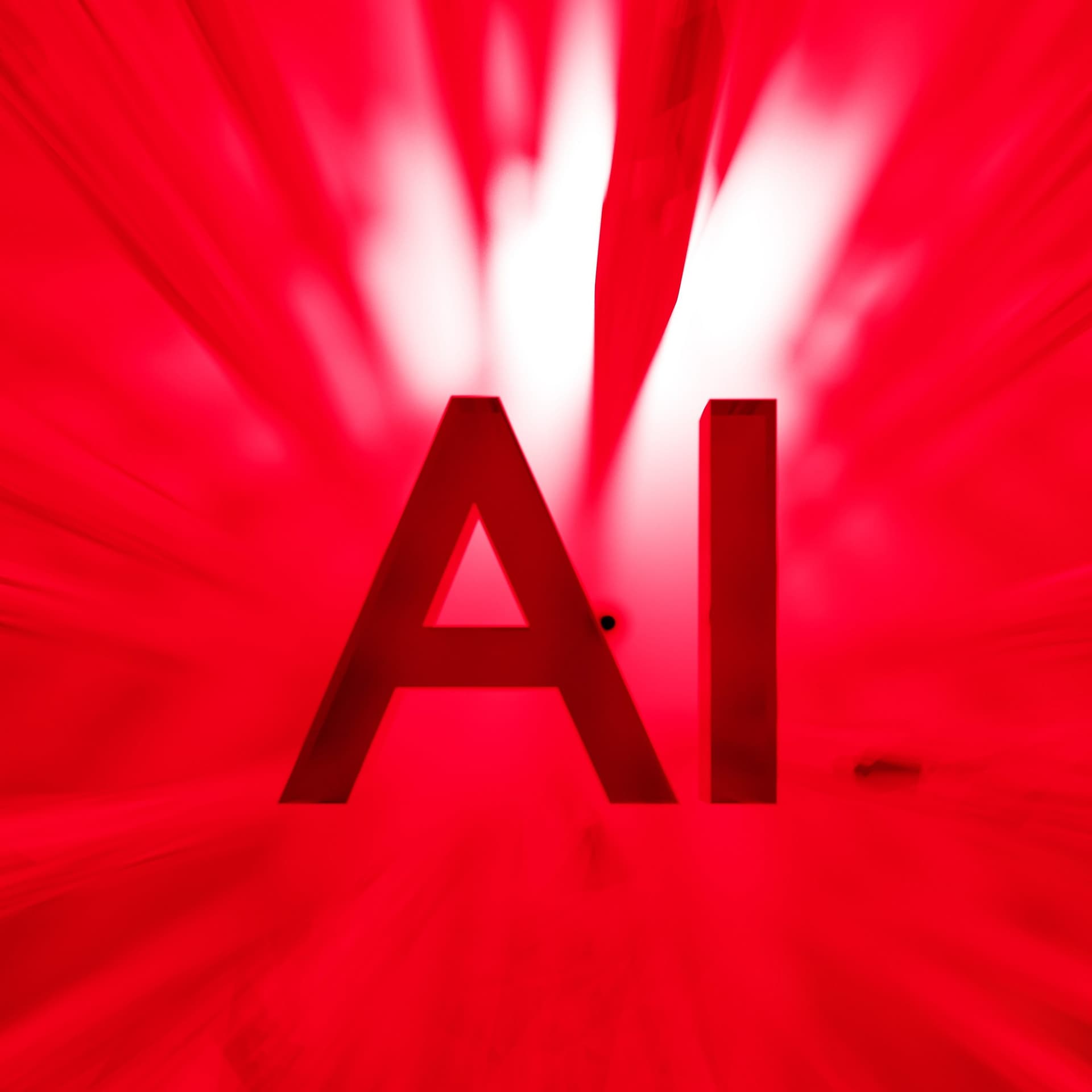
(Image: An illustration of AI letters against a red backdrop. Credit: Wong Yu Liang/Getty Images)